
20 Q
8th - Uni
15 Q
8th - Uni
20 Q
7th - Uni
20 Q
7th - Uni
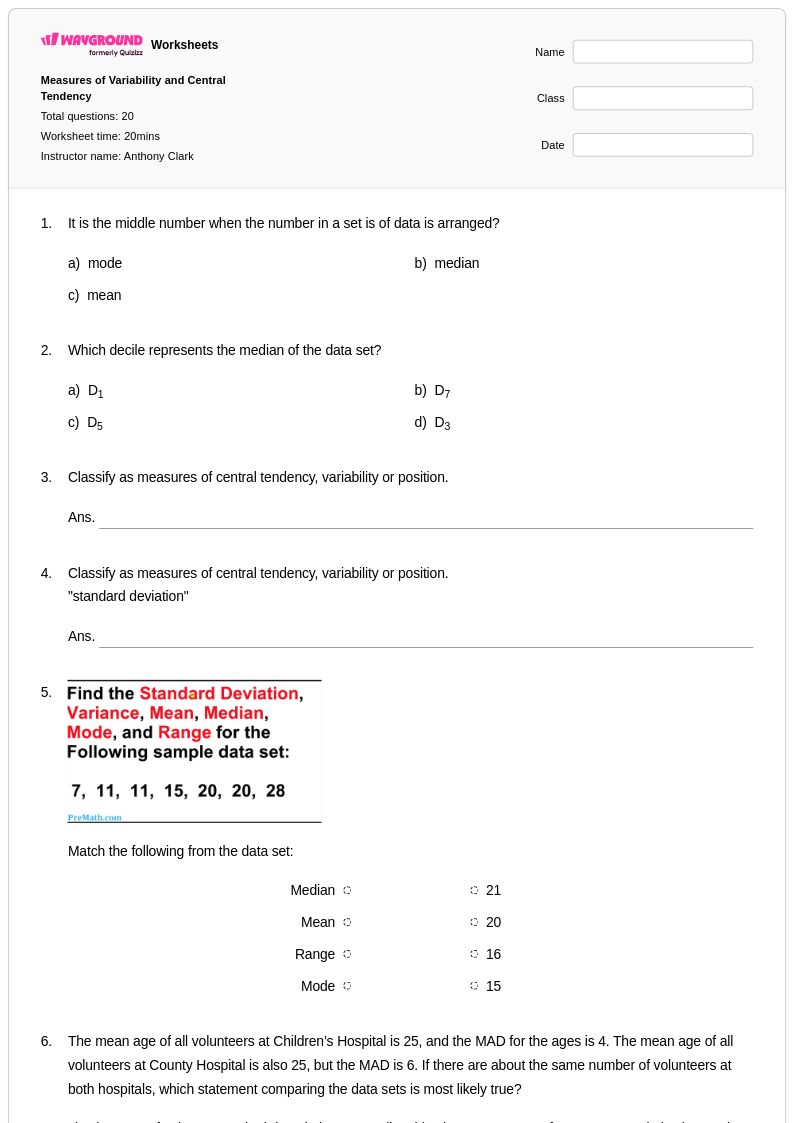
20 Q
7th - Uni
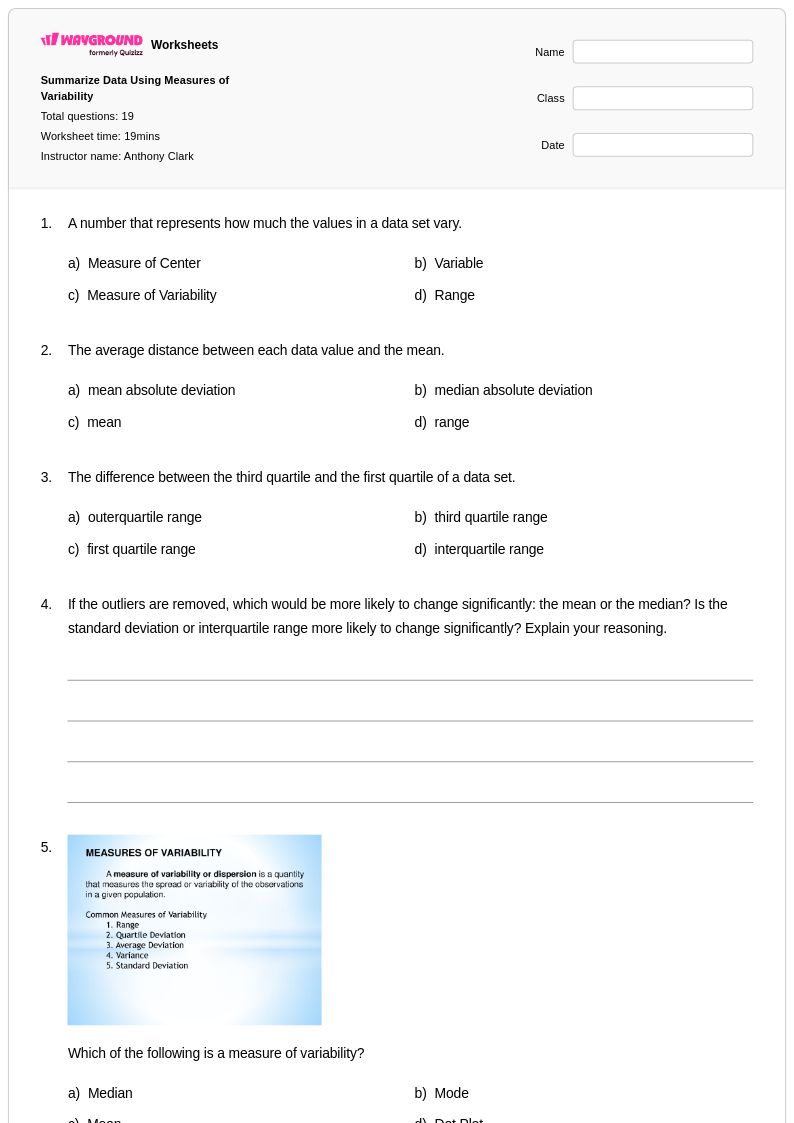
19 Q
6th - Uni
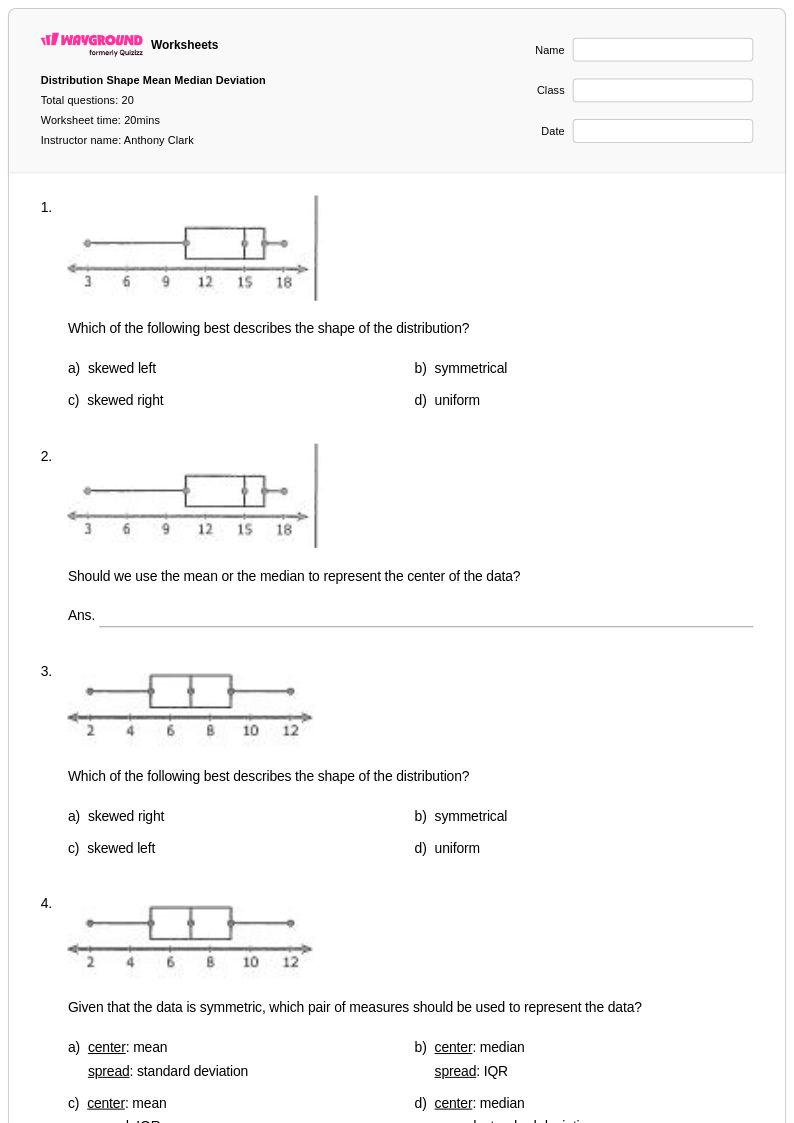
20 Q
9th - Uni
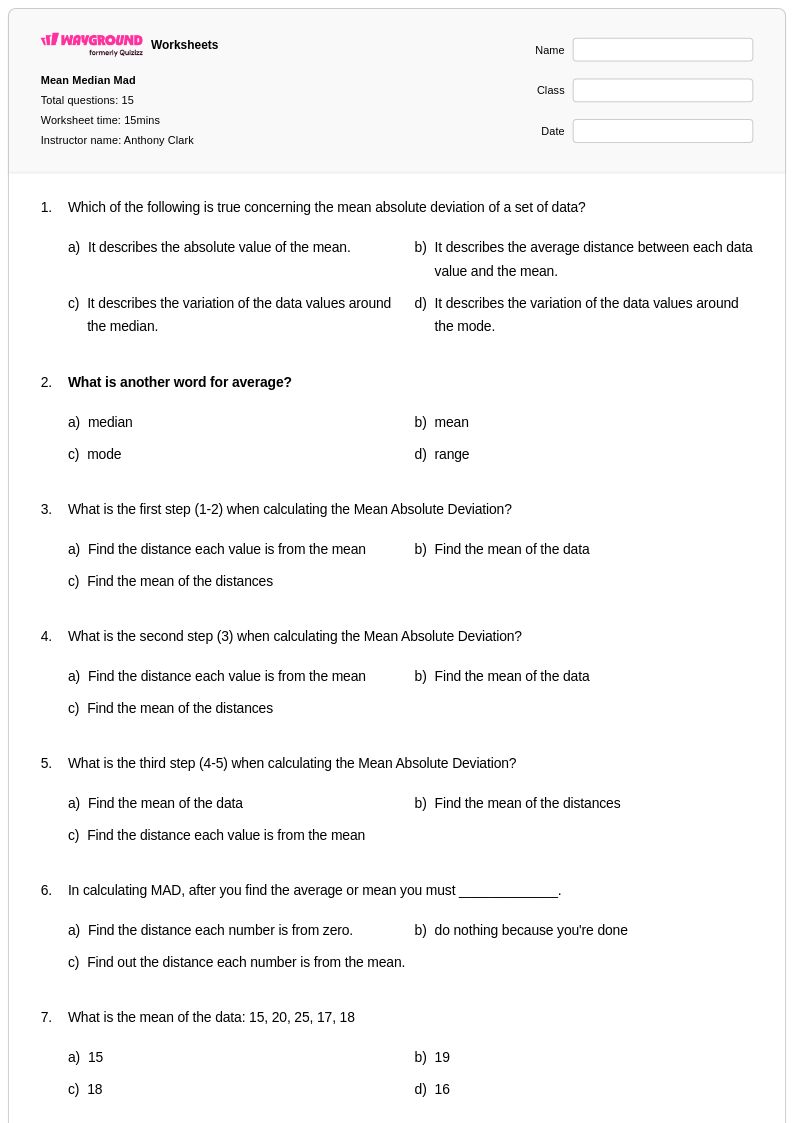
15 Q
7th - Uni
20 Q
9th - Uni
20 Q
9th - Uni
17 Q
10th
20 Q
8th - Uni
20 Q
7th - Uni
20 Q
6th - Uni
20 Q
6th - Uni
20 Q
6th - Uni
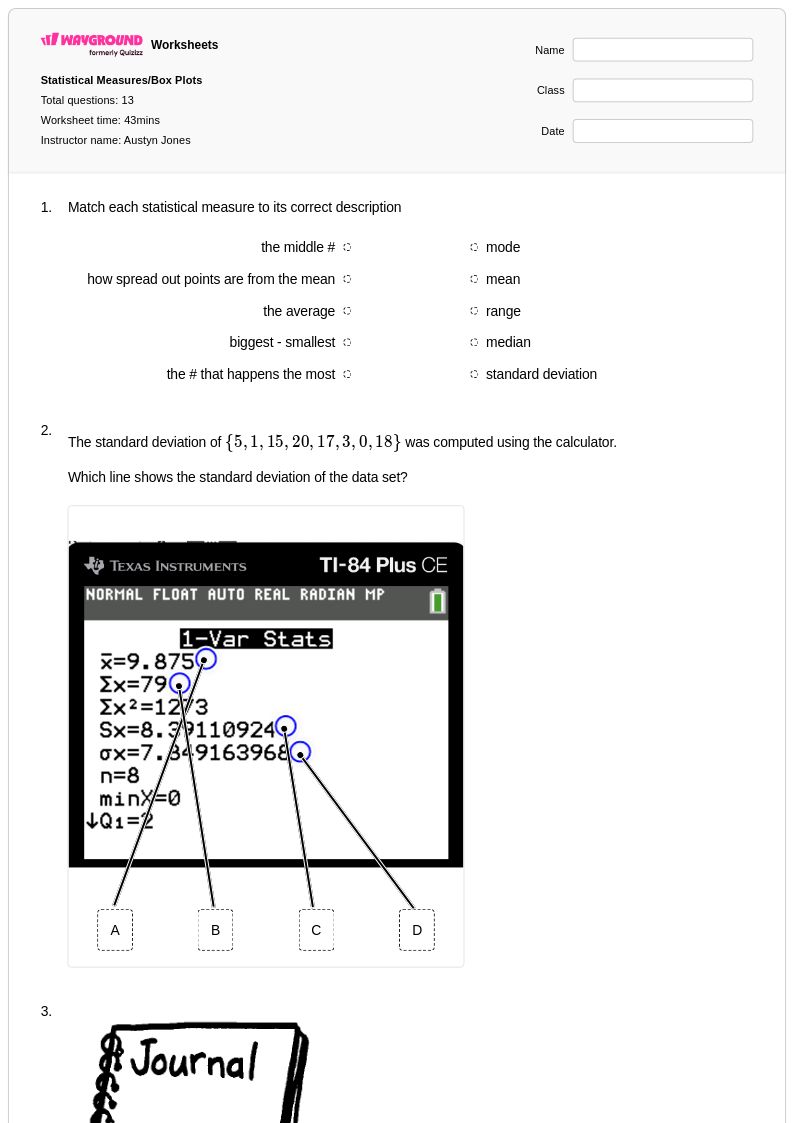
13 Q
9th - 12th
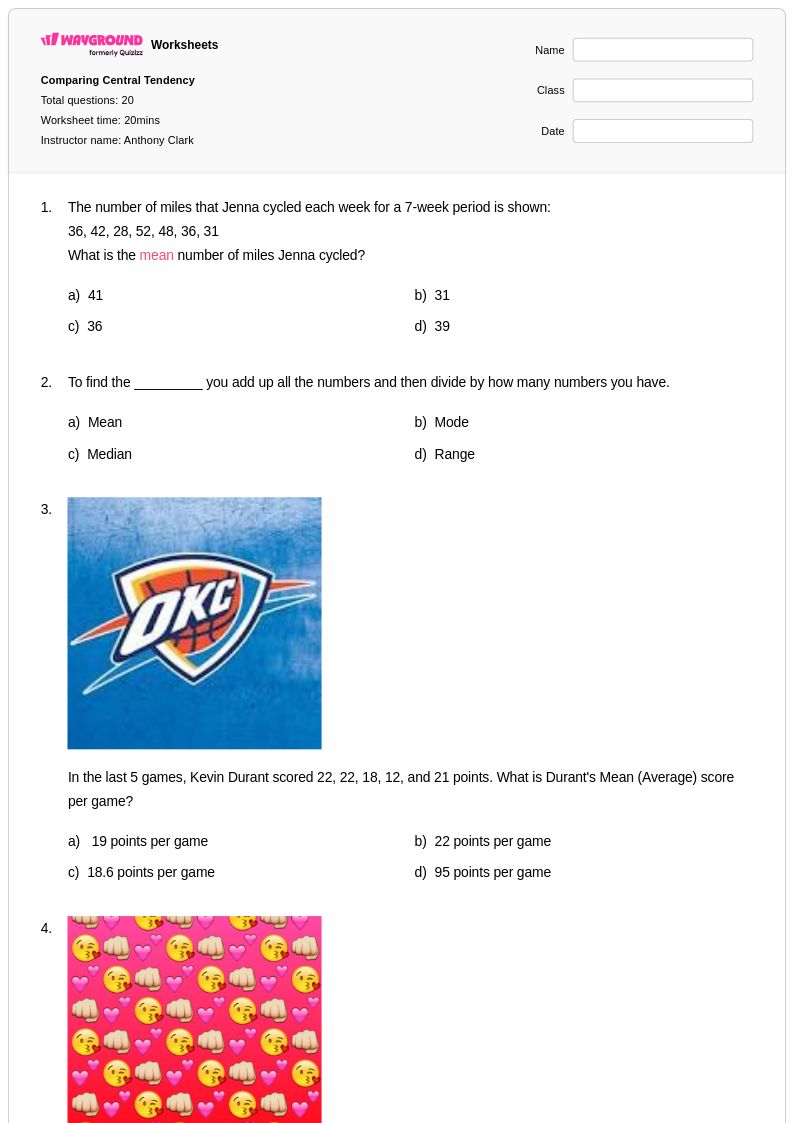
20 Q
8th - Uni
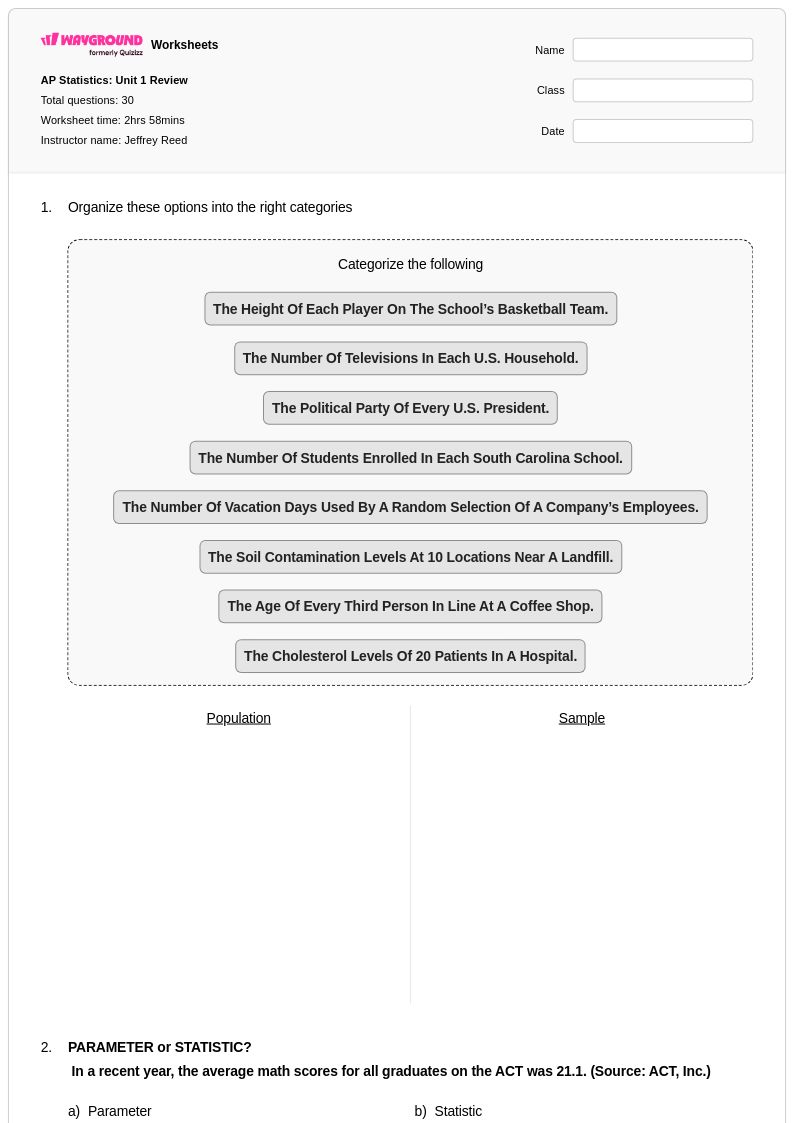
30 Q
9th - 12th
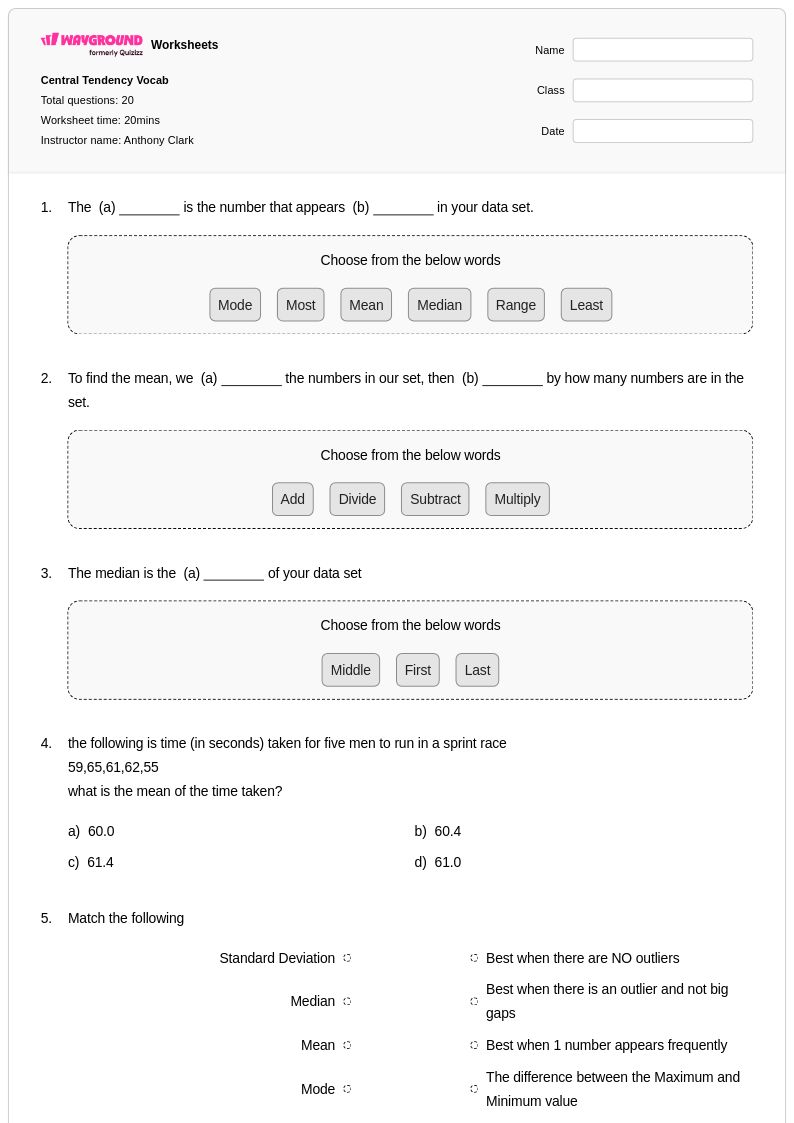
20 Q
6th - Uni
20 Q
7th - Uni
20 Q
6th - Uni
20 Q
7th - Uni
Explore Other Subject Worksheets for grade 10
Explore printable Mean Average Deviation worksheets for Grade 10
Mean Average Deviation worksheets for Grade 10 students available through Wayground (formerly Quizizz) provide comprehensive practice in understanding and calculating this essential measure of data variability. These educational resources strengthen students' ability to determine how much individual data points deviate from the mean, reinforcing critical statistical reasoning skills needed for advanced mathematics coursework. The worksheets include step-by-step practice problems that guide students through the process of finding absolute deviations, summing these values, and dividing by the number of data points to arrive at the mean average deviation. Each worksheet comes with a complete answer key, enabling independent study and self-assessment, while the free printable format makes these resources accessible for both classroom instruction and homework assignments. Students work with diverse datasets including real-world applications in sports statistics, scientific measurements, and economic data to develop proficiency in this fundamental statistical concept.
Wayground (formerly Quizizz) supports mathematics educators with millions of teacher-created Mean Average Deviation resources that can be easily located through robust search and filtering capabilities designed specifically for Grade 10 probability and statistics instruction. The platform's extensive collection includes worksheets aligned with national and state mathematics standards, ensuring that content directly supports curriculum objectives and assessment preparation. Teachers benefit from powerful differentiation tools that allow customization of difficulty levels, problem types, and data complexity to meet individual student needs, whether for remediation of foundational concepts or enrichment of advanced statistical thinking. These resources are available in both digital and printable pdf formats, providing flexibility for various instructional settings and learning preferences. The comprehensive nature of these materials enables educators to efficiently plan sequential lessons, provide targeted skill practice, and offer multiple opportunities for students to master the calculation and interpretation of mean average deviation across different mathematical contexts.
FAQs
Is mean average deviation a 10th-grade topic?
How can I connect mean average deviation to real-world data for 10th graders?
What skills do these Grade 10 worksheets reinforce?
What is the most common calculation error with mean average deviation?
How do I get this worksheet and the answer key?
Where does mean average deviation lead in the curriculum?