
15 Q
10th - Uni
14 Q
9th - Uni
25 Q
8th - 10th
25 Q
8th - 10th
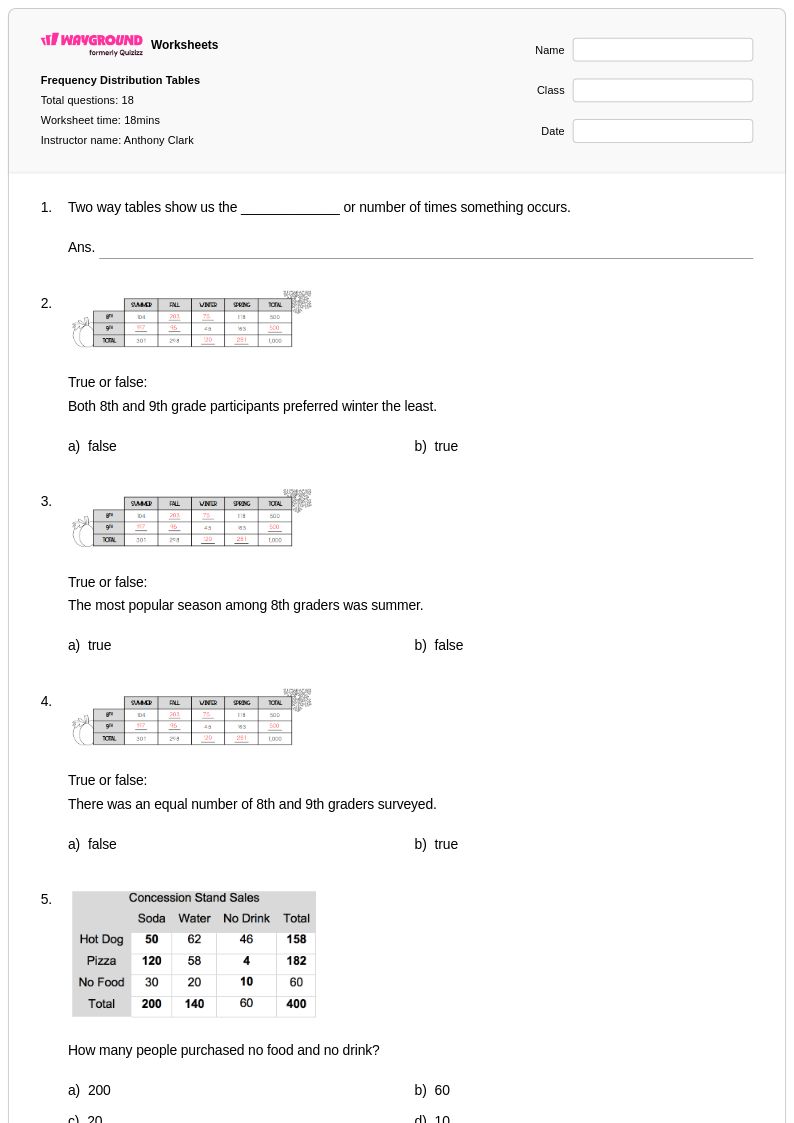
18 Q
10th - Uni
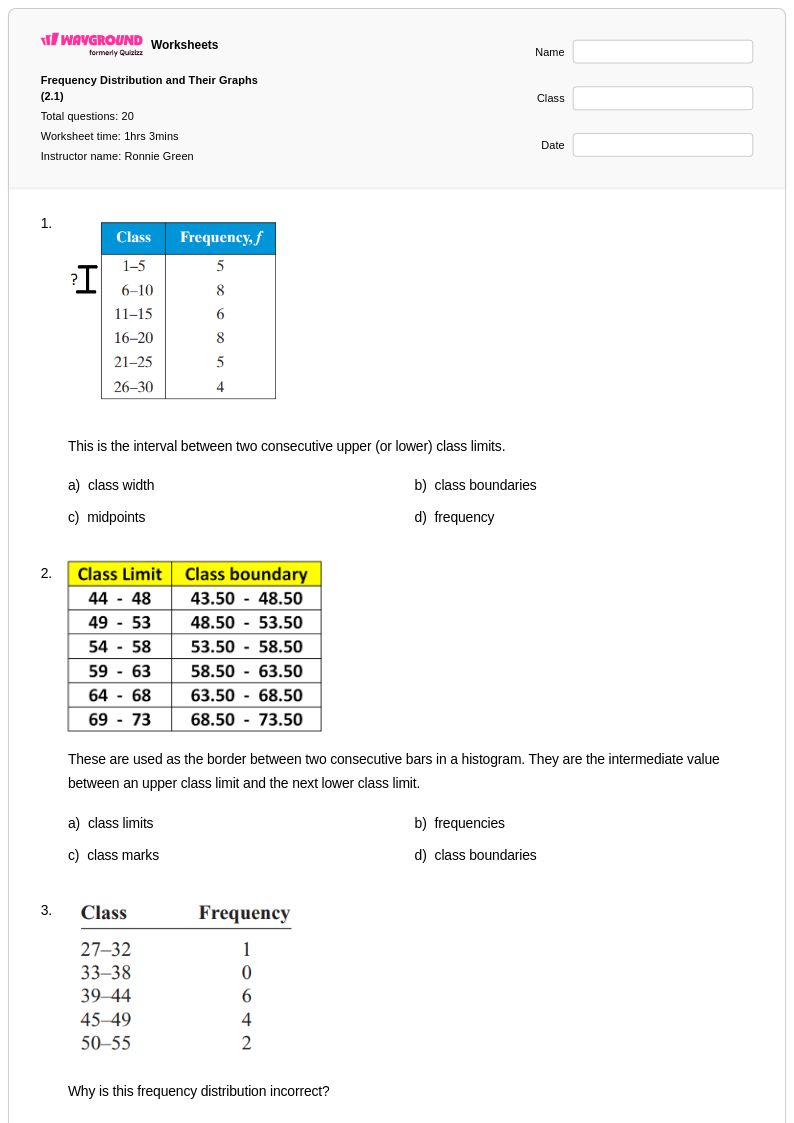
20 Q
9th - 12th
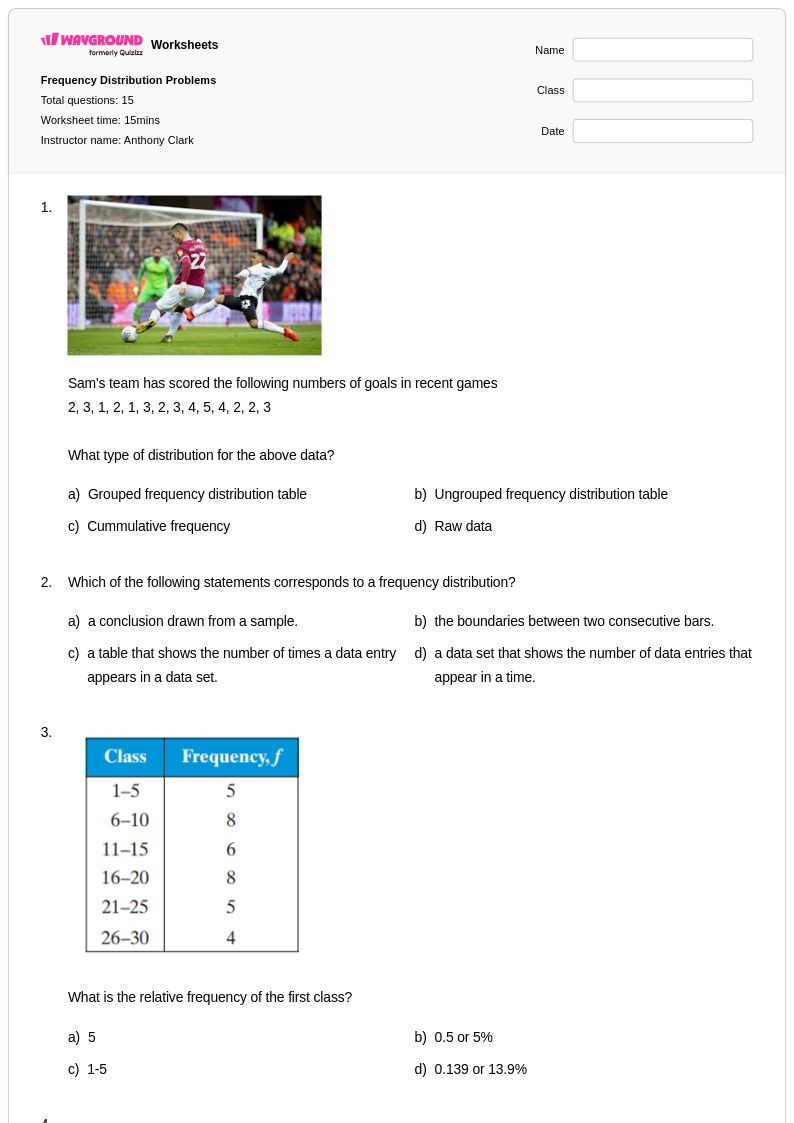
15 Q
10th - Uni
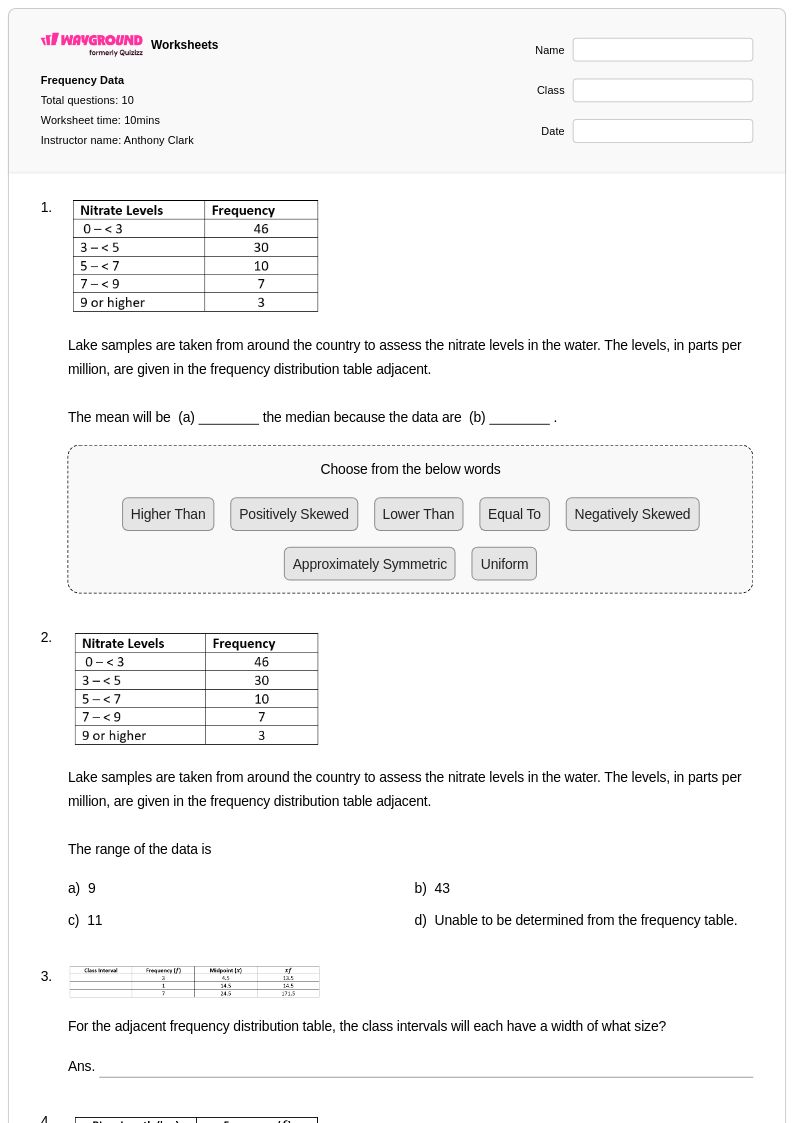
10 Q
10th - Uni
10 Q
10th
9 Q
10th
9 Q
10th
9 Q
9th - 12th
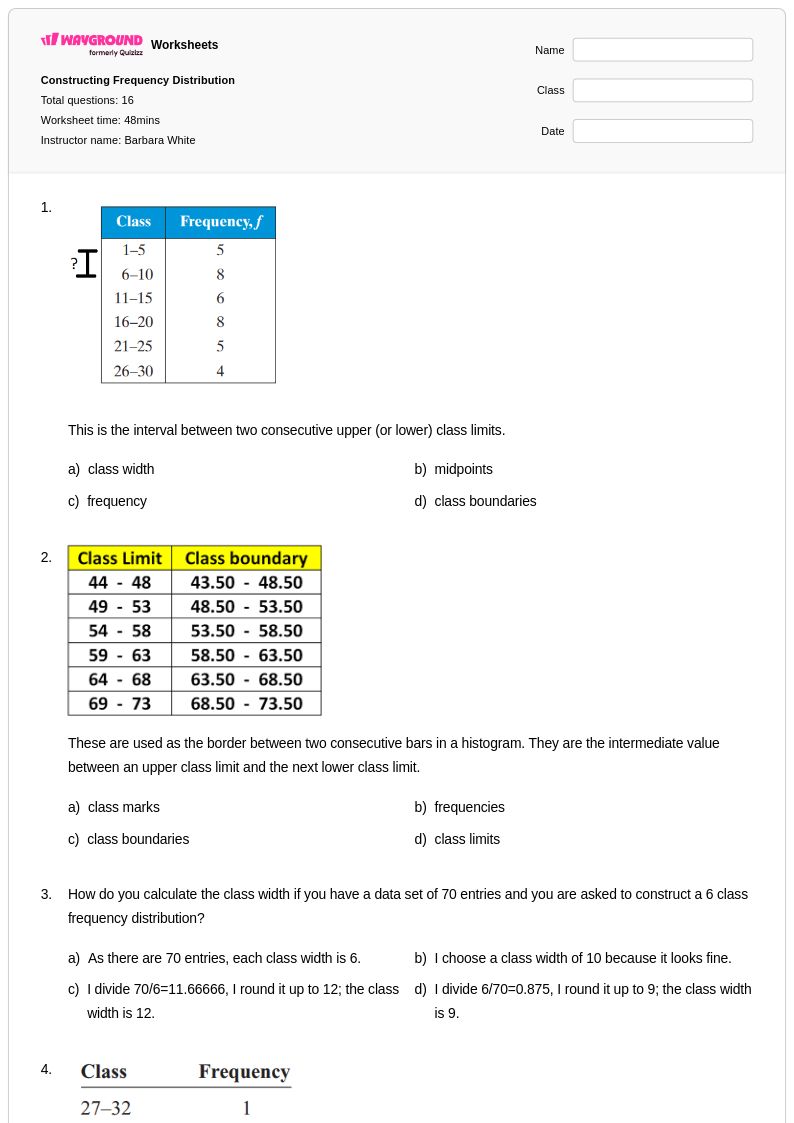
16 Q
9th - 12th
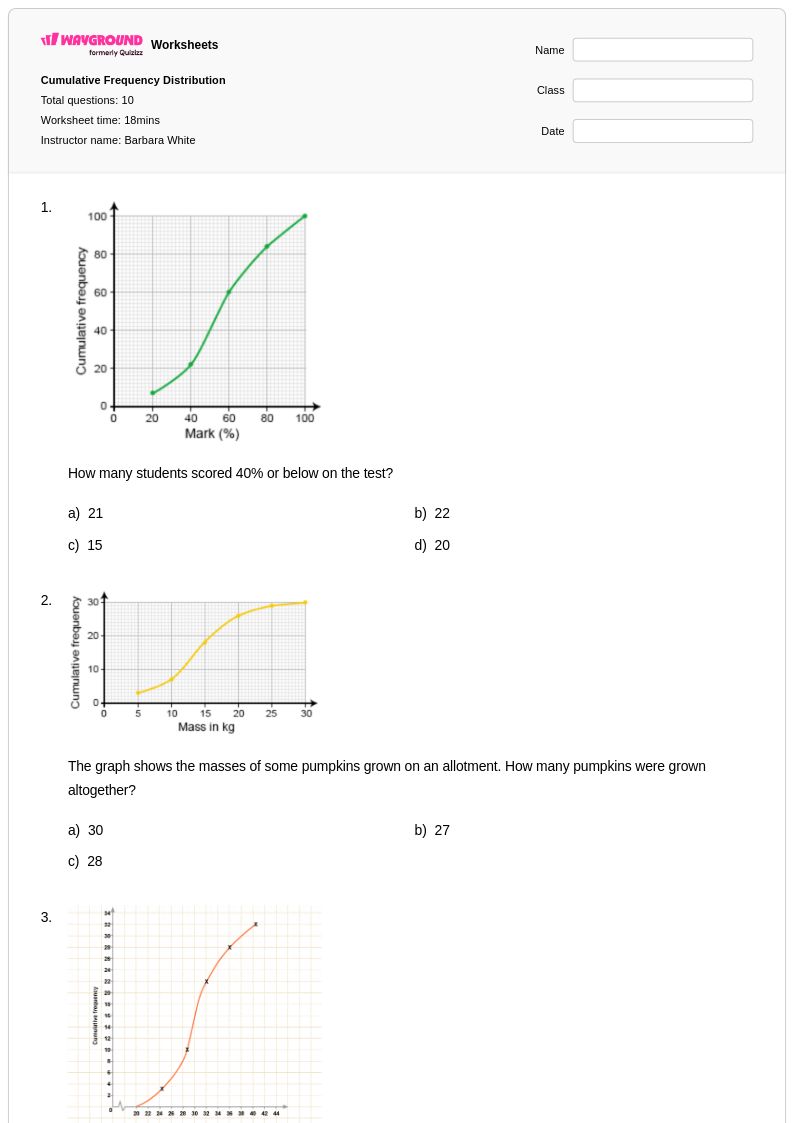
10 Q
8th - 10th
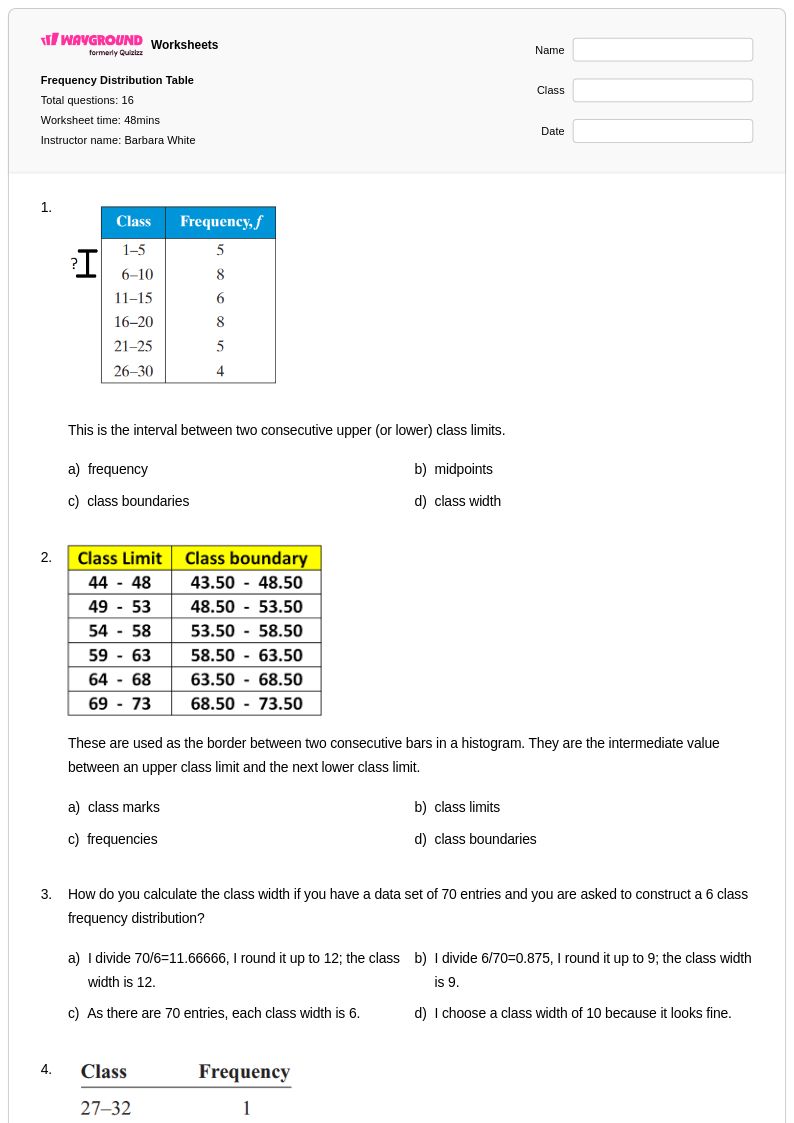
16 Q
9th - 12th
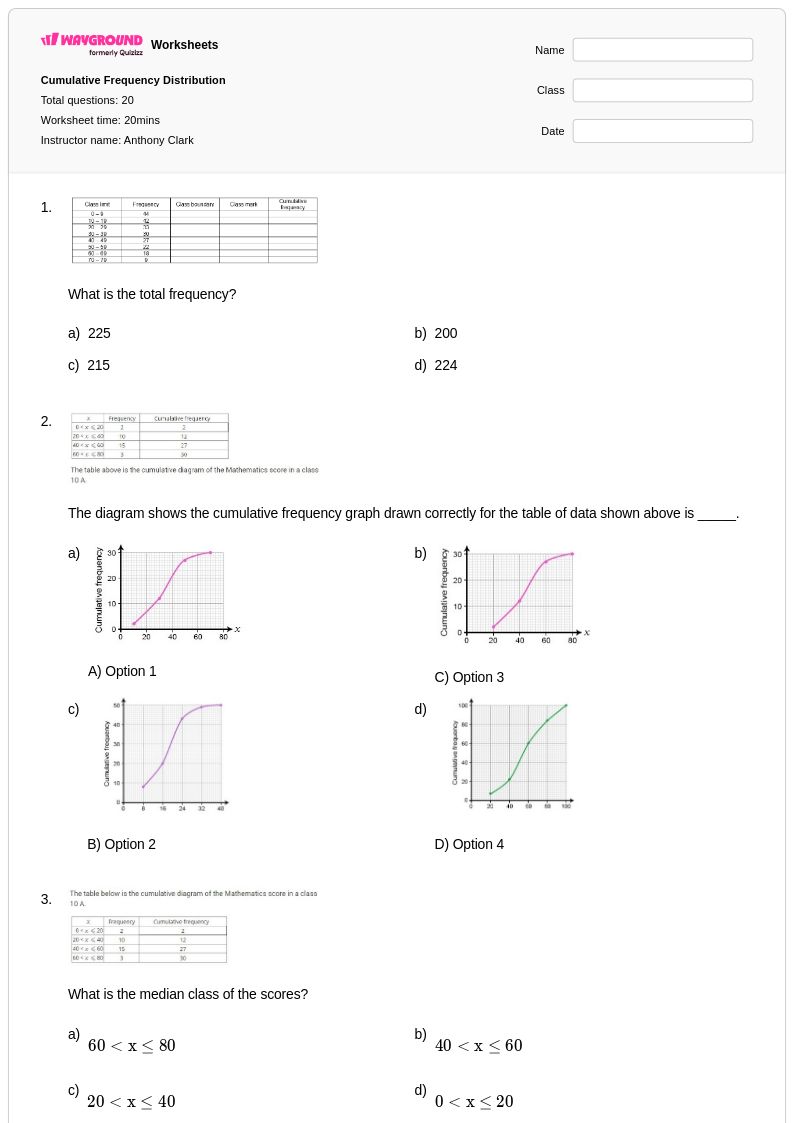
20 Q
10th - Uni
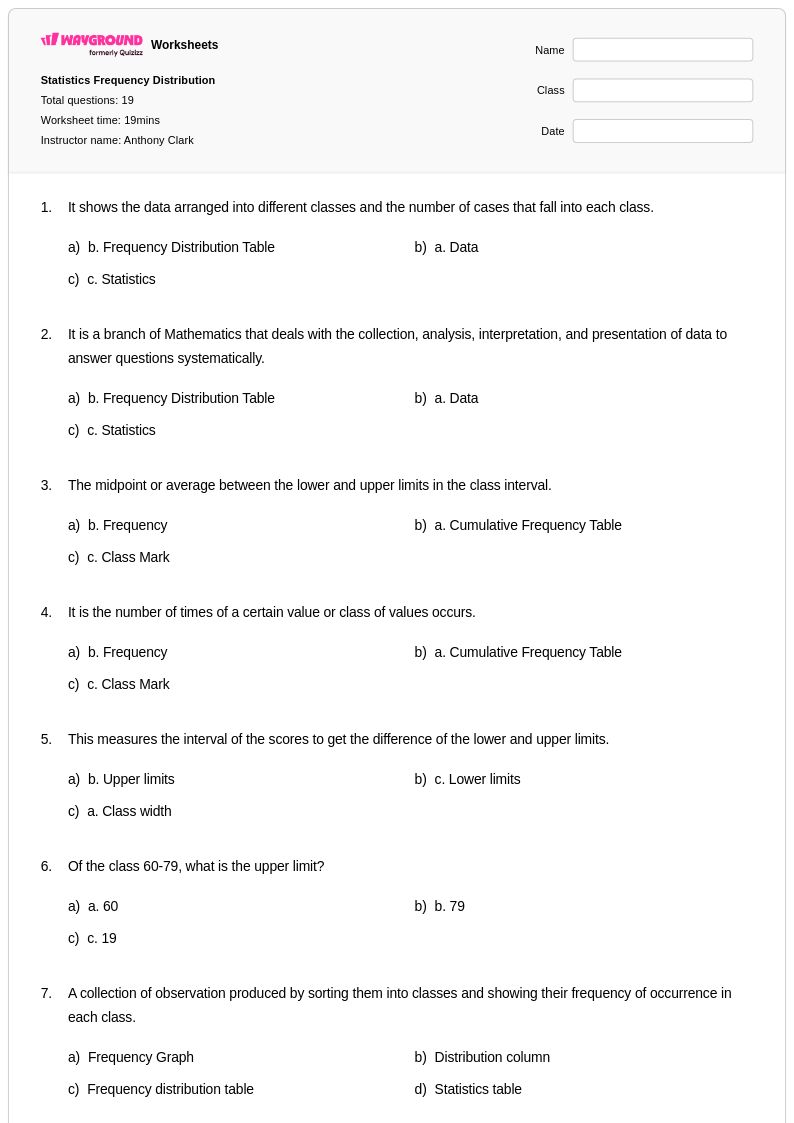
19 Q
9th - Uni
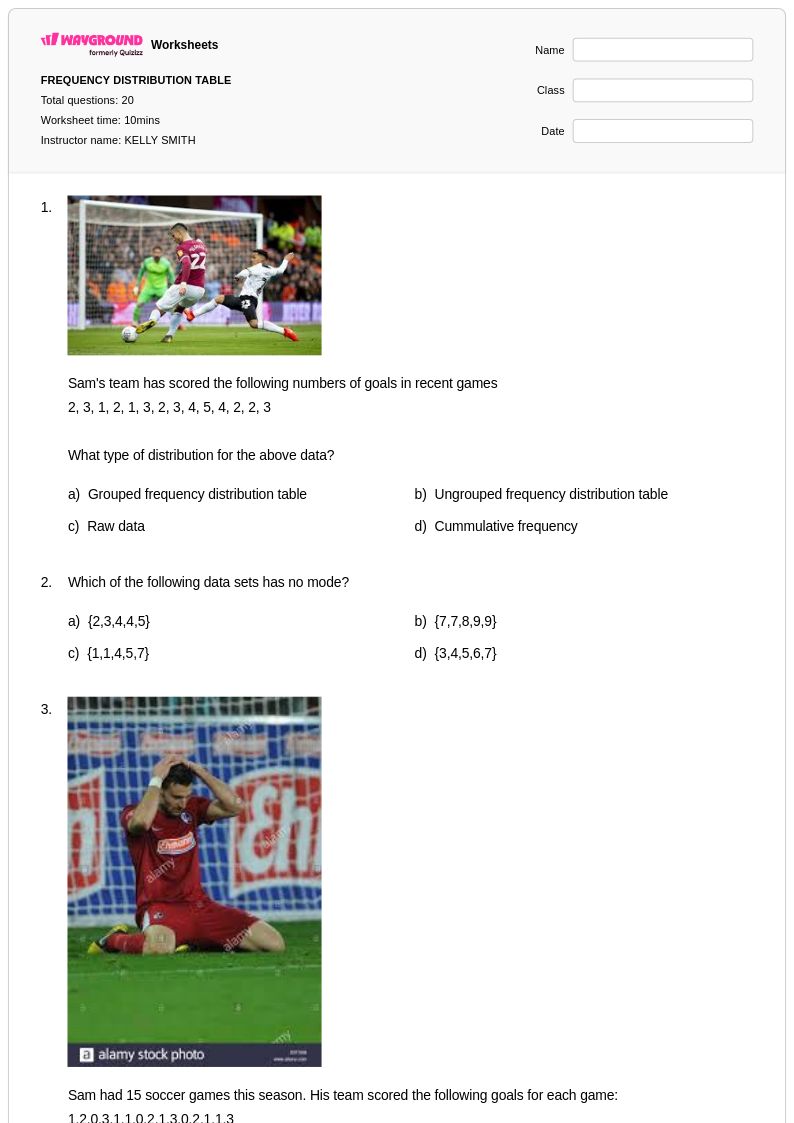
20 Q
10th - 12th
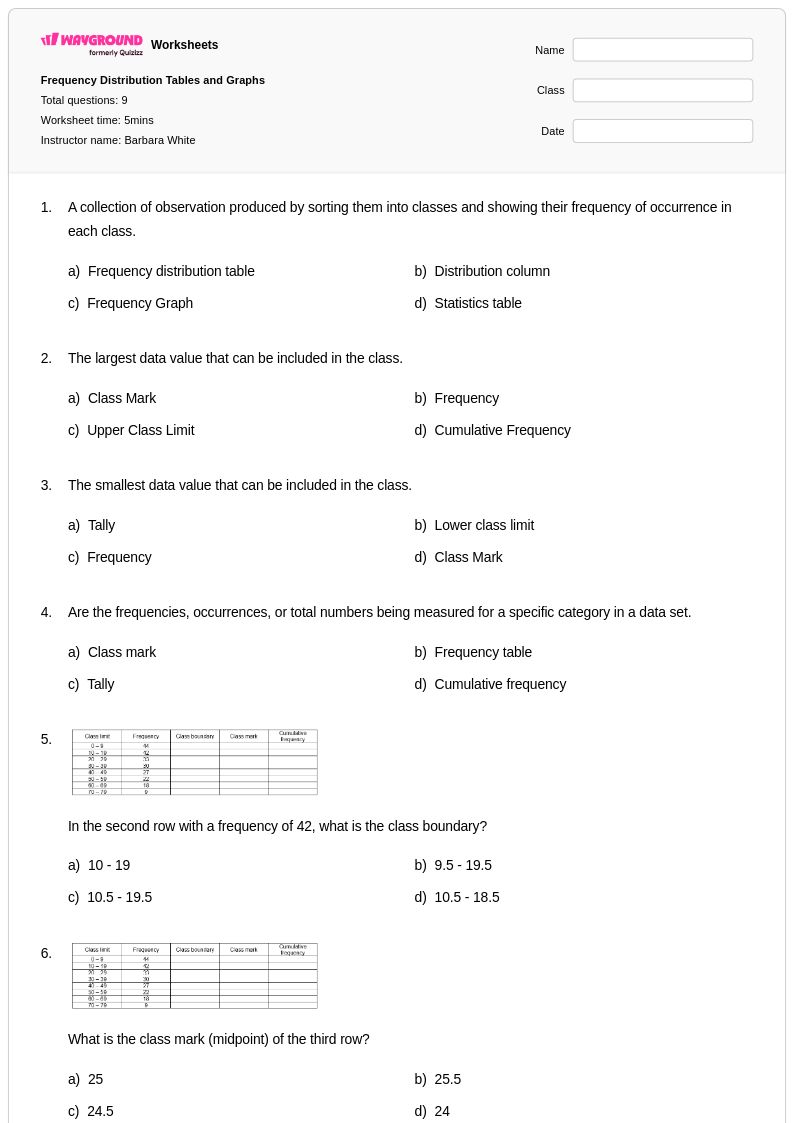
9 Q
10th
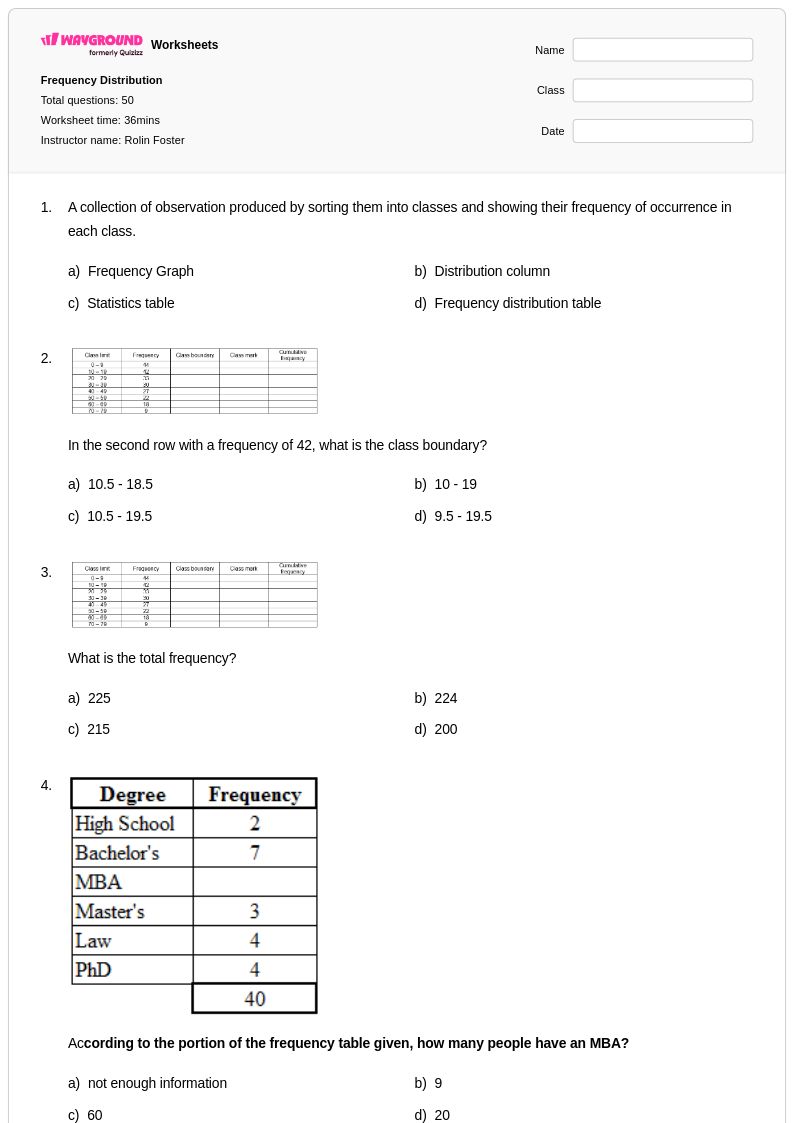
50 Q
10th - 12th
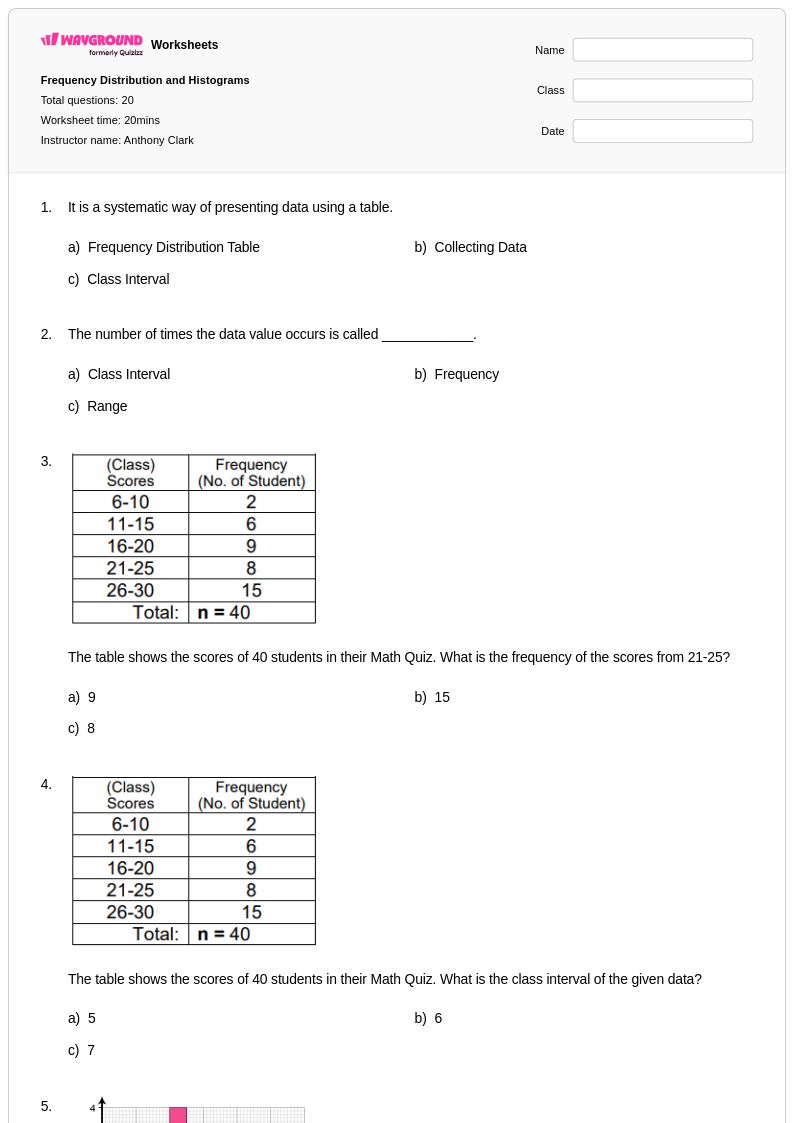
20 Q
7th - Uni
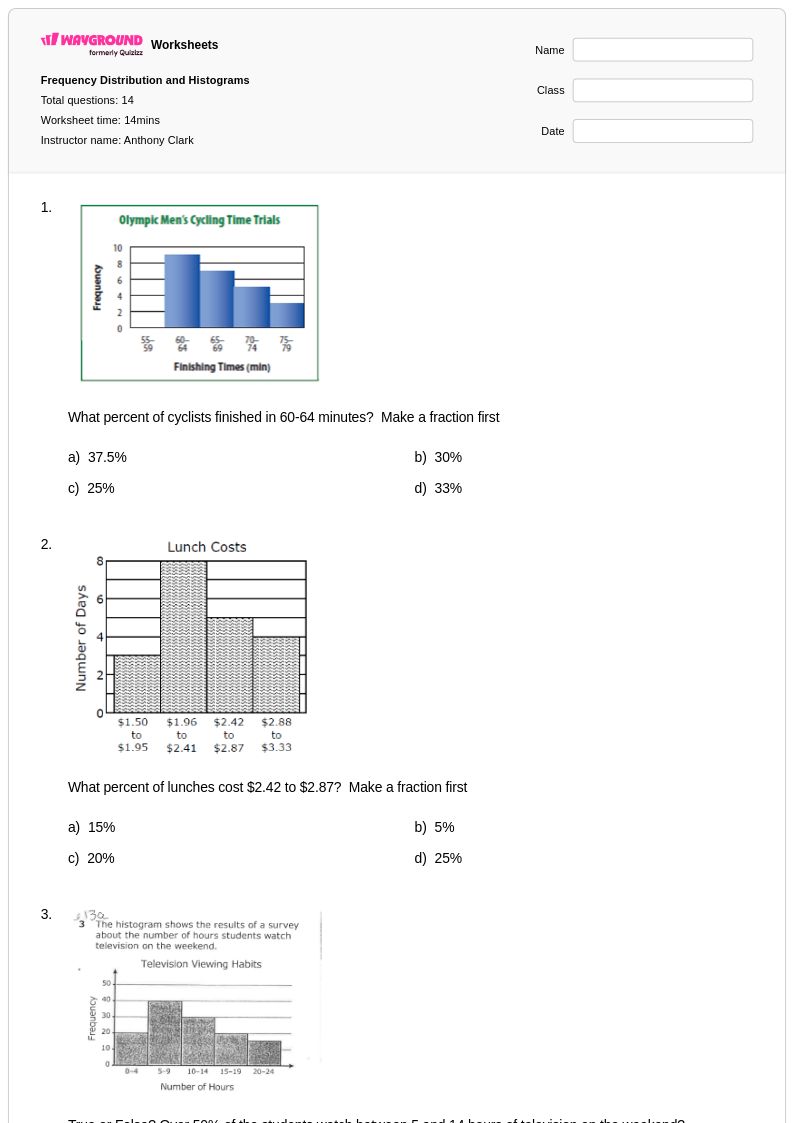
14 Q
7th - Uni
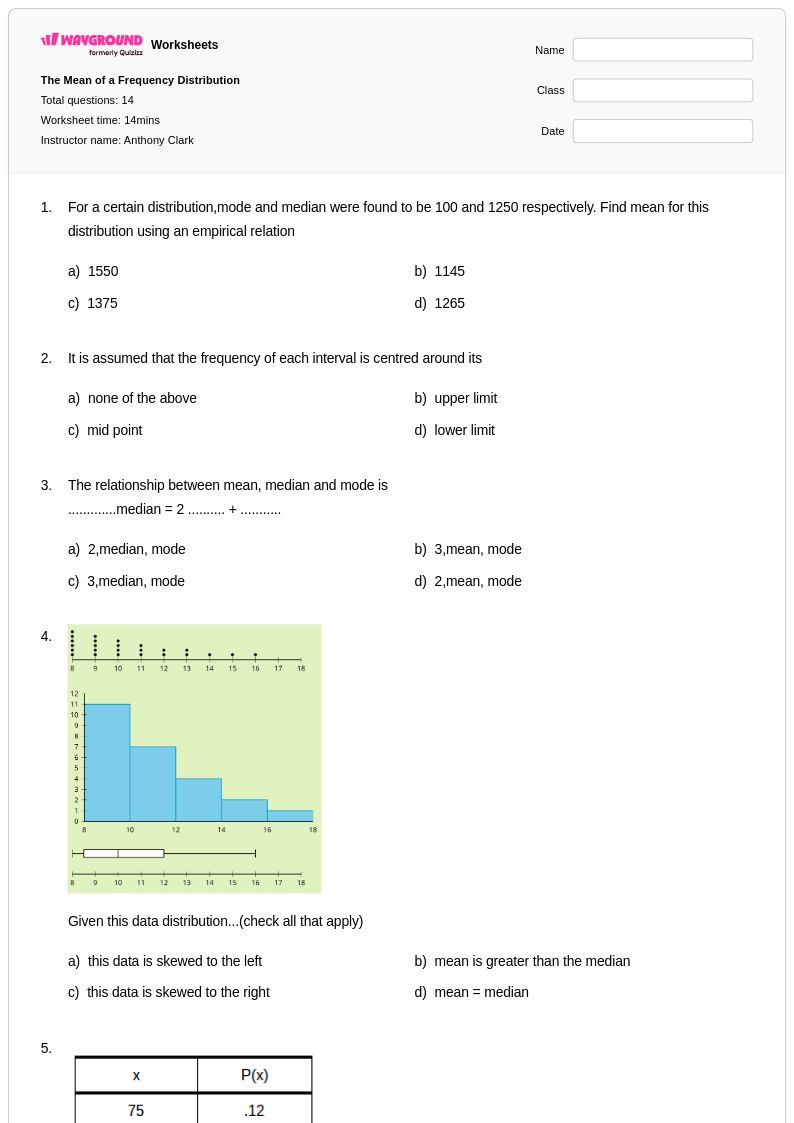
14 Q
9th - Uni
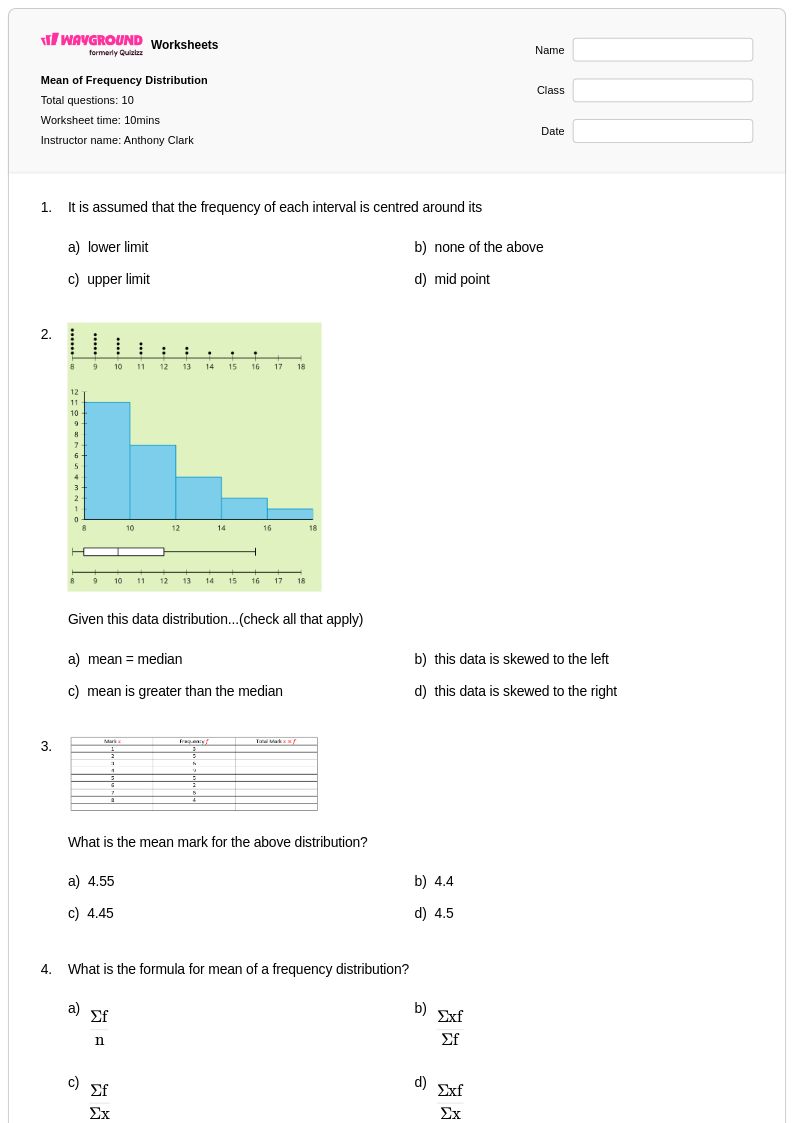
10 Q
10th - Uni
Explore Frequency Distribution Worksheets by Grades
Explore Other Subject Worksheets for grade 10
Explore printable Frequency Distribution worksheets for Grade 10
Frequency distribution worksheets for Grade 10 students provide essential practice in organizing, analyzing, and interpreting data sets through systematic categorization and tabulation methods. These comprehensive worksheets available through Wayground (formerly Quizizz) strengthen critical statistical skills including constructing frequency tables, calculating relative and cumulative frequencies, and creating visual representations such as histograms and frequency polygons. Students develop proficiency in identifying class intervals, determining appropriate bin sizes, and understanding the relationship between raw data and its organized presentation. Each worksheet includes detailed answer keys and step-by-step solutions, with free printable pdf formats that support both classroom instruction and independent practice problems covering various data types and real-world scenarios.
Wayground (formerly Quizizz) empowers educators with an extensive collection of millions of teacher-created frequency distribution resources specifically designed for Grade 10 mathematics instruction. The platform's robust search and filtering capabilities enable teachers to quickly locate worksheets aligned with specific curriculum standards and learning objectives, while differentiation tools allow for seamless customization based on individual student needs and skill levels. These versatile materials are available in both printable and digital pdf formats, supporting diverse classroom environments and teaching preferences. Teachers can effectively utilize these resources for lesson planning, targeted remediation of statistical concepts, enrichment activities for advanced learners, and comprehensive skill practice that builds confidence in data analysis and interpretation fundamentals.
FAQs
How do I teach frequency distributions to Grade 10 students?
What exercises help Grade 10 students practice frequency distributions?
What mistakes do students make when creating frequency tables?
How can I use a Grade 10 frequency distribution worksheet in class?
How do frequency distributions fit into the Grade 10 math curriculum?
How can I differentiate frequency distribution practice?
What grade level is frequency distribution usually taught at?