

20 Q
5th - 7th

20 Q
4th - 7th

30 Q
6th
12 Q
6th - 8th

80 Q
6th - 8th

20 Q
6th

16 Q
6th

21 Q
6th - 8th
10 Q
6th - 7th
25 Q
6th - 8th
11 Q
6th
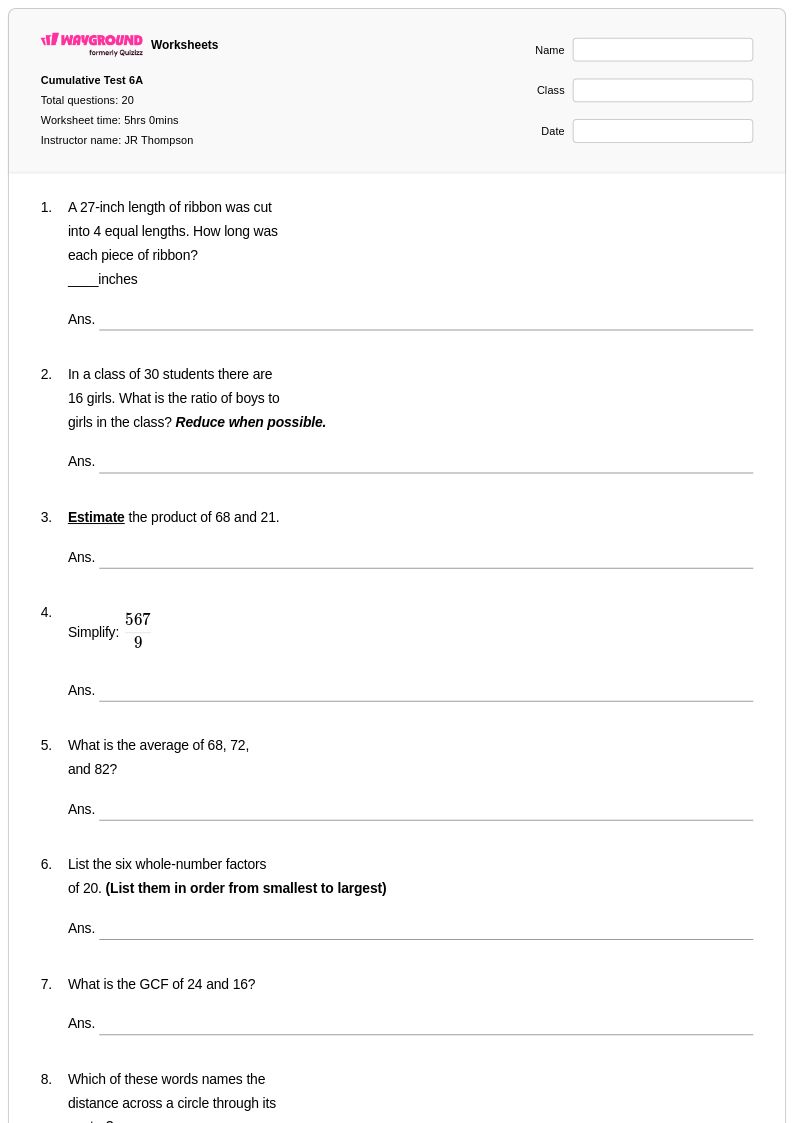
20 Q
5th - 6th
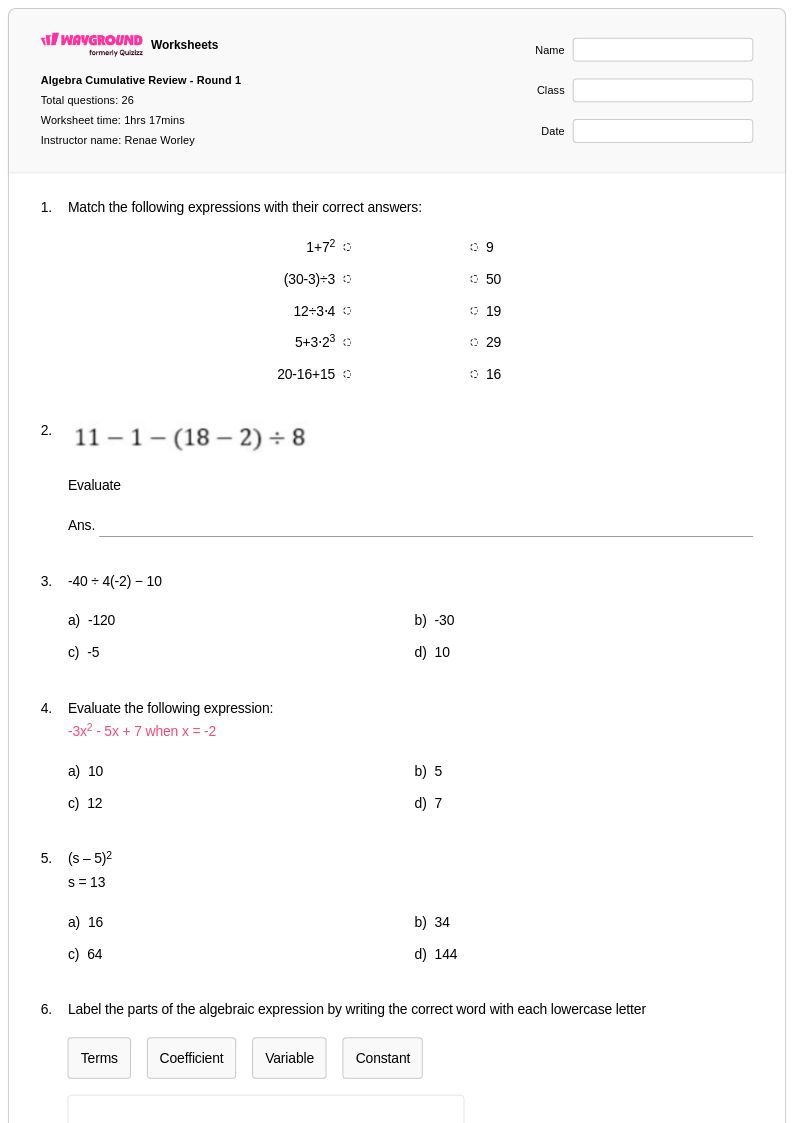
26 Q
6th - 8th
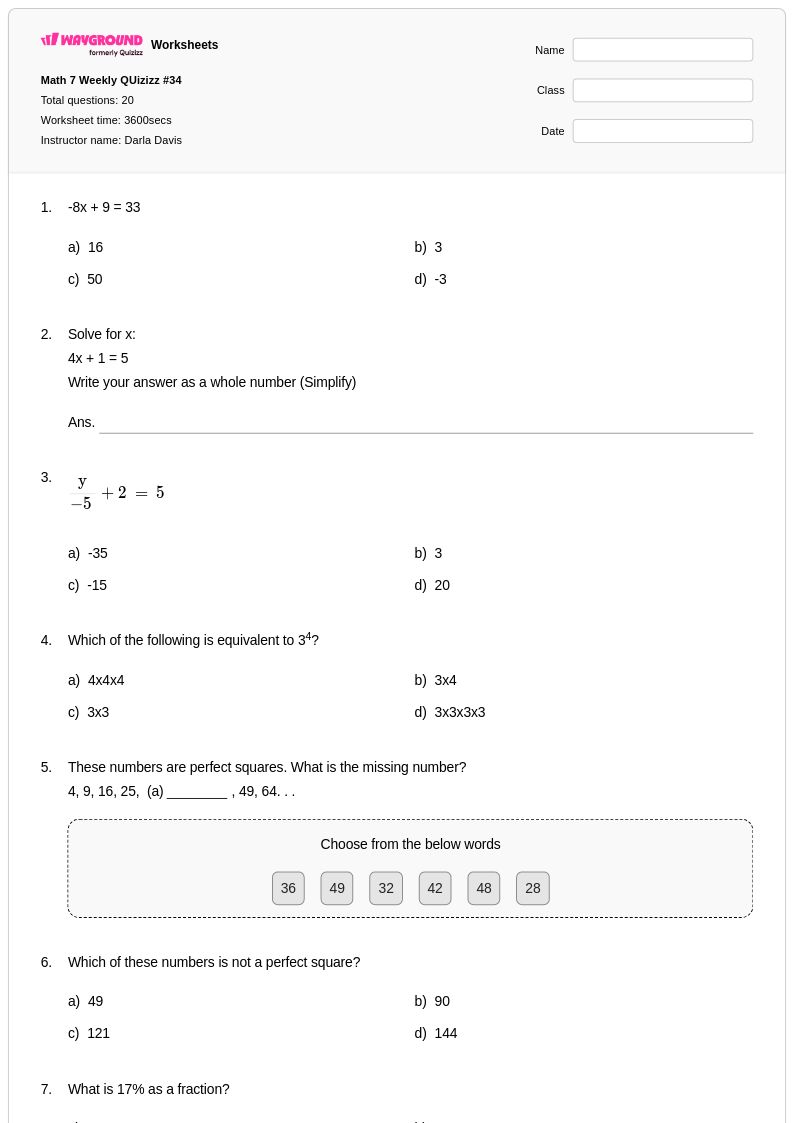
20 Q
6th - 8th
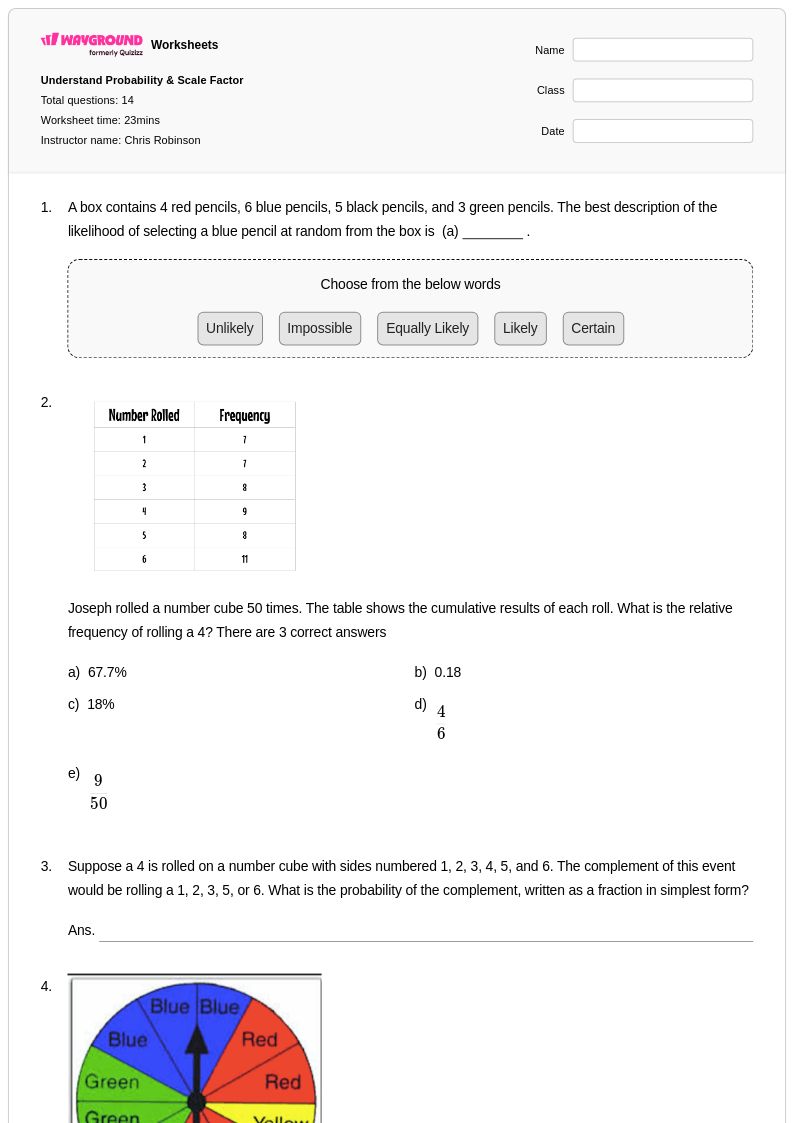
14 Q
6th - 8th
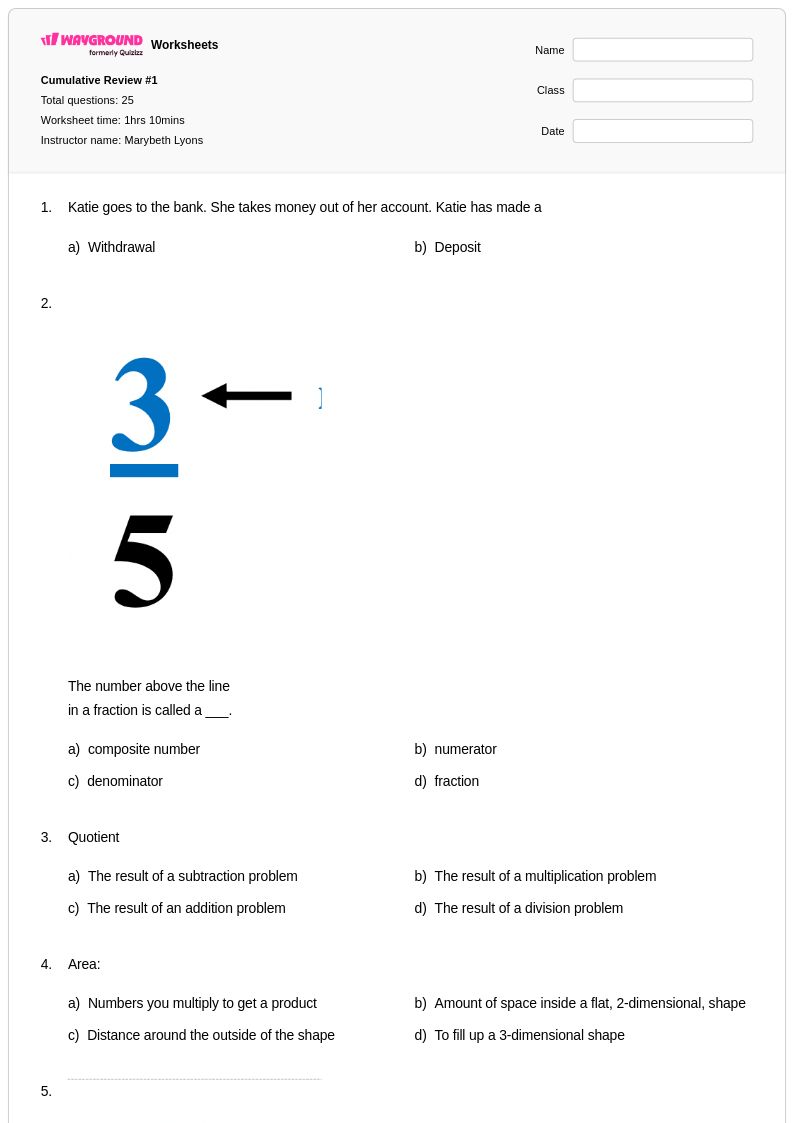
25 Q
3rd - 7th
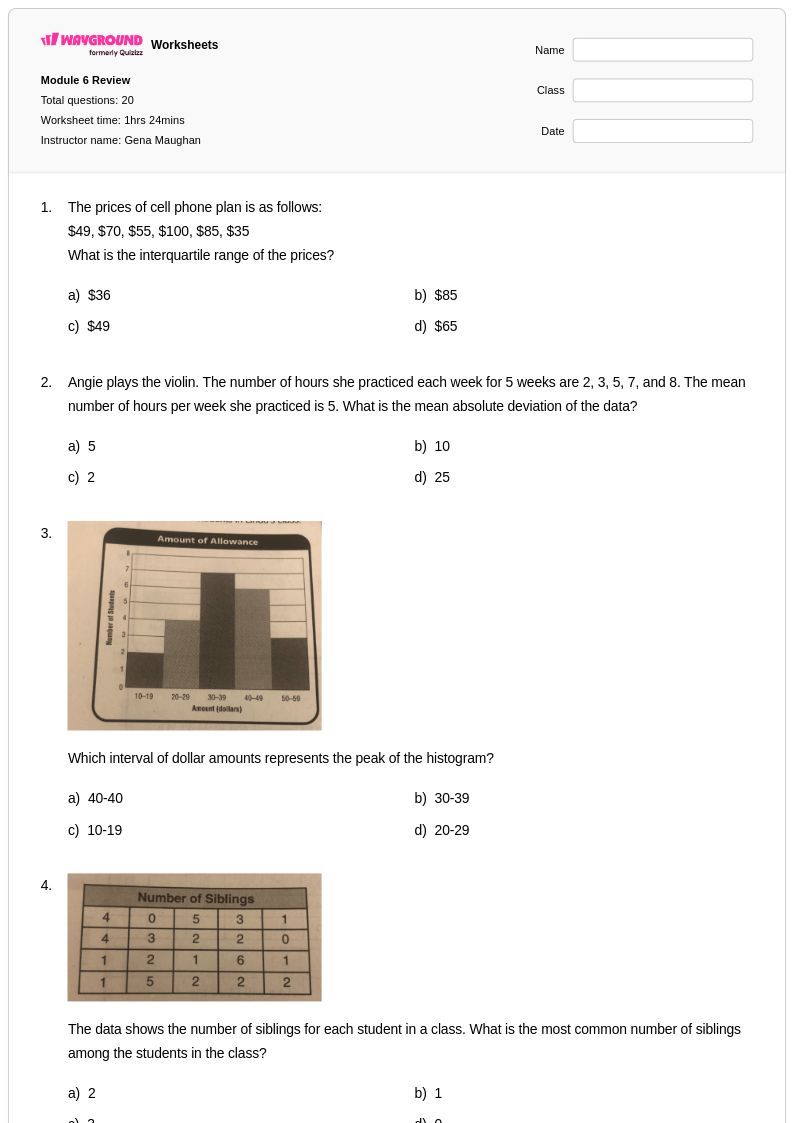
20 Q
6th
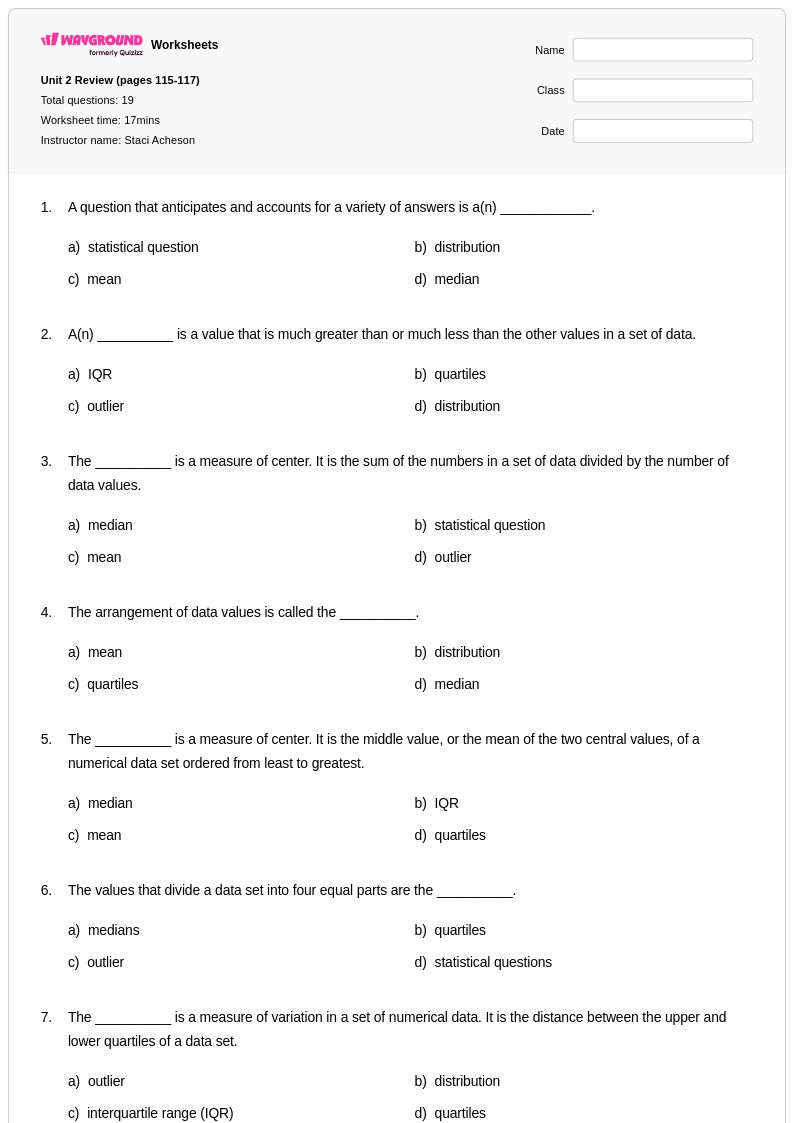
19 Q
6th - Uni
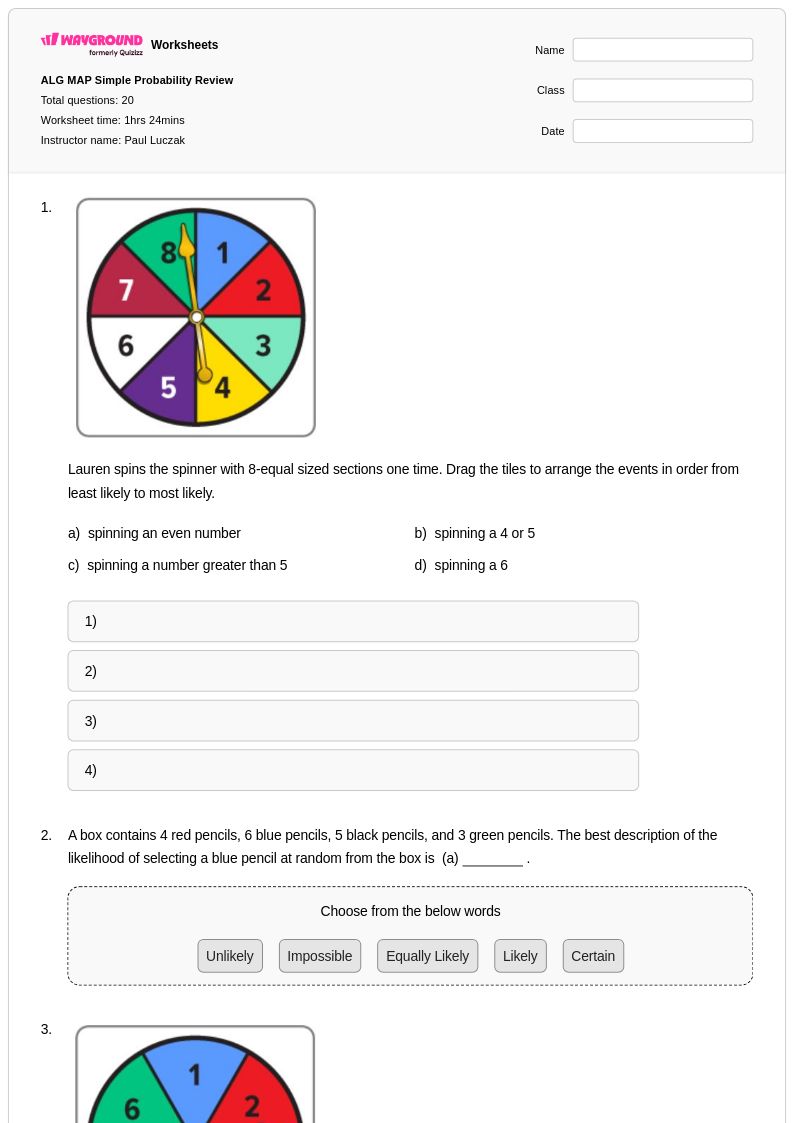
20 Q
6th - 8th
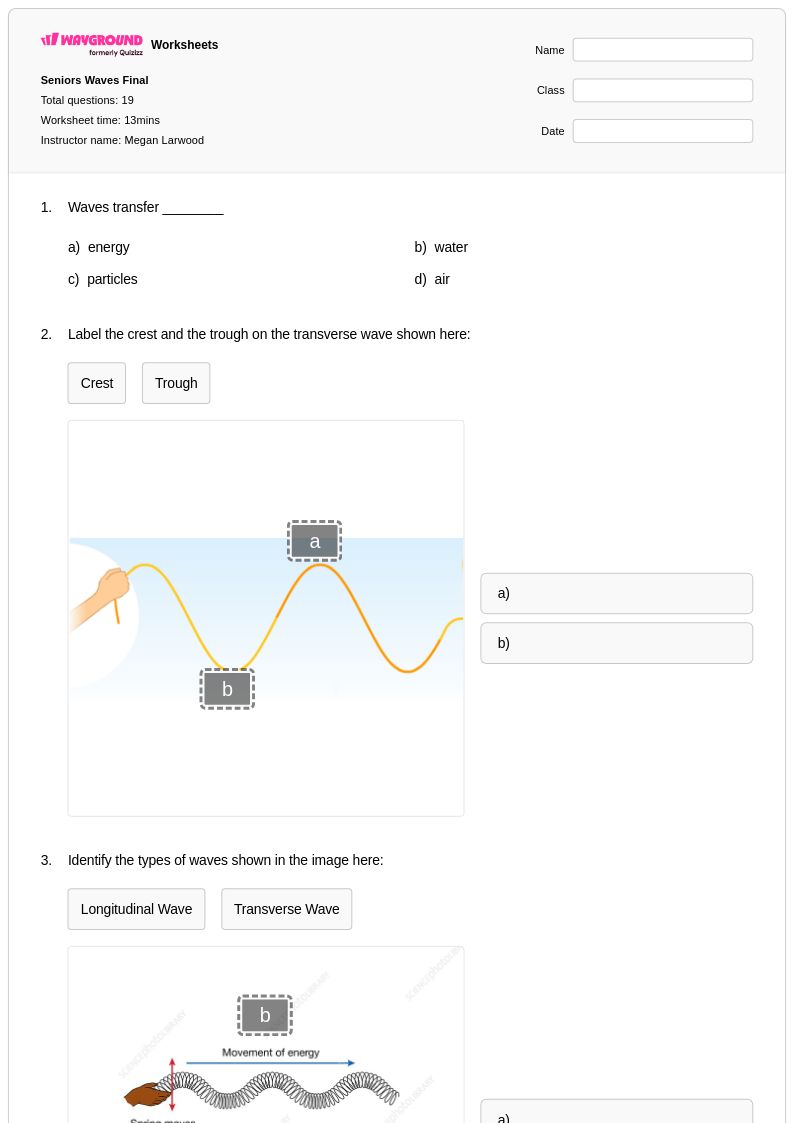
19 Q
6th
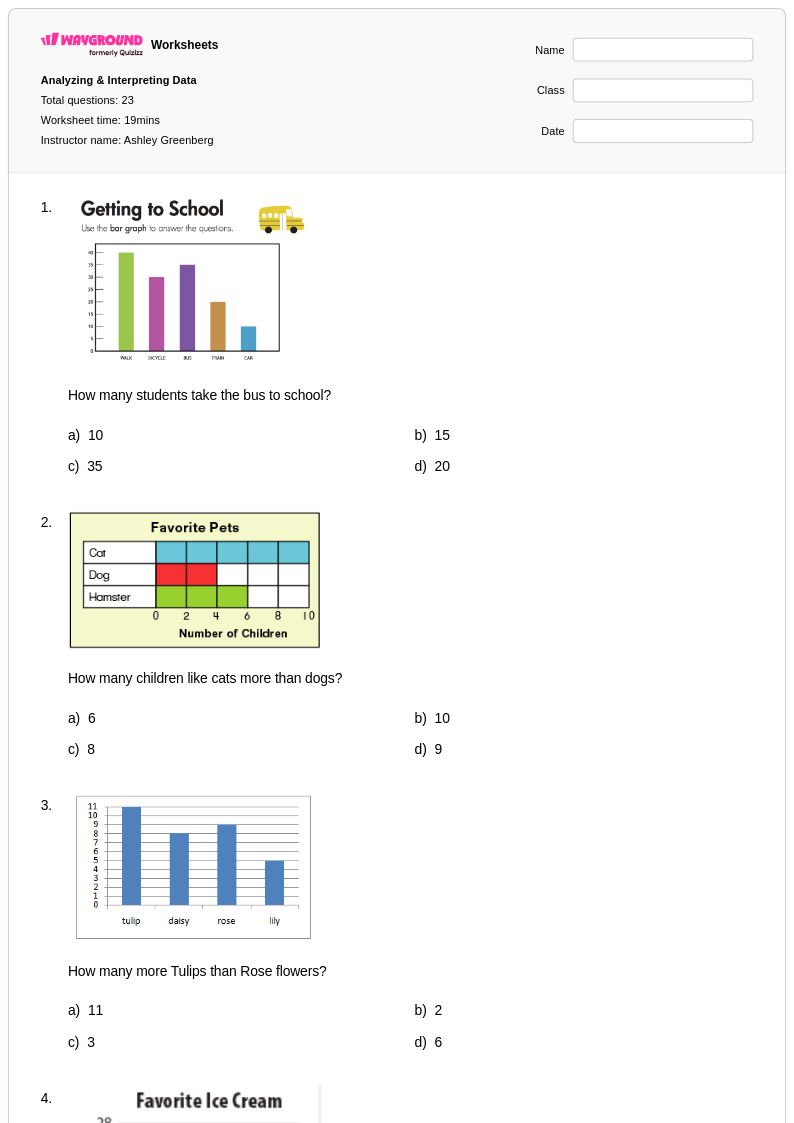
23 Q
6th
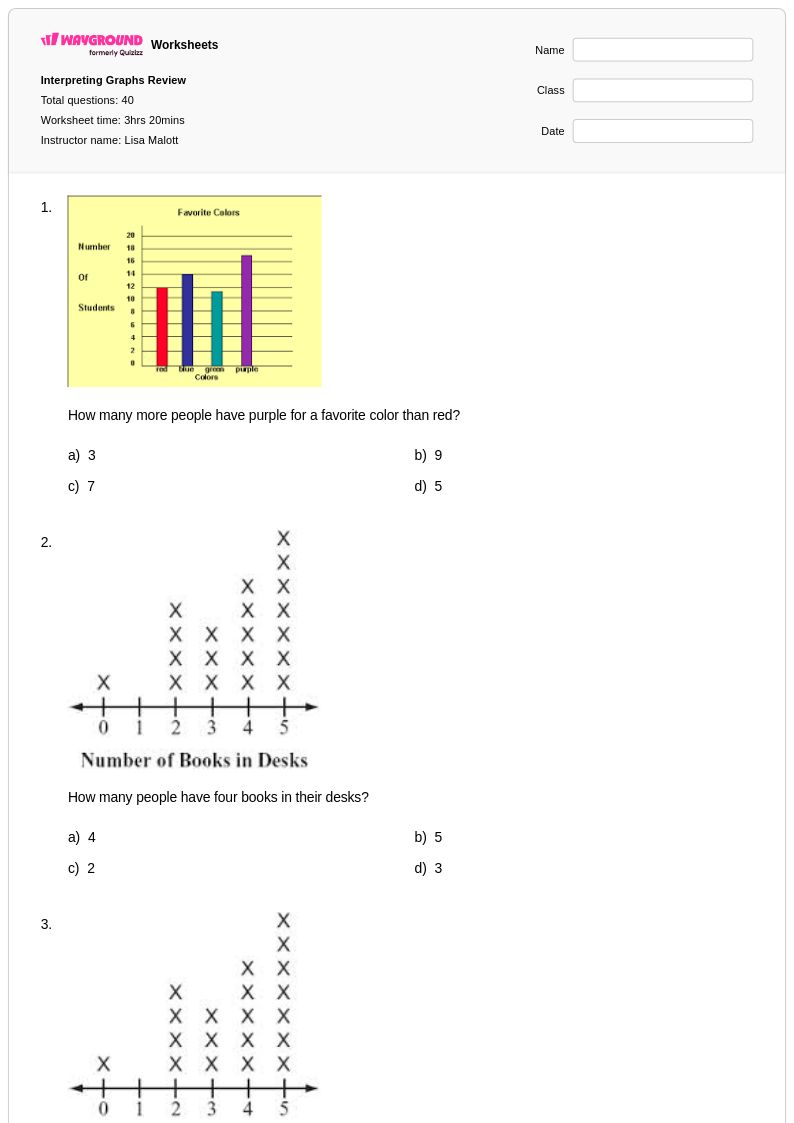
40 Q
6th
Explore Cumulative Frequency Worksheets by Grades
Explore Other Subject Worksheets for grade 6
Explore printable Cumulative Frequency worksheets for Grade 6
Cumulative frequency worksheets for Grade 6 students available through Wayground (formerly Quizizz) provide essential practice in organizing and interpreting data through frequency tables and cumulative frequency distributions. These comprehensive worksheets guide sixth-grade learners through the fundamental process of calculating running totals of frequencies, helping them understand how data accumulates across different categories or intervals. Students develop critical analytical skills as they work through practice problems that involve creating cumulative frequency tables, reading and interpreting cumulative frequency graphs, and understanding the relationship between individual frequencies and their cumulative counterparts. Each worksheet includes detailed answer keys and is available as free printables in PDF format, ensuring teachers have immediate access to solutions while students receive structured practice in this foundational statistical concept.
Wayground (formerly Quizizz) empowers educators with an extensive collection of teacher-created cumulative frequency resources, drawing from millions of high-quality worksheets that support diverse learning needs in Grade 6 mathematics classrooms. The platform's robust search and filtering capabilities allow teachers to quickly locate materials aligned with specific curriculum standards, while differentiation tools enable customization for students requiring additional support or advanced challenges. These versatile resources are available in both printable PDF formats and interactive digital versions, providing flexibility for various instructional approaches and learning environments. Teachers can seamlessly integrate these cumulative frequency worksheets into lesson planning for initial skill introduction, targeted remediation sessions, or enrichment activities, ensuring every student develops confidence in analyzing data distributions and understanding how individual data points contribute to overall patterns and trends.
FAQs
How do I teach cumulative frequency to Grade 6 students?
What cumulative frequency exercises are appropriate for Grade 6?
What cumulative frequency mistakes are common in Grade 6?
How can I use Grade 6 cumulative frequency worksheets on Wayground?
How does Grade 6 cumulative frequency practice support Common Core math?
What grade do students learn cumulative frequency?
How can I differentiate Grade 6 cumulative frequency worksheets?