
20 Q
6th - Uni
20 Q
7th - Uni
12 Q
9th - 10th
20 Q
7th - Uni
20 Q
6th - Uni
20 Q
9th - Uni
20 Q
8th - Uni
20 Q
8th - Uni
20 Q
7th - Uni
20 Q
7th - Uni
20 Q
3rd - Uni
20 Q
8th - Uni
20 Q
7th - Uni
20 Q
8th - Uni
20 Q
6th - Uni
20 Q
10th
20 Q
8th - Uni
20 Q
7th - Uni
15 Q
10th
14 Q
9th - Uni
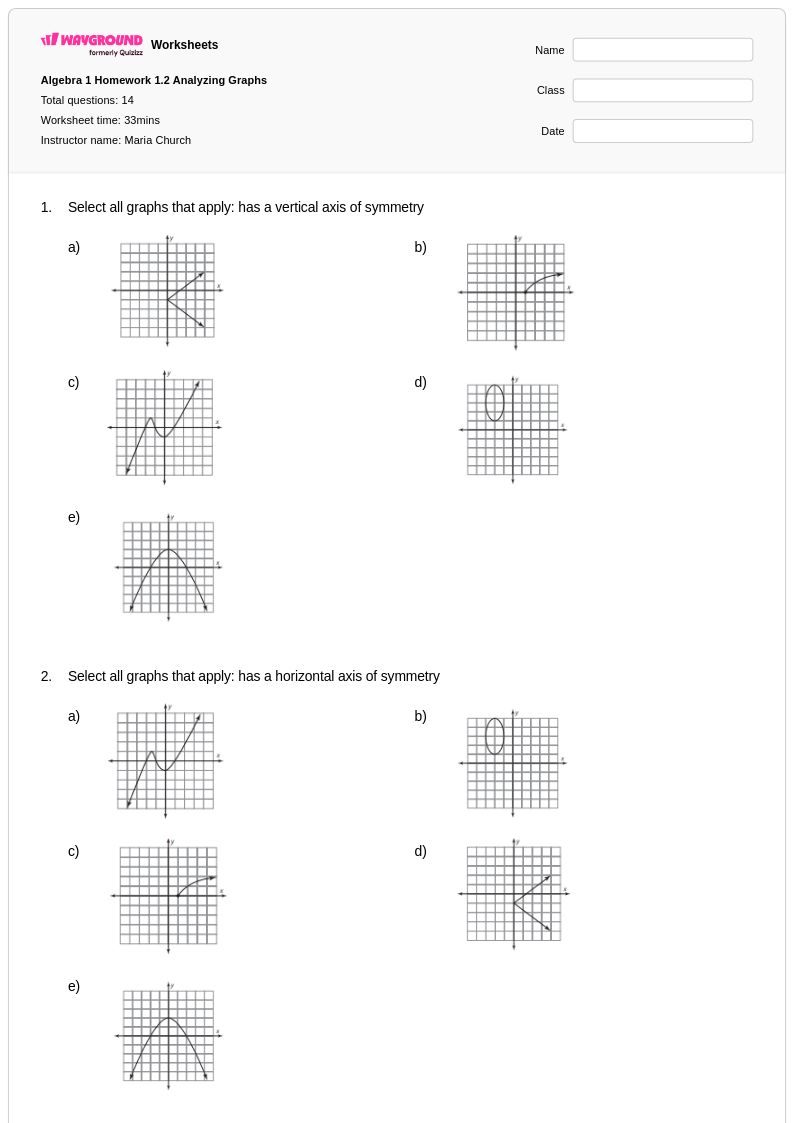
14 Q
8th - 10th
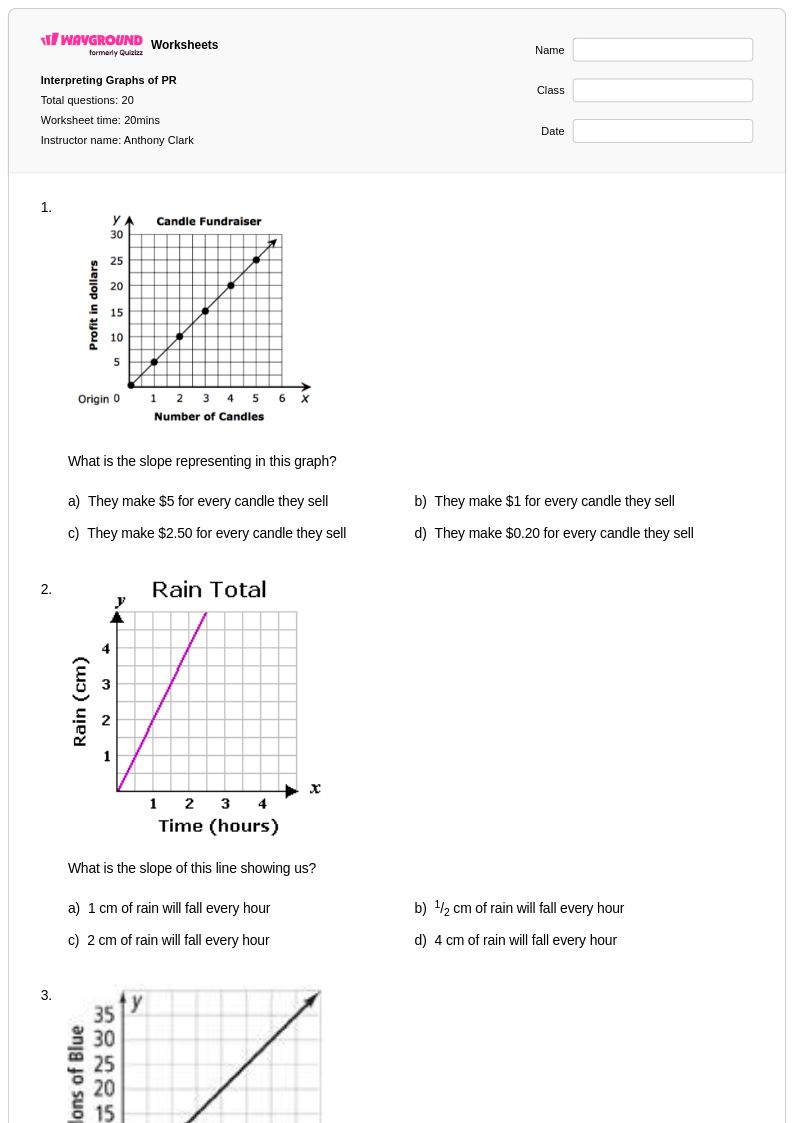
20 Q
8th - Uni
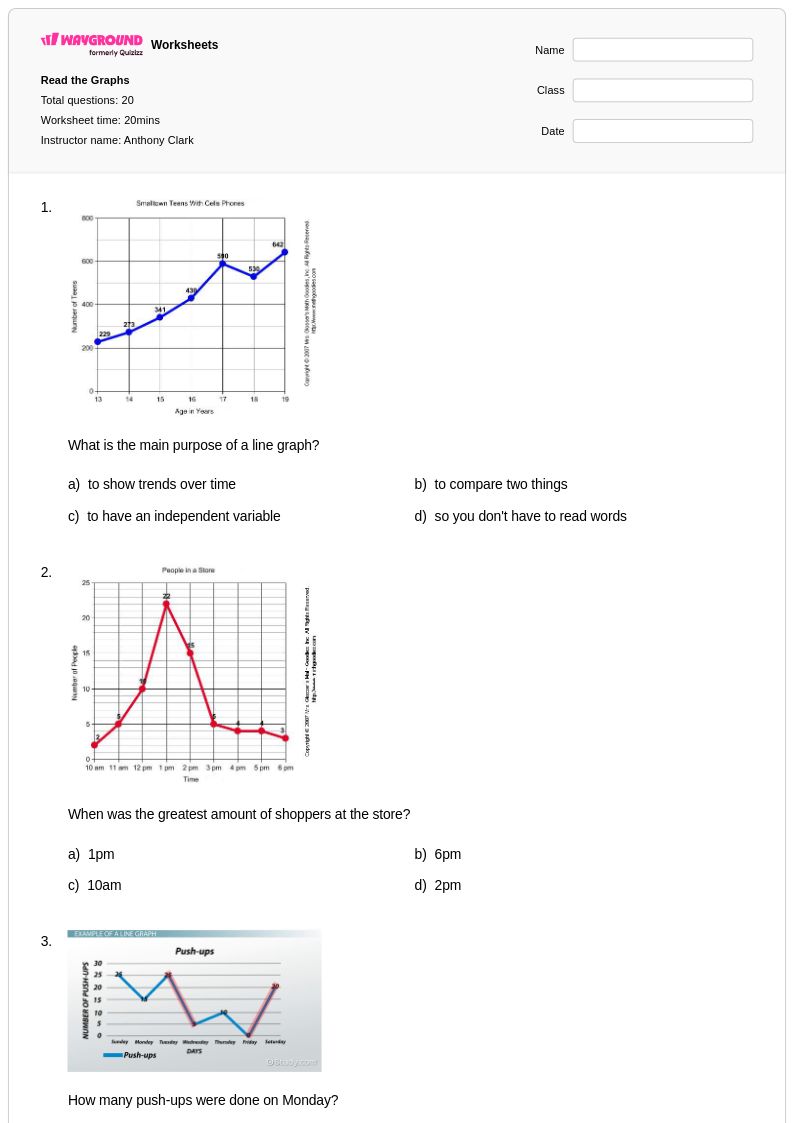
20 Q
5th - Uni
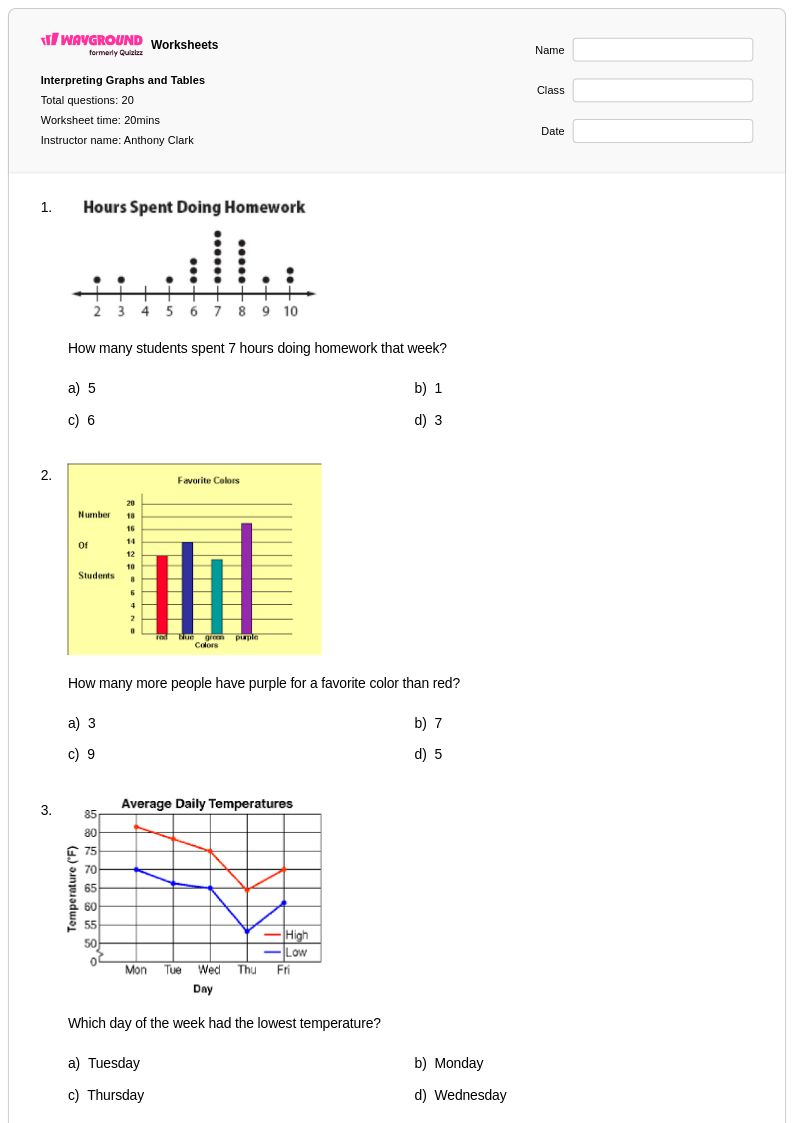
20 Q
8th - Uni
Explore Distance and Time Graphs Worksheets by Grades
Explore Other Subject Worksheets for grade 10
Explore printable Distance and Time Graphs worksheets for Grade 10
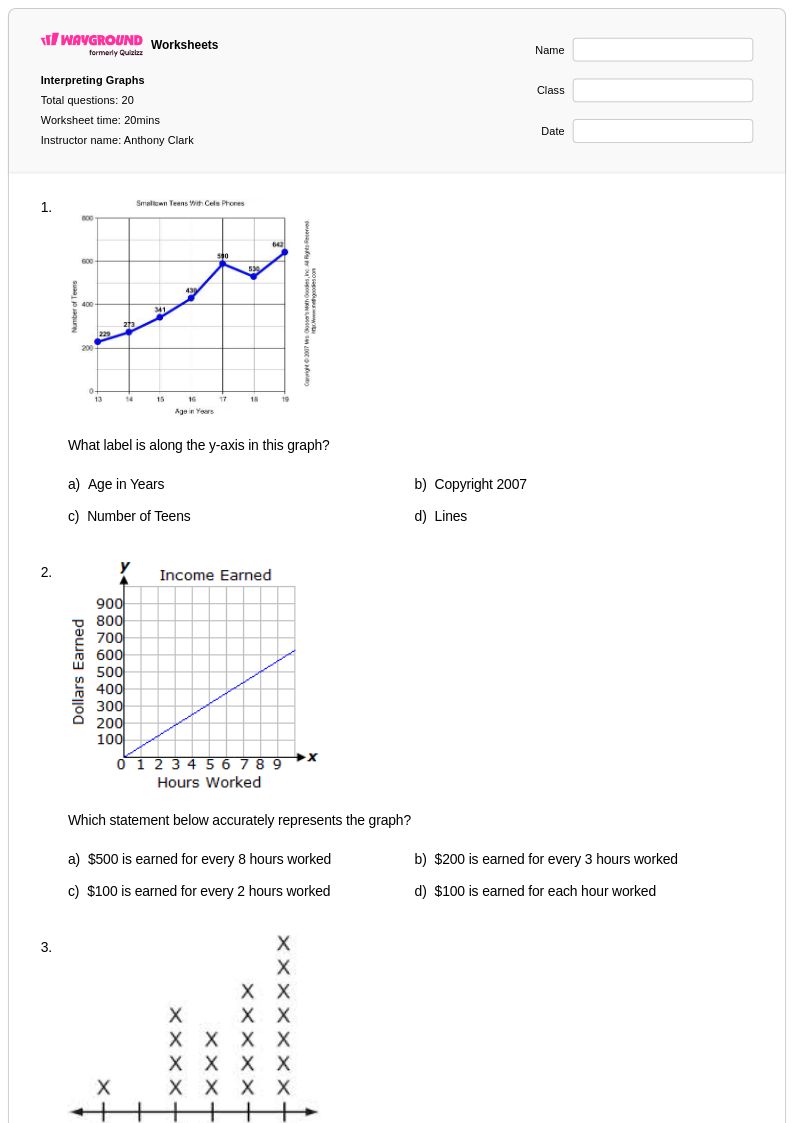
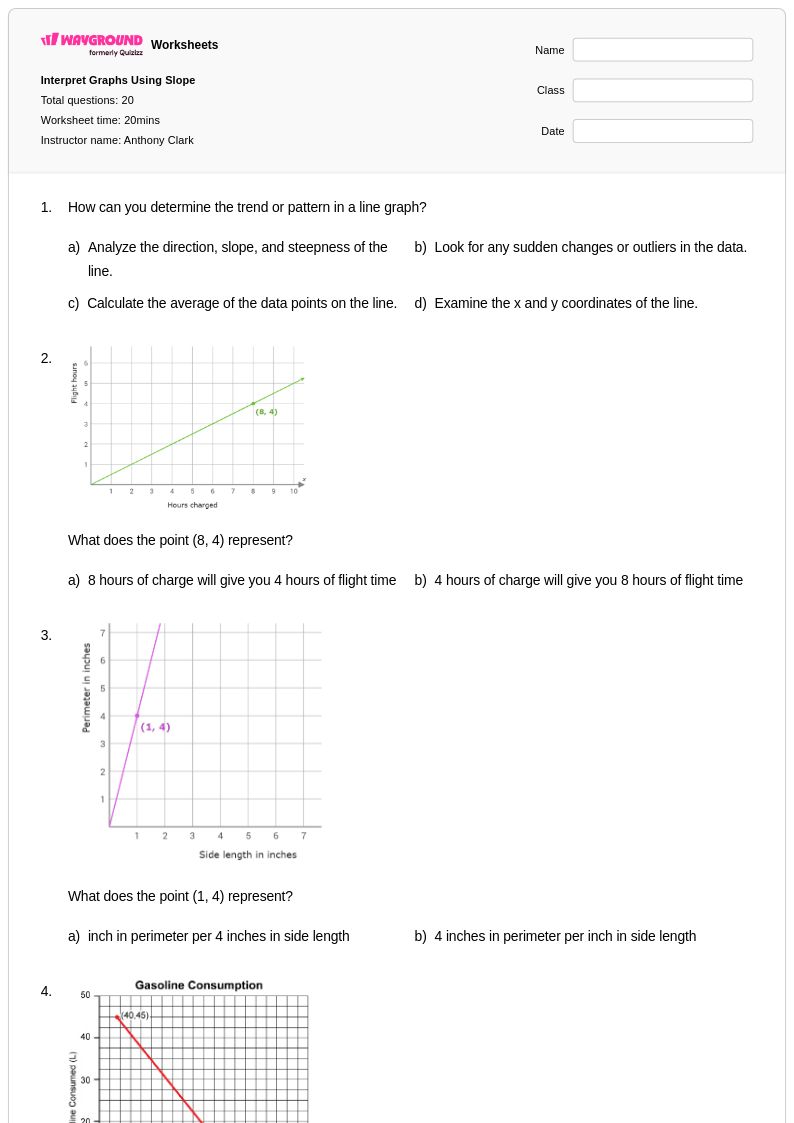
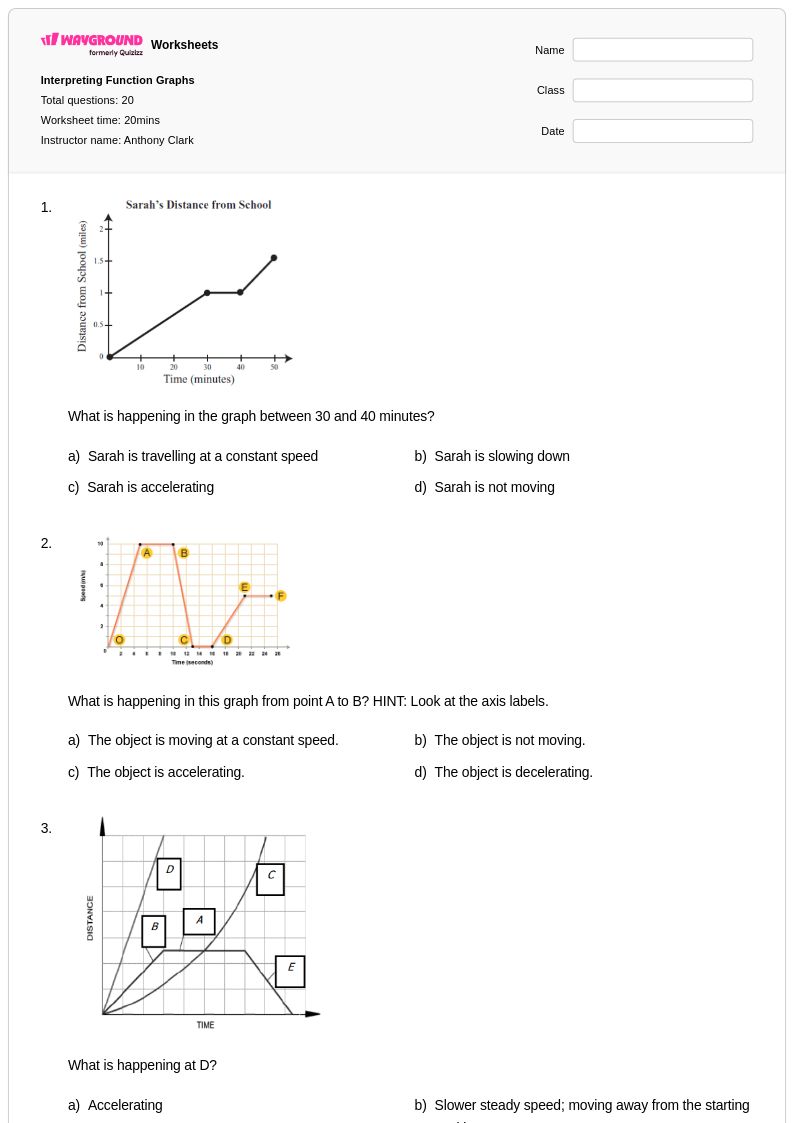
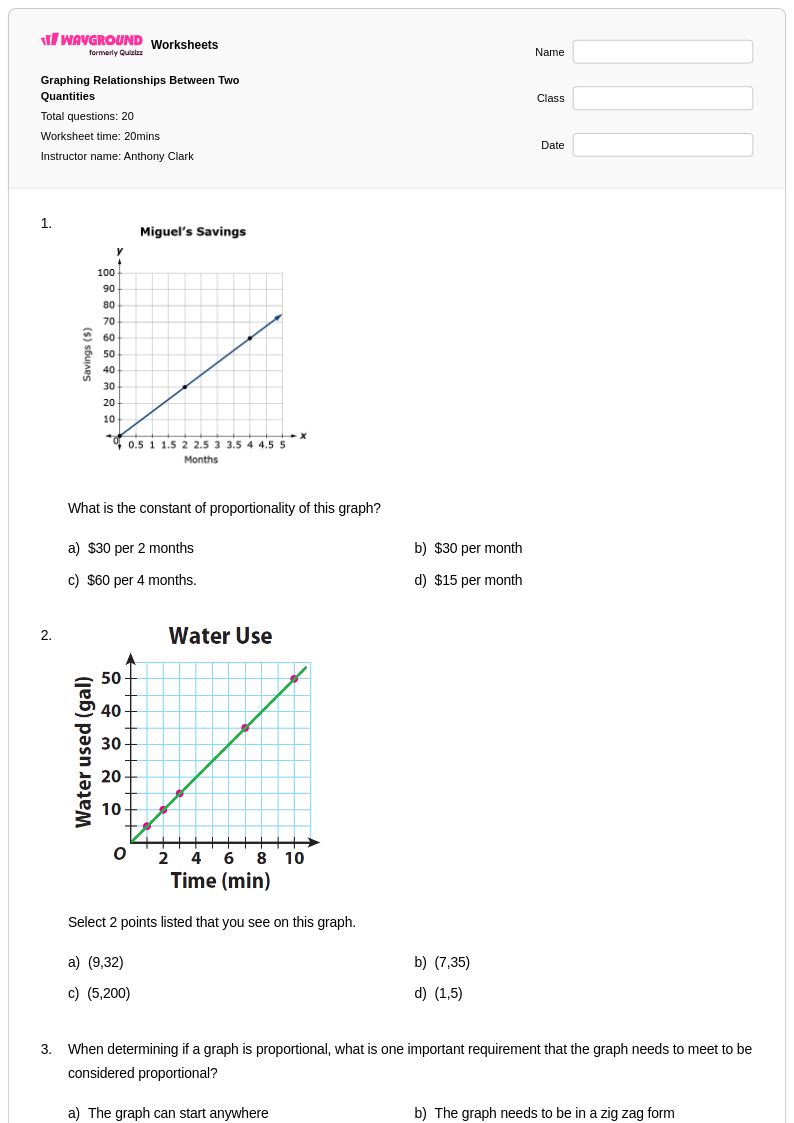
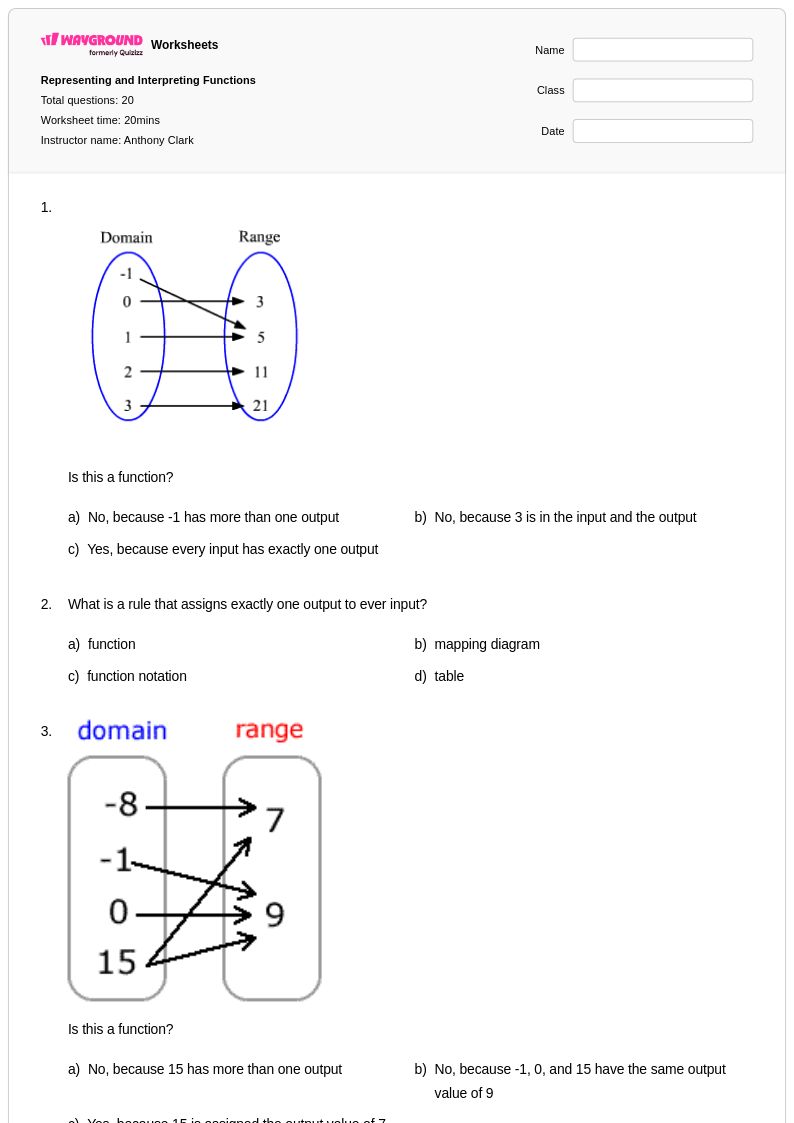
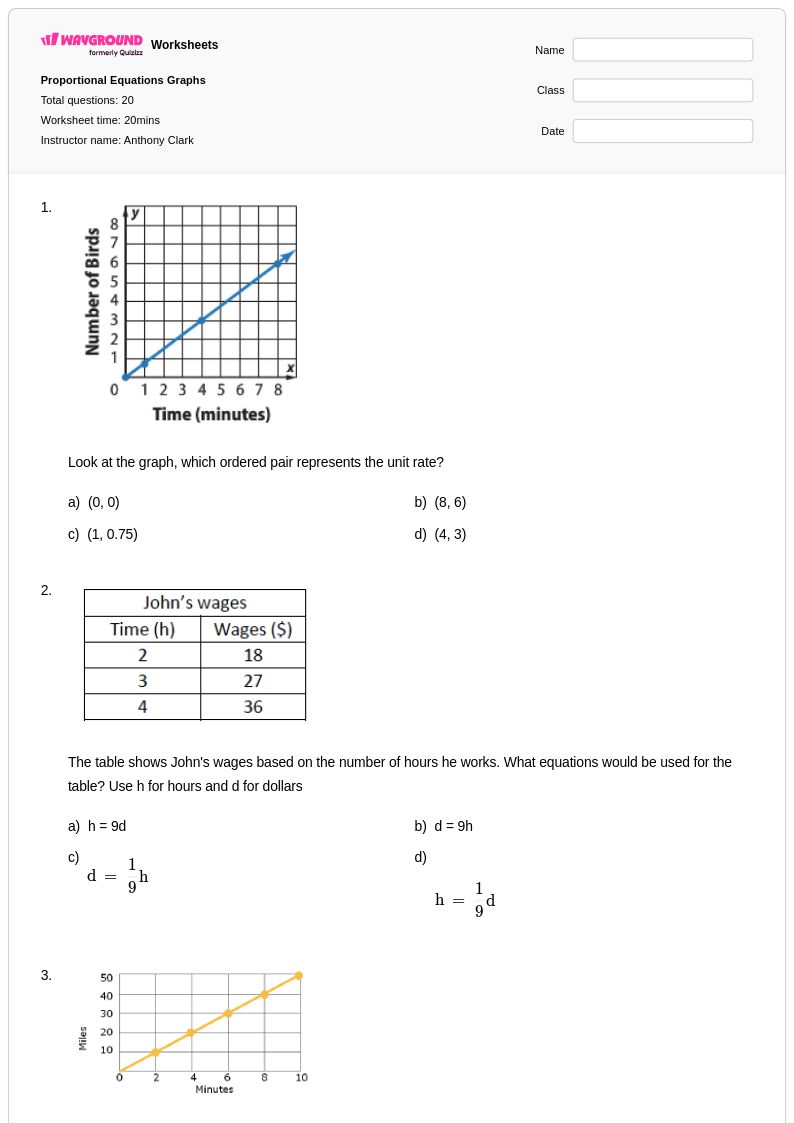
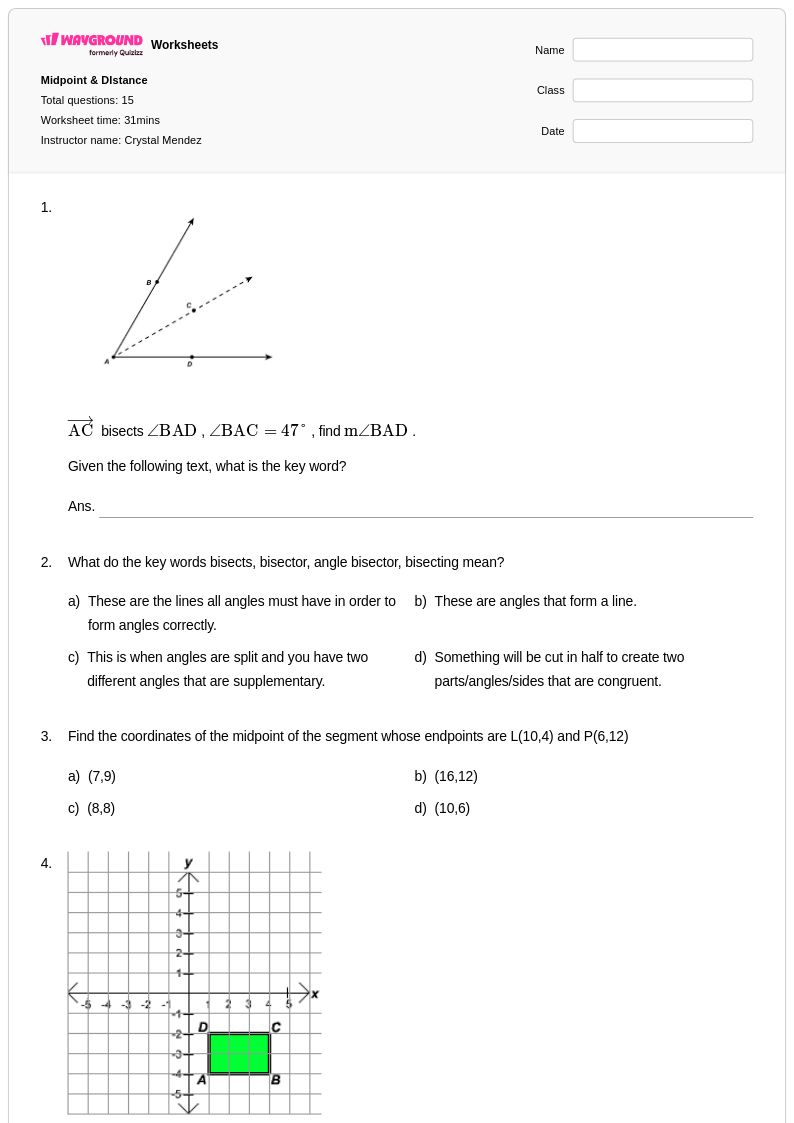
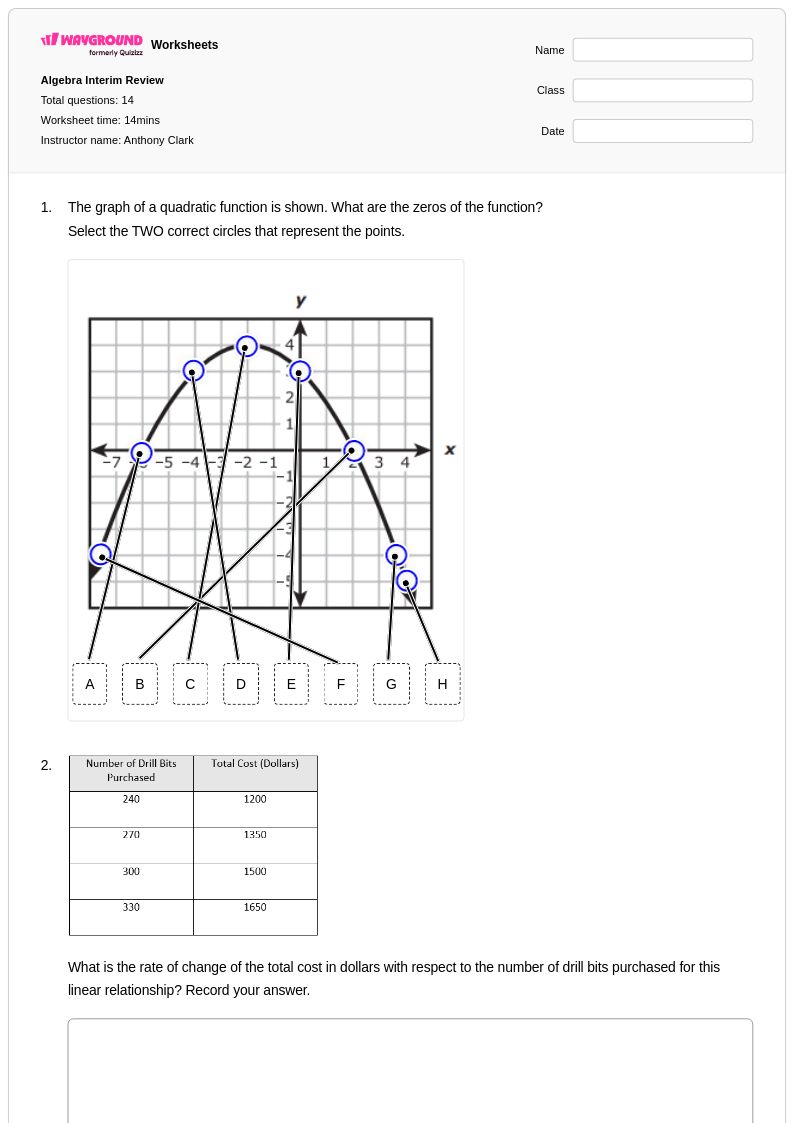
Distance and time graphs represent a fundamental concept in Grade 10 mathematics that bridges algebraic thinking with real-world applications of motion and velocity. Wayground's comprehensive collection of distance and time graph worksheets provides students with structured practice in interpreting, analyzing, and creating these essential mathematical representations. These expertly designed resources strengthen critical skills including reading coordinate points, calculating slopes to determine speed, identifying periods of rest or constant motion, and understanding the relationship between distance traveled and elapsed time. Each worksheet collection includes detailed answer keys and is available as free printable pdf resources, offering practice problems that range from basic graph interpretation to complex multi-step scenarios involving changing velocities and direction reversals.
Wayground, formerly Quizizz, empowers educators with access to millions of teacher-created distance and time graph resources that can be seamlessly integrated into Grade 10 mathematics instruction. The platform's robust search and filtering capabilities allow teachers to quickly locate worksheets aligned with specific curriculum standards and learning objectives, while built-in differentiation tools enable customization for diverse student needs and ability levels. These versatile materials are available in both printable and digital formats, including downloadable pdf versions, making them ideal for classroom instruction, homework assignments, remediation sessions, and enrichment activities. Teachers can efficiently plan comprehensive units on graphical analysis, provide targeted skill practice for struggling learners, and offer advanced challenges for students ready to explore more complex motion scenarios, all while maintaining consistent access to high-quality mathematical content that supports deep conceptual understanding.
FAQs
How do I teach distance and time graphs to Grade 10 students?
What exercises help students practice distance and time graphs?
What mistakes do students make when reading distance-time graphs?
How can I use these Grade 10 distance and time graph worksheets?
How do distance-time graphs fit into the Common Core math progression?
How can I differentiate distance-time graph practice?
What grade do students learn distance and time graphs?