
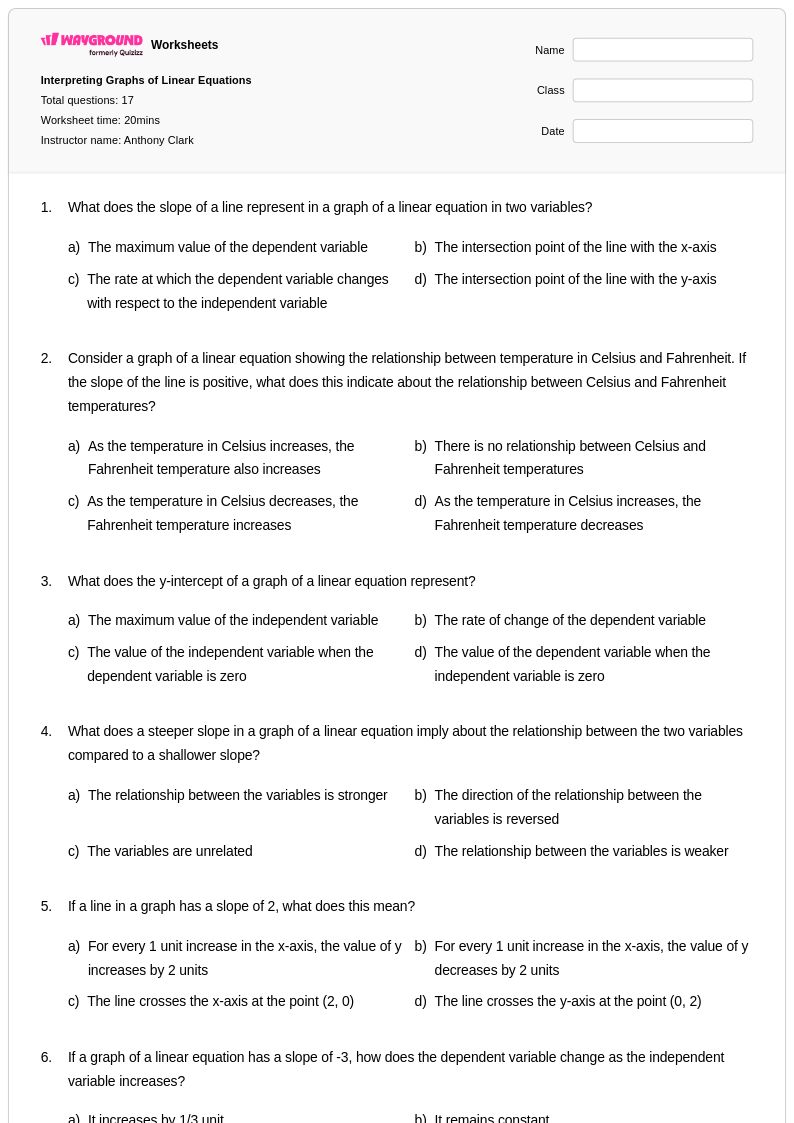
20 Q
9th - Uni
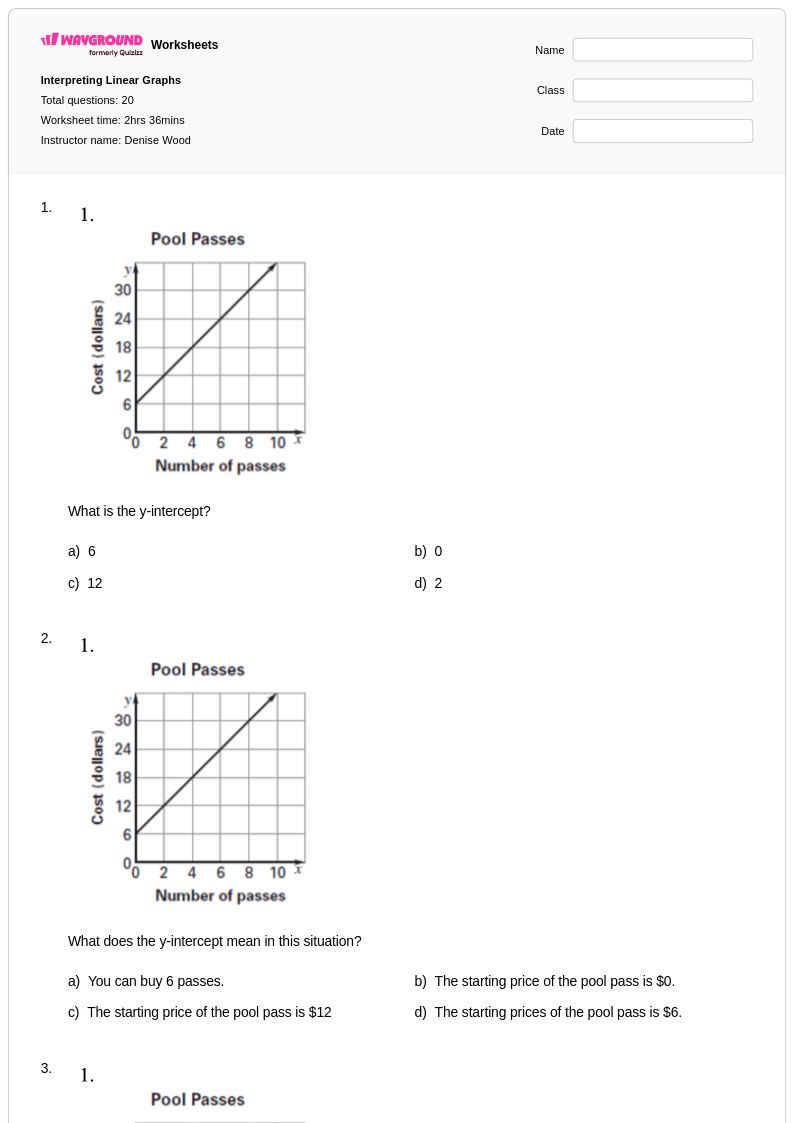
20 Q
9th - 12th
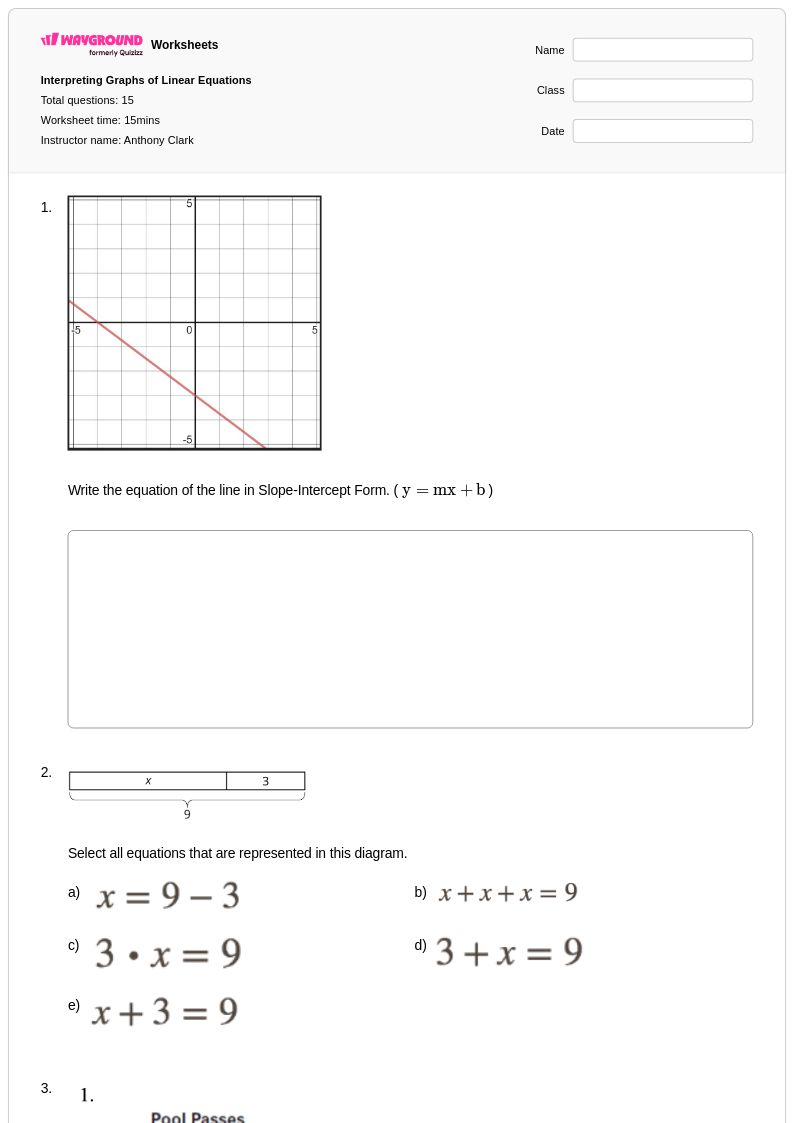
15 Q
9th - Uni
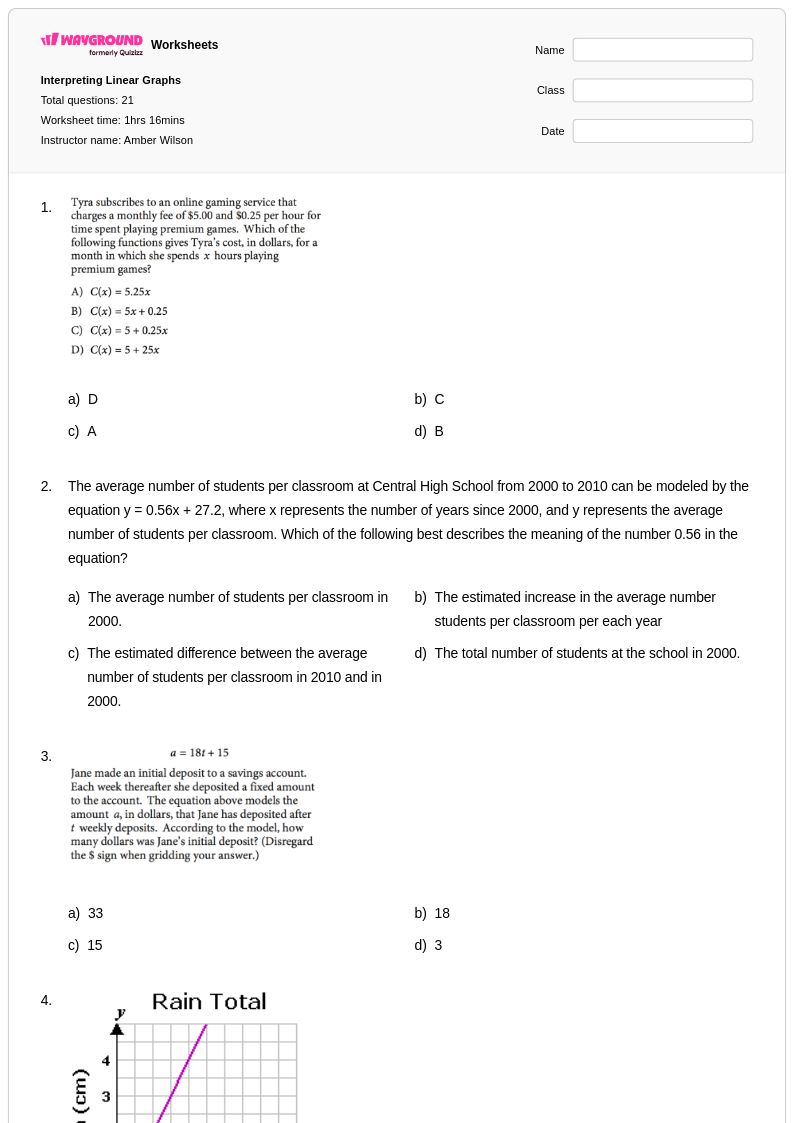
21 Q
8th - 12th
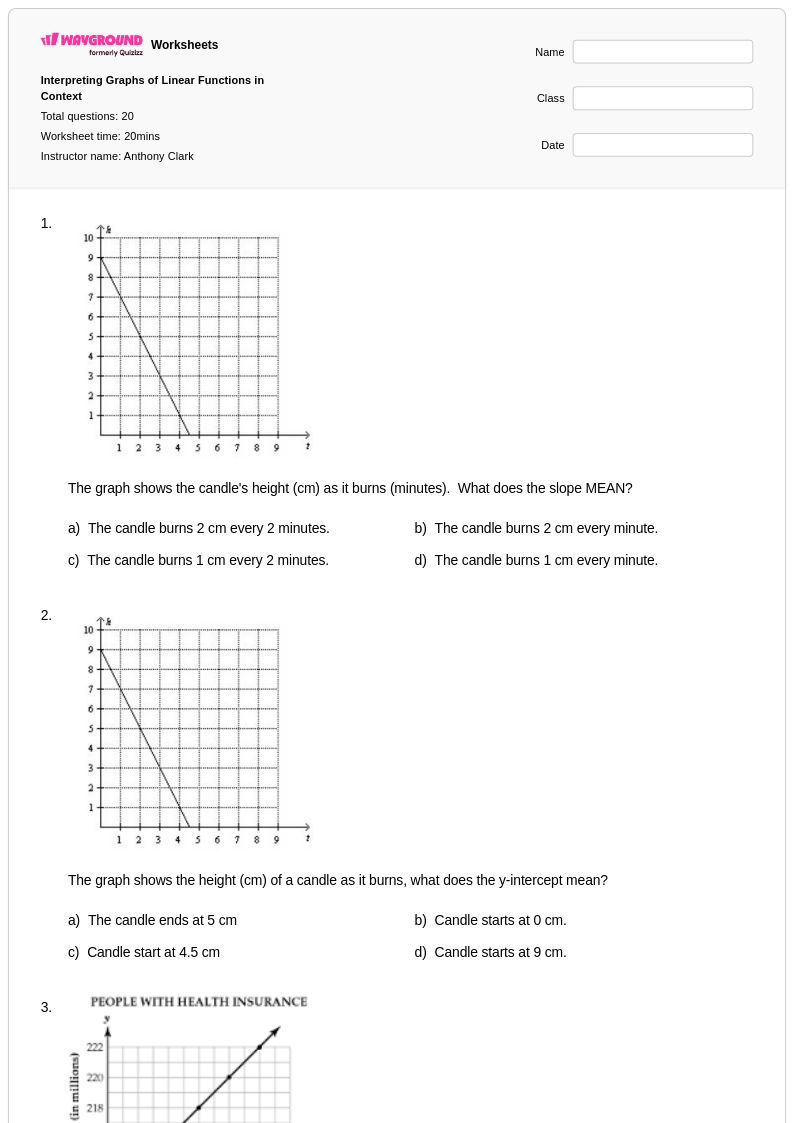
20 Q
9th - Uni
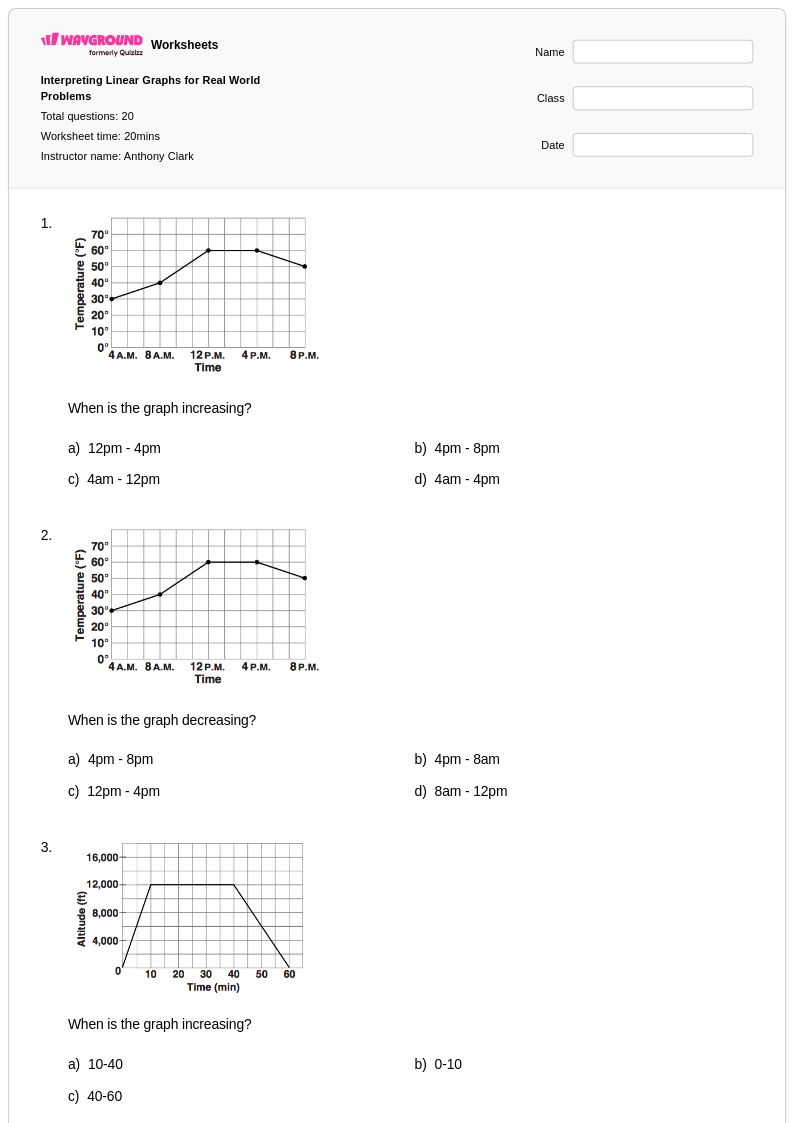
20 Q
9th - Uni
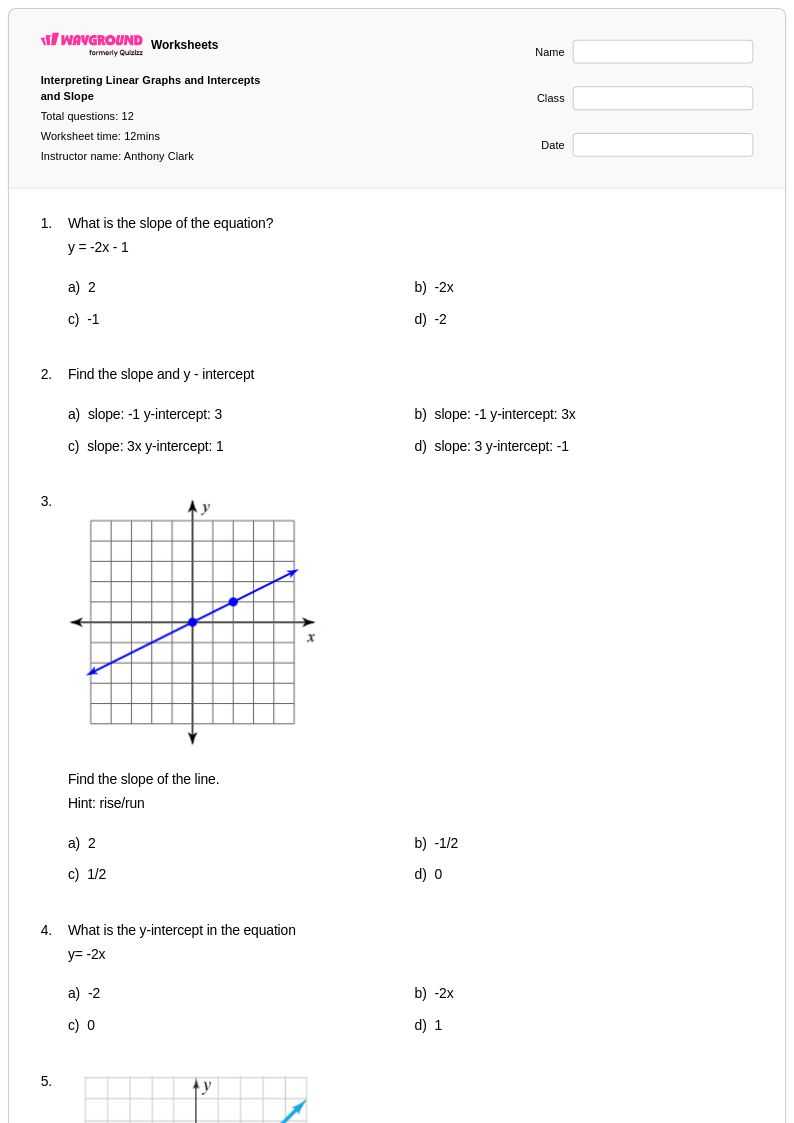
12 Q
9th - Uni
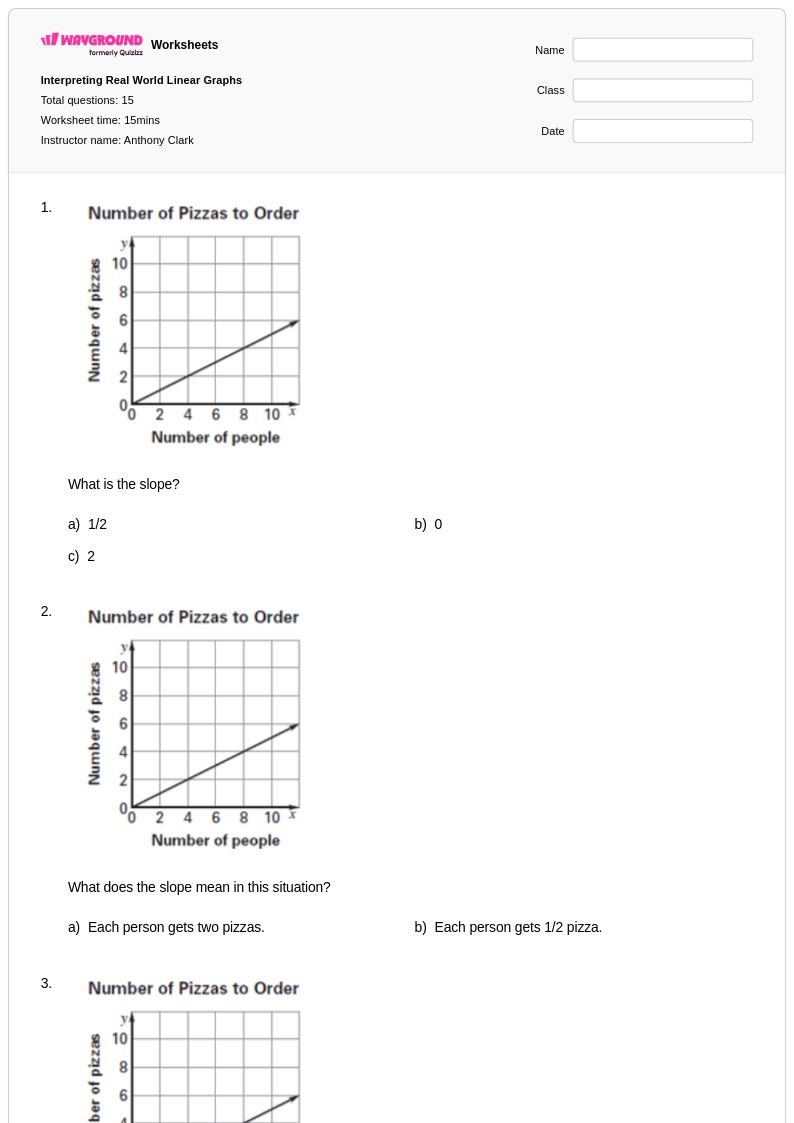
15 Q
8th - Uni
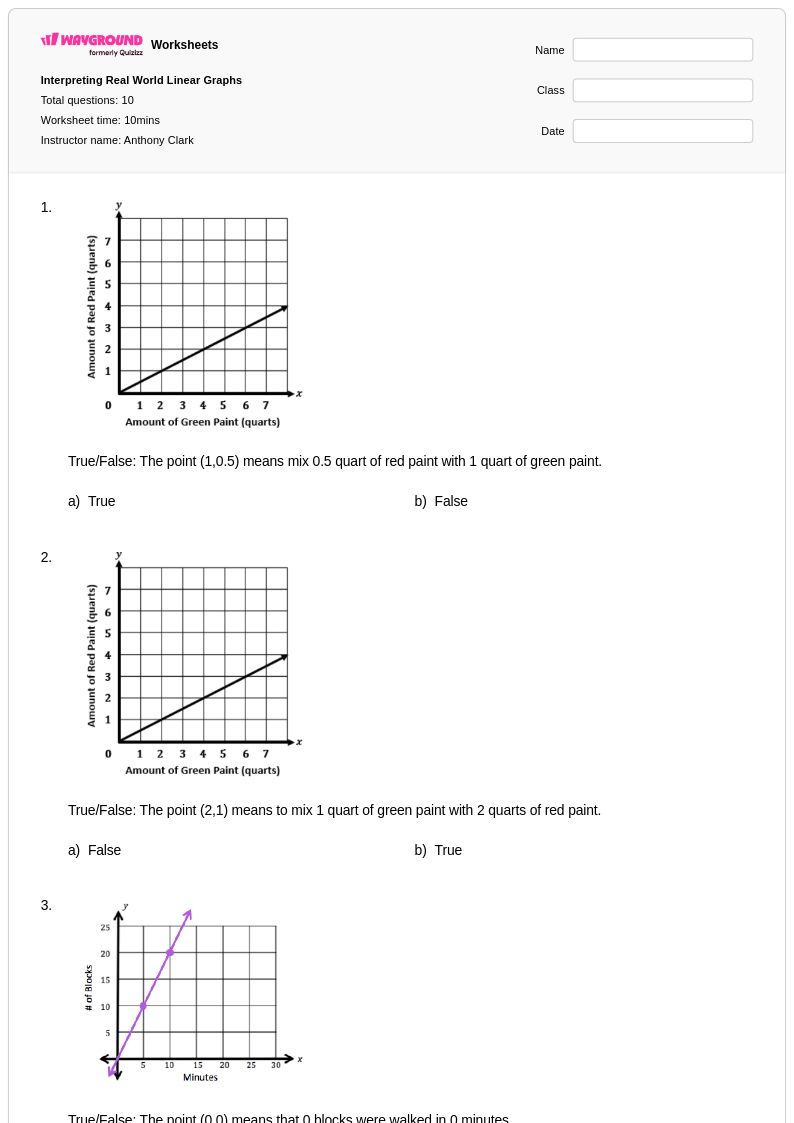
10 Q
8th - Uni
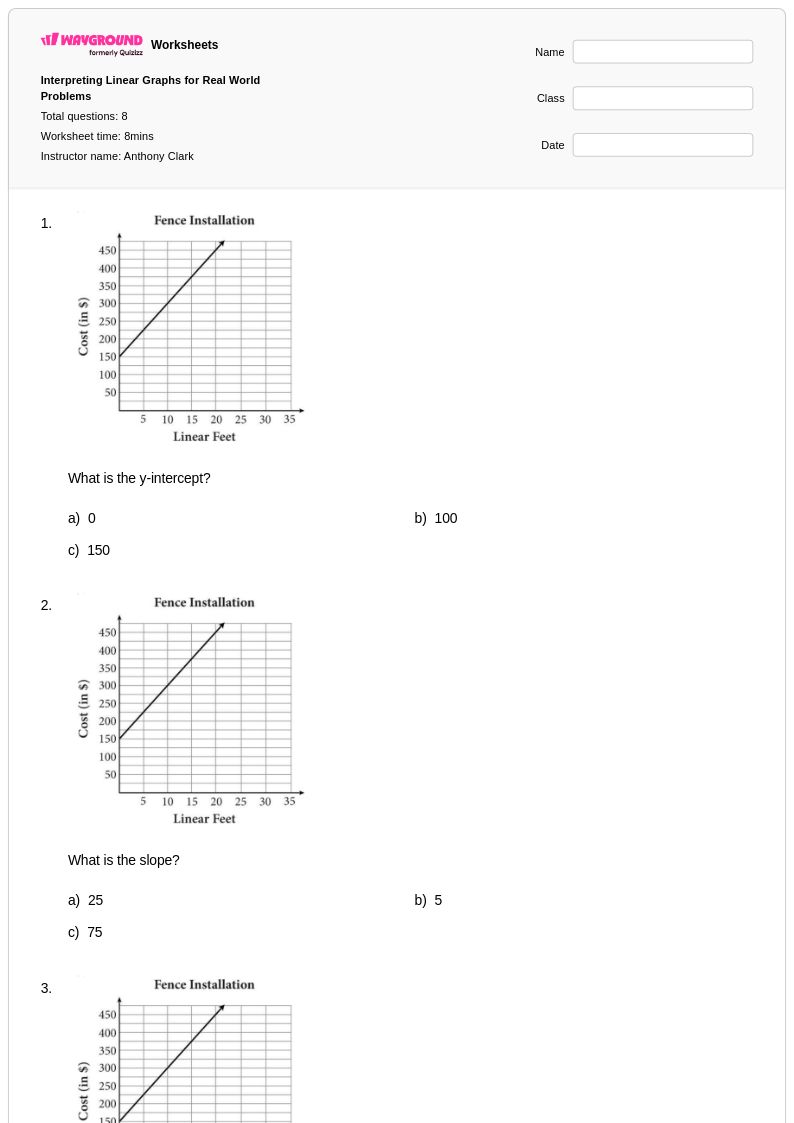
8 Q
9th - Uni
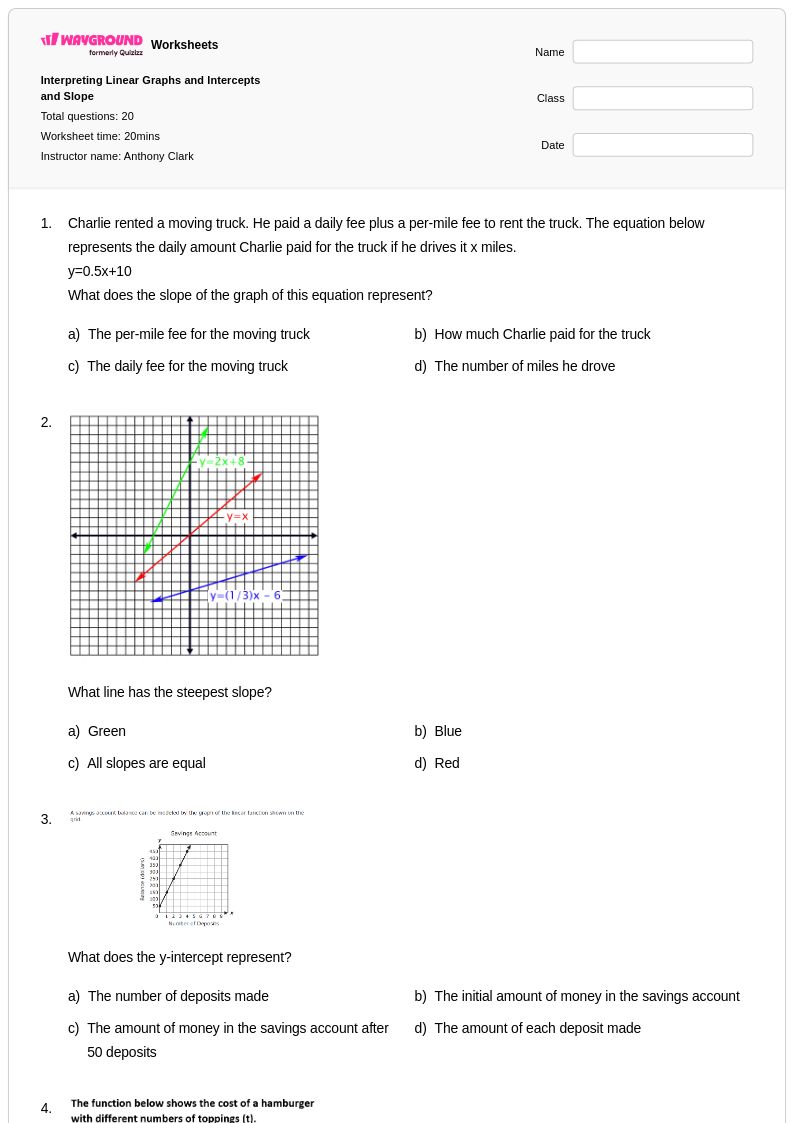
20 Q
9th - Uni
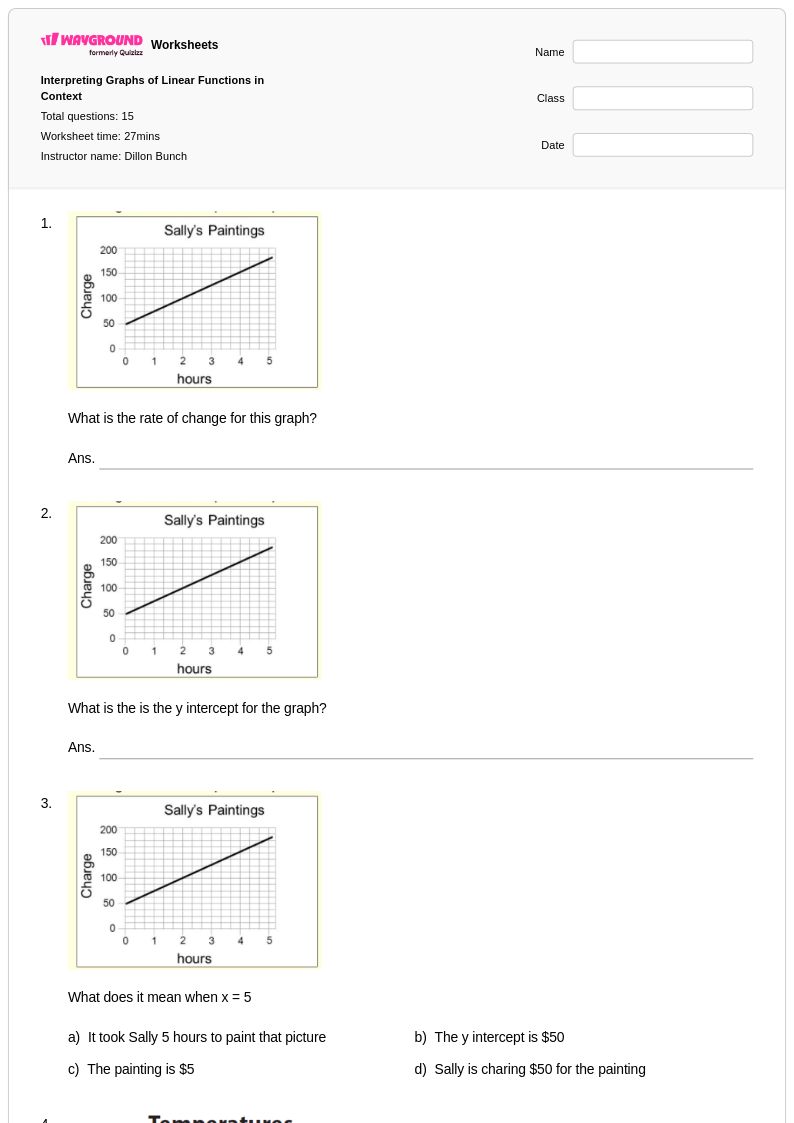
15 Q
8th - 10th
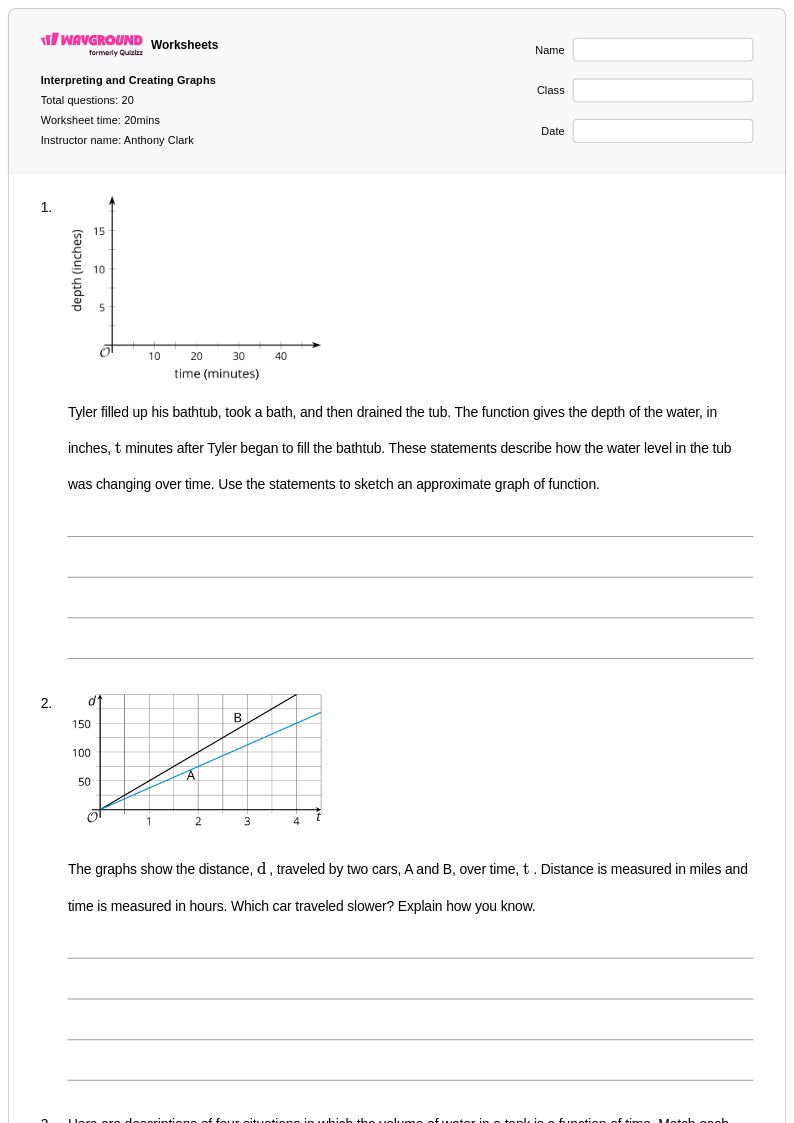
20 Q
6th - Uni
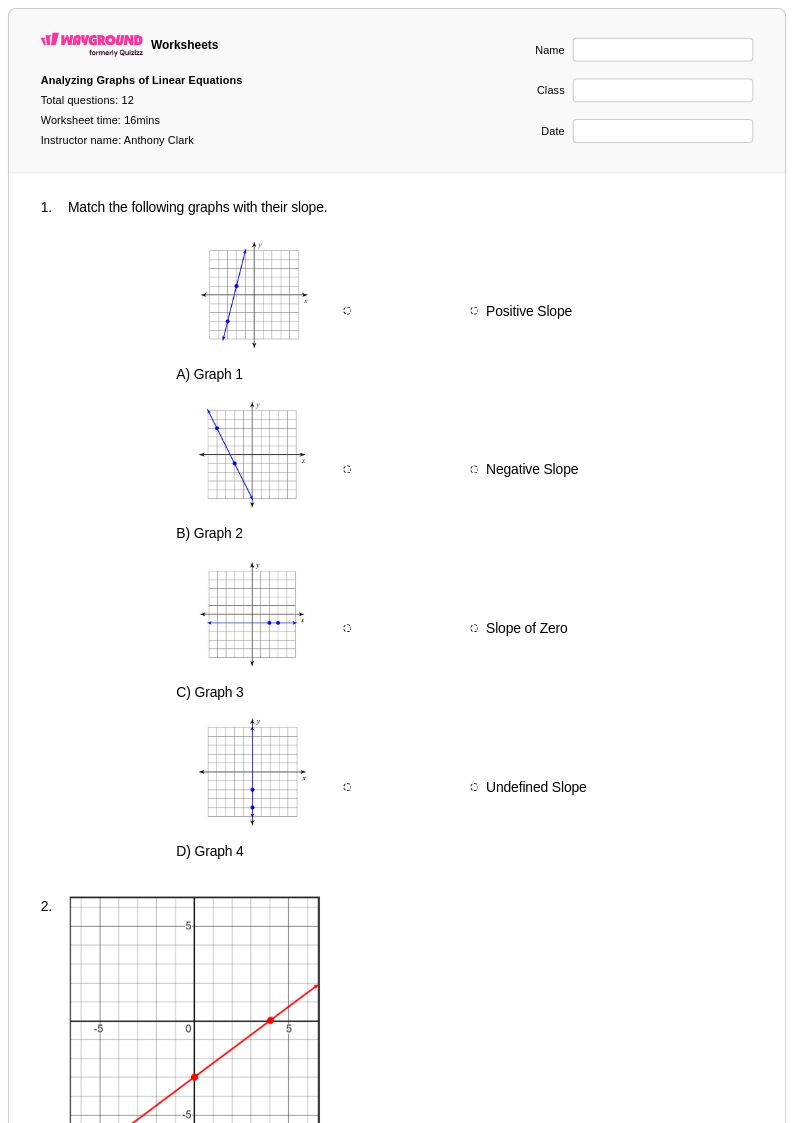
16 Q
8th - Uni
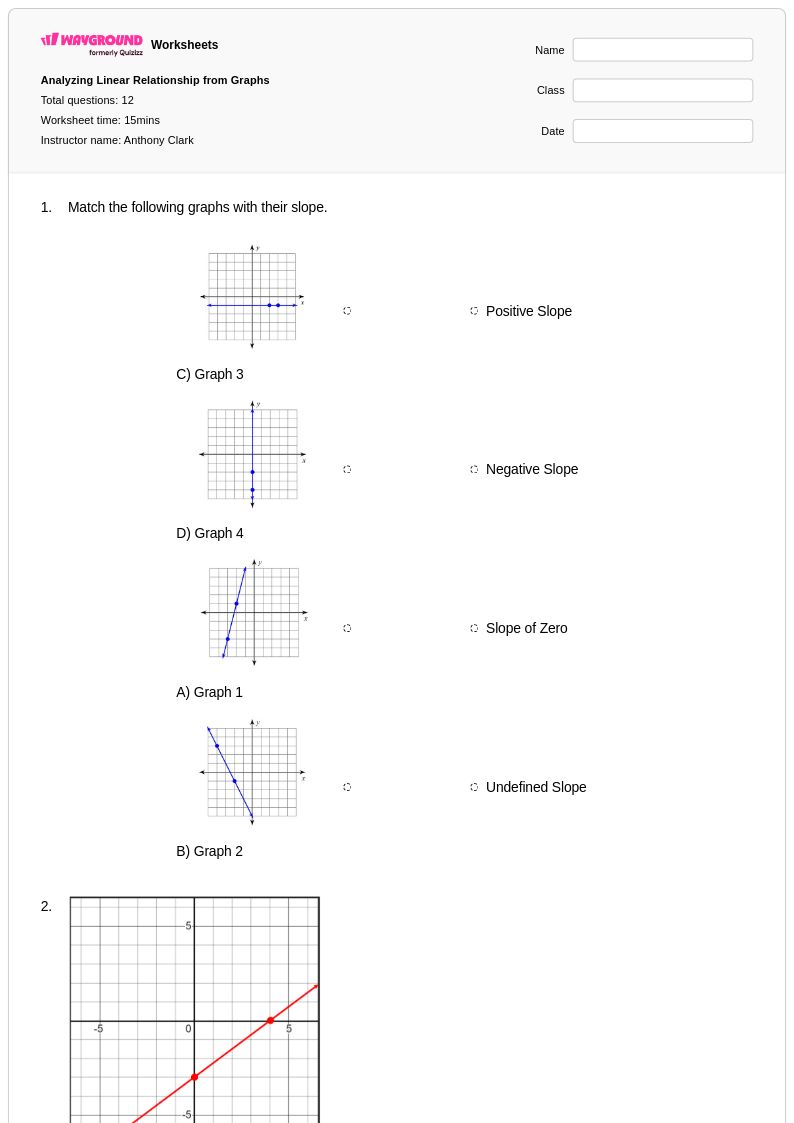
15 Q
8th - Uni
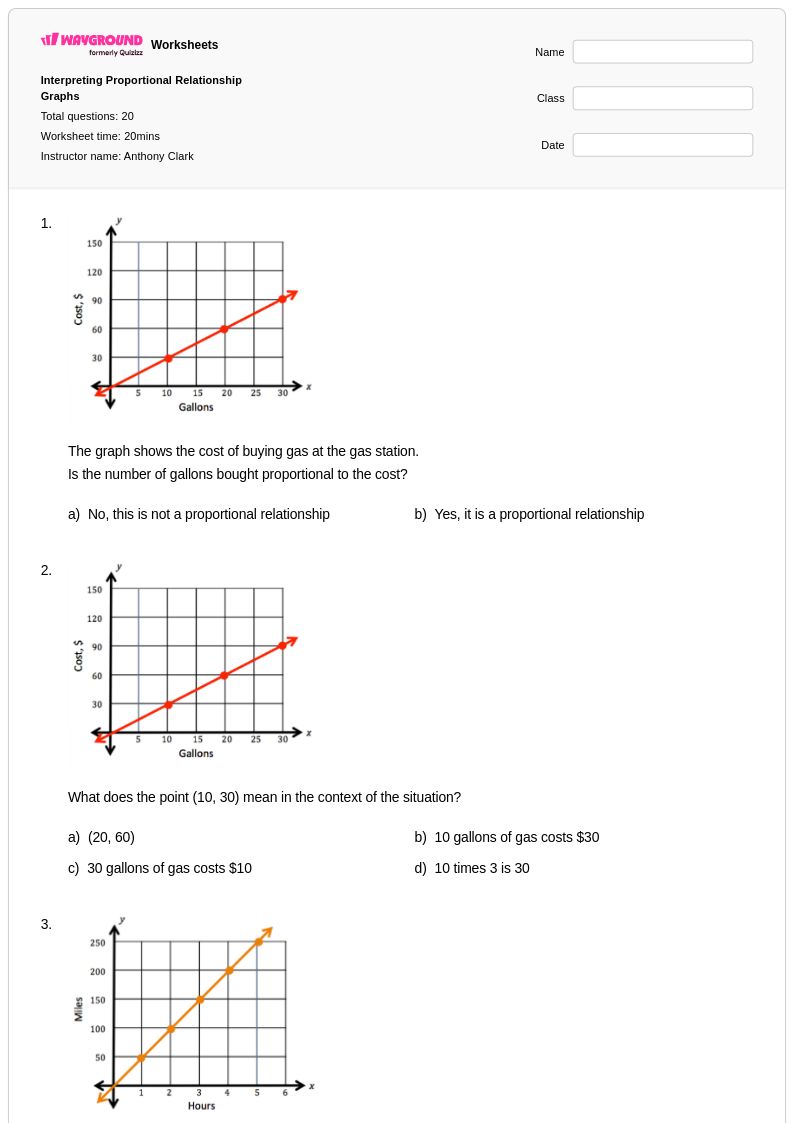
20 Q
7th - Uni
20 Q
6th - Uni
20 Q
8th - Uni
20 Q
9th - Uni
20 Q
7th - Uni
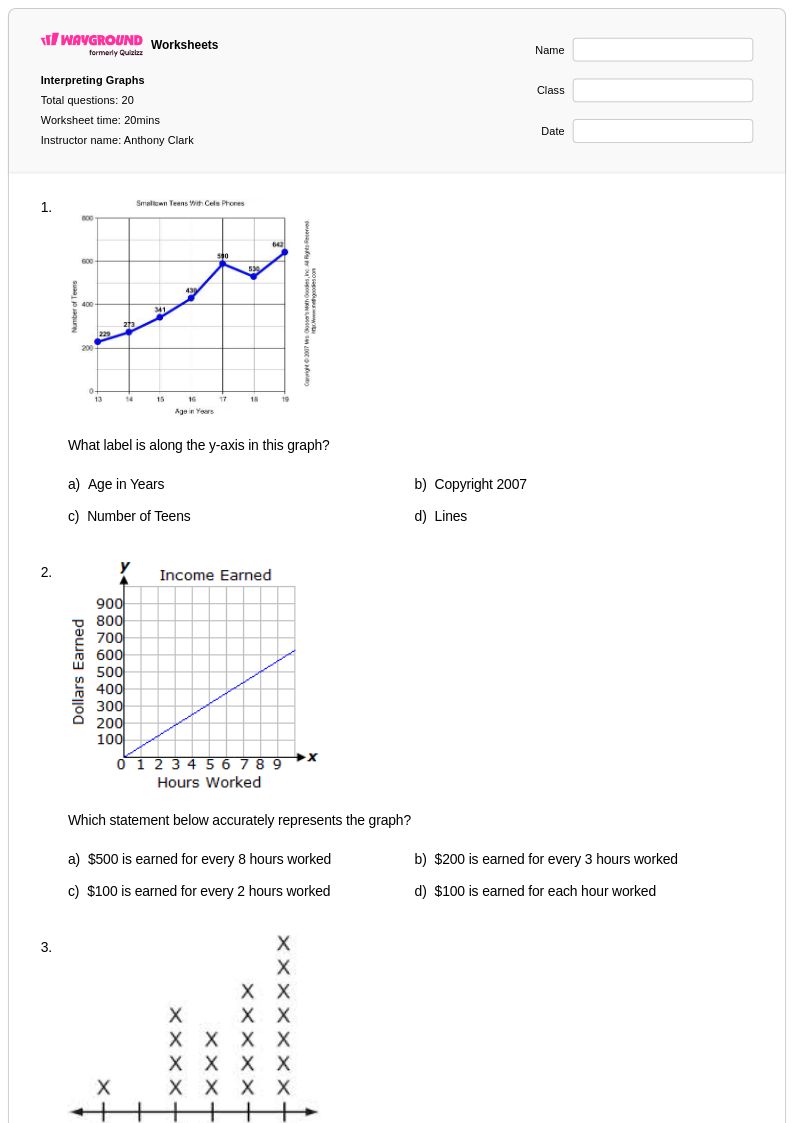
20 Q
6th - Uni
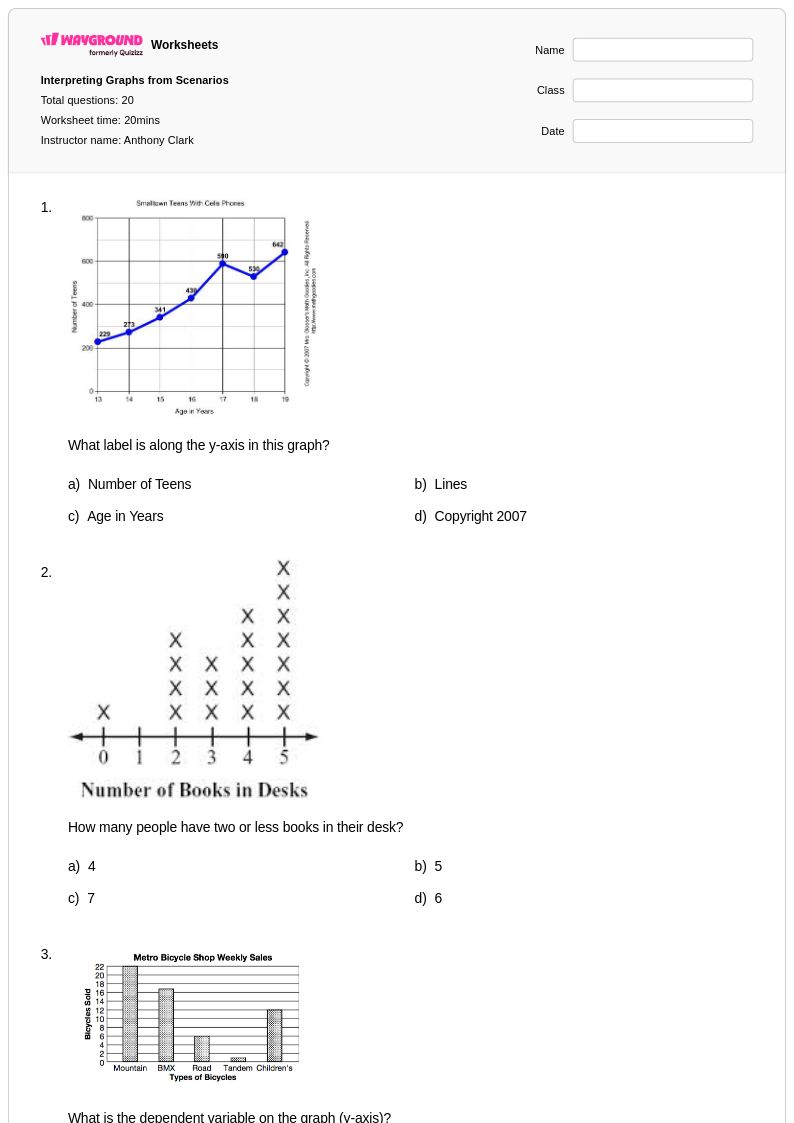
20 Q
6th - Uni
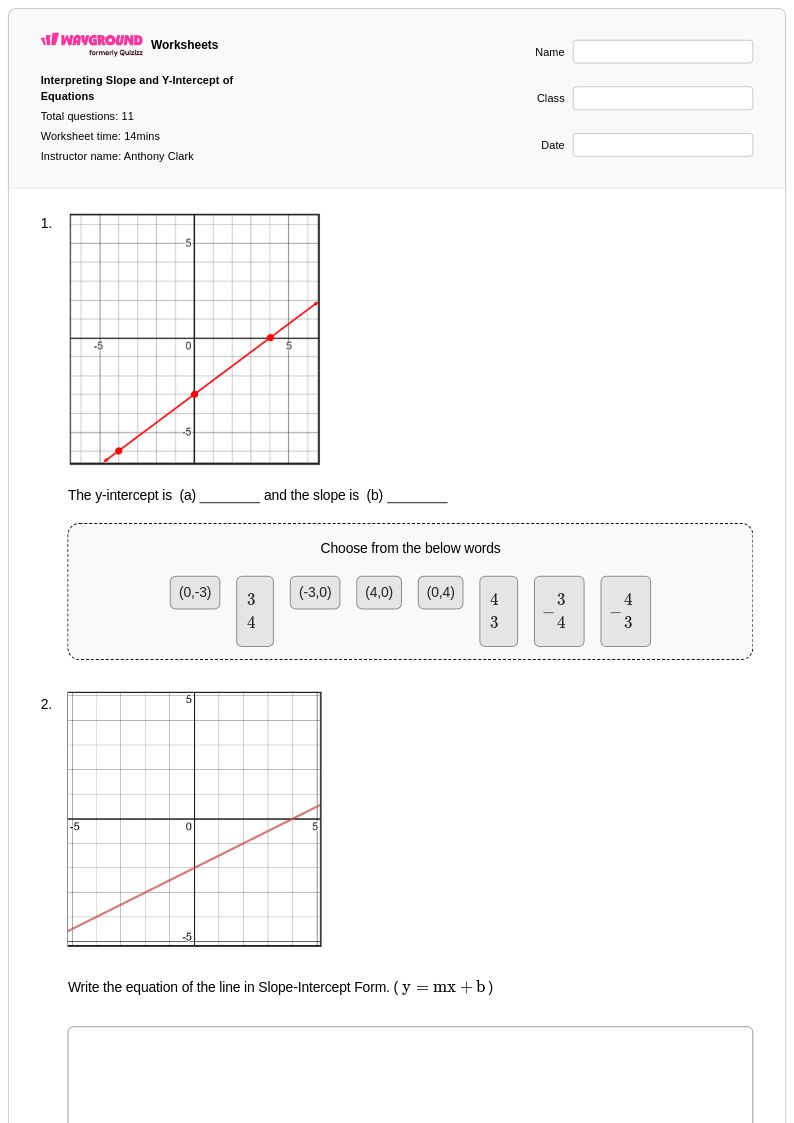
14 Q
9th - Uni
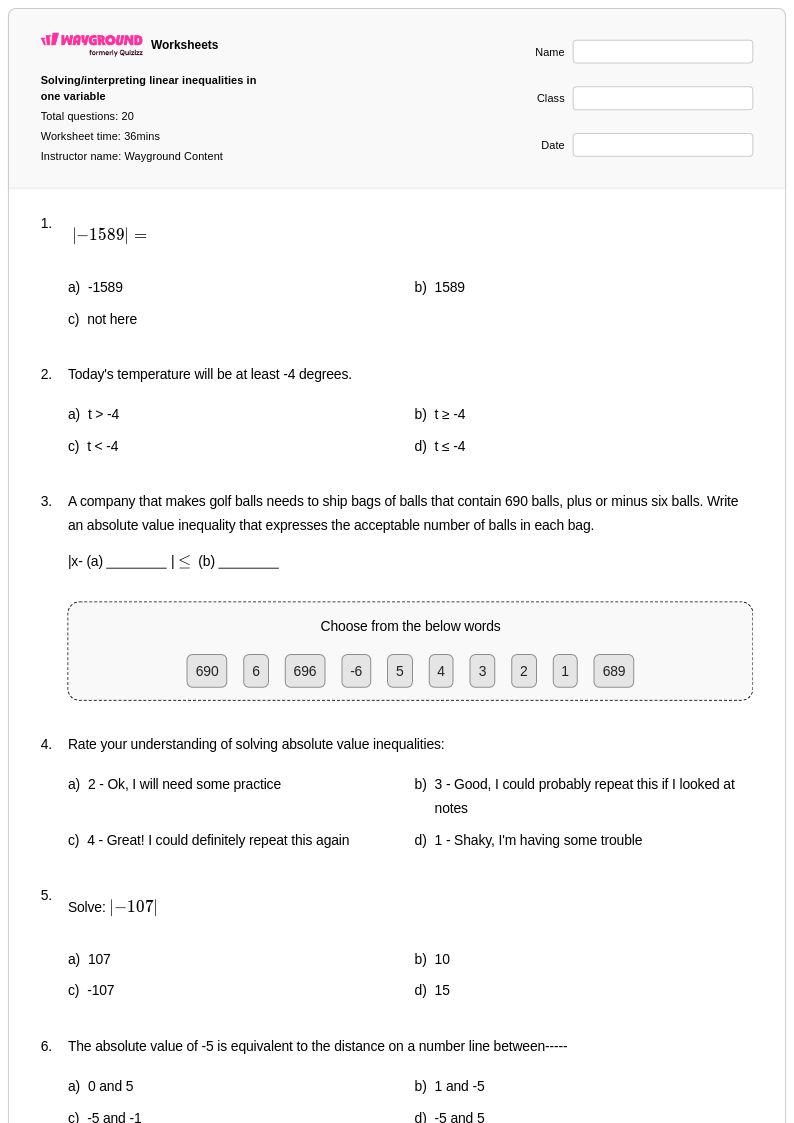
20 Q
9th - 12th
Explore Interpreting Linear Graphs Worksheets by Grades
Explore Other Subject Worksheets for grade 10
Explore printable Interpreting Linear Graphs worksheets for Grade 10
Interpreting linear graphs represents a fundamental skill in Grade 10 mathematics that bridges algebraic concepts with visual data representation. Wayground's comprehensive collection of interpreting linear graphs worksheets provides students with systematic practice in analyzing slope, y-intercepts, and the relationships between variables displayed in linear format. These carefully designed practice problems guide learners through essential skills including determining rate of change from graphical data, identifying key features of linear relationships, and translating between different representations of linear functions. Each worksheet includes a complete answer key and is available as a free printable pdf, allowing students to work independently while building confidence in their graph interpretation abilities.
Wayground, formerly Quizizz, empowers educators with access to millions of teacher-created resources specifically designed for interpreting linear graphs instruction at the Grade 10 level. The platform's robust search and filtering capabilities enable teachers to quickly locate worksheets that align with specific curriculum standards and learning objectives, while built-in differentiation tools support diverse learner needs through varied complexity levels and problem types. Teachers can seamlessly customize existing materials or create original content, with all resources available in both printable pdf format and interactive digital versions. This flexibility proves invaluable for lesson planning, targeted remediation for struggling students, enrichment activities for advanced learners, and ongoing skill practice that reinforces mathematical understanding of linear relationships and graphical analysis.
FAQs
How do I teach Grade 10 students to interpret linear graphs?
What exercises help students practice interpreting linear graphs?
What mistakes do students commonly make when interpreting linear graphs?
How can I use these interpreting linear graphs worksheets in class?
How does interpreting linear graphs fit into the Common Core math progression?
How can I differentiate linear graph practice for mixed-ability students?