Free Printable Distance Between Two Parallel Lines Worksheets for Grade 11
Master Grade 11 geometry with Wayground's free worksheets on distance between two parallel lines, featuring printable PDFs with practice problems and answer keys to strengthen mathematical problem-solving skills.
Explore printable Distance Between Two Parallel Lines worksheets for Grade 11
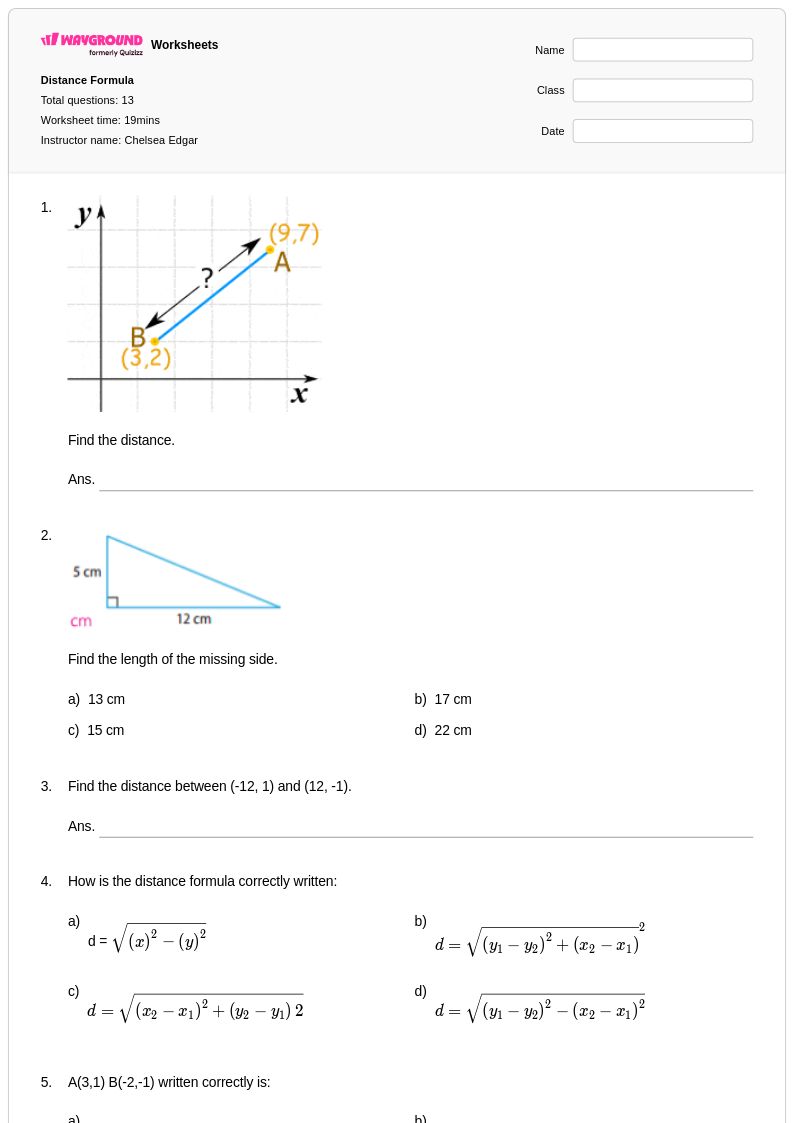
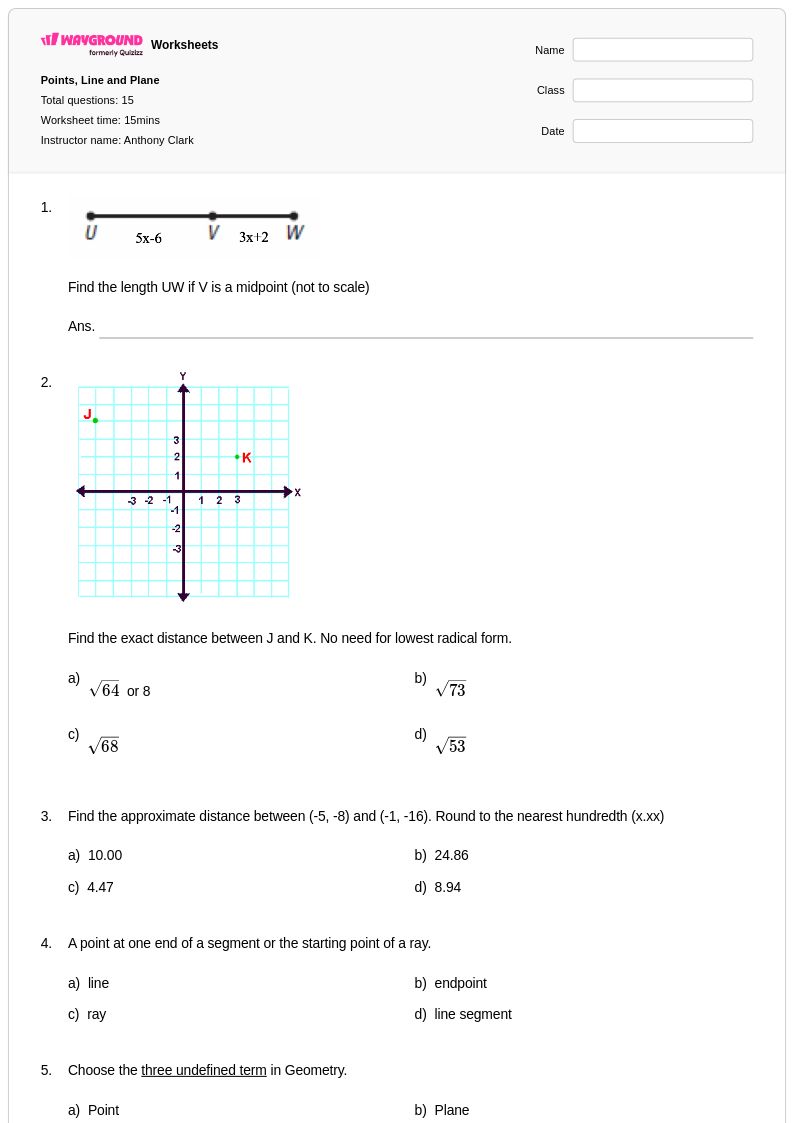
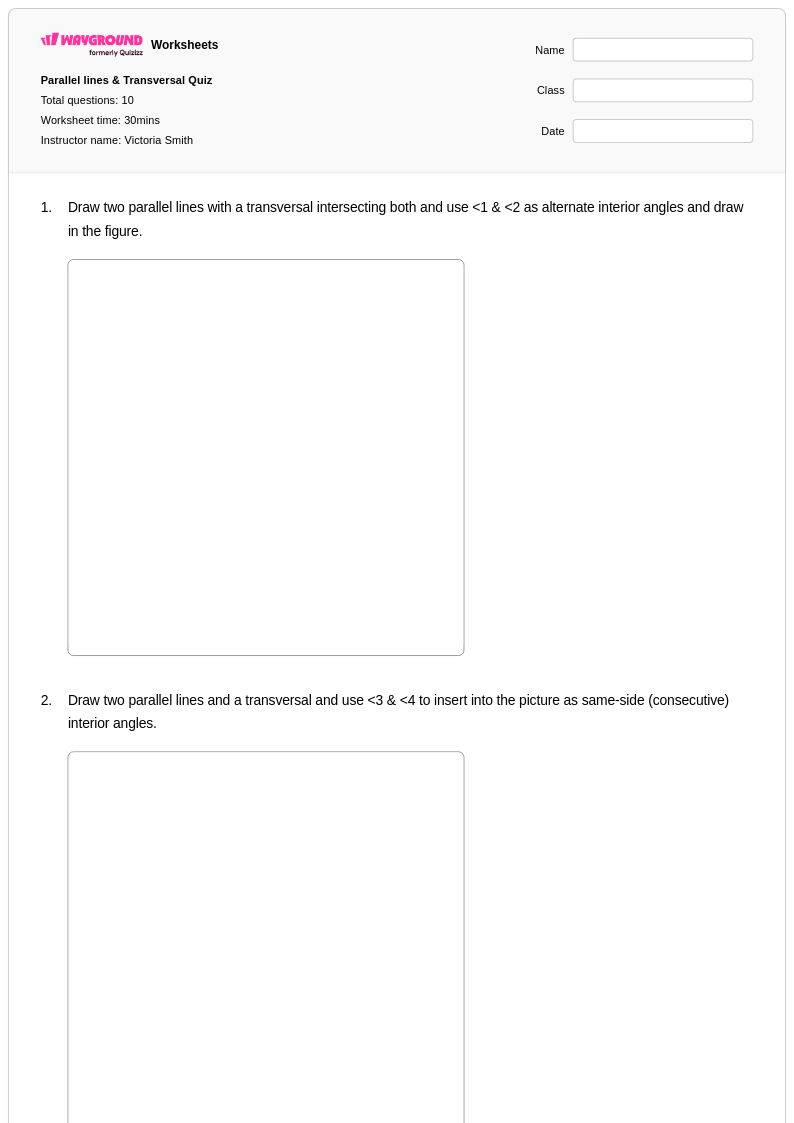
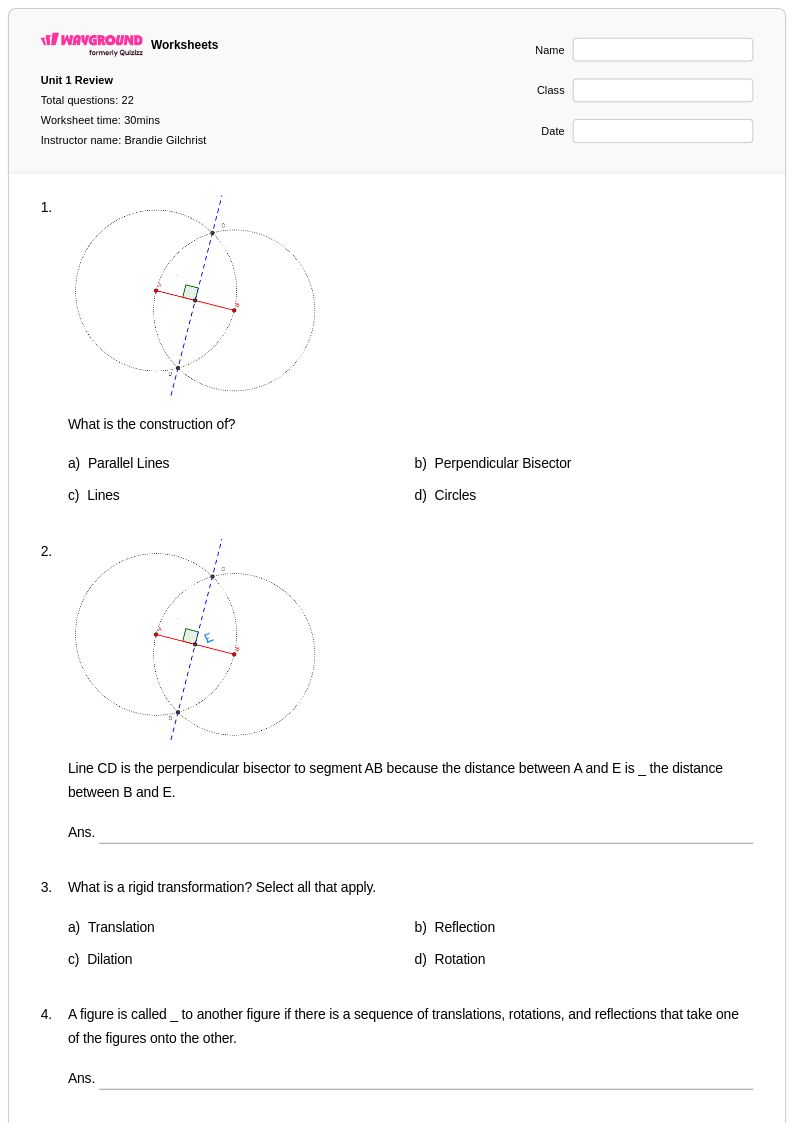
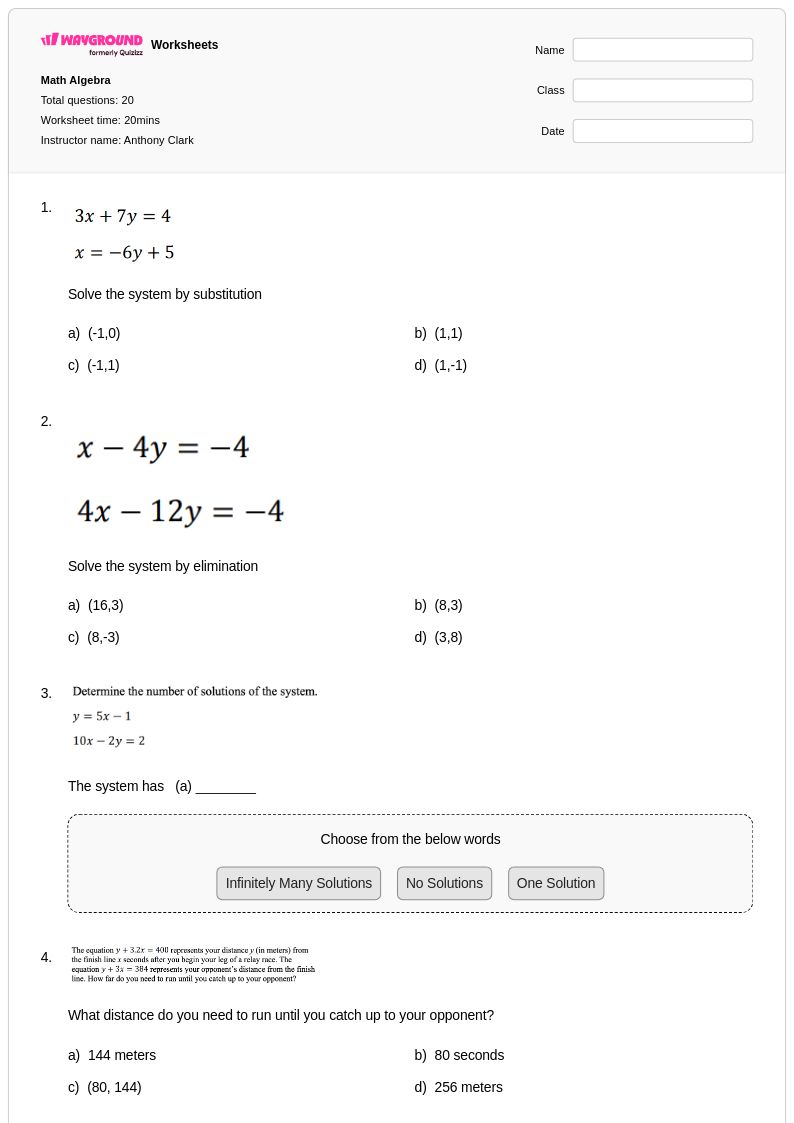
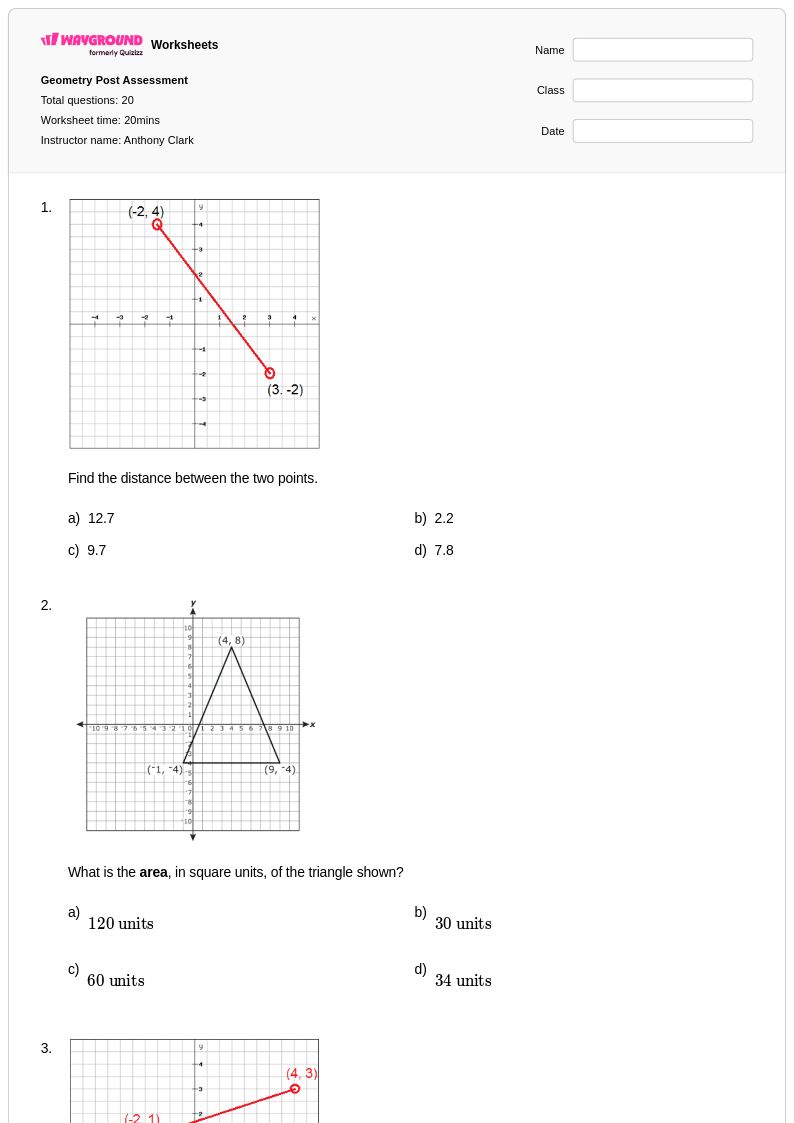
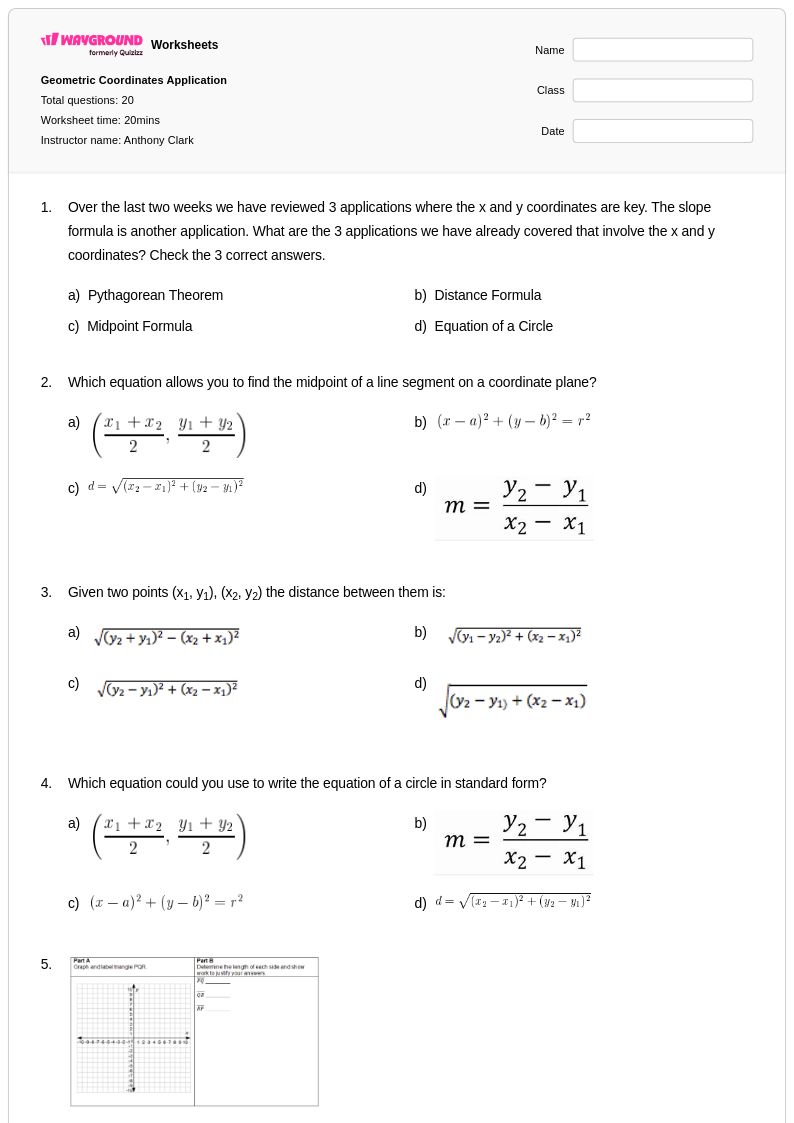
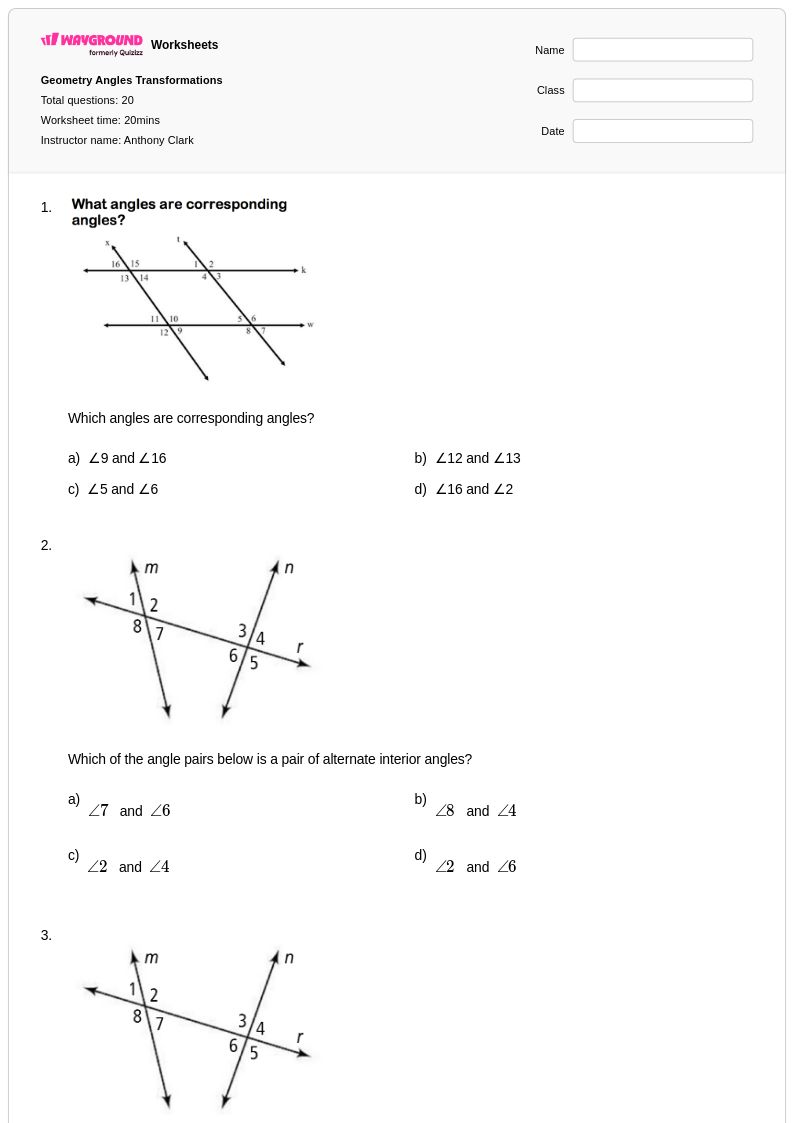
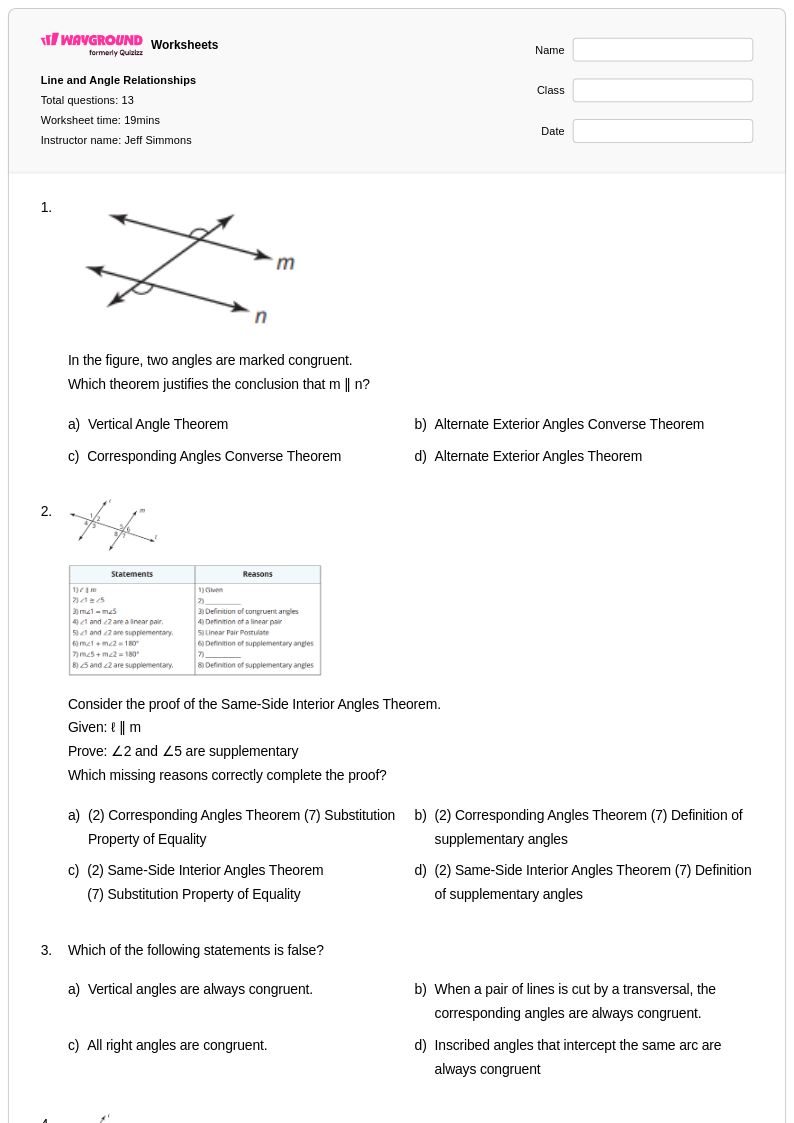
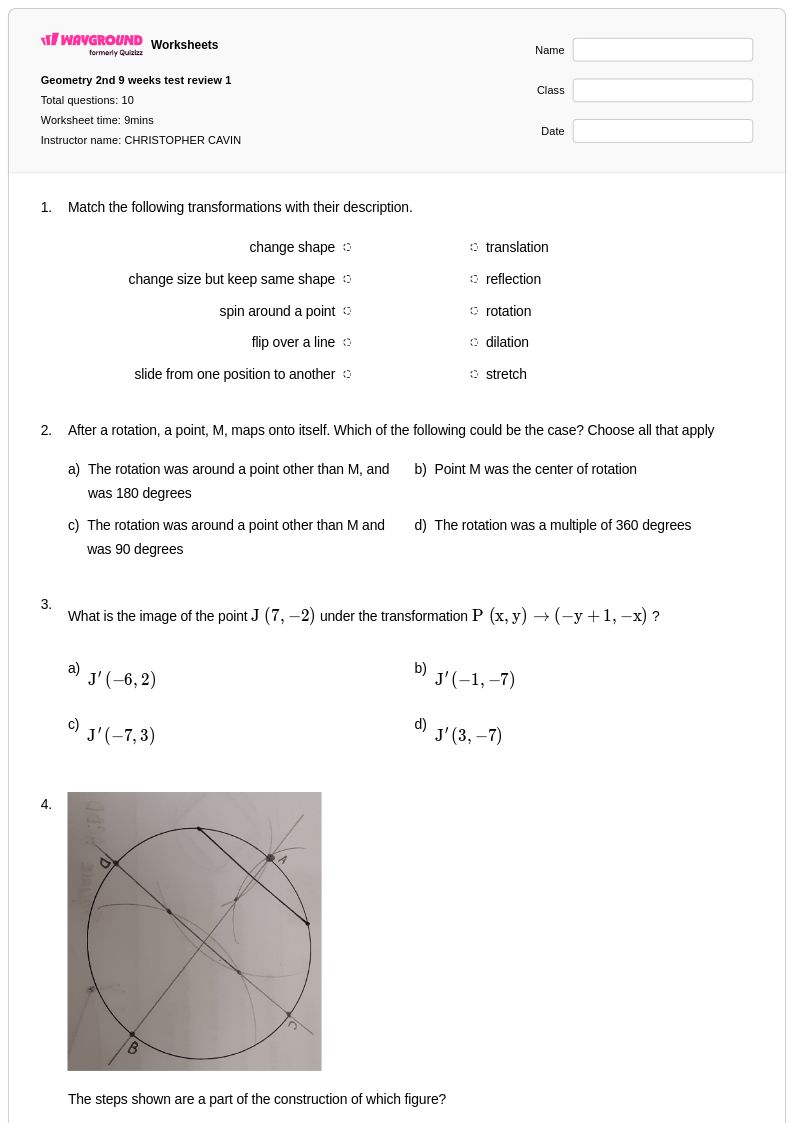
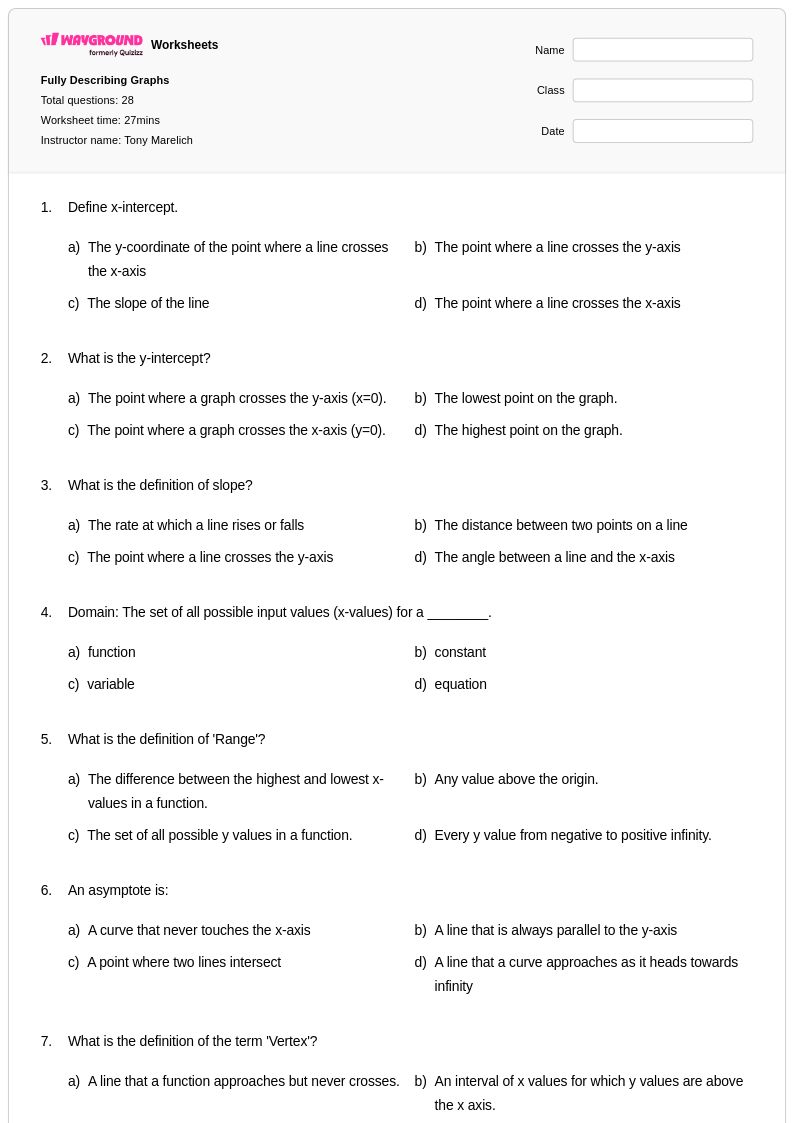
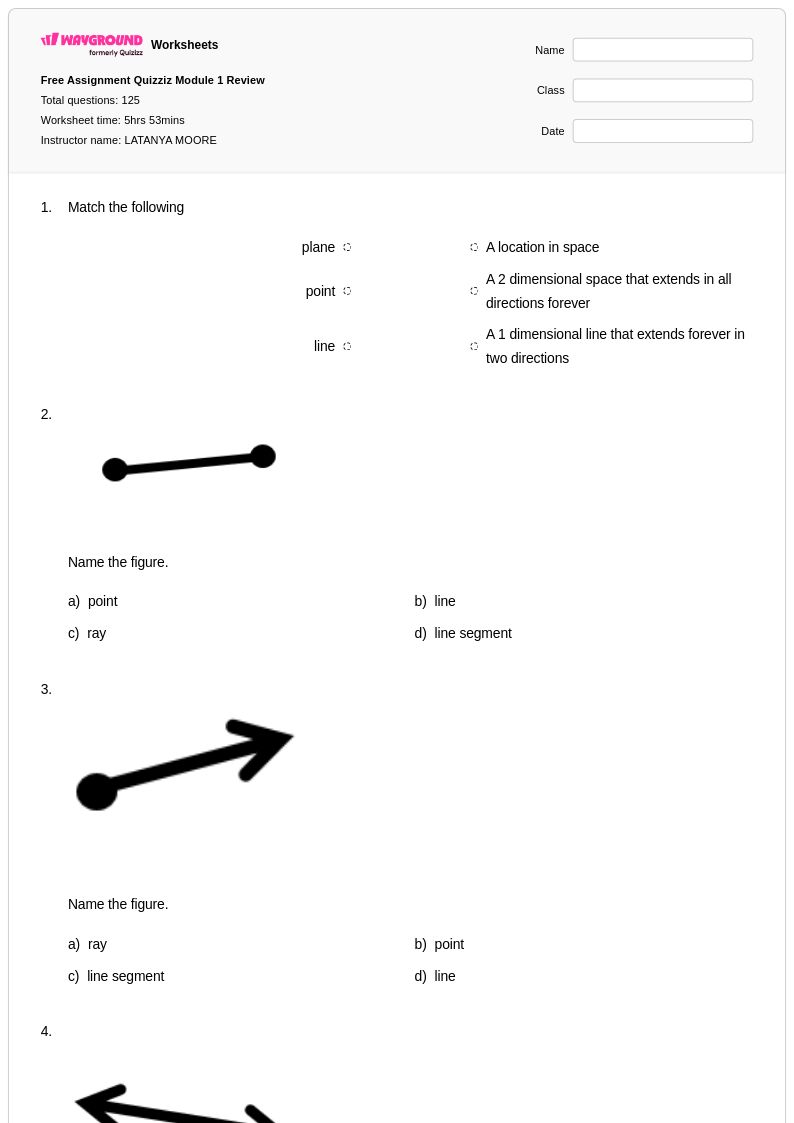
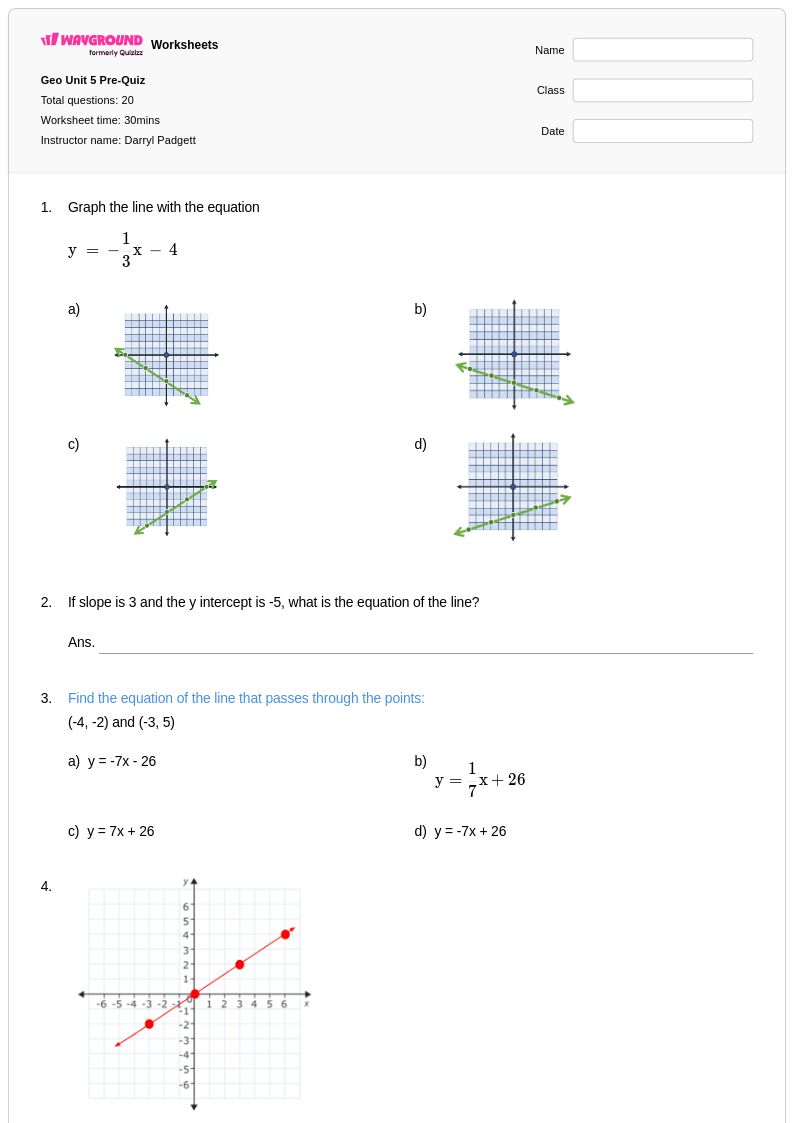
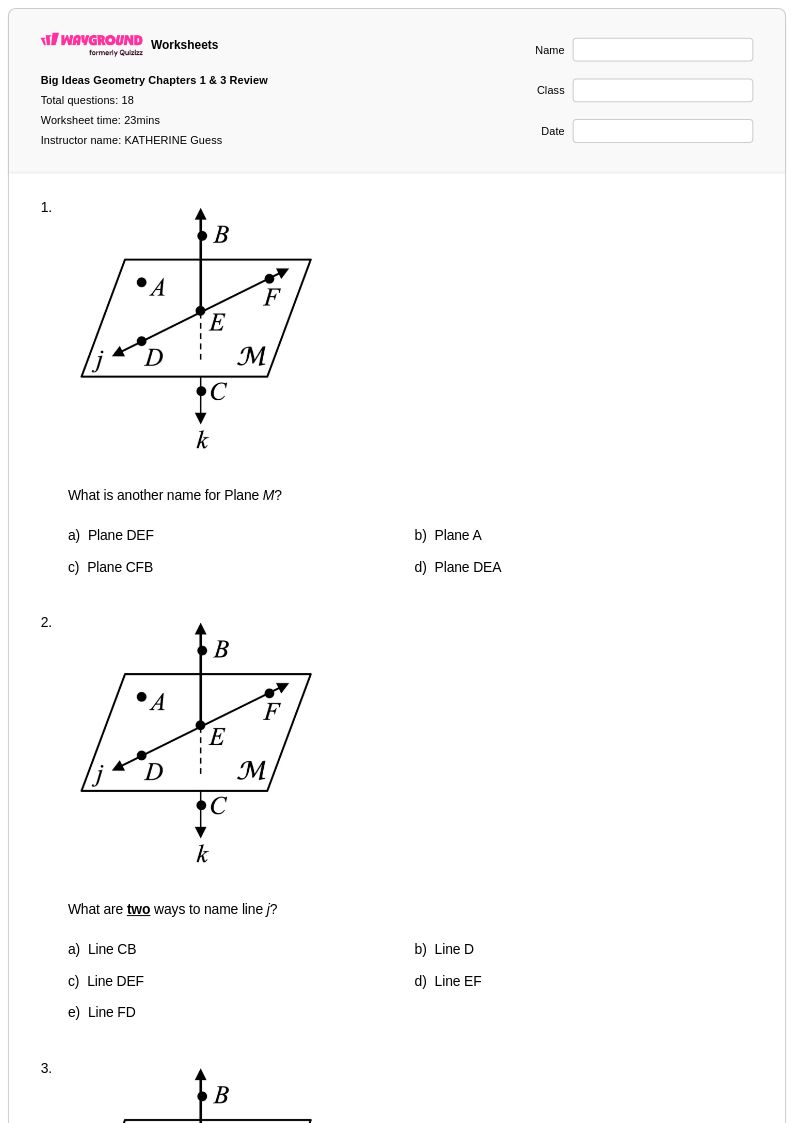
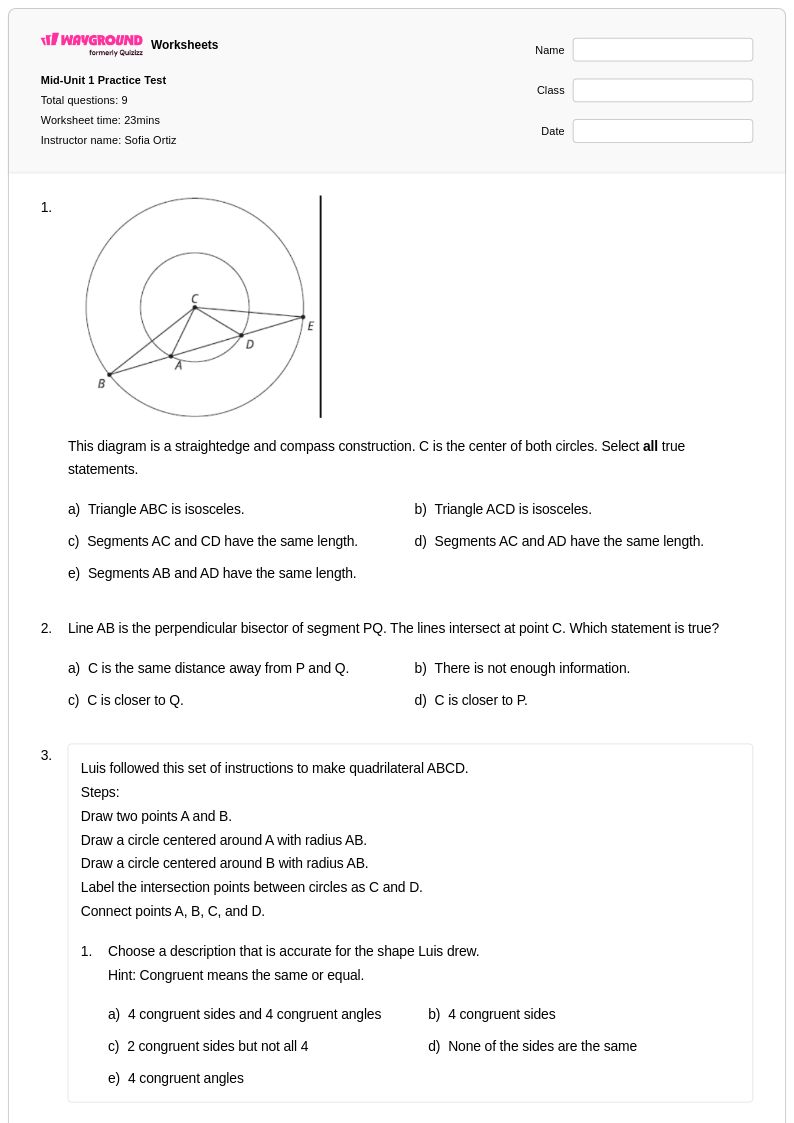
Distance between two parallel lines worksheets for Grade 11 students available through Wayground (formerly Quizizz) provide comprehensive practice in calculating perpendicular distances using coordinate geometry and algebraic methods. These expertly designed worksheets strengthen essential analytical skills including applying the distance formula for parallel lines in standard form, converting between different line equation formats, and solving complex geometric problems involving parallel line relationships. Students work through carefully structured practice problems that progress from basic distance calculations to advanced applications involving real-world scenarios, with complete answer keys provided to support independent learning and self-assessment. The free printable resources offer multiple approaches to finding distances, including the perpendicular distance formula and coordinate-based methods, ensuring students develop both computational fluency and conceptual understanding of this fundamental geometric principle.
Wayground (formerly Quizizz) empowers educators with access to millions of teacher-created resources specifically focused on distance between parallel lines and related Grade 11 geometry concepts. The platform's robust search and filtering capabilities allow teachers to quickly locate worksheets that align with curriculum standards and match specific learning objectives, while built-in differentiation tools enable customization for diverse student needs and ability levels. These comprehensive worksheet collections are available in both printable pdf formats and interactive digital versions, providing flexibility for classroom instruction, homework assignments, and remote learning environments. Teachers can effectively utilize these resources for targeted skill practice, remediation sessions for students struggling with coordinate geometry concepts, and enrichment activities that challenge advanced learners to explore complex applications of parallel line distance calculations in mathematical modeling and problem-solving contexts.
FAQs
How should I approach teaching the distance between two parallel lines at the Grade 11 level?
At Grade 11, students have enough algebraic fluency that the formula itself shouldn't be the obstacle — the challenge is applying it flexibly across different equation forms and problem contexts. Focus instruction on the derivation (connecting it to the point-to-line distance formula) and on problems that require students to set up the geometry themselves before calculating. Pushing students to explain why the perpendicular distance is the minimum distance between the lines deepens understanding and prepares them for proof-based questions.
What kinds of practice problems are appropriate for 11th graders on this topic?
Grade 11 students are ready for problems that integrate this topic with others: finding a line parallel to a given line at a specified distance, using the distance formula within a coordinate proof, or applying it to real-world modeling scenarios. Problems that require converting between general, standard, and slope-intercept forms before calculating are also appropriate at this level. These worksheets progress from direct formula application to those more complex, multi-step setups.
What errors do 11th graders still make with parallel line distance calculations?
Even at Grade 11, the most common error is a form-mismatch: applying the formula when one or both lines haven't been fully converted to standard form, leading to incorrect coefficient substitution. Students also sometimes drop the absolute value and end up with a negative distance without flagging it as wrong. A quick diagnostic — asking students to estimate the distance on a sketch before calculating — catches both errors early.
How do I use these Grade 11 worksheets in my class?
The worksheets include complete answer keys and step-by-step solutions, which makes them well-suited for independent review or pre-assessment before a unit test. You can host them as digital quizzes on Wayground for instant scoring, or print the PDFs for paper-based practice — the Wayground for Teachers app lets you scan and grade paper submissions without manual data entry. Both formats use the same problems, so the choice comes down to your classroom setup.
How does this topic connect to the broader Grade 11 math curriculum under Common Core?
By Grade 11, Common Core's geometry strand expects students to apply coordinate methods to prove and extend geometric relationships, not just compute them. The distance between parallel lines fits squarely in that expectation: students are using algebraic tools to establish a geometric property, which is the core move of analytic geometry. It also connects forward to precalculus work on vectors and to the concept of distance from a point to a plane in three dimensions — so mastering the two-dimensional case here pays dividends later.
Can I use these worksheets to support students with different learning needs?
For students who need accessibility support, Wayground lets you apply a dyslexia-friendly font or increase font size on a printed or digital version of the worksheet — helpful when problems involve dense notation with subscripts and fractions. On digital assignments, extended time can be set per student without alerting the rest of the class. For students who are ahead, the same worksheet collection includes problems that move into non-standard applications, so you don't need a separate resource for enrichment.