
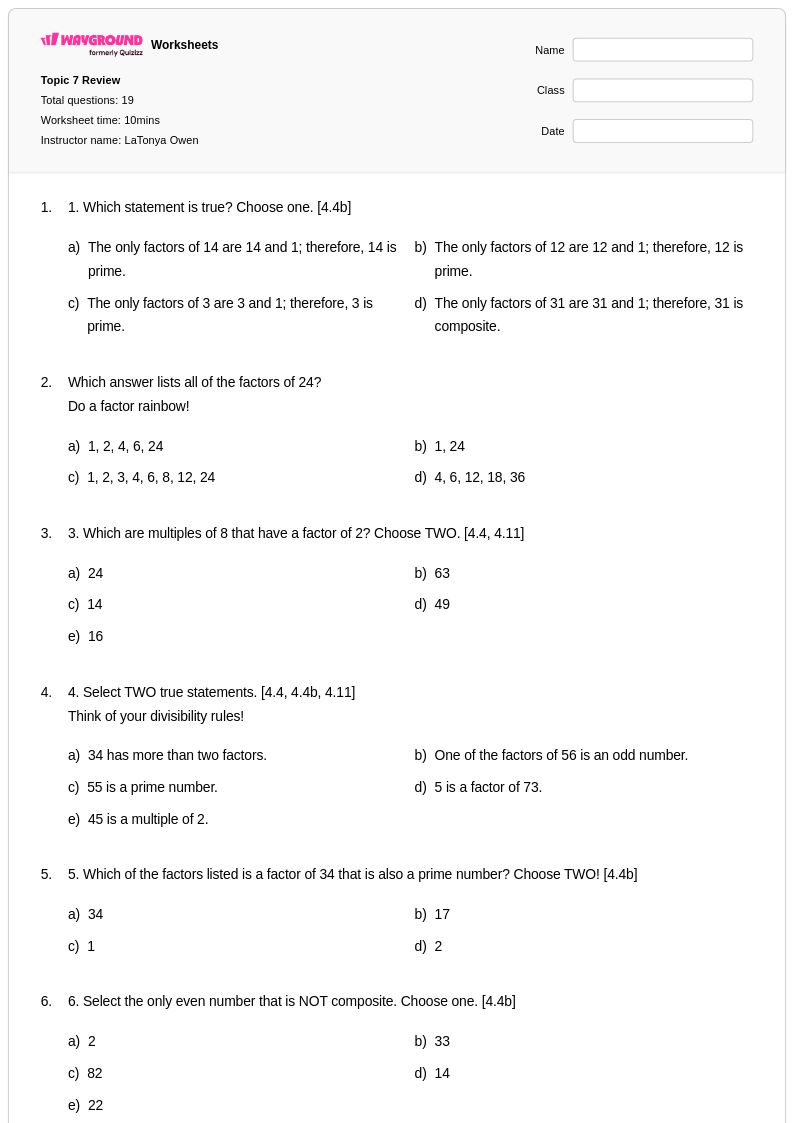
19 Q
4th
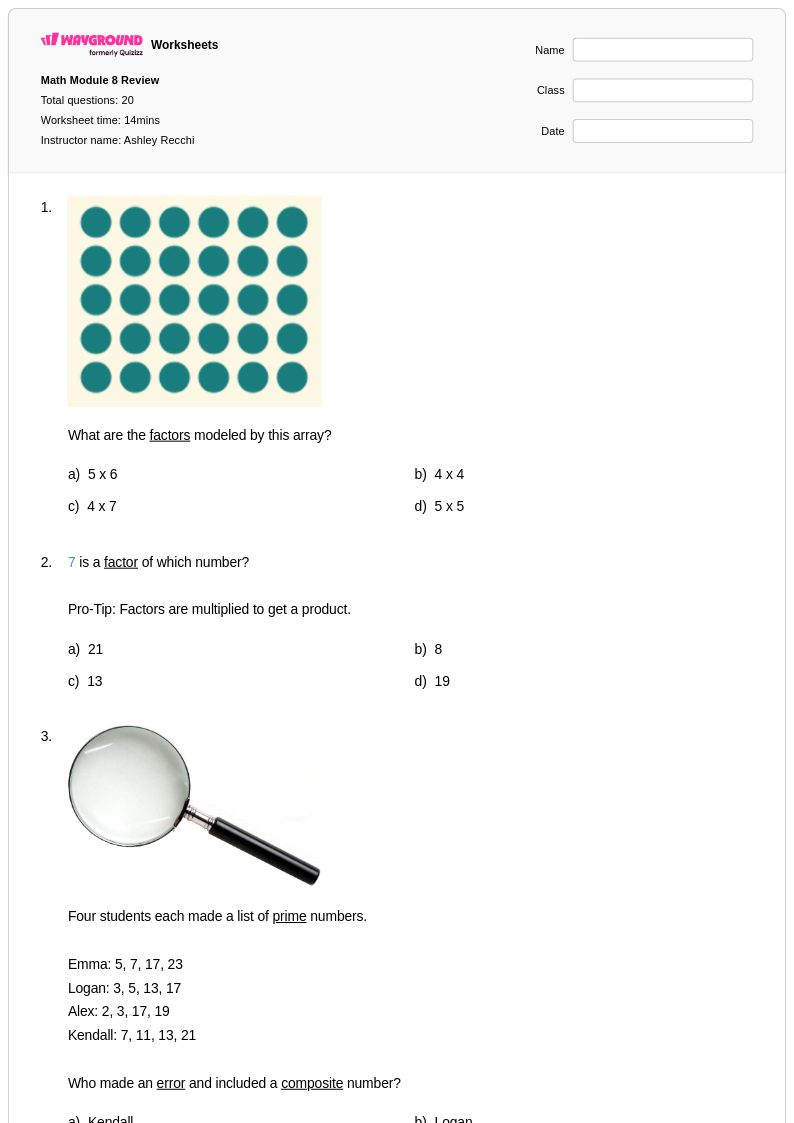
20 Q
4th
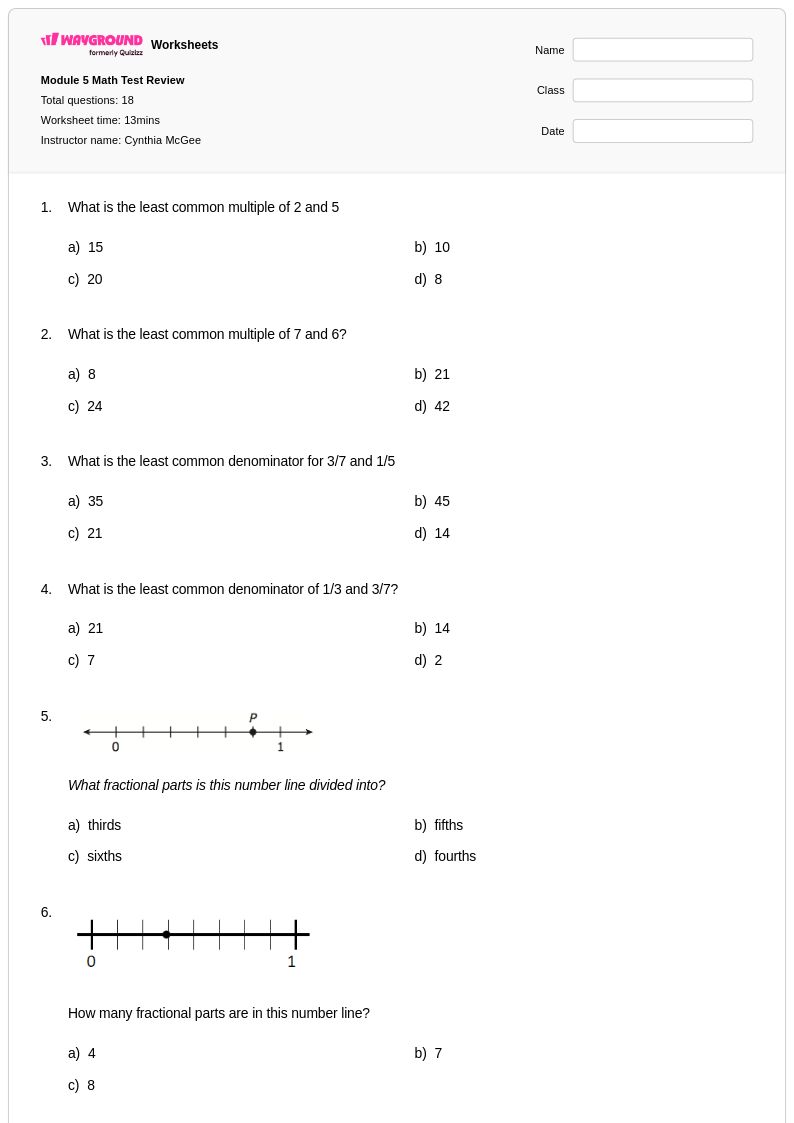
18 Q
4th
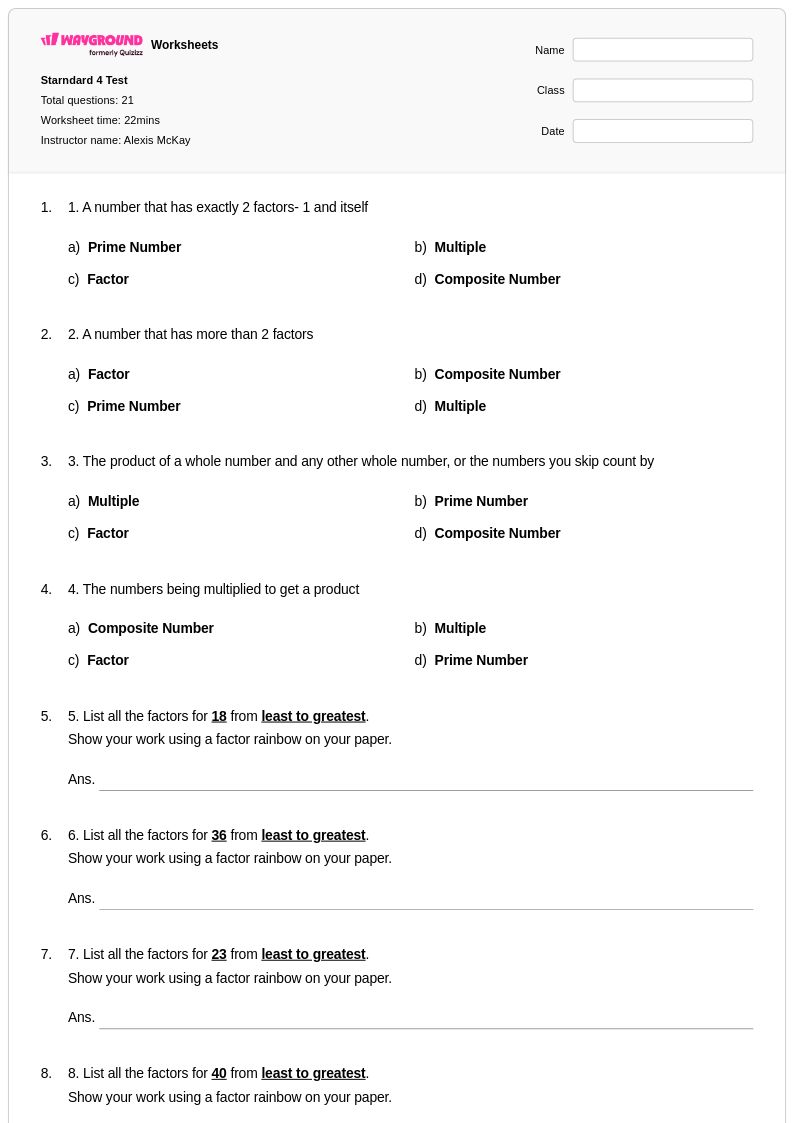
21 Q
4th
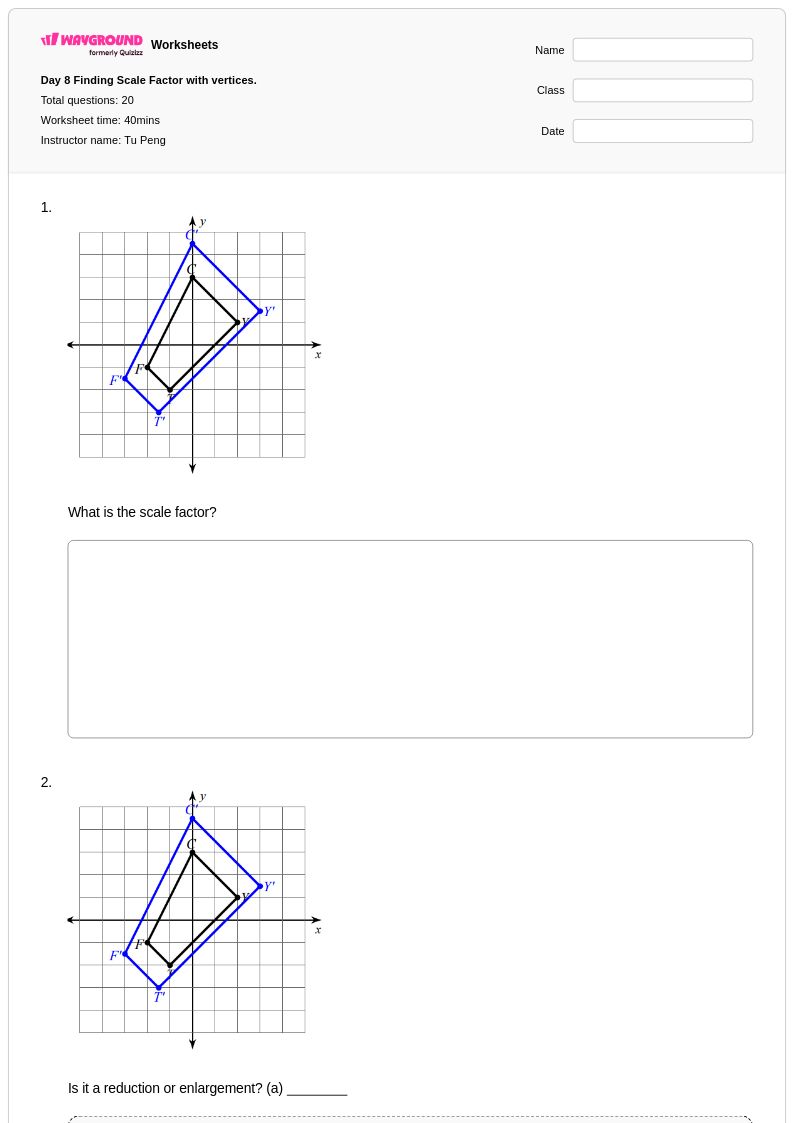
20 Q
8th
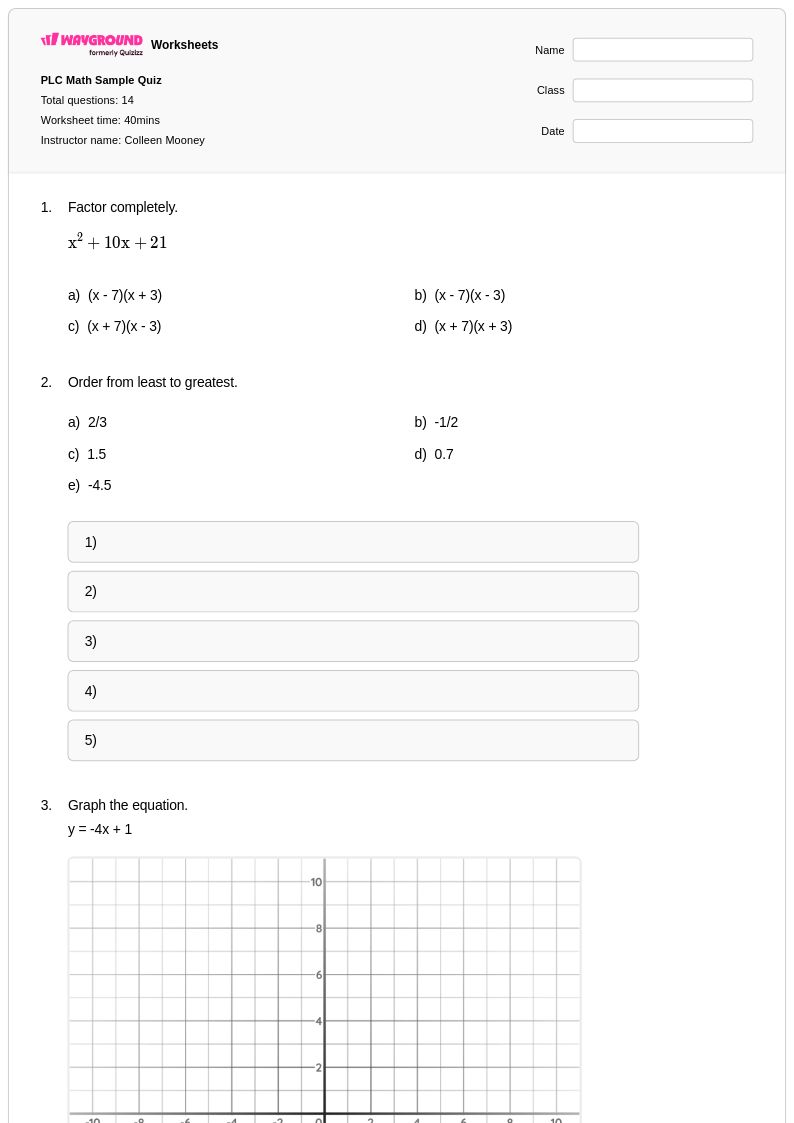
14 Q
9th
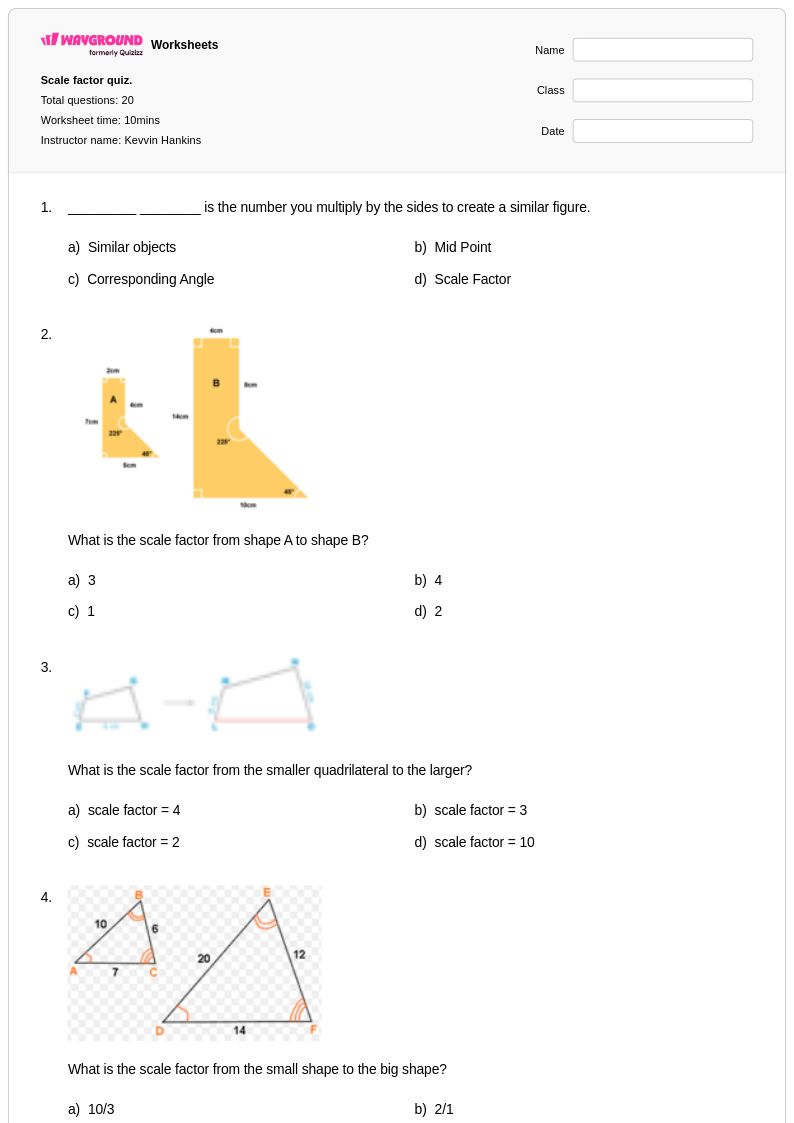
20 Q
6th
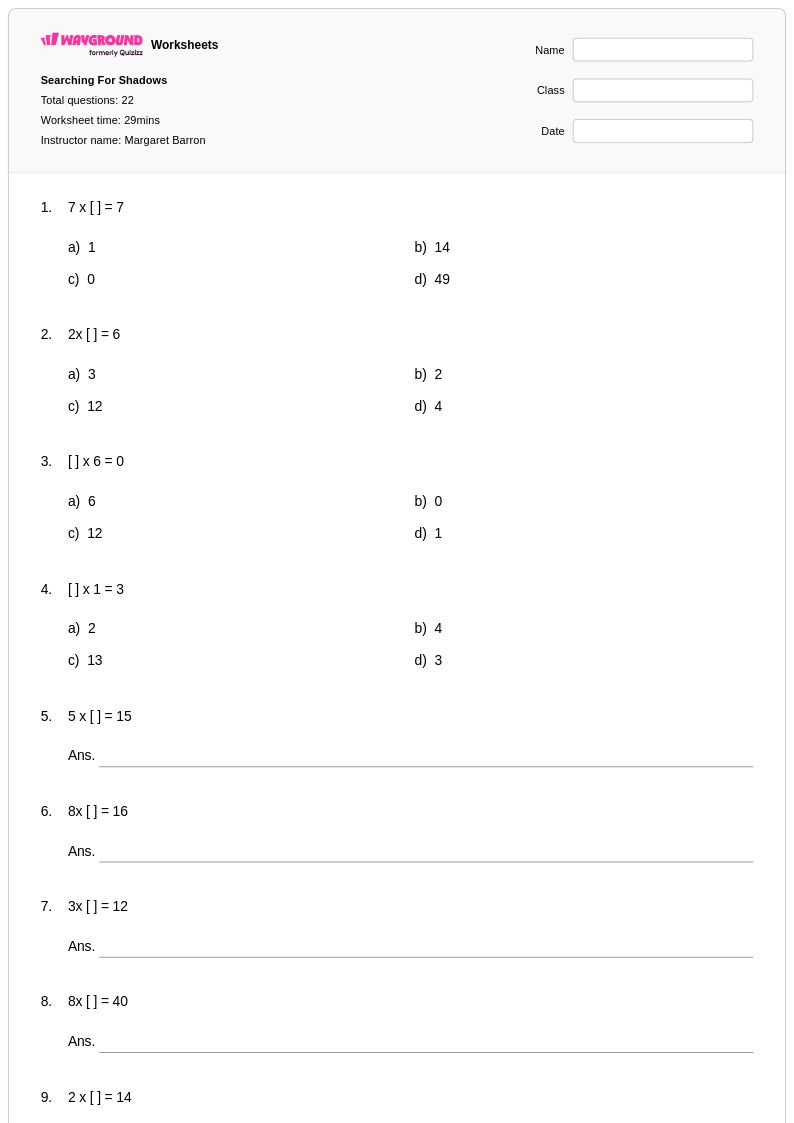
22 Q
3rd
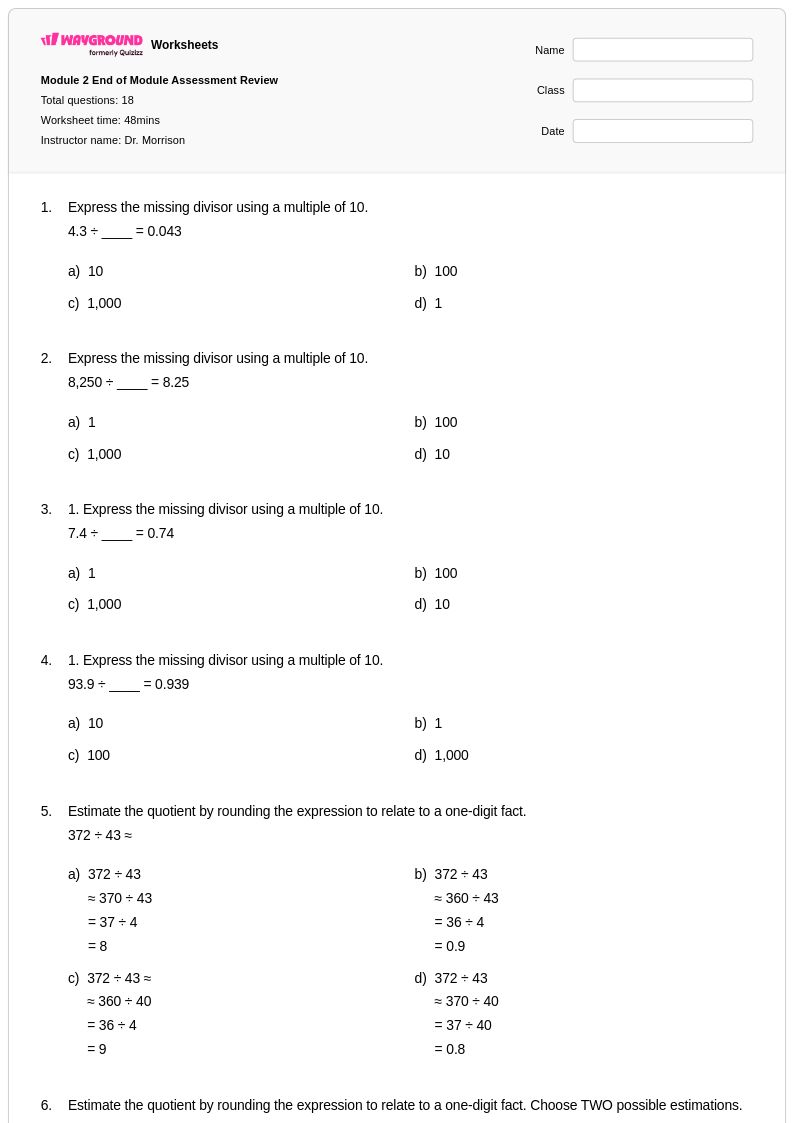
18 Q
5th
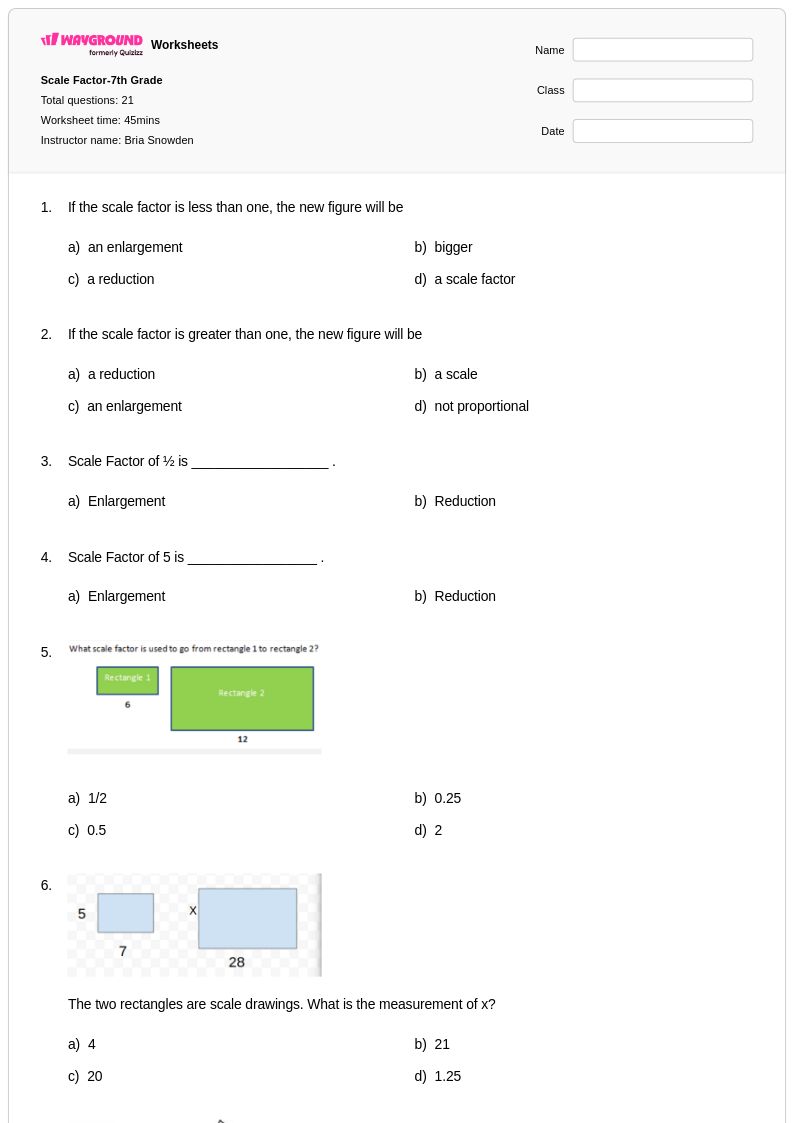
21 Q
7th
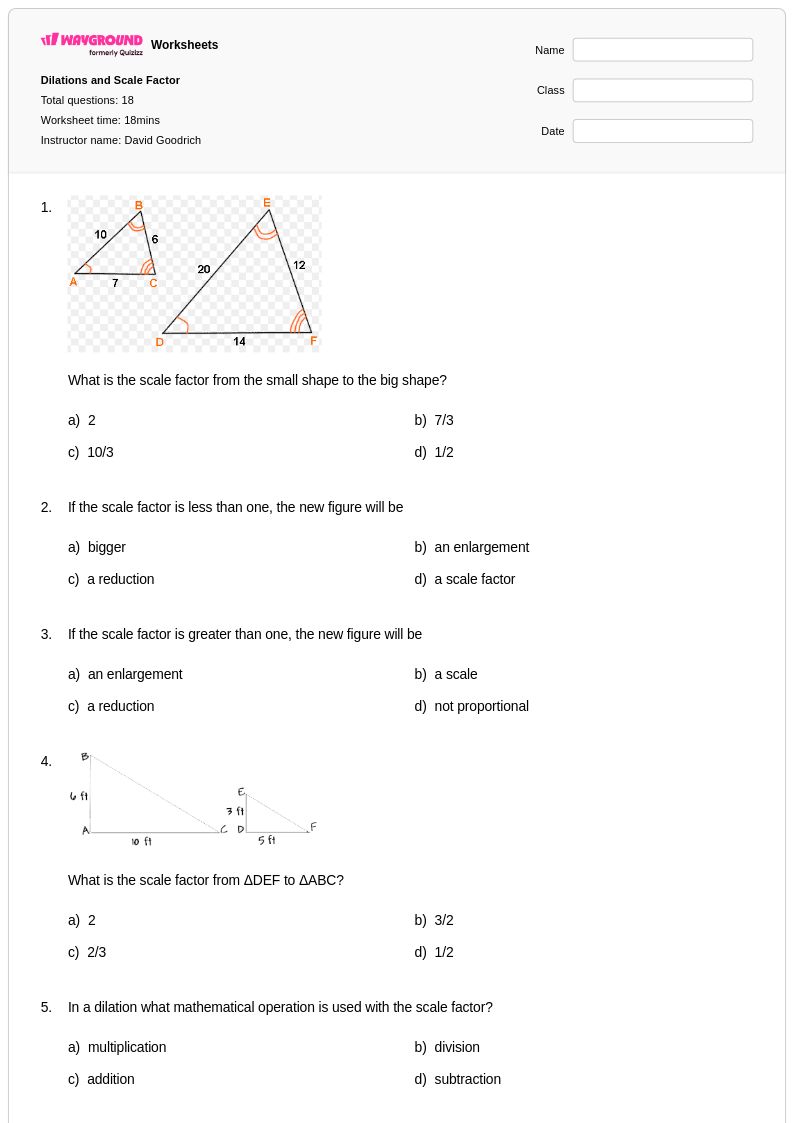
18 Q
10th
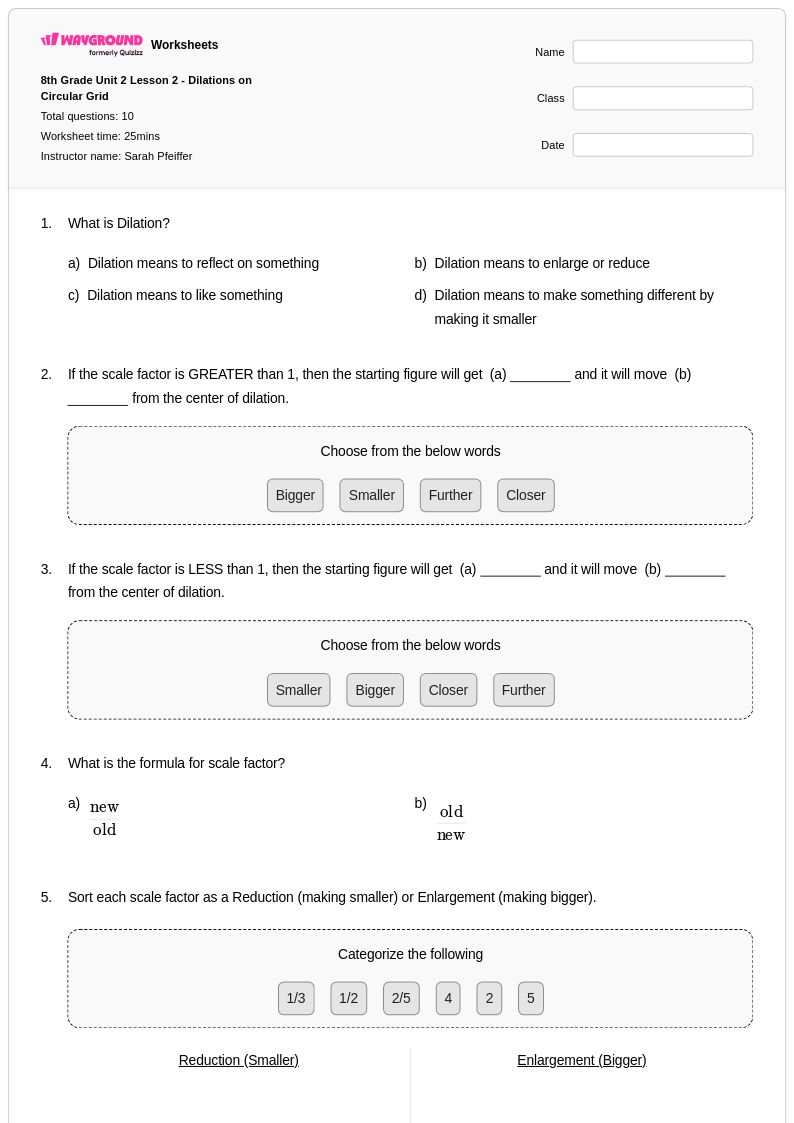
10 Q
8th
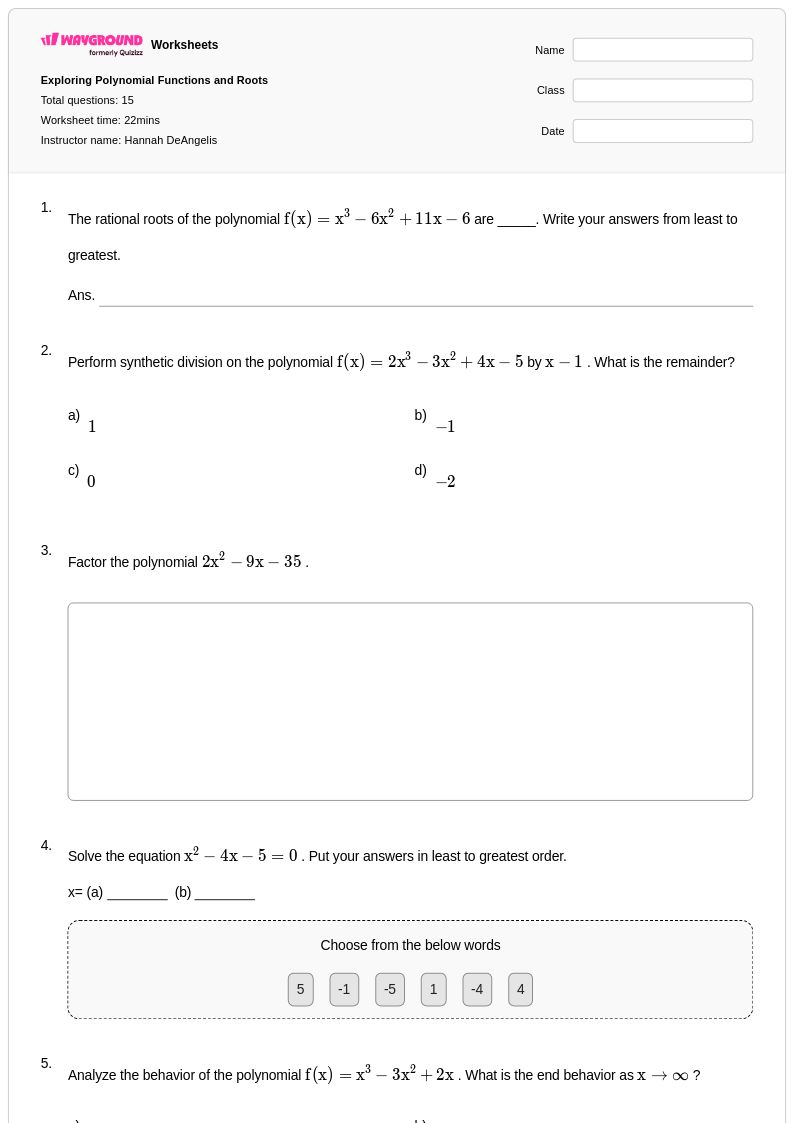
15 Q
9th
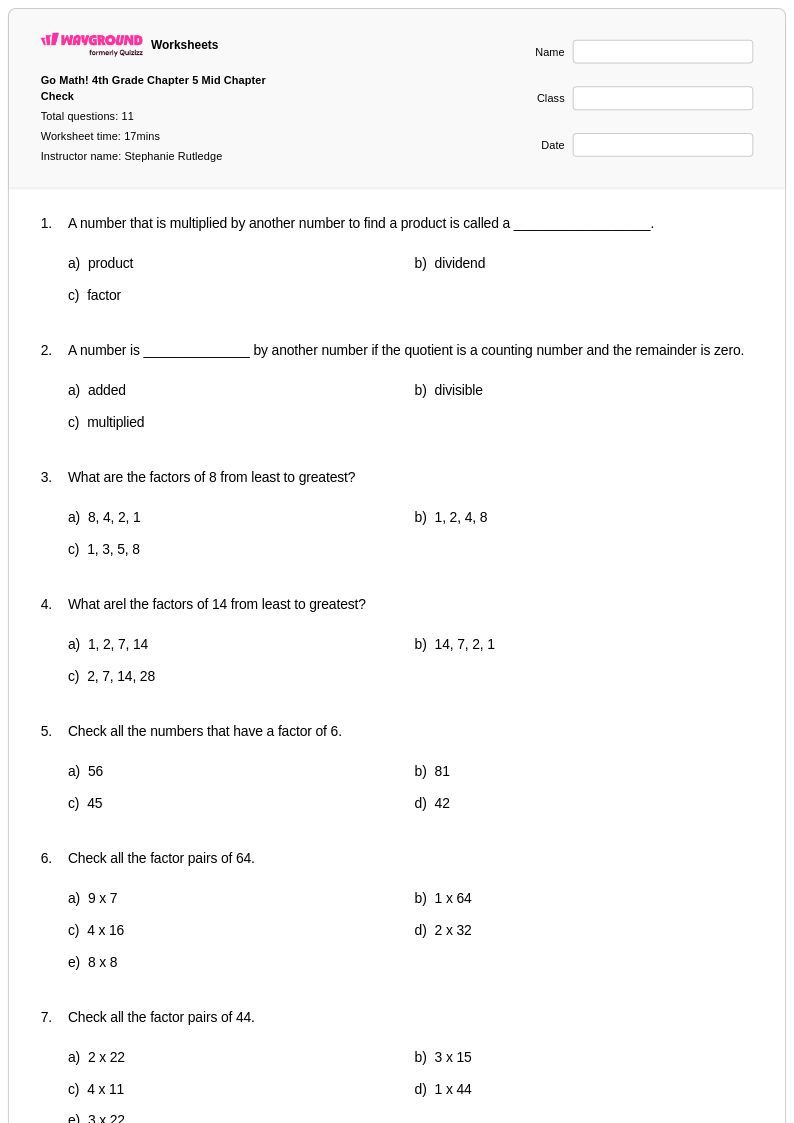
11 Q
4th
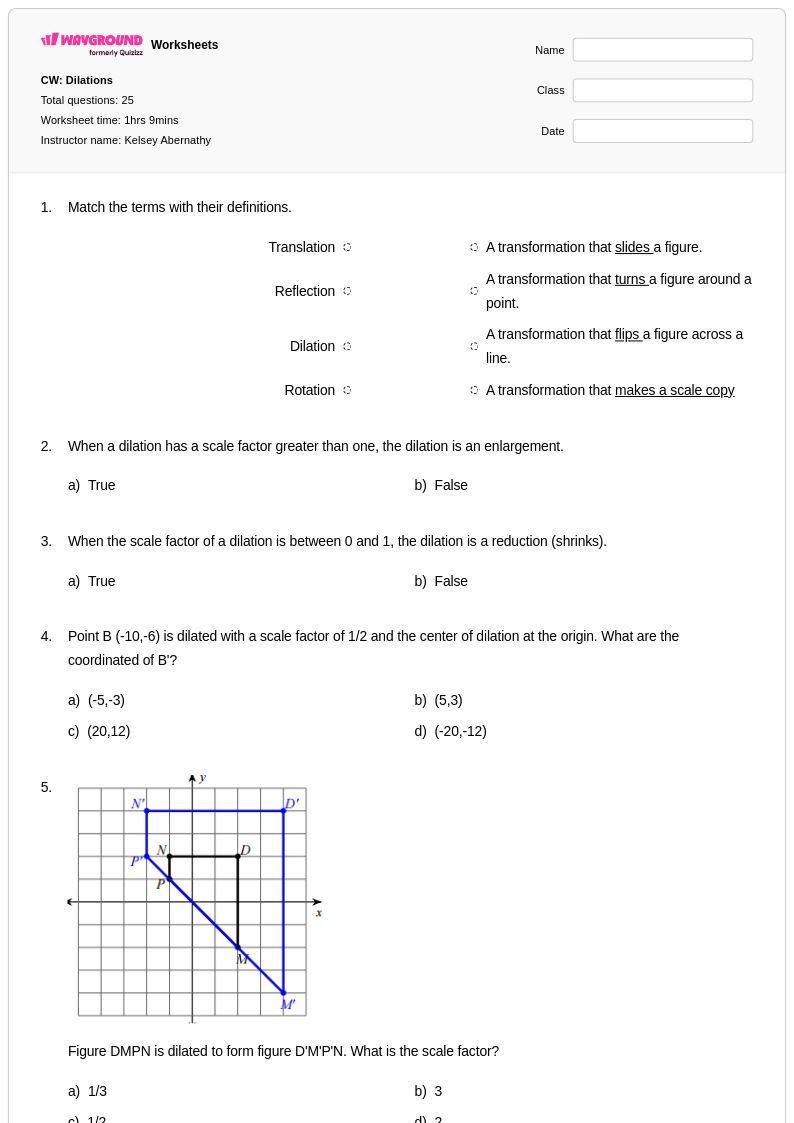
25 Q
10th
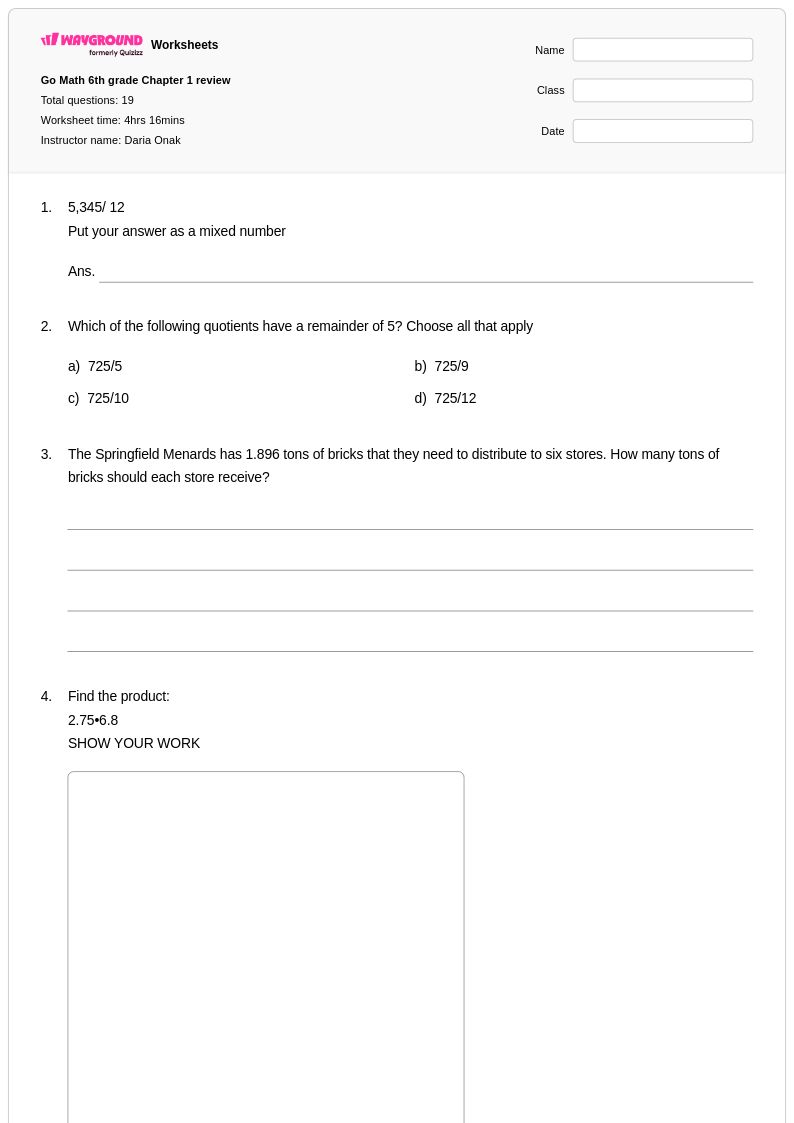
19 Q
6th
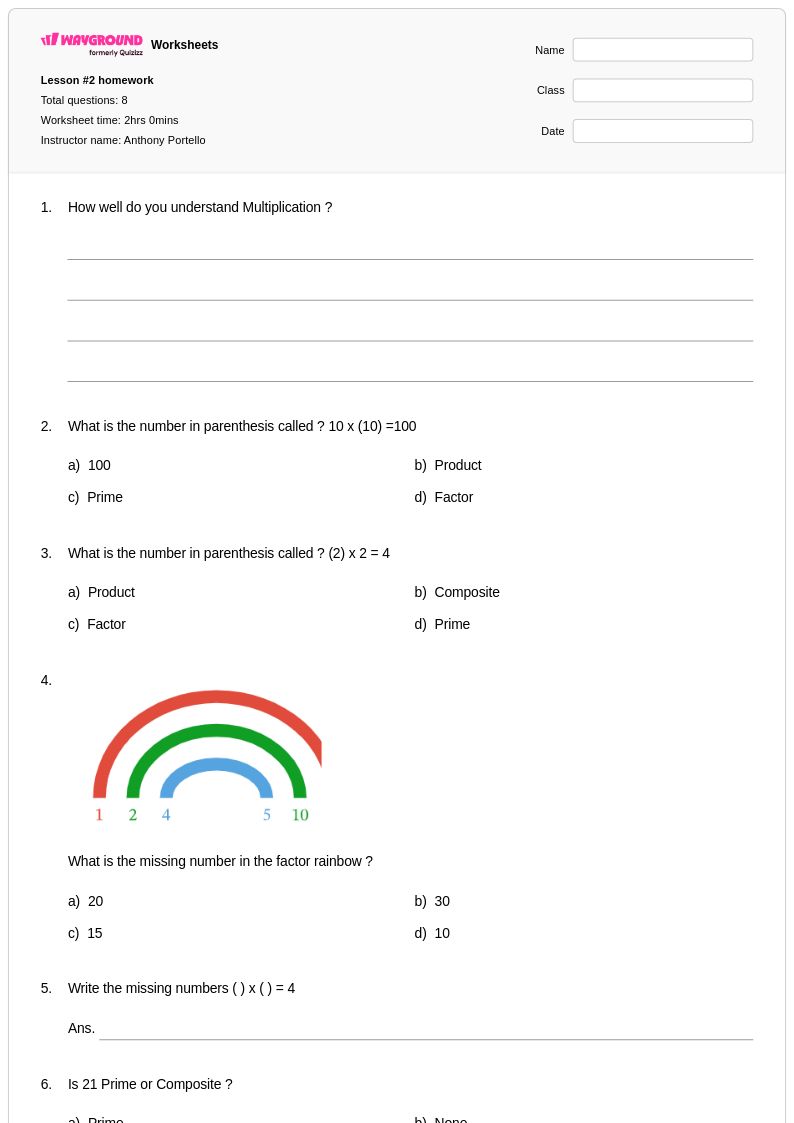
8 Q
3rd
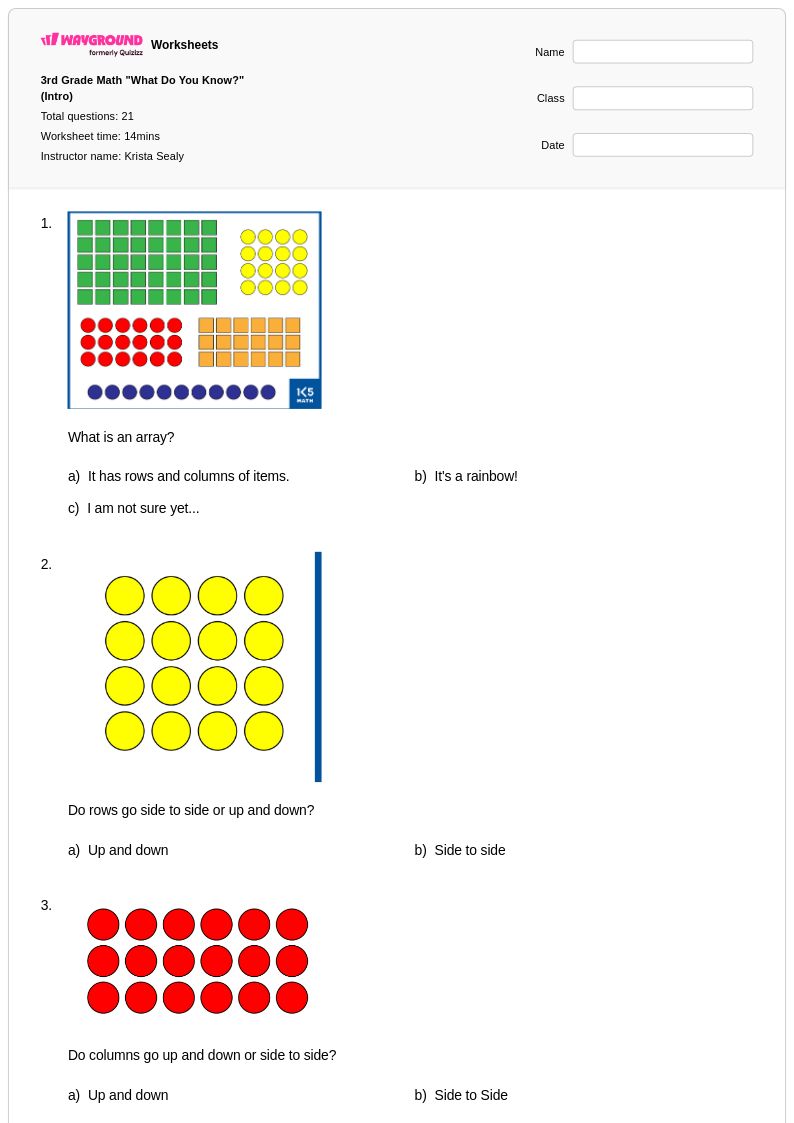
21 Q
3rd
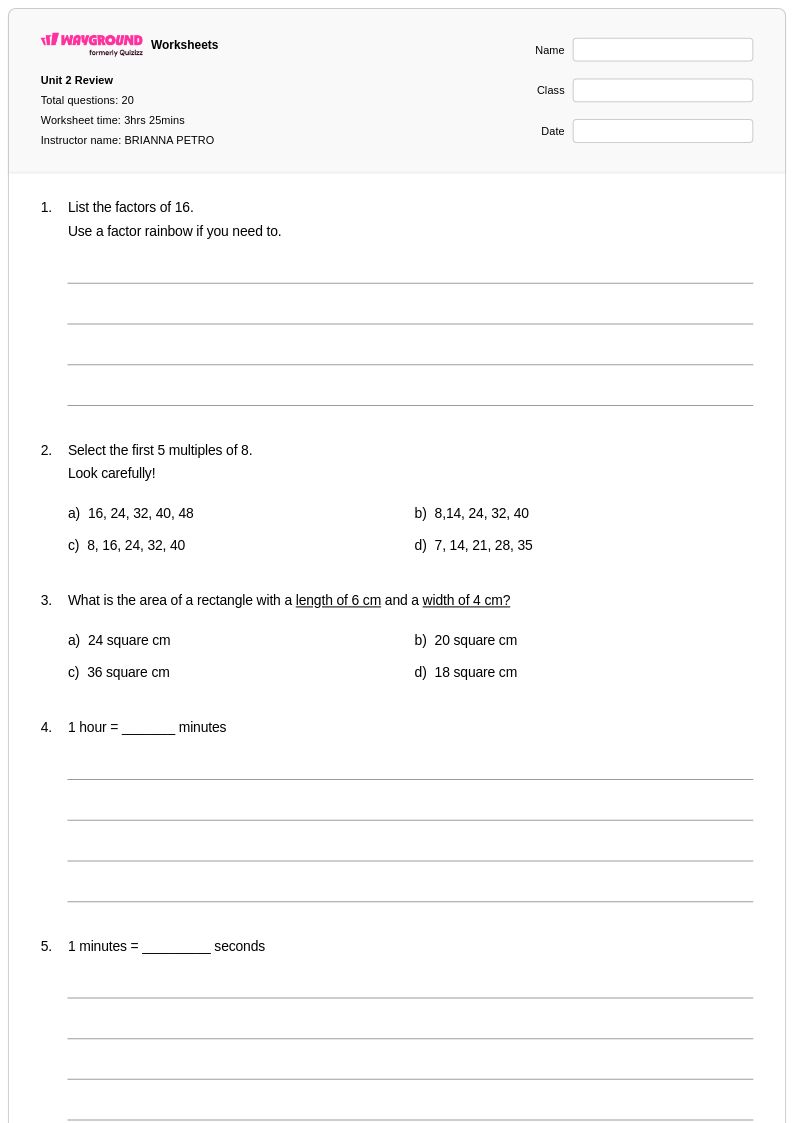
20 Q
4th
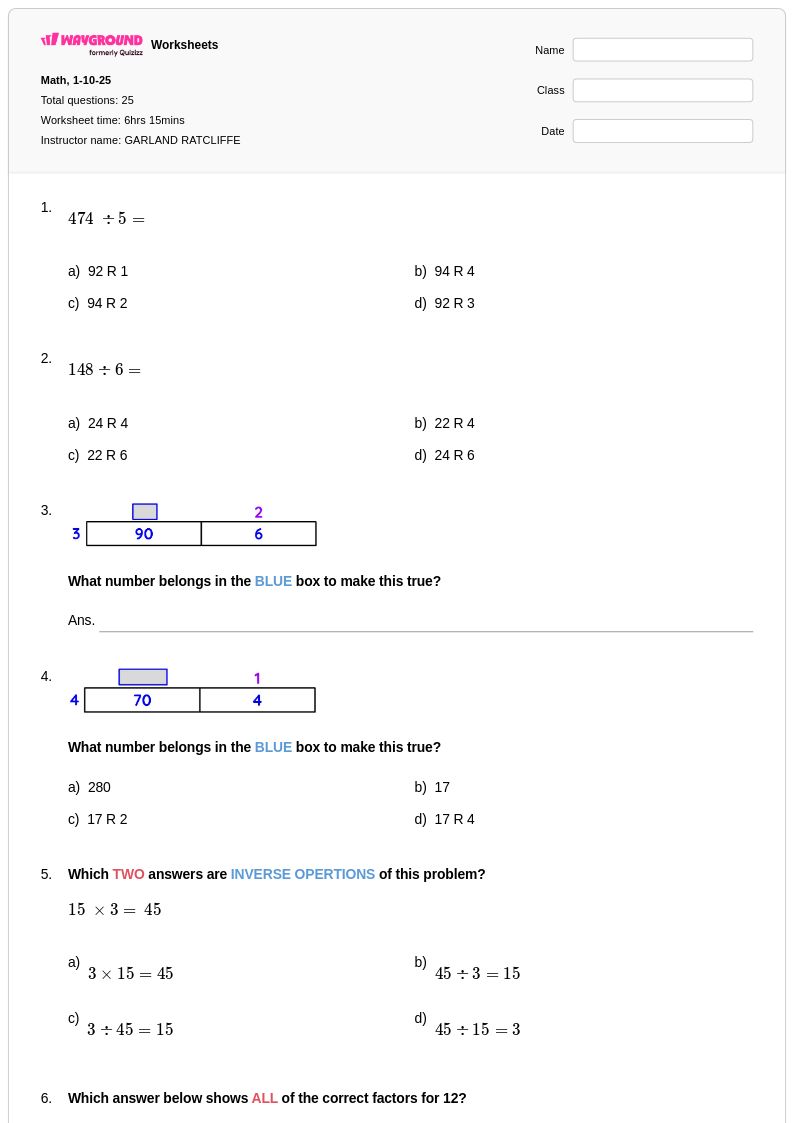
25 Q
4th
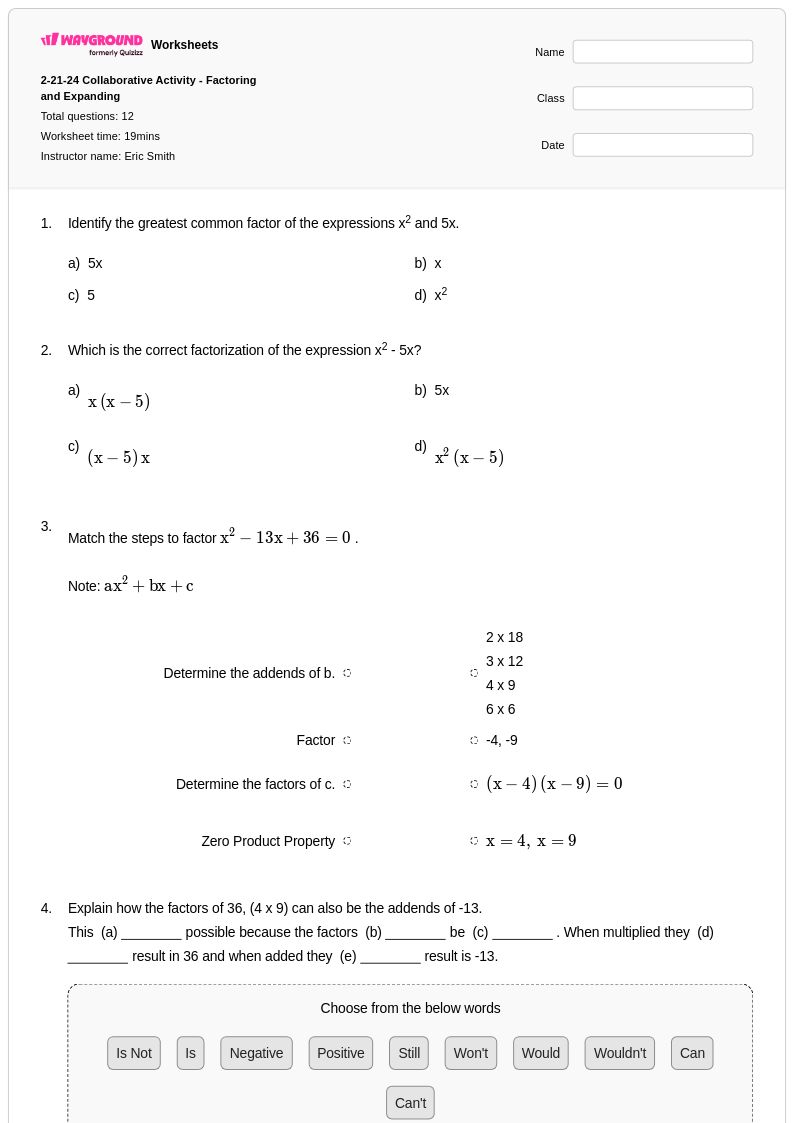
12 Q
11th
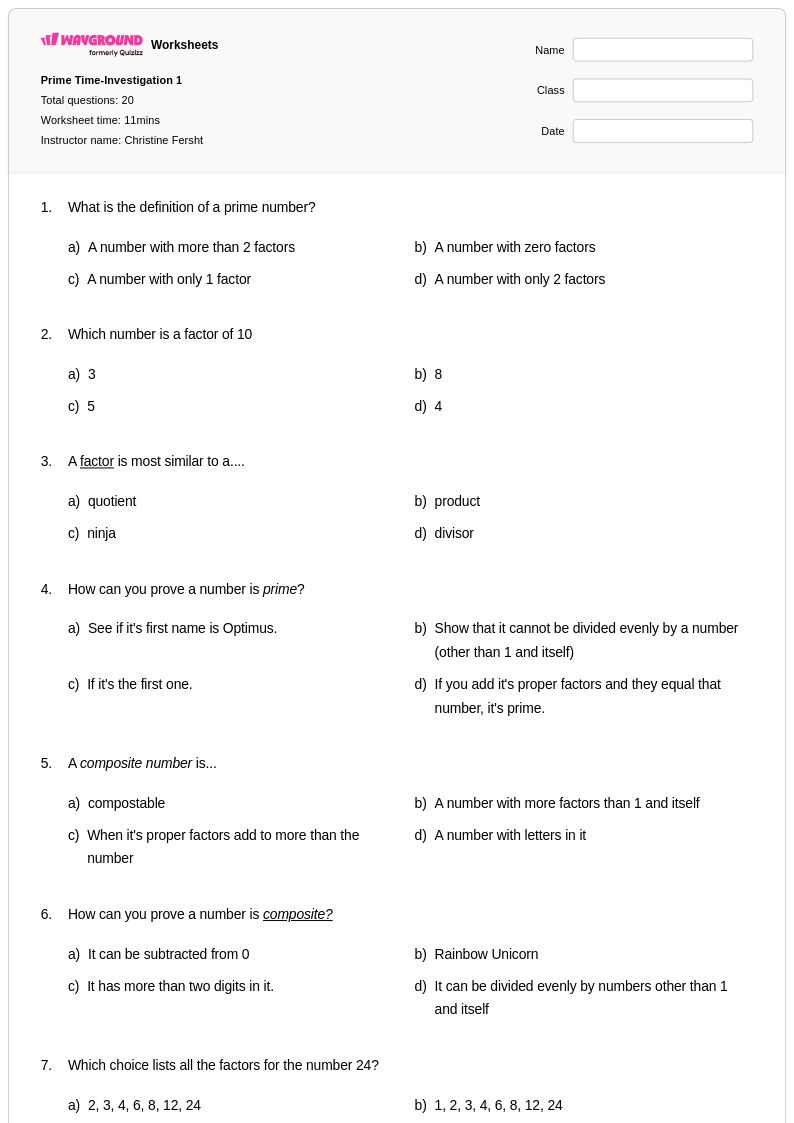
20 Q
6th
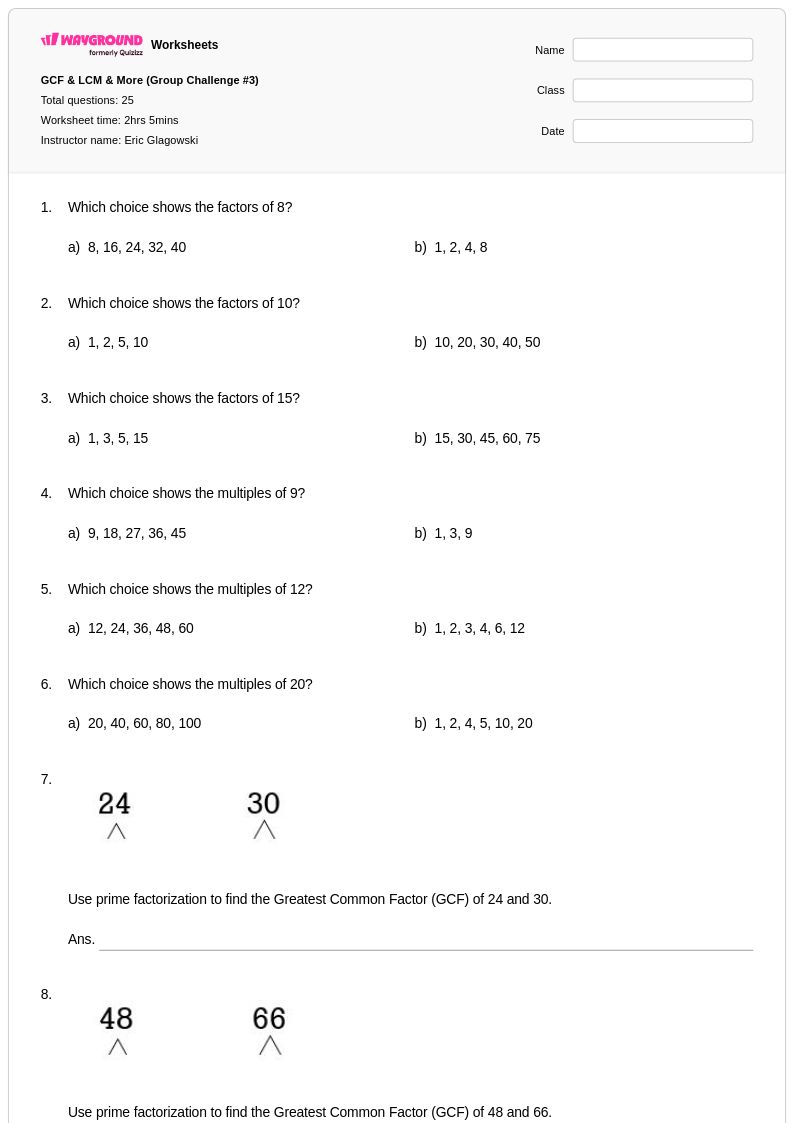
25 Q
6th

10 Q
10th
Explore Worksheets by Subjects
Explore printable Factor Rainbow worksheets
Factor Rainbow worksheets available through Wayground (formerly Quizizz) provide students with a visual and systematic approach to understanding the factorization of numbers through colorful, organized diagrams that display all factor pairs in an arc pattern. These comprehensive practice problems strengthen students' ability to identify factor relationships, recognize patterns in multiplication and division, and develop a deeper conceptual understanding of how numbers can be decomposed into their constituent parts. The worksheets feature structured exercises that guide learners through creating factor rainbows for various numbers, helping them visualize the connection between factors and their products while building foundational skills essential for more advanced mathematical concepts like prime factorization, greatest common factors, and least common multiples. Each printable resource includes clear instructions and answer keys, making them ideal for independent practice, homework assignments, or classroom activities that reinforce number sense concepts through hands-on engagement with mathematical relationships.
Wayground (formerly Quizizz) supports educators with an extensive collection of millions of teacher-created Factor Rainbow worksheets that can be easily accessed through robust search and filtering capabilities, allowing instructors to locate materials that align with specific curriculum standards and student needs. The platform's differentiation tools enable teachers to customize worksheets for various skill levels, providing options for remediation support for struggling learners and enrichment activities for advanced students who need additional challenges in exploring complex factor relationships. These resources are available in both printable PDF formats and interactive digital versions, offering flexibility for diverse classroom environments and teaching preferences while supporting comprehensive lesson planning that addresses individual learning objectives. Teachers can efficiently integrate these materials into their instruction to provide targeted skill practice, assess student understanding of factorization concepts, and create engaging learning experiences that make abstract mathematical relationships more concrete and accessible through visual representation.
FAQs
How do I teach factor rainbows?
What's the best way for students to practice factor rainbows?
What mistakes do students commonly make when creating factor rainbows?
How do I use Wayground's factor rainbow worksheets in my class?
How does the factor rainbow fit into the broader math curriculum?
How can I differentiate factor rainbow practice for mixed-ability students?