Free Printable First Conditional Worksheets for Grade 6
Master Grade 6 first conditional grammar with Wayground's comprehensive collection of free worksheets, printables, and practice problems featuring detailed answer keys to strengthen conditional sentence structure skills.
Explore printable First Conditional worksheets for Grade 6
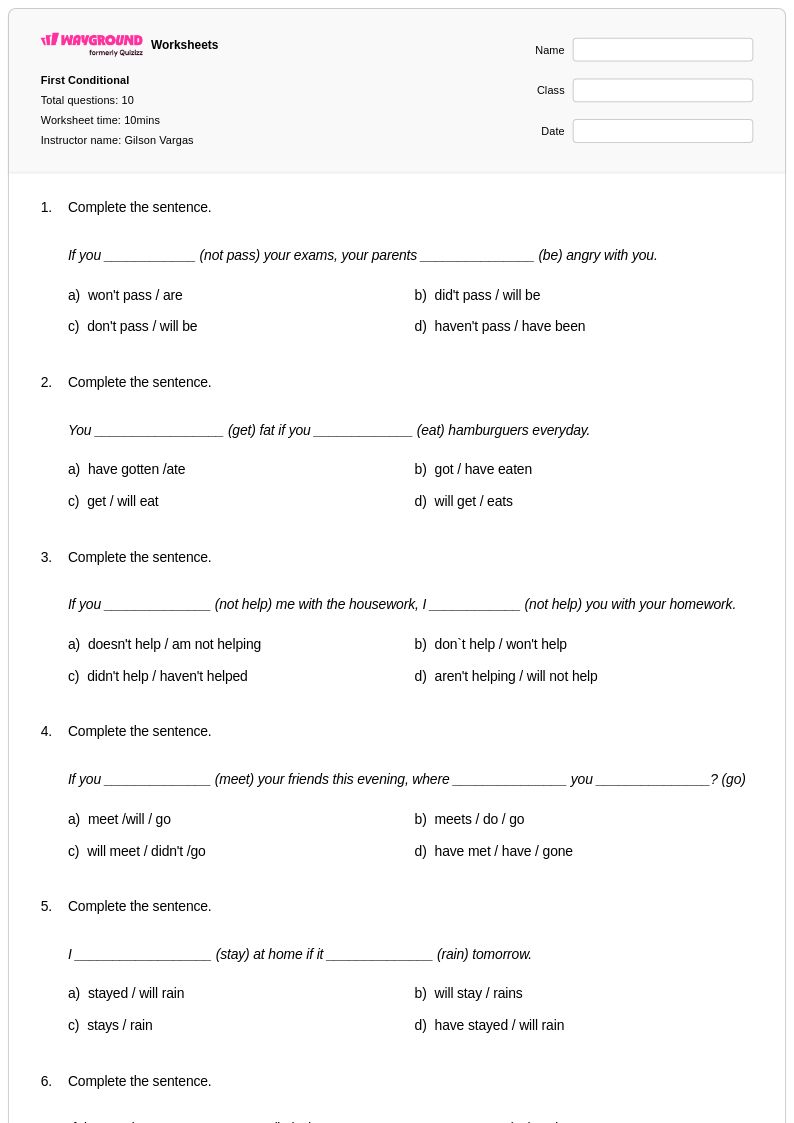
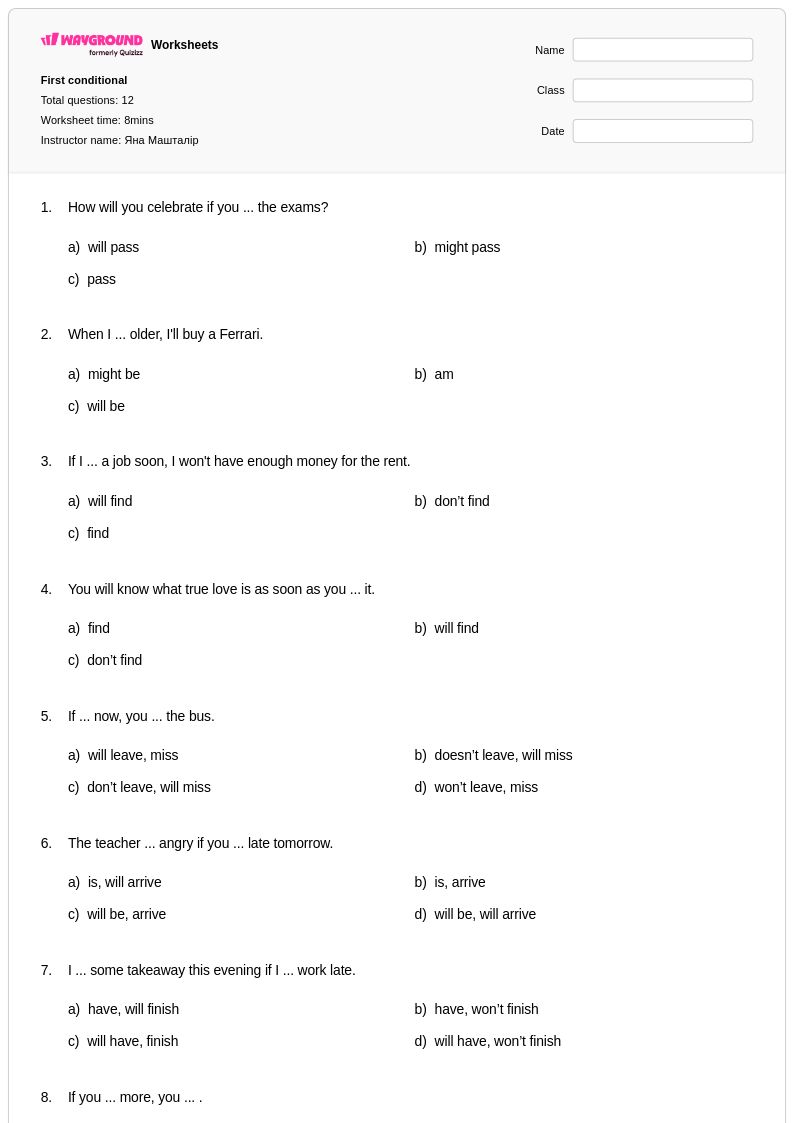
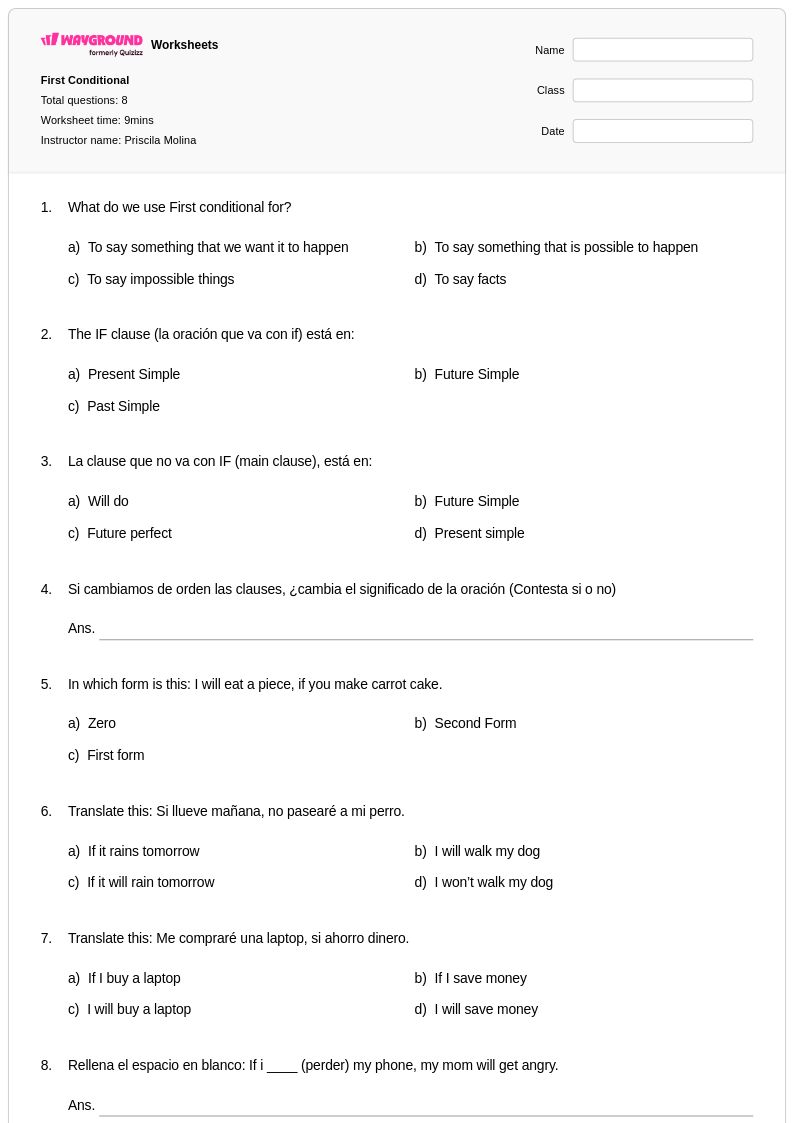
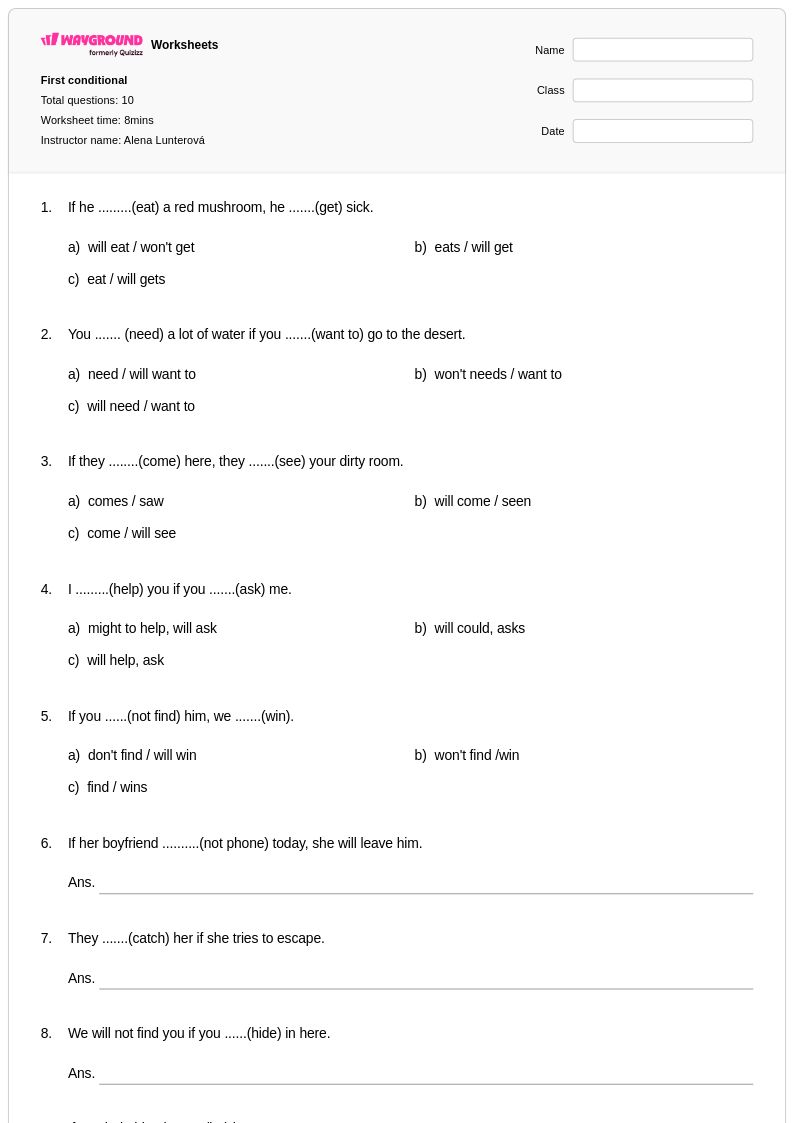
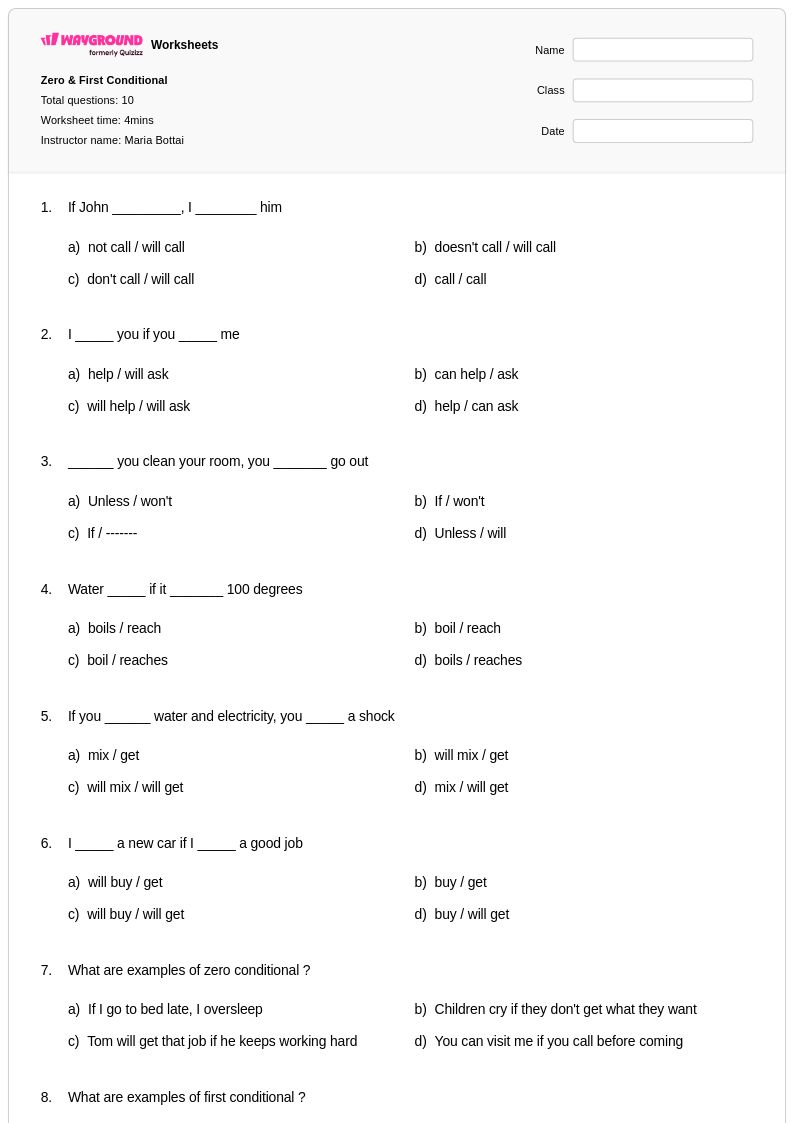
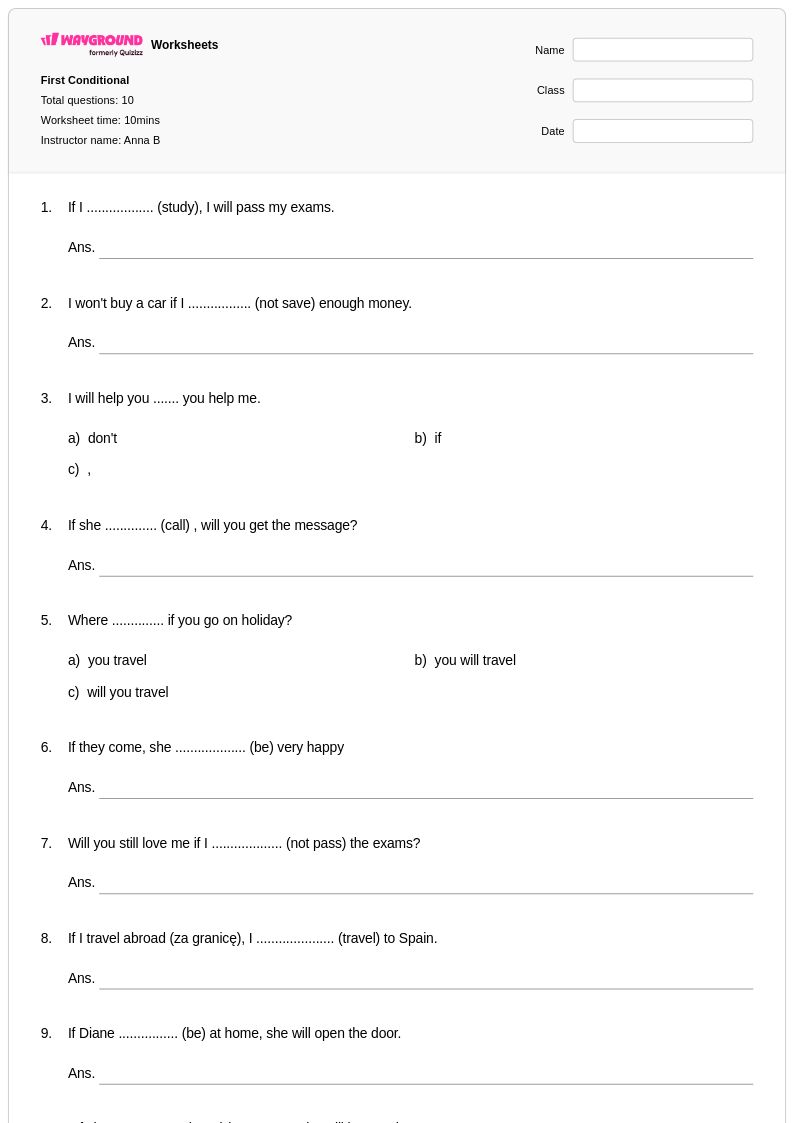
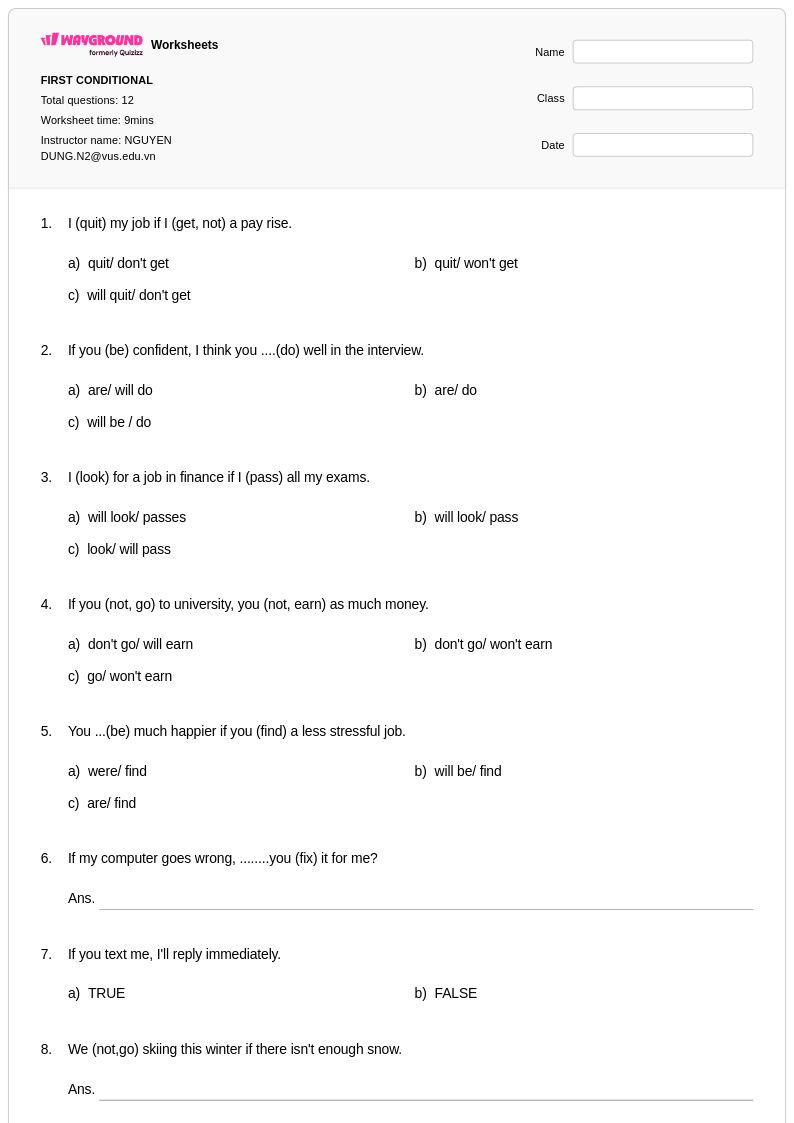
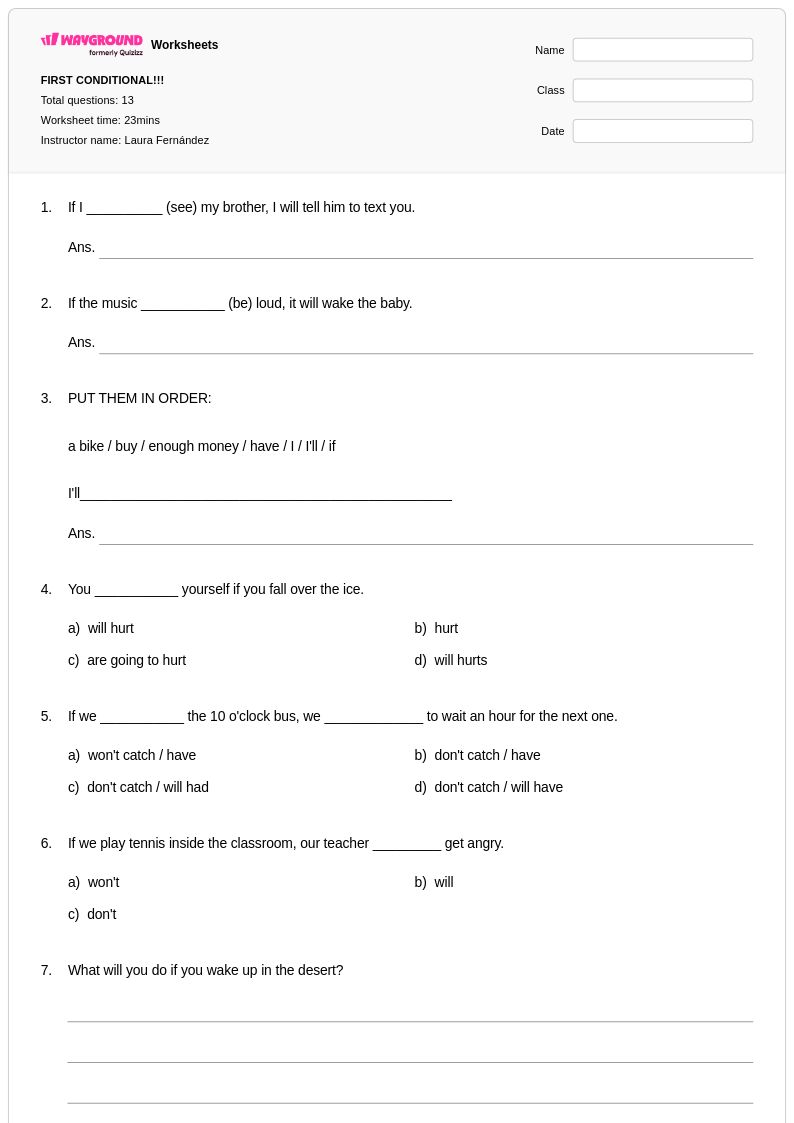
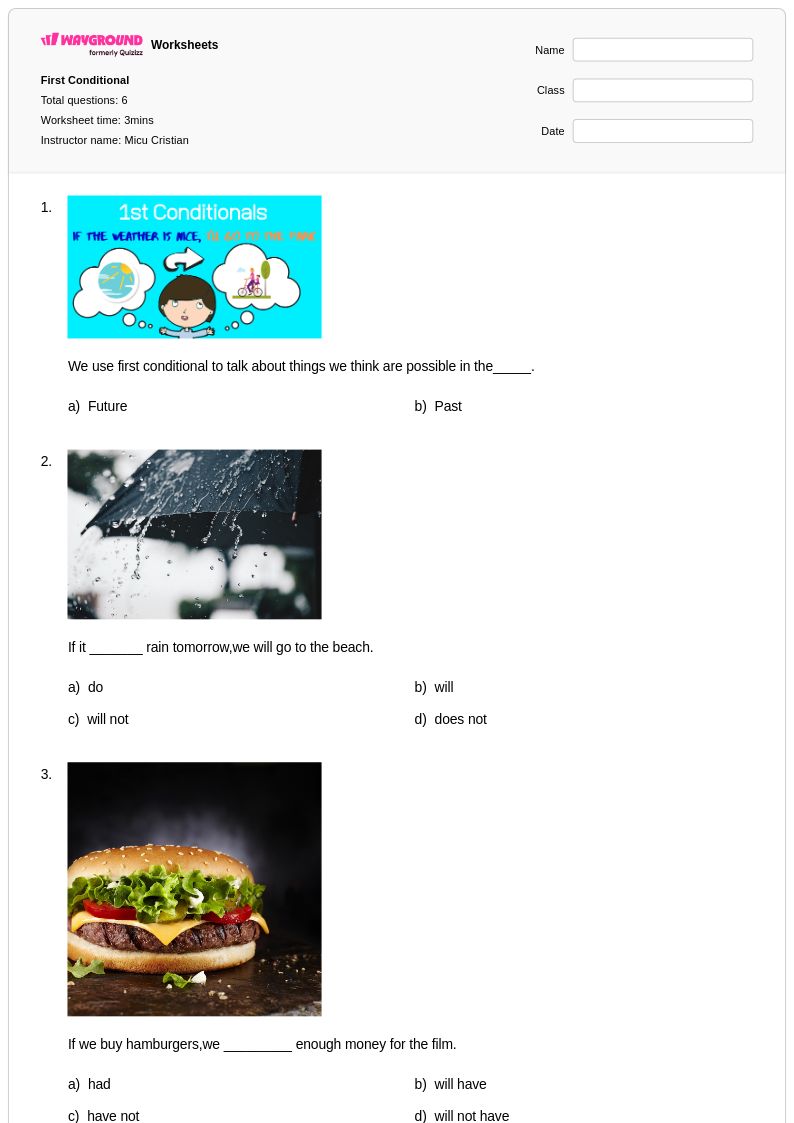
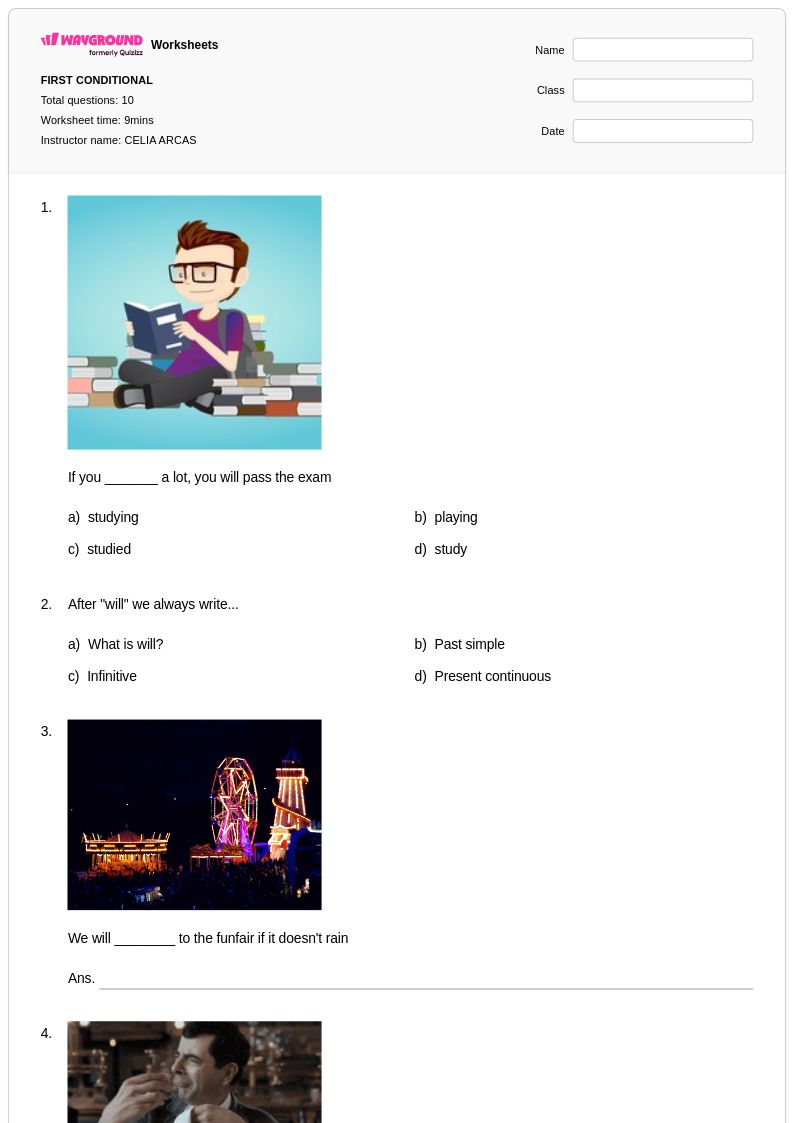
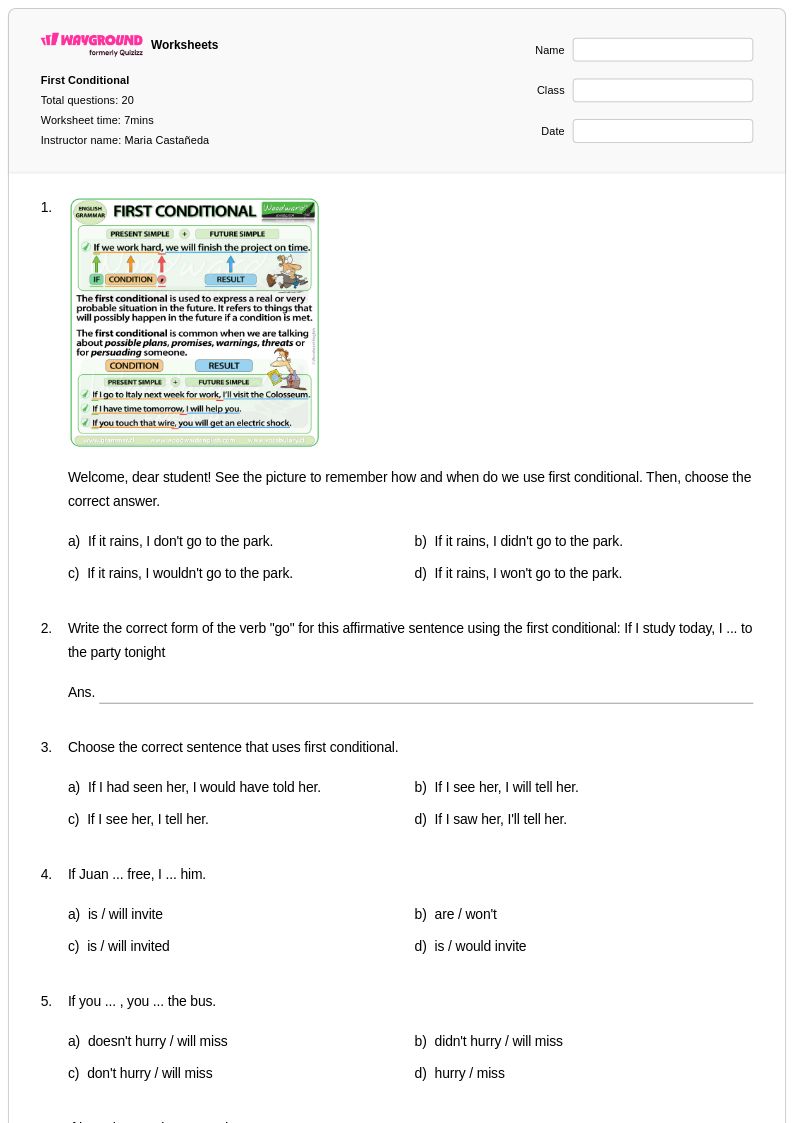
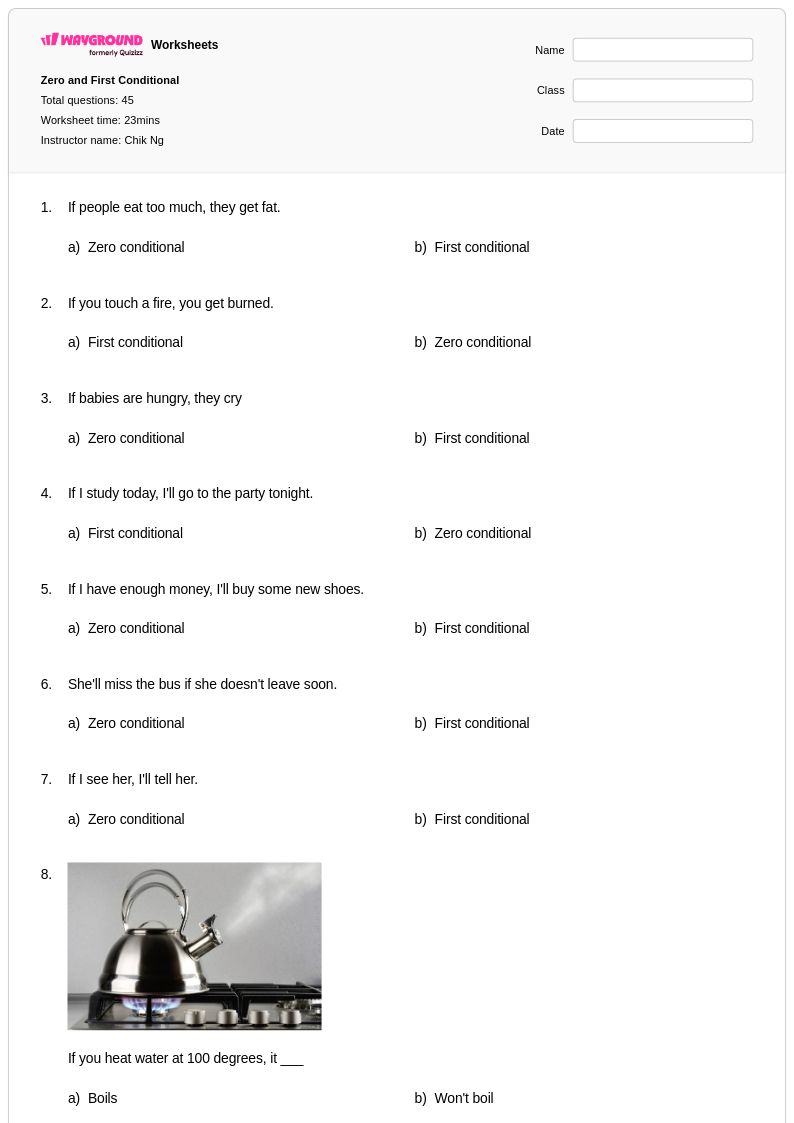
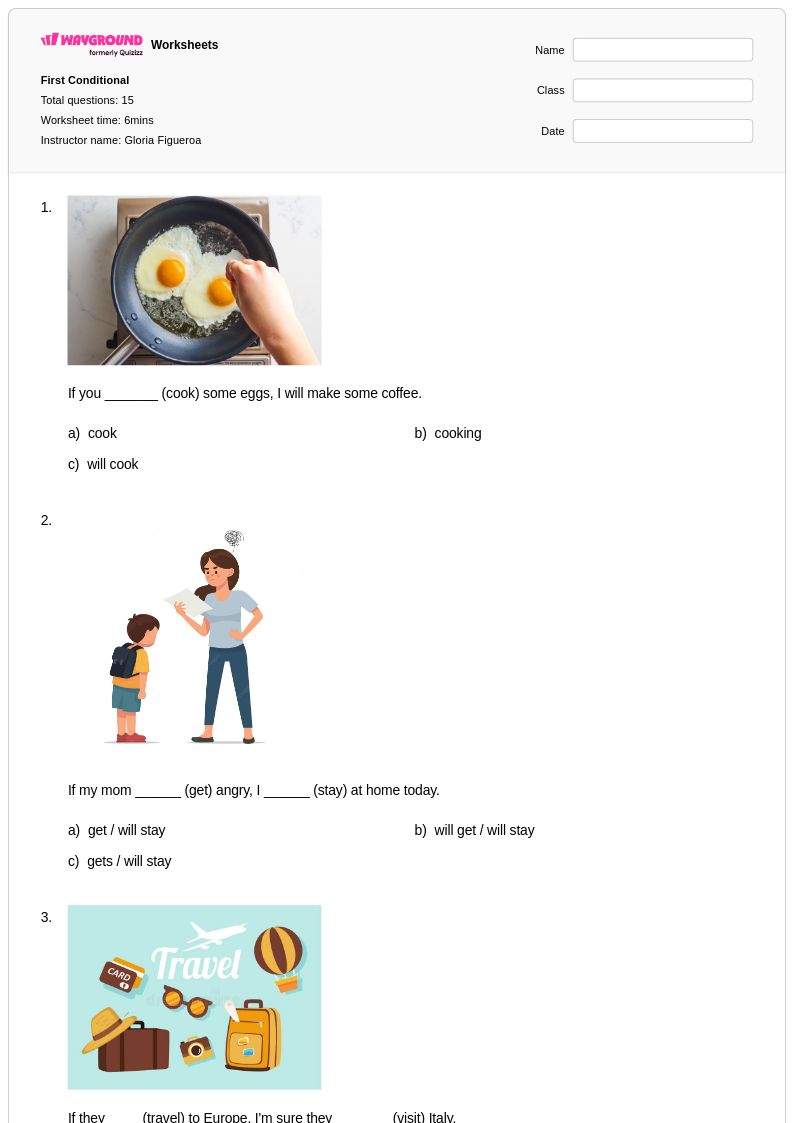
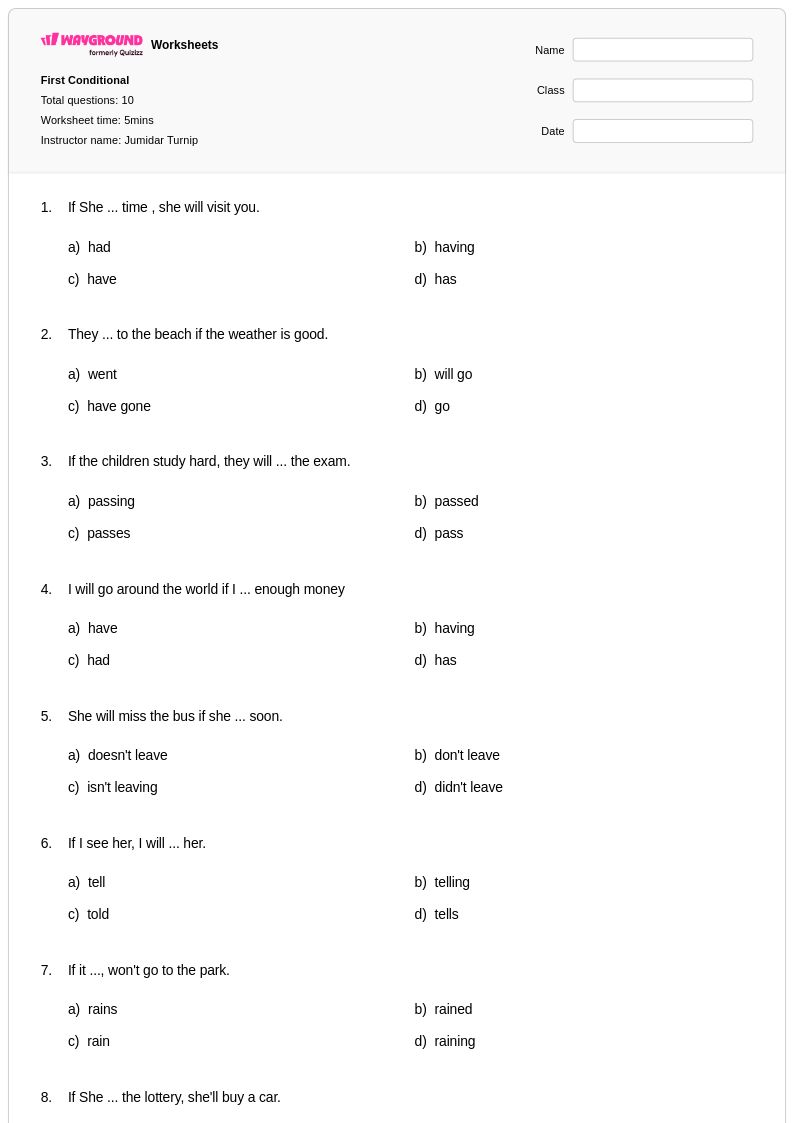
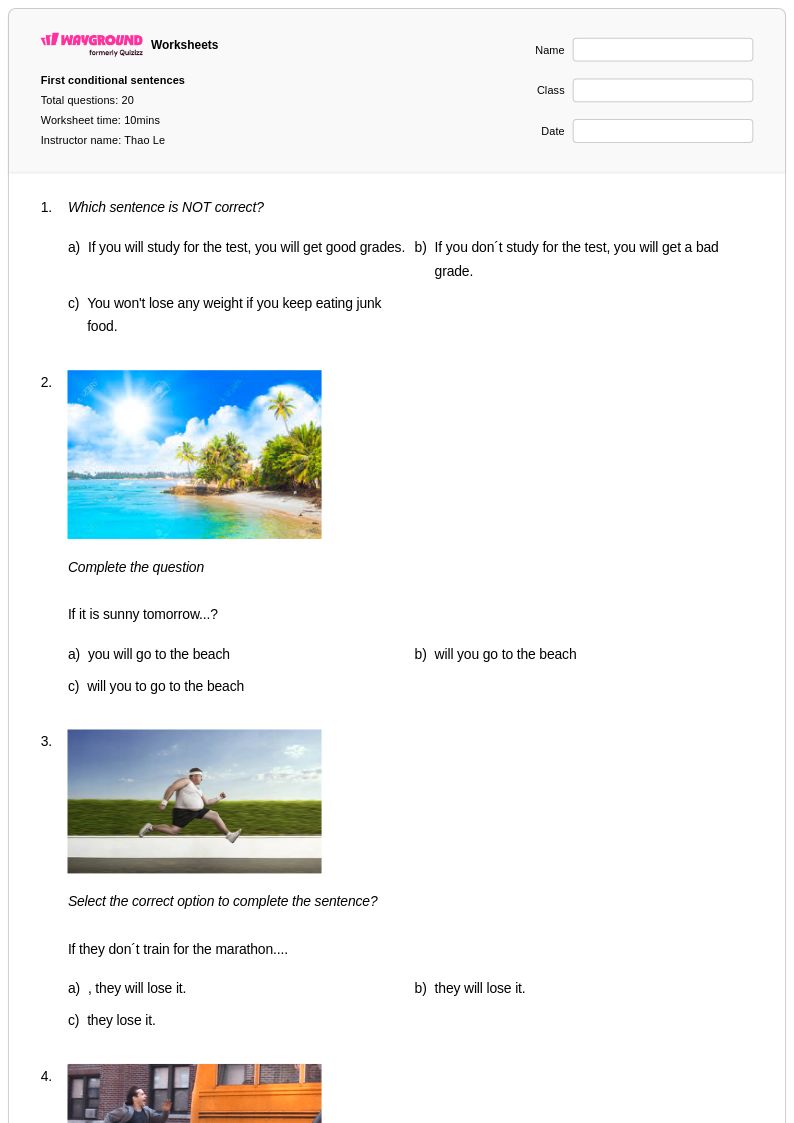
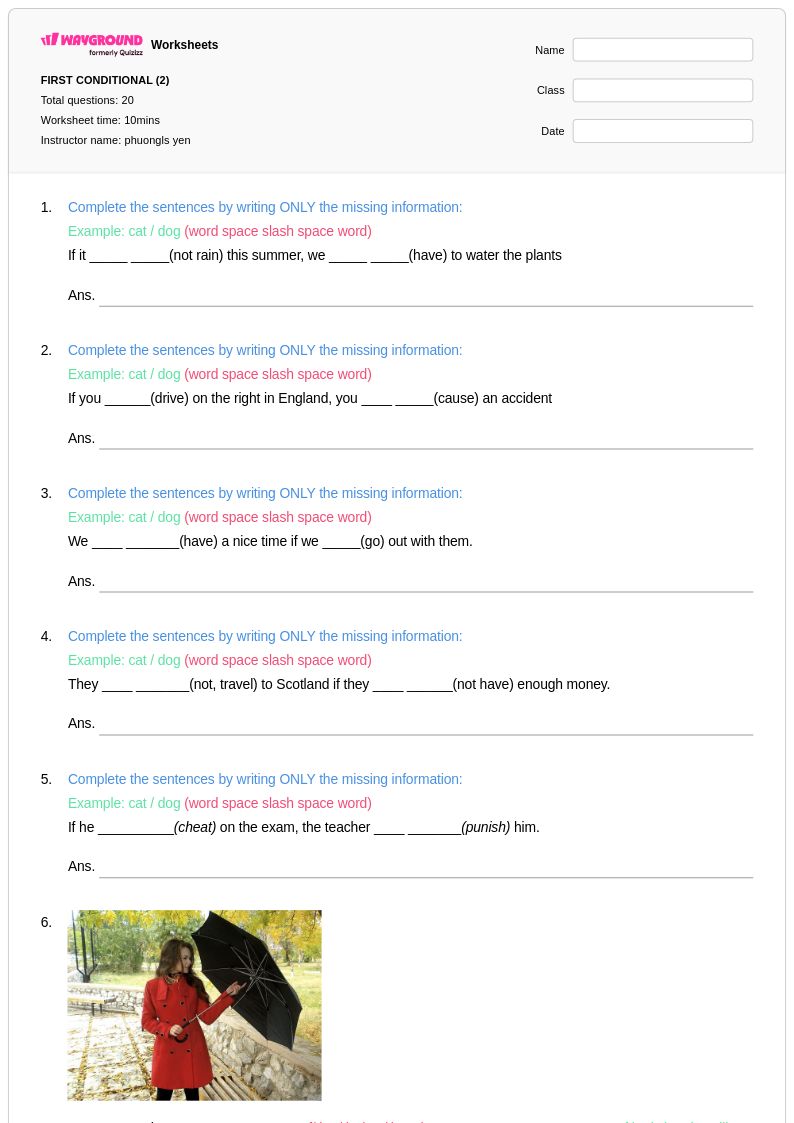
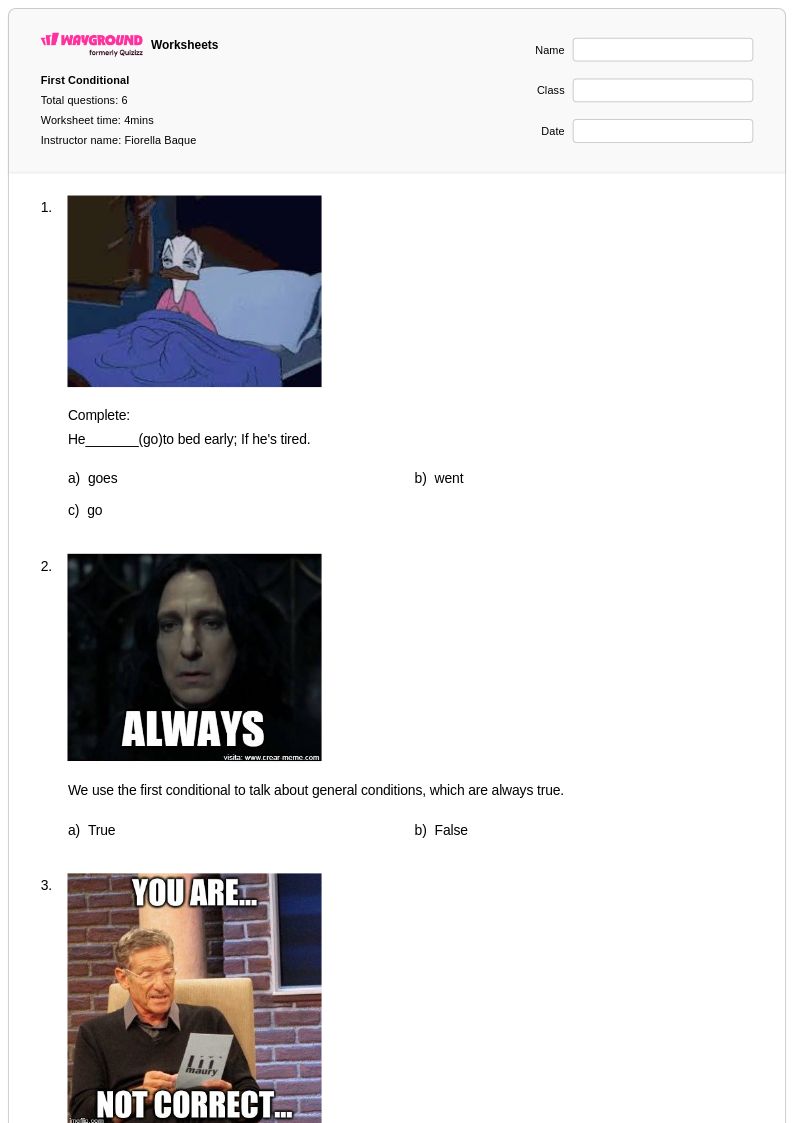
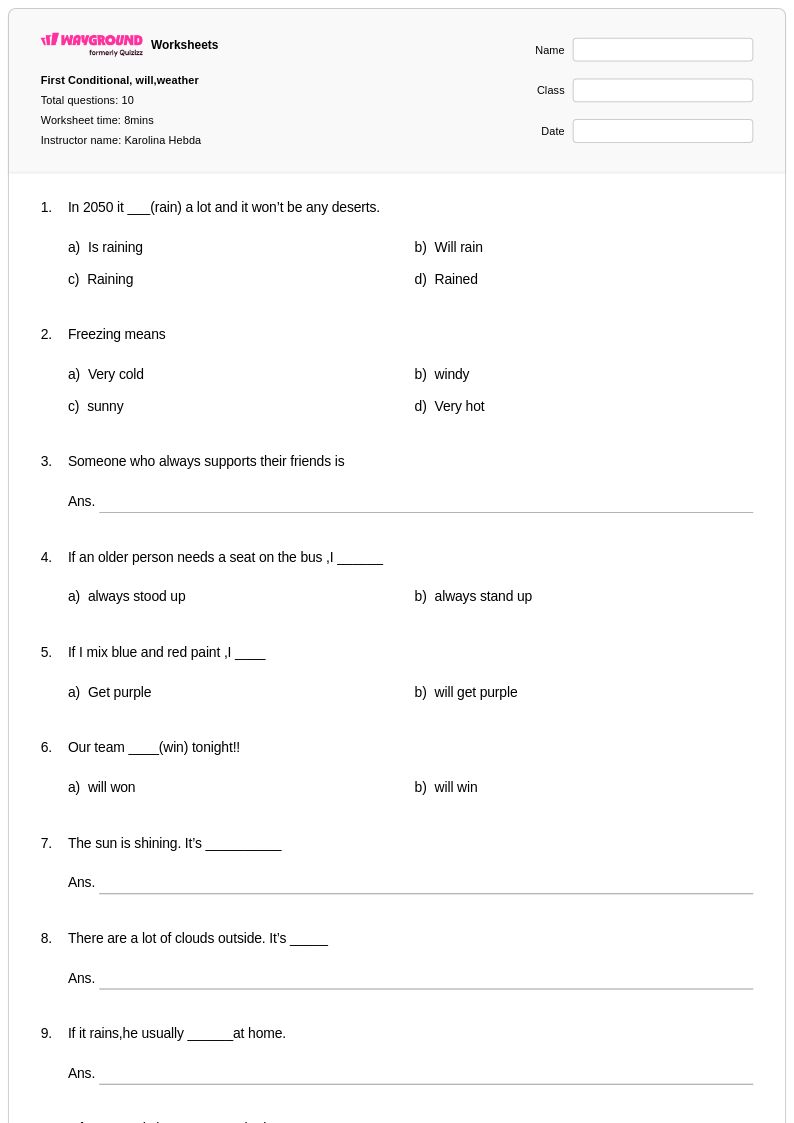
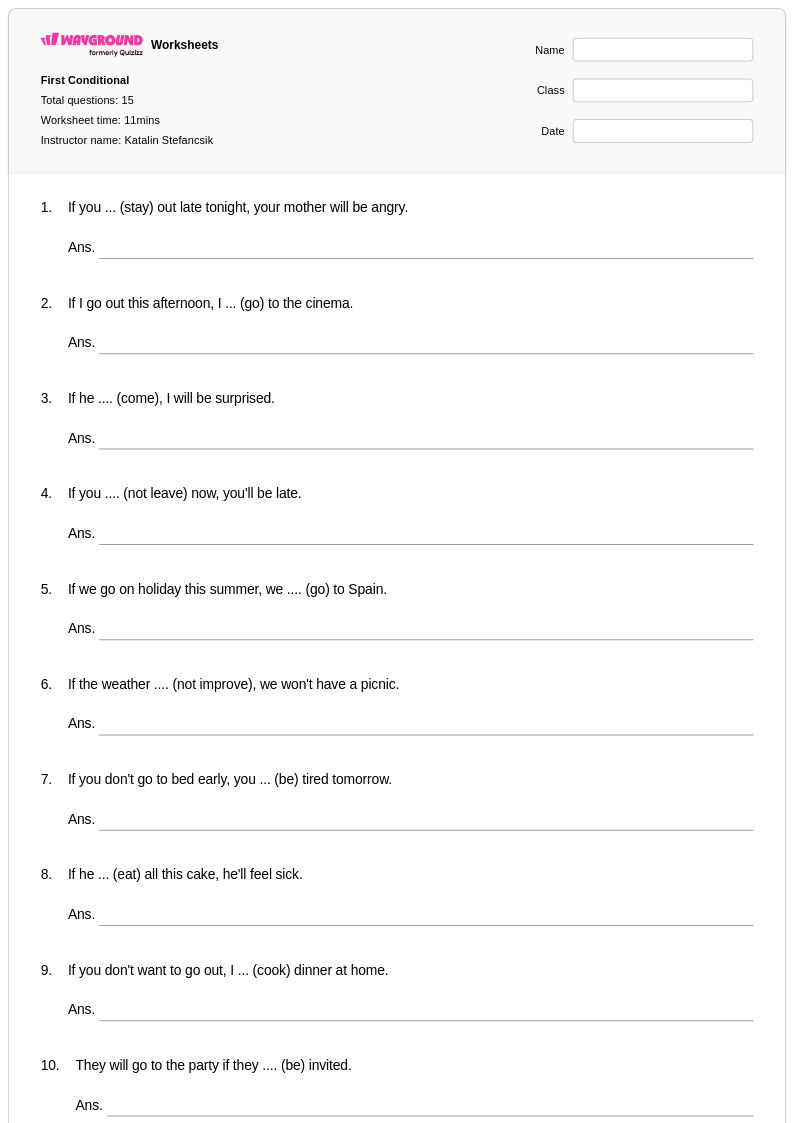
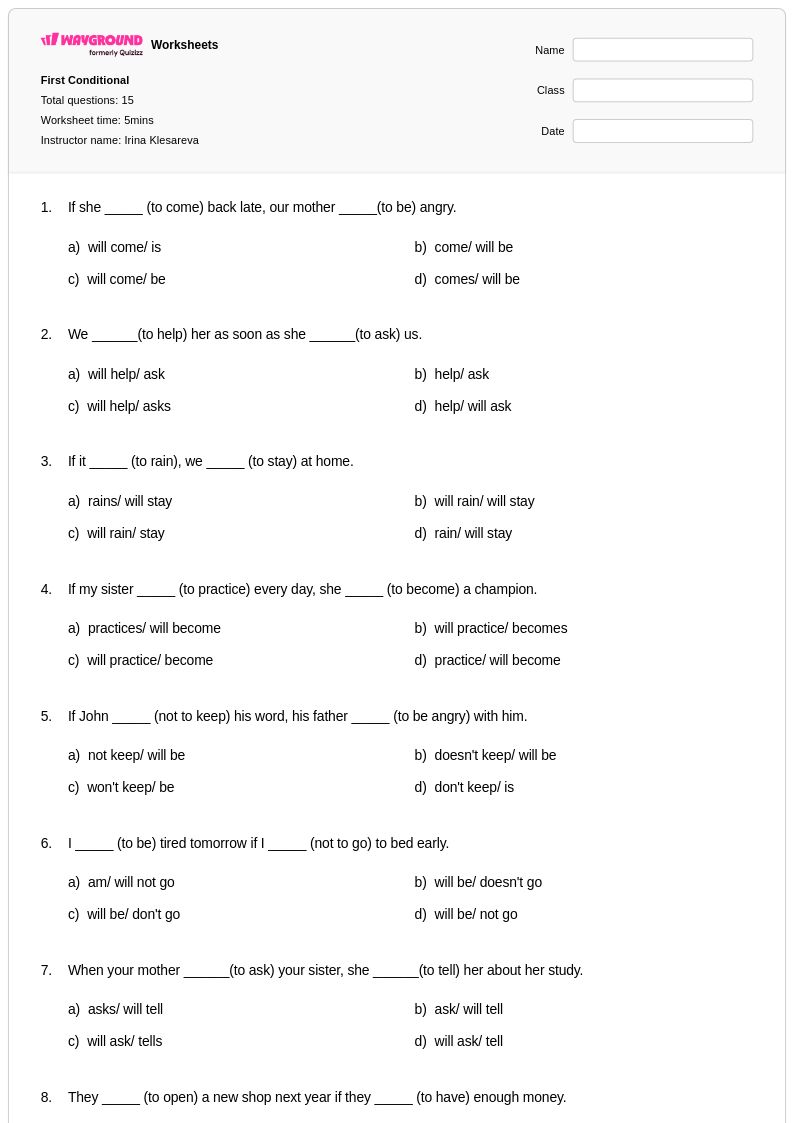
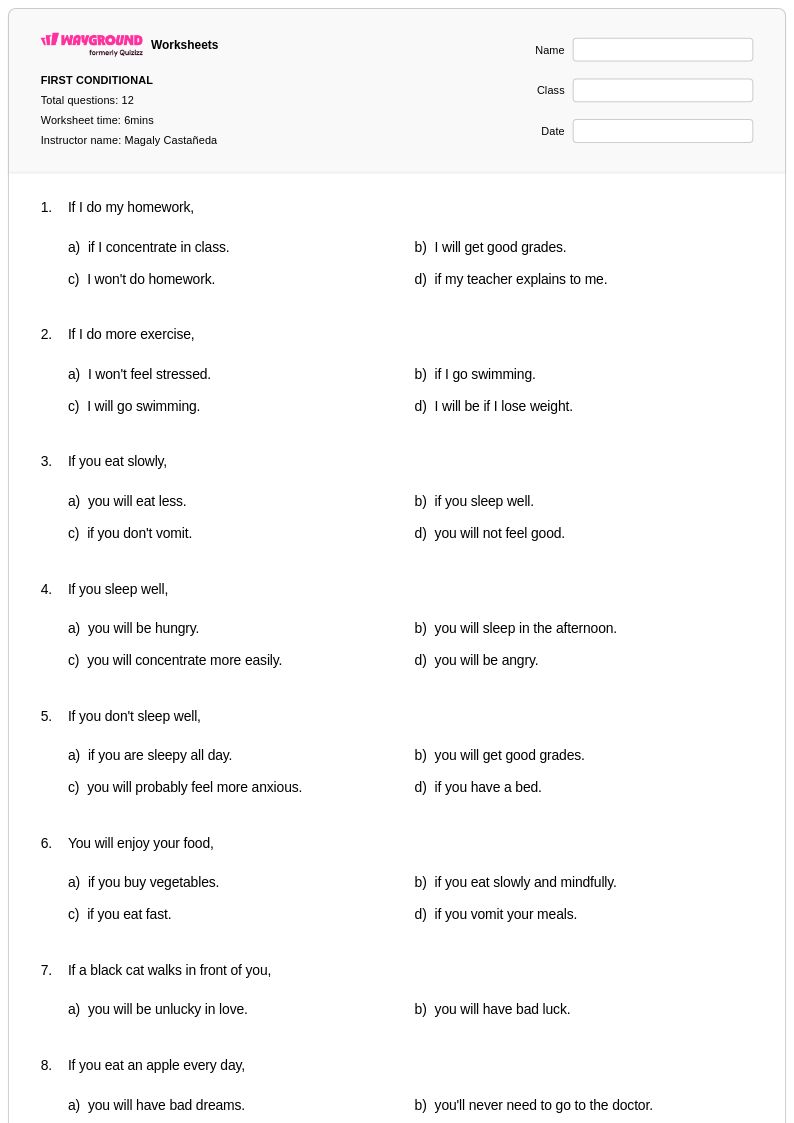
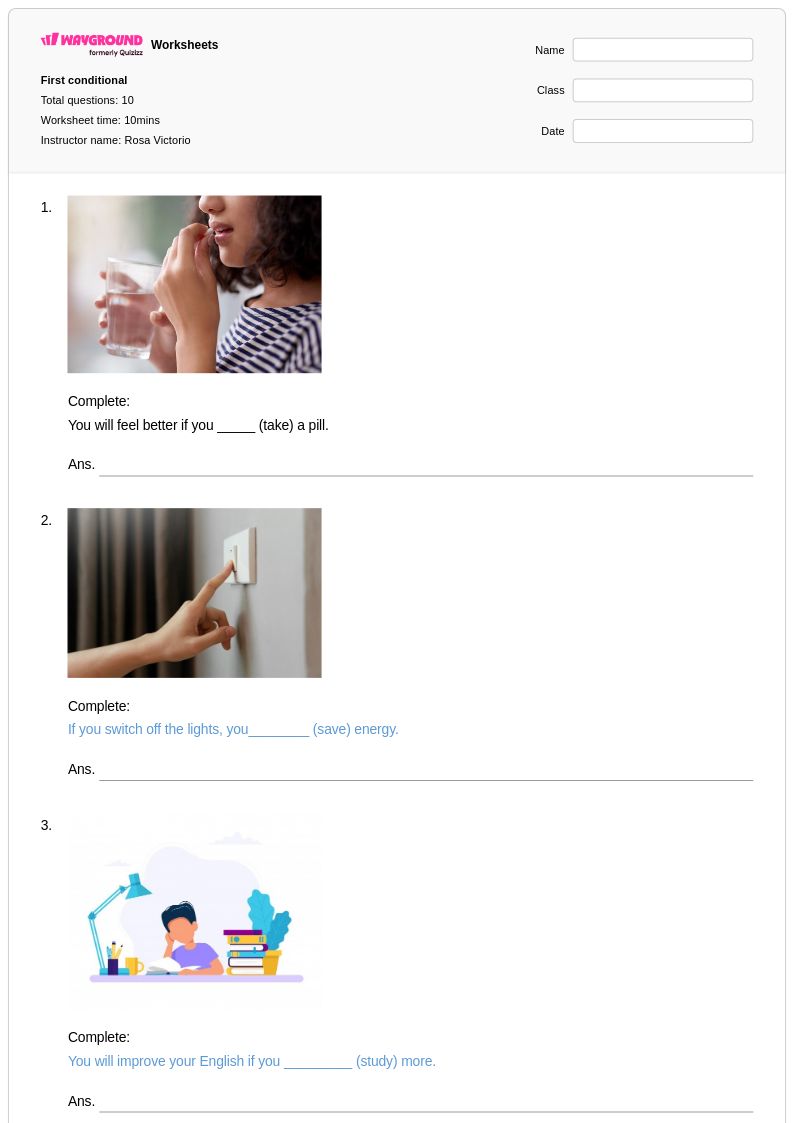
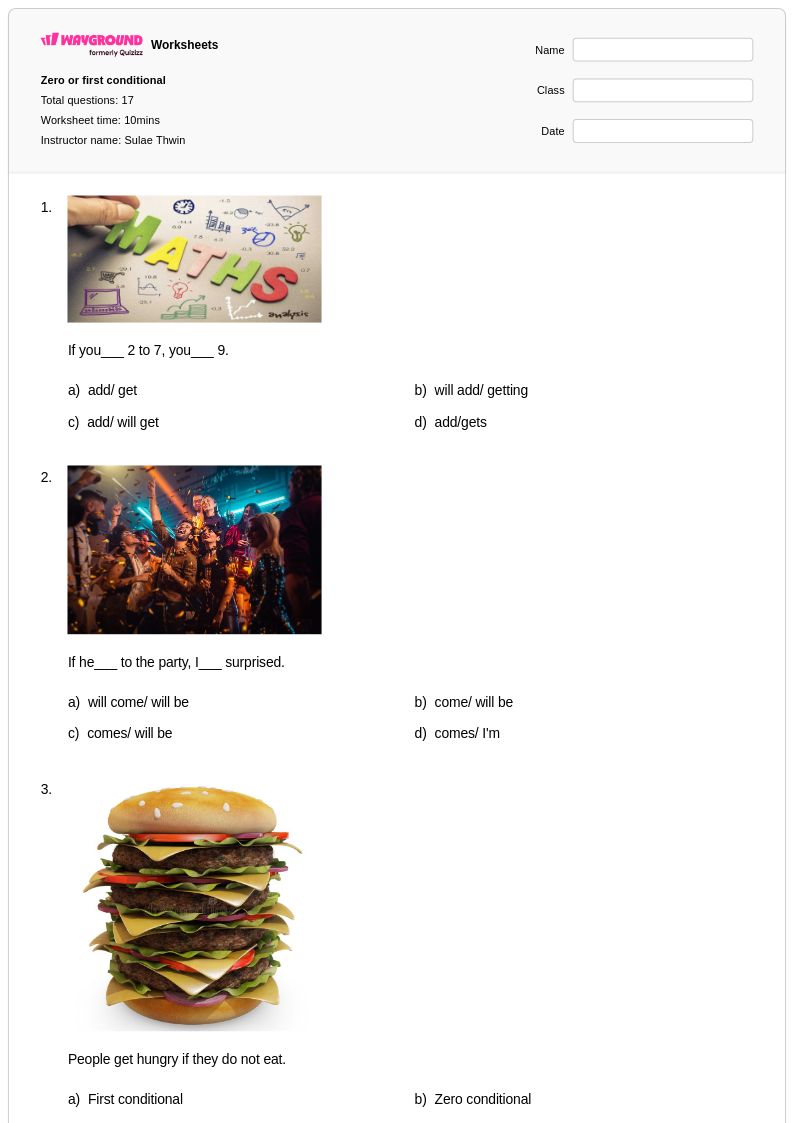
First conditional worksheets available through Wayground (formerly Quizizz) provide Grade 6 students with comprehensive practice in understanding and constructing conditional sentences that express real possibilities in the present and future. These carefully crafted worksheets strengthen students' grasp of the "if + present simple, will + base verb" structure while developing their ability to recognize cause-and-effect relationships in English grammar. Each worksheet includes varied practice problems that challenge students to identify, complete, and create first conditional sentences across different contexts, from everyday scenarios to academic situations. Teachers can access these resources as free printables with accompanying answer keys, making assessment and self-checking seamless for both classroom instruction and independent study.
Wayground's extensive collection of teacher-created first conditional worksheets offers educators powerful tools for differentiating instruction and meeting diverse learning needs in Grade 6 English classrooms. With millions of resources available, teachers can utilize advanced search and filtering capabilities to locate materials that align with specific curriculum standards and learning objectives. The platform's flexibility allows for seamless customization of worksheets, enabling educators to modify difficulty levels, adjust content focus, and create targeted practice for remediation or enrichment purposes. These resources are available in both digital and printable PDF formats, supporting various teaching environments and learning preferences while facilitating effective lesson planning and skill-building activities that reinforce proper conditional sentence construction.
FAQs
How do I teach first conditional sentences to English learners?
Start by clearly establishing the structure: 'if + present simple' in the condition clause and 'will + base verb' in the result clause. Use real-world scenarios students can relate to, such as weather decisions or weekend plans, to make the conditional feel purposeful rather than abstract. Modeling spoken examples before moving to written practice helps learners internalize the pattern before applying it independently.
What exercises help students practice first conditional grammar?
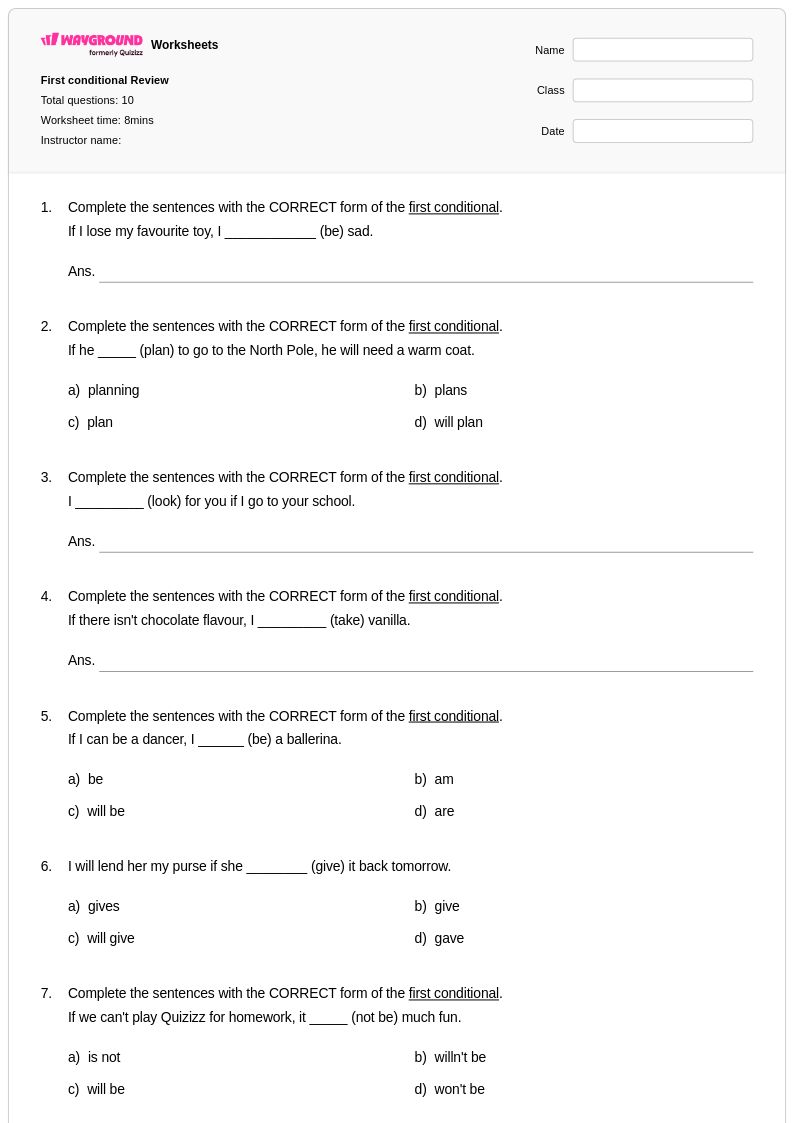
Effective practice moves from structured to open-ended: begin with sentence completion tasks where one clause is provided, then progress to prompts that require students to construct both clauses from scratch. First conditional worksheets that include real-world scenarios, such as cause-and-effect situations, give students meaningful context for applying the 'if + present simple, will + base verb' pattern rather than drilling it in isolation.
What mistakes do students commonly make with the first conditional?
The most frequent error is using 'will' in the if-clause instead of the present simple — for example, writing 'If it will rain, I will stay home' instead of 'If it rains, I will stay home.' Students also confuse first and second conditionals, applying past tense incorrectly when describing real future possibilities. Targeted practice that contrasts correct and incorrect forms helps students recognize and self-correct these patterns.
How can I differentiate first conditional instruction for mixed-ability classes?
For lower-level learners, provide sentence frames with one clause already written so students focus on completing the structure correctly. More advanced students can be challenged with open-ended writing prompts that require them to generate original first conditional statements in meaningful contexts. On Wayground, teachers can apply accommodations such as reduced answer choices or read-aloud support to individual students, ensuring each learner engages with the material at an appropriate level of challenge.
How do I use Wayground's first conditional worksheets in my classroom?
Wayground's first conditional worksheets are available as printable PDFs for traditional classroom use and in digital formats for technology-integrated environments, giving teachers flexibility depending on their setup. You can assign them as independent practice, use them for formative assessment, or host them as a quiz directly on Wayground. Each worksheet includes a complete answer key, so they also work well for self-paced or independent learning stations.
How is the first conditional different from the second conditional?
The first conditional describes real or likely situations with a genuine possibility of occurring, using 'if + present simple, will + base verb' (e.g., 'If she studies, she will pass'). The second conditional describes hypothetical or unlikely situations, using 'if + past simple, would + base verb' (e.g., 'If she studied more, she would pass every exam'). Clarifying this distinction early prevents persistent confusion as students encounter more complex conditional structures.