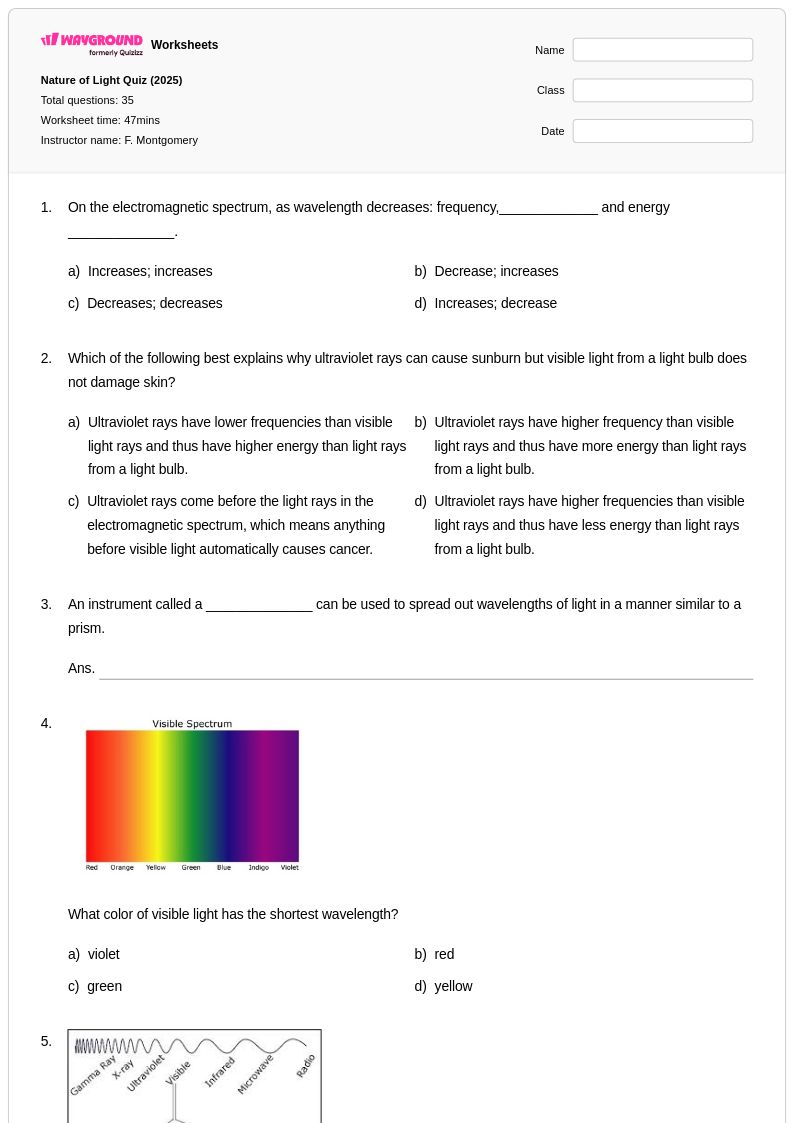
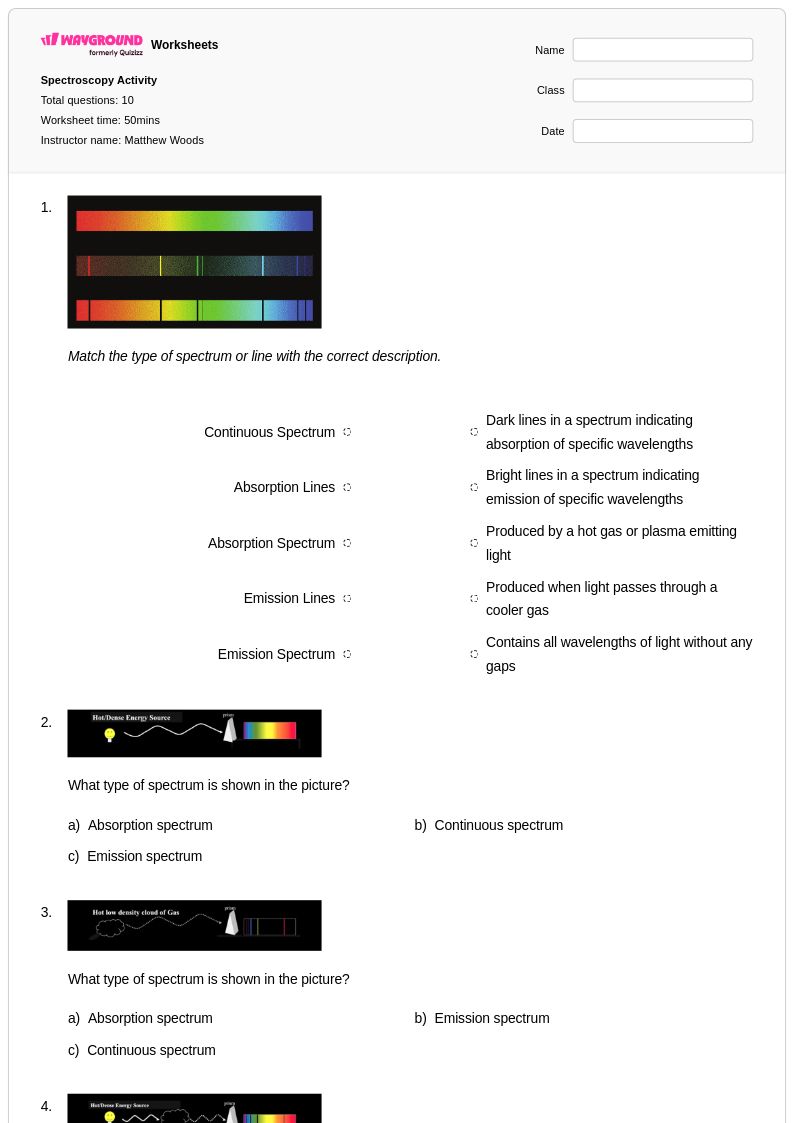
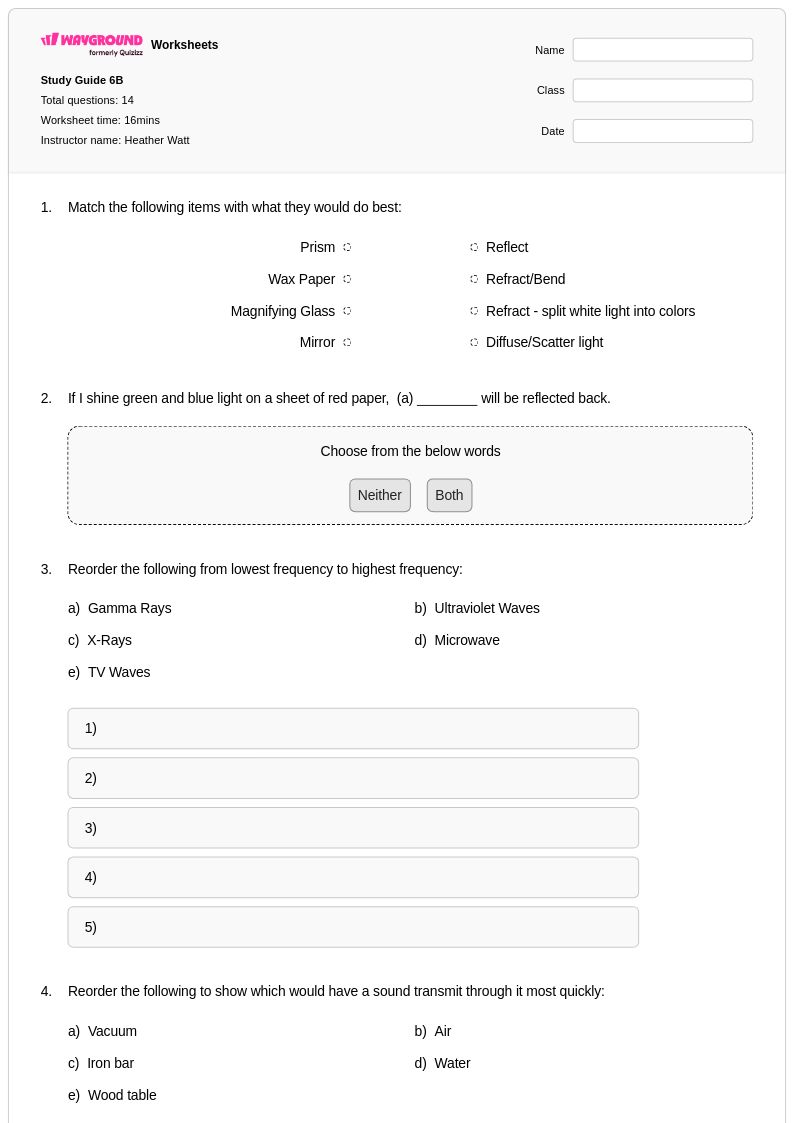
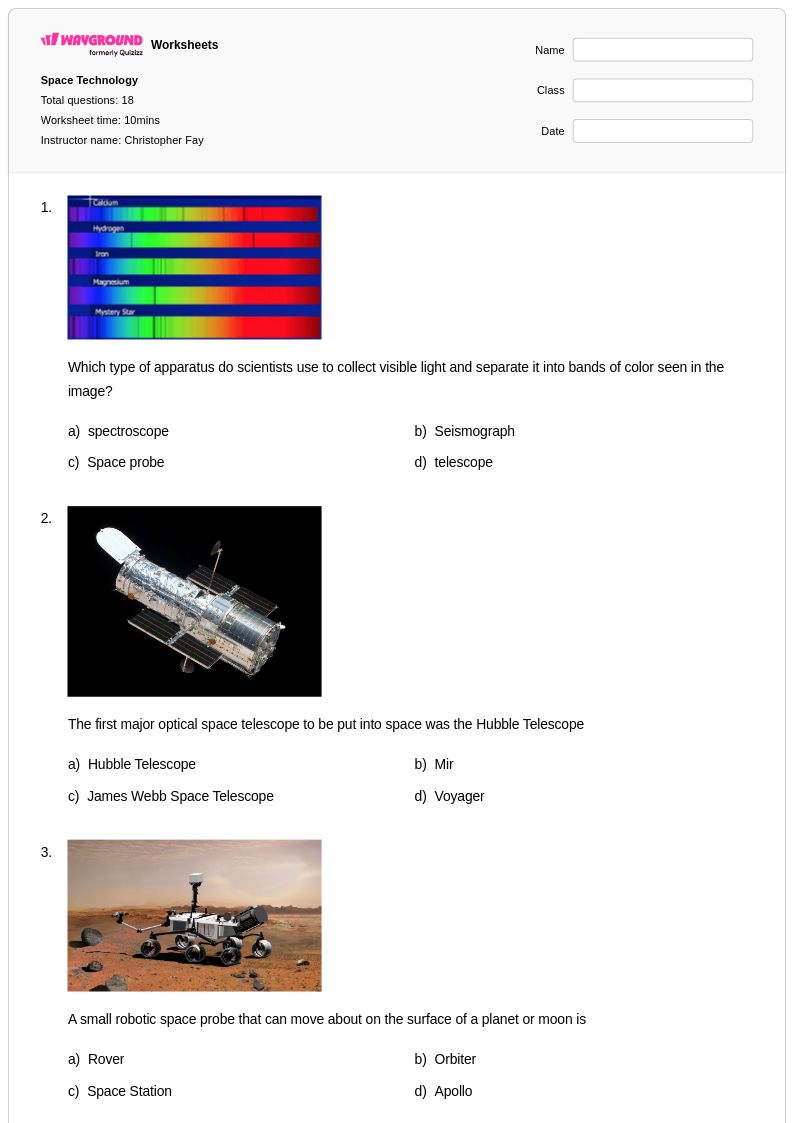
Enhance chemistry understanding with Wayground's free infrared spectroscopy worksheets featuring comprehensive practice problems, detailed answer keys, and printable PDF formats to help students master molecular identification and spectral analysis techniques.
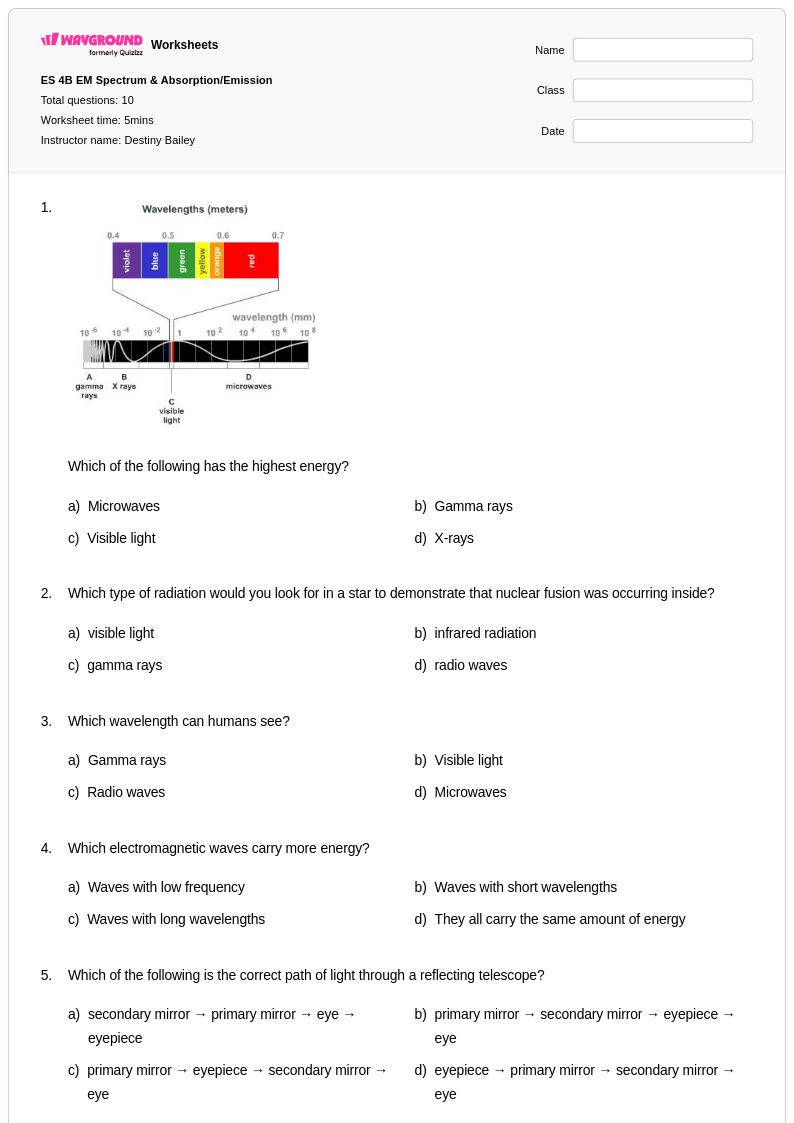
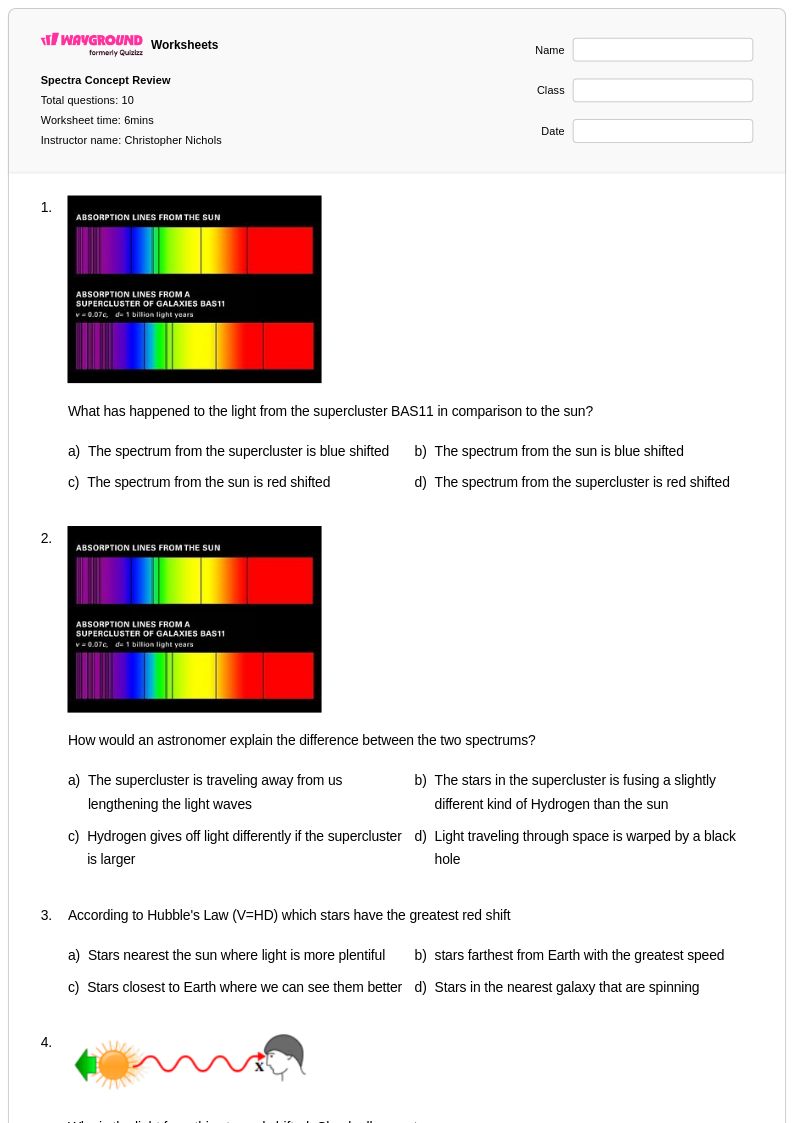
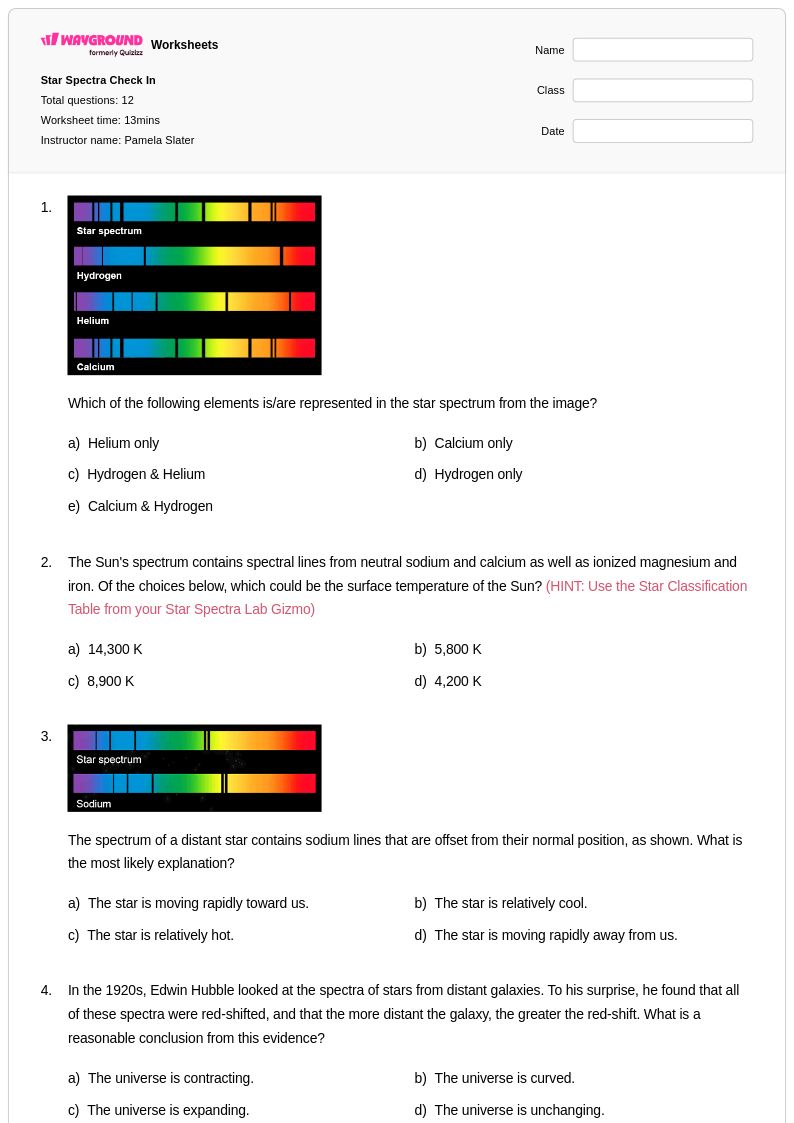
Infrared spectroscopy worksheets available through Wayground (formerly Quizizz) provide comprehensive practice materials designed to help students master this fundamental analytical technique in chemistry. These expertly crafted resources focus on developing critical skills including interpreting IR spectra, identifying functional groups based on characteristic absorption frequencies, correlating molecular structure with spectral data, and analyzing unknown compounds through spectroscopic evidence. Students work through systematic practice problems that cover the electromagnetic spectrum, molecular vibrations, fingerprint regions, and real-world applications of IR analysis in organic and analytical chemistry. Each worksheet collection includes detailed answer keys and explanations, with materials available as free printables and downloadable pdf formats to support both classroom instruction and independent study.
Wayground's extensive library features millions of teacher-created infrared spectroscopy resources that support educators in delivering effective chemistry instruction across all learning environments. The platform's robust search and filtering capabilities allow teachers to quickly locate materials aligned with specific curriculum standards and learning objectives, while built-in differentiation tools enable seamless customization for students with varying skill levels and learning needs. These versatile worksheet collections are available in both printable and digital formats, including pdf downloads, making them ideal for traditional classroom settings, hybrid learning environments, and remote instruction. Teachers can effectively utilize these resources for initial concept introduction, targeted skill practice, remediation support for struggling students, and enrichment activities for advanced learners, ensuring comprehensive coverage of infrared spectroscopy principles and applications.
FAQs
How do I teach infrared spectroscopy to chemistry students?
Start by grounding students in the concept that different functional groups absorb infrared radiation at characteristic frequencies, producing a unique spectral fingerprint for each molecule. Introduce the major regions of the IR spectrum — particularly the functional group region (4000–1500 cm⁻¹) and the fingerprint region (below 1500 cm⁻¹) — before moving to unknown compound identification. Scaffolded practice that progresses from identifying single functional groups to analyzing complete spectra of unknown organic compounds helps students build systematic interpretation skills.
What exercises help students practice reading IR spectra?
The most effective practice involves giving students real or simulated IR spectra and asking them to identify specific absorption peaks, assign them to functional groups, and draw conclusions about molecular structure. Exercises that correlate a known compound's structure with its spectrum build pattern recognition, while unknown-compound problems develop analytical reasoning. Pairing spectral analysis with other data — such as molecular formula or mass spectrometry results — mirrors real-world laboratory thinking and deepens comprehension.
What mistakes do students commonly make when interpreting IR spectra?
A frequent error is over-relying on a single absorption peak to identify a compound rather than interpreting the full spectrum as a whole. Students also commonly confuse the broad O–H stretch of alcohols with the N–H stretch of amines, or misread carbonyl peak positions, leading to incorrect functional group assignments. Another common misconception is ignoring the fingerprint region entirely, which is critical for distinguishing between structurally similar compounds such as geometric isomers.
How can I use infrared spectroscopy worksheets to support students with different skill levels?
Differentiated worksheets can range from guided interpretation tasks — where students match labeled peaks to a provided functional group table — to open-ended problems requiring full structural determination from raw spectral data. On Wayground, teachers can apply built-in accommodations to individual students, including reduced answer choices to lower cognitive load, read-aloud support for question text, and extended time settings for assessments. These accommodations can be assigned to specific students without affecting the experience of the rest of the class.
How do I use Wayground's infrared spectroscopy worksheets in my classroom?
Wayground's infrared spectroscopy worksheets are available as printable PDFs for traditional classroom use and in digital formats for technology-integrated or remote learning environments. Teachers can also host them directly as a quiz on Wayground, enabling real-time student response tracking and immediate feedback. Each worksheet includes a detailed answer key, making them suitable for independent practice, in-class review, or remediation work.
How do I help students understand molecular vibrations in IR spectroscopy?
Model the concept of molecular vibrations — stretching and bending — using physical analogies such as springs connecting atoms of different masses, which explains why bond strength and atomic mass influence absorption frequency. Emphasize that only vibrations resulting in a change in dipole moment are IR-active, which explains why homonuclear diatomic molecules like N₂ do not appear in IR spectra. Connecting these principles directly to specific peaks students observe in practice spectra reinforces the underlying physics without losing sight of the analytical goal.