Free Printable Interrogative Words Worksheets for Grade 6
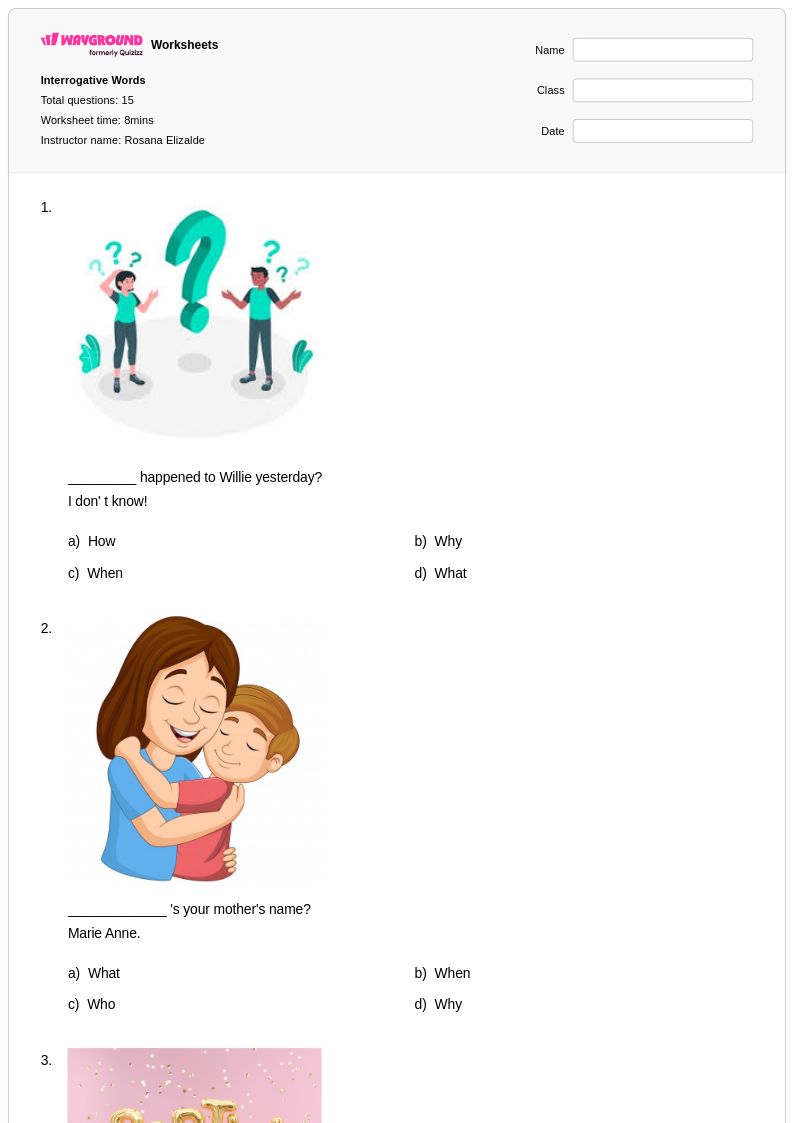
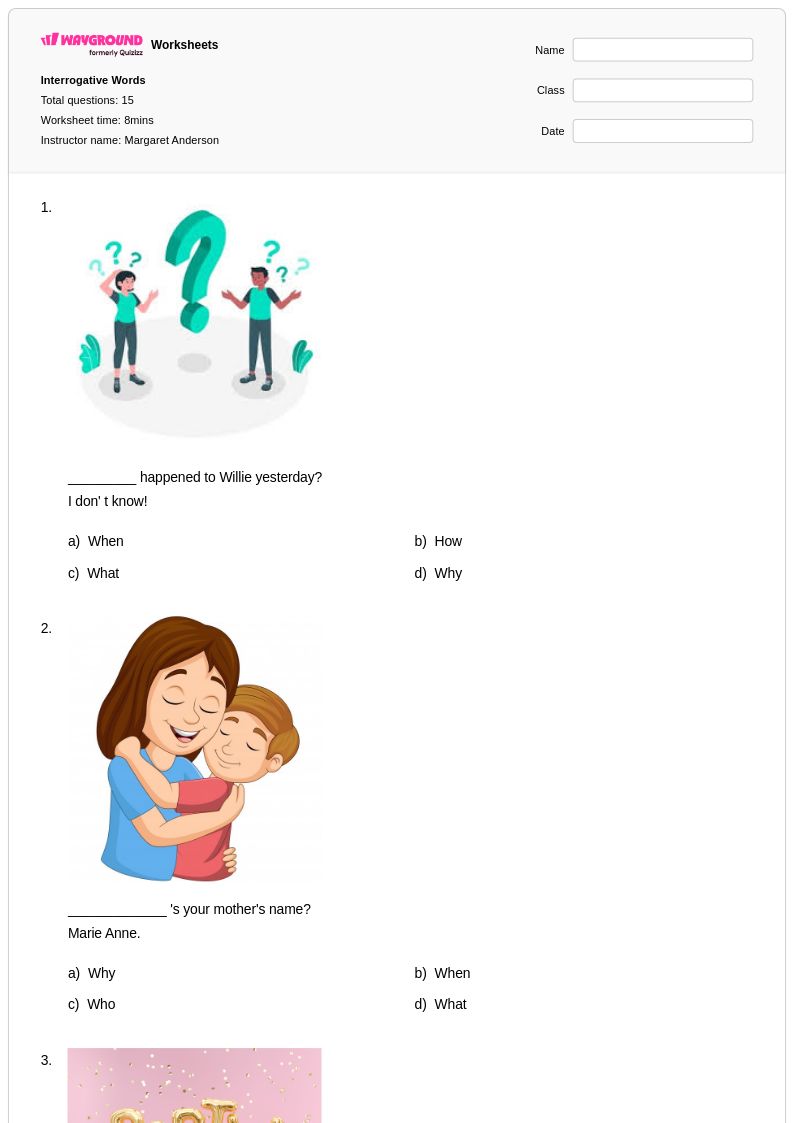
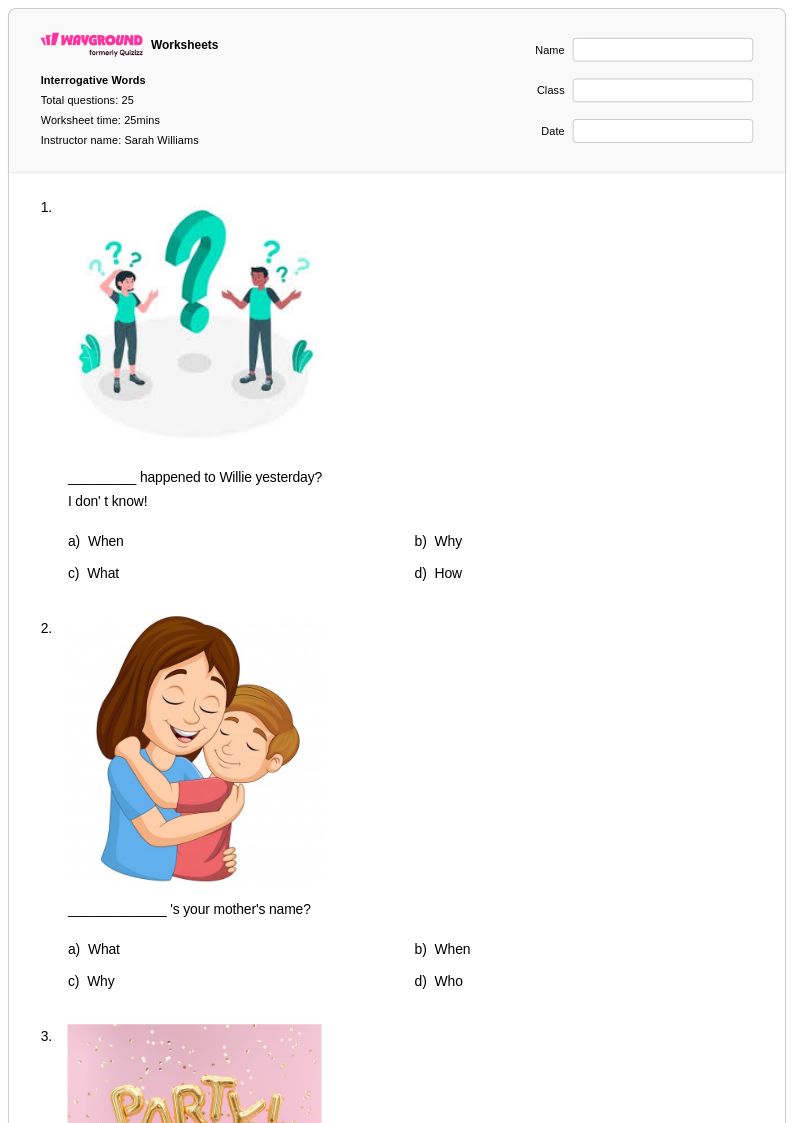
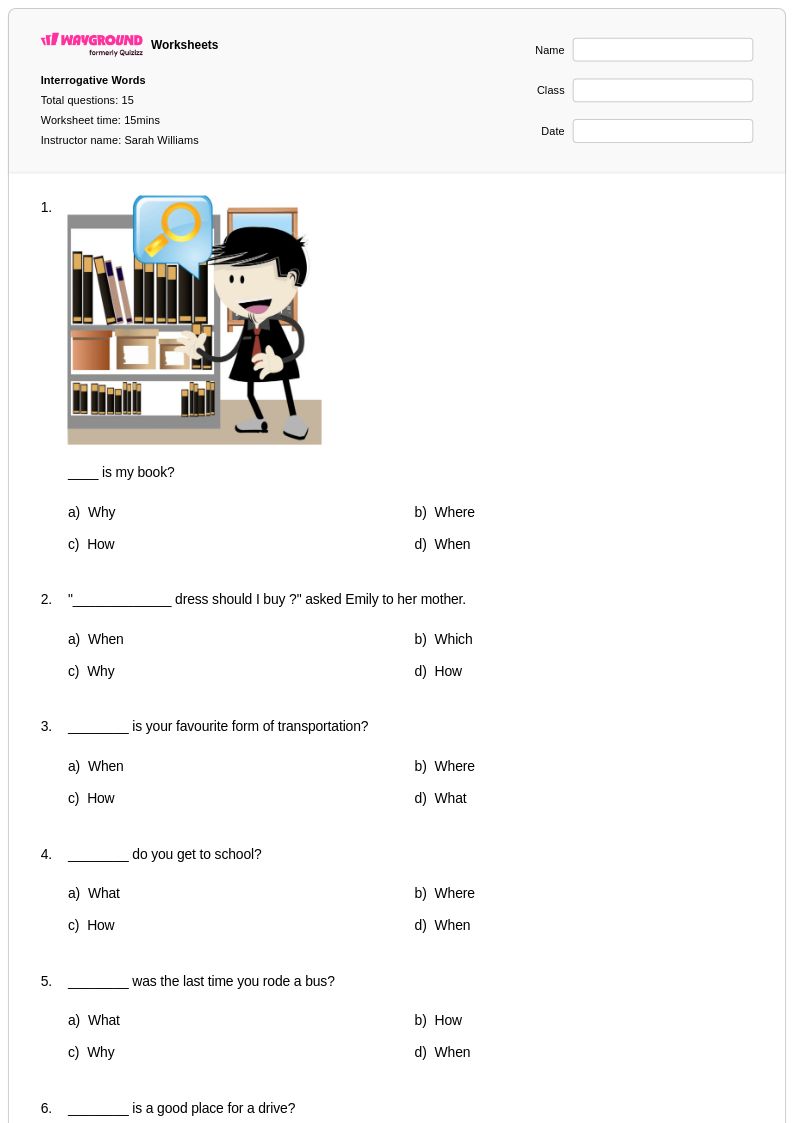
Explore Grade 6 interrogative words worksheets with free printables and answer keys that help students master question-forming words like who, what, when, where, why, and how through engaging practice problems.
Explore printable Interrogative Words worksheets for Grade 6
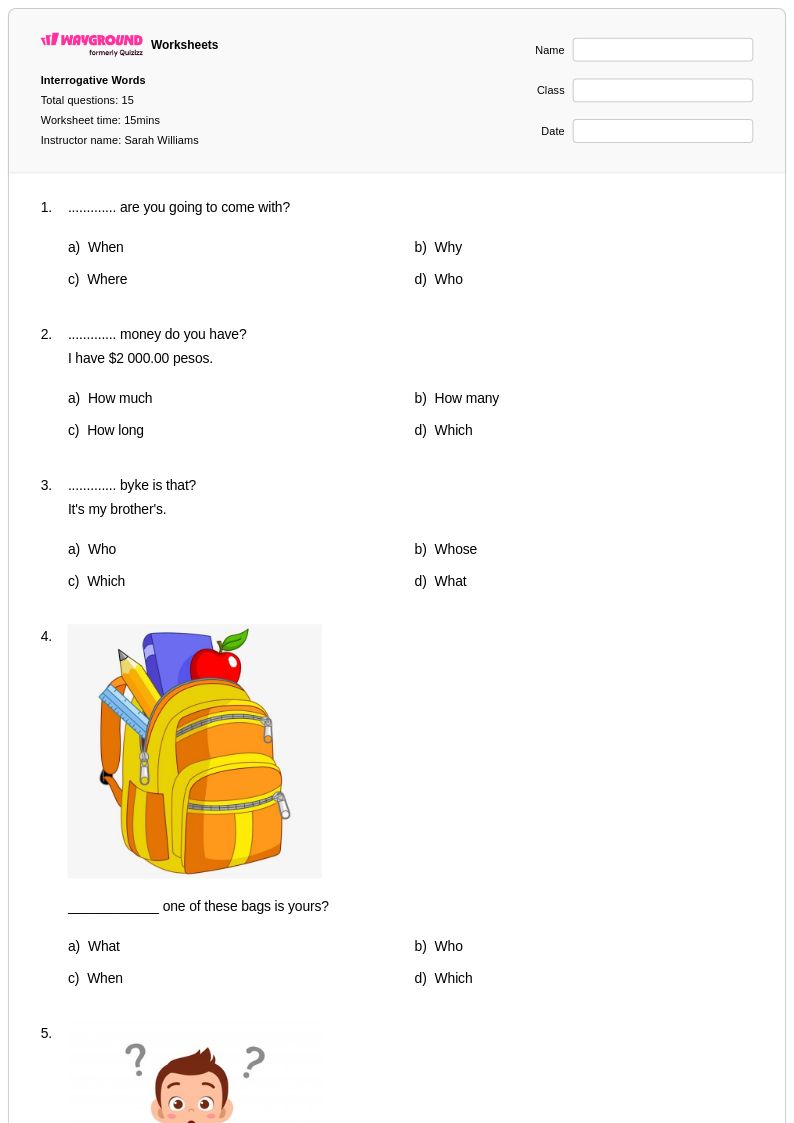
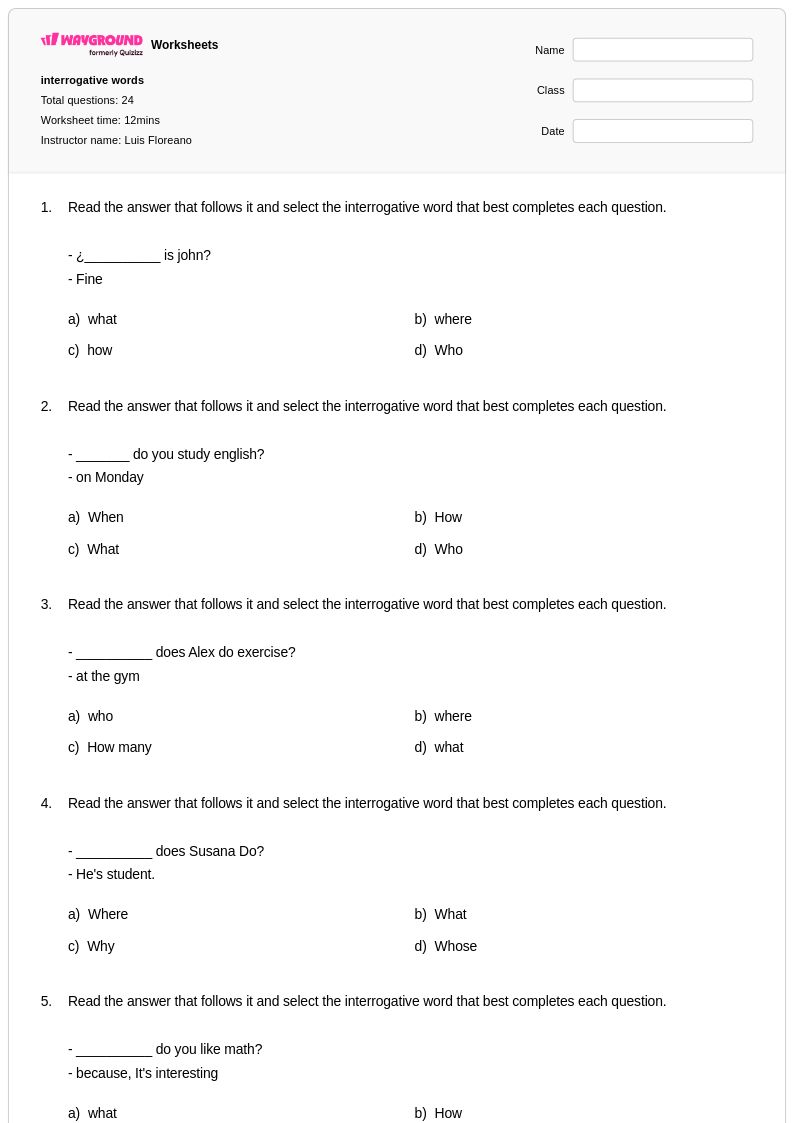
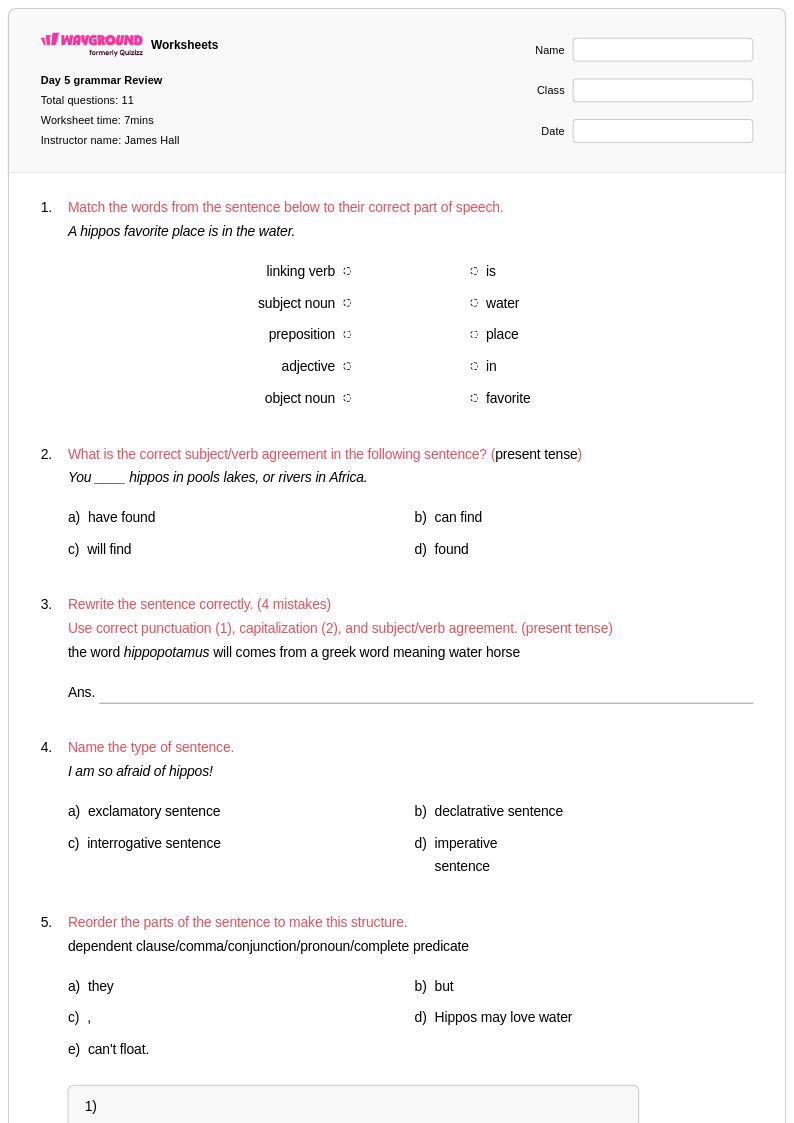
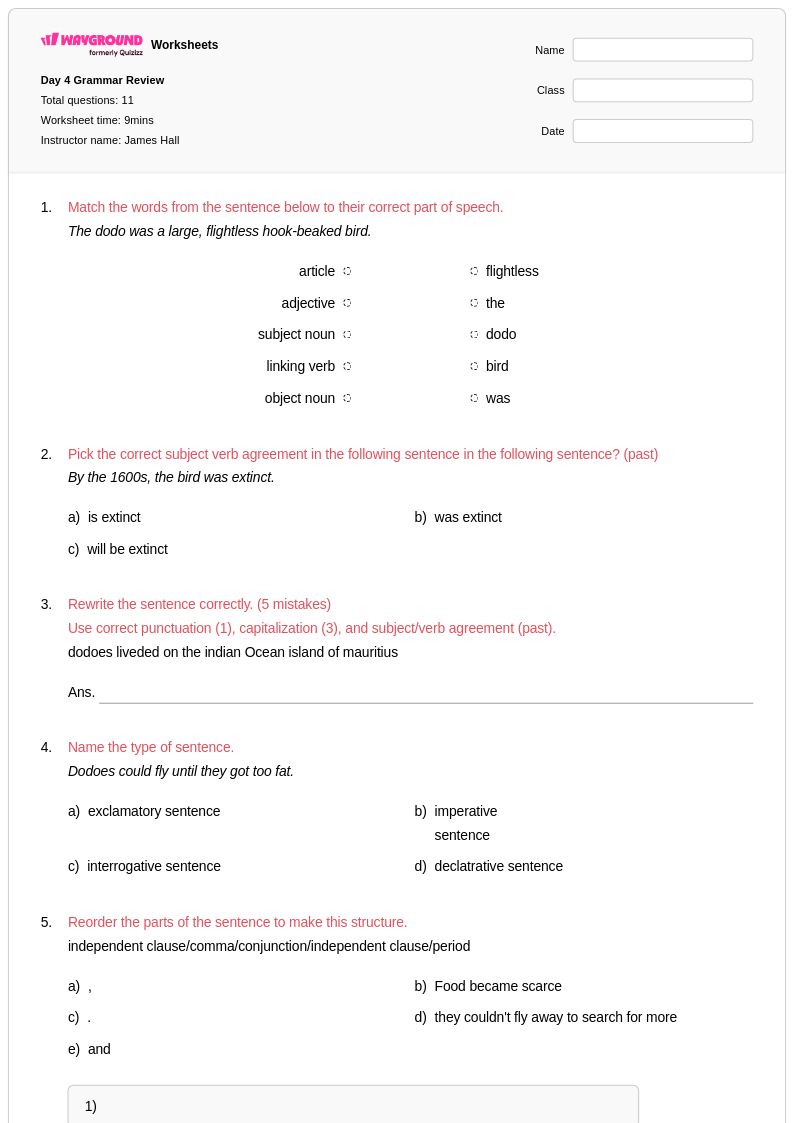
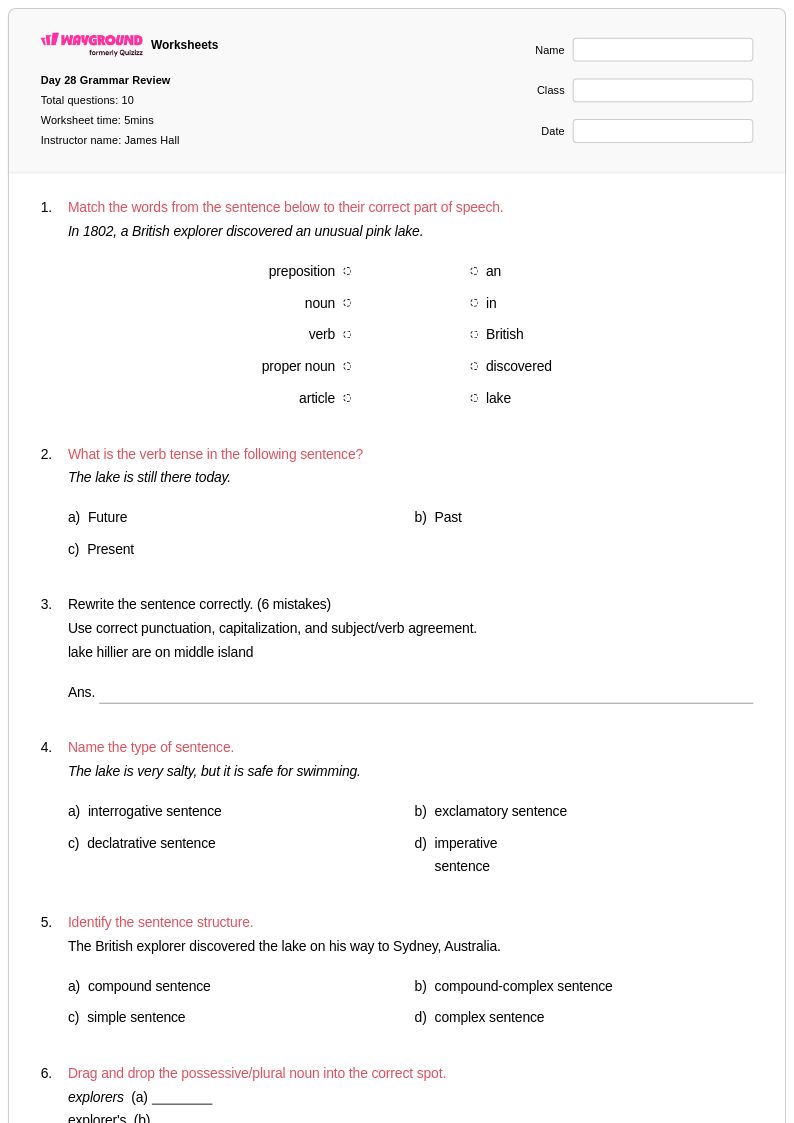
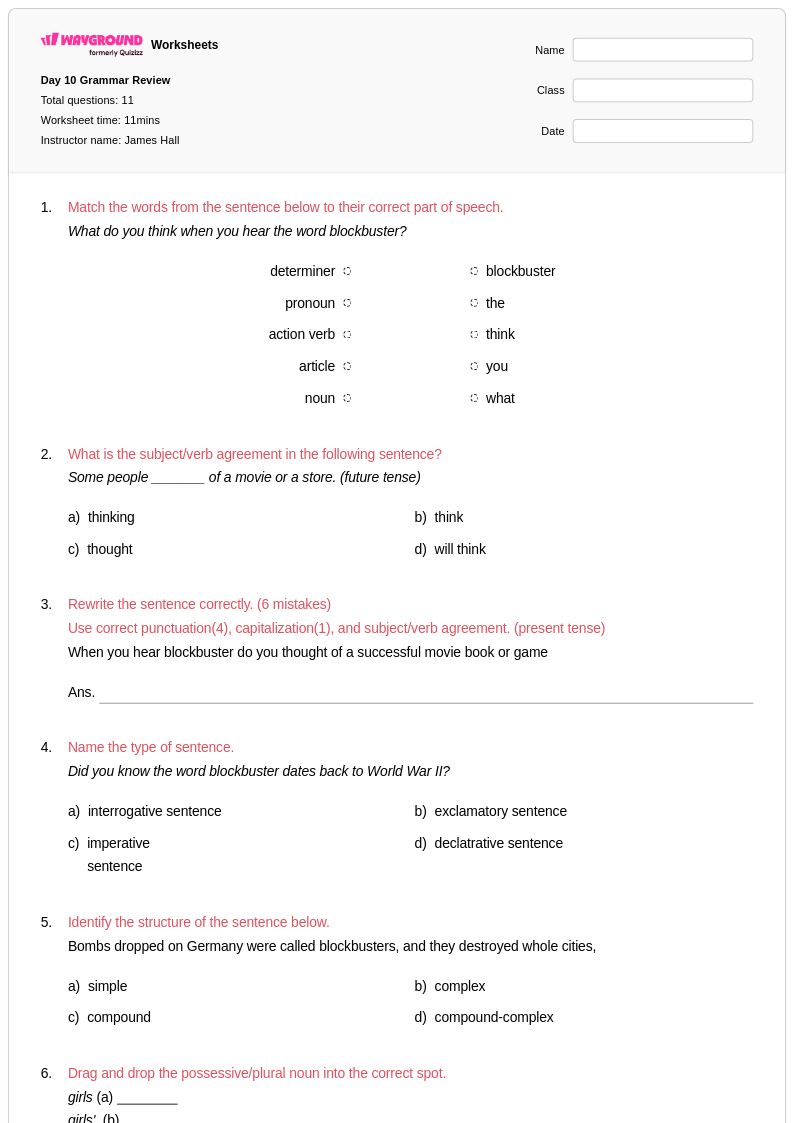
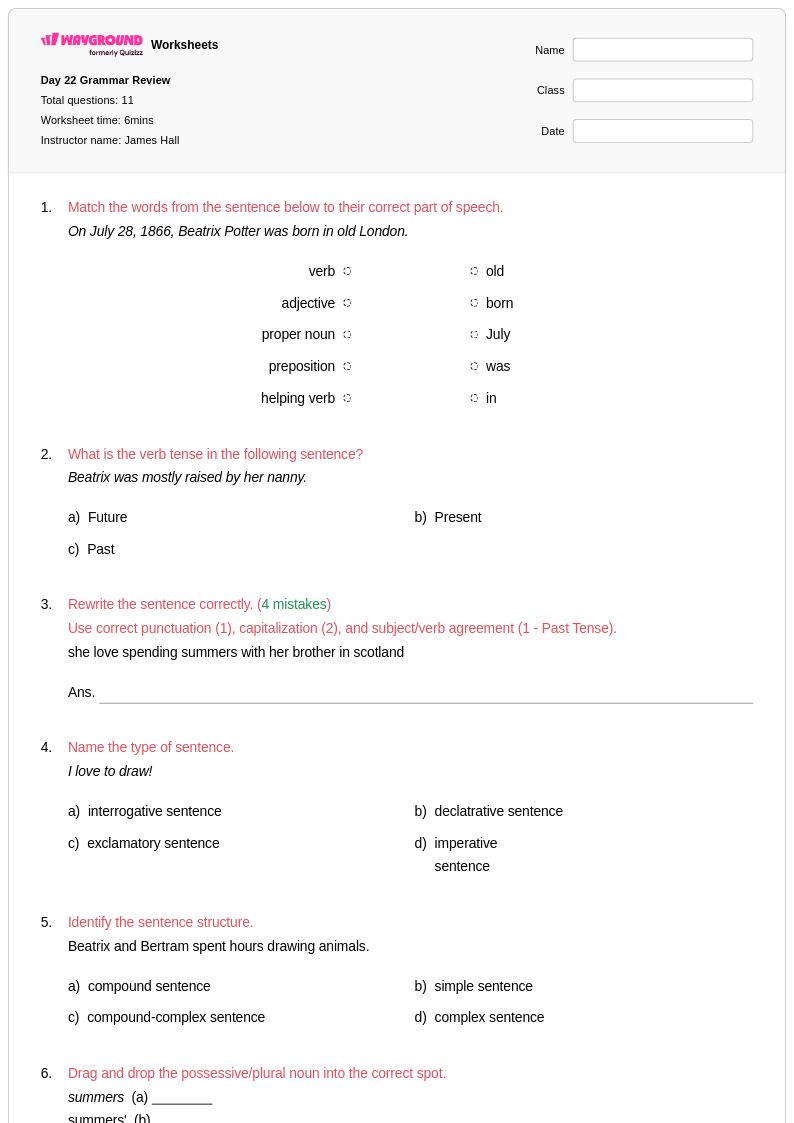
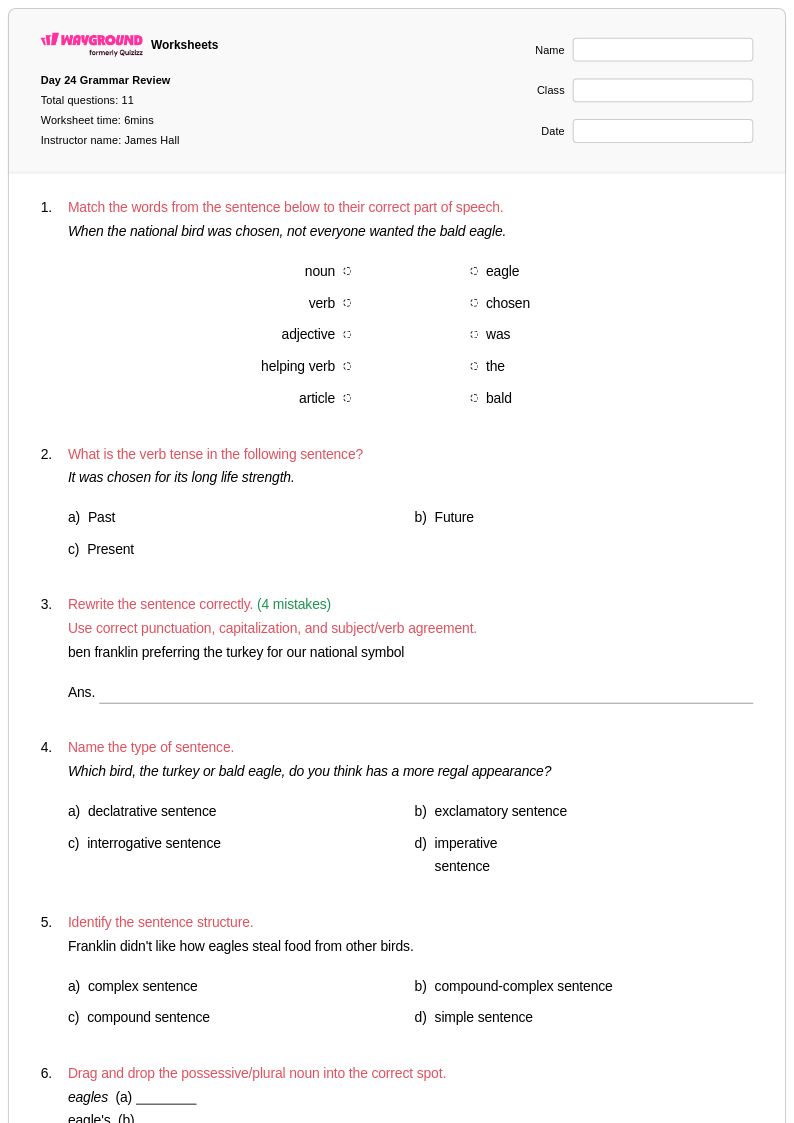
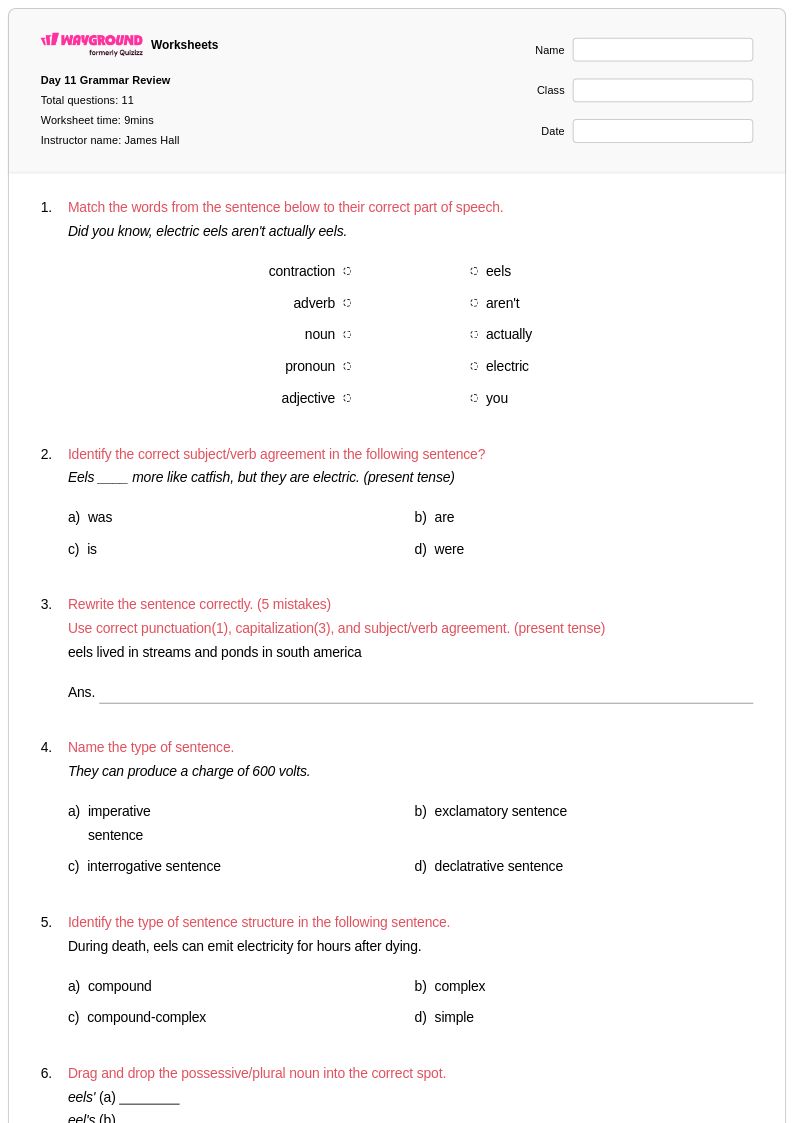
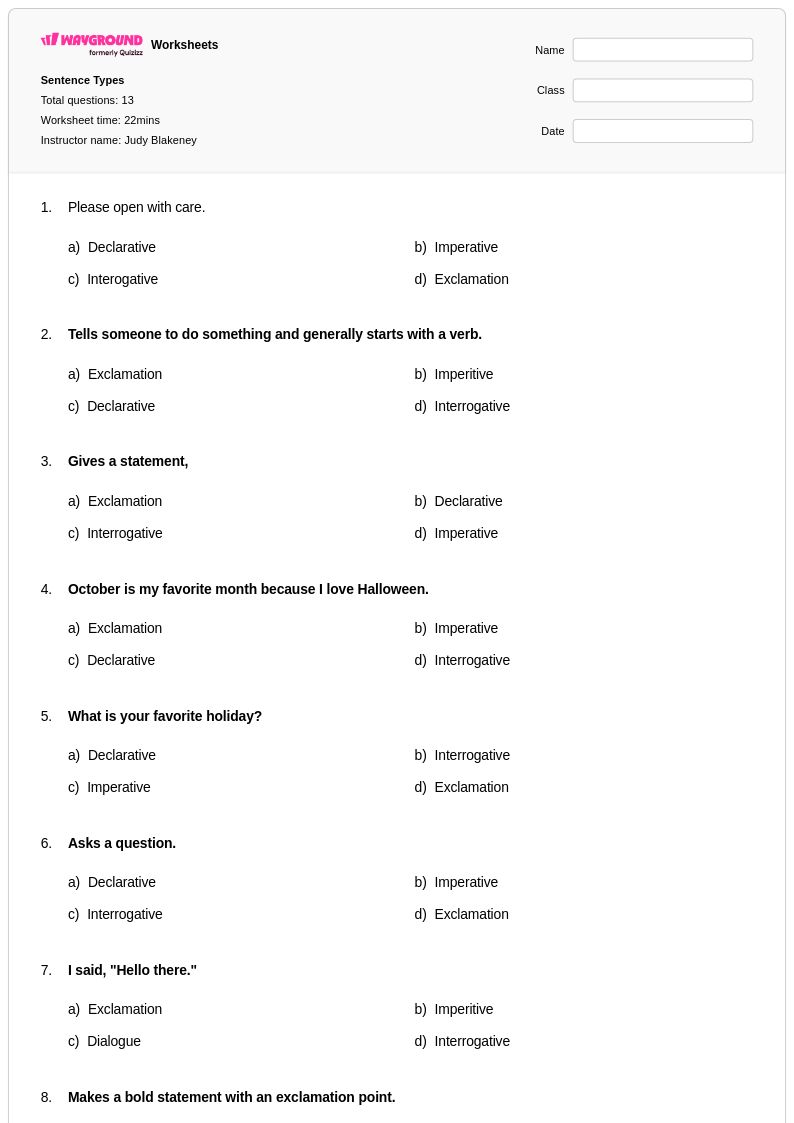
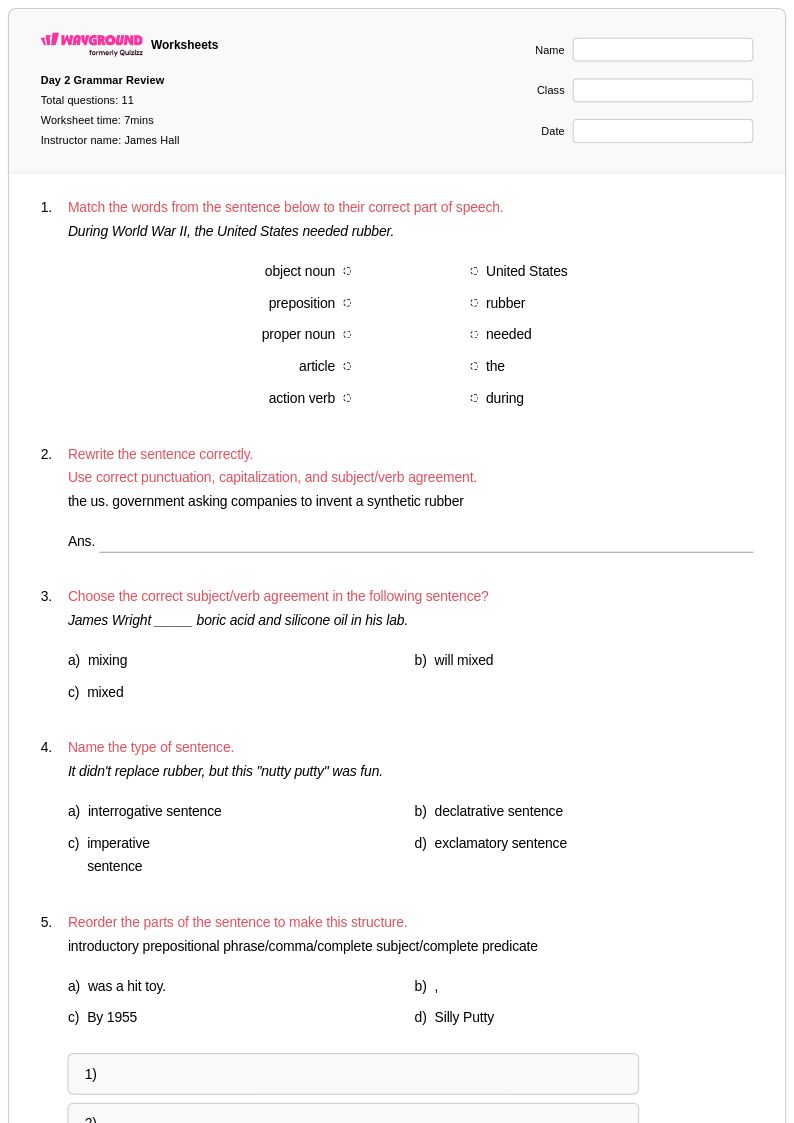
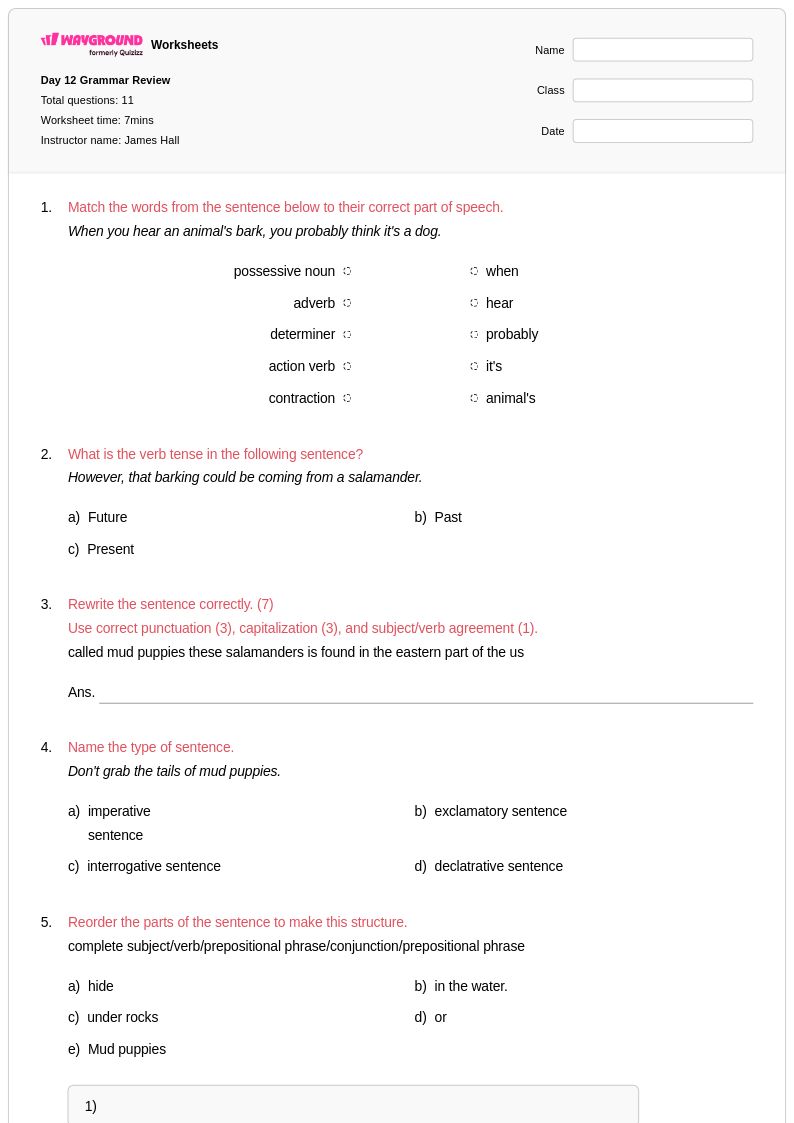
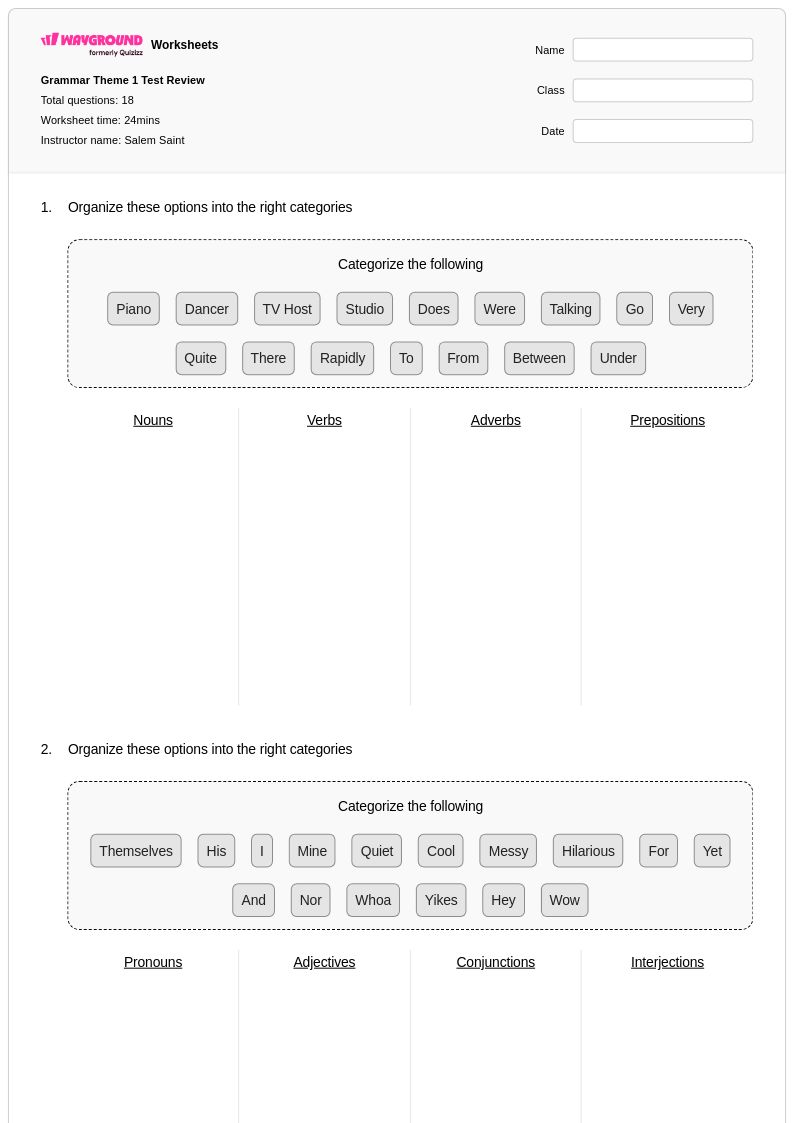
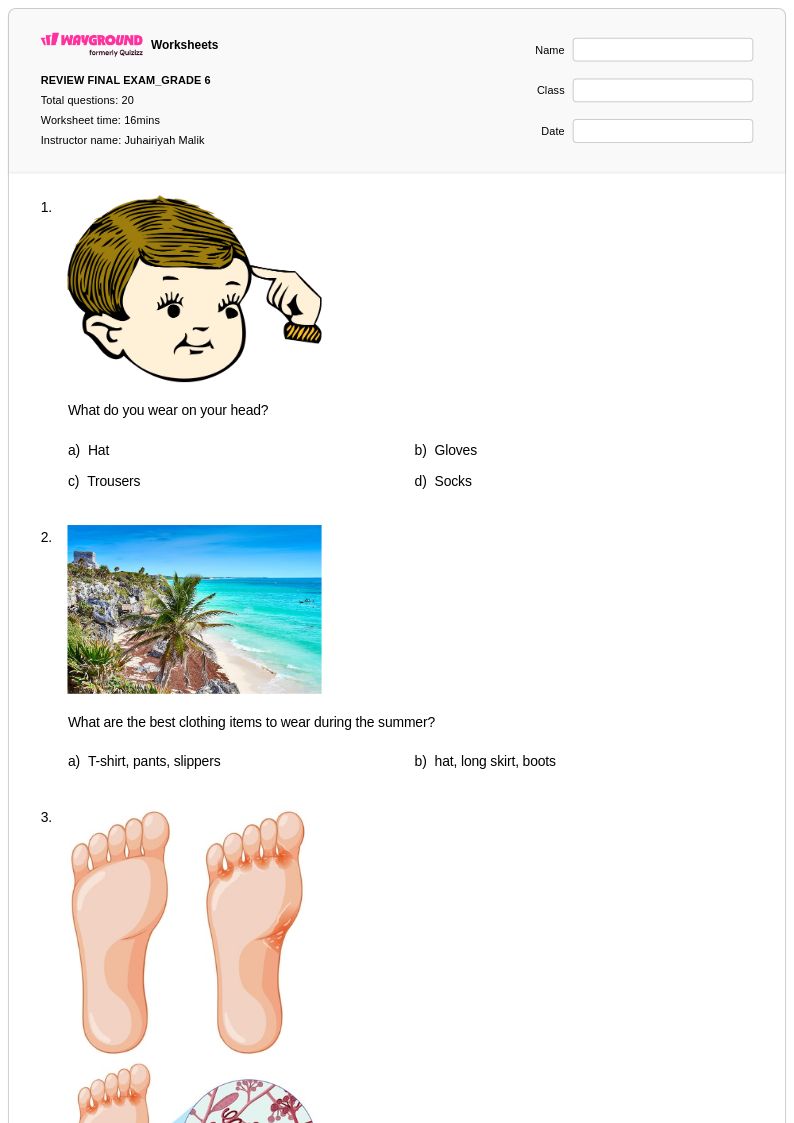
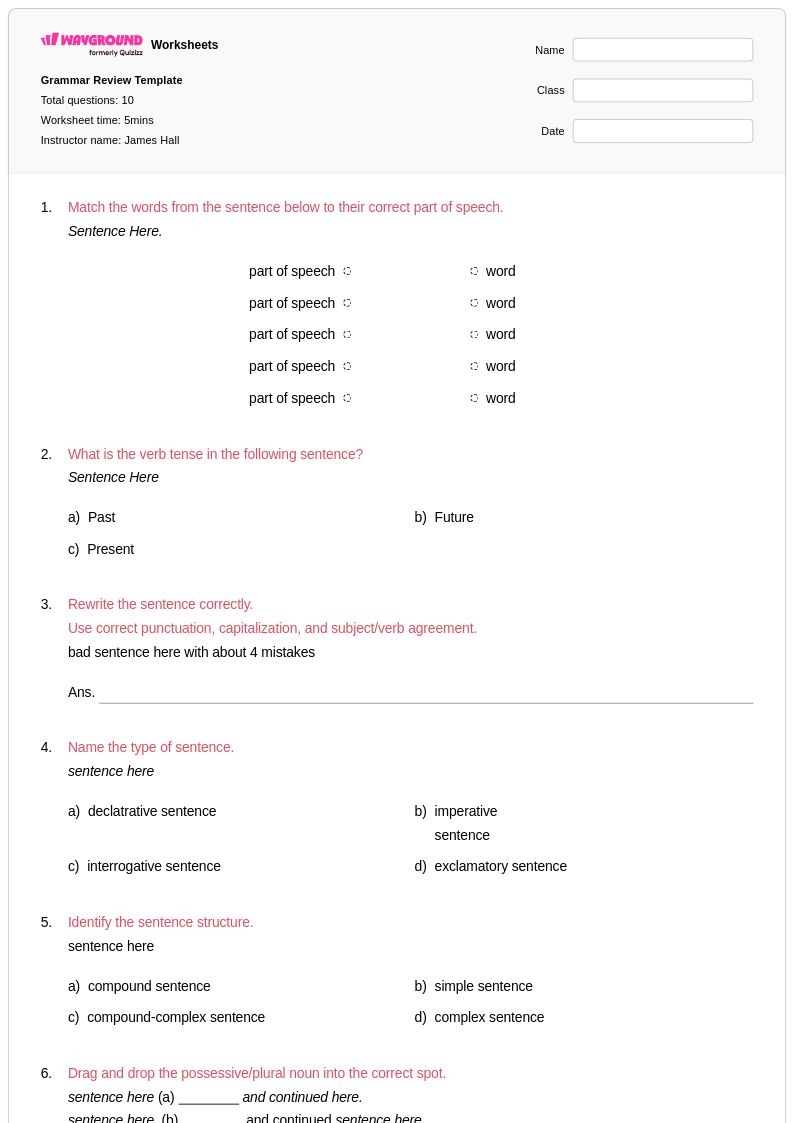
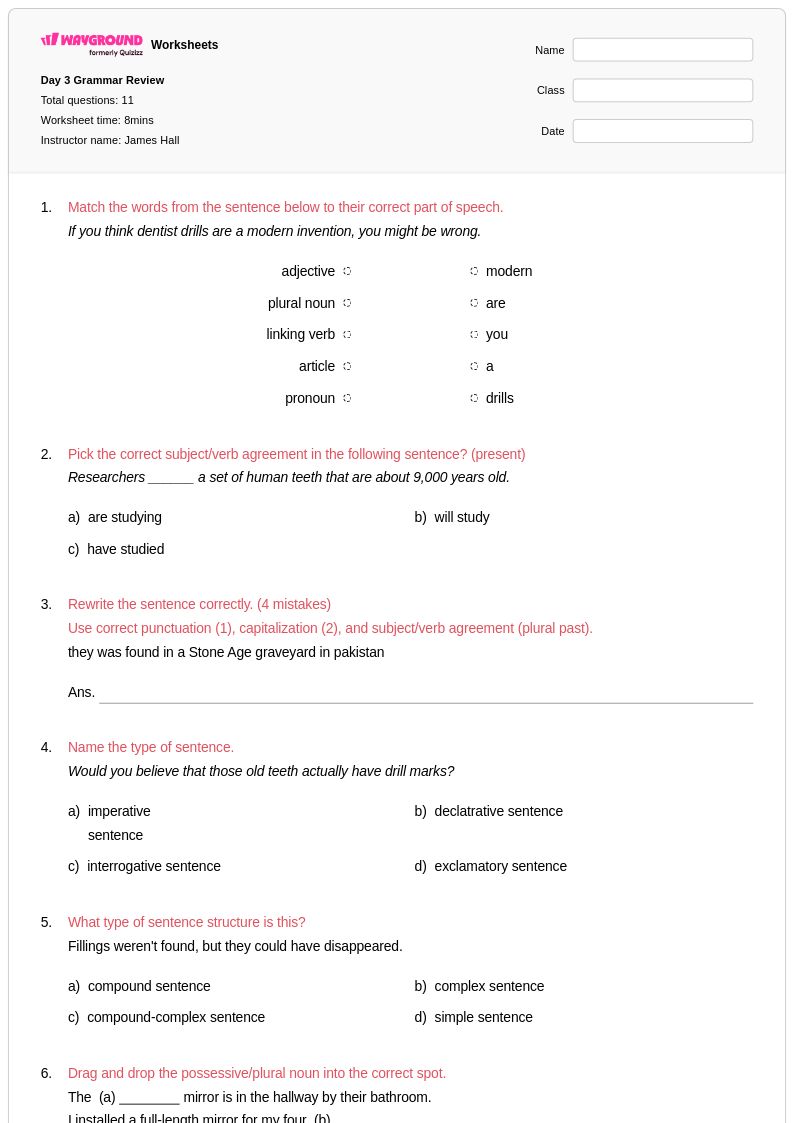
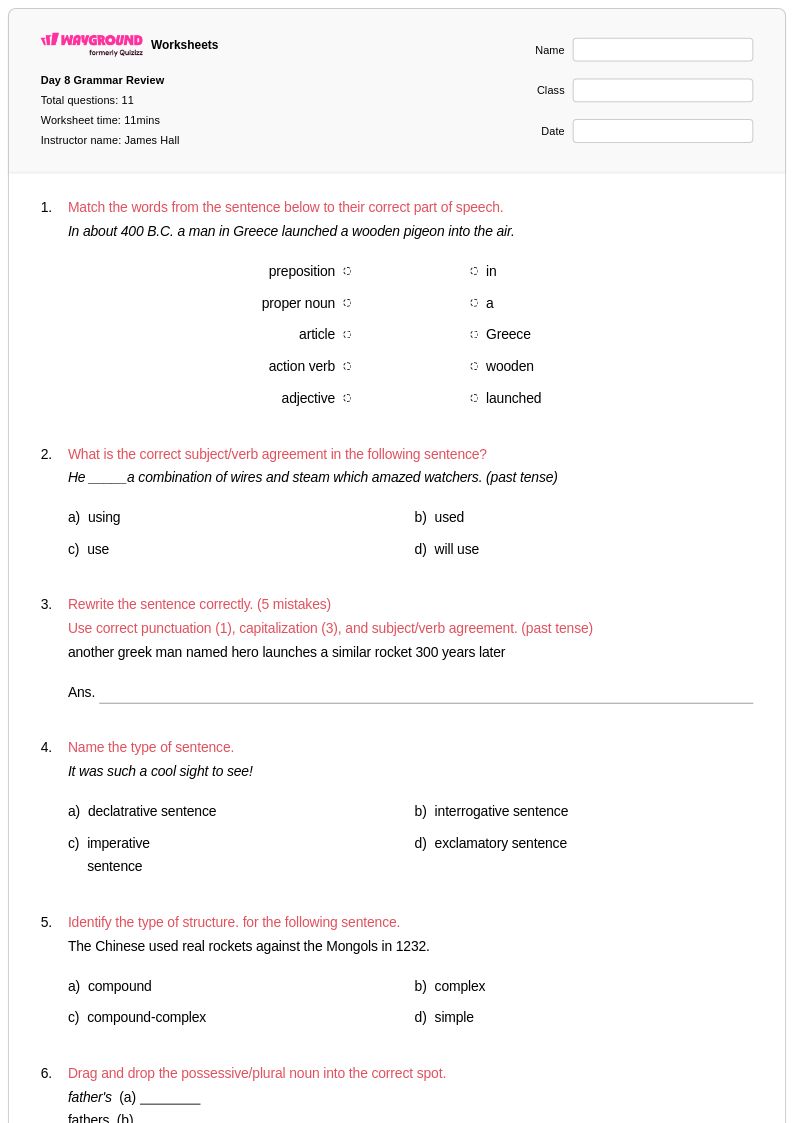
Interrogative words worksheets for Grade 6 students available through Wayground (formerly Quizizz) provide comprehensive practice with the essential question words that form the foundation of effective inquiry and communication. These carefully designed printables focus on the core interrogative words—who, what, when, where, why, how, which, and whose—helping sixth-grade students master their proper usage in both forming questions and understanding information requests. The practice problems within these free pdf resources strengthen students' ability to identify interrogative words in context, construct grammatically correct questions, and differentiate between the specific purposes each question word serves in gathering different types of information. Each worksheet includes a detailed answer key that allows students to check their understanding and reinforces the connection between interrogative words and the specific information they seek to obtain.
Wayground (formerly Quizizz) empowers teachers with an extensive collection of interrogative words worksheets drawn from millions of educator-created resources, all designed to support Grade 6 English language arts instruction. The platform's robust search and filtering capabilities enable teachers to locate materials that align with specific curriculum standards and match their students' varying proficiency levels, while differentiation tools allow for seamless customization of content difficulty and complexity. These versatile resources are available in both printable and digital pdf formats, making them ideal for classroom instruction, homework assignments, remediation sessions, and enrichment activities. Teachers can efficiently plan comprehensive lessons around interrogative words, provide targeted skill practice for students who need additional support, and offer advanced challenges for learners ready to explore more sophisticated question formation techniques, all while maintaining alignment with Grade 6 parts of speech learning objectives.
FAQs
How do I teach interrogative words to students?
Effective interrogative word instruction begins with explicitly teaching the six core question words—who, what, when, where, why, and how—and the specific type of information each one seeks. Anchor each word to a concrete function: 'who' identifies a person, 'when' identifies a time, 'why' identifies a reason. Once students understand these distinctions, move into sentence-level practice where they must choose the correct question word based on the answer provided, reinforcing the relationship between question form and expected response type.
What exercises help students practice using question words correctly?
The most effective practice activities for interrogative words progress from recognition to production. Start with identification exercises where students label the question word in a given sentence, then move to fill-in-the-blank tasks where they select the appropriate word from a set. More advanced practice involves having students generate their own questions from a given answer, which forces them to think critically about what type of information is being sought before choosing the right interrogative word.
What mistakes do students commonly make with interrogative words?
The most frequent error is confusing 'who' and 'what' when the subject of a question is ambiguous, and conflating 'when' and 'where' in complex sentences. Students also frequently misuse 'how' by treating it as interchangeable with 'why,' not recognizing that 'how' refers to method or manner while 'why' refers to reason or cause. Targeted practice that pairs each question word with its corresponding answer type is the most reliable way to address these specific confusions.
How can interrogative word worksheets support differentiated instruction?
Interrogative word worksheets can be matched to student readiness by varying task complexity: basic worksheets focus on identifying pre-written question words, while more advanced versions require students to construct original questions from prompts. On Wayground, teachers can apply accommodations such as read aloud for students who need audio support, reduced answer choices to lower cognitive load for struggling learners, and extended time settings for students who need additional processing time. These accommodations can be applied to individual students without disrupting the rest of the class.
How do I use Wayground's interrogative words worksheets in my classroom?
Wayground's interrogative words worksheets are available as printable PDFs for traditional classroom use and in digital formats for technology-integrated learning environments, giving teachers flexibility regardless of their classroom setup. Digital worksheets can also be hosted as a quiz directly on Wayground, enabling real-time student responses and streamlined review. Each worksheet includes an answer key, making them well-suited for independent practice, homework assignments, or self-paced learning stations.
At what grade level should students learn interrogative words?
Interrogative words are typically introduced in early elementary grades, often in kindergarten or first grade, as students begin constructing basic questions in English. However, explicit instruction on the distinct functions of each question word—and how to select the correct one based on context—is commonly reinforced through third and fourth grade. For English language learners at any grade level, dedicated practice with interrogative words remains highly relevant regardless of the student's age.