
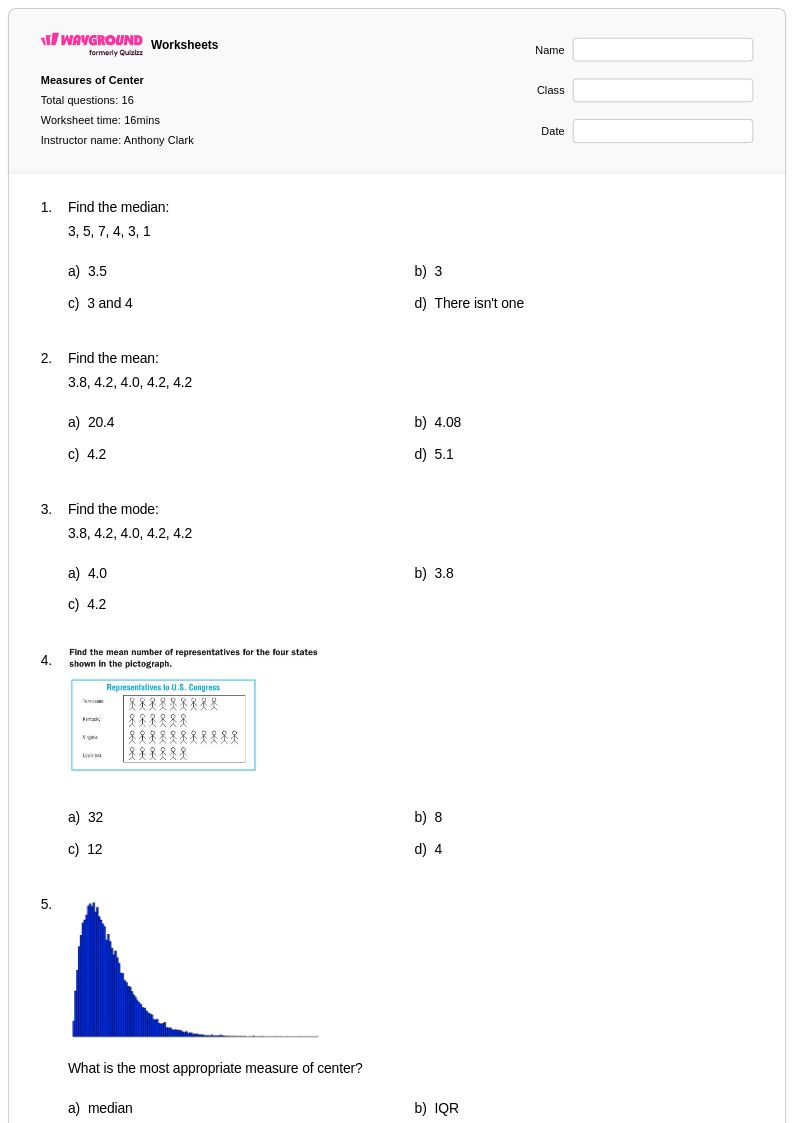
16 Q
6th - Uni
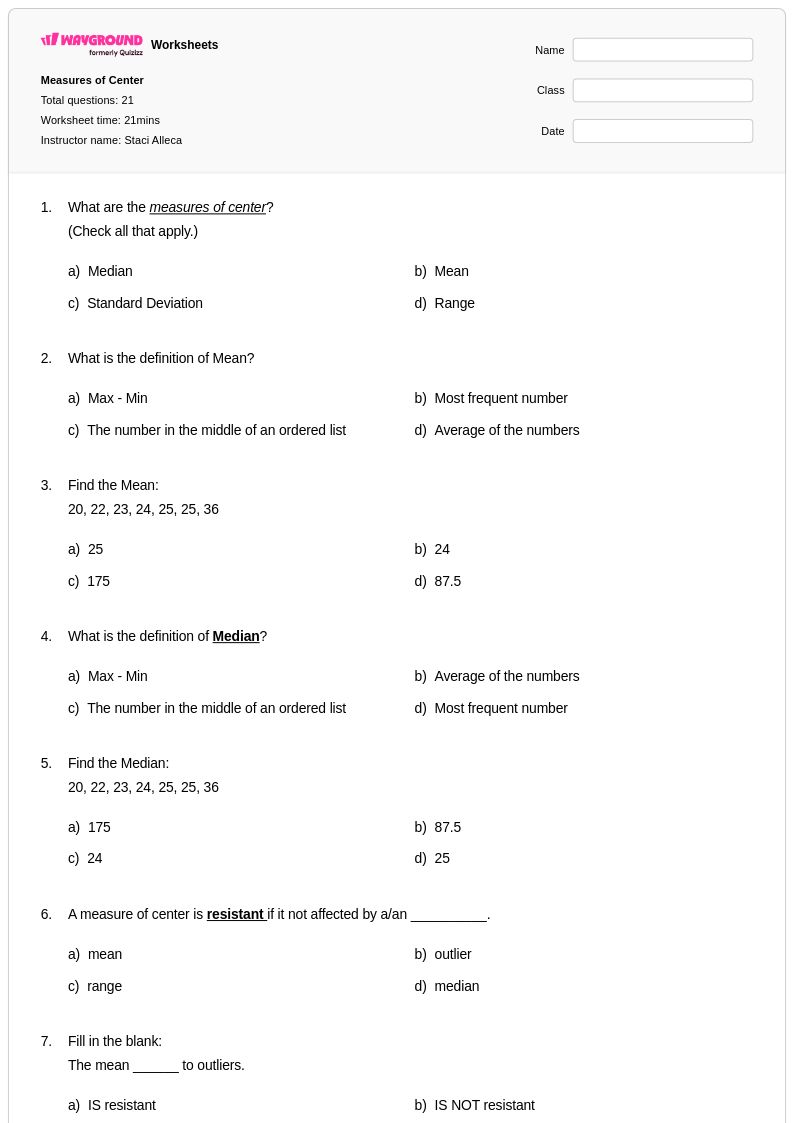
21 Q
9th - 12th
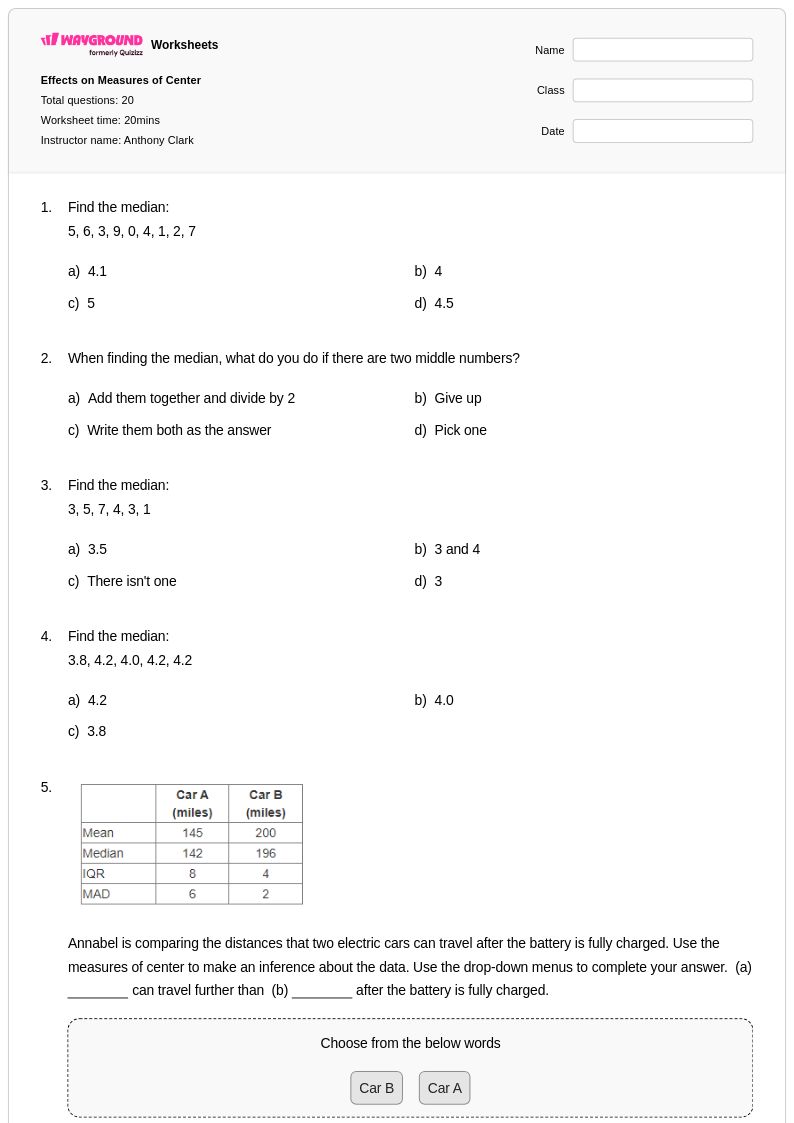
20 Q
6th - Uni
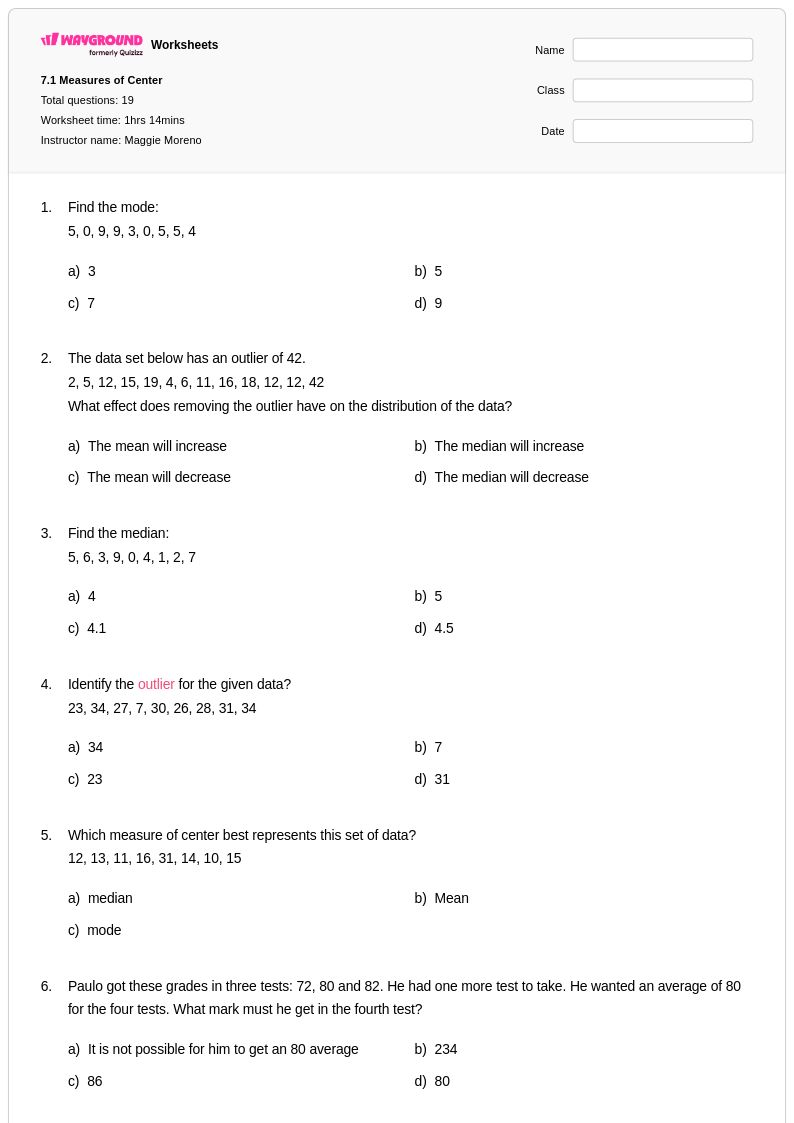
19 Q
6th - 12th
45 Q
9th - 12th
20 Q
6th - Uni
10 Q
9th - 12th
15 Q
9th - Uni
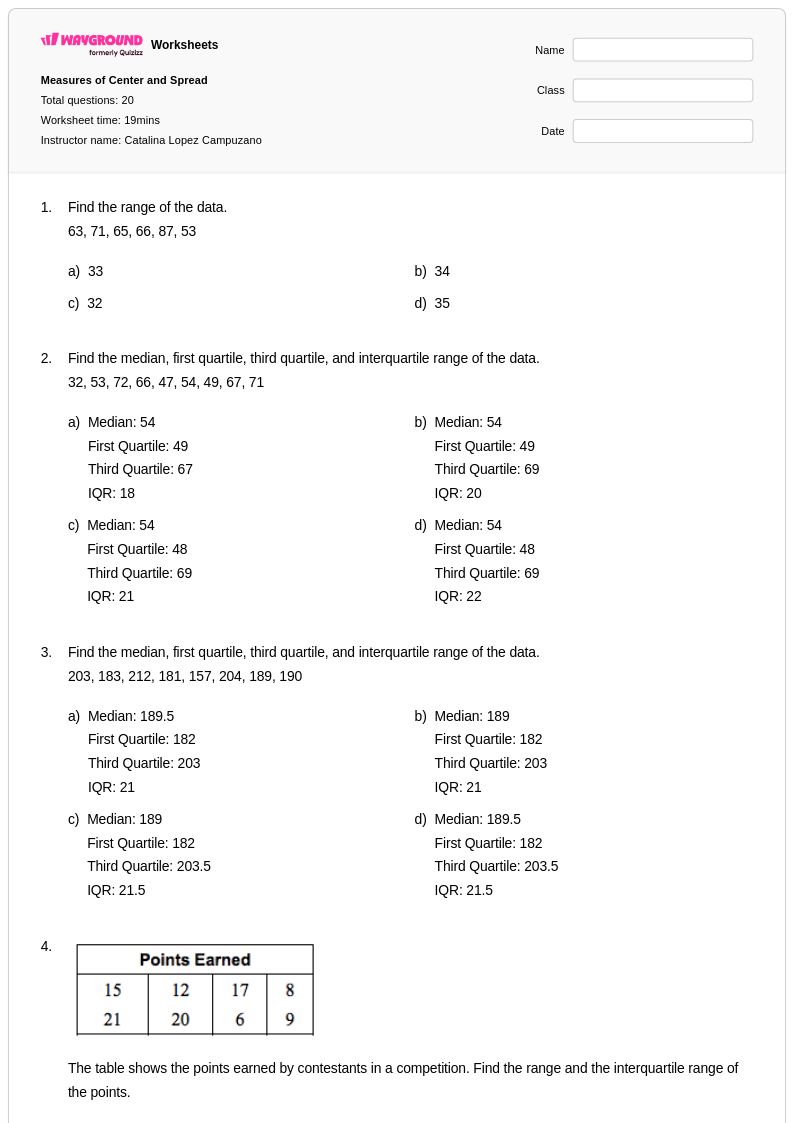
20 Q
9th - 12th
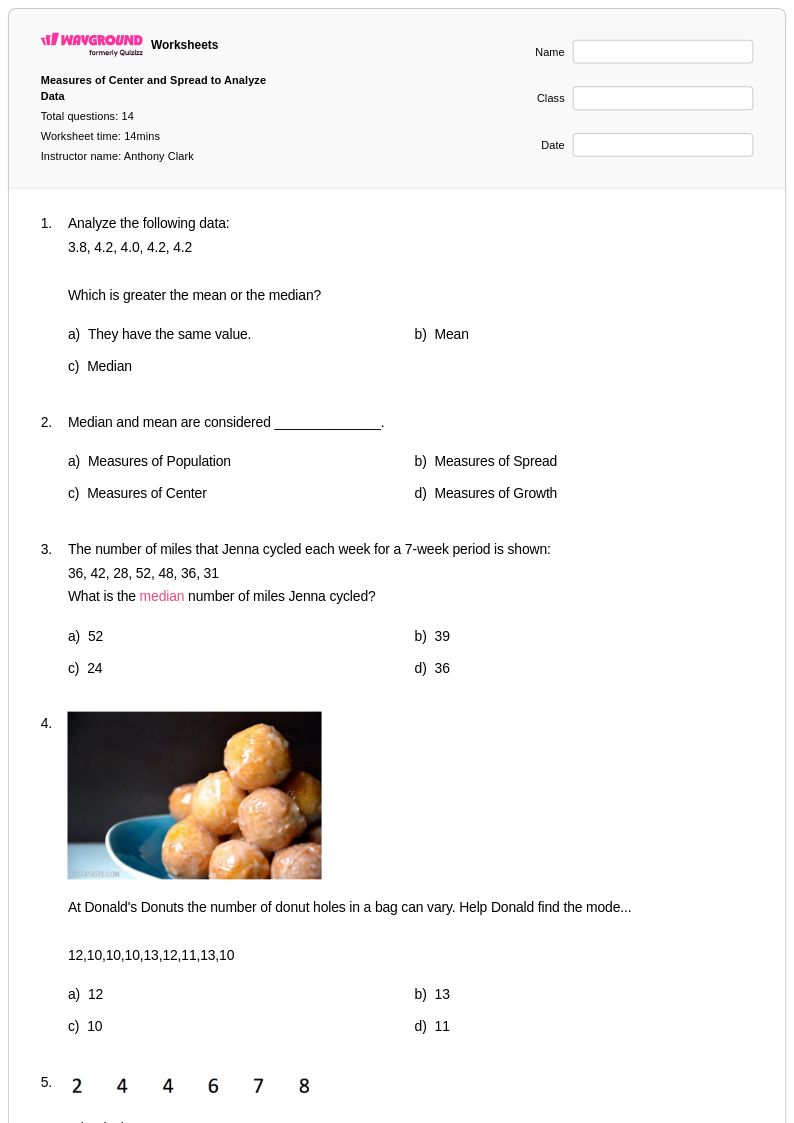
14 Q
9th - Uni
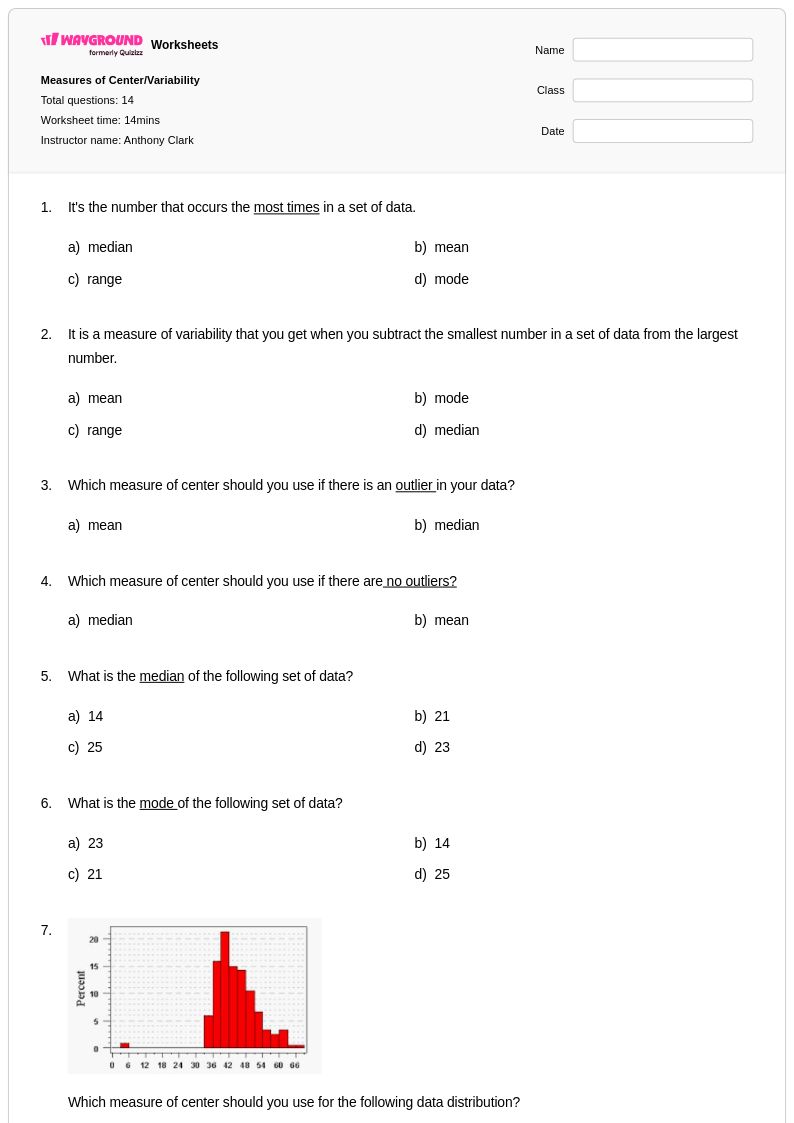
14 Q
7th - Uni
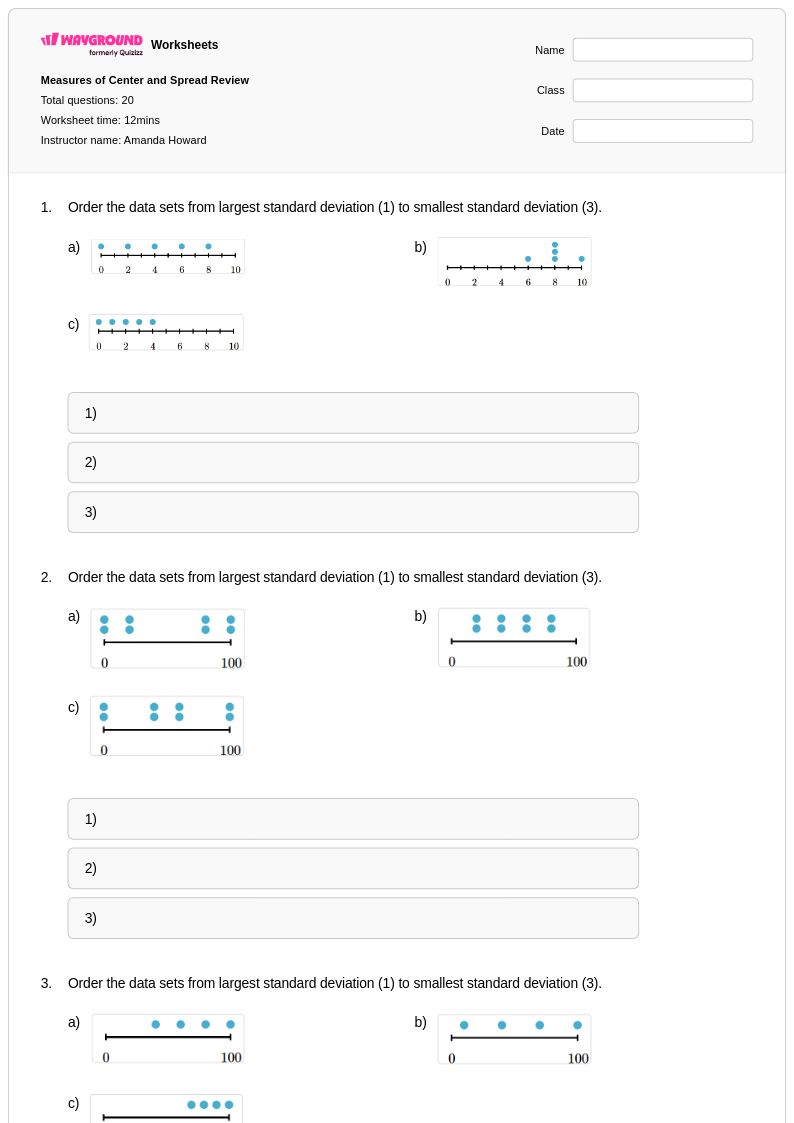
20 Q
9th - 12th
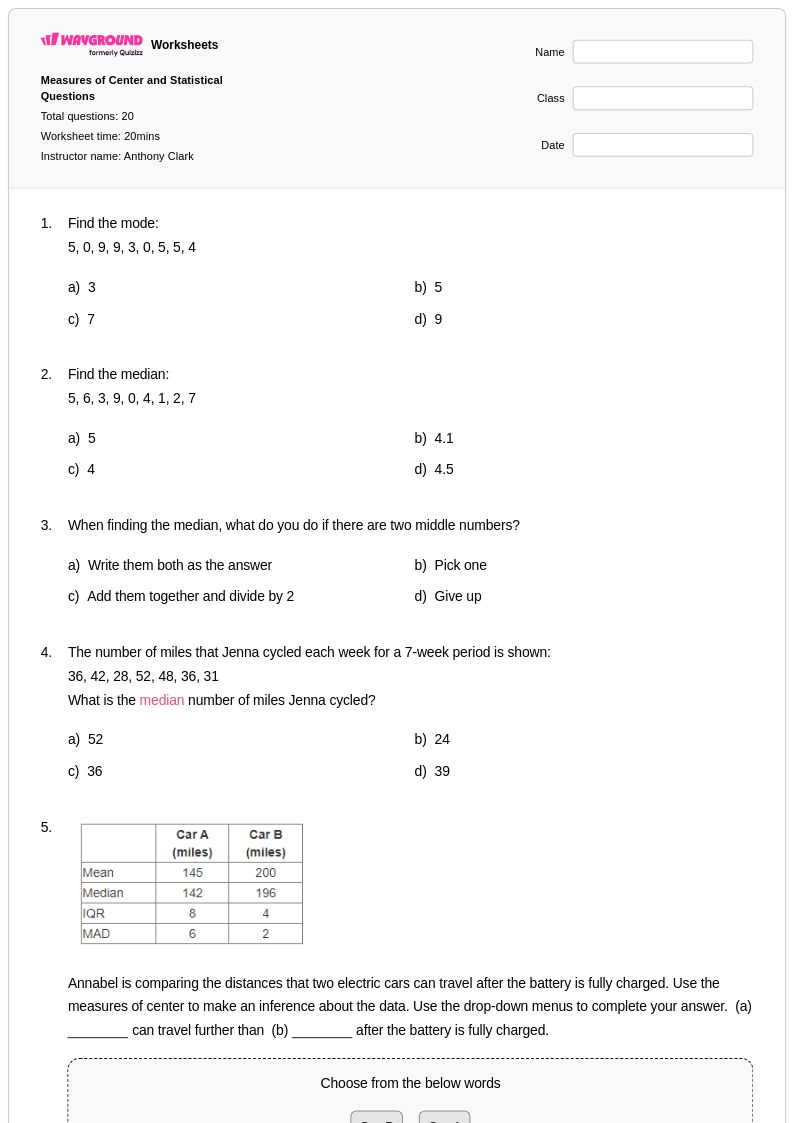
20 Q
6th - Uni
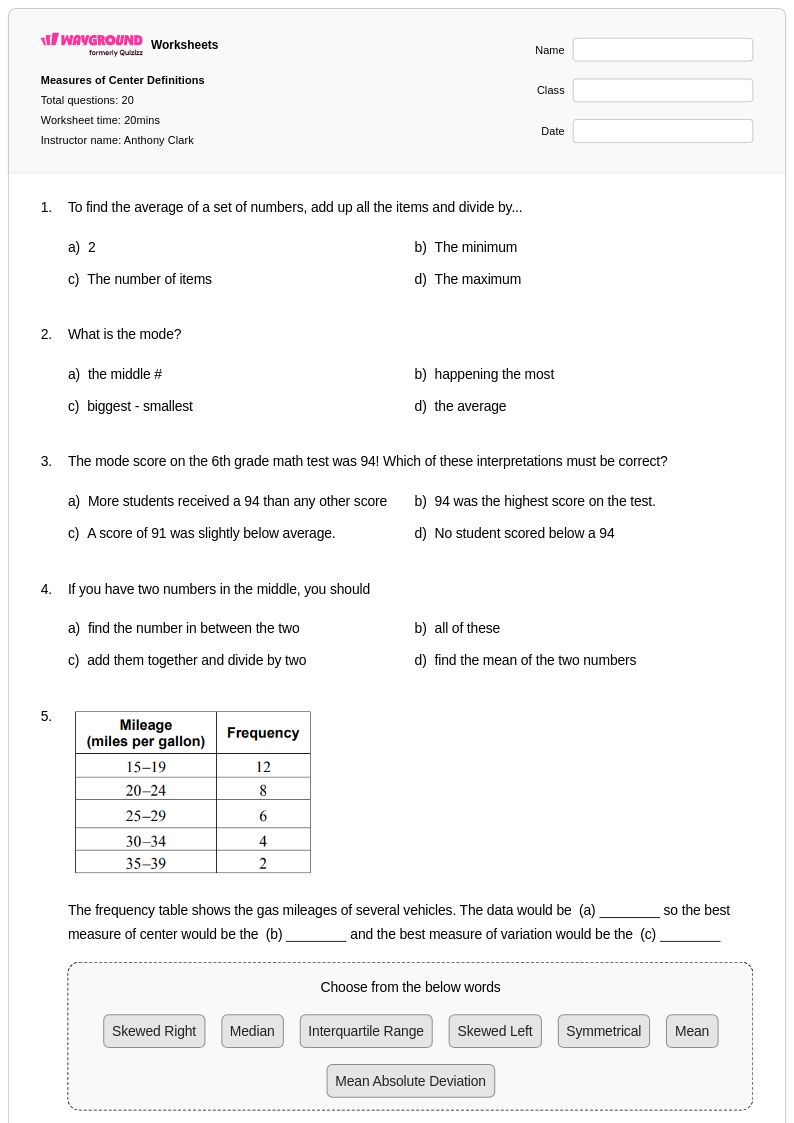
20 Q
6th - Uni
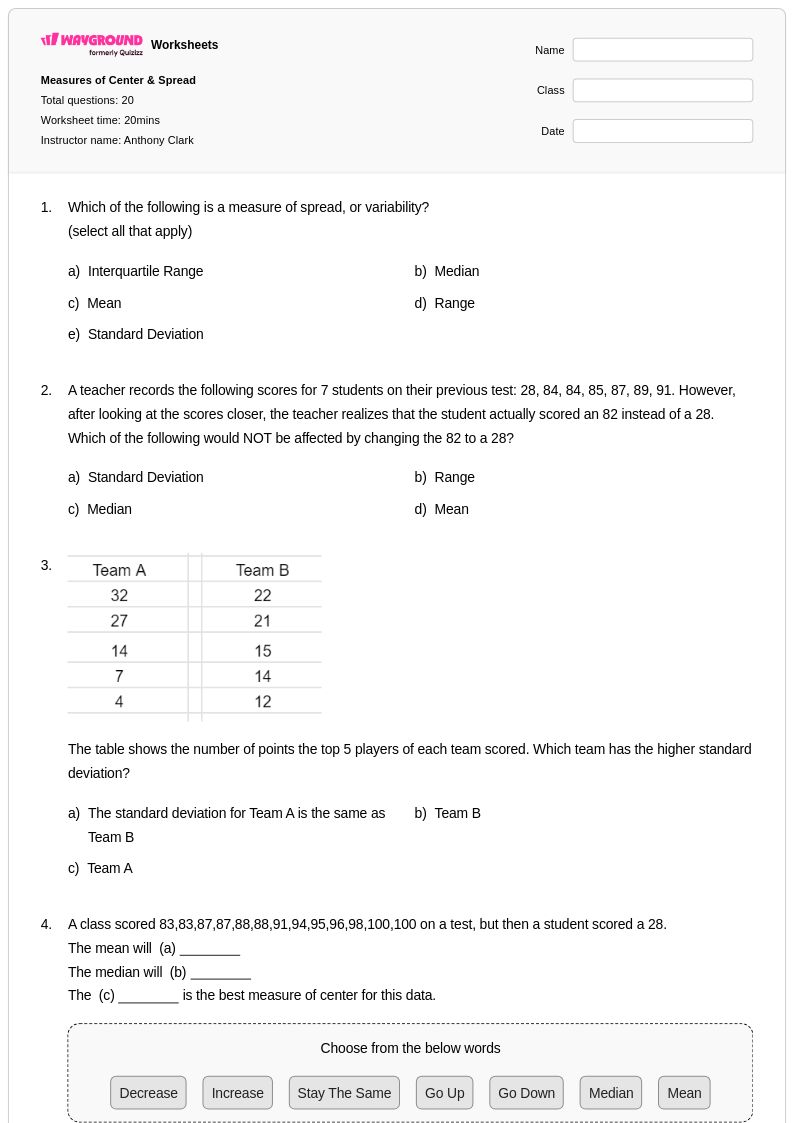
20 Q
9th - Uni
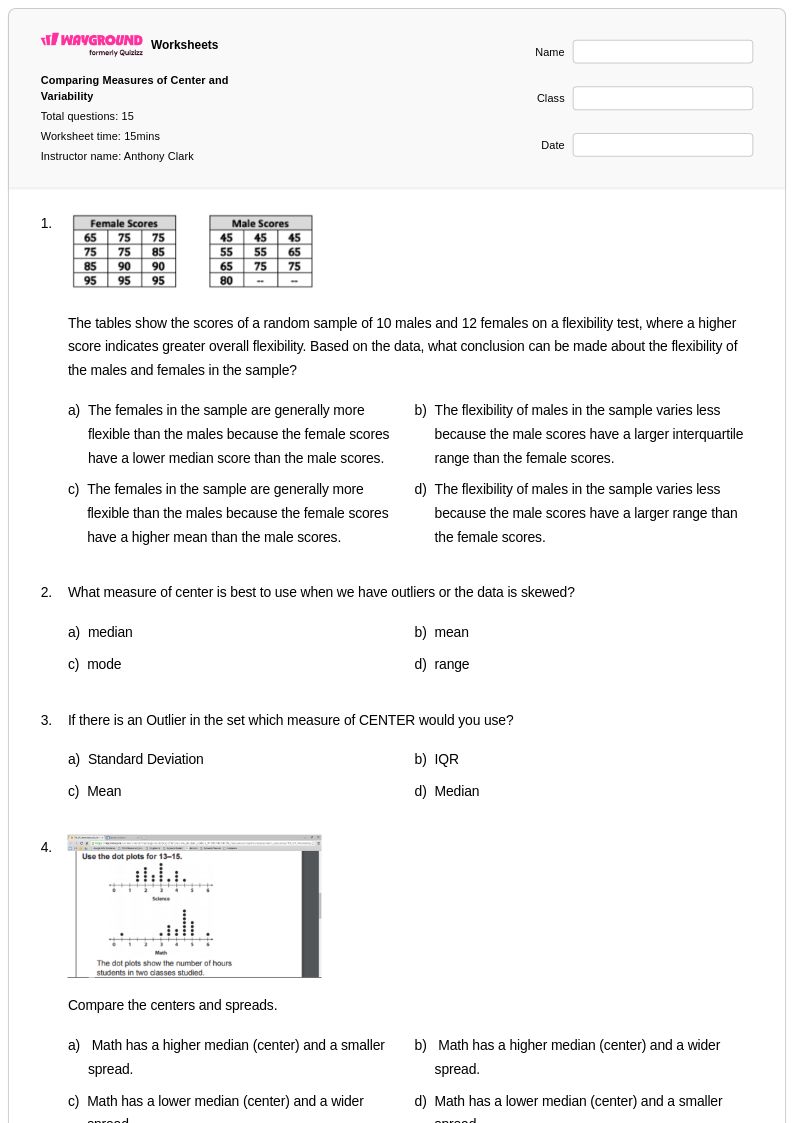
15 Q
7th - Uni
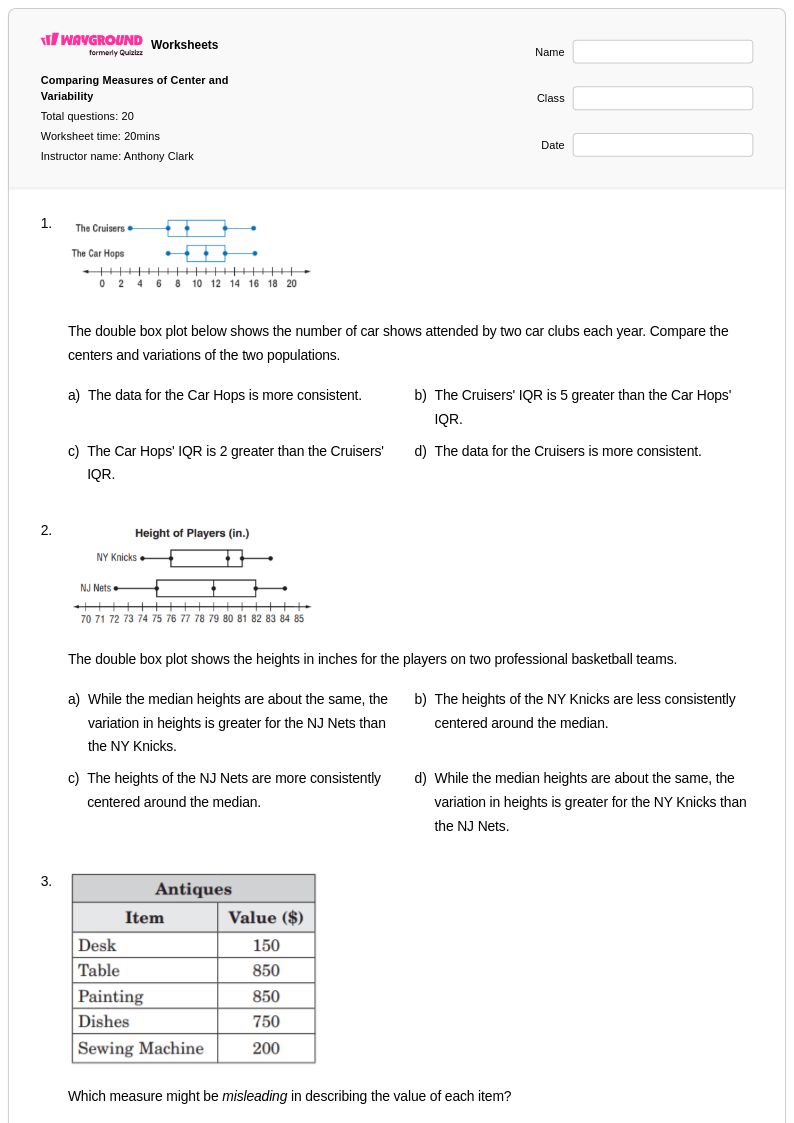
20 Q
7th - Uni
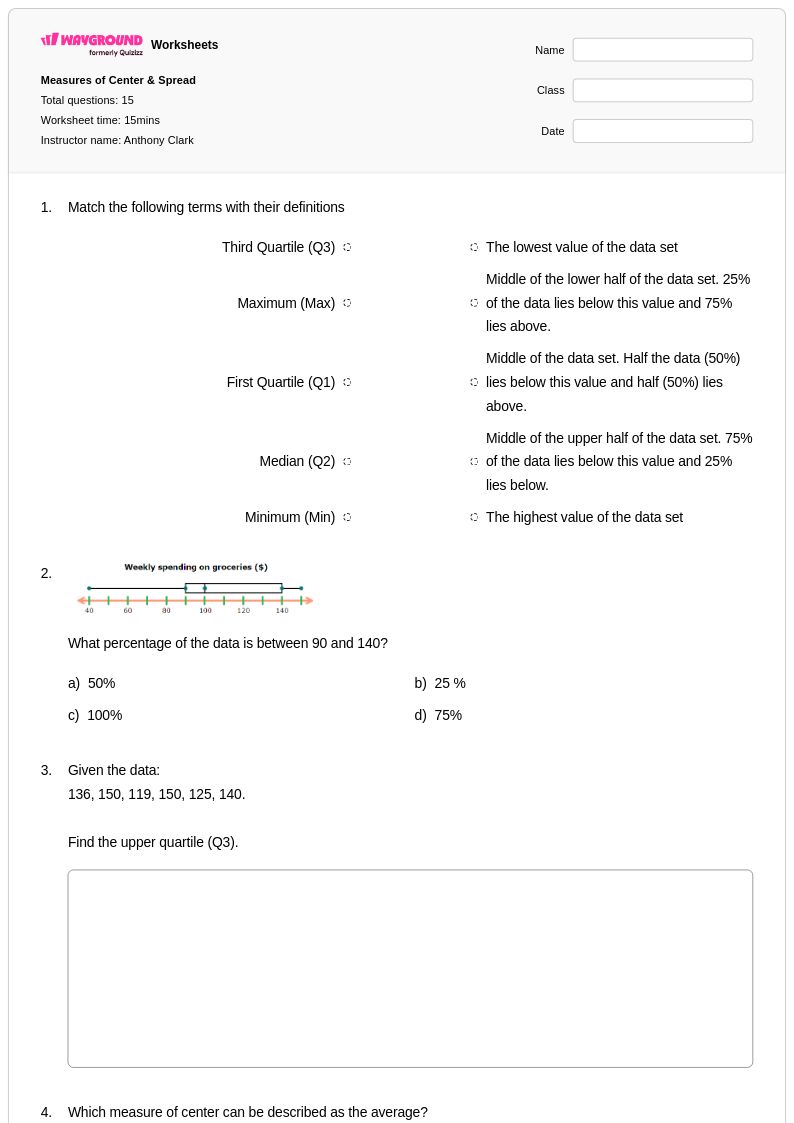
15 Q
9th - Uni
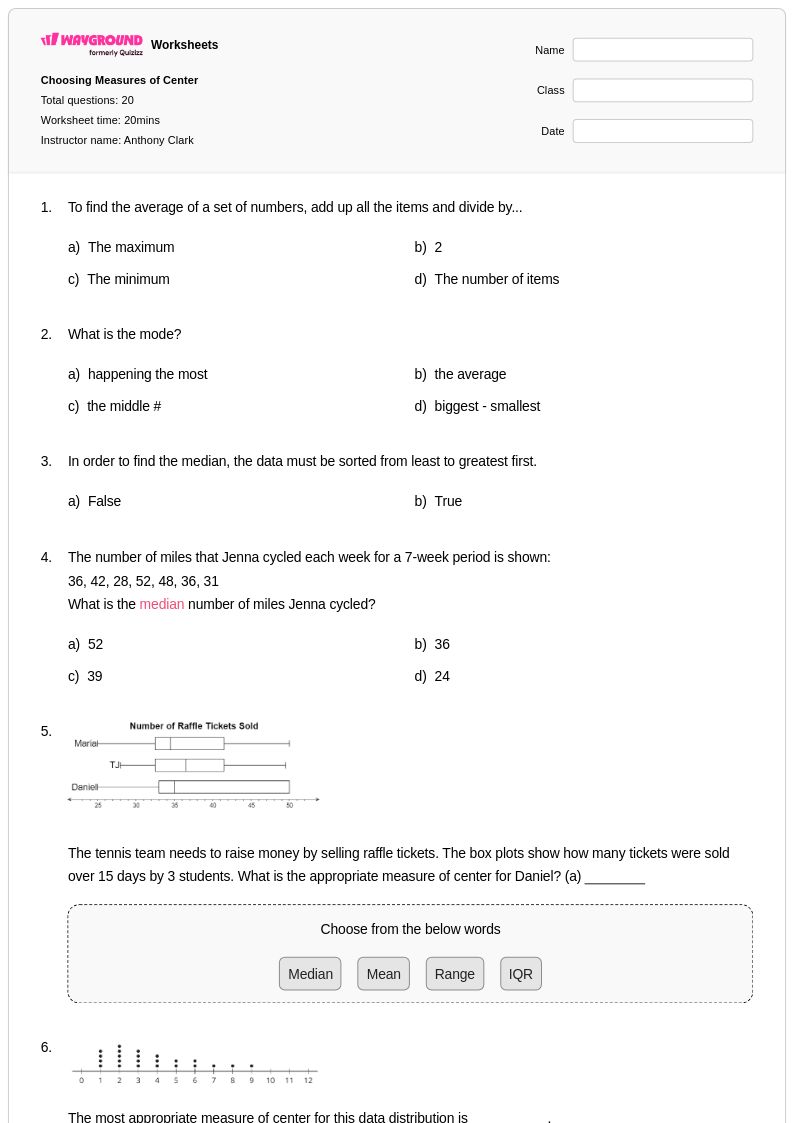
20 Q
6th - Uni
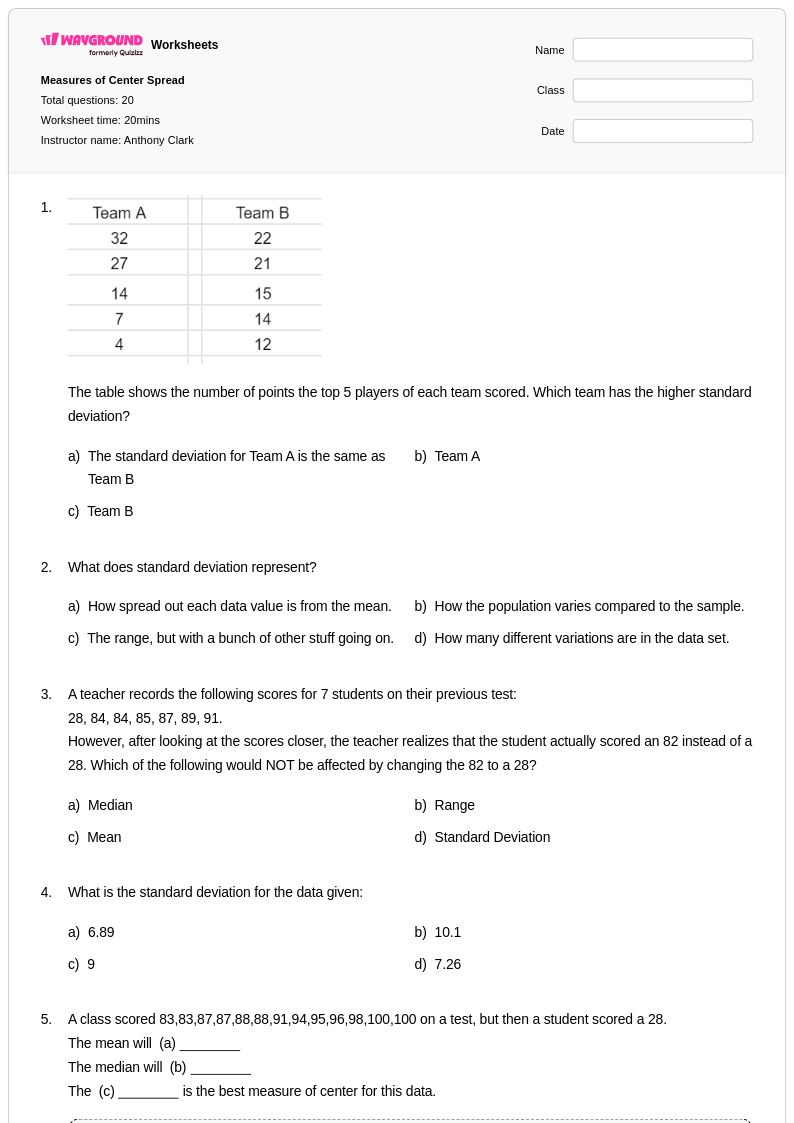
20 Q
9th - Uni
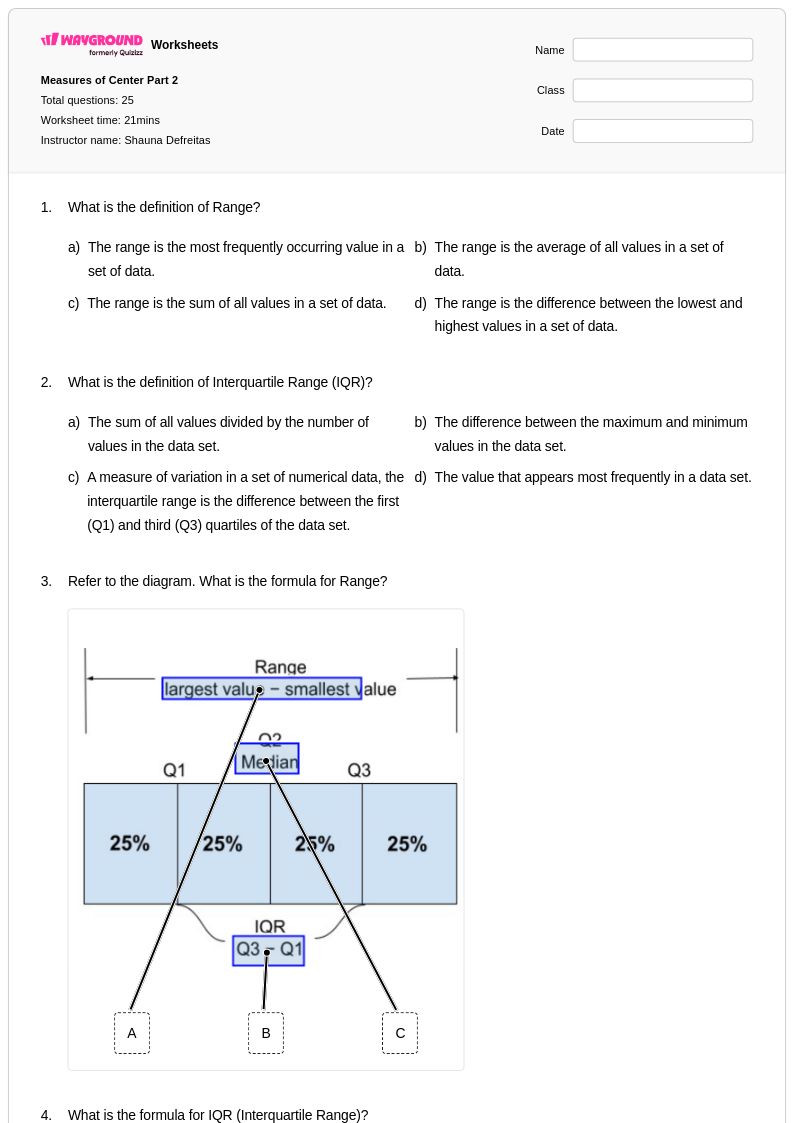
25 Q
9th
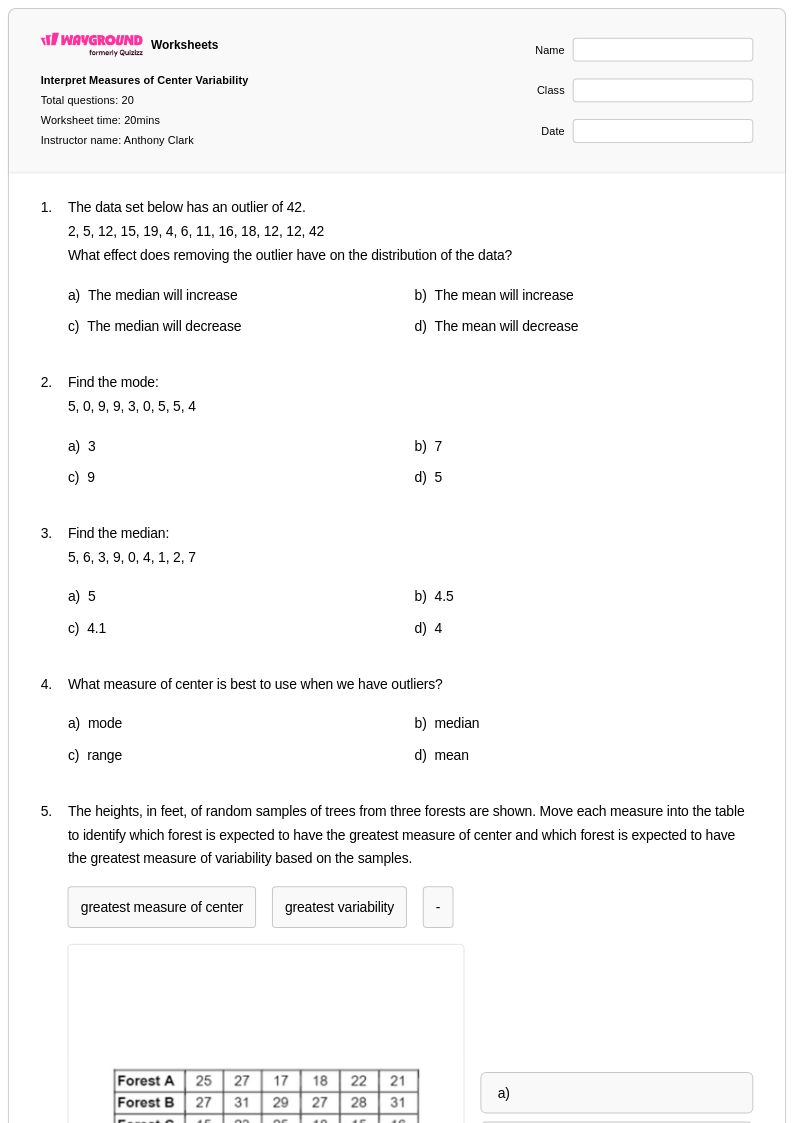
20 Q
6th - Uni
Explore Measures of Center Worksheets by Grades
Explore Other Subject Worksheets for grade 9
Explore printable Measures of Center worksheets for Grade 9
Measures of center worksheets for Grade 9 students available through Wayground (formerly Quizizz) provide comprehensive practice with mean, median, and mode calculations across diverse data sets and real-world scenarios. These expertly crafted resources strengthen students' analytical skills by requiring them to identify appropriate measures of center for different distributions, recognize when data is skewed, and interpret the practical meaning of central tendency in various contexts. Each worksheet collection includes detailed answer keys that support independent learning and self-assessment, while the free printable format ensures accessibility for all classrooms. Practice problems range from basic calculations with small data sets to more complex scenarios involving outliers, grouped data, and comparative analysis of different measures of center.
Wayground (formerly Quizizz) empowers educators with millions of teacher-created resources specifically designed for measures of center instruction, featuring robust search and filtering capabilities that allow teachers to locate worksheets aligned with specific curriculum standards and learning objectives. The platform's differentiation tools enable instructors to customize difficulty levels and problem types to meet individual student needs, whether for remediation of foundational concepts or enrichment of advanced statistical reasoning skills. These versatile worksheet collections are available in both printable pdf format and interactive digital versions, providing flexibility for traditional classroom instruction, homework assignments, or remote learning environments. Teachers can efficiently plan targeted skill practice sessions, create formative assessments, and support students who need additional reinforcement in understanding how mean, median, and mode reflect different characteristics of data distributions.
FAQs
How do I teach measures of center in a high school context?
What types of problems are included in these Grade 9 worksheets?
What misunderstandings do 9th graders have when comparing mean and median in skewed data?
How do measures of center fit into the high school math curriculum?
How can I use these worksheets in my 9th grade Algebra or Statistics class?
How can I differentiate this topic for a mixed-ability 9th grade class?