

18 Q
7th

15 Q
6th
16 Q
8th
15 Q
8th

34 Q
8th

15 Q
8th
14 Q
9th
20 Q
8th
46 Q
8th

10 Q
4th
15 Q
7th
13 Q
6th
121 Q
8th
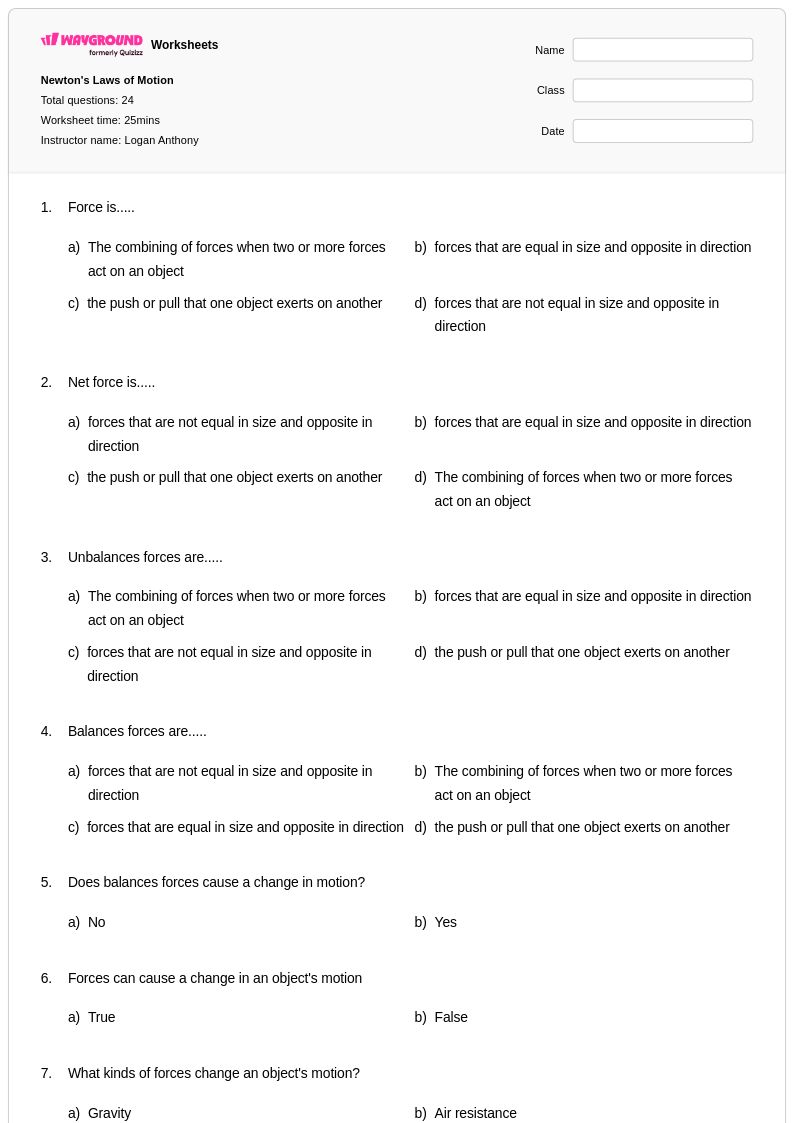
24 Q
9th
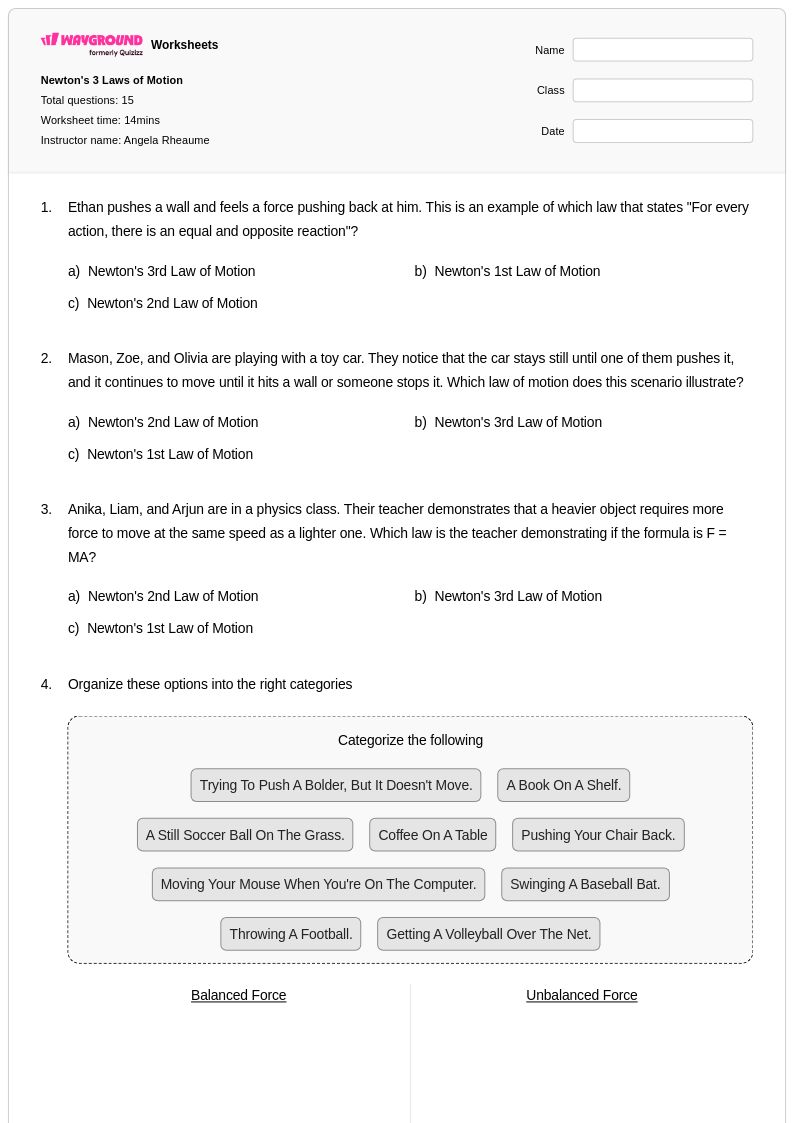
15 Q
6th
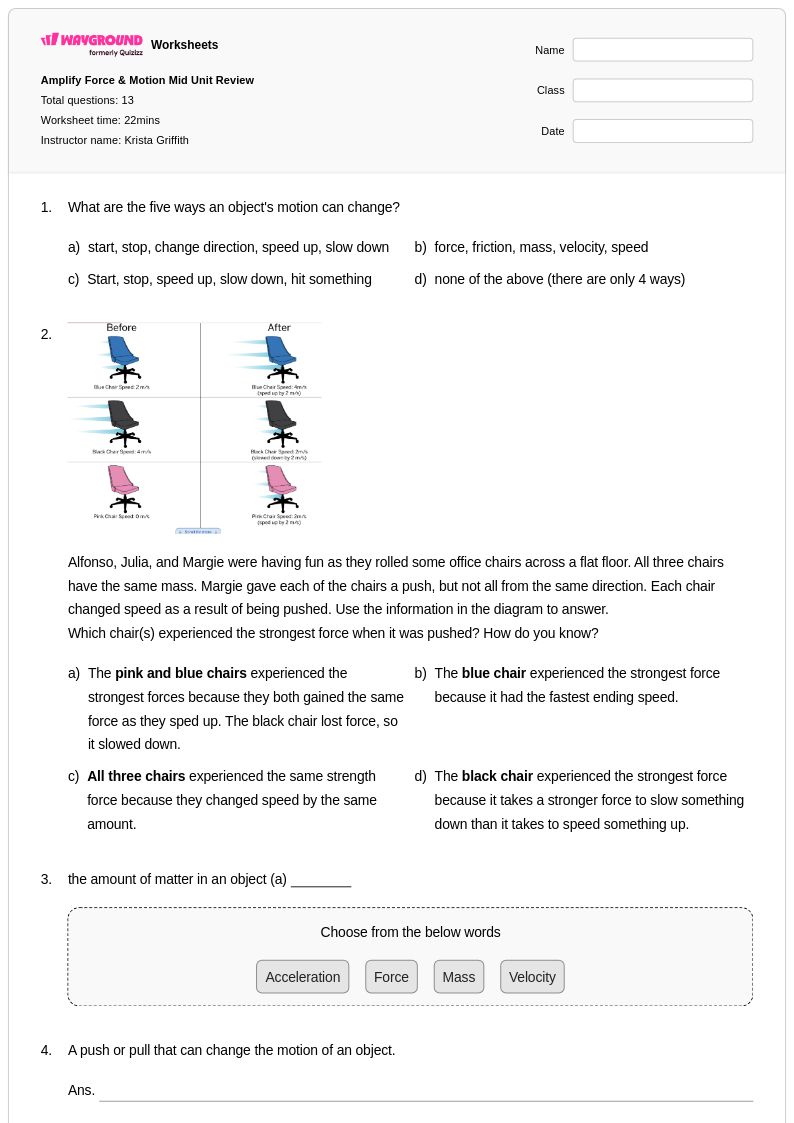
13 Q
8th
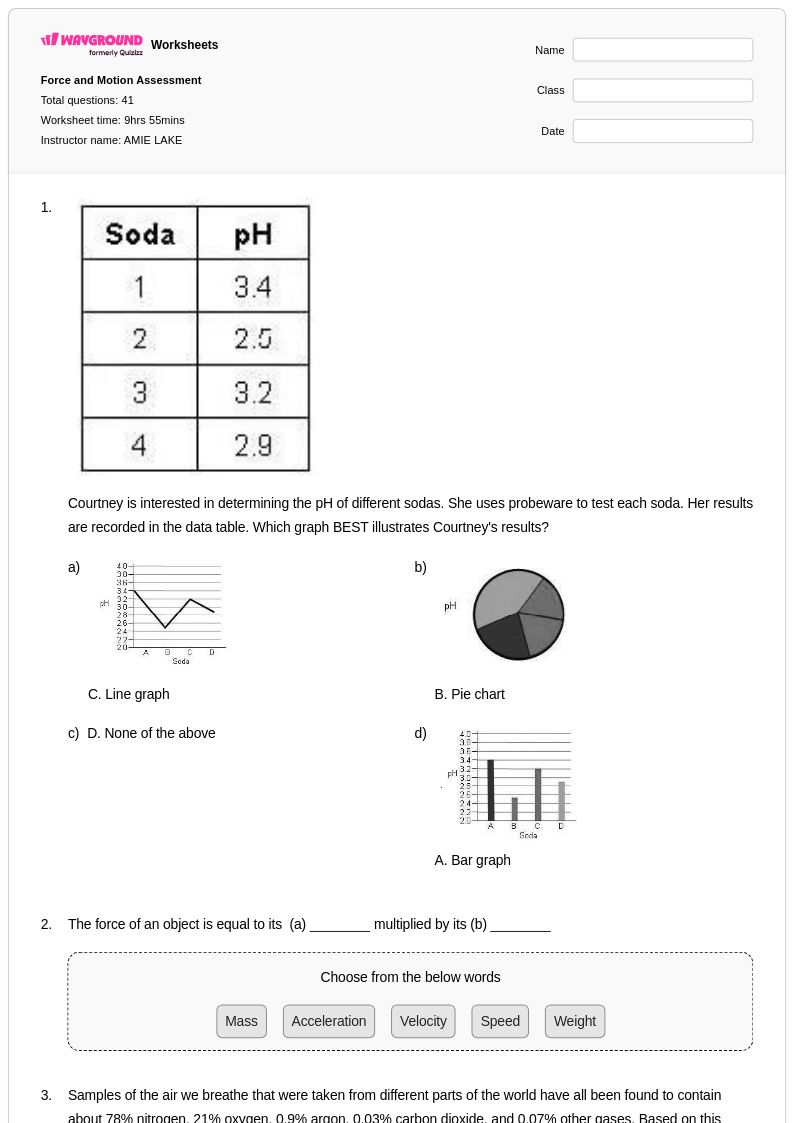
41 Q
8th
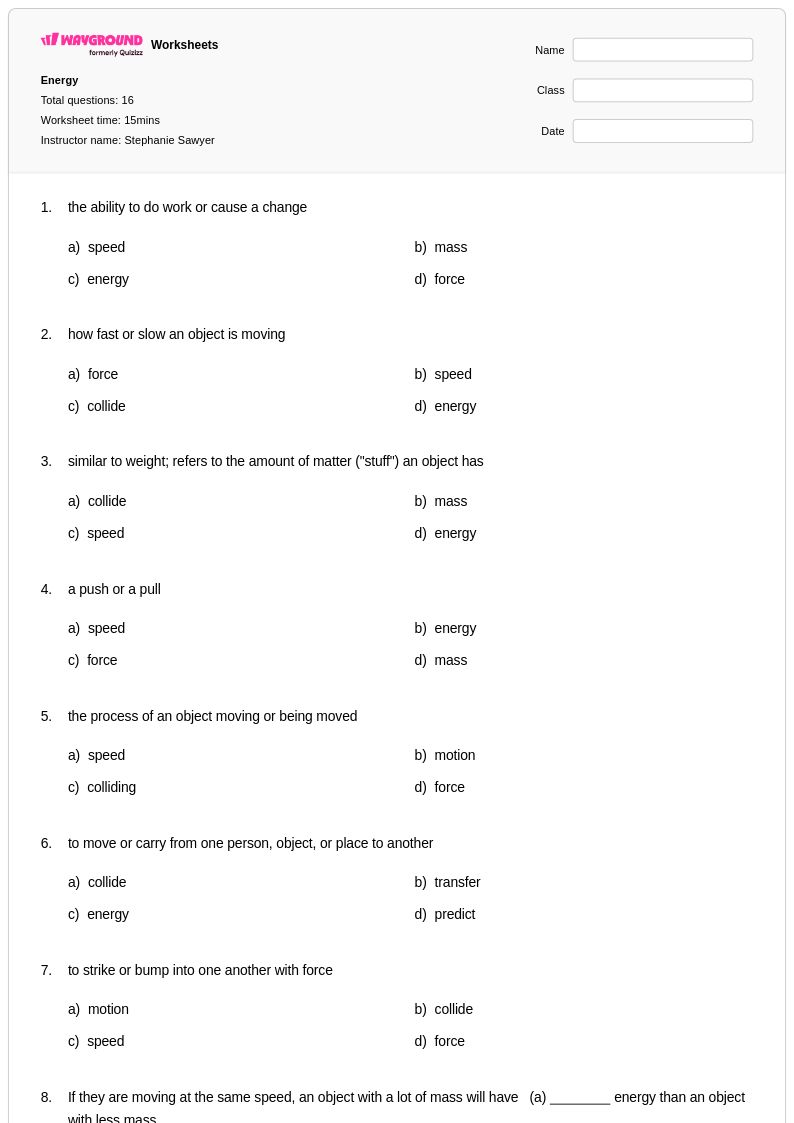
16 Q
4th
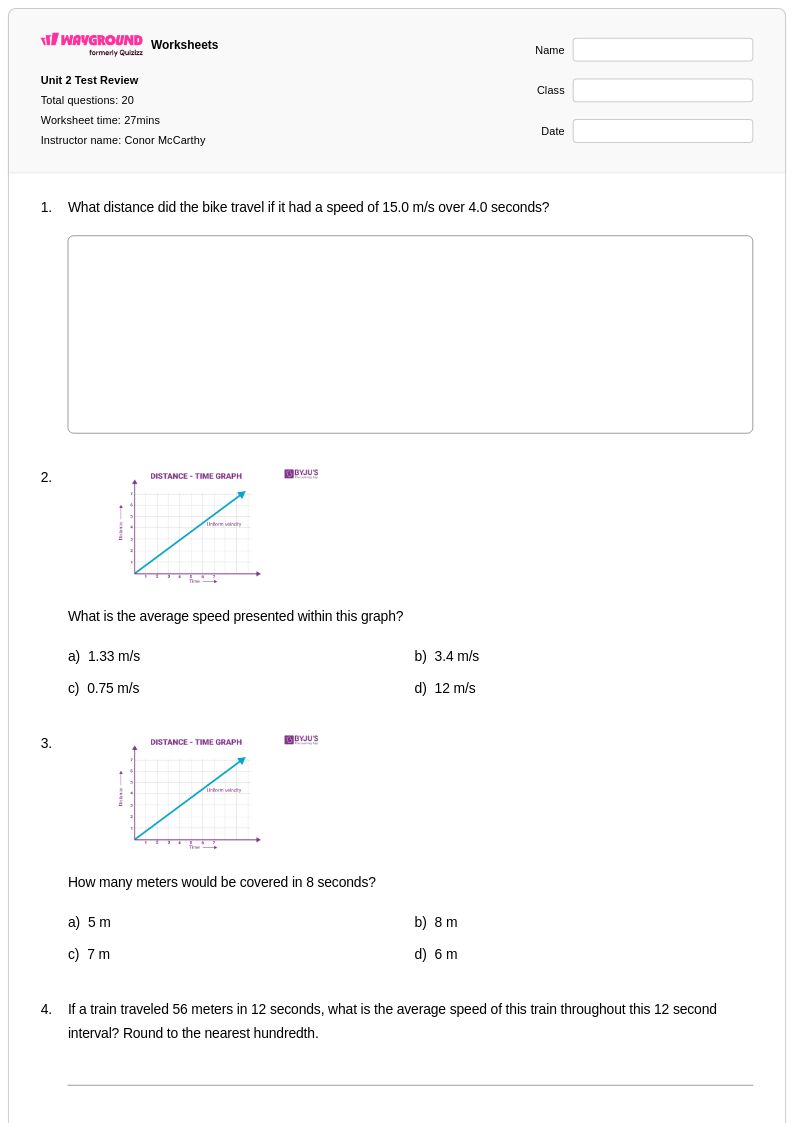
20 Q
9th - 12th
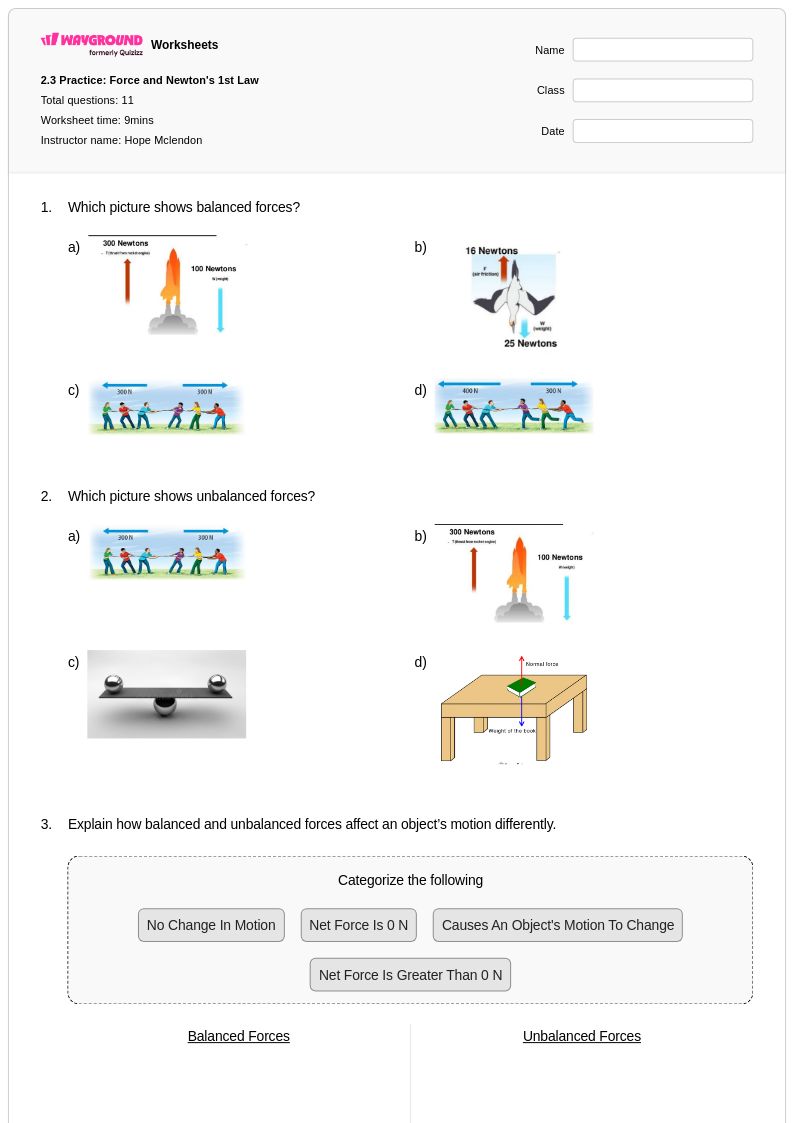
11 Q
9th

20 Q
10th
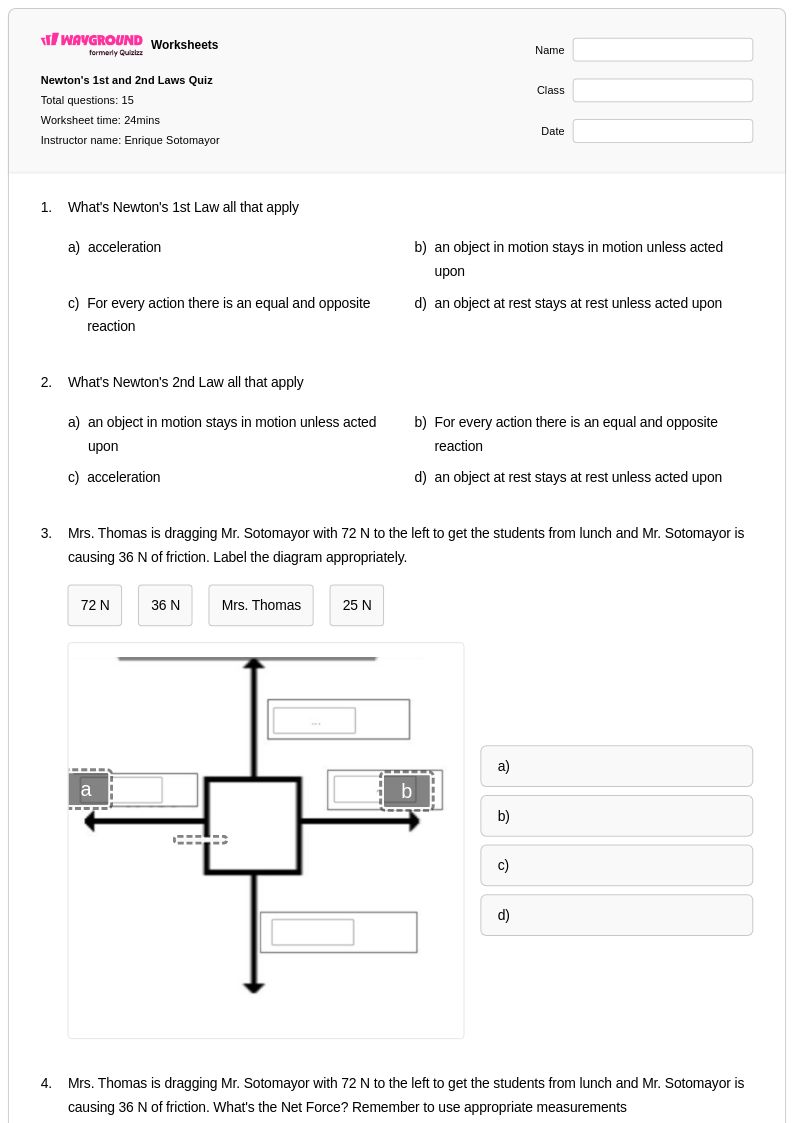
15 Q
7th
20 Q
PD
10 Q
8th
Explore Worksheets by Subjects
Explore printable Multiple Representations of Motion worksheets
Multiple representations of motion worksheets available through Wayground (formerly Quizizz) provide comprehensive practice for students learning to analyze and interpret motion using various visual and mathematical formats. These expertly designed resources help students develop crucial skills in translating between position-time graphs, velocity-time graphs, acceleration-time graphs, motion diagrams, and mathematical equations that describe object movement. Students strengthen their conceptual understanding by working through practice problems that require them to identify relationships between different representations, predict motion patterns, and solve complex kinematic scenarios. Each worksheet includes detailed answer keys and is available as free printable pdf resources, making it easy for educators to provide targeted skill practice and assess student comprehension of fundamental physics concepts.
Wayground (formerly Quizizz) empowers physics teachers with millions of teacher-created multiple representations of motion worksheets that feature robust search and filtering capabilities aligned to physics education standards. The platform's differentiation tools allow educators to customize content for diverse learning needs, while flexible formatting options provide both printable pdf versions and interactive digital worksheets suitable for various classroom environments. Teachers can efficiently plan comprehensive motion units, provide targeted remediation for students struggling with graph interpretation, and offer enrichment activities that challenge advanced learners to master complex multi-step problems. The extensive collection supports systematic skill practice across all motion representation types, enabling educators to scaffold learning progressively and ensure students develop strong conceptual connections between mathematical and visual descriptions of motion phenomena.