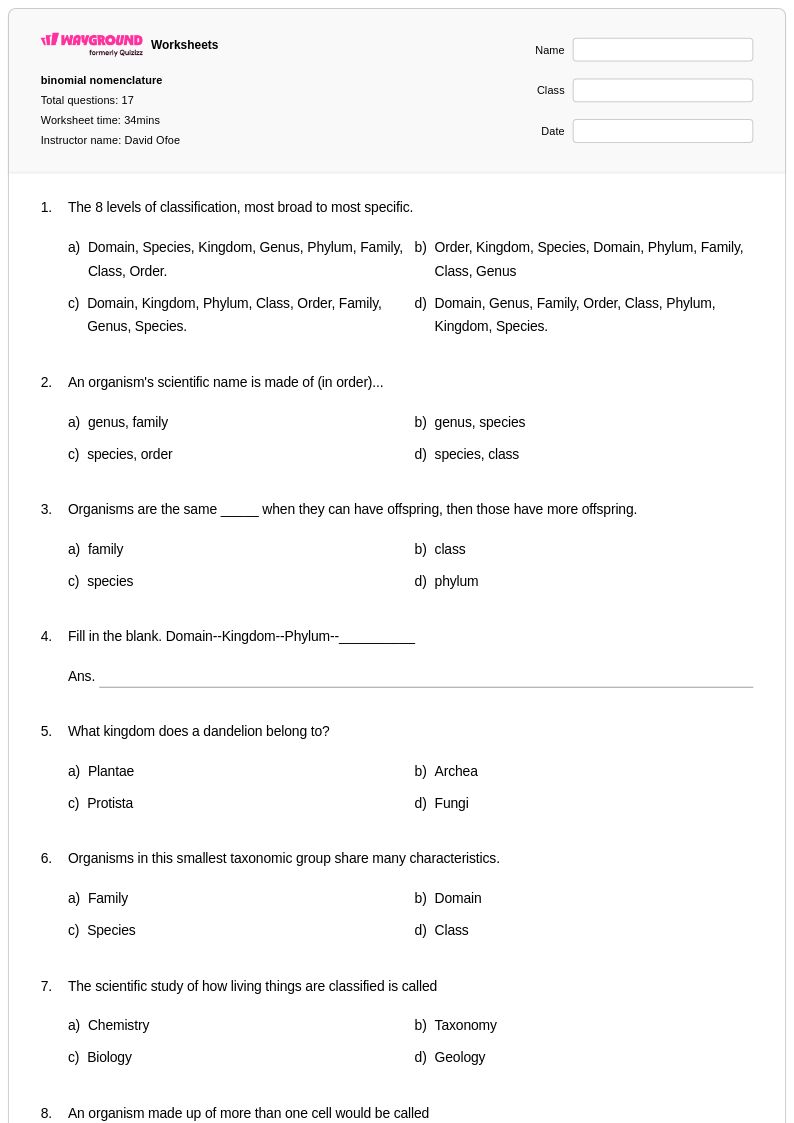
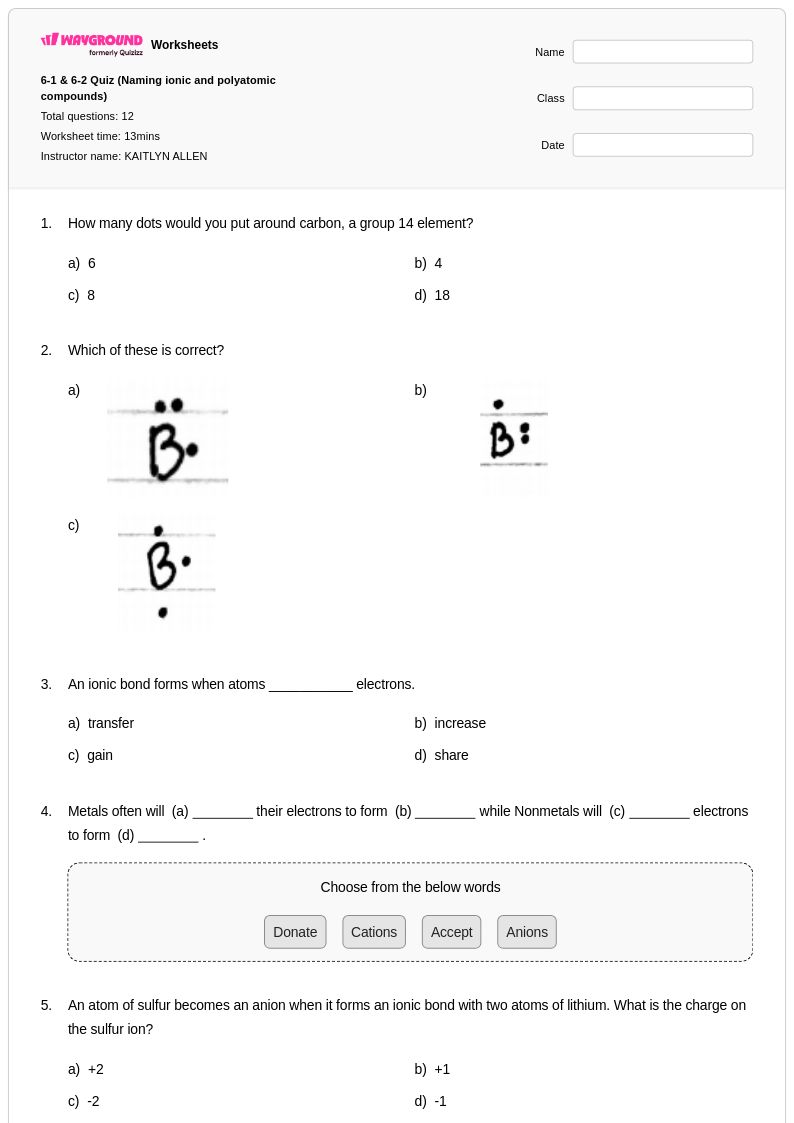
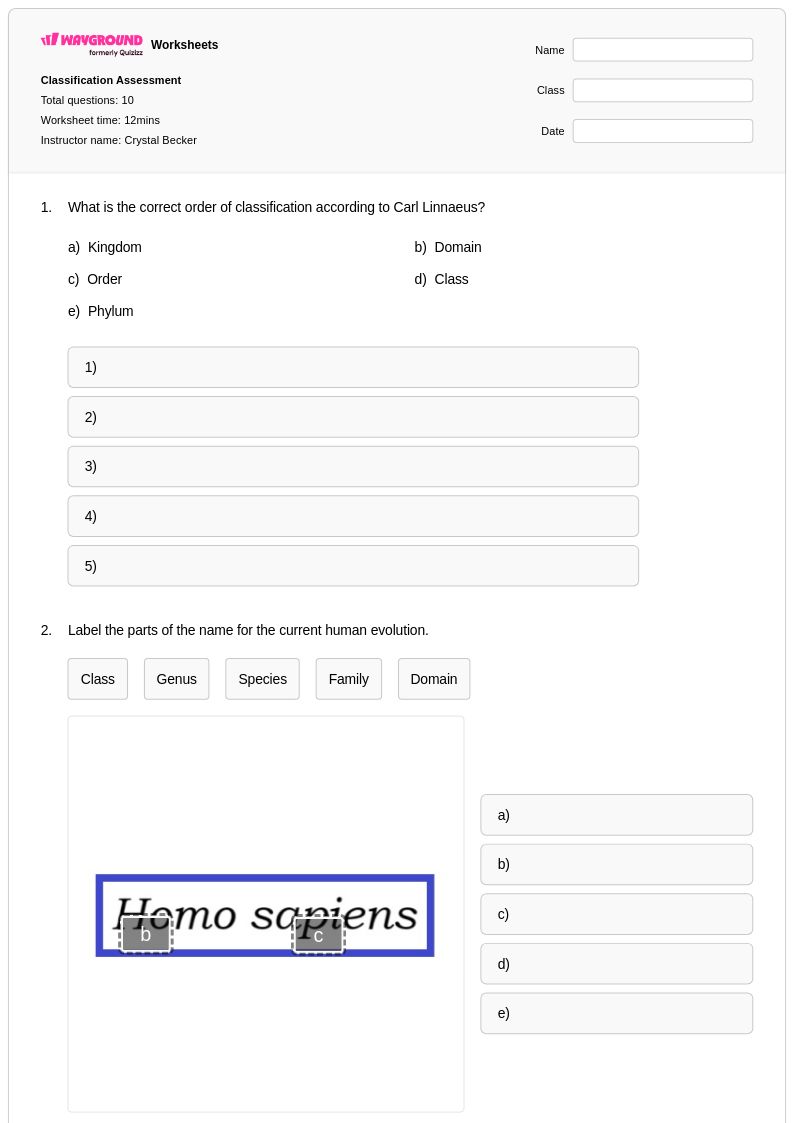
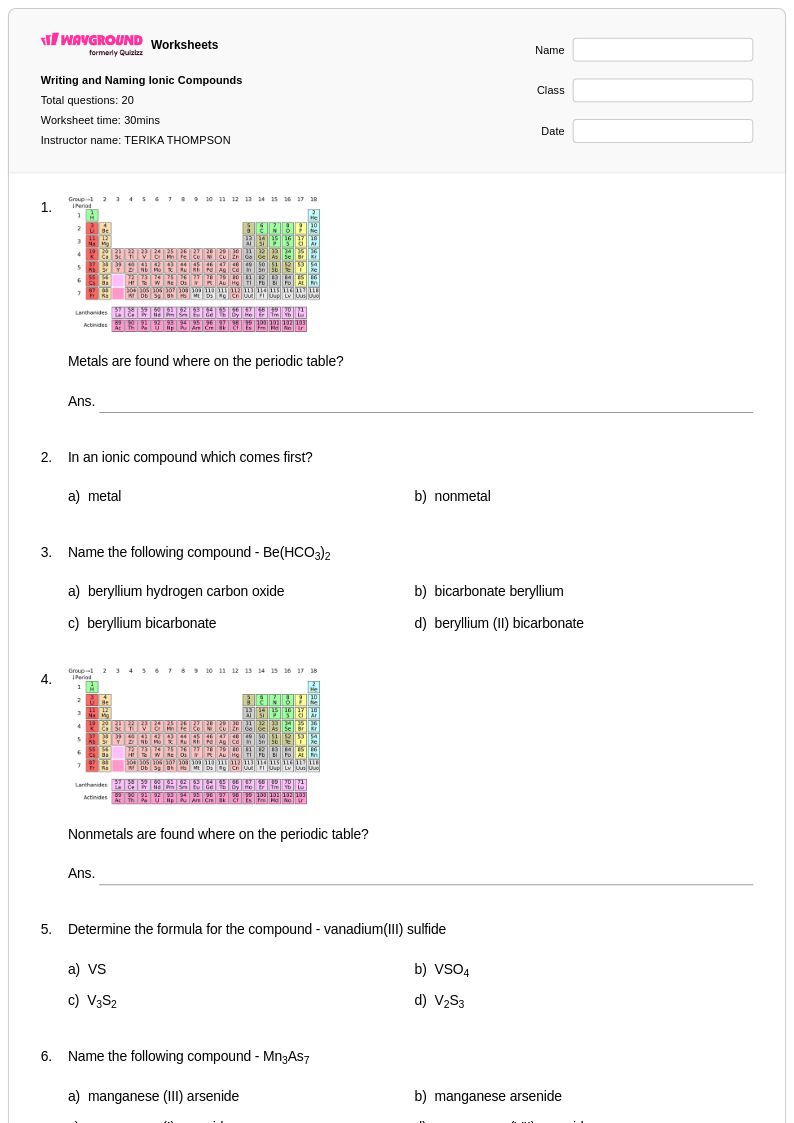
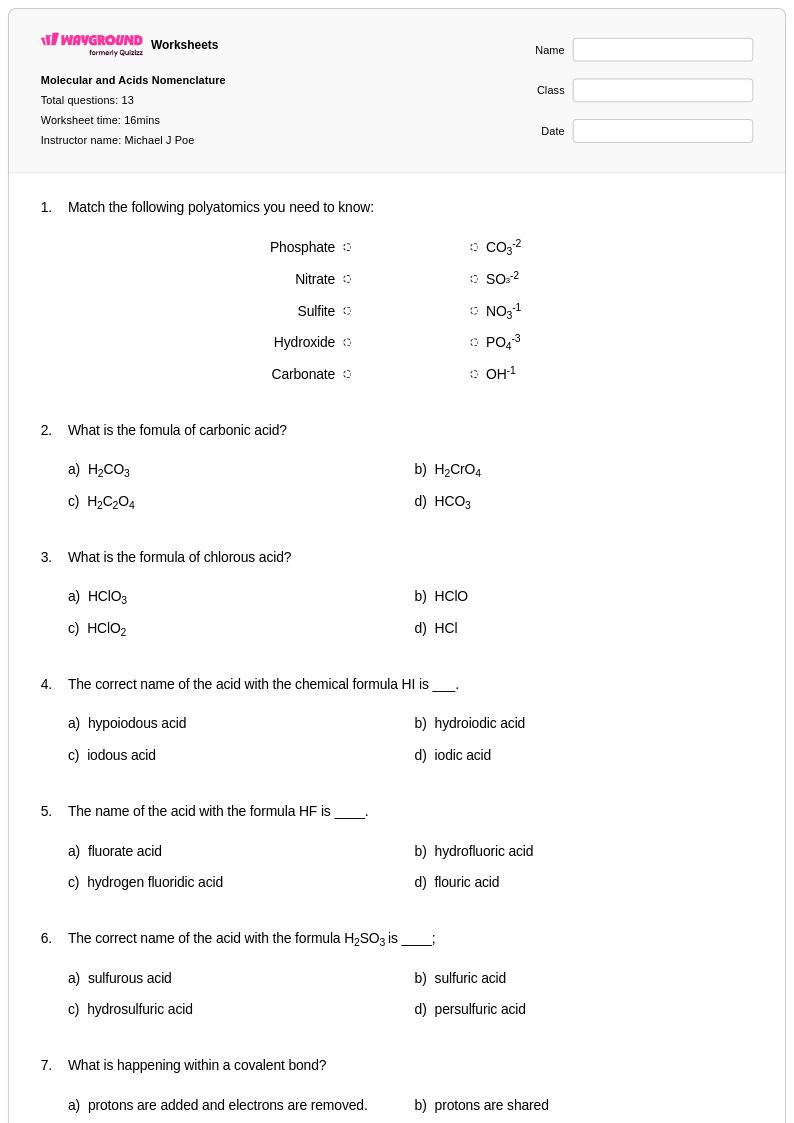
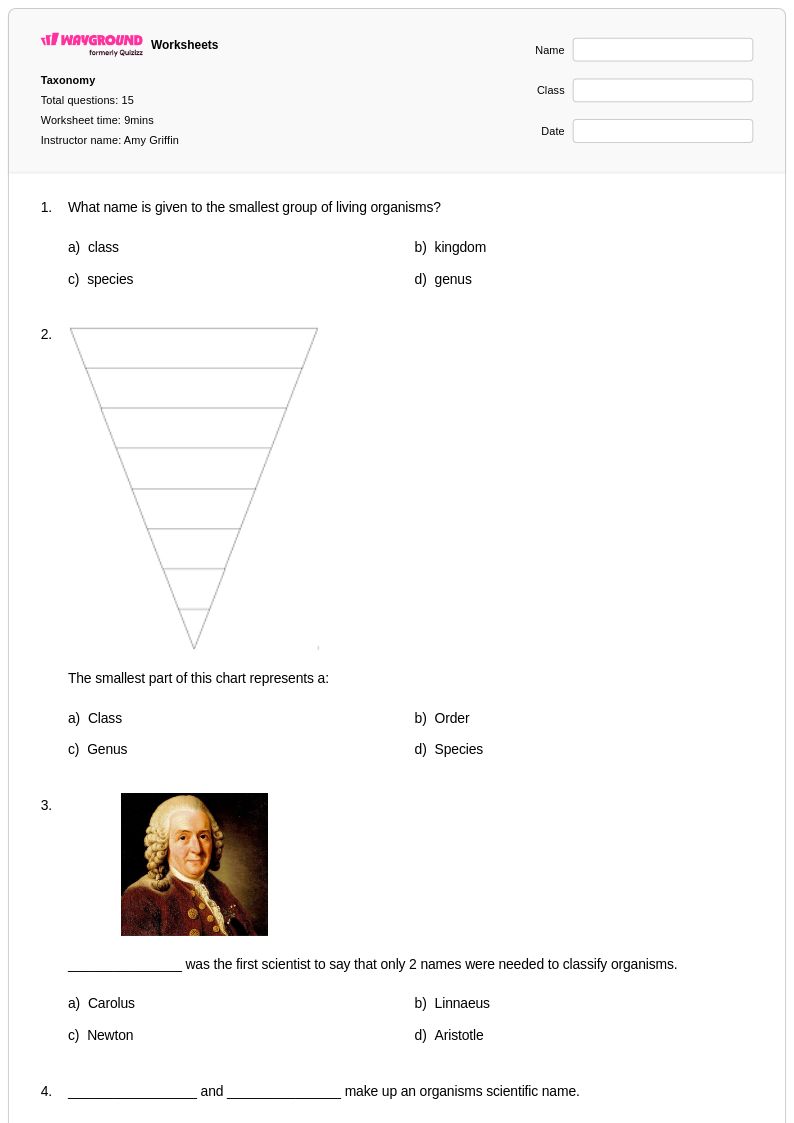
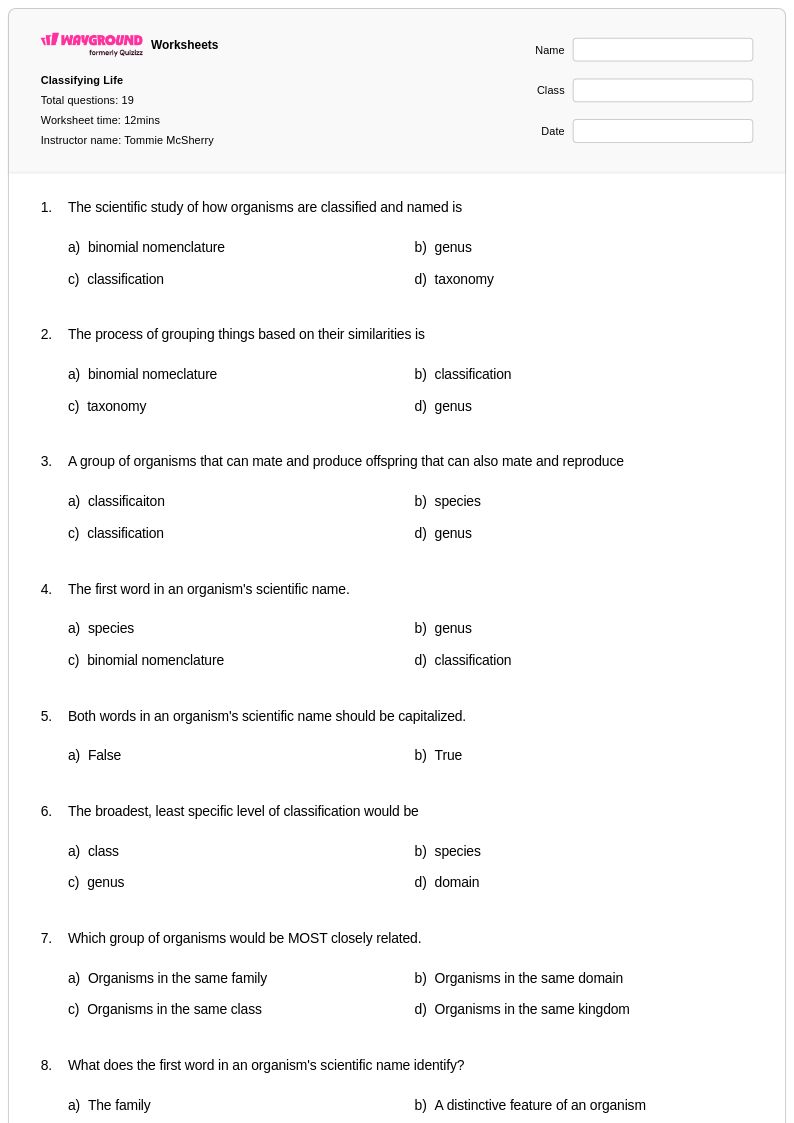
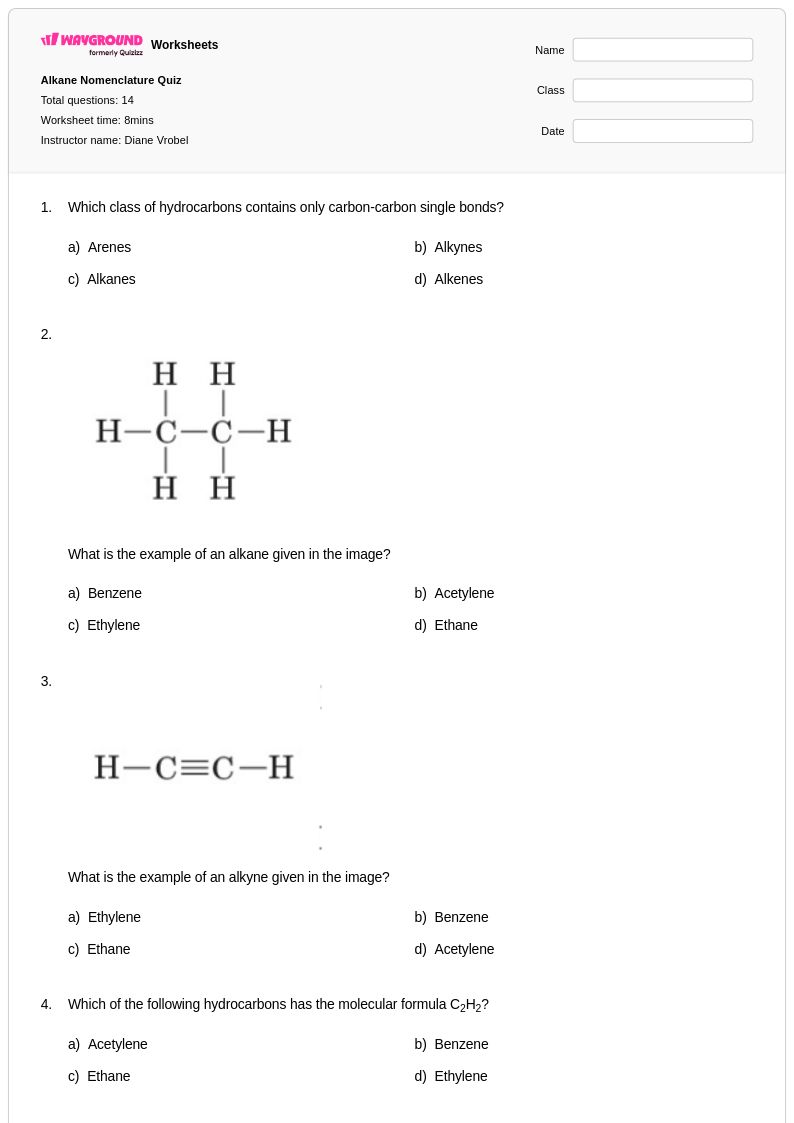
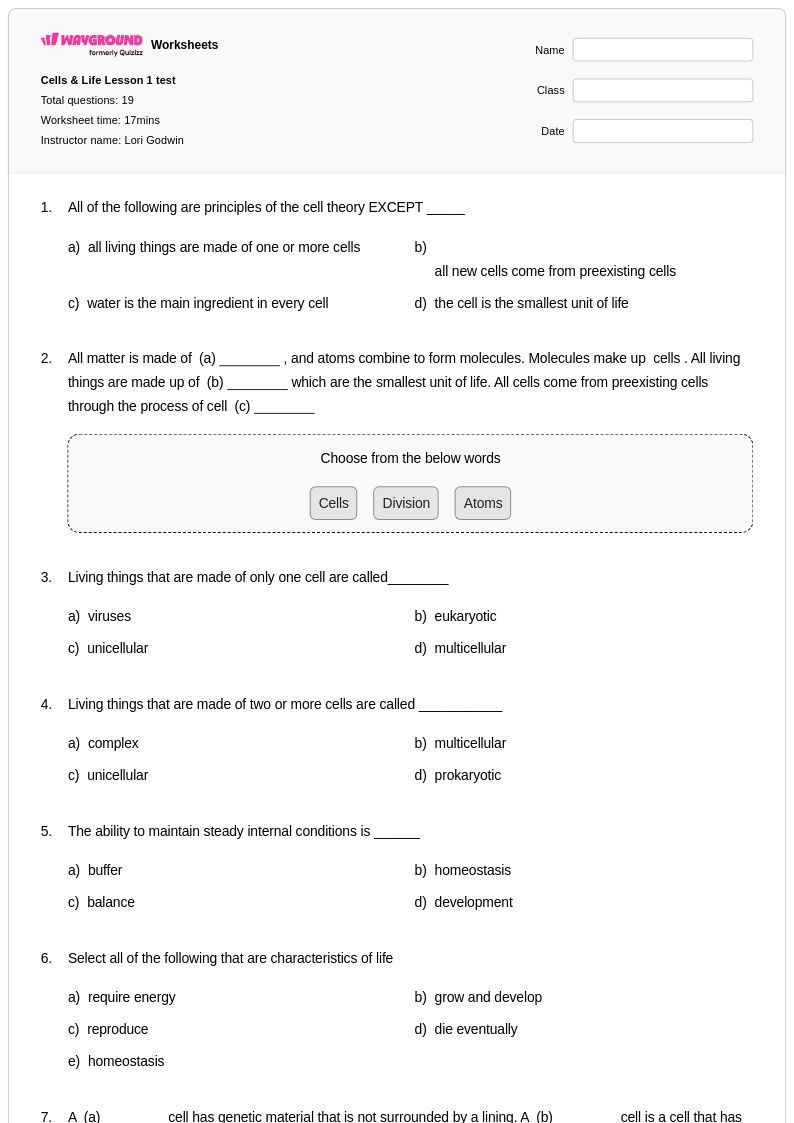
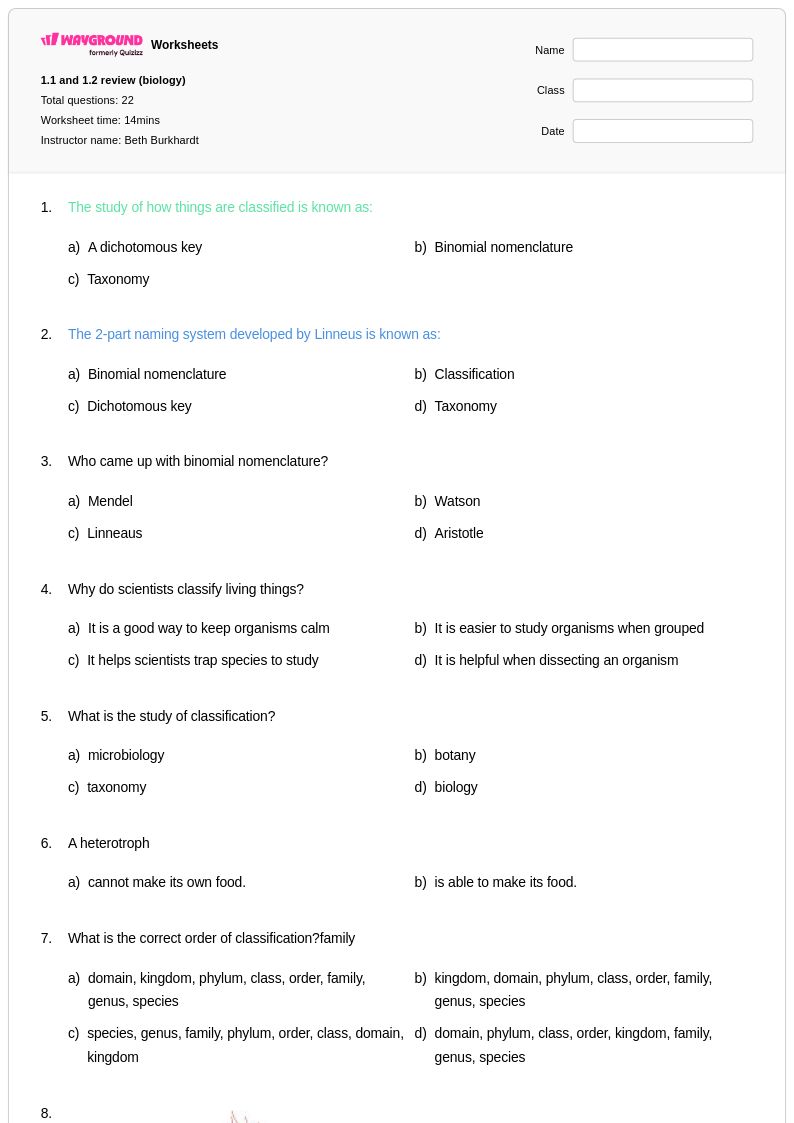
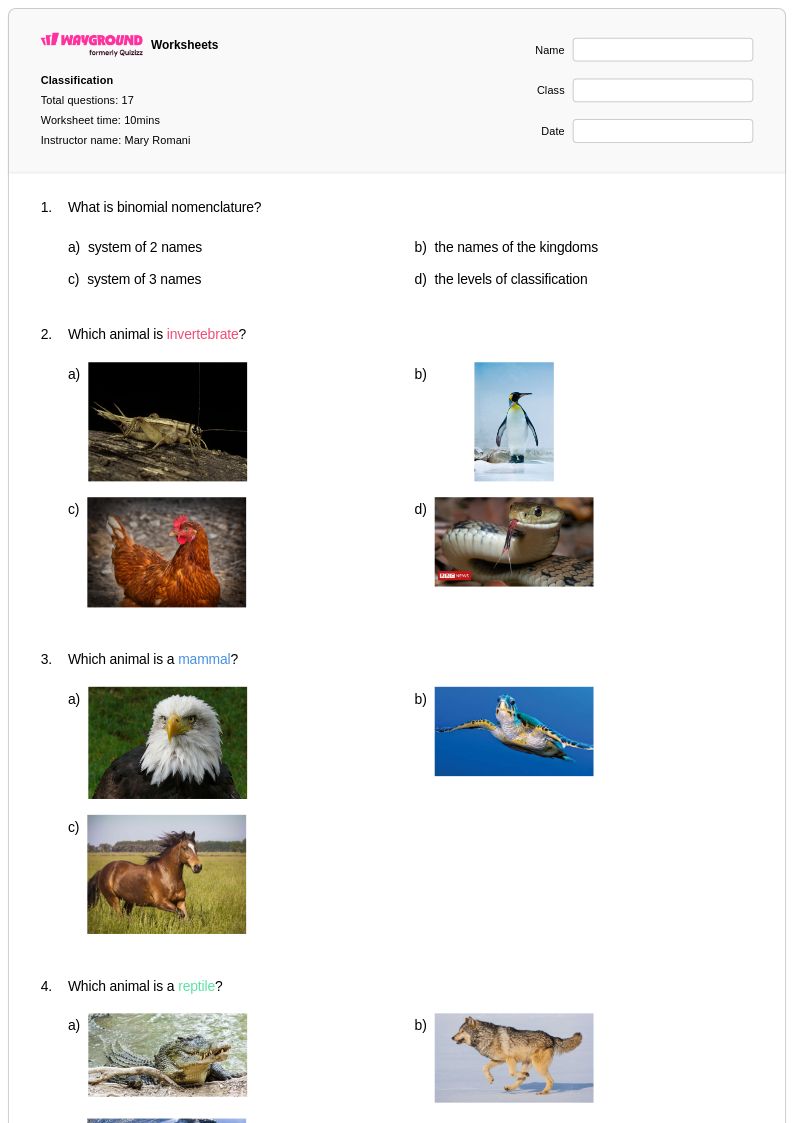
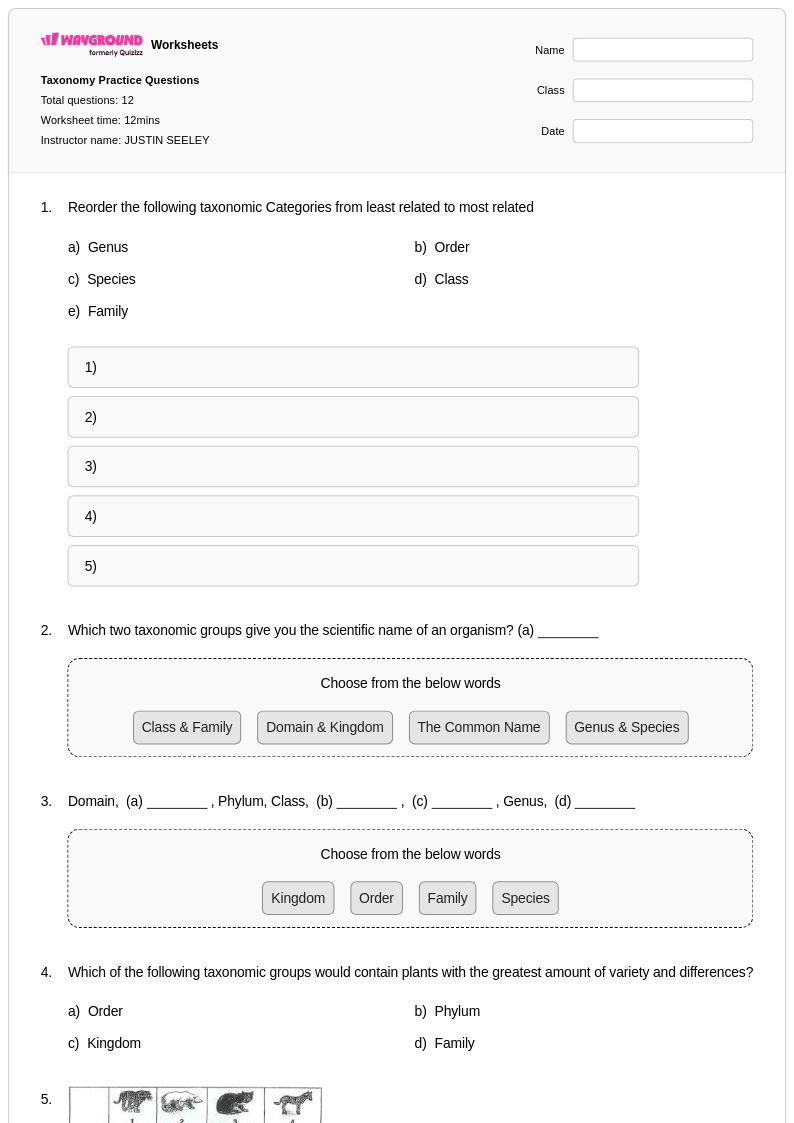
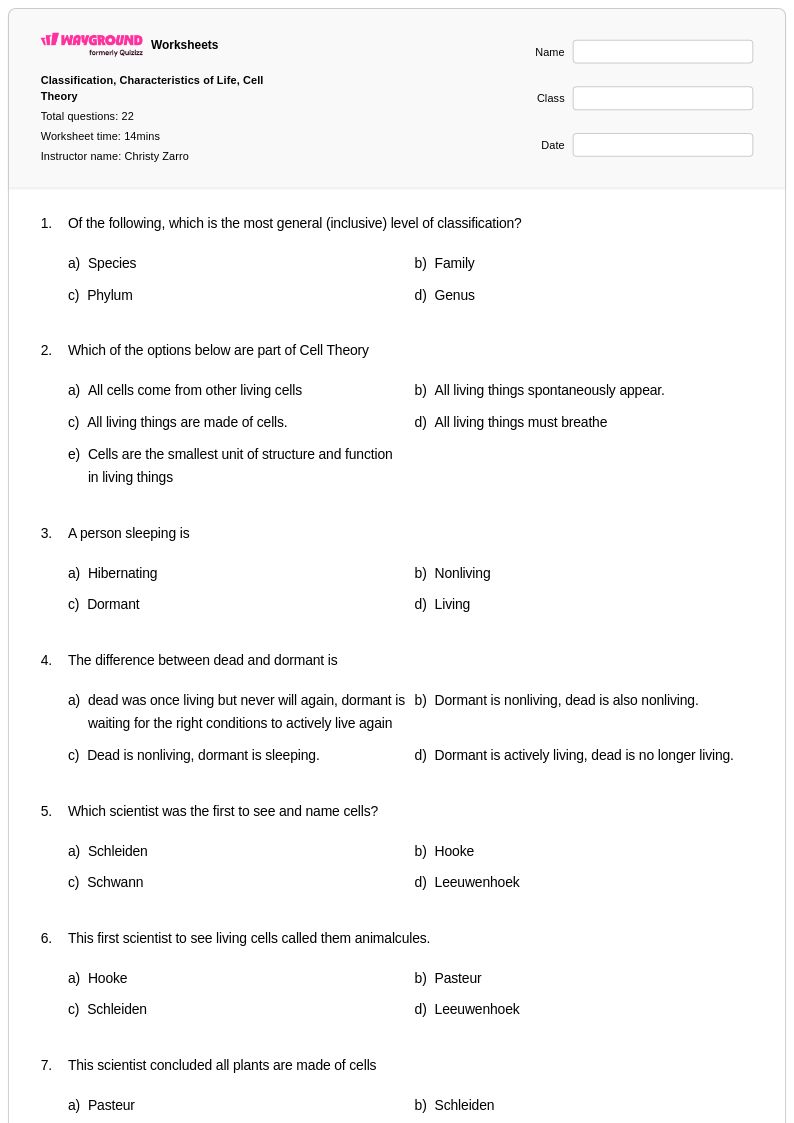
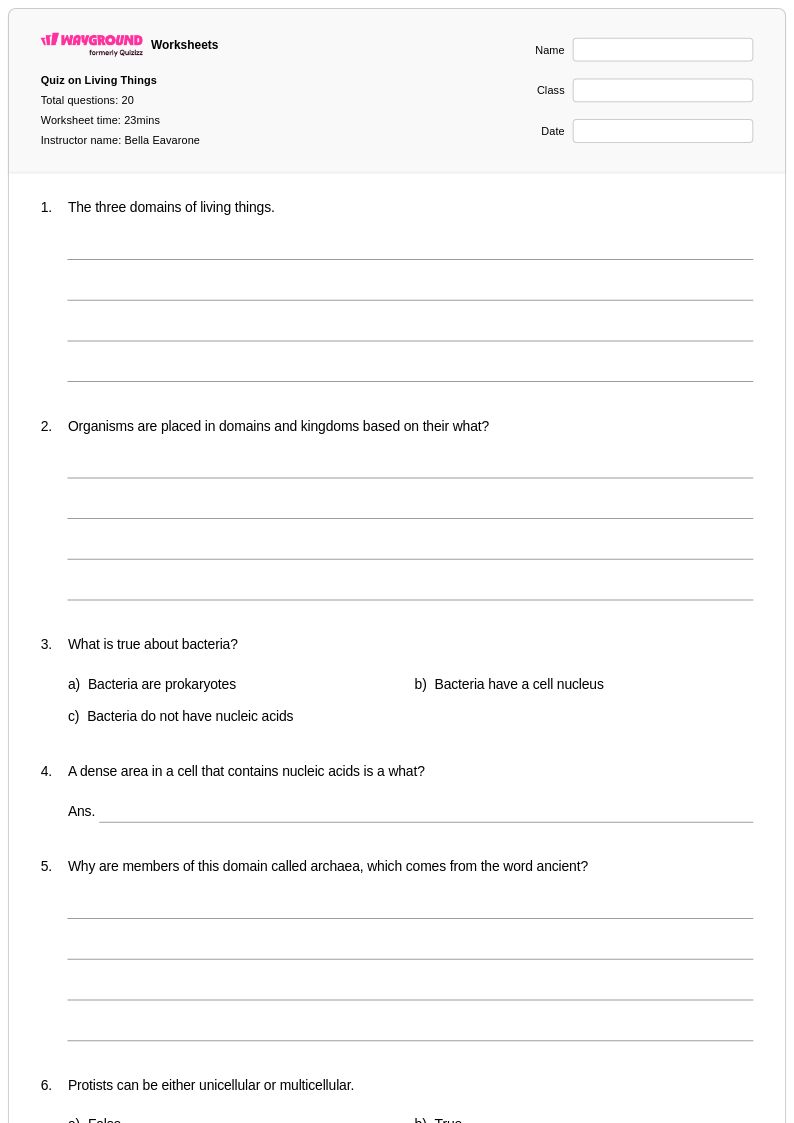
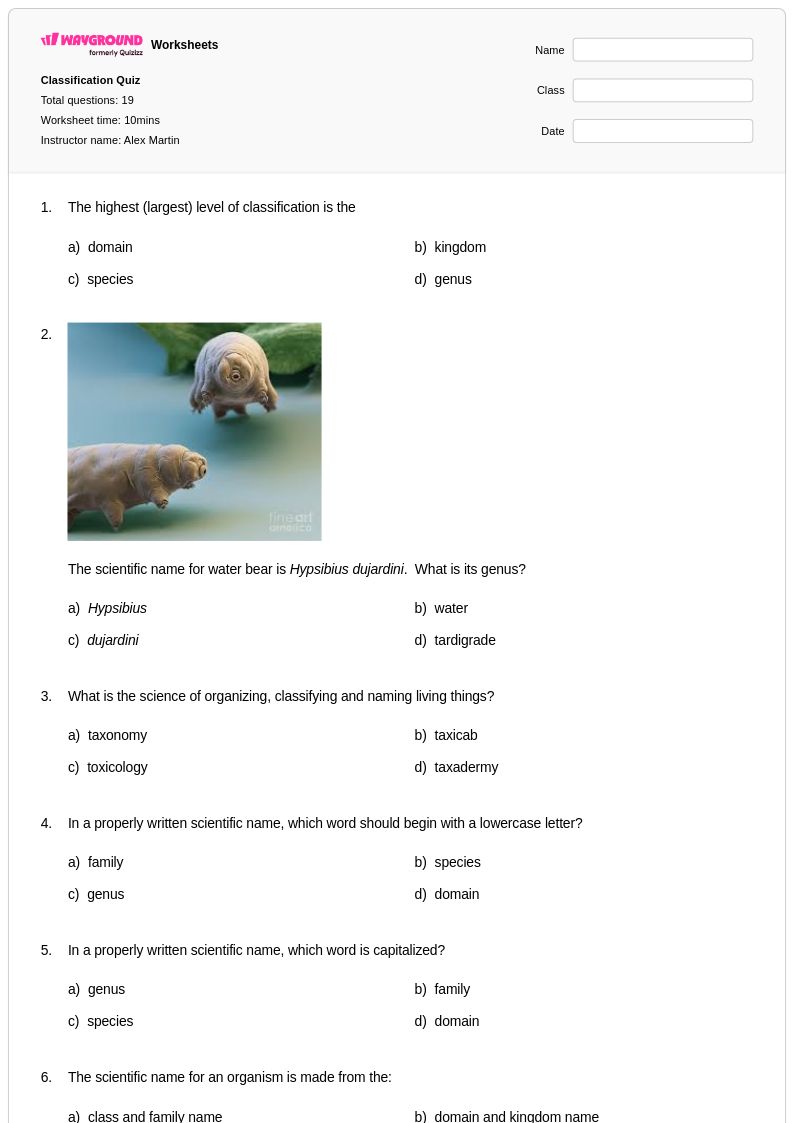
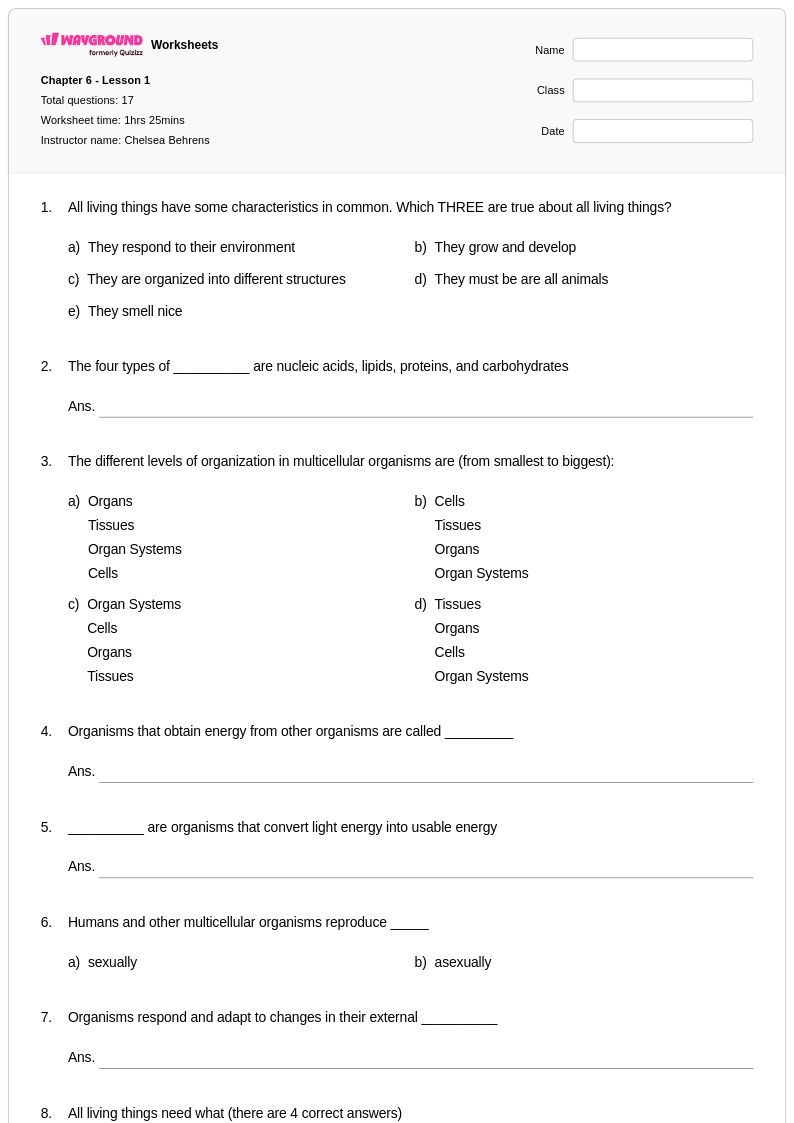
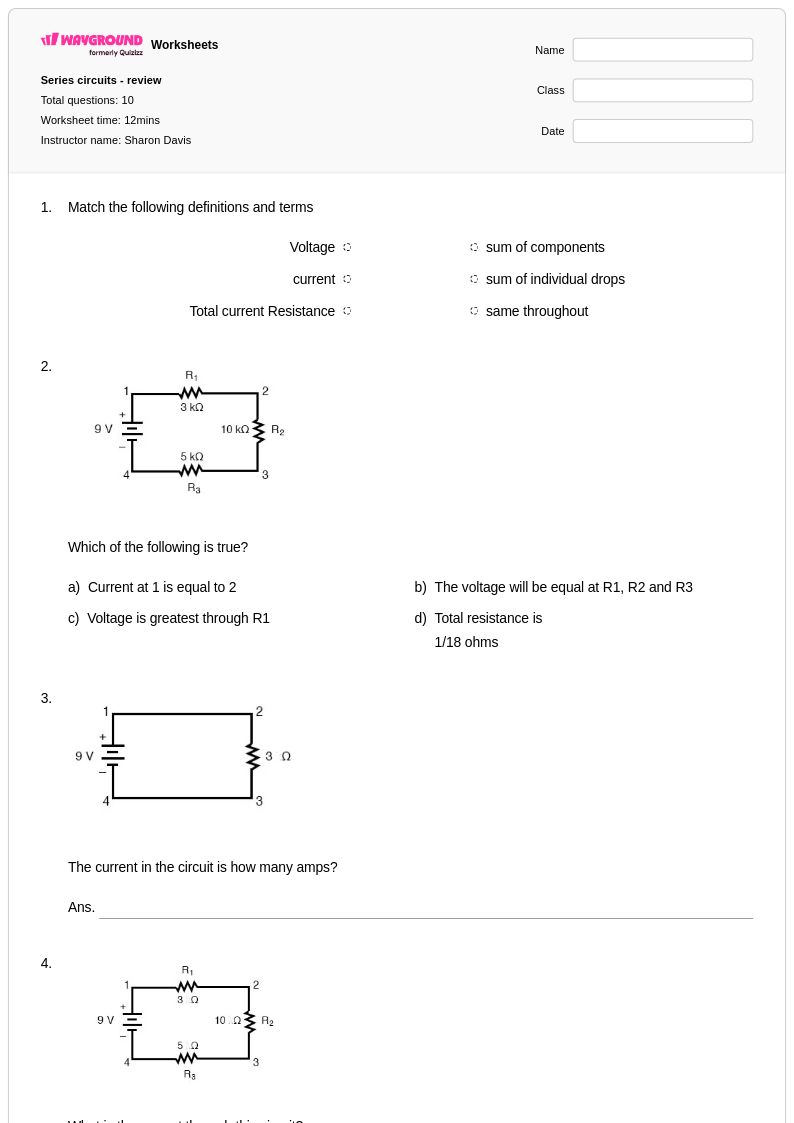
Master chemical nomenclature with Wayground's free worksheets and printables, featuring practice problems and answer keys to help students learn systematic naming conventions for compounds and molecules.
Chemistry nomenclature worksheets available through Wayground (formerly Quizizz) provide comprehensive practice in the systematic naming of chemical compounds, a fundamental skill that forms the backbone of chemical communication and understanding. These expertly crafted resources guide students through the intricate rules governing the naming of ionic compounds, molecular compounds, acids, and organic molecules, helping them master the International Union of Pure and Applied Chemistry (IUPAC) conventions alongside traditional naming systems. The worksheets strengthen critical analytical skills by requiring students to identify compound types, determine oxidation states, and apply specific naming rules systematically. Each printable resource includes detailed practice problems that progress from simple binary compounds to complex polyatomic structures, with accompanying answer keys that provide step-by-step explanations to reinforce proper nomenclature techniques. These free pdf resources serve as invaluable tools for building the vocabulary and systematic thinking essential for success in advanced chemistry coursework.
Wayground (formerly Quizizz) empowers educators with millions of teacher-created nomenclature worksheets that can be seamlessly integrated into chemistry instruction across all learning environments. The platform's robust search and filtering capabilities enable teachers to quickly locate resources that align with specific curriculum standards and match their students' proficiency levels, whether focusing on basic ionic naming or advanced organic nomenclature systems. The comprehensive differentiation tools allow instructors to customize worksheets for diverse learning needs, providing additional scaffolding for struggling students while offering enrichment challenges for advanced learners. Teachers can access these resources in both printable and digital formats, facilitating flexible lesson planning that accommodates various instructional approaches from traditional paper-based practice to interactive online assignments. This extensive collection supports effective remediation of naming errors, systematic skill-building through progressive difficulty levels, and comprehensive assessment preparation, ensuring students develop the precise chemical vocabulary and systematic reasoning skills necessary for laboratory work and advanced chemistry studies.
FAQs
How do I teach chemical nomenclature to chemistry students?
Effective nomenclature instruction starts by building a clear framework: teach students to identify the compound type first (ionic, molecular, acid, or organic) before applying naming rules. Introducing IUPAC conventions alongside traditional names helps students understand why systematic naming exists, not just how to do it. Progressing from simple binary compounds to polyatomic and organic structures gives students a logical scaffolding that prevents overwhelm and reinforces pattern recognition across compound types.
What exercises help students practice chemical nomenclature?
The most effective practice combines naming compounds from formulas and writing formulas from names, since both directions of the skill are tested in coursework and exams. Exercises that require students to first identify the compound type before applying naming rules build the decision-making habits that reduce errors. Progressive practice sets that begin with binary ionic compounds and advance to polyatomic ions and molecular compounds are especially useful for building systematic fluency.
What mistakes do students commonly make with chemical nomenclature?
The most frequent error is applying the wrong naming system to a compound, such as using Greek prefixes for ionic compounds or omitting them for molecular compounds. Students also frequently confuse transition metal ions with multiple oxidation states, forgetting to include Roman numerals when required. Mixing up polyatomic ion names and formulas (for example, confusing nitrate and nitrite) is another persistent error that requires repeated exposure and targeted practice to correct.
How do I help struggling students keep up with nomenclature rules?
Struggling students benefit most from a structured decision tree that walks them through compound identification before any naming begins, reducing the cognitive load of remembering which rule applies when. Reducing answer choices on practice problems can help students focus on distinguishing between two plausible options rather than recalling rules from scratch. On Wayground, teachers can enable accommodations such as reduced answer choices and read-aloud support for individual students, allowing those students to receive targeted scaffolding while the rest of the class works through standard practice.
How do I use Wayground's nomenclature worksheets in my chemistry class?
Wayground's nomenclature worksheets are available as printable PDFs for traditional classroom use and in digital formats for technology-integrated instruction, giving teachers flexibility across different learning environments. Teachers can also host worksheets directly as a quiz on Wayground, enabling real-time student responses and instant feedback. All worksheets include answer keys, making them practical for independent practice, in-class review, homework assignments, or assessment preparation without additional teacher preparation time.
How do I differentiate nomenclature instruction for mixed-ability chemistry classes?
For mixed-ability classes, sequencing matters: assign foundational binary compound naming to students who need reinforcement while advanced learners tackle organic or complex polyatomic nomenclature. Wayground's platform allows teachers to set individual accommodations, such as extended time or read-aloud support, for specific students without disrupting the rest of the class. The platform's filtering tools also help teachers quickly locate worksheets aligned to specific difficulty levels or curriculum standards, making it easier to prepare tiered assignments from a single resource library.