
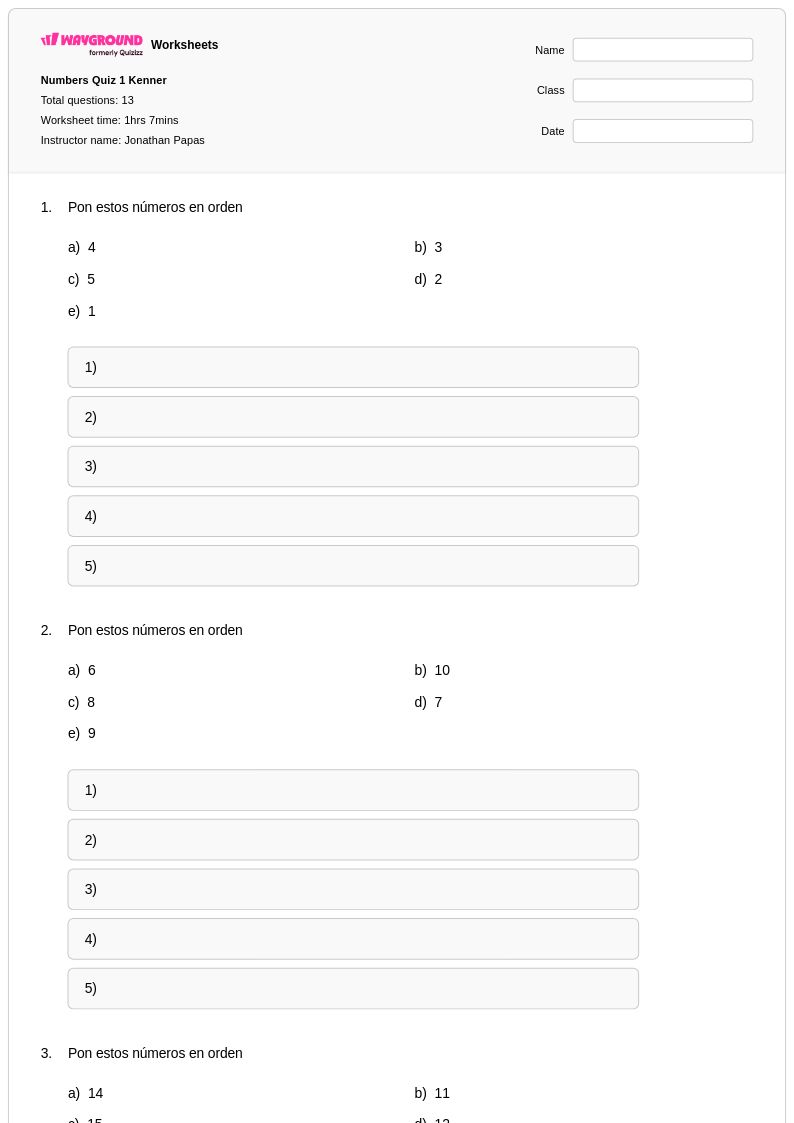
13 Q
1st
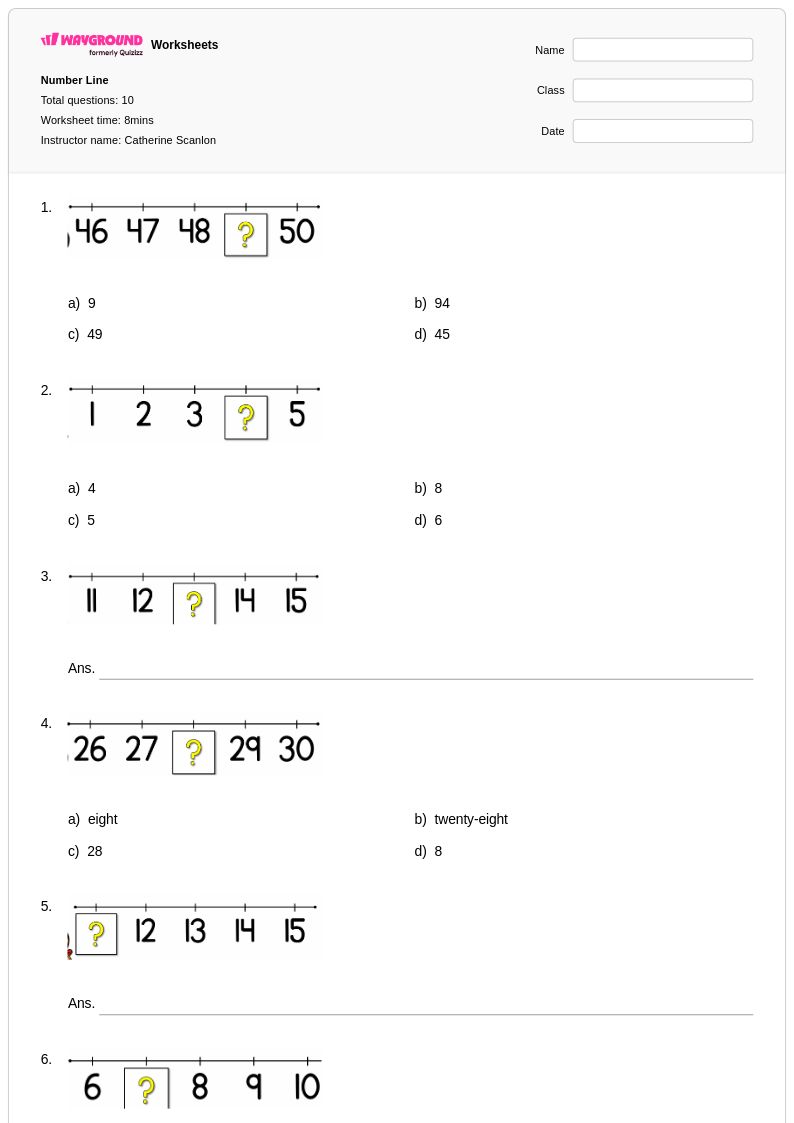
10 Q
1st
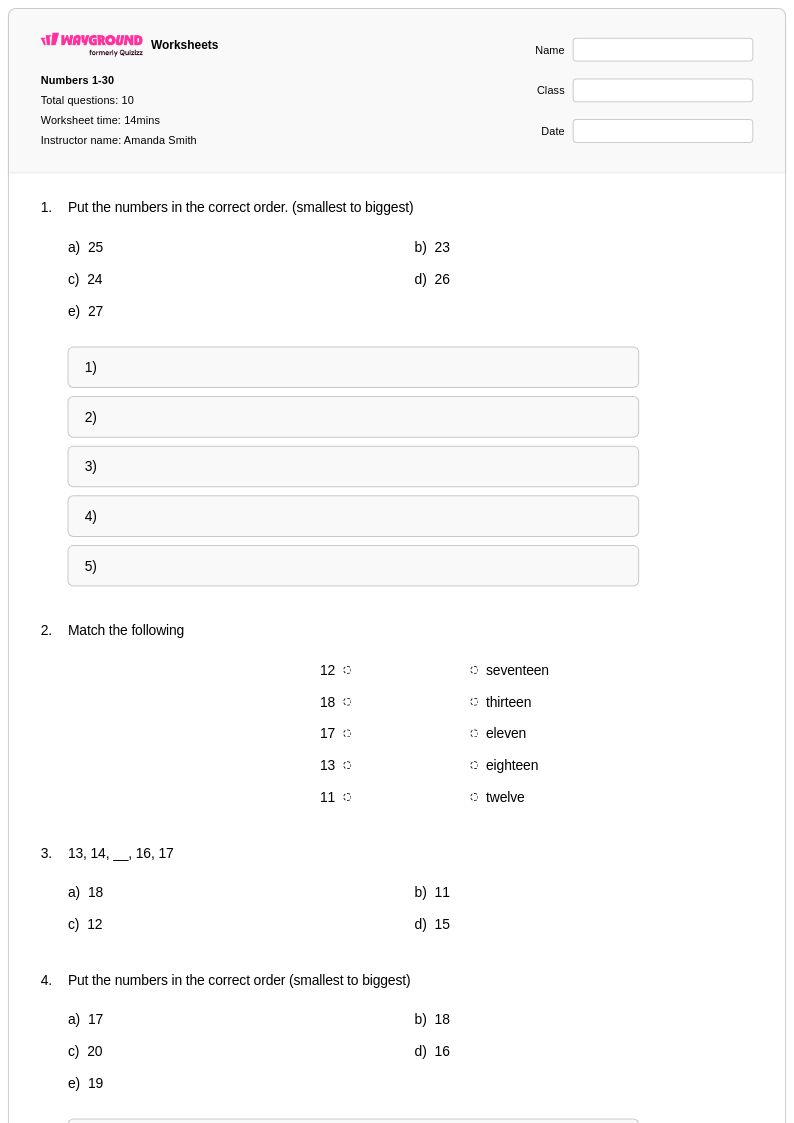
10 Q
1st
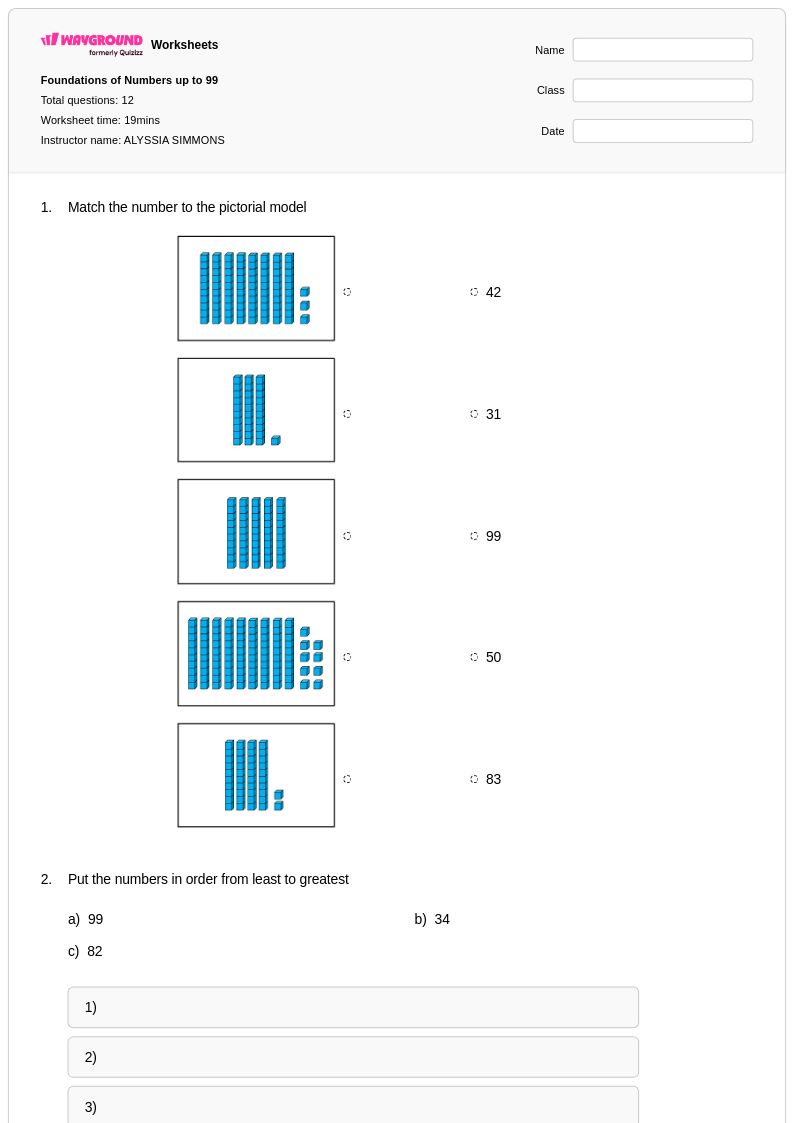
12 Q
1st
21 Q
1st
20 Q
1st - Uni
10 Q
1st
20 Q
1st
15 Q
1st
16 Q
1st - 3rd
17 Q
1st - Uni
15 Q
1st
15 Q
KG - 1st
40 Q
1st
14 Q
1st
10 Q
1st - 5th
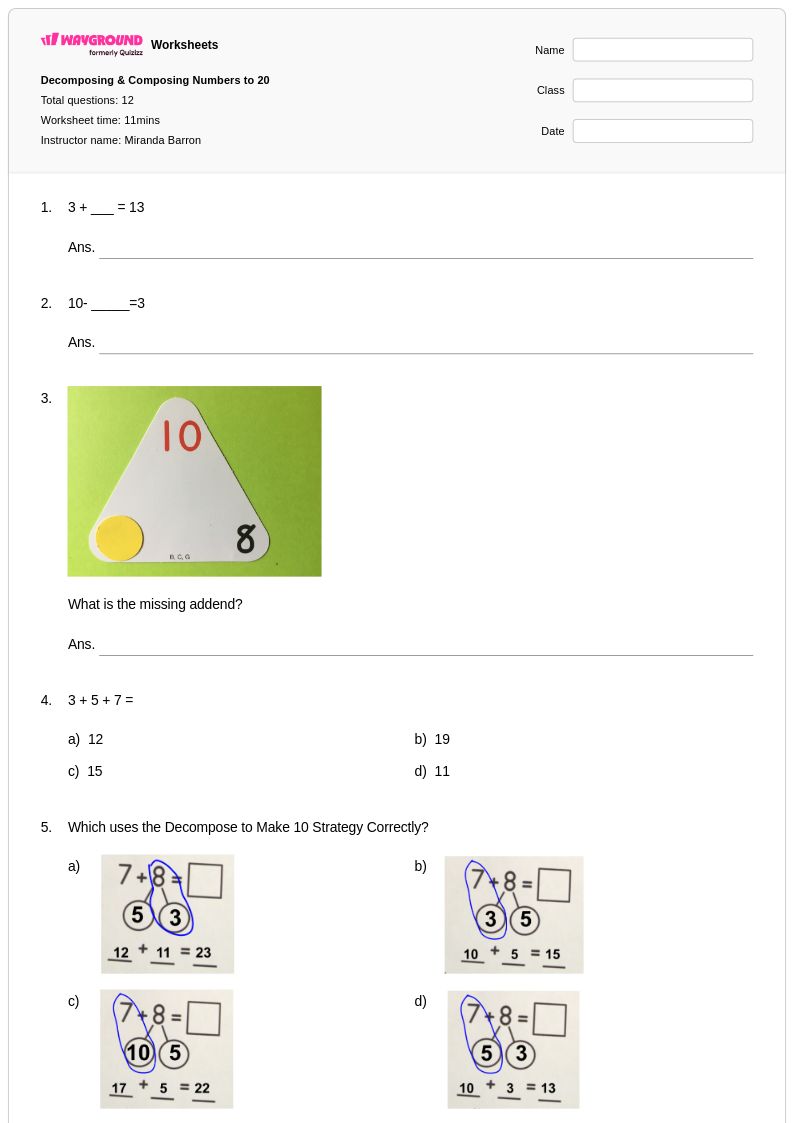
12 Q
1st
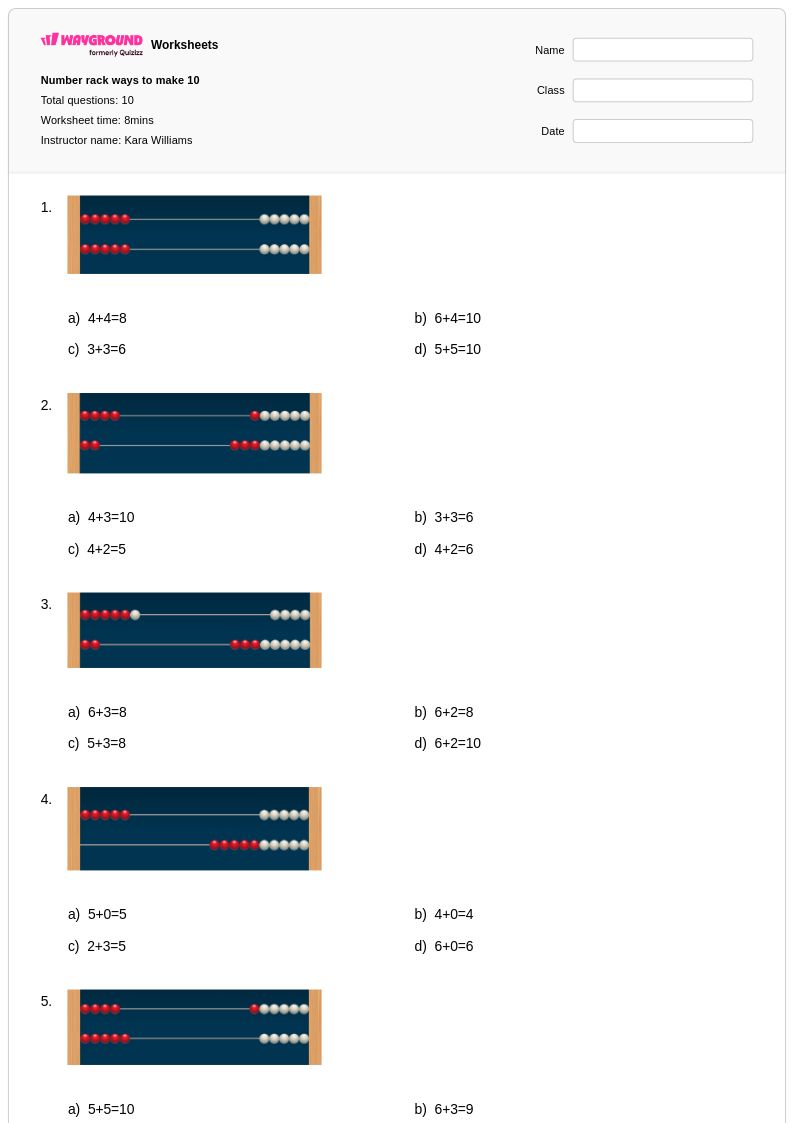
10 Q
1st - 3rd
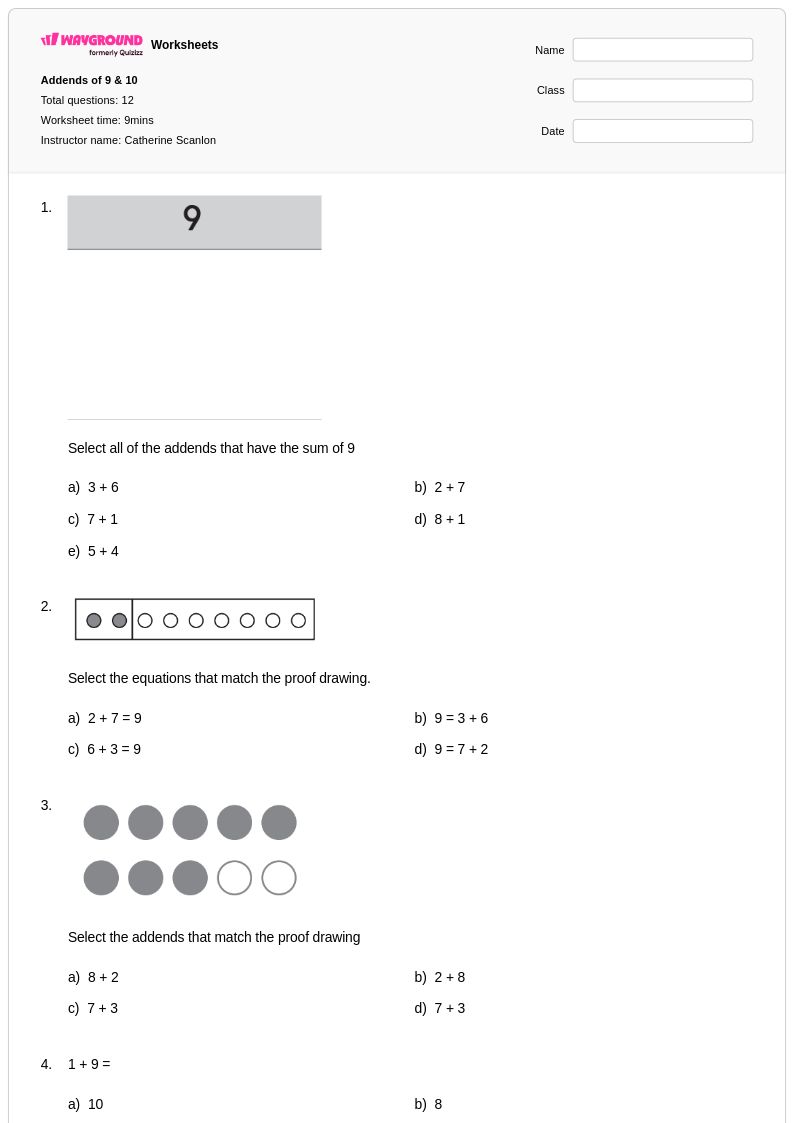
12 Q
KG - 2nd
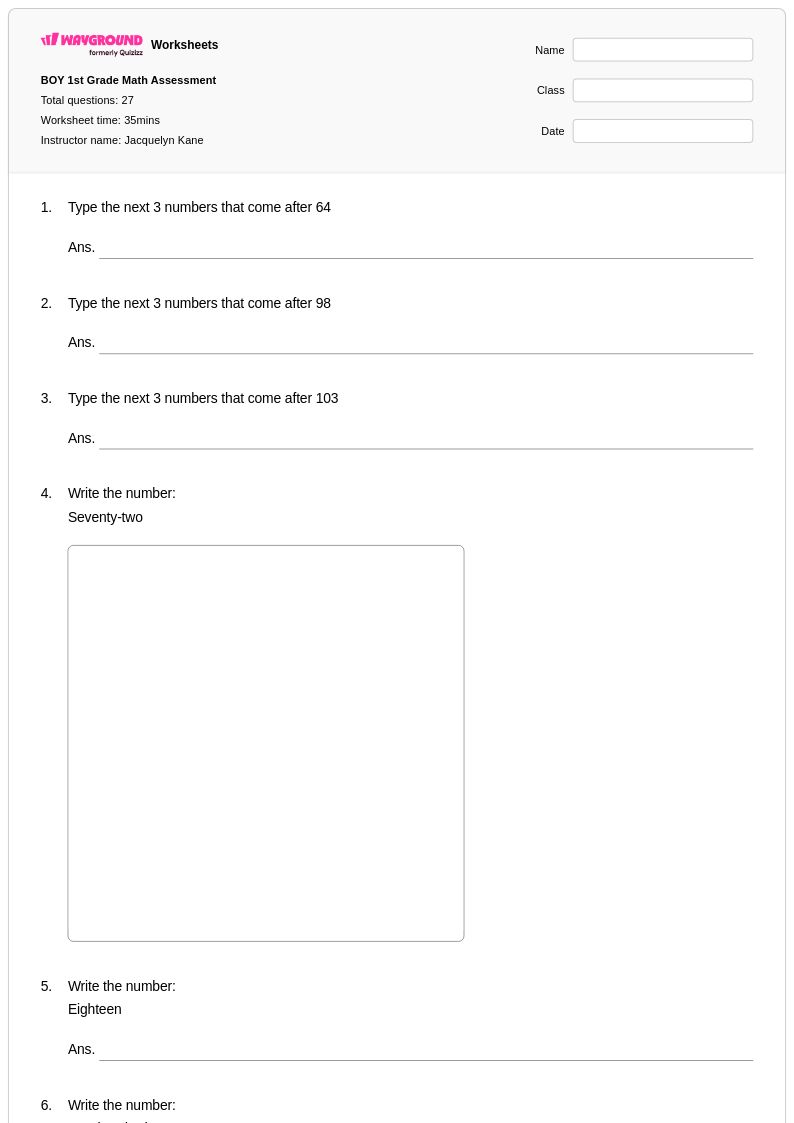
27 Q
1st
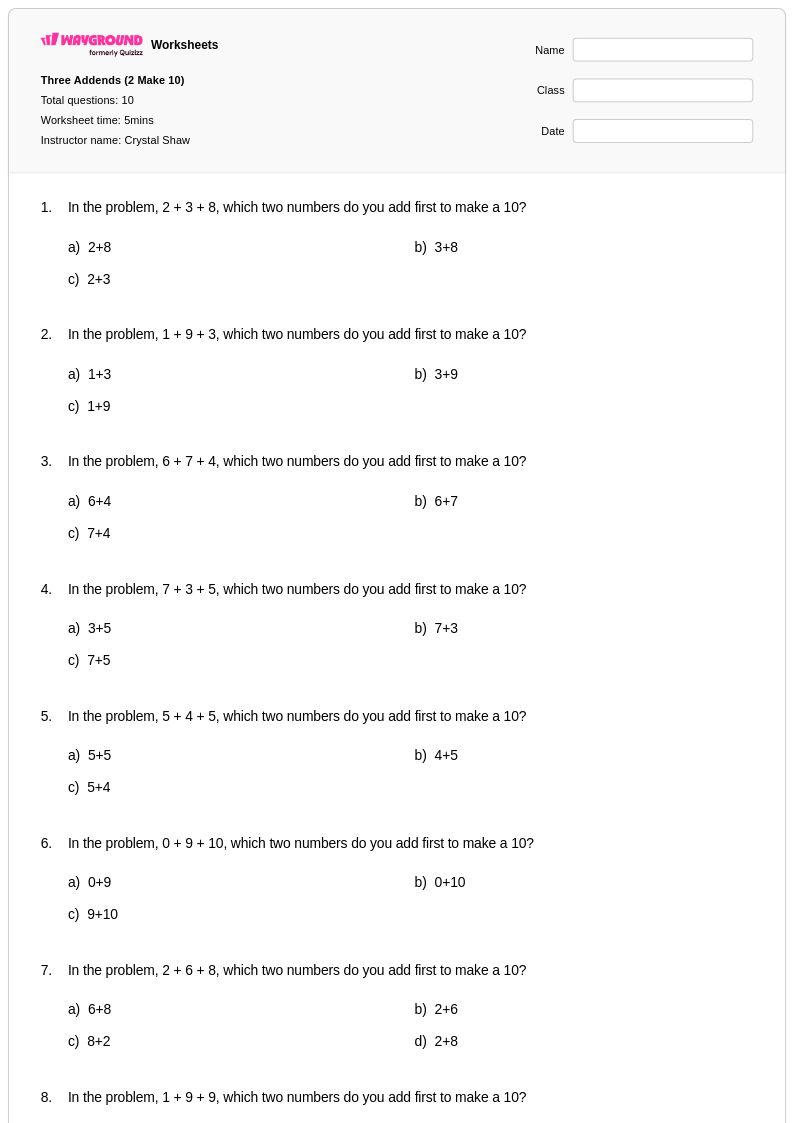
10 Q
1st
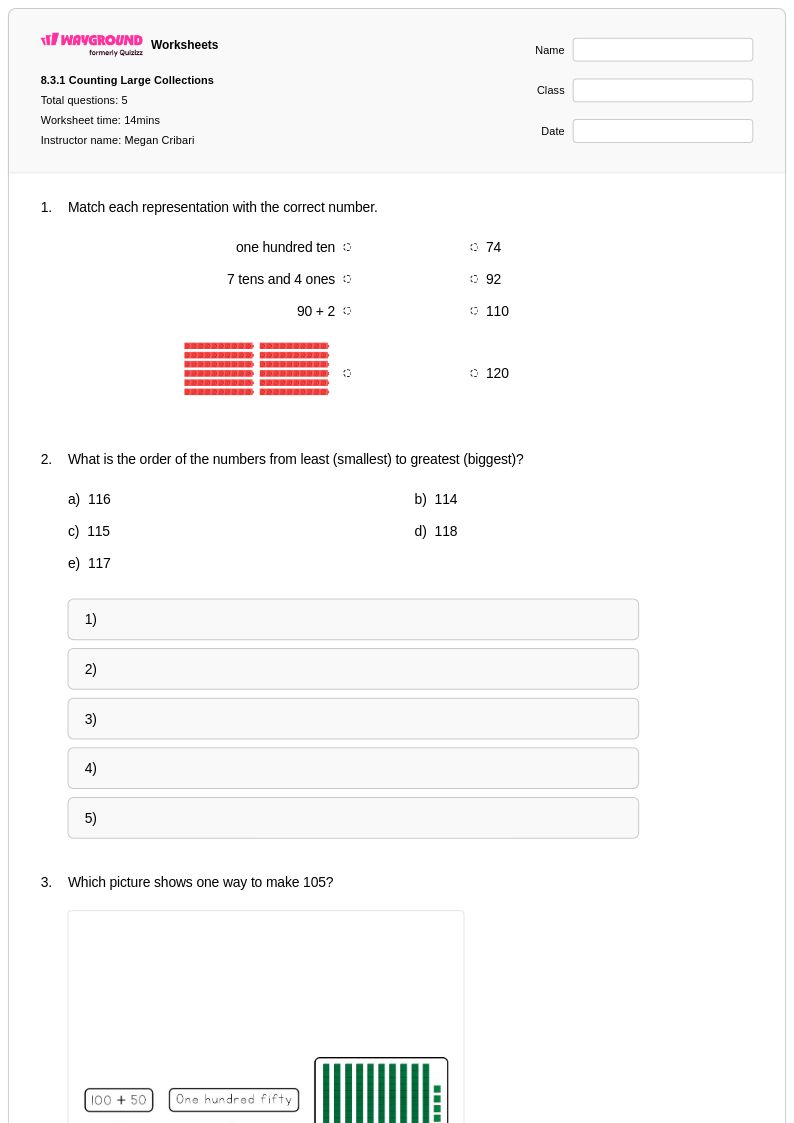
5 Q
1st
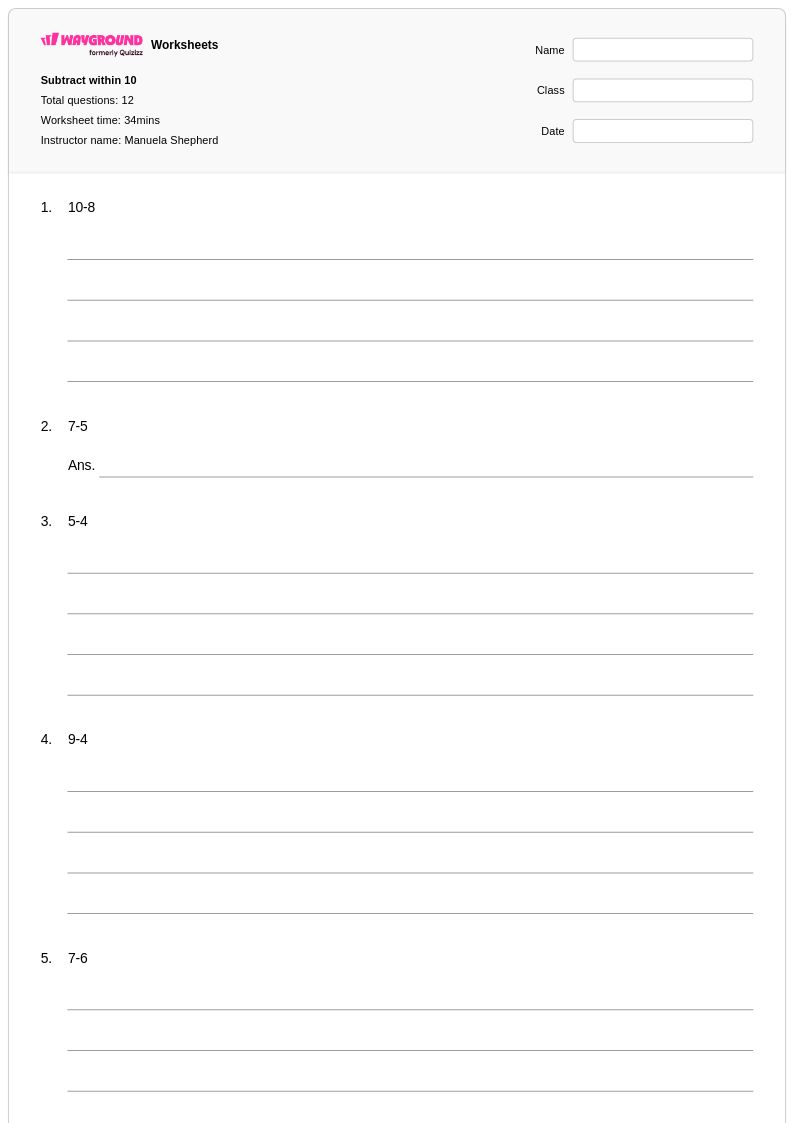
12 Q
1st - 2nd
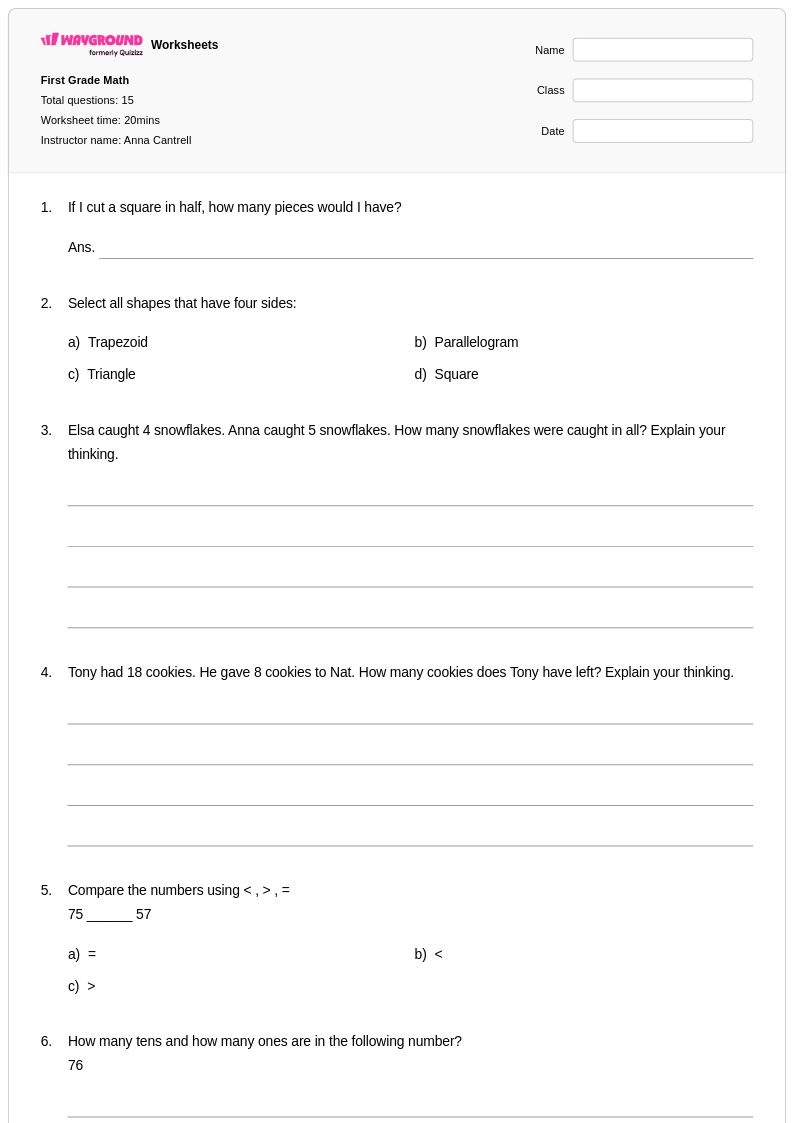
15 Q
1st
Explore Ordering Numbers 0-10 Worksheets by Grades
Explore Other Subject Worksheets for grade 1
Explore printable Ordering Numbers 0-10 worksheets for Grade 1
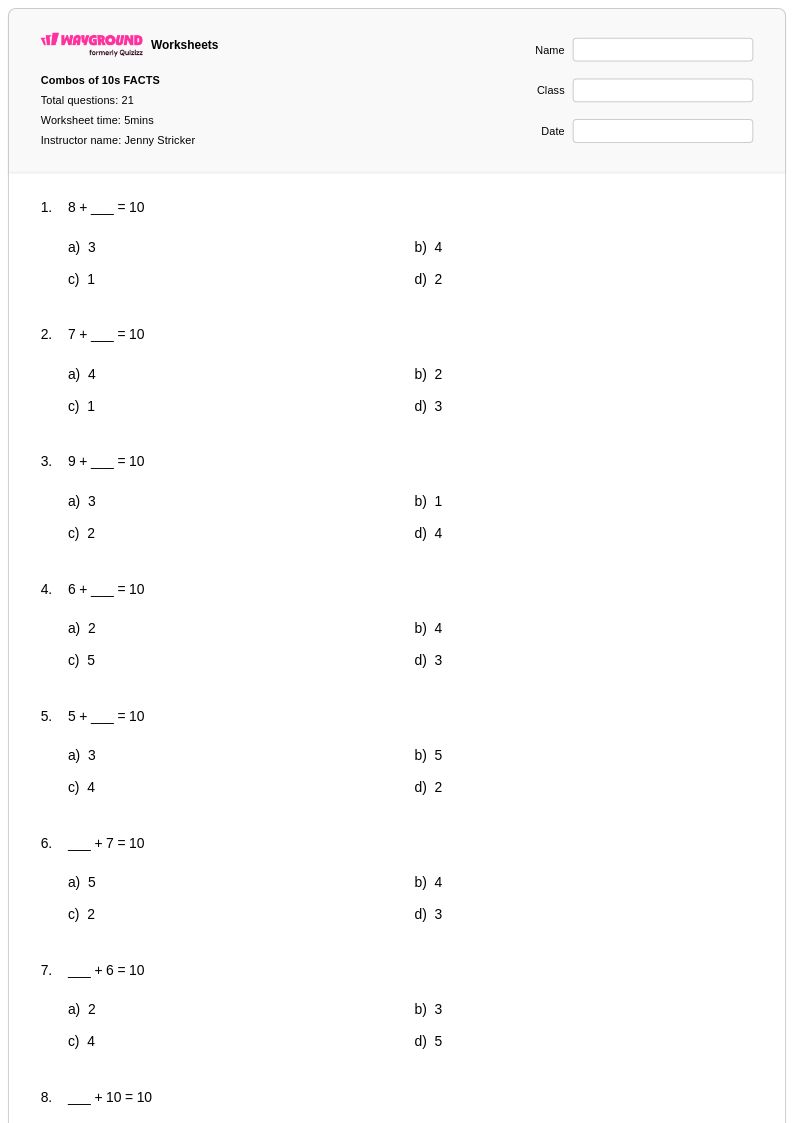
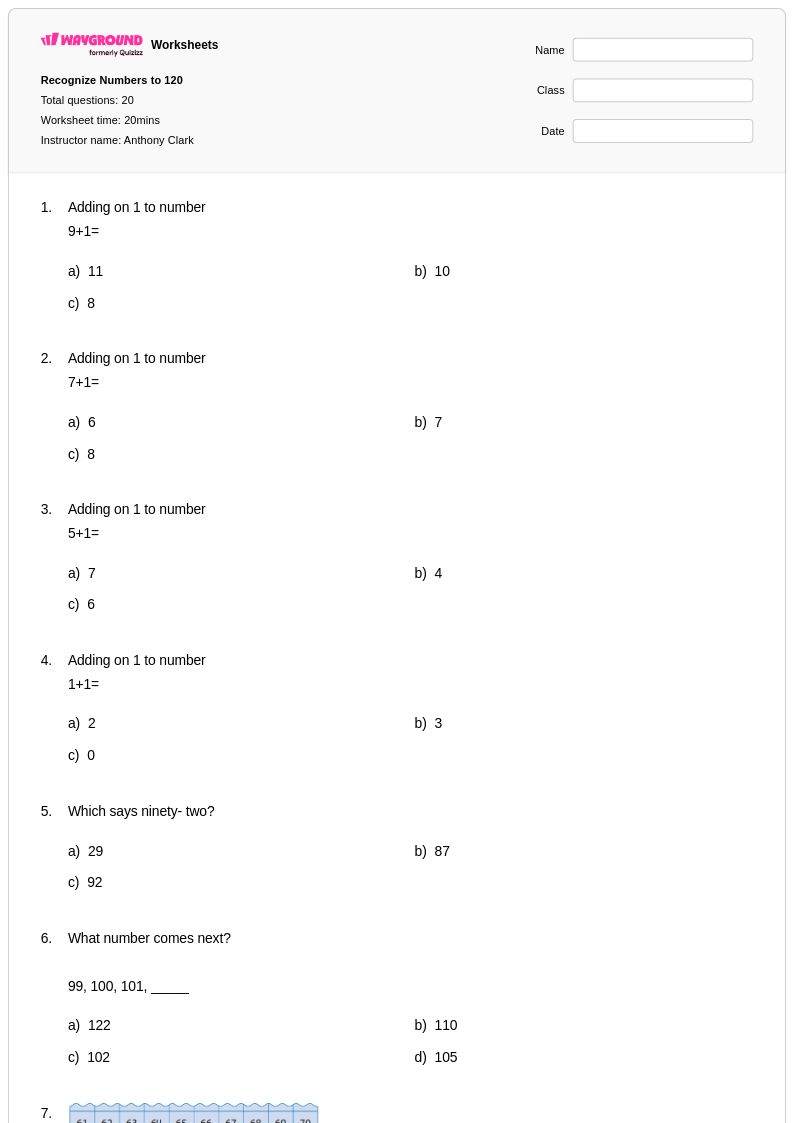
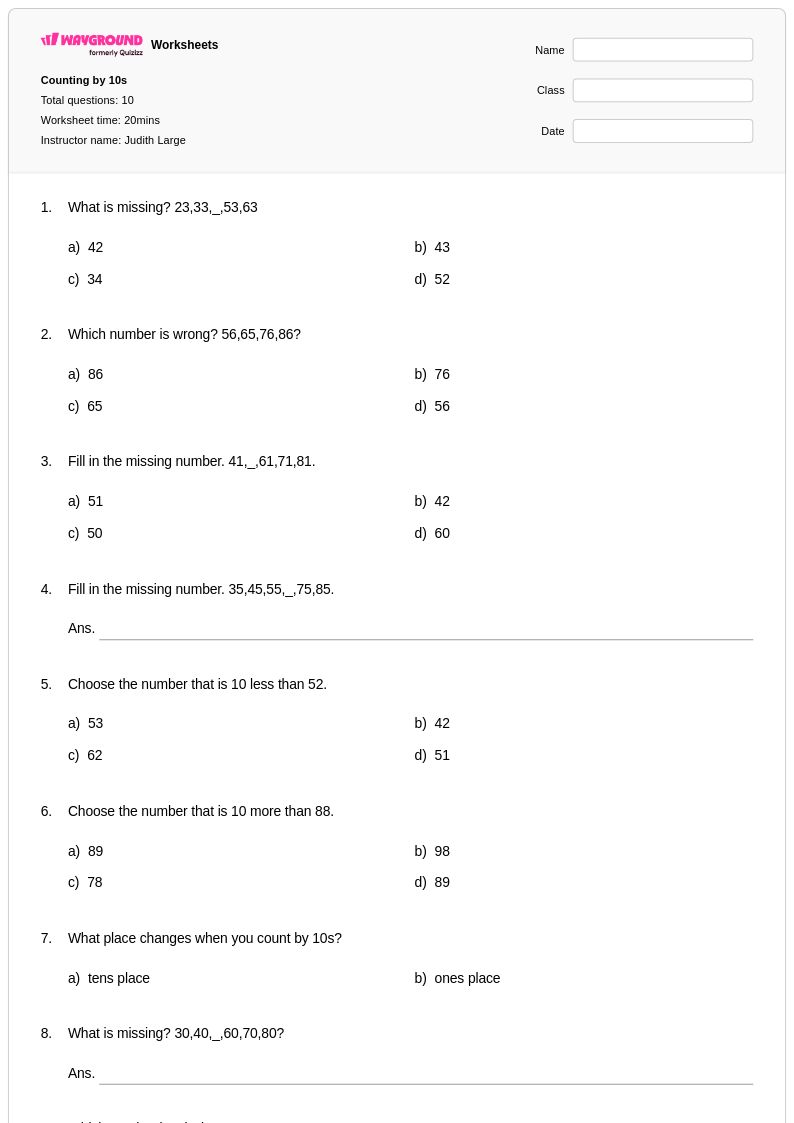
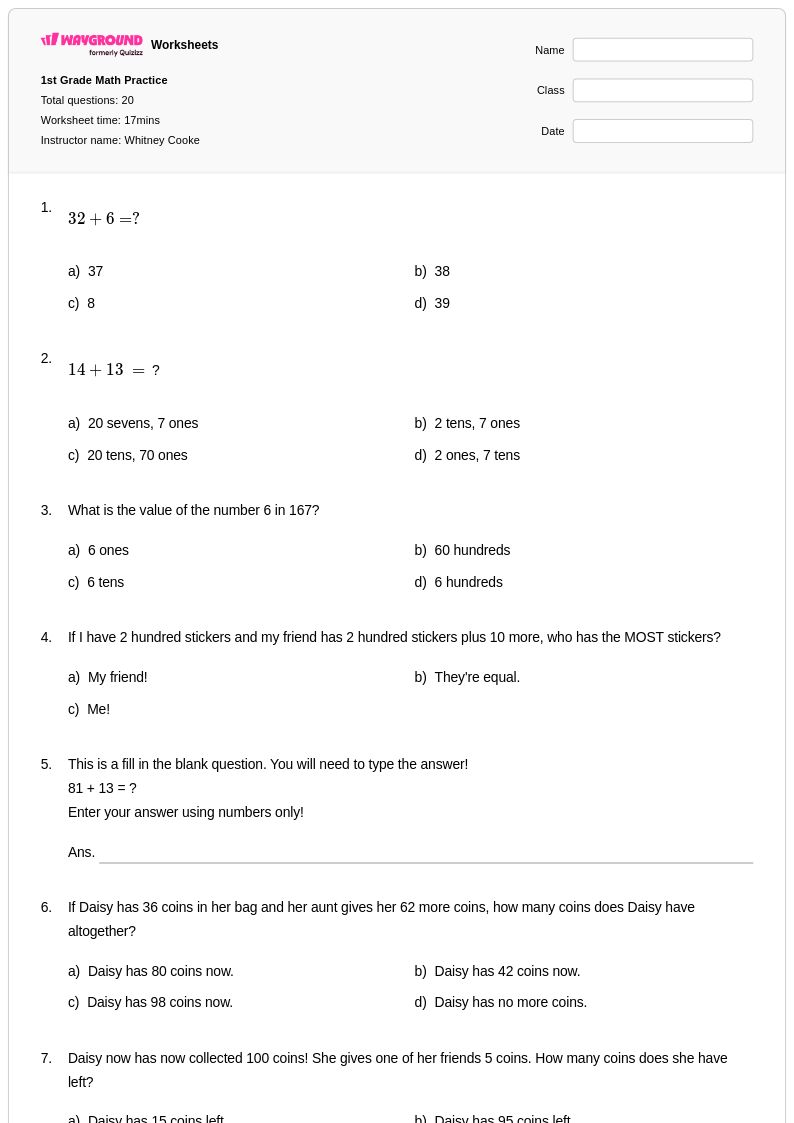
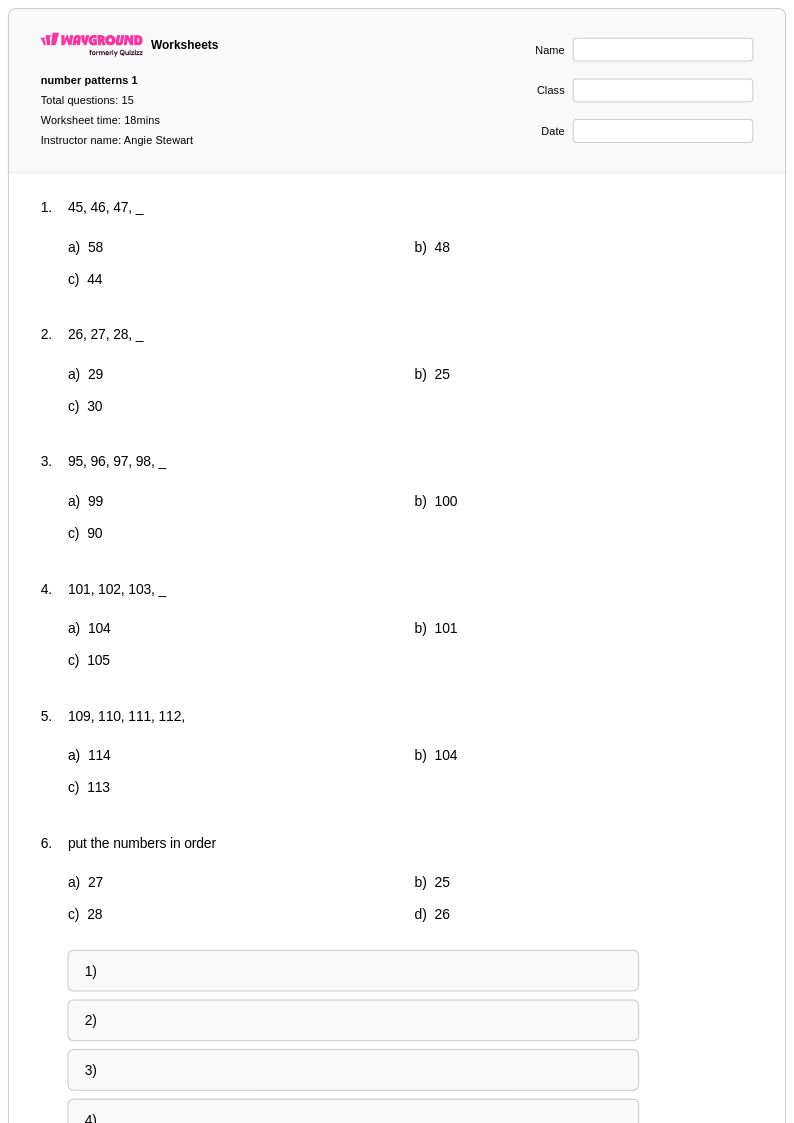
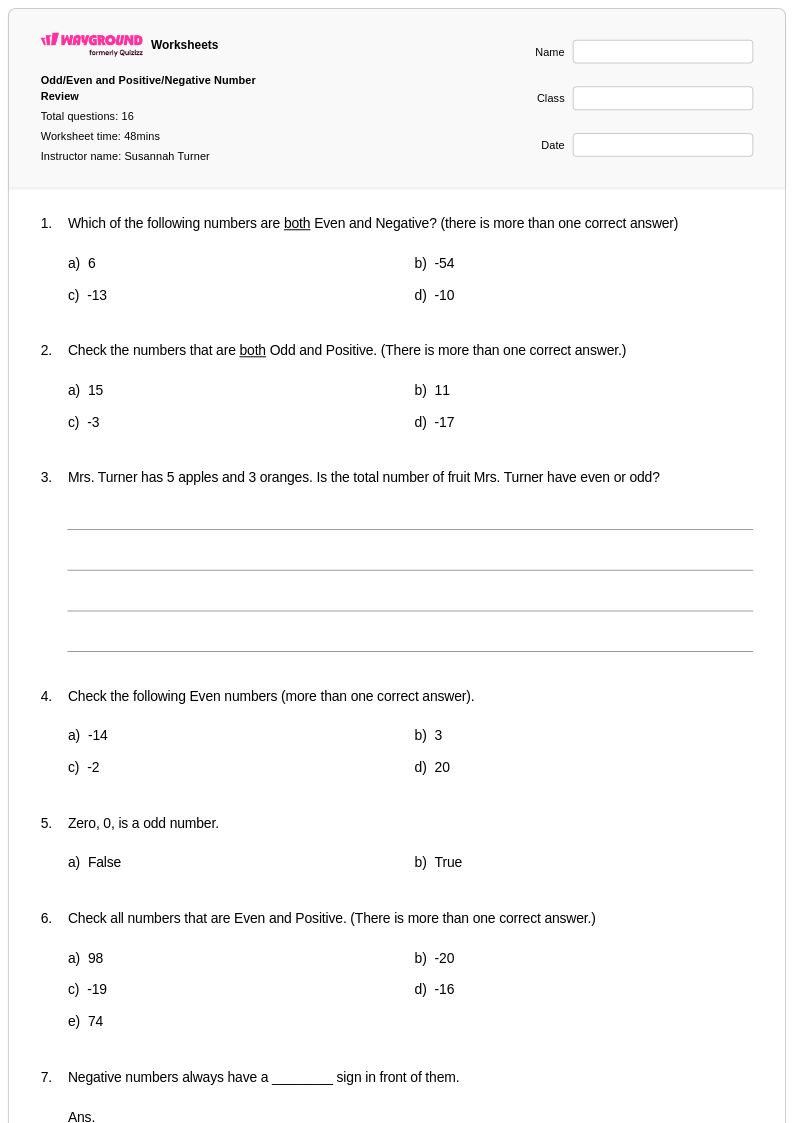
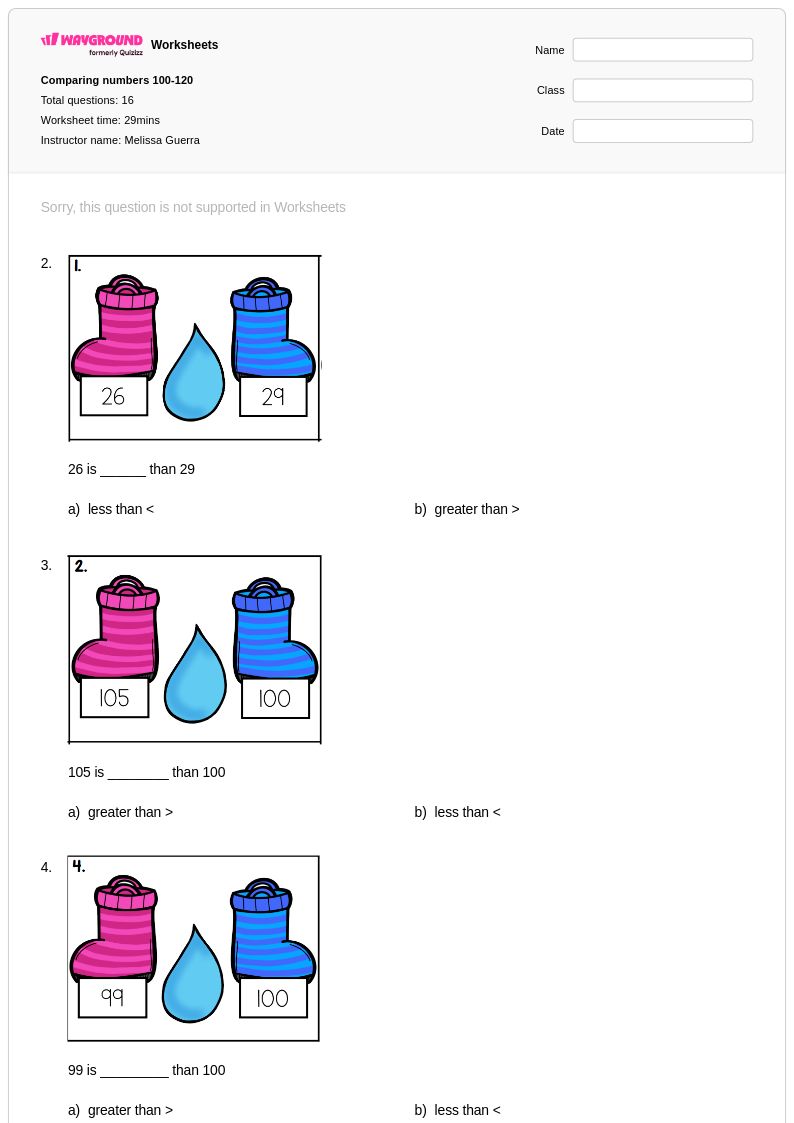
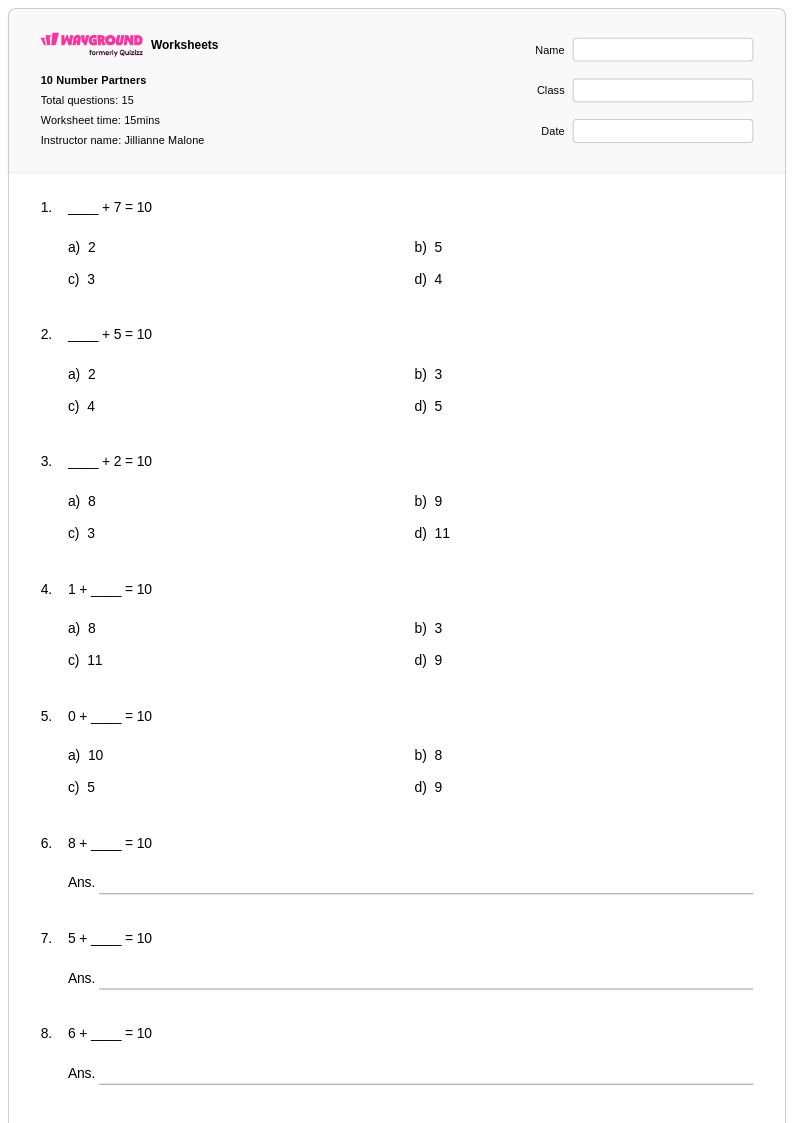
Ordering Numbers 0-10 worksheets available through Wayground (formerly Quizizz) provide Grade 1 students with essential foundational practice in sequencing and comparing single-digit numbers. These comprehensive printables strengthen critical mathematical skills including number recognition, value comparison, and logical sequence understanding that form the backbone of early numeracy development. Each worksheet collection includes carefully structured practice problems that guide young learners through arranging numbers from smallest to largest, identifying missing numbers in sequences, and recognizing numerical patterns within the 0-10 range. The free pdf resources come complete with answer keys, enabling both independent student work and efficient teacher assessment of student progress in this fundamental mathematical concept.
Wayground (formerly Quizizz) supports educators with millions of teacher-created worksheet resources specifically designed for ordering numbers instruction at the Grade 1 level. The platform's robust search and filtering capabilities allow teachers to quickly locate materials that align with specific learning standards and accommodate diverse student needs through built-in differentiation tools. These ordering numbers worksheets are available in both printable pdf format and interactive digital versions, providing flexible customization options that seamlessly integrate into lesson planning, targeted remediation sessions, and enrichment activities. Teachers can efficiently modify difficulty levels, select specific number ranges, and adapt visual layouts to support varied learning styles while ensuring consistent skill practice that builds student confidence in numerical sequencing and comparison abilities.
FAQs
Is ordering numbers 0-10 a Grade 1 topic?
How can I review number ordering with first graders?
How does a first-grade worksheet for ordering numbers differ from a kindergarten one?
What errors in number ordering should I look for in first grade?
What are the best ways to use this worksheet for my first-grade class?
How does this topic support the Grade 1 math curriculum?