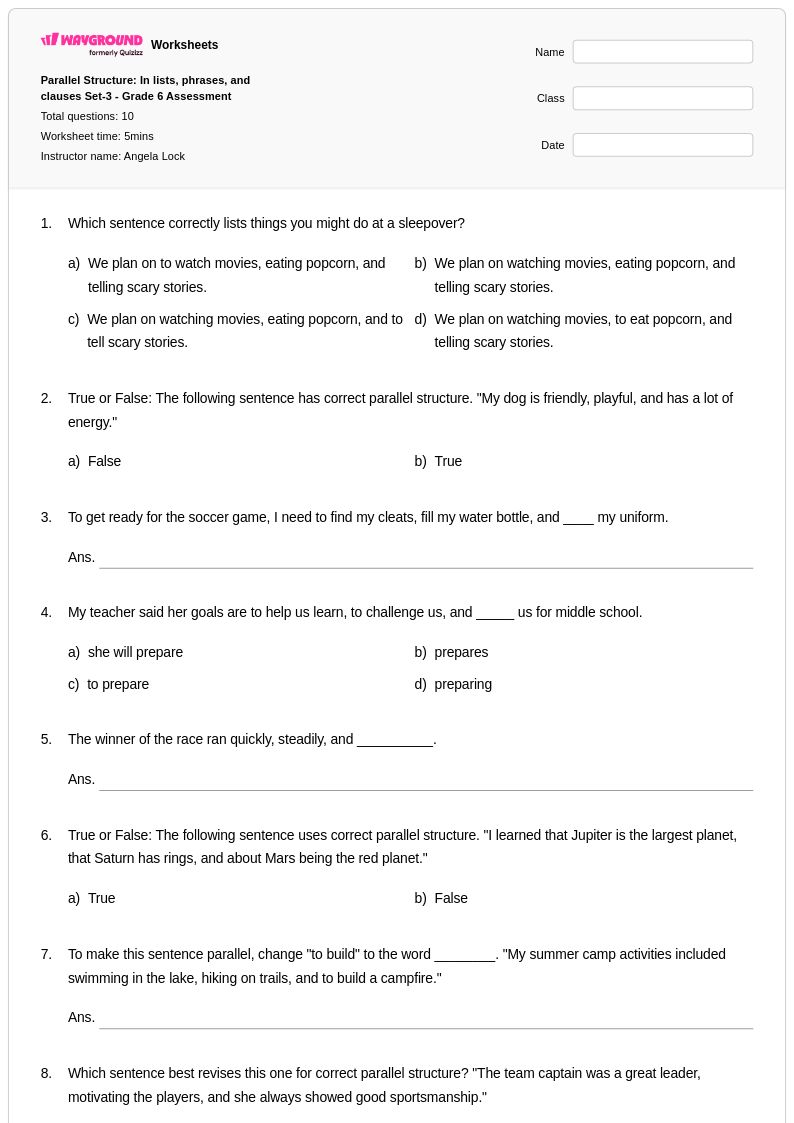
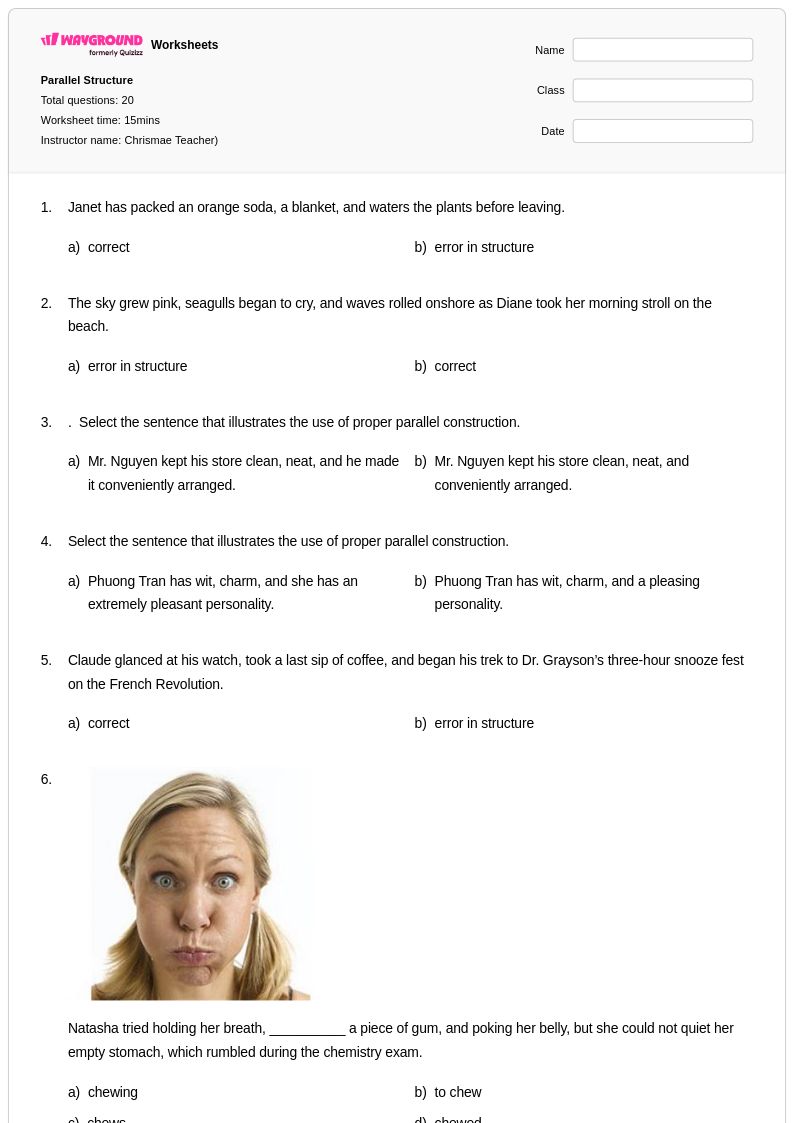
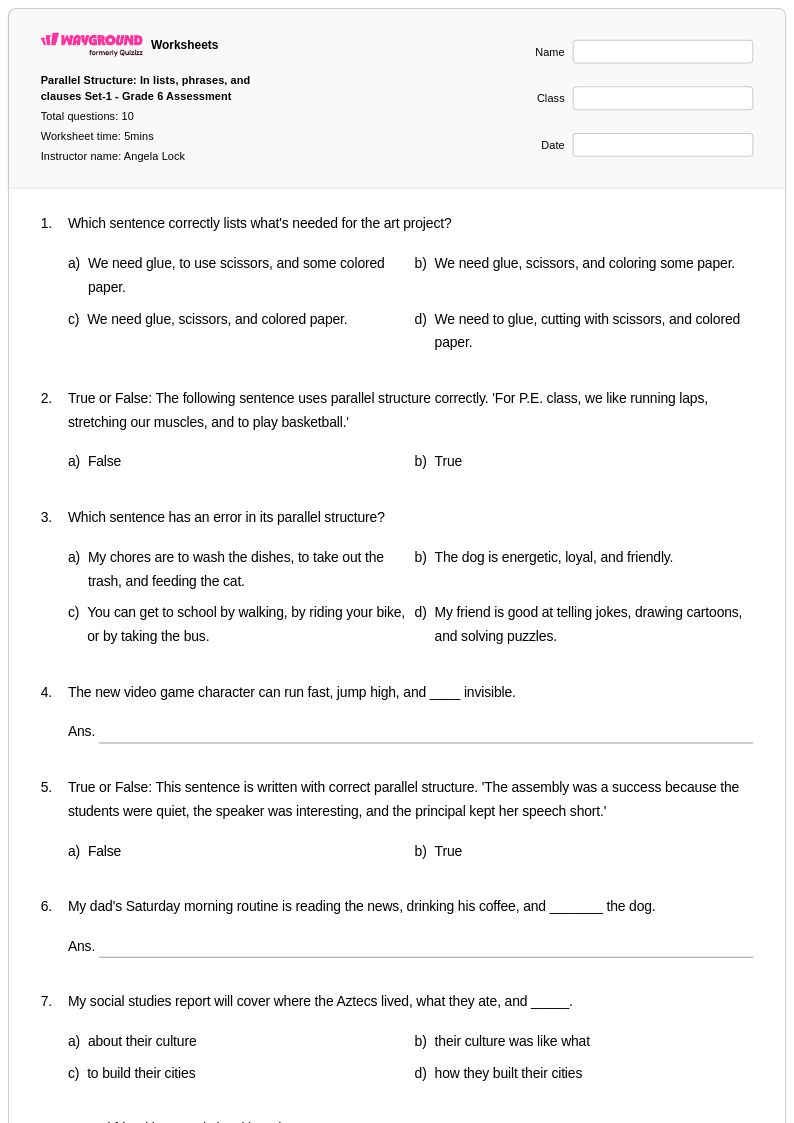
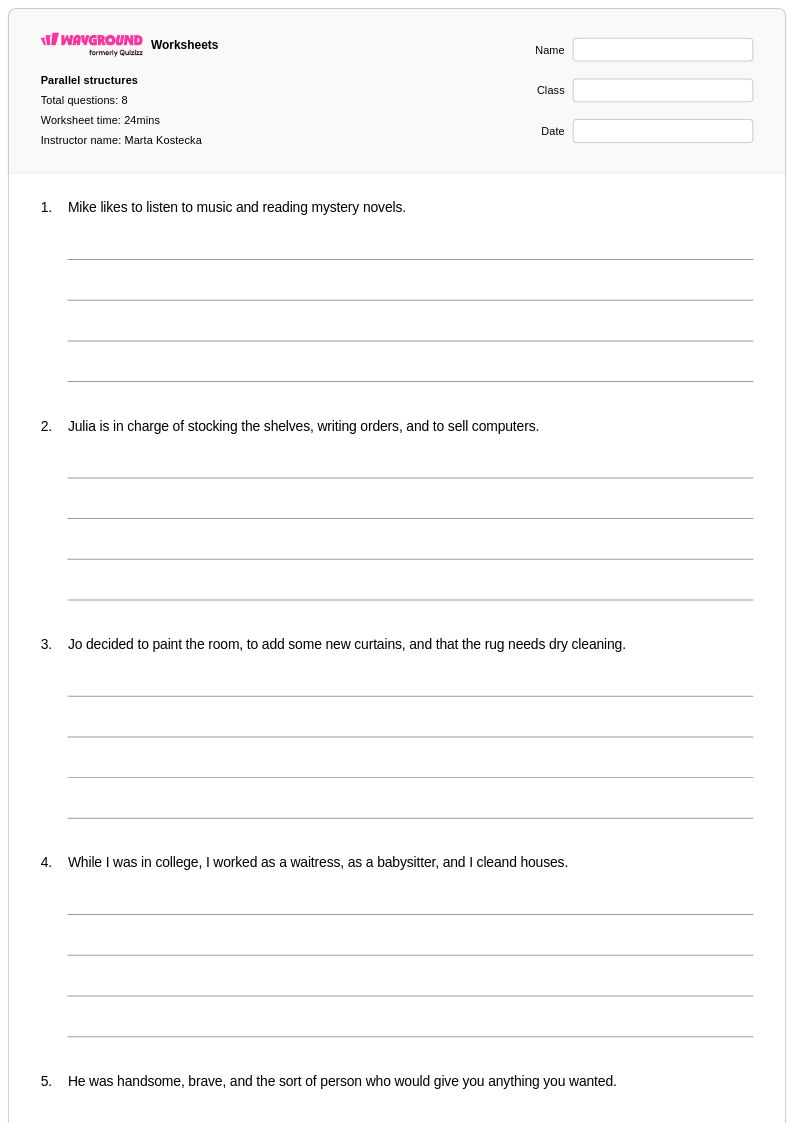
Free Printable Parallel Structure Worksheets for Grade 6
Access free Grade 6 parallel structure worksheets and printables from Wayground that help students master balanced sentence construction through engaging practice problems, complete with answer keys and downloadable PDFs.
Explore printable Parallel Structure worksheets for Grade 6
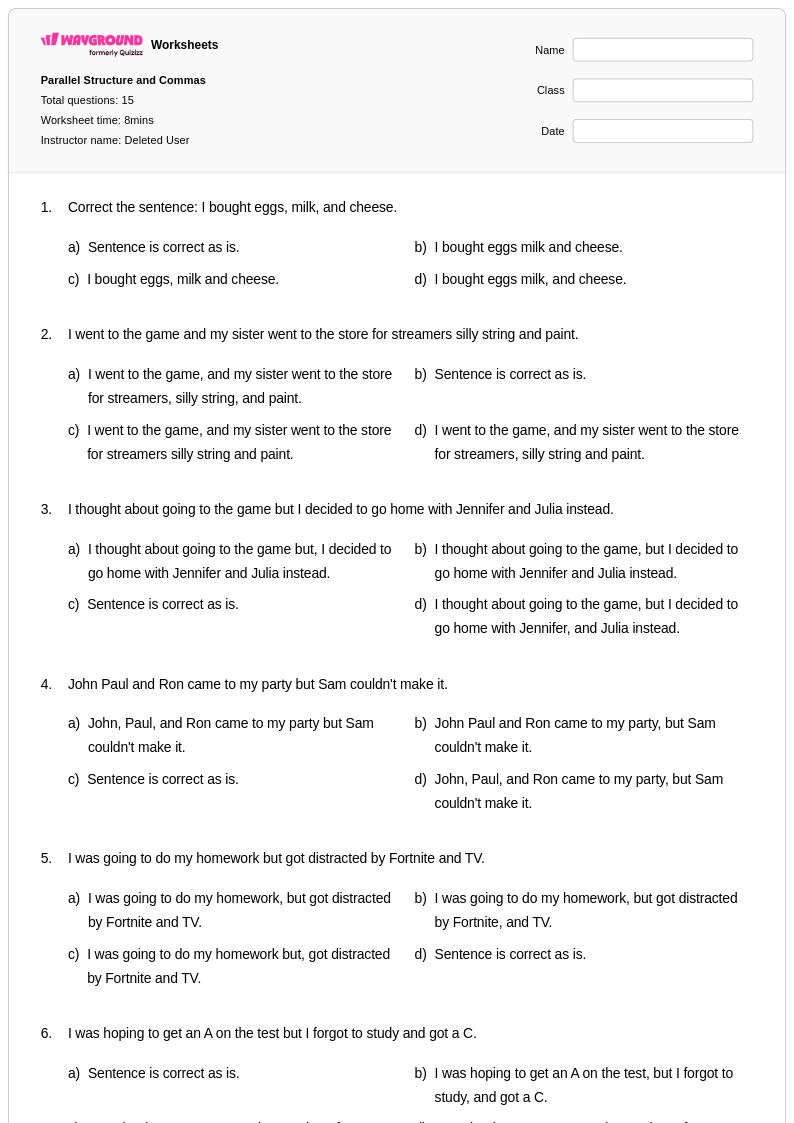
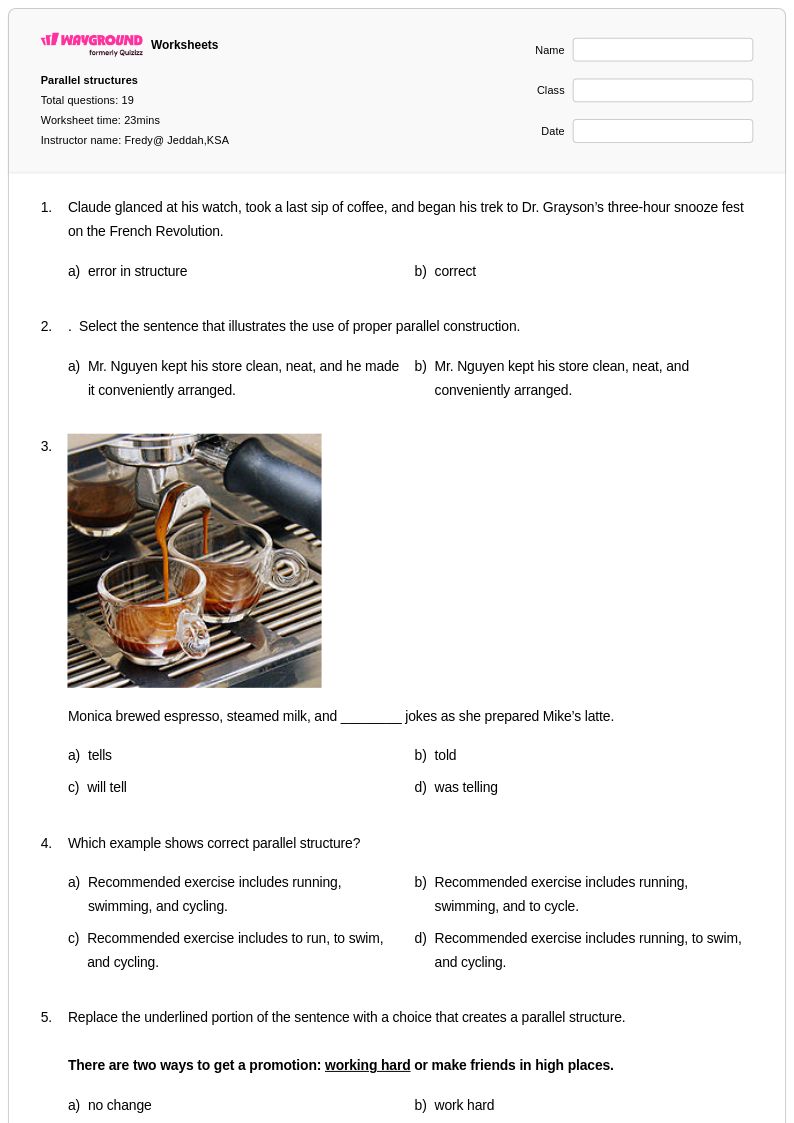
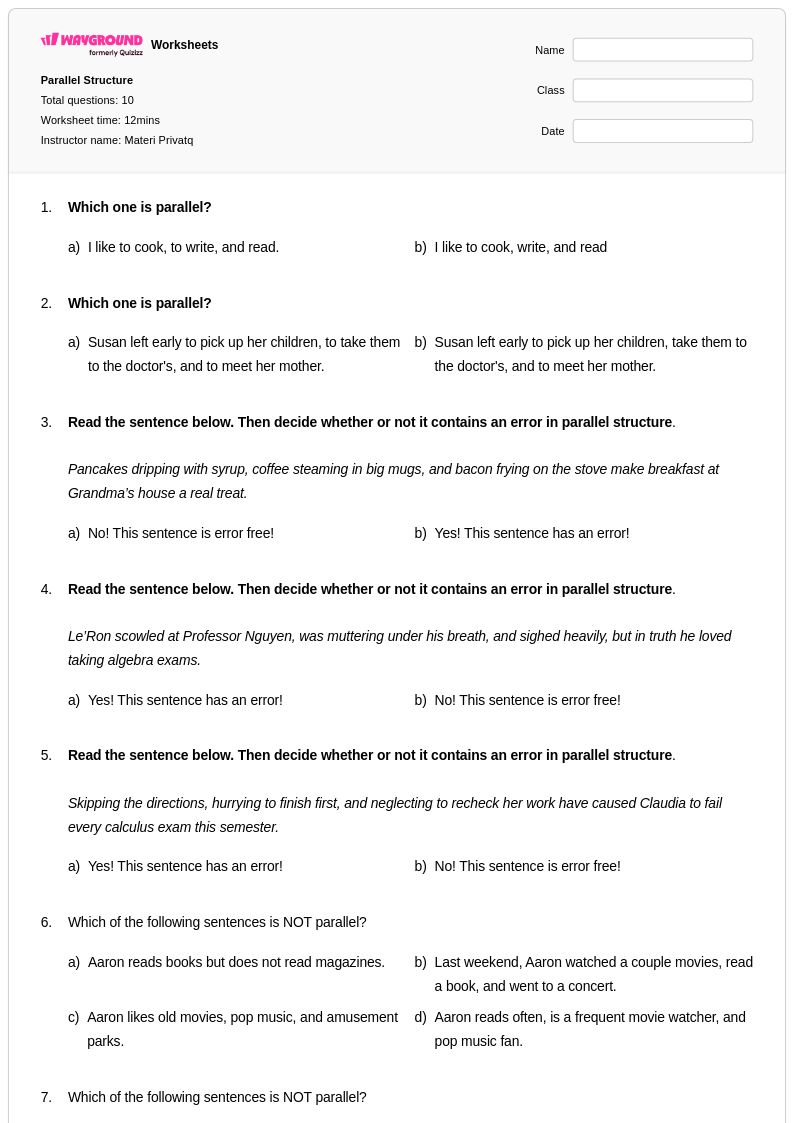
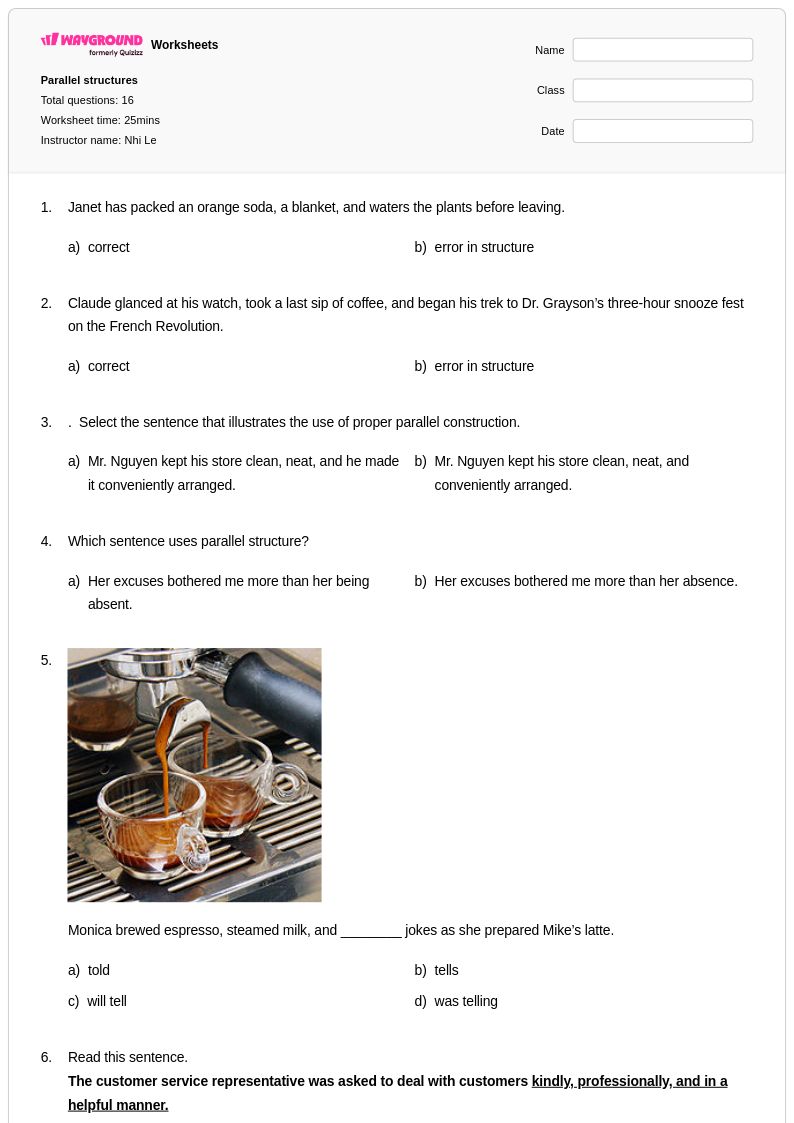
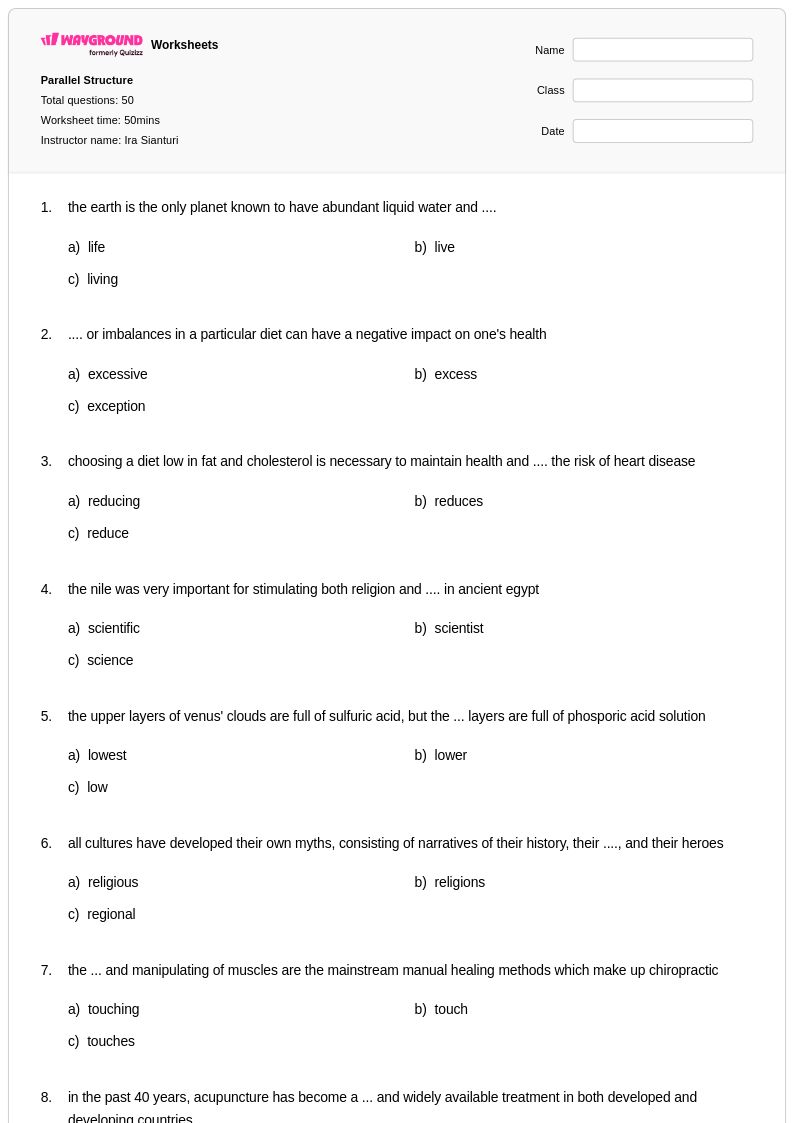
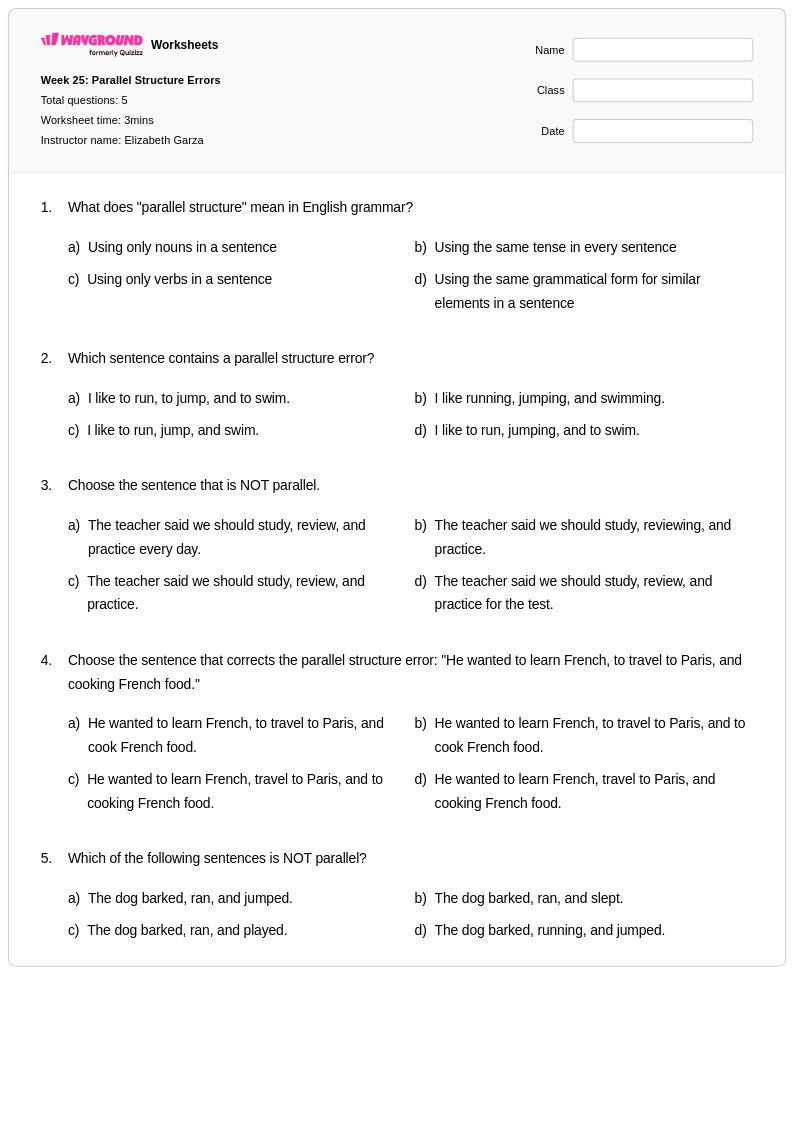
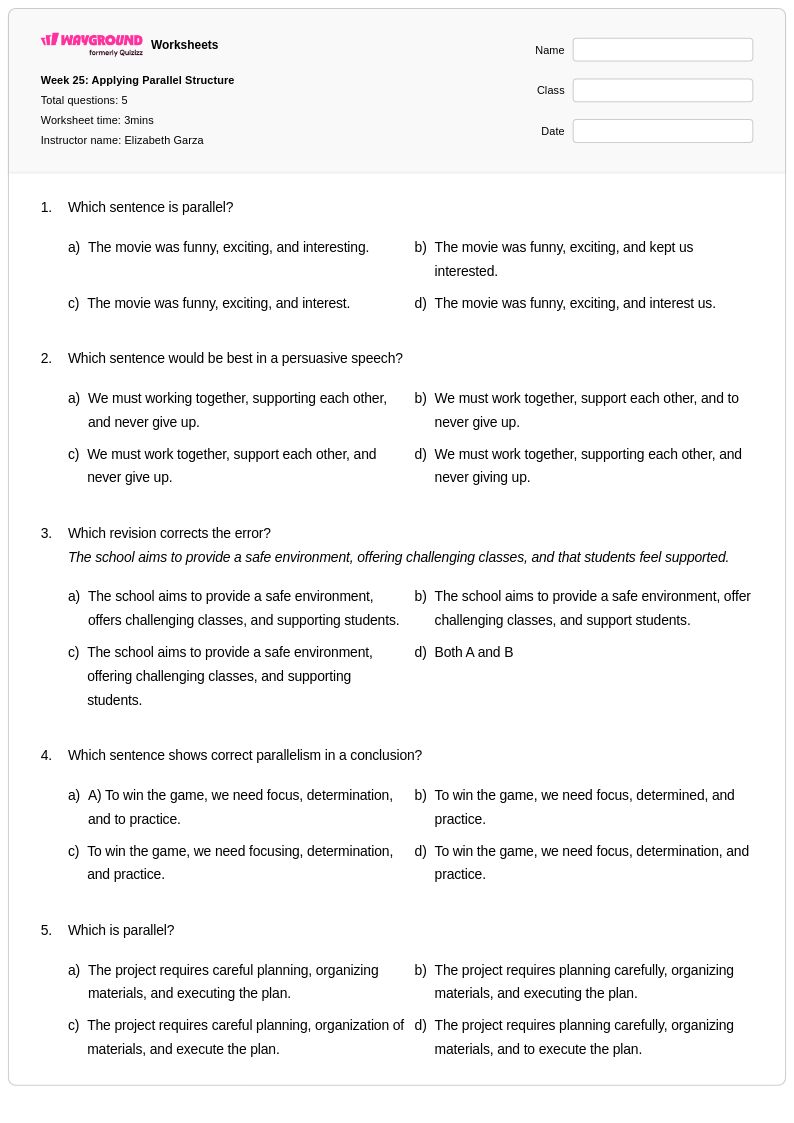
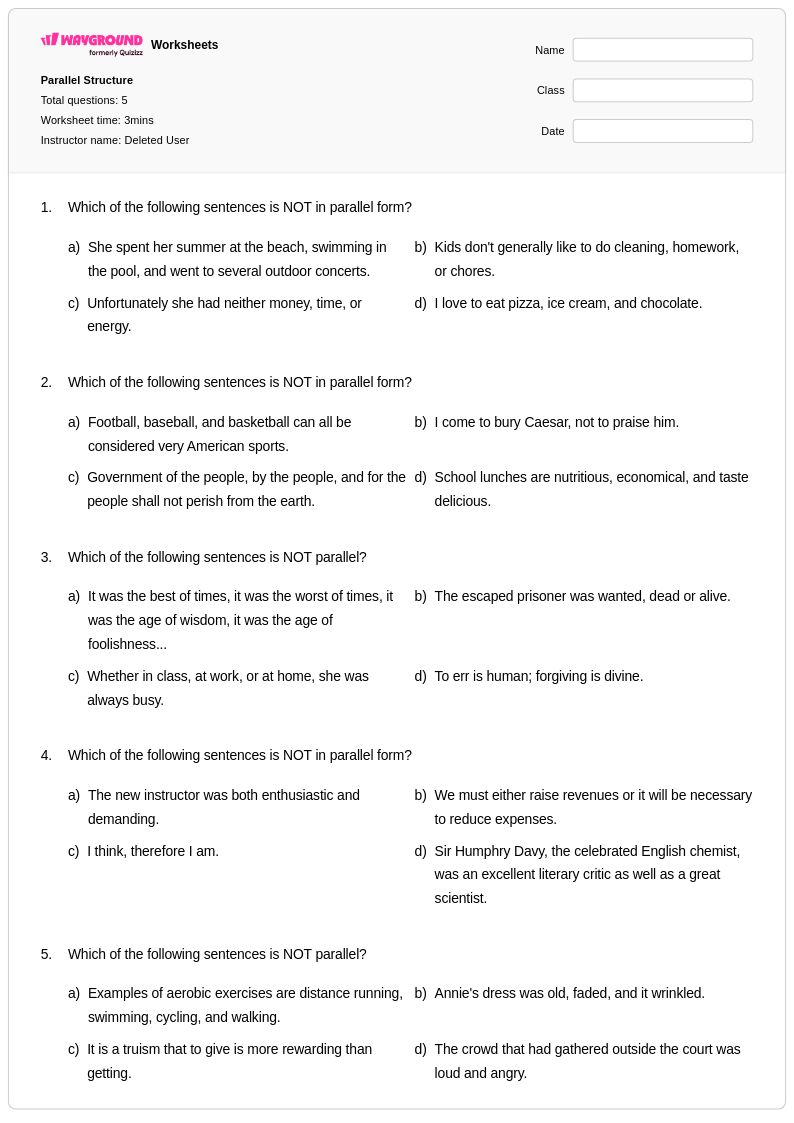
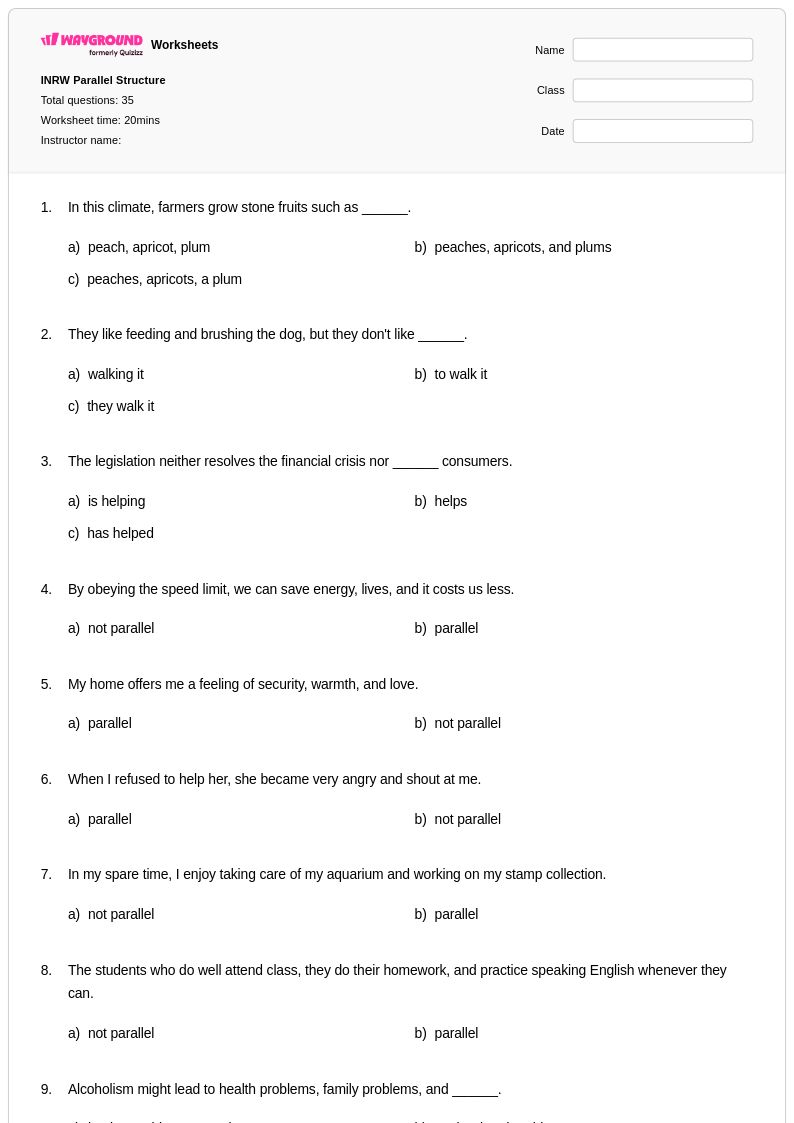
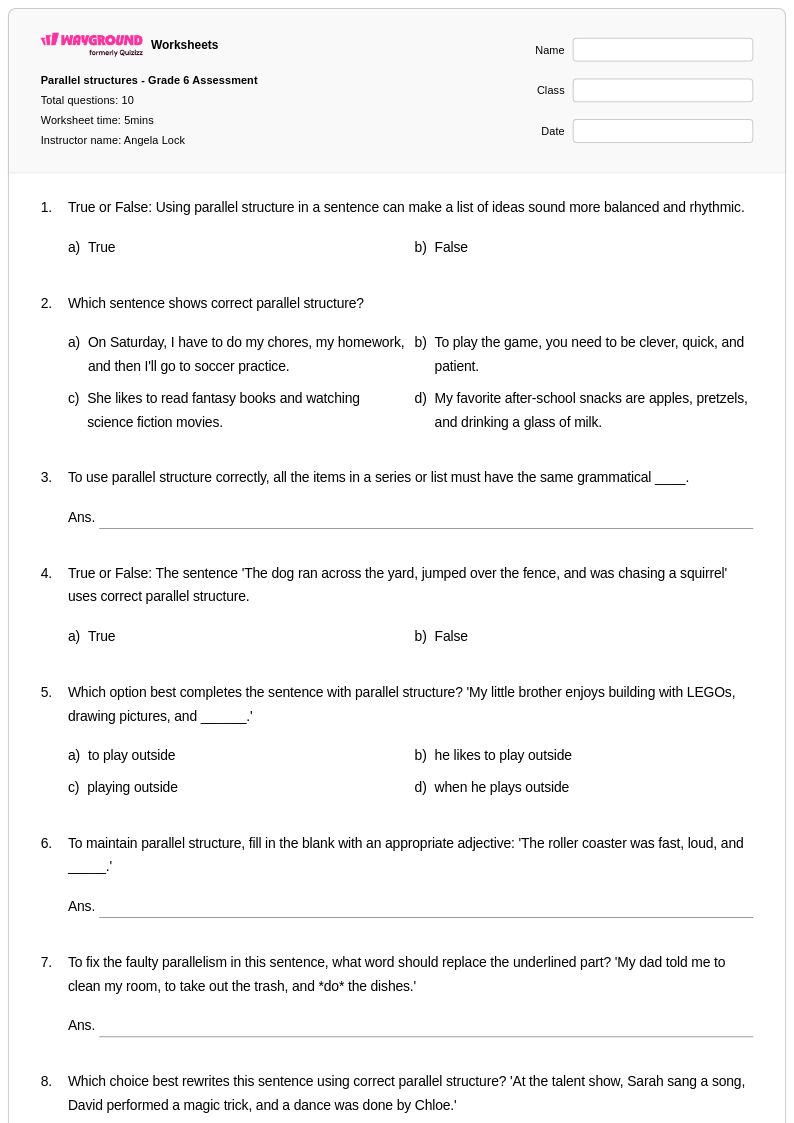
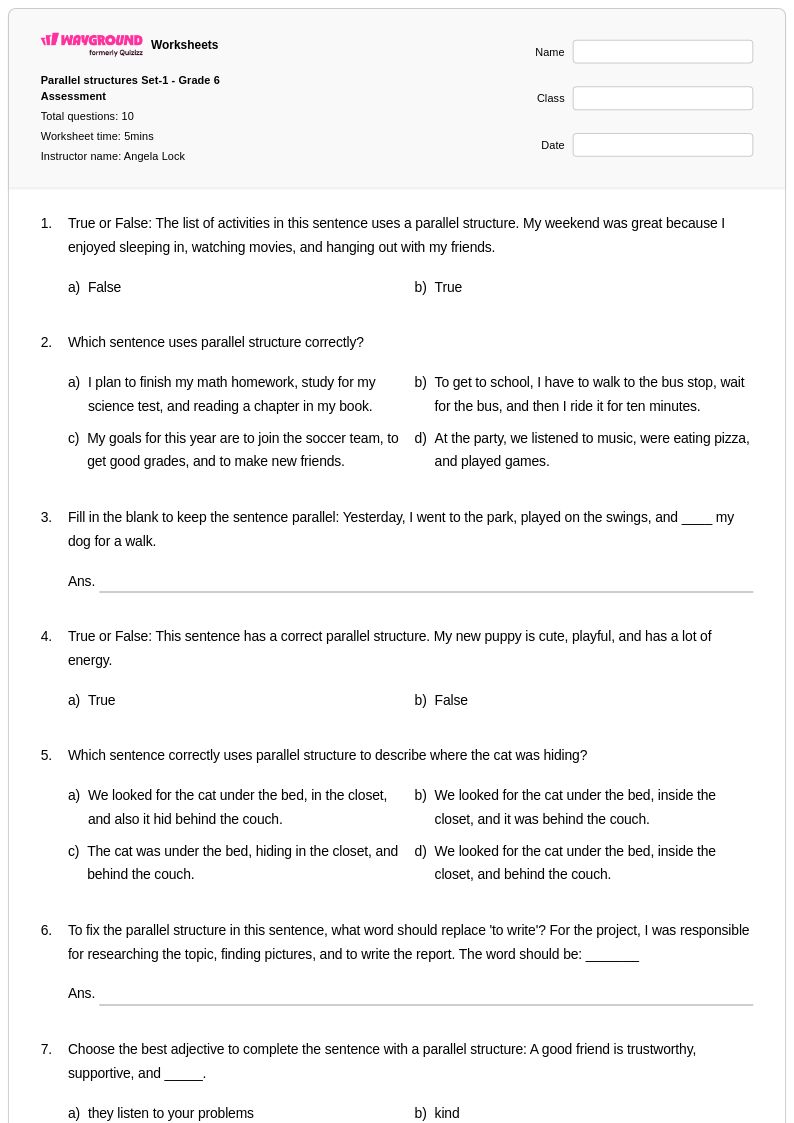
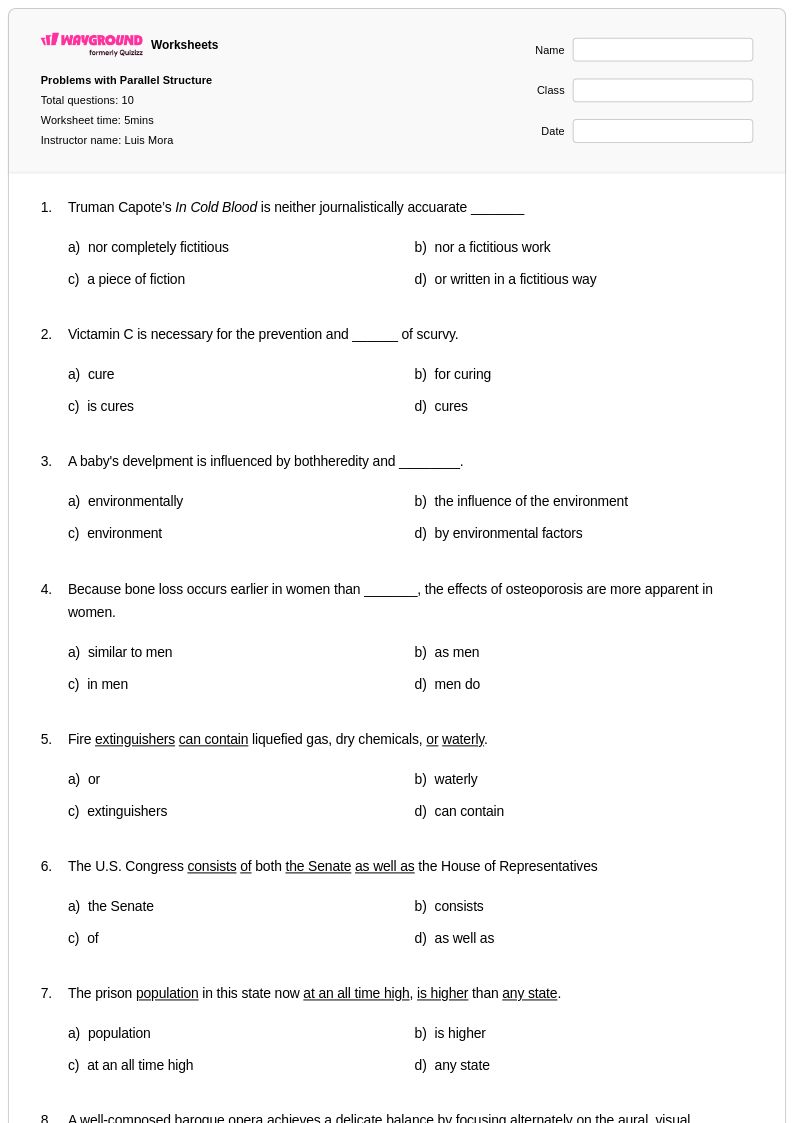
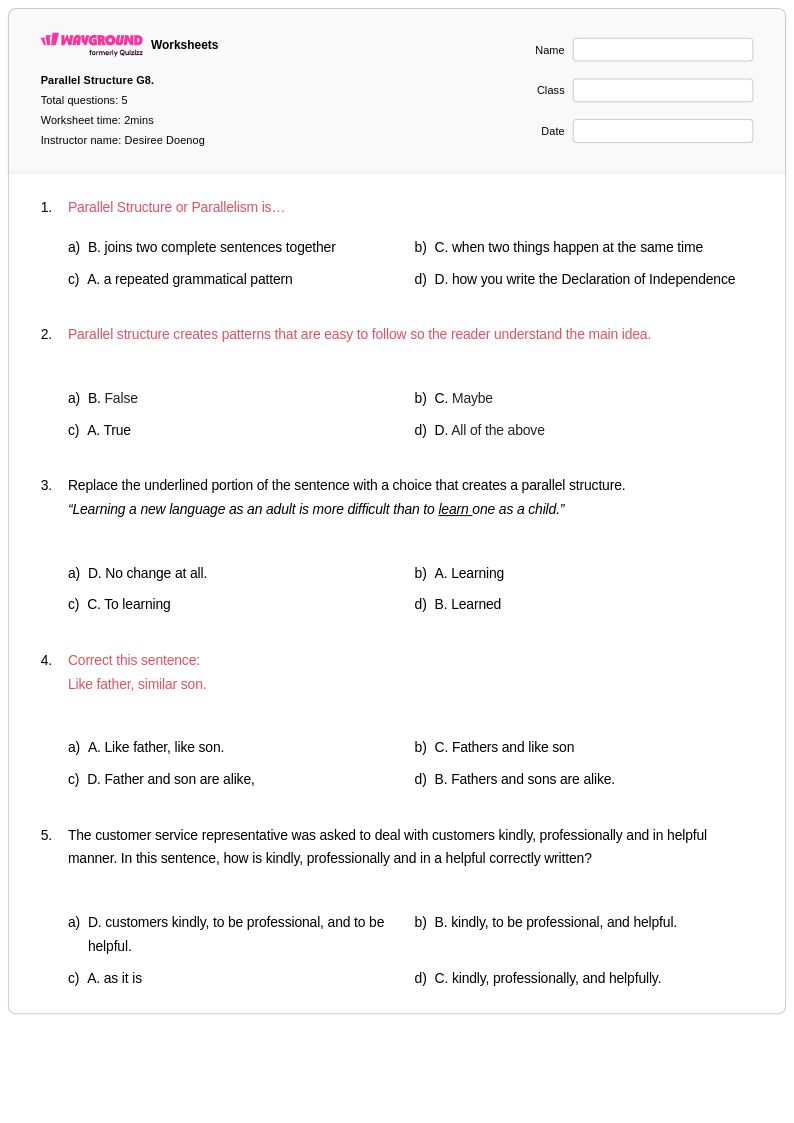
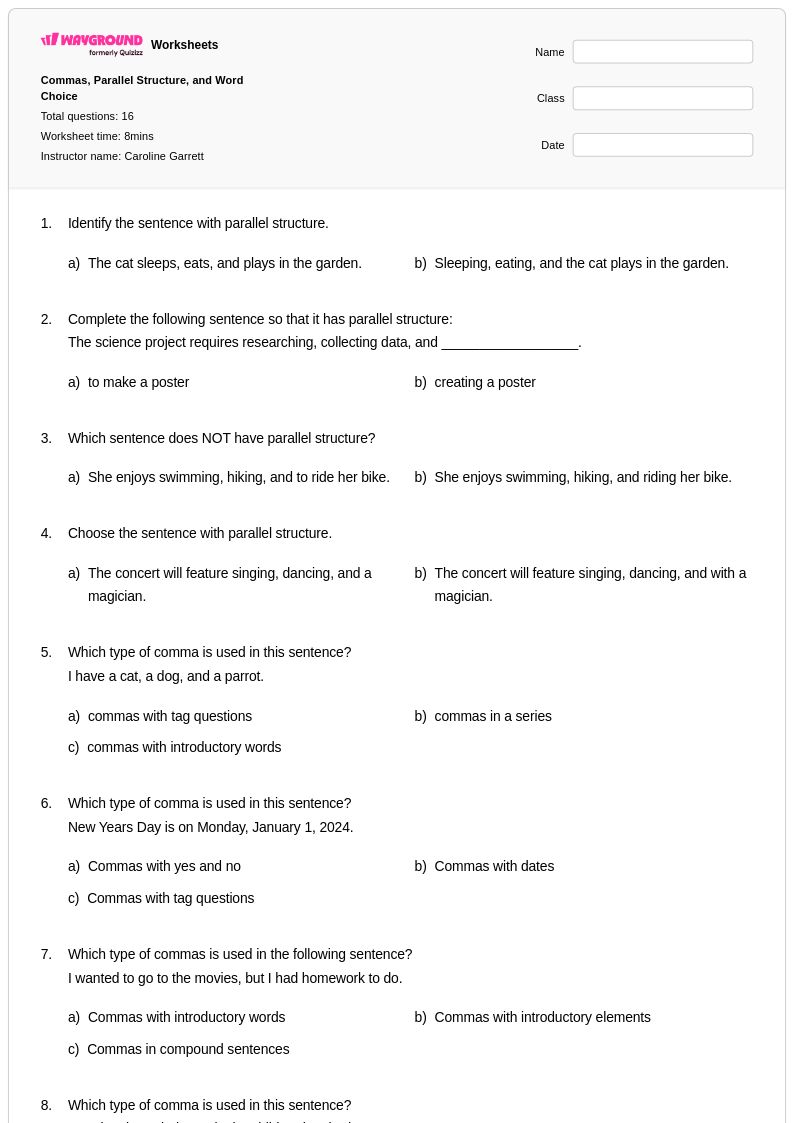
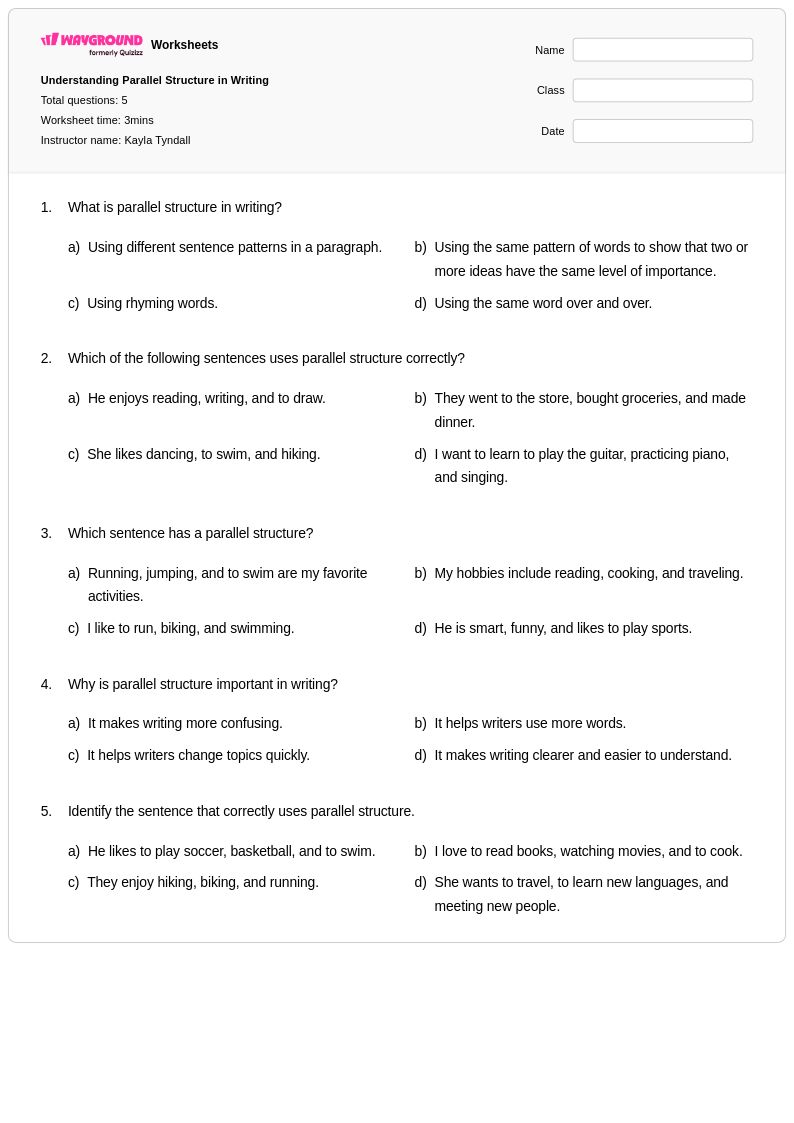
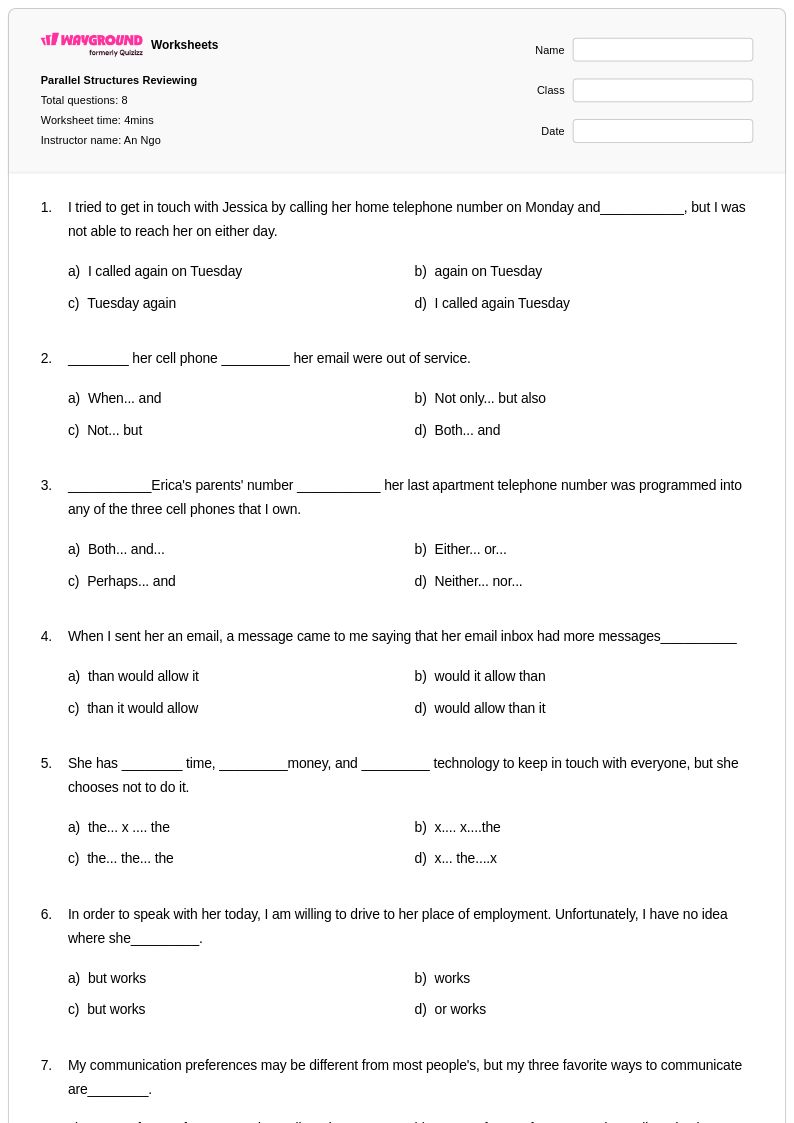
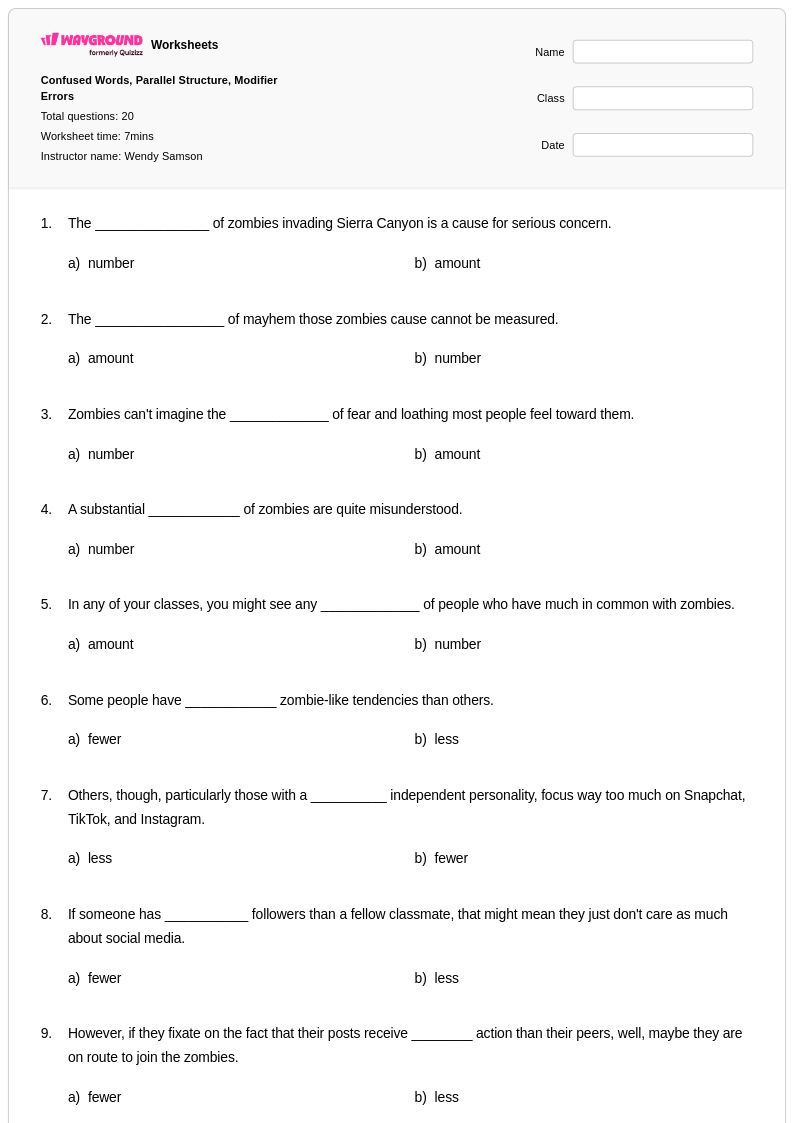
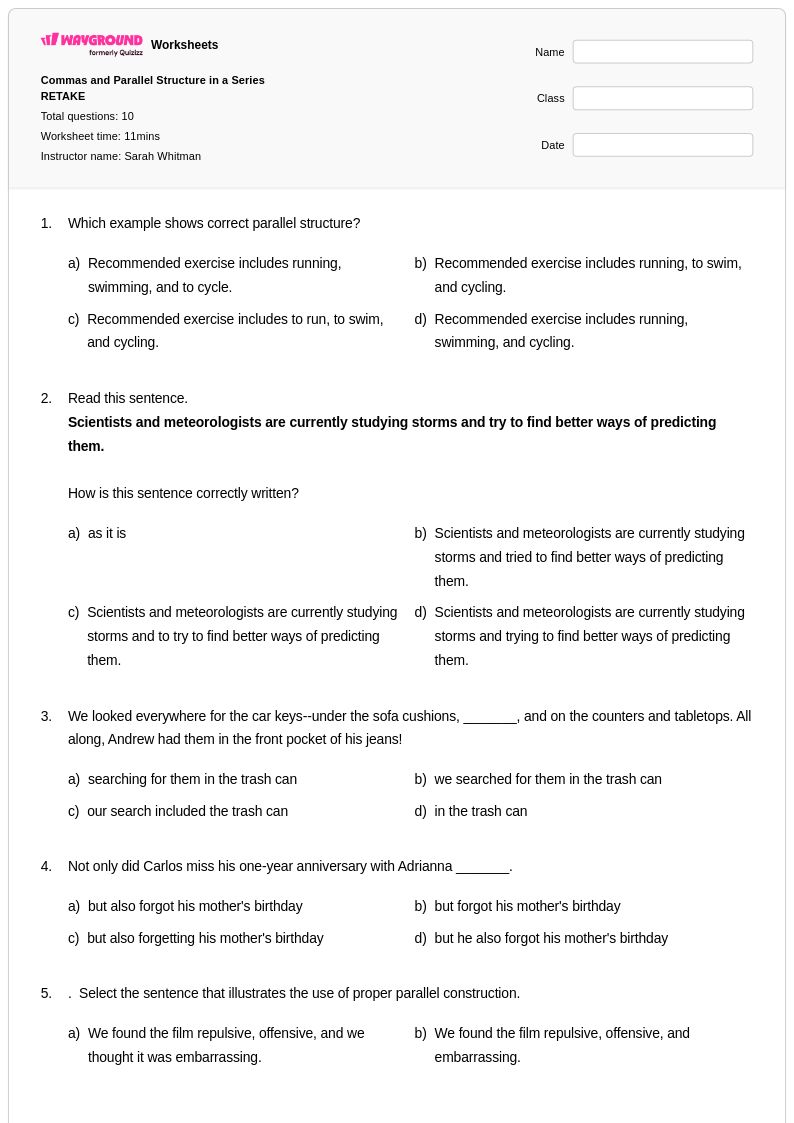
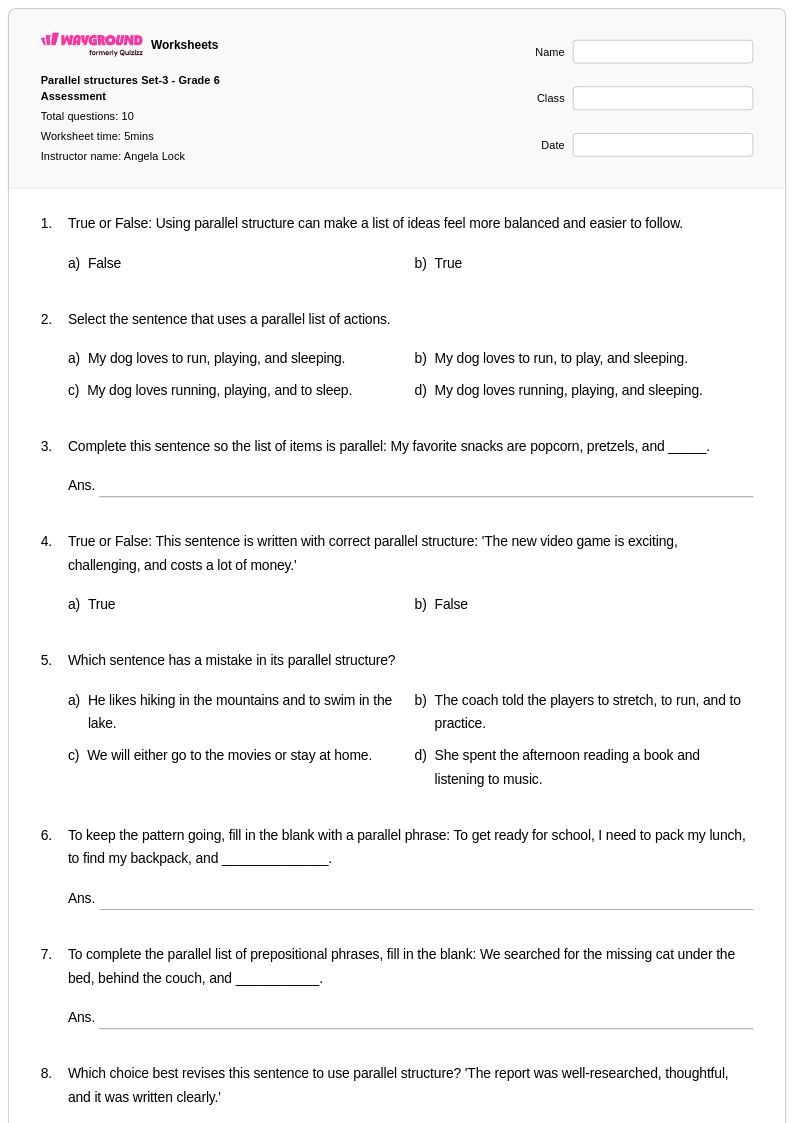
Parallel structure worksheets for Grade 6 students through Wayground (formerly Quizizz) provide comprehensive practice in constructing balanced, grammatically consistent sentences and phrases. These expertly designed resources help sixth-grade learners master the critical skill of maintaining uniform grammatical patterns within lists, series, and coordinate elements, strengthening their ability to create clear, professional writing. Students work through carefully scaffolded practice problems that address common parallel structure errors, such as mixing verb forms, inconsistent phrase types, and unbalanced coordinate conjunctions. Each worksheet includes a detailed answer key and focuses on real-world applications, from academic essays to creative writing projects, ensuring students can apply these essential grammar mechanics across all writing contexts. These free printables offer systematic skill-building exercises that progress from basic identification tasks to complex sentence construction challenges.
Wayground (formerly Quizizz) empowers educators with an extensive collection of teacher-created parallel structure resources, drawn from millions of high-quality materials specifically designed for Grade 6 grammar instruction. The platform's robust search and filtering capabilities allow teachers to quickly locate worksheets that align with state standards and match their students' specific learning needs, whether for initial instruction, targeted remediation, or advanced enrichment activities. These versatile resources are available in both printable pdf format and interactive digital versions, enabling seamless integration into any classroom environment or remote learning situation. Teachers can customize content difficulty levels, modify practice problems, and differentiate instruction to support diverse learners, while the comprehensive answer keys facilitate efficient grading and immediate feedback, making lesson planning and skill assessment both streamlined and effective.
FAQs
How do I teach parallel structure to students who keep writing unbalanced sentences?
Start by having students identify the grammatical form of each item in a list or paired construction before writing, since parallelism breaks down most often when students mix nouns, verbs, and phrases without realizing it. Use mentor sentences to make the pattern visible: show a correct example, then a broken one, and ask students to name what changed. Once they can see the imbalance, have them revise faulty sentences before writing their own parallel constructions from scratch.
What exercises help students practice parallel structure?
The most effective practice moves from identification to correction to original writing. Start with exercises where students underline parallel elements in correct sentences to build recognition, then move to error-correction tasks where they fix faulty parallelism in lists, correlative conjunctions, and compound predicates. Finishing with open-ended writing prompts that require students to use parallel structure deliberately consolidates the skill and prepares them for applying it in essays.
What are the most common mistakes students make with parallel structure?
The most frequent error is mixing grammatical forms in a series, such as pairing a noun with a gerund or an infinitive with a clause (e.g., 'She likes running, to swim, and hikes'). Students also commonly break parallelism with correlative conjunctions like 'both/and' and 'not only/but also' by using different structures on each side. A third pattern is faulty parallelism in bullet-pointed lists, where students shift between full sentences and fragments without noticing the inconsistency.
How do I use Wayground's parallel structure worksheets in my classroom?
Wayground's parallel structure worksheets are available as printable PDFs for traditional classroom use and in digital formats for technology-integrated environments, making them flexible across in-person, remote, and blended settings. You can also host any worksheet as a live or assigned quiz directly on Wayground, which allows you to track student performance and identify who needs additional support with specific construction types. Answer keys are included with every worksheet, supporting both whole-class instruction and independent student practice.
How do I differentiate parallel structure instruction for students at different skill levels?
For struggling students, begin with two-item parallel constructions using simple noun and verb pairs before introducing series and correlative conjunctions. Advanced learners can work with more complex tasks, such as revising paragraphs for parallel structure across multiple sentences or analyzing published prose for deliberate stylistic parallelism. On Wayground, teachers can apply accommodations such as reduced answer choices or read-aloud support to individual students within the same assignment, so differentiation happens without disrupting the flow of class.
At what grade level should students be introduced to parallel structure?
Parallel structure is typically introduced in middle school, around grades 6 through 8, as part of sentence-level grammar instruction, and is reinforced heavily in high school writing courses where students are expected to produce polished, multi-paragraph essays. However, even upper elementary students can be introduced to the concept informally through list-writing activities that model consistent grammatical form. The skill remains relevant through AP and college-prep writing, where faulty parallelism is a common error on standardized assessments.