Free Printable Producer Consumer Worksheets for Grade 3
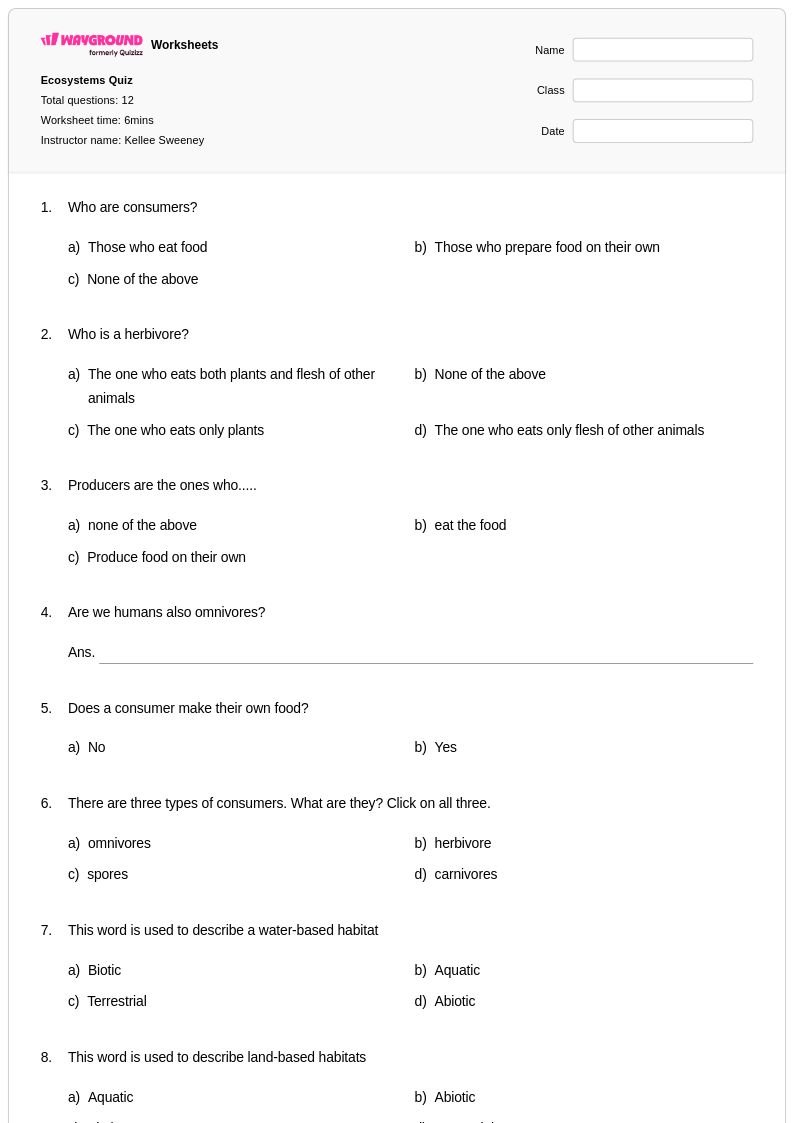
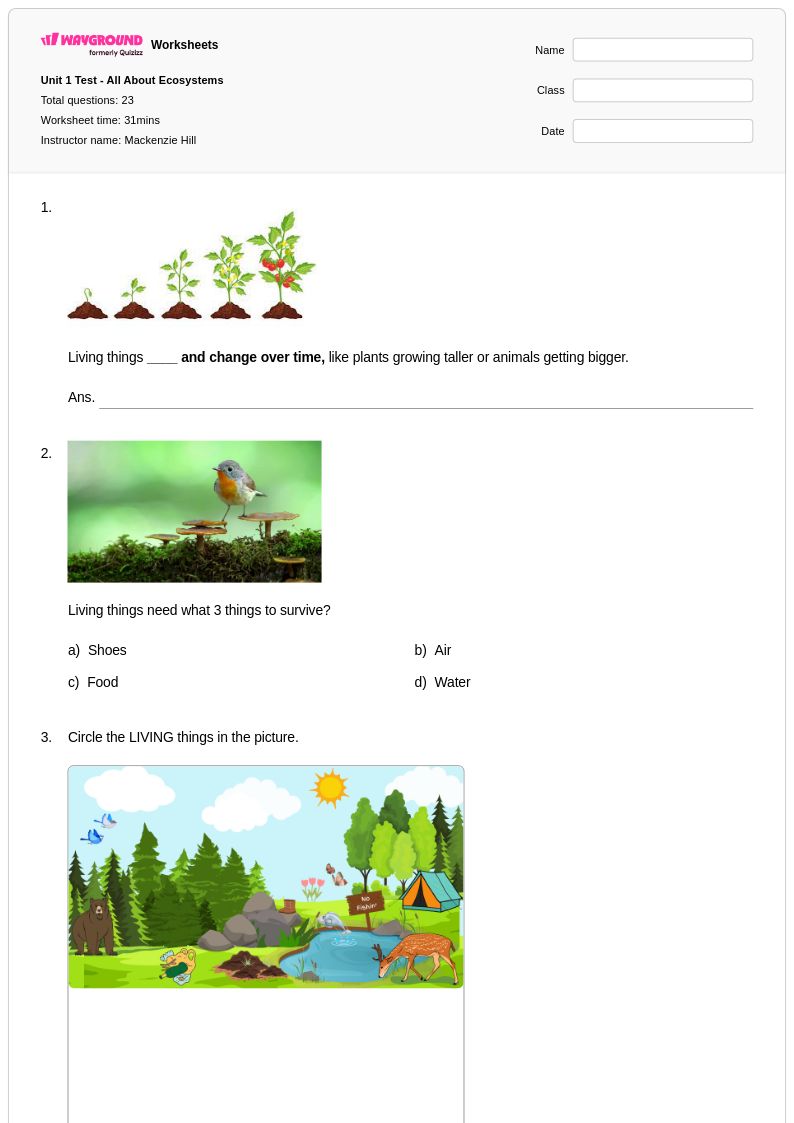
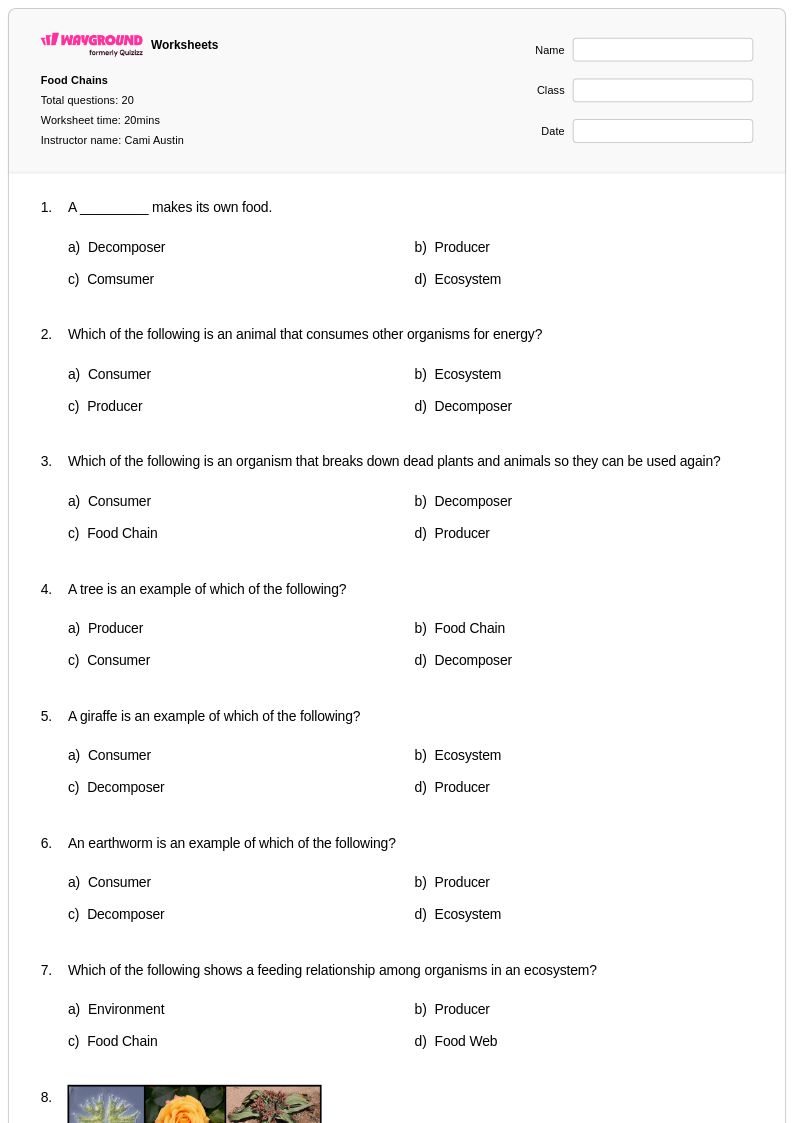
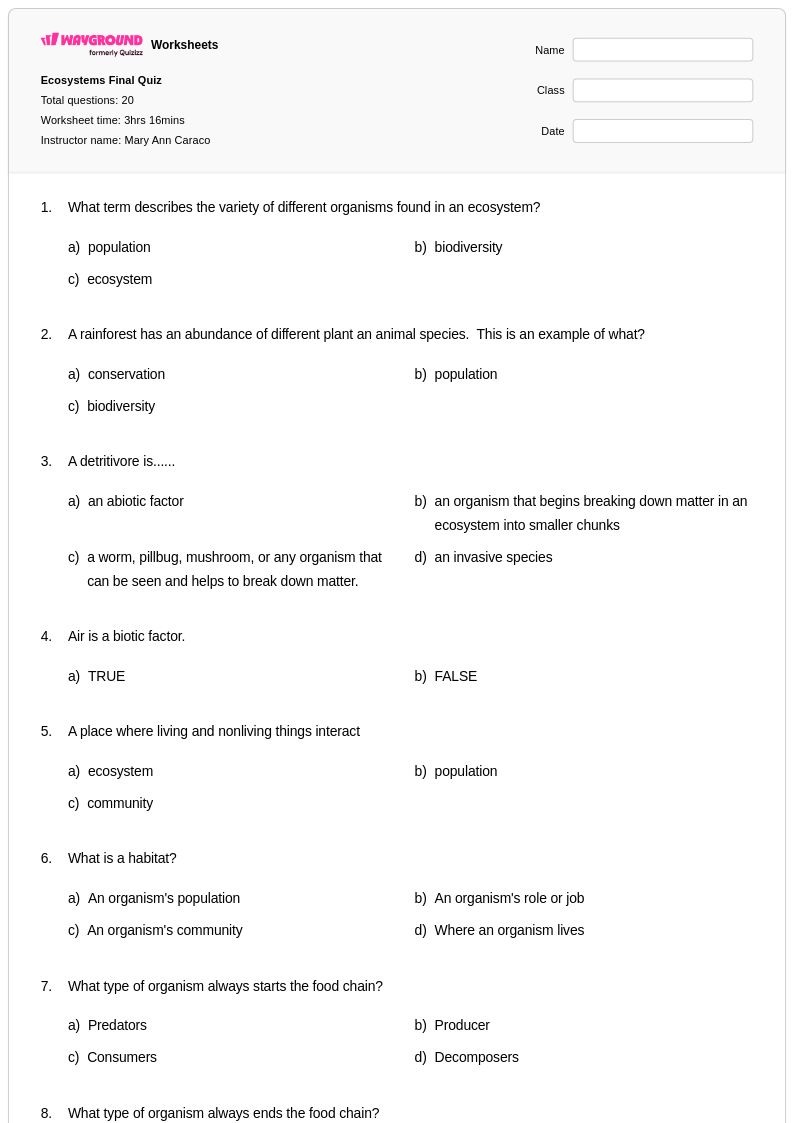
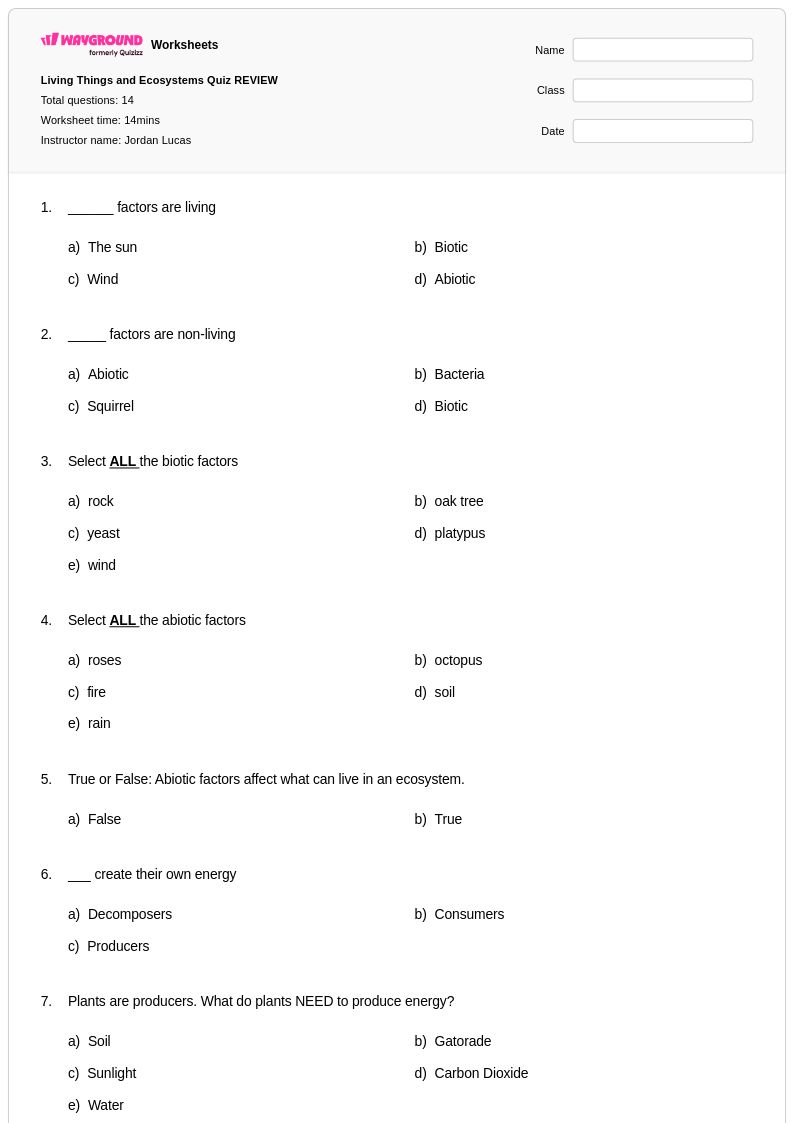
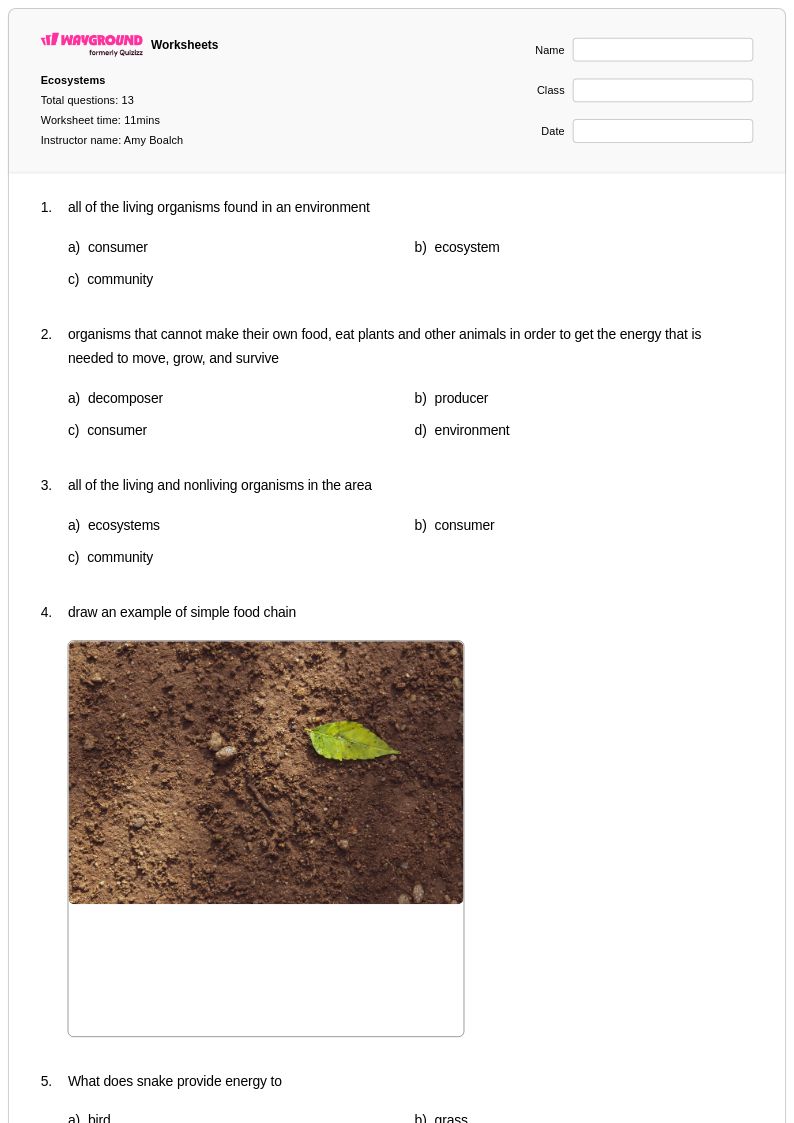
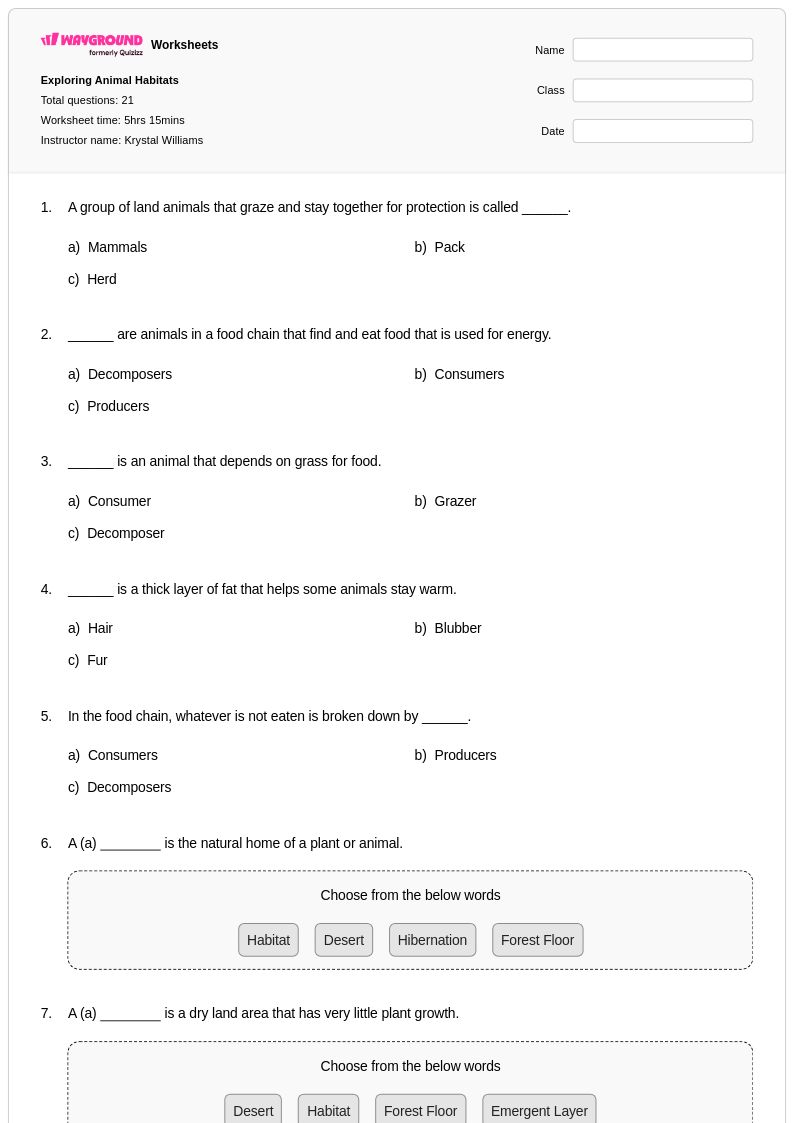
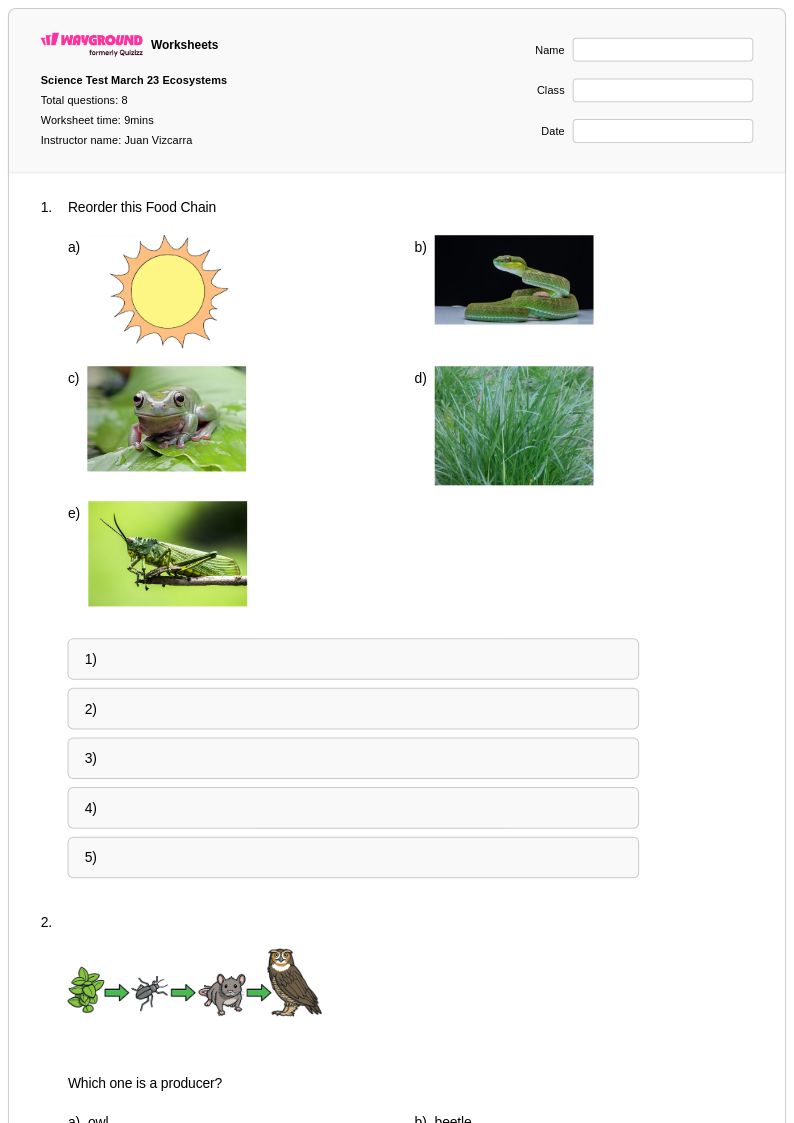
Explore our free Grade 3 producer consumer biology worksheets and printables that help students learn about food chains, ecosystems, and the relationships between organisms through engaging practice problems with answer keys.
Explore printable Producer Consumer worksheets for Grade 3
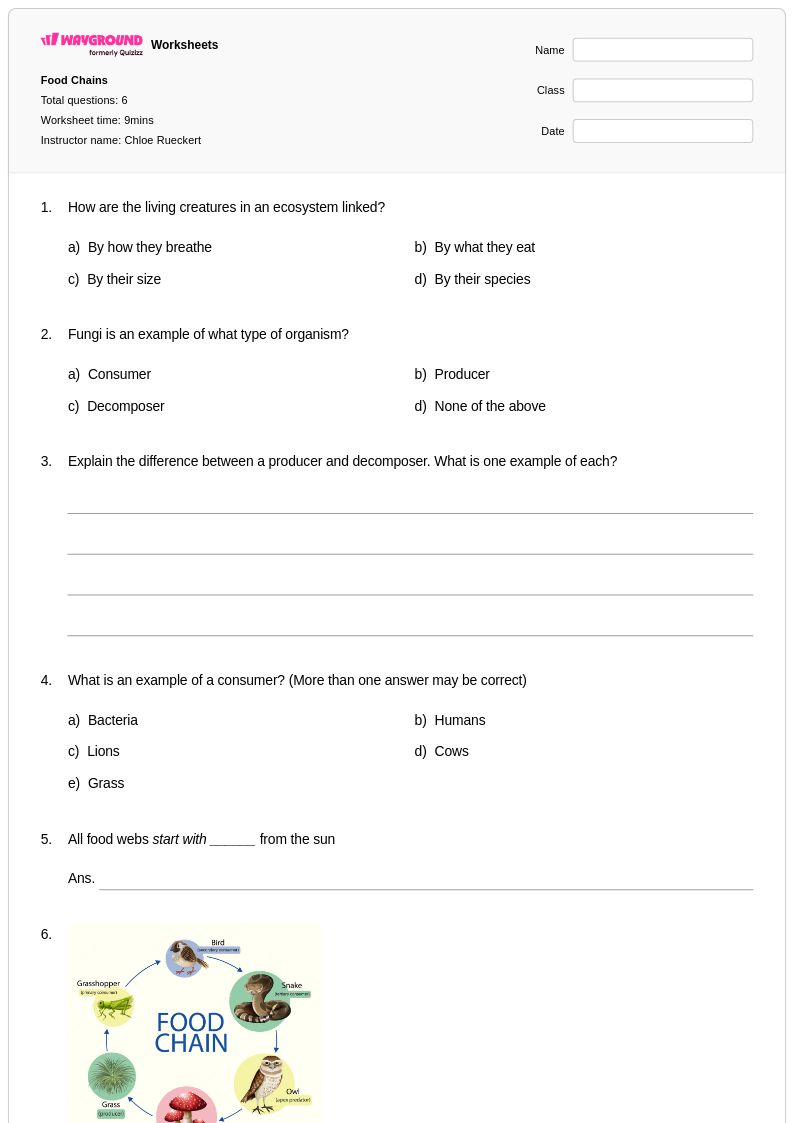
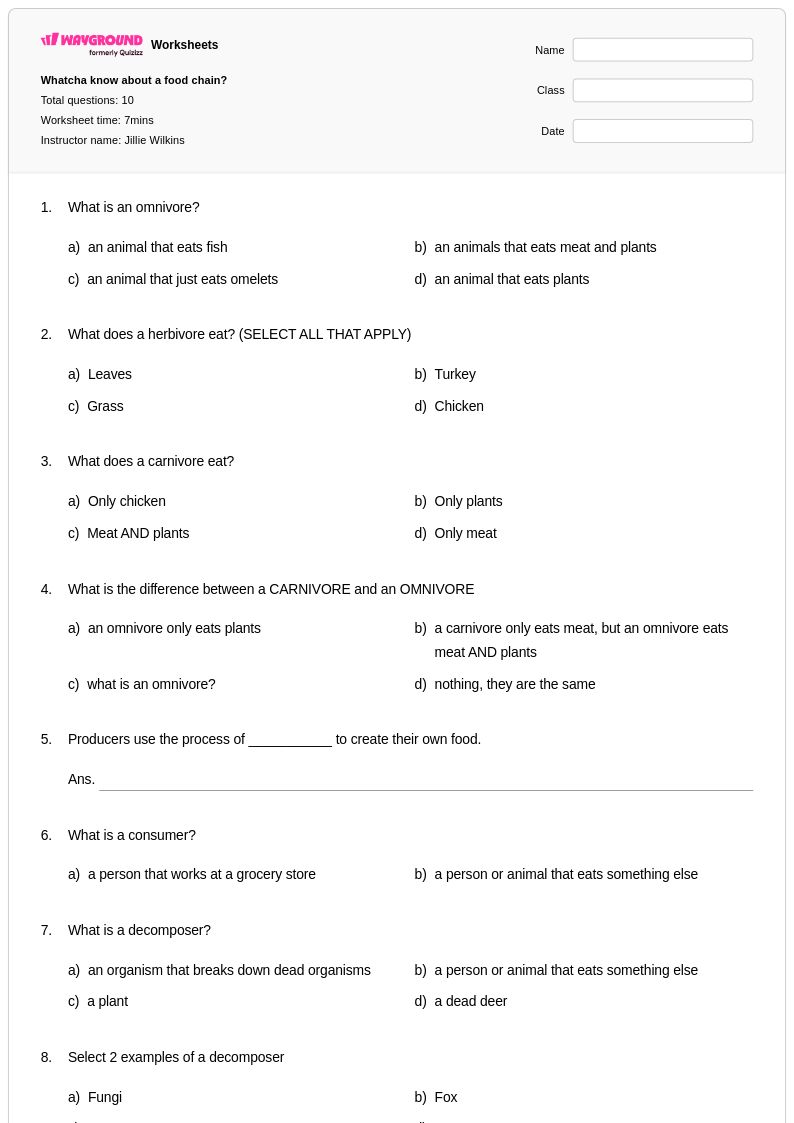
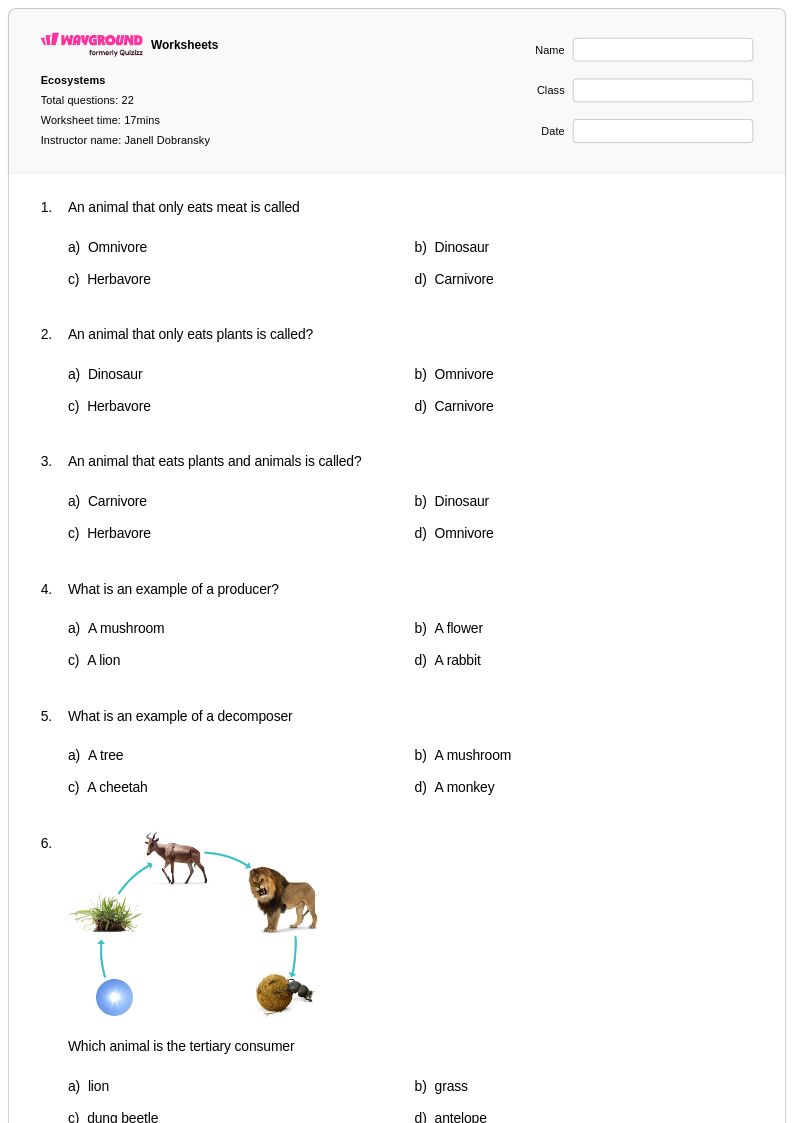
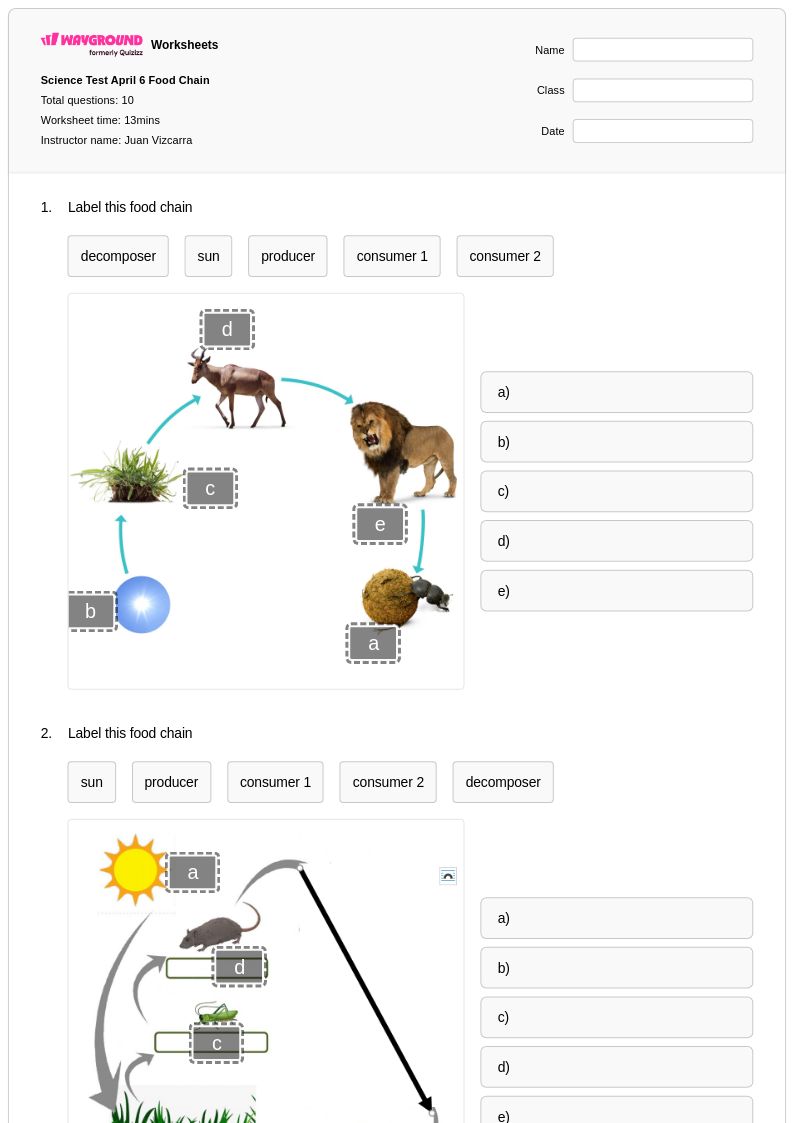
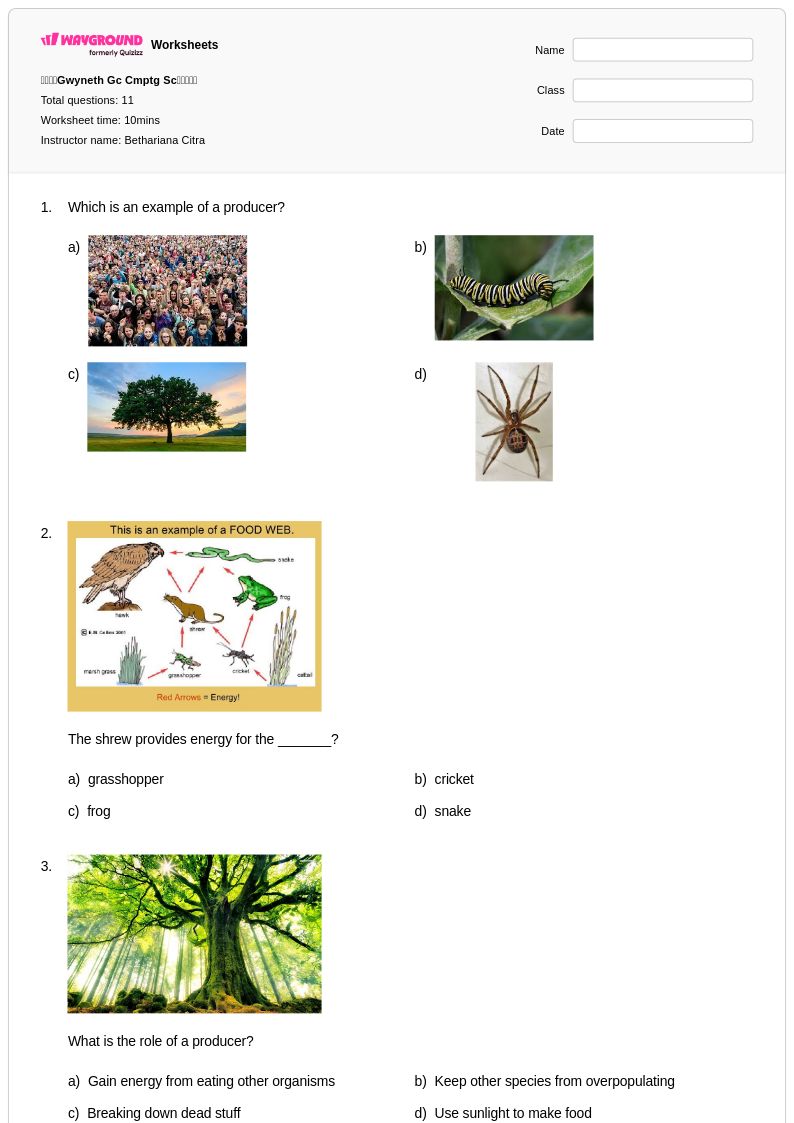
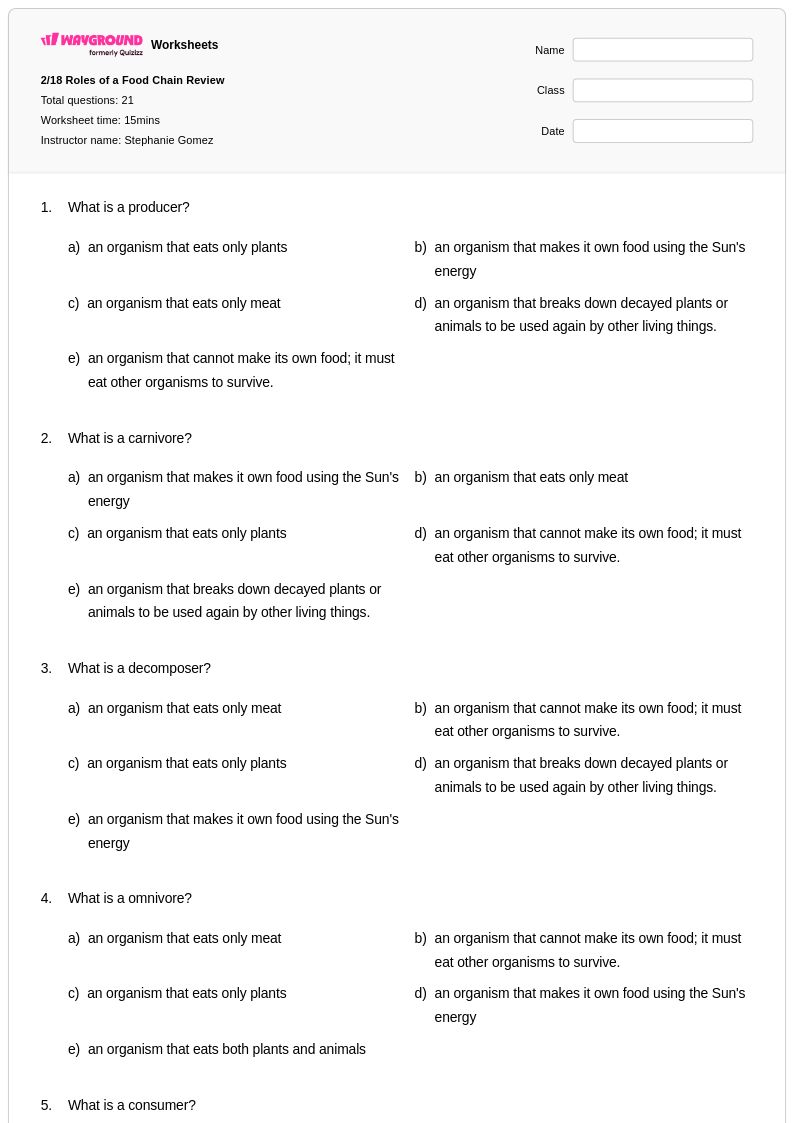
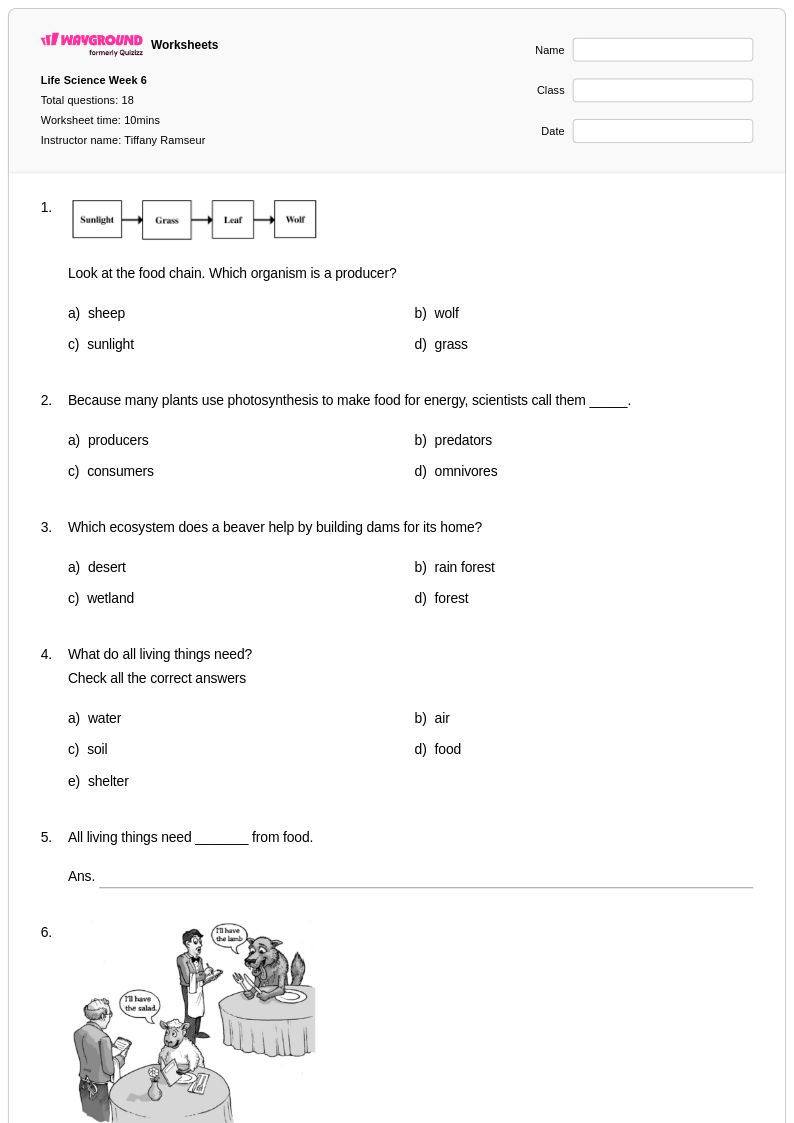
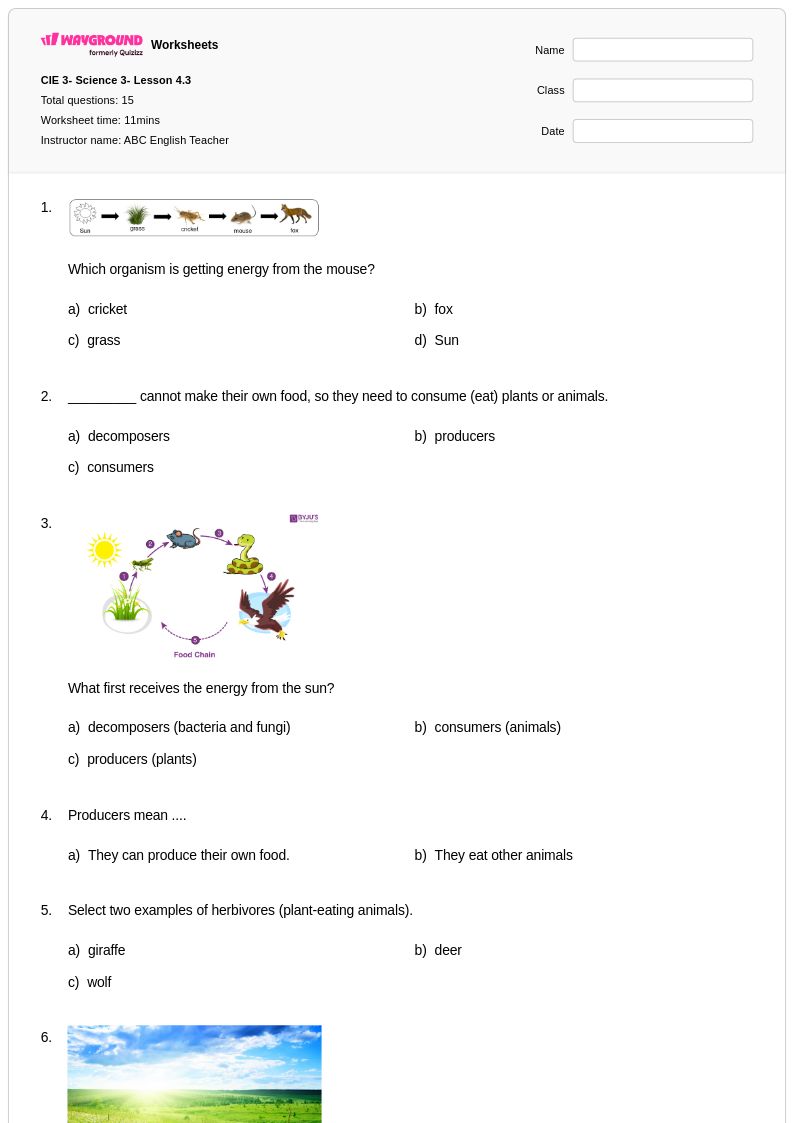
Producer consumer relationships form the foundation of ecological understanding in Grade 3 science education, and Wayground's comprehensive worksheet collection provides students with engaging materials to master these essential biological concepts. These carefully designed worksheets guide young learners through identifying producers as organisms that make their own food through photosynthesis, while exploring how consumers depend on other organisms for energy and nutrients. Students develop critical thinking skills as they work through practice problems that challenge them to categorize different plants and animals, trace energy flow through simple food chains, and understand the interdependent relationships within ecosystems. Each worksheet includes a detailed answer key to support both independent learning and teacher assessment, with free printables available in convenient pdf format for classroom use.
Wayground, formerly Quizizz, empowers educators with millions of teacher-created resources specifically focused on producer consumer concepts, offering robust search and filtering capabilities that allow teachers to quickly locate materials aligned with their curriculum standards and student needs. The platform's differentiation tools enable instructors to customize worksheets for varying ability levels, ensuring that all Grade 3 students can access content appropriate to their learning stage while building fundamental ecological literacy. Teachers benefit from flexible formatting options that include both printable pdf versions for traditional classroom activities and digital formats for technology-integrated lessons, supporting diverse instructional approaches for skill practice, remediation, and enrichment. This comprehensive resource collection streamlines lesson planning while providing educators with reliable, standards-aligned materials that reinforce students' understanding of how producers and consumers interact within natural ecosystems.
FAQs
How do I teach producers and consumers to my biology students?
Start by anchoring the lesson in a familiar ecosystem, such as a backyard garden or local pond, so students can connect the abstract concept of trophic levels to real organisms they recognize. Introduce producers as organisms that make their own food through photosynthesis, then build outward to primary consumers, secondary consumers, and decomposers. Using food web diagrams alongside direct instruction helps students visualize how energy flows rather than just memorizing definitions. Reinforcing these relationships through structured practice problems, where students categorize organisms across multiple habitats, deepens conceptual understanding and prepares them for more complex ecological analysis.
What kinds of practice problems help students understand producer and consumer relationships?
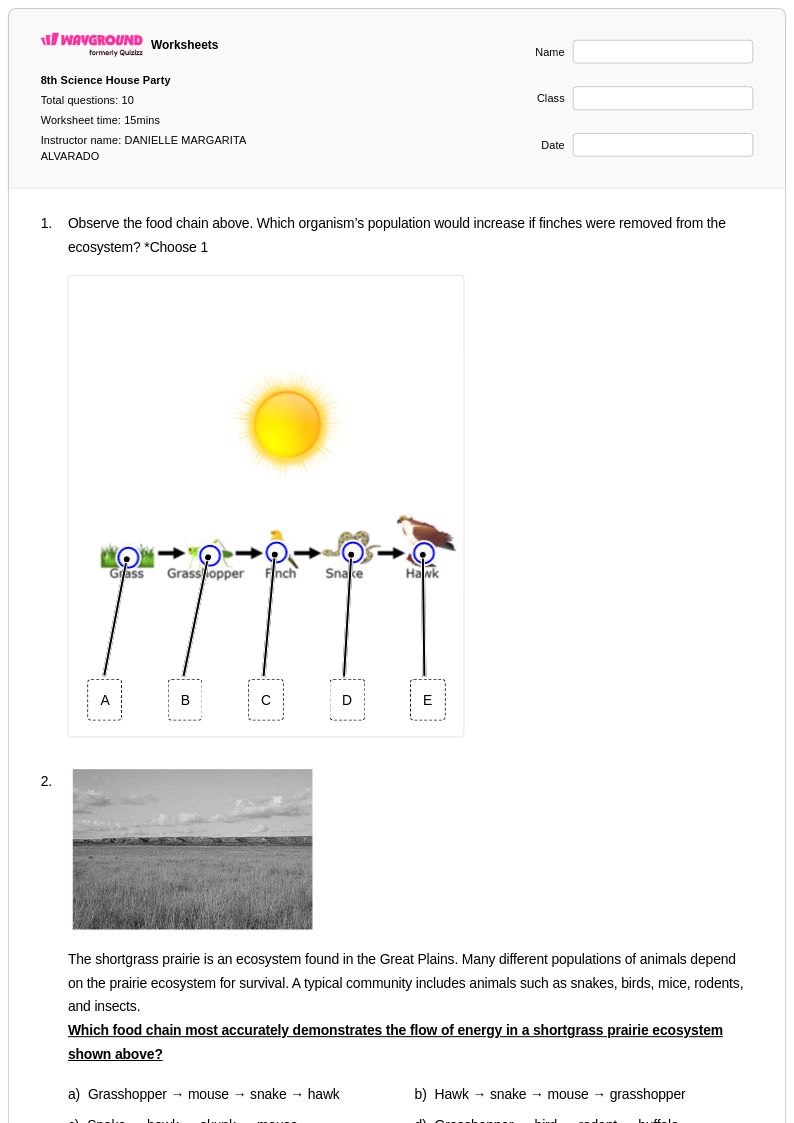
Effective practice problems ask students to do more than label organisms — they should require students to trace energy flow from producers through each consumer level, explain what would happen if one organism were removed, and compare feeding relationships across different ecosystems. Problems that present unfamiliar organisms and ask students to classify them based on diet and energy source build transferable thinking skills. Worksheets that include food web diagrams alongside identification tasks give students both visual and analytical practice, which reinforces the concept from multiple angles.
What mistakes do students commonly make when learning about producers and consumers?
A frequent misconception is that all animals are consumers and all plants are producers without understanding why — students often cannot explain the role of photosynthesis or energy sourcing behind those labels. Many students also confuse decomposers with consumers, grouping them together because both obtain energy from other organisms. Another common error is treating food chains as linear rather than recognizing that most organisms participate in complex, overlapping food webs. Targeted practice that asks students to justify their classifications, rather than just identify them, helps surface and correct these misunderstandings.
How can I differentiate producer and consumer activities for students at different skill levels?
For struggling students, simplify the ecosystem context to a two- or three-organism food chain before introducing multi-level food webs, and use visual supports like color-coded diagrams to distinguish trophic levels. Advanced learners can be challenged with problems that ask them to calculate energy loss between trophic levels or analyze what cascading effects a population change would have across a web. On Wayground, teachers can apply accommodations such as reduced answer choices or read-aloud support to individual students, while the rest of the class receives standard settings, making differentiation manageable without creating separate lesson plans.
How do I use Wayground's producer and consumer worksheets in my classroom?
Wayground's producer and consumer worksheets are available as printable PDFs for traditional classroom use and in digital formats for technology-integrated environments, so you can assign them as in-class practice, homework, or independent review depending on your lesson structure. You can also host them as a quiz directly on Wayground, which allows you to track student performance and identify gaps in understanding. Each worksheet includes a complete answer key, reducing prep time and making them practical for both teacher-guided and self-paced instruction.