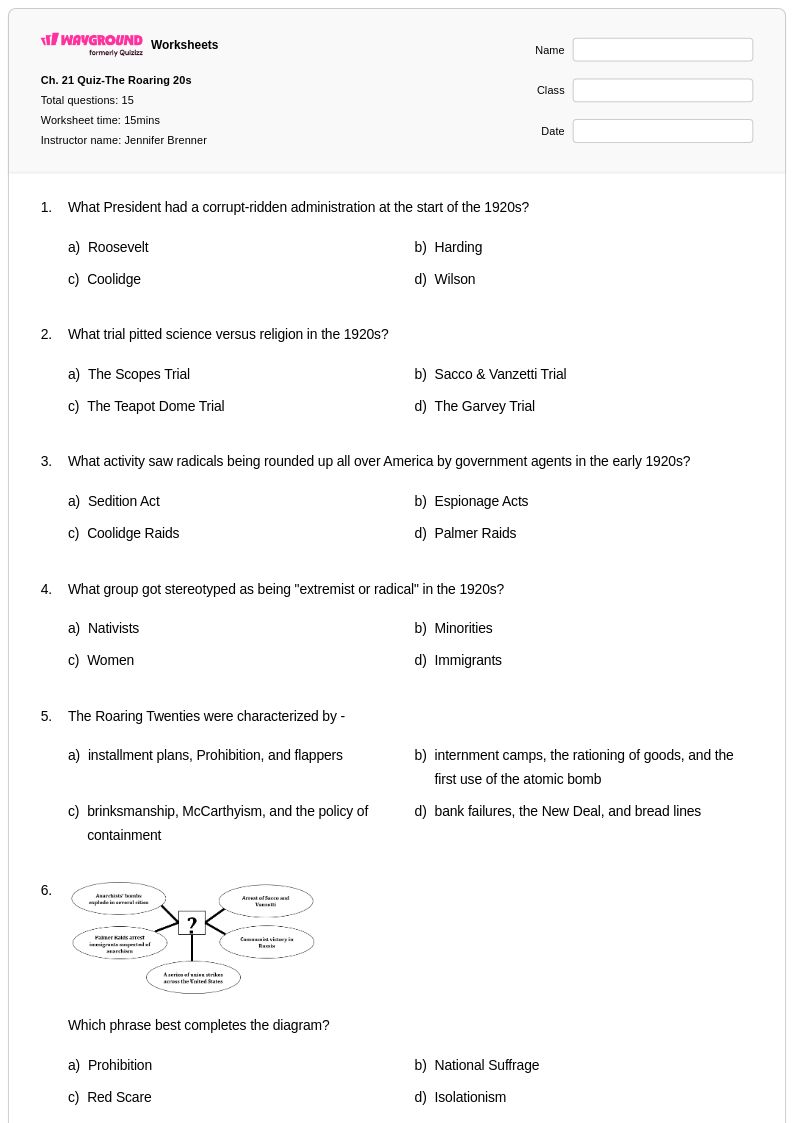
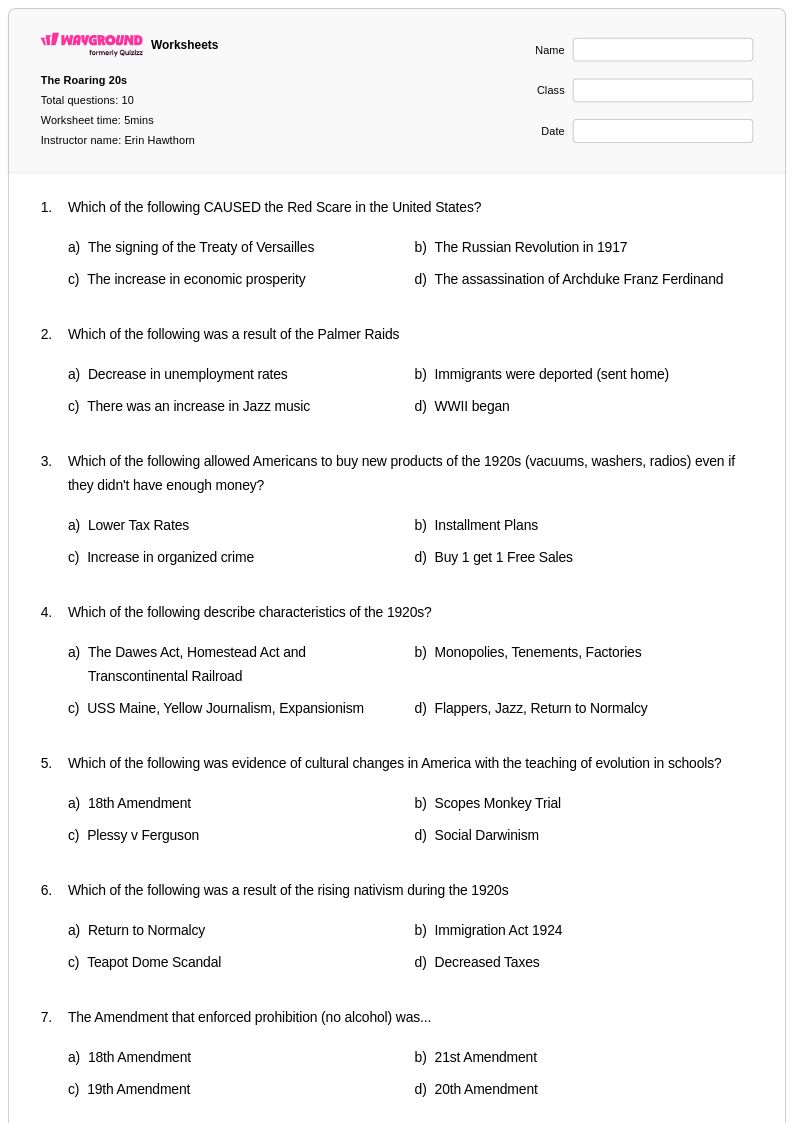
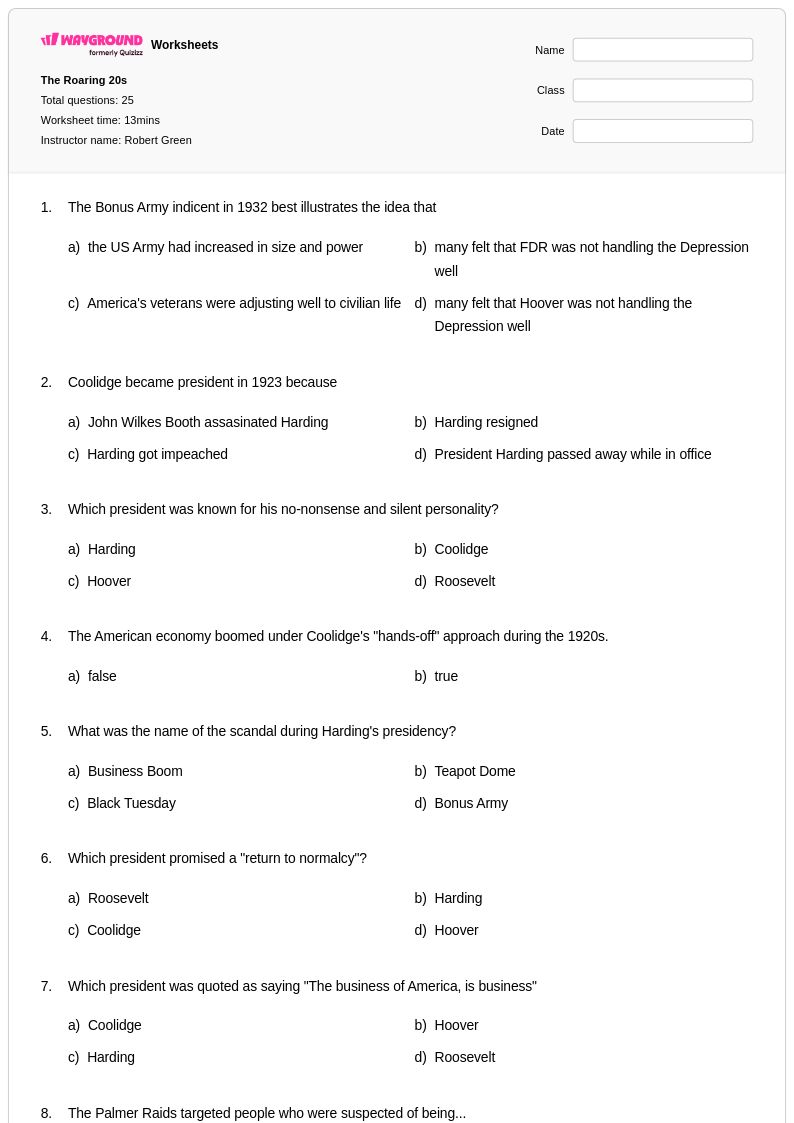
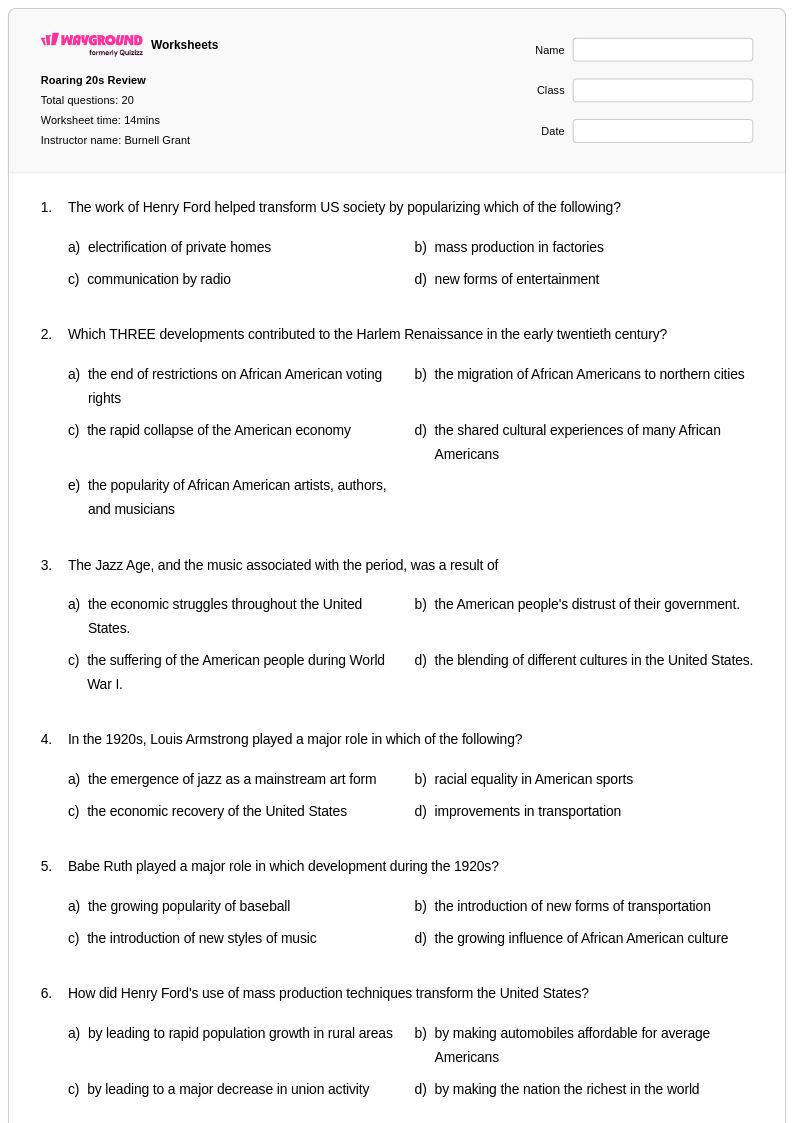
Explore Wayground's free Roaring 20s worksheets and printables that help students practice analyzing the cultural, economic, and social transformations of 1920s America through engaging activities with comprehensive answer keys.
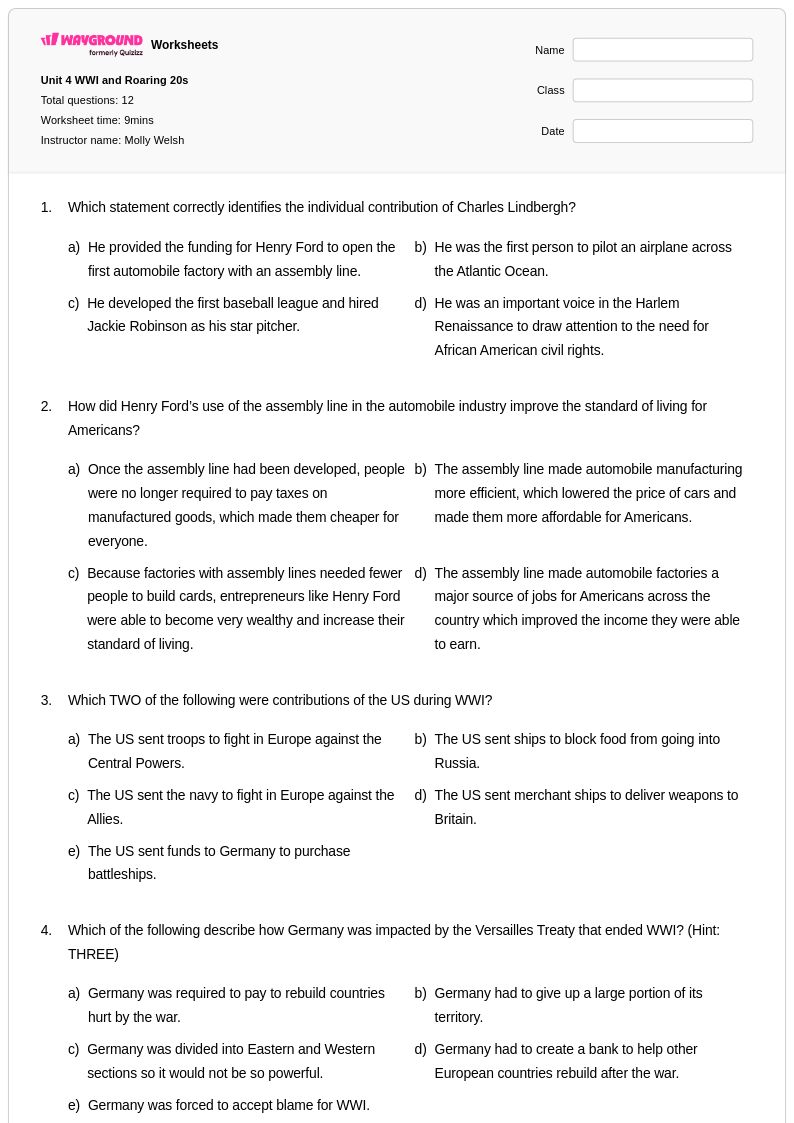
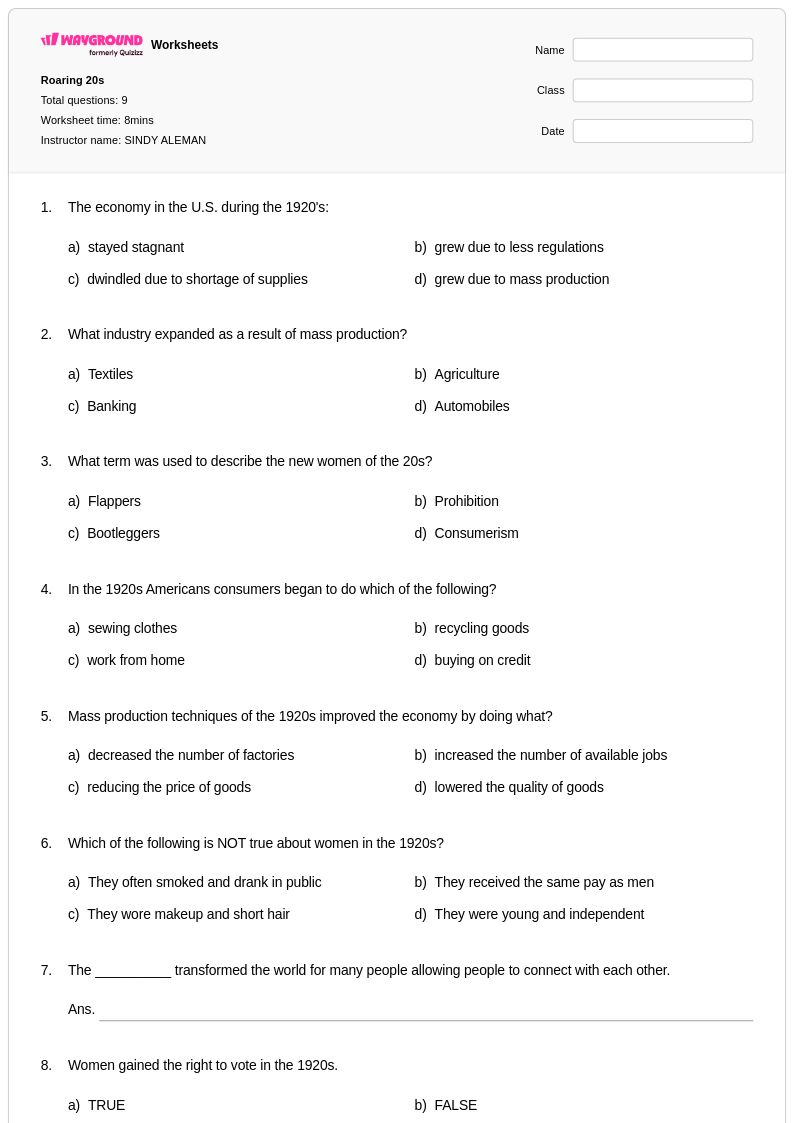
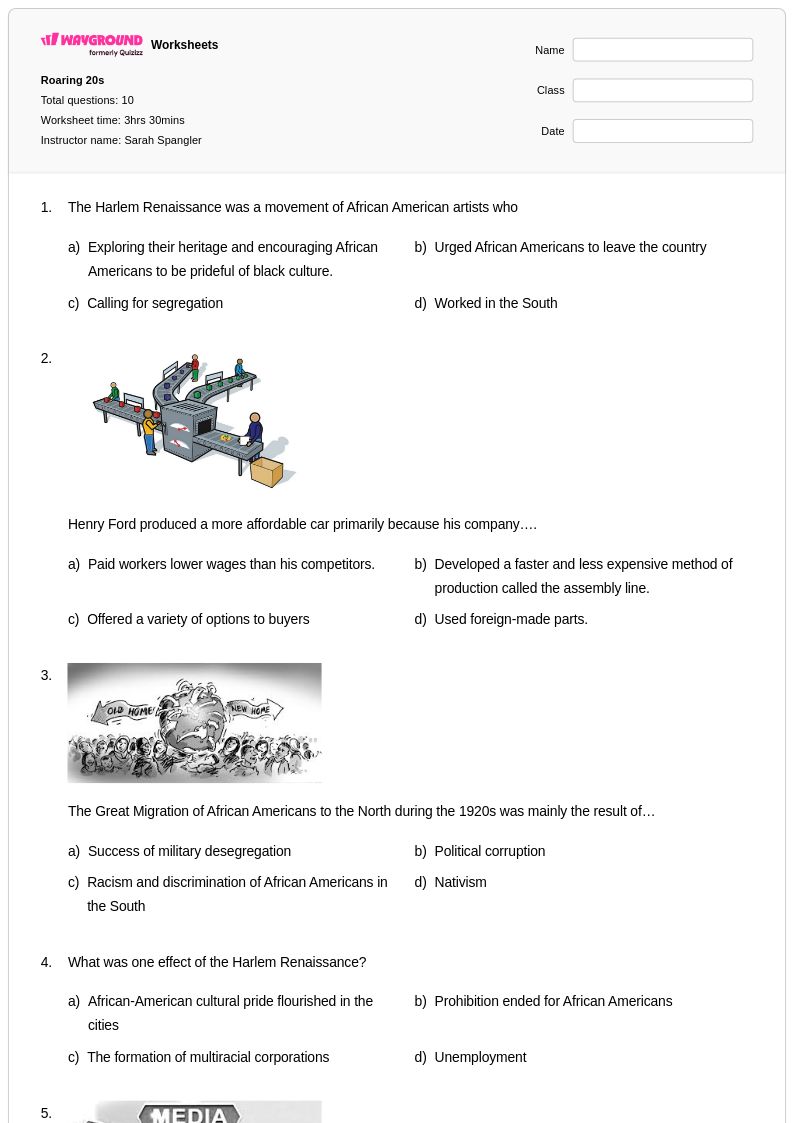
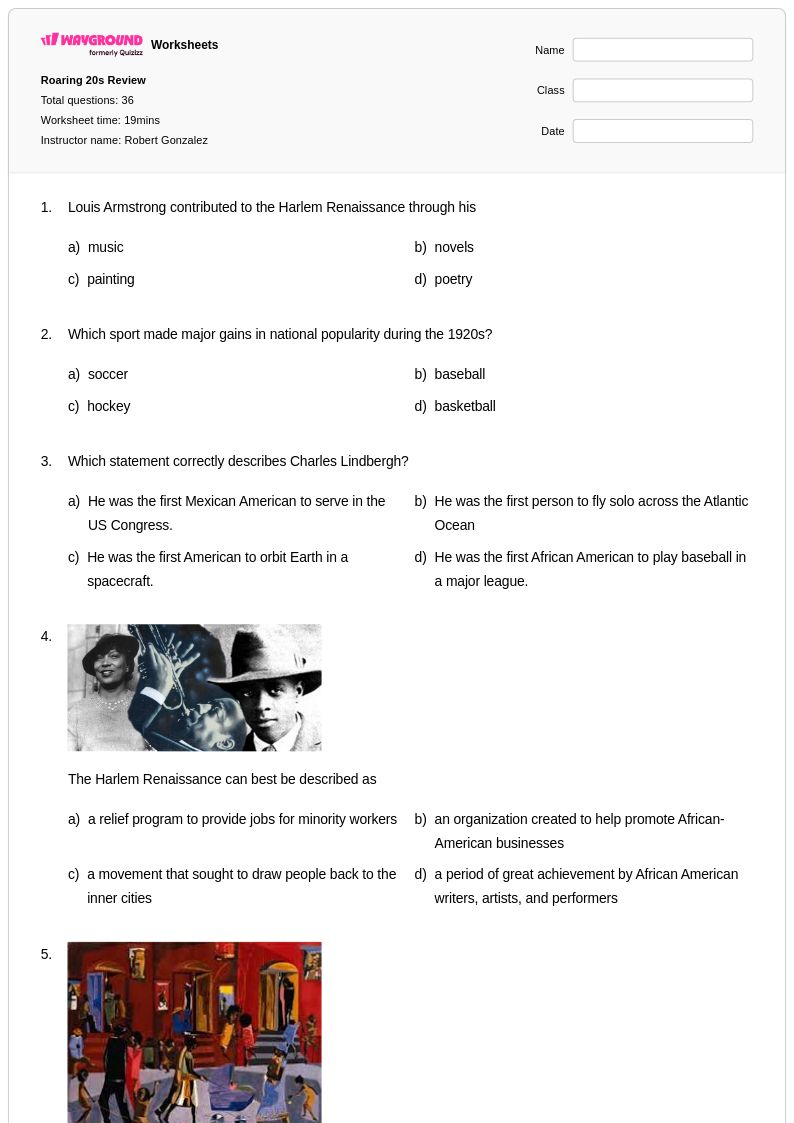
Roaring 20s worksheets available through Wayground (formerly Quizizz) provide comprehensive exploration of America's transformative decade following World War I. These educational resources strengthen students' analytical and critical thinking skills by examining the cultural, economic, and social changes that defined the 1920s, including the rise of jazz music, flapper culture, prohibition, the Harlem Renaissance, and unprecedented economic prosperity. The worksheet collection features diverse practice problems that engage learners with primary source documents, timeline activities, and comparative analyses of pre- and post-war American society. Each printable resource includes detailed answer keys to support both independent study and classroom instruction, while free pdf formats ensure accessibility for educators seeking to incorporate authentic historical materials into their curriculum.
Wayground (formerly Quizizz) supports educators with an extensive collection of teacher-created Roaring 20s resources, drawing from millions of worksheets developed by experienced social studies professionals nationwide. The platform's robust search and filtering capabilities allow teachers to quickly locate materials aligned with specific learning standards and differentiate instruction based on individual student needs. Customization tools enable educators to modify existing worksheets or combine elements from multiple resources, creating tailored assignments for remediation, enrichment, or targeted skill practice. Available in both printable and digital formats including downloadable pdfs, these versatile materials streamline lesson planning while providing flexible options for classroom implementation, homework assignments, and assessment preparation that accommodate diverse learning environments and teaching preferences.
FAQs
How do I teach the Roaring 20s to students?
Teaching the Roaring 20s is most effective when you connect the era's defining tensions — prosperity alongside inequality, cultural freedom alongside legal restriction — to students' prior knowledge of World War I. Anchor instruction around key themes like the Harlem Renaissance, jazz culture, Prohibition, and the flapper movement, using primary source documents and timeline activities to help students trace cause-and-effect relationships across the decade. Comparative analysis tasks, such as examining pre- and post-war American society, give students concrete frameworks for understanding how rapidly the 1920s transformed everyday life.
What kinds of activities help students practice analyzing the Roaring 20s?
Students benefit most from activities that require them to work directly with evidence rather than simply recall facts. Primary source document analysis, timeline sequencing, and comparative activities contrasting pre- and post-WWI America push students to think critically about cause and change over time. Worksheets that combine cultural, economic, and social dimensions of the 1920s — covering jazz, Prohibition, the Harlem Renaissance, and economic prosperity together — help students see the decade as interconnected rather than a list of isolated events.
What misconceptions do students commonly have about the Roaring 20s?
A common misconception is that the prosperity of the 1920s was universal — students often overlook that economic gains largely bypassed rural communities, African Americans, and the working class, even as the stock market soared. Students also frequently conflate Prohibition with its intended effect, missing that it fueled organized crime and a thriving underground economy rather than eliminating alcohol use. Another error is treating the Harlem Renaissance as a minor cultural footnote rather than a foundational movement in American literature, music, and political thought.
How can I use Roaring 20s worksheets in my classroom?
Roaring 20s worksheets on Wayground are available as printable PDFs for traditional classroom use and in digital formats for technology-integrated or hybrid learning environments, and teachers can also host them as a quiz directly on Wayground. Each worksheet includes a complete answer key, making them practical for independent student work, guided instruction, or assessment preparation. Teachers can use them to introduce a unit, reinforce specific skills like primary source analysis, or provide targeted practice on subtopics such as Prohibition, flapper culture, or the Harlem Renaissance.
How do I differentiate Roaring 20s instruction for diverse learners?
Differentiation for the Roaring 20s works well when you vary the complexity of primary sources students analyze — pairing simplified excerpts with scaffolded questions for students who need support, while offering full documents with open-ended analysis prompts for advanced learners. On Wayground, teachers can apply individual student accommodations such as read aloud, extended time, and reduced answer choices, which are especially useful when students are working with complex historical texts and unfamiliar vocabulary from the 1920s context. These settings are reusable across sessions and can be assigned without notifying other students, keeping the experience seamless for the whole class.
How do I align Roaring 20s worksheets to social studies standards?
Most state social studies standards address the 1920s under units covering U.S. history between WWI and the Great Depression, with learning objectives tied to cultural change, economic trends, and civil rights. When selecting worksheets, look for materials that target specific skills your standards require — such as analyzing primary sources, identifying cause and effect, or evaluating historical significance — rather than those focused solely on content recall. Wayground's filtering tools allow teachers to search by standard alignment, making it faster to locate Roaring 20s resources that map directly to your curriculum requirements.