
Recommended Topics for you
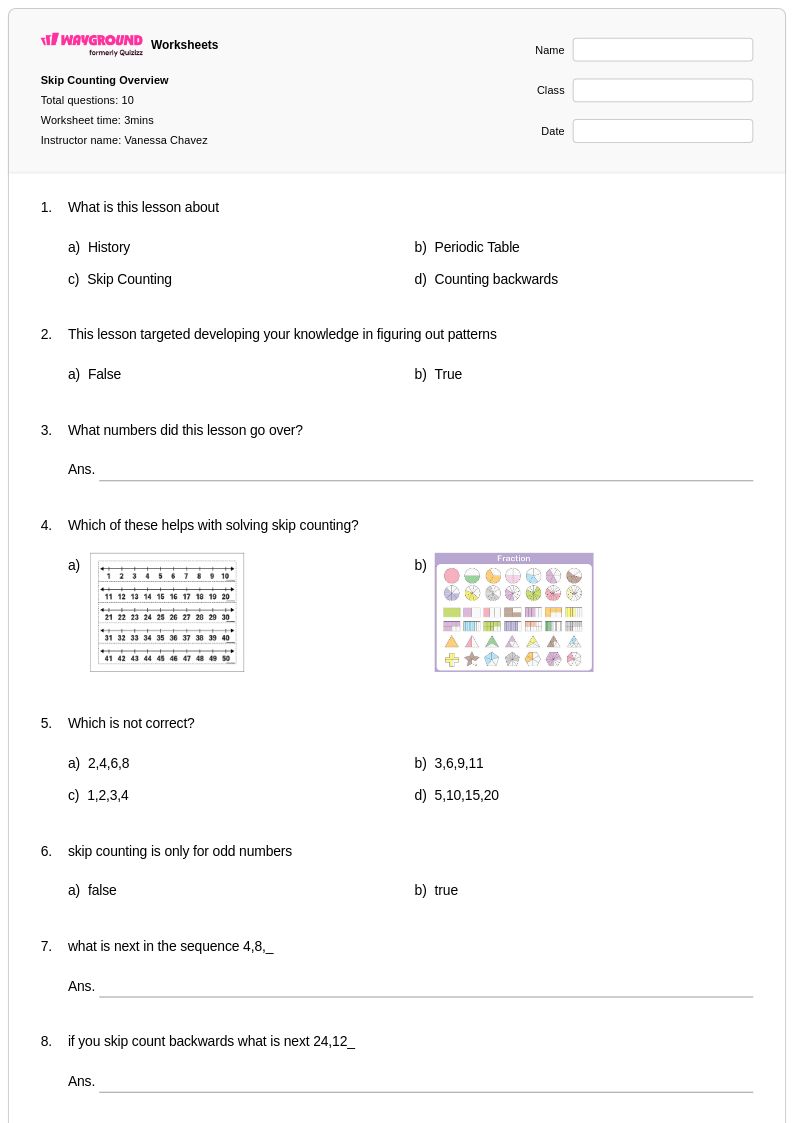
10 Q
1st - 2nd
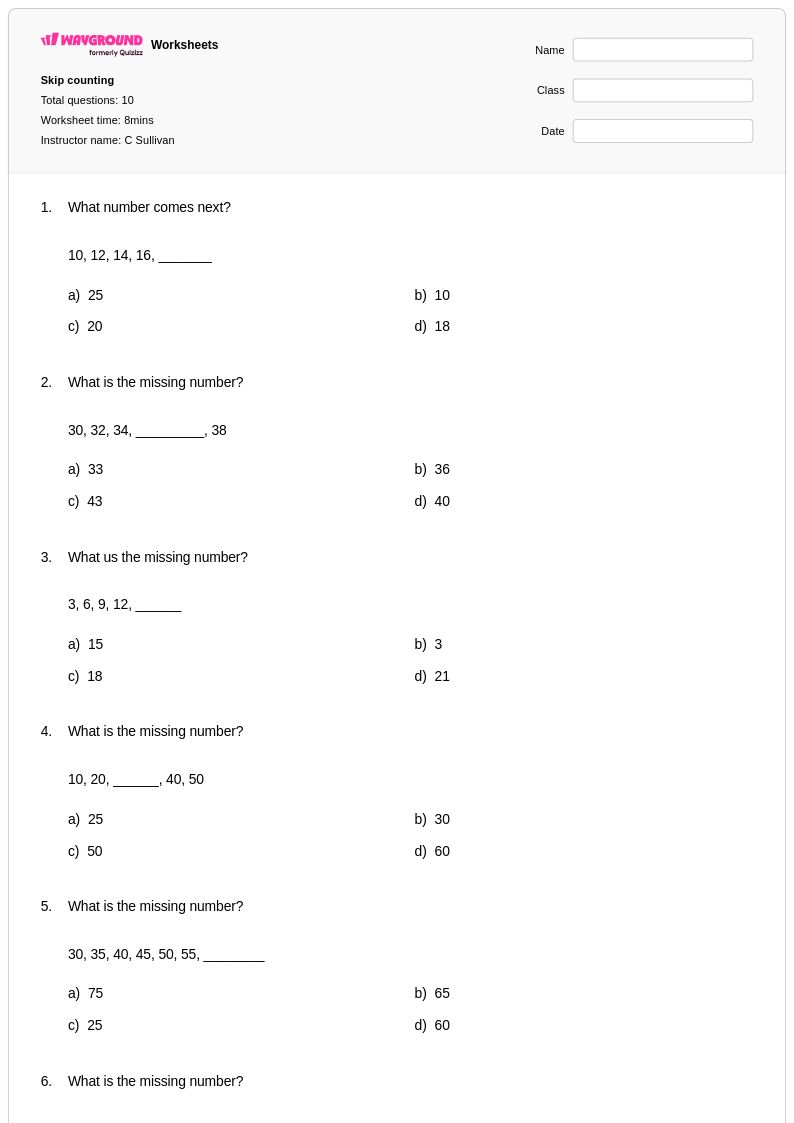
10 Q
1st
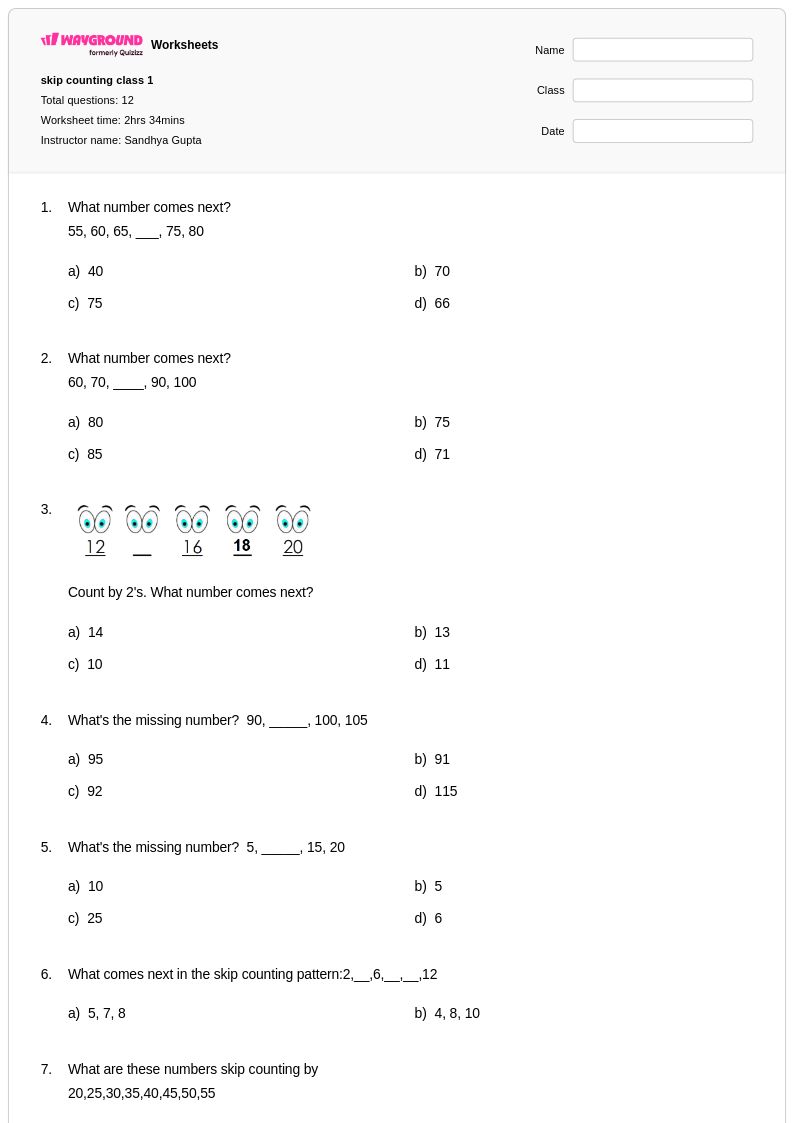
12 Q
1st
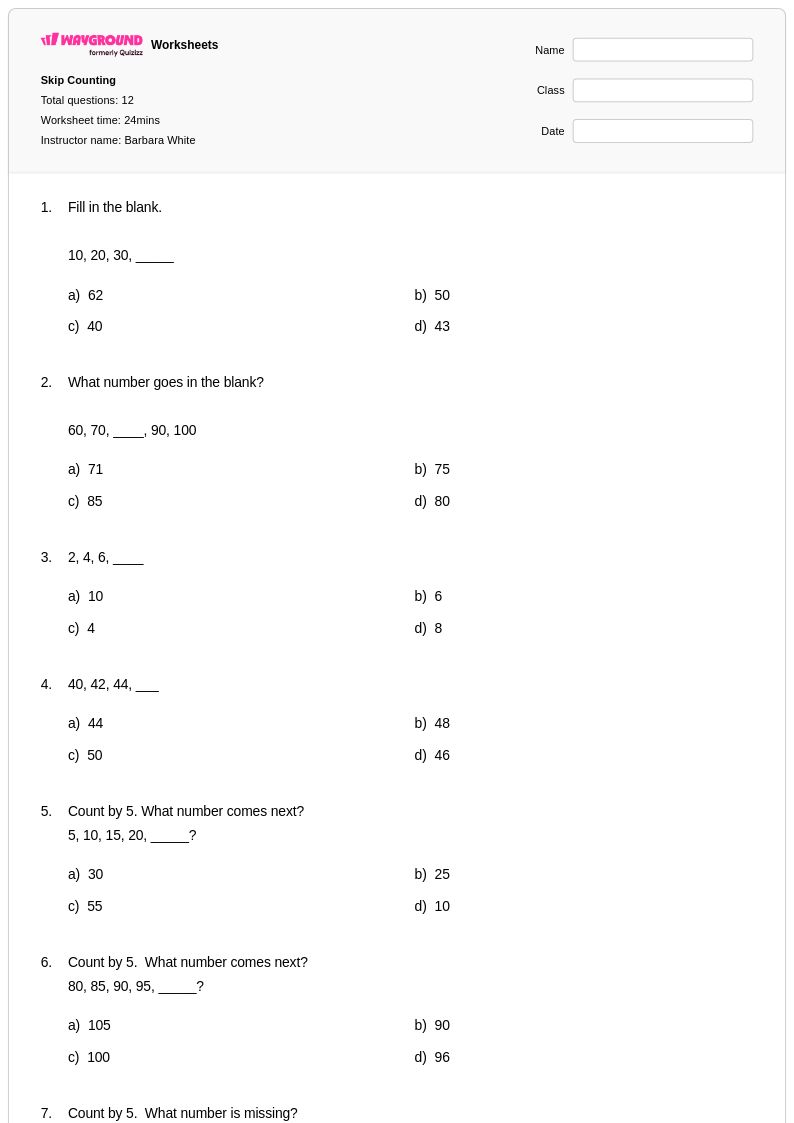
12 Q
1st - 2nd
12 Q
1st
11 Q
1st
11 Q
KG - 1st
15 Q
1st
15 Q
1st
7 Q
1st - 3rd
10 Q
KG - 2nd
10 Q
1st
10 Q
1st - Uni
16 Q
KG - 1st
15 Q
1st
20 Q
1st
21 Q
1st
20 Q
1st
20 Q
1st
10 Q
1st
16 Q
1st - 2nd
15 Q
KG - 3rd
10 Q
1st - 2nd
12 Q
1st - 2nd
Explore Skip Counting Worksheets by Grades
Explore Skip Counting Worksheets for grade 1 by Topic
Explore Other Subject Worksheets for grade 1
Explore printable Skip Counting worksheets for Grade 1
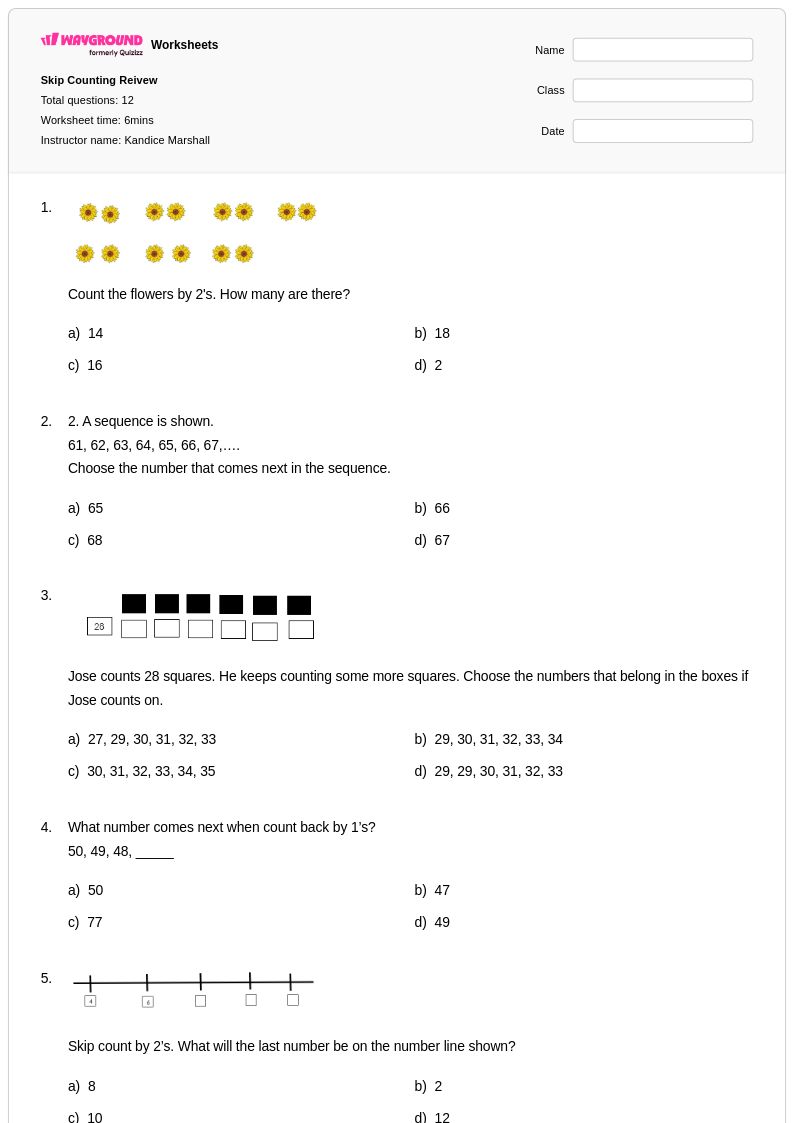
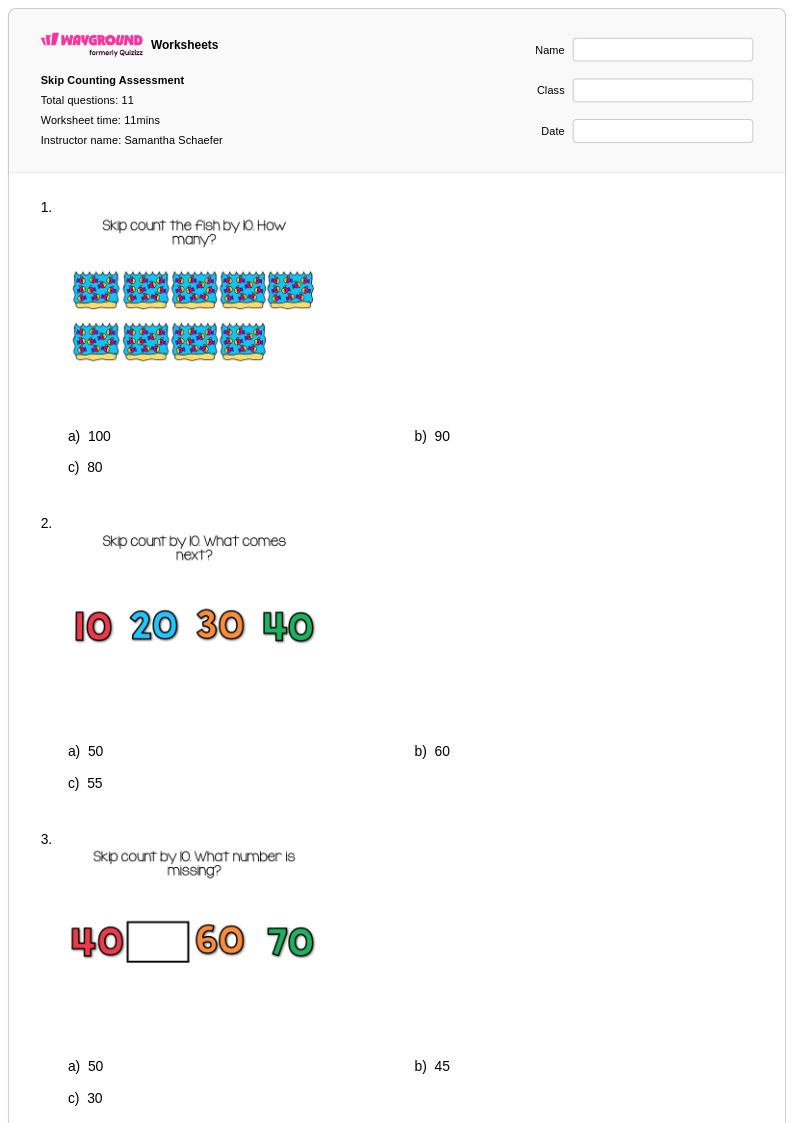
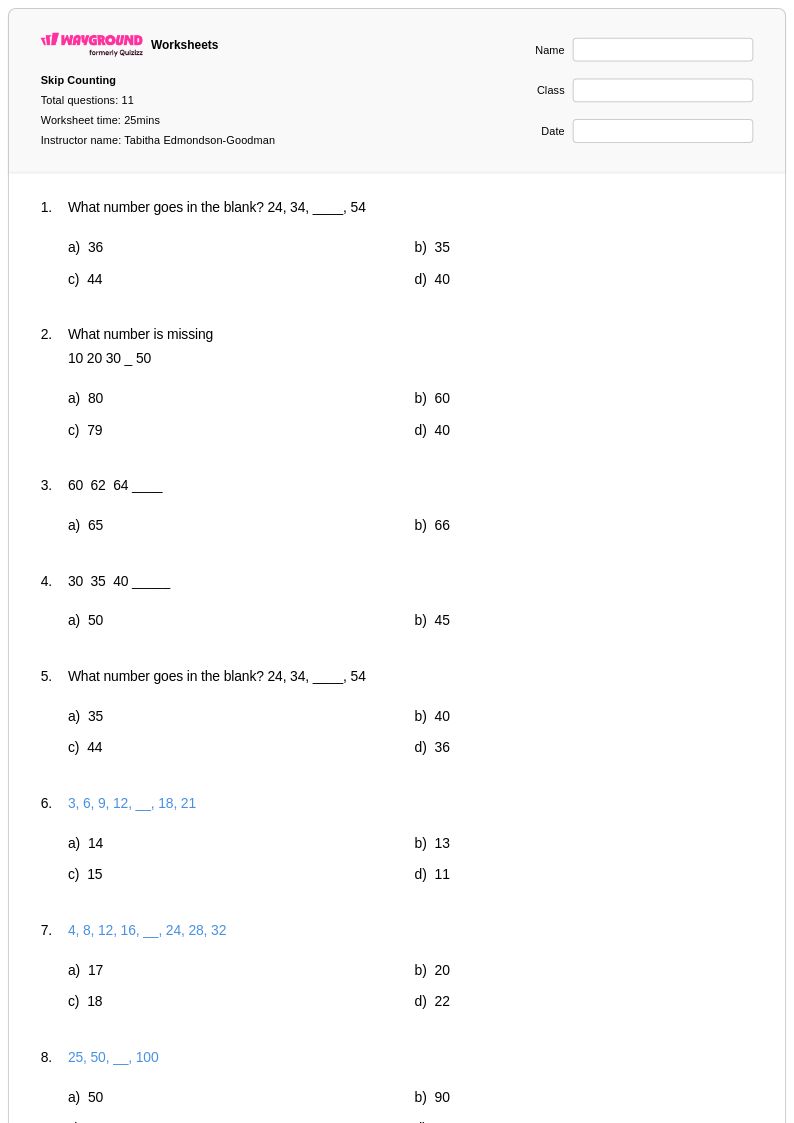
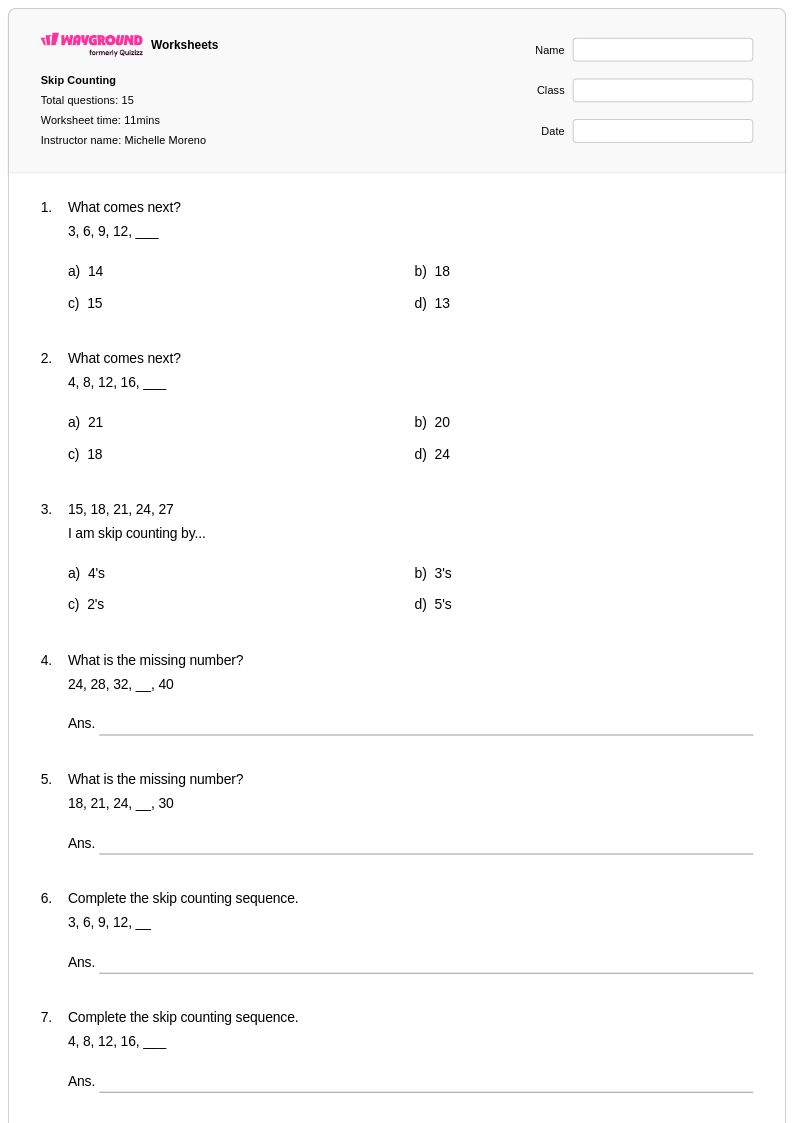
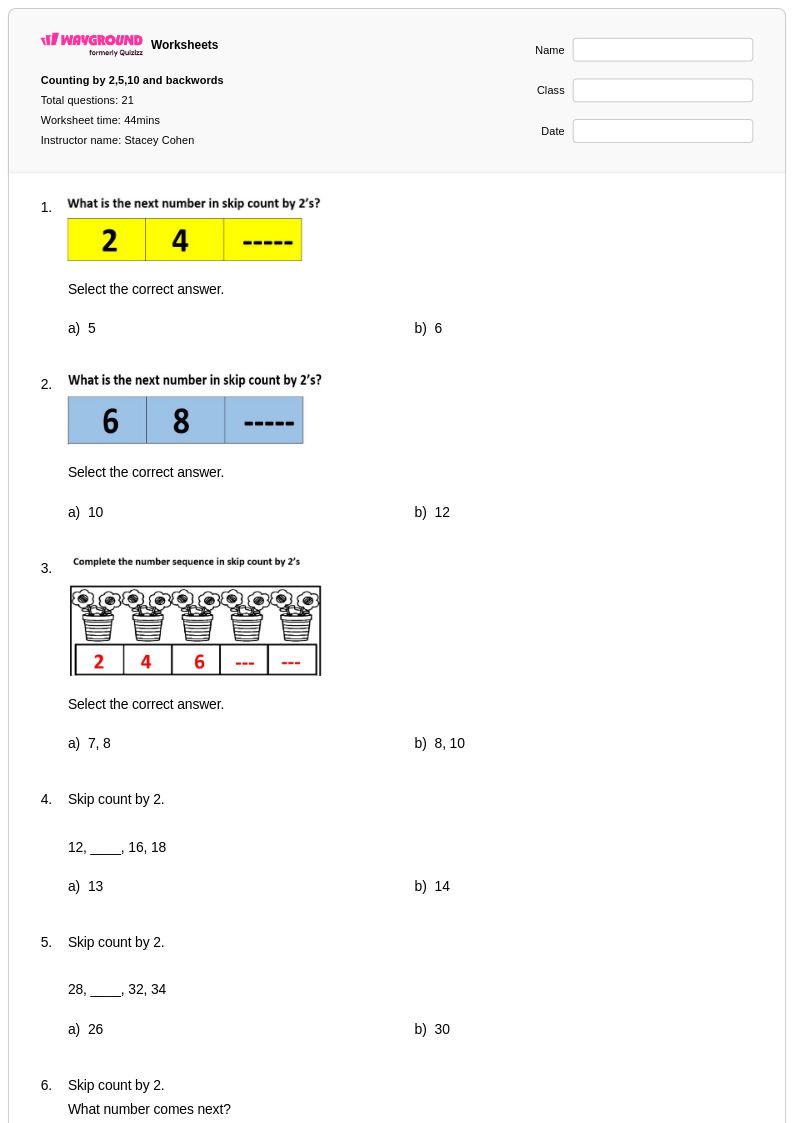
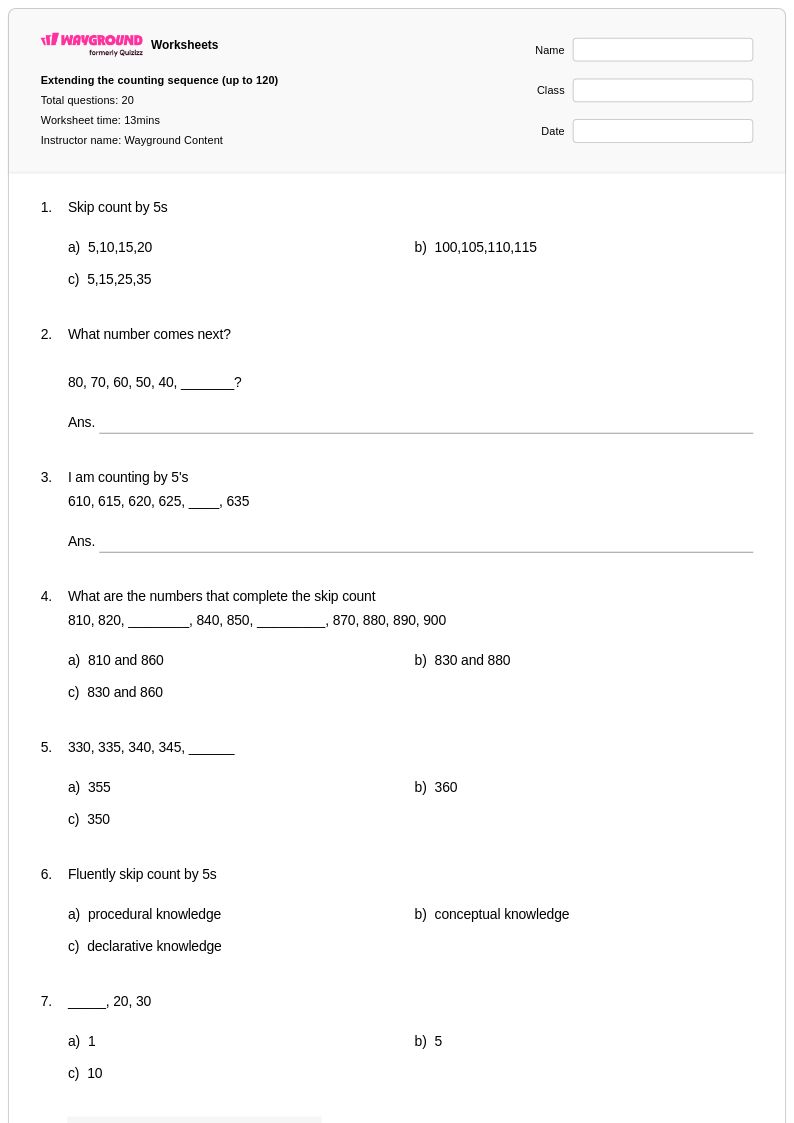
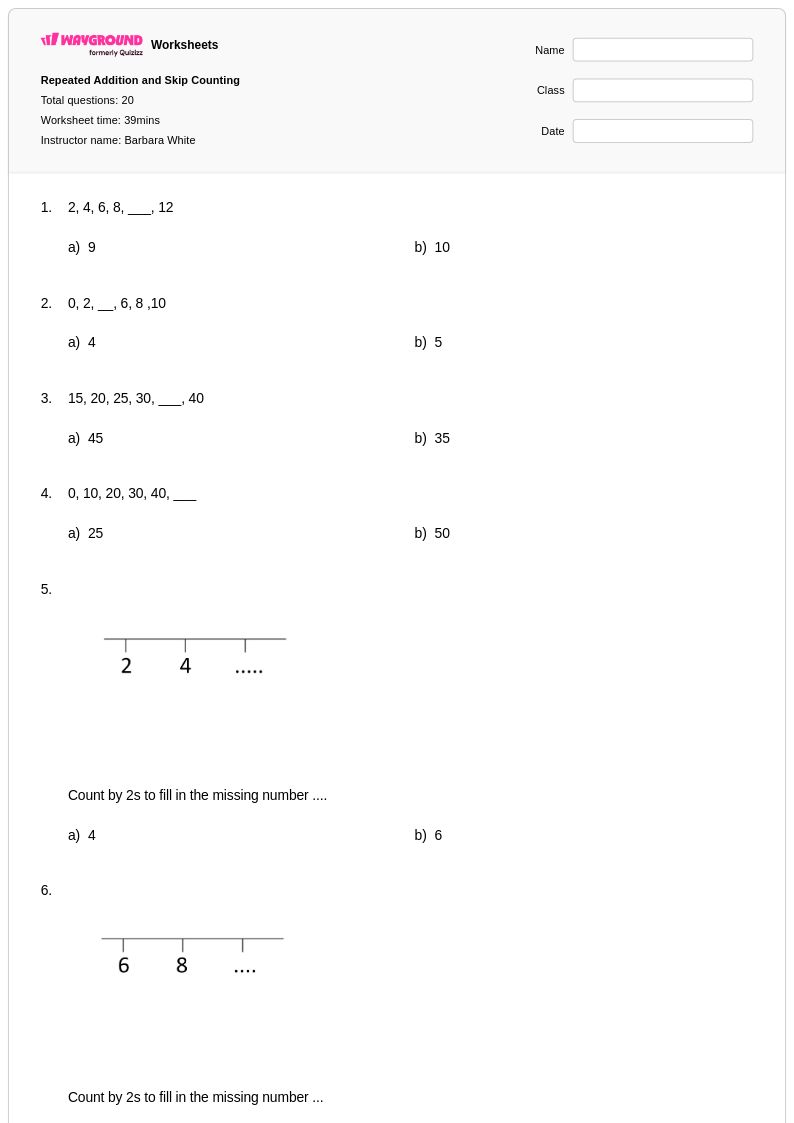
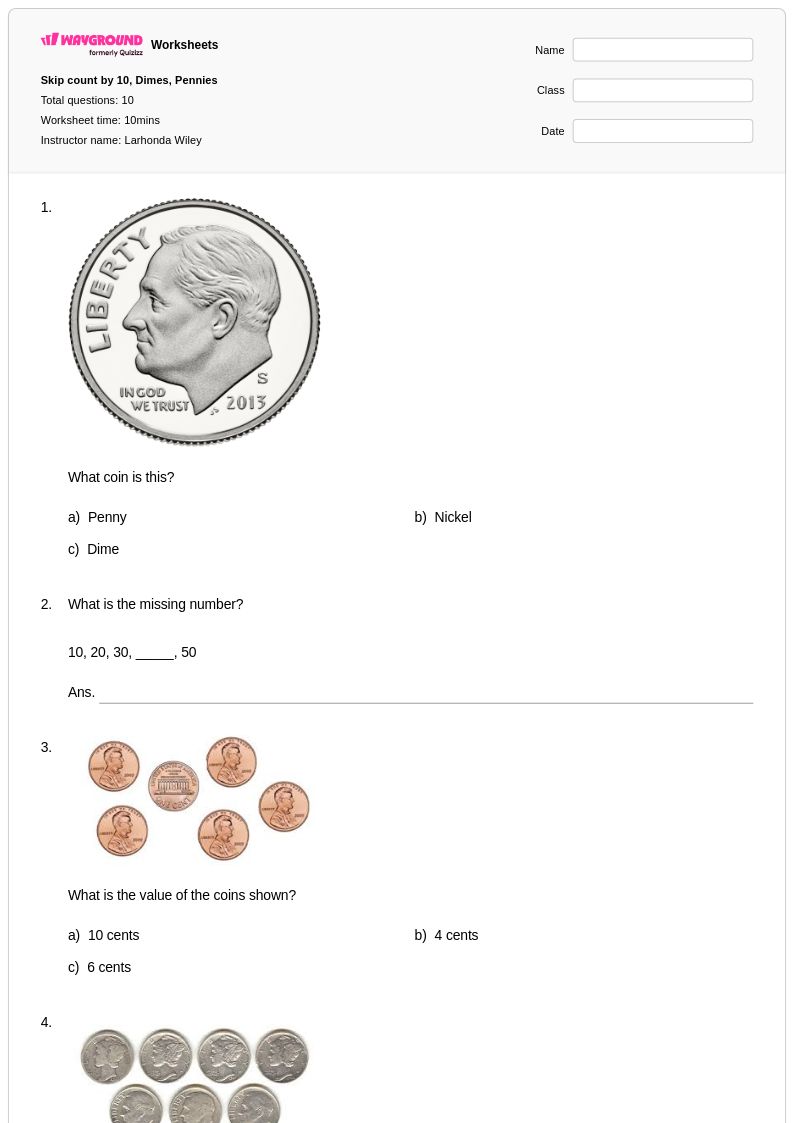
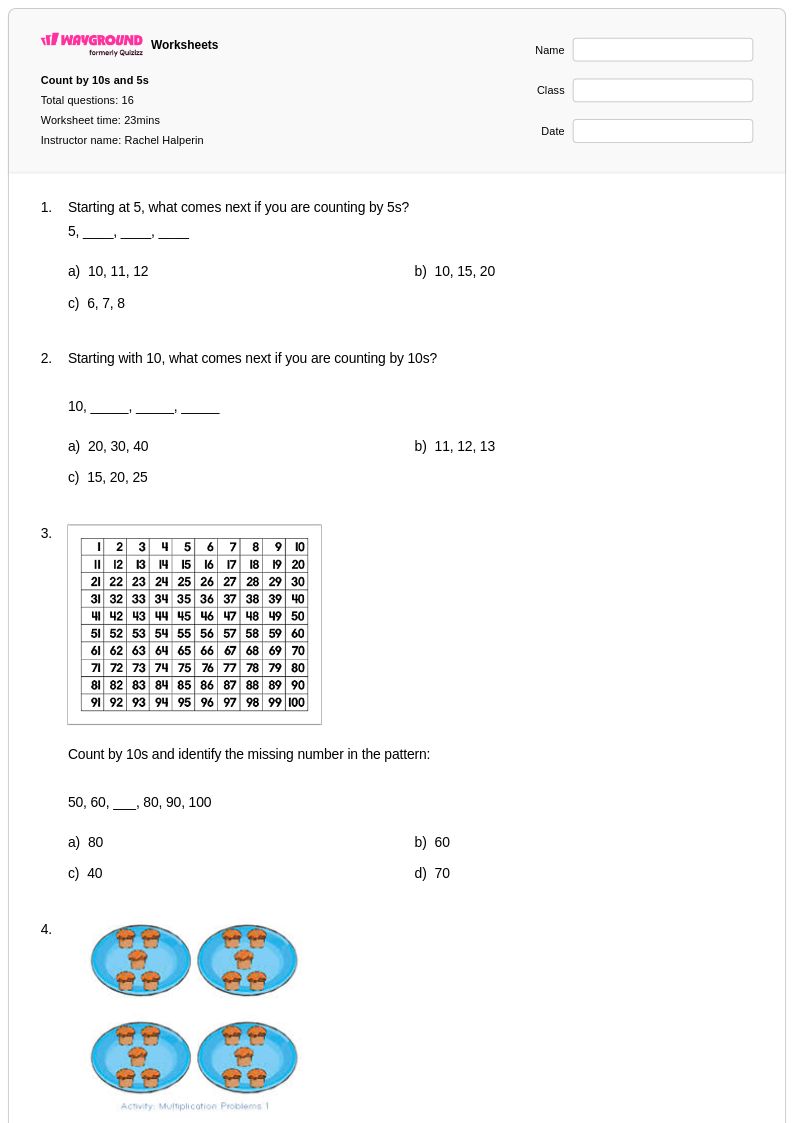
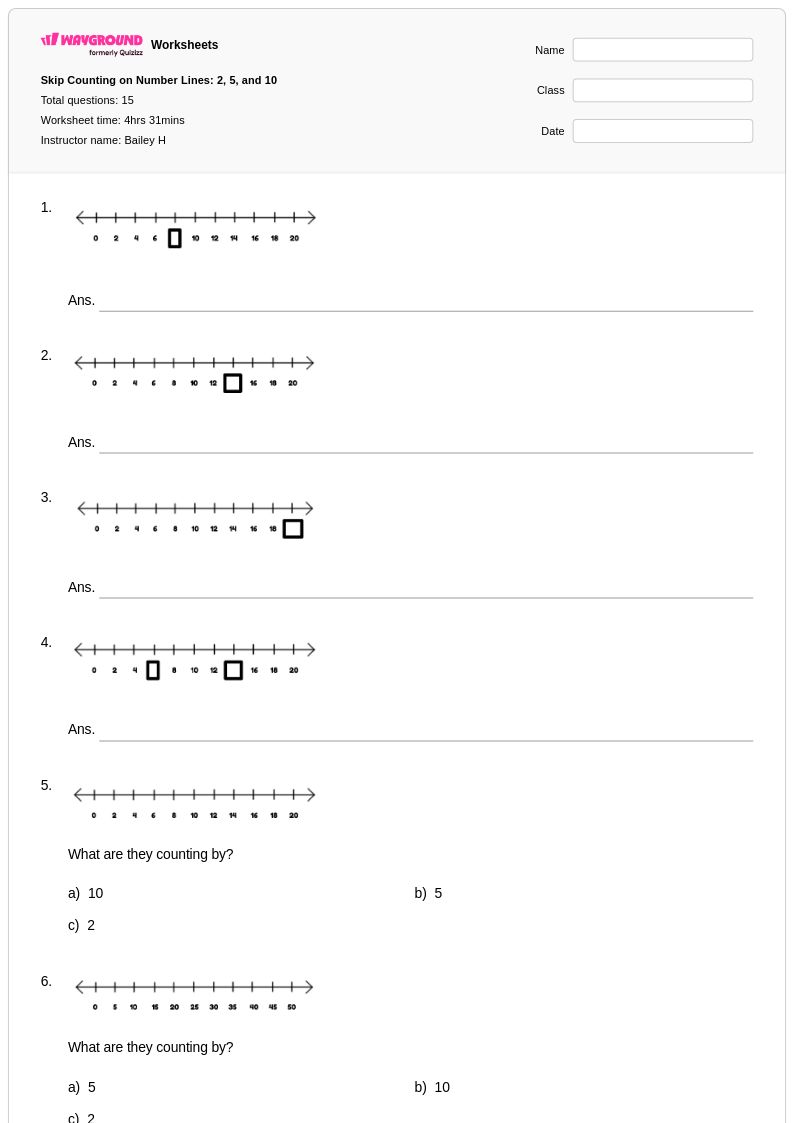
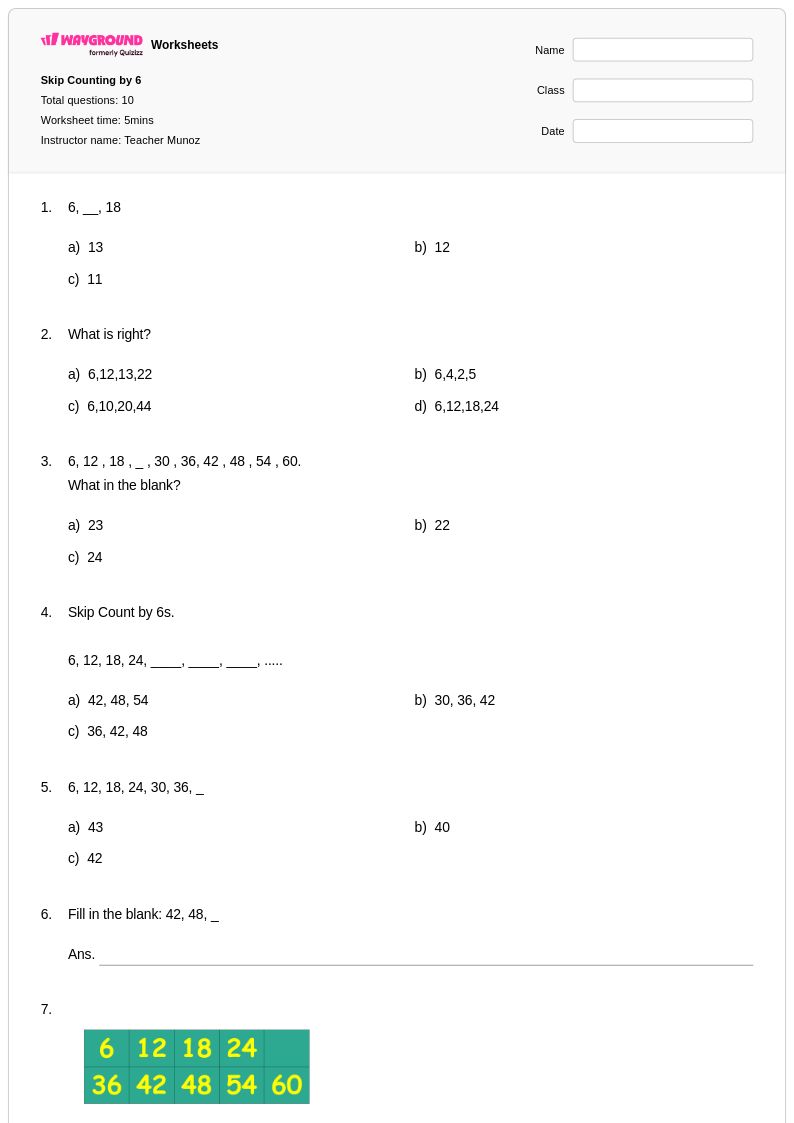
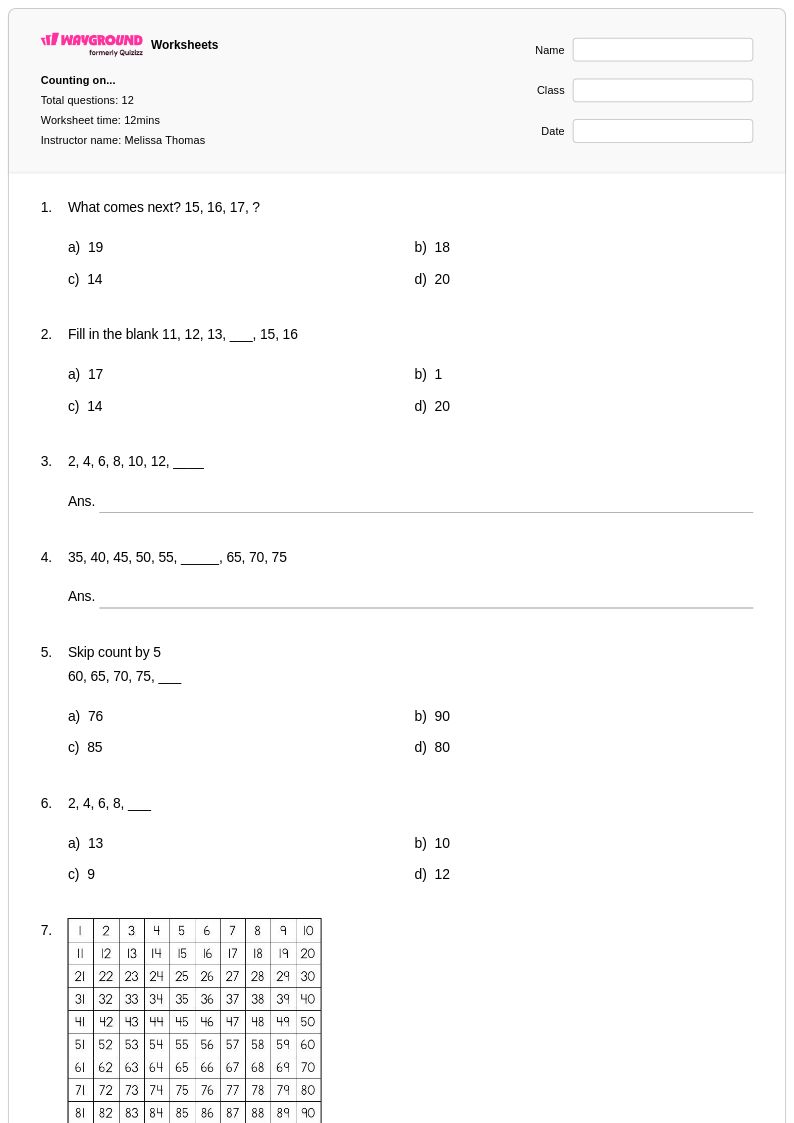
Skip counting worksheets for Grade 1 students available through Wayground (formerly Quizizz) provide essential foundational practice for developing number sense and pattern recognition skills. These comprehensive printables focus on teaching young learners to count by 2s, 5s, and 10s, building the mathematical reasoning necessary for multiplication, division, and advanced number concepts in later grades. Each worksheet collection includes carefully structured practice problems that progress from concrete visual representations to abstract number sequences, helping first-grade students recognize consistent patterns in our number system. Teachers can access complete answer keys alongside these free resources, making assessment and guided instruction more efficient while ensuring students receive immediate feedback on their skip counting accuracy.
Wayground's extensive library contains millions of teacher-created skip counting resources specifically designed for Grade 1 mathematics instruction, offering educators powerful search and filtering capabilities to locate worksheets that align with specific curriculum standards and learning objectives. The platform's differentiation tools allow teachers to customize difficulty levels and problem types, ensuring that both struggling learners and advanced students receive appropriate mathematical challenges within the same skip counting concept. These versatile resources are available in both printable PDF format for traditional classroom use and digital formats for interactive learning experiences, supporting flexible lesson planning whether teachers need quick remediation activities, enrichment exercises, or systematic skill practice sessions that build students' confidence with fundamental number patterns.
FAQs
What's an effective way to teach skip counting in first grade?
What types of problems help first graders practice skip counting?
How does skip counting in first grade build on kindergarten skills?
What mistakes do first graders make with skip counting?
How can I use these Grade 1 skip counting worksheets?