
20 Q
10th - Uni
13 Q
10th
16 Q
7th - Uni
20 Q
10th
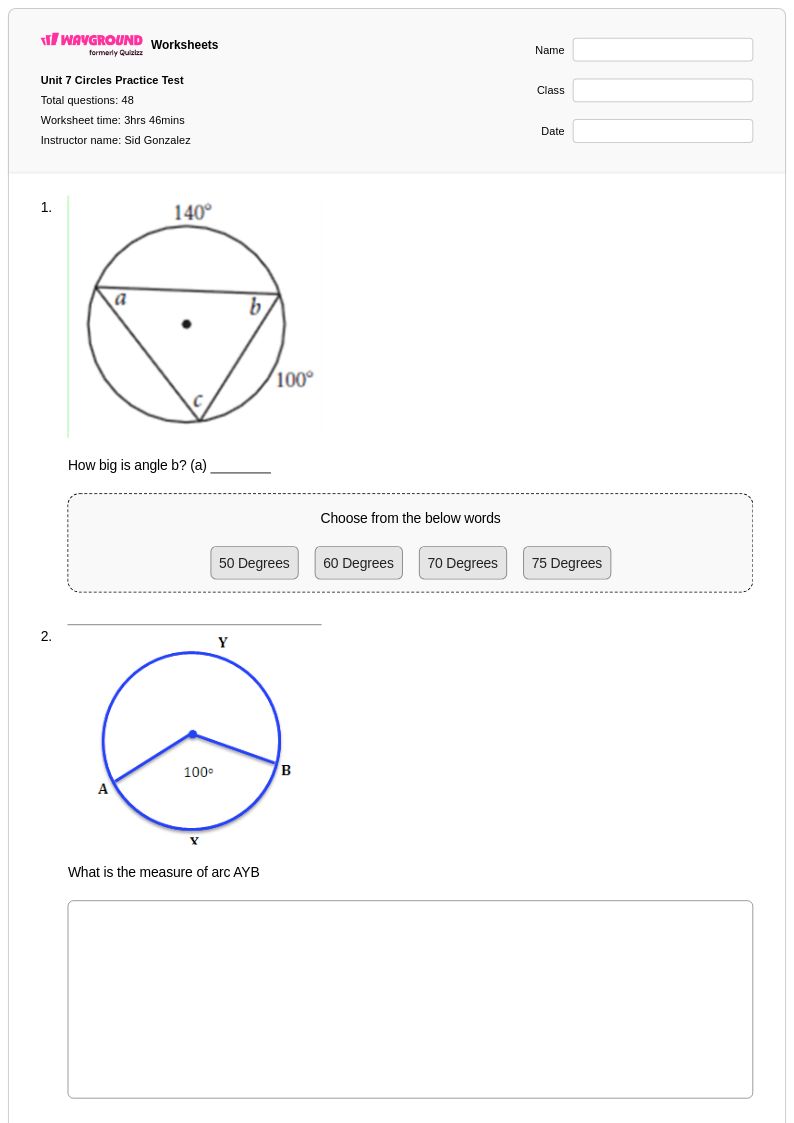
48 Q
9th - 12th
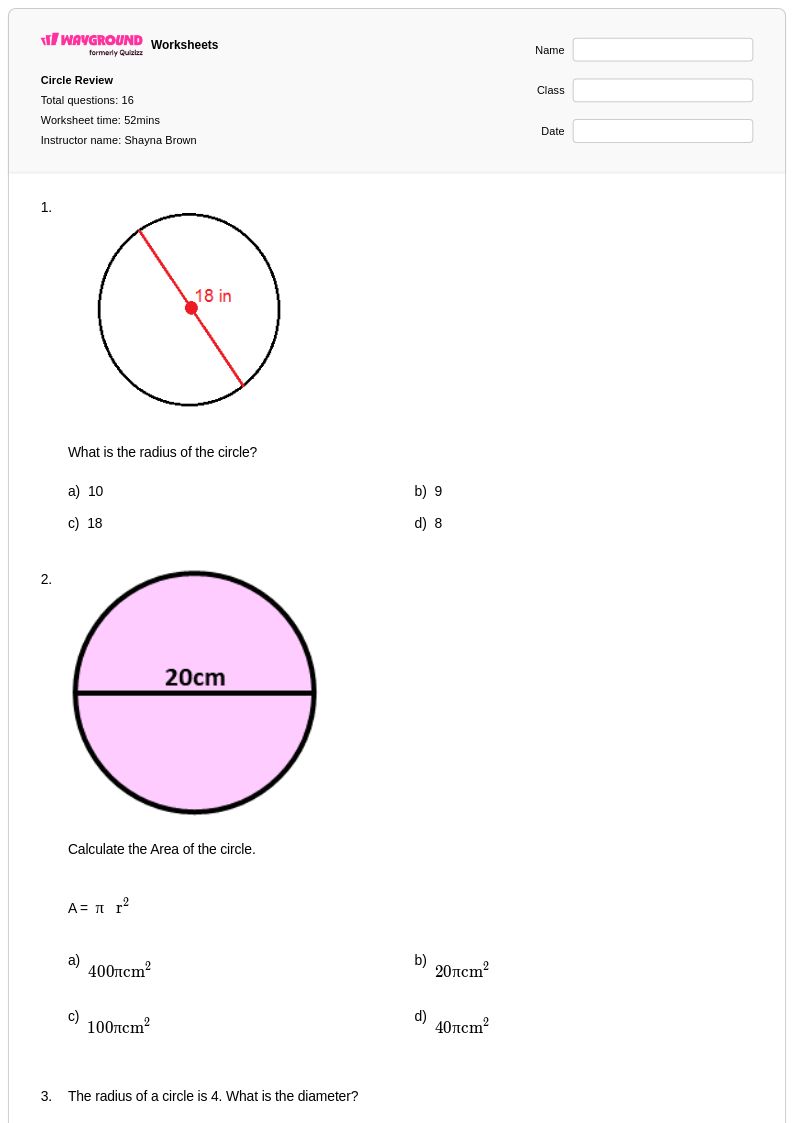
16 Q
9th - 12th
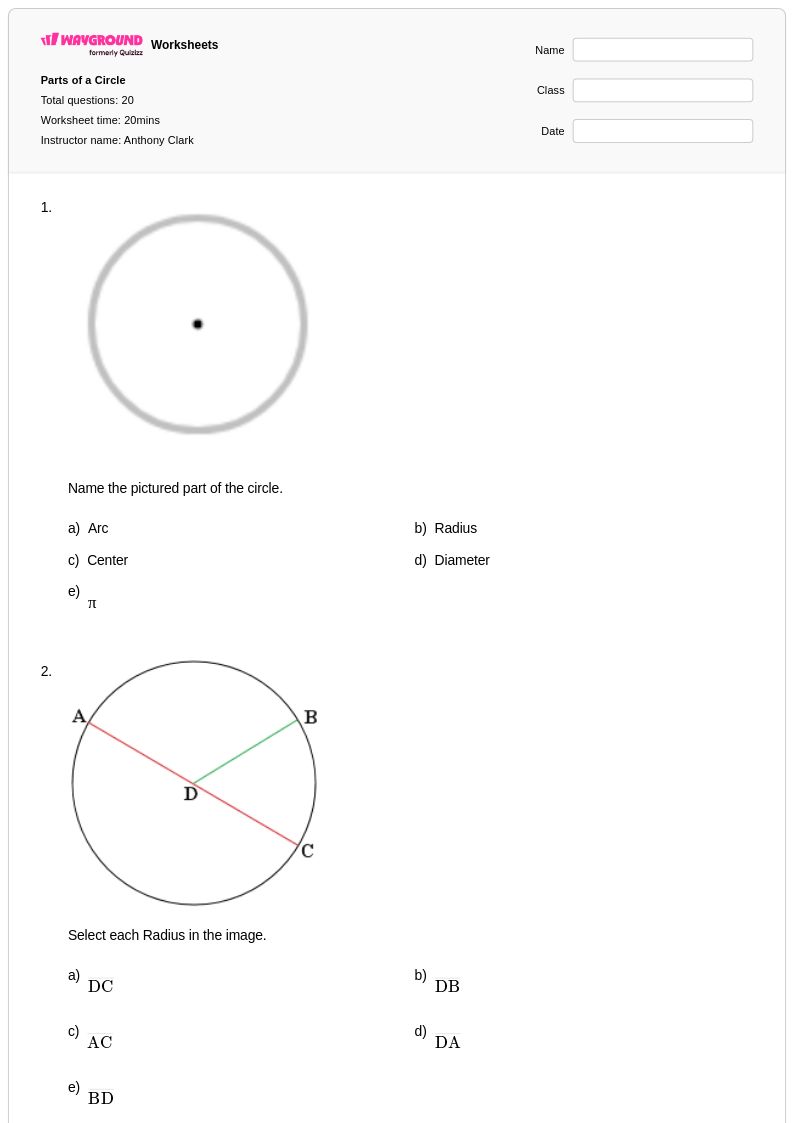
20 Q
7th - Uni
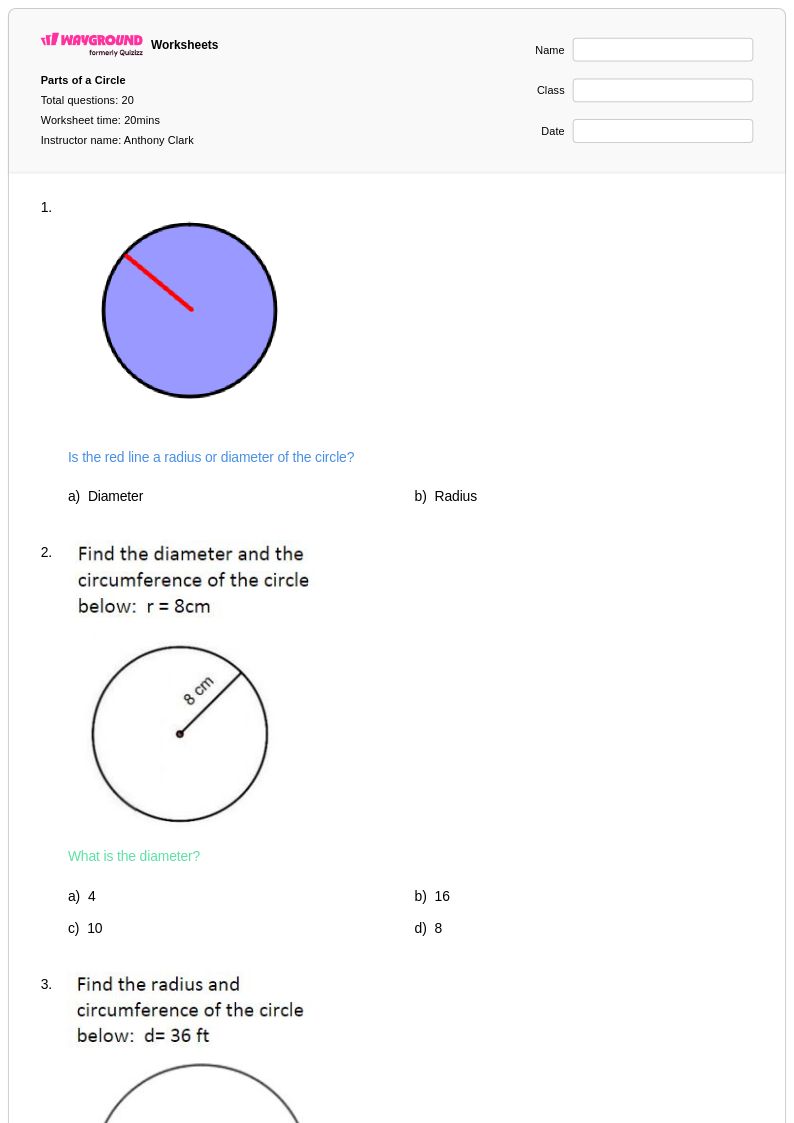
20 Q
7th - Uni
10 Q
9th - 12th
20 Q
7th - Uni
20 Q
7th - Uni
20 Q
7th - Uni
16 Q
9th - 12th
20 Q
10th - Uni
90 Q
10th
20 Q
10th
20 Q
7th - Uni
20 Q
7th - Uni
20 Q
8th - Uni
20 Q
10th - Uni
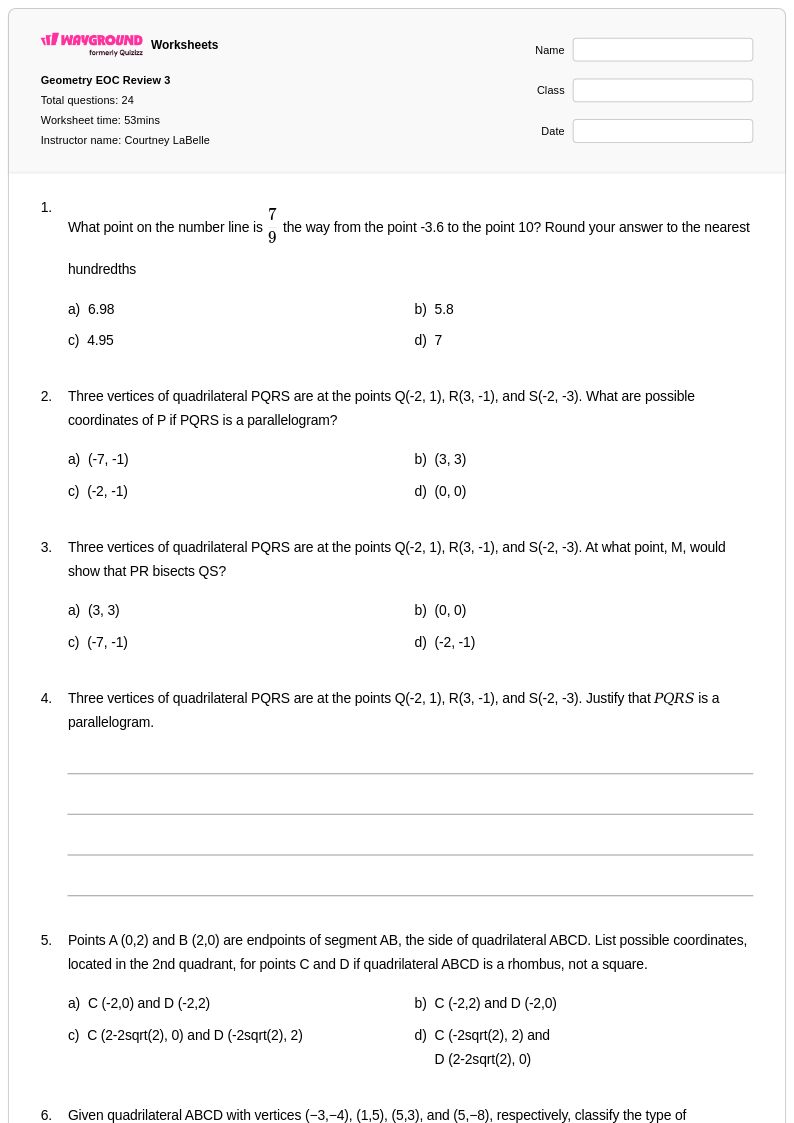
24 Q
10th
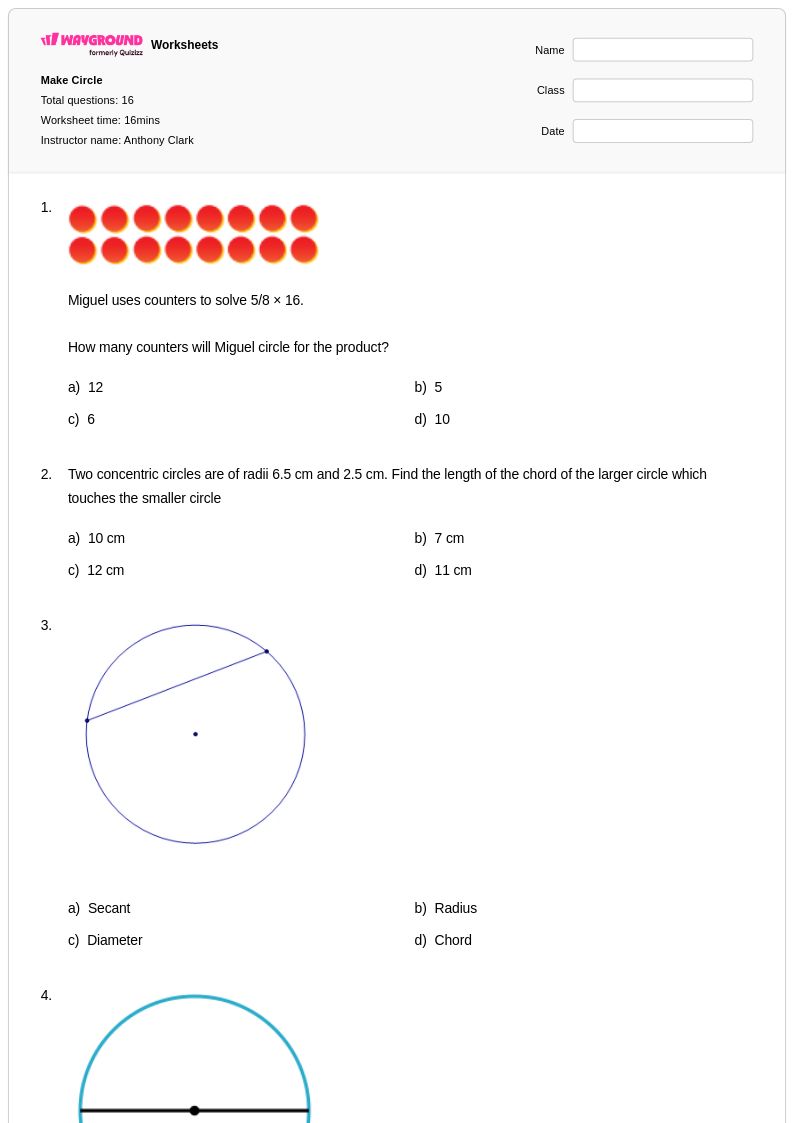
16 Q
7th - Uni
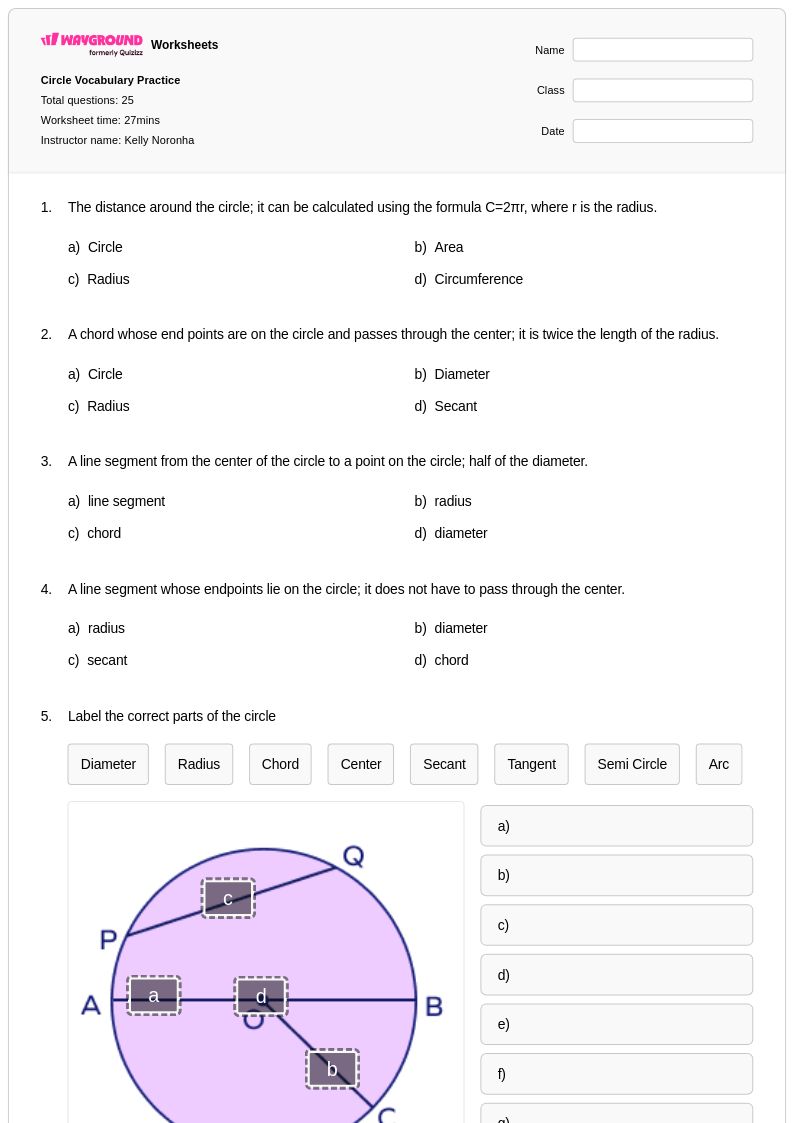
25 Q
9th - 12th
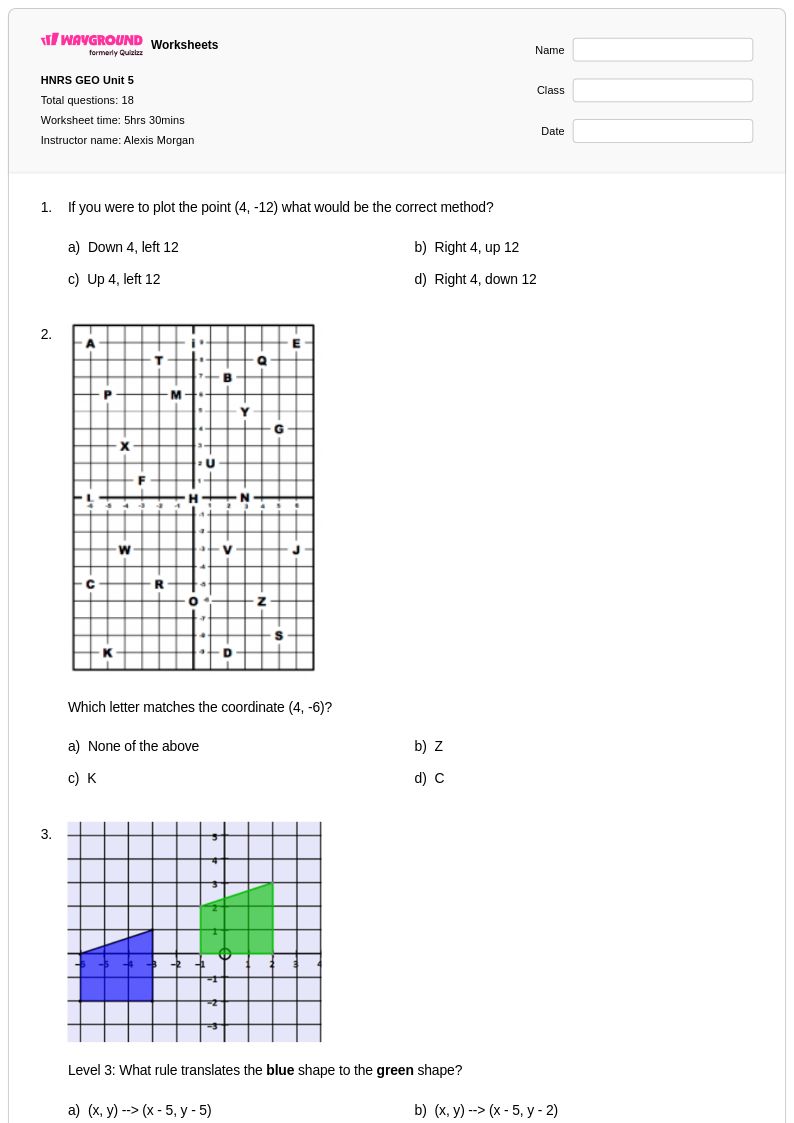
18 Q
10th
Explore Other Subject Worksheets for grade 10
Explore printable Tangent Line to a Circle worksheets for Grade 10
Tangent line to a circle worksheets for Grade 10 students available through Wayground (formerly Quizizz) provide comprehensive practice with one of geometry's most fundamental concepts. These expertly designed resources strengthen students' understanding of the perpendicular relationship between tangent lines and radii at the point of tangency, while developing skills in calculating tangent lengths, finding equations of tangent lines, and solving complex problems involving tangent segments from external points. The worksheets feature carefully scaffolded practice problems that progress from basic identification of tangent properties to advanced applications involving coordinate geometry and algebraic manipulation. Each resource includes a complete answer key to support independent learning and self-assessment, with free printables available in convenient PDF format for seamless classroom integration.
Wayground (formerly Quizizz) empowers teachers with millions of teacher-created tangent line to a circle worksheets that can be easily searched, filtered, and customized to meet diverse classroom needs. The platform's robust collection allows educators to quickly locate resources aligned with specific mathematics standards while utilizing powerful differentiation tools to accommodate varying student ability levels within Grade 10 geometry courses. Teachers can modify existing worksheets or combine multiple resources to create targeted practice sets for remediation, enrichment, or regular skill reinforcement. The flexible format options include both printable PDF versions for traditional paper-and-pencil work and digital formats that integrate seamlessly with modern classroom technology, enabling educators to efficiently plan lessons that address individual learning gaps while maintaining rigorous geometric reasoning standards.
FAQs
How should I teach tangent lines to a circle in Grade 10?
What should Grade 10 tangent-line practice include?
What errors should I watch for when students find equations of tangent lines?
How can I use a Grade 10 tangent-line worksheet for instruction or assessment?
How does Grade 10 tangent-line work connect to Common Core geometry?
How can I differentiate Grade 10 tangent-line worksheets?
Why are tangent lines taught in Grade 10 geometry?