
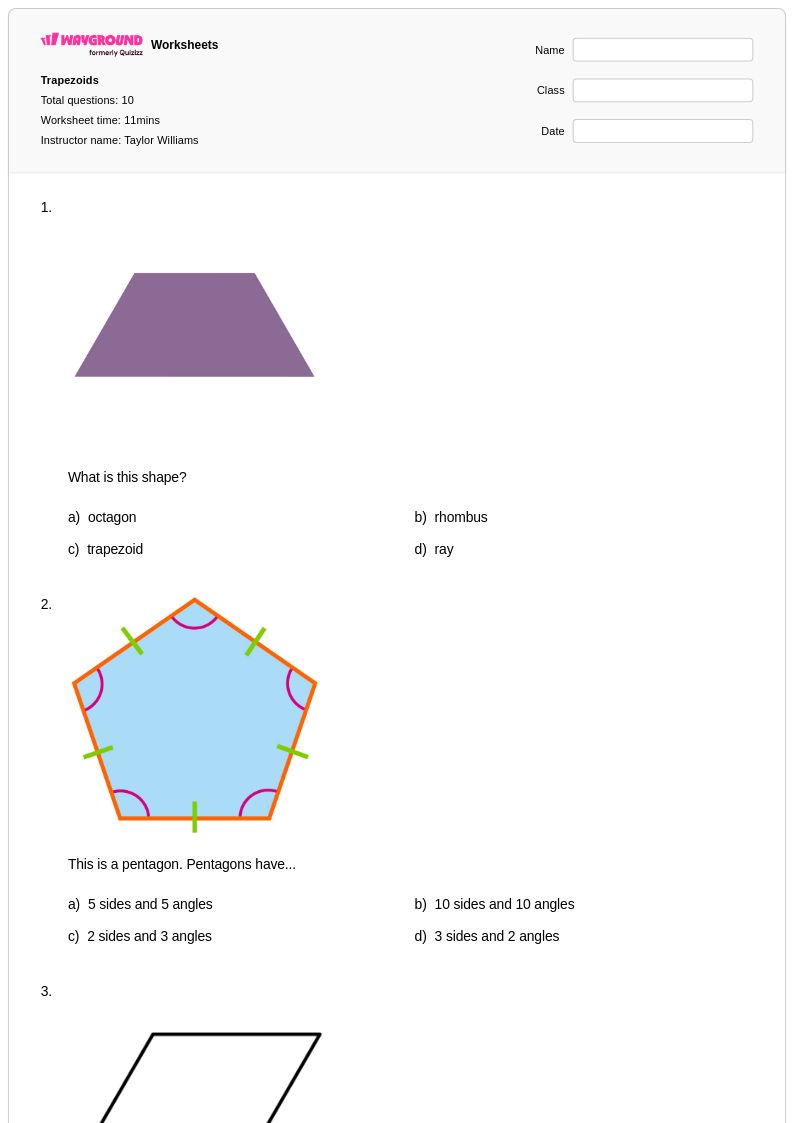
10 Q
1st - 3rd
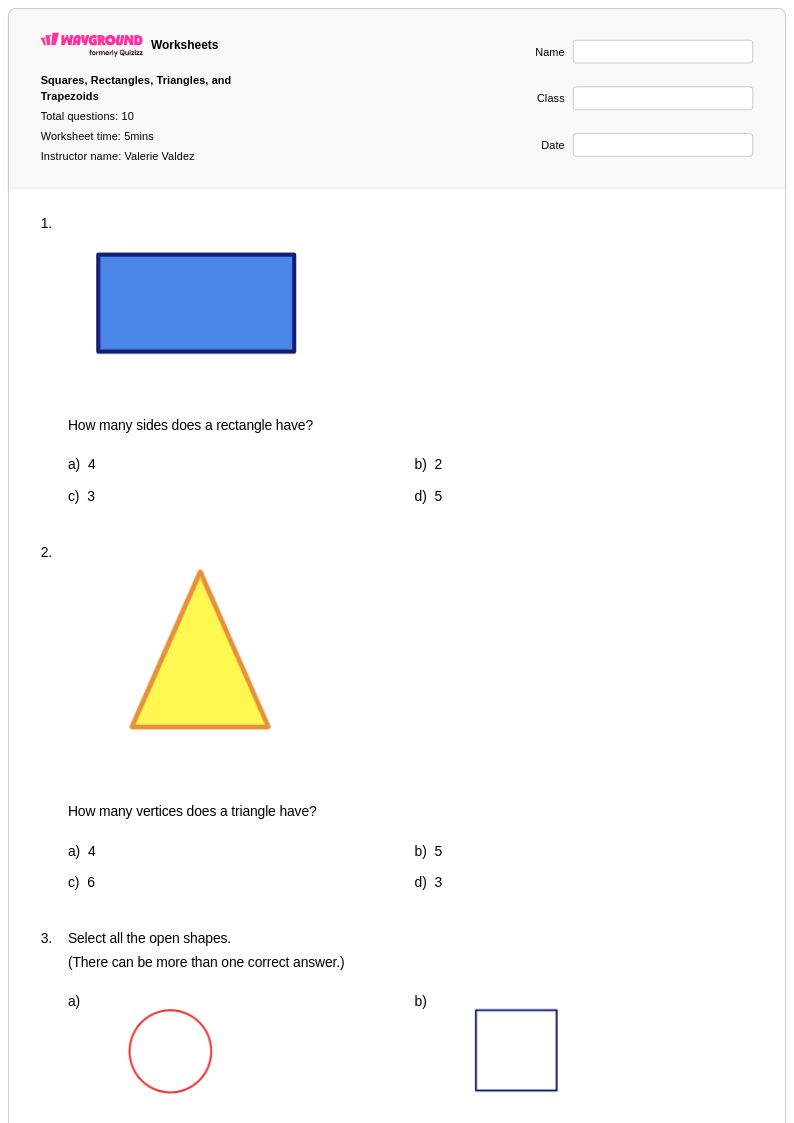
10 Q
1st
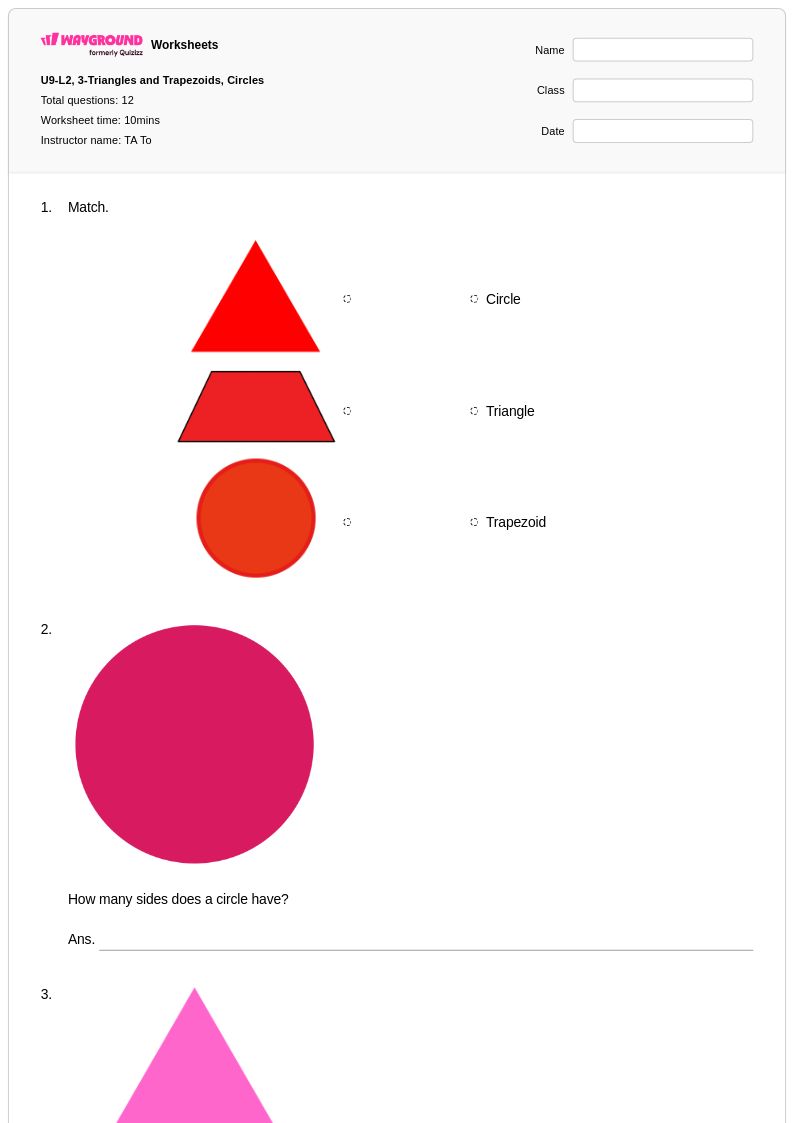
12 Q
1st
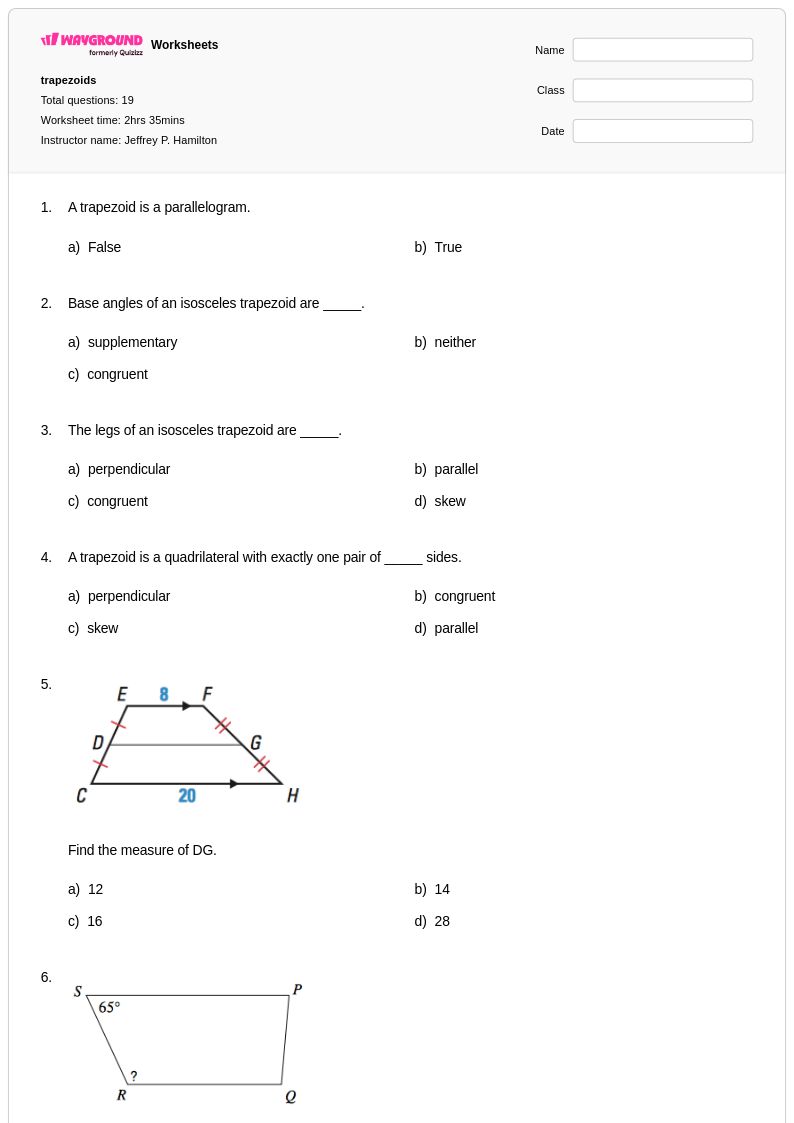
19 Q
1st
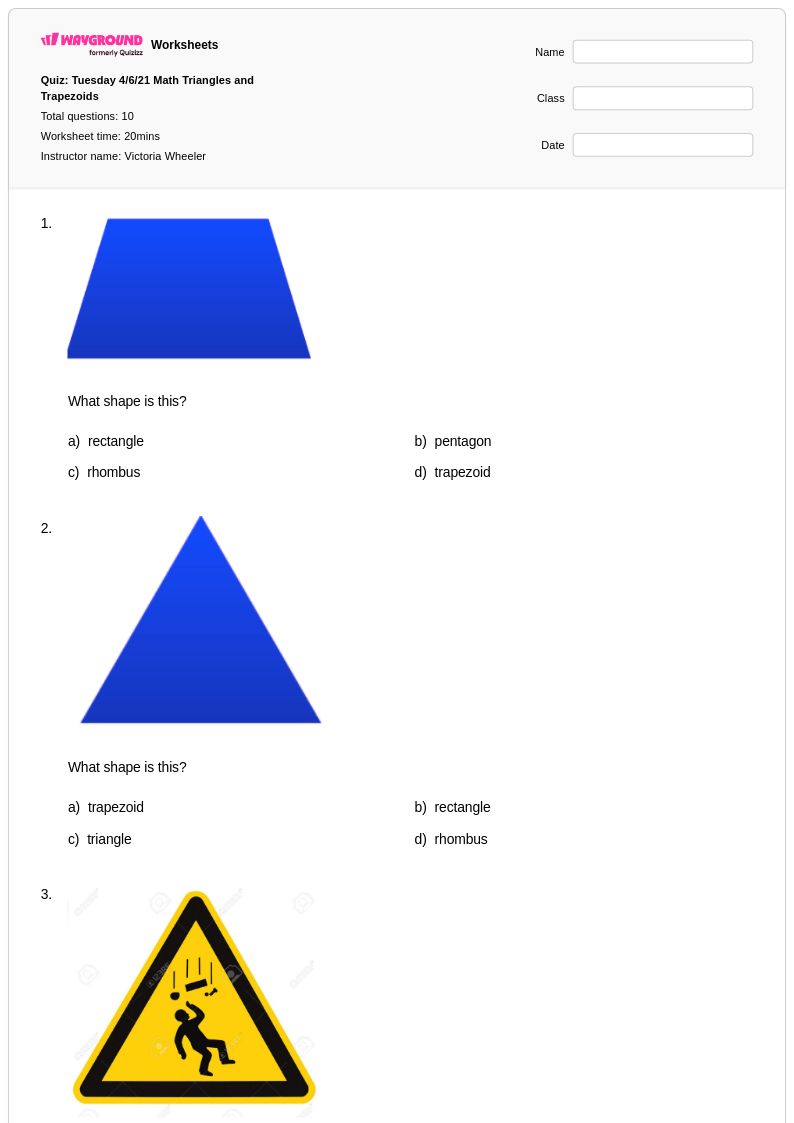
10 Q
1st
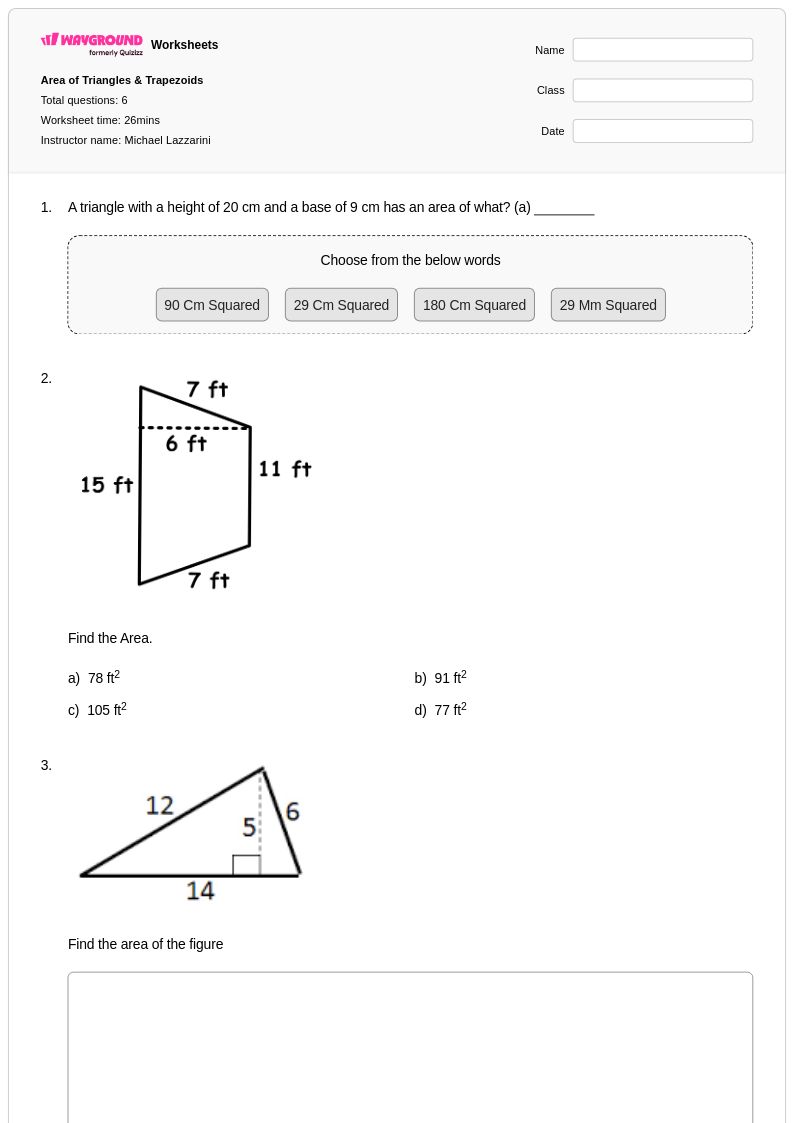
6 Q
1st - 5th
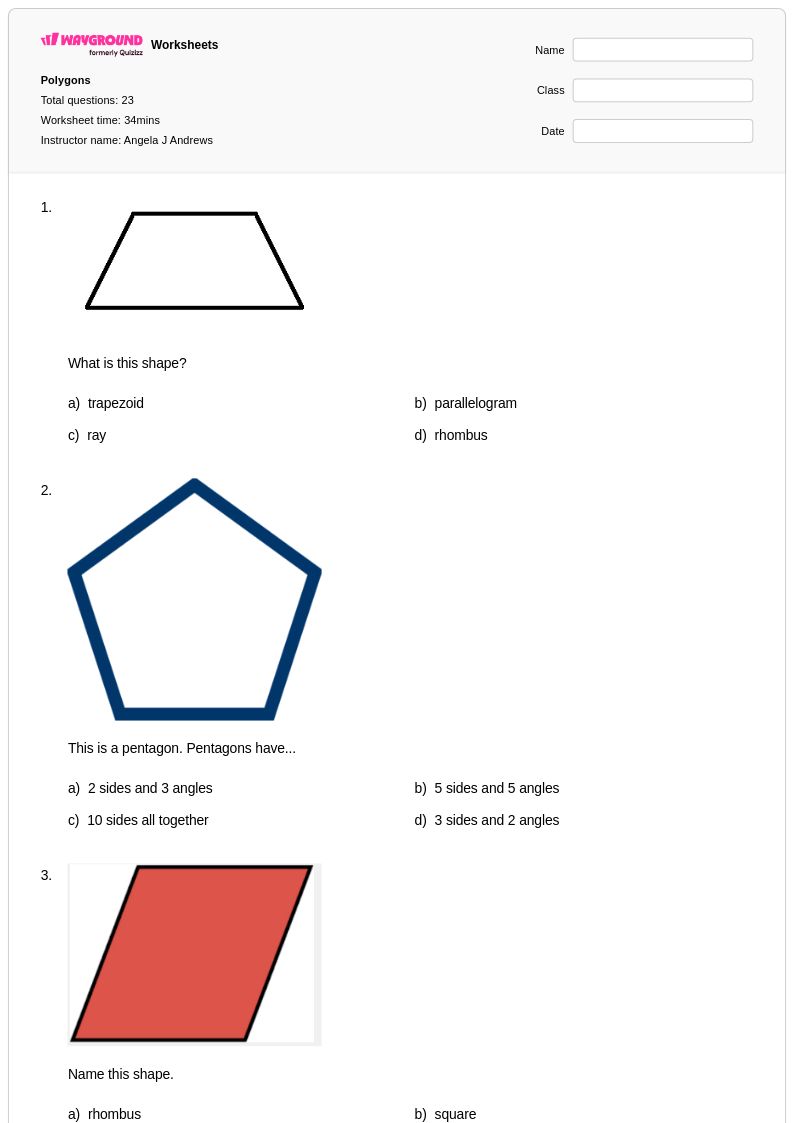
23 Q
1st - 3rd
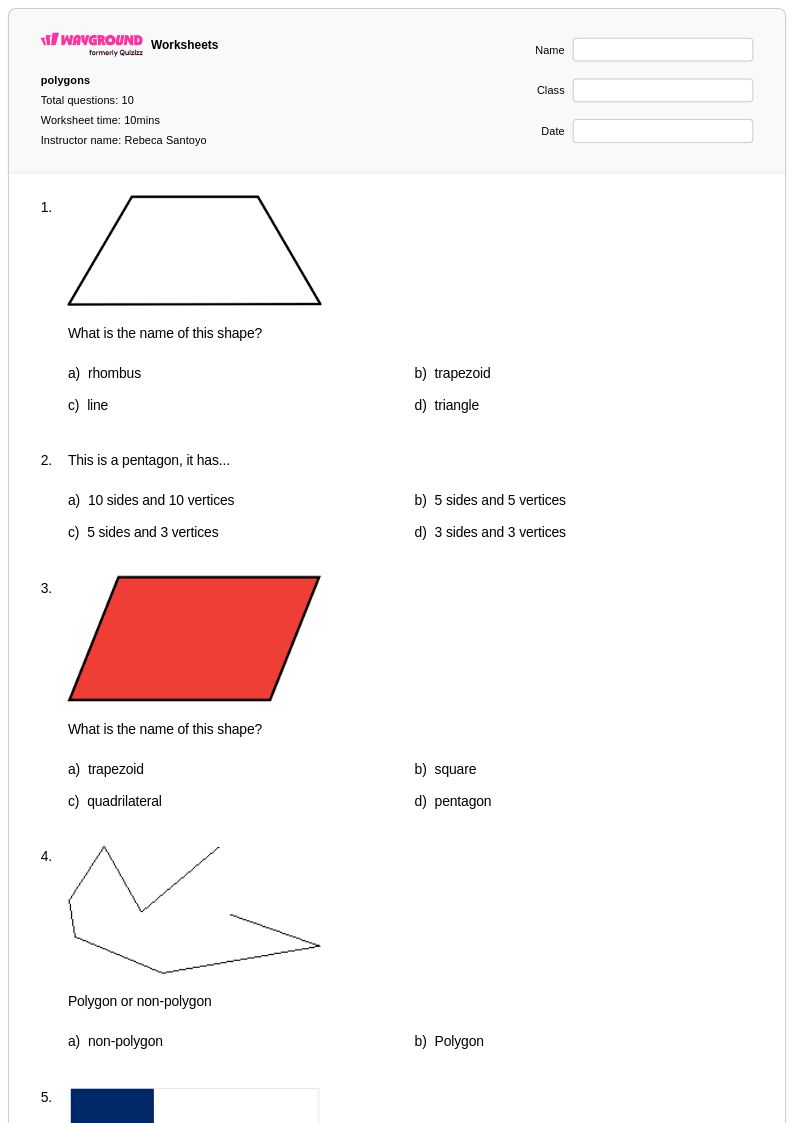
10 Q
KG - 2nd
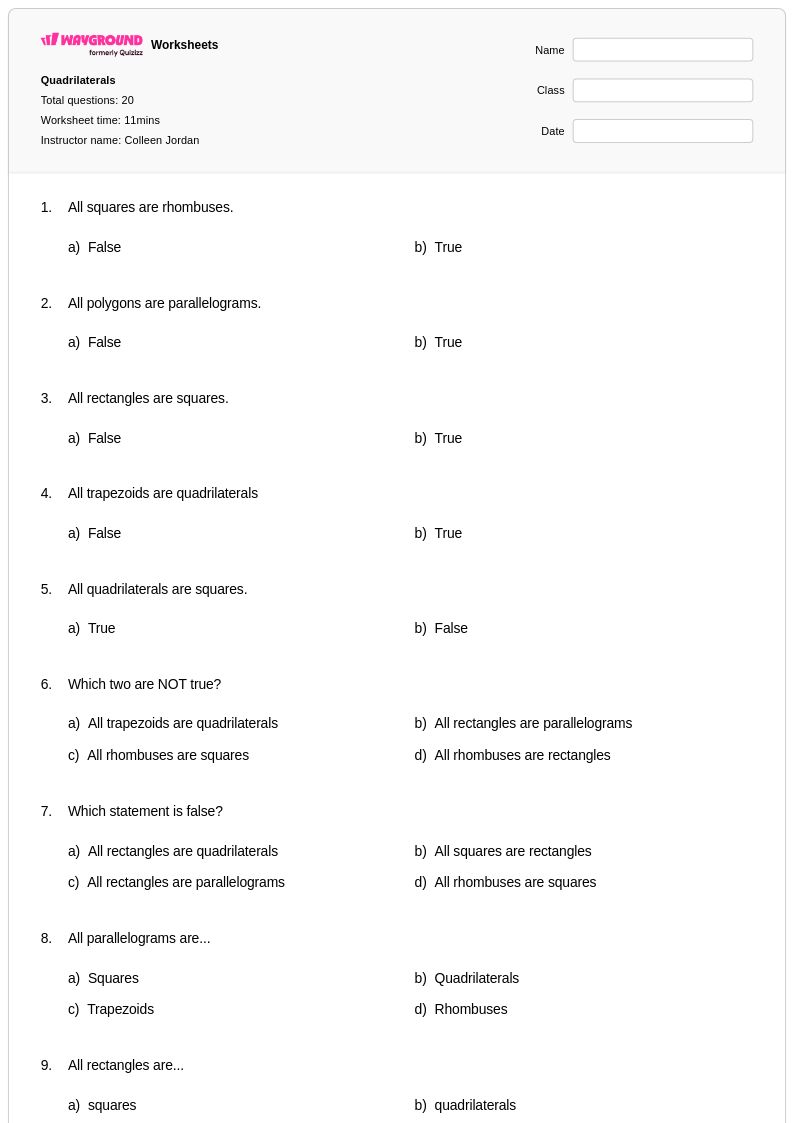
20 Q
1st - 5th
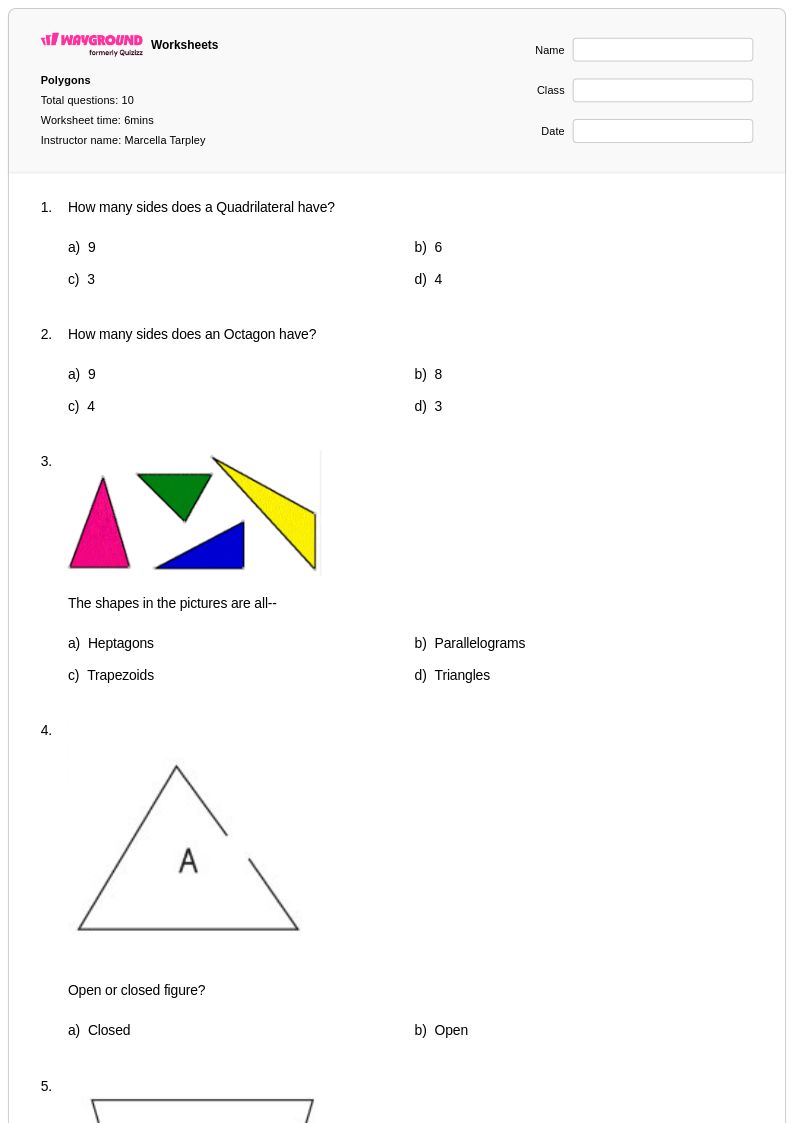
10 Q
1st
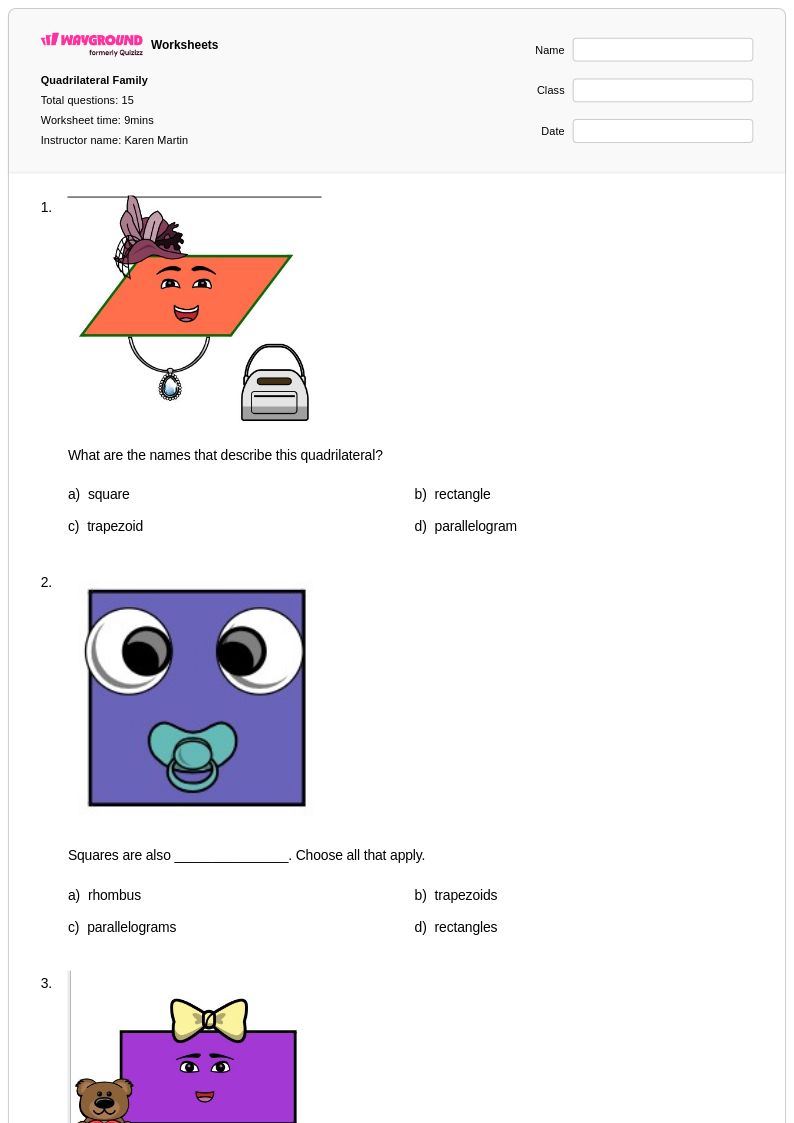
15 Q
1st - 5th
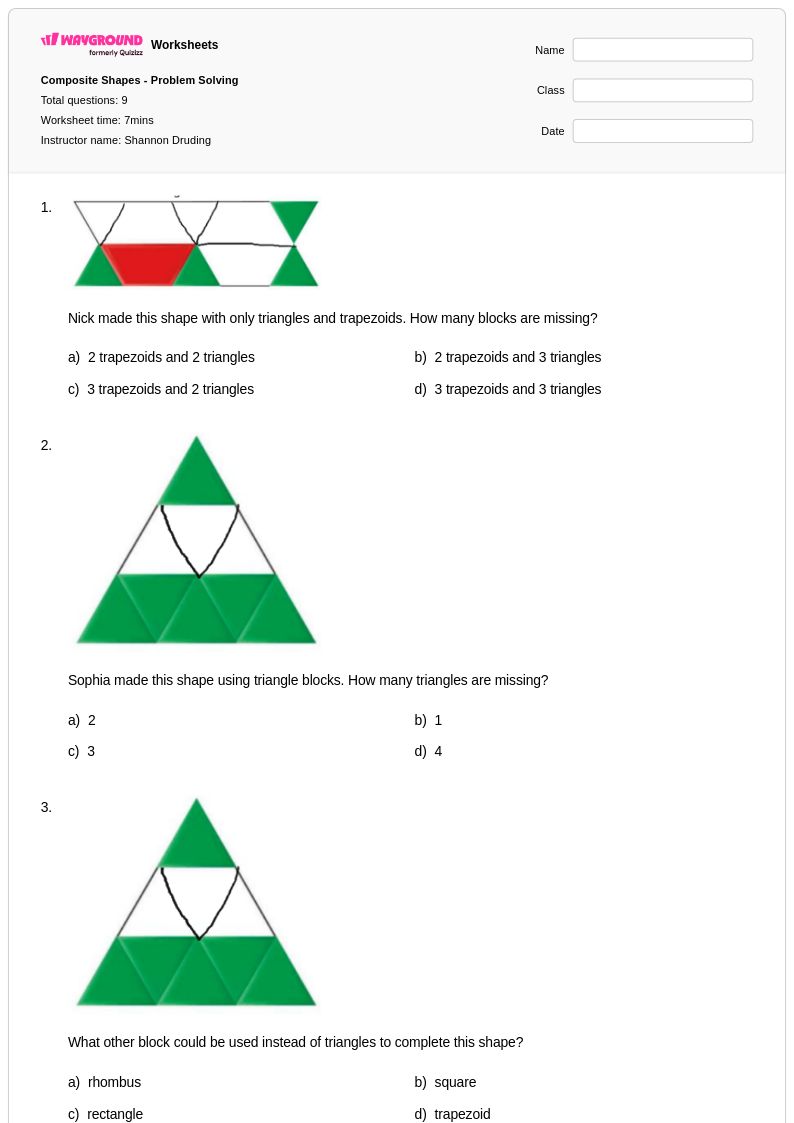
9 Q
1st
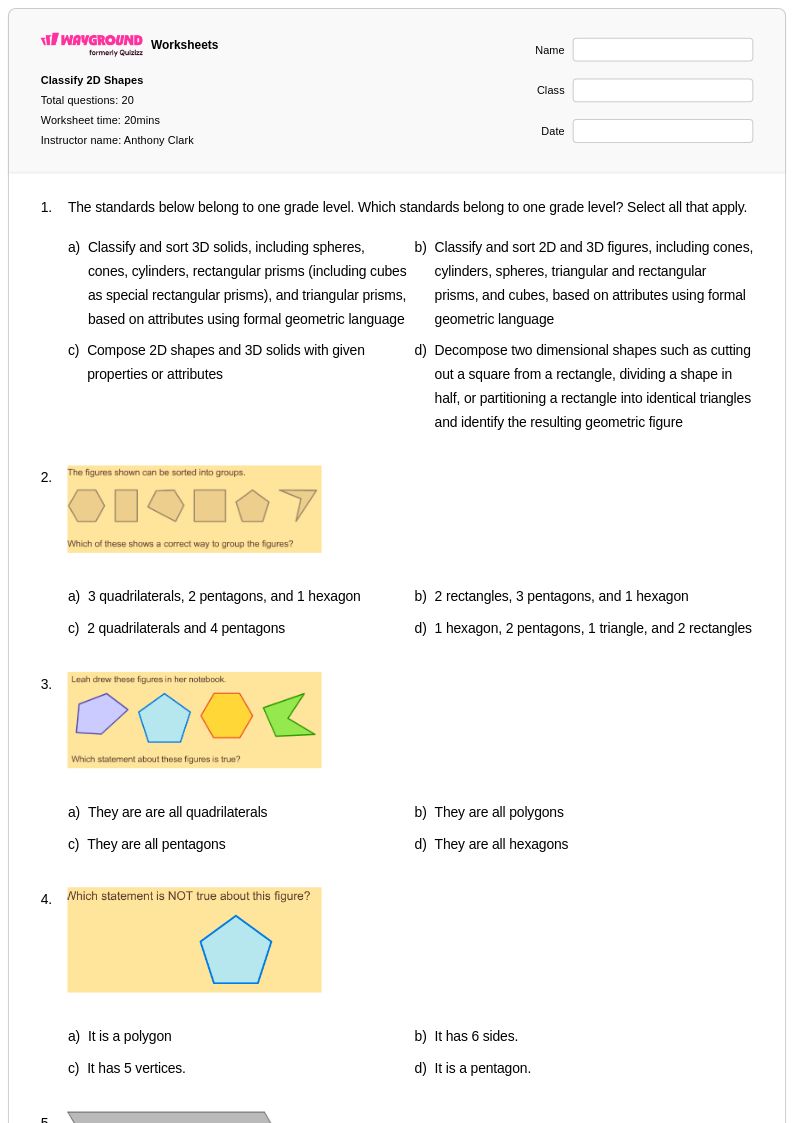
20 Q
1st - Uni
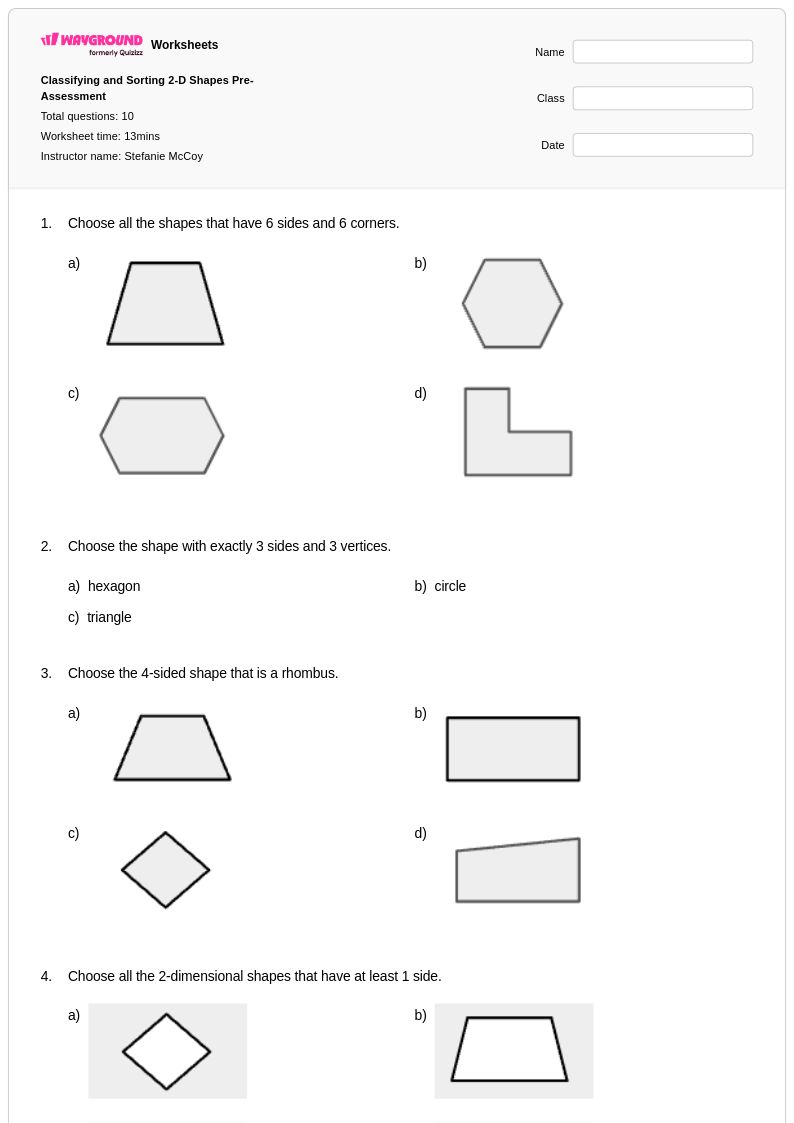
10 Q
1st
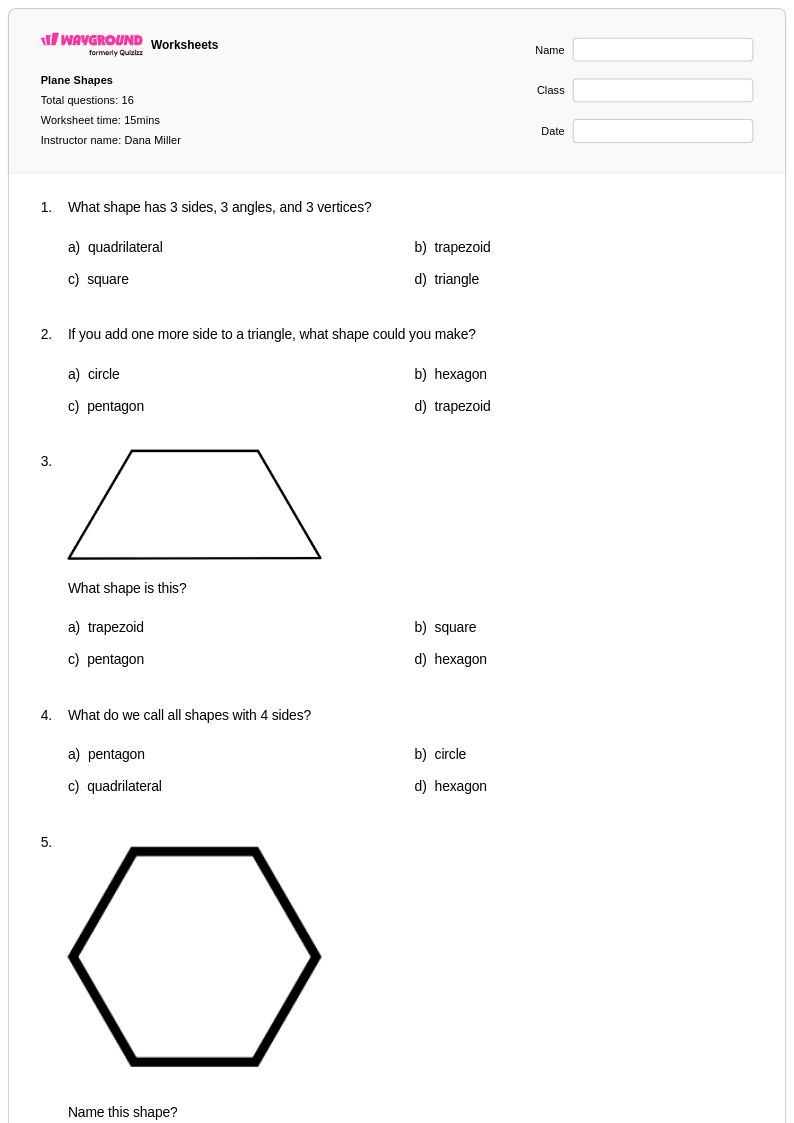
16 Q
1st - 2nd
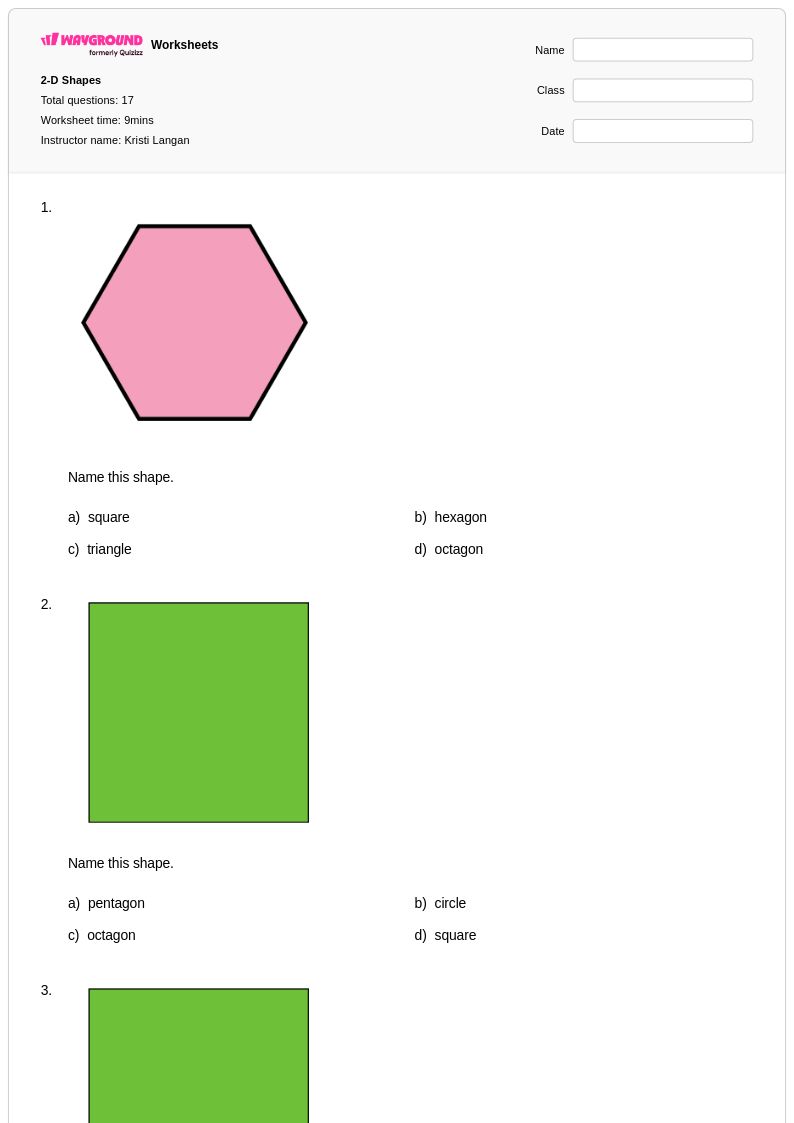
17 Q
1st - 3rd
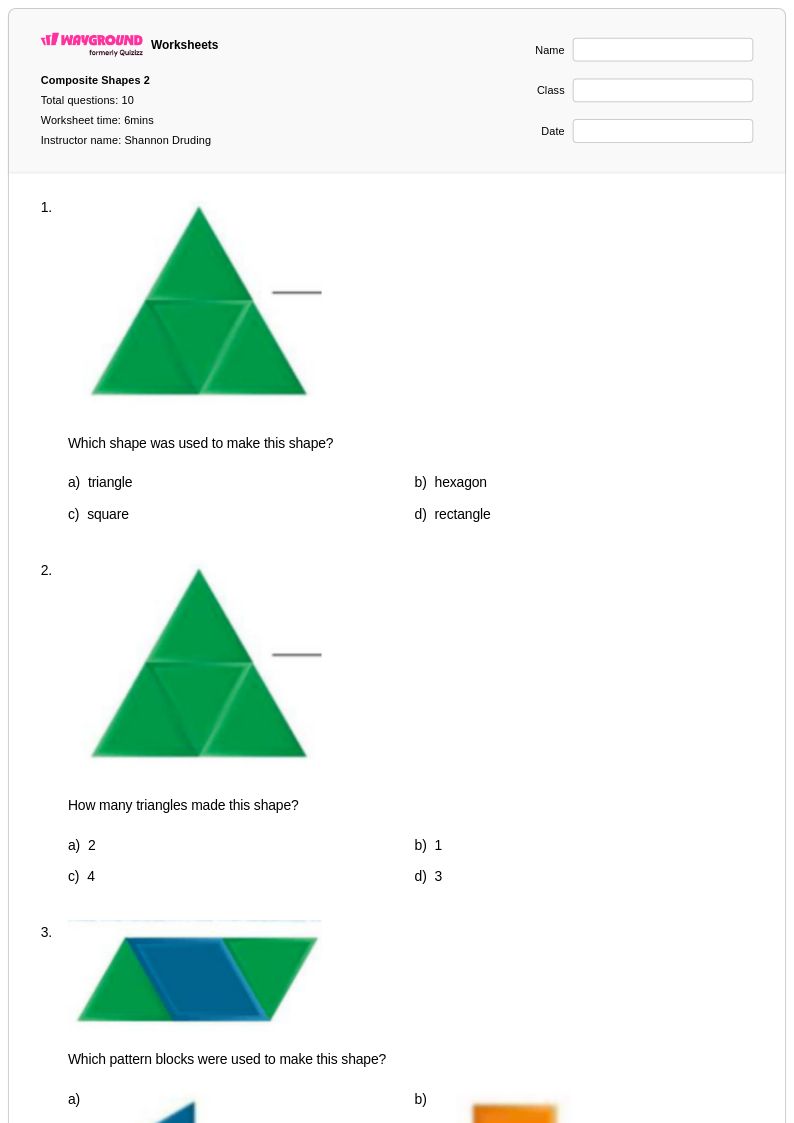
10 Q
1st
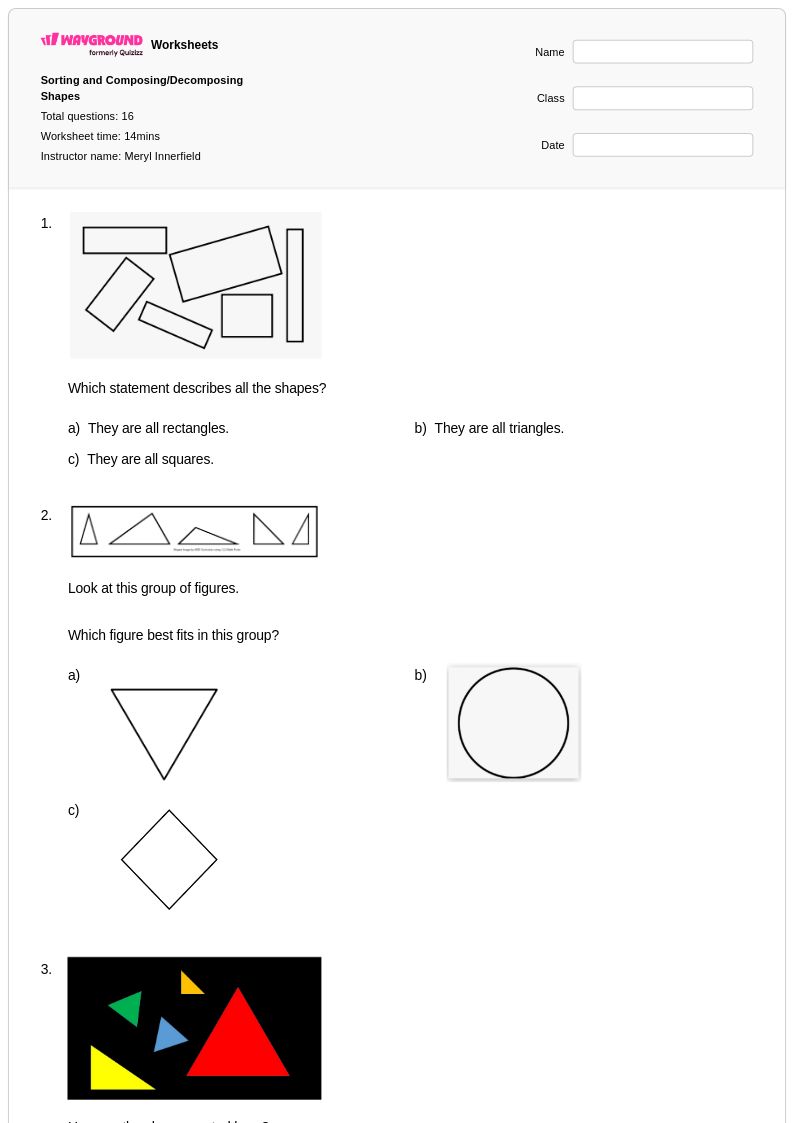
16 Q
1st
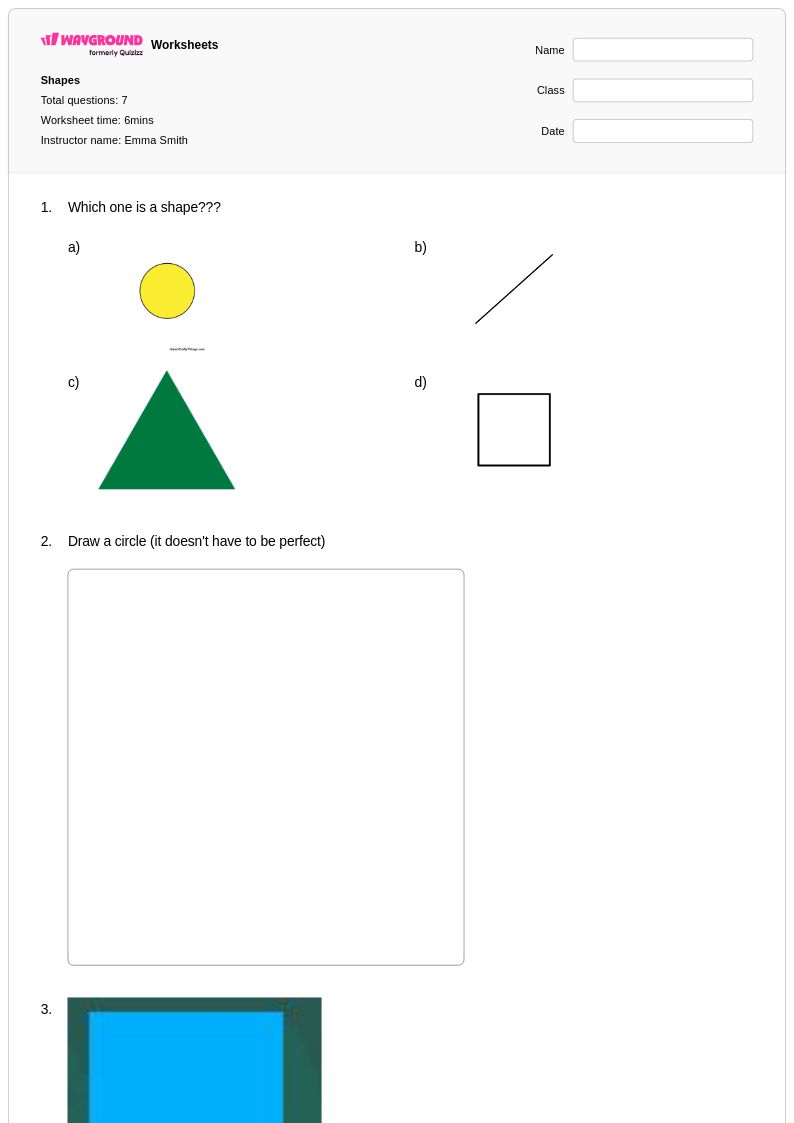
7 Q
1st
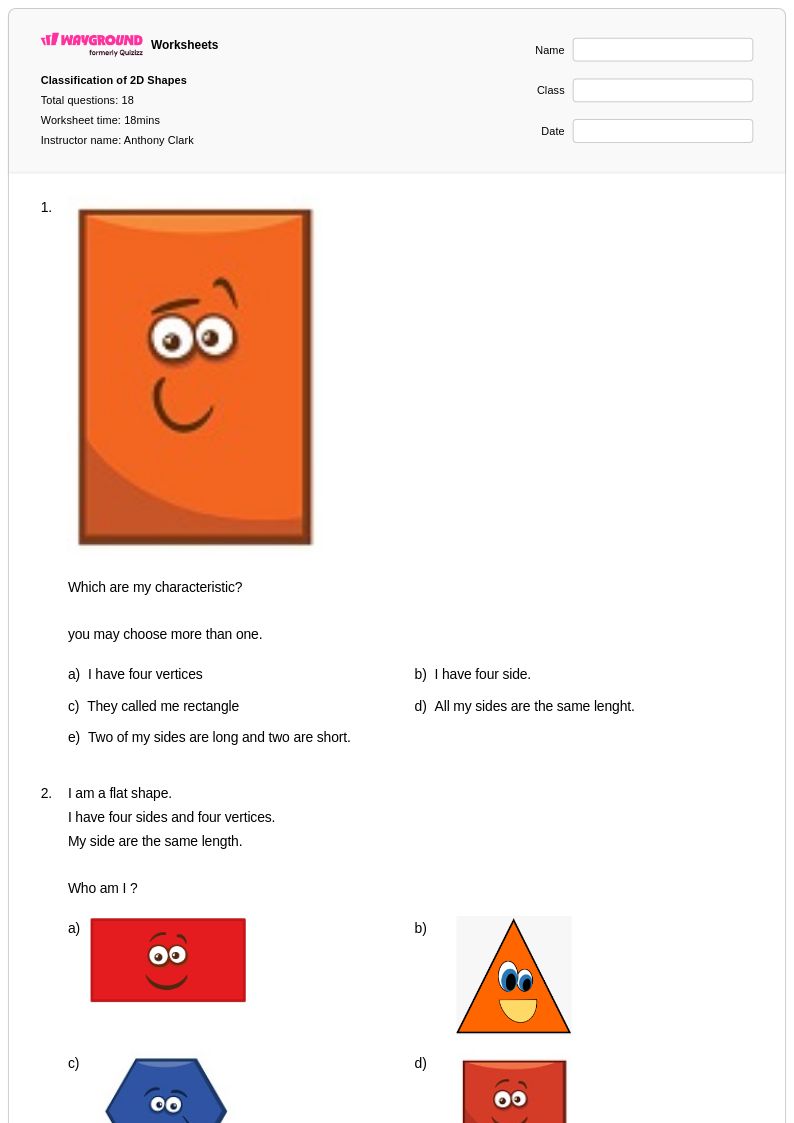
18 Q
1st - Uni
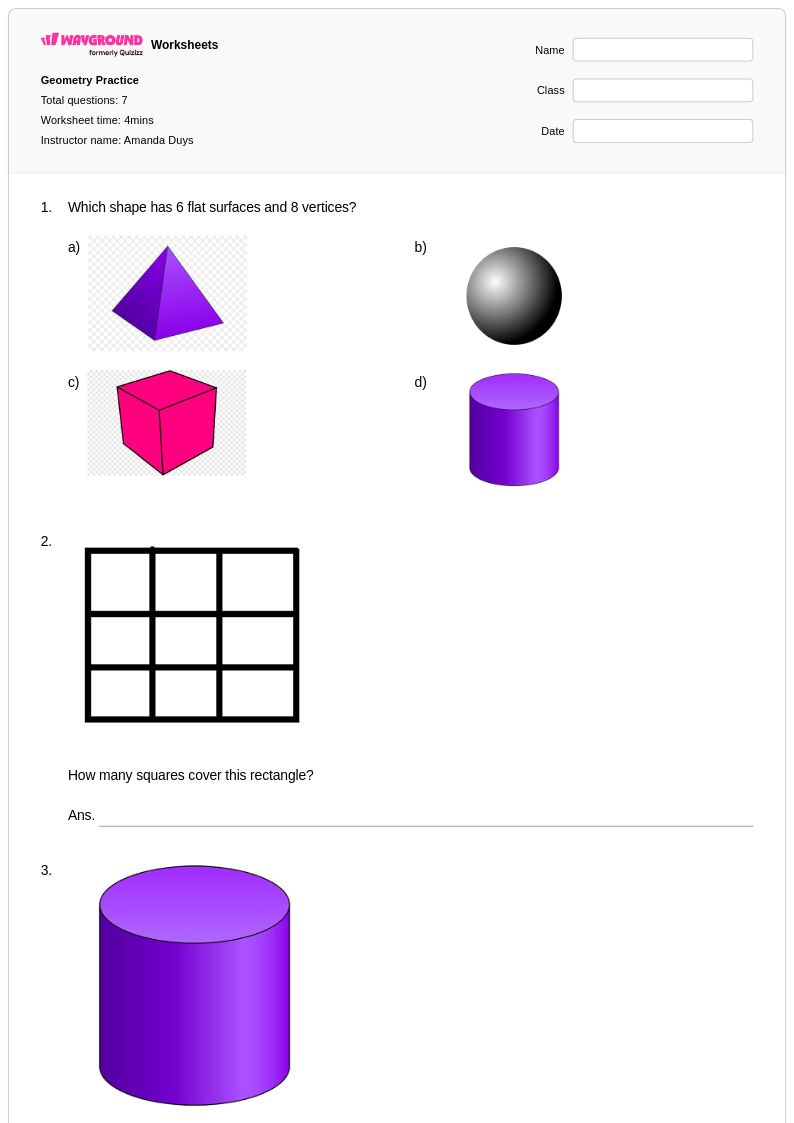
7 Q
1st - 2nd
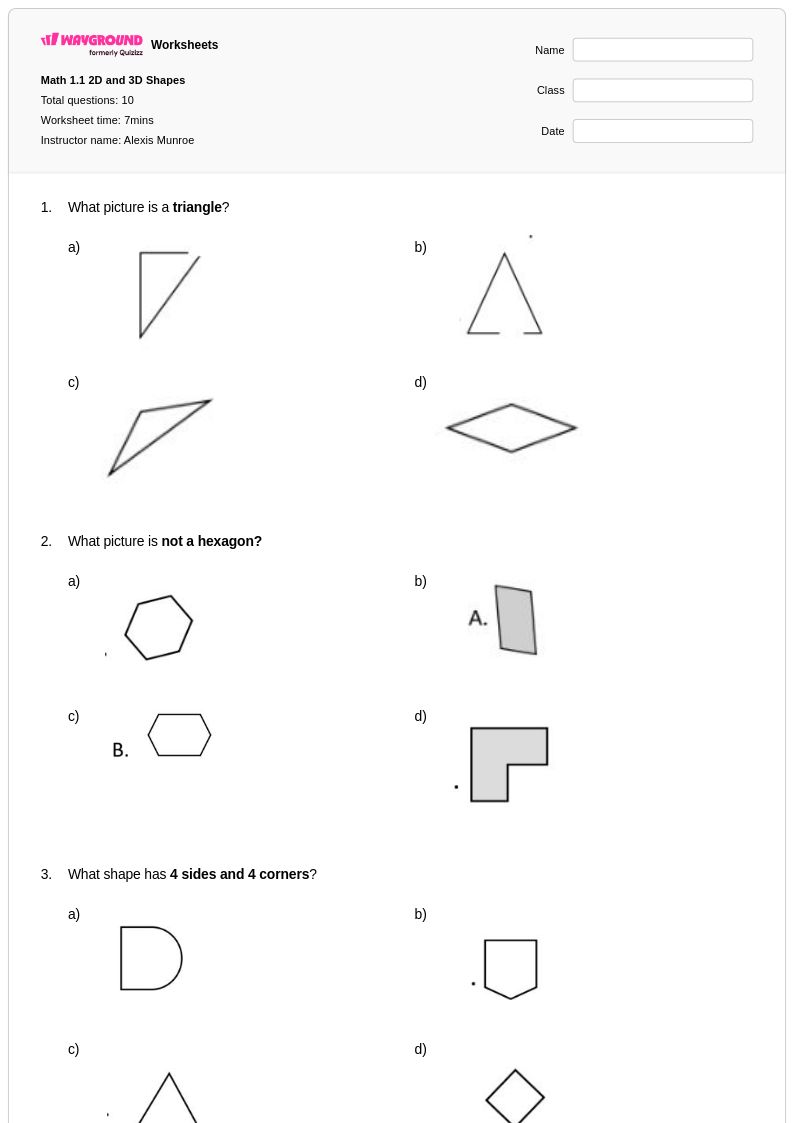
10 Q
1st
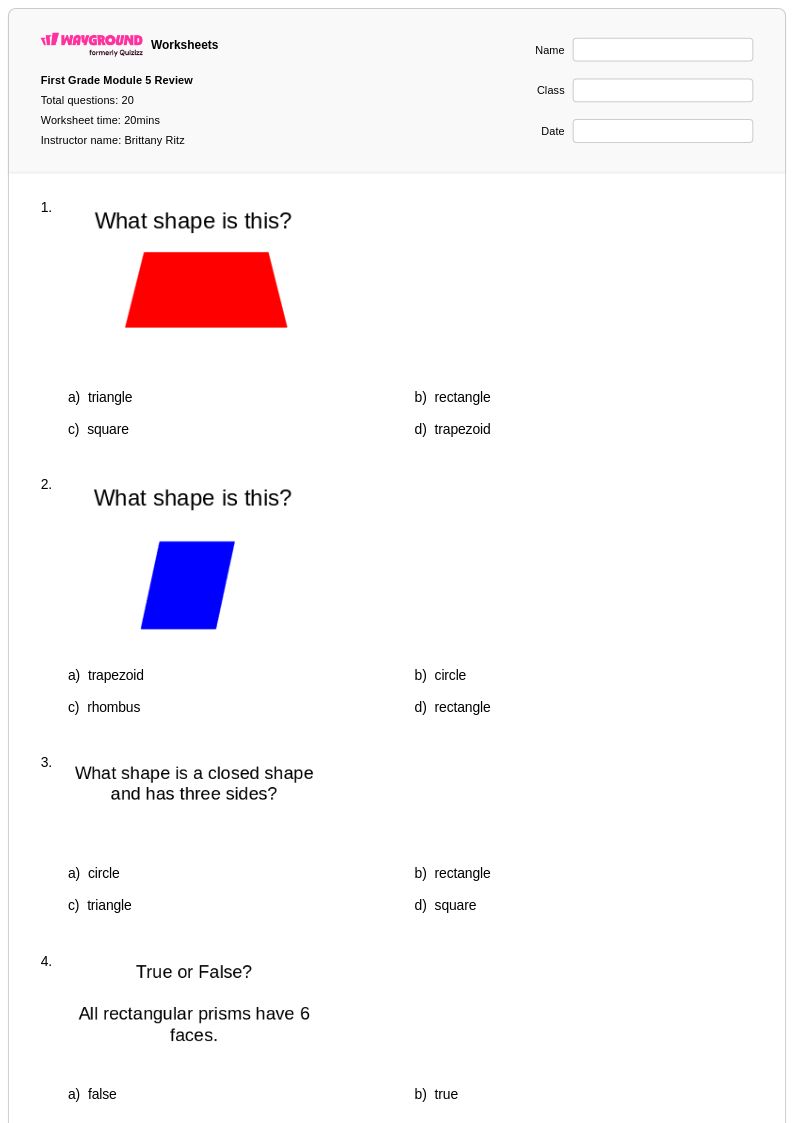
20 Q
1st
10 Q
1st - 6th
Explore Other Subject Worksheets for grade 1
Explore printable Trapezoids worksheets for Grade 1
Trapezoids worksheets for Grade 1 students available through Wayground (formerly Quizizz) introduce young learners to this fundamental four-sided geometric shape through age-appropriate activities and visual exercises. These carefully designed worksheets help first graders develop essential shape recognition skills by teaching them to identify trapezoids among other quadrilaterals, understand the basic properties of trapezoids with their parallel sides, and practice tracing and coloring these shapes to reinforce visual memory. The collection includes free printables with clear answer keys that guide students through practice problems involving shape sorting, pattern completion, and real-world object identification, all presented in an engaging format that builds foundational geometry skills while maintaining student interest through colorful illustrations and interactive elements available in convenient pdf format.
Wayground (formerly Quizizz) empowers teachers with access to millions of educator-created trapezoid and geometry resources that streamline lesson planning and support differentiated instruction for Grade 1 mathematics. The platform's robust search and filtering capabilities allow teachers to quickly locate worksheets that align with specific learning standards and accommodate varying skill levels within their classrooms, while customization tools enable educators to modify existing materials or create targeted practice sets for remediation and enrichment activities. These versatile resources are available in both printable and digital formats, including downloadable pdfs, giving teachers the flexibility to implement trapezoid instruction through traditional paper-based activities or integrate technology-enhanced learning experiences that can be easily adapted for individual student needs, small group work, or whole-class geometry lessons.