
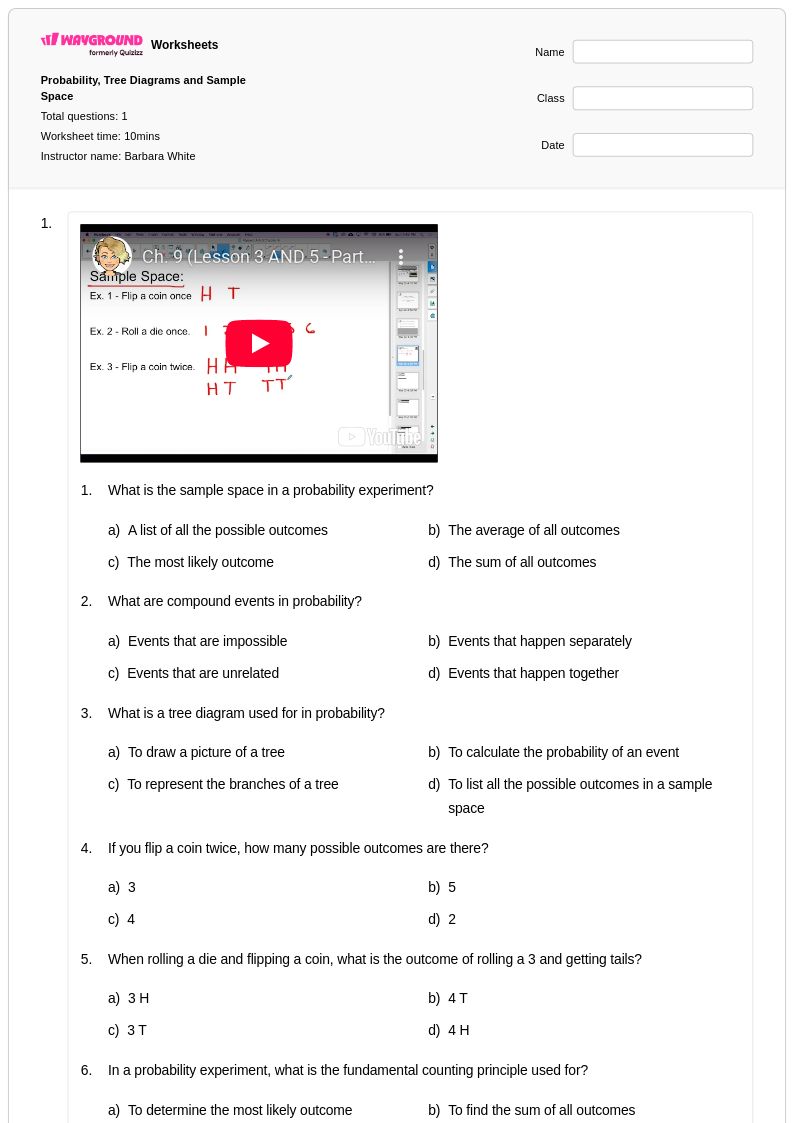
11 Q
7th
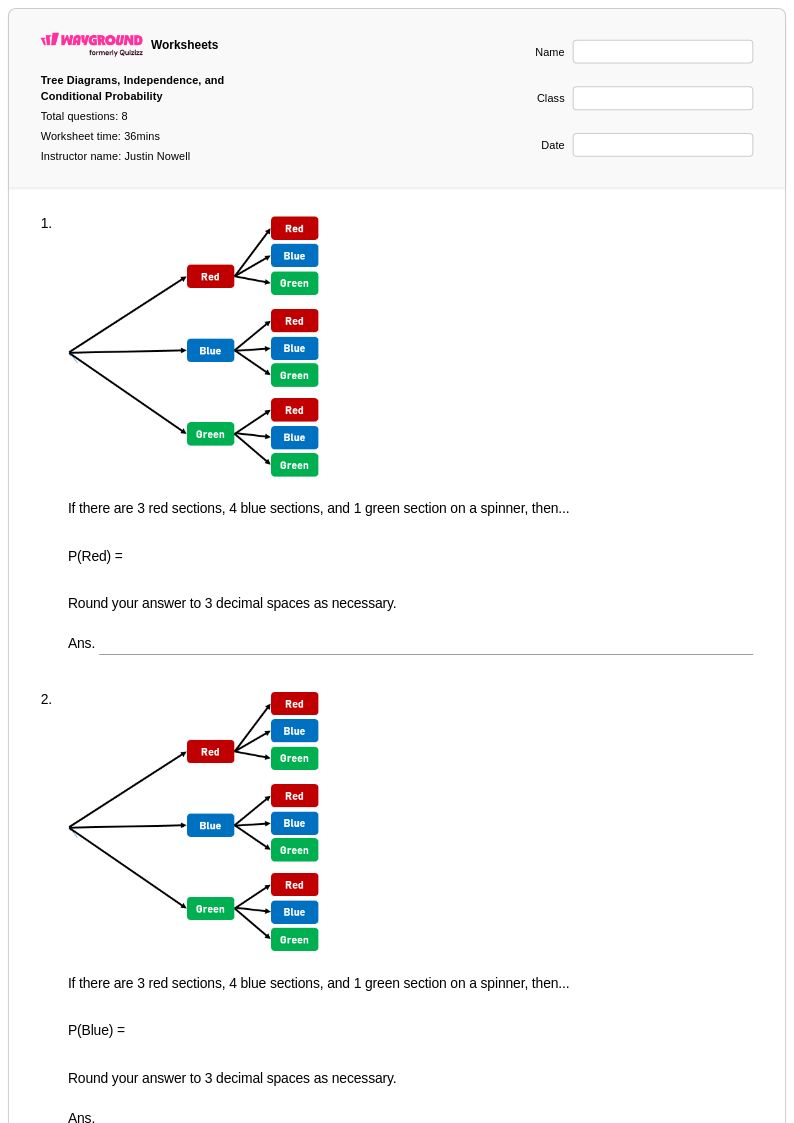
8 Q
9th - 12th
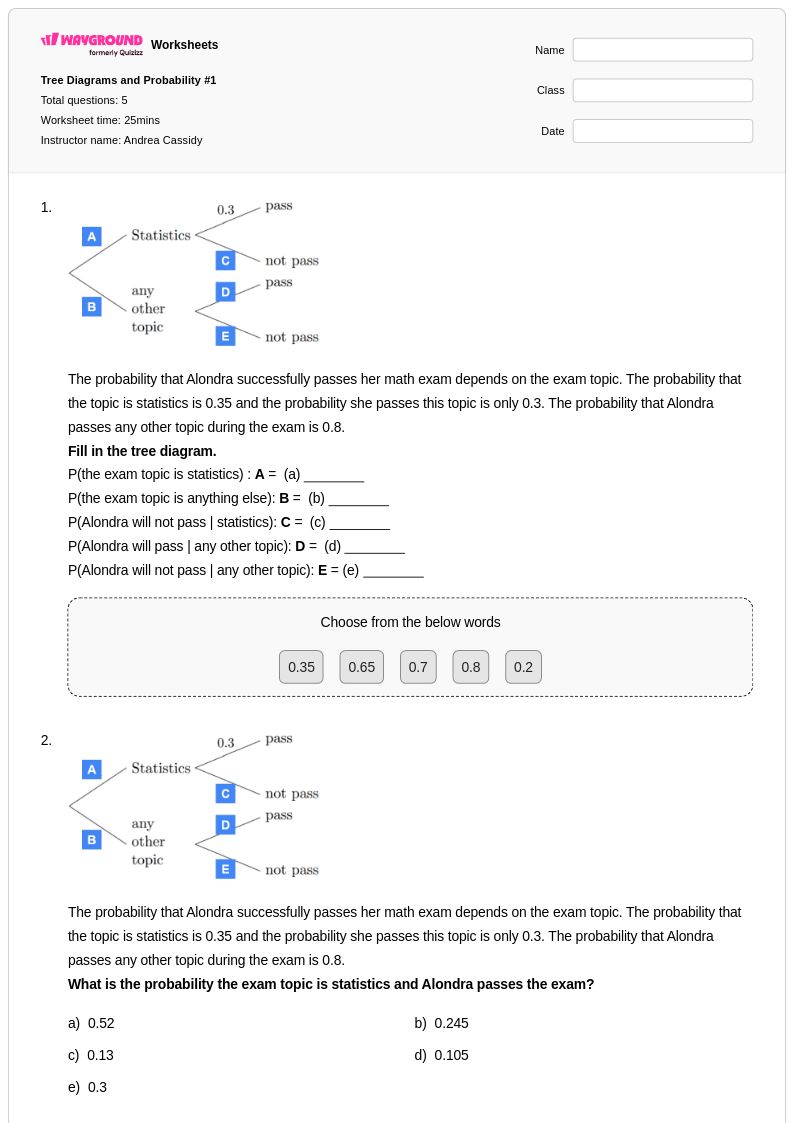
5 Q
9th - 12th
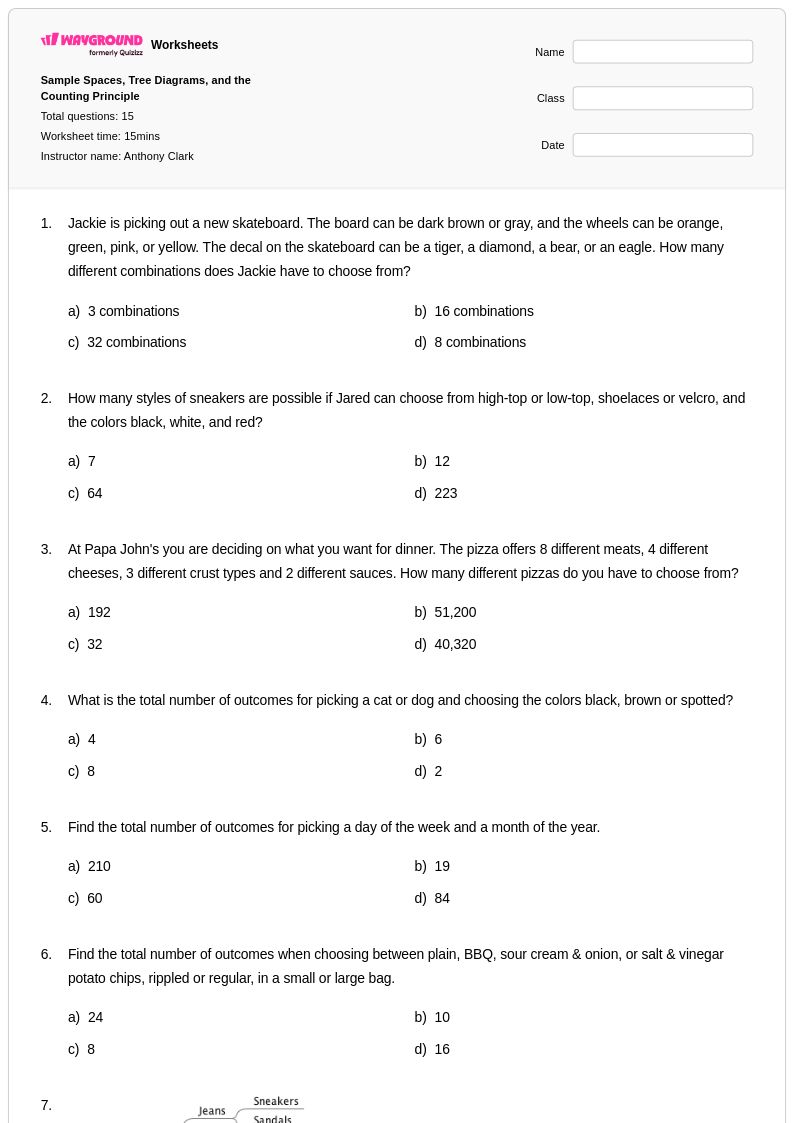
15 Q
7th - Uni
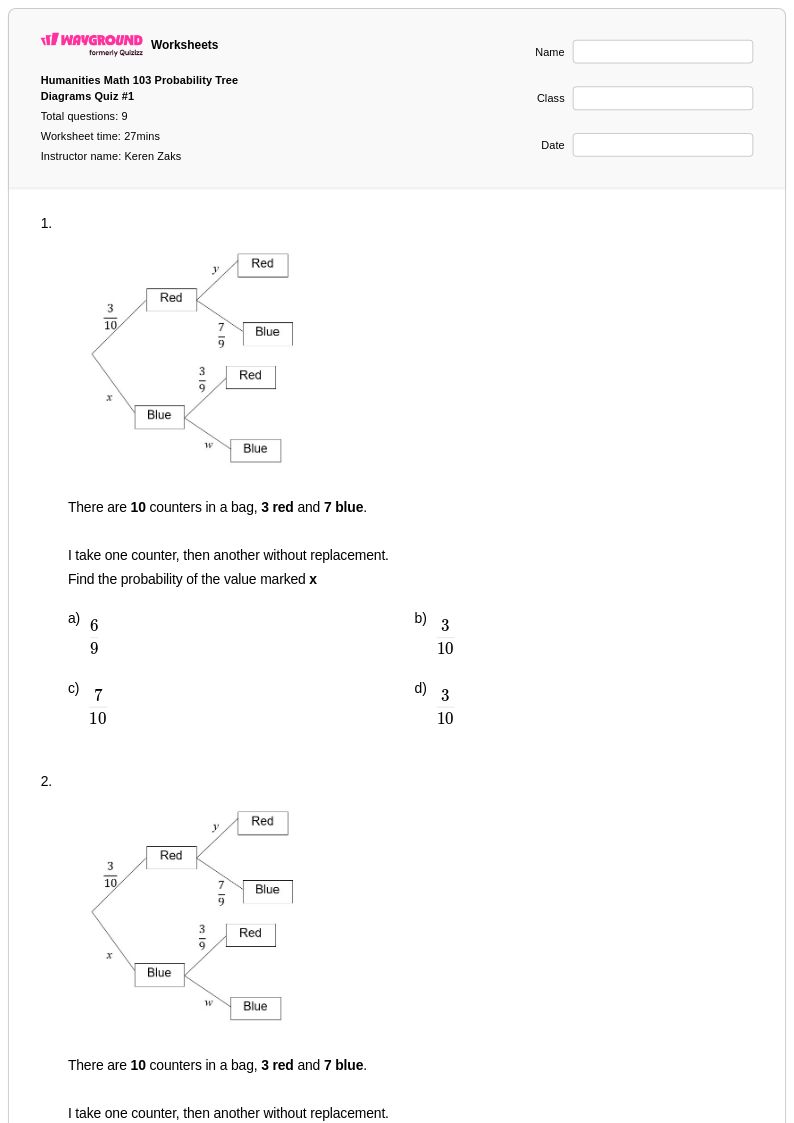
9 Q
9th - 12th
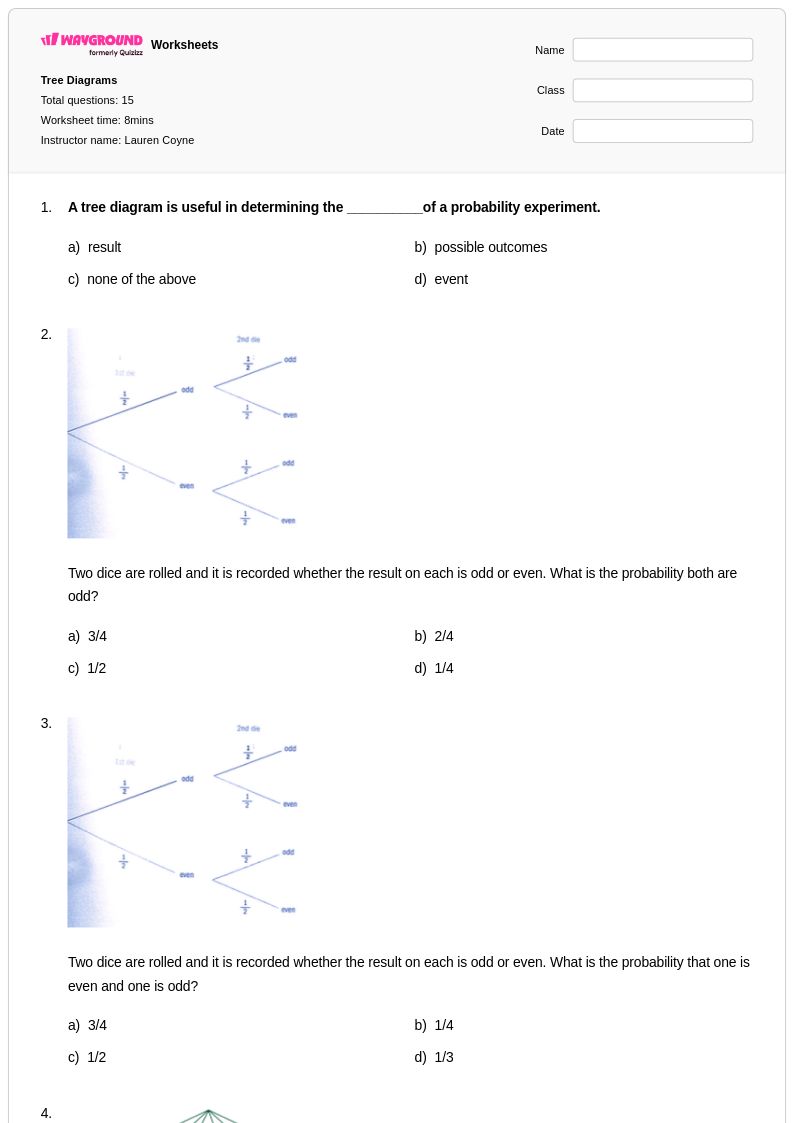
15 Q
6th - 7th
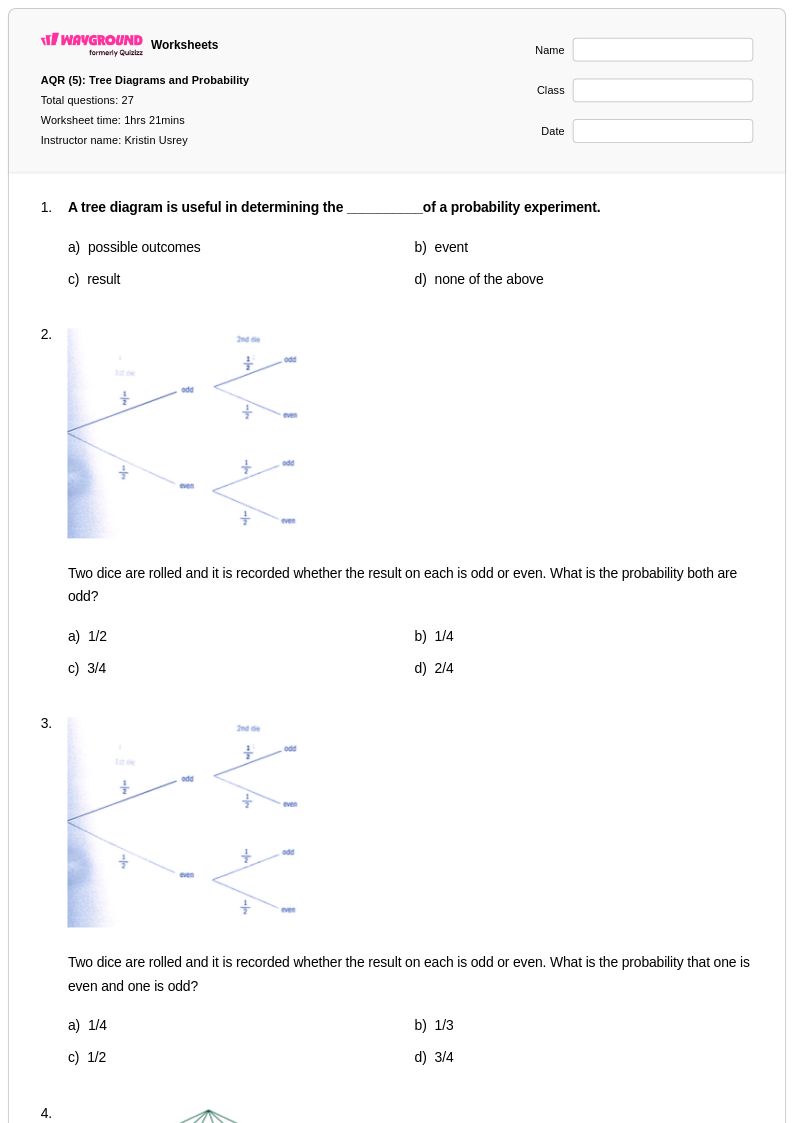
27 Q
9th - 12th
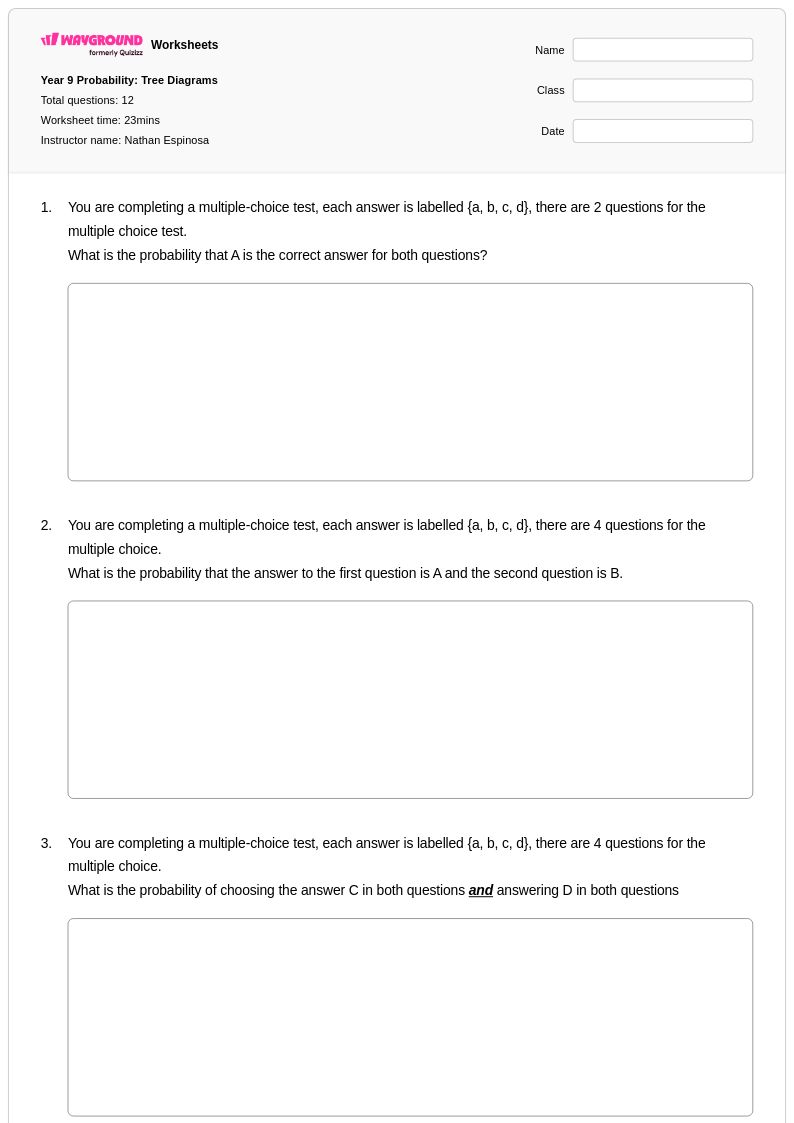
12 Q
9th
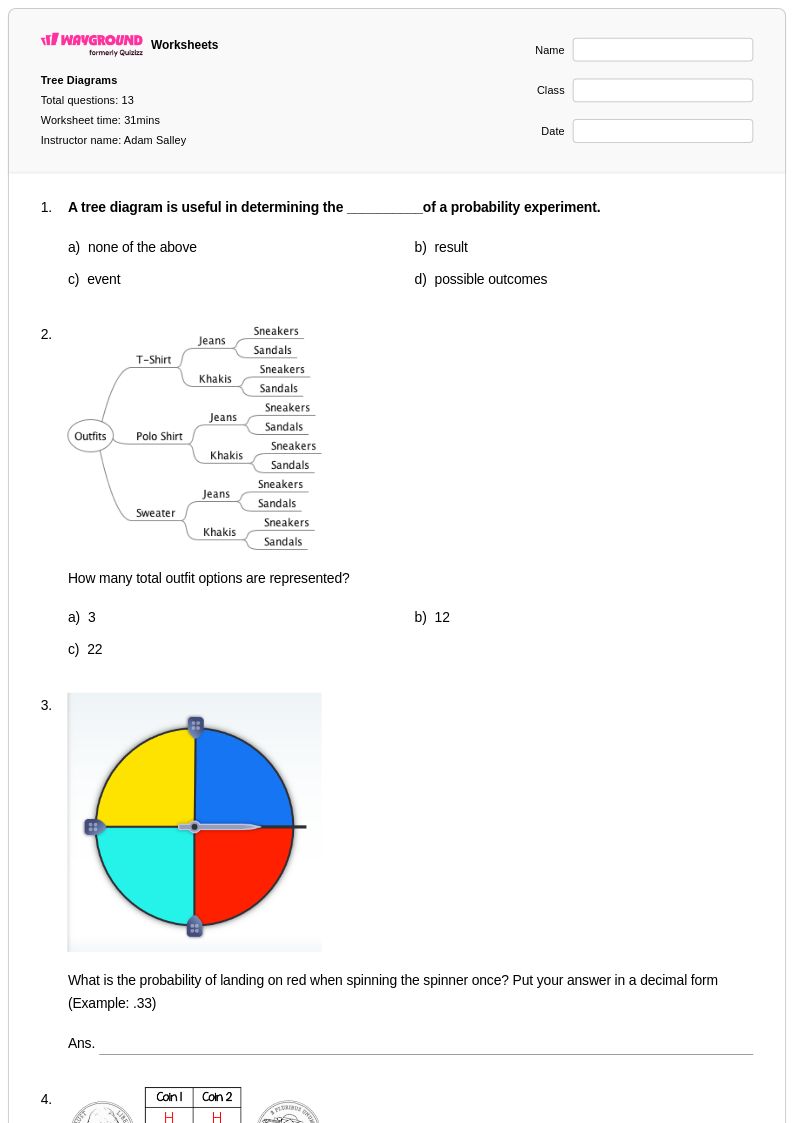
13 Q
7th
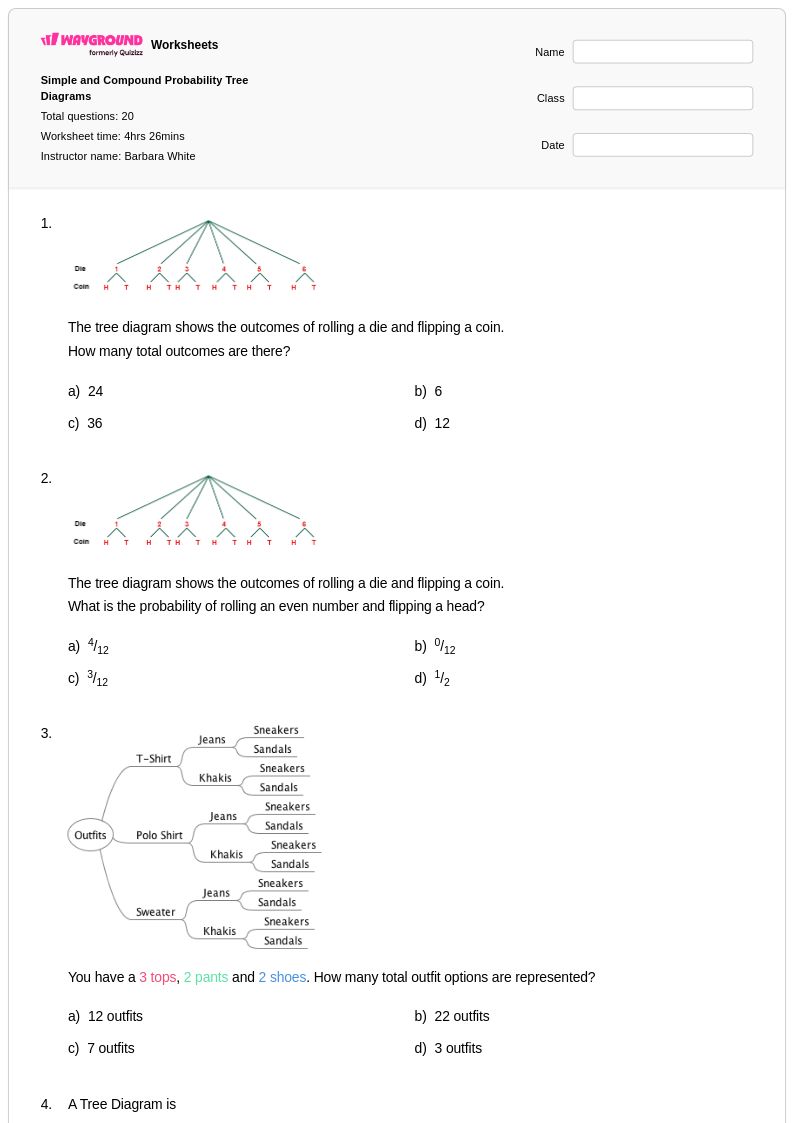
20 Q
6th
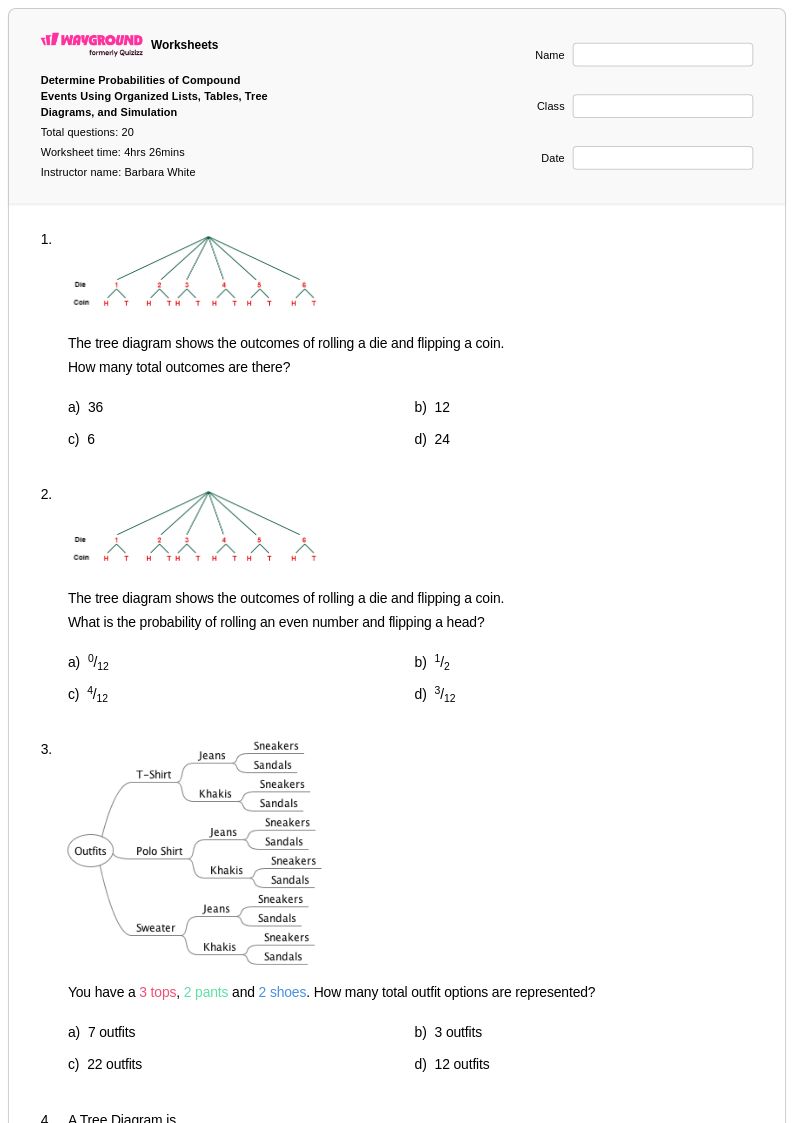
20 Q
6th
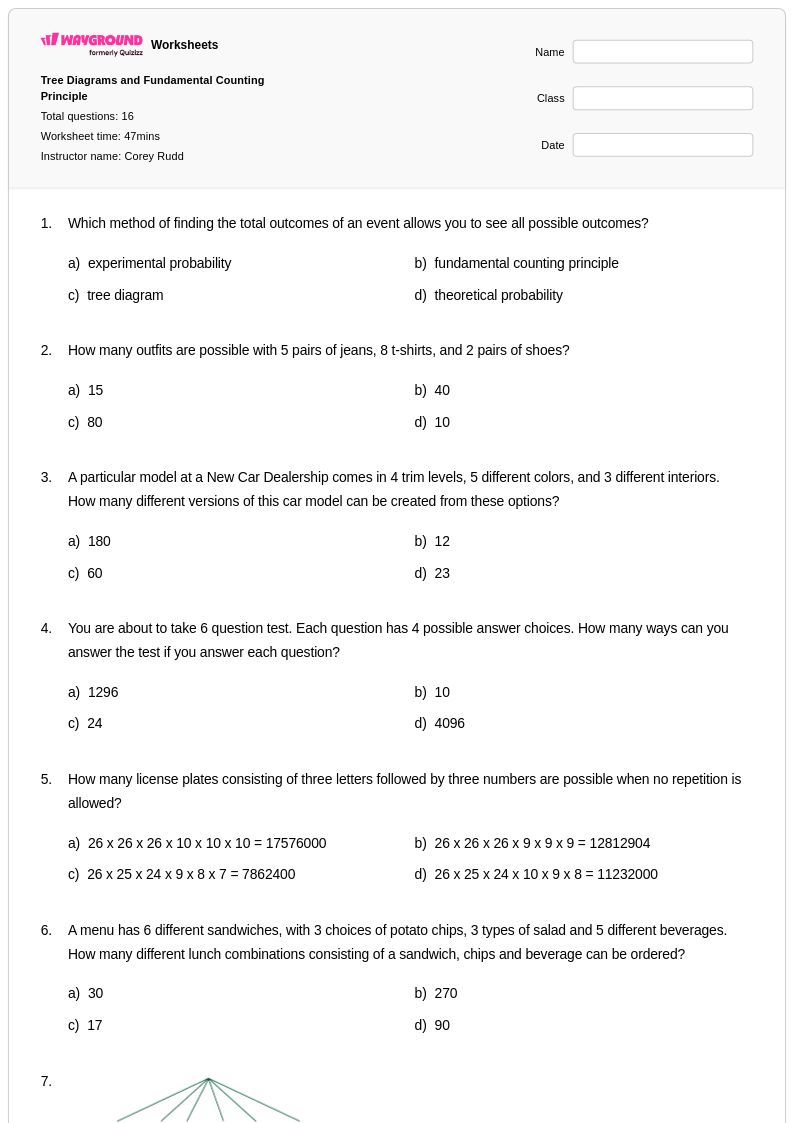
16 Q
7th
20 Q
10th - Uni
16 Q
6th - 8th
15 Q
7th
20 Q
7th
16 Q
7th
15 Q
10th
13 Q
7th - Uni
8 Q
10th
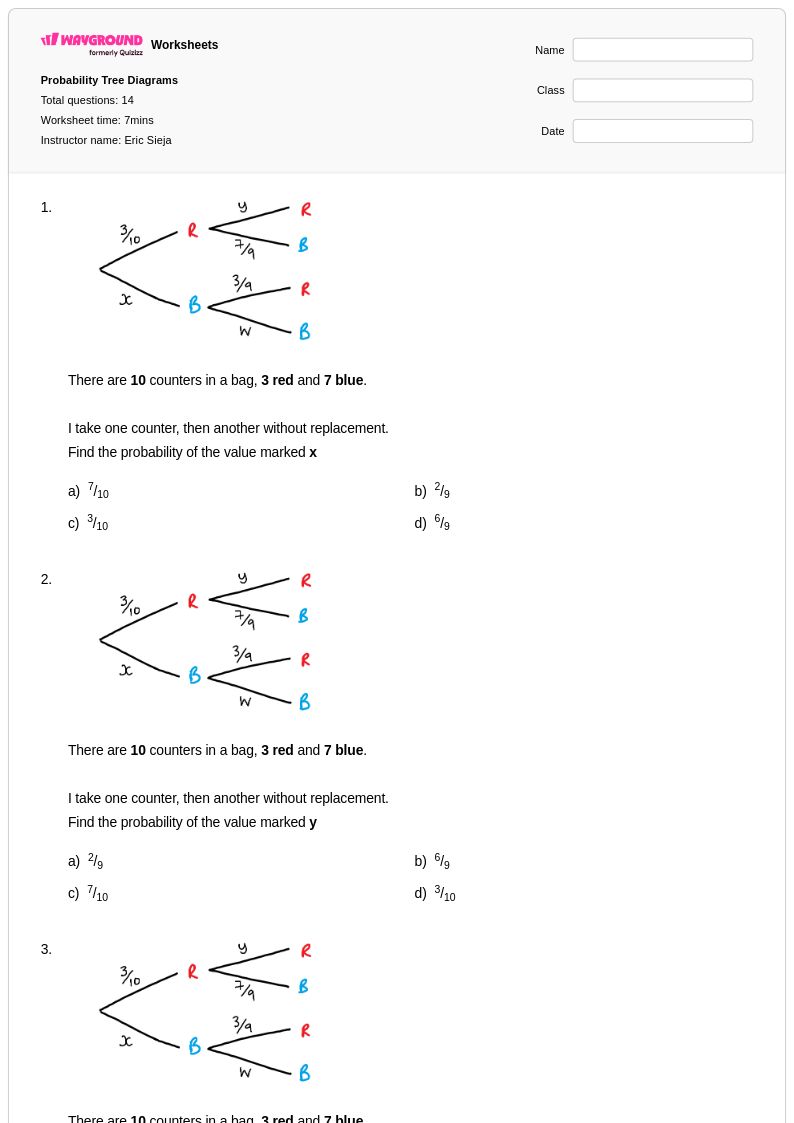
14 Q
9th - 10th
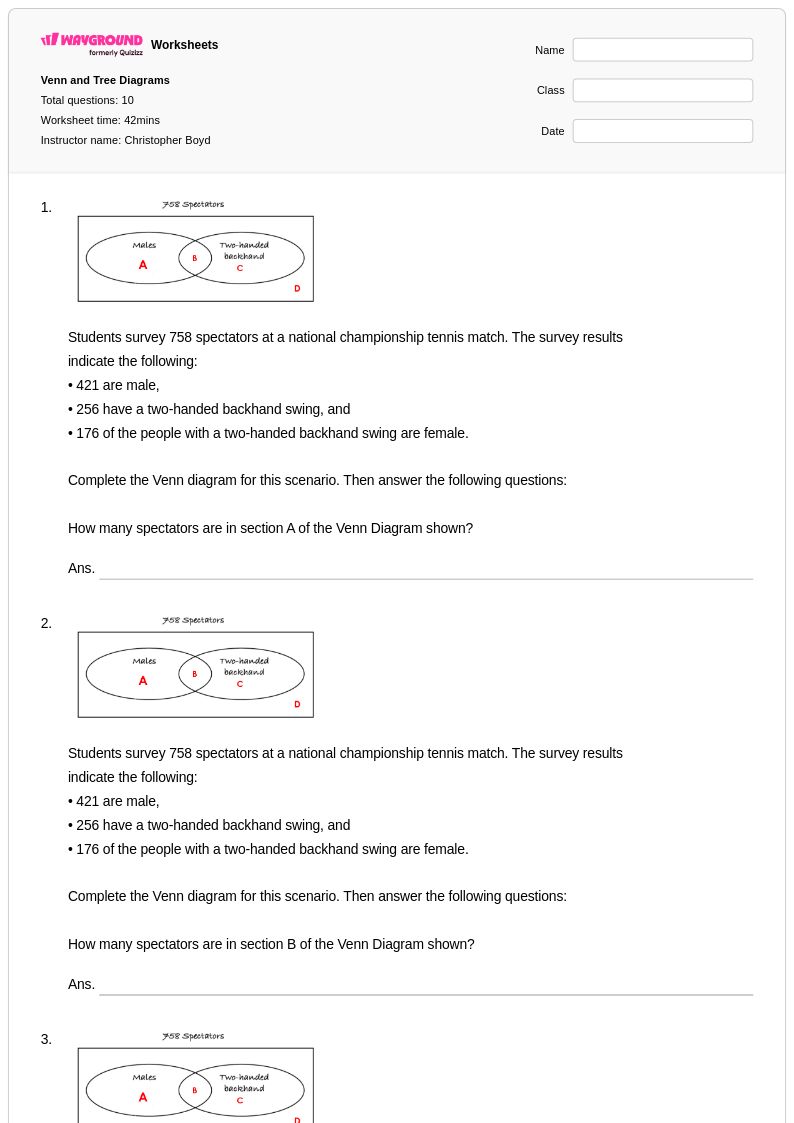
10 Q
12th
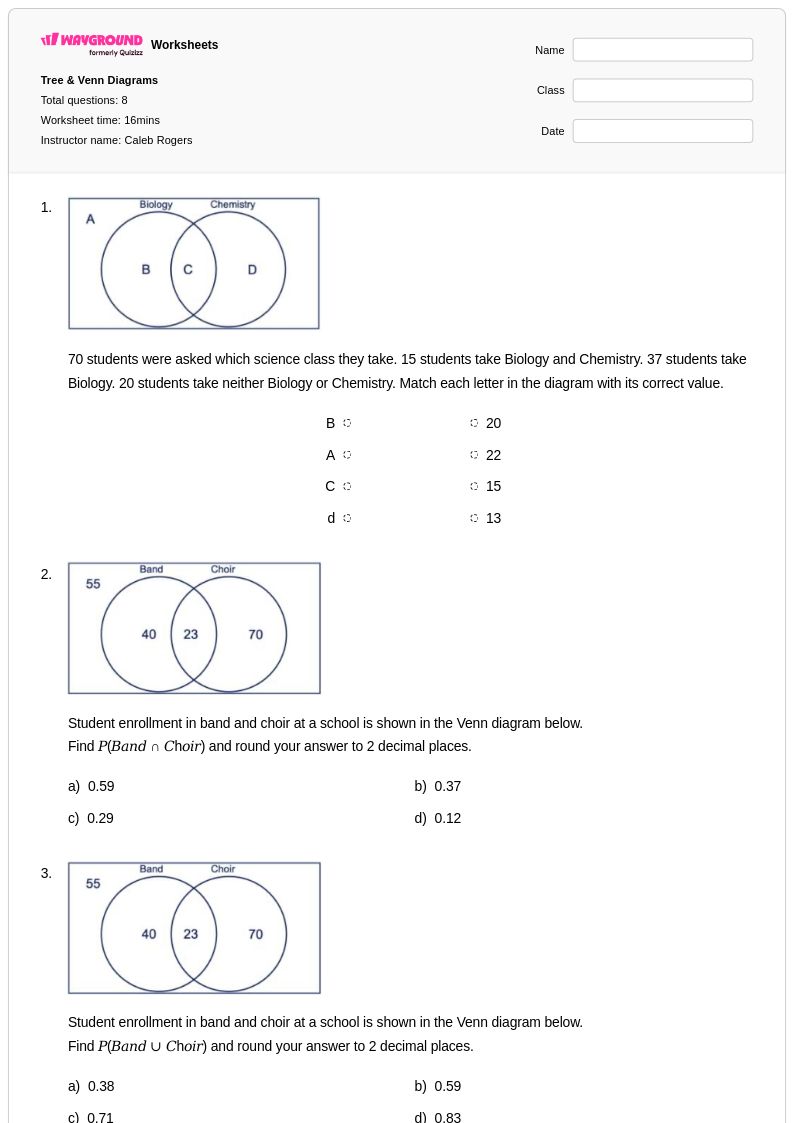
15 Q
12th
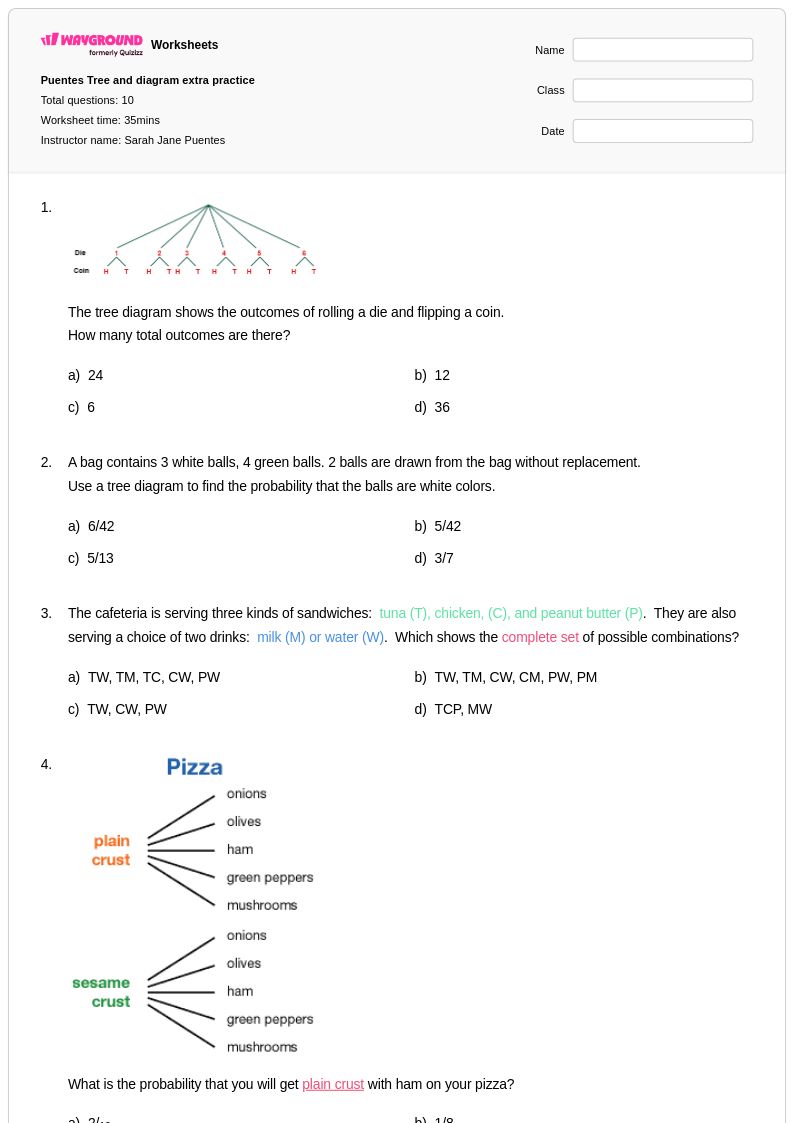
10 Q
7th
Explore Worksheets by Subjects
Explore printable Tree Diagrams worksheets
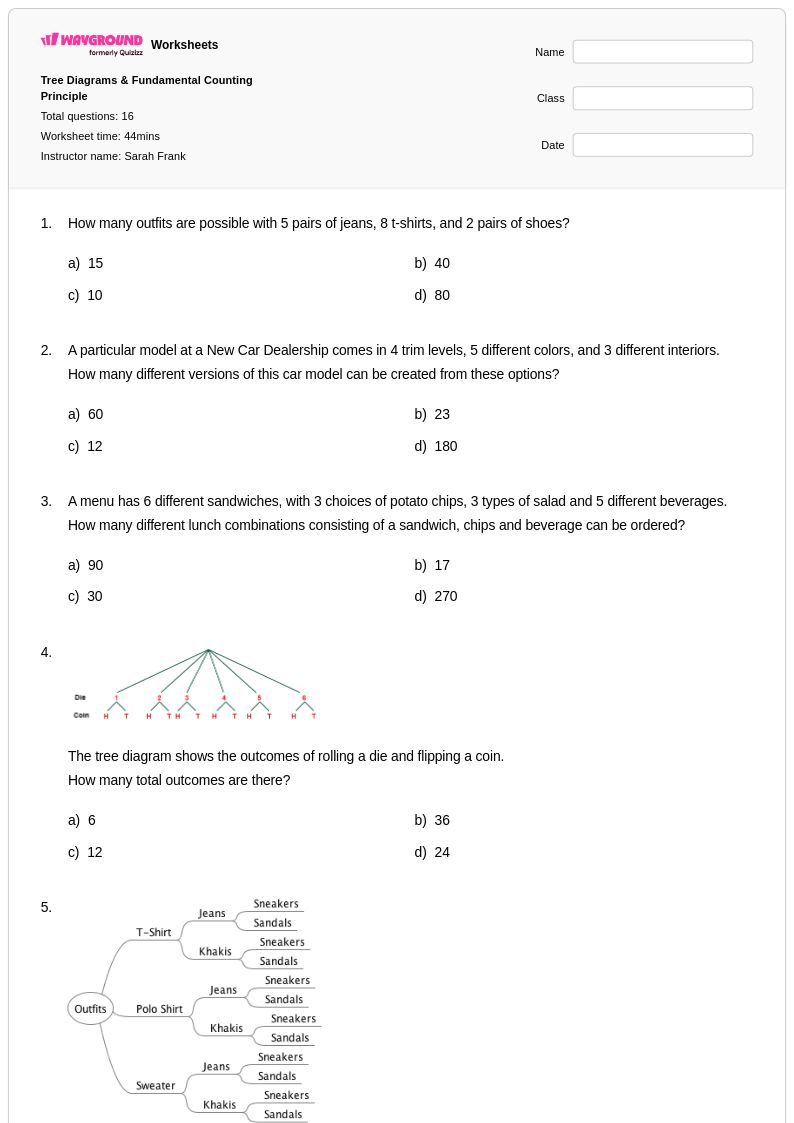
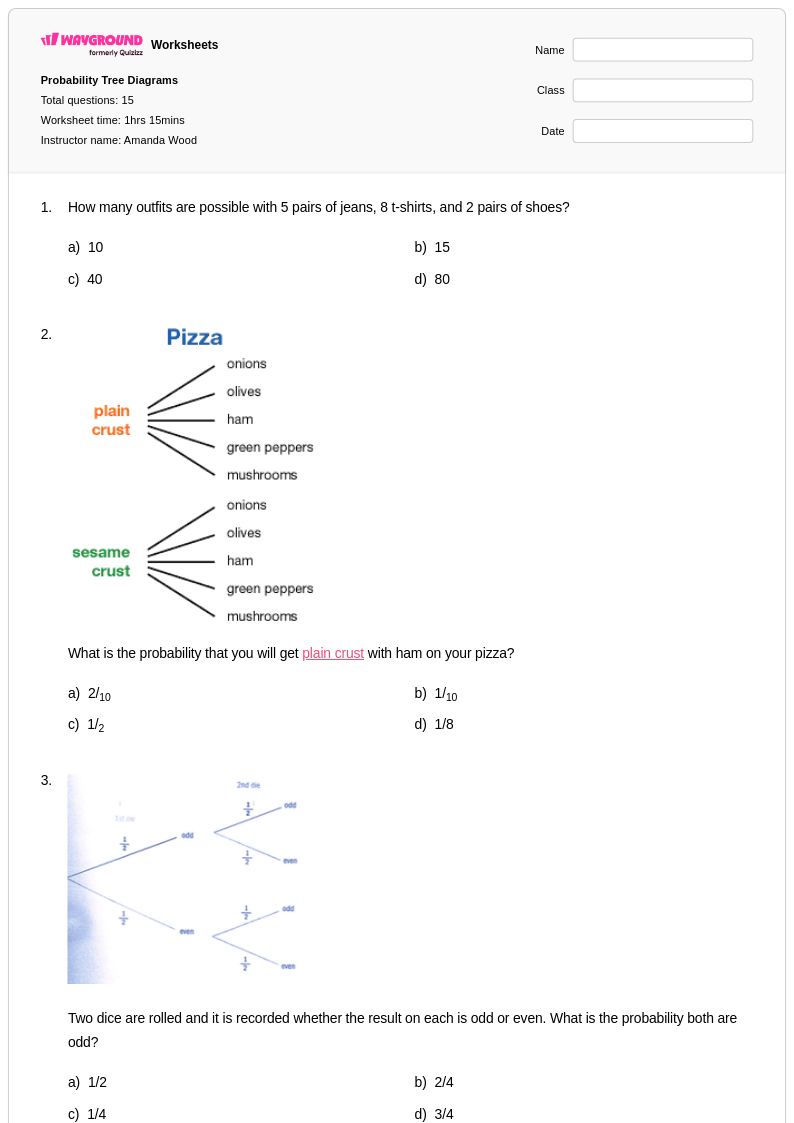
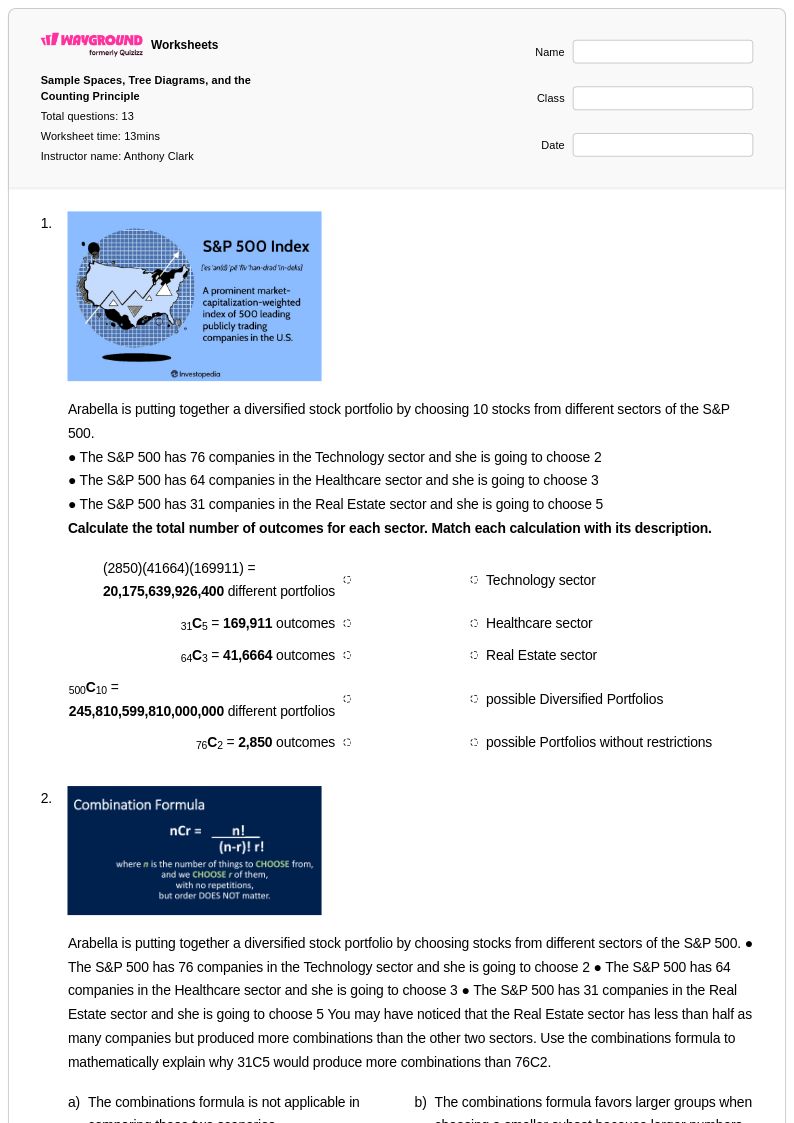
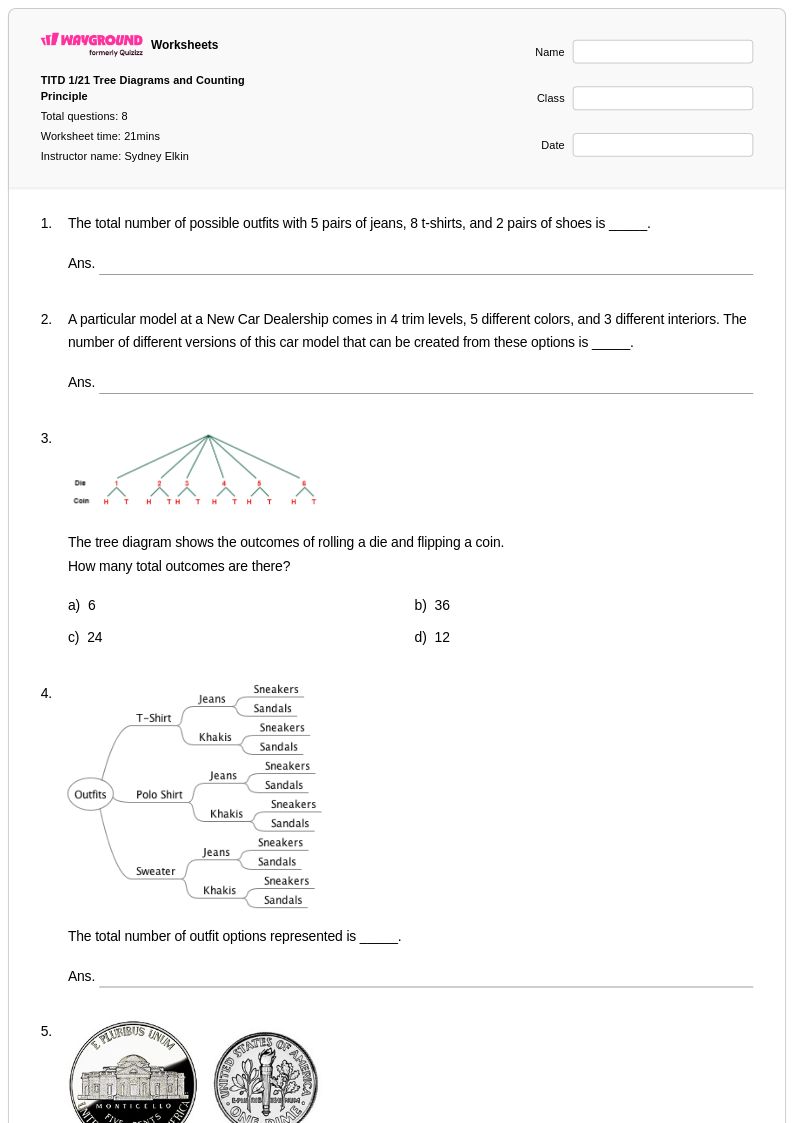
Tree diagrams serve as fundamental visual tools in probability and statistics, helping students systematically organize and calculate probabilities for sequential events and compound probability scenarios. Wayground's comprehensive collection of tree diagram worksheets provides educators with expertly crafted resources that guide students through the step-by-step process of constructing these branching probability maps, from simple two-stage experiments to complex multi-stage probability calculations. These printable worksheets feature carefully structured practice problems that strengthen students' ability to identify sample spaces, calculate conditional probabilities, and apply the multiplication rule for independent and dependent events. Each worksheet comes complete with detailed answer keys that support both independent student practice and guided instruction, while the free pdf format ensures easy classroom distribution and homework assignments that reinforce essential probability concepts.
Wayground's extensive library draws from millions of teacher-created resources specifically designed to support probability and statistics instruction across diverse learning environments. The platform's robust search and filtering capabilities allow educators to quickly locate tree diagram worksheets that align with specific curriculum standards and match their students' developmental needs. Teachers can seamlessly customize existing materials or create differentiated versions to address varying skill levels within their classrooms, whether supporting struggling learners through scaffolded practice or challenging advanced students with complex probability scenarios. The flexibility of both digital and printable formats enables educators to integrate these resources into traditional lesson planning, targeted remediation sessions, and enrichment activities, while the comprehensive nature of the collection ensures consistent skill development in visual probability representation and systematic problem-solving approaches.