
9 Q
1st
17 Q
1st - 5th
10 Q
1st
8 Q
1st
10 Q
1st
10 Q
KG - 1st
10 Q
1st

15 Q
1st
13 Q
1st
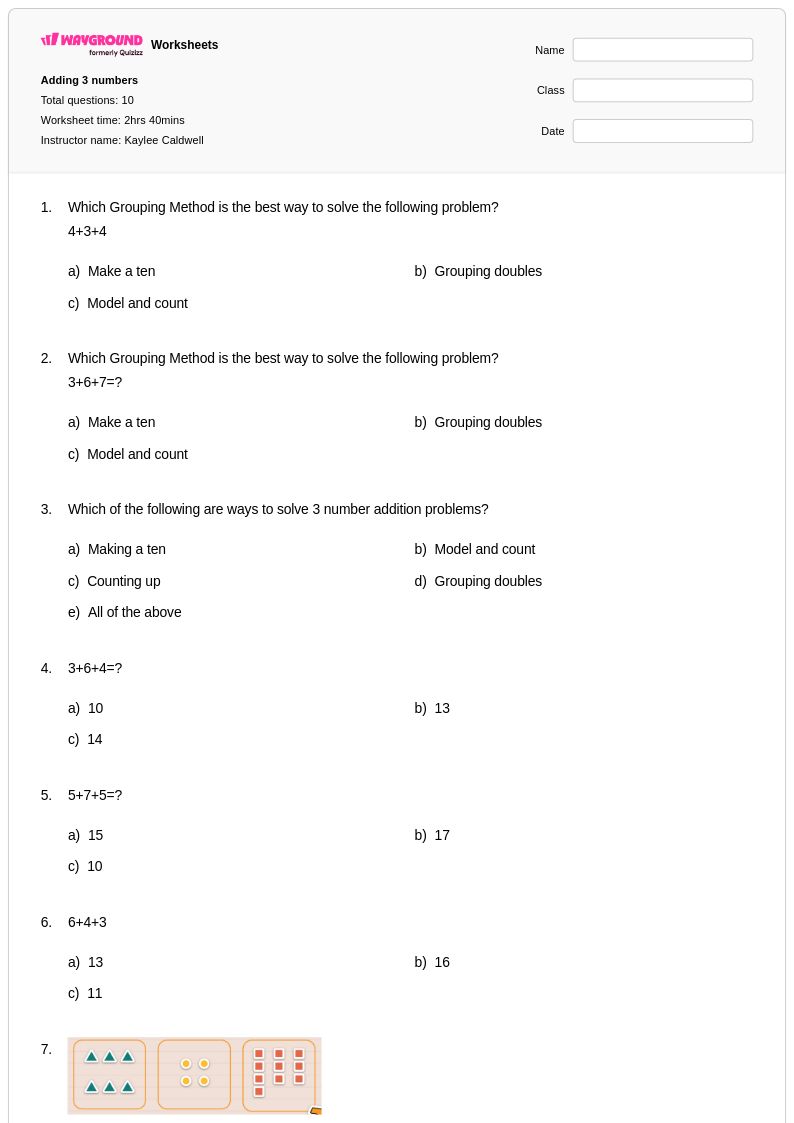
10 Q
1st - 5th
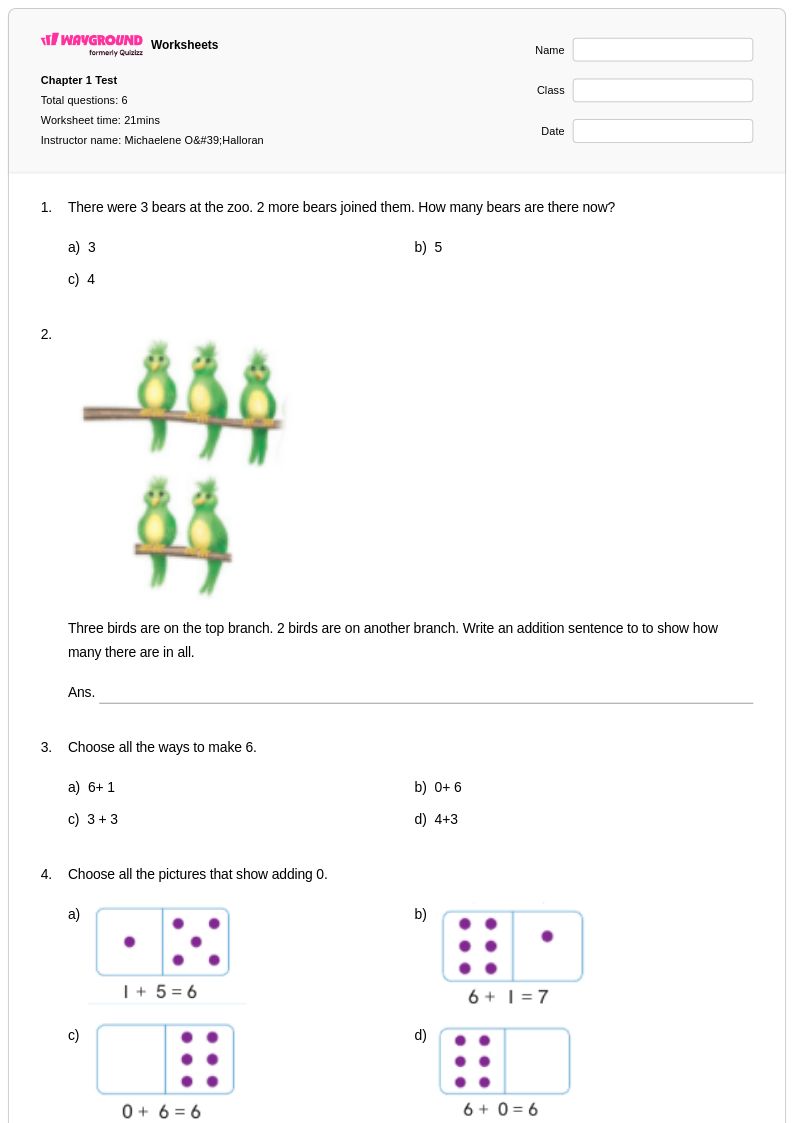
6 Q
1st
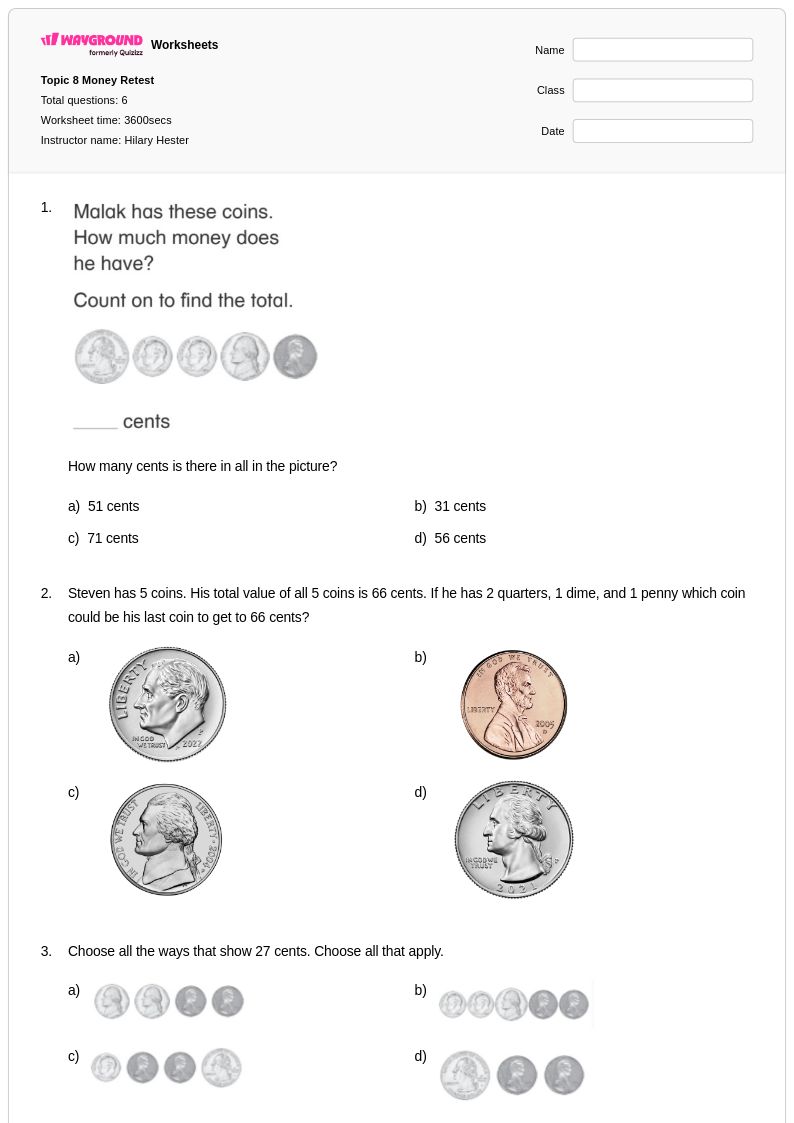
6 Q
1st - 3rd
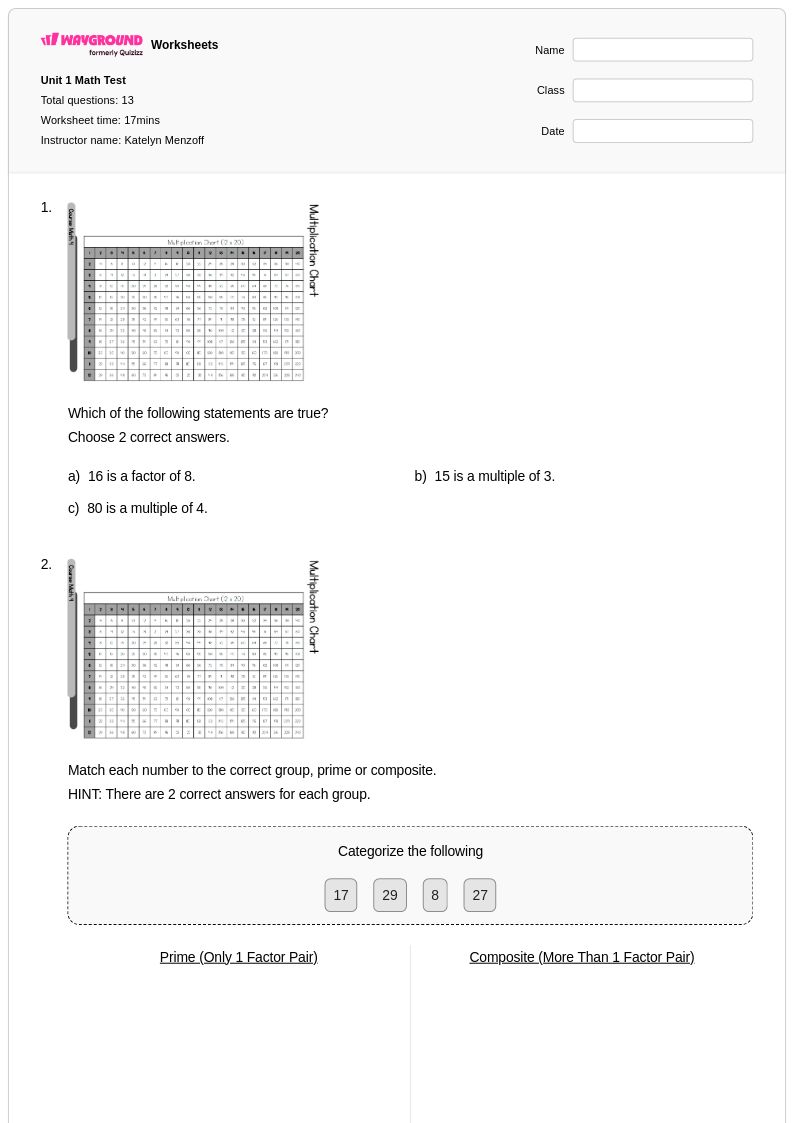
13 Q
1st - 5th
19 Q
1st
10 Q
1st
10 Q
1st
20 Q
1st - Uni
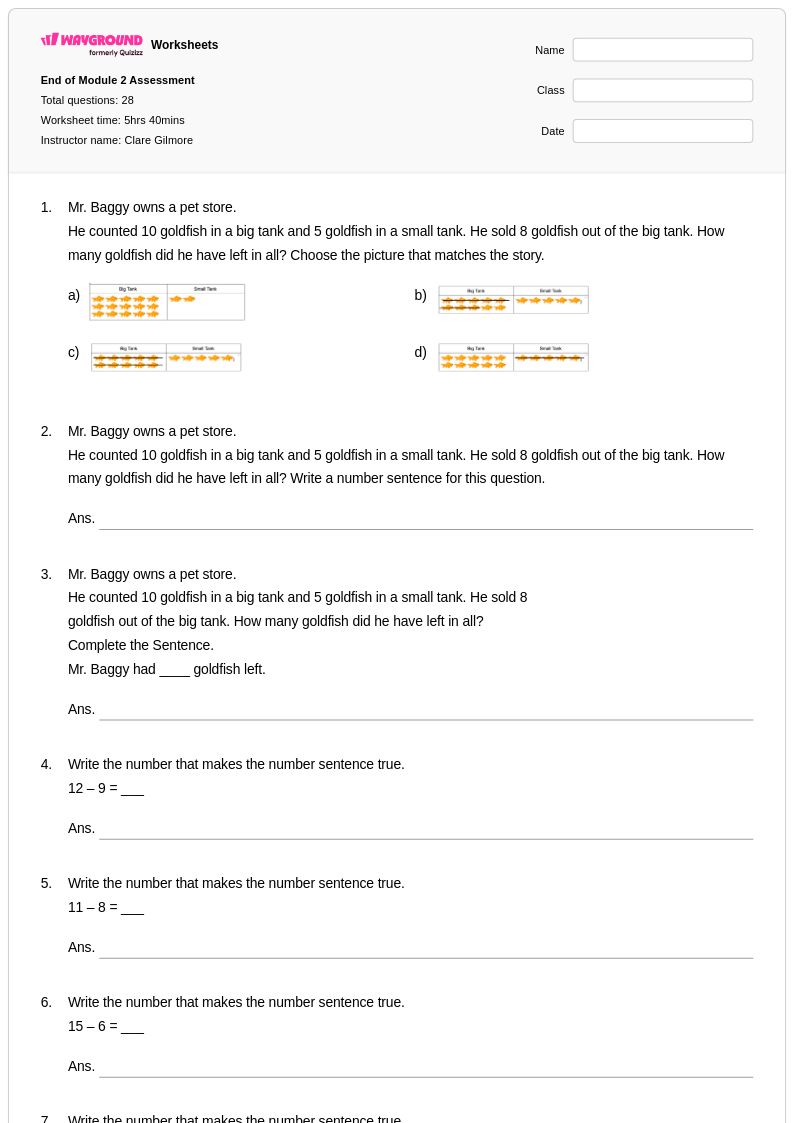
28 Q
1st
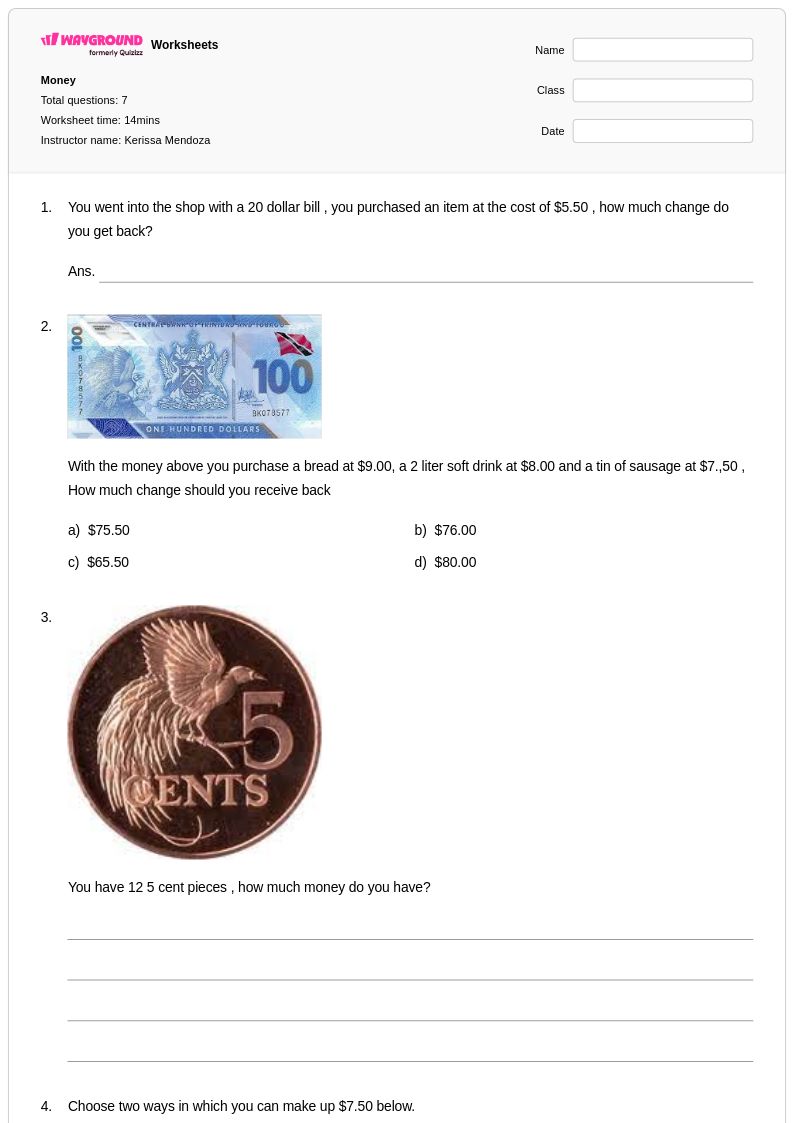
7 Q
1st
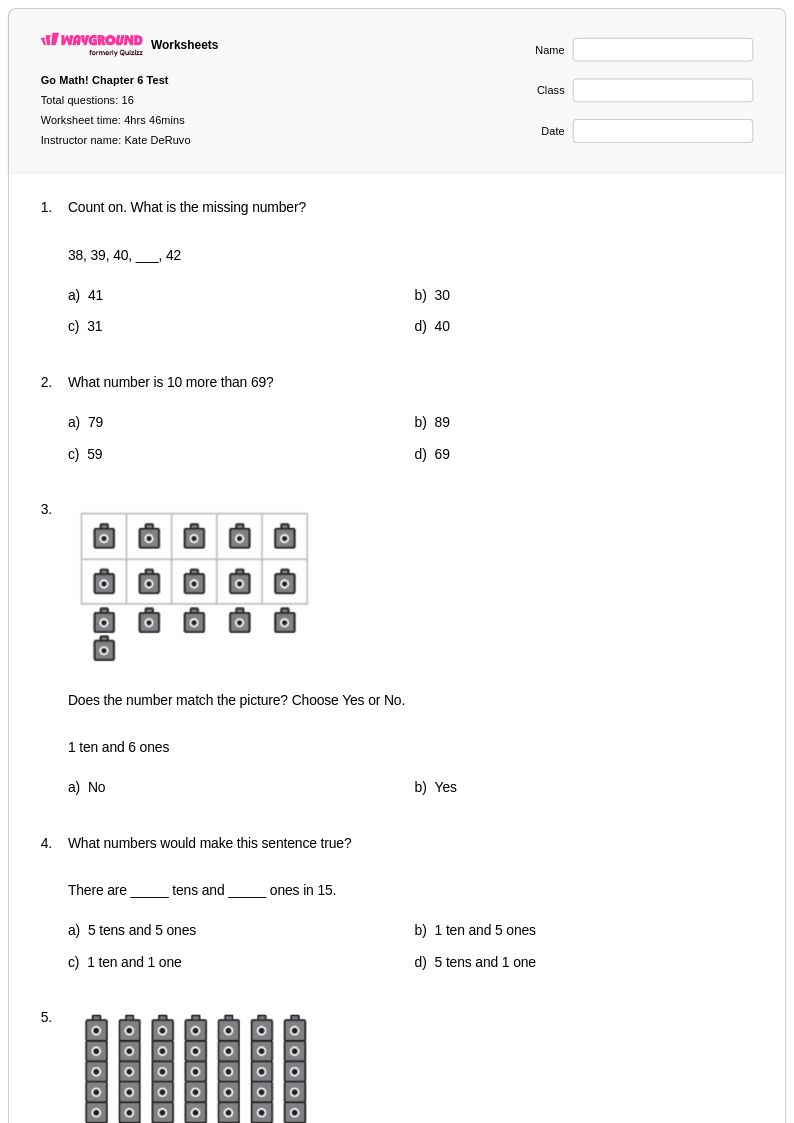
16 Q
1st
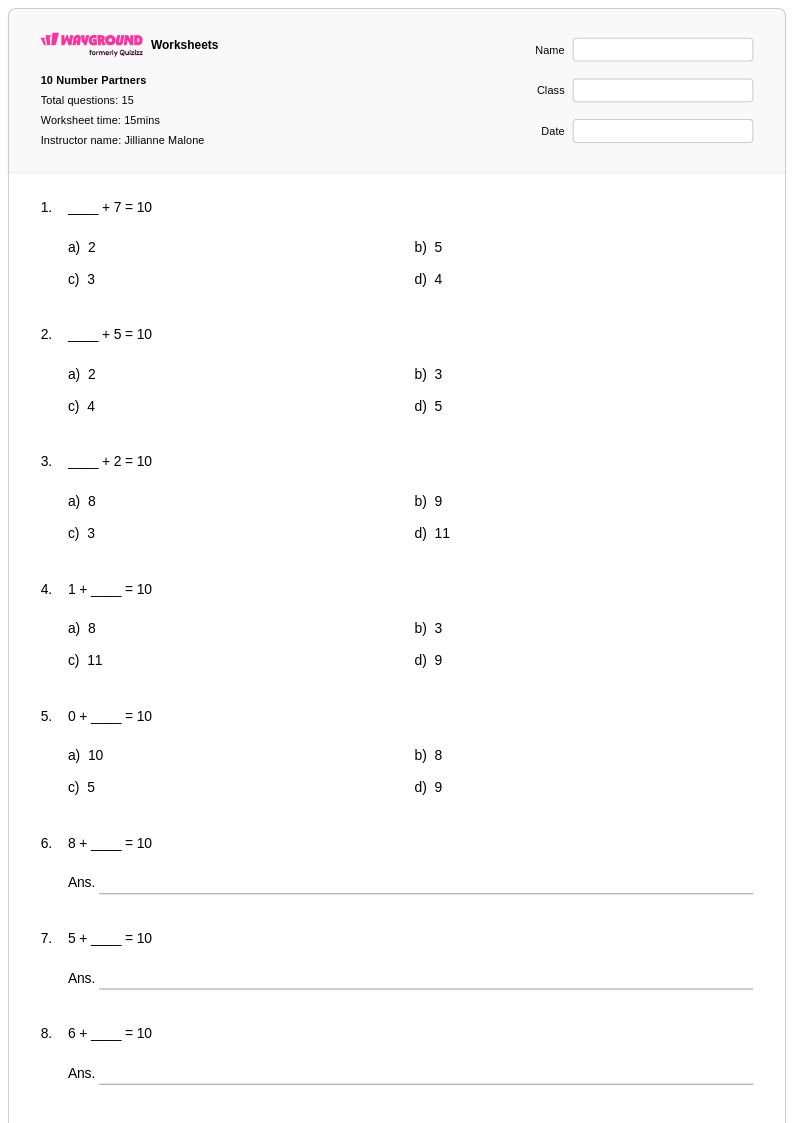
15 Q
1st
10 Q
1st
16 Q
1st
11 Q
1st
Explore Ways to Make 5 Worksheets by Grades
Explore Other Subject Worksheets for grade 1
Explore printable Ways to Make 5 worksheets for Grade 1
Ways to Make 5 worksheets for Grade 1 students provide essential foundational practice in decomposing numbers and understanding part-whole relationships. These carefully designed resources help young learners explore all the different combinations that equal five, such as 4+1, 3+2, and 2+3, building critical number sense skills that form the backbone of future mathematical learning. The worksheets feature engaging visual representations, manipulative-based activities, and systematic practice problems that guide students through discovering number relationships in concrete and meaningful ways. Teachers can access comprehensive collections that include detailed answer keys, ready-to-print pdf formats, and free printables that support both independent practice and guided instruction, making it simple to reinforce these fundamental concepts across various learning contexts.
Wayground, formerly Quizizz, empowers educators with an extensive library of millions of teacher-created Ways to Make 5 resources specifically tailored for Grade 1 mathematics instruction. The platform's robust search and filtering capabilities enable teachers to quickly locate worksheets that align with specific curriculum standards and match their students' diverse learning needs. Advanced differentiation tools allow educators to customize content difficulty levels, while the flexible format options include both printable pdf versions for traditional classroom use and digital formats for interactive learning experiences. These comprehensive features streamline lesson planning by providing immediate access to high-quality materials for skill practice, targeted remediation for struggling learners, and enrichment opportunities for advanced students, ensuring that every child develops a solid understanding of number composition and decomposition strategies.