Free Printable Boston Massacre Worksheets for Class 7
Explore Wayground's free Class 7 Boston Massacre worksheets and printables that help students analyze this pivotal American Revolution event through engaging practice problems, historical documents, and comprehensive answer keys.
Explore printable Boston Massacre worksheets for Class 7
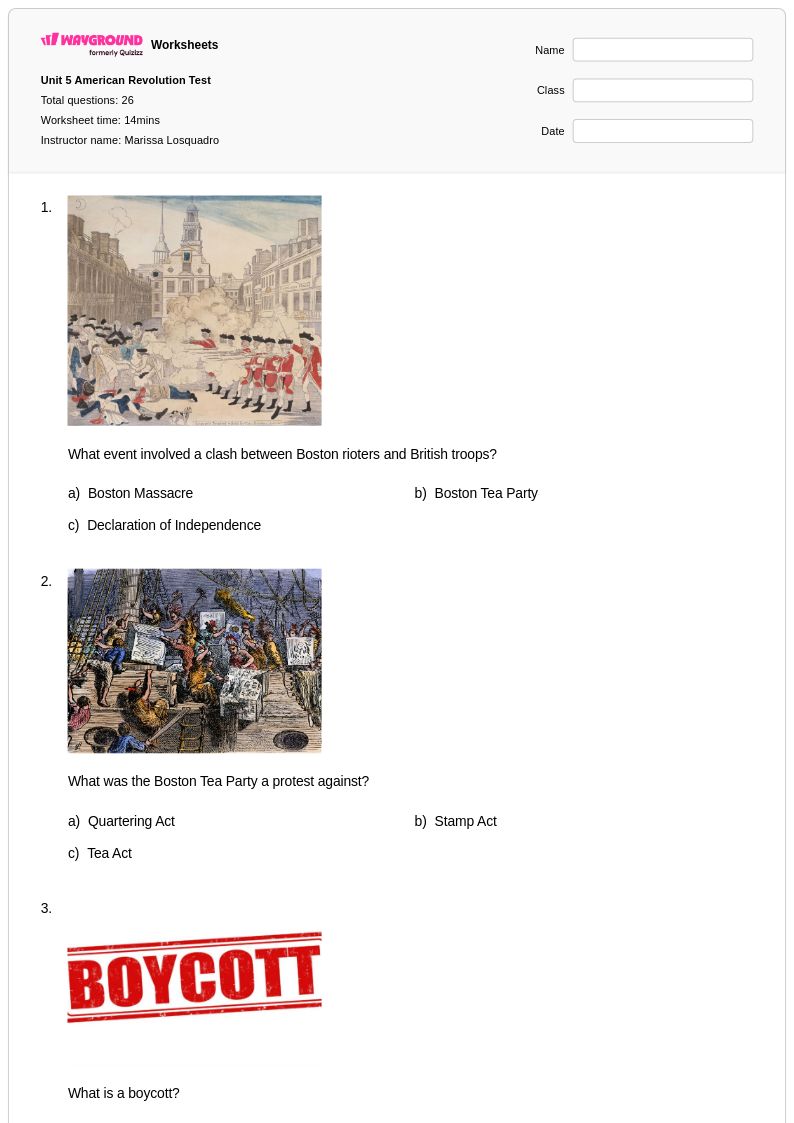
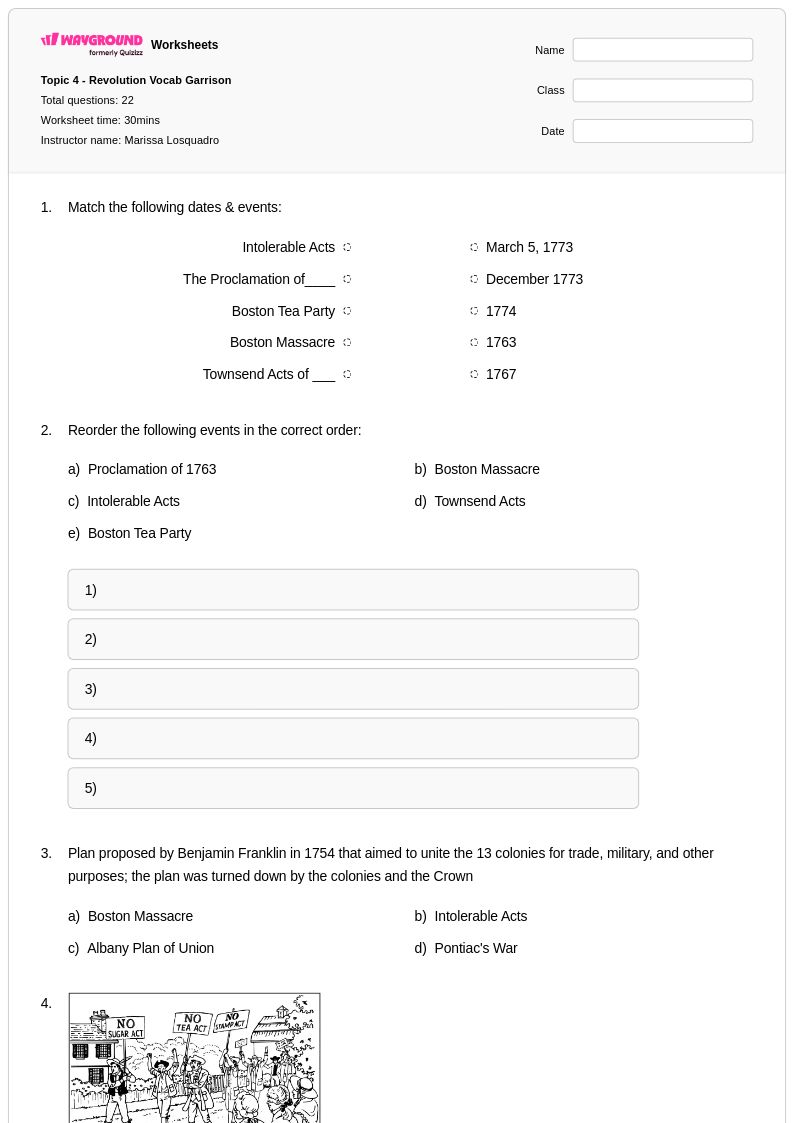
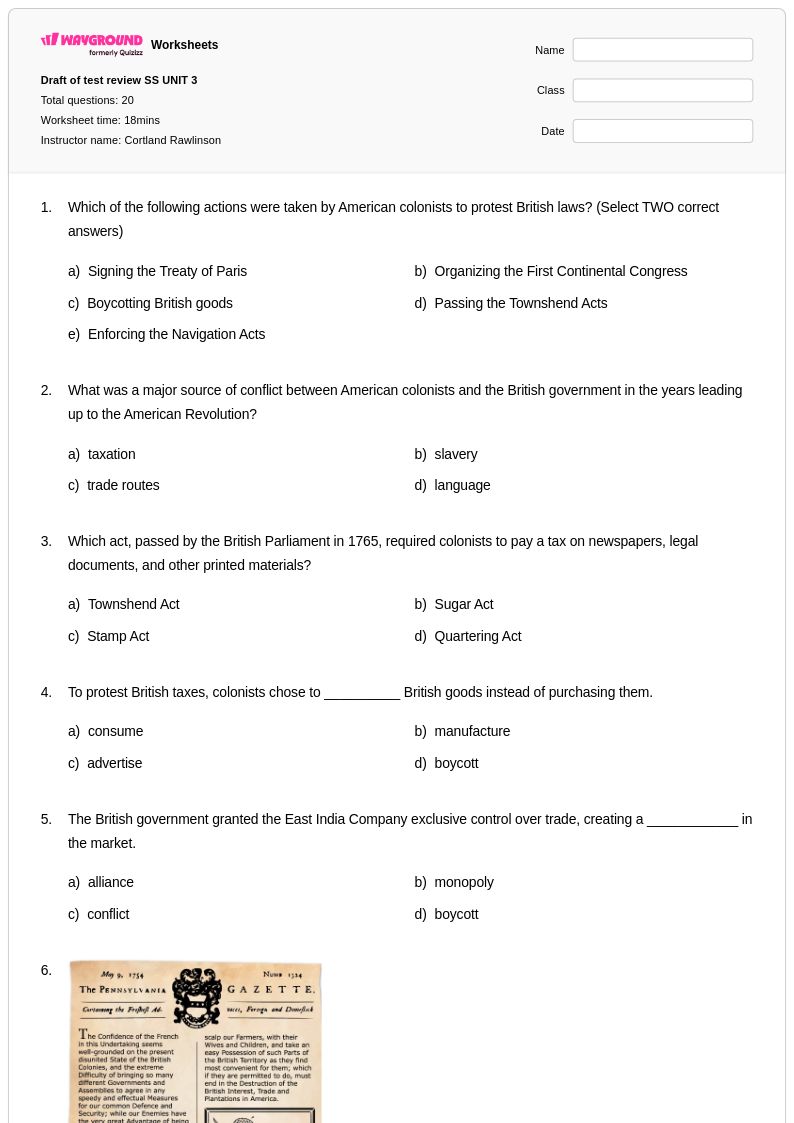
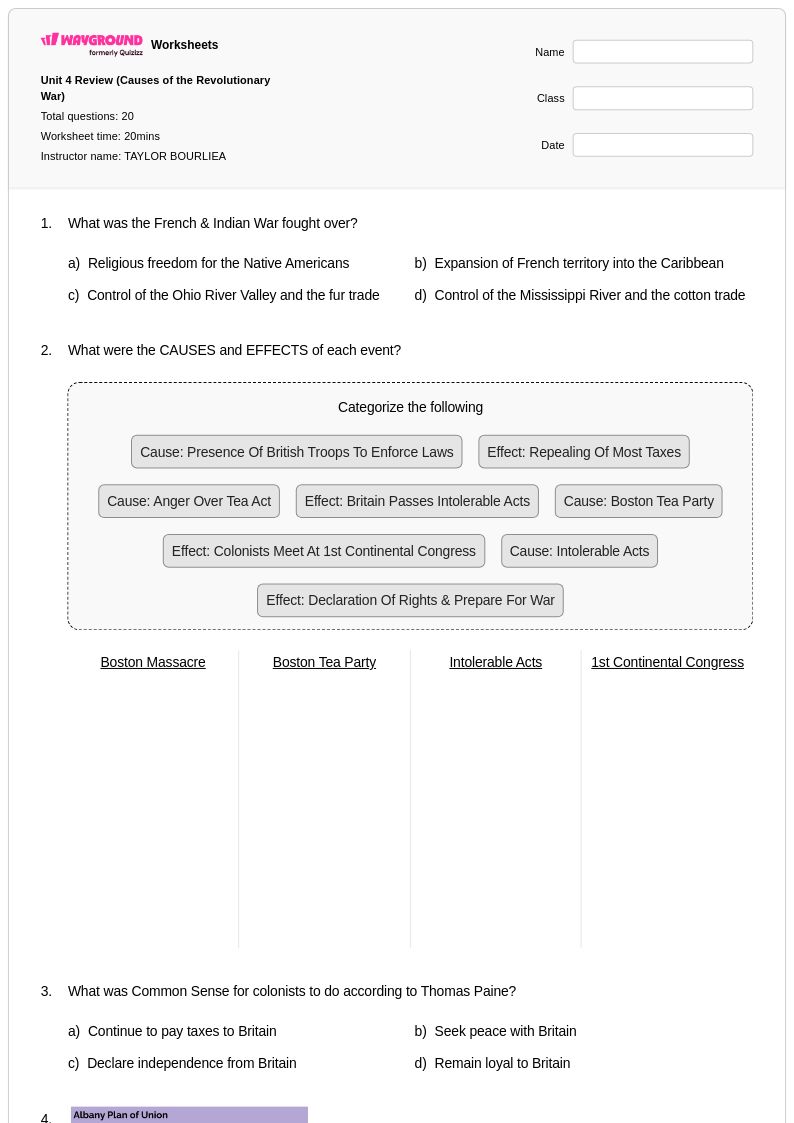
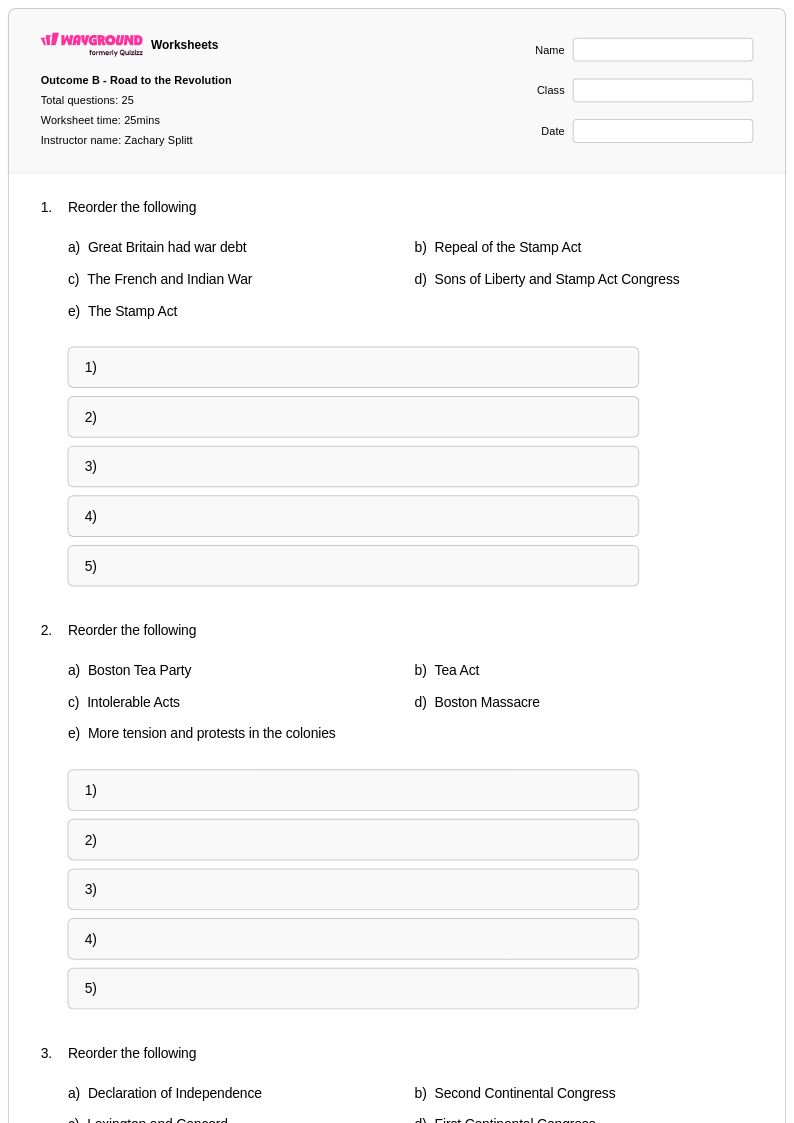
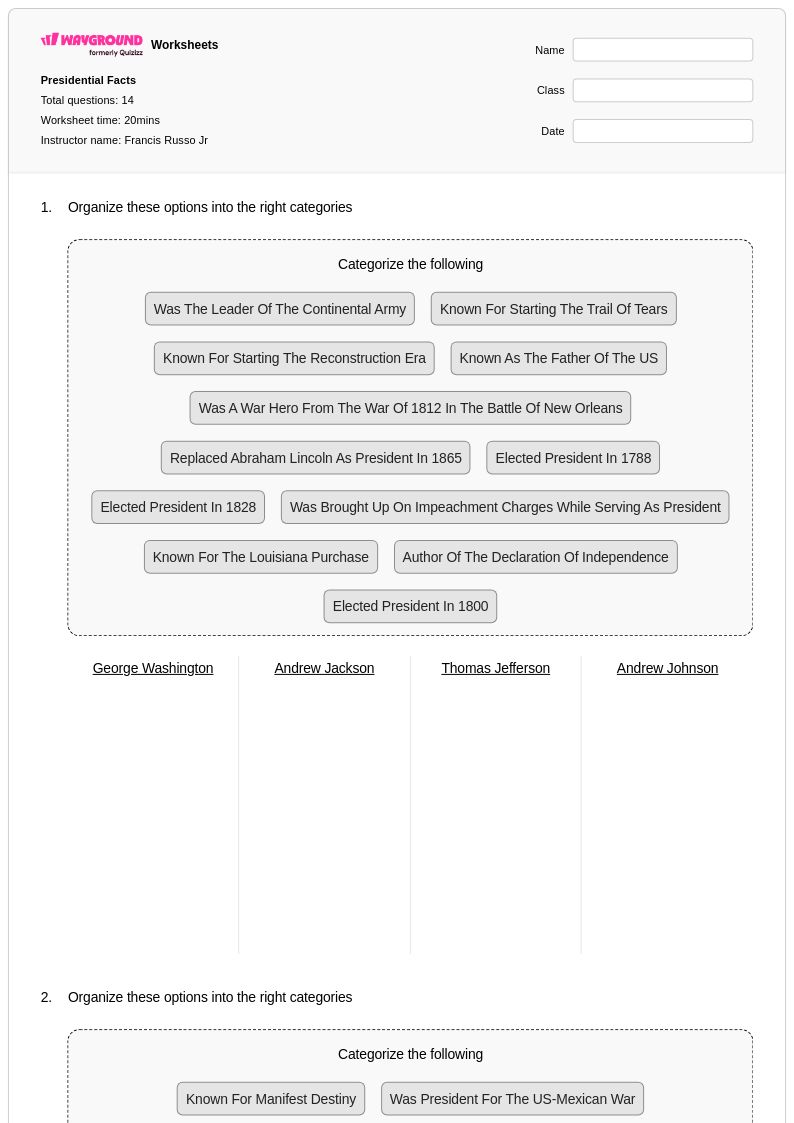
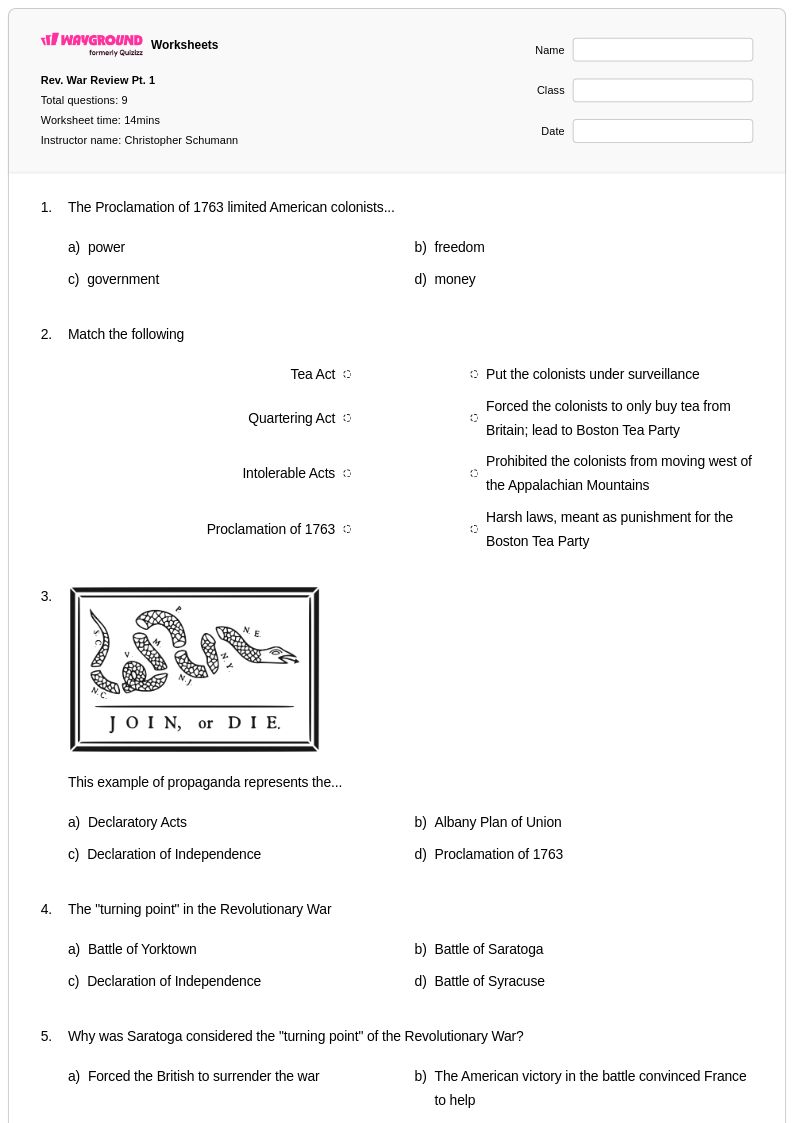
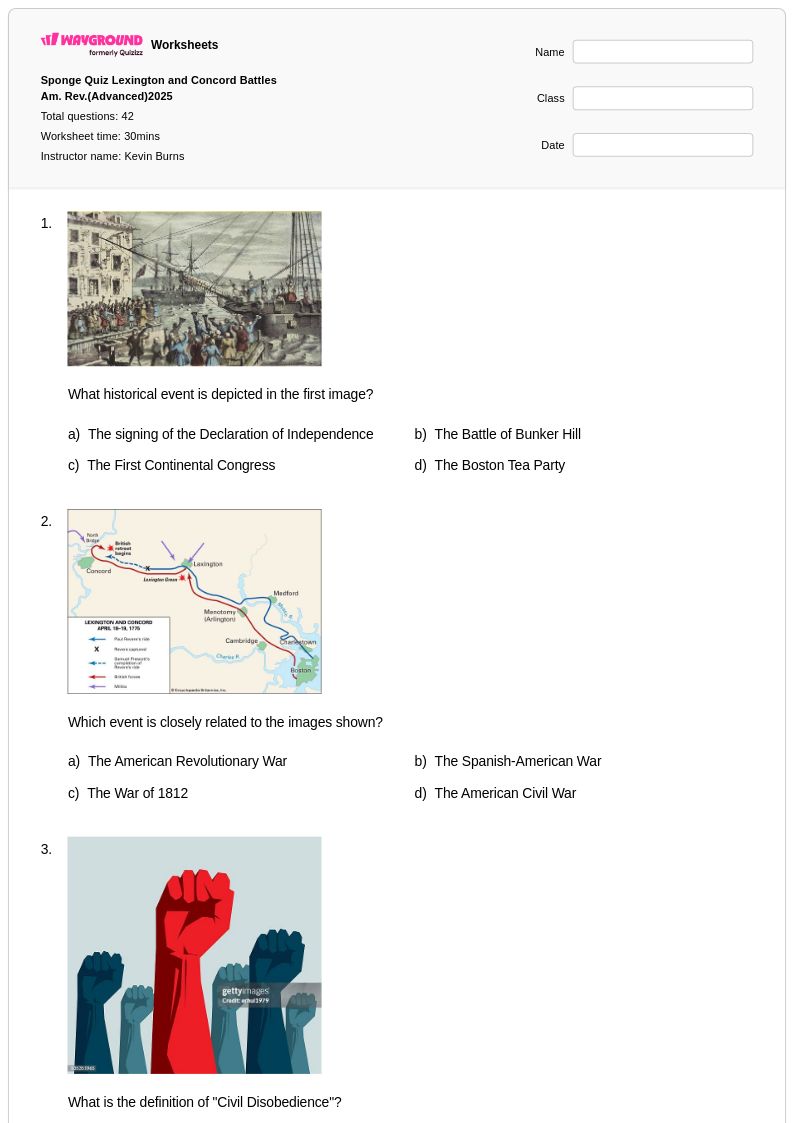
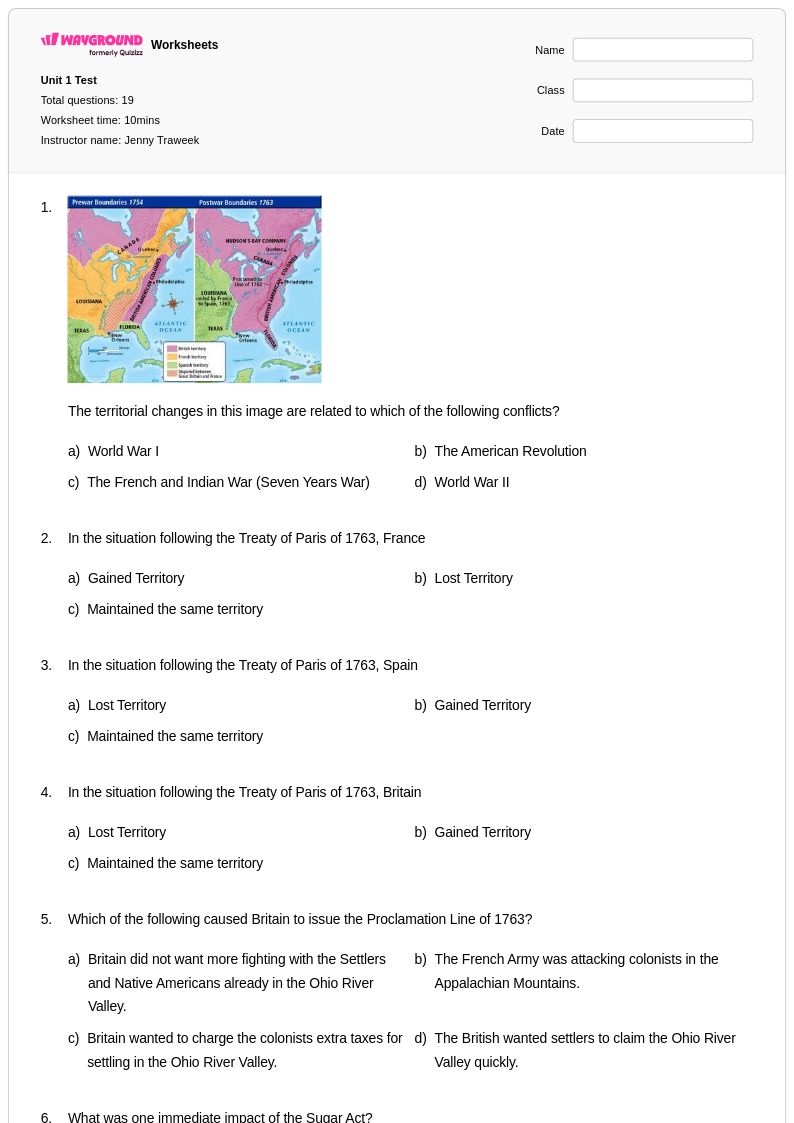
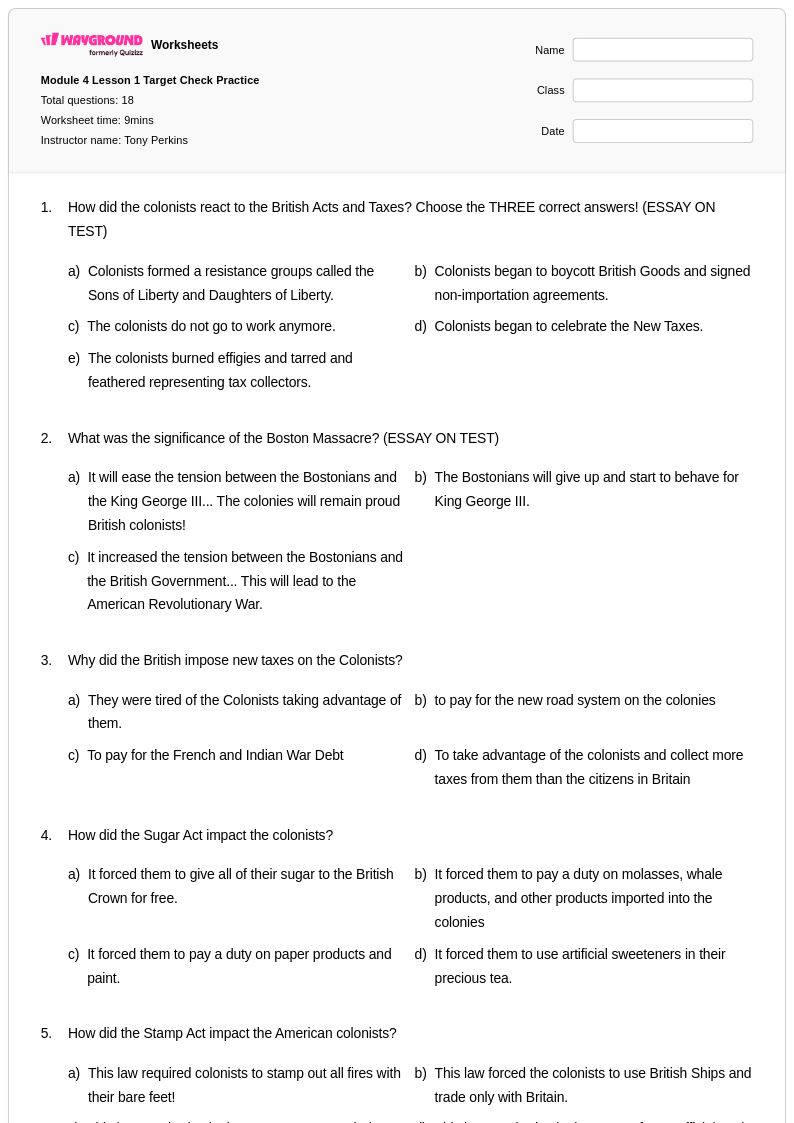
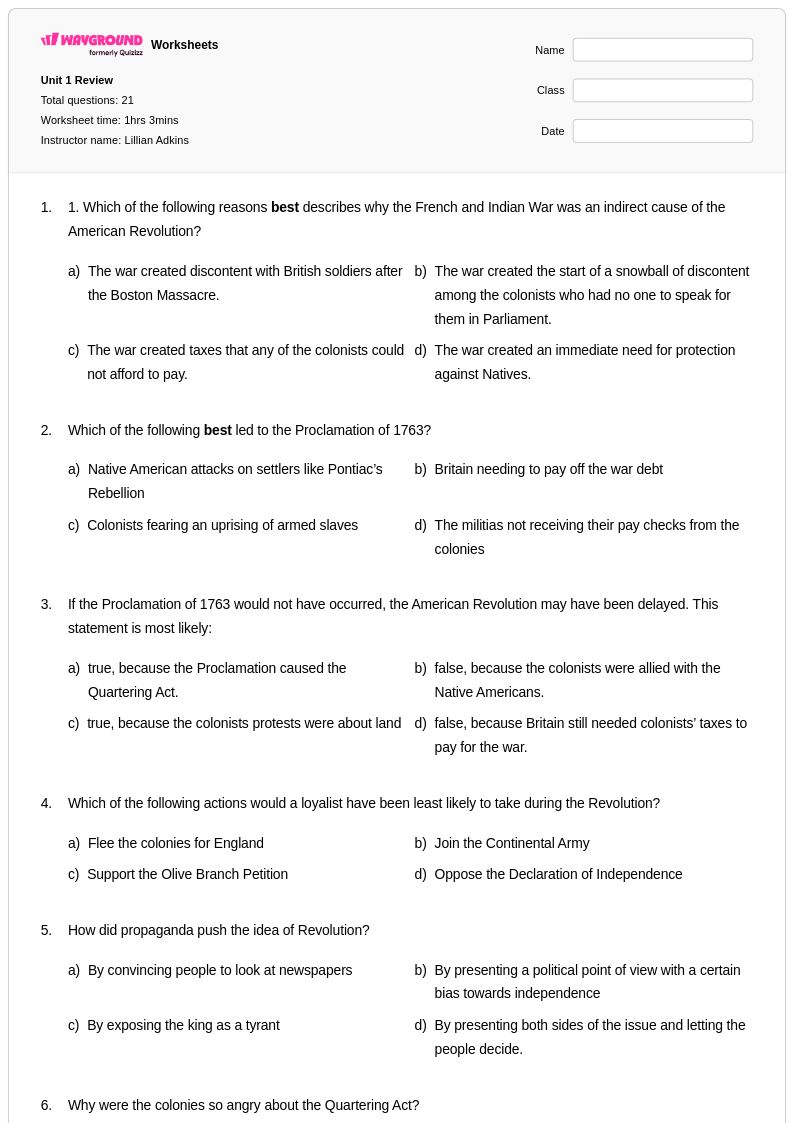
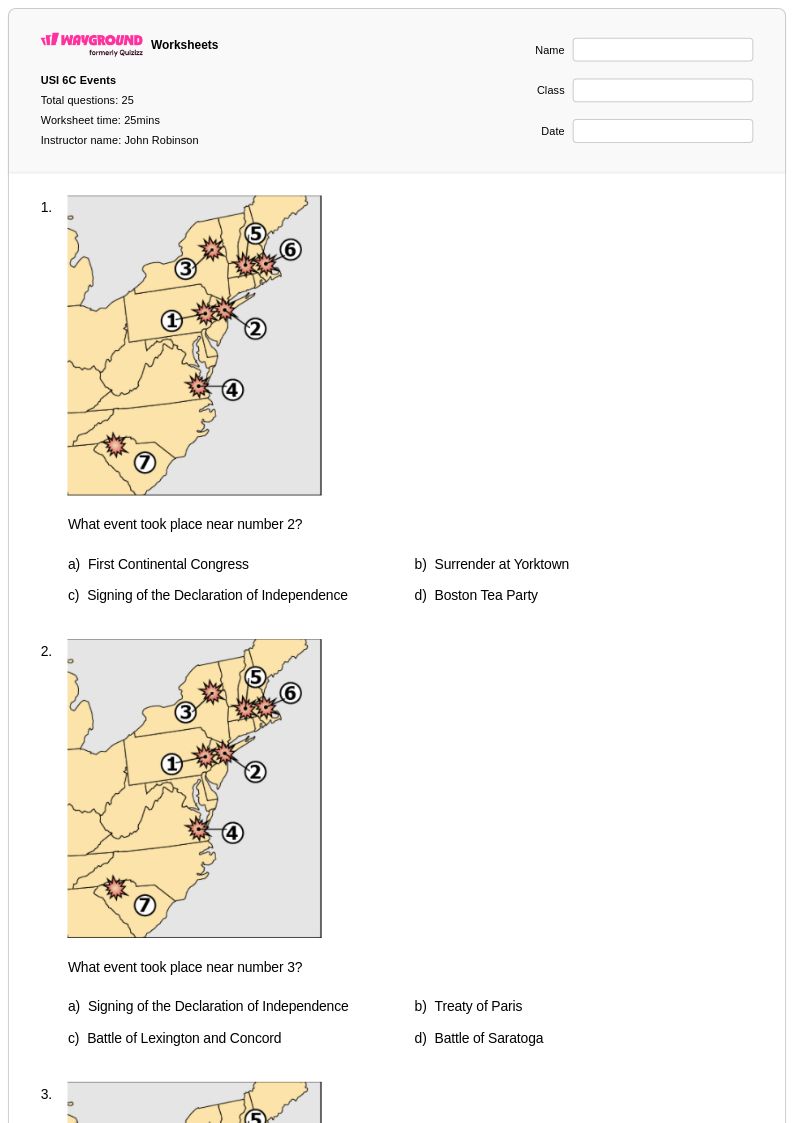
Boston Massacre worksheets for Class 7 students provide comprehensive exploration of this pivotal event that escalated tensions between colonists and British forces in 1770. These educational resources help students develop critical thinking skills by analyzing primary source documents, examining different perspectives on the incident, and understanding the propaganda techniques used by both sides to influence public opinion. Through engaging practice problems and document analysis activities, students strengthen their ability to evaluate historical evidence and distinguish between fact and interpretation. The worksheets include detailed answer keys that support both independent study and classroom instruction, while printable pdf formats ensure easy access for teachers seeking free, high-quality materials that reinforce essential concepts about colonial resistance and the road to revolution.
Wayground, formerly Quizizz, empowers educators with millions of teacher-created Boston Massacre resources that align with social studies standards and support diverse learning needs in Class 7 classrooms. The platform's robust search and filtering capabilities allow teachers to quickly locate worksheets that match their specific instructional goals, whether focusing on causes and effects, eyewitness accounts, or the event's role in revolutionary propaganda. Built-in differentiation tools enable customization for varied skill levels, while flexible formatting options provide both digital and printable versions to accommodate different classroom environments. These comprehensive worksheet collections support effective lesson planning by offering ready-to-use materials for skill practice, targeted remediation for struggling learners, and enrichment opportunities for advanced students exploring the complexities of colonial-British relations and early American resistance movements.
FAQs
How do I teach the Boston Massacre in a way that develops critical thinking?
Teaching the Boston Massacre effectively means going beyond the basic timeline and pushing students to evaluate competing accounts of the March 5, 1770 incident. Have students compare British soldier testimonies against colonial eyewitness reports and examine Paul Revere's engraving as a piece of deliberate propaganda. This approach builds source analysis skills while helping students understand how narratives are shaped by perspective and political intent.
What activities help students practice analyzing primary sources about the Boston Massacre?
The most effective practice activities ask students to read multiple firsthand accounts of the Boston Massacre and identify where they contradict each other, then reason about why those differences exist. Cause-and-effect exercises that trace the escalating tensions between Boston civilians and British soldiers leading up to March 5, 1770 also reinforce analytical skills. Worksheets that ask students to distinguish between fact, opinion, and propaganda in period documents are particularly valuable for building historical literacy.
What misconceptions do students commonly have about the Boston Massacre?
Students frequently accept the colonial framing of the event as literal truth, treating Paul Revere's engraving as an accurate depiction rather than a propaganda piece. Many also assume the soldiers acted without provocation, missing the evidence that the crowd was aggressive before shots were fired. A third common error is overstating the immediate political impact, when in reality revolutionary sentiment built gradually in the months and years that followed.
How can I use Boston Massacre worksheets to differentiate instruction for mixed-ability classes?
Boston Massacre worksheets can be differentiated by varying the complexity of primary source excerpts assigned to different students and adjusting the level of scaffolding provided for document analysis tasks. On Wayground, teachers can apply individual accommodations such as reduced answer choices, read-aloud support, or extended time to specific students without alerting the rest of the class. This means struggling readers can still engage meaningfully with primary source content while advanced students tackle more nuanced interpretive questions.
How do I use Wayground's Boston Massacre worksheets in my classroom?
Wayground's Boston Massacre worksheets are available as printable PDFs for traditional classroom use and in digital formats for technology-integrated or hybrid learning environments, and teachers can also host them as a quiz directly on Wayground. Each worksheet includes a complete answer key, which supports independent student work and makes formative assessment more efficient. Teachers can use these materials for direct instruction, small-group analysis activities, or as homework assignments tied to a broader American Revolution unit.
How does the Boston Massacre connect to the broader causes of the American Revolution?
The Boston Massacre served as a powerful propaganda event that colonial leaders, particularly Samuel Adams and Paul Revere, used to galvanize anti-British sentiment across the colonies. While only five colonists died, the incident was framed as a deliberate massacre of innocent civilians, which deepened distrust of British military presence and fueled calls for independence. Understanding this event helps students recognize how single incidents can be amplified into political turning points when the underlying social tension is already high.