Free Printable Boyle's Law Worksheets for Class 10
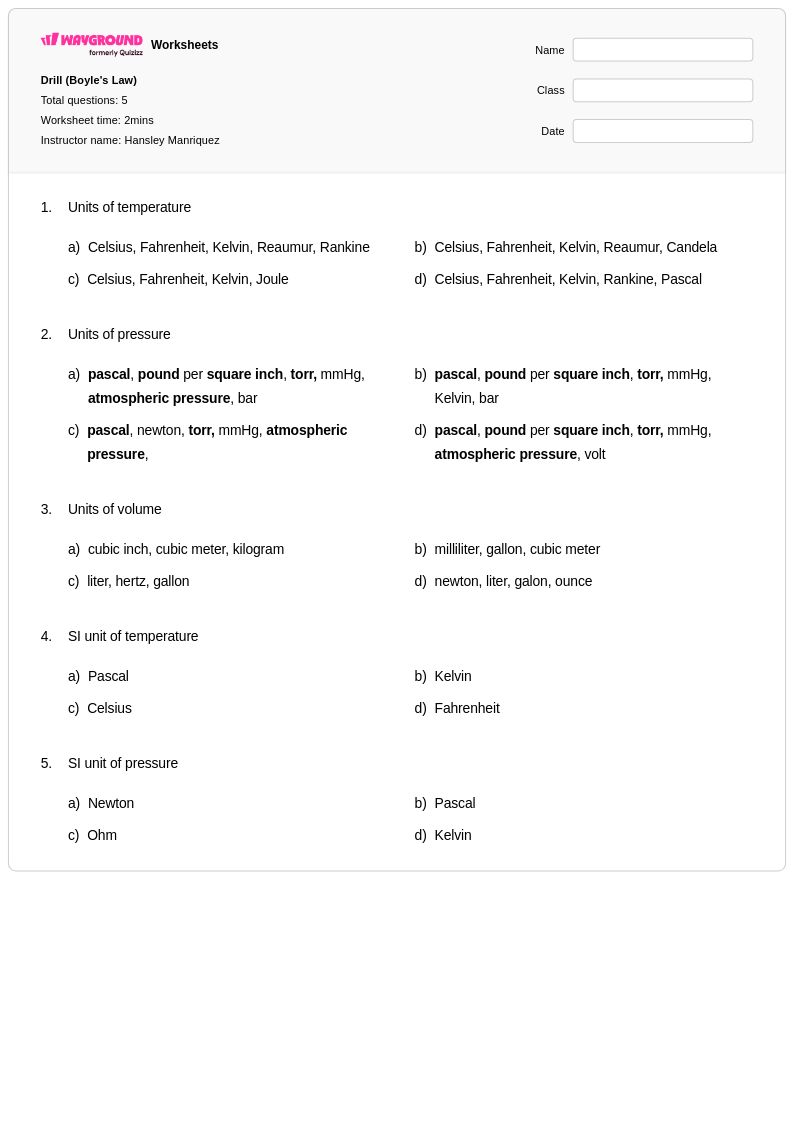
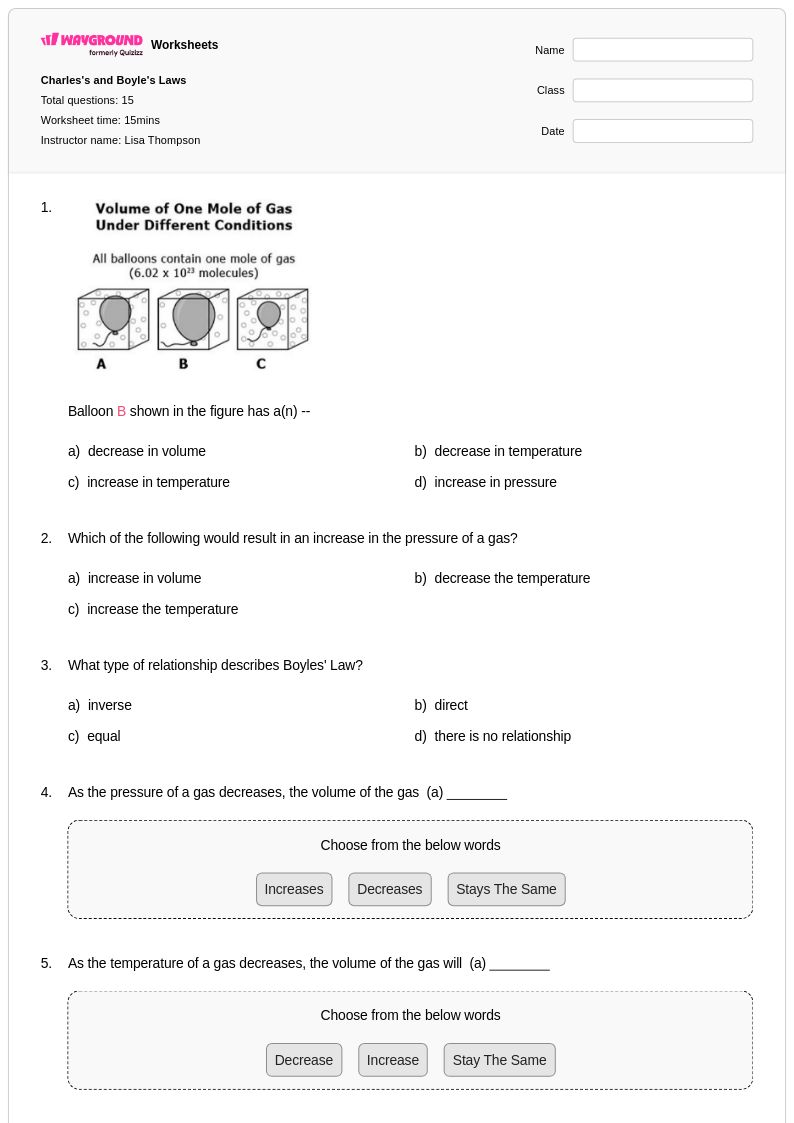
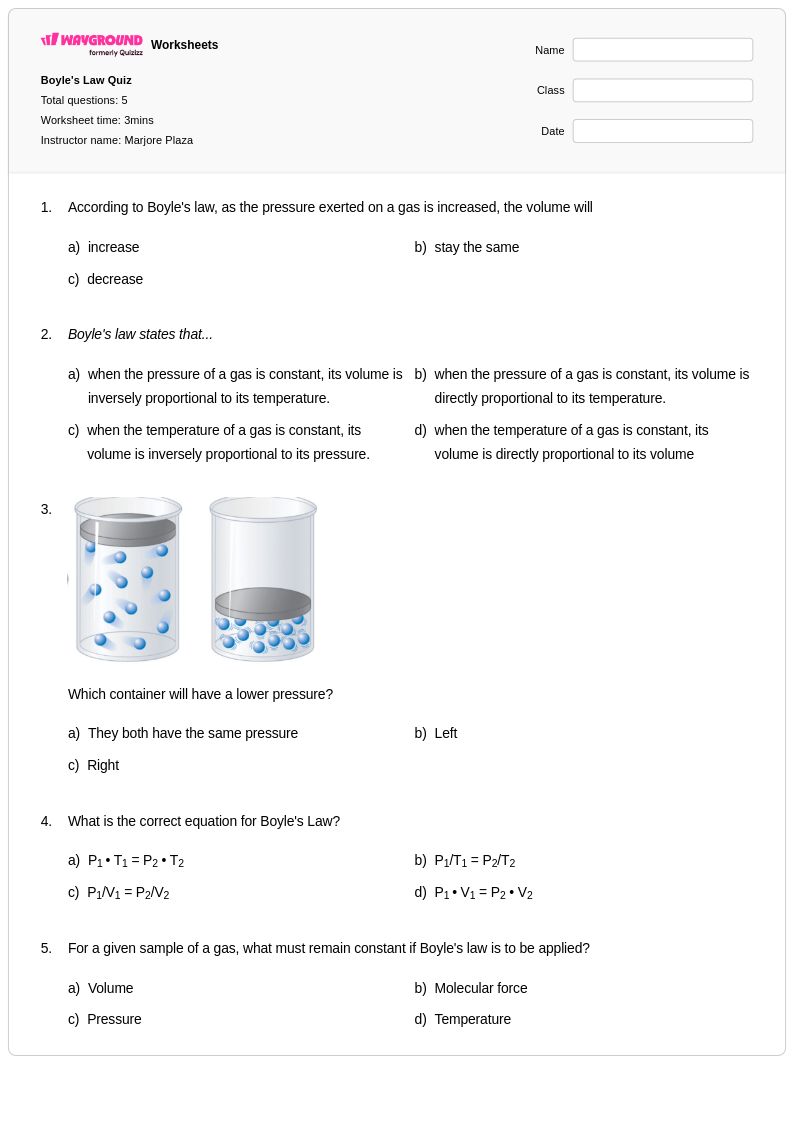
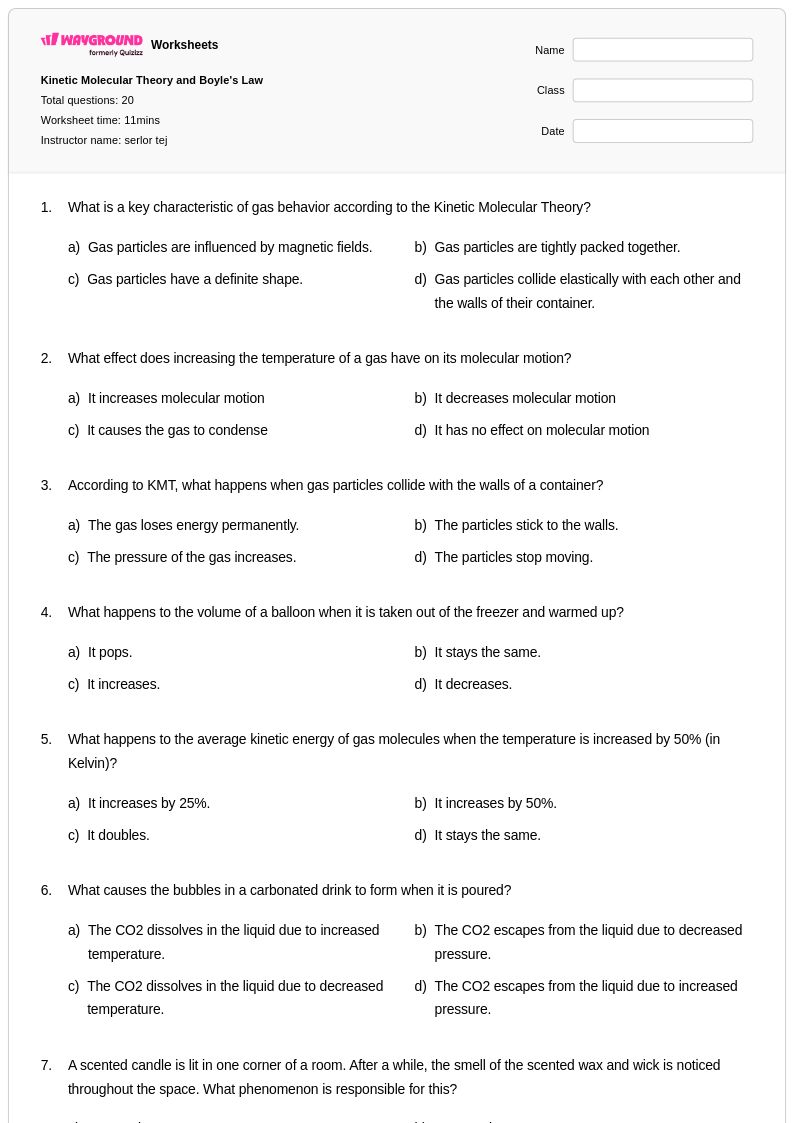
Class 10 Boyle's Law worksheets from Wayground offer free printable PDFs with practice problems and answer keys to help students master gas pressure-volume relationships and gas law calculations.
Explore printable Boyle's Law worksheets for Class 10
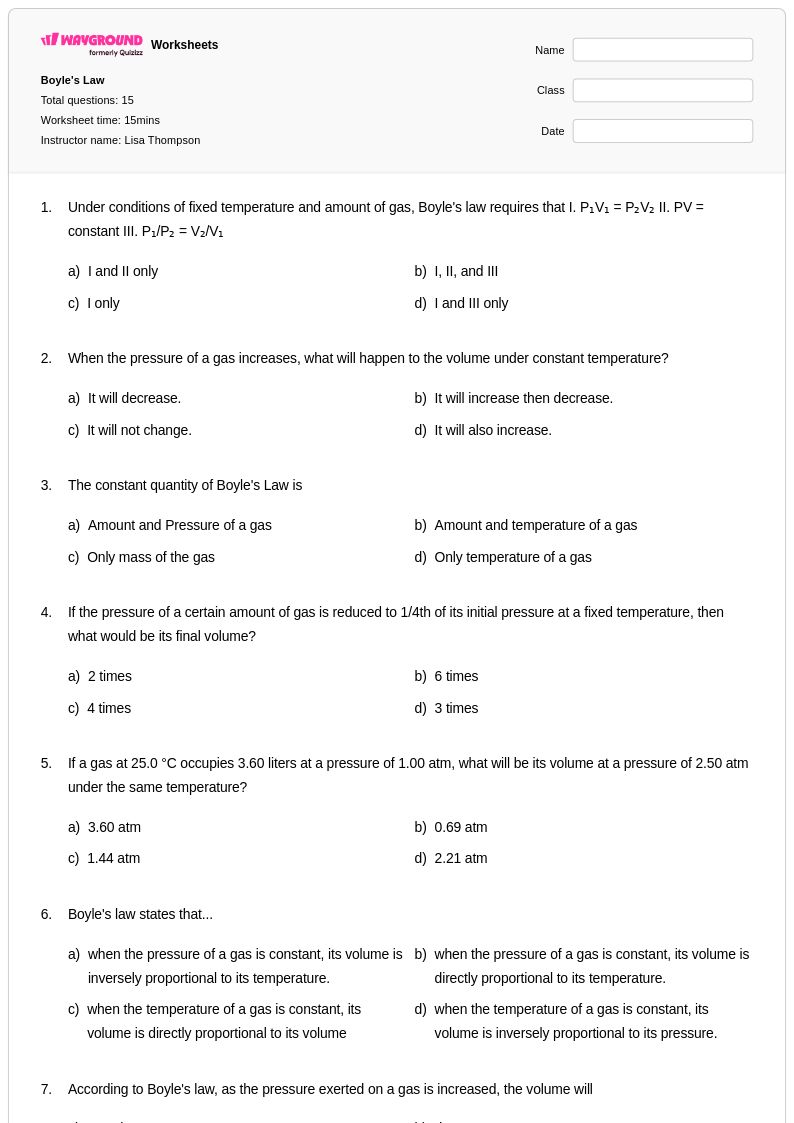
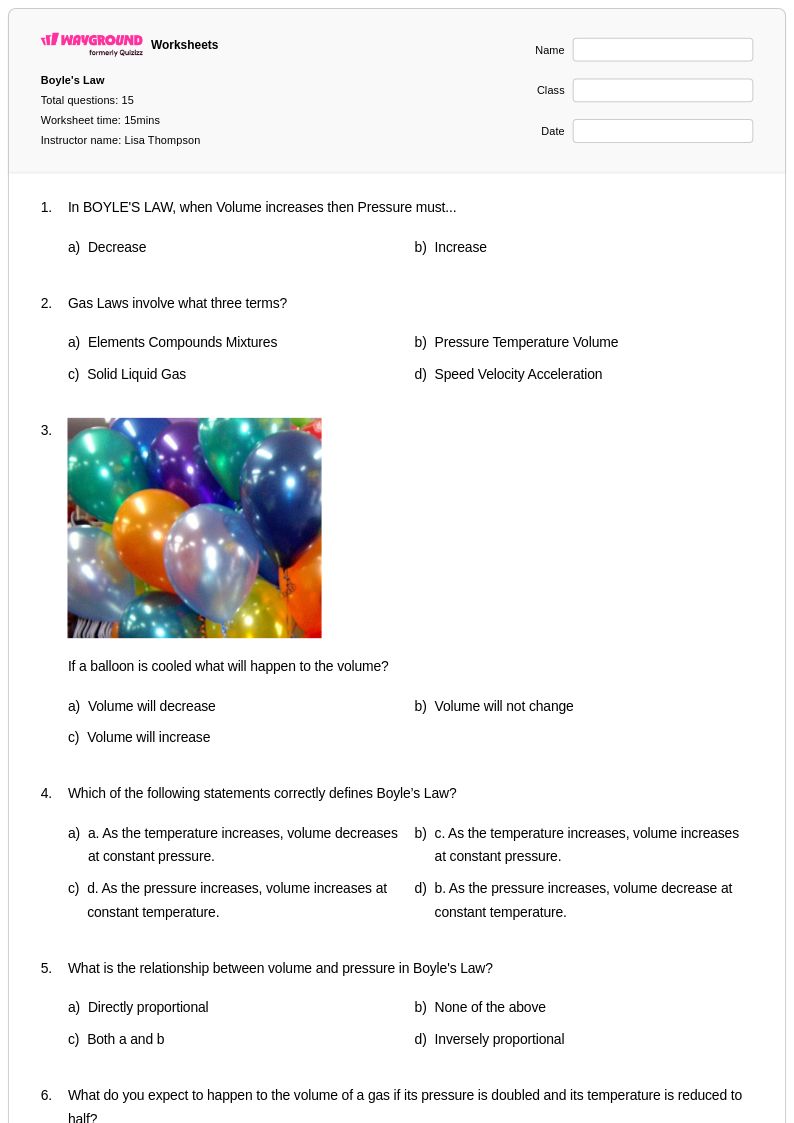
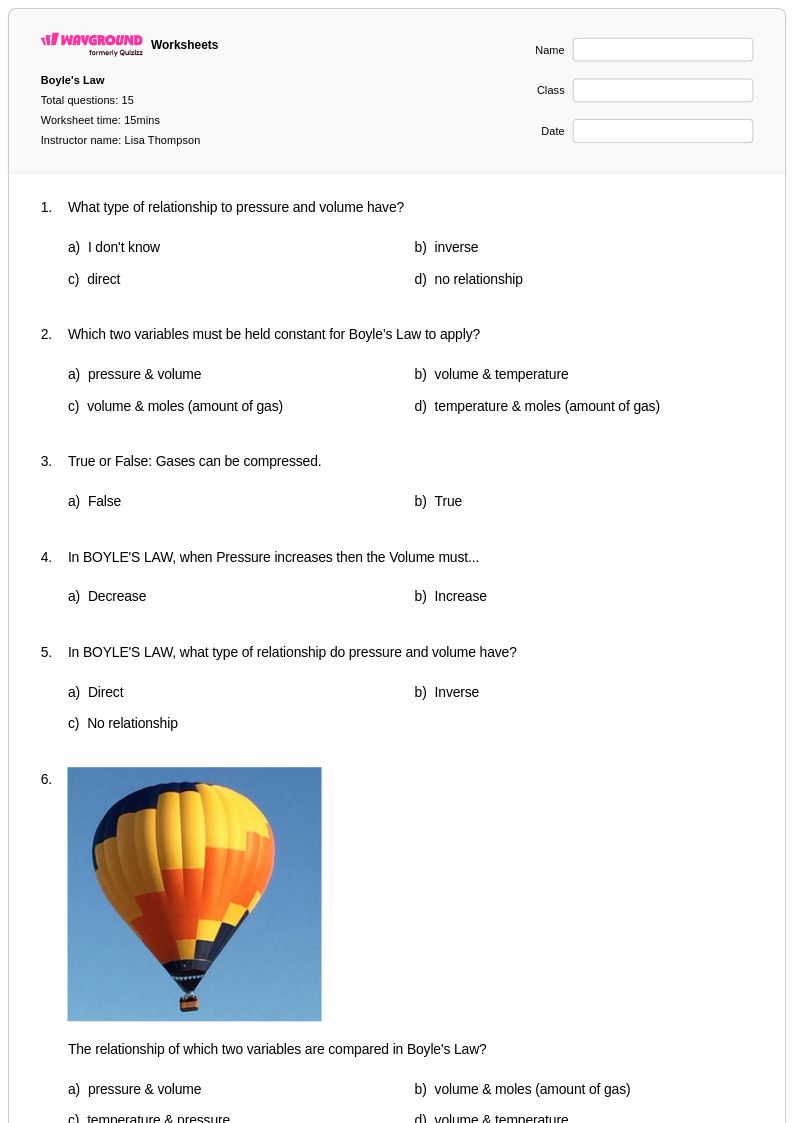
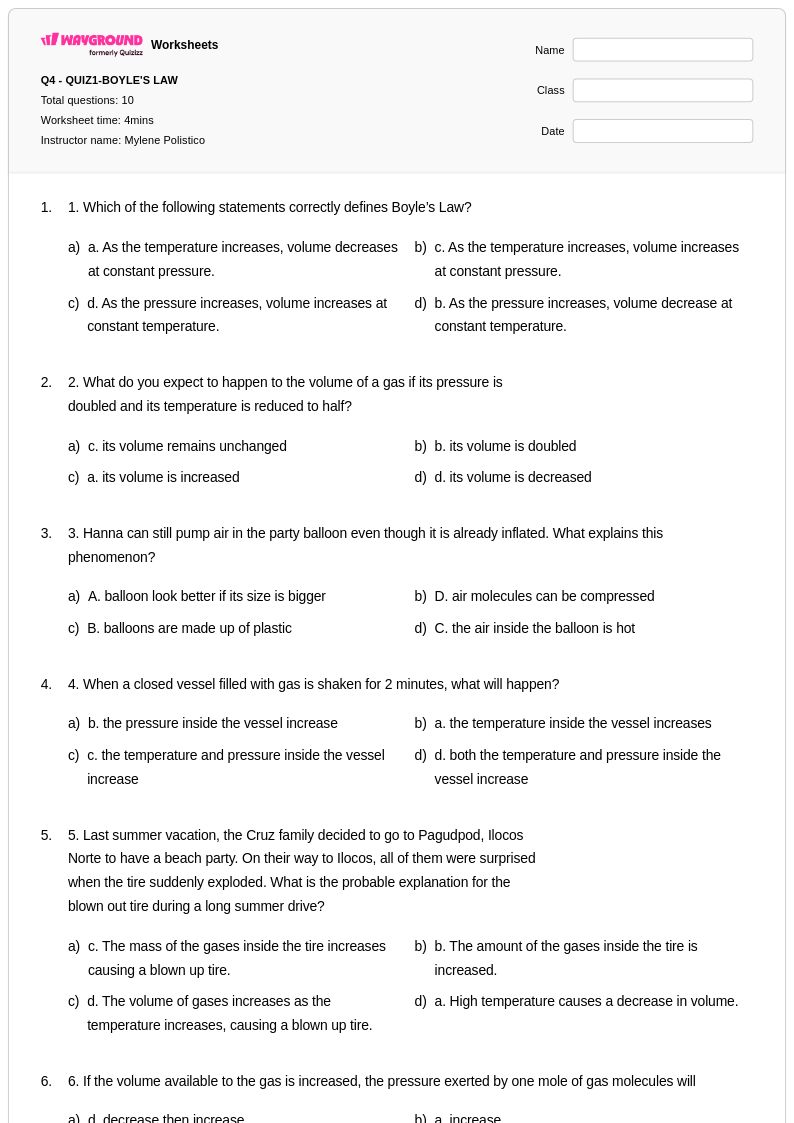
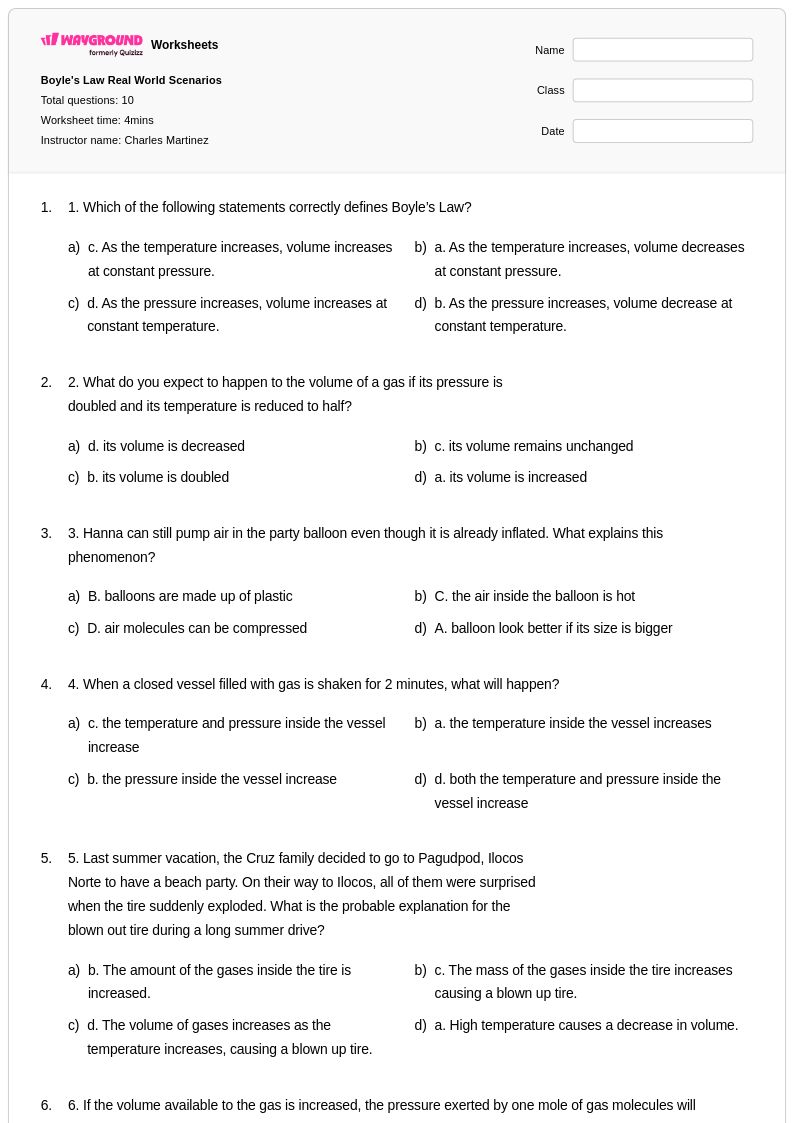
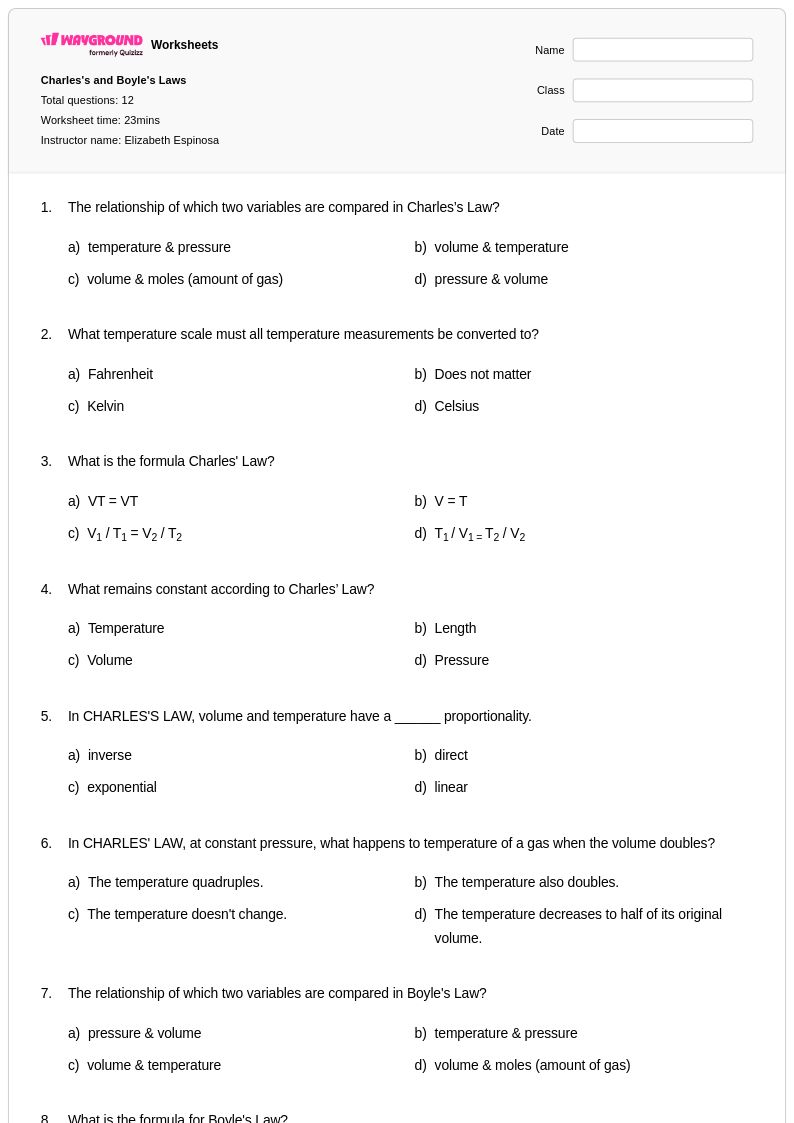
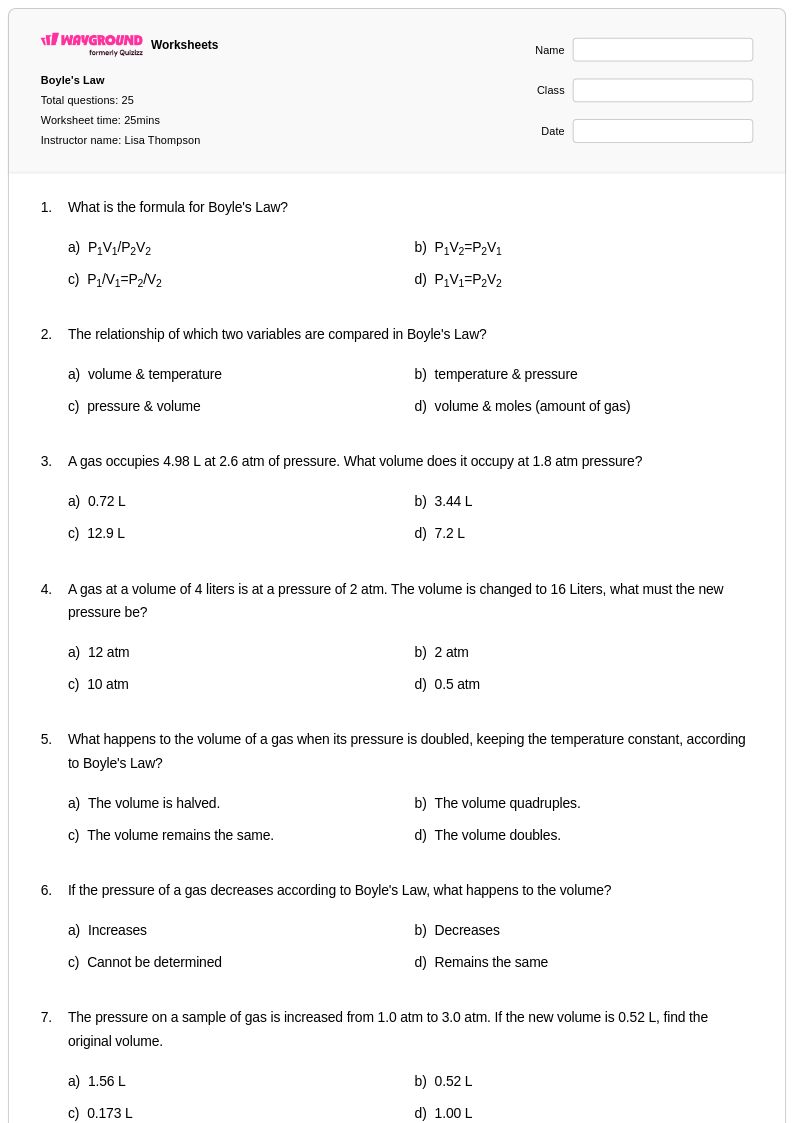
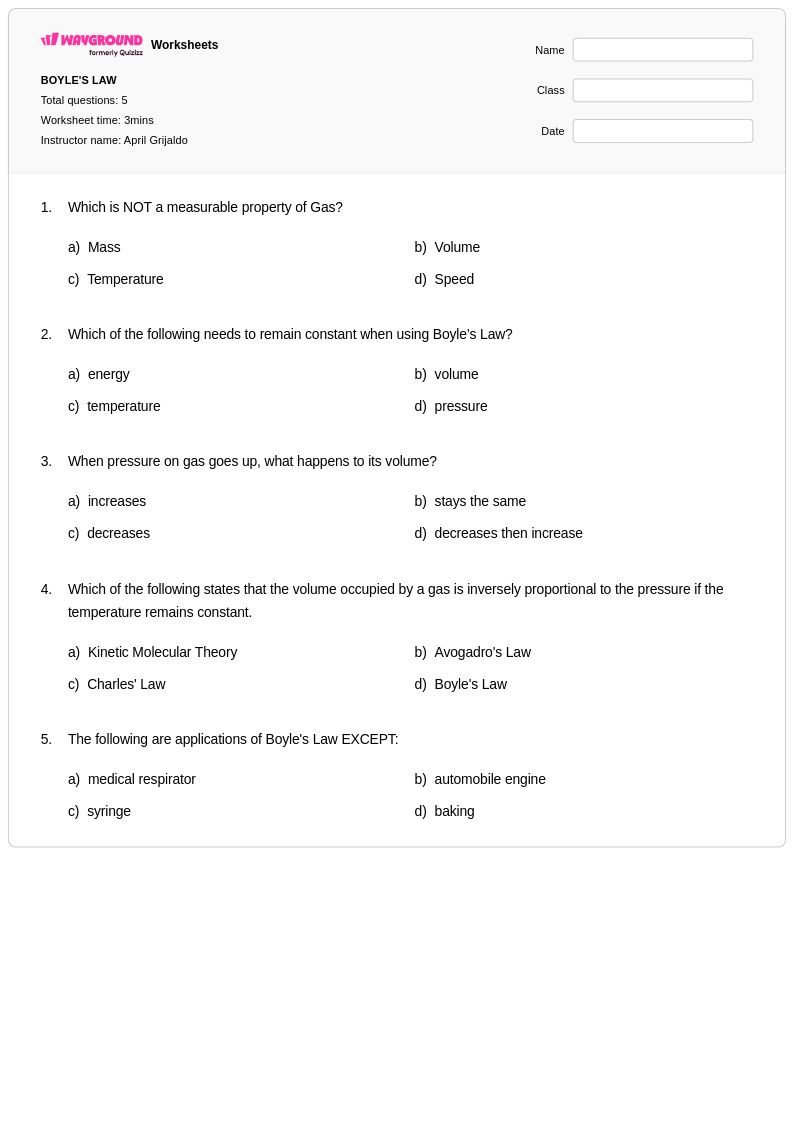
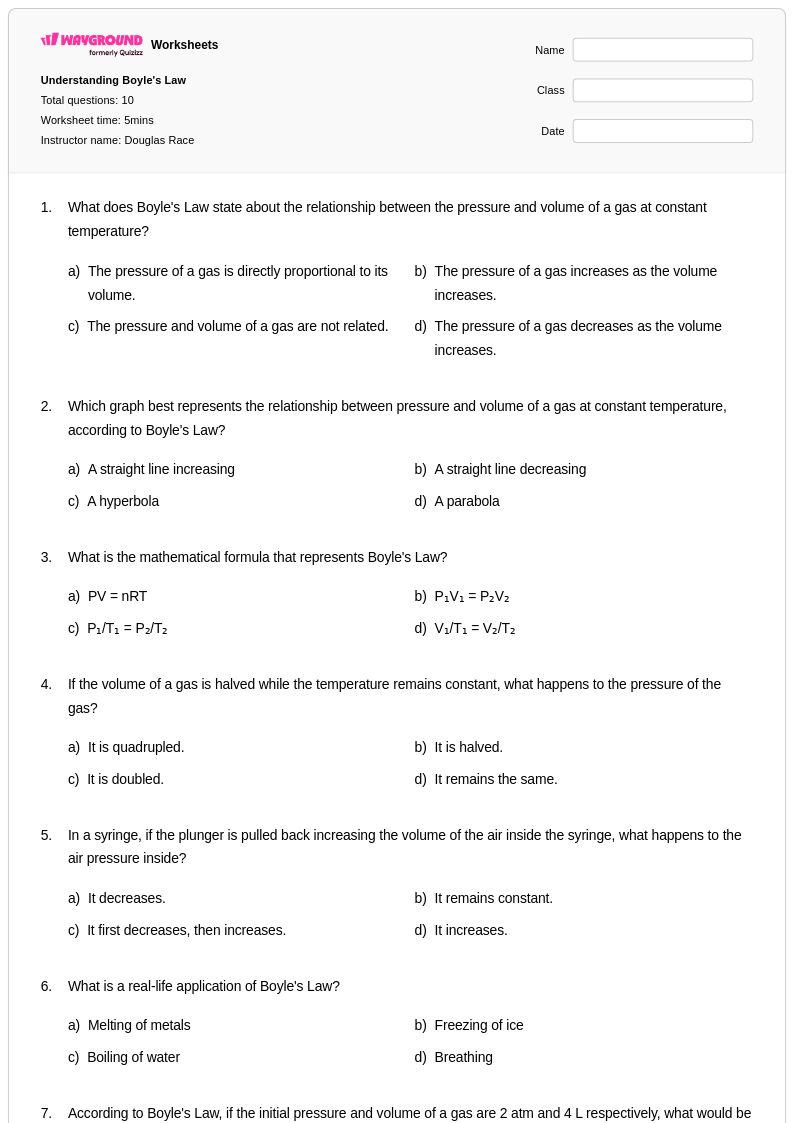
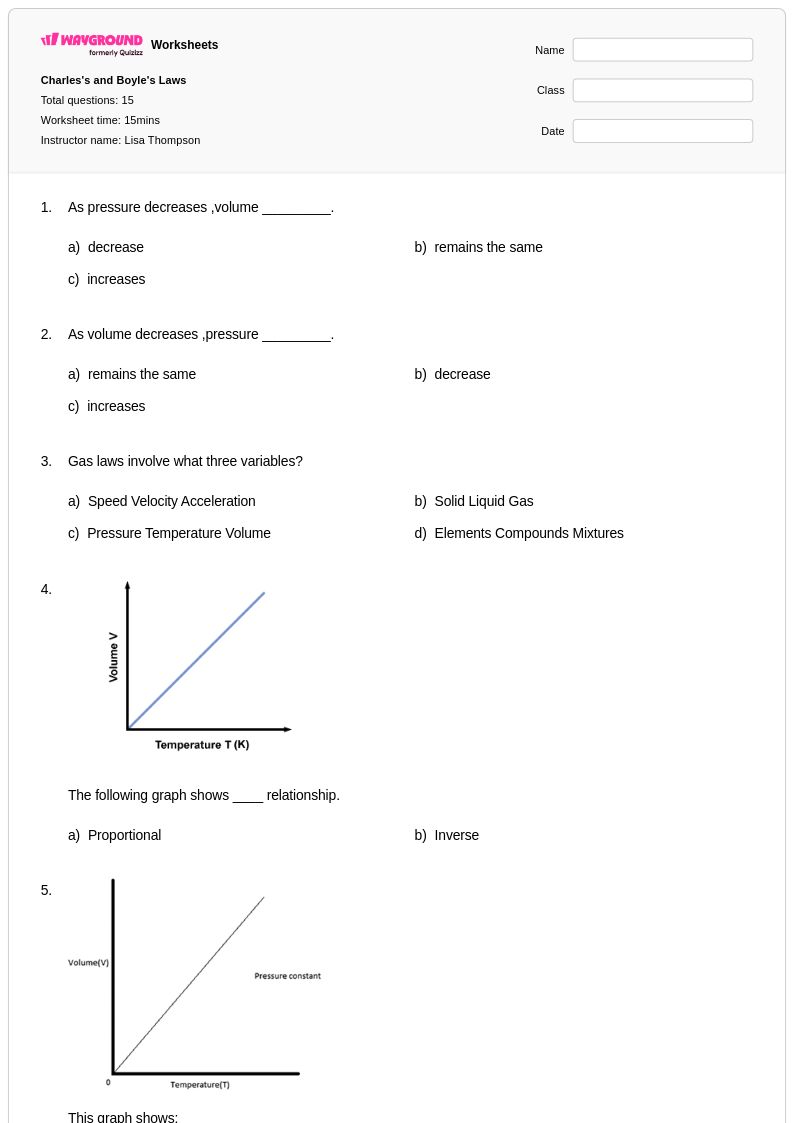
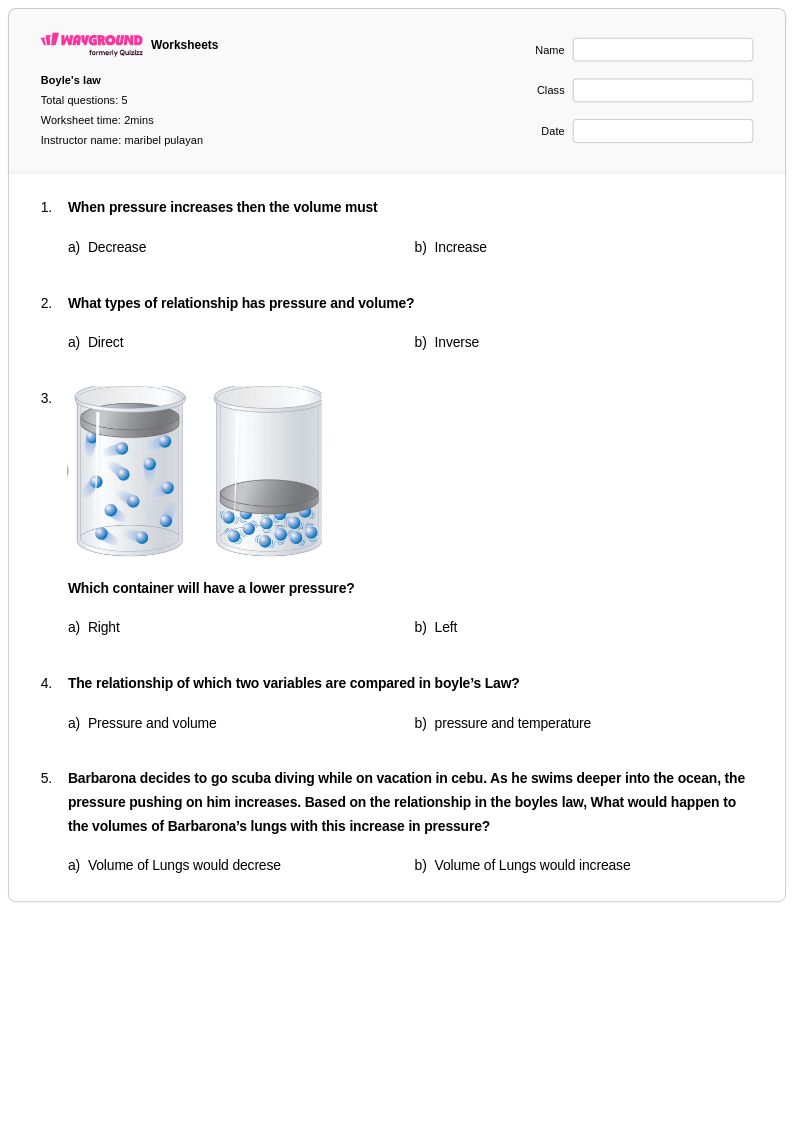
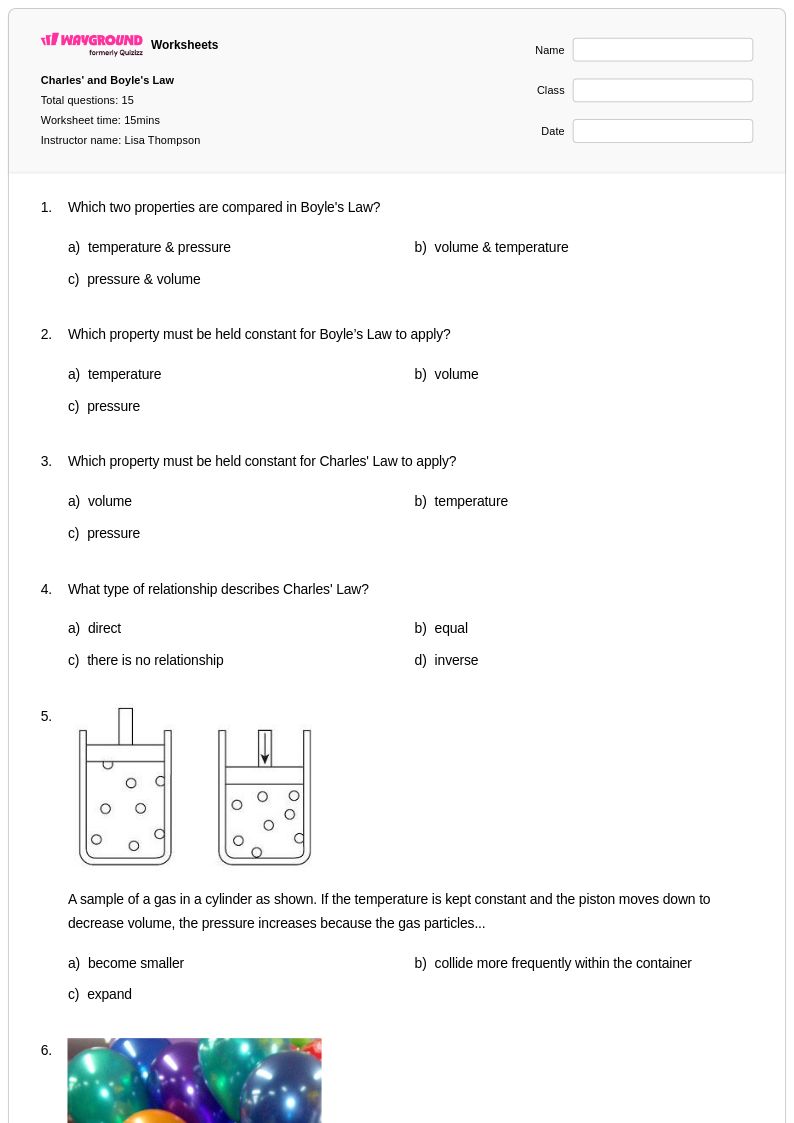
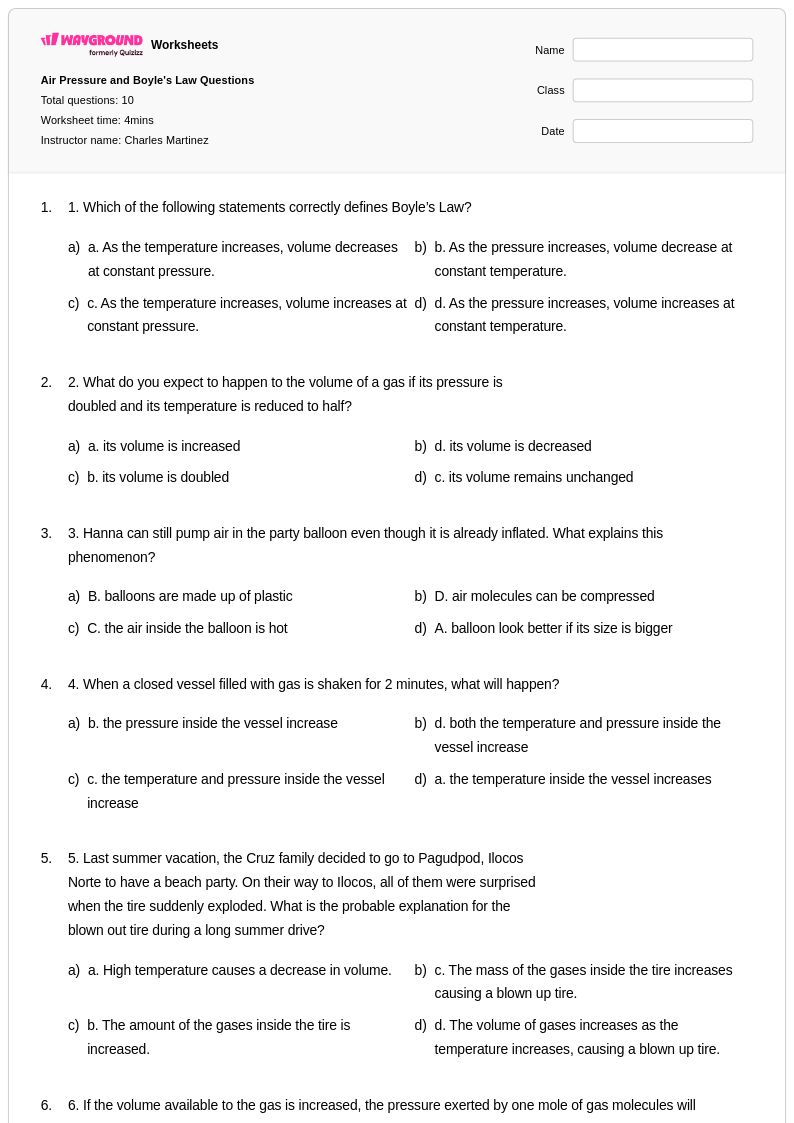
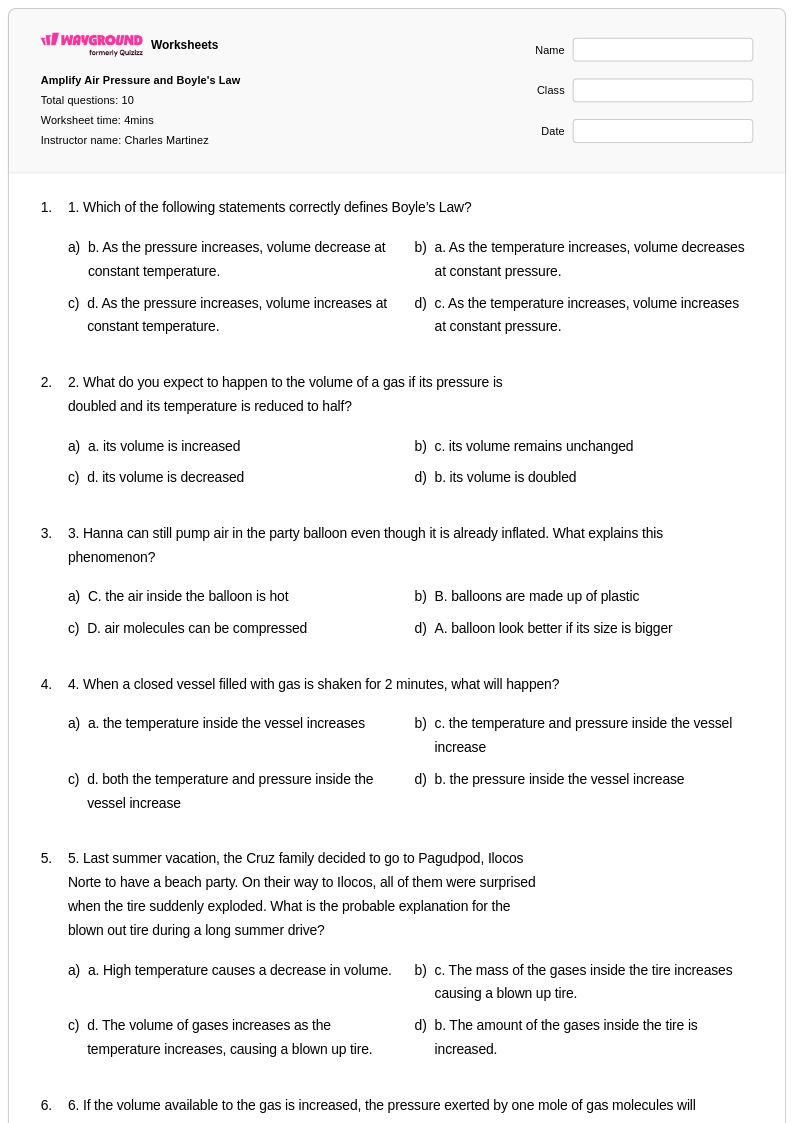
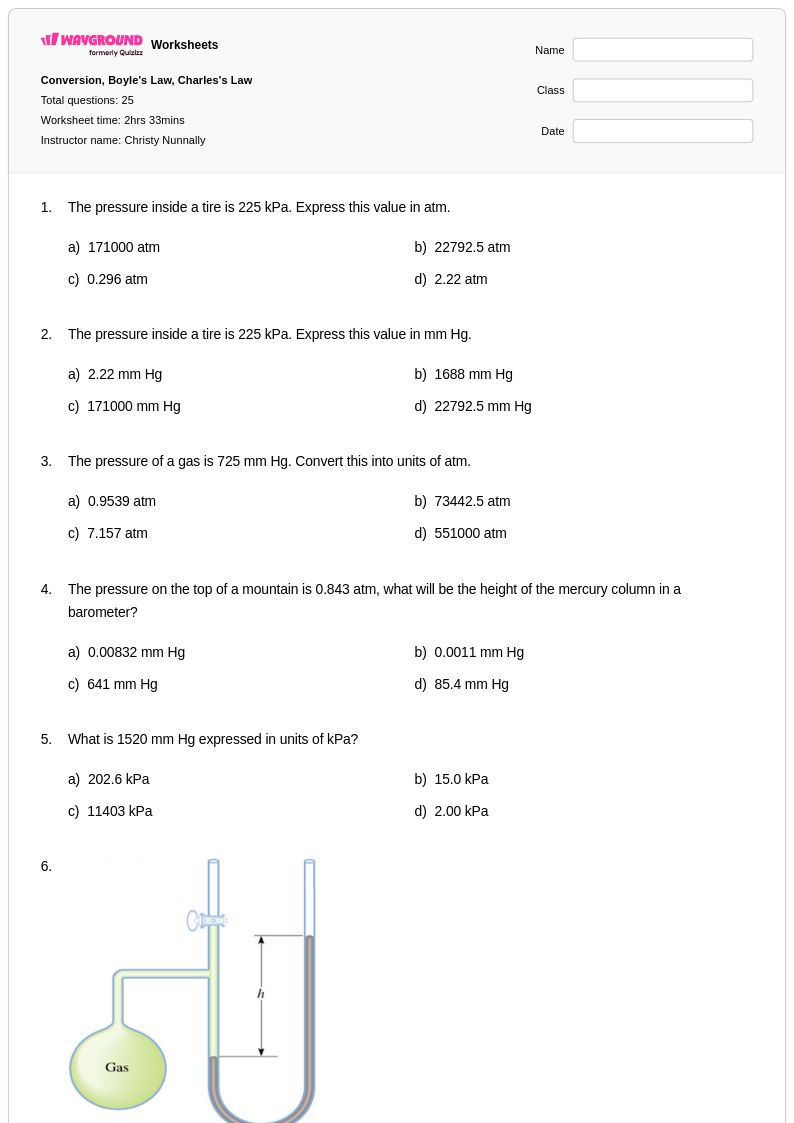
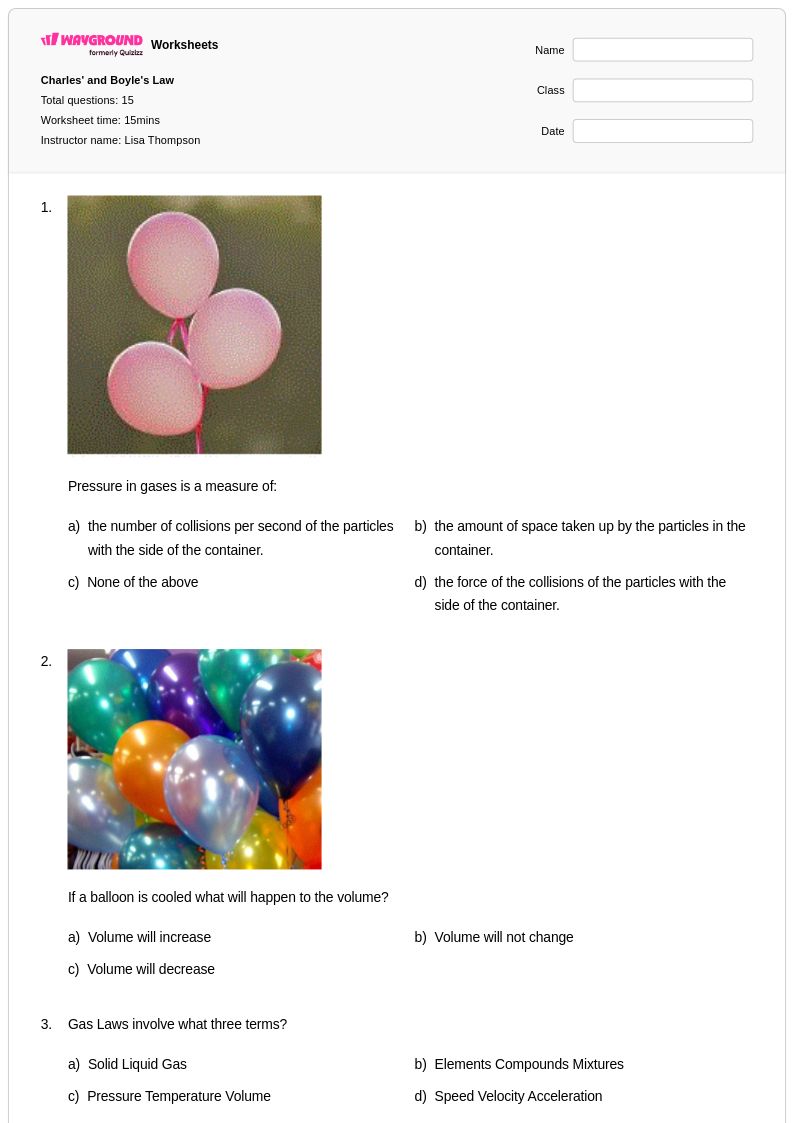
Boyle's Law worksheets for Class 10 students available through Wayground (formerly Quizizz) provide comprehensive practice with one of the fundamental gas laws in physics. These carefully designed resources help students master the inverse relationship between pressure and volume in gases at constant temperature, strengthening their understanding of mathematical relationships in physical systems and their ability to solve complex gas law problems. The worksheet collections include detailed answer keys that guide students through step-by-step problem solving approaches, while free printables offer convenient access to practice problems ranging from basic pressure-volume calculations to real-world applications involving gas behavior in various scenarios.
Wayground (formerly Quizizz) supports educators with an extensive library of millions of teacher-created Boyle's Law resources that streamline lesson planning and enhance student learning outcomes. The platform's robust search and filtering capabilities allow teachers to quickly locate worksheets aligned with specific physics standards and grade-level expectations, while built-in differentiation tools enable customization for diverse learning needs and ability levels. These materials are available in both printable pdf formats and interactive digital versions, providing flexibility for classroom instruction, homework assignments, remediation sessions, and enrichment activities that help students develop mastery of gas law principles and mathematical problem-solving skills essential for advanced physics coursework.
FAQs
How do I teach Boyle's Law to students who struggle with inverse relationships?
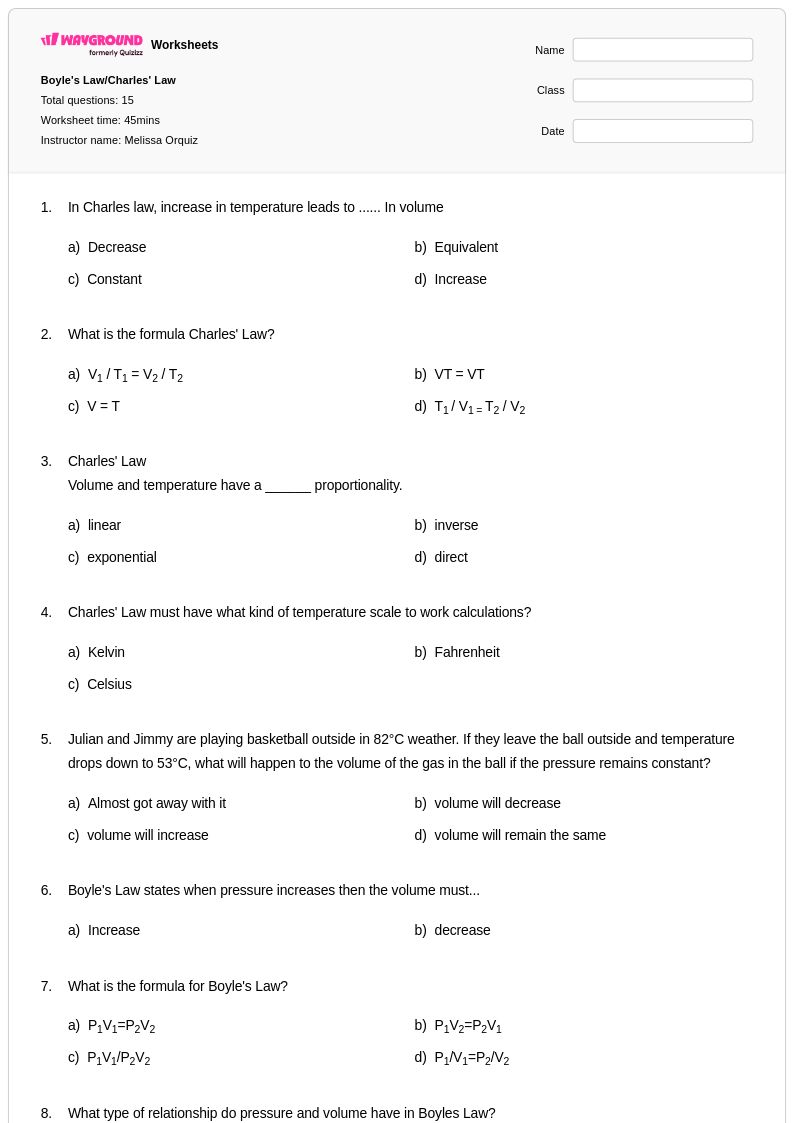
Start by anchoring the concept visually: use a syringe or balloon demonstration so students can physically observe volume decreasing as pressure increases. Then introduce the mathematical relationship (P₁V₁ = P₂V₂) only after students have built an intuitive understanding of the inverse pattern. Graphing pressure-volume data as a hyperbolic curve reinforces the non-linear nature of the relationship before students move into calculation-based problems.
What practice problems are most effective for helping students apply Boyle's Law?
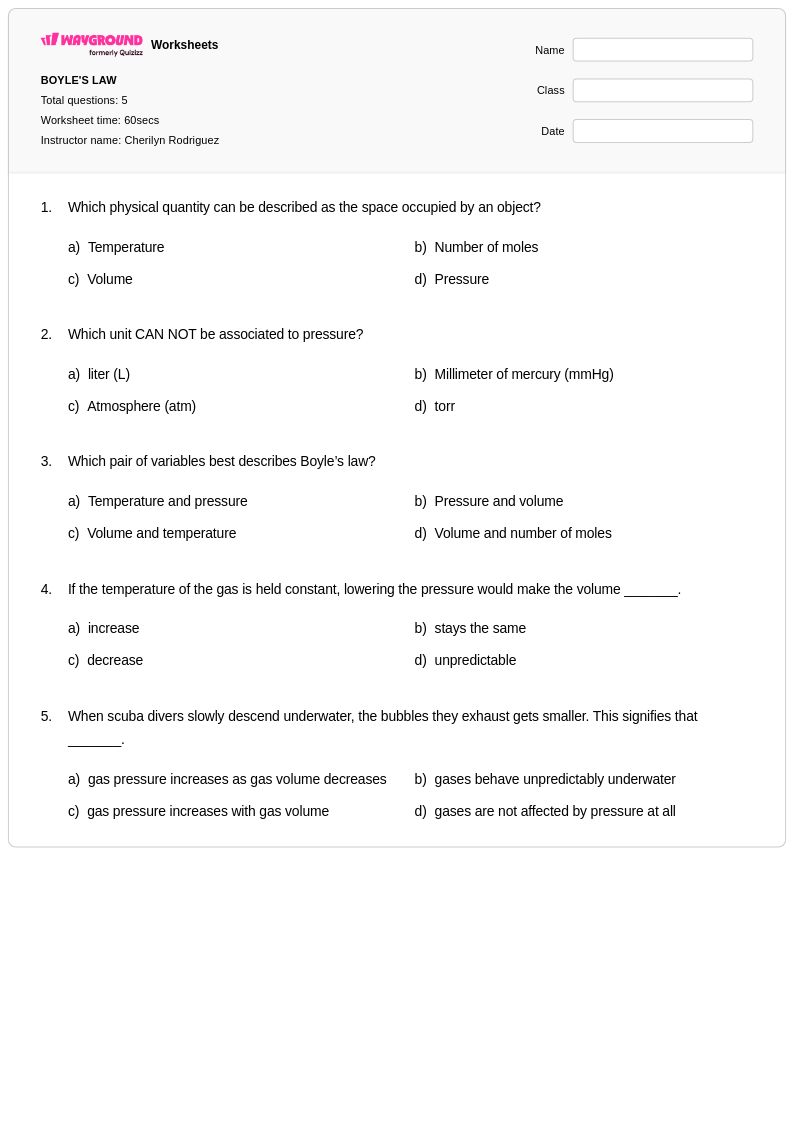
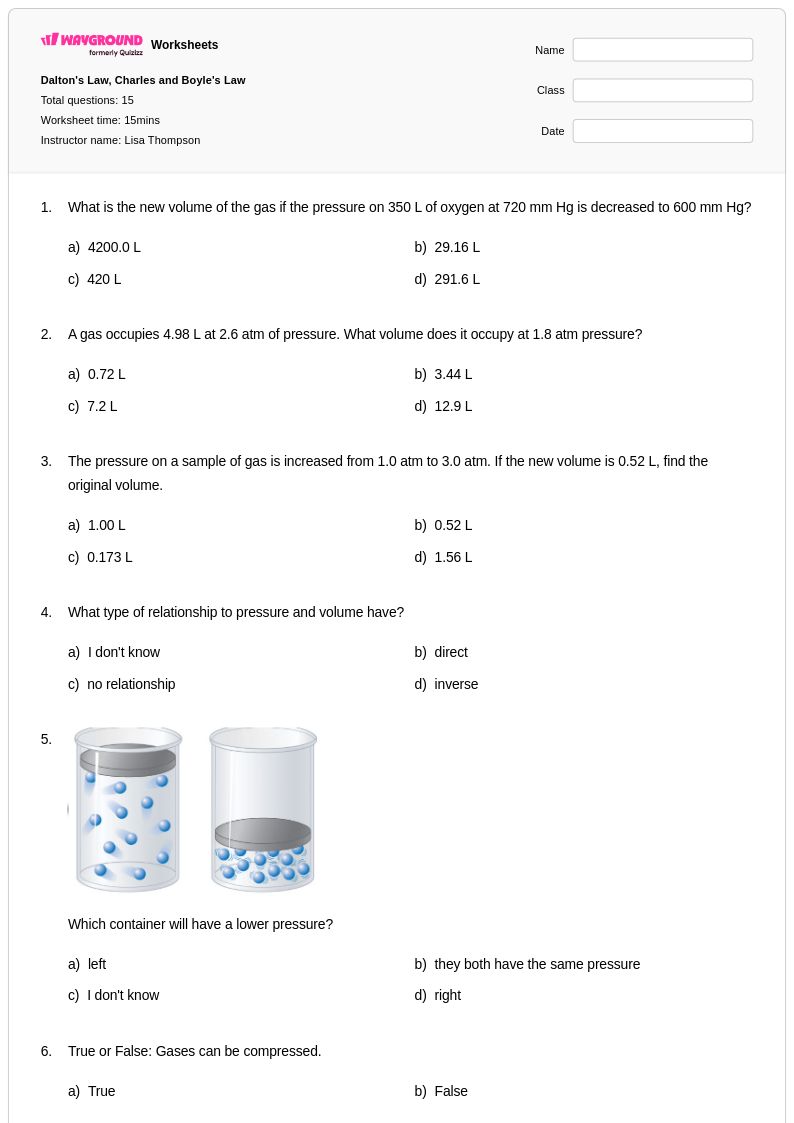
The most effective practice sequence moves from conceptual questions, such as predicting whether pressure increases or decreases when volume is halved, to single-variable calculations, and finally to multi-step problems involving unit conversion or real-world gas scenarios. Problems that require students to rearrange P₁V₁ = P₂V₂ to solve for different unknowns are especially valuable for building flexible problem-solving skills. Including graphical interpretation tasks, where students read or sketch pressure-volume curves, rounds out a complete practice set.
What mistakes do students commonly make when solving Boyle's Law problems?
The most frequent error is treating the pressure-volume relationship as a direct proportion rather than an inverse one, leading students to multiply instead of applying the correct formula. Students also frequently neglect unit consistency, mixing atmospheres with kilopascals or liters with milliliters within the same calculation. A third common mistake is forgetting that Boyle's Law only applies at constant temperature, which causes errors when students attempt to apply it to problems where temperature is also changing.
How can I use Boyle's Law worksheets to prepare students for assessments?
Use structured worksheets to cycle students through conceptual recall, formula manipulation, and applied problem-solving in a single session, mirroring the question types typically found on physics assessments. Worksheets with detailed answer keys allow students to self-assess immediately after completing each section, which research supports as more effective for retention than delayed feedback. Assigning progressively harder problem sets in the weeks before an exam helps students build the procedural fluency and confidence needed to perform accurately under timed conditions.
How do I use Wayground's Boyle's Law worksheets in my classroom?
Wayground's Boyle's Law worksheets are available as printable PDFs for traditional classroom distribution, making them easy to assign as homework, lab supplements, or review packets. They are also available in digital formats, so teachers can assign them for technology-integrated learning or host them as a quiz directly on Wayground. Both formats include complete answer keys, reducing teacher prep time and supporting independent student review.
How do I differentiate Boyle's Law instruction for students at different skill levels?
For students who need additional support, begin with conceptual matching tasks and guided calculation templates that scaffold the P₁V₁ = P₂V₂ formula step by step. Advanced learners benefit from open-ended problems that combine Boyle's Law with unit conversion, significant figures, or real-world applications such as scuba diving or hydraulics. On Wayground, teachers can also apply accommodations such as read aloud, extended time, or reduced answer choices to individual students without disrupting the rest of the class.