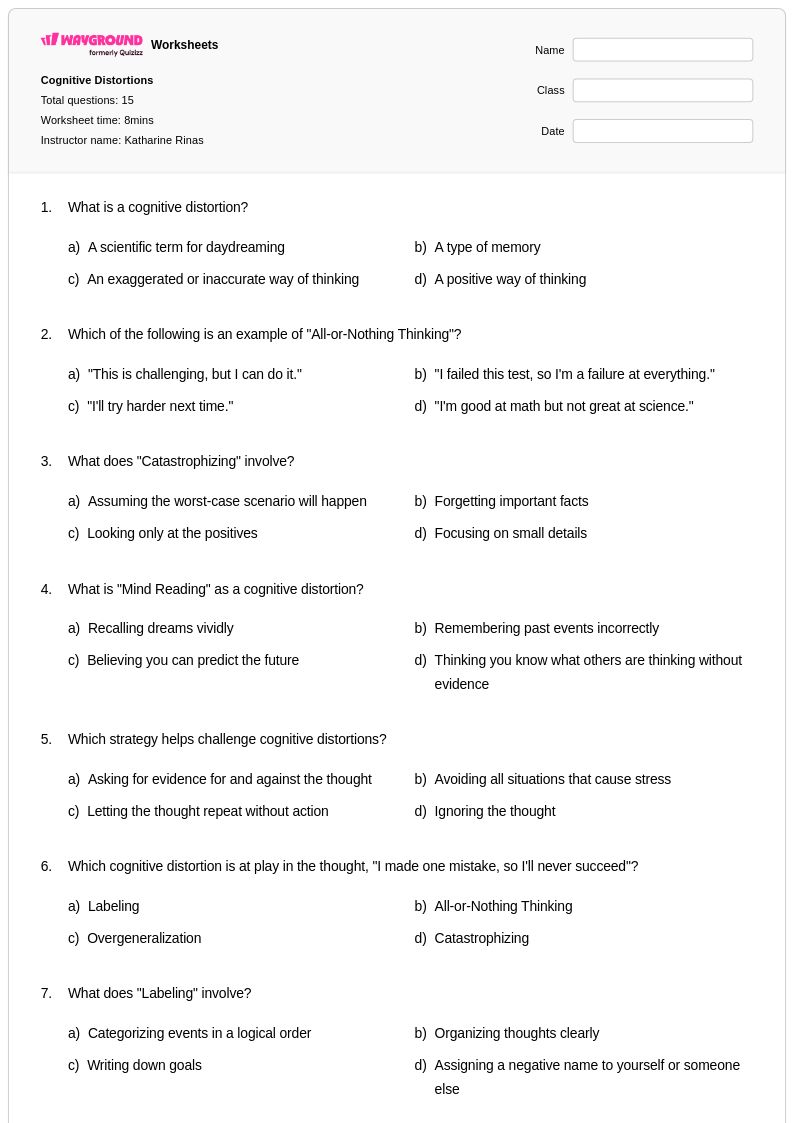
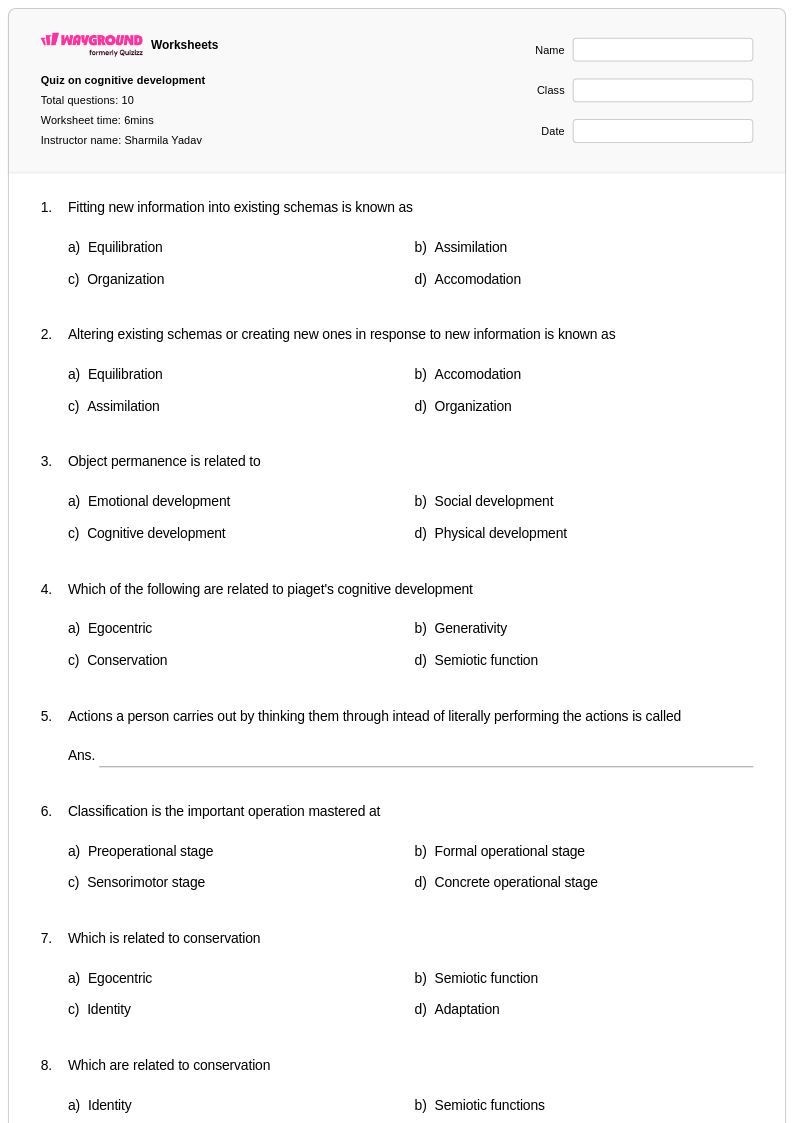
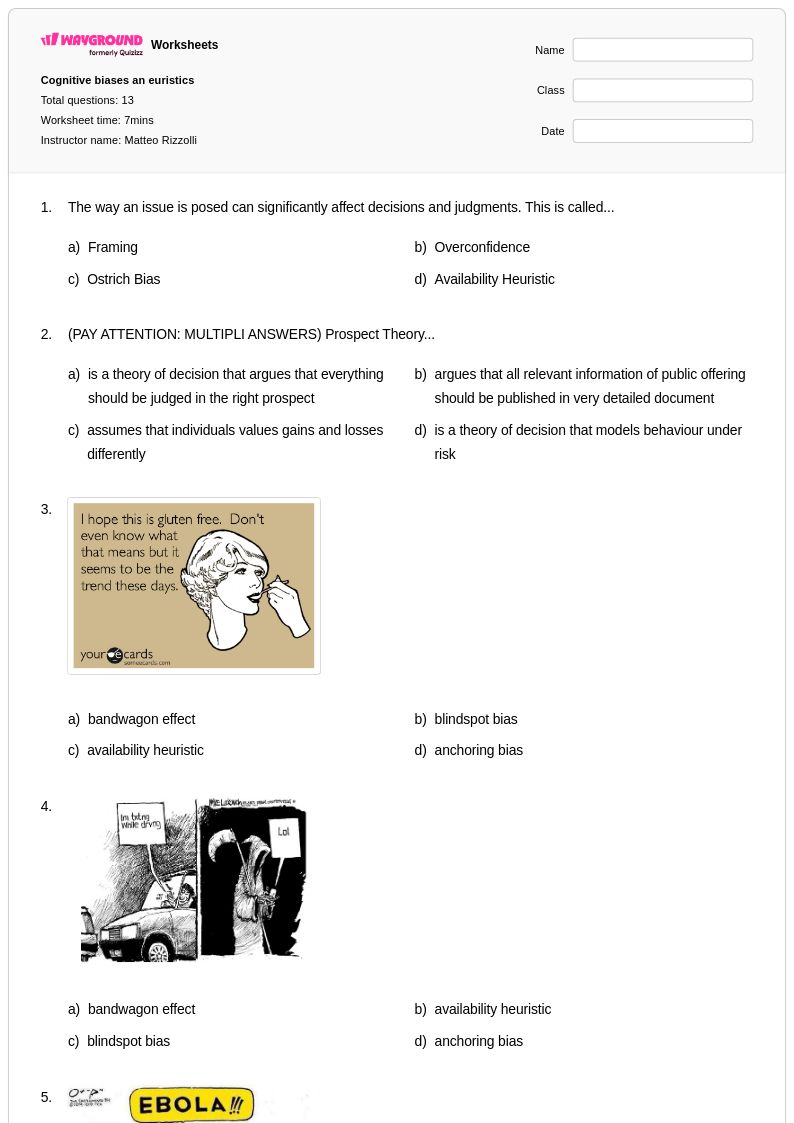
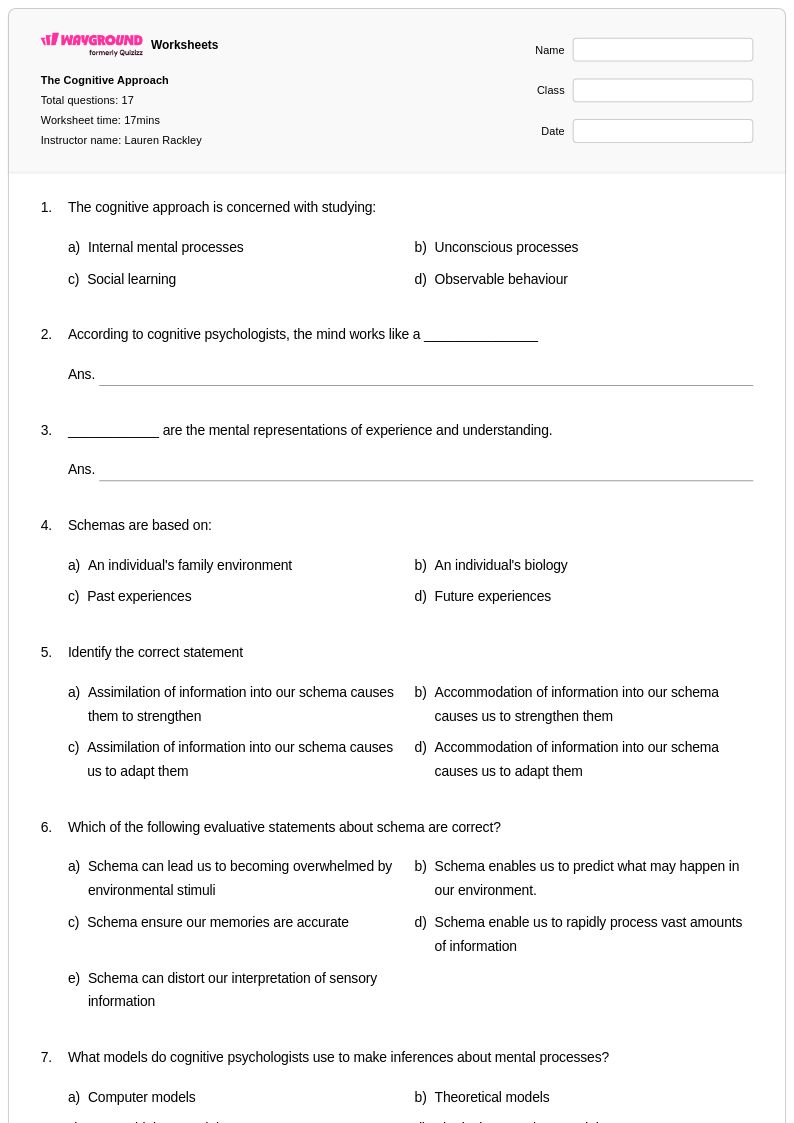
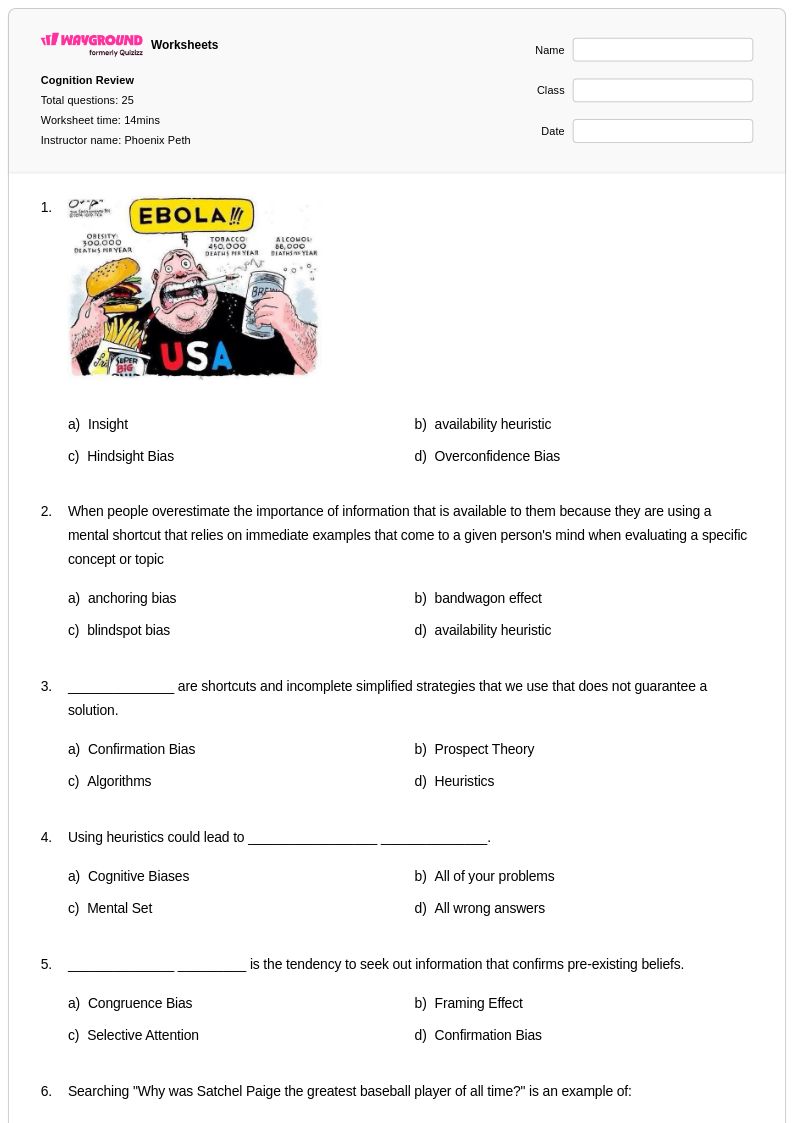
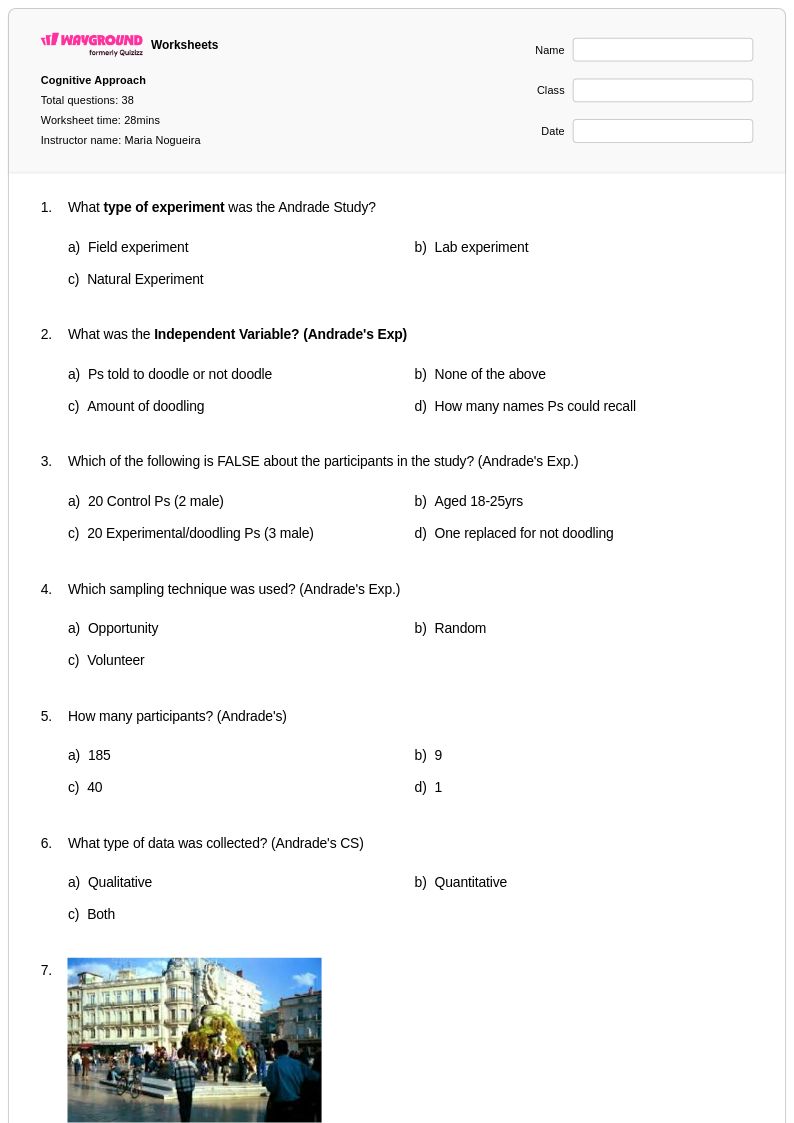
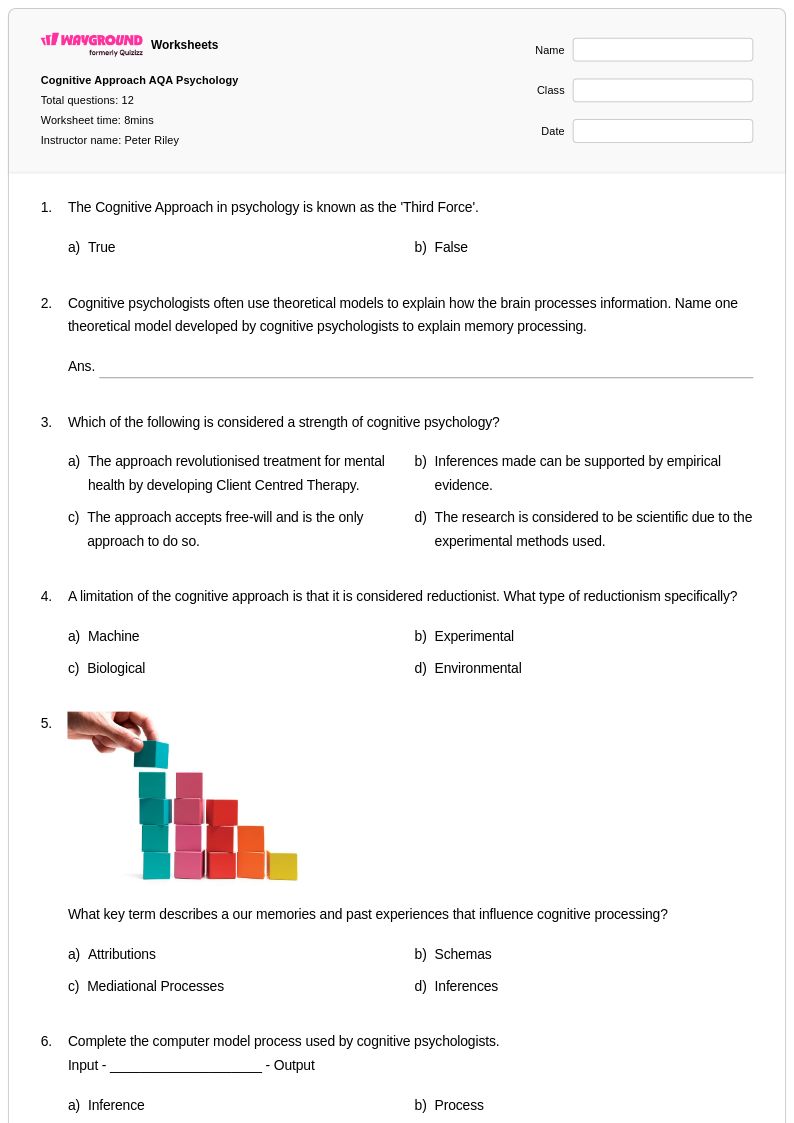
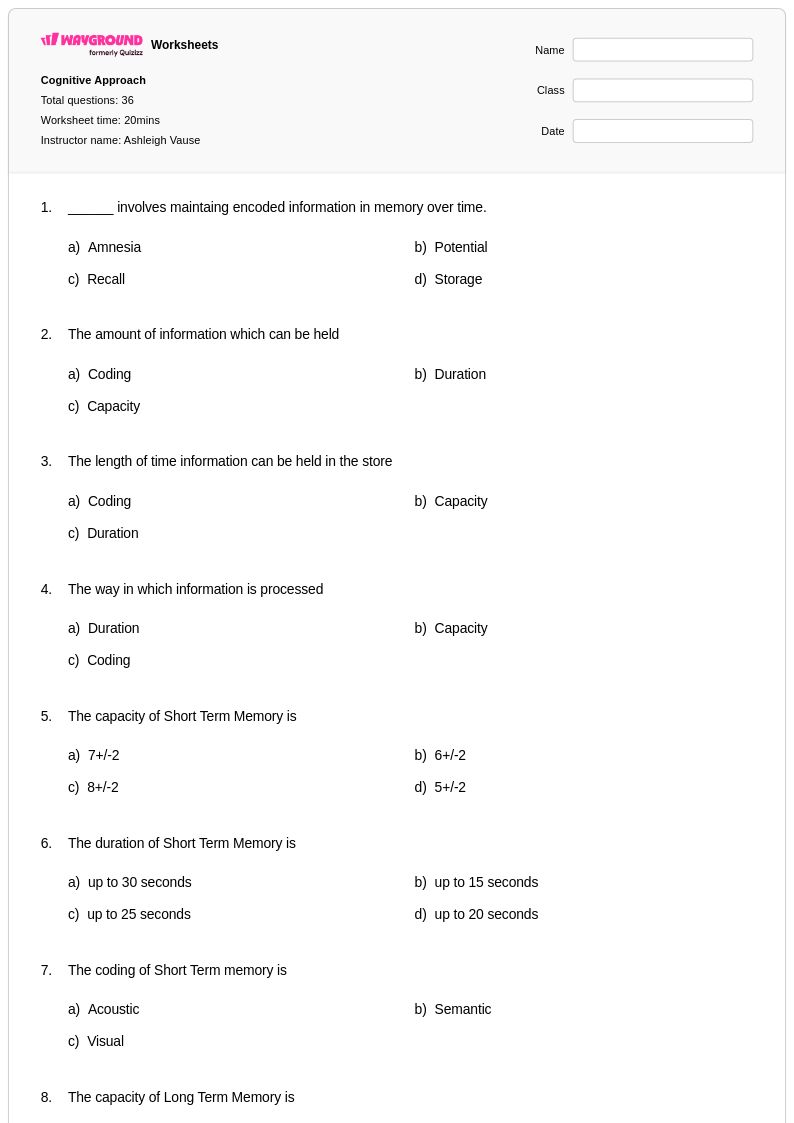
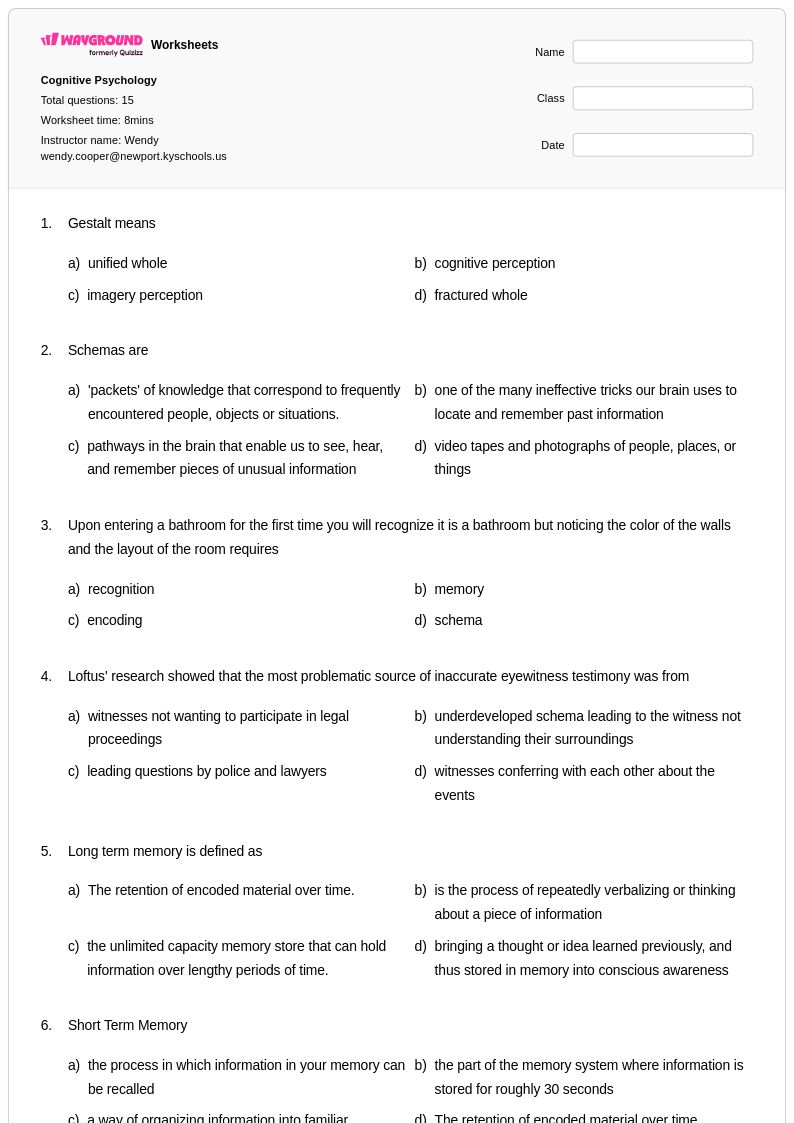
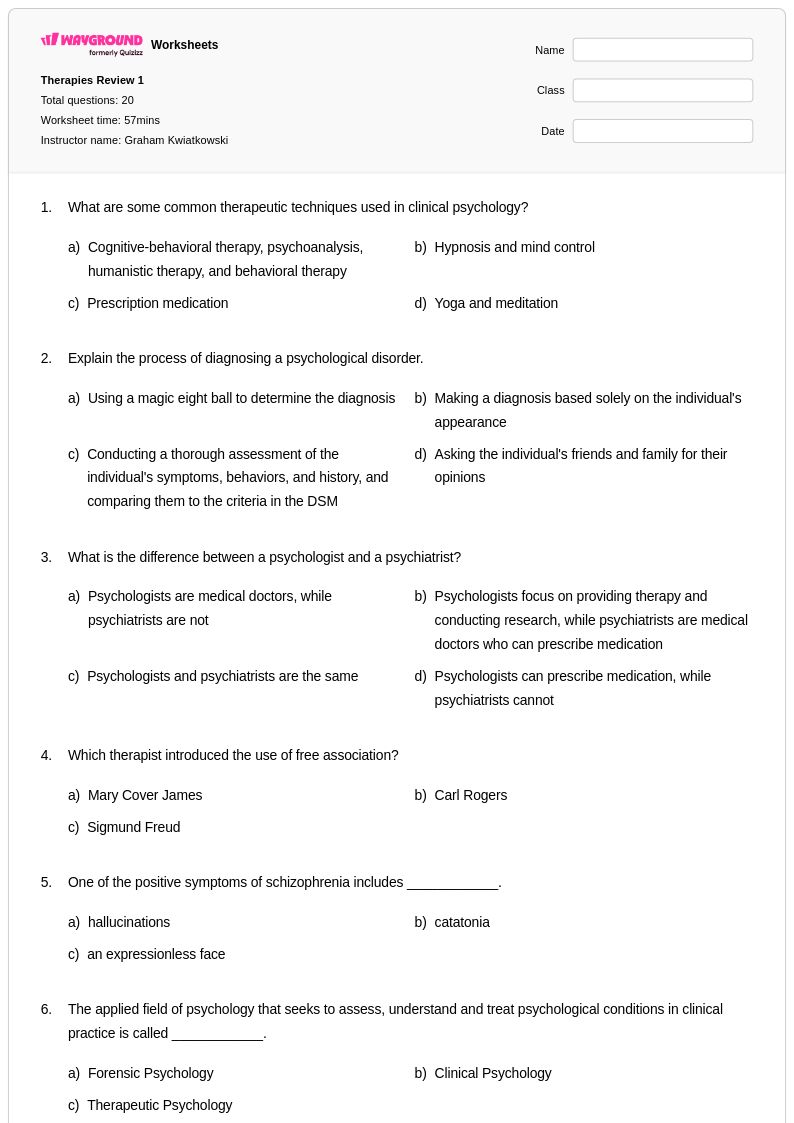
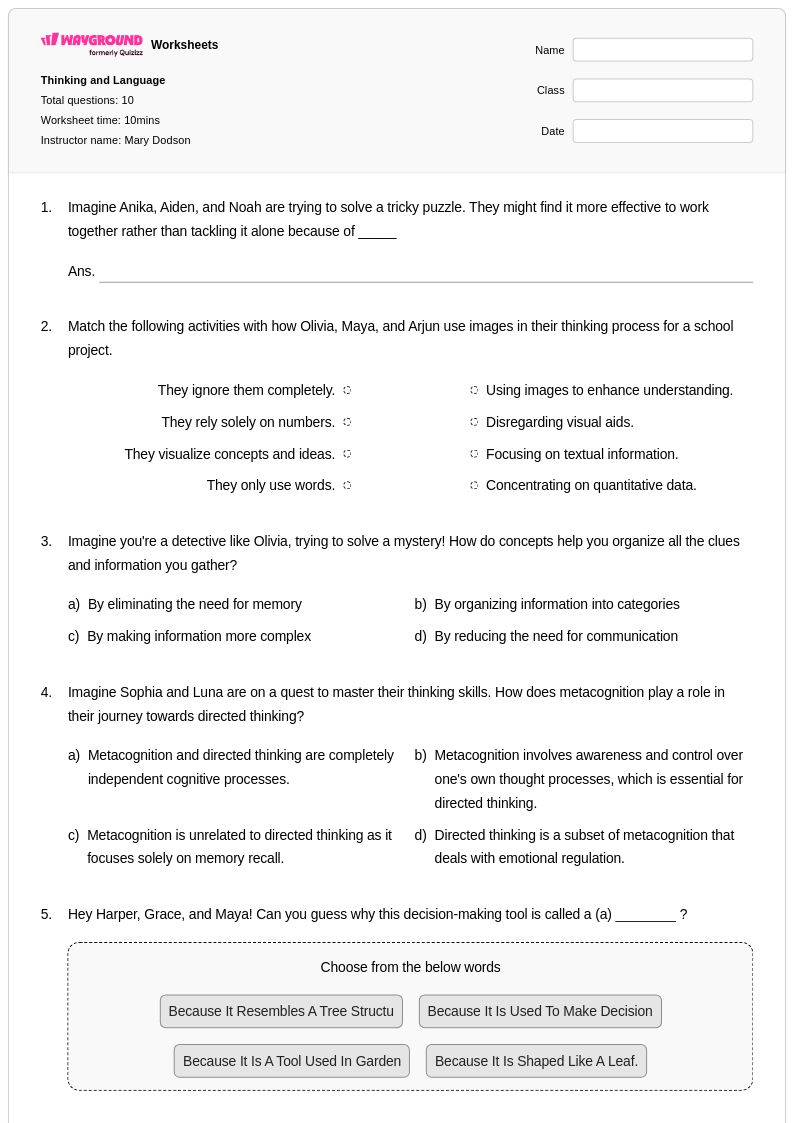
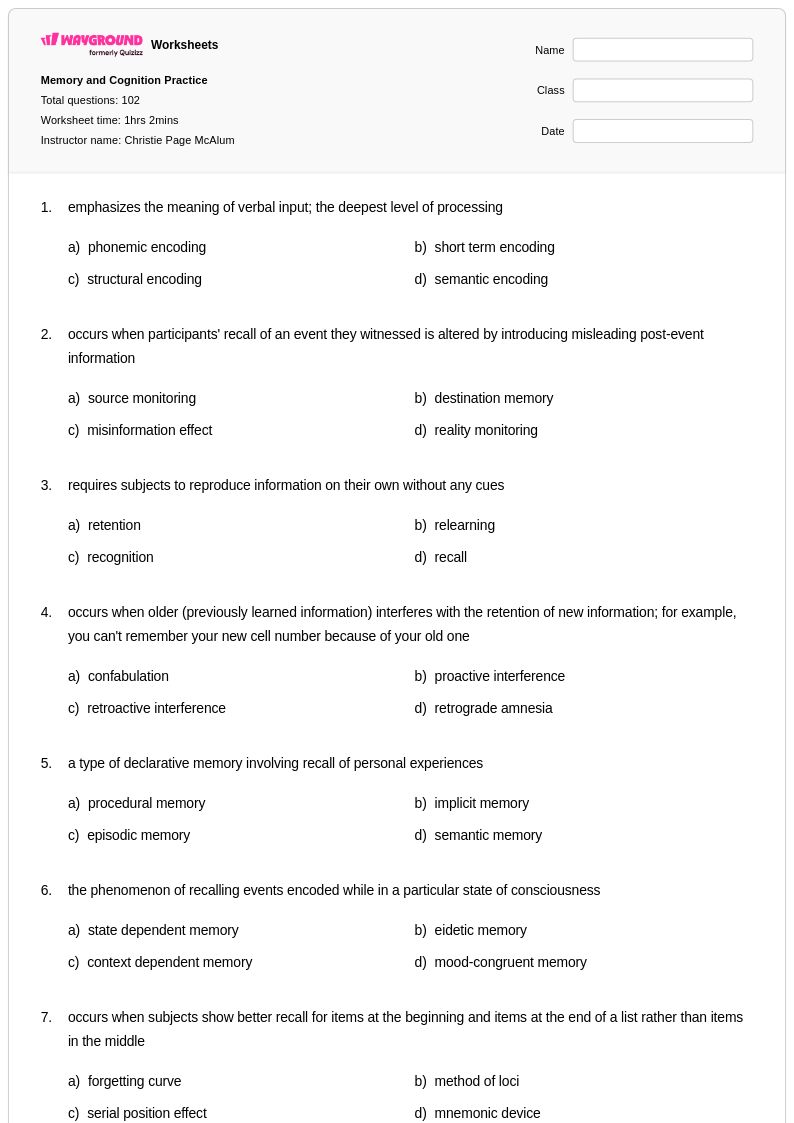
Explore free printable worksheets and practice problems focused on cognitive distortions to help students develop critical thinking skills and recognize unhelpful thought patterns through engaging social studies activities with answer keys.
Cognitive distortions worksheets available through Wayground (formerly Quizizz) provide essential resources for developing critical thinking and emotional regulation skills in social studies education. These comprehensive materials help students identify and challenge unhelpful thinking patterns such as all-or-nothing thinking, catastrophizing, and overgeneralization that can impact their social interactions and decision-making processes. The worksheets feature carefully crafted practice problems that guide learners through recognizing distorted thought patterns in historical contexts, current events, and interpersonal scenarios. Each printable resource includes detailed answer keys that support both independent learning and classroom instruction, while the free pdf format ensures accessibility for diverse learning environments. Students strengthen their ability to analyze bias, evaluate evidence objectively, and develop more balanced perspectives on social and historical issues.
Wayground (formerly Quizizz) supports educators with an extensive collection of millions of teacher-created cognitive distortions worksheets designed to enhance social studies instruction. The platform's robust search and filtering capabilities allow teachers to quickly locate age-appropriate materials that align with curriculum standards and learning objectives. Advanced differentiation tools enable instructors to customize worksheets for varying skill levels, while the flexible format options accommodate both digital classroom integration and traditional printable assignments. These comprehensive resources prove invaluable for lesson planning, targeted remediation of critical thinking gaps, and enrichment activities that challenge advanced learners to examine complex social phenomena through multiple lenses. Teachers can seamlessly incorporate these materials into units on media literacy, historical analysis, civic engagement, and conflict resolution to help students develop the cognitive flexibility essential for informed citizenship.
FAQs
How do I teach cognitive distortions in a classroom setting?
Introduce cognitive distortions by presenting concrete, relatable examples before asking students to apply labels like 'all-or-nothing thinking' or 'catastrophizing.' Use historical events, current news stories, or fictional scenarios to show how distorted thinking influences decisions and social dynamics. Once students can recognize patterns in external examples, guide them toward identifying these thought patterns in their own reasoning. Grounding the concept in social studies content makes it more accessible and less personally threatening for younger learners.
What exercises help students practice identifying cognitive distortions?
Effective practice exercises present short passages, quotes, or scenarios and ask students to identify which distortion is present and explain their reasoning. Worksheets that use historical figures, political speeches, or media excerpts give students a structured way to practice recognizing overgeneralization, catastrophizing, and confirmation bias without the exercise feeling abstract. Having students rewrite distorted statements into more balanced ones deepens understanding by requiring active correction, not just identification.
What mistakes do students commonly make when learning about cognitive distortions?
Students frequently conflate cognitive distortions with deliberate lying or bad intent, missing the point that these are automatic, often unconscious thought patterns. Another common error is overapplying a single distortion label — particularly 'all-or-nothing thinking' — to situations that actually reflect a different pattern. Students also struggle to distinguish between a genuinely negative situation and a distorted perception of one, which is why answer keys and teacher-guided discussion are essential during early practice.
How can cognitive distortions worksheets support media literacy and civic education?
Cognitive distortions provide a direct analytical framework for media literacy because propaganda, advertising, and political rhetoric frequently exploit patterns like overgeneralization, black-and-white thinking, and emotional reasoning. Teaching students to name these patterns gives them a practical vocabulary for evaluating sources and arguments in civic contexts. Worksheets that embed distortion-spotting within real media examples help students transfer the skill beyond a worksheet and into genuine information evaluation.
How do I use Wayground's cognitive distortions worksheets in my classroom?
Wayground's cognitive distortions worksheets are available as printable PDFs for traditional classroom use and in digital formats for technology-integrated learning environments, making them adaptable to in-person, hybrid, or remote settings. Teachers can also host them as a quiz directly on Wayground, enabling immediate student response and streamlined review. Each worksheet includes a complete answer key, which supports both independent student practice and efficient teacher-led correction. The digital format allows teachers to assign materials to specific students and apply accommodations such as read-aloud support or extended time for learners who need them.
How do I differentiate cognitive distortions instruction for students at different skill levels?
For students who are new to the concept, start with highly structured worksheets that provide the distortion labels and ask students only to match them to examples. More advanced learners benefit from open-ended tasks that require them to identify, name, and challenge a distortion without scaffolding. On Wayground, teachers can apply individual accommodations — including reduced answer choices to lower cognitive load or read-aloud support for students with reading challenges — so that the same core content remains accessible across ability levels without singling out individual students.