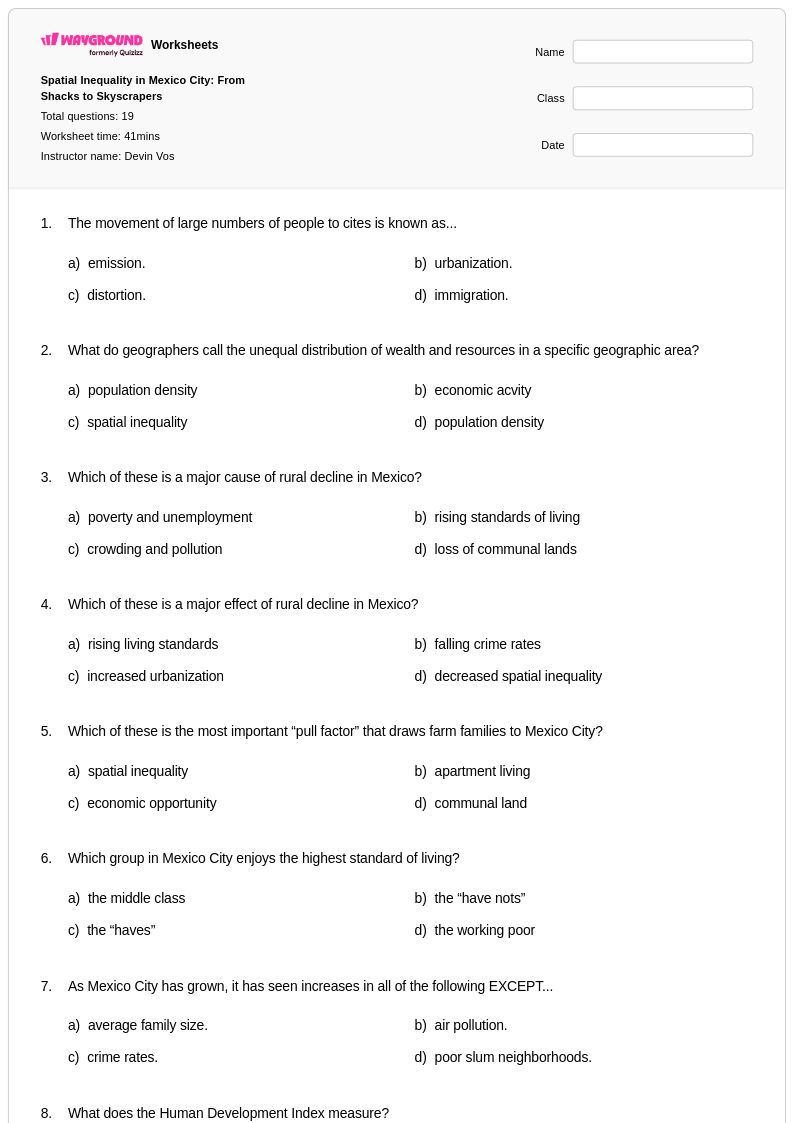
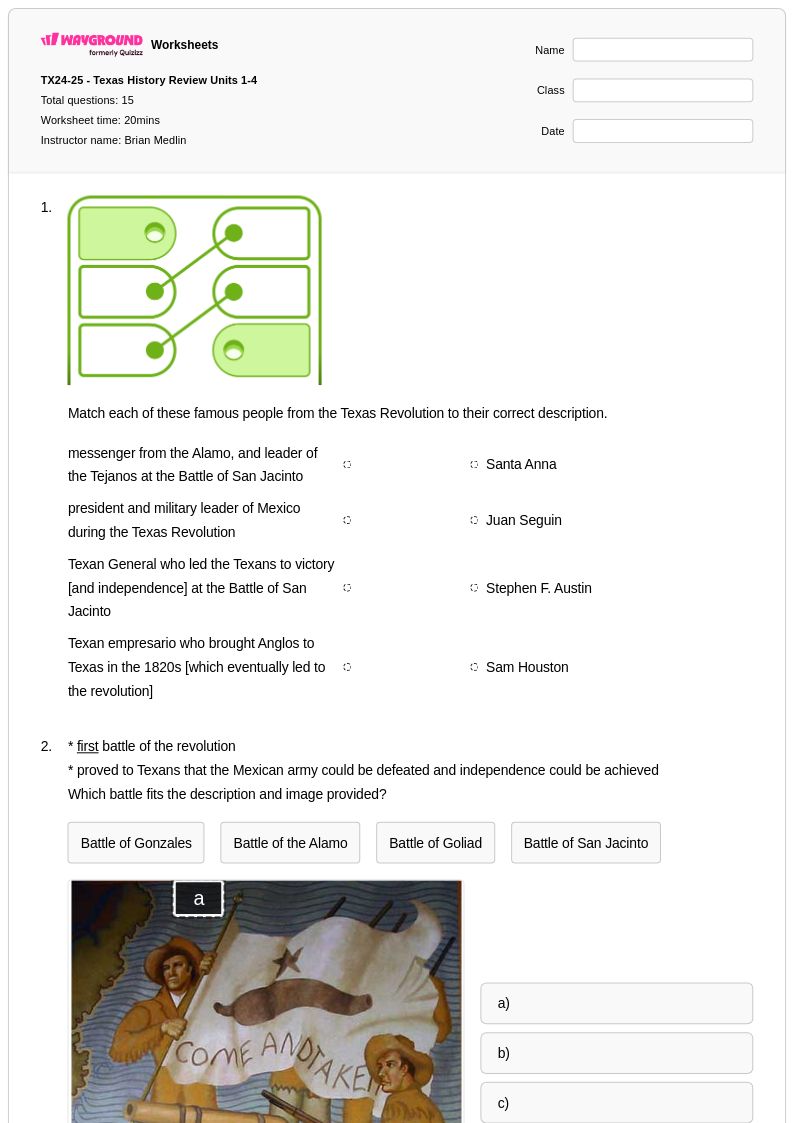
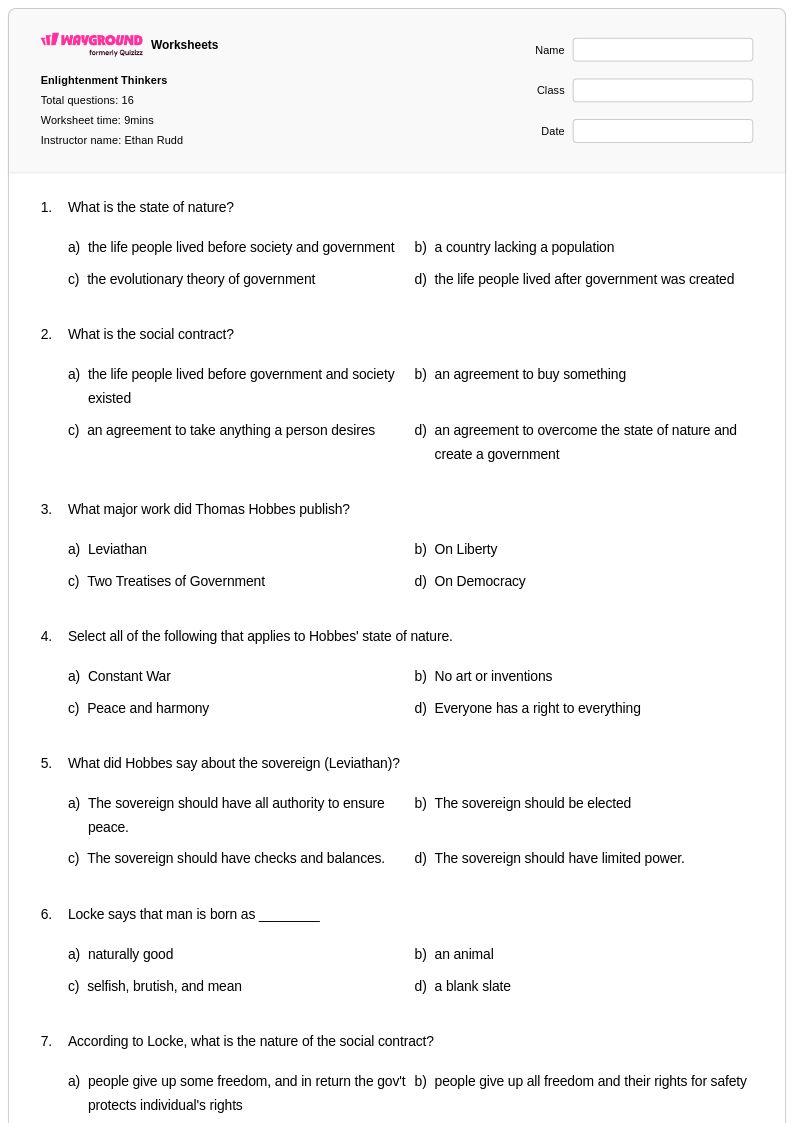
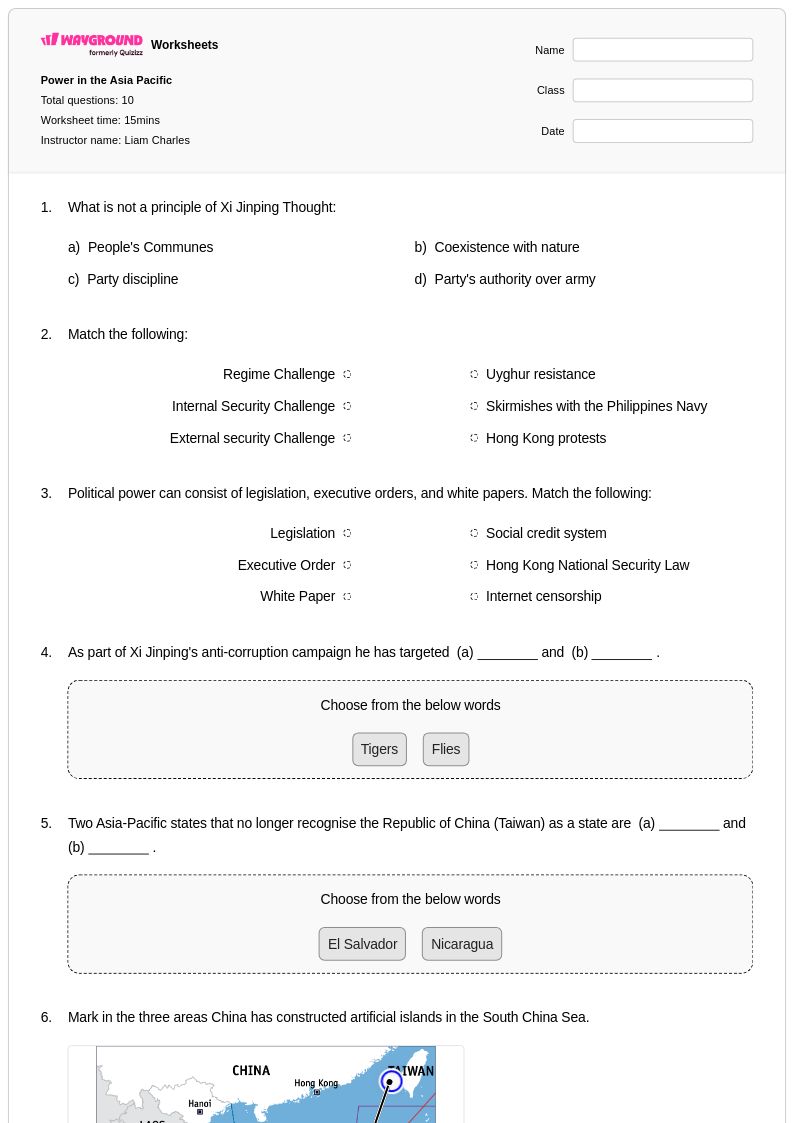
Explore Wayground's comprehensive collection of thought distortions worksheets and printables that help students identify and challenge negative thinking patterns through engaging practice problems, complete with answer keys and free PDF resources.
Thought distortions worksheets available through Wayground (formerly Quizizz) provide essential resources for developing critical thinking and emotional regulation skills in social studies education. These comprehensive worksheets help students identify and challenge cognitive patterns such as all-or-nothing thinking, catastrophizing, and mind reading that can interfere with healthy social interactions and decision-making. Each worksheet collection includes detailed answer keys that guide educators through common thought distortion examples, while pdf formats ensure easy distribution and consistent formatting across classrooms. Students engage with practice problems that present real-world scenarios requiring them to recognize distorted thinking patterns and develop more balanced, rational responses. These free printables serve as valuable tools for building self-awareness and promoting healthier social and emotional development.
Wayground (formerly Quizizz) supports educators with millions of teacher-created thought distortion resources that streamline lesson planning and differentiated instruction. The platform's robust search and filtering capabilities allow teachers to quickly locate worksheets that align with specific learning objectives and social-emotional learning standards. Customization tools enable educators to modify existing materials or create personalized versions that address their students' unique needs, whether for remediation of struggling learners or enrichment activities for advanced students. Available in both printable pdf format and interactive digital versions, these worksheet collections provide flexibility for various classroom environments and teaching styles. Teachers can efficiently organize skill practice sessions, track student progress in recognizing cognitive distortions, and implement targeted interventions that support healthy social and emotional development across diverse learning contexts.
FAQs
How do I teach thought distortions to students?
Start by introducing a small set of clearly named distortions, such as all-or-nothing thinking, catastrophizing, and mind reading, using relatable real-world scenarios students already encounter. Have students practice labeling the distortion before moving on to generating more balanced alternative thoughts. Structured worksheets that pair a distorted thought with a guided reframing prompt are especially effective for building this skill incrementally.
What exercises help students practice identifying cognitive distortions?
Scenario-based practice is the most effective approach: present students with a realistic situation, show a thought someone might have, and ask them to identify the distortion type and rewrite a more rational response. Repeated exposure across varied contexts, such as peer conflicts, academic stress, and family situations, helps students generalize the skill beyond a single example. Worksheets that include answer keys allow students to self-check and reflect on their reasoning.
What mistakes do students commonly make when learning to identify thought distortions?
Students frequently confuse distortion types that share surface-level similarities, such as catastrophizing and overgeneralization, because both involve negative predictions. A common error is labeling any negative thought as distorted, when in fact some negative thoughts are realistic assessments. Teaching students to ask 'Is there evidence for this thought?' helps them distinguish distorted thinking from valid concern.
How can thought distortions worksheets support social-emotional learning in the classroom?
Thought distortions worksheets give students a concrete vocabulary for describing their internal experiences, which is a foundational step in emotional regulation and self-awareness. By working through structured scenarios, students practice recognizing how distorted thinking patterns can interfere with healthy social interactions and decision-making before those patterns escalate into behavioral issues. This makes the worksheets a natural fit within SEL curricula or advisory periods.
How do I use Wayground's thought distortions worksheets in my classroom?
Wayground's thought distortions worksheets are available as printable PDFs for traditional classroom distribution and in digital formats for technology-integrated environments, including the option to host them as a quiz directly on Wayground. Teachers can use them for guided instruction, independent practice, or reflection activities, and each worksheet includes a complete answer key to support efficient grading and discussion. Wayground also supports student-level accommodations such as read aloud, extended time, and reduced answer choices, making it straightforward to differentiate for diverse learners within the same session.
How do I differentiate thought distortions instruction for students at different readiness levels?
For students who are newer to the concept, limit initial practice to two or three clearly distinct distortion types and use highly relatable scenarios before introducing more nuanced examples. For students ready for enrichment, ask them to generate their own examples of each distortion or analyze dialogue from literature and current events. On Wayground, teachers can apply individual accommodations such as reduced answer choices or read aloud to specific students while the rest of the class works with standard settings.