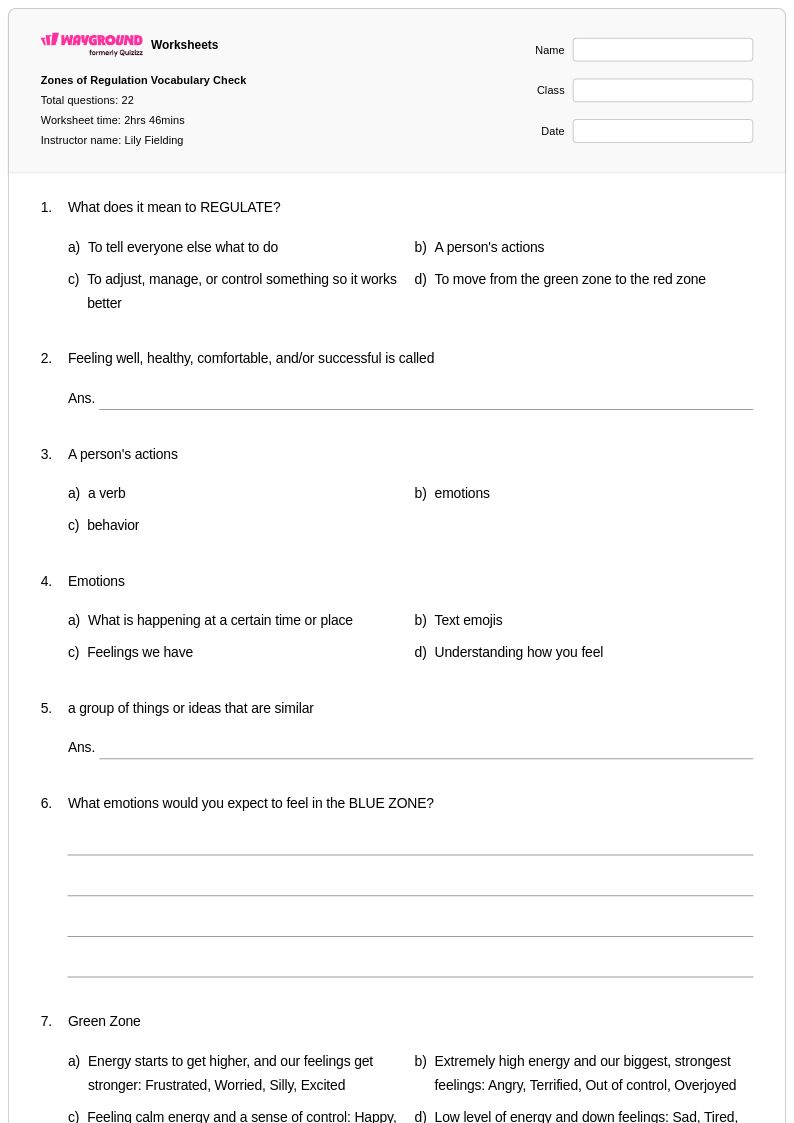
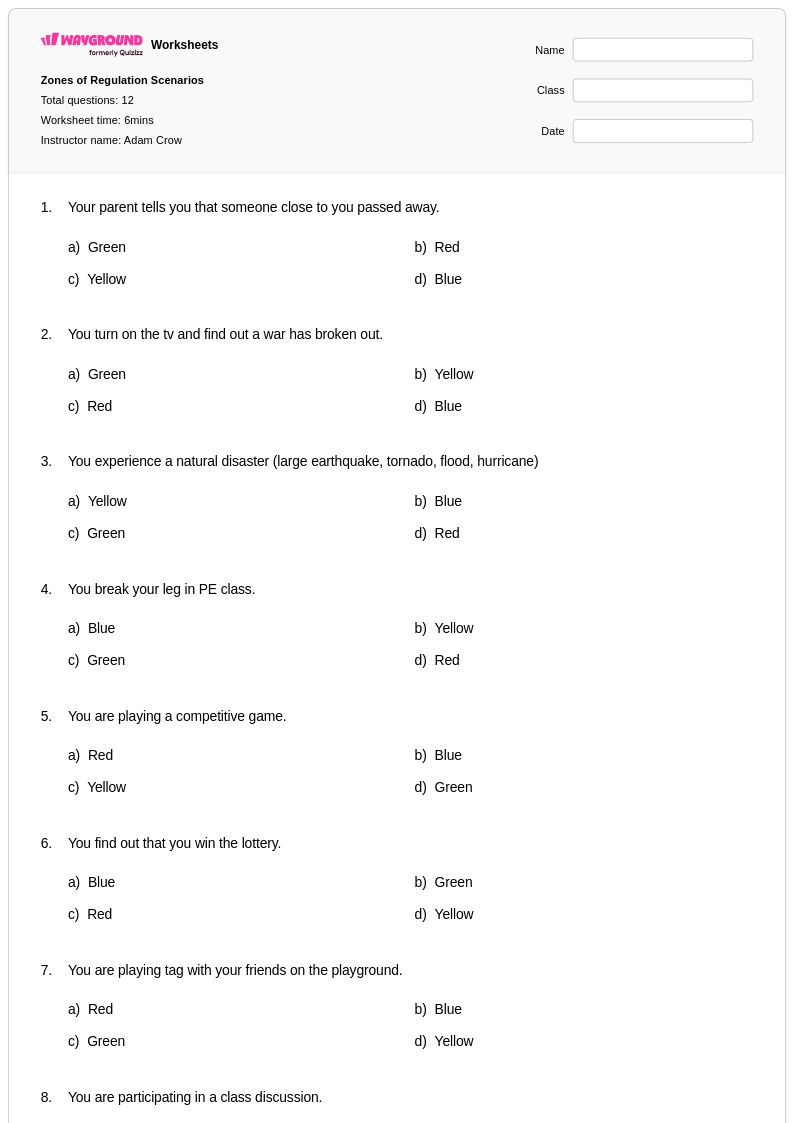
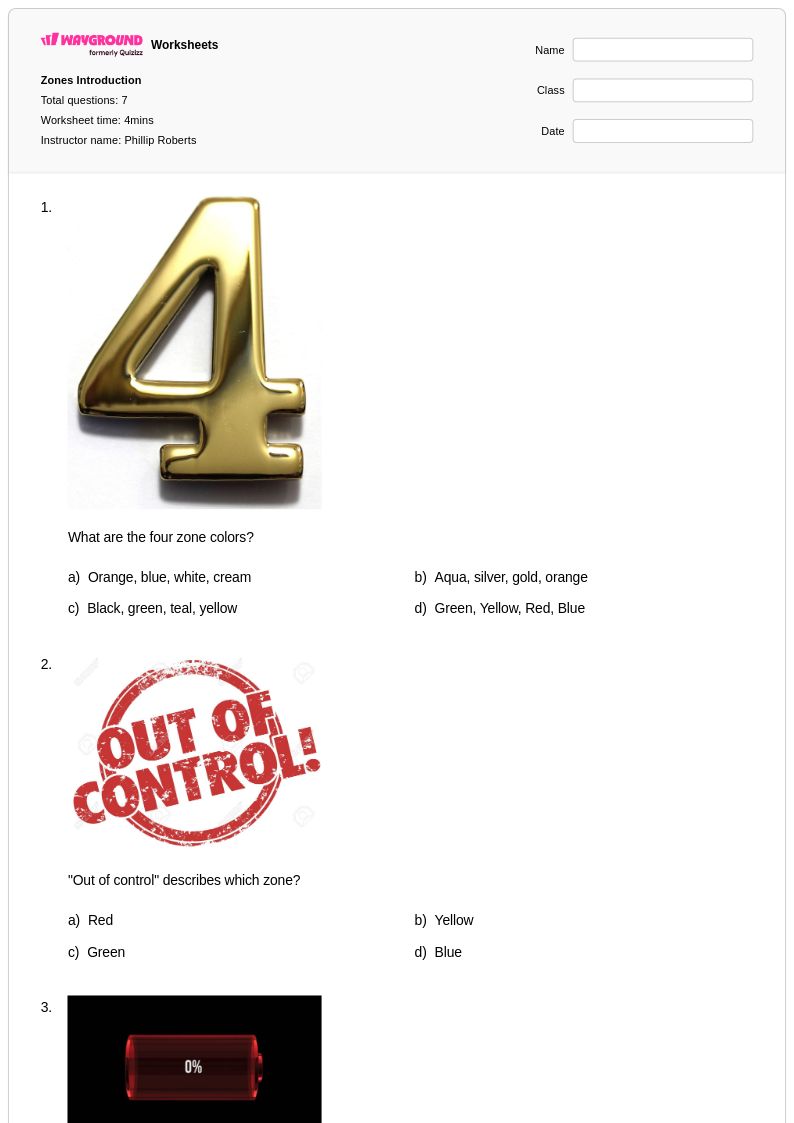
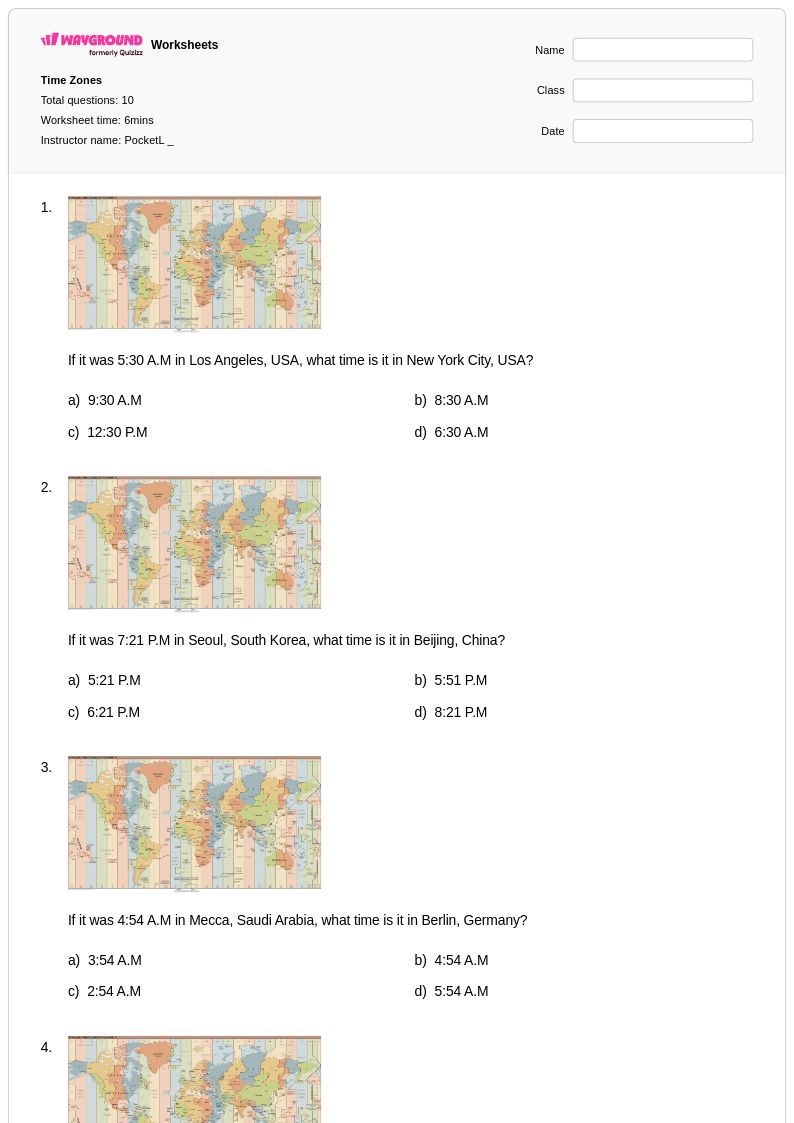
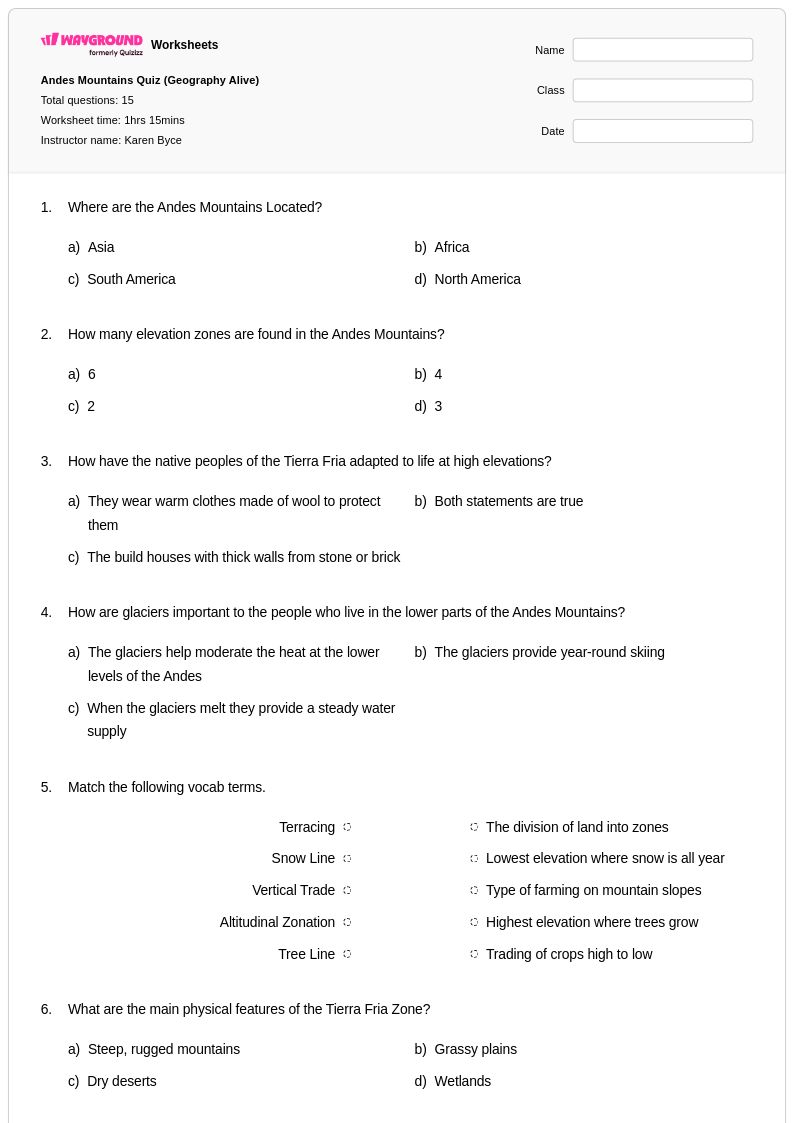
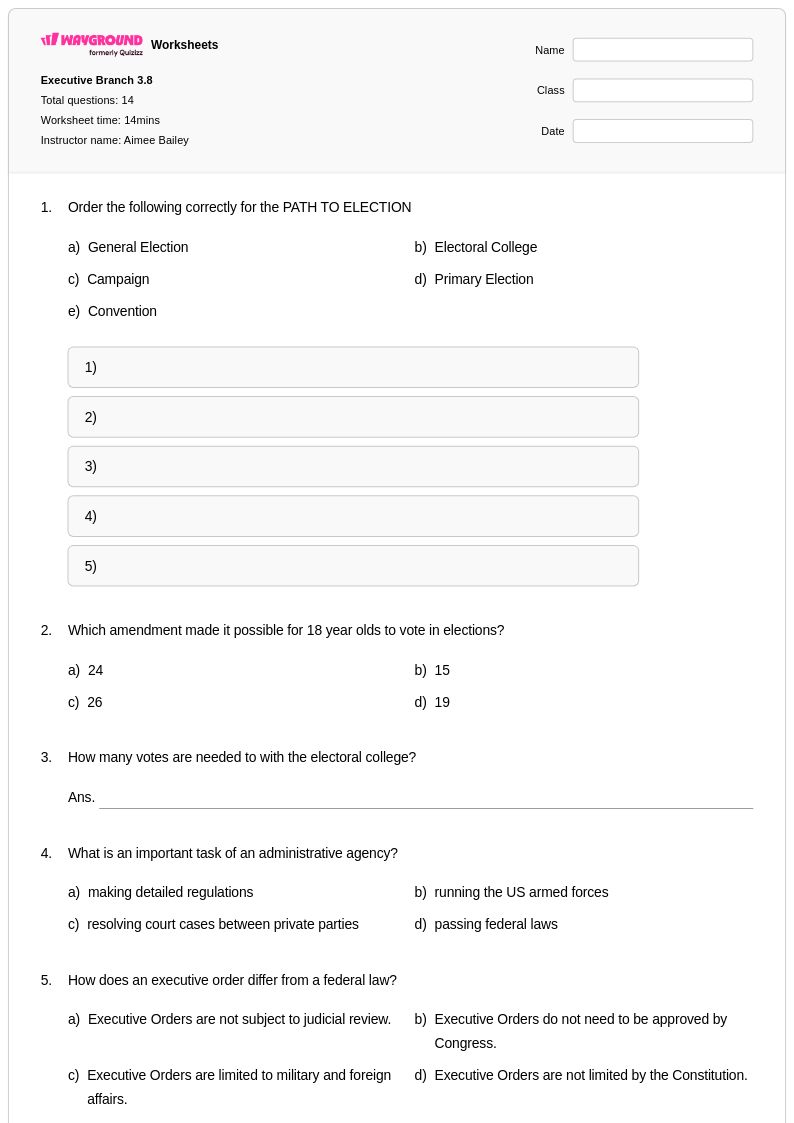
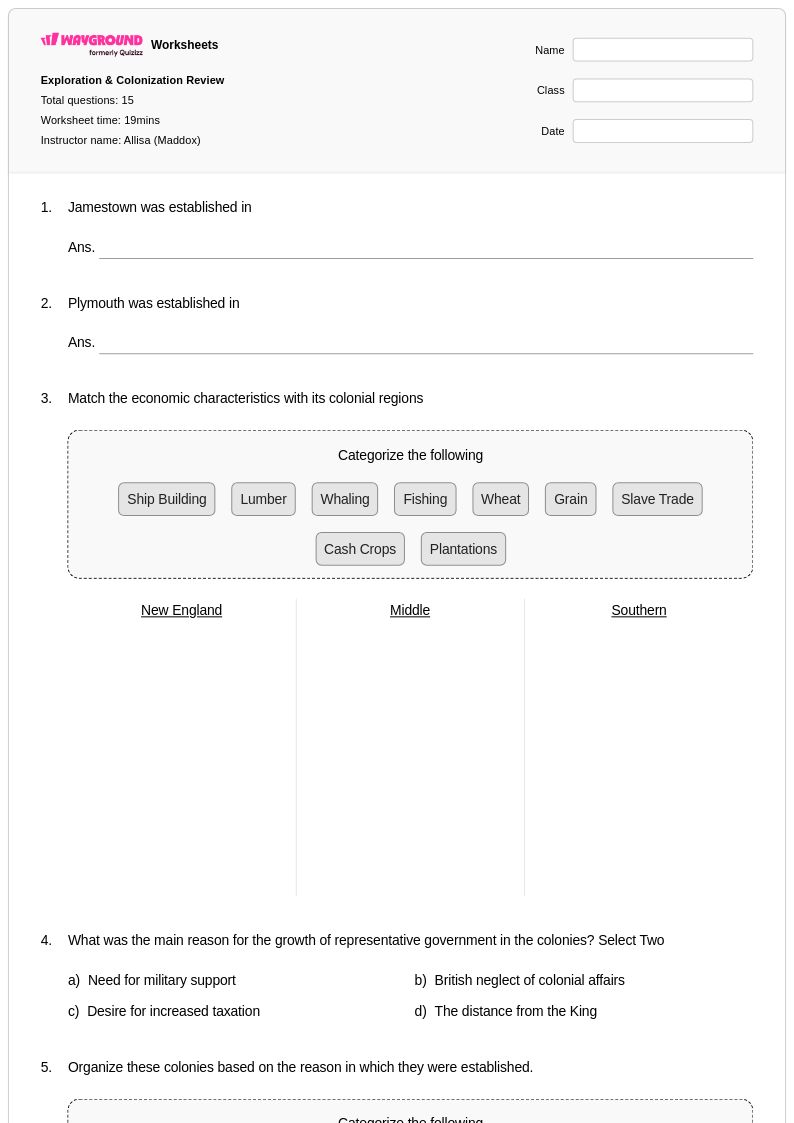
Explore free Zones of Regulation worksheets and printables that help students develop emotional self-awareness and coping strategies through engaging practice problems and comprehensive answer keys.
Zones of Regulation worksheets available through Wayground (formerly Quizizz) provide comprehensive tools for developing emotional self-awareness and behavioral management skills in students. These carefully designed resources help learners identify and understand the four color-coded zones that represent different emotional and alertness states, from the calm green zone to the highly energized red zone. The worksheets strengthen critical social-emotional learning competencies including emotion recognition, self-regulation strategies, and appropriate behavioral responses across various situations. Each collection includes detailed answer keys and practice problems that guide students through scenarios involving emotional triggers, coping mechanisms, and zone identification exercises. These free printables offer structured pathways for students to develop the vocabulary and metacognitive skills necessary for emotional intelligence and classroom success.
Wayground (formerly Quizizz) supports educators with an extensive library of millions of teacher-created Zones of Regulation resources that streamline lesson planning and differentiated instruction. The platform's robust search and filtering capabilities enable teachers to quickly locate materials aligned with specific social-emotional learning standards and adapted to diverse student needs. These digital and printable PDF formats provide flexible customization options, allowing educators to modify worksheets for remediation support or enrichment activities based on individual student progress. The comprehensive collection facilitates targeted skill practice through varied assessment formats, interactive exercises, and real-world application scenarios that help students generalize zone awareness beyond the classroom setting. This wealth of ready-to-use materials empowers teachers to implement consistent, evidence-based social skills instruction while saving valuable preparation time.
FAQs
How do I teach the Zones of Regulation framework to students?
Start by introducing the four color-coded zones and what each one represents: the blue zone for low energy or sadness, the green zone for calm and focused states, the yellow zone for heightened alertness or excitement, and the red zone for intense emotions like anger or panic. Use visual anchors like zone charts posted in the classroom so students can reference them throughout the day. Once students understand the zones, move into identifying triggers and practicing coping strategies that help them shift from less regulated to more regulated states. Consistency across school and home environments strengthens generalization of these skills.
What activities help students practice identifying their emotional zones?
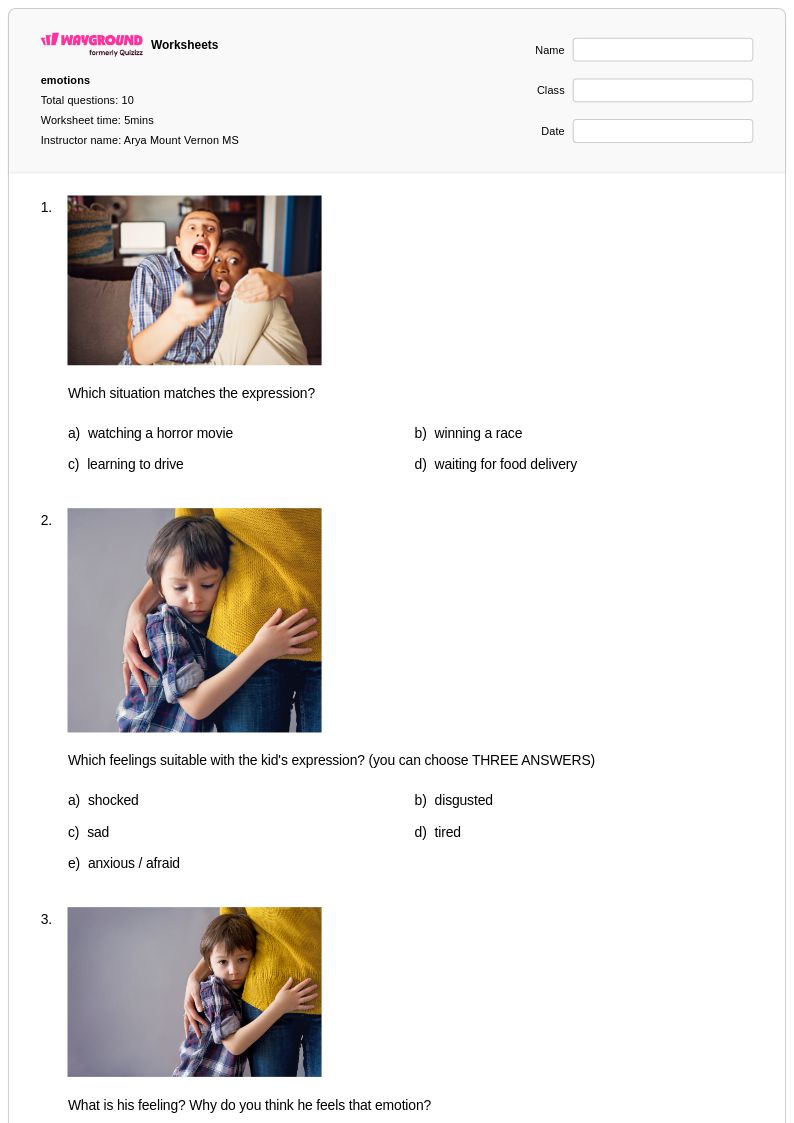
Scenario-based exercises are highly effective — present students with a situation and ask them to identify which zone they would likely be in and why. Zone check-ins at the start of class build metacognitive habits by prompting students to name their current state before learning begins. Worksheets that walk students through emotional triggers, physical body cues, and matching coping strategies reinforce zone vocabulary in a structured, repeatable format. Pairing written practice with visual sorting or matching activities helps students at different readiness levels engage with the same concept.
What misconceptions do students commonly have about the Zones of Regulation?
A common misconception is that certain zones are inherently 'bad' — students often think being in the yellow or red zone is wrong rather than understanding that all zones are normal and the goal is self-awareness and regulation. Another frequent error is conflating zone intensity with emotion type; for example, students may place excitement and anxiety in different zones when both can present as yellow zone states depending on the individual. Teachers should also watch for students who misidentify body signals, labeling a racing heart as always meaning anger rather than recognizing context. Reinforcing that zones describe alertness states, not character judgments, is essential for healthy SEL development.
How do I use Zones of Regulation worksheets in my classroom?
Zones of Regulation worksheets on Wayground are available as printable PDFs for traditional classroom use and in digital formats for technology-integrated or hybrid learning environments, making them flexible for a wide range of instructional settings. Teachers can use them for direct instruction, small group SEL lessons, or individual reflection activities after a challenging moment. Wayground also allows you to host worksheets as a quiz, giving teachers a structured way to assess zone identification and coping strategy knowledge. Built-in answer keys reduce prep time and support consistent feedback across the class.
How can I differentiate Zones of Regulation instruction for students with different needs?
For students who struggle with reading or processing written prompts, Wayground's Read Aloud accommodation can deliver questions and content audibly, reducing barriers to access during digital activities. Students who are overwhelmed by multiple answer choices can benefit from the Reduced Answer Choices setting, which narrows options to lower cognitive load without changing the learning objective. Extended time settings can be assigned to individual students who need more processing time to reflect on their emotional states and select responses. These accommodations can be applied to specific students while the rest of the class proceeds with default settings, keeping differentiation seamless and private.
How do I help students generalize Zones of Regulation skills beyond the classroom?
Generalization requires repeated practice in varied contexts, so worksheets that present real-world scenarios — such as conflicts at recess, disappointment at home, or frustration during a test — are especially valuable. Encouraging students to keep a zones journal where they log their emotional states and chosen coping strategies throughout the day builds the habit of self-monitoring outside structured lessons. Sharing zone language and visual tools with families creates alignment between school and home, which research consistently shows improves self-regulation outcomes. Routine zone check-ins embedded into daily classroom transitions reinforce the framework as a living skill, not just a lesson unit.