Free Printable Comparing Rates Worksheets for Class 6
Class 6 students can master comparing rates with Wayground's free printable worksheets and practice problems, complete with answer keys to reinforce mathematical understanding and build confidence in percents, ratios, and rates.
Explore printable Comparing Rates worksheets for Class 6
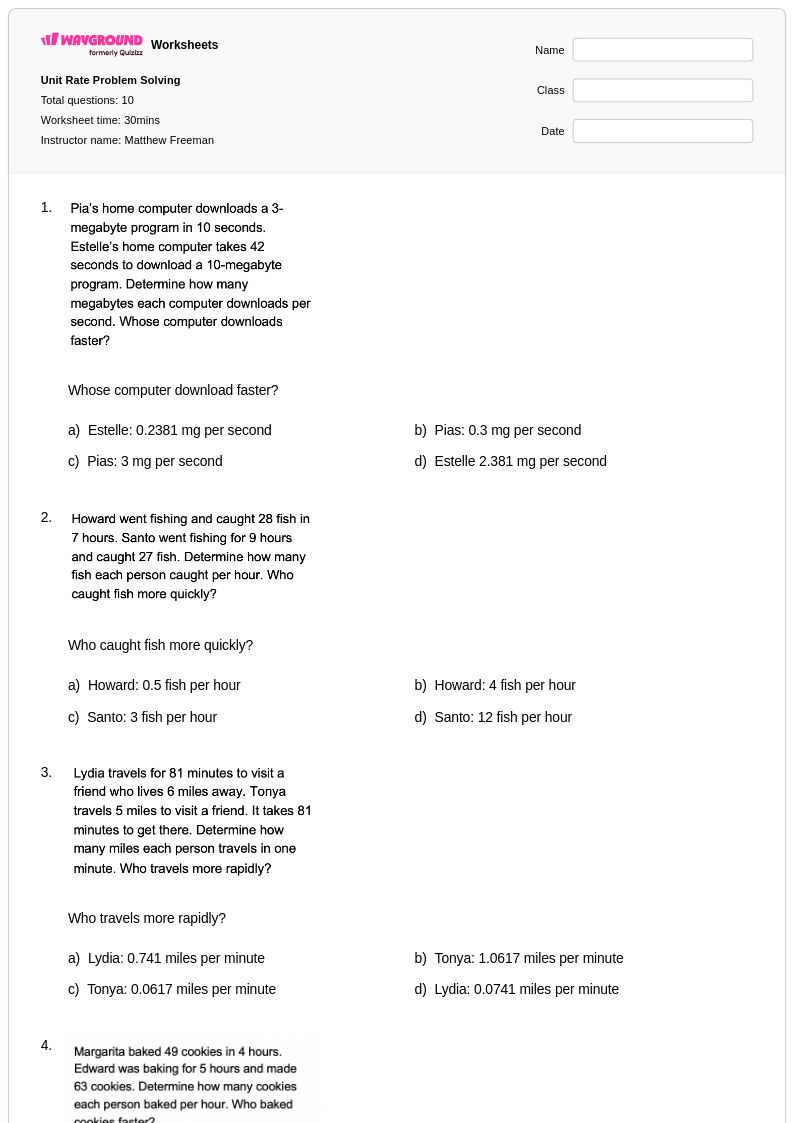
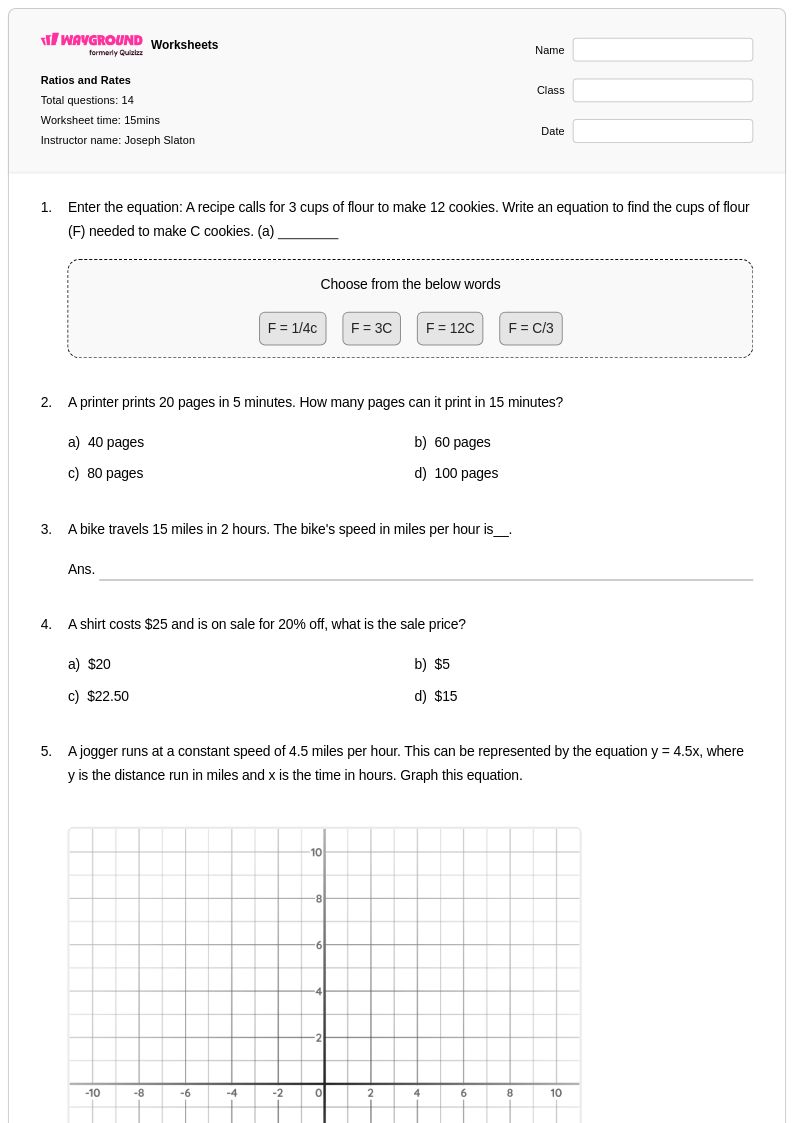
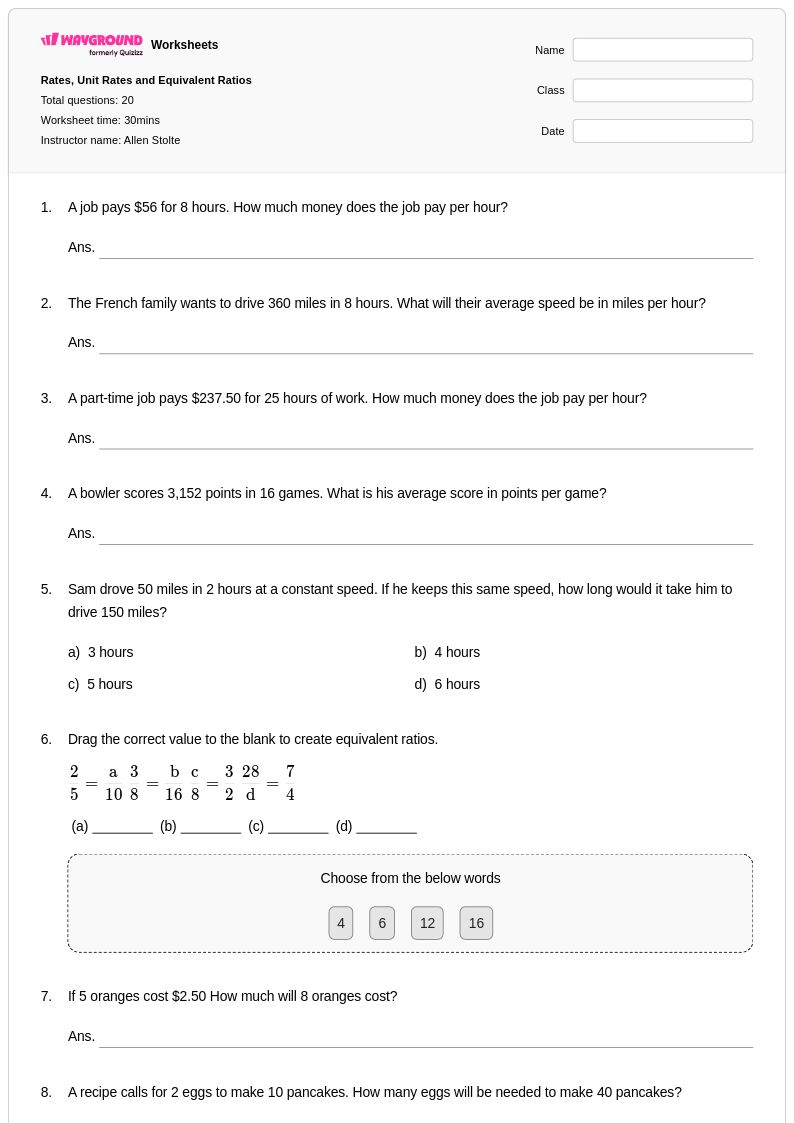
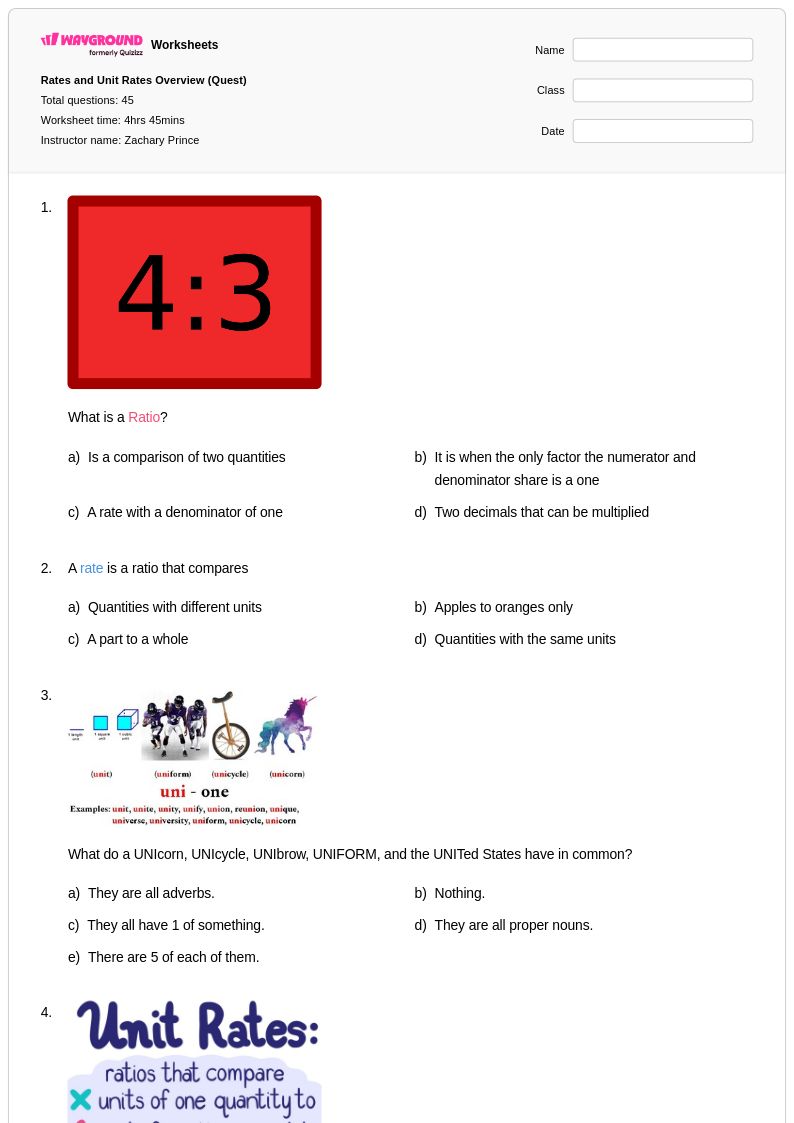
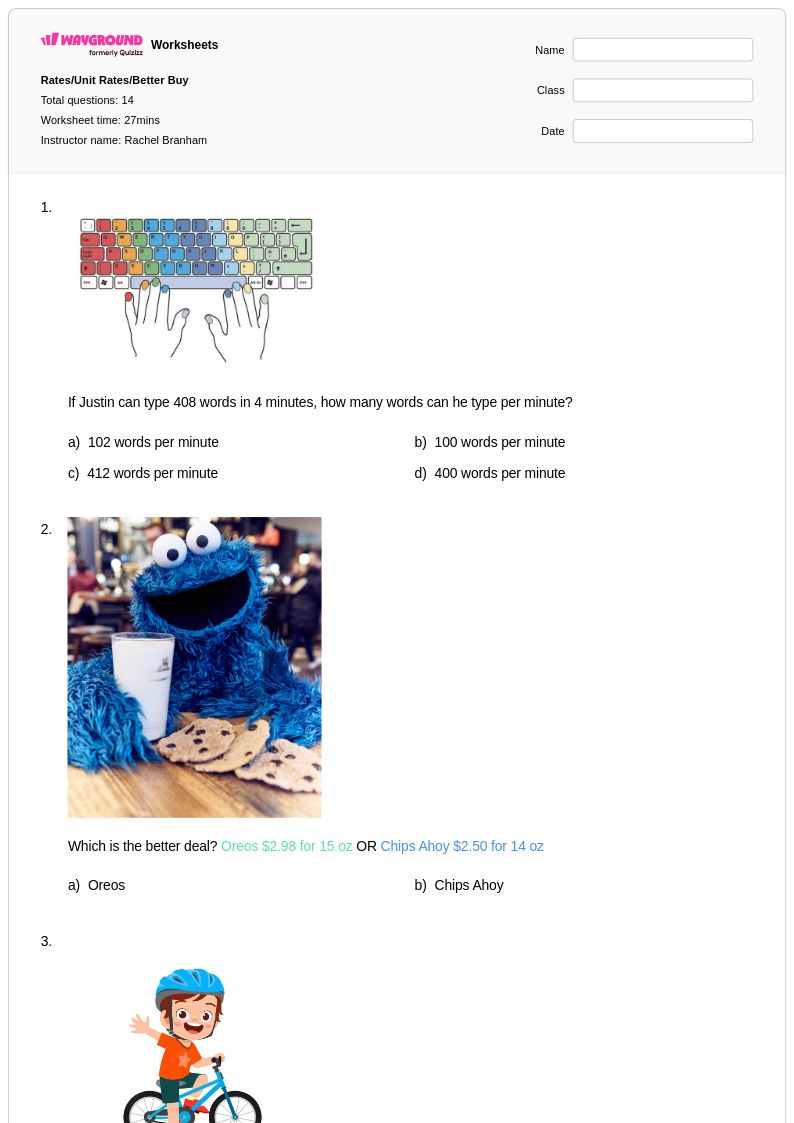
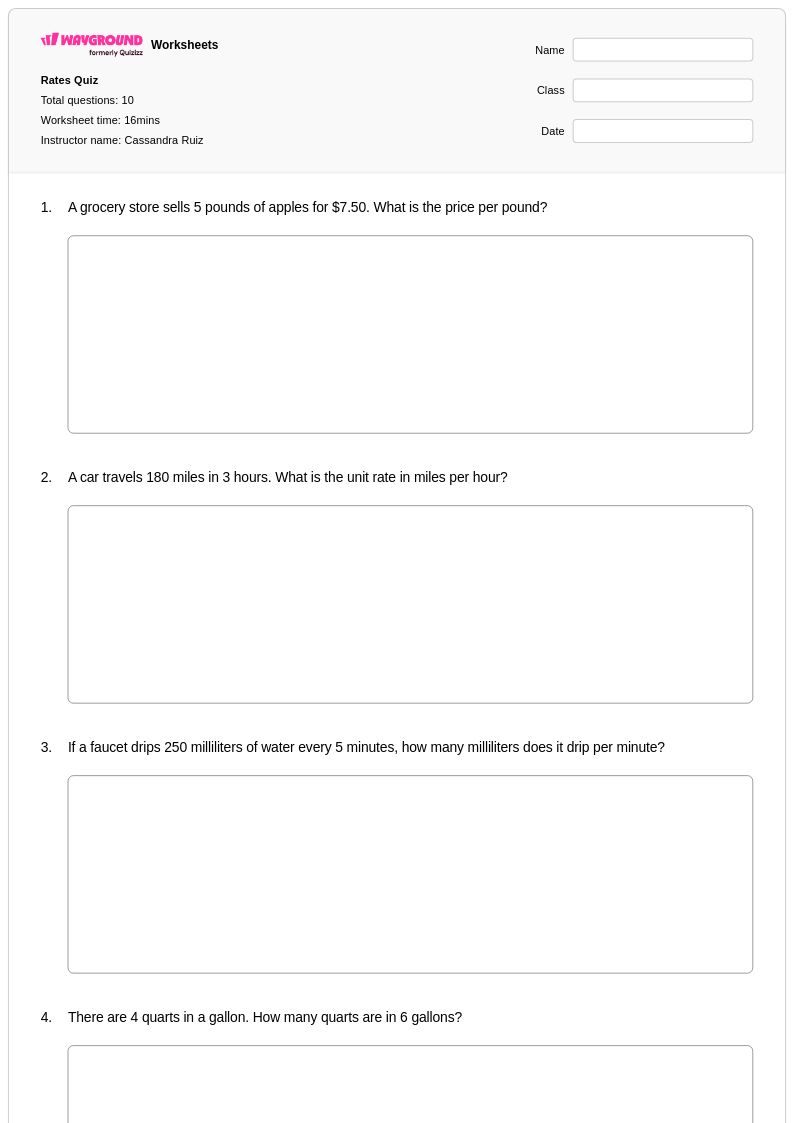
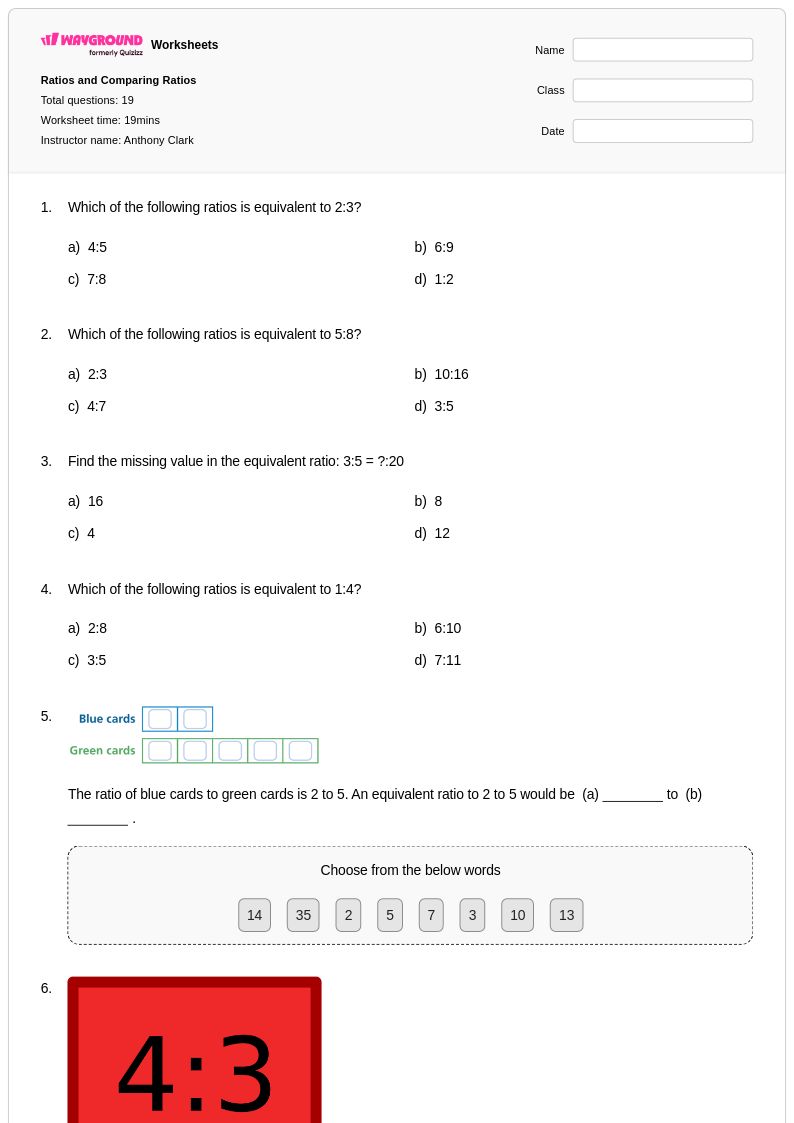
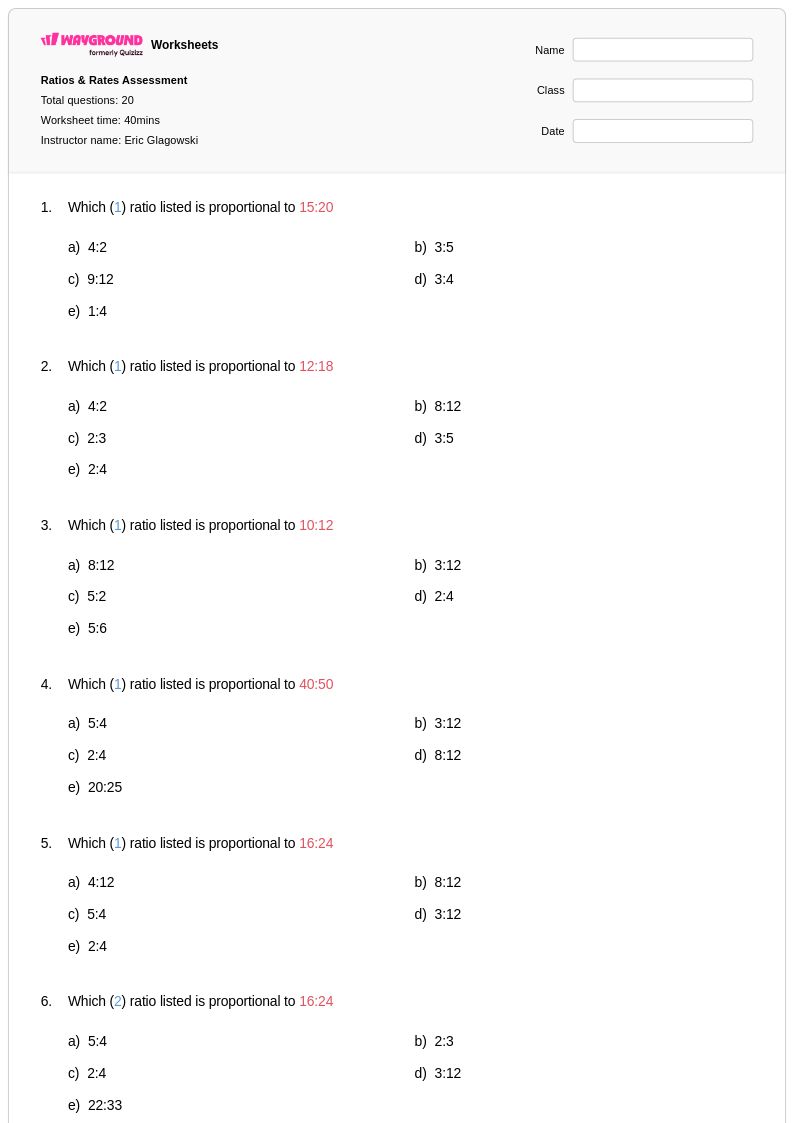
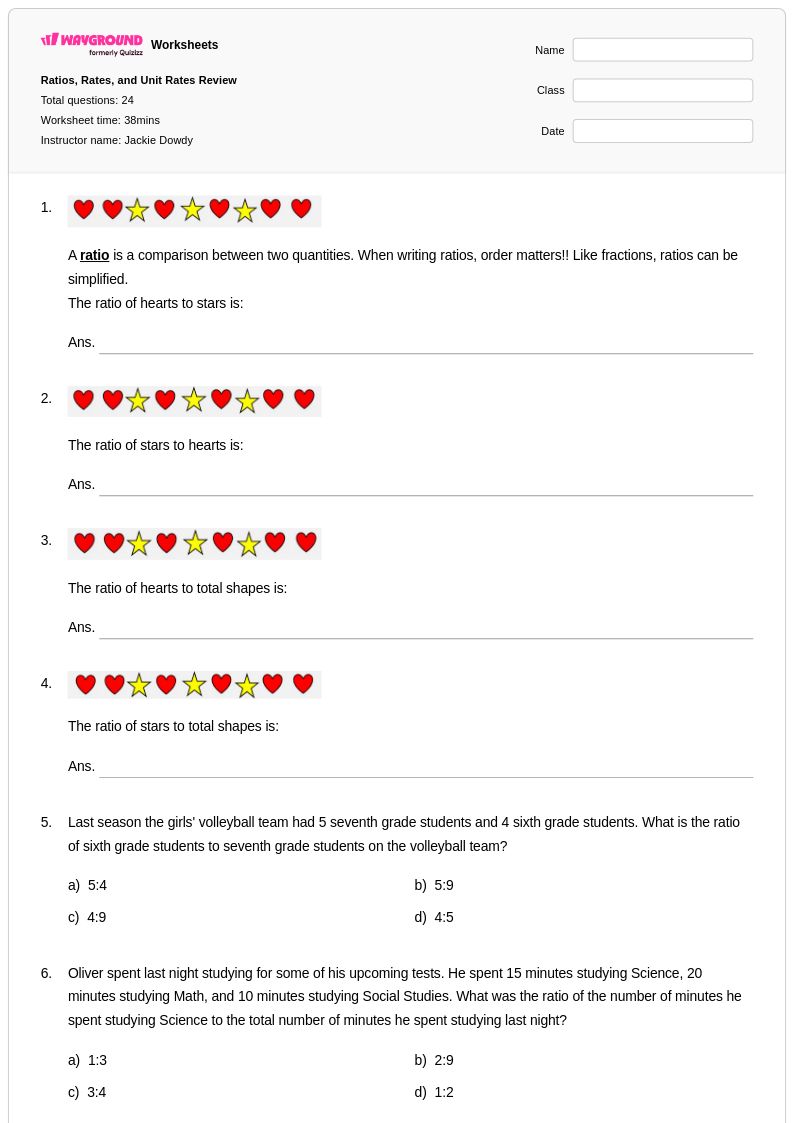
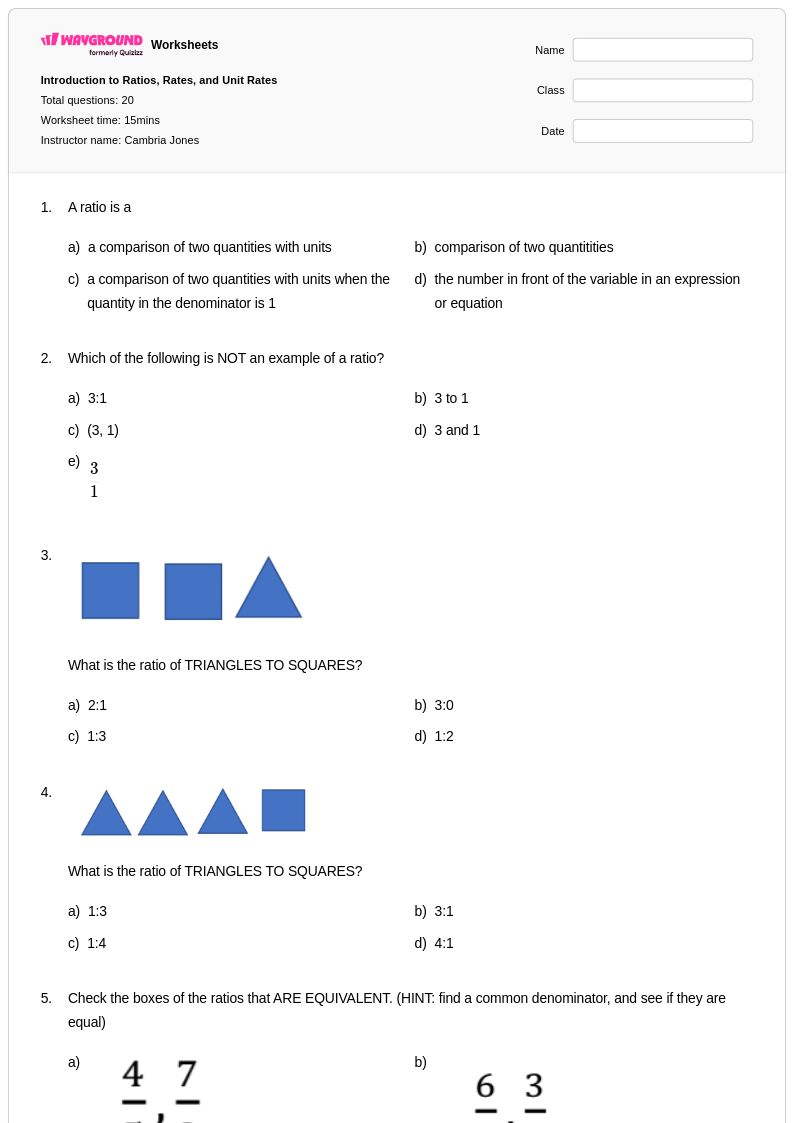
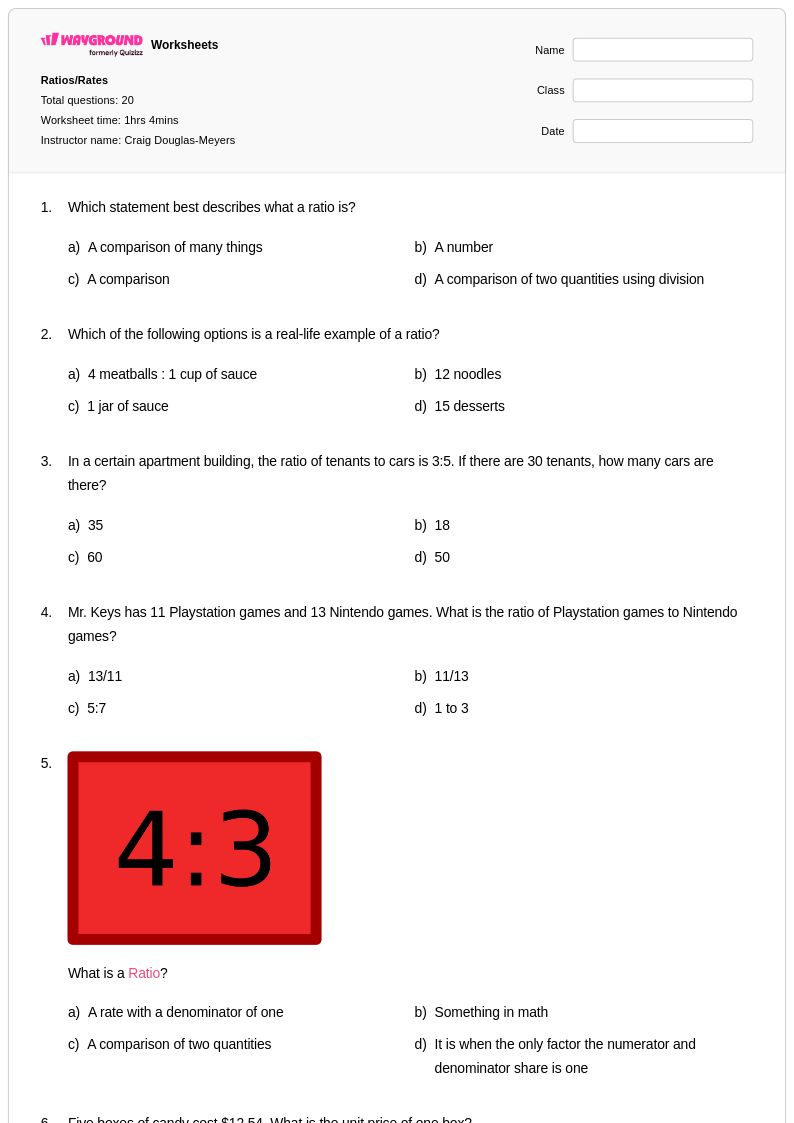
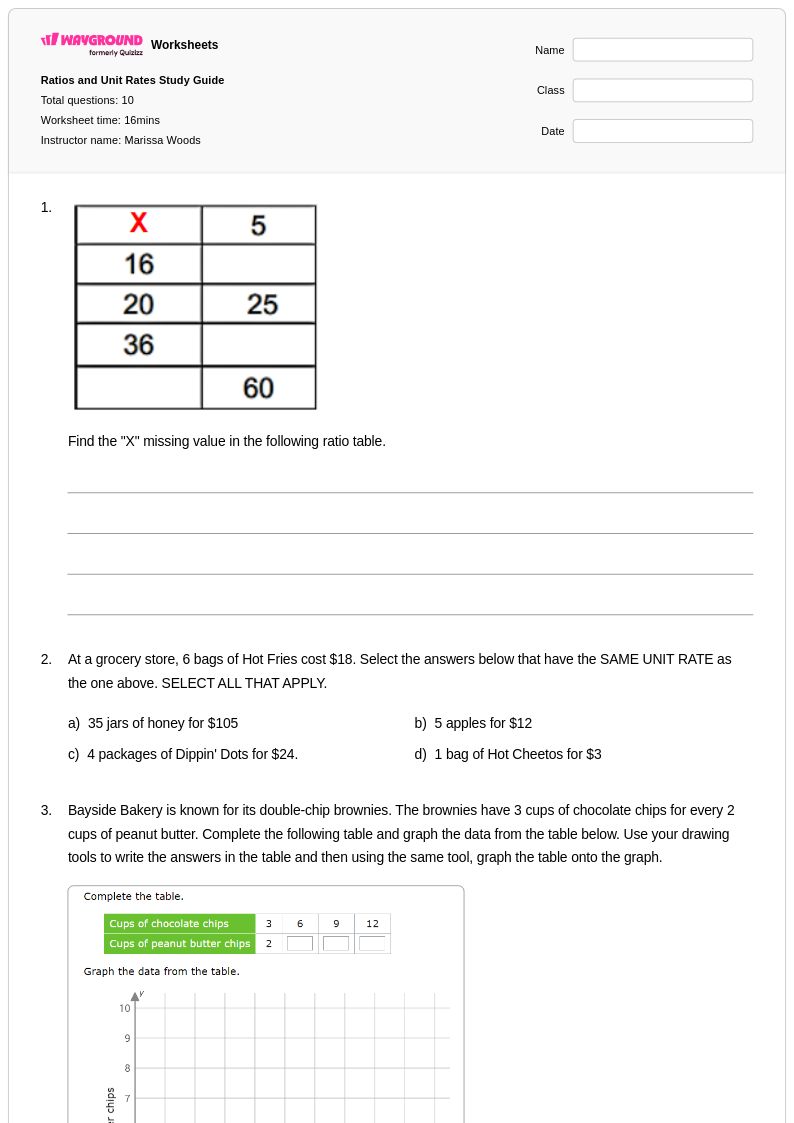
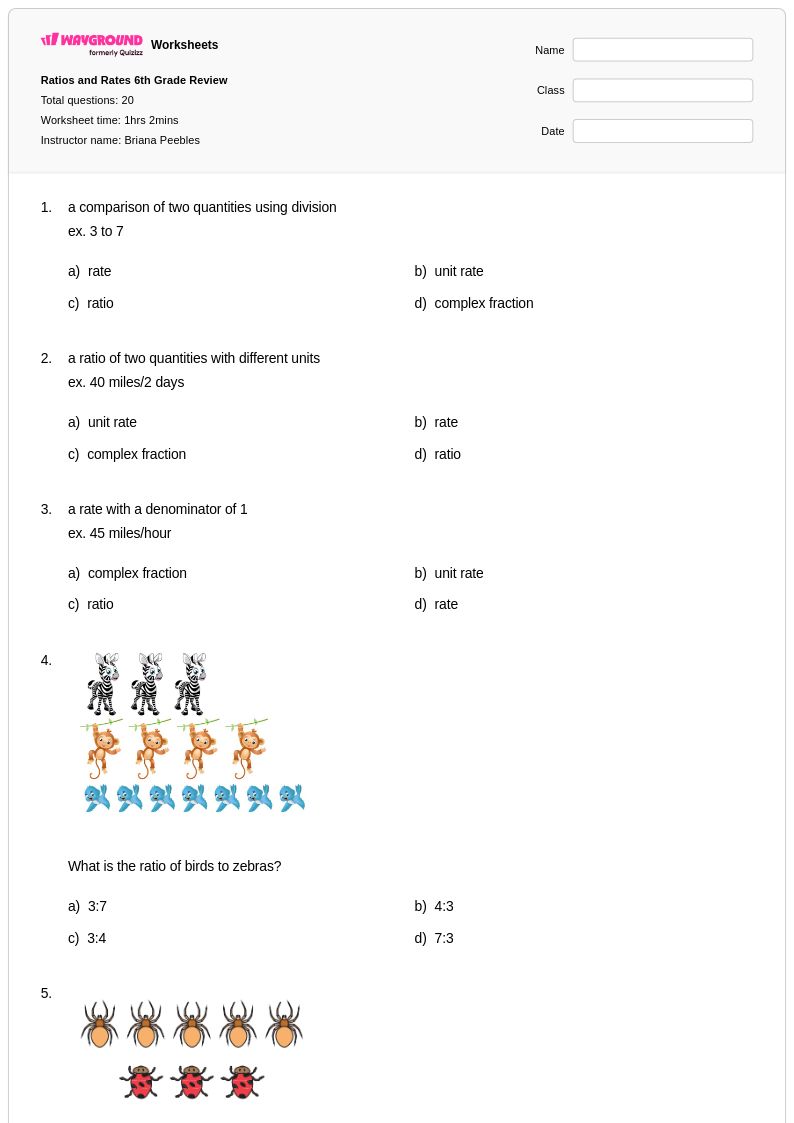
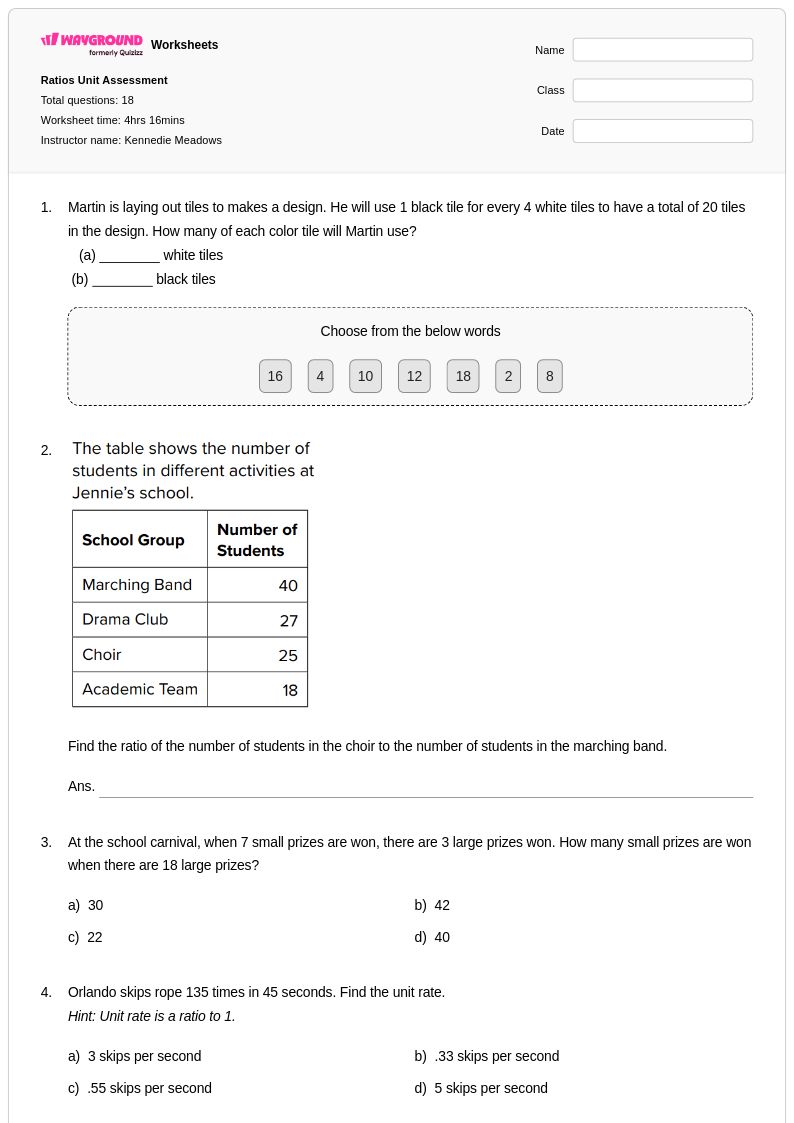
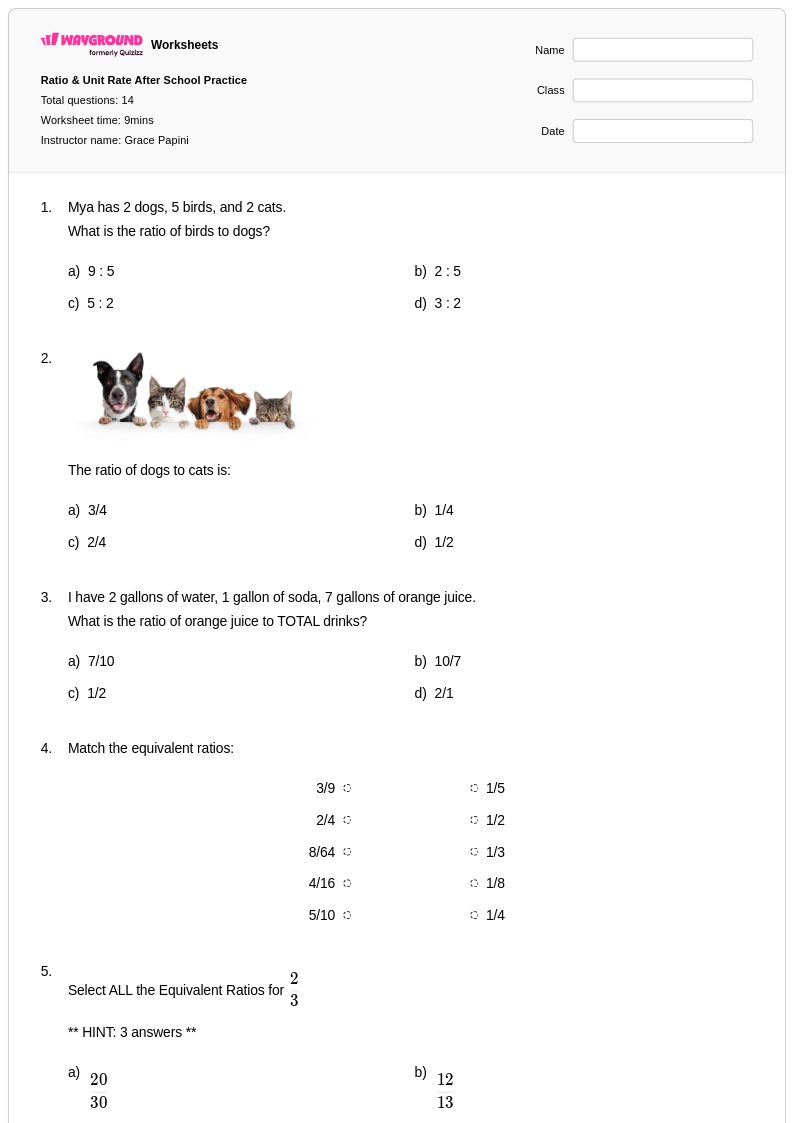
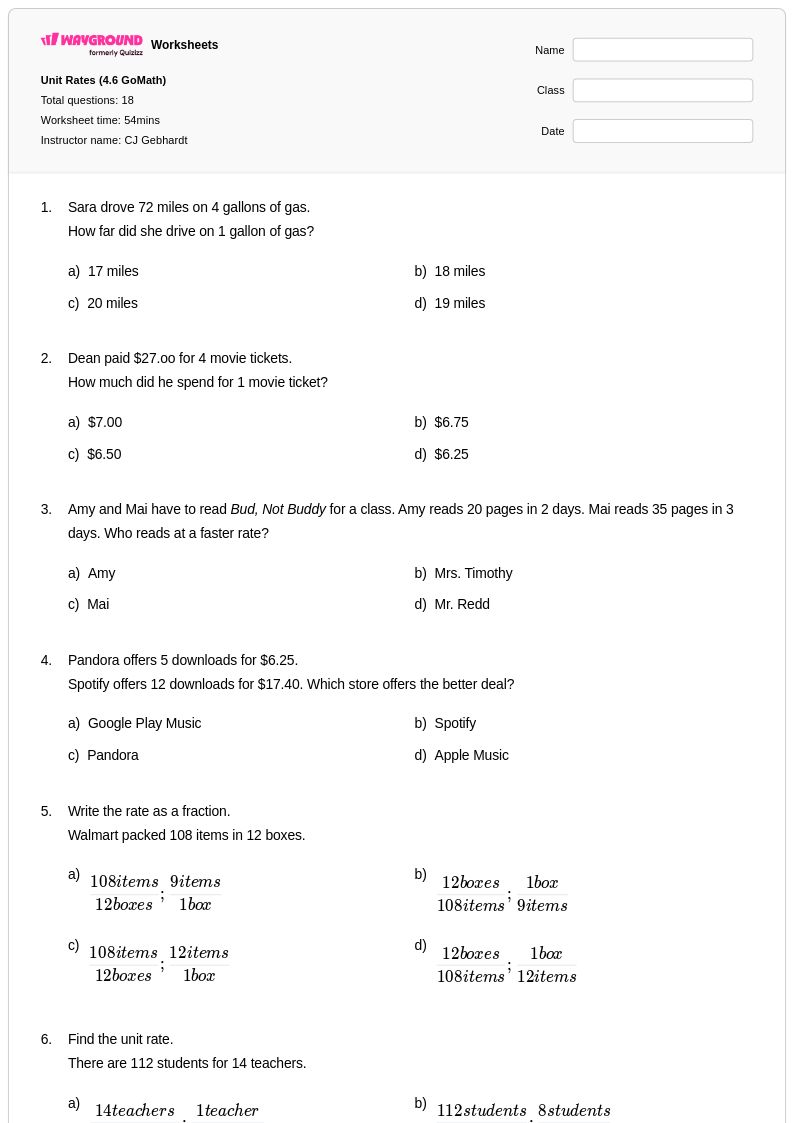
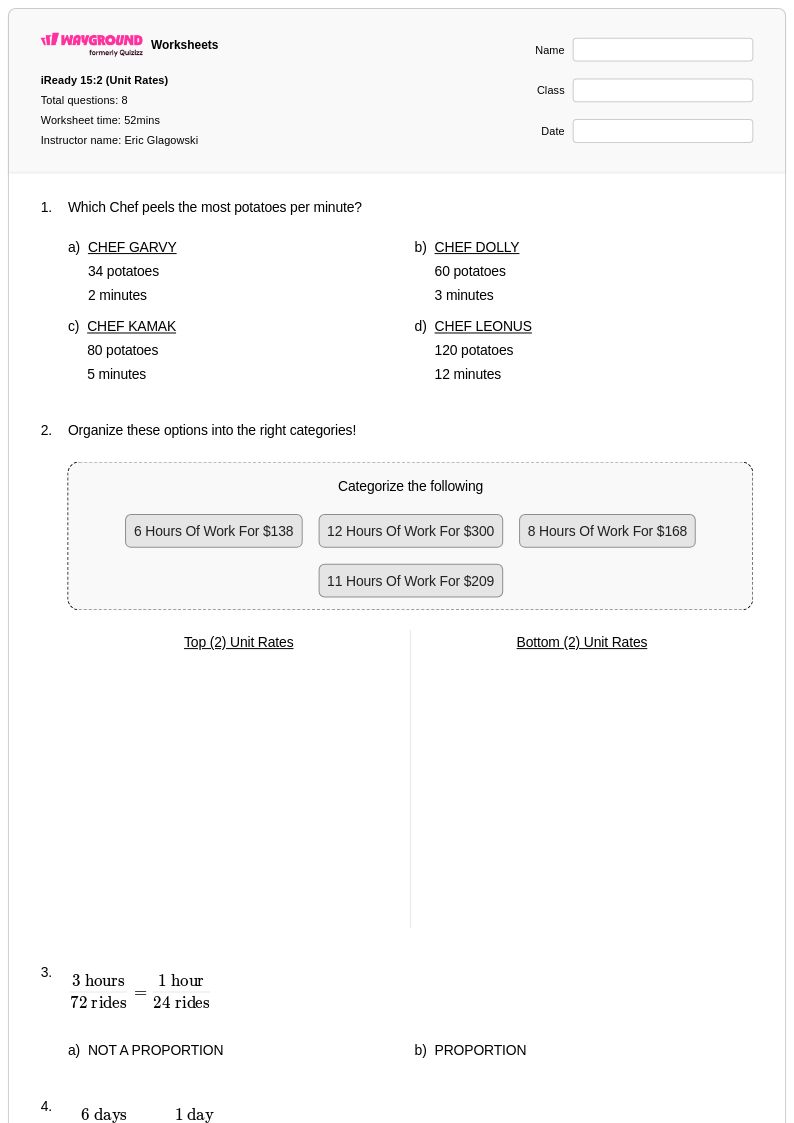
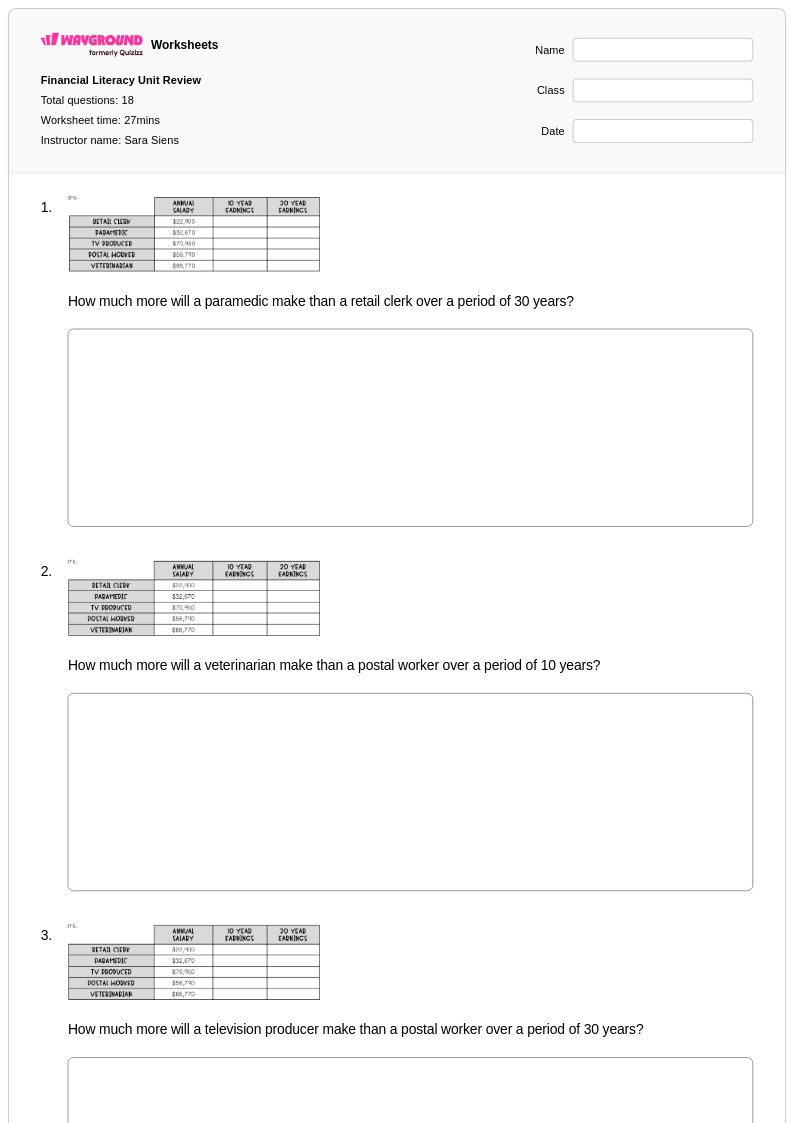
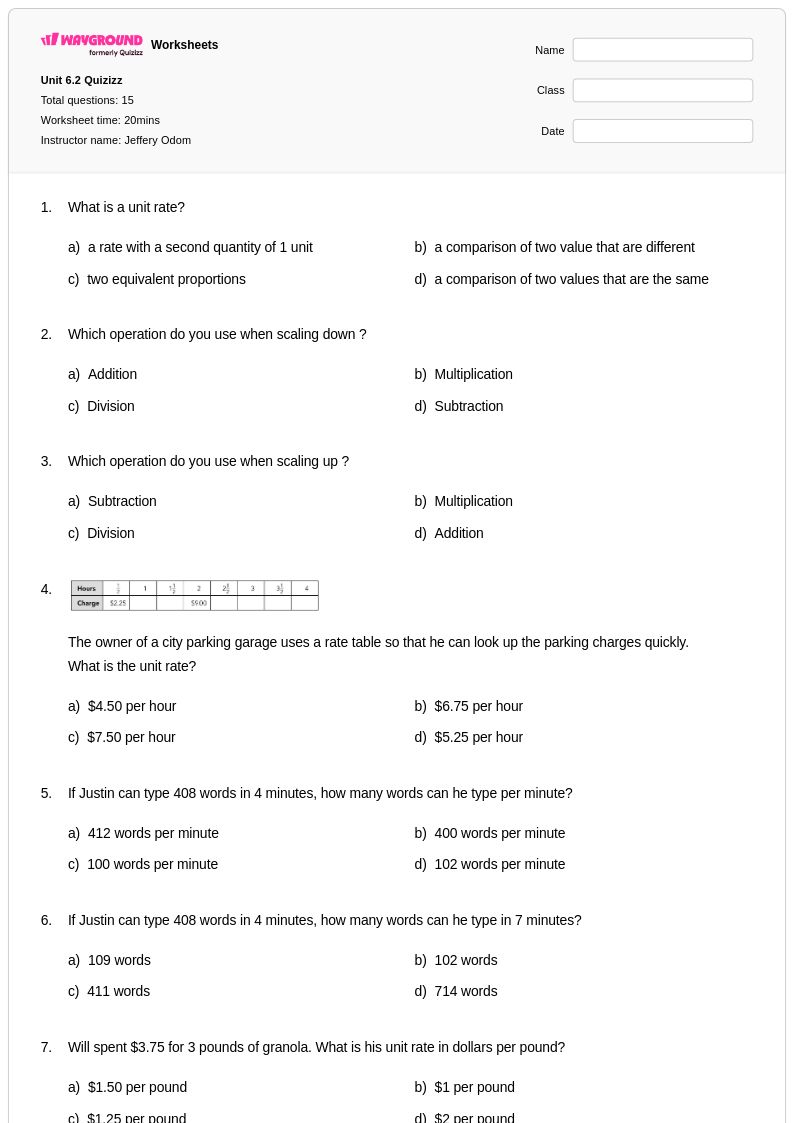
Comparing rates worksheets for Class 6 mathematics provide students with essential practice in analyzing and evaluating different rates to determine which is greater, lesser, or equivalent. These comprehensive worksheets available through Wayground (formerly Quizizz) strengthen critical mathematical reasoning skills by presenting real-world scenarios where students must compare unit rates, such as miles per gallon, cost per item, or speed measurements. Each worksheet collection includes detailed answer keys and is available as free printable pdf resources, allowing students to work through practice problems that build their ability to convert rates to common units, calculate unit rates, and make informed comparisons between different quantities and their corresponding time or measurement units.
Wayground (formerly Quizizz) supports mathematics educators with an extensive library of millions of teacher-created resources specifically designed for comparing rates instruction at the Class 6 level. Teachers can efficiently locate appropriate materials using robust search and filtering tools that align with curriculum standards, ensuring worksheets match specific learning objectives and skill levels. The platform's differentiation capabilities allow educators to customize content for diverse learners, providing both remediation support for struggling students and enrichment opportunities for advanced learners. Available in both printable and digital formats including downloadable pdfs, these resources streamline lesson planning while offering flexible options for classroom instruction, homework assignments, and targeted skill practice that helps students master the fundamental concepts of rate comparison.
FAQs
How do I teach comparing rates in Grade 6?
Begin with ratio tables or double number lines so students can see how two quantities change together, then show how division produces a unit rate. Use Grade 6 contexts such as miles per gallon, cost per item, and speed, and have students state whether they converted the units or found unit rates before comparing.
What exercises help Grade 6 students practice comparing rates?
Grade 6 practice should include finding unit rates, converting rates to common units, determining whether rates are equivalent, and choosing the greater, lesser, or better-value rate. Start with whole-number quantities and familiar units before introducing decimals and multi-step real-world problems.
What mistakes do Grade 6 students make when comparing rates?
Grade 6 students may reverse the division, compare unlike units, or judge a rate by its first number instead of calculating a common unit rate. Ask them to write units beside every quotient and complete a reasonableness check, such as confirming that the cheaper unit price actually gives the lower cost for the same quantity.
How can I use a Grade 6 comparing rates worksheet?
Grade 6 comparing rates worksheets are available as printable PDFs and in digital formats, accommodating classroom, homework, and independent-practice needs. Teachers can host a worksheet as a digital quiz on Wayground or print and assign it on paper; every worksheet includes a complete answer key, and paper submissions can be scanned or captured for grading with the Wayground for Teachers app.
How does comparing rates align with Common Core in Grade 6?
Comparing rates aligns with Common Core's Grade 6 focus on ratio reasoning and unit rates, including real-world problems involving prices, speed, and measurement. The expected progression moves from representing ratio relationships to calculating unit rates, converting units when needed, and using those results to make comparisons.
What grade do students learn to compare rates?
Comparing rates is a central Grade 6 mathematics skill because students are developing formal ratio and unit-rate reasoning at this stage. Earlier work with multiplication, division, fractions, and decimals supports the transition to comparing quantities such as cost per item or distance per unit of time.
How can I differentiate a Grade 6 comparing rates worksheet?
For students needing scaffolds, teachers can create alternate worksheet versions with larger text, wider spacing, a dyslexia-friendly font, or translated content, while advanced students can work with less familiar units and multi-step comparisons. Digital accommodations can add extended time, Read Aloud, reduced answer choices, or reading mode for selected students without changing the default experience for the rest of the class.