Free Printable Factoring Expressions Worksheets for Class 6
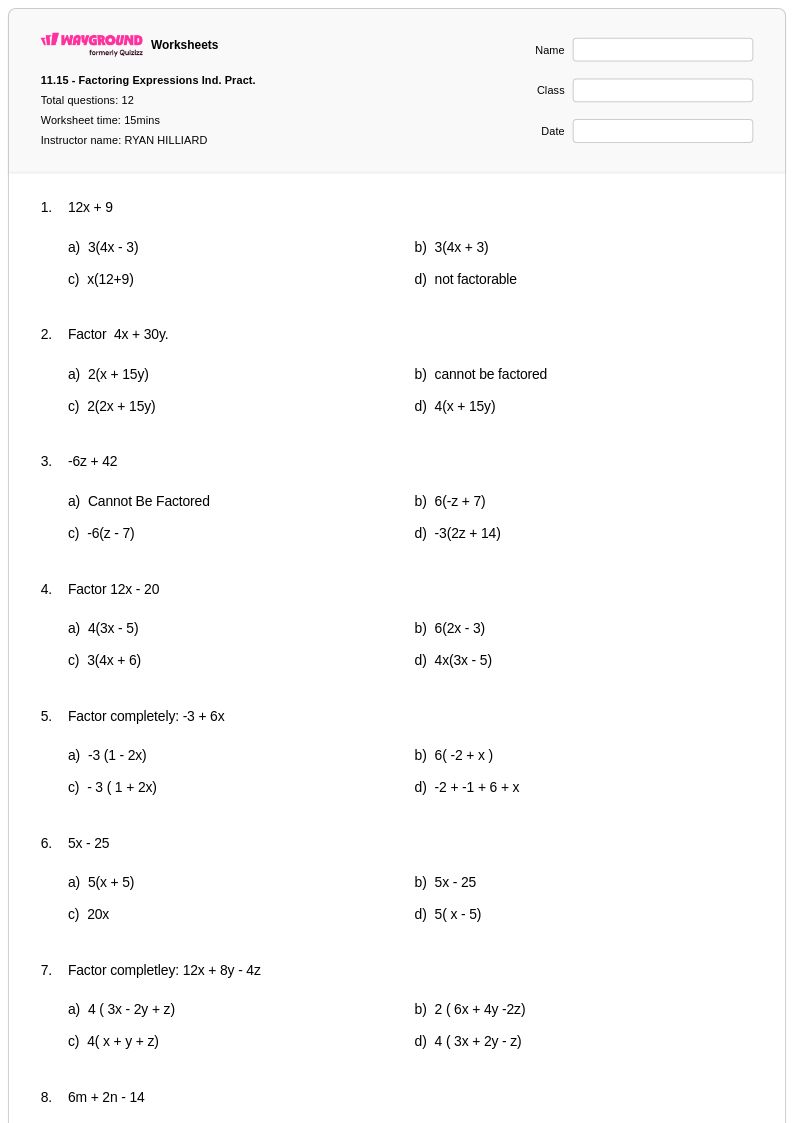
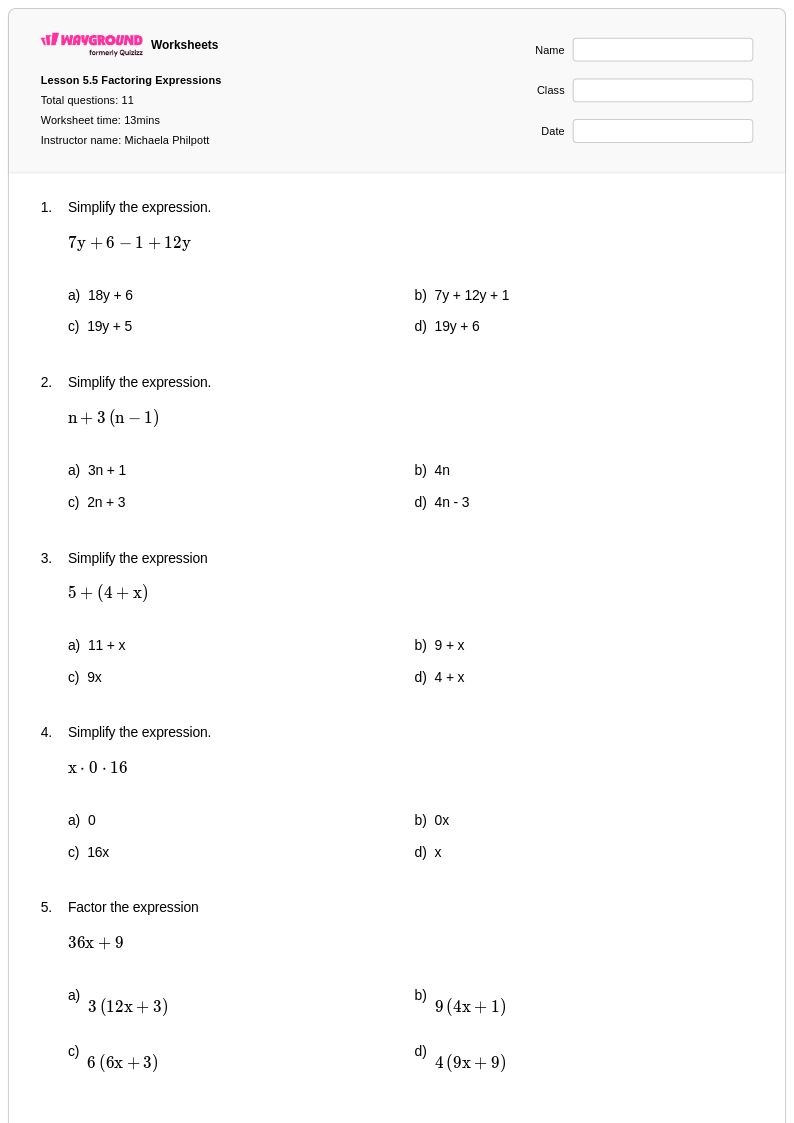
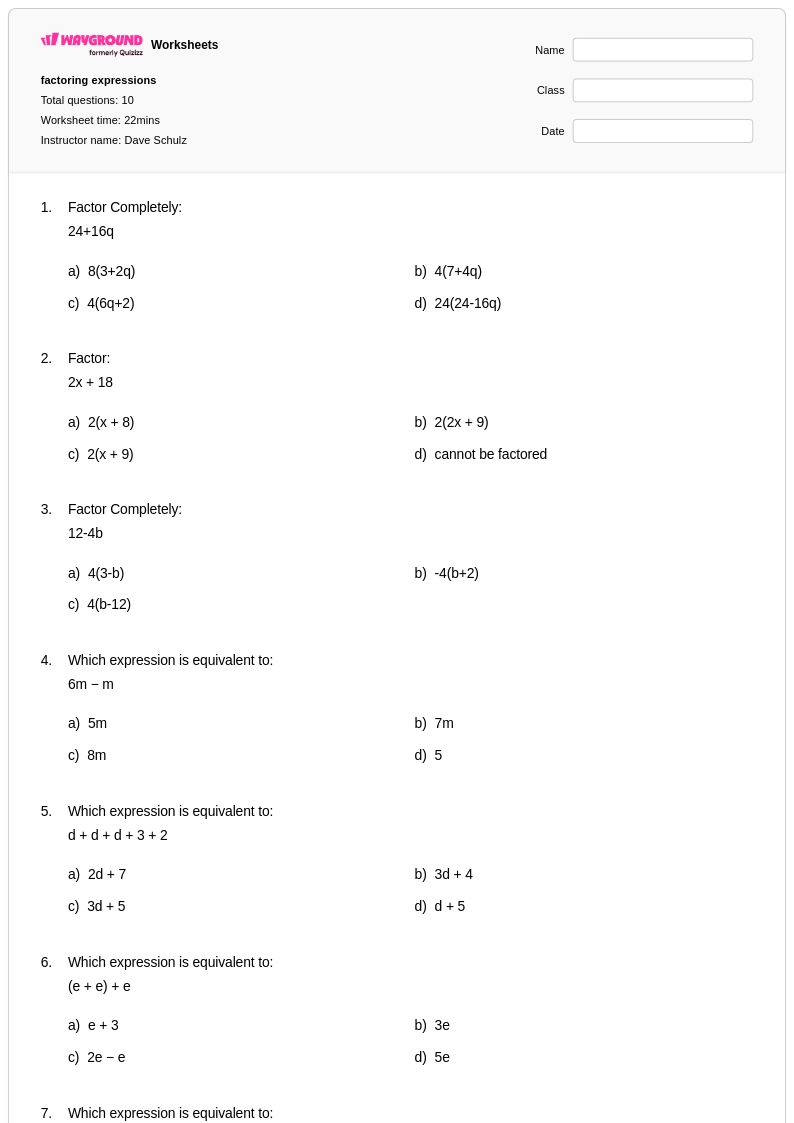
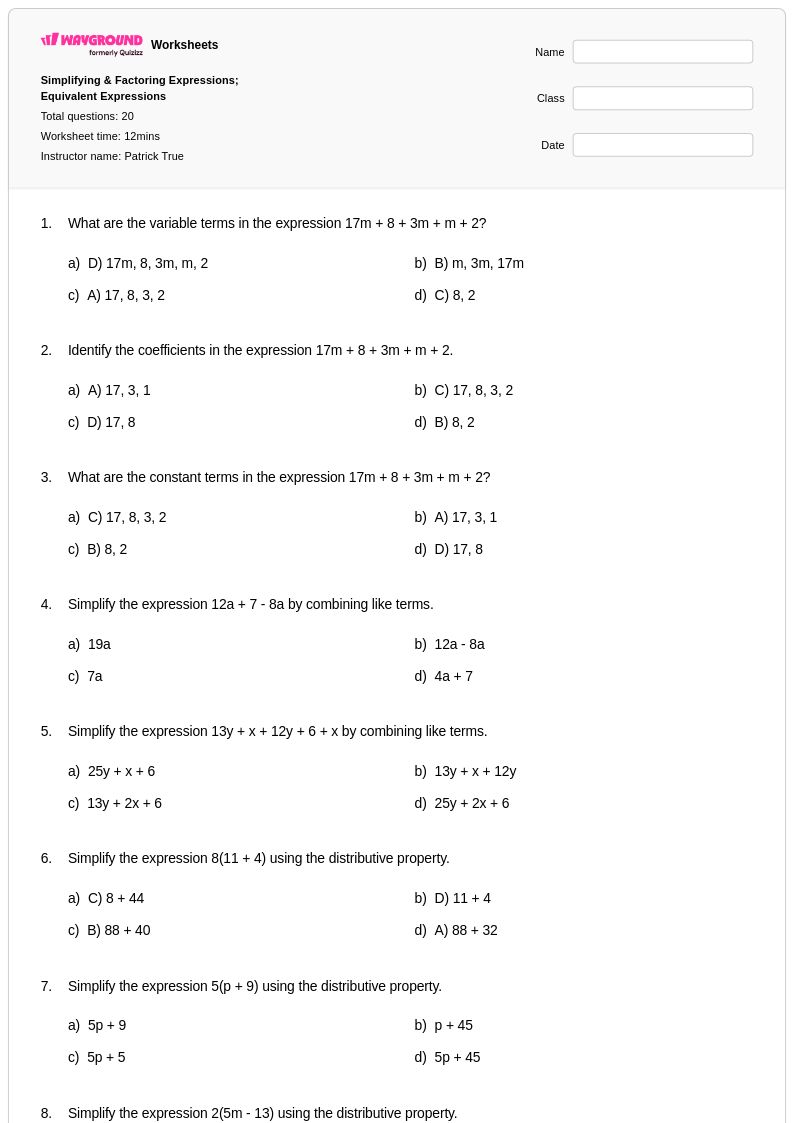
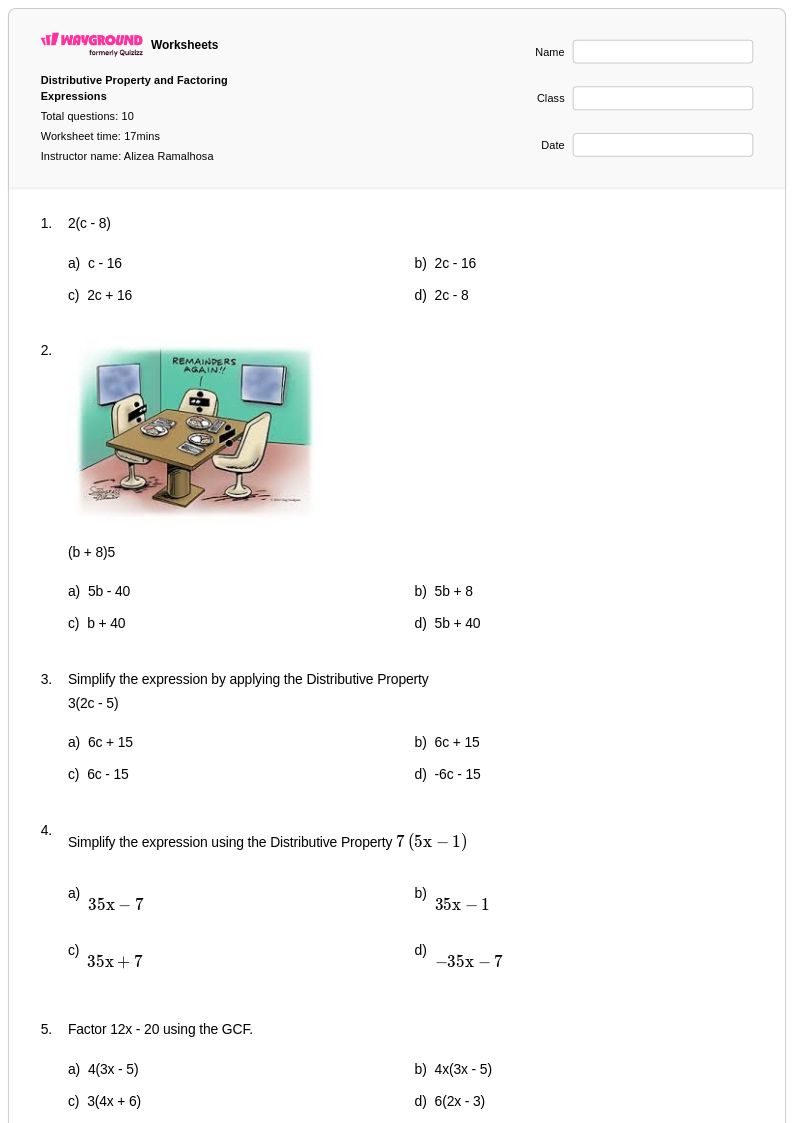
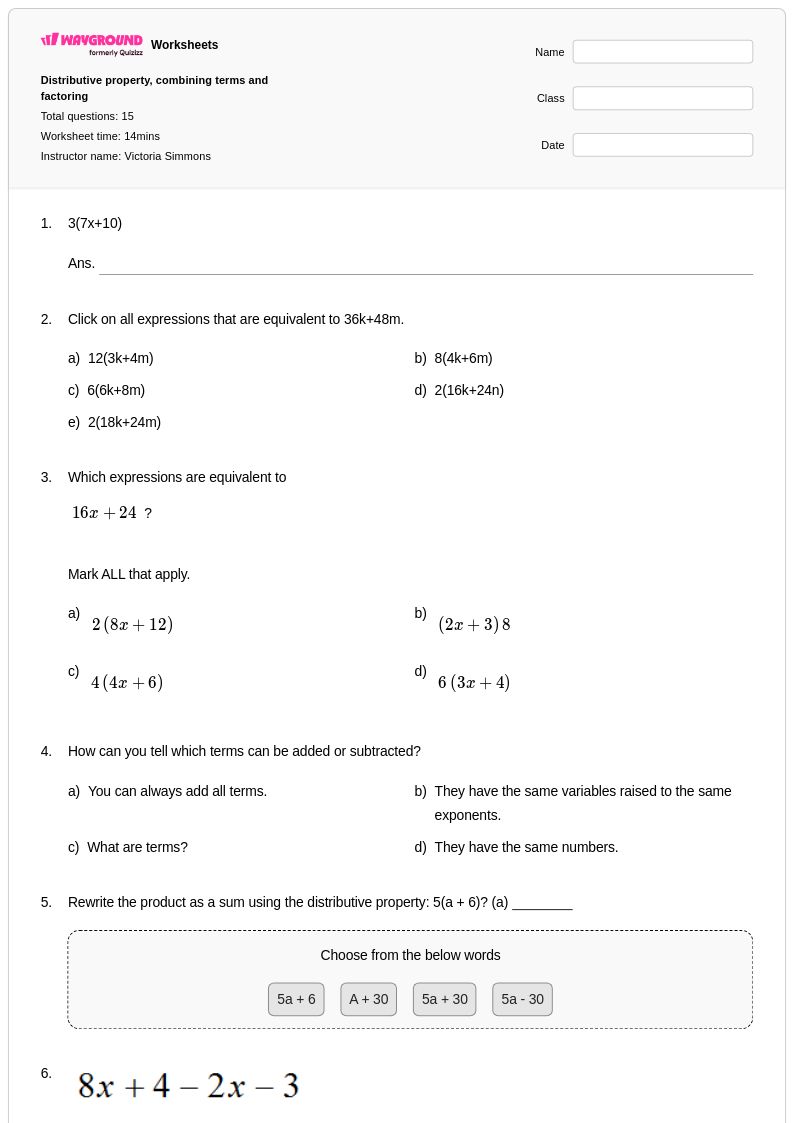
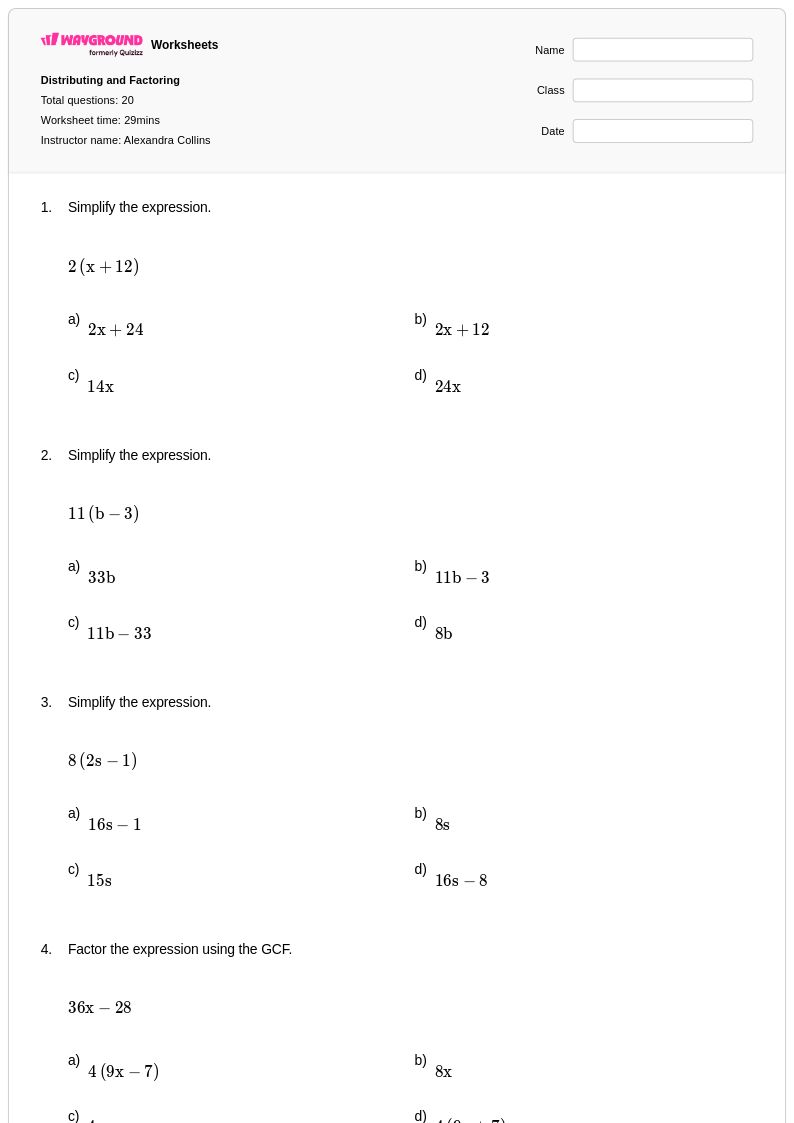
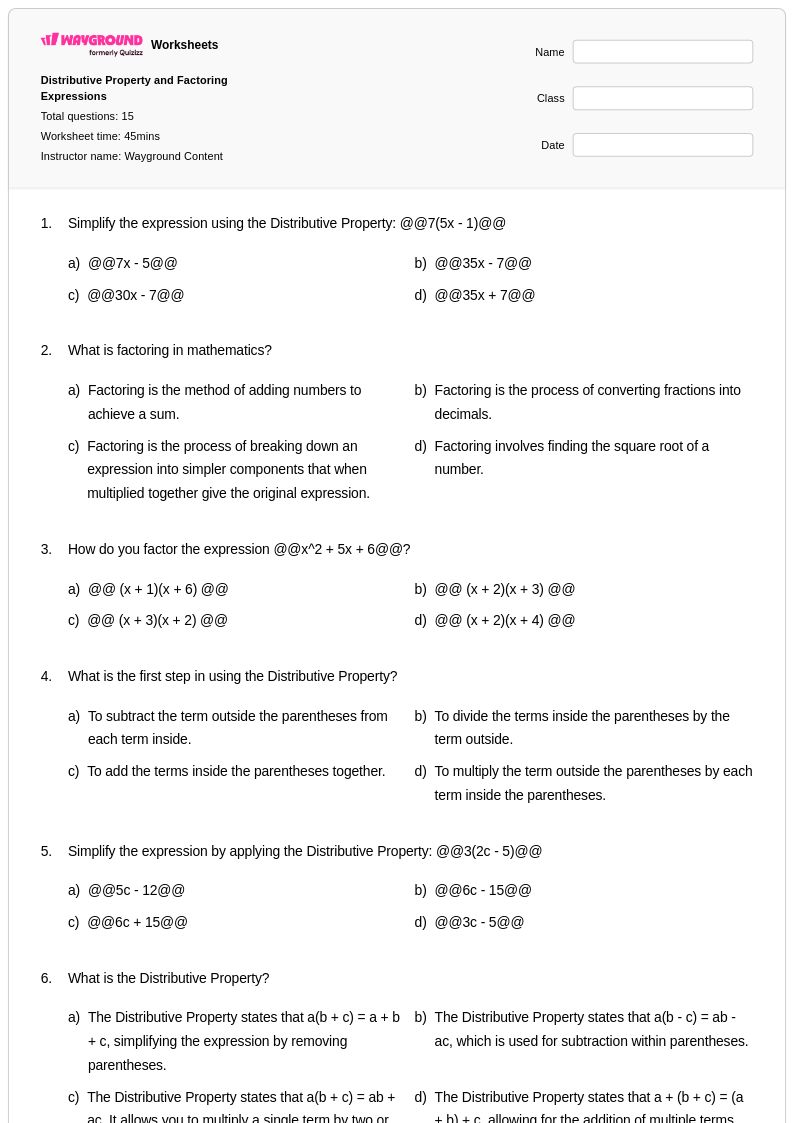
Class 6 factoring expressions worksheets from Wayground help students master breaking down algebraic expressions into their component factors through comprehensive practice problems, free printables, and detailed answer keys.
Explore printable Factoring Expressions worksheets for Class 6
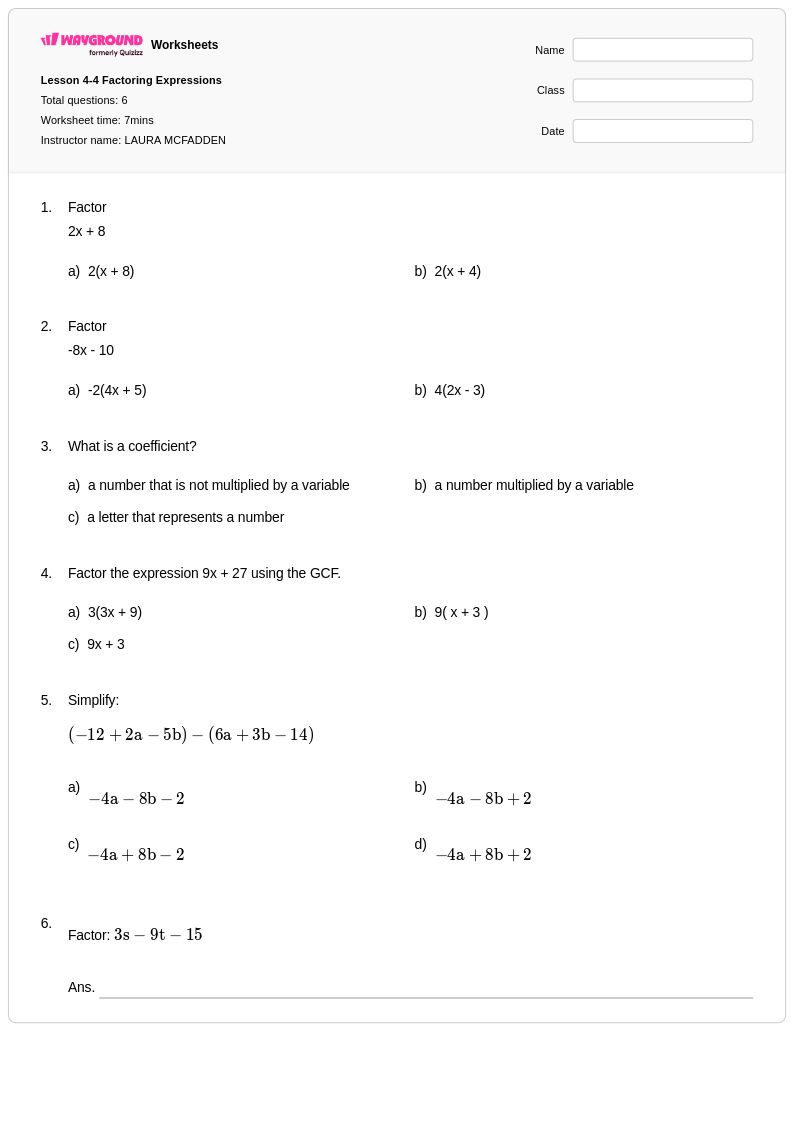
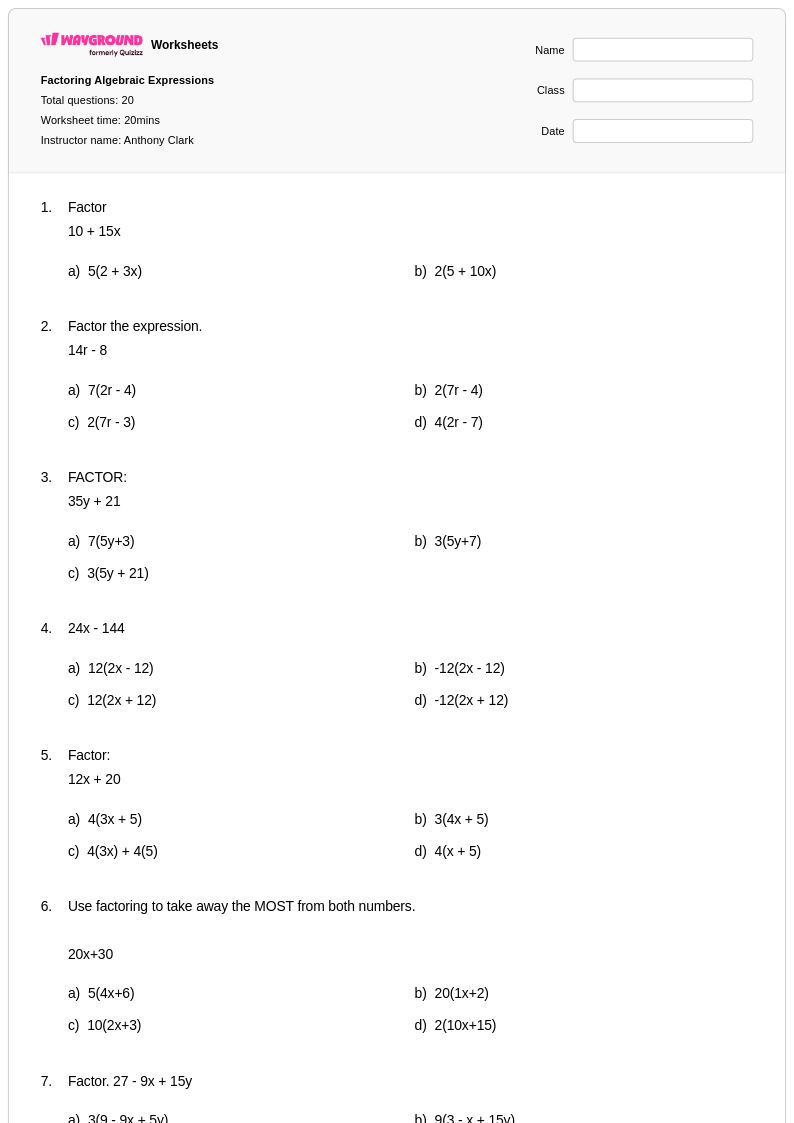
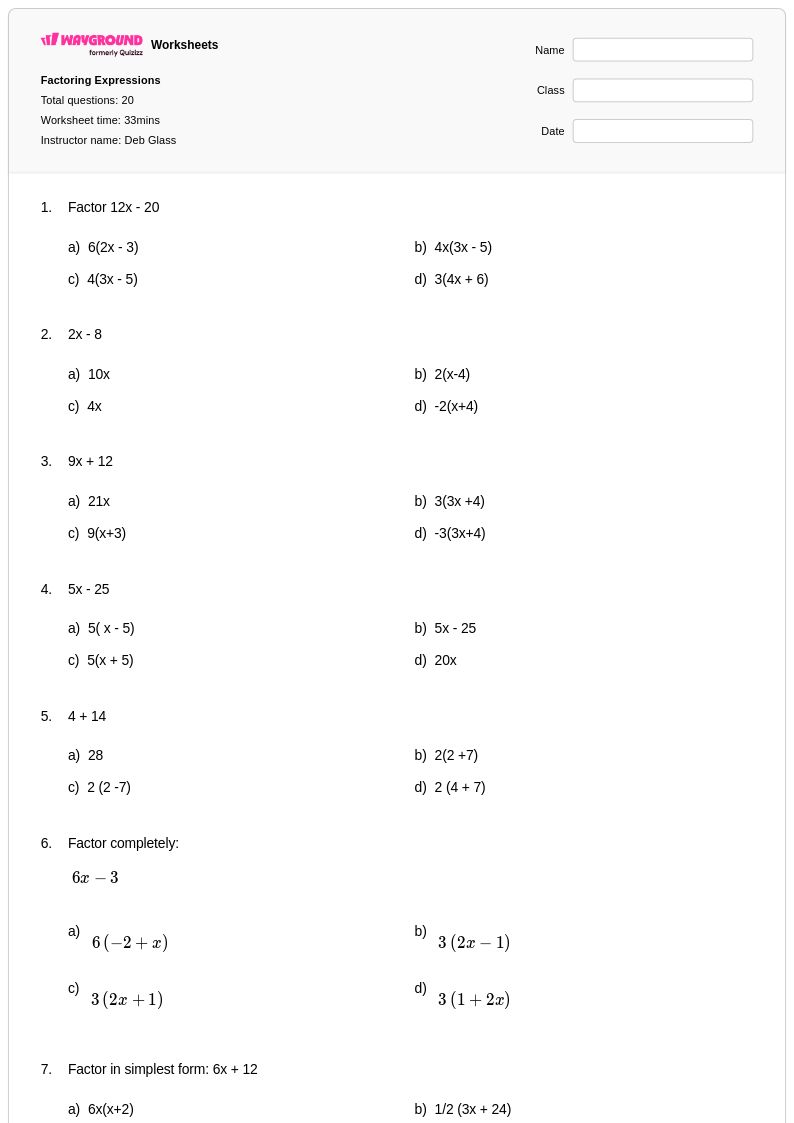
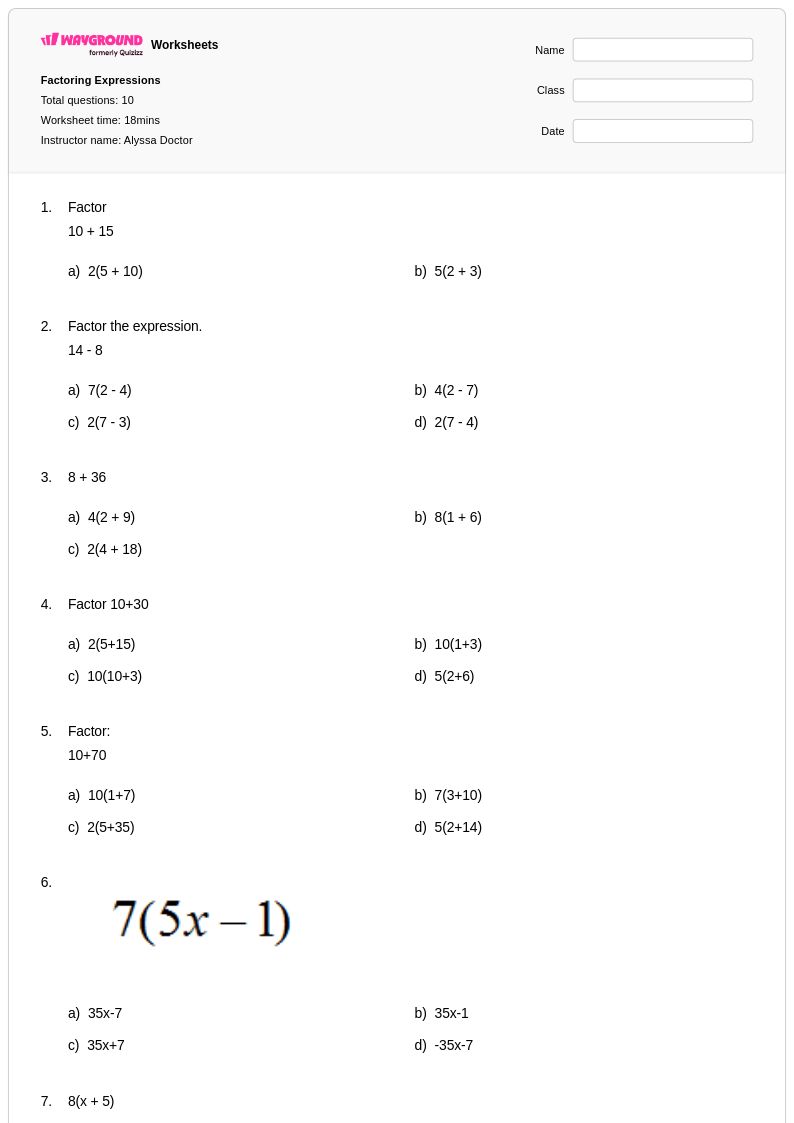
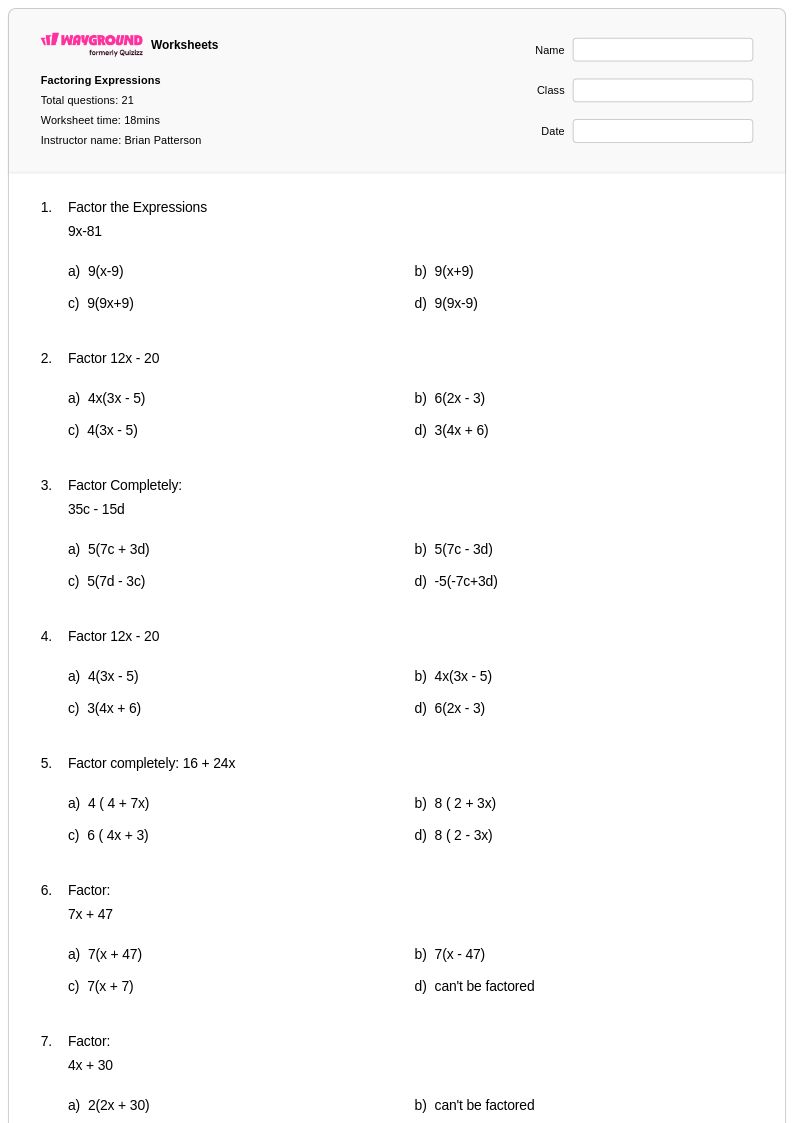
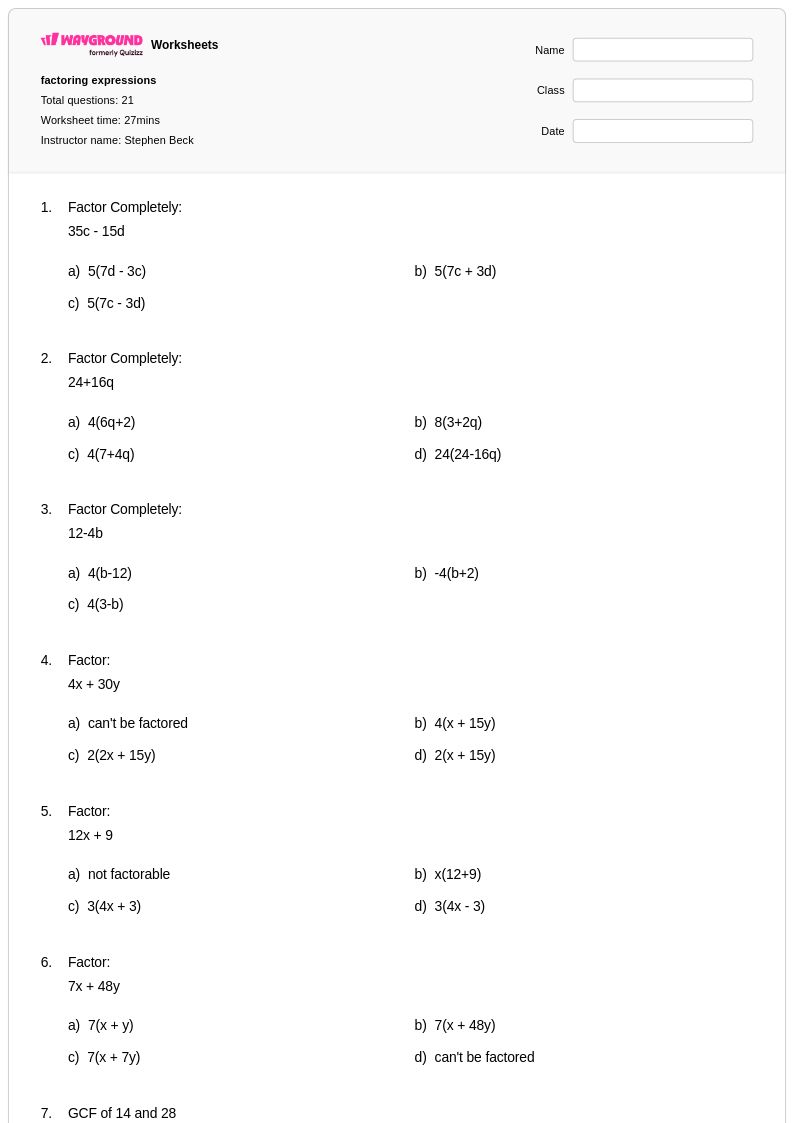
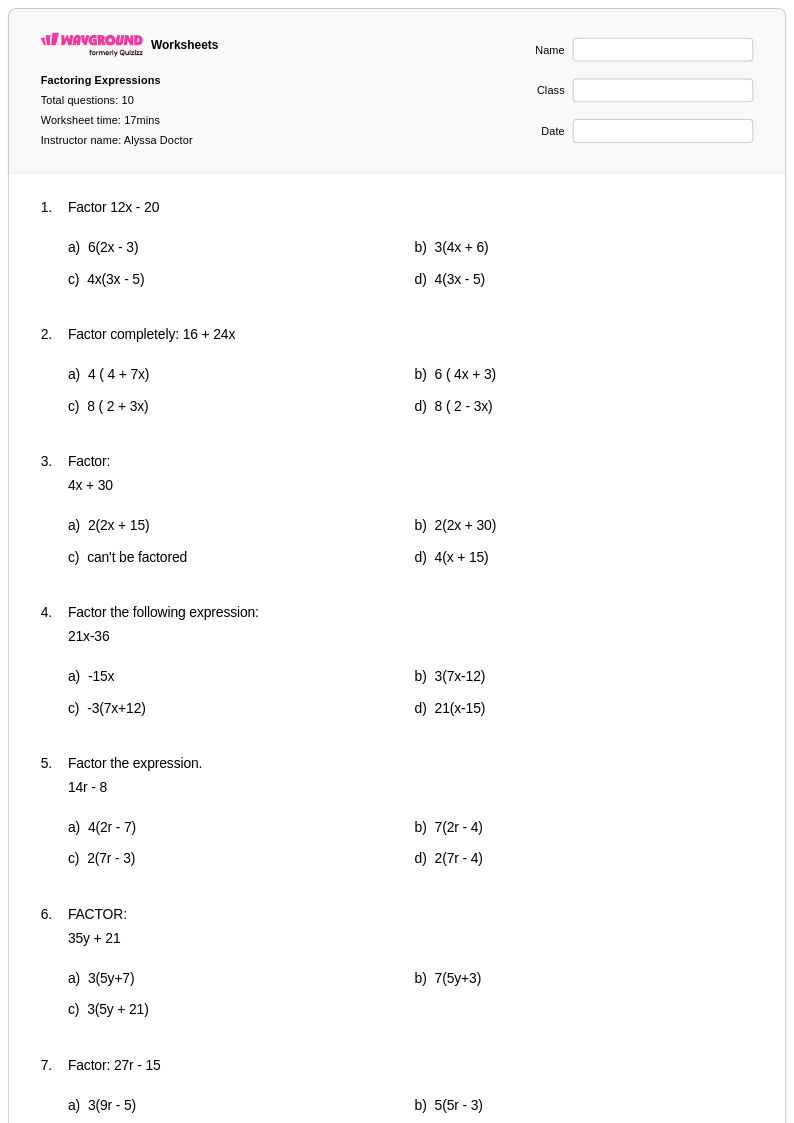
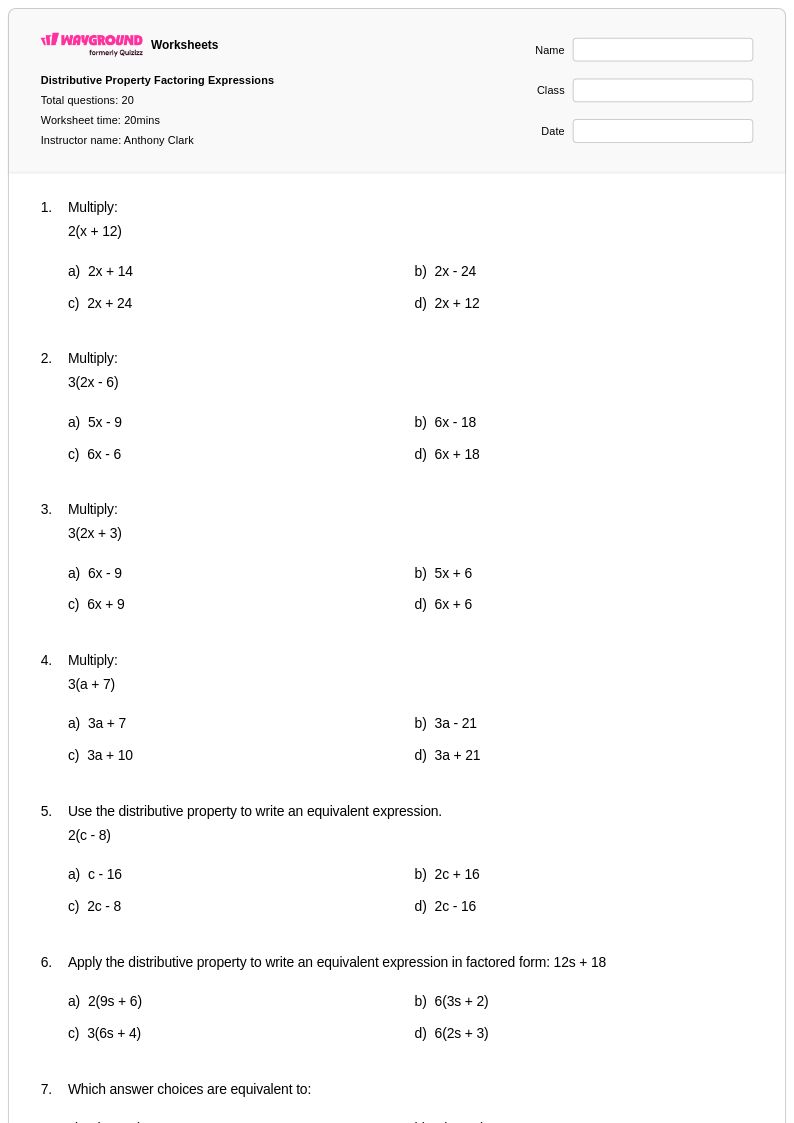
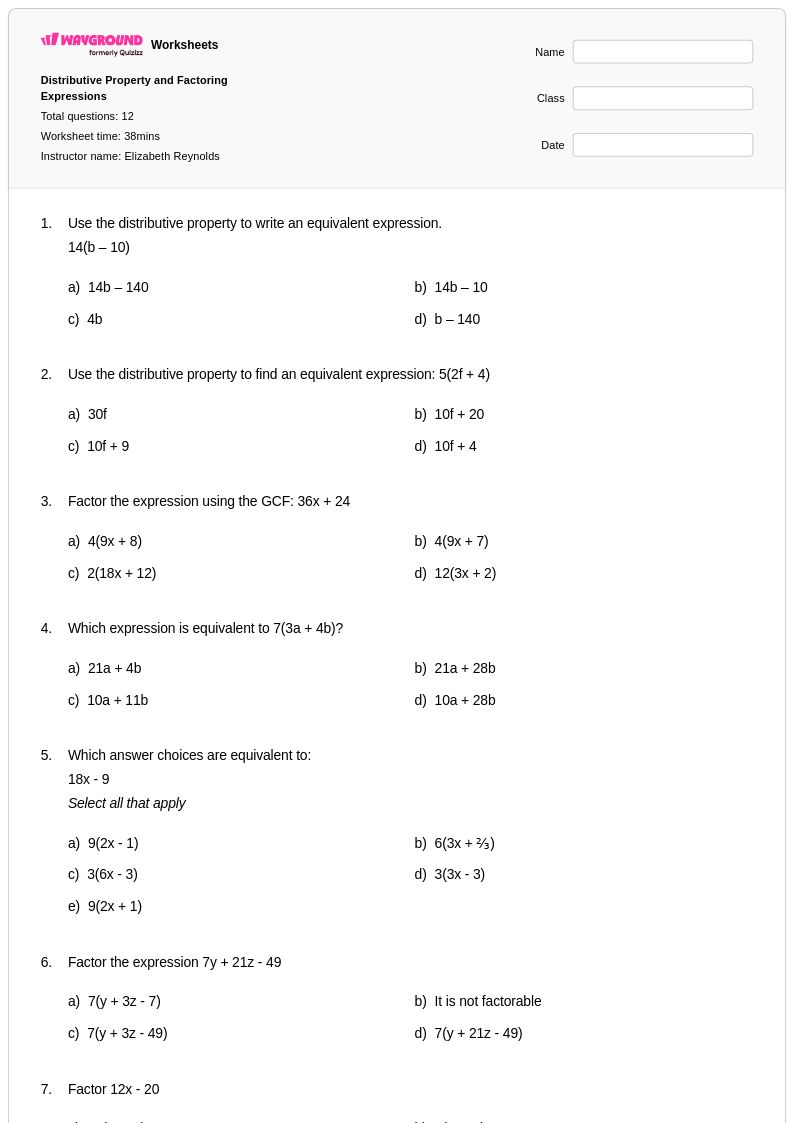
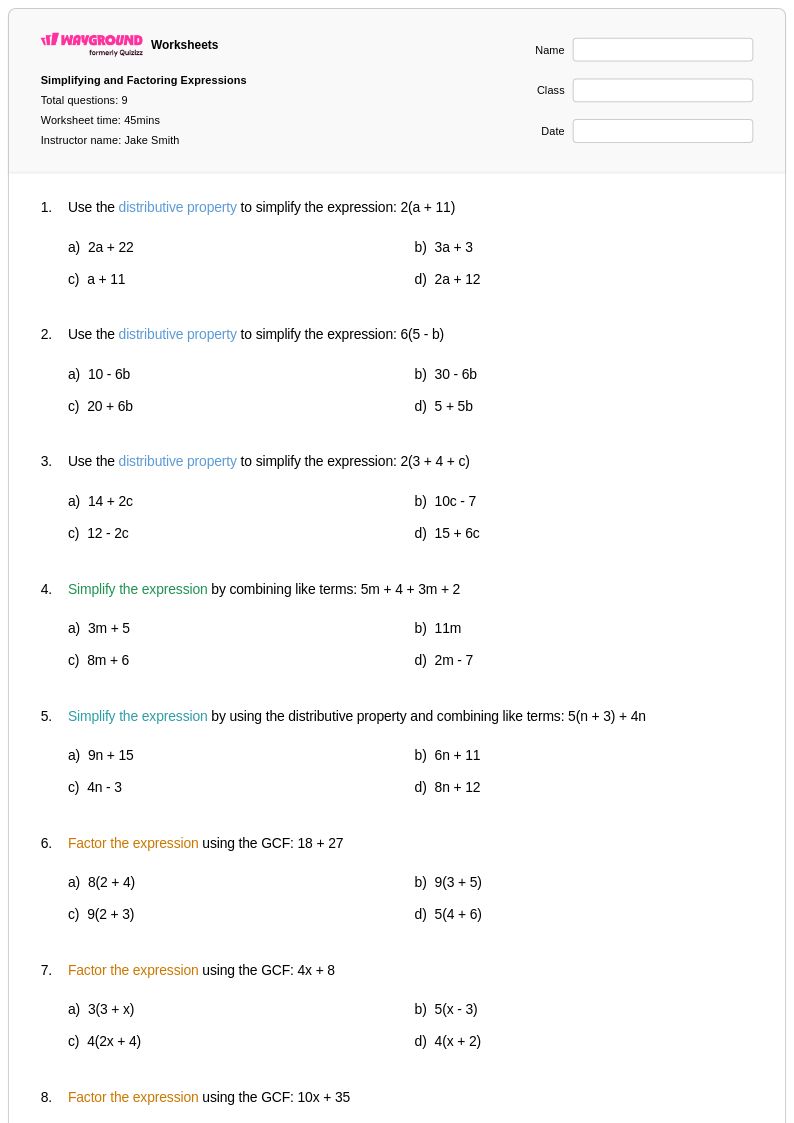
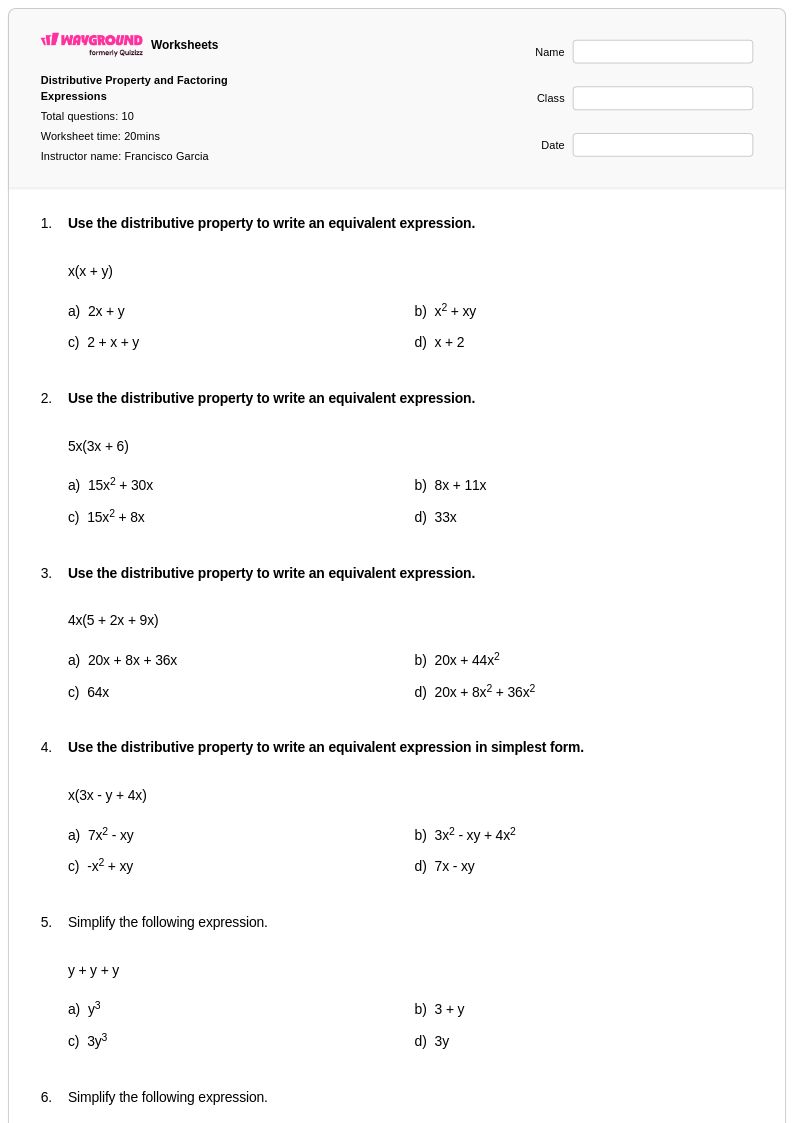
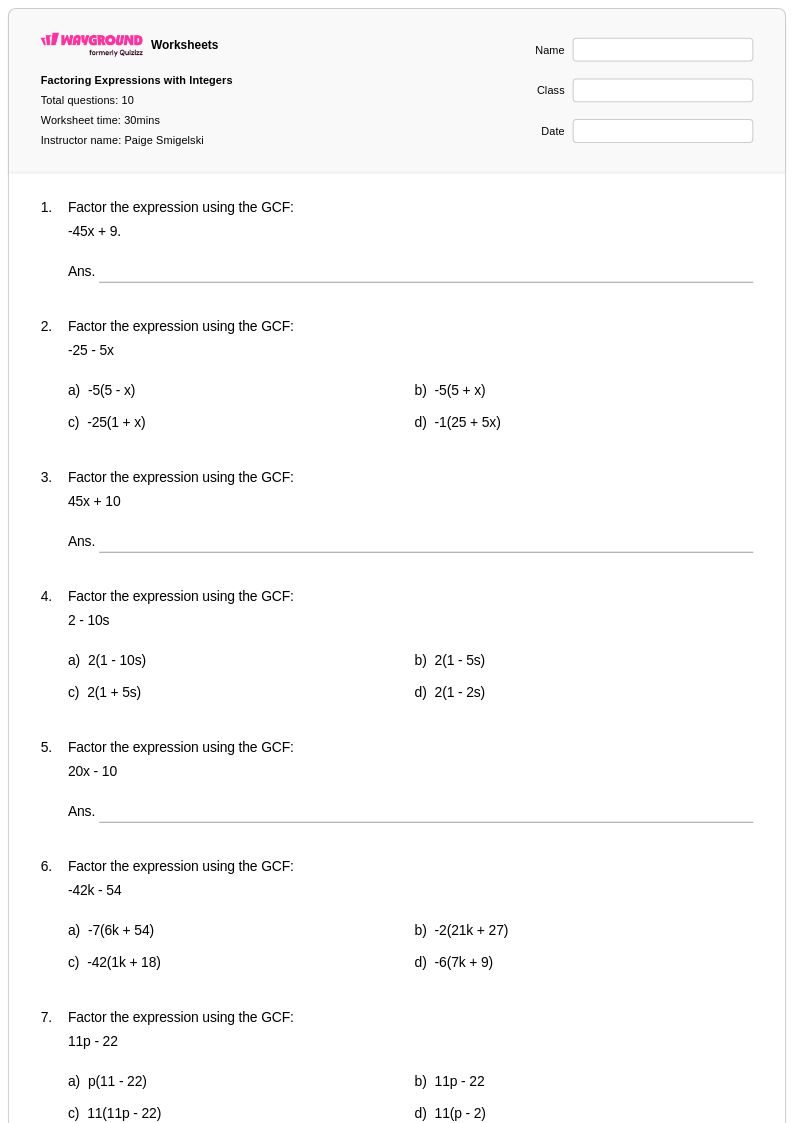
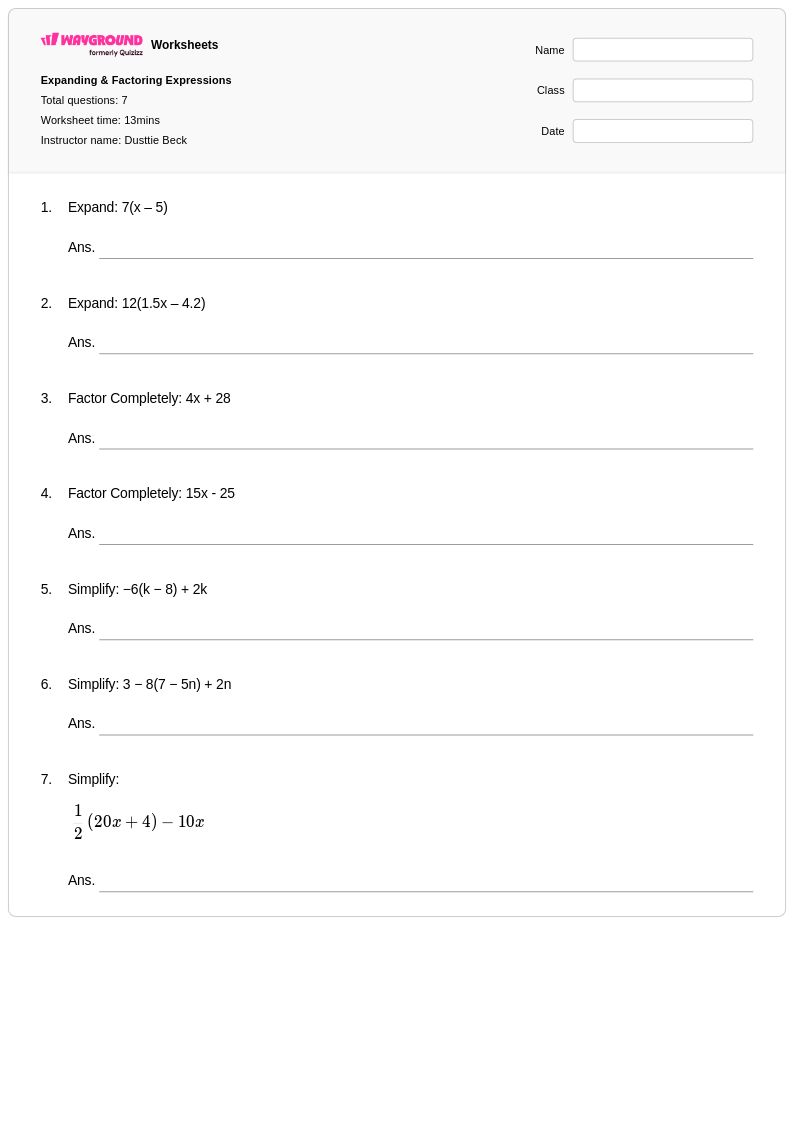
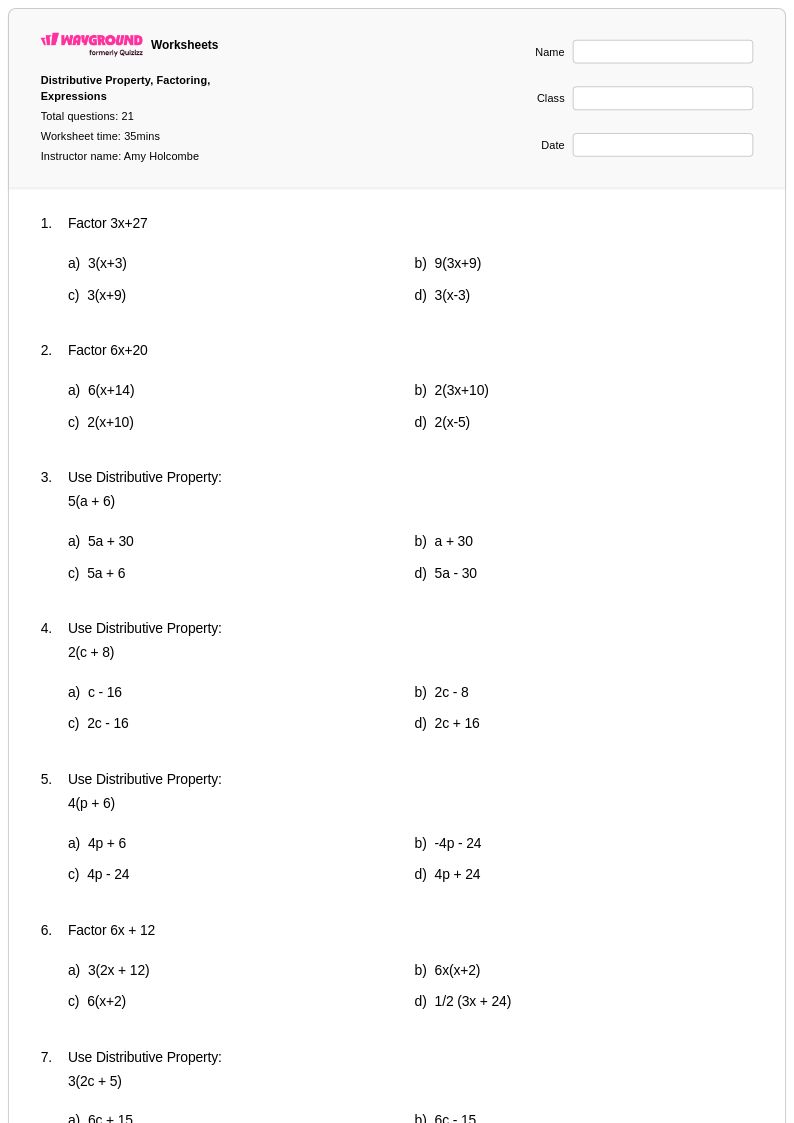
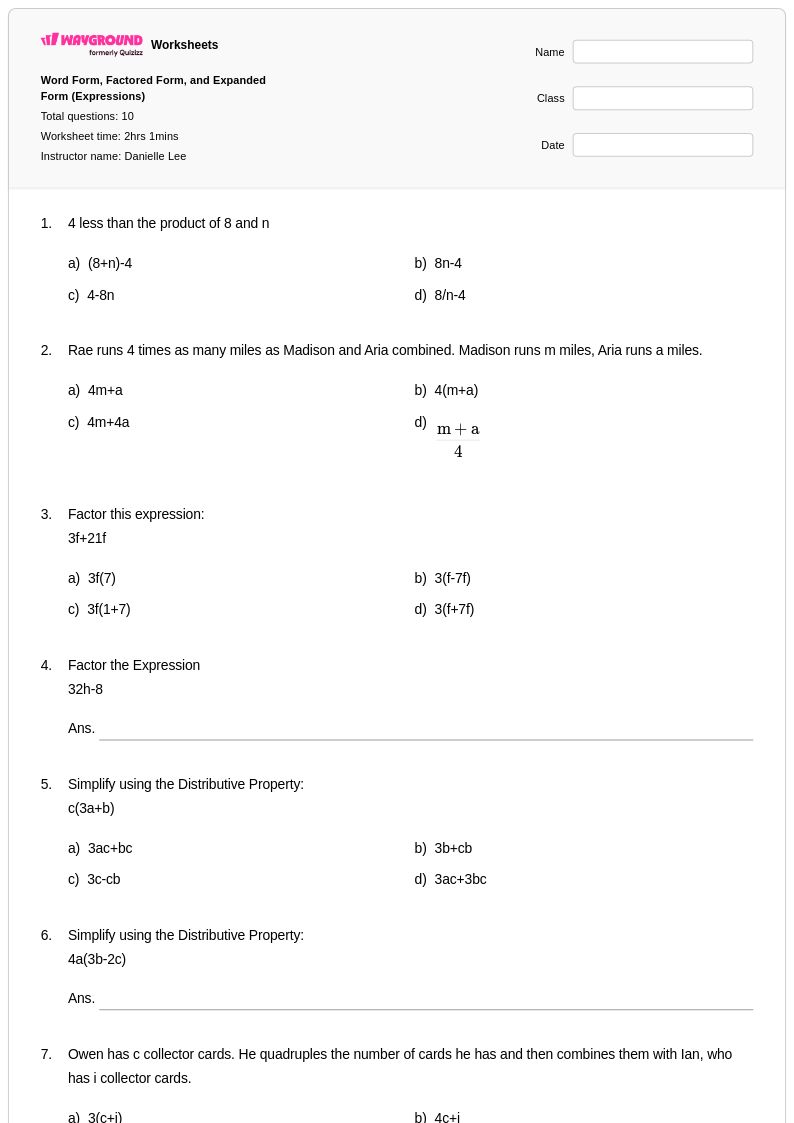
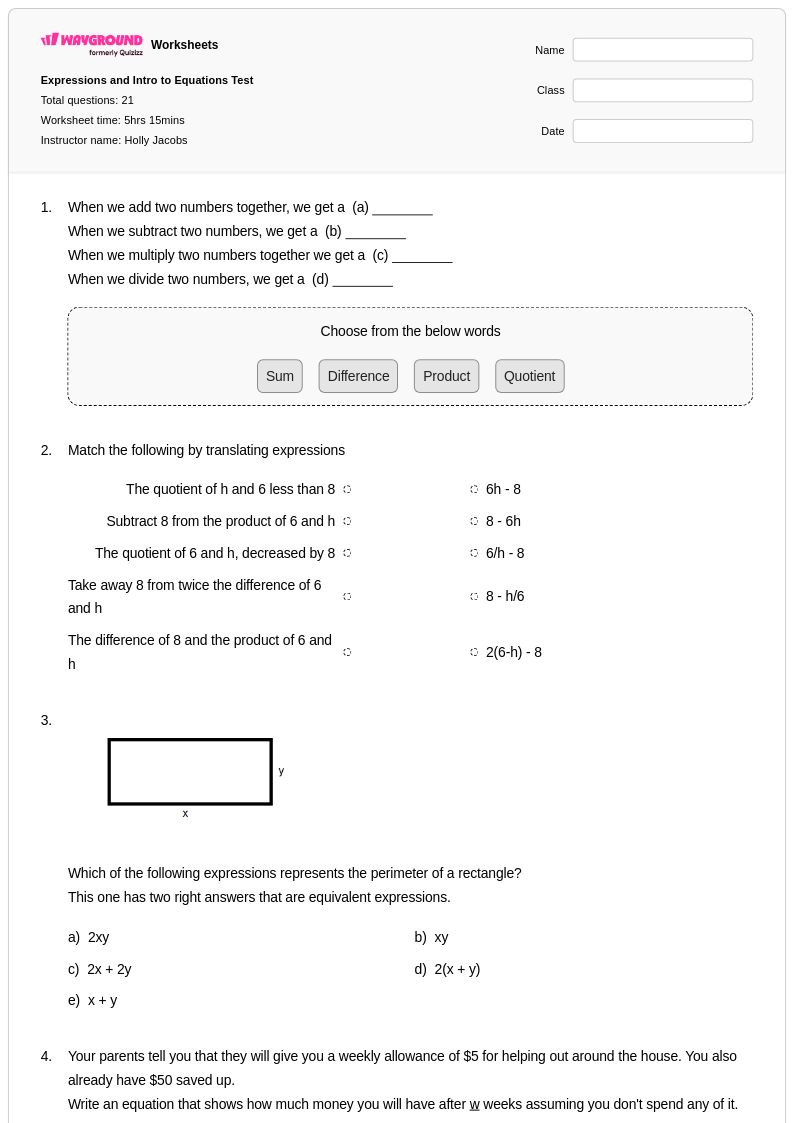
Factoring expressions represents a fundamental algebraic skill that Class 6 students must master as they transition from arithmetic to more complex mathematical reasoning. Wayground's comprehensive collection of factoring expressions worksheets provides students with structured practice in identifying common factors, using the distributive property in reverse, and simplifying algebraic expressions through systematic factorization techniques. These carefully designed practice problems guide students through the process of recognizing patterns in mathematical expressions, breaking down complex terms into their constituent parts, and understanding the relationship between multiplication and factoring. Each worksheet includes detailed answer keys that allow students to verify their work and identify areas for improvement, while the free printable format ensures accessibility for both classroom instruction and independent study. The pdf worksheets progress systematically from basic factoring of numerical expressions to more advanced algebraic manipulations, building the foundational skills necessary for success in higher-level mathematics.
Wayground, formerly Quizizz, empowers educators with millions of teacher-created resources specifically designed to support Class 6 mathematics instruction in factoring expressions and related algebraic concepts. The platform's robust search and filtering capabilities enable teachers to quickly locate worksheets that align with specific learning standards and match their students' current skill levels, while differentiation tools allow for seamless customization to meet diverse classroom needs. Teachers can access materials in both printable and digital formats, including downloadable pdf versions that facilitate flexible lesson planning and implementation across various learning environments. These comprehensive worksheet collections serve multiple instructional purposes, from initial skill introduction and guided practice to targeted remediation for struggling learners and enrichment activities for advanced students, ensuring that every Class 6 student receives appropriate support in developing their understanding of factoring expressions and building confidence in algebraic thinking.
FAQs
How do I teach factoring expressions to 6th graders?
At Grade 6, factoring is best introduced as "undoing" multiplication — something students already know. Anchor it to the distributive property: if 4 × (3 + 5) = 12 + 20, then 12 + 20 can be written as 4(3 + 5). Use area models to make the relationship visual before moving to symbolic notation. Keep early problems numerical so students build the pattern-recognition habit before variables enter the picture.
What exercises help 6th graders practice factoring expressions?
Start with finding the GCF of two numbers, then move to rewriting numerical sums using the distributive property in reverse (e.g., 18 + 24 = 6(3 + 4)). Once that's solid, introduce simple algebraic expressions with a single variable. Matching exercises — pairing a factored form with its expanded equivalent — work well at this level because they build recognition without requiring students to generate the factored form from scratch.
What mistakes do 6th graders commonly make when factoring expressions?
The most common error is finding a common factor that isn't the greatest one — for example, factoring 12x + 18 as 2(6x + 9) and stopping there. Students also frequently misapply the distributive property when checking their work, which means the error goes undetected. A quick habit to build: always verify by expanding the factored form back out.
How do I use these Grade 6 factoring worksheets in my class?
Print the PDF for independent or small-group practice — paper works especially well when you want students showing their GCF work step by step. After collecting submissions, the Wayground for Teachers app lets you scan student work for grading without a separate answer sheet, since every worksheet includes a complete answer key. If you're running a digital session, you can host the same worksheet as an online quiz and review results as a class.
What grade level covers factoring expressions, and what does it build toward?
Factoring expressions is introduced in Grade 6 as part of the transition from arithmetic to algebra. At this level, the focus is on using the GCF and the distributive property to rewrite numerical and simple algebraic expressions. That foundation feeds directly into Grade 7 work with rational number operations and equivalent expressions, and eventually into the equation-solving and polynomial work students encounter in Grades 8 and 9.
Is Grade 6 factoring expressions aligned to Common Core?
Yes. Common Core introduces factoring at Grade 6 through the lens of the distributive property — students are expected to factor a sum of two whole numbers (with a common factor between 1 and 100) by rewriting it as a multiple of a sum. This is the conceptual bridge between arithmetic and algebraic thinking: before students factor expressions with variables, they practice the same reasoning with numbers like 36 + 48 = 4(9 + 12). That grounding is what makes the jump to variable expressions in later grades feel like a natural extension rather than a new skill.