Free Printable Land Breeze and Sea Breeze worksheets
Discover comprehensive Land Breeze and Sea Breeze worksheets and printables that help students understand coastal wind patterns through engaging practice problems, free PDF resources, and detailed answer keys.
Explore printable Land Breeze and Sea Breeze worksheets
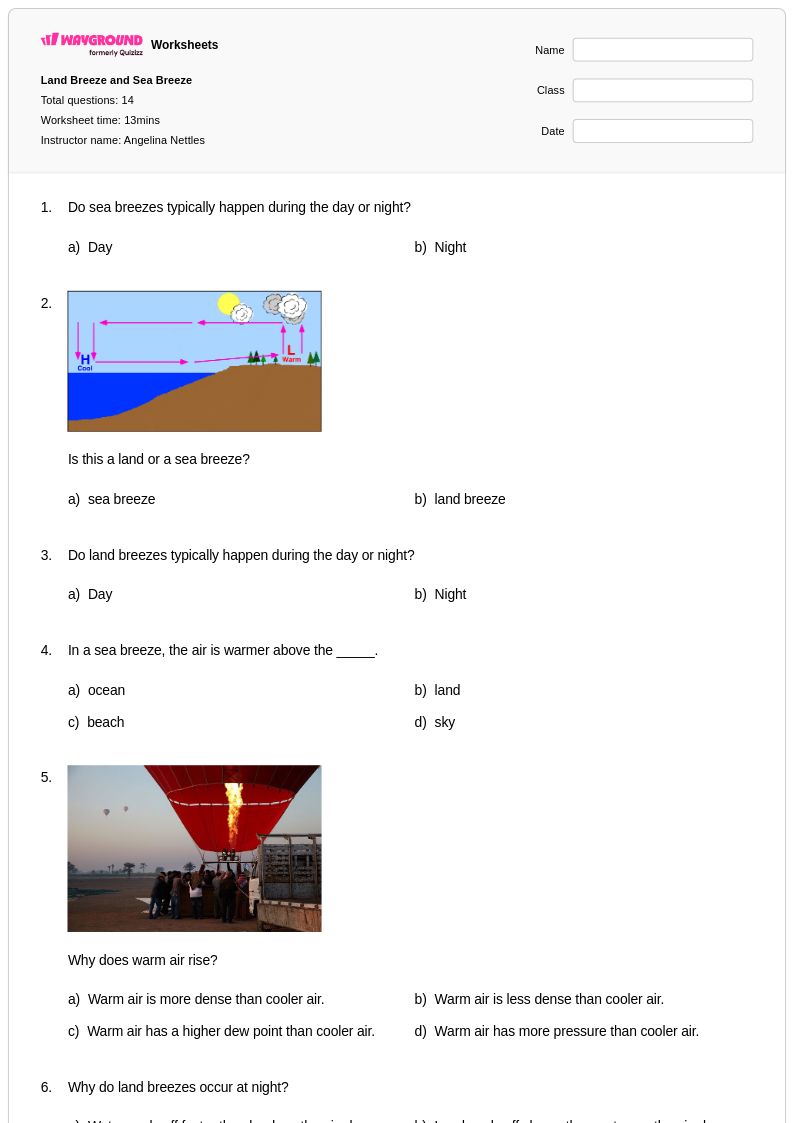
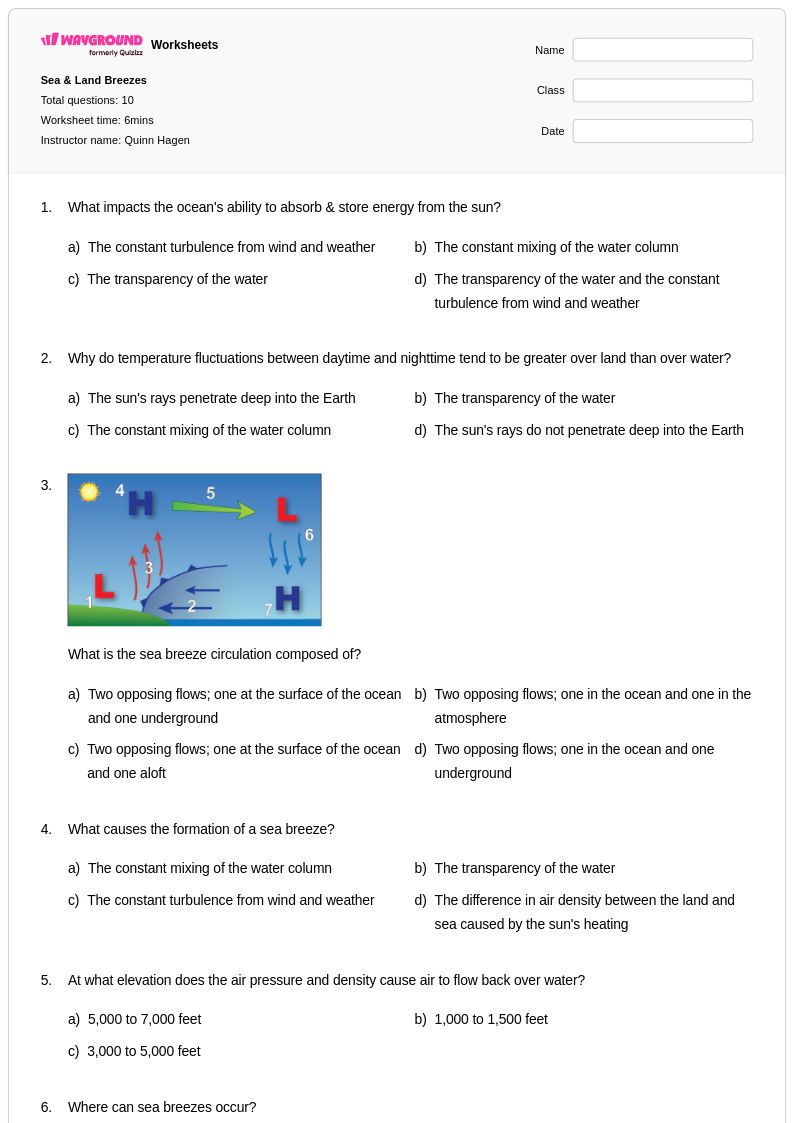
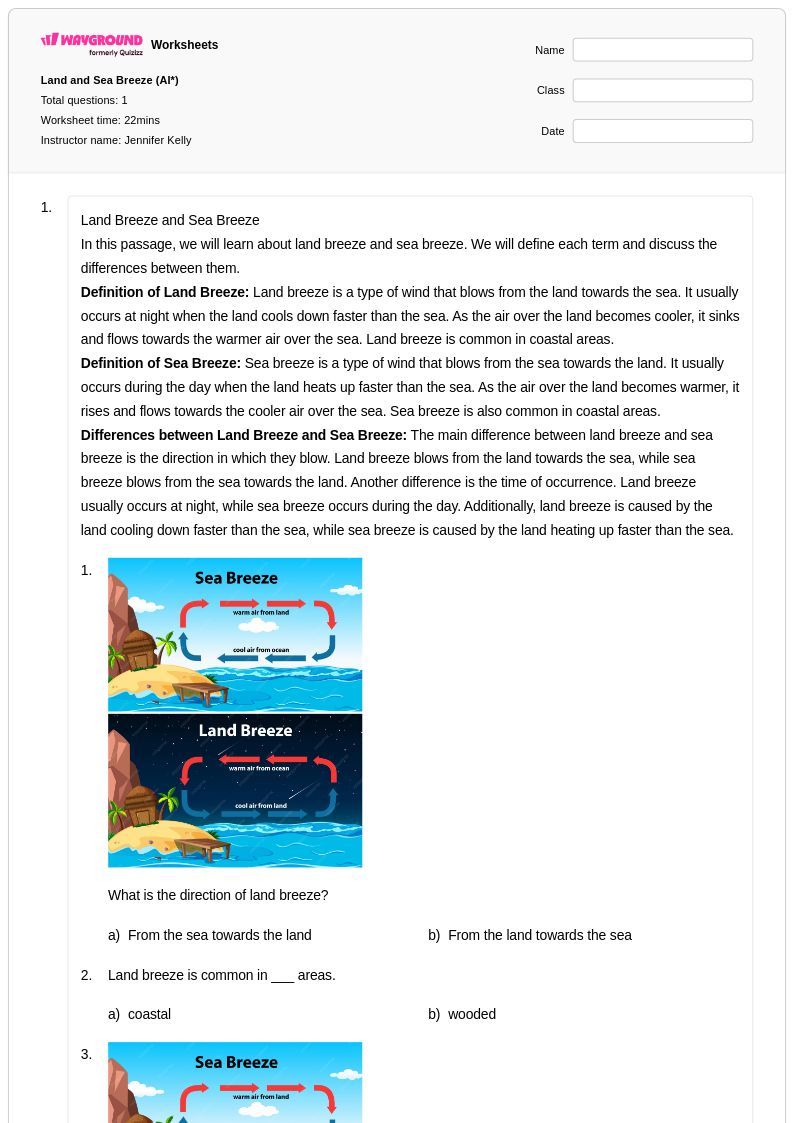
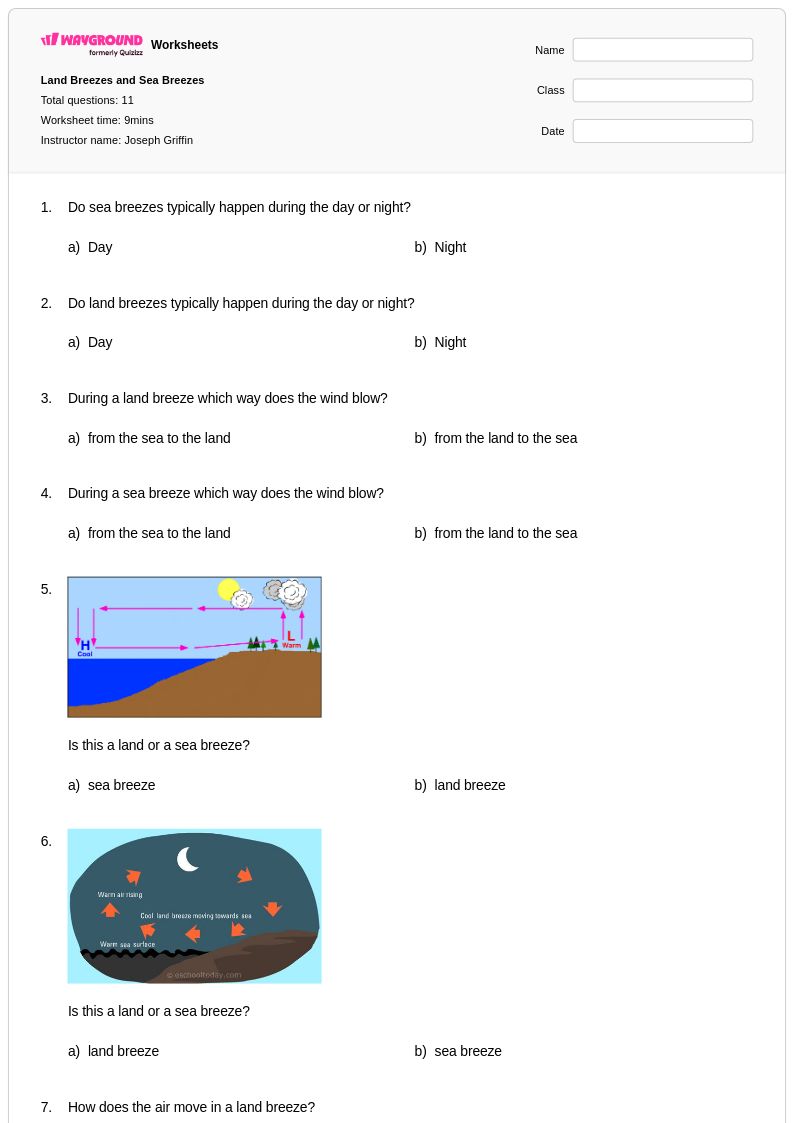
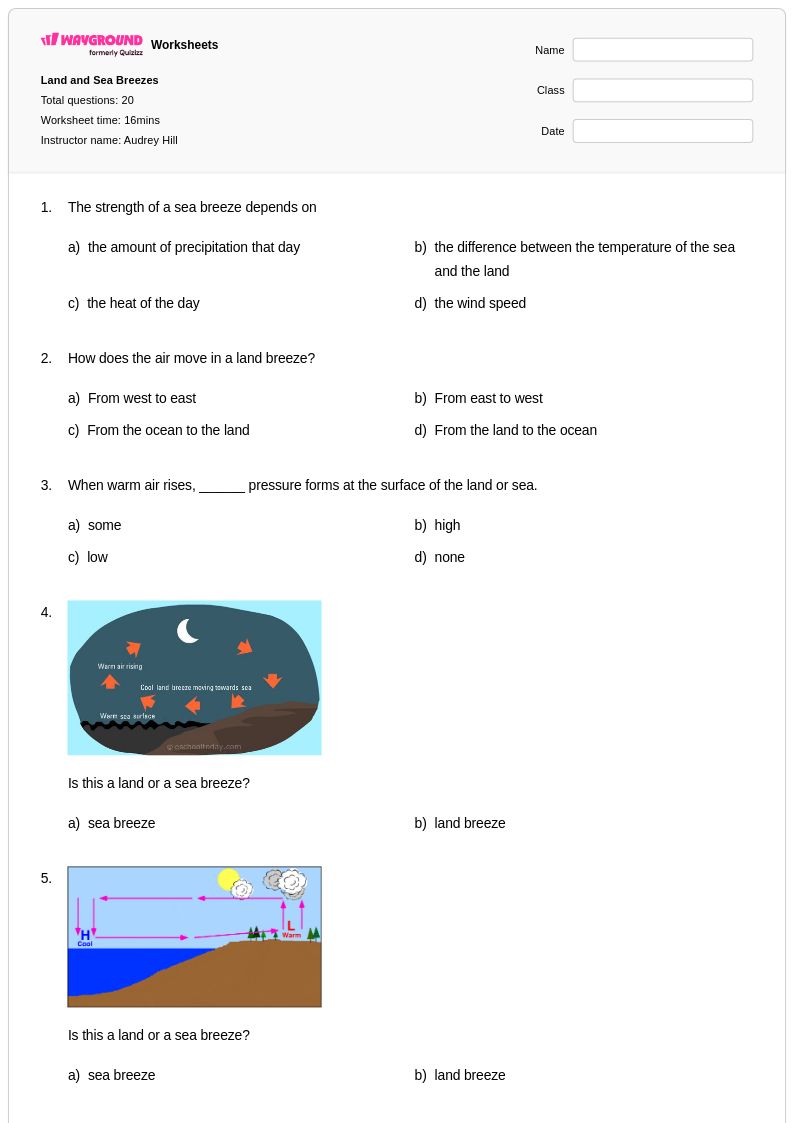
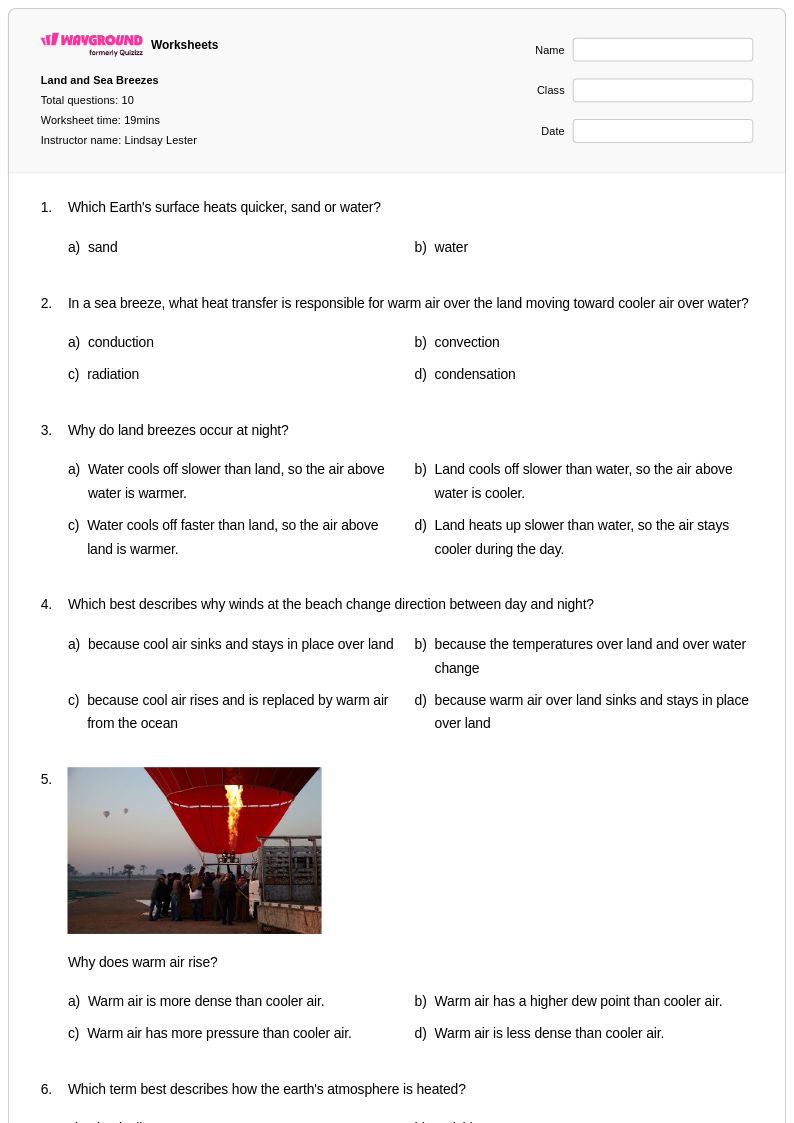
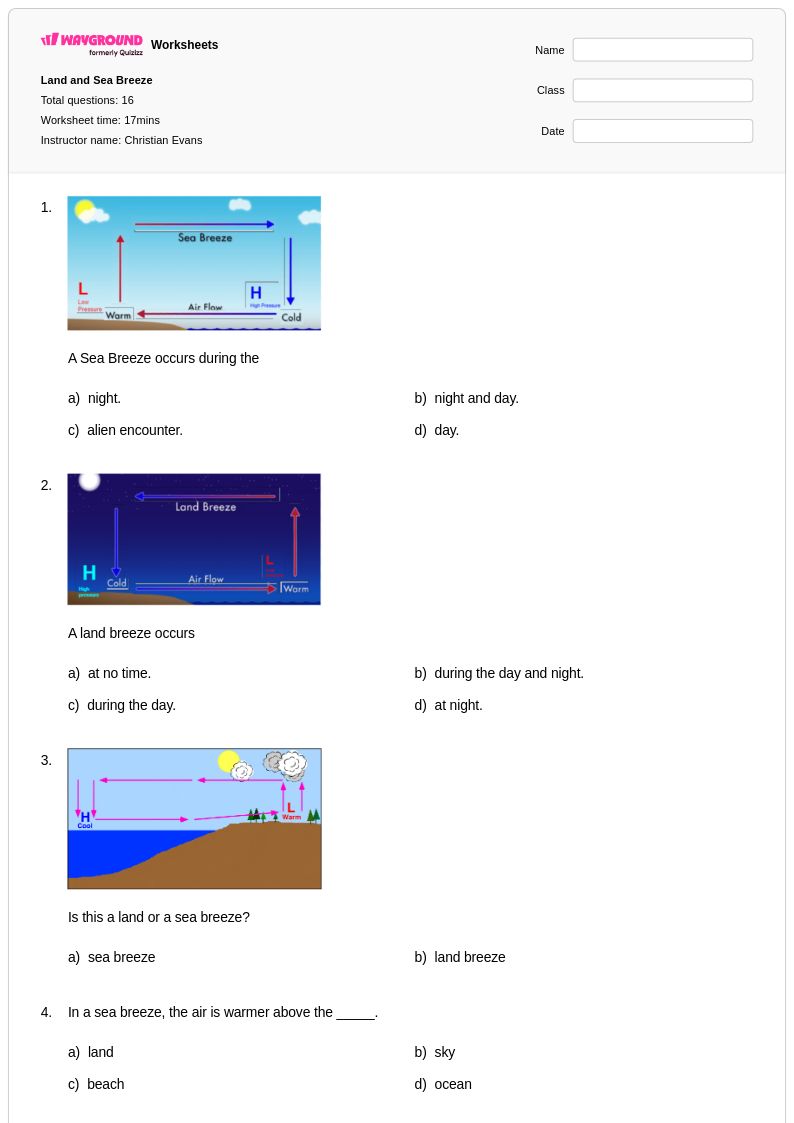
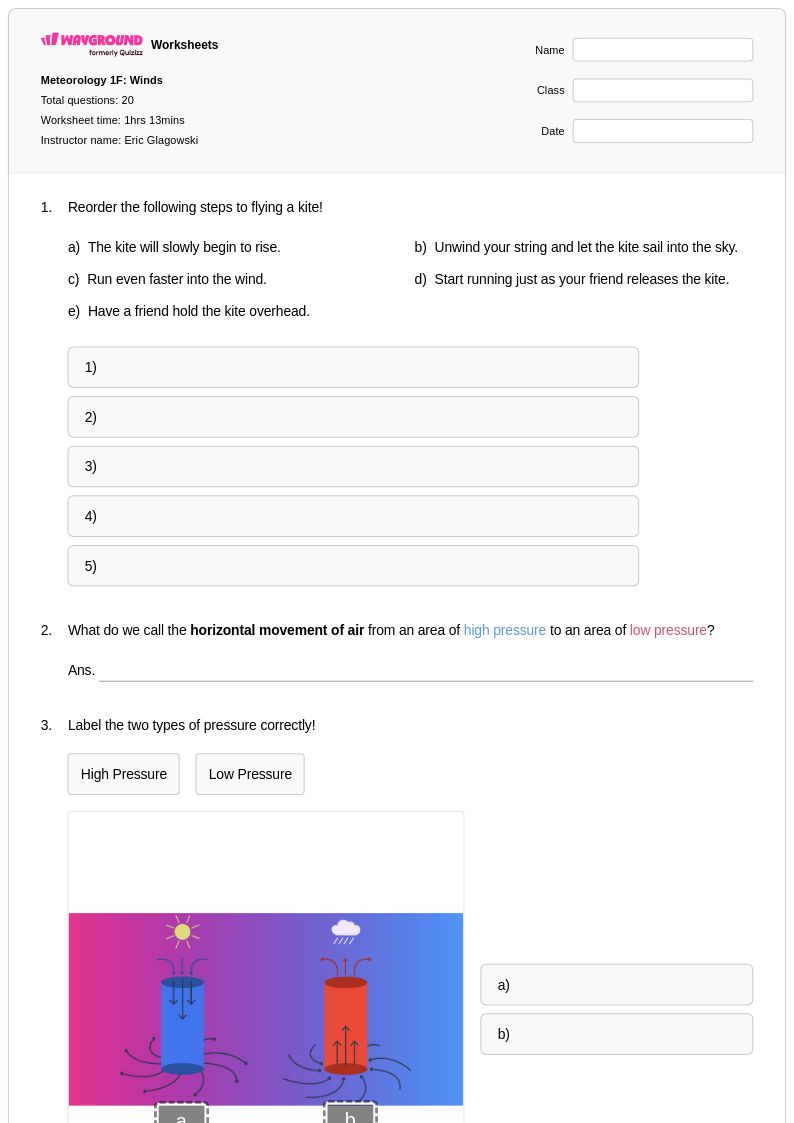
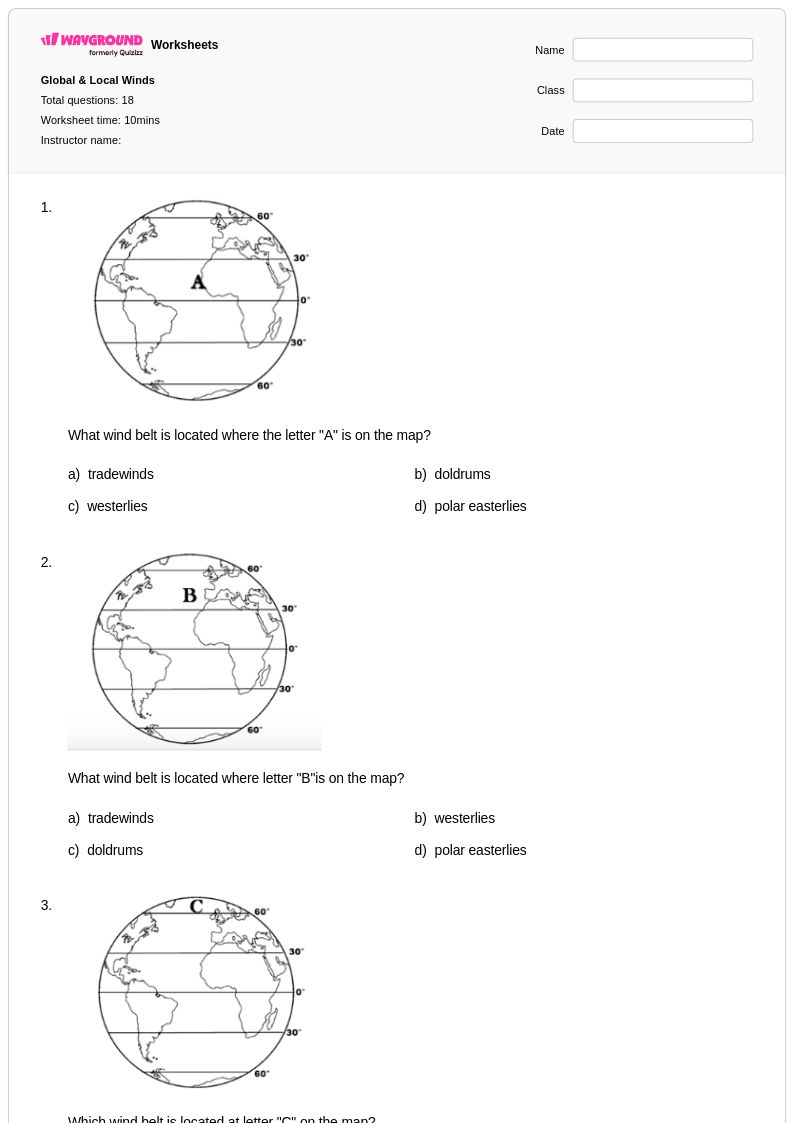
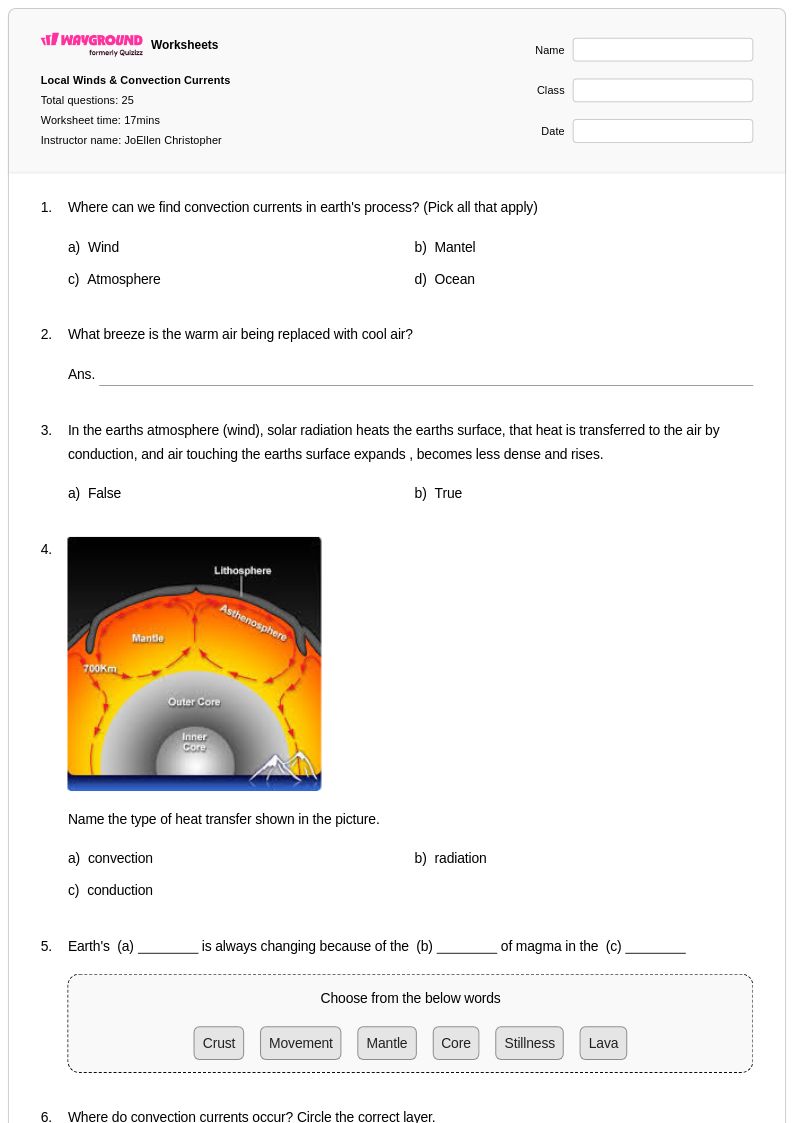
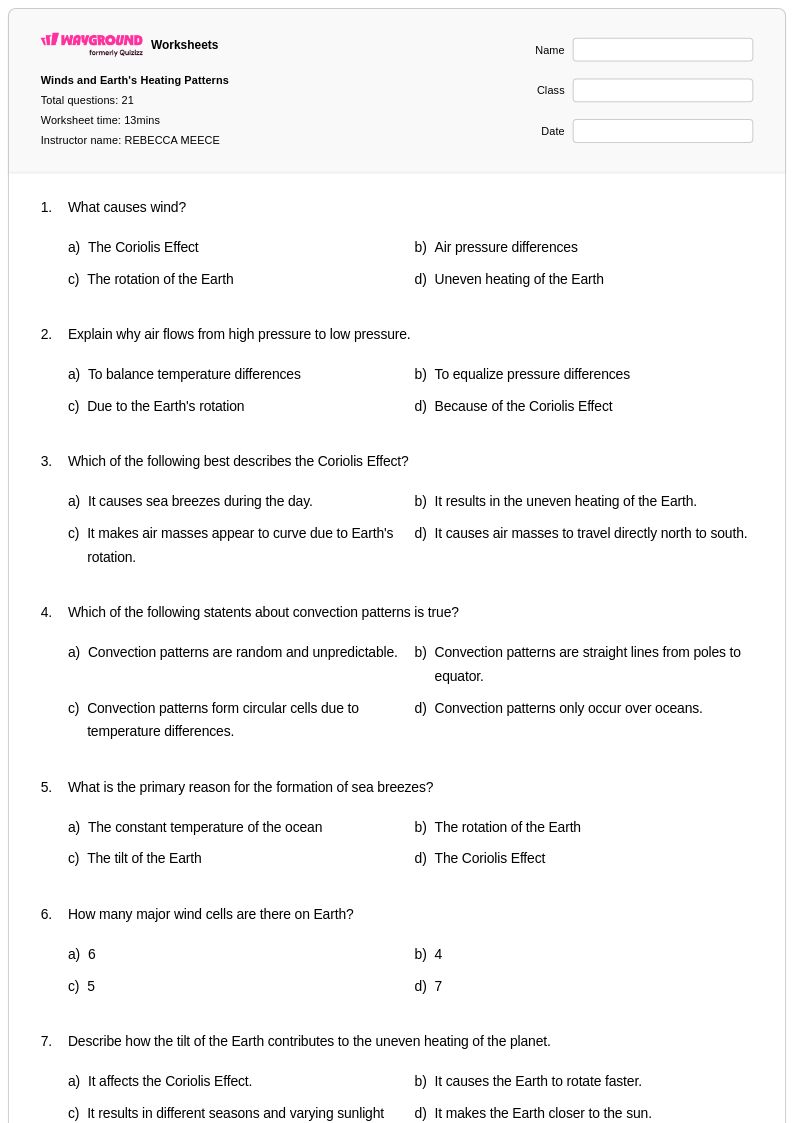
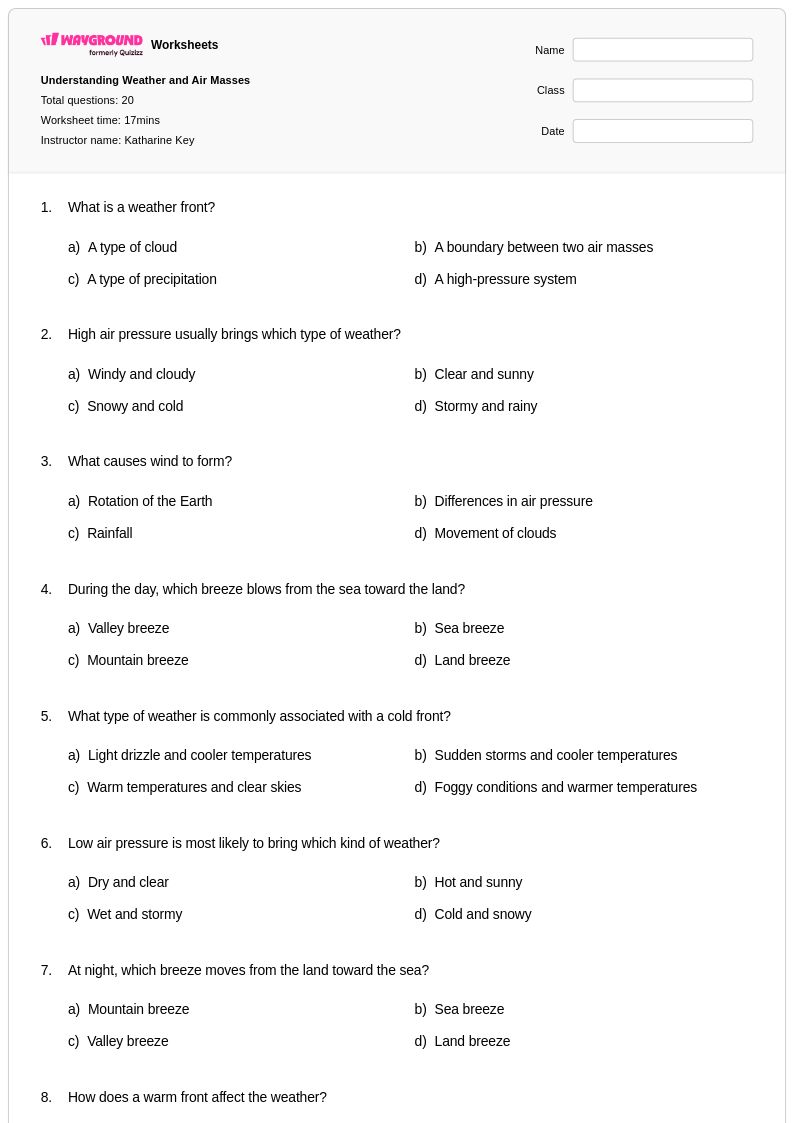
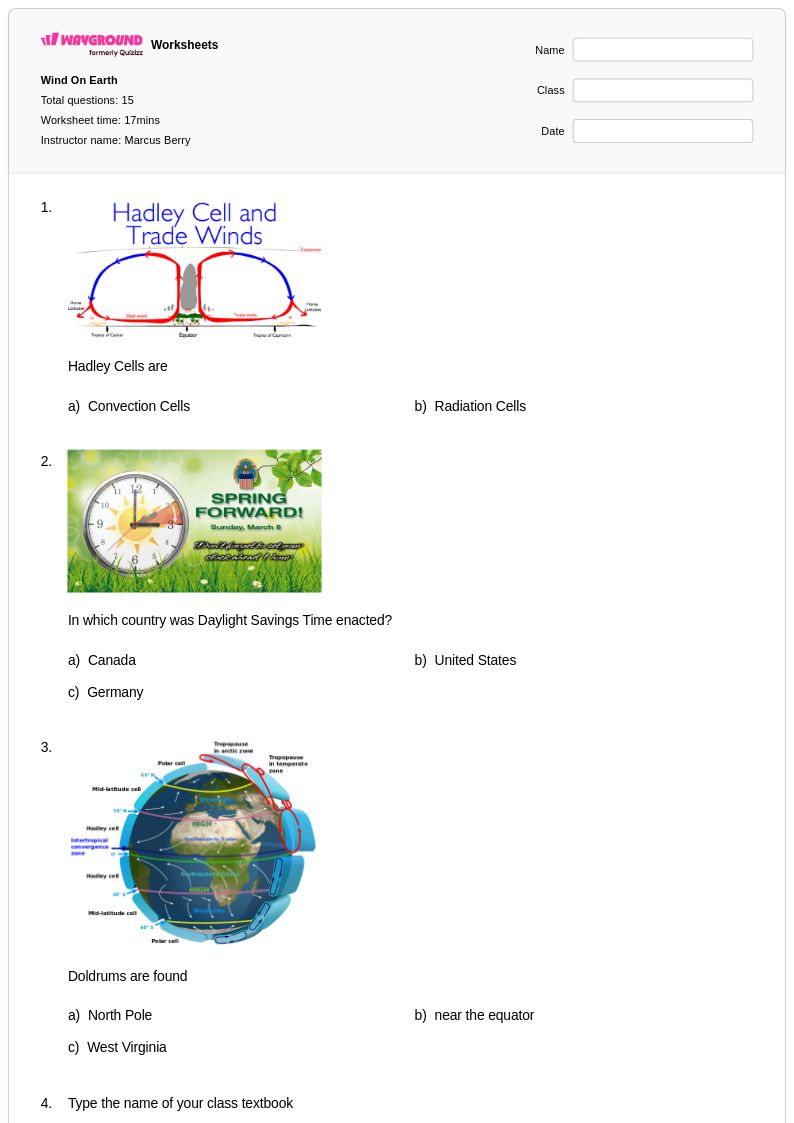
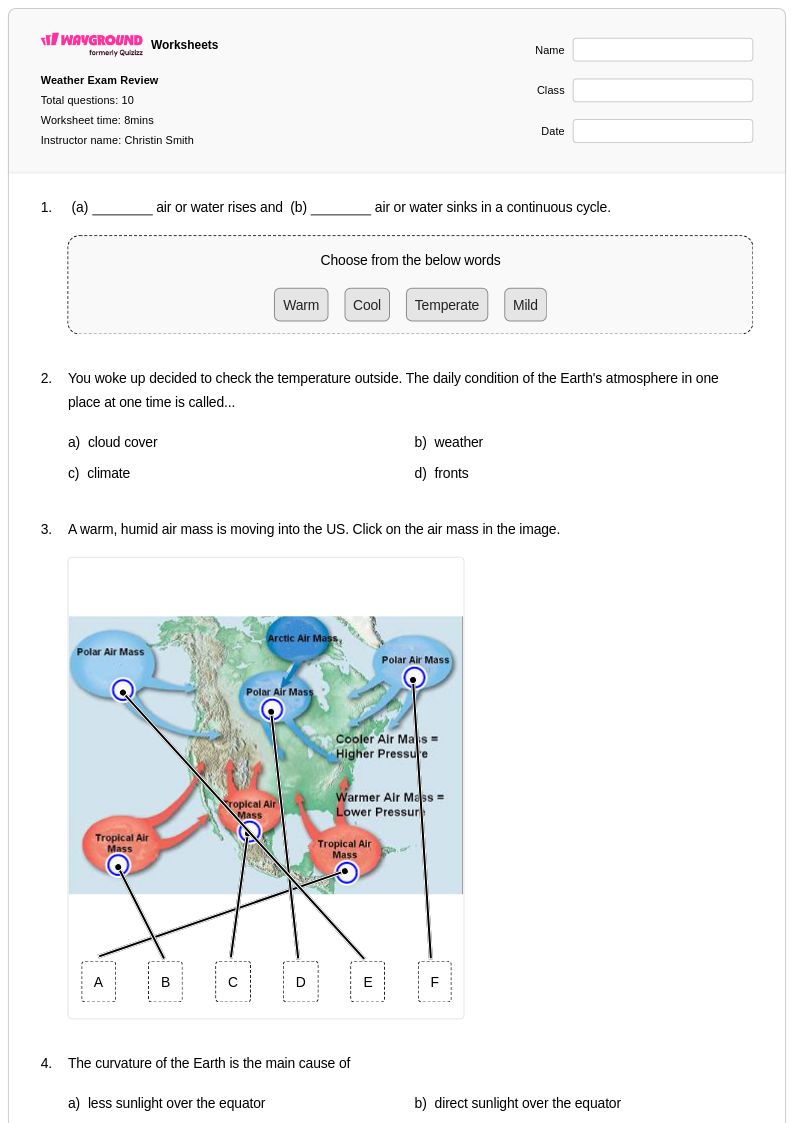
Land breeze and sea breeze worksheets available through Wayground (formerly Quizizz) provide students with comprehensive practice opportunities to master these fundamental atmospheric circulation patterns. These educational resources strengthen critical thinking skills by guiding learners through the complex interactions between temperature differentials, air pressure systems, and coastal wind patterns that create these daily weather phenomena. Students engage with practice problems that explore how land and water surfaces heat and cool at different rates, creating the pressure gradients that drive onshore and offshore wind movements. The worksheets include detailed answer keys that help students verify their understanding of concepts such as convection currents, diurnal temperature cycles, and the relationship between surface heating and air density changes. Available as free printables in pdf format, these resources support both independent study and classroom instruction while building essential earth science literacy.
Wayground (formerly Quizizz) supports educators with an extensive collection of teacher-created land breeze and sea breeze worksheets drawn from millions of available resources across the platform. The robust search and filtering system enables teachers to quickly locate materials that align with specific learning standards and match their students' academic needs. These differentiation tools allow instructors to customize content for various skill levels, ensuring that both struggling learners and advanced students receive appropriate challenges when exploring atmospheric science concepts. The flexible format options include both printable and digital versions, giving teachers the versatility to adapt materials for in-class activities, homework assignments, or remote learning environments. This comprehensive worksheet collection streamlines lesson planning while providing targeted resources for remediation, enrichment, and systematic skill practice in earth and space science education.
FAQs
How do I teach land breeze and sea breeze to students?
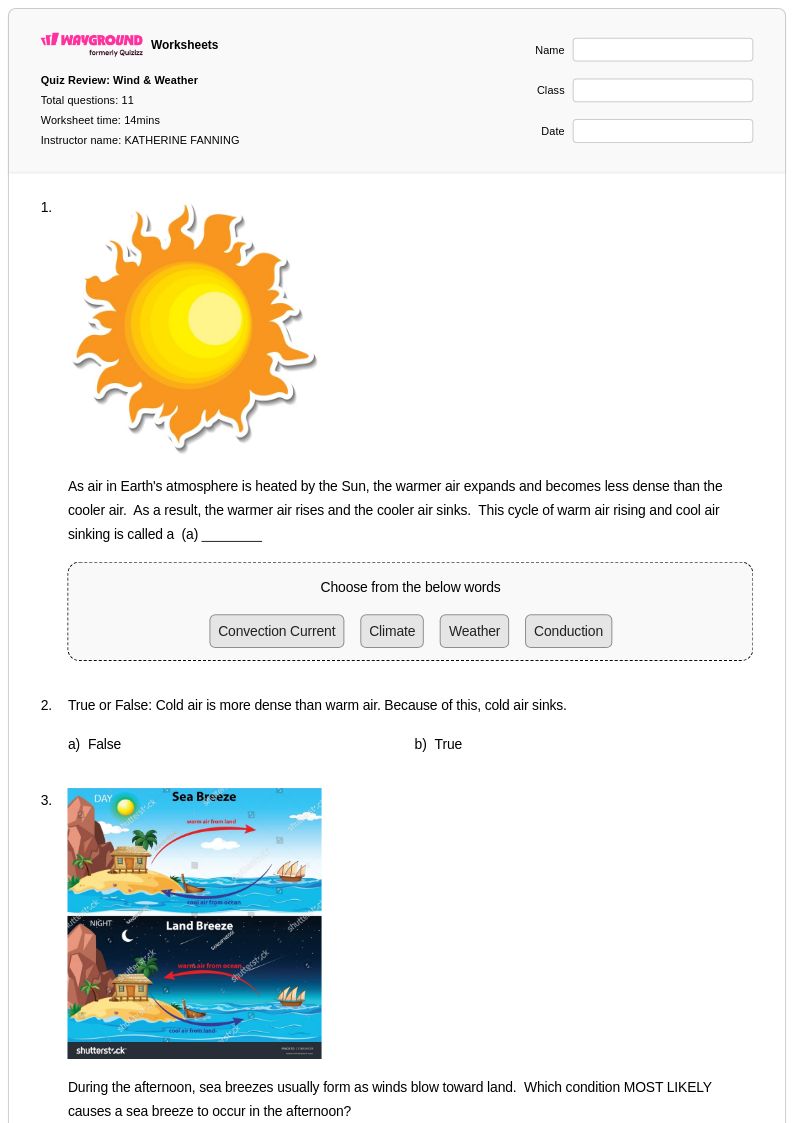
Start by helping students understand that land and water heat and cool at different rates, which is the root cause of both phenomena. During the day, land heats faster than water, causing air over land to rise and cooler ocean air to rush in as a sea breeze. At night, land cools faster, reversing the pressure gradient so air flows from land toward the sea. Using diagrams that show convection currents, air pressure gradients, and wind direction arrows is especially effective for making these invisible processes visible.
What practice problems help students understand land and sea breezes?
Effective practice problems ask students to identify wind direction given temperature and pressure conditions, label convection current diagrams, and explain why breezes reverse between day and night. Problems that require students to connect surface heating to air density changes and then to pressure gradients build the deepest conceptual understanding. Sequencing exercises — where students arrange steps from solar heating to wind movement — are particularly useful for reinforcing the cause-and-effect logic of coastal circulation.
What misconceptions do students commonly have about land and sea breezes?
A common misconception is that wind simply 'moves toward heat,' without understanding the underlying pressure gradient mechanism. Students often confuse which direction the breeze flows during the day versus the night, especially when introduced to both phenomena at once. Another frequent error is conflating sea breeze with ocean currents, treating the two as the same process. Explicitly addressing why air pressure drops over heated surfaces — and how that low pressure draws in surrounding air — helps correct these misunderstandings.
How do land and sea breezes connect to broader atmospheric science concepts?
Land and sea breezes are local-scale examples of the same convection-driven circulation that powers global wind patterns and weather systems. Understanding diurnal temperature cycles, air density changes caused by heating, and the relationship between pressure gradients and wind direction all apply directly to larger topics like monsoons, trade winds, and frontal systems. Teaching land and sea breezes early in an earth science unit gives students a concrete, observable model they can later scale up when studying regional and global atmospheric circulation.
How can I use land breeze and sea breeze worksheets in my classroom?
Land breeze and sea breeze worksheets on Wayground are available as printable PDFs for traditional classroom use and in digital formats for technology-integrated or remote learning environments, and can also be hosted as an interactive quiz directly on Wayground. Printable versions work well for guided note-taking, lab follow-ups, or homework assignments, while digital versions allow for immediate feedback. Both formats include detailed answer keys so students can self-check their understanding of convection currents, pressure gradients, and wind direction patterns.
How do I support struggling learners when teaching land and sea breezes?
Breaking the concept into discrete steps — heating, density change, pressure gradient, wind movement — and having students work through each step separately before combining them reduces cognitive overload. On Wayground, teachers can apply individual accommodations such as Read Aloud for students who need audio support, reduced answer choices to lower the difficulty of multiple-choice questions, and extended time for students who need more processing time. These settings can be assigned to specific students without alerting the rest of the class, keeping instruction seamless.