Explore Pangaea through Wayground's comprehensive collection of free worksheets and printables that help students understand continental drift, supercontinent formation, and Earth's geological history with engaging practice problems and detailed answer keys.
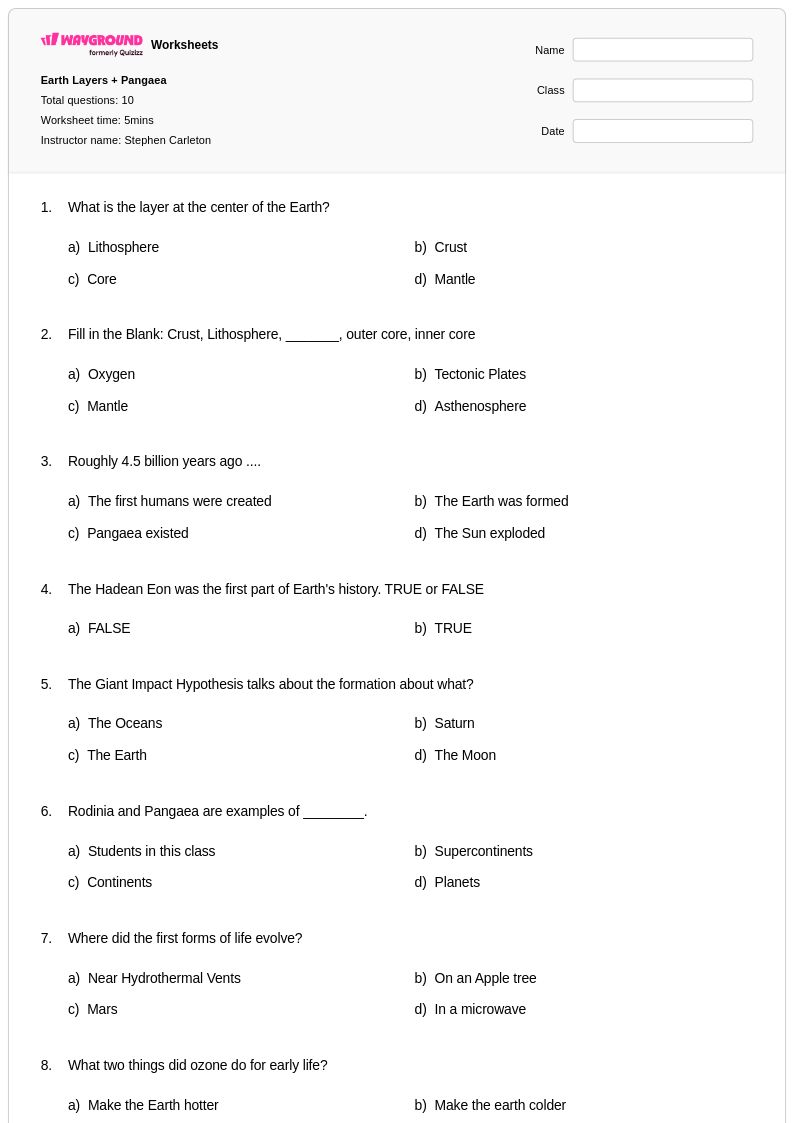
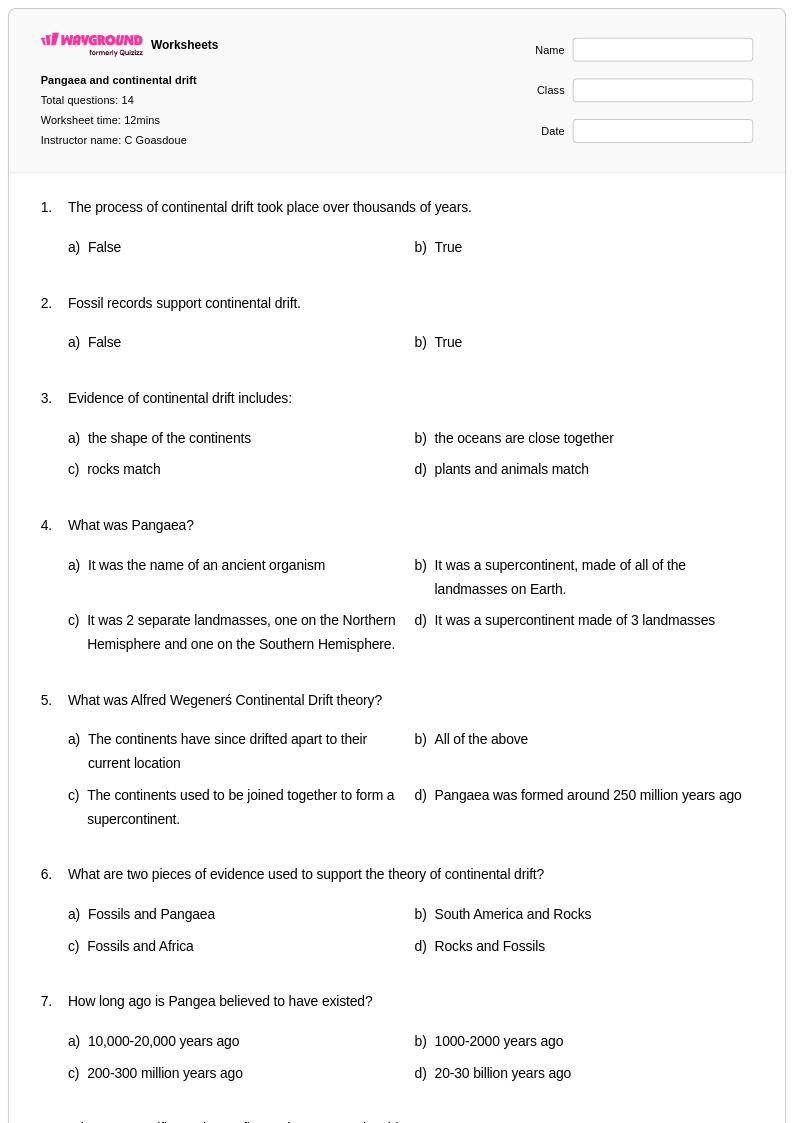
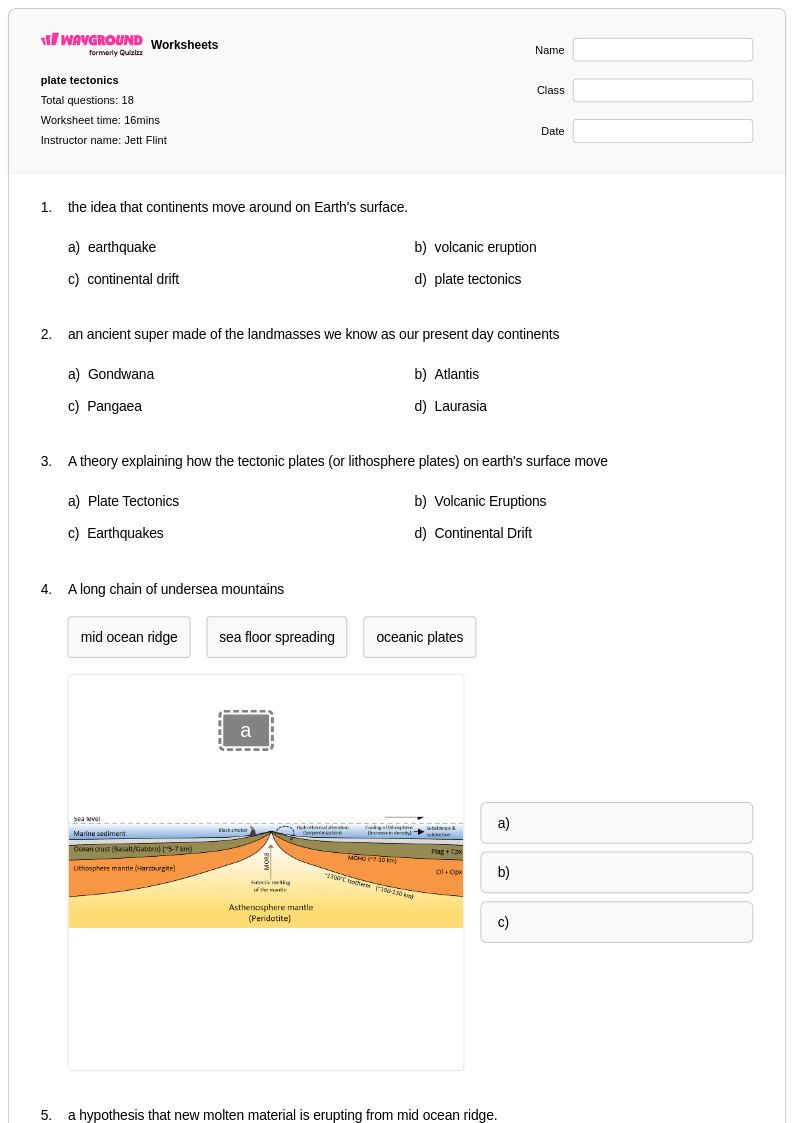
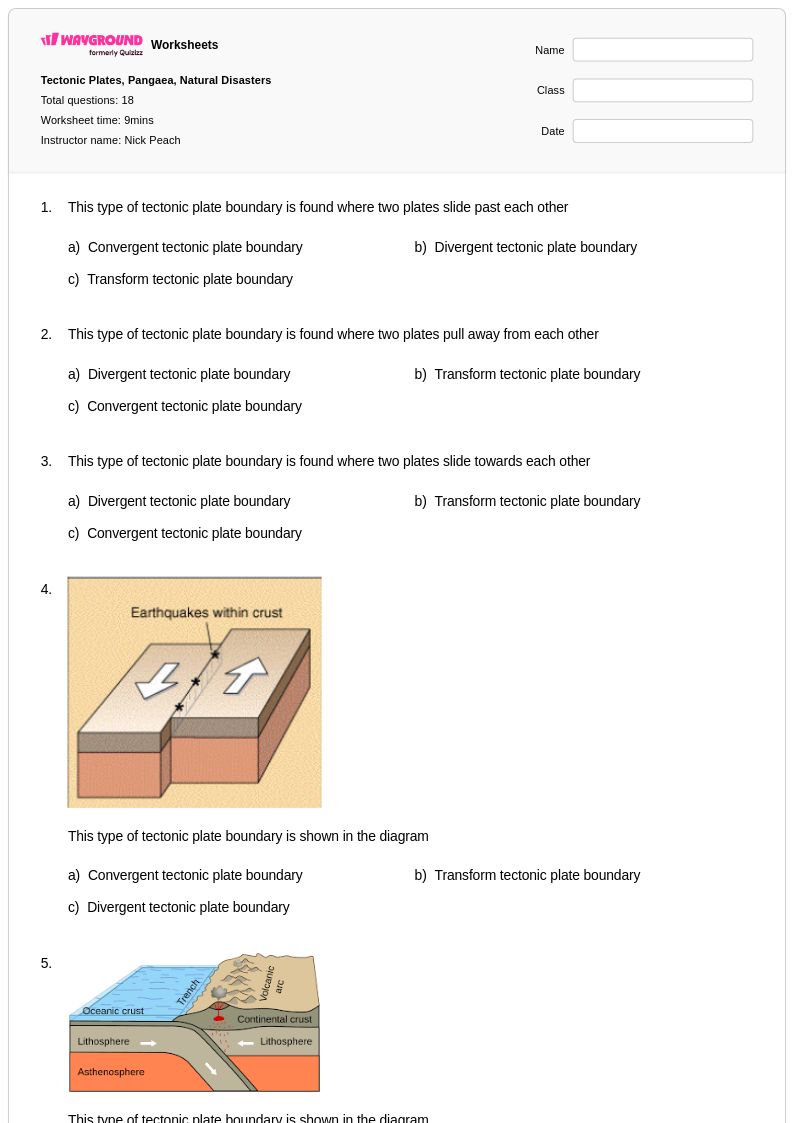
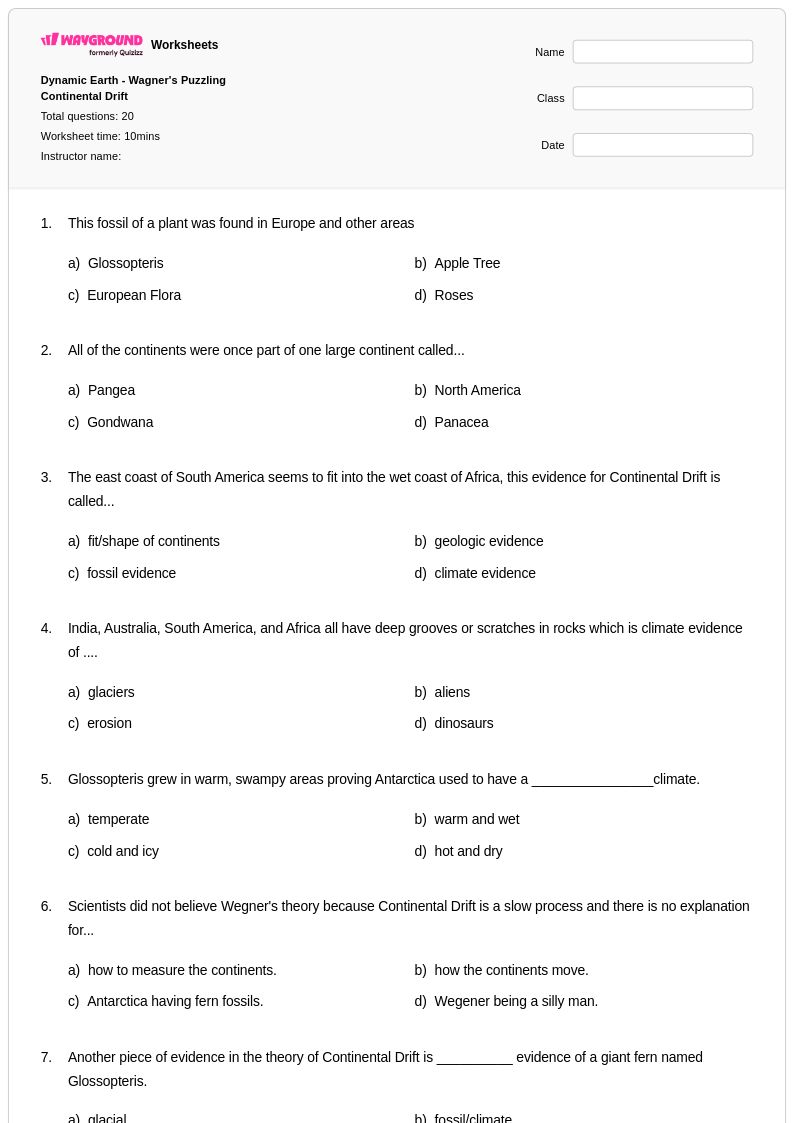
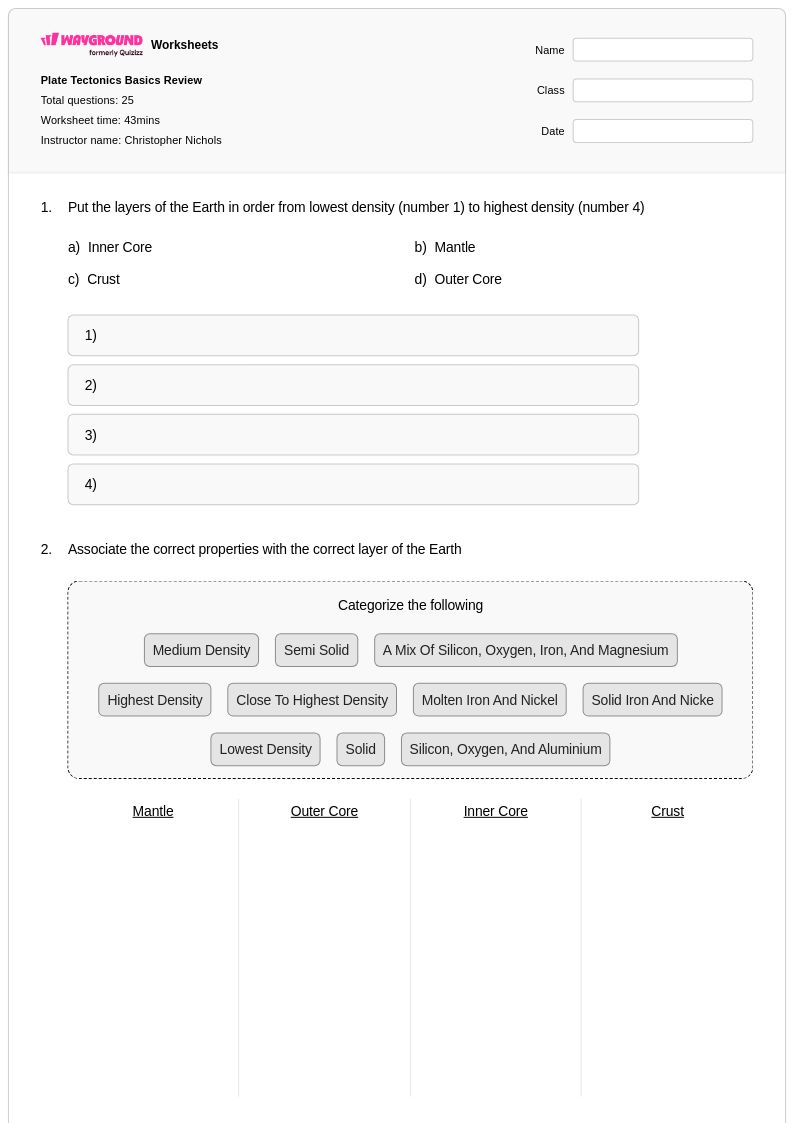
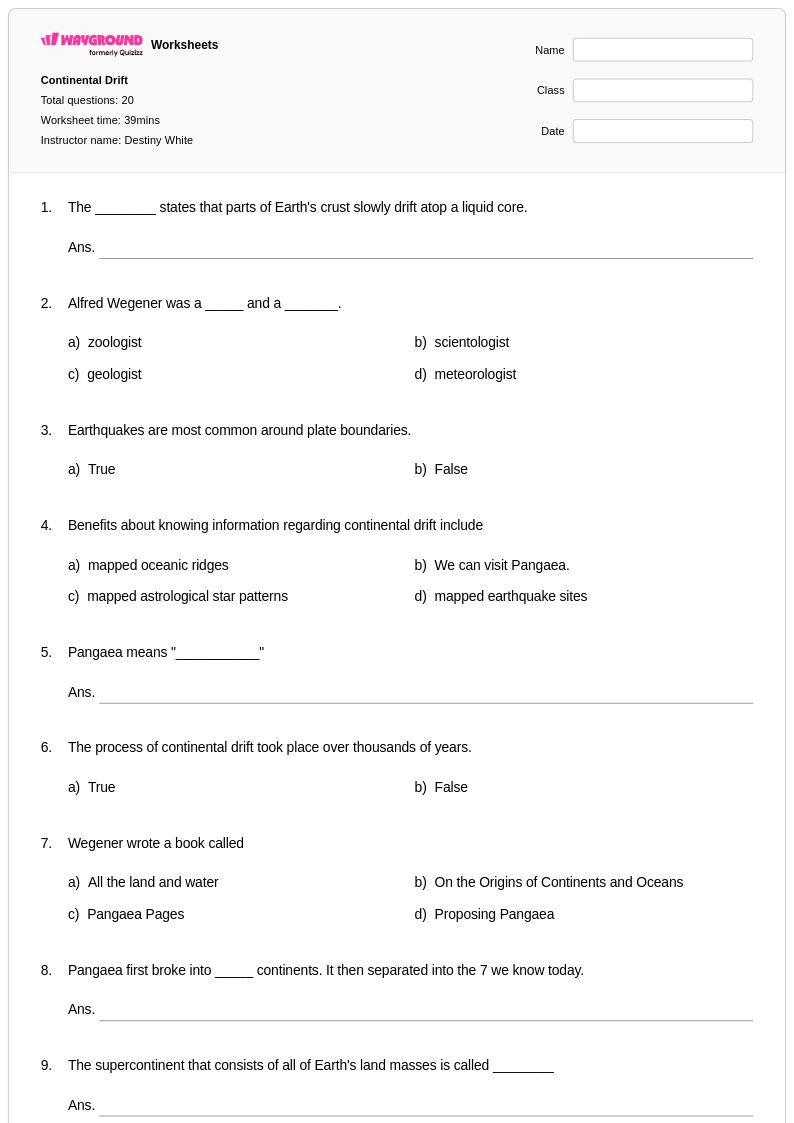
Pangaea worksheets available through Wayground (formerly Quizizz) provide students with comprehensive resources to explore the fascinating concept of the supercontinent that existed approximately 335 million years ago. These educational materials strengthen critical thinking skills in Earth science by guiding learners through the evidence supporting continental drift theory, including fossil distributions, rock formations, and glacial deposits that span across modern ocean basins. The practice problems within these worksheets challenge students to analyze paleomagnetic data, interpret geological timelines, and understand the mechanisms behind plate tectonics that led to Pangaea's formation and eventual breakup. Each worksheet includes detailed answer keys that help educators assess student comprehension while providing free printables that make complex geological concepts accessible through visual representations of ancient landmasses and their gradual separation over geological time.
Wayground (formerly Quizizz) empowers teachers with an extensive collection of millions of teacher-created Pangaea resources that streamline lesson planning and enhance classroom instruction. The platform's robust search and filtering capabilities allow educators to quickly locate materials aligned with specific learning standards, whether focusing on basic continental drift concepts or advanced plate boundary interactions. Teachers can easily differentiate instruction by selecting from various difficulty levels and customizing worksheets to meet diverse student needs, supporting both remediation for struggling learners and enrichment opportunities for advanced students. The flexibility of accessing these resources in both printable pdf format and interactive digital versions enables seamless integration into any classroom environment, helping educators provide targeted skill practice that reinforces understanding of this fundamental Earth science concept across multiple learning modalities.
FAQs
How do I teach Pangaea to middle school students?
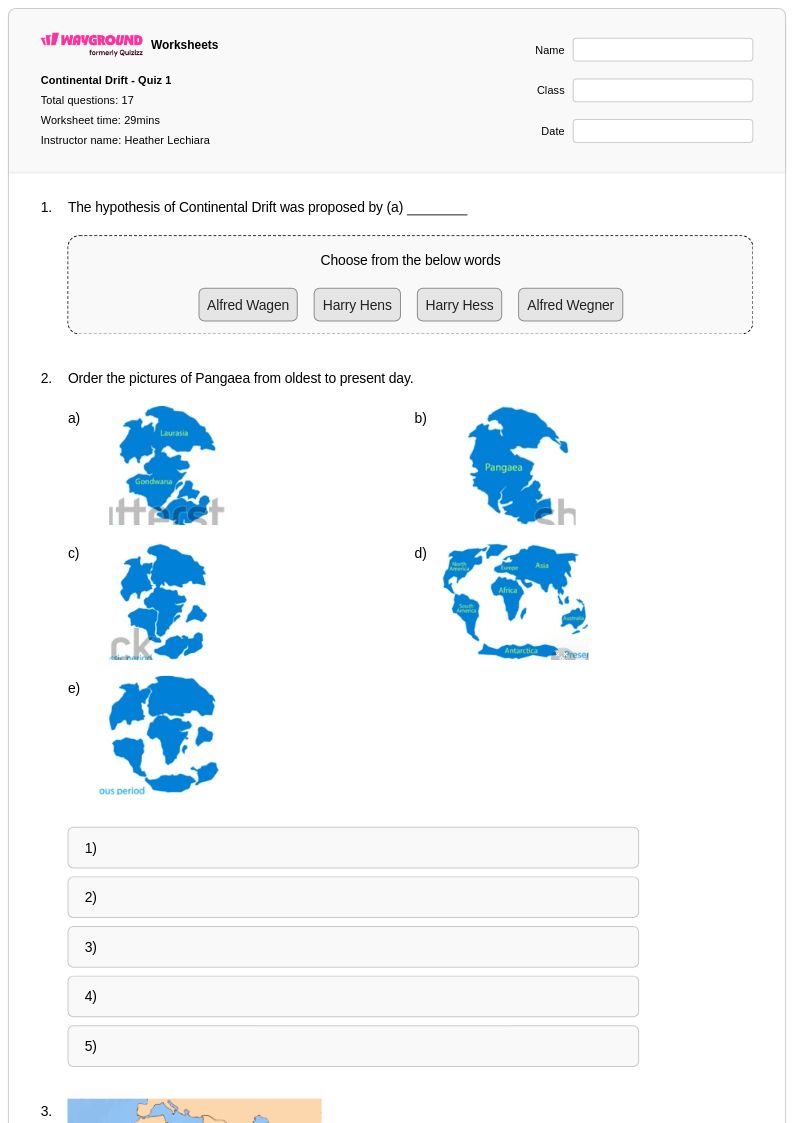
Start by anchoring the lesson in physical evidence students can reason through: matching coastlines, identical fossil species found on separate continents, and shared rock formations across modern ocean basins. Use maps showing the gradual breakup of Pangaea over 335 million years to build a visual timeline of continental drift. Connecting plate tectonics mechanisms to Pangaea's formation and separation helps students move from memorization to genuine geological reasoning.
What exercises help students practice understanding Pangaea and continental drift?
Effective practice exercises include puzzle-style activities where students match coastlines of modern continents to reconstruct Pangaea, as well as analysis tasks involving fossil distribution maps and glacial deposit records. Interpreting geological timelines and paleomagnetic data adds rigor for older or more advanced learners. These activities build the evidence-based reasoning skills central to Earth science by requiring students to synthesize multiple data types rather than recall isolated facts.
What common mistakes do students make when learning about Pangaea?
A frequent misconception is that continental drift is a rapid or observable process rather than one unfolding over hundreds of millions of years. Students also often confuse Pangaea with the broader theory of plate tectonics, treating them as synonymous rather than understanding Pangaea as one outcome of tectonic processes. Another common error is relying solely on coastline matching as proof of continental drift while overlooking the corroborating evidence from fossil distributions, rock formations, and glacial deposits.
How do I use Pangaea worksheets to assess student understanding?
Pangaea worksheets are well suited for formative assessment when students are asked to interpret evidence rather than simply identify facts. Tasks that require students to explain why fossil distributions or paleomagnetic data support continental drift reveal whether they understand the underlying reasoning, not just the conclusion. Using included answer keys allows teachers to quickly identify gaps in comprehension, particularly around the mechanisms of plate tectonics versus the historical timeline of Pangaea itself.
How do I use Wayground's Pangaea worksheets in my classroom?
Wayground's Pangaea worksheets are available as printable PDFs for traditional classroom use and in digital formats for technology-integrated environments, making them flexible across in-person, hybrid, and remote settings. Teachers can also host the worksheets as an interactive quiz directly on Wayground, which allows for real-time engagement and instant feedback. For students who need additional support, Wayground offers accommodations such as read aloud, extended time, and reduced answer choices, all configurable per individual student without disrupting the rest of the class.
How can I differentiate Pangaea instruction for students at different levels?
For foundational learners, focus on visual tasks like coastline matching and basic fossil location maps before introducing abstract mechanisms like mantle convection. Advanced students can engage with paleomagnetic data interpretation and geological timeline analysis to deepen their understanding of the evidence base for plate tectonics. On Wayground, teachers can select from materials across difficulty levels and apply individual accommodations such as reduced answer choices or read aloud for students who need additional scaffolding, without signaling any difference to the rest of the class.