
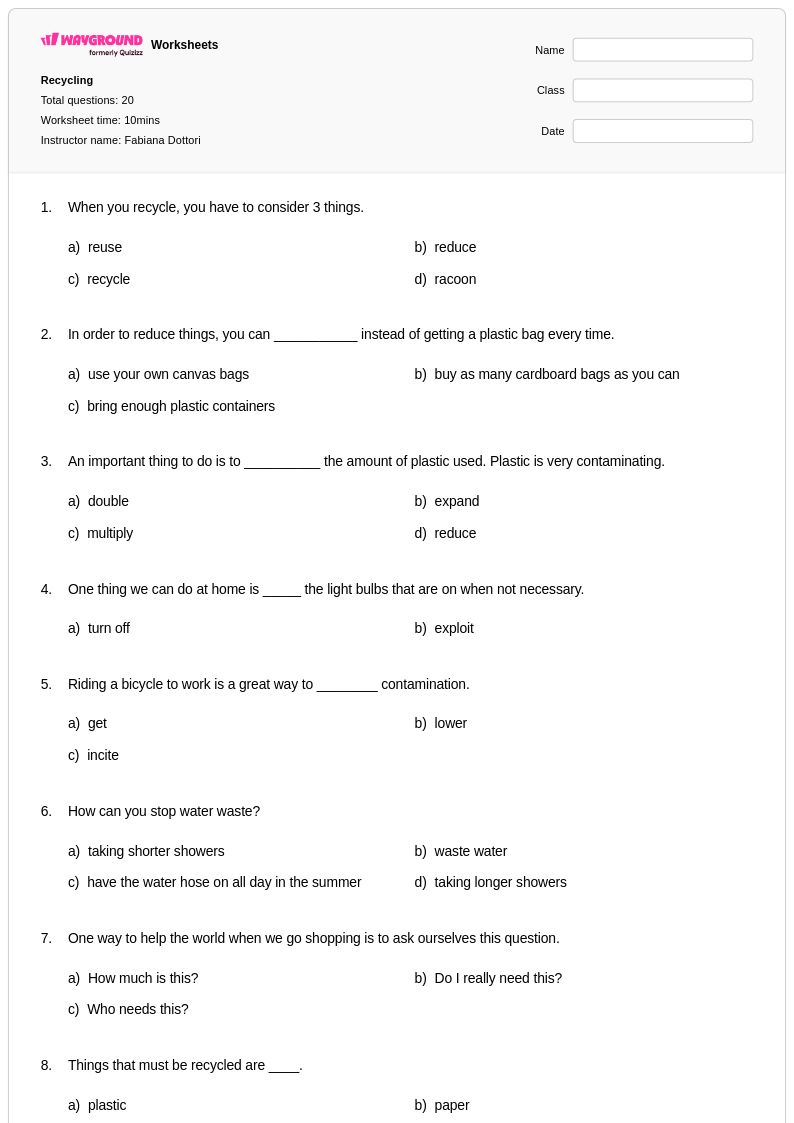
20 Q
7th
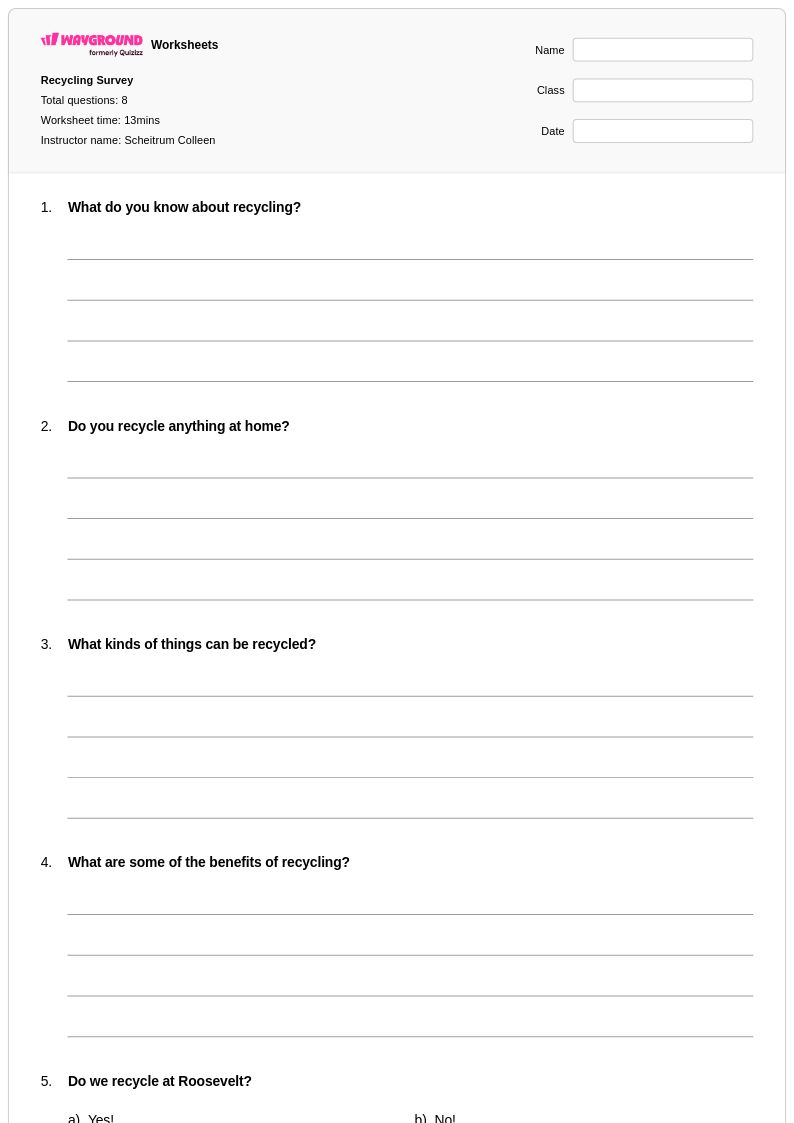
8 Q
11th
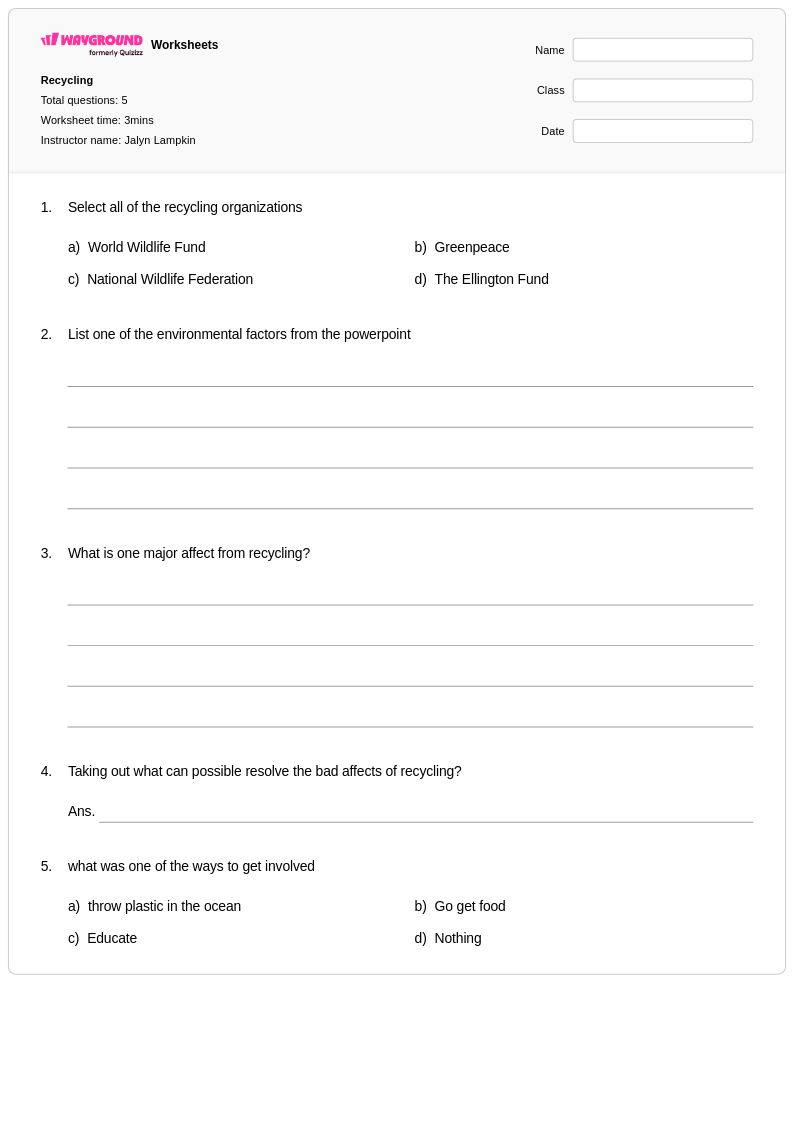
5 Q
4th
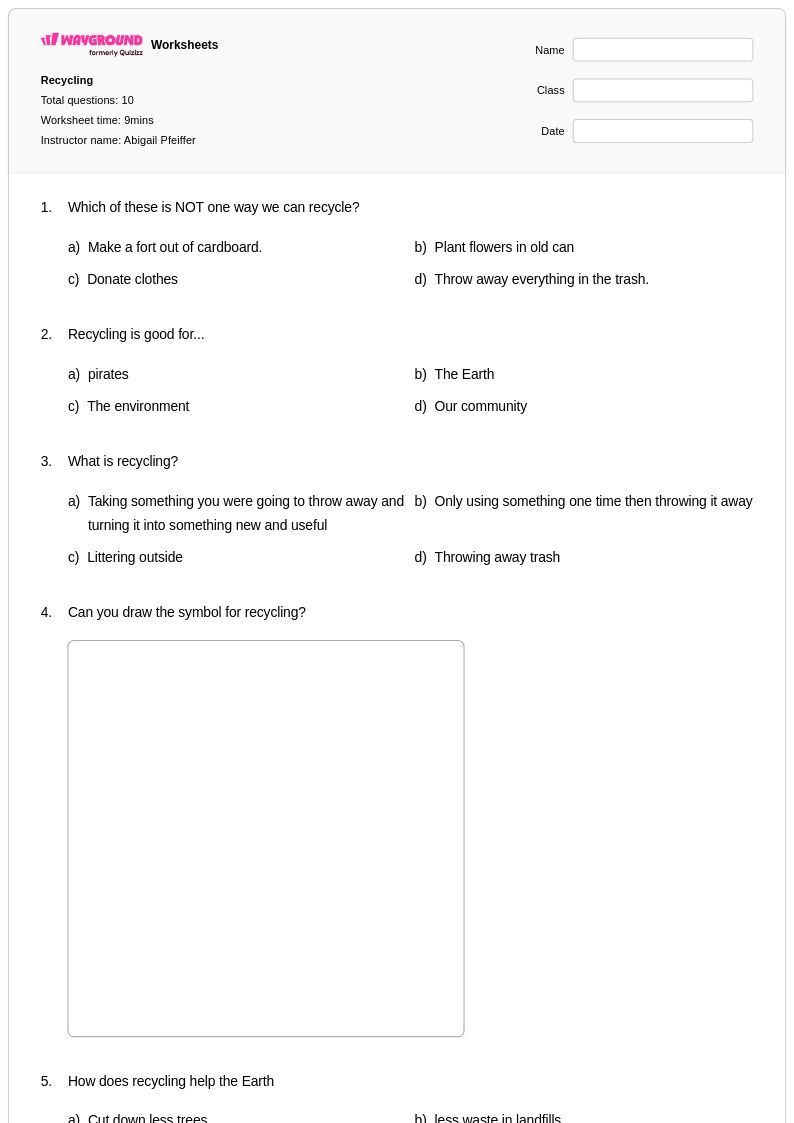
10 Q
1st - 2nd
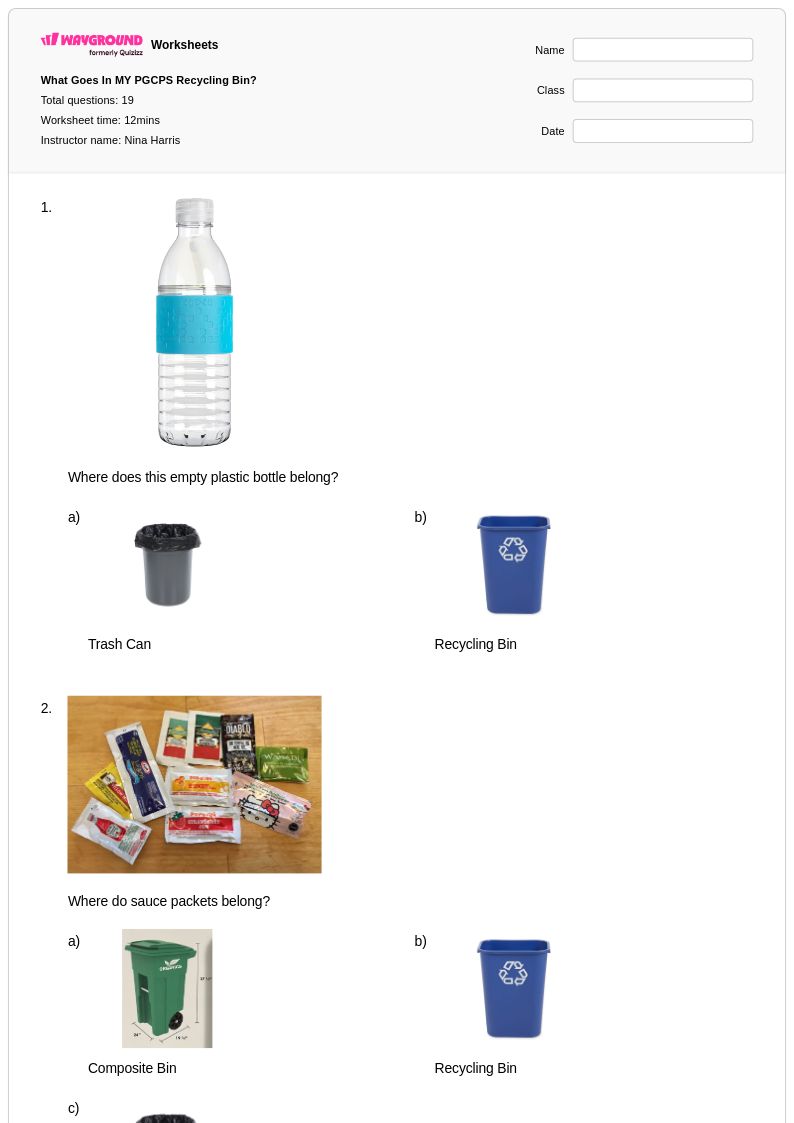
19 Q
4th
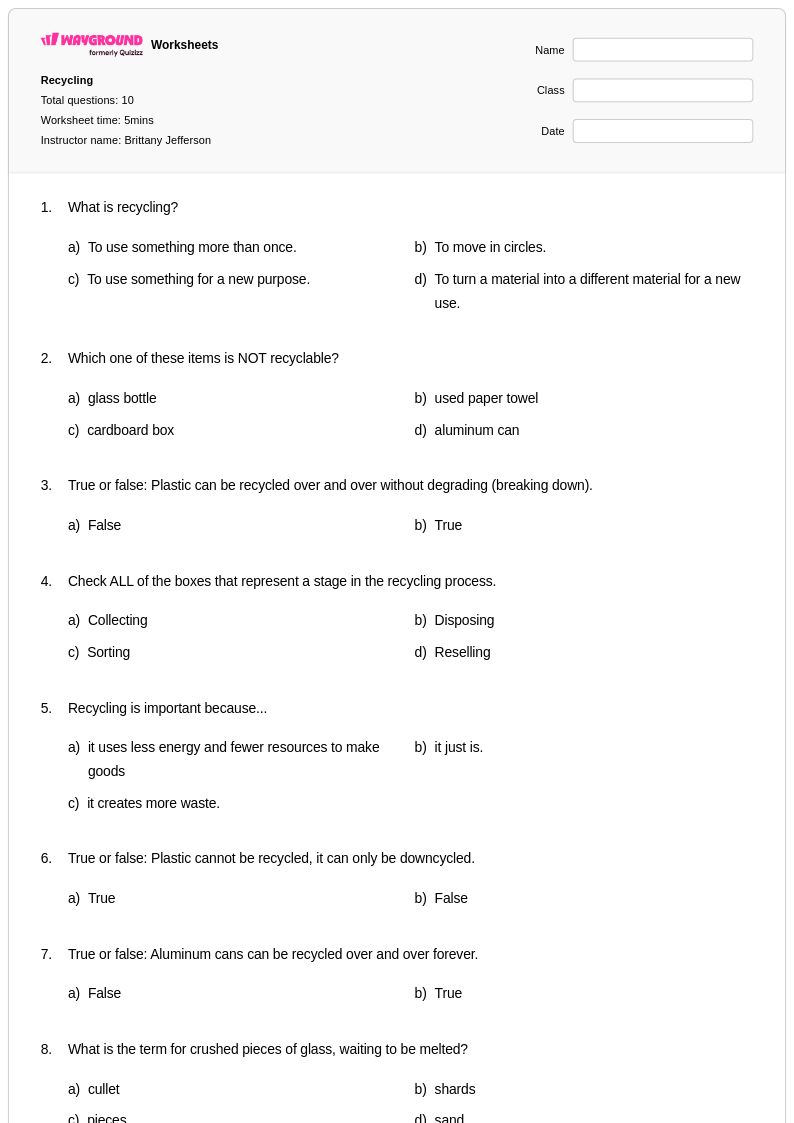
10 Q
5th
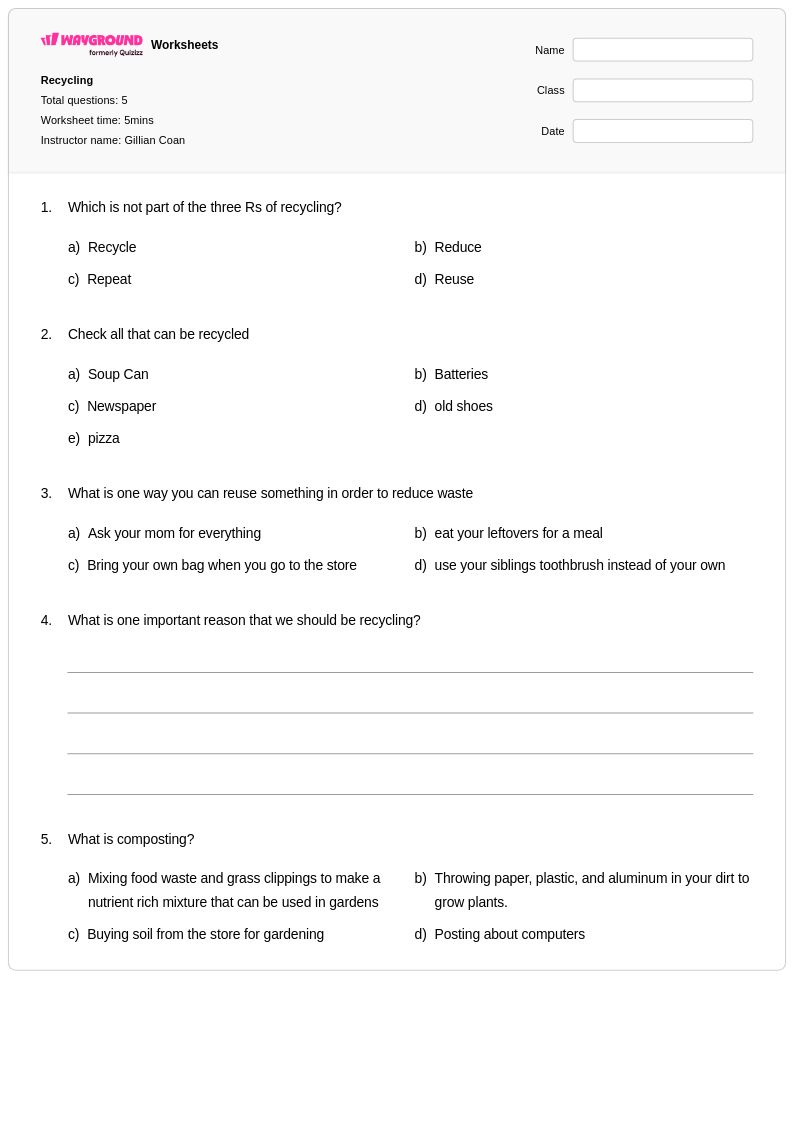
5 Q
1st
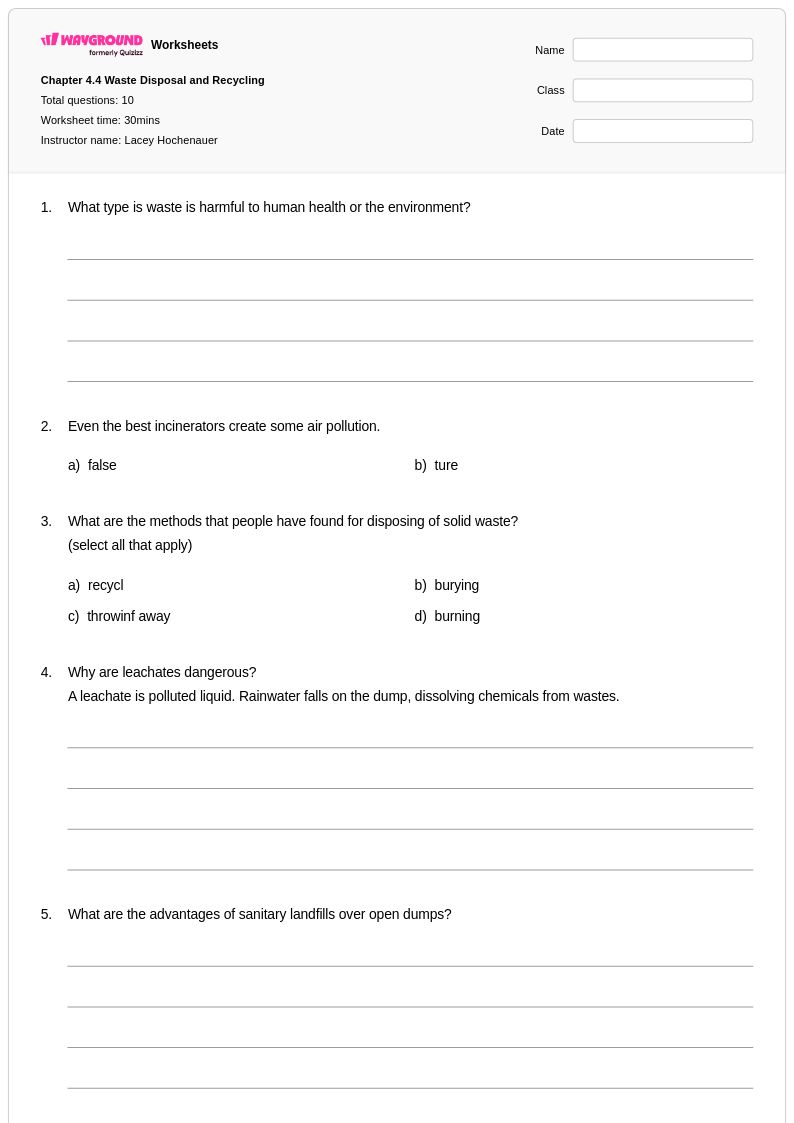
10 Q
6th - 8th
24 Q
6th
10 Q
Uni
15 Q
9th - 12th
23 Q
6th
15 Q
11th
12 Q
4th
20 Q
9th - 12th
10 Q
6th
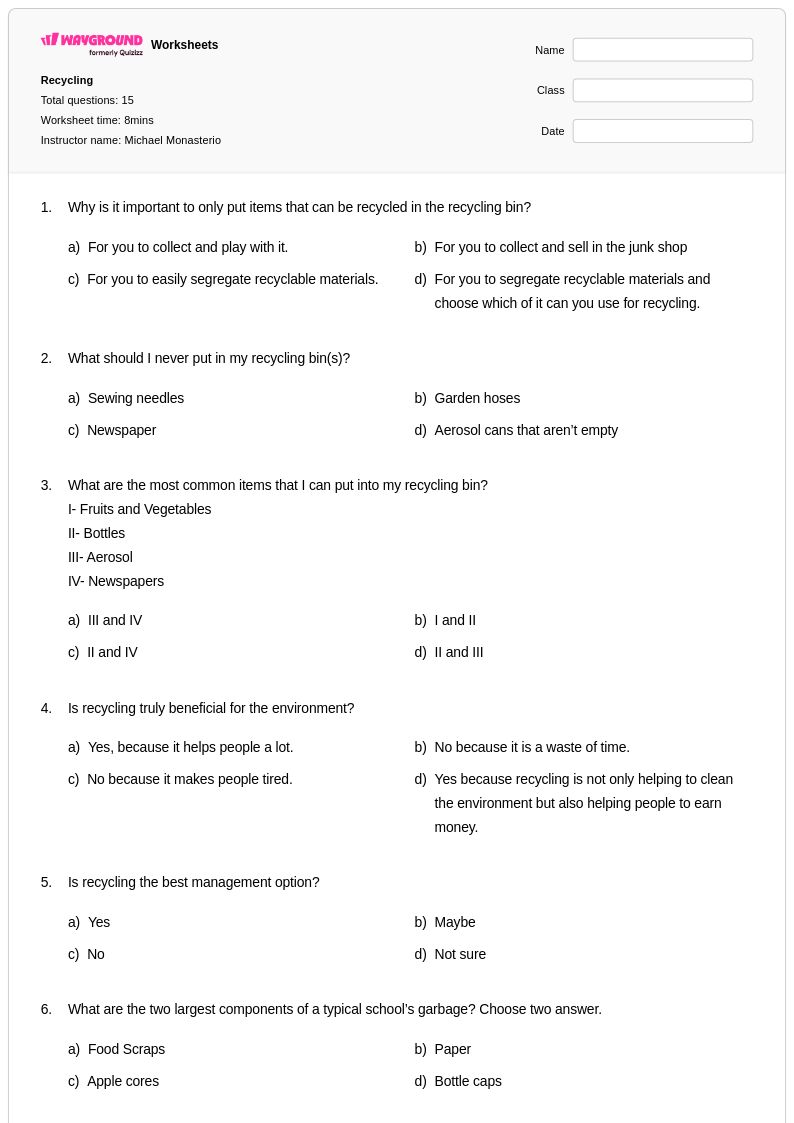
15 Q
5th
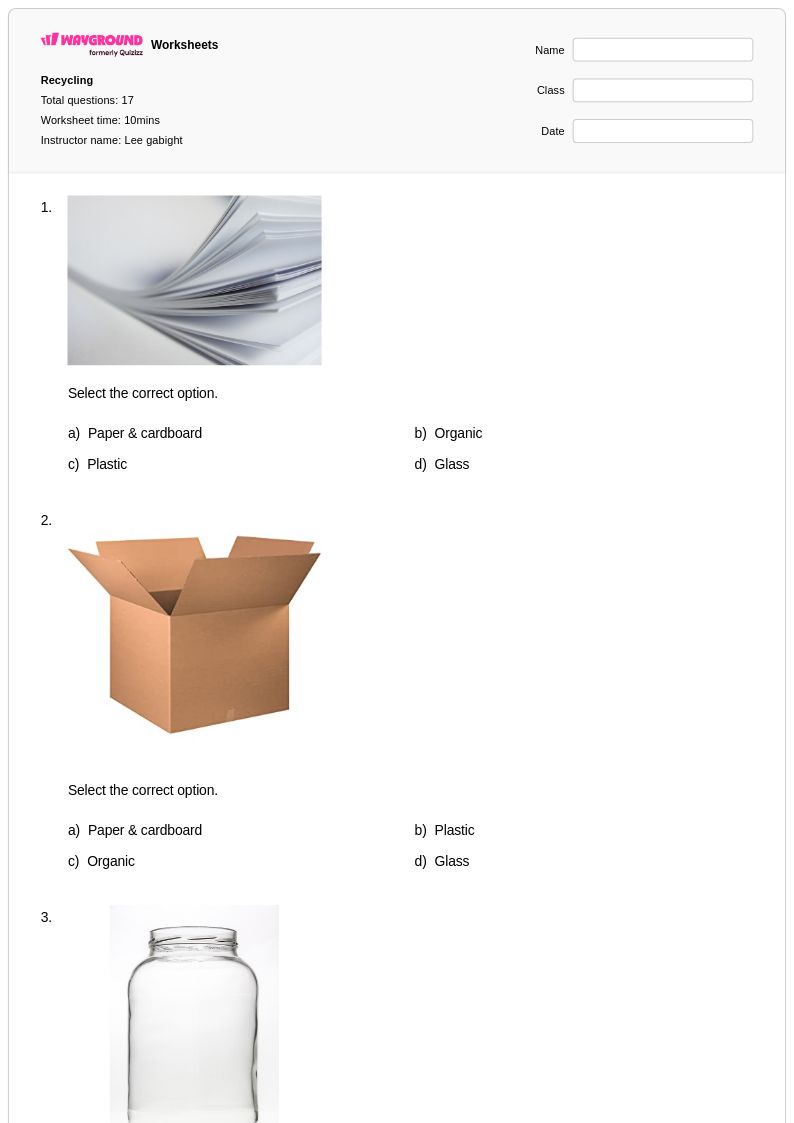
17 Q
1st
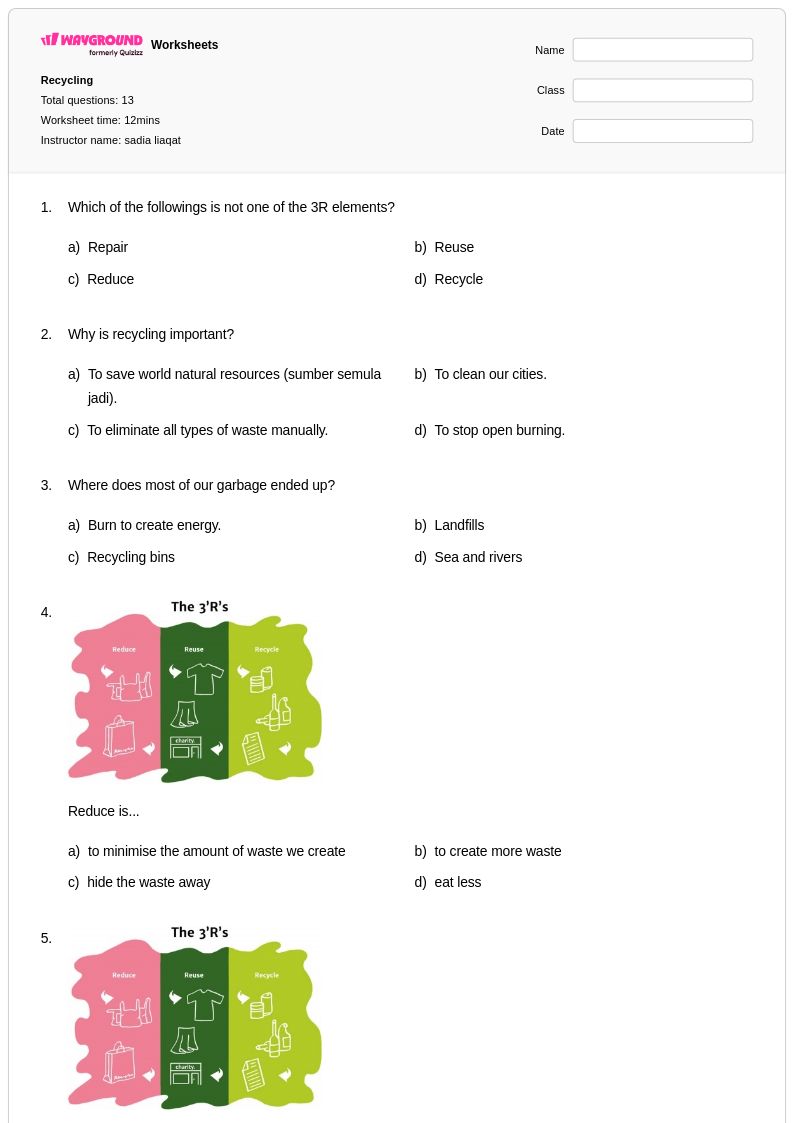
13 Q
10th
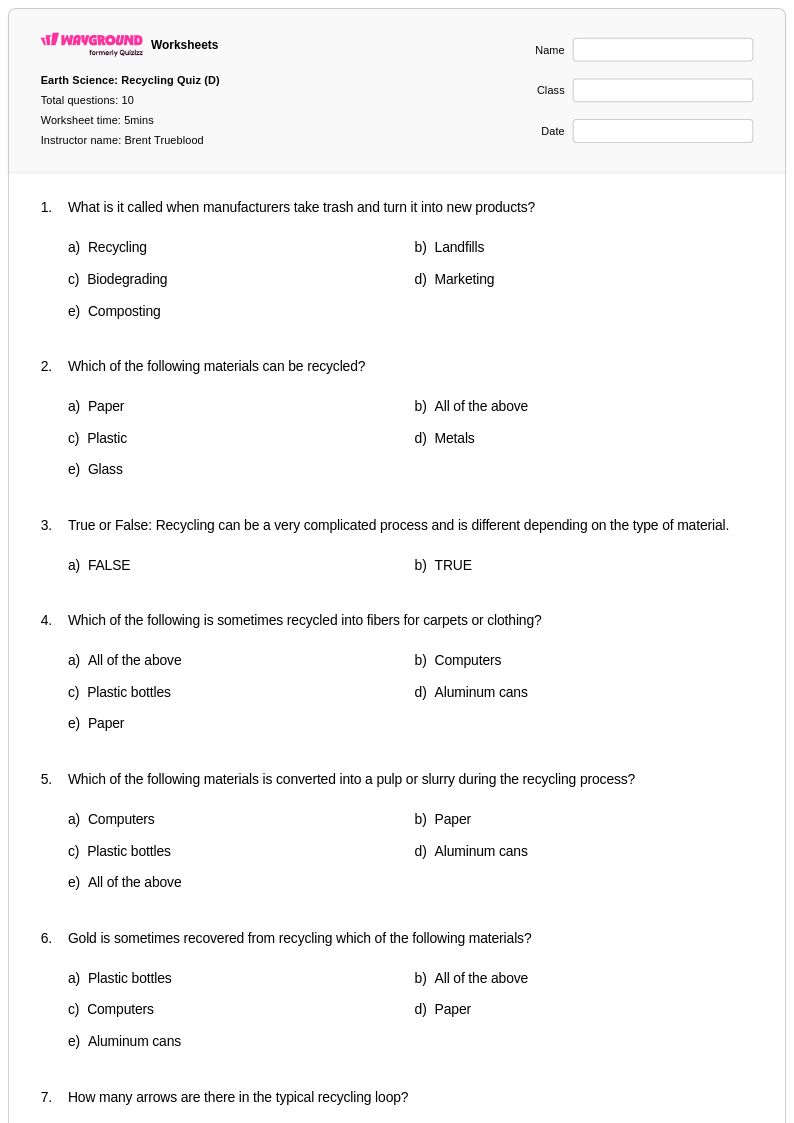
10 Q
6th - Uni
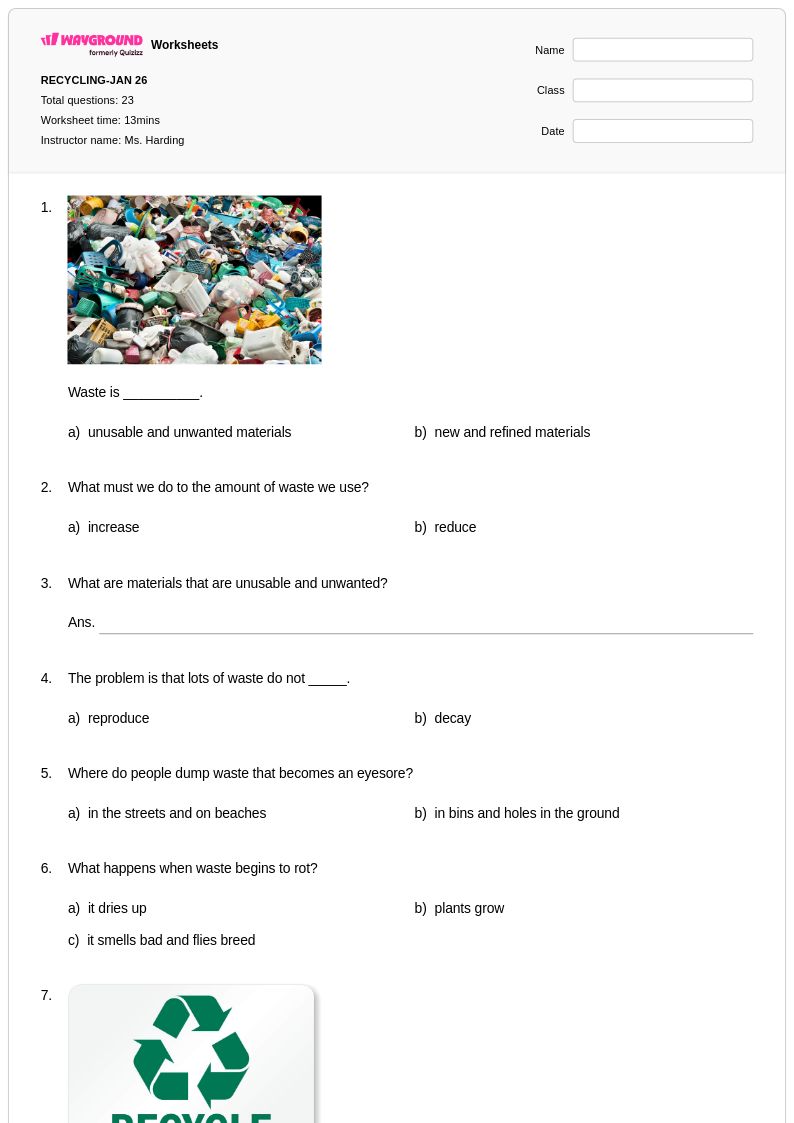
23 Q
3rd
10 Q
5th - 8th
9 Q
3rd
Explore Worksheets by Subjects
Explore printable Recycling worksheets
Recycling worksheets available through Wayground (formerly Quizizz) provide comprehensive educational resources that teach students the fundamental principles of waste reduction, material reuse, and environmental stewardship within Earth and Space Science curricula. These expertly designed worksheets strengthen critical thinking skills by engaging students with real-world scenarios involving the recycling process, from identifying recyclable materials to understanding the environmental impact of waste management systems. Students develop scientific literacy through practice problems that explore the chemical and physical properties of different materials, analyze data about recycling rates and environmental benefits, and investigate the lifecycle of common recyclable items. Each worksheet includes detailed answer keys and is available as free printables in convenient PDF format, making them accessible resources for both classroom instruction and independent study.
Wayground (formerly Quizizz) empowers educators with an extensive collection of millions of teacher-created recycling worksheets that support diverse learning objectives and classroom needs. The platform's robust search and filtering capabilities enable teachers to quickly locate materials aligned with specific science standards and appropriate for their students' skill levels, while built-in differentiation tools allow for seamless customization to accommodate varying learning abilities and interests. These recycling-focused resources are available in both printable PDF and interactive digital formats, providing flexibility for traditional classroom settings, remote learning environments, and hybrid instruction models. Teachers can efficiently plan comprehensive lessons that incorporate skill practice, remediation activities for struggling learners, and enrichment opportunities for advanced students, all while building essential environmental science knowledge that connects classroom learning to real-world environmental challenges and solutions.
FAQs
How do I teach recycling concepts to students in a science class?
What kinds of practice problems help students understand recycling and waste management?
What misconceptions do students commonly have about recycling?
How can I differentiate recycling worksheets for students at different skill levels?
How do I use Wayground's recycling worksheets in my classroom?