Free Printable Light and Color Worksheets for Class 6
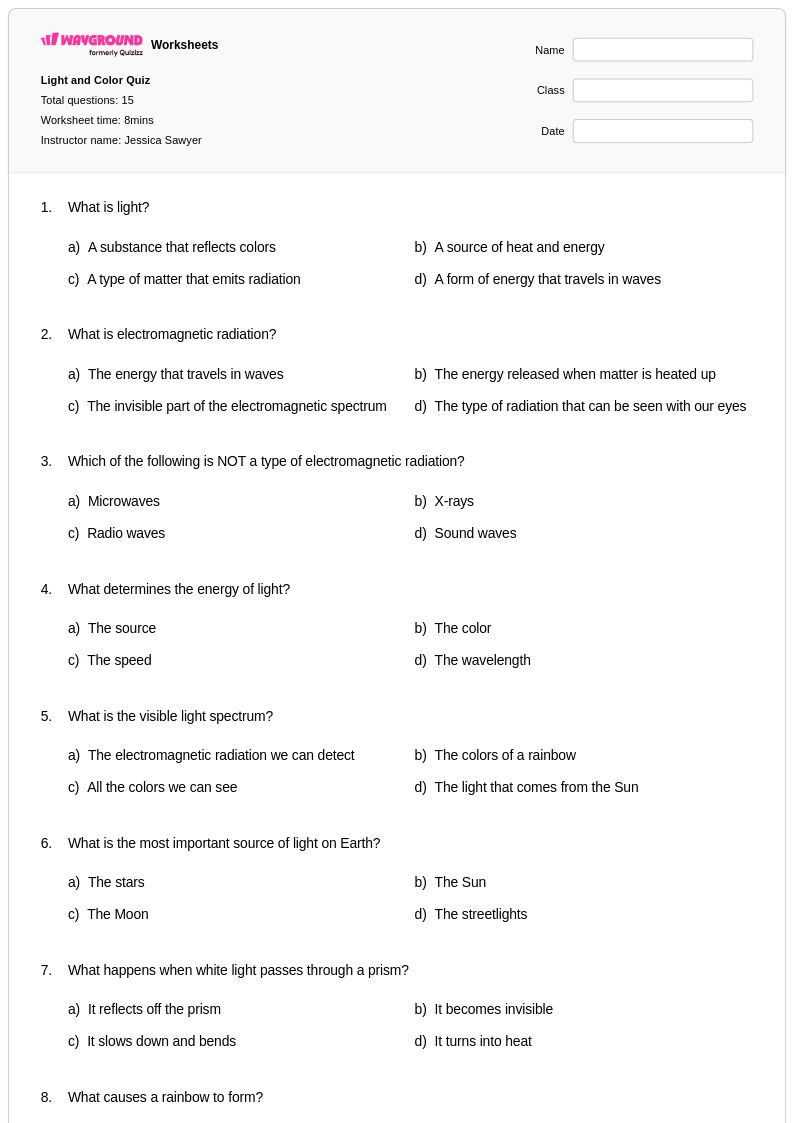
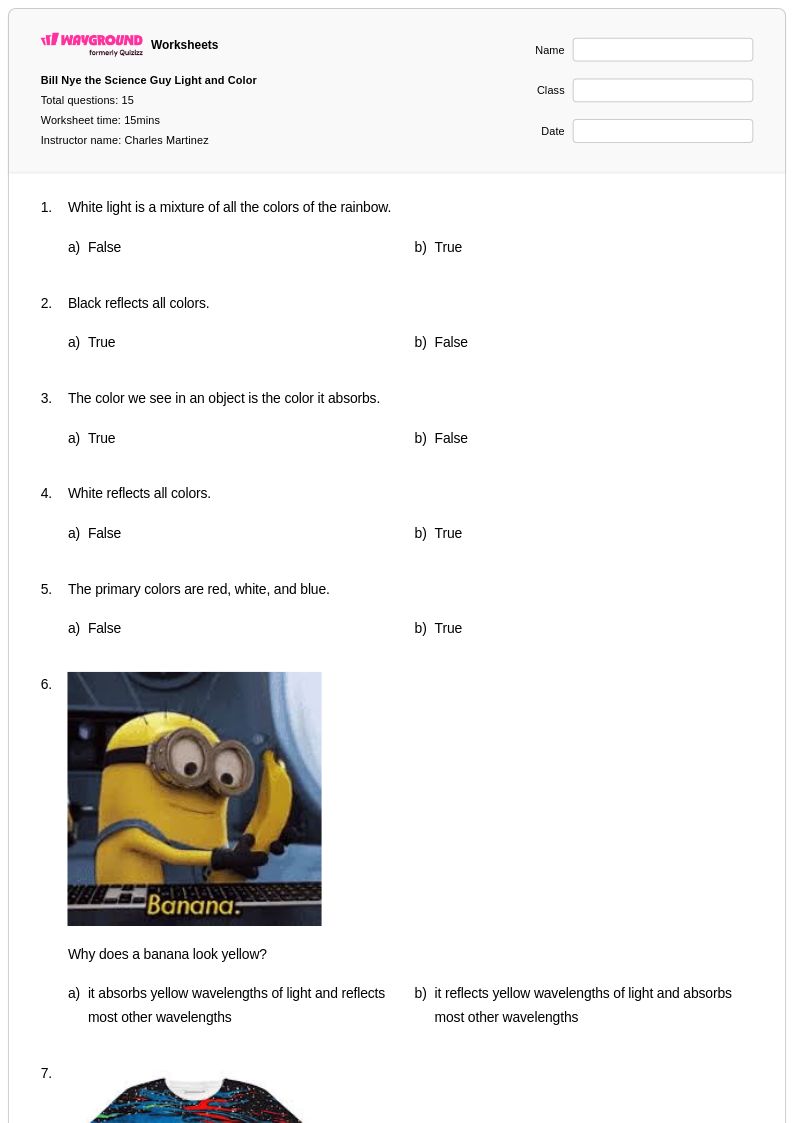
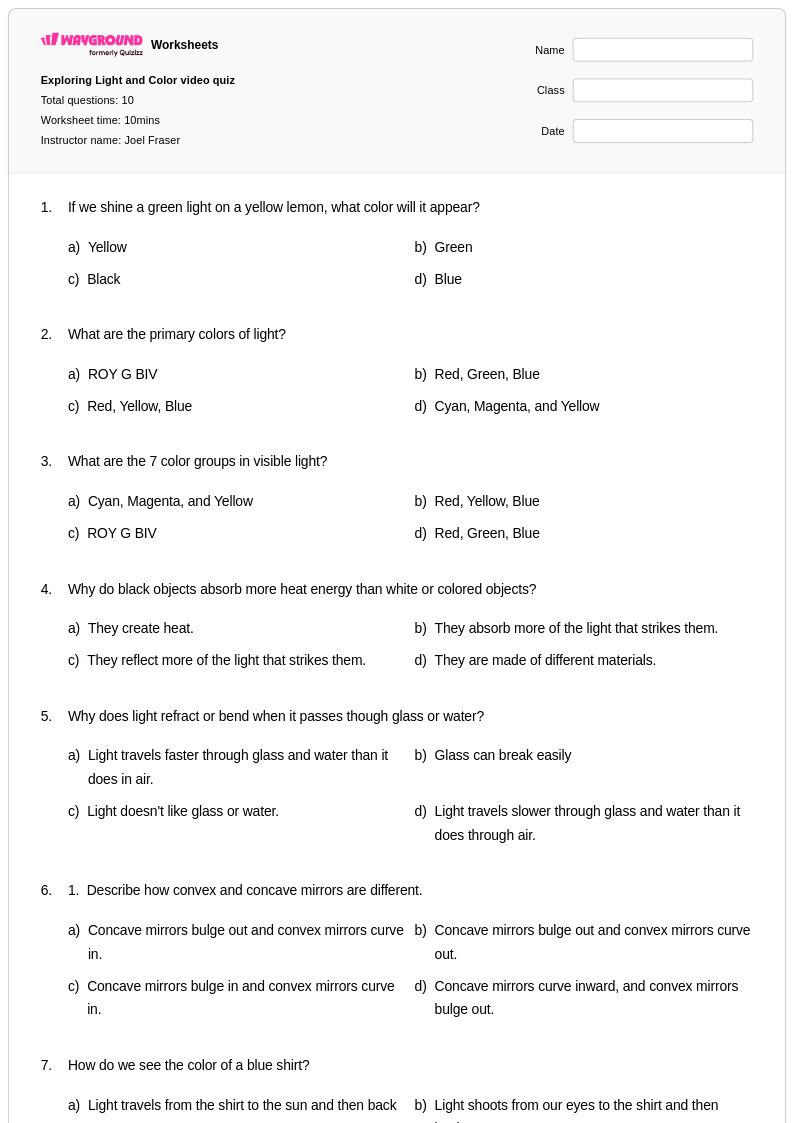
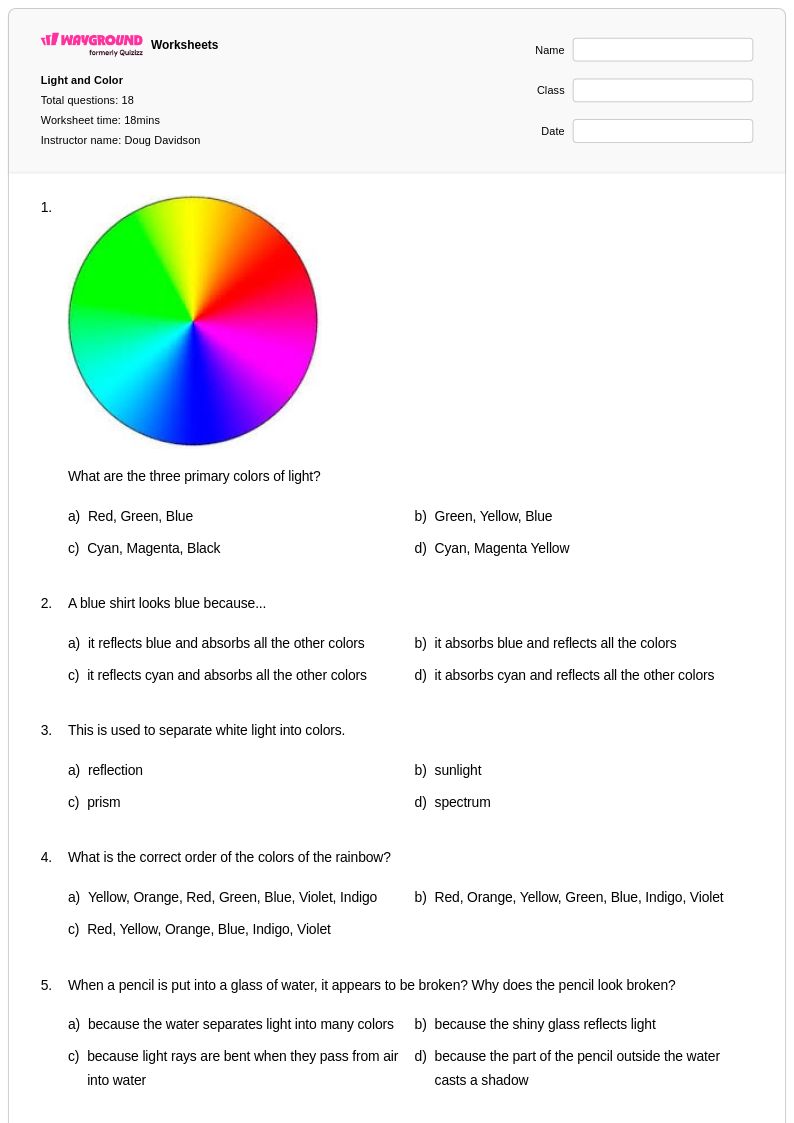
Explore free Class 6 light and color physics worksheets and printables that help students master concepts like reflection, refraction, and the electromagnetic spectrum through engaging practice problems with complete answer keys.
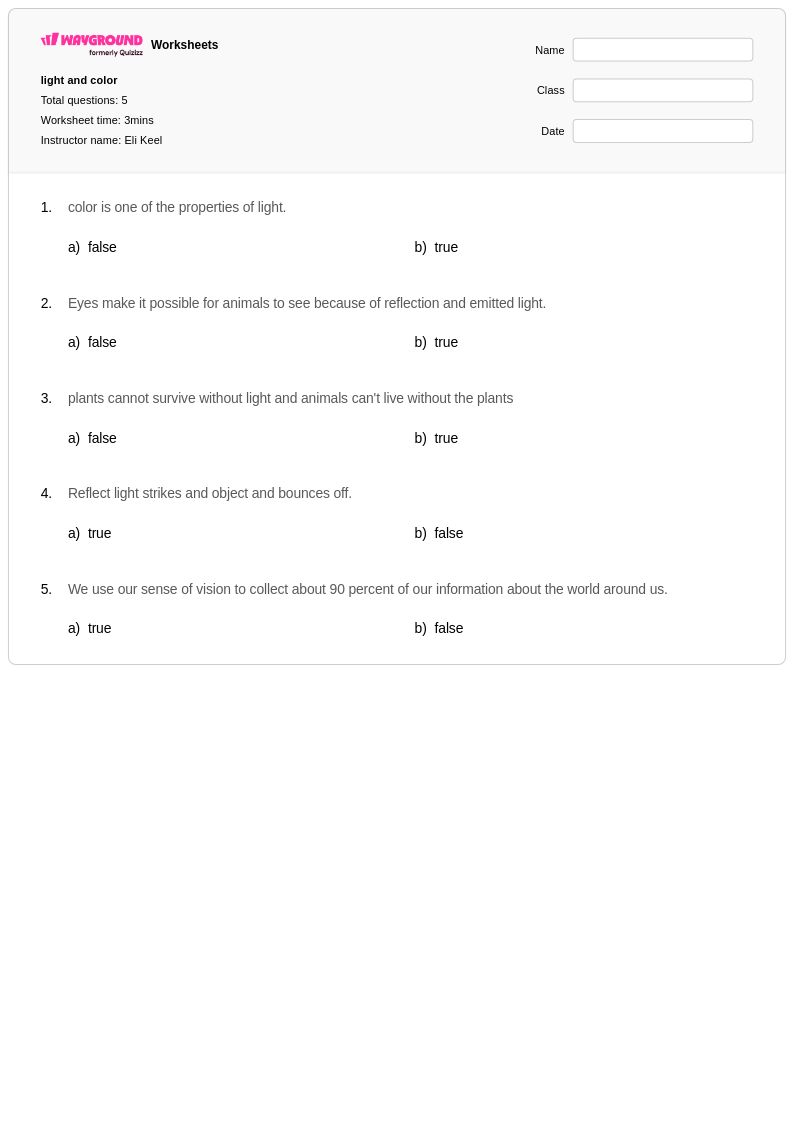
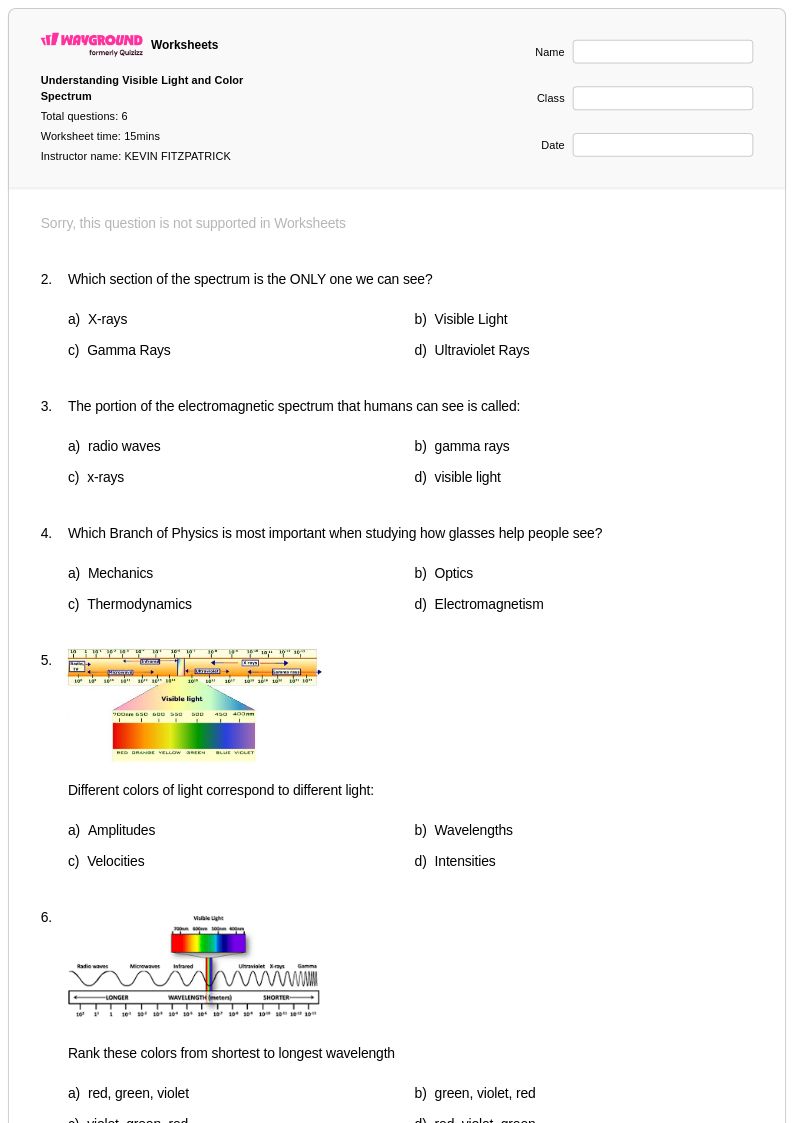
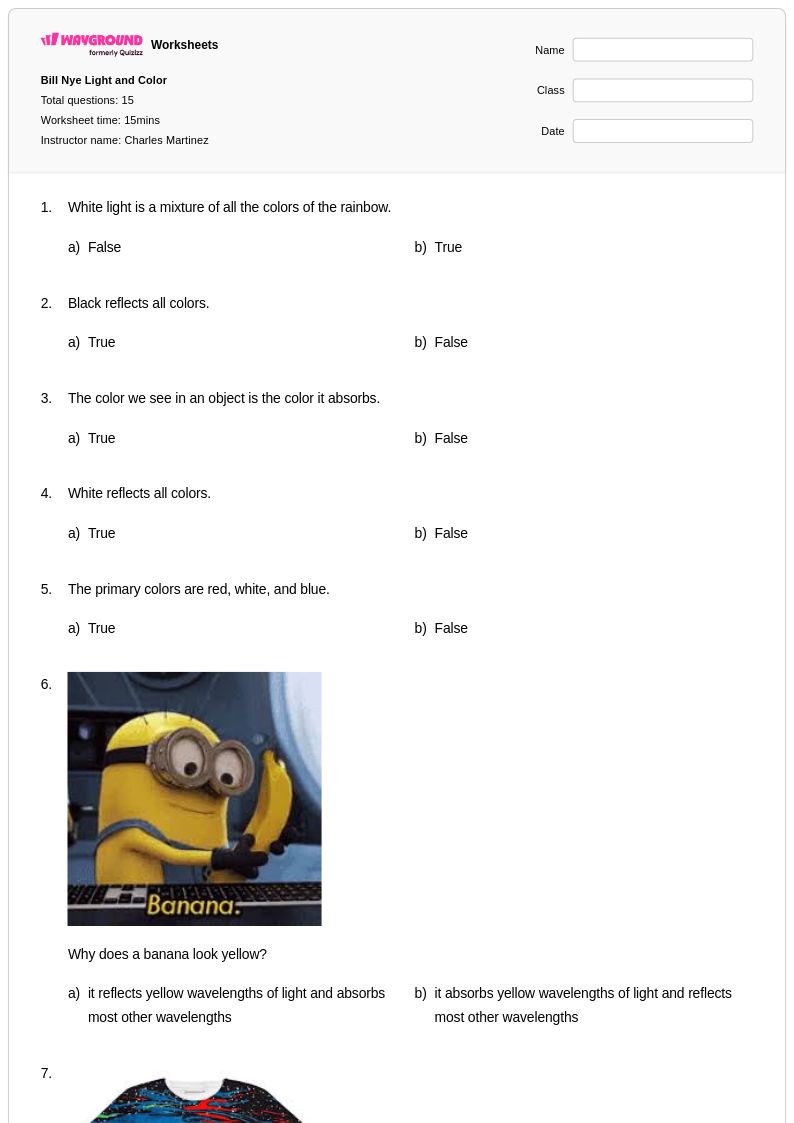
Explore printable Light and Color worksheets for Class 6
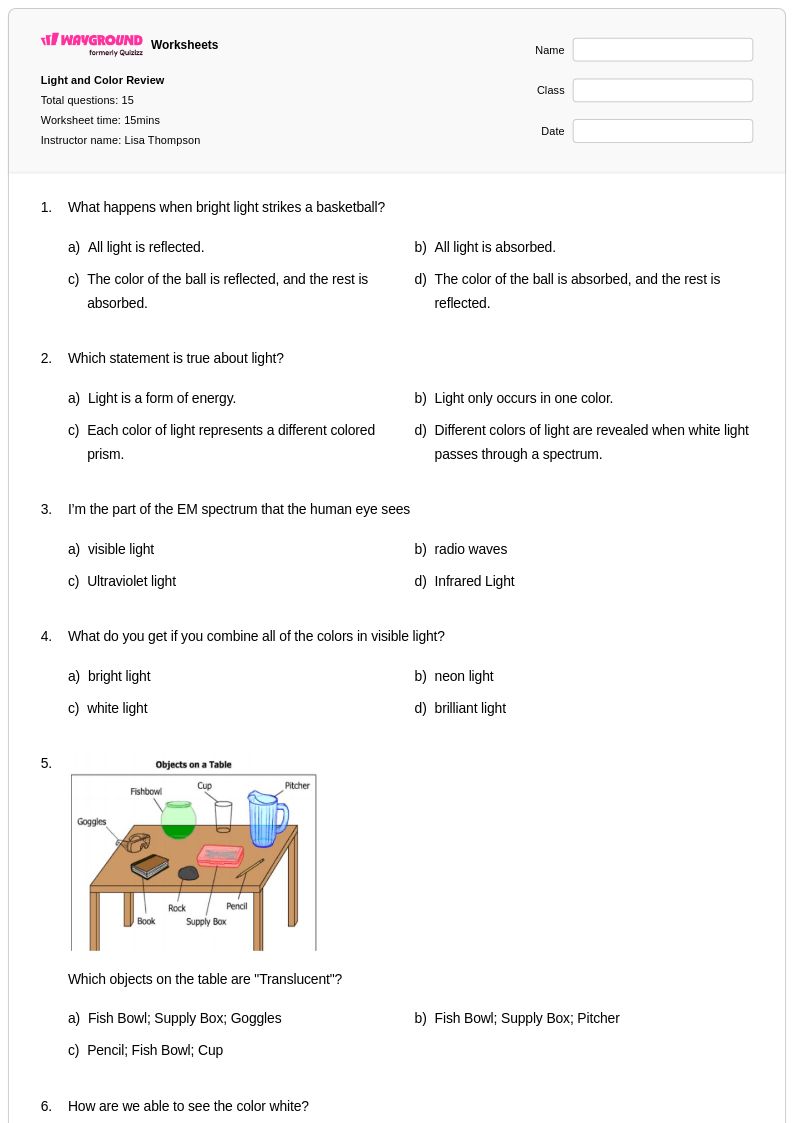
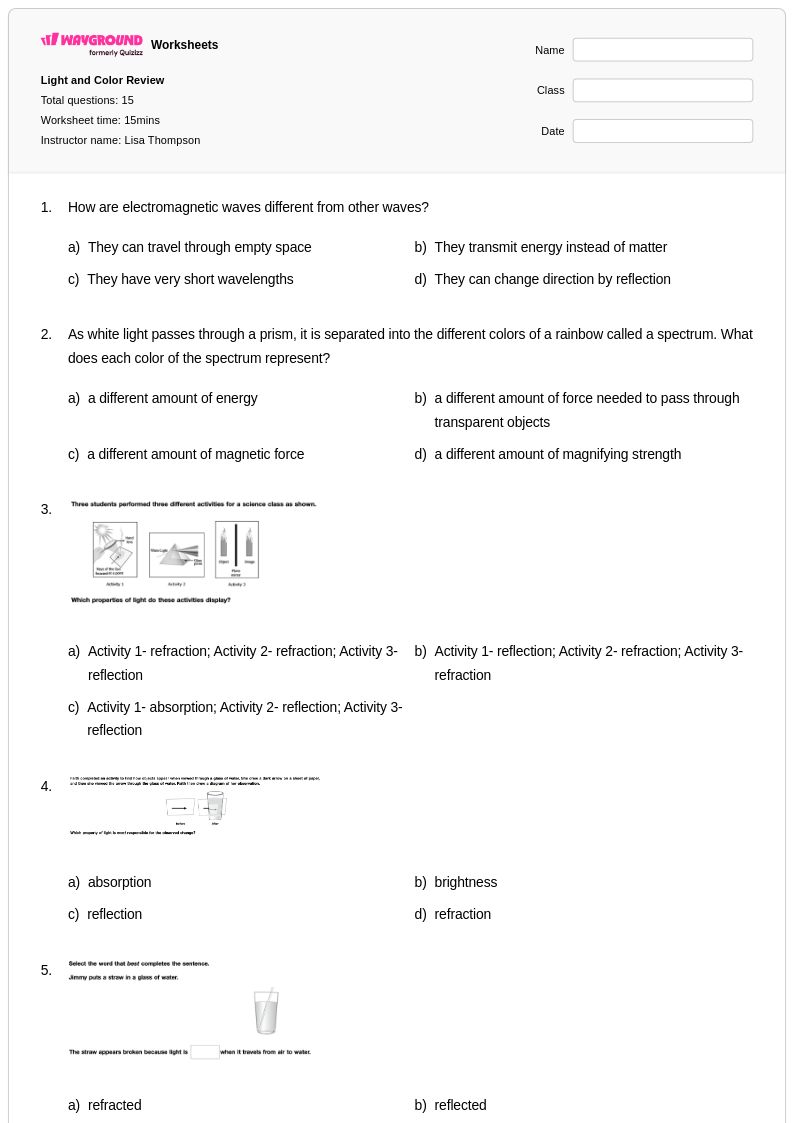
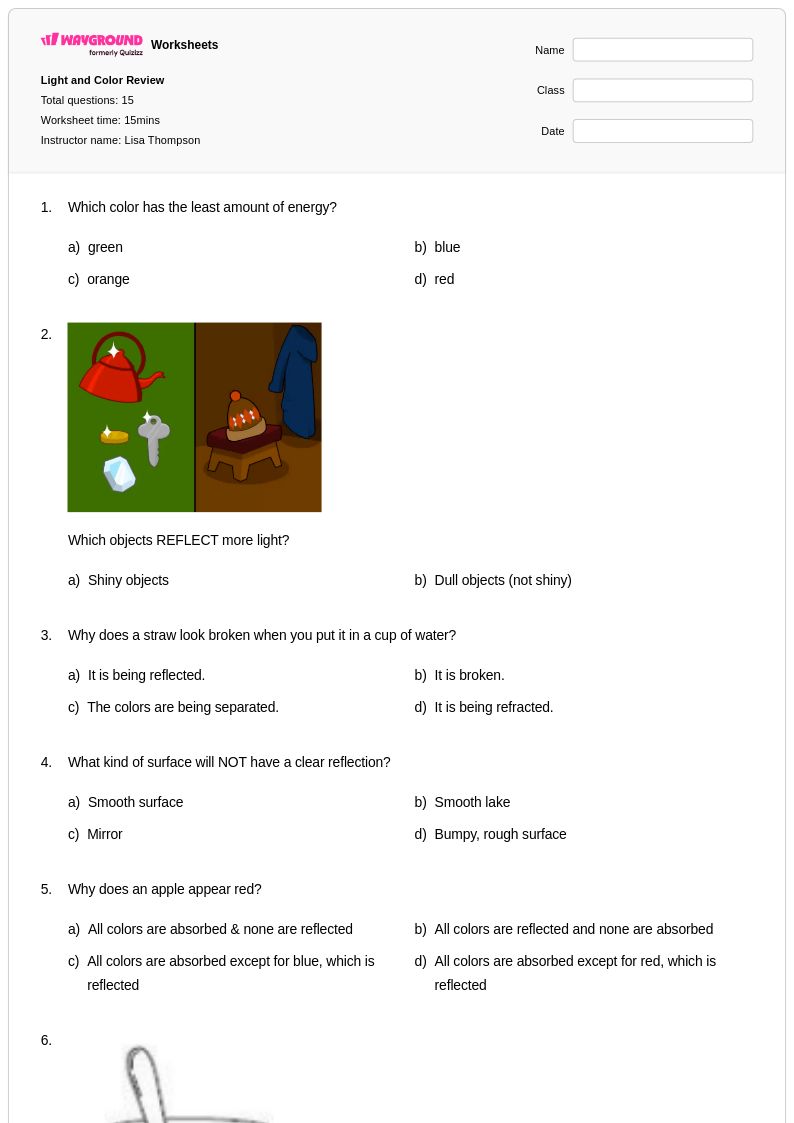
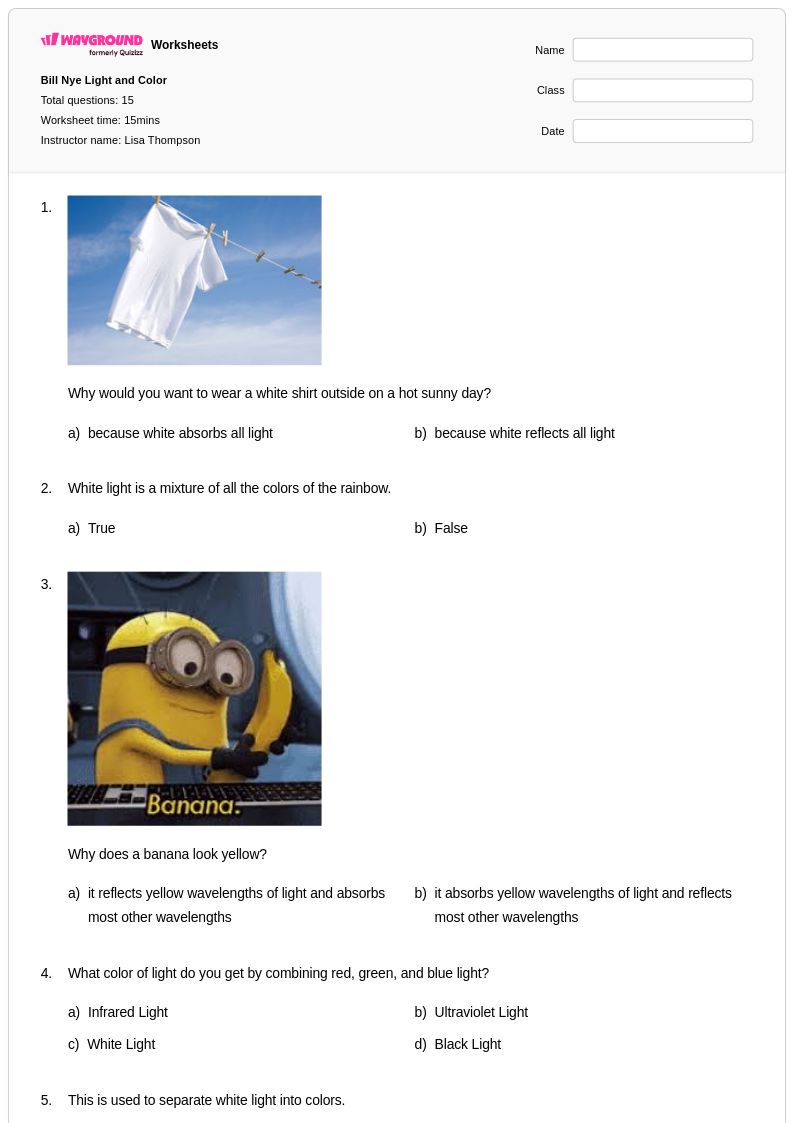
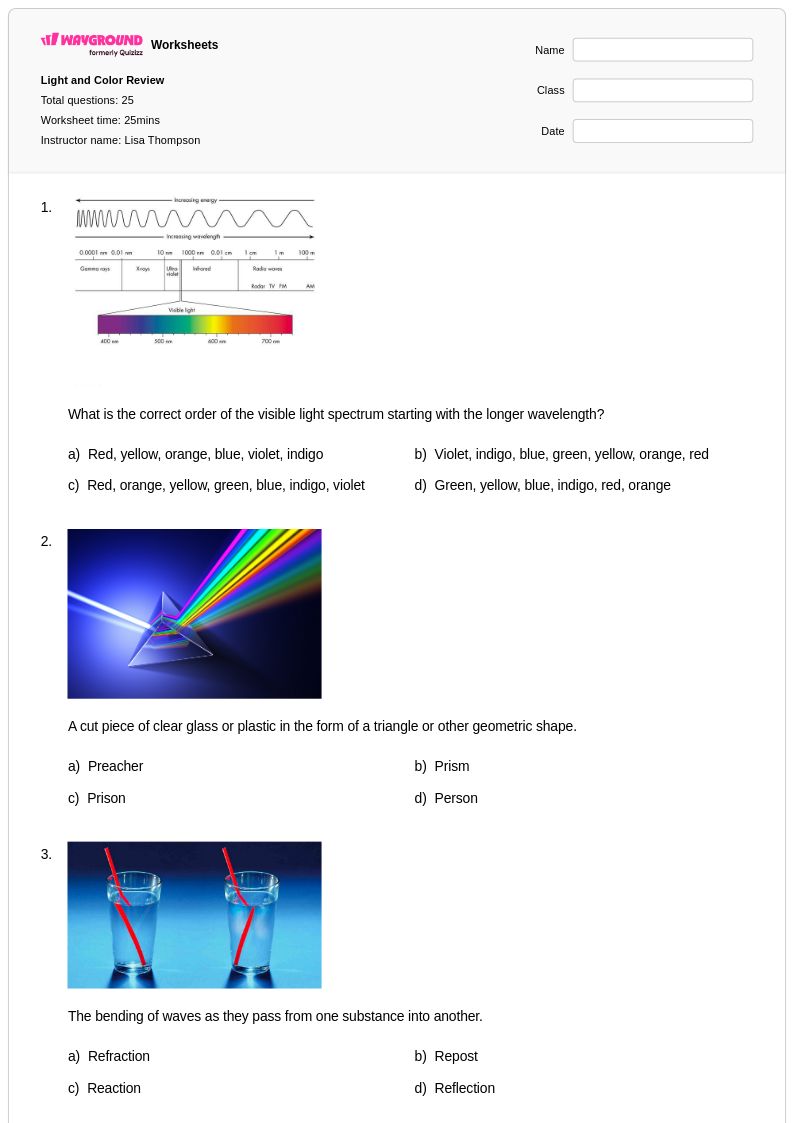
Light and color worksheets for Class 6 students available through Wayground (formerly Quizizz) provide comprehensive coverage of fundamental optical physics concepts that sixth graders need to master. These educational resources guide students through the electromagnetic spectrum, helping them understand how white light separates into component colors through prisms and how different materials absorb, reflect, and transmit various wavelengths. The worksheets strengthen critical thinking skills as students explore color mixing principles, investigate why objects appear certain colors, and analyze how light behaves when it encounters different surfaces and materials. Each printable resource includes detailed practice problems that reinforce learning objectives, accompanied by answer keys that support both independent study and classroom instruction. These free educational materials cover essential topics such as primary and secondary colors, light refraction, reflection properties, and the relationship between light frequency and color perception.
Wayground (formerly Quizizz) empowers educators with millions of teacher-created light and color worksheet collections that streamline lesson planning and enhance student engagement in Class 6 physics instruction. The platform's robust search and filtering capabilities allow teachers to quickly locate resources aligned with specific learning standards and curriculum requirements, while built-in differentiation tools enable customization for diverse learning needs and ability levels. Teachers can access these materials in both digital and printable pdf formats, providing flexibility for various classroom environments and teaching approaches. The extensive collection supports effective remediation for struggling students, offers enrichment opportunities for advanced learners, and provides targeted skill practice that reinforces conceptual understanding of optical physics principles. This comprehensive resource library enables educators to create scaffolded learning experiences that build student confidence while developing deep comprehension of how light and color interact in the physical world.
FAQs
How do I teach light and color to physics students?
Start by grounding students in the wave model of light, establishing the relationship between wavelength, frequency, and energy before introducing the electromagnetic spectrum. From there, build toward reflection and refraction using ray diagrams, then connect wave properties to color perception and everyday optical phenomena. Hands-on demonstrations, such as prisms splitting white light or measuring angles of incidence and reflection, help students connect abstract formulas to observable behavior.
What practice problems help students understand light and color concepts?
Effective practice problems for light and color include wavelength-frequency calculations using the wave speed equation, identifying regions of the electromagnetic spectrum by frequency or energy, and applying Snell's law to refraction scenarios. Students also benefit from problems that ask them to predict color mixing outcomes using additive and subtractive color models, which reinforces the distinction between light and pigment behavior.
What mistakes do students commonly make when learning about light and color?
One of the most persistent misconceptions is confusing additive color mixing (light) with subtractive color mixing (pigments), leading students to incorrectly predict that mixing all colors of light produces black rather than white. Students also frequently confuse wavelength and frequency as directly proportional rather than inversely related, and many struggle to correctly apply Snell's law when light moves from a denser to a less dense medium. Explicitly contrasting these scenarios during instruction reduces the likelihood of these errors persisting.
How can I use light and color worksheets to assess student understanding?
Light and color worksheets work well as formative checkpoints after introducing each sub-concept, such as following a lesson on refraction or the electromagnetic spectrum. Problems requiring students to calculate wavelength from frequency, explain why the sky appears blue, or identify whether a material is opaque, translucent, or transparent reveal specific gaps in conceptual understanding. Answer keys allow teachers to quickly identify error patterns across the class and adjust instruction accordingly.
How do I use Wayground's light and color worksheets in my classroom?
Wayground's light and color worksheets are available as printable PDFs for traditional classroom distribution and in digital formats for technology-integrated learning environments, including the option to host them as a quiz directly on Wayground. This flexibility makes them suitable for in-class practice, homework assignments, or independent review. Each worksheet includes a complete answer key, reducing prep time and making it straightforward to provide immediate feedback to students.
How can I differentiate light and color worksheets for students at different skill levels?
Wayground's differentiation tools allow teachers to customize worksheets to match varying skill levels, supporting remediation for students who need to revisit foundational concepts like basic wave properties and enrichment for advanced learners working through more complex problems involving wave-particle duality or multi-step refraction calculations. For students who need additional accessibility support, Wayground also offers accommodations such as read aloud, extended time, and reduced answer choices, which can be assigned individually without other students being notified.