Free Printable Magnetic Field Worksheets for Class 11
Enhance Class 11 students' understanding of magnetic field concepts with Wayground's comprehensive collection of free worksheets, printable PDFs, and practice problems complete with detailed answer keys.
Explore printable Magnetic Field worksheets for Class 11
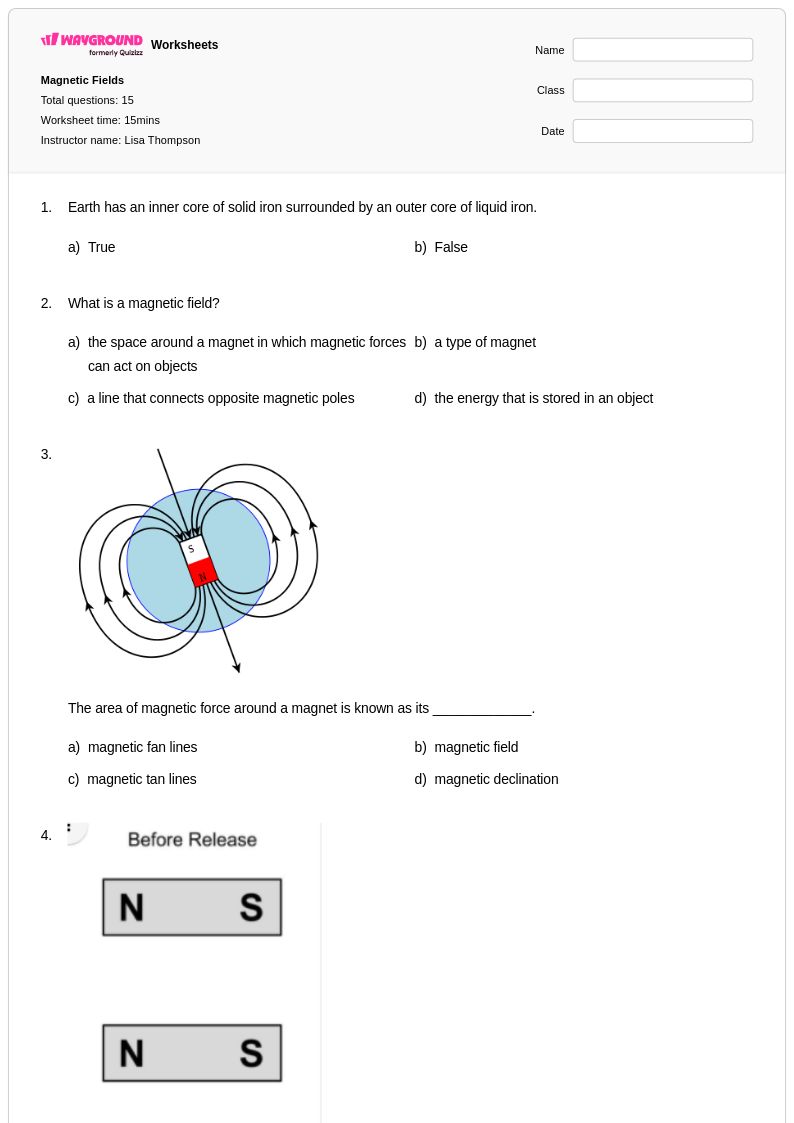
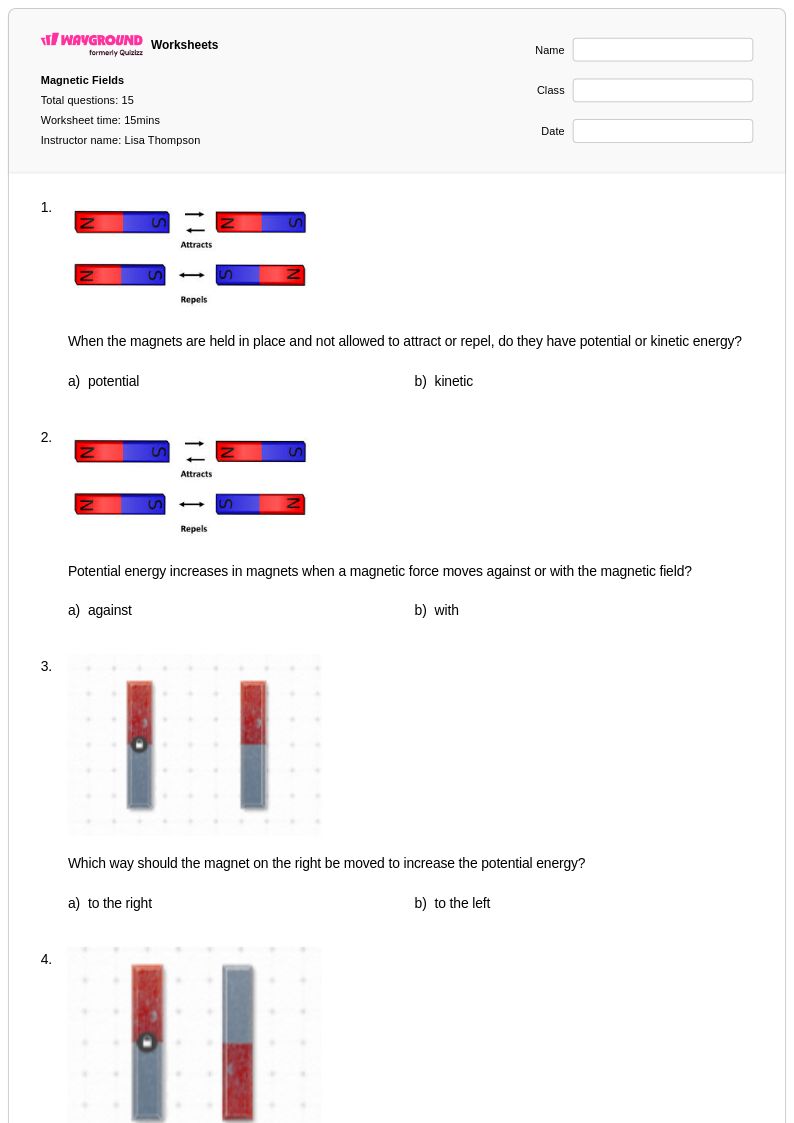
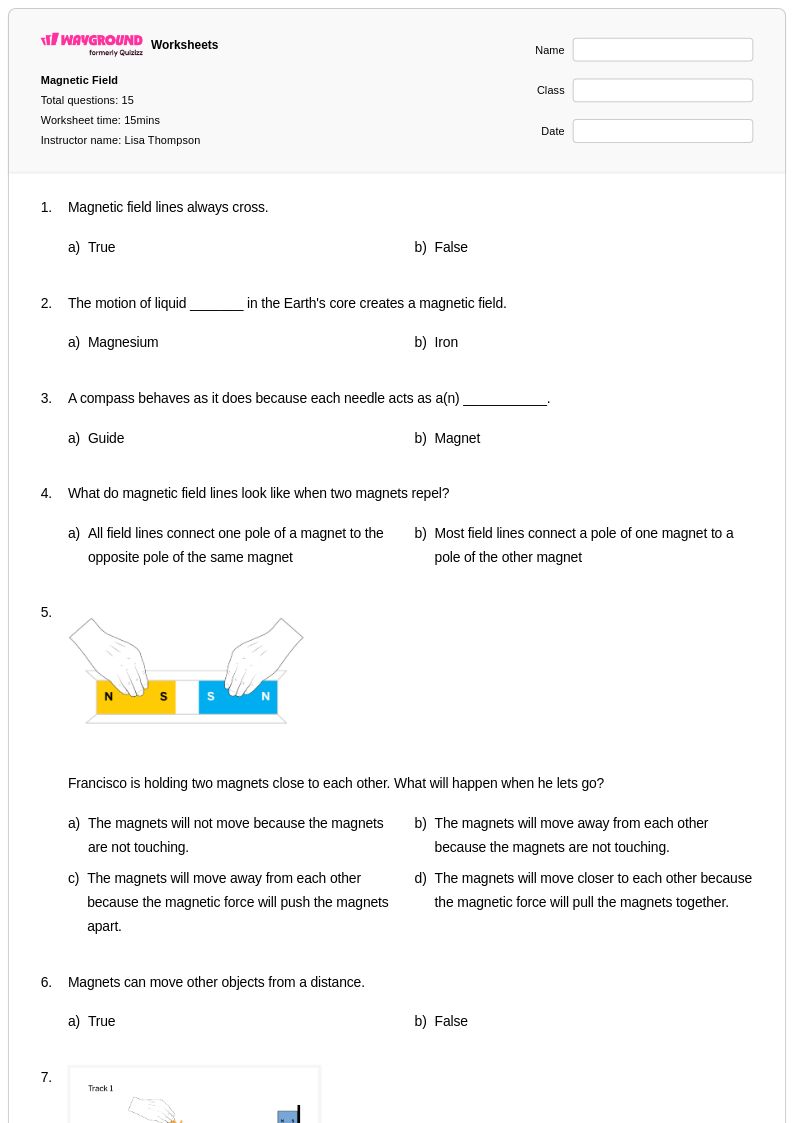
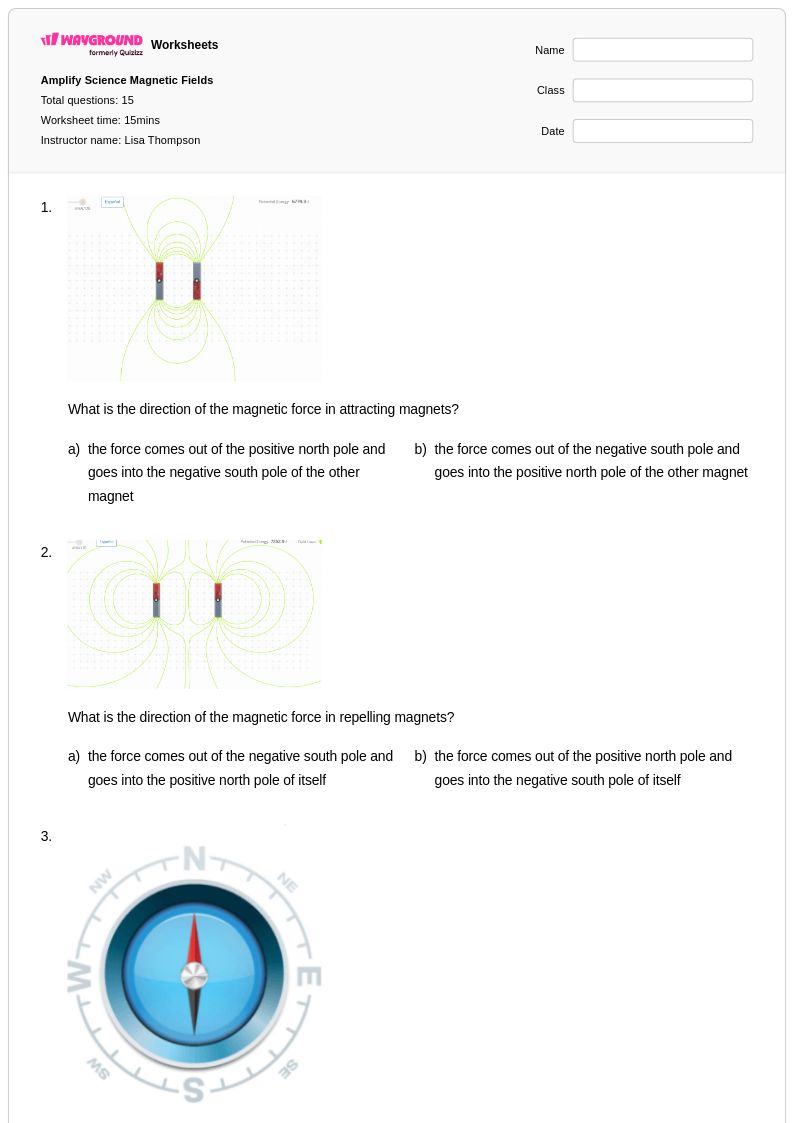
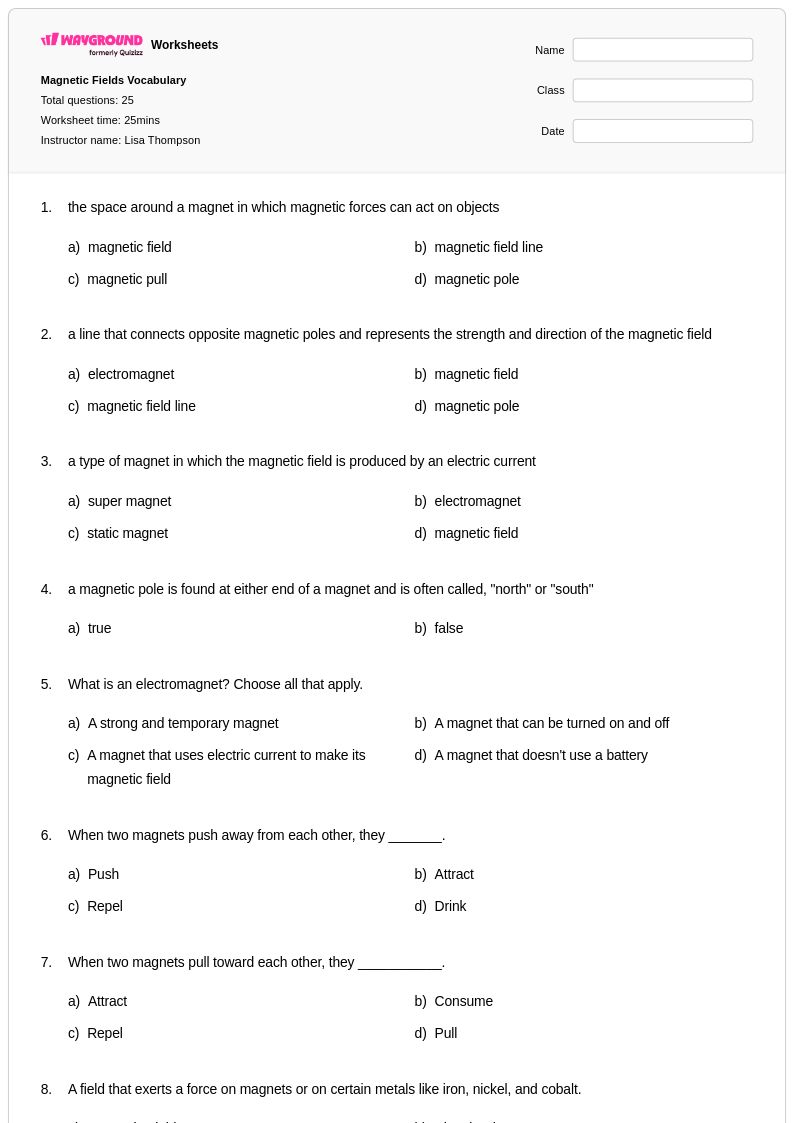
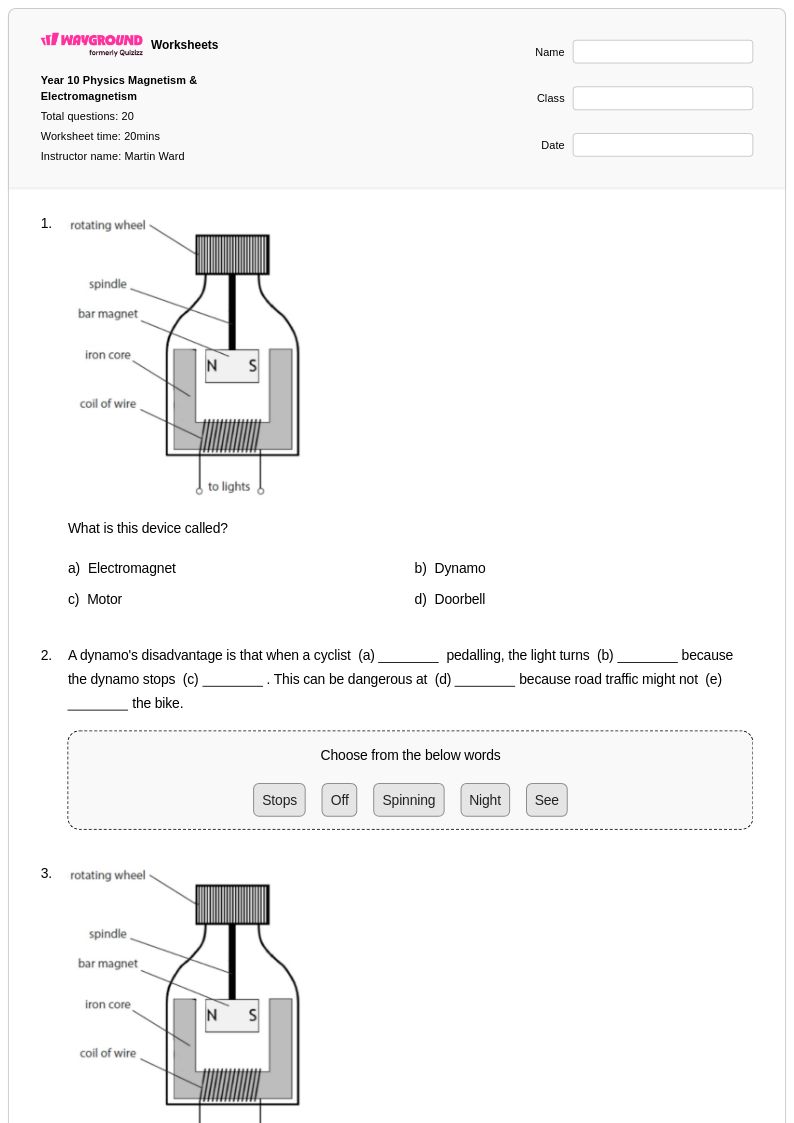
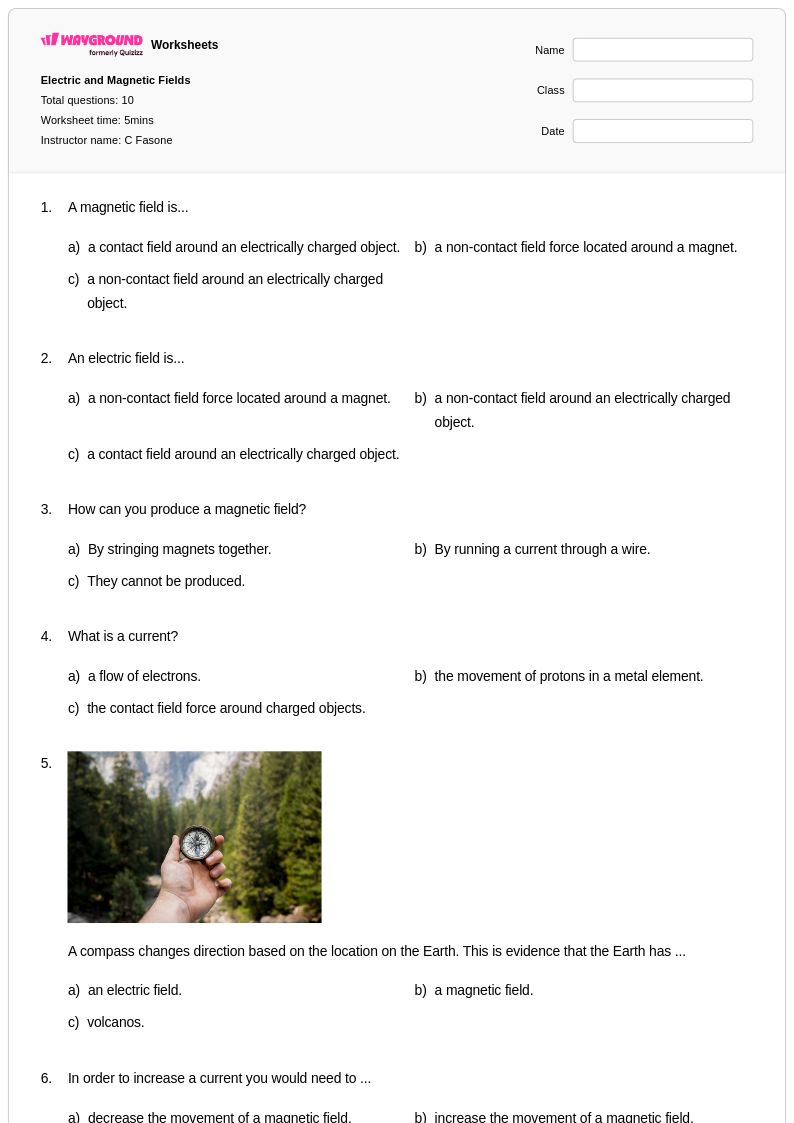
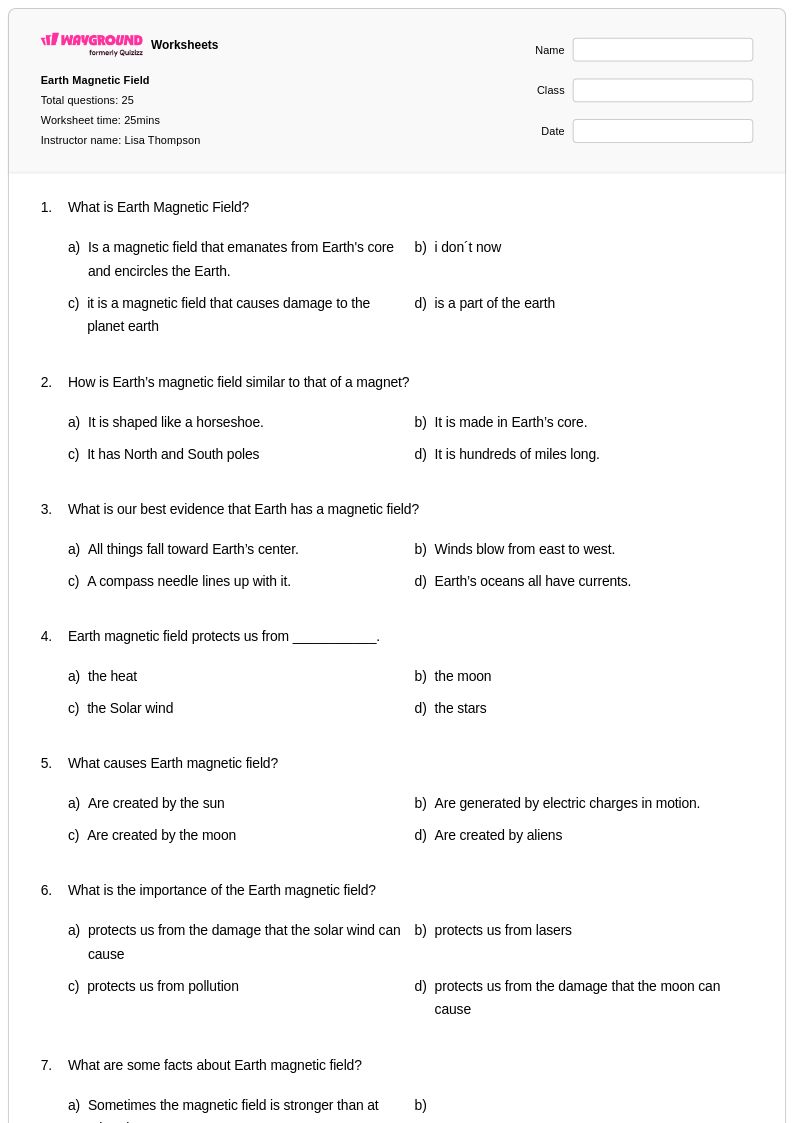
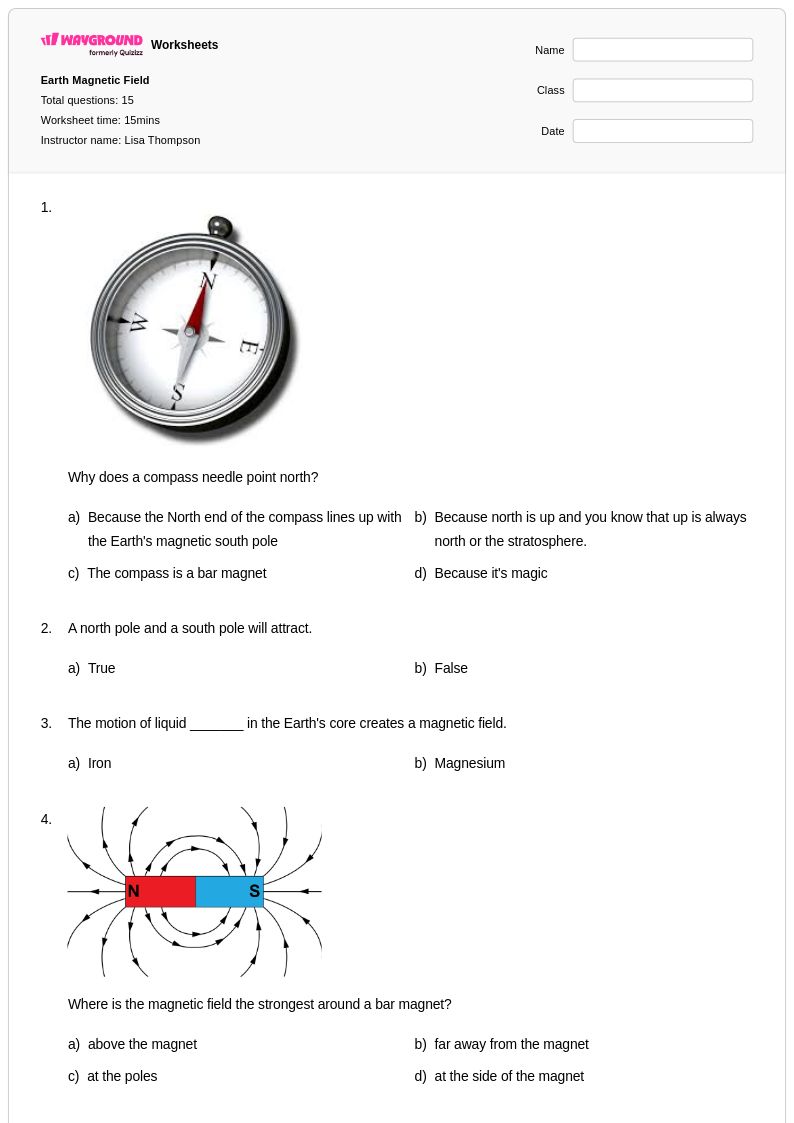
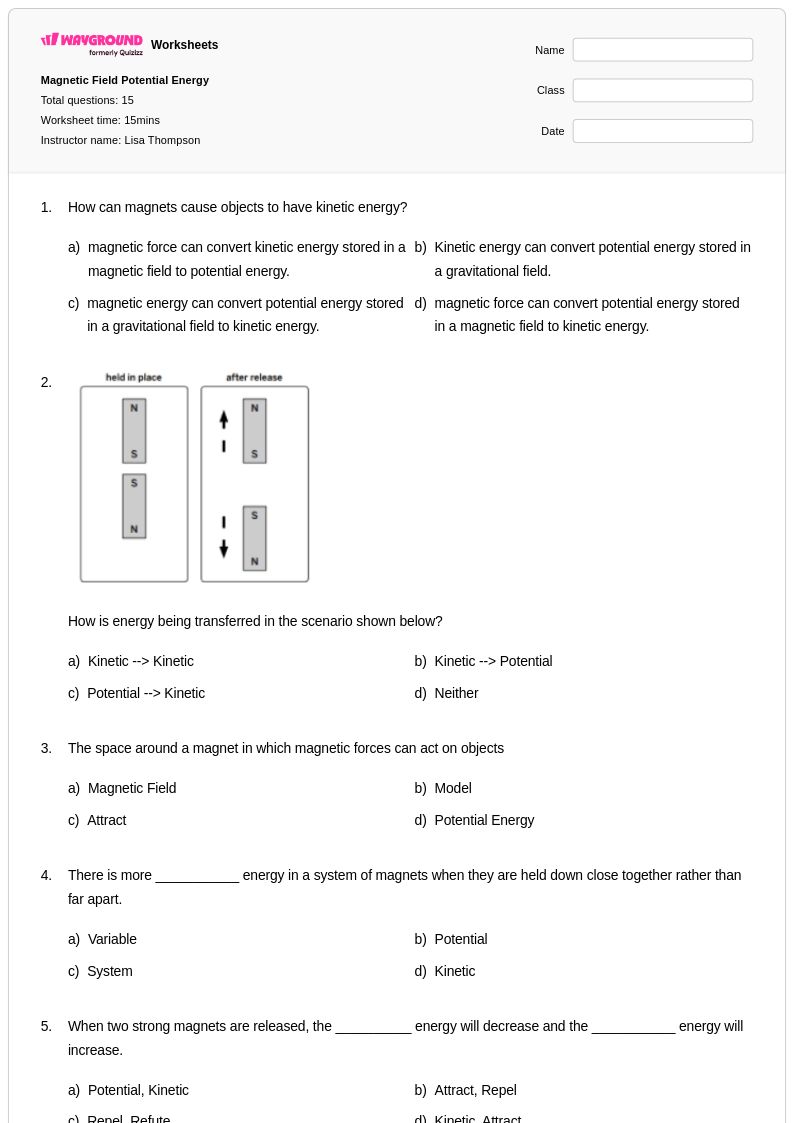
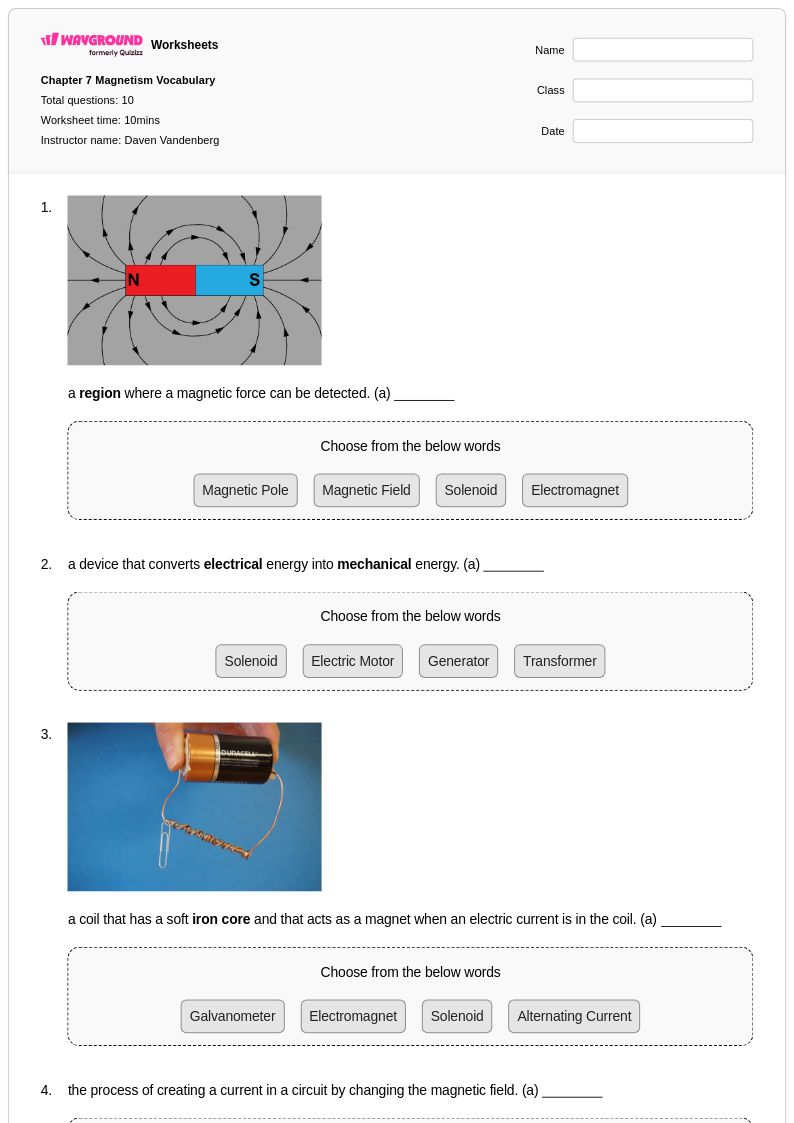
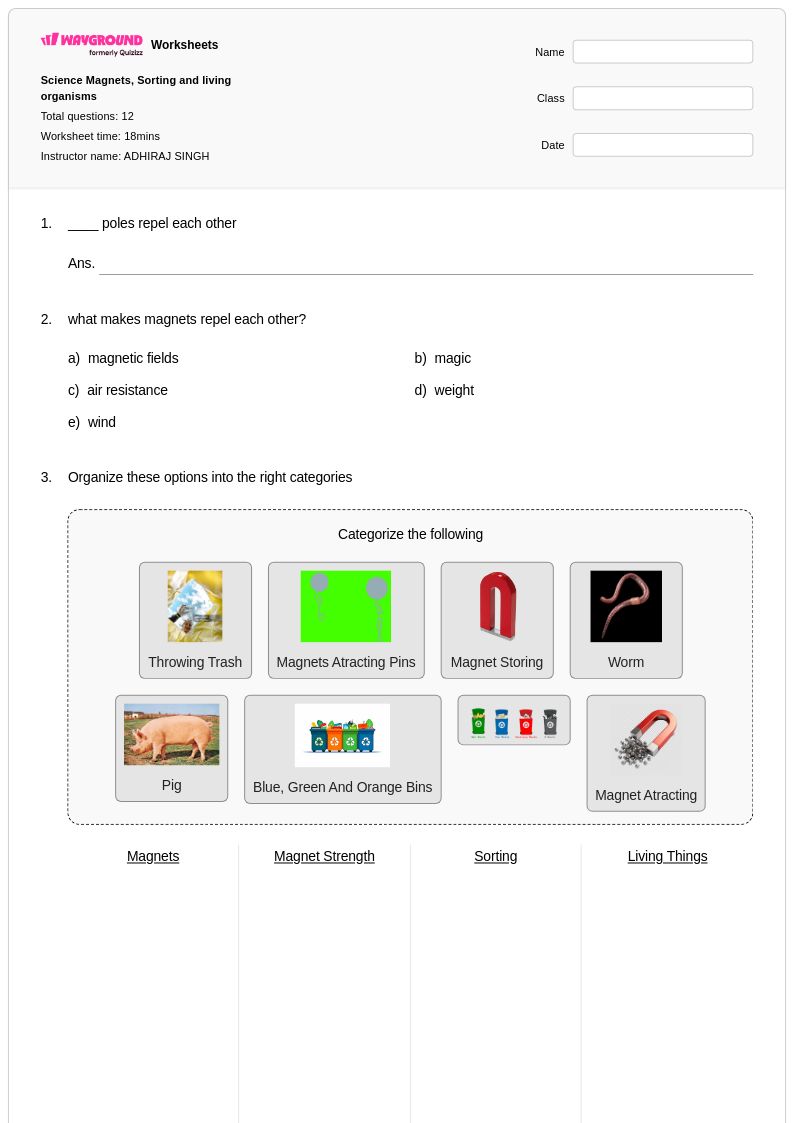
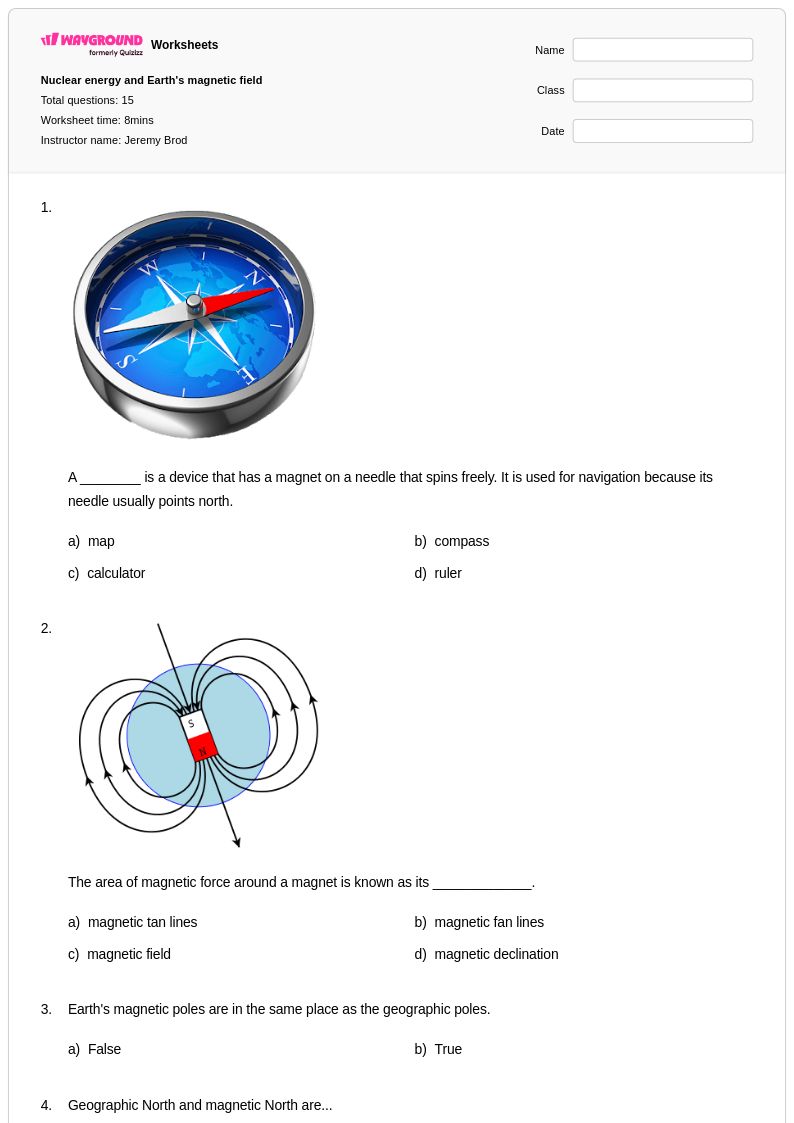
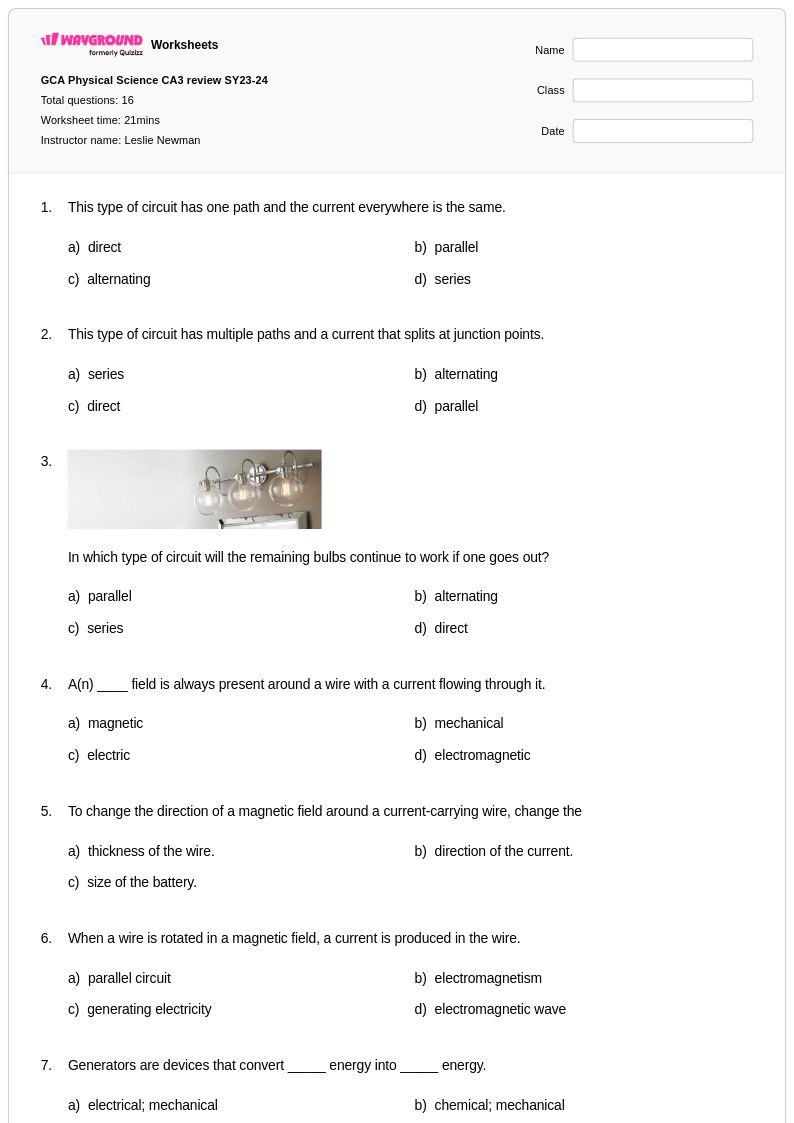
Class 11 magnetic field worksheets available through Wayground (formerly Quizizz) provide comprehensive coverage of electromagnetic principles essential for advanced physics education. These expertly designed resources help students master complex concepts including magnetic force calculations, field line mapping, electromagnetic induction, and the relationships between electric currents and magnetic fields. The worksheets strengthen critical analytical skills through systematic practice problems that progress from fundamental magnetic field properties to sophisticated applications involving motors, generators, and transformers. Each resource includes detailed answer keys and is available as free printables in convenient pdf format, enabling students to work through challenging scenarios involving magnetic flux, Lorentz forces, and the mathematical relationships governing magnetic phenomena.
Wayground (formerly Quizizz) supports physics educators with an extensive collection of teacher-created magnetic field worksheets drawn from millions of available resources across diverse educational contexts. The platform's robust search and filtering capabilities allow instructors to quickly locate materials aligned with specific curriculum standards and learning objectives, while built-in differentiation tools enable seamless customization for varying student ability levels. These worksheets are accessible in both printable pdf and interactive digital formats, providing flexibility for classroom instruction, independent study, and remote learning environments. Teachers can efficiently plan comprehensive magnetic field units, implement targeted remediation for struggling students, offer enrichment opportunities for advanced learners, and provide consistent skill practice that reinforces the mathematical and conceptual foundations necessary for success in Class 11 physics.
FAQs
How do I teach magnetic fields to high school physics students?
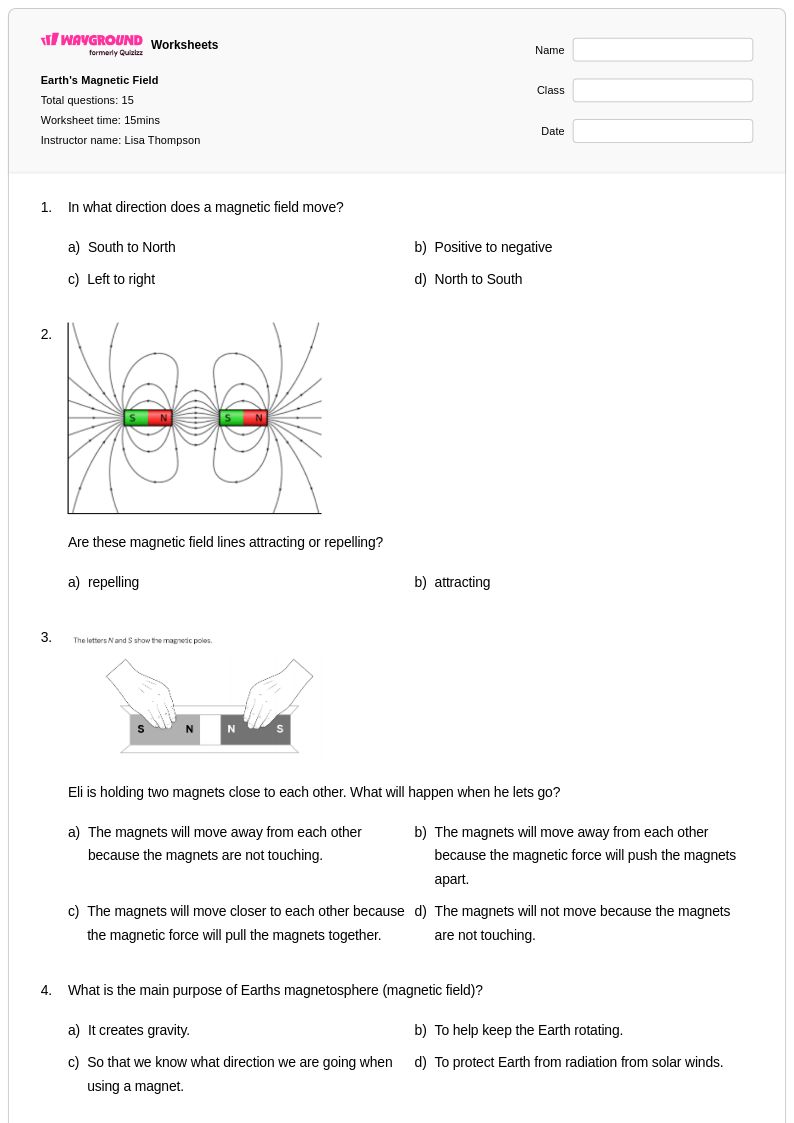
Start by grounding students in the concept of field lines as a visual tool for representing direction and relative strength before introducing any equations. Use physical demonstrations with iron filings and bar magnets to make the invisible field tangible, then build toward vector analysis and the magnetic force equation F = qv × B. Connecting magnetic fields to electricity early helps students see electromagnetism as a unified concept rather than two separate topics.
What exercises help students practice magnetic field concepts?
Effective practice for magnetic field concepts moves from field mapping exercises, where students sketch field lines around magnets and current-carrying wires, toward calculation-based problems involving field strength and magnetic force. Including scenarios with charged particles moving through magnetic fields, as well as real-world applications like motors and generators, builds both conceptual and mathematical fluency. Worksheets that sequence problems by difficulty allow students to consolidate foundational understanding before tackling complex electromagnetic induction scenarios.
What mistakes do students commonly make when learning about magnetic fields?
One of the most persistent errors is confusing magnetic field direction with the direction of force on a charged particle, since these are always perpendicular to each other. Students also frequently misapply the right-hand rule, particularly when the velocity vector and field vector are not aligned with familiar axes. Another common misconception is treating magnetic field lines as paths that charged particles follow, rather than representations of field direction and relative strength.
How can I differentiate magnetic field instruction for students at different ability levels?
For students who need additional support, reduce cognitive load by focusing first on qualitative field mapping before introducing force calculations, and consider using read-aloud support for word-heavy problem sets. Advanced students benefit from open-ended problems involving electromagnetic induction and generator design that require multi-step reasoning. On Wayground, teachers can apply individual accommodations such as extended time, read aloud, and reduced answer choices to specific students, allowing the rest of the class to work under standard conditions without disruption.
How do I use Wayground's magnetic field worksheets in my classroom?
Wayground's magnetic field worksheets are available as printable PDFs for traditional classroom use and in digital formats for technology-integrated or remote learning environments, giving teachers flexibility in how they deploy the material. Teachers can also host worksheets as a quiz directly on Wayground, enabling real-time student response tracking. Each worksheet includes a complete answer key, making them practical for independent practice, guided instruction, or remediation of challenging electromagnetic concepts.
How do magnetic fields relate to electricity, and how should I sequence that instruction?
Magnetic fields and electric fields are deeply connected through electromagnetism: moving electric charges produce magnetic fields, and changing magnetic fields induce electric currents, as described by Faraday's Law. Instructionally, it is most effective to establish a solid understanding of static magnetic fields and force on moving charges before introducing electromagnetic induction. This sequencing prevents students from conflating the two phenomena and gives them the conceptual vocabulary needed to understand motors and generators.