
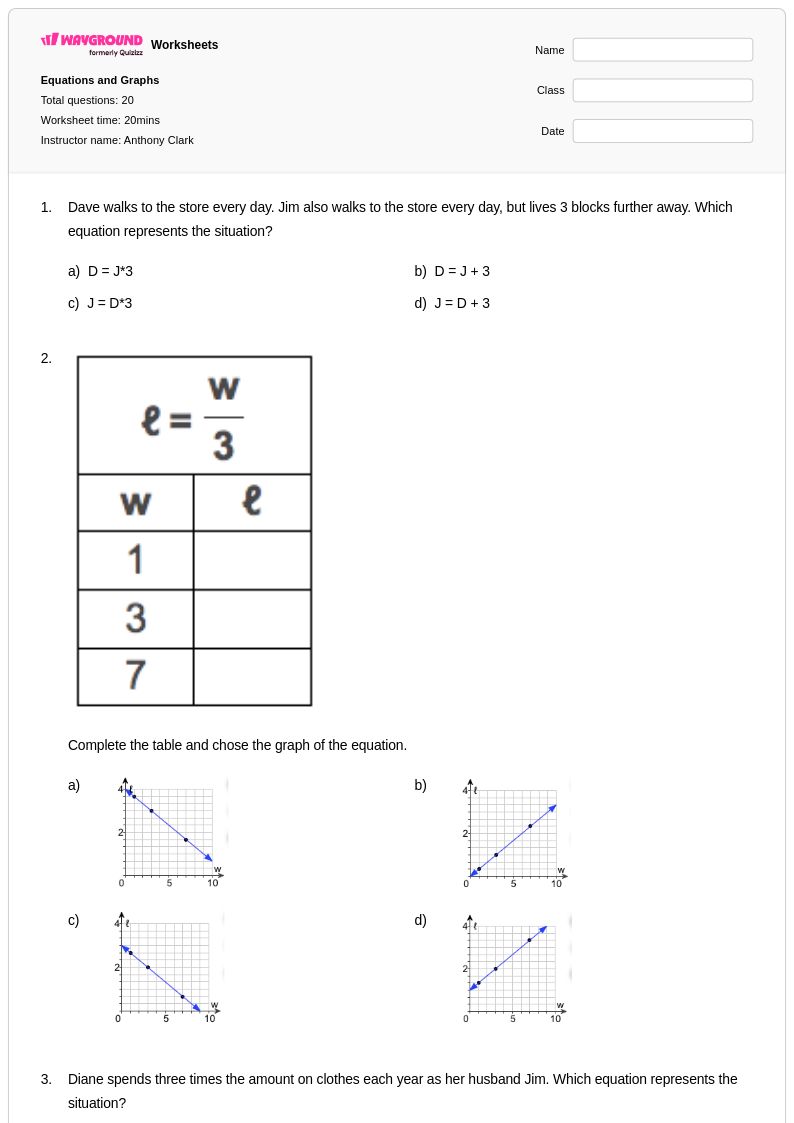
20 Q
6th - Uni
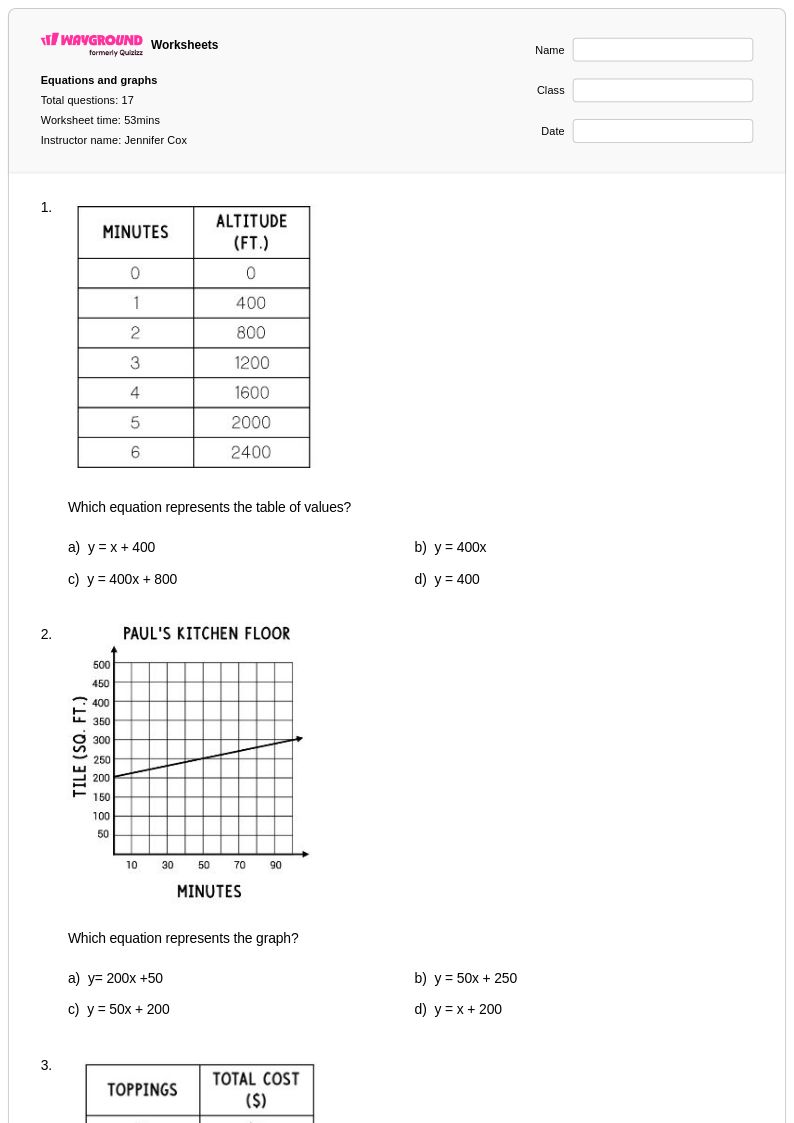
17 Q
6th
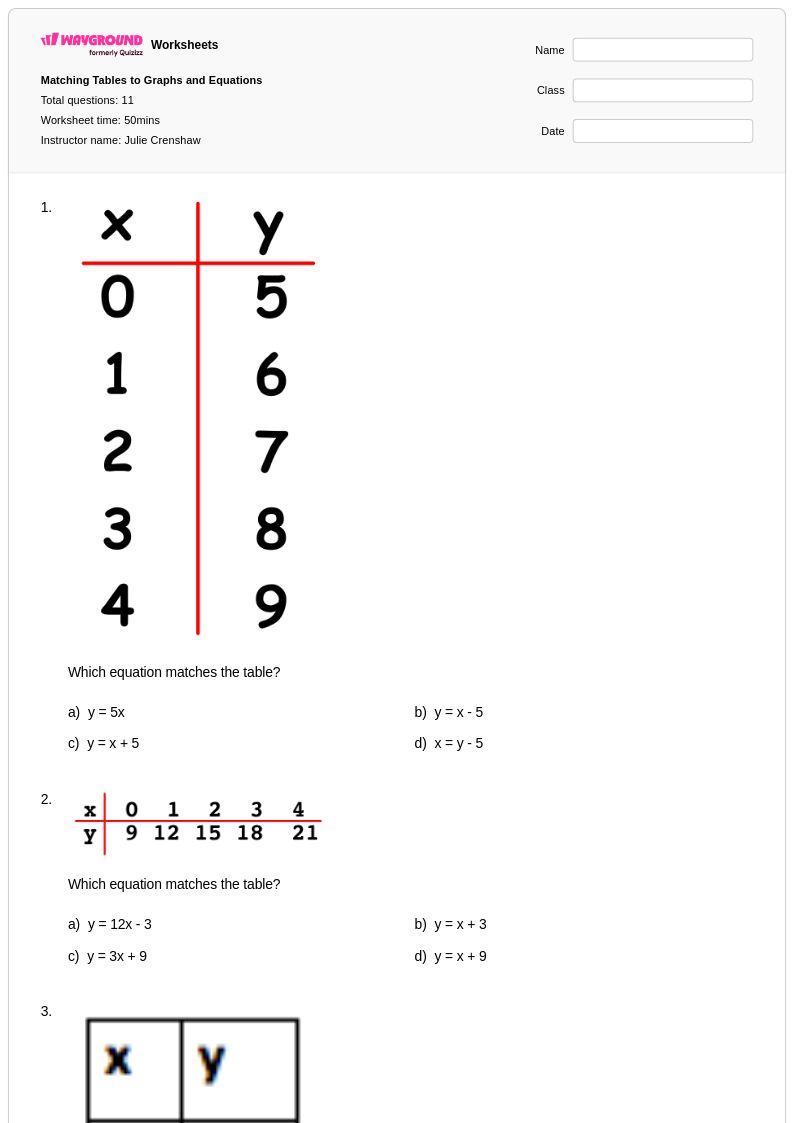
11 Q
5th - 7th
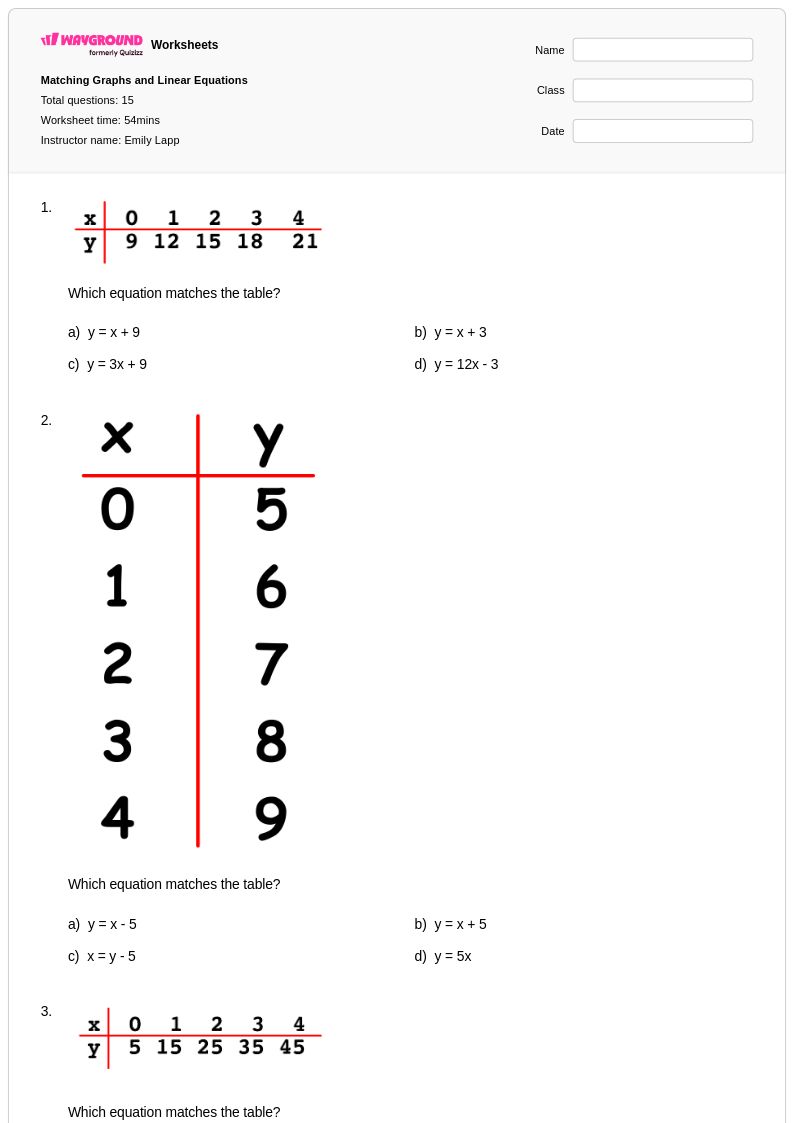
15 Q
6th - 9th
18 Q
6th - 8th
20 Q
6th - Uni
20 Q
6th - Uni
20 Q
6th - Uni
20 Q
6th - 7th
11 Q
6th - 8th
20 Q
6th - Uni
20 Q
6th - Uni
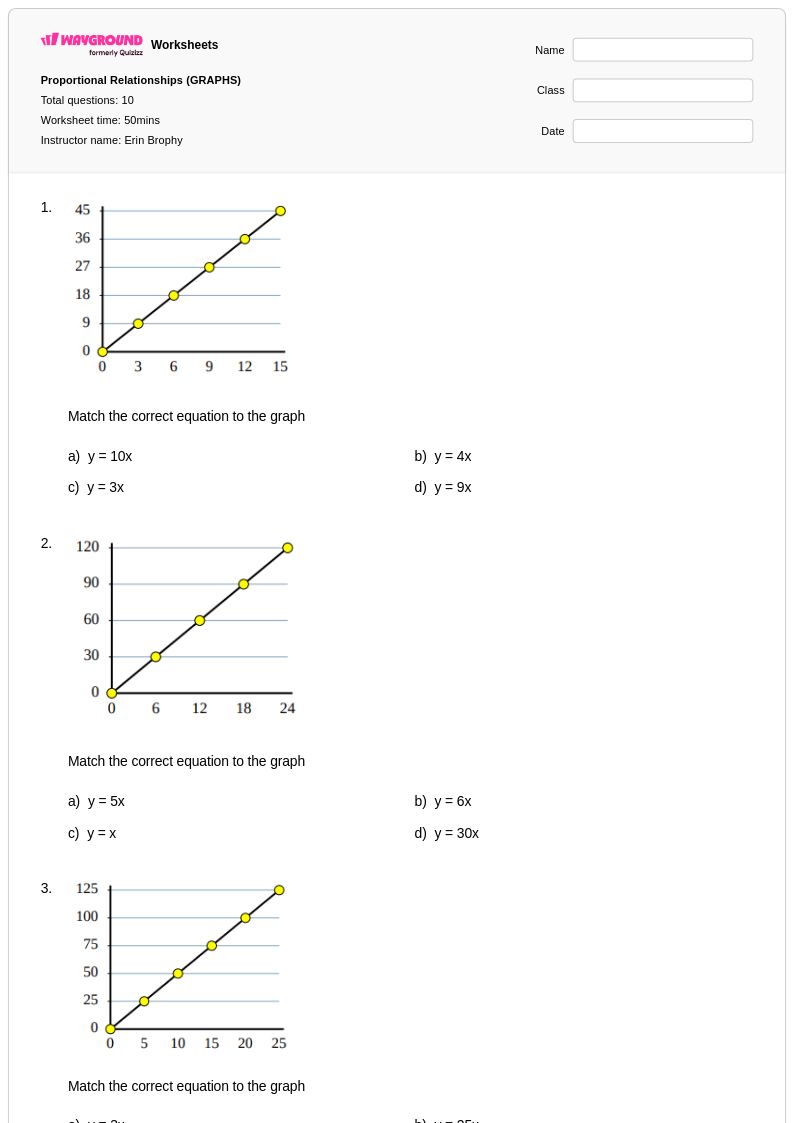
10 Q
6th - 8th
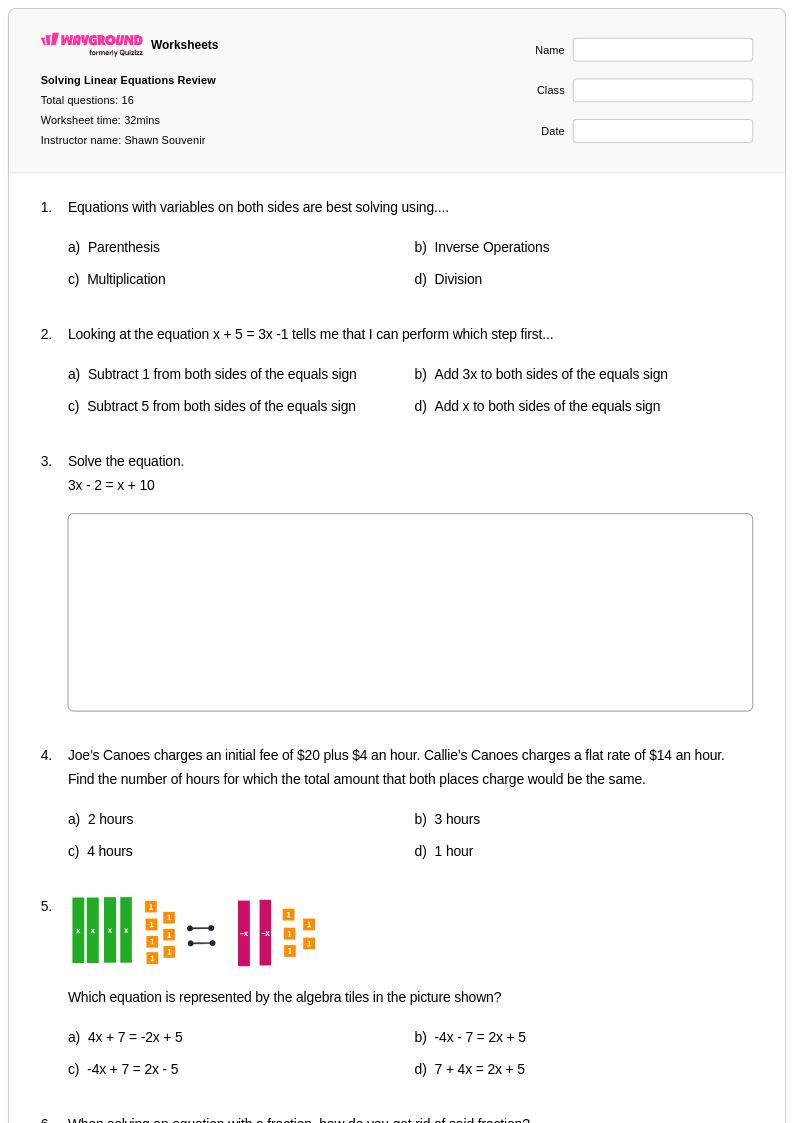
16 Q
6th - 8th
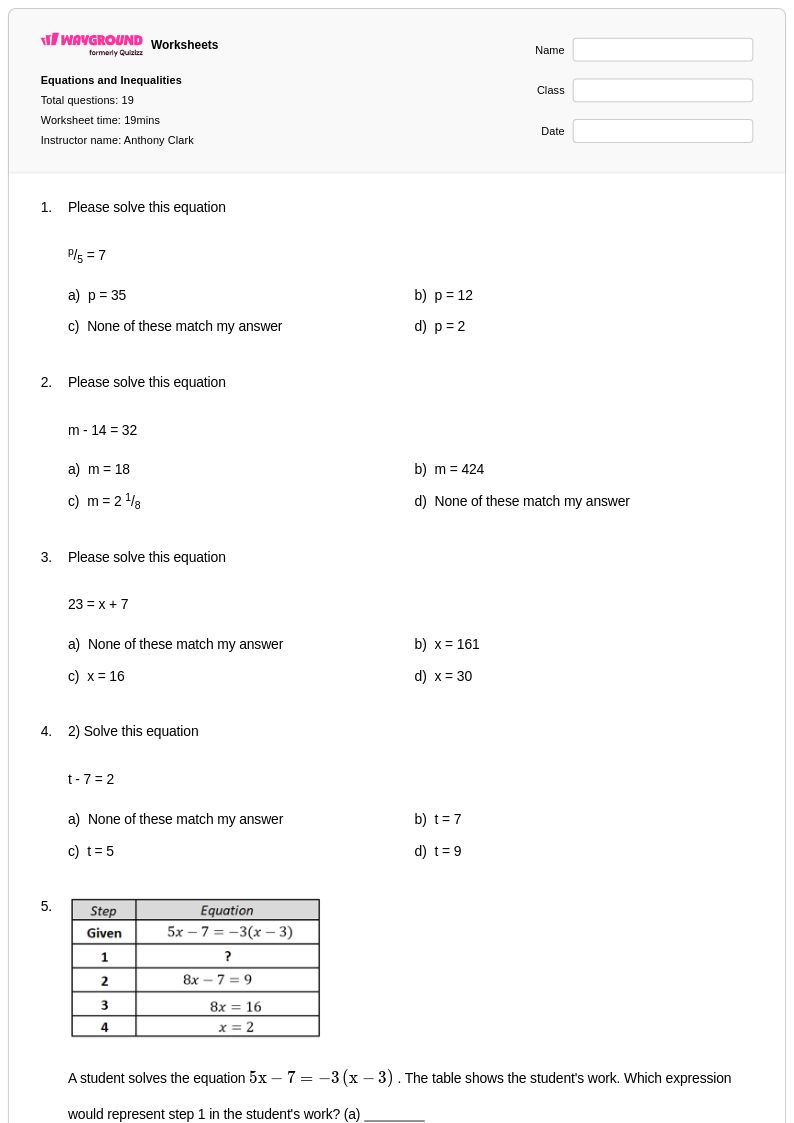
19 Q
6th - Uni
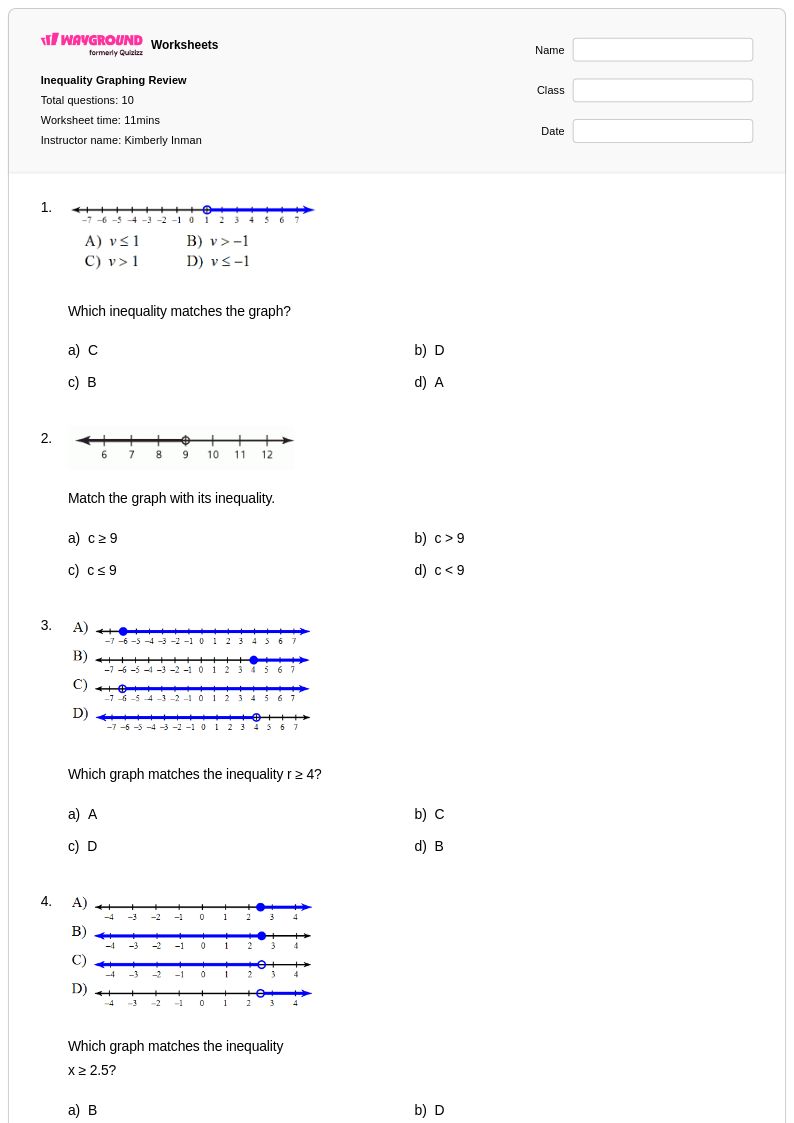
10 Q
6th
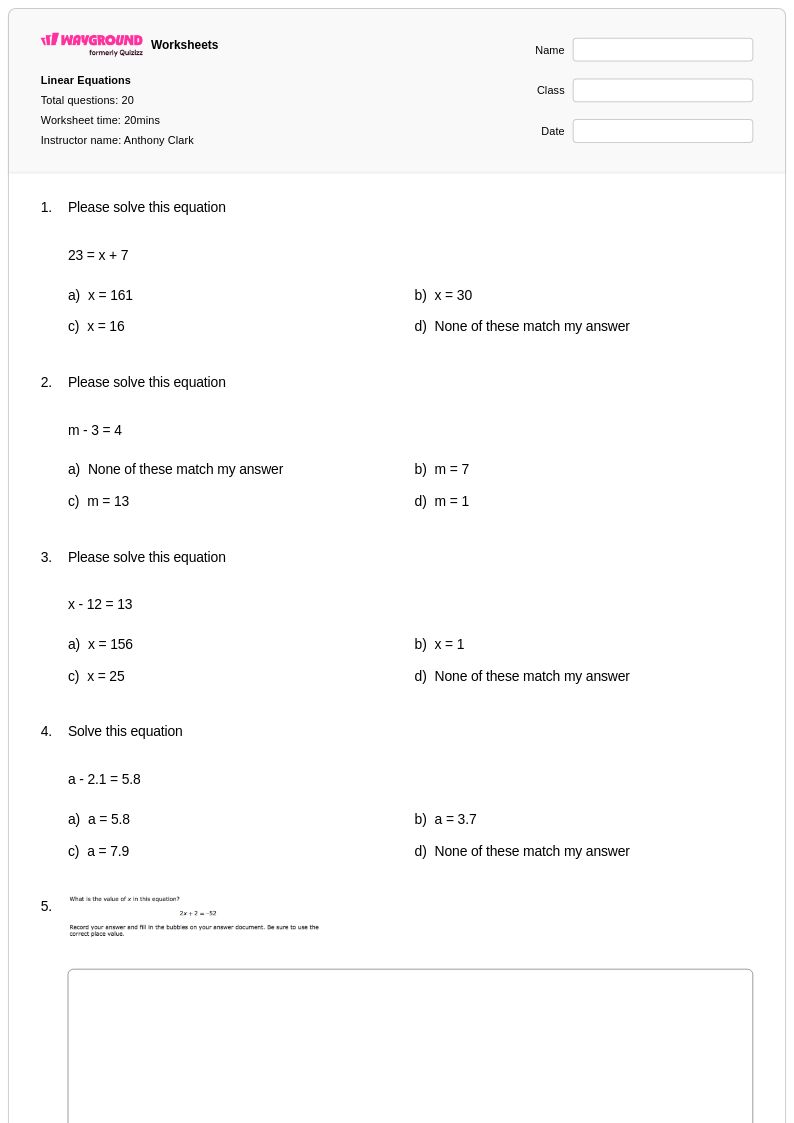
20 Q
6th - Uni
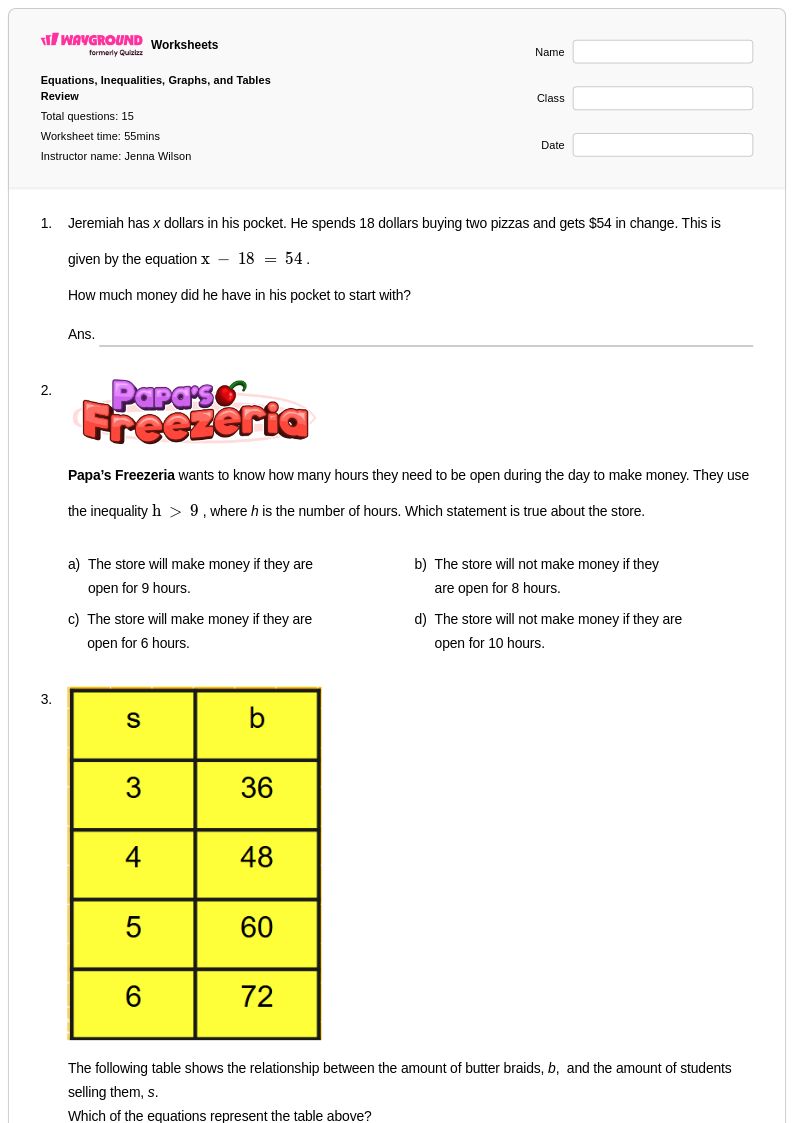
15 Q
6th
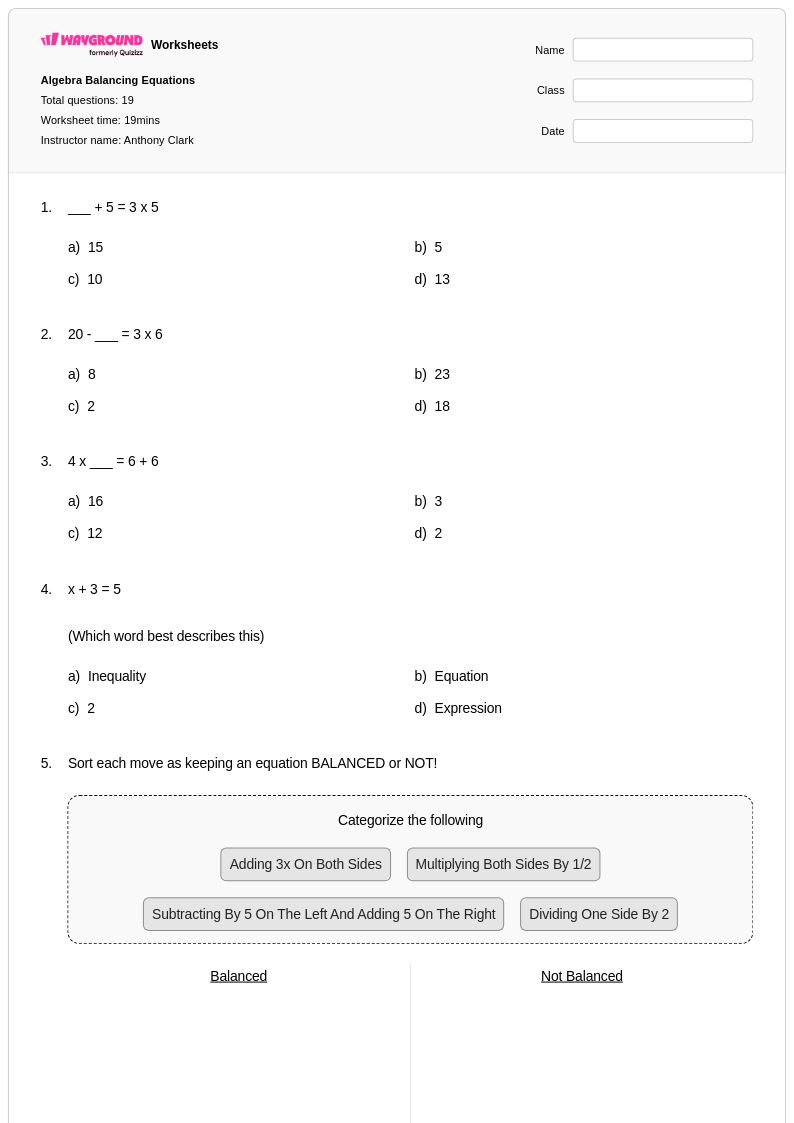
19 Q
6th - Uni
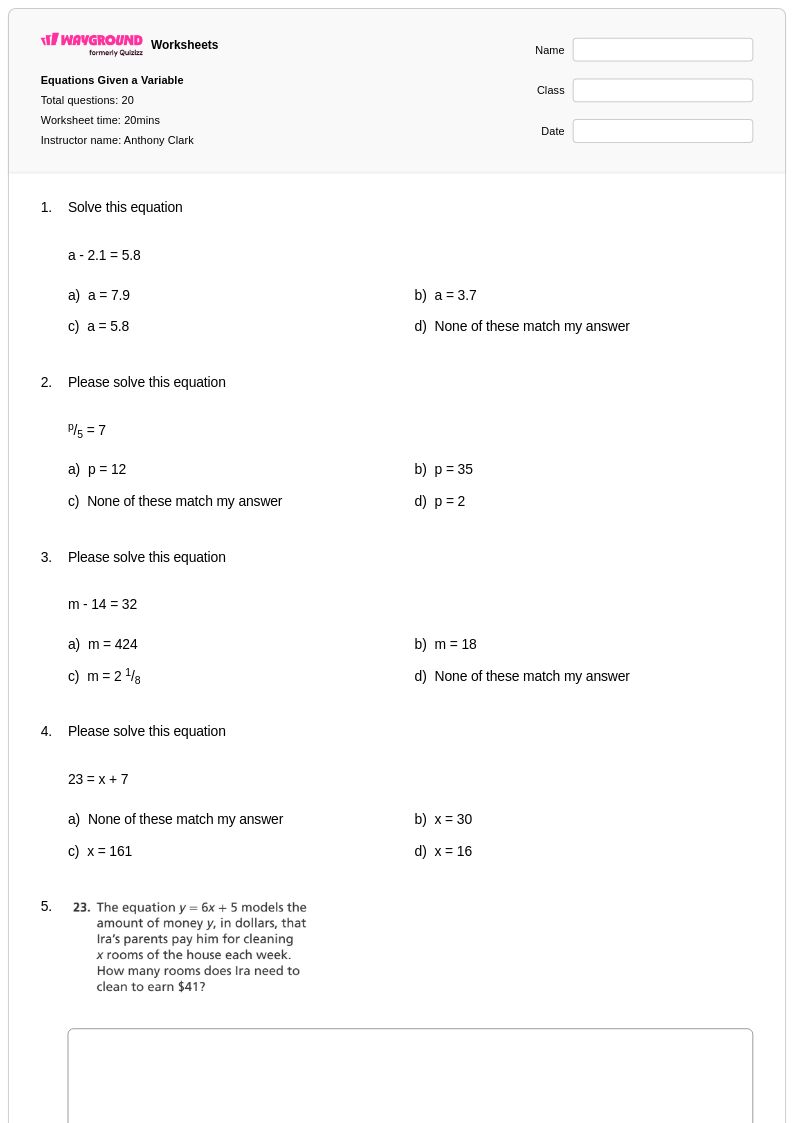
20 Q
6th - Uni
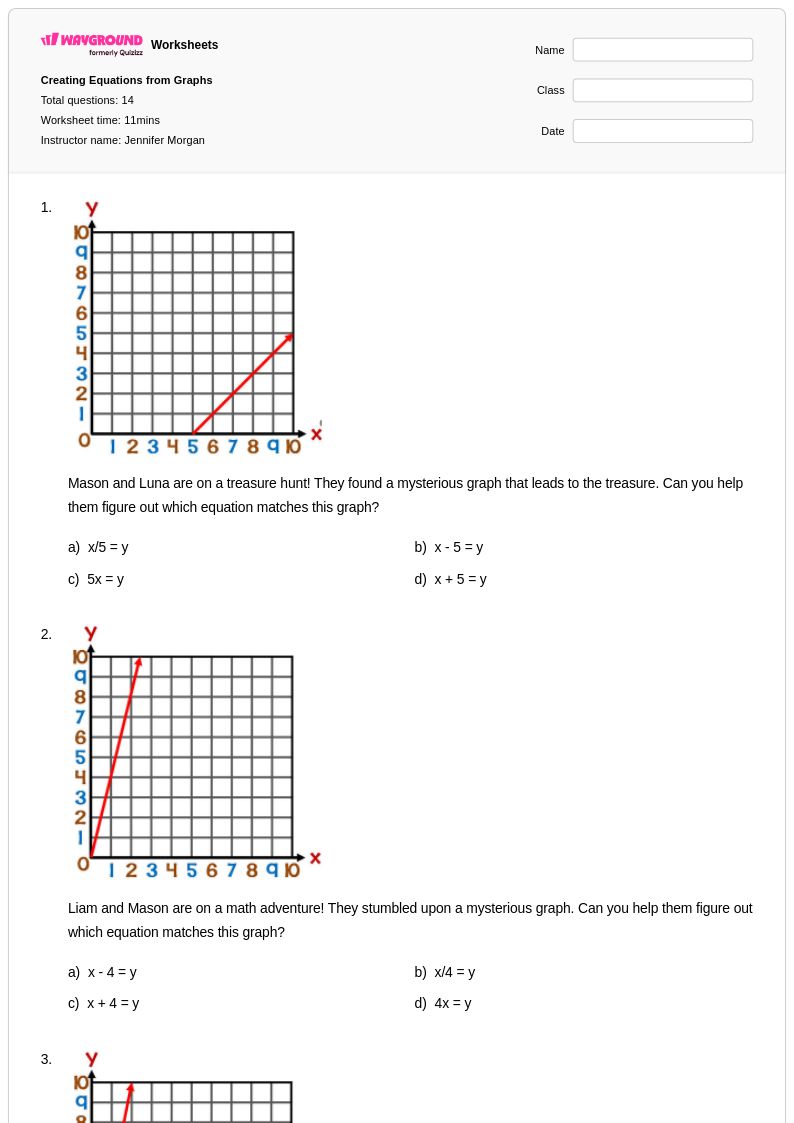
14 Q
6th
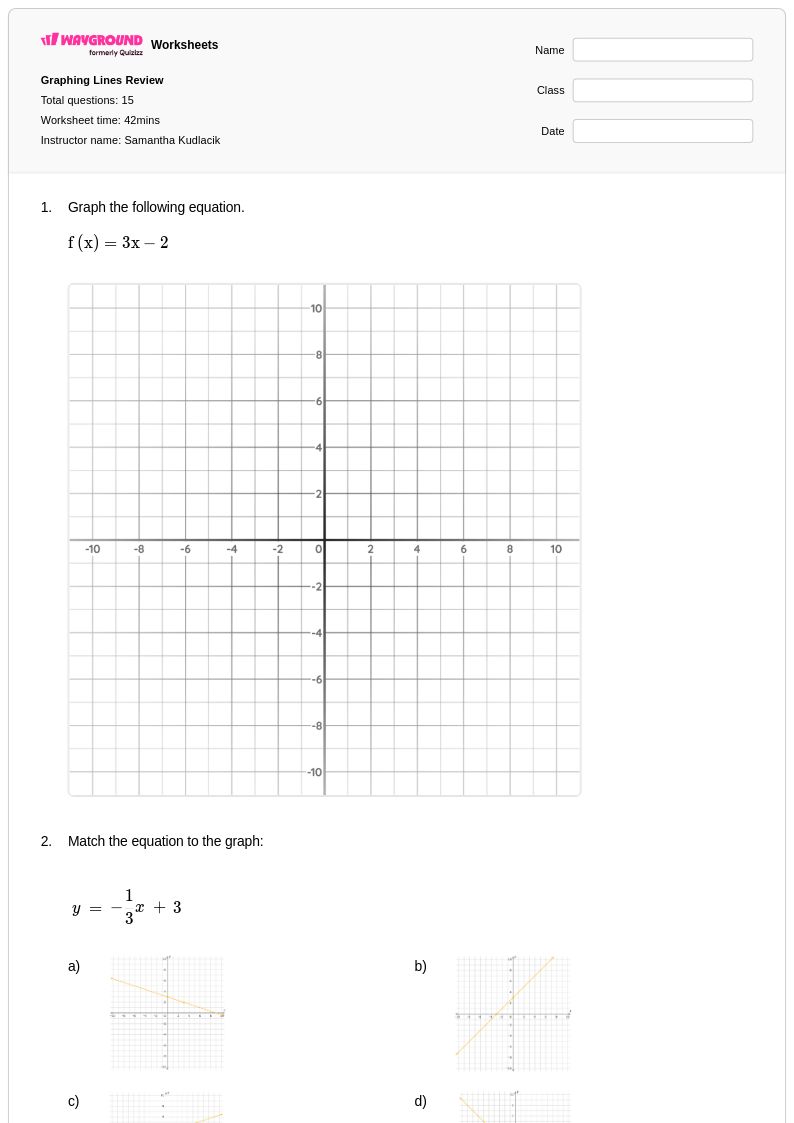
15 Q
6th - 8th
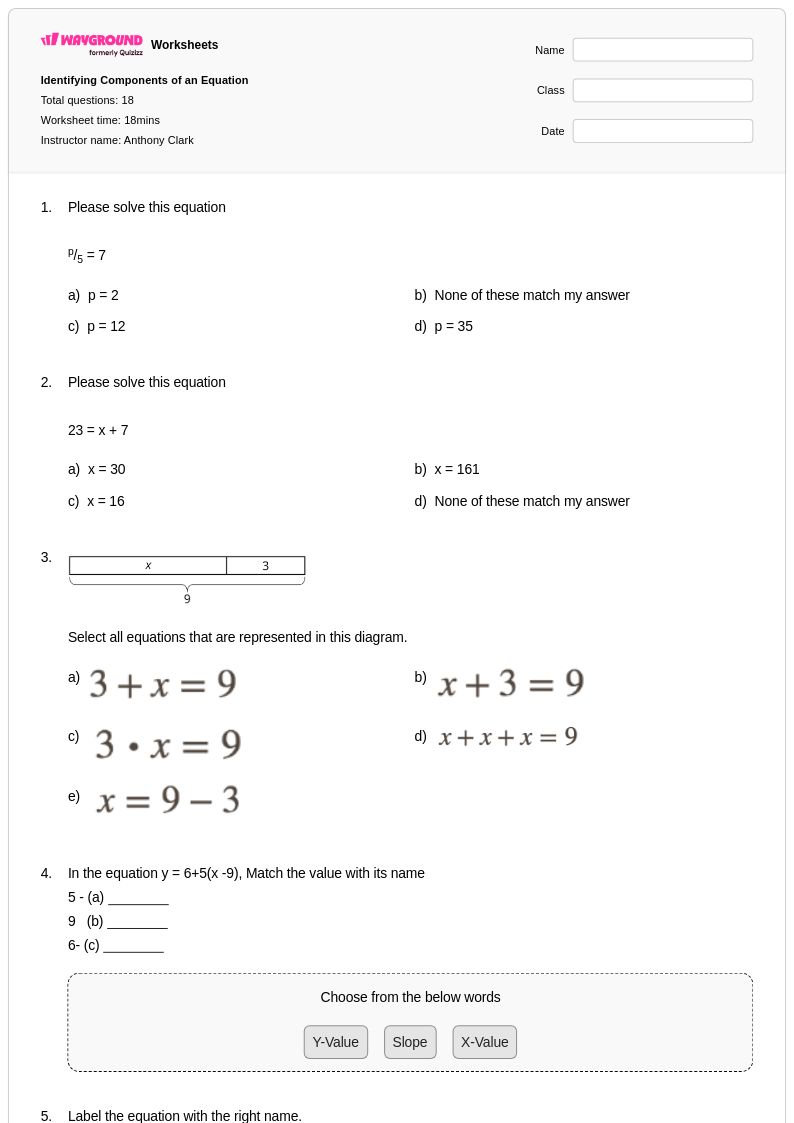
18 Q
6th - Uni
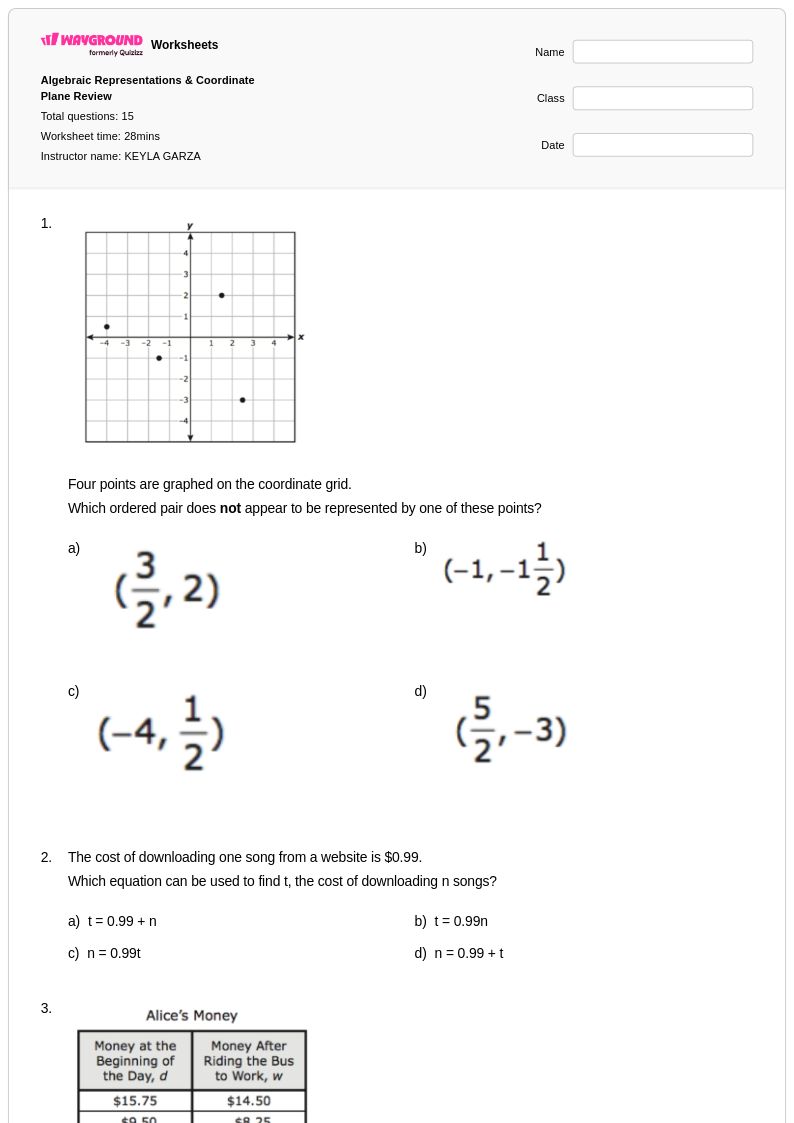
15 Q
6th
Explore Matching Equations and Graphs Worksheets by Grades
Explore Other Subject Worksheets for class 6
Explore printable Matching Equations and Graphs worksheets for Class 6
Matching equations and graphs worksheets for Class 6 students available through Wayground (formerly Quizizz) provide essential practice in connecting algebraic representations with their visual counterparts. These comprehensive resources strengthen students' ability to analyze linear relationships, interpret coordinate plane representations, and develop foundational skills in mathematical visualization that are crucial for advanced algebra concepts. Each worksheet collection includes detailed answer keys and is available as free printables in convenient pdf format, offering educators ready-to-use practice problems that systematically build students' confidence in recognizing patterns between mathematical expressions and their graphical representations.
Wayground (formerly Quizizz) empowers teachers with access to millions of educator-created worksheet resources specifically designed for matching equations and graphs instruction at the Class 6 level. The platform's robust search and filtering capabilities enable quick identification of materials aligned with curriculum standards, while built-in differentiation tools allow seamless customization for diverse learning needs and skill levels. Available in both printable pdf formats and interactive digital versions, these worksheet collections support comprehensive lesson planning, targeted remediation for struggling learners, and enrichment opportunities for advanced students, ensuring that all Class 6 mathematics students receive appropriate skill practice in this fundamental area of algebraic thinking.
FAQs
What do 6th graders learn about matching equations and graphs?
How should I introduce graphing equations to 6th graders?
What exercises help 6th graders practice this skill?
What are common difficulties for 6th graders with coordinate graphing?
How can I use this Grade 6 matching worksheet?
How does this topic align with 6th-grade math standards?