Free Printable Natural Disasters Worksheets for Class 6
Explore Wayground's comprehensive collection of Class 6 natural disasters worksheets and printables that help students understand earthquakes, volcanoes, hurricanes, and other catastrophic events through engaging practice problems, free PDF resources, and complete answer keys.
Explore printable Natural Disasters worksheets for Class 6
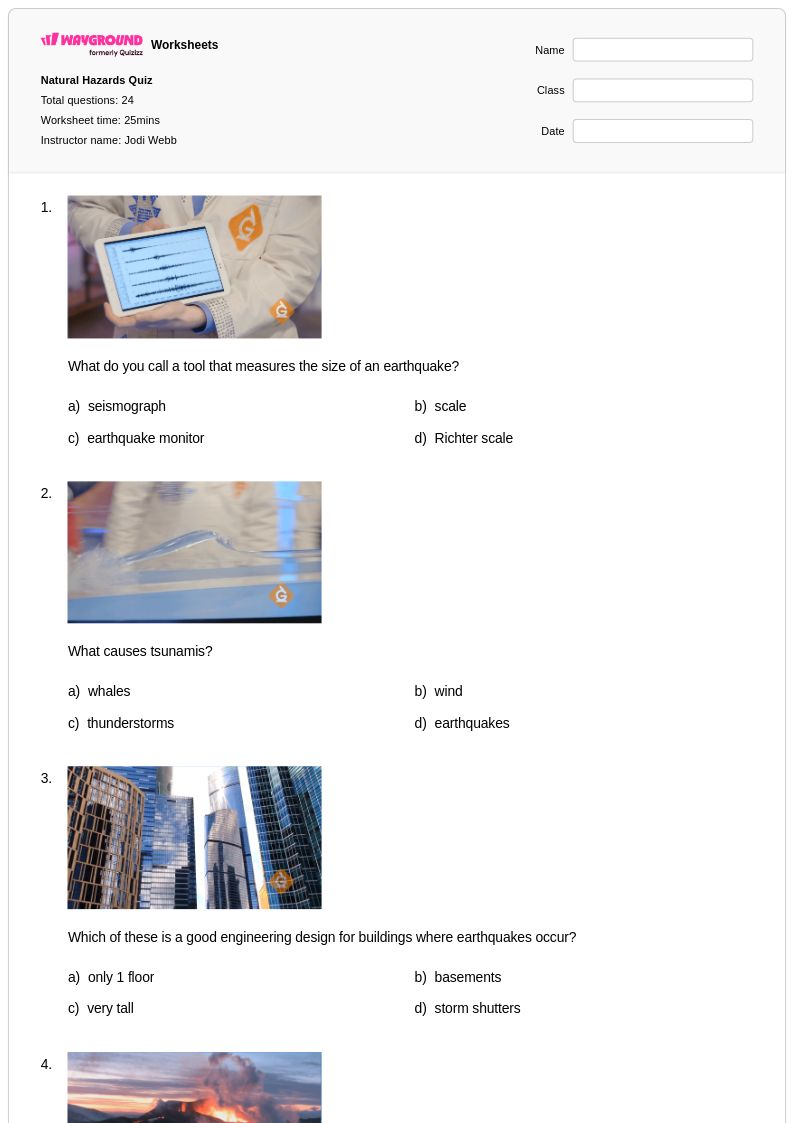
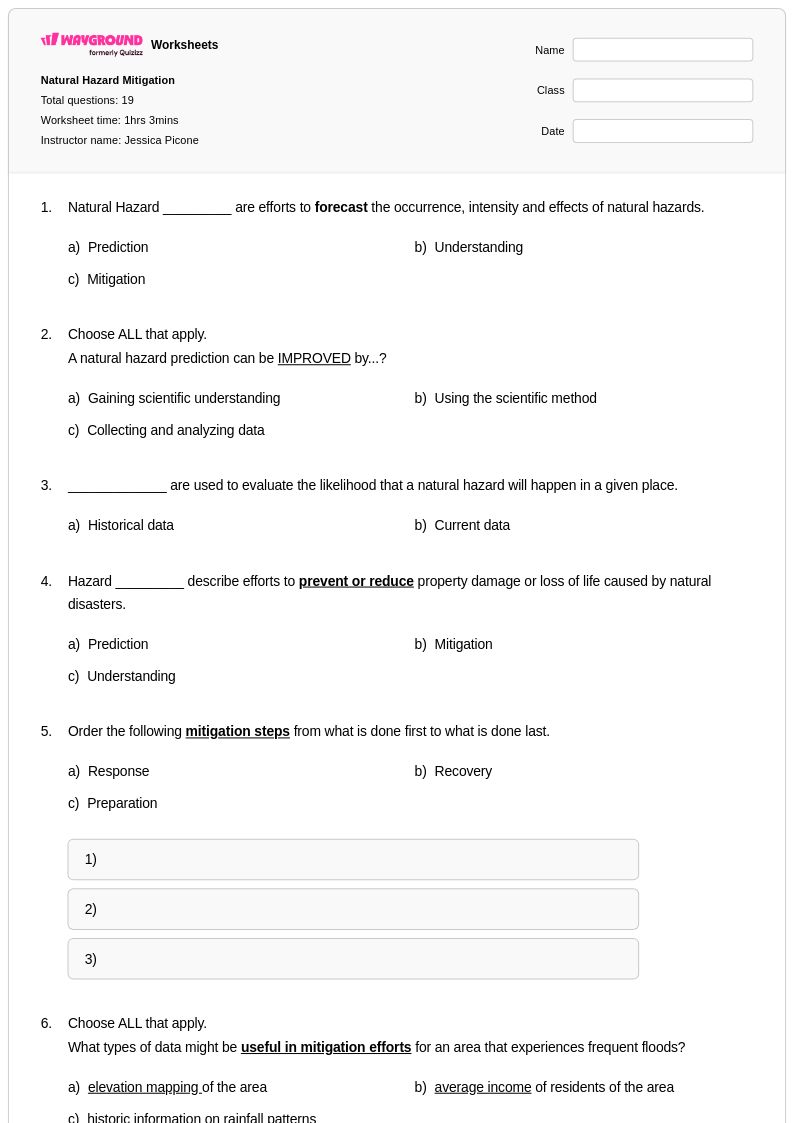
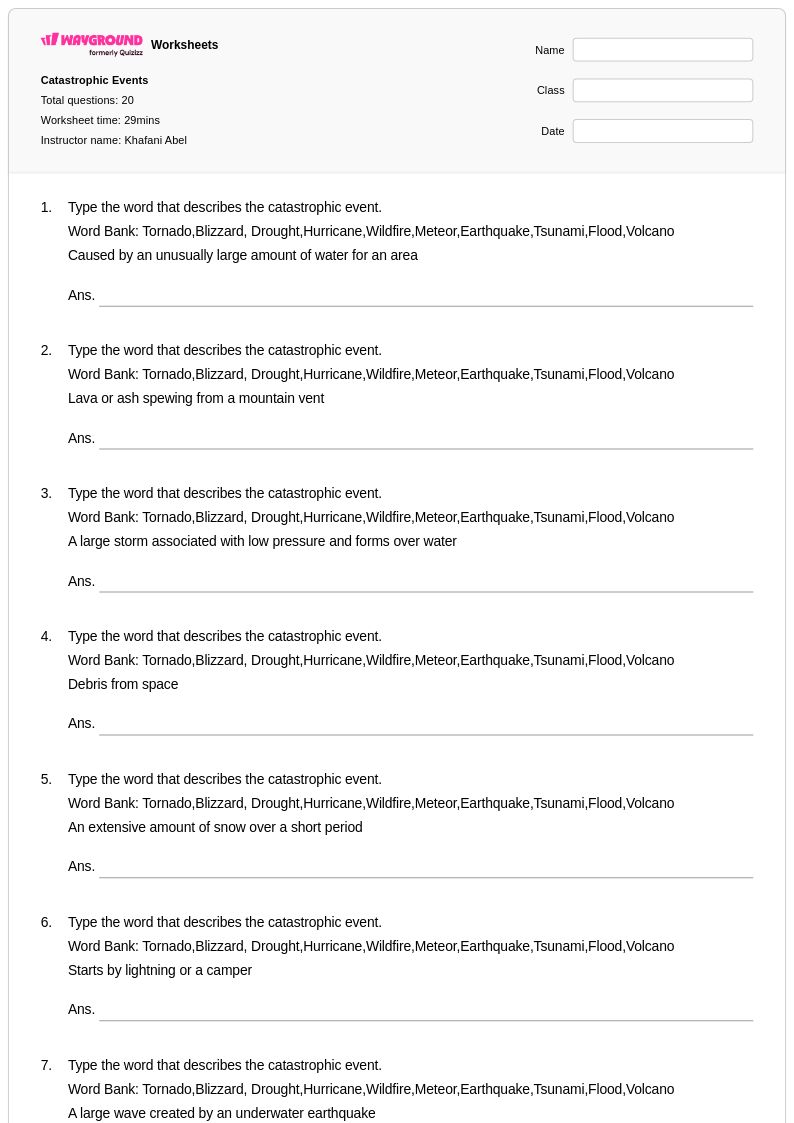
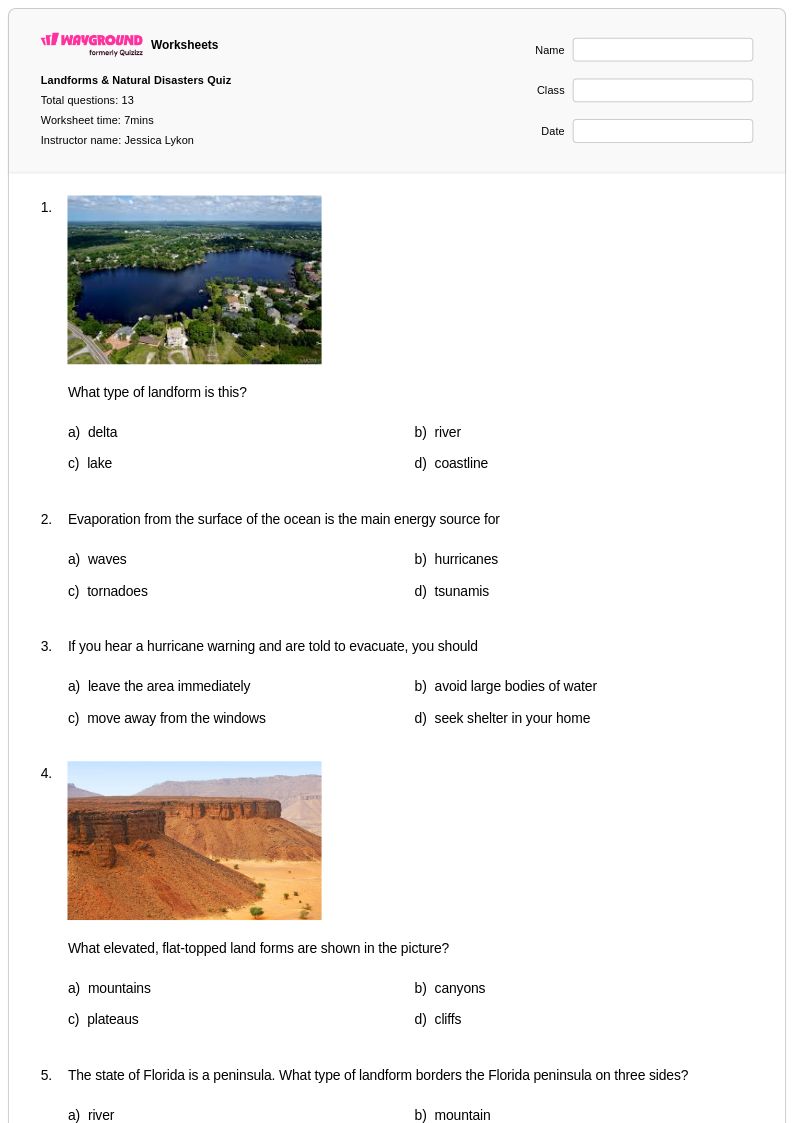
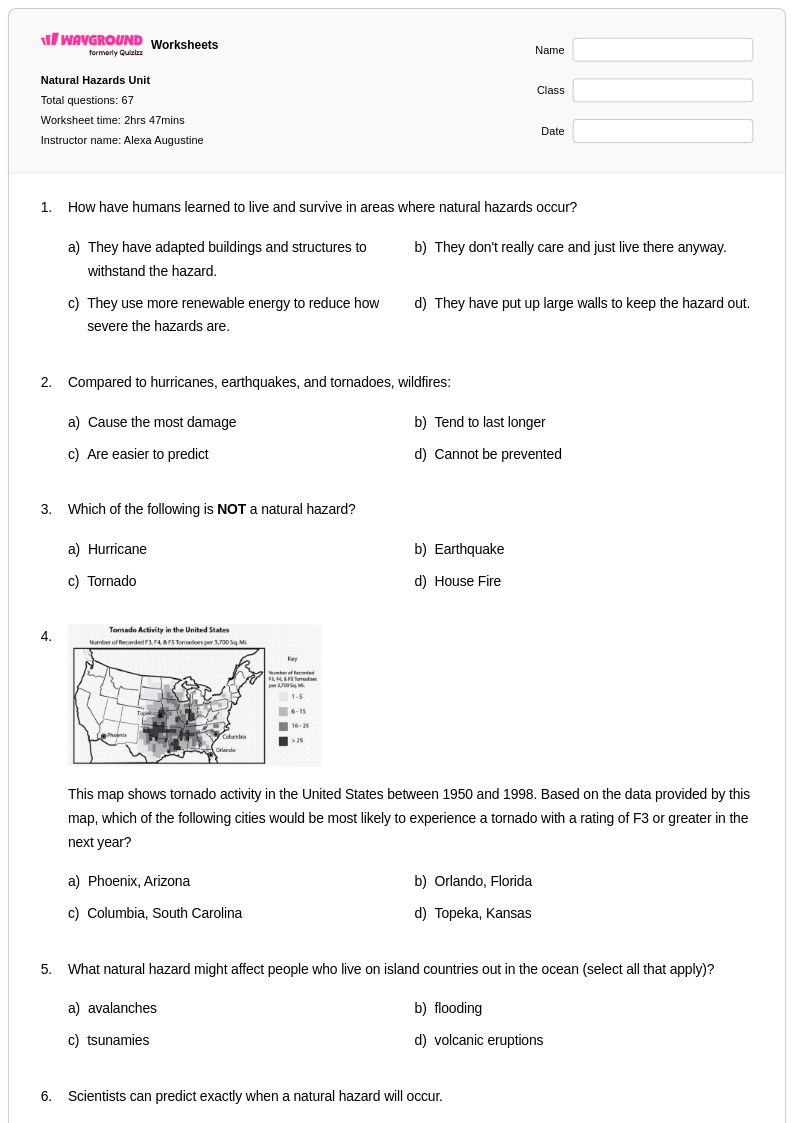
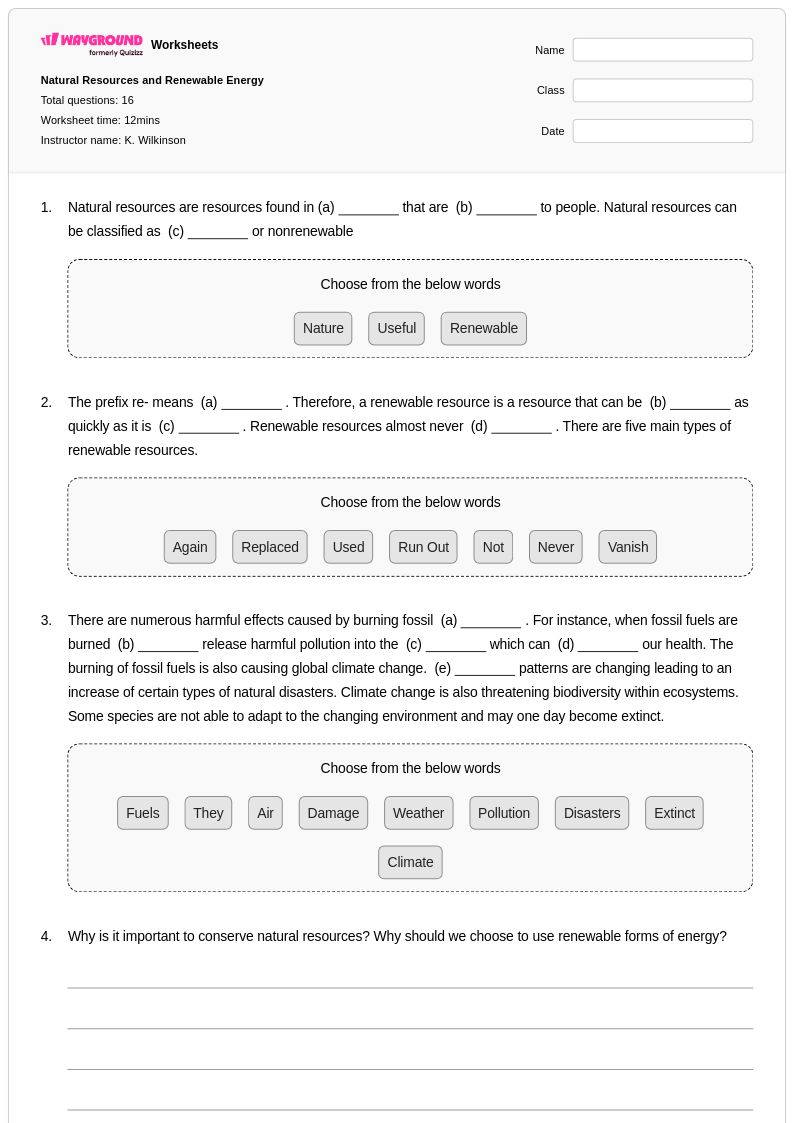
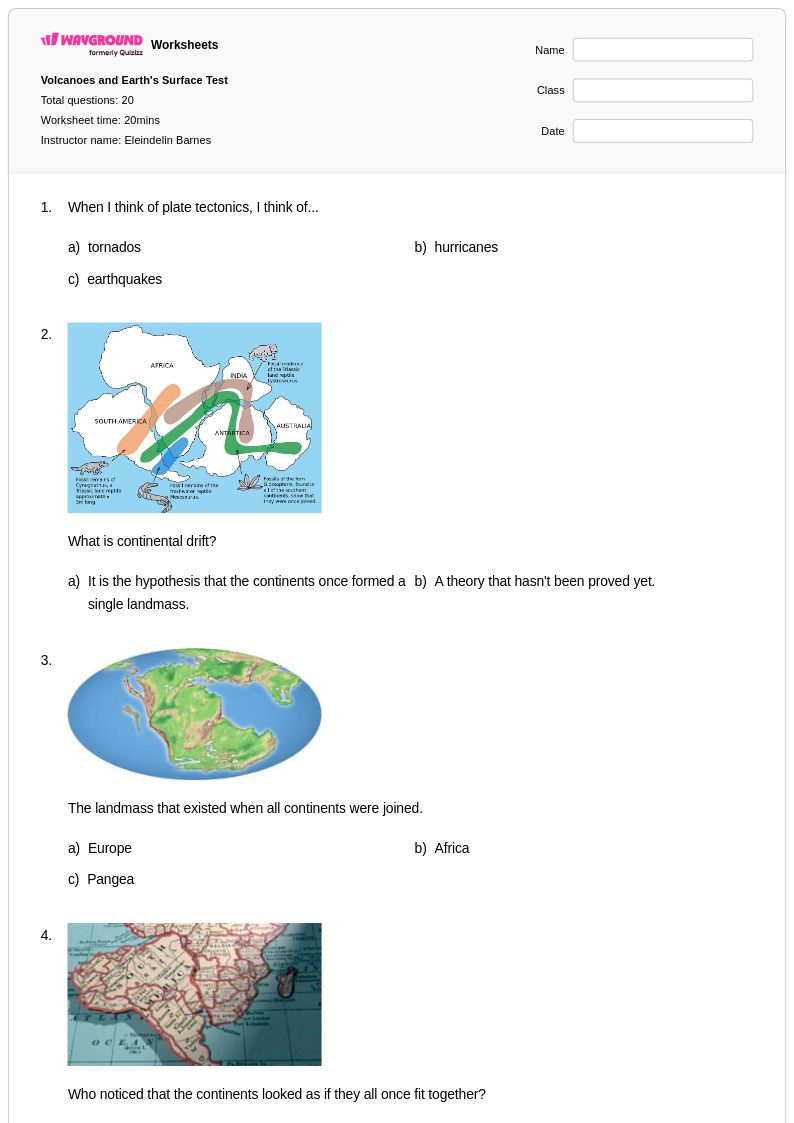
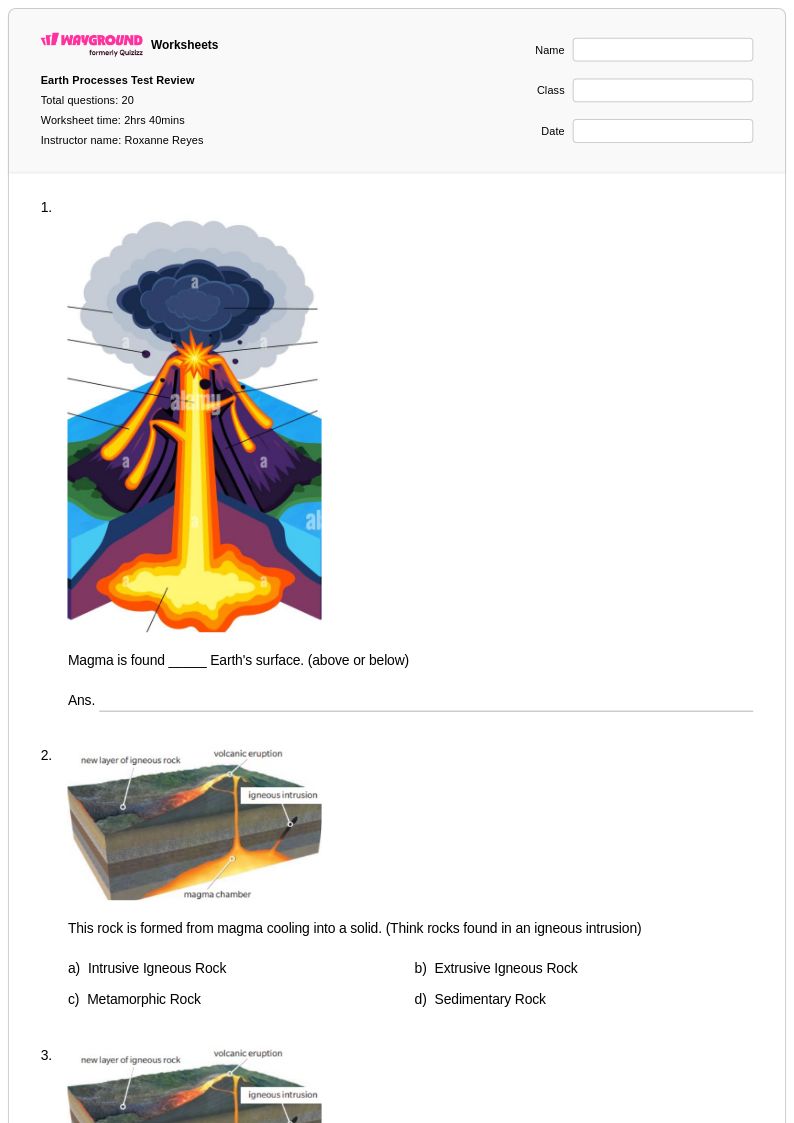
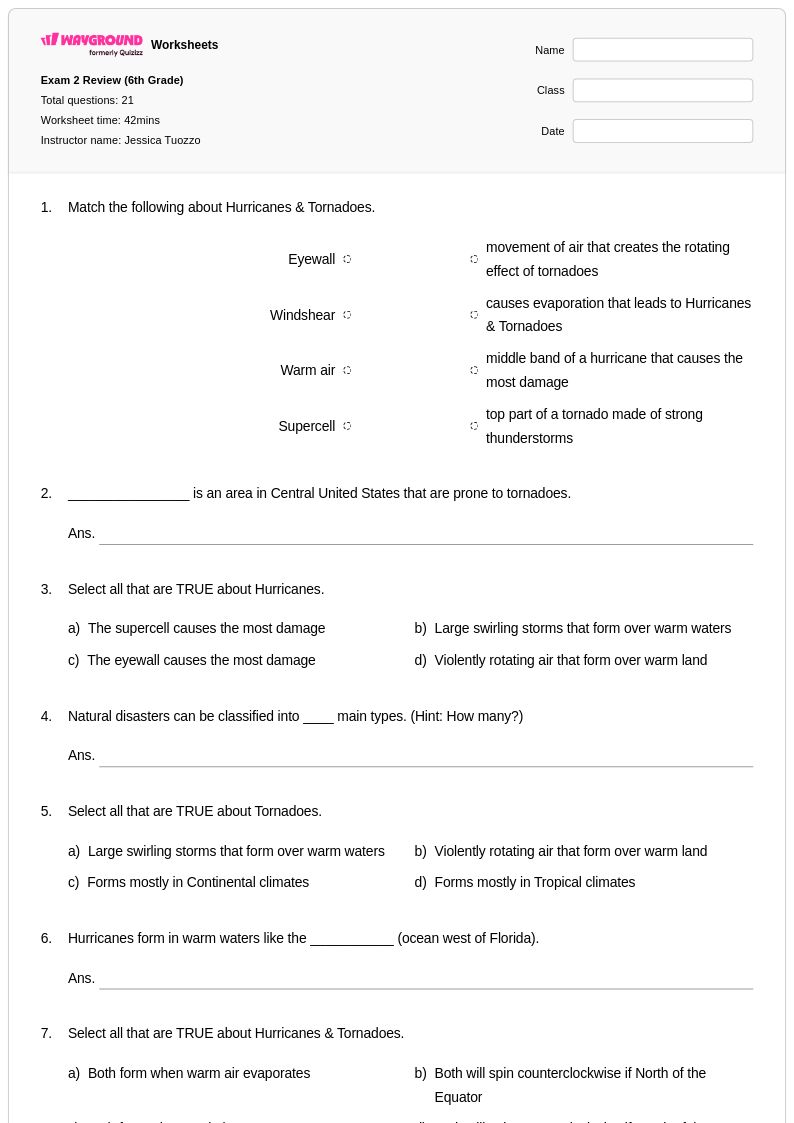
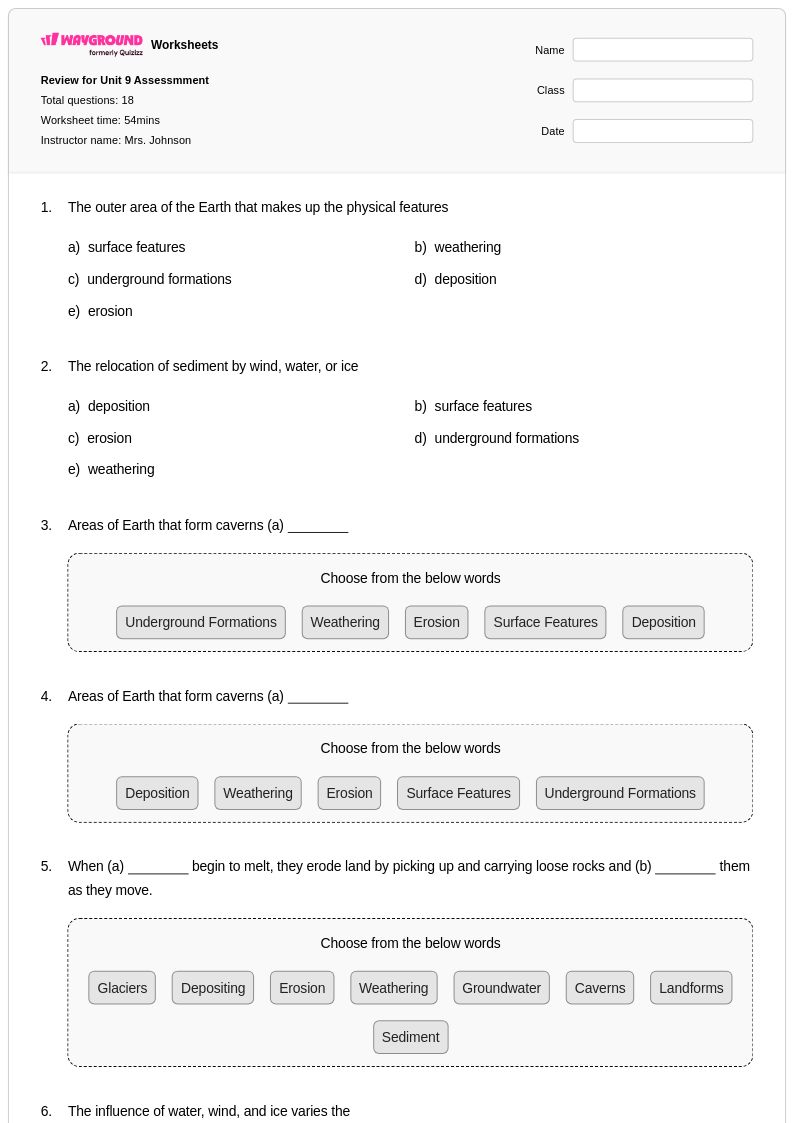
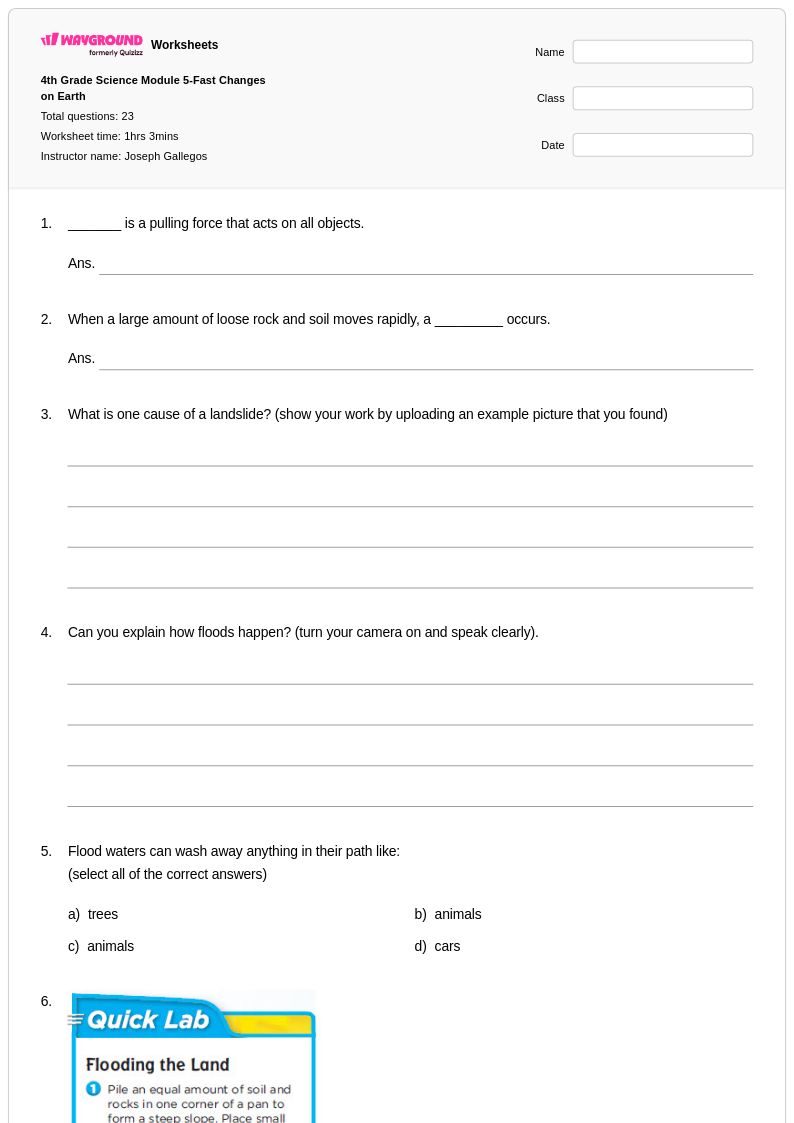
Natural disasters represent one of the most engaging and critically important topics within Class 6 Earth and Space Science curricula, and Wayground's comprehensive worksheet collection provides educators with extensive resources to explore these powerful geological and meteorological phenomena. These expertly crafted worksheets guide sixth-grade students through the fundamental concepts of earthquakes, volcanoes, hurricanes, tornadoes, floods, and other catastrophic events, helping them understand the scientific principles behind these natural occurrences while developing essential analytical and critical thinking skills. Students work through practice problems that challenge them to identify disaster patterns, analyze cause-and-effect relationships, and evaluate the impact of natural disasters on human populations and ecosystems. Each worksheet comes complete with detailed answer keys, ensuring teachers can efficiently assess student understanding, while the free printable format allows for flexible classroom implementation and individual student practice.
Wayground's platform, formerly known as Quizizz, empowers educators with access to millions of teacher-created natural disaster worksheets and related Earth science resources, all organized through sophisticated search and filtering capabilities that allow for precise content discovery based on specific learning objectives and student needs. The platform's robust standards alignment features ensure that Class 6 natural disaster worksheets meet curriculum requirements, while built-in differentiation tools enable teachers to customize content difficulty and complexity to match diverse learning levels within their classrooms. Whether educators need materials for initial concept introduction, targeted skill remediation, or advanced enrichment activities, the platform's flexible digital and PDF formats provide seamless integration into any instructional approach. This comprehensive resource ecosystem streamlines lesson planning while offering teachers the confidence that comes from accessing professionally developed, peer-reviewed educational materials that effectively support student mastery of natural disaster concepts and broader Earth science literacy.
FAQs
How do I teach natural disasters in a science classroom?
Effective natural disaster instruction connects Earth science concepts to real-world events students already know about. Start by building foundational knowledge of Earth's systems — tectonic plates, atmospheric pressure, and ocean dynamics — before exploring how disruptions in those systems produce earthquakes, hurricanes, or tsunamis. Using case studies of historical disasters helps students see scientific principles in action and grounds abstract content in meaningful context. Pairing direct instruction with data analysis tasks, such as interpreting seismic graphs or tracking hurricane paths, deepens conceptual understanding.
What are good practice activities for a natural disasters unit?
Strong practice activities for natural disasters push students beyond memorization and into analysis. Exercises that ask students to interpret seismic data, compare disaster patterns across regions, or evaluate the relationship between geological processes and human impact build the critical thinking skills this topic demands. Worksheets that include diverse problem types — short answer, diagram labeling, case study analysis, and risk assessment prompts — are especially effective because they mirror the multi-dimensional nature of real disaster science.
What misconceptions do students commonly have about natural disasters?
One of the most persistent misconceptions is that natural disasters are entirely unpredictable and random, when in reality most follow patterns tied to specific geological or meteorological conditions. Students also frequently conflate the magnitude of a disaster with its impact, not accounting for variables like population density, infrastructure quality, and preparedness. Another common error is treating disaster types as isolated events rather than recognizing how Earth's systems are interconnected — for example, how a volcanic eruption can trigger a tsunami or affect regional climate.
How can I differentiate natural disasters worksheets for students with different learning needs?
Differentiation for a natural disasters unit can involve modifying the complexity of data sets students analyze, adjusting the number of answer choices in practice problems, or providing audio support for students who struggle with dense science reading. On Wayground, teachers can apply student-level accommodations including Read Aloud for text-heavy questions, reduced answer choices to lower cognitive load for select students, and extended time settings — all configurable per student without disrupting the rest of the class.
How do I use natural disasters worksheets on Wayground?
Natural disasters worksheets on Wayground are available as printable PDFs for traditional classroom use and in digital formats for technology-integrated environments, including the option to host them as a quiz directly on the platform. Teachers can search and filter resources to find worksheets aligned with specific disaster types, grade levels, or curriculum standards. Each worksheet includes a complete answer key, making it straightforward to provide targeted feedback after practice or assessment sessions.
How do natural disasters connect to Earth and space science standards?
Natural disasters are a central thread in Earth and space science curricula because they require students to apply knowledge of tectonic activity, atmospheric systems, and ocean behavior in integrated ways. Most state standards expect students to explain the causes of geological events like earthquakes and volcanic eruptions, analyze weather-related hazards such as hurricanes and tornadoes, and evaluate the impact of these events on human populations and environments. Teaching natural disasters through a standards-aligned lens also develops scientific literacy skills students will apply across other Earth science topics.