Free Printable Nazism and the Rise of Hitler worksheets
Explore Wayground's free Nazism and the Rise of Hitler worksheets and printables that help students analyze historical events, political movements, and key figures through engaging practice problems with comprehensive answer keys.
Explore printable Nazism and the Rise of Hitler worksheets
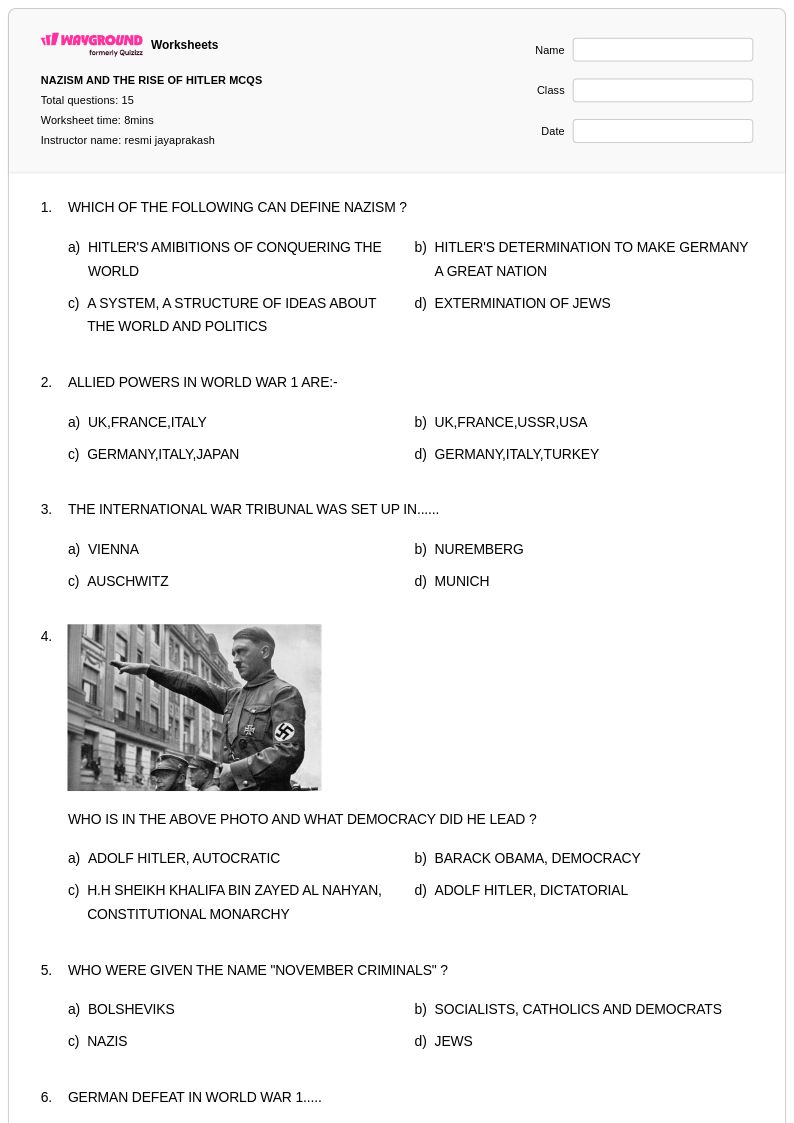
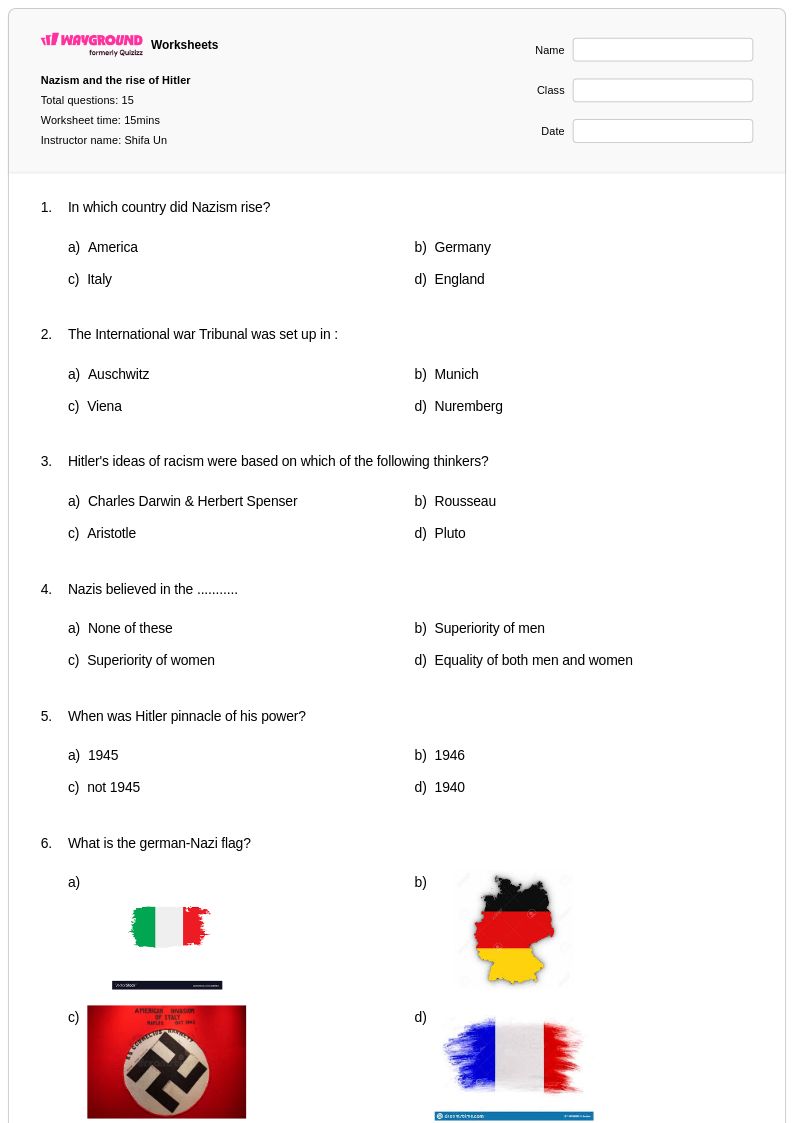
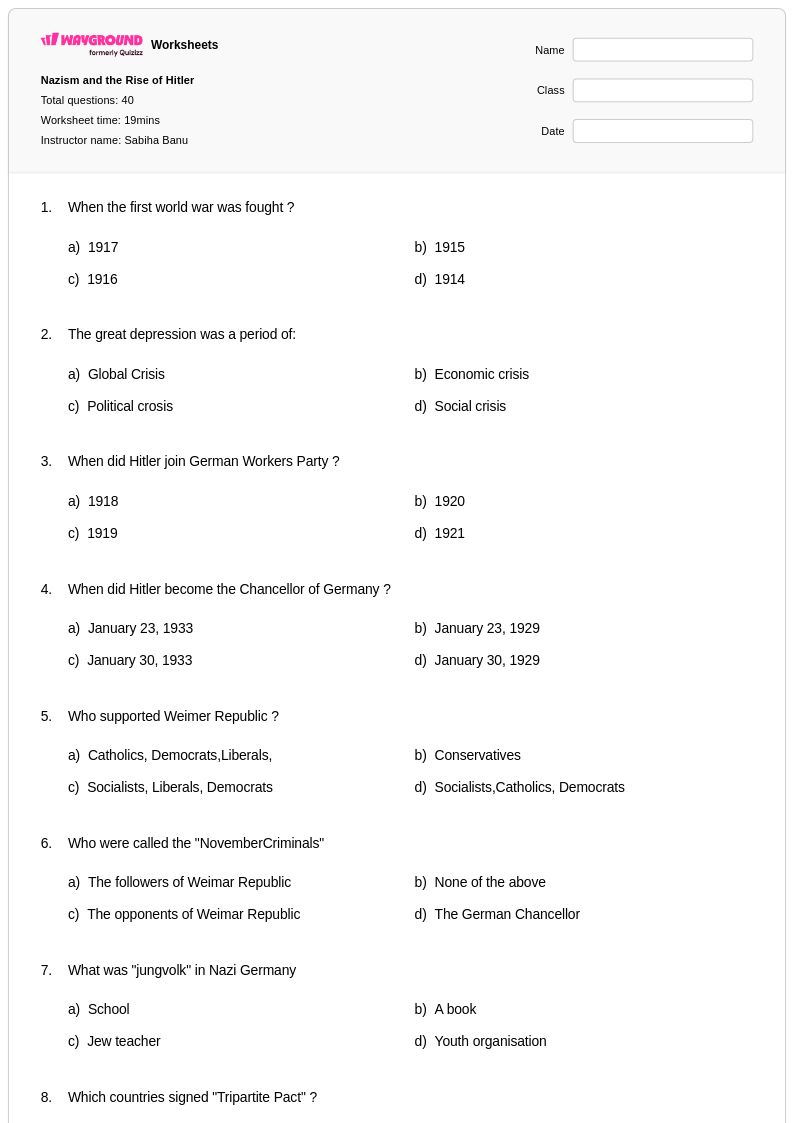
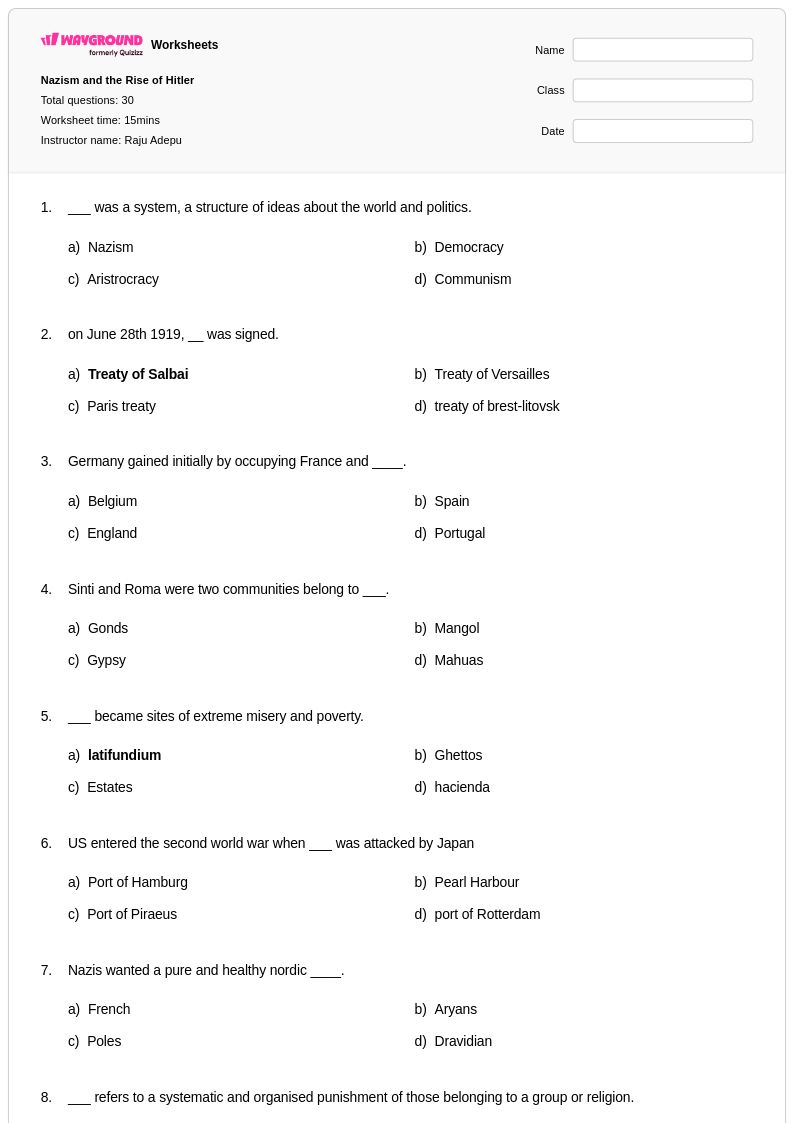
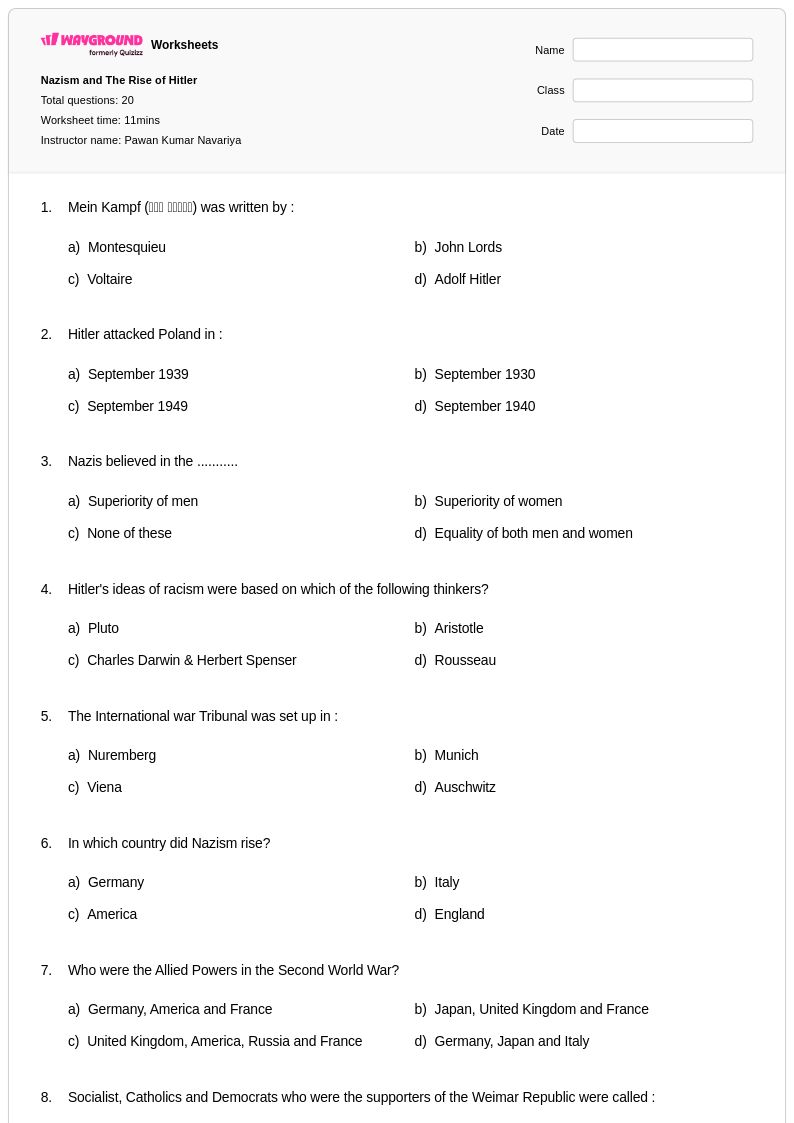
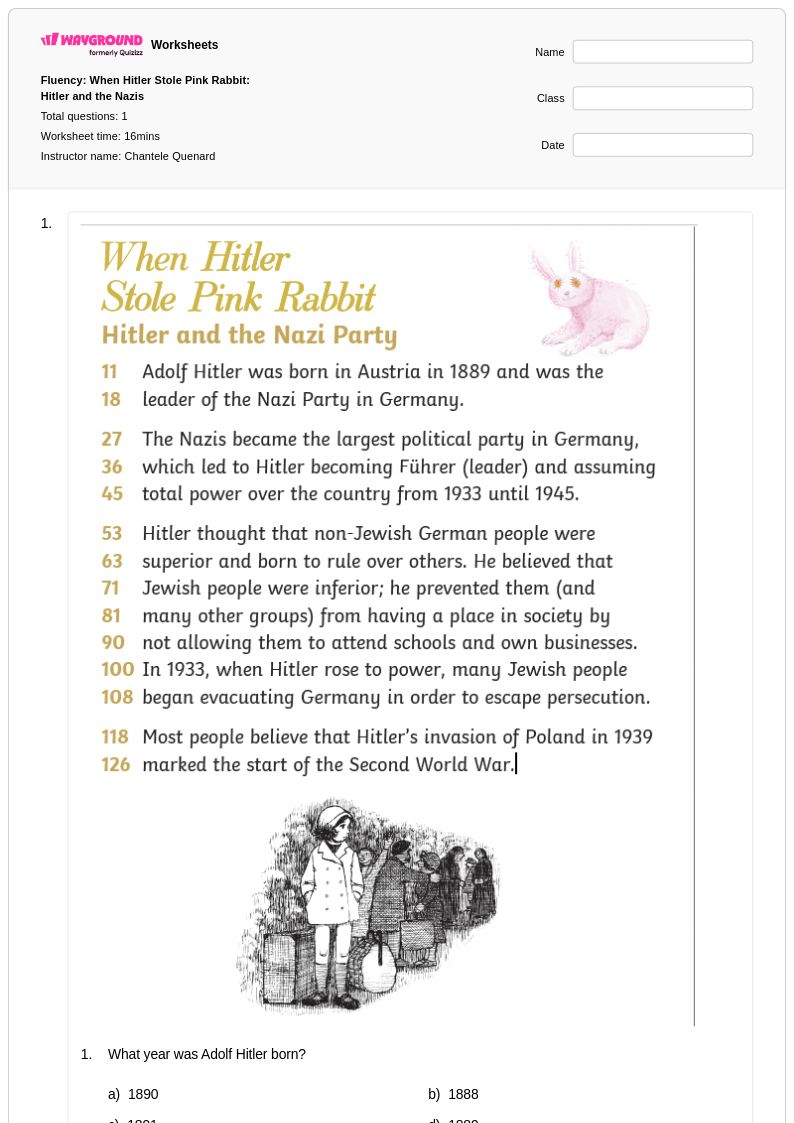
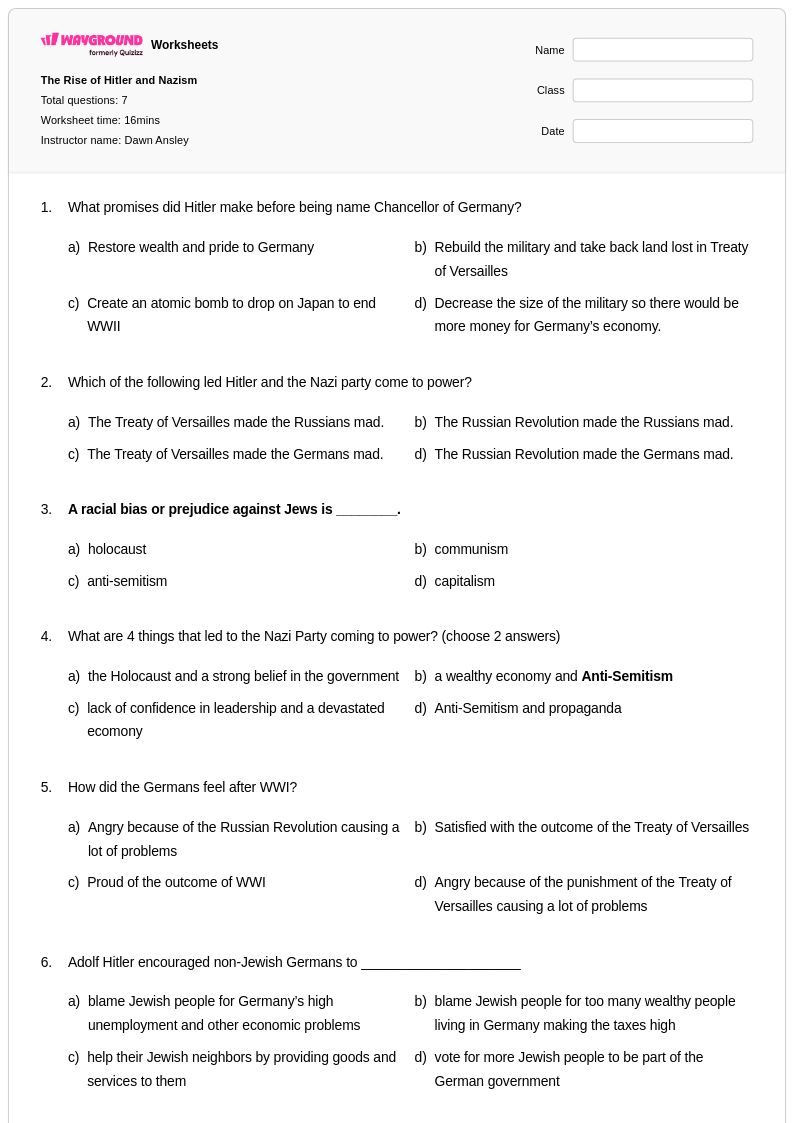
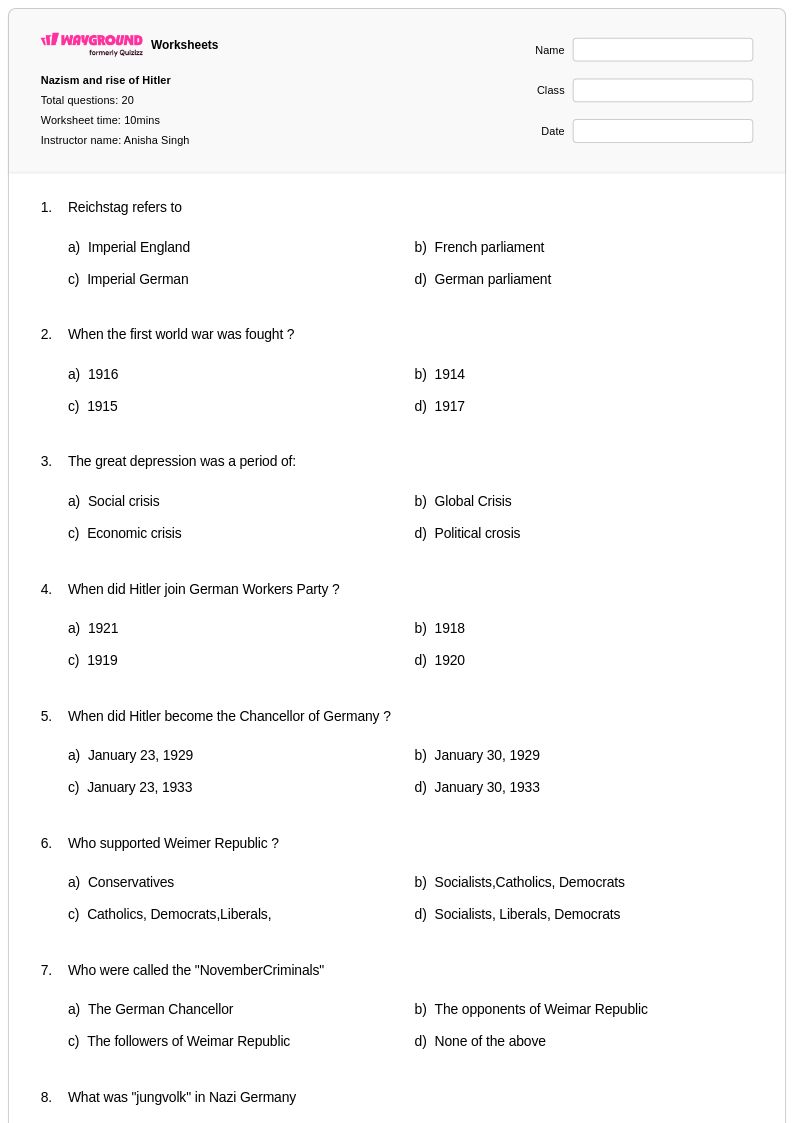
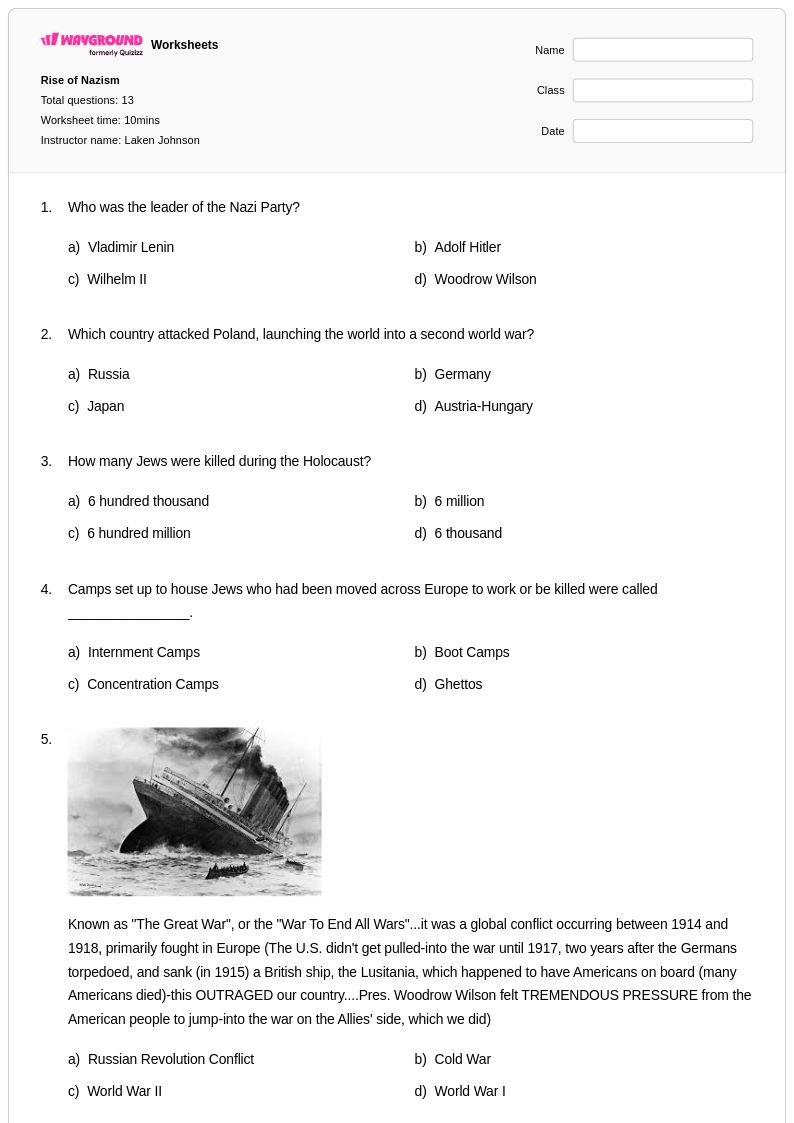
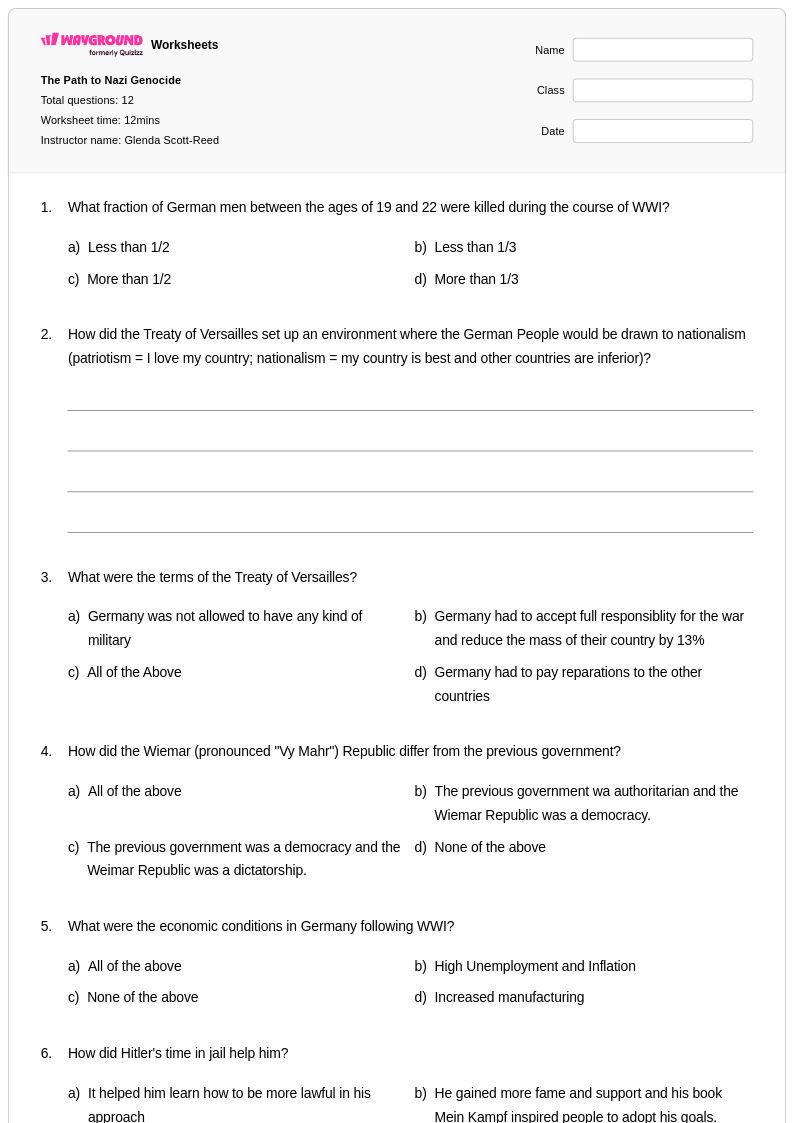
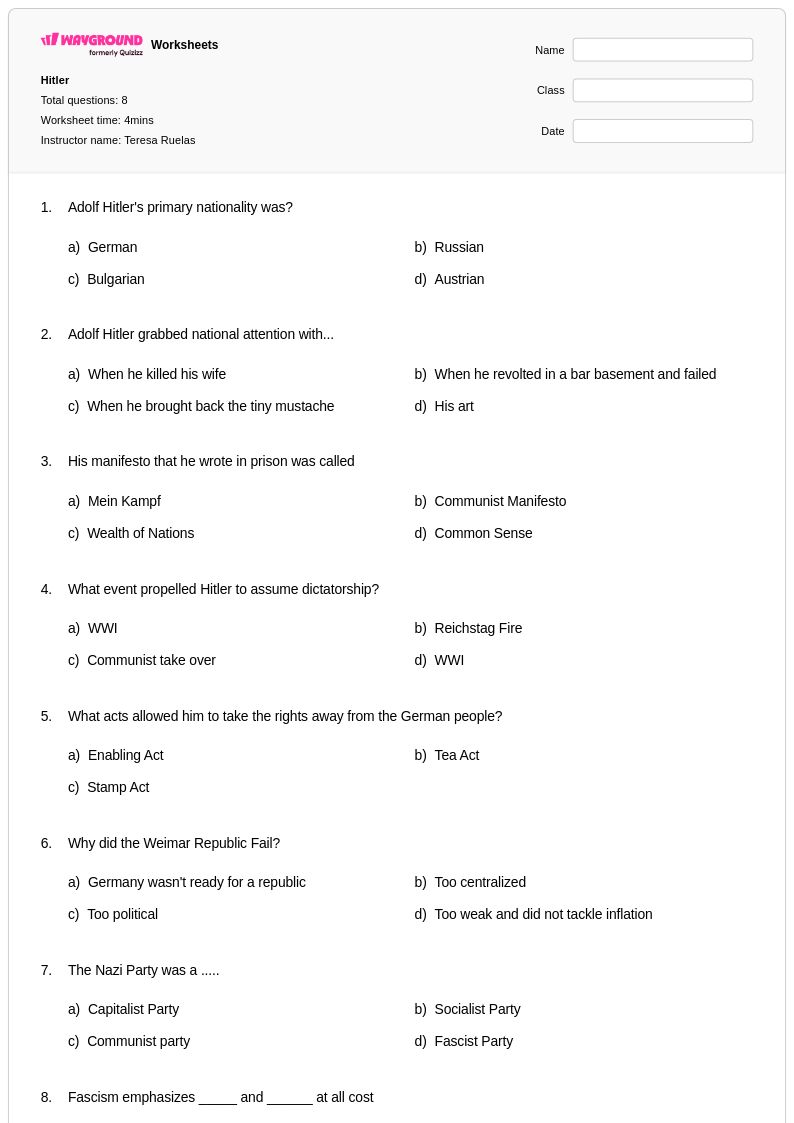
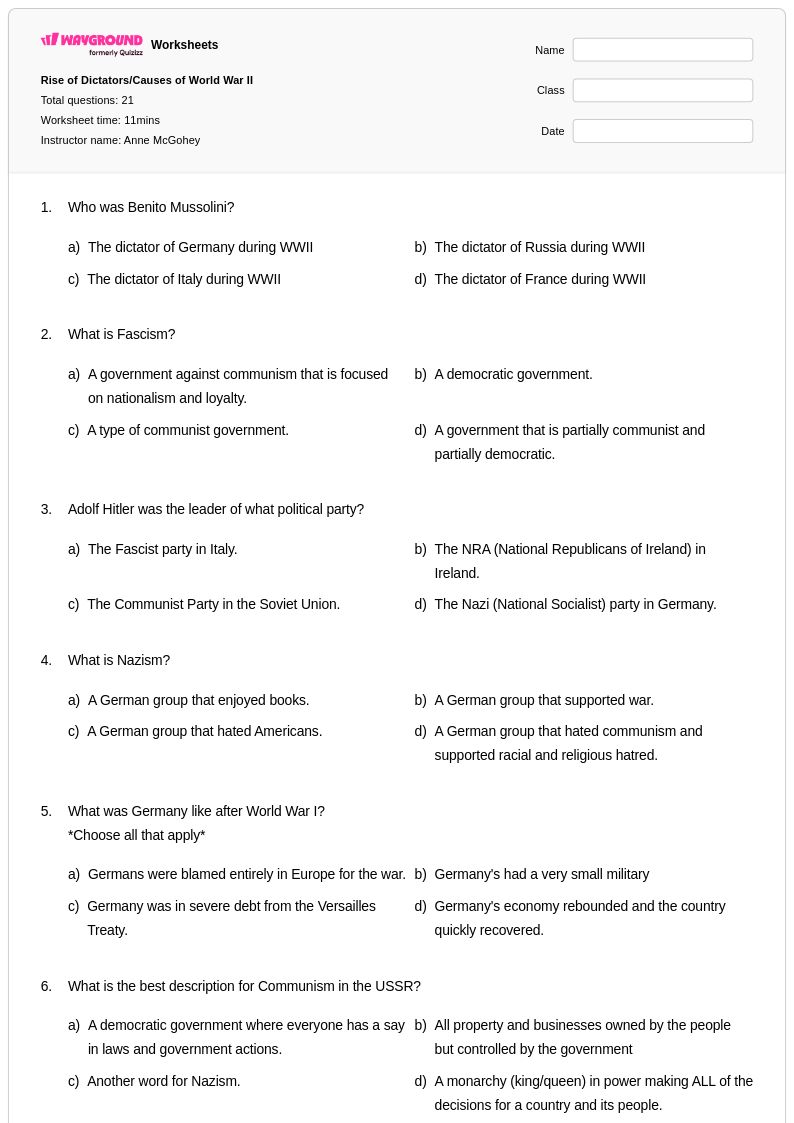
Nazism and the Rise of Hitler worksheets available through Wayground (formerly Quizizz) provide comprehensive educational resources that examine one of the most critical periods in 20th-century history. These carefully designed materials guide students through the complex political, social, and economic factors that enabled Adolf Hitler's ascent to power in Germany, exploring topics such as the aftermath of World War I, the Weimar Republic's weaknesses, Nazi propaganda techniques, and the systematic erosion of democratic institutions. The worksheets strengthen essential analytical skills by requiring students to evaluate primary sources, identify cause-and-effect relationships, and understand how extremist ideologies can exploit societal vulnerabilities. Each worksheet includes detailed answer keys and comprehensive explanations, making them valuable tools for both independent study and classroom instruction. These free printables feature practice problems that challenge students to think critically about historical evidence while developing their ability to recognize warning signs of authoritarianism and understand the importance of protecting democratic values.
Wayground (formerly Quizizz) supports educators with an extensive collection of teacher-created resources covering Nazism and the Rise of Hitler, drawing from millions of high-quality materials that have been developed and refined by history educators worldwide. The platform's robust search and filtering capabilities allow teachers to quickly locate worksheets that align with specific curriculum standards and match their students' learning needs, whether for introductory surveys or advanced historical analysis. These differentiation tools enable instructors to customize content for diverse learning styles and academic levels, while the flexible format options provide both printable pdf versions for traditional classroom use and digital formats for interactive learning experiences. Teachers can efficiently incorporate these resources into their lesson planning for initial instruction, targeted remediation for struggling students, enrichment activities for advanced learners, and ongoing skill practice that reinforces critical thinking about historical causation, the fragility of democratic institutions, and the moral imperatives of civic engagement.
FAQs
How do I teach the rise of Hitler and Nazism in a way that's historically rigorous but age-appropriate?
Teaching the rise of Nazism effectively requires grounding students in the specific conditions that made Hitler's ascent possible: the economic devastation following World War I, the punitive terms of the Treaty of Versailles, the structural weaknesses of the Weimar Republic, and the deliberate exploitation of social anxieties through propaganda. Frame the content around causation and human agency rather than inevitability, helping students understand that the outcome was shaped by real decisions made by real people and institutions. Using primary sources such as Nazi propaganda posters, political speeches, and contemporaneous news accounts gives students direct contact with historical evidence and builds the analytical habits they need for advanced historical inquiry.
What are the most effective exercises for helping students understand how Hitler came to power?
Cause-and-effect mapping exercises are particularly effective here, asking students to trace the chain of events from the post-WWI crisis through the collapse of the Weimar Republic to Hitler's appointment as Chancellor in 1933. Source analysis tasks that compare Nazi propaganda with factual accounts train students to evaluate bias, intent, and audience. Document-based questions requiring students to synthesize multiple primary and secondary sources reinforce both historical thinking and argumentative writing skills, making these exercises well-suited for both initial instruction and exam preparation.
What misconceptions do students commonly have about the rise of Nazism?
A frequent misconception is that Hitler's rise was inevitable or that the German public was uniformly supportive of Nazism from the beginning. Students often underestimate the role of political maneuvering, institutional failures, and economic desperation in enabling his consolidation of power, and they may overlook that the Nazi Party never won an outright majority in free elections. Another common error is conflating the Weimar Republic's democratic weaknesses with democracy itself being flawed, rather than understanding how those specific structural vulnerabilities were deliberately exploited. Addressing these misconceptions directly helps students develop a more accurate understanding of how authoritarian movements exploit democratic systems.
How can I use primary sources to teach Nazi propaganda in the classroom?
Analyzing primary sources such as propaganda posters, excerpts from Mein Kampf, and Nazi Party rally footage gives students firsthand experience identifying persuasion techniques including scapegoating, emotional manipulation, repetition, and the construction of an in-group versus out-group narrative. Teachers should pair these sources with structured analysis frameworks that prompt students to identify the intended audience, the message being communicated, and the techniques being used. Following source analysis with discussion of how propaganda shaped public opinion and suppressed dissent connects the historical content to broader lessons about media literacy and civic responsibility.
How do I use Wayground's Nazism and the Rise of Hitler worksheets in my classroom?
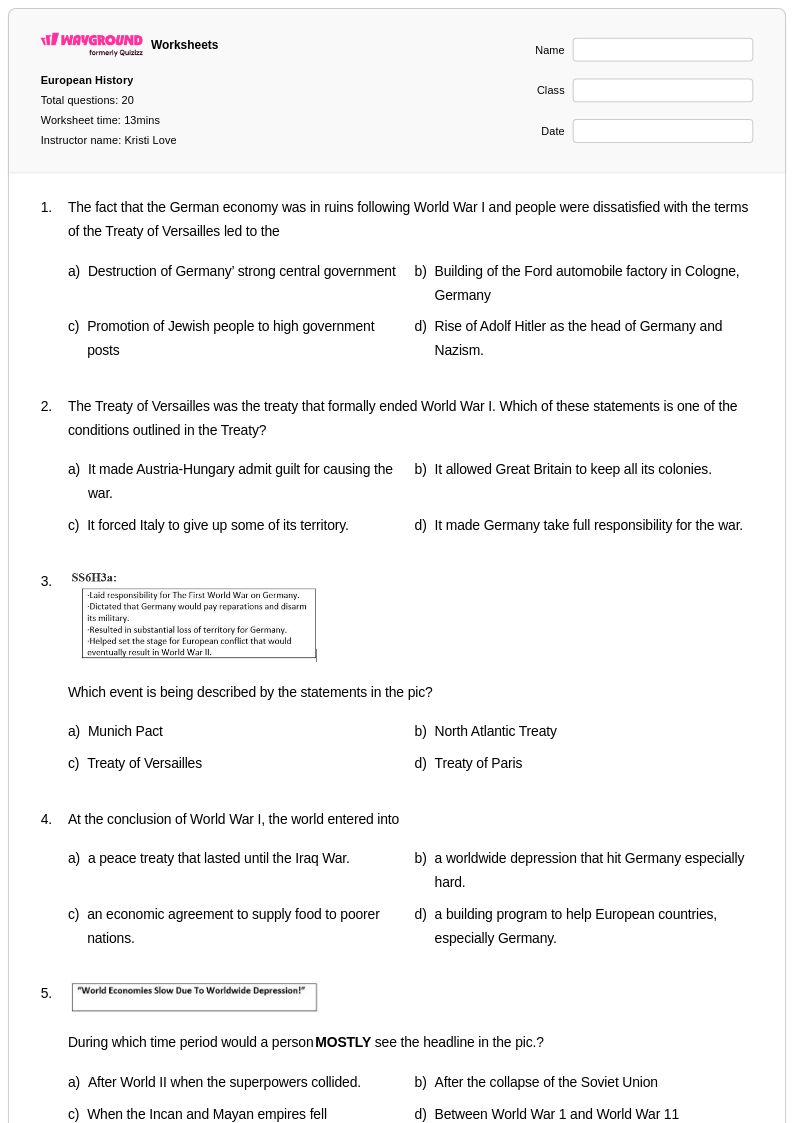
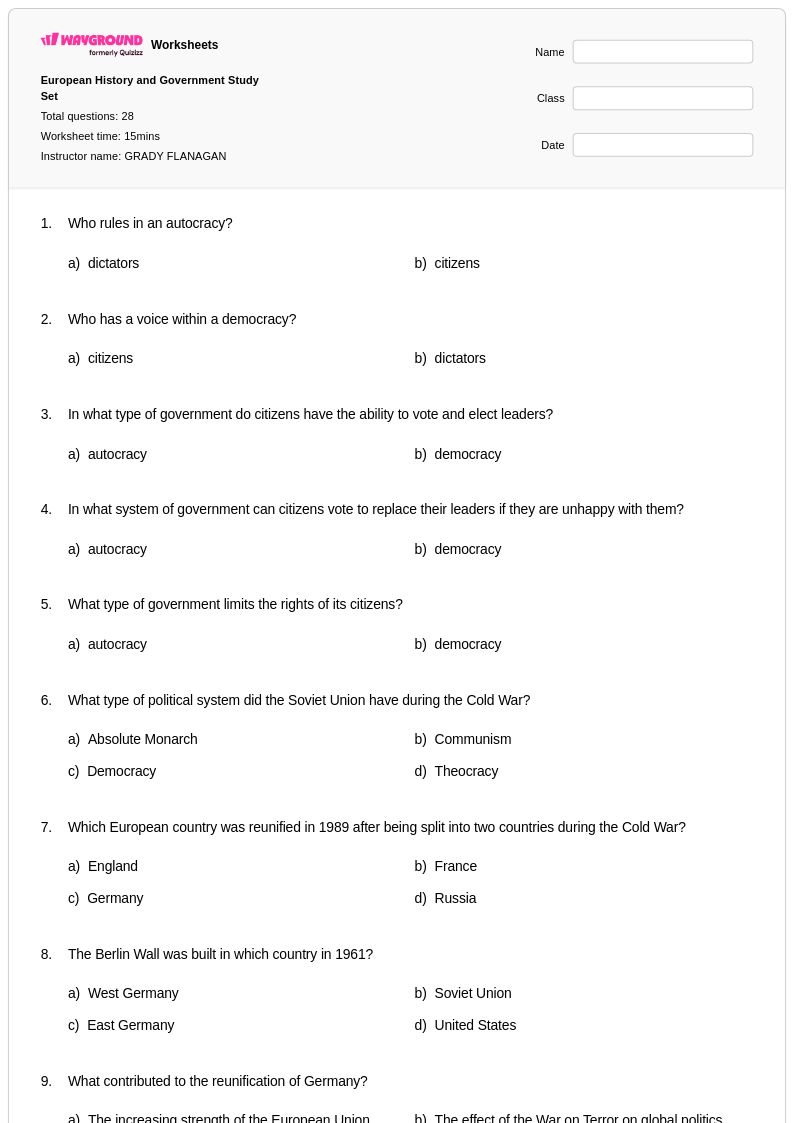
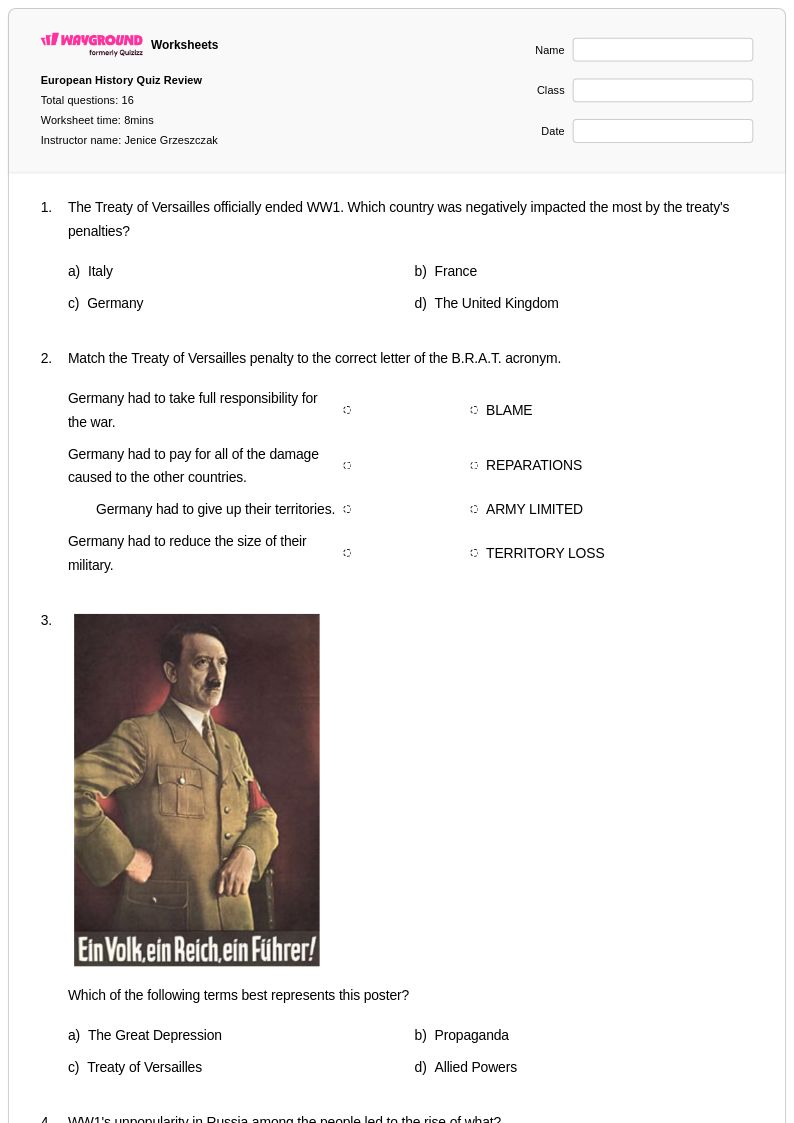
Wayground's Nazism and the Rise of Hitler worksheets are available as printable PDFs for traditional classroom use and in digital formats for technology-integrated learning environments, and they can also be hosted as a quiz directly on Wayground. Each worksheet includes a complete answer key, making them practical for independent student work, guided practice, or formative assessment. Teachers can use these materials at different points in a unit, from introductory lessons on the Weimar Republic to targeted remediation on cause-and-effect analysis or enrichment tasks for students ready for advanced historical argumentation. Wayground also supports individual student accommodations including extended time, read aloud, and reduced answer choices, which can be configured per student without disrupting the rest of the class.
How do I connect the rise of Hitler to broader lessons about democracy and authoritarianism for students today?
Connecting historical content to contemporary relevance requires helping students identify the structural conditions and warning signs that preceded Hitler's consolidation of power: the erosion of independent institutions, the normalization of political violence, the scapegoating of minority groups, and the dismantling of checks on executive authority. Ask students to examine which democratic safeguards failed in Weimar Germany and which held, then discuss what protections exist in current democratic systems. This approach makes the history analytically transferable rather than merely commemorative, equipping students to recognize patterns of democratic backsliding in historical and current contexts.