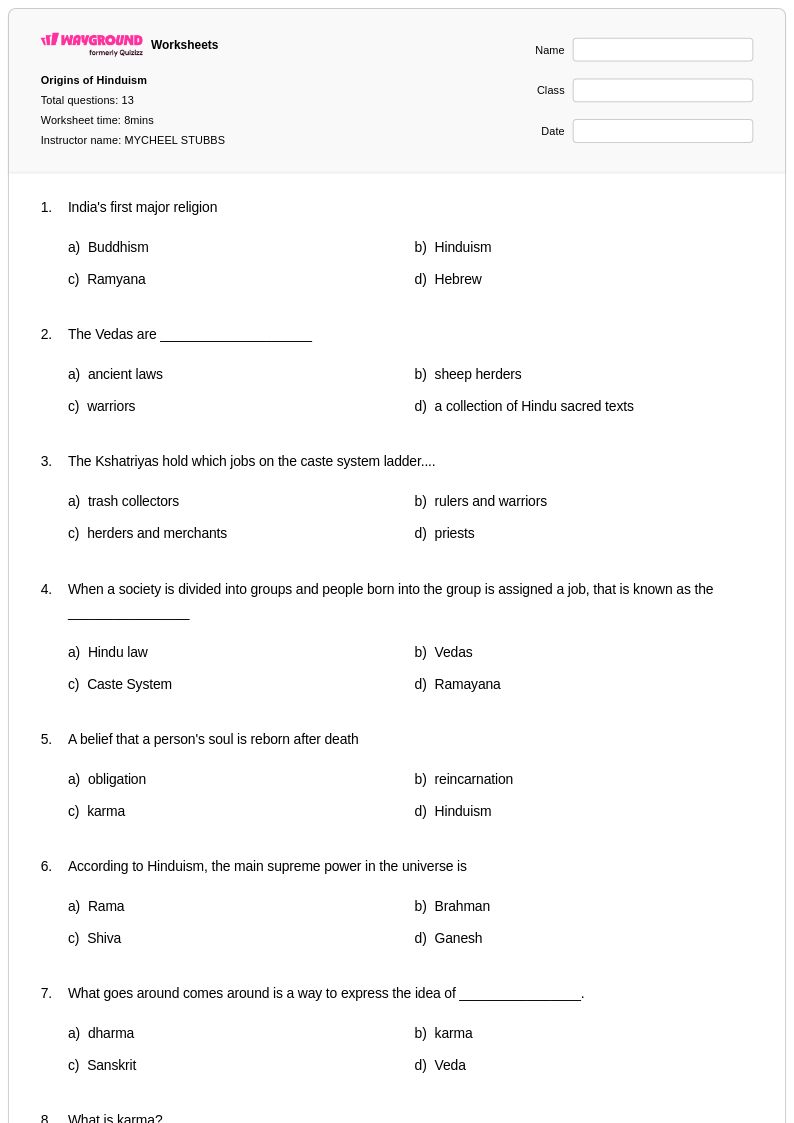
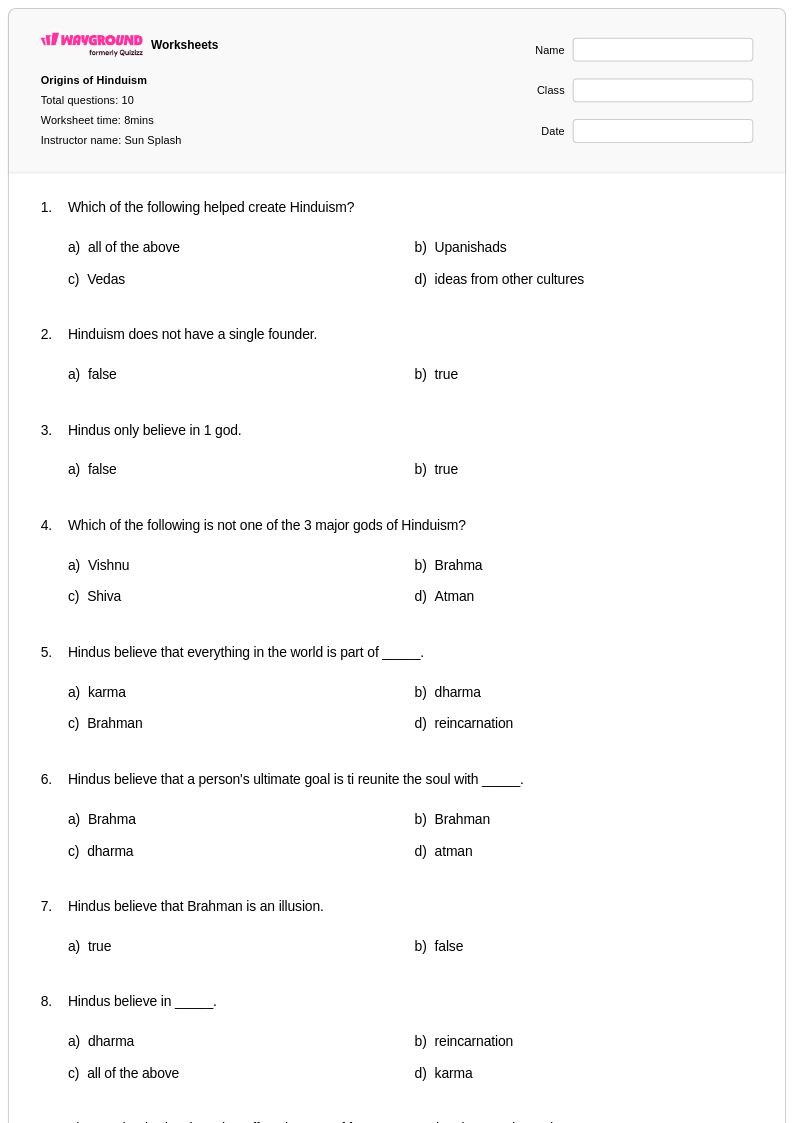
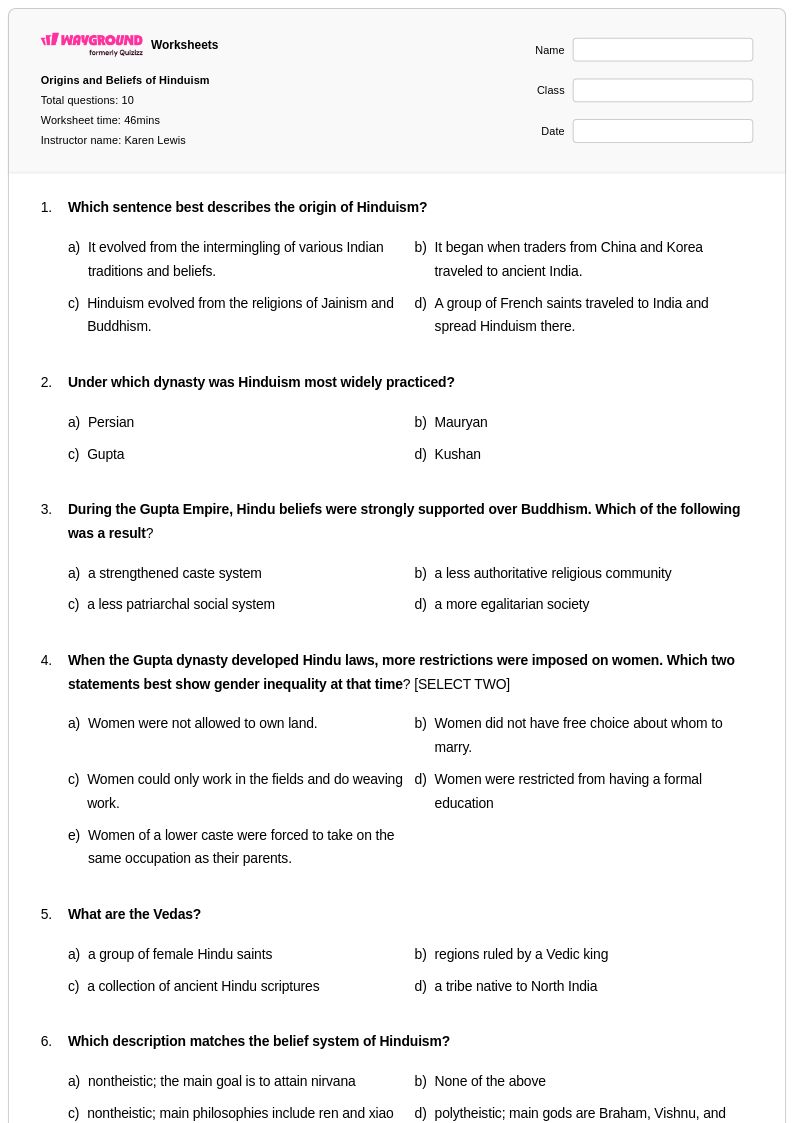
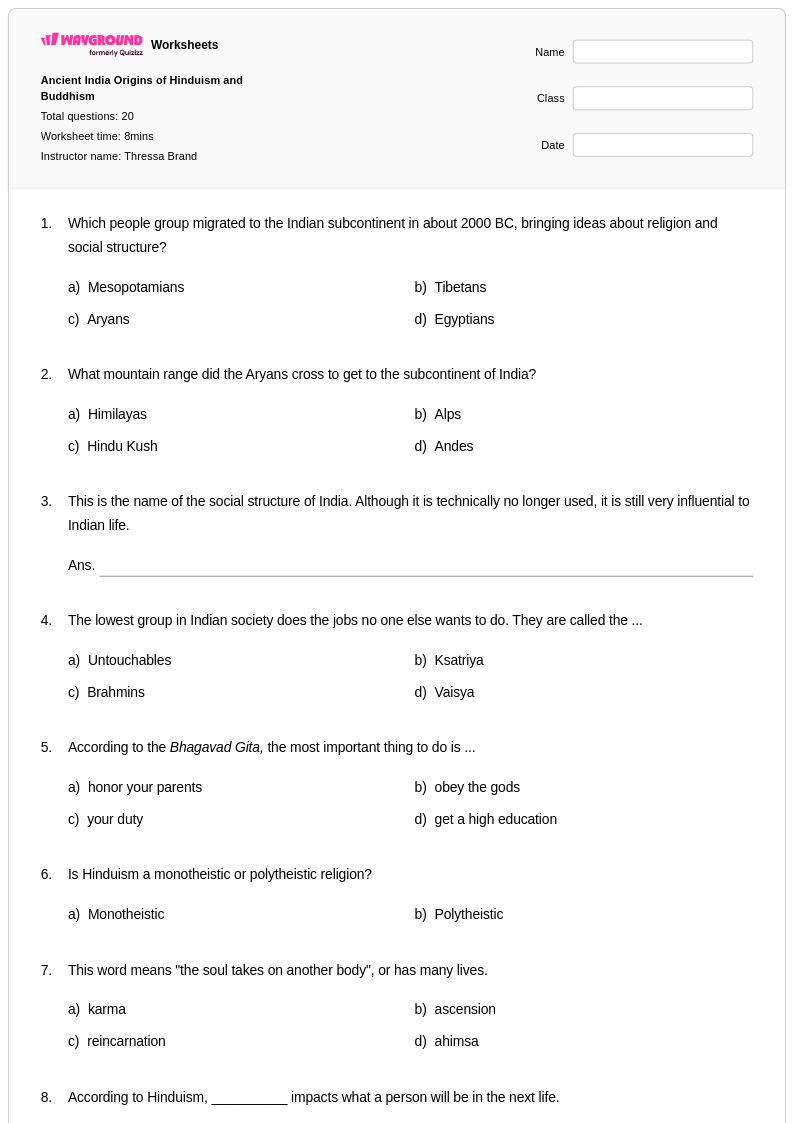
Explore Wayground's comprehensive collection of free printable worksheets and practice problems that help students discover the fascinating origins of Hinduism, complete with detailed answer keys and downloadable PDFs.
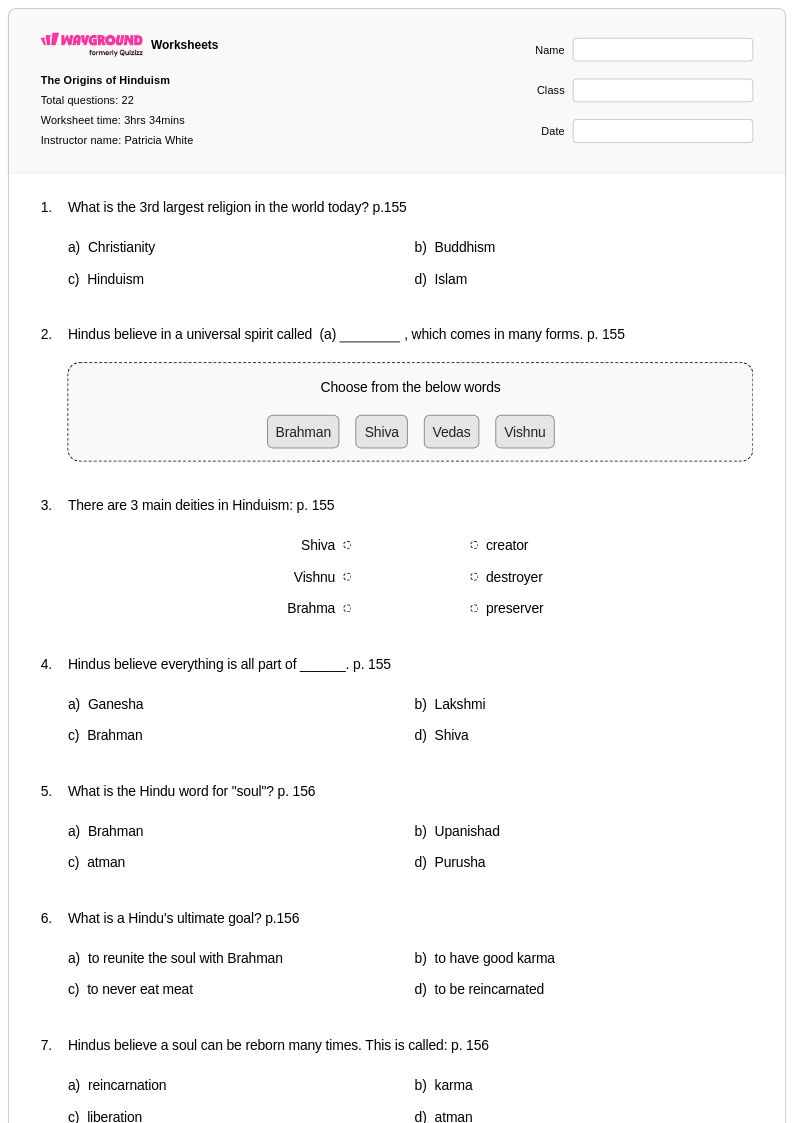
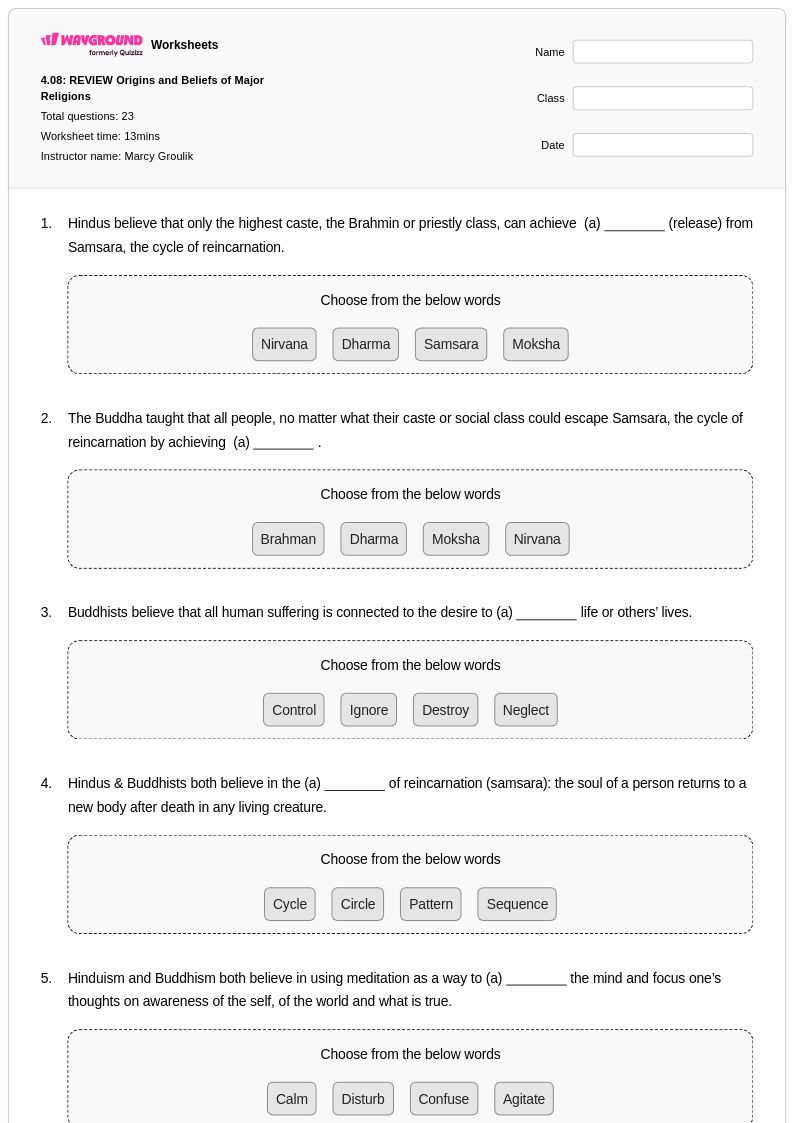
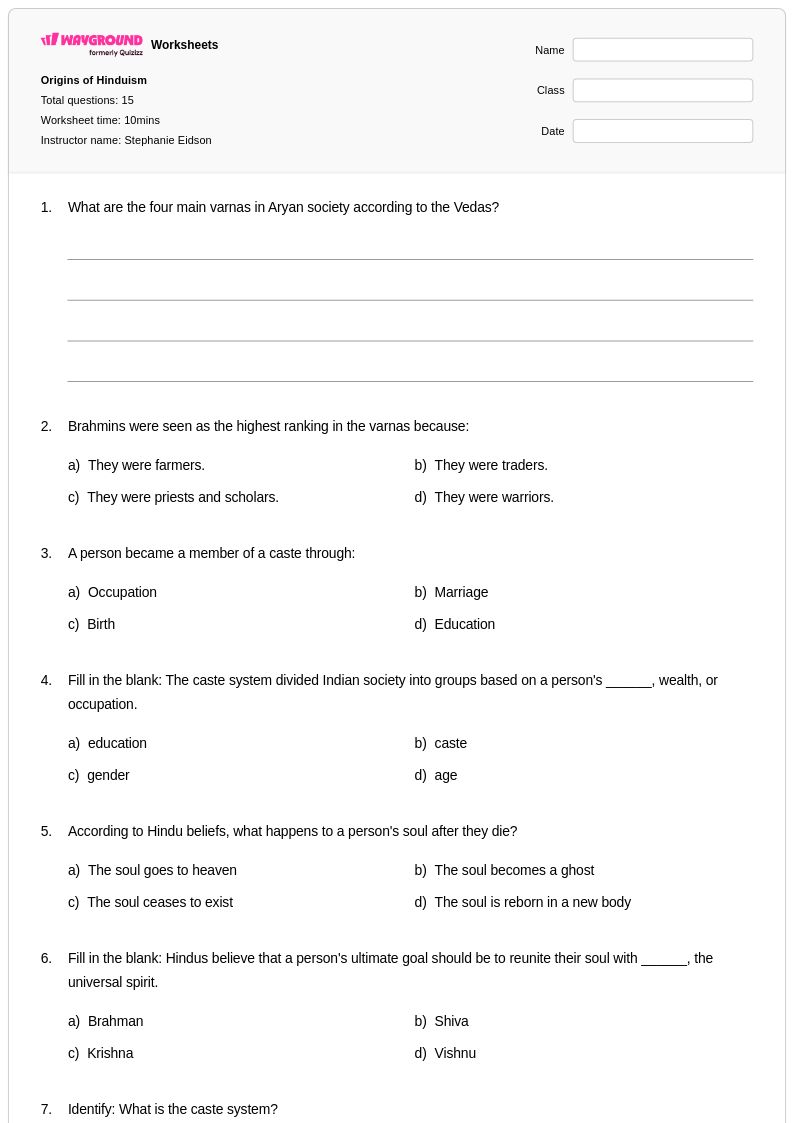
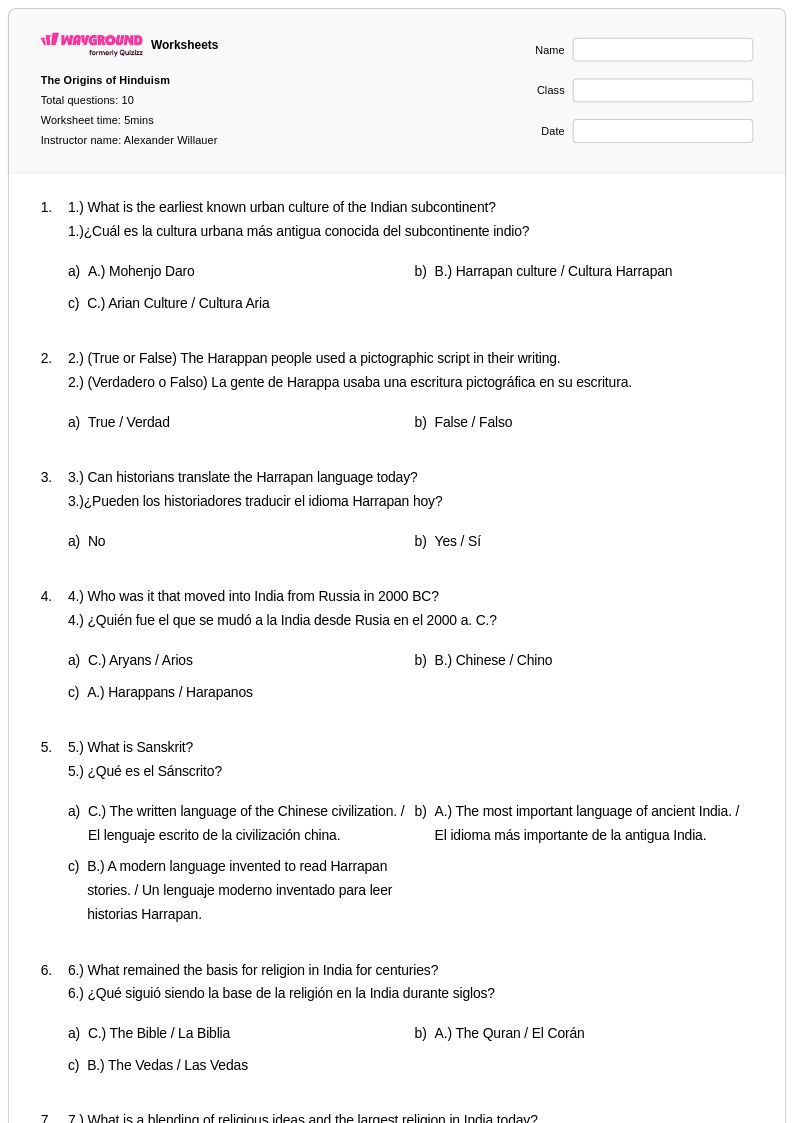
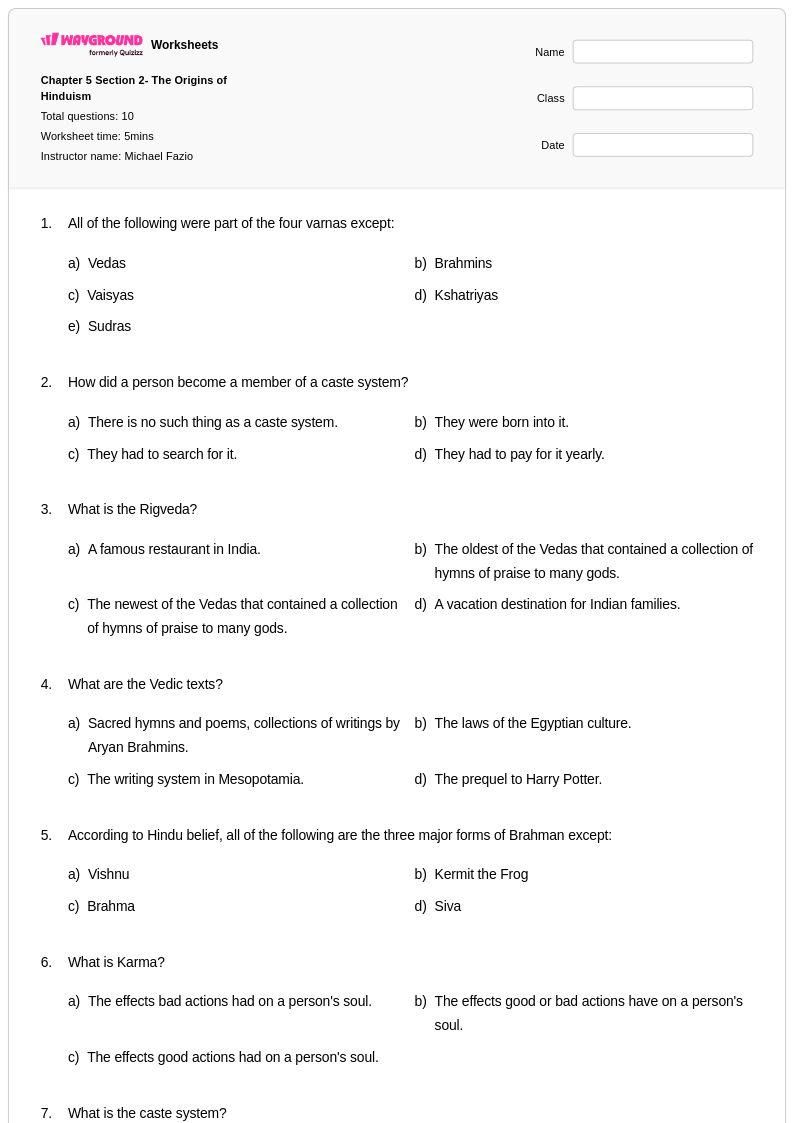
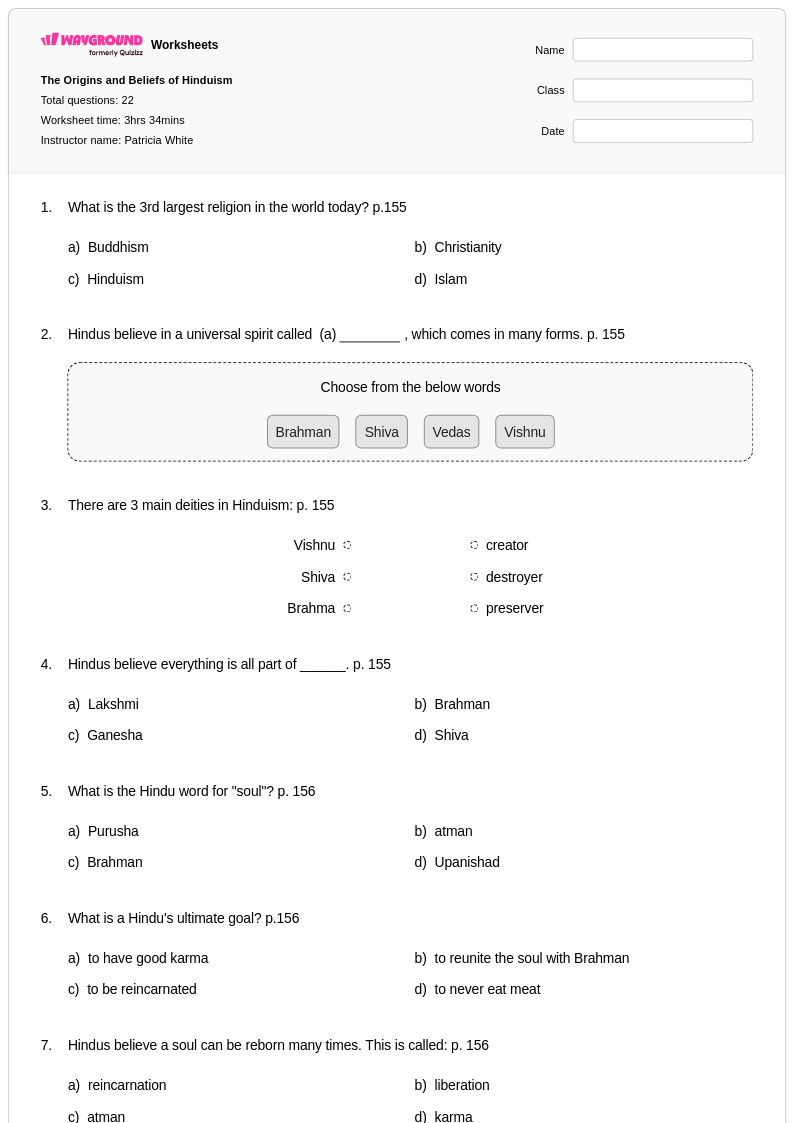
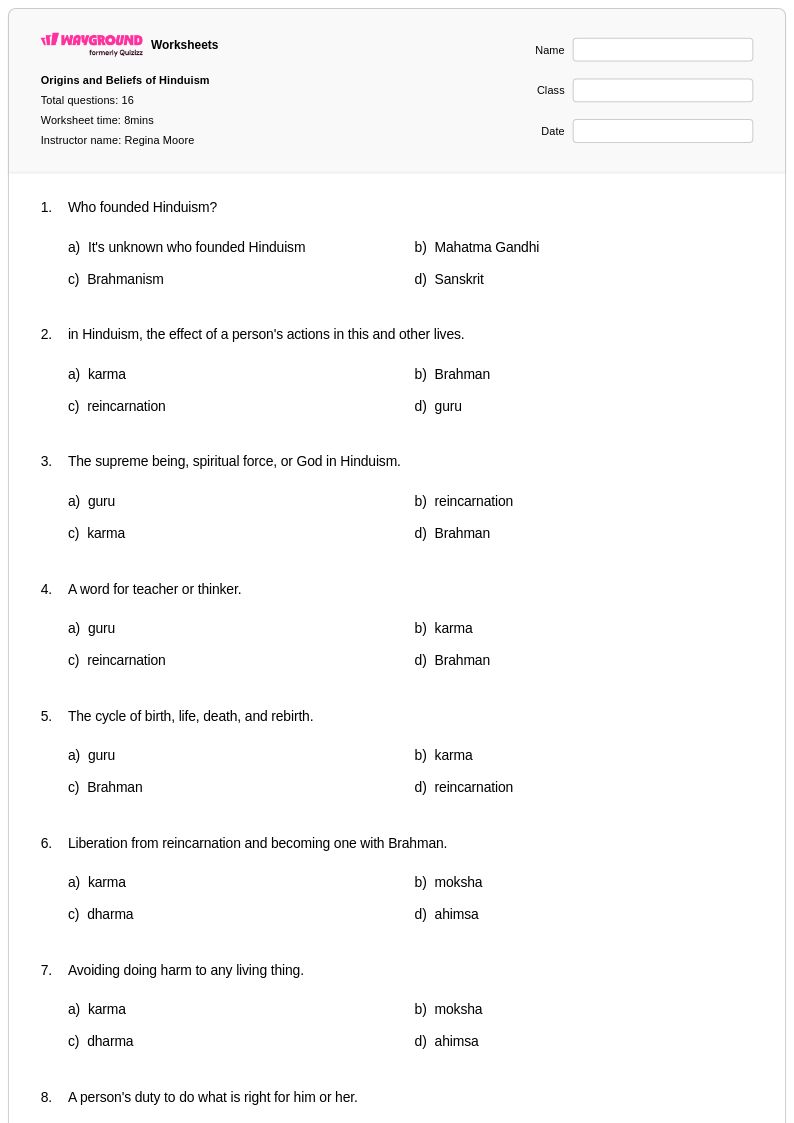
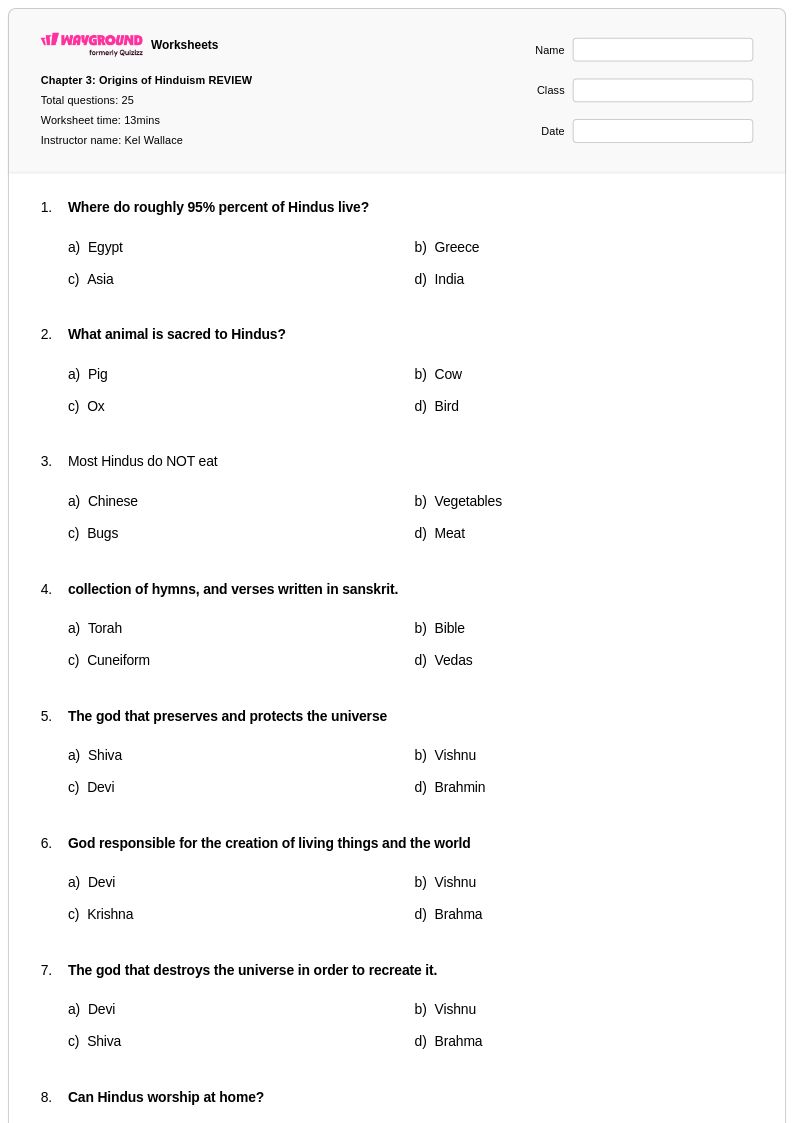
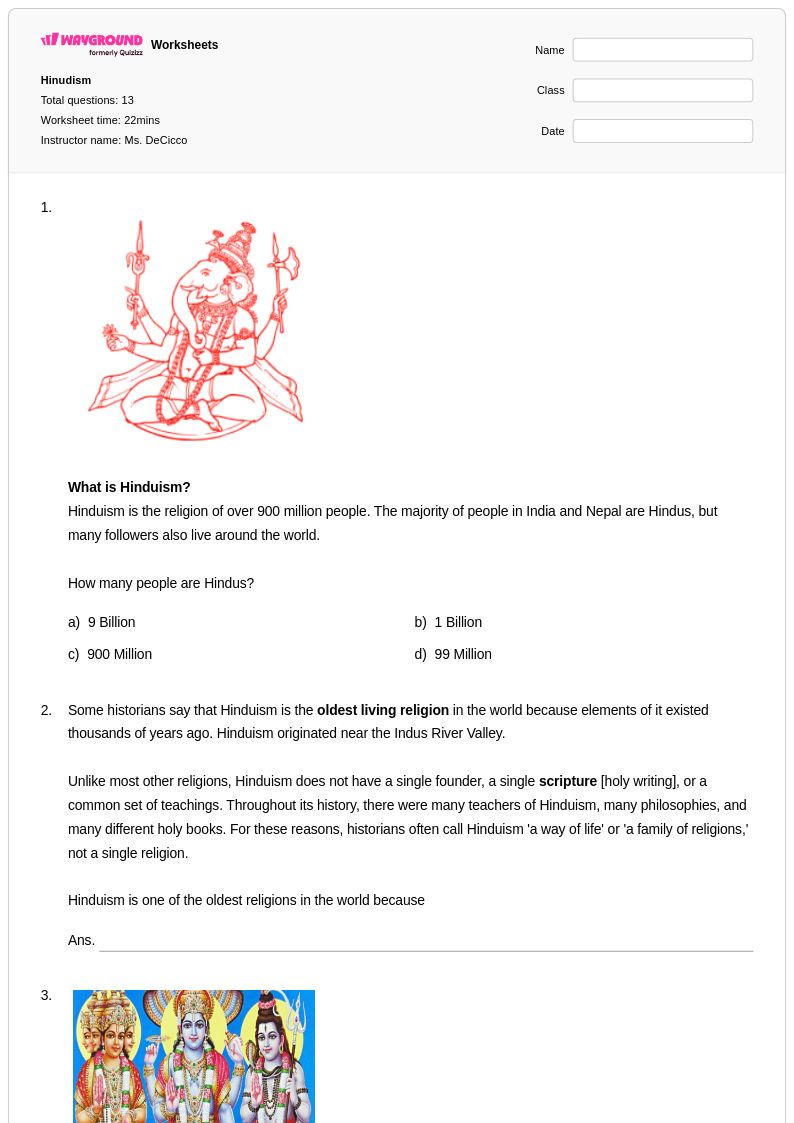
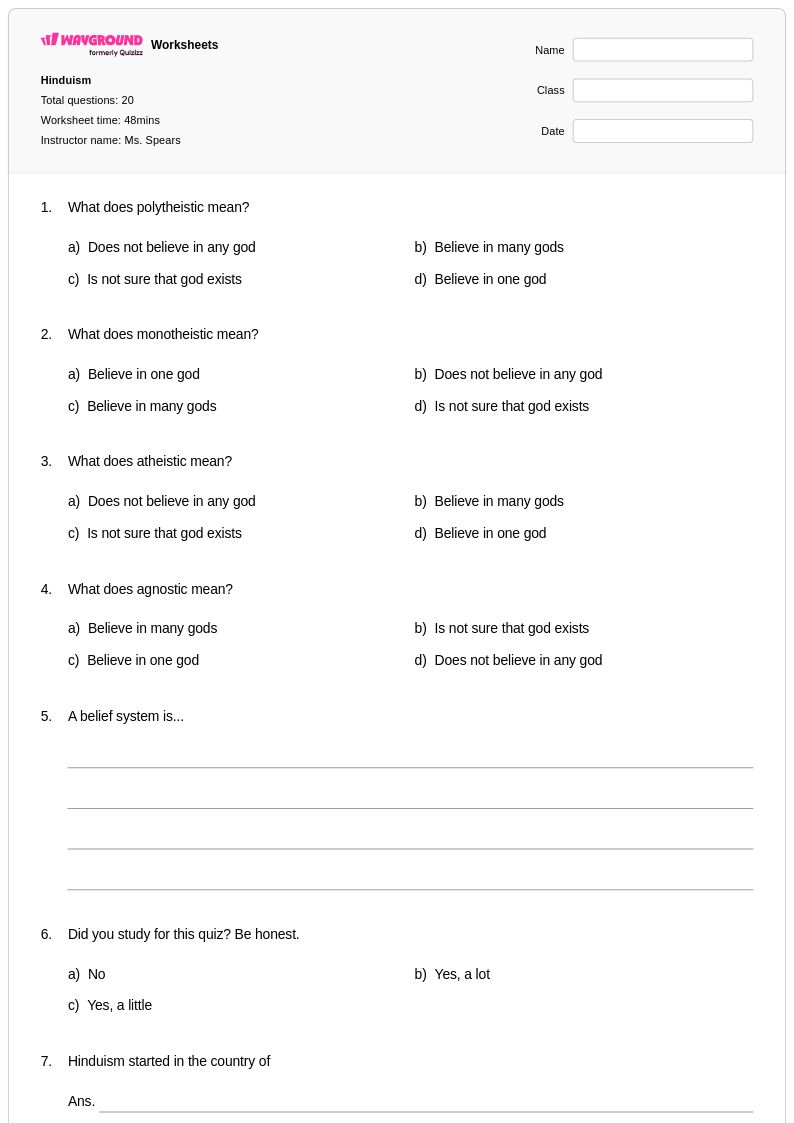
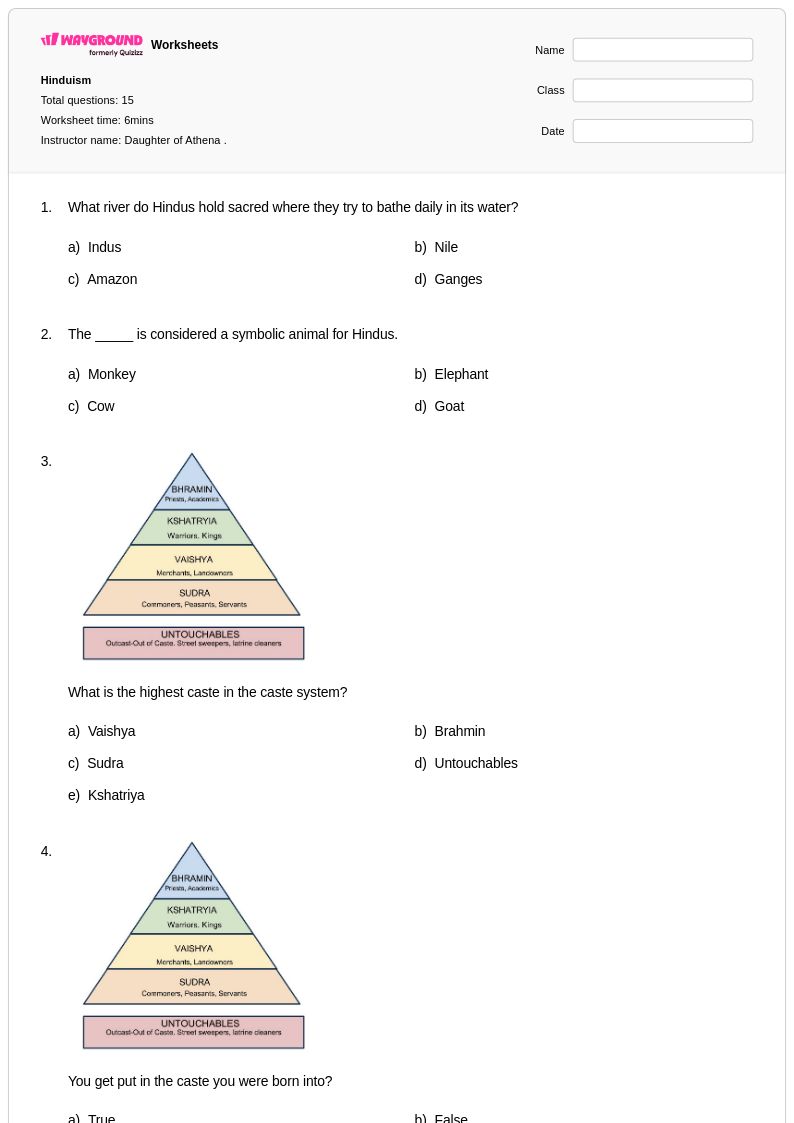
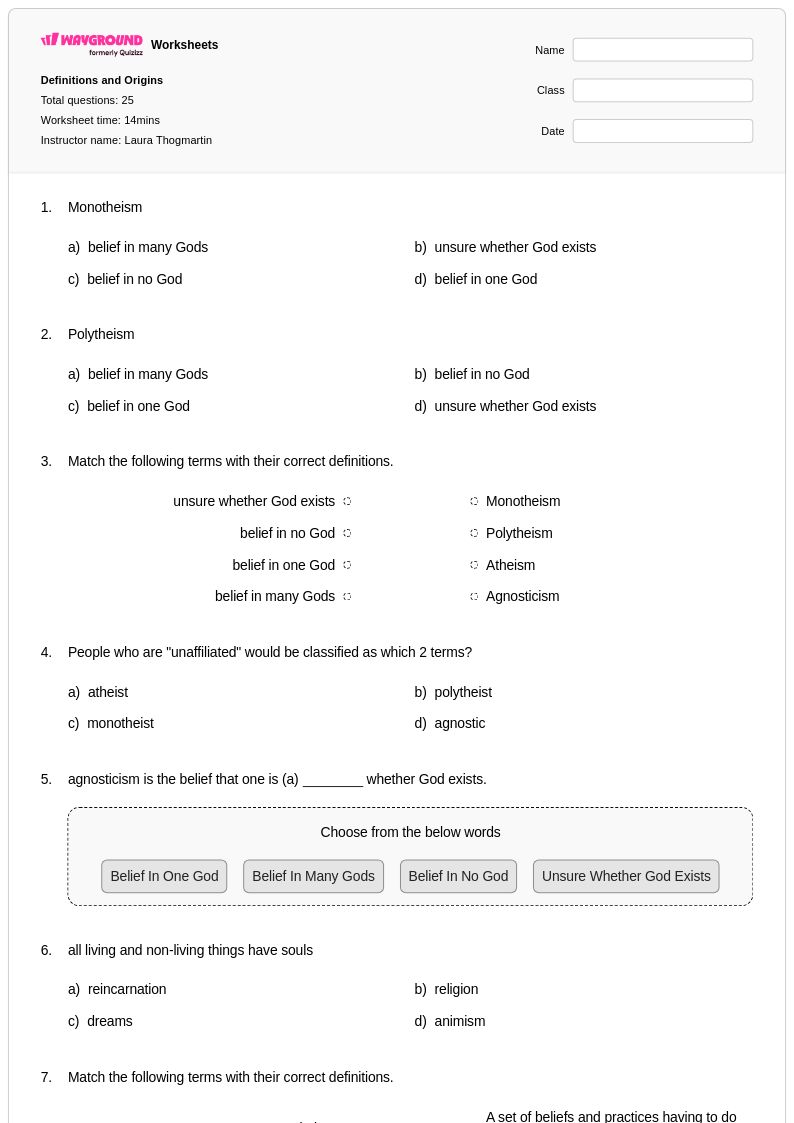
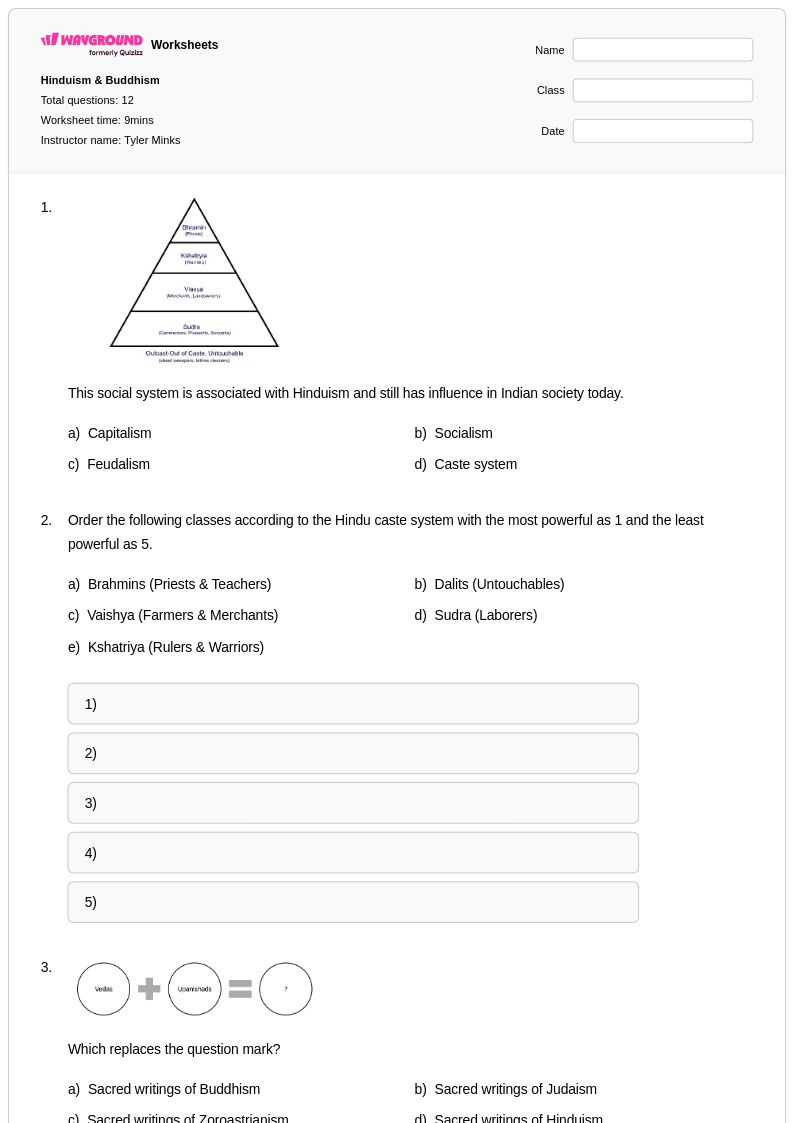
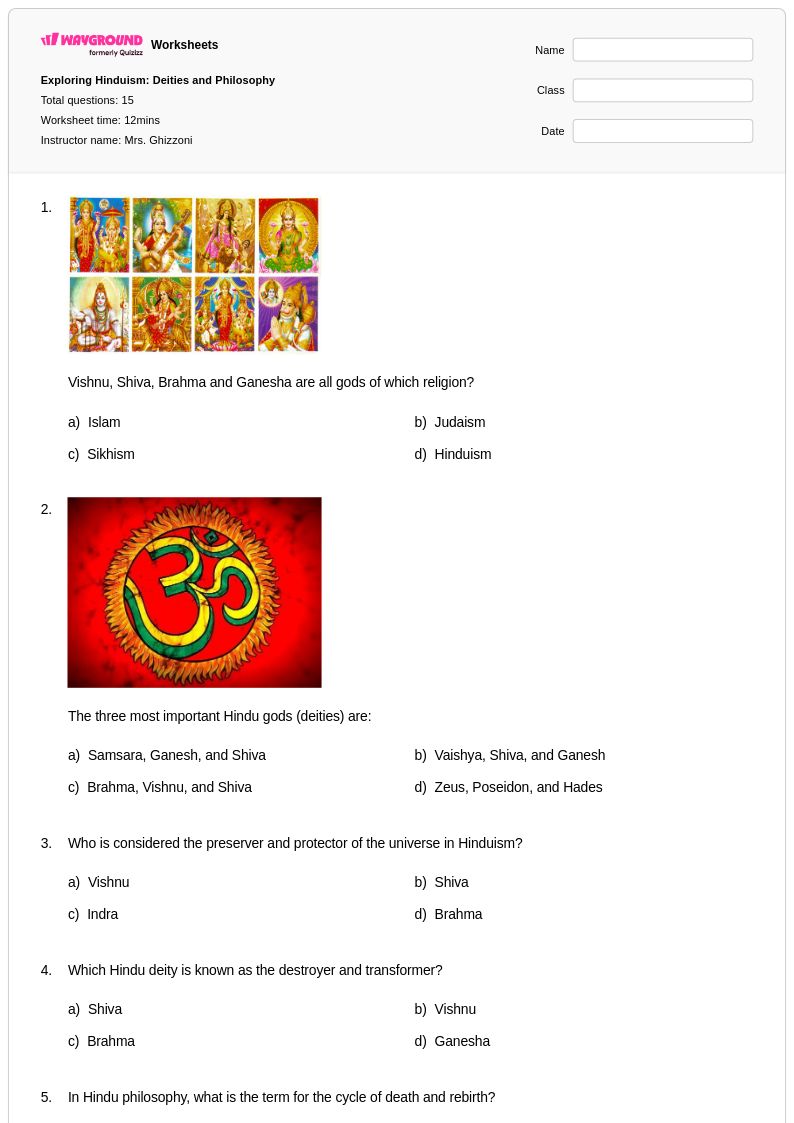
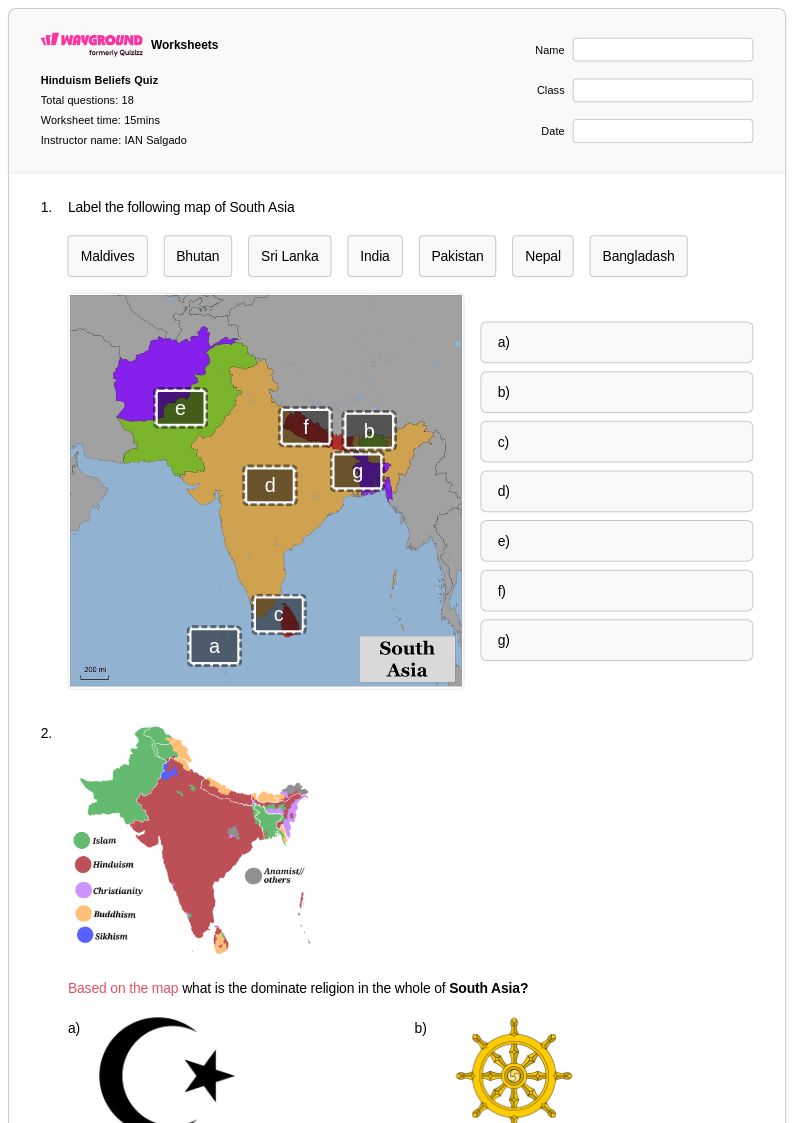
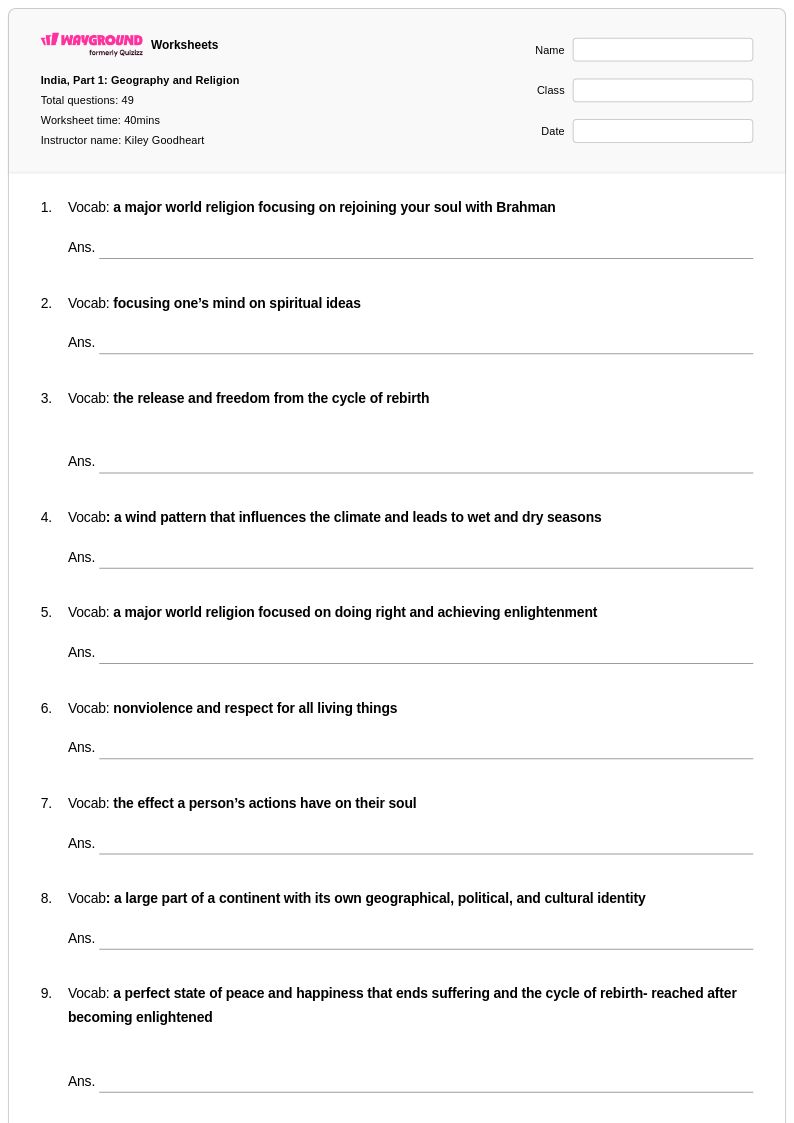
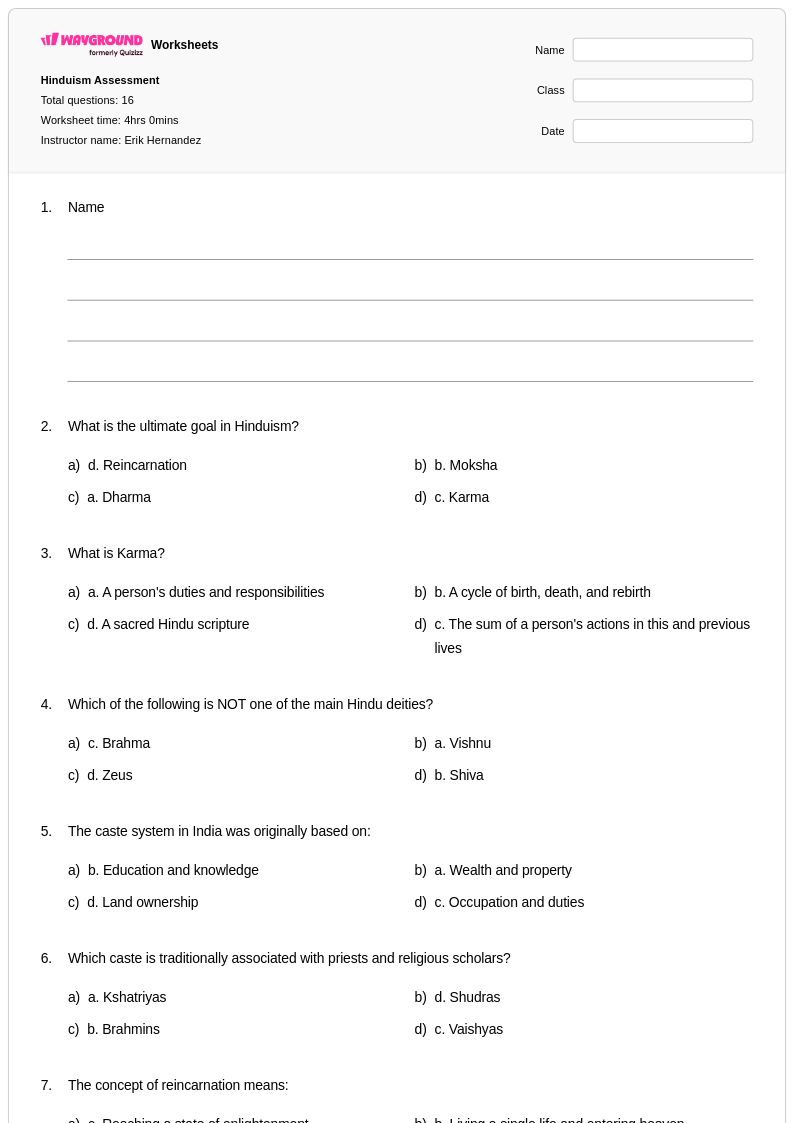
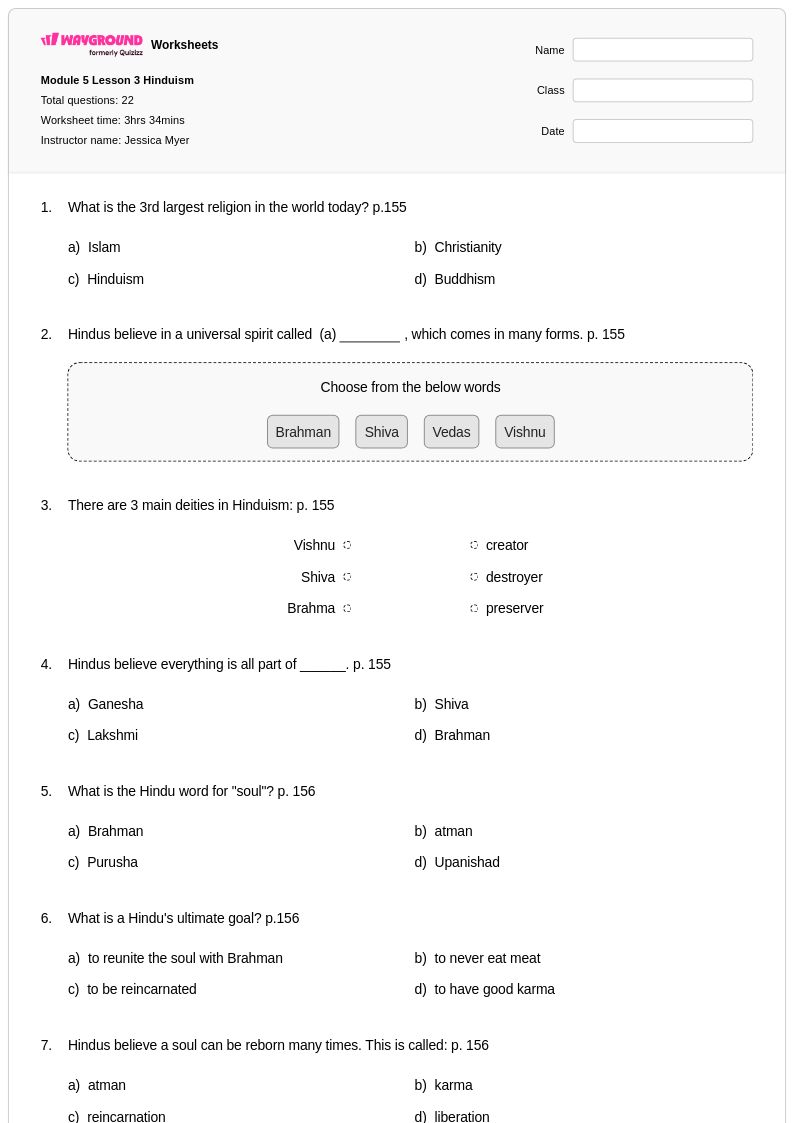
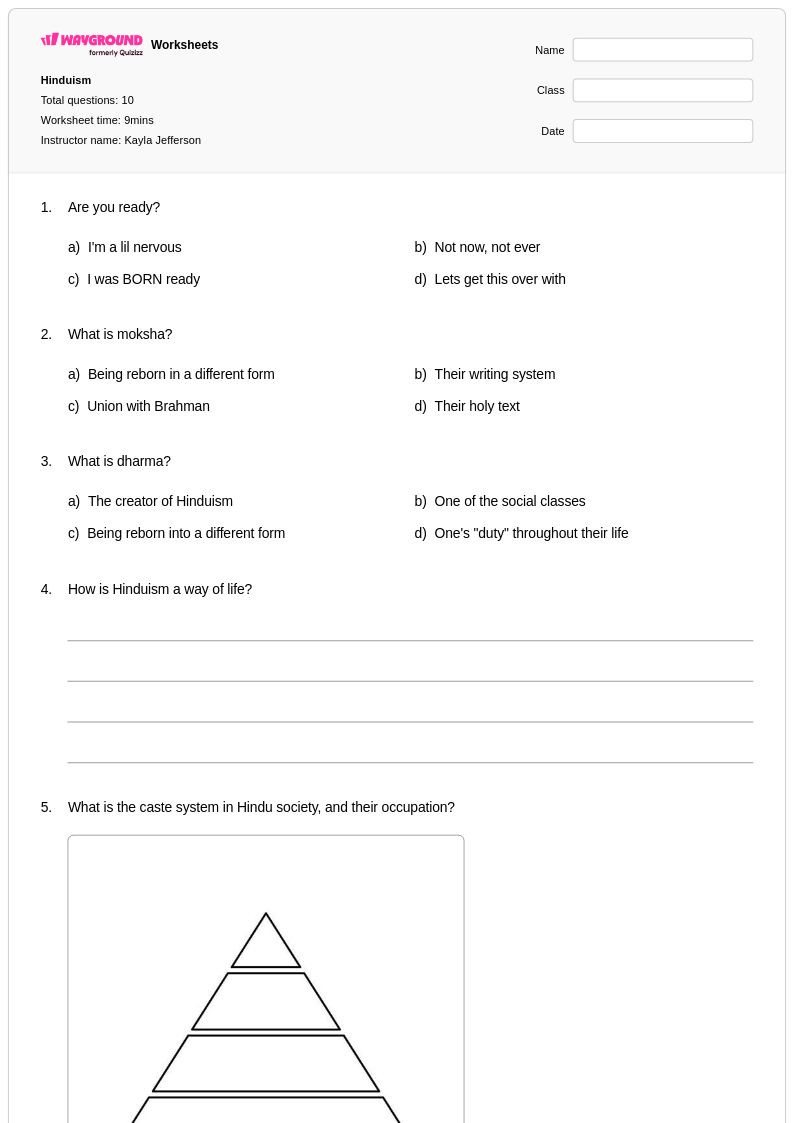
Origins of Hinduism worksheets available through Wayground (formerly Quizizz) provide students with comprehensive resources to explore one of the world's oldest and most complex religious traditions. These educational materials guide learners through the foundational elements of Hindu belief systems, including the development of core concepts like dharma, karma, and the cycle of reincarnation, while examining the historical evolution from Vedic traditions to classical Hinduism. The worksheets strengthen critical thinking skills through practice problems that analyze primary source texts such as the Vedas and Upanishads, comparative exercises exploring the relationship between Hinduism and other ancient belief systems, and timeline activities that trace the religion's development across millennia. Each printable resource includes detailed answer keys to support independent learning and assessment, with free pdf formats ensuring accessibility for diverse classroom environments.
Wayground (formerly Quizizz) empowers educators with an extensive collection of teacher-created resources focused on the origins of Hinduism, drawn from millions of high-quality educational materials developed by classroom professionals worldwide. The platform's robust search and filtering capabilities allow teachers to quickly locate worksheets aligned with specific curriculum standards, while differentiation tools enable customization for diverse learning needs and ability levels. These flexible resources support comprehensive lesson planning by offering both printable pdf versions for traditional classroom use and digital formats for technology-integrated instruction, making them ideal for remediation activities that reinforce foundational concepts, enrichment opportunities for advanced learners, and targeted skill practice in historical analysis and religious studies. The platform's alignment features ensure that Origins of Hinduism content meets established social studies benchmarks while providing educators with the adaptability needed to address individual student requirements and varying instructional contexts.
FAQs
How do I teach the origins of Hinduism to students?
Teaching the origins of Hinduism works best when you anchor instruction in the historical progression from Vedic traditions to classical Hinduism, giving students a chronological framework before introducing abstract concepts. Start with the Indo-Aryan migrations and the Vedic period, then build toward core beliefs like dharma, karma, and reincarnation as products of that historical development. Primary source texts such as the Vedas and Upanishads can be introduced in excerpted form to ground abstract theology in actual historical documents. Comparative activities that connect Hinduism's development to other ancient belief systems help students contextualize rather than isolate the tradition.
What exercises help students practice what they've learned about the origins of Hinduism?
Timeline activities that ask students to sequence the development of Hinduism across millennia are especially effective for building historical literacy alongside content knowledge. Primary source analysis tasks using excerpts from the Vedas or Upanishads push students to engage with the religion's foundational texts rather than just secondary summaries. Comparative exercises that explore how Hindu beliefs relate to other ancient religious traditions reinforce critical thinking and deepen conceptual understanding. Practice problems that ask students to define and connect terms like dharma, karma, and reincarnation within their historical context help consolidate learning.
What misconceptions do students commonly have about the origins of Hinduism?
One of the most common misconceptions is that Hinduism has a single founder or a specific founding moment, which leads students to misapply the framework they use for other world religions. Students also frequently conflate Hinduism with a single uniform belief system rather than recognizing it as a diverse tradition that evolved over millennia. Another common error is treating the Vedas as a monolithic text rather than understanding them as a collection of hymns, rituals, and philosophical writings produced across different periods. Clarifying that Hinduism's development was gradual, regional, and shaped by multiple historical forces helps correct these patterns.
How can I use Origins of Hinduism worksheets in my classroom?
Origins of Hinduism worksheets are available as printable PDFs for traditional classroom use and in digital formats for technology-integrated environments, making them flexible enough for in-person, hybrid, or remote instruction. Teachers can use them for direct instruction support, independent practice, or as the basis for a hosted quiz on Wayground. The included answer keys make them practical for self-paced or independent learning stations as well as teacher-led review sessions. Wayground also supports student-level accommodations such as read aloud, extended time, and reduced answer choices, which can be applied individually so that all learners can access the same content at an appropriate level.
How do Origins of Hinduism worksheets connect to social studies curriculum standards?
Origins of Hinduism content aligns with social studies benchmarks that address world history, comparative religion, and the development of ancient civilizations. Worksheets that trace the historical evolution of Hindu belief systems support standards related to understanding how religions shape and are shaped by historical and cultural contexts. Primary source analysis tasks tied to Vedic texts also address literacy standards for reading historical documents, which appear in many state social studies frameworks. Wayground's filtering tools allow teachers to locate materials aligned to specific curriculum standards efficiently.