
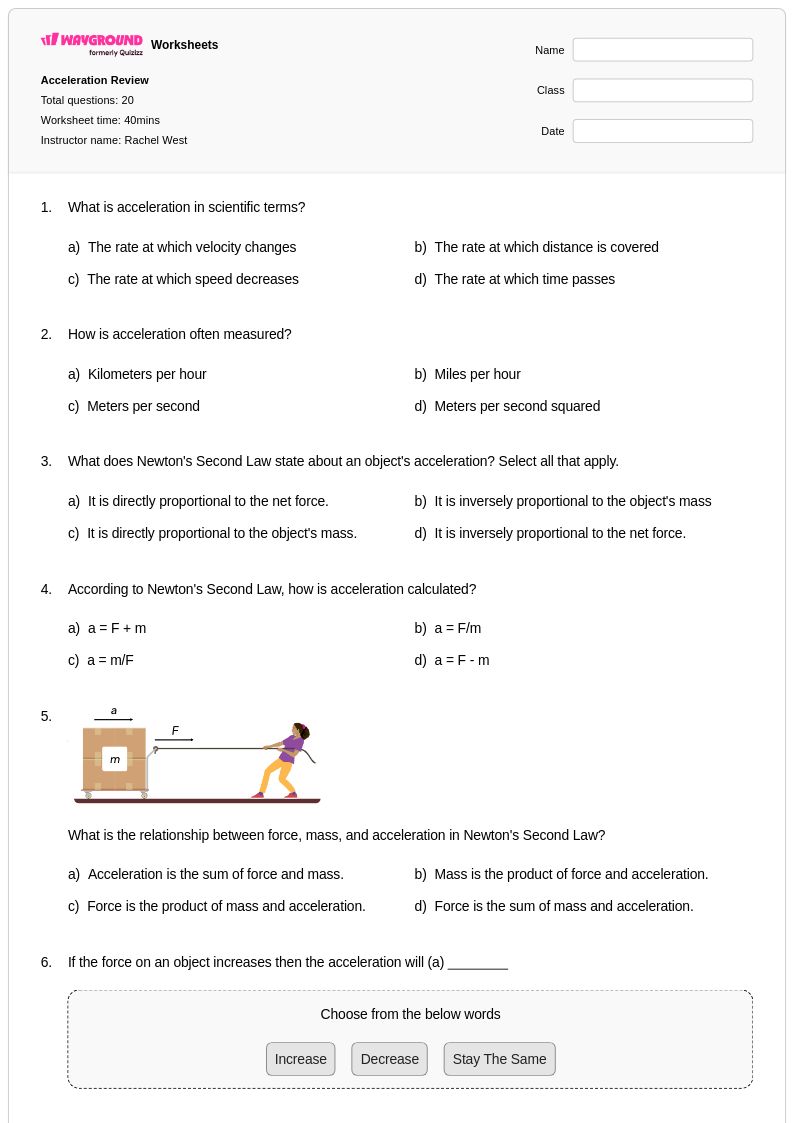
20 Q
8th - Uni
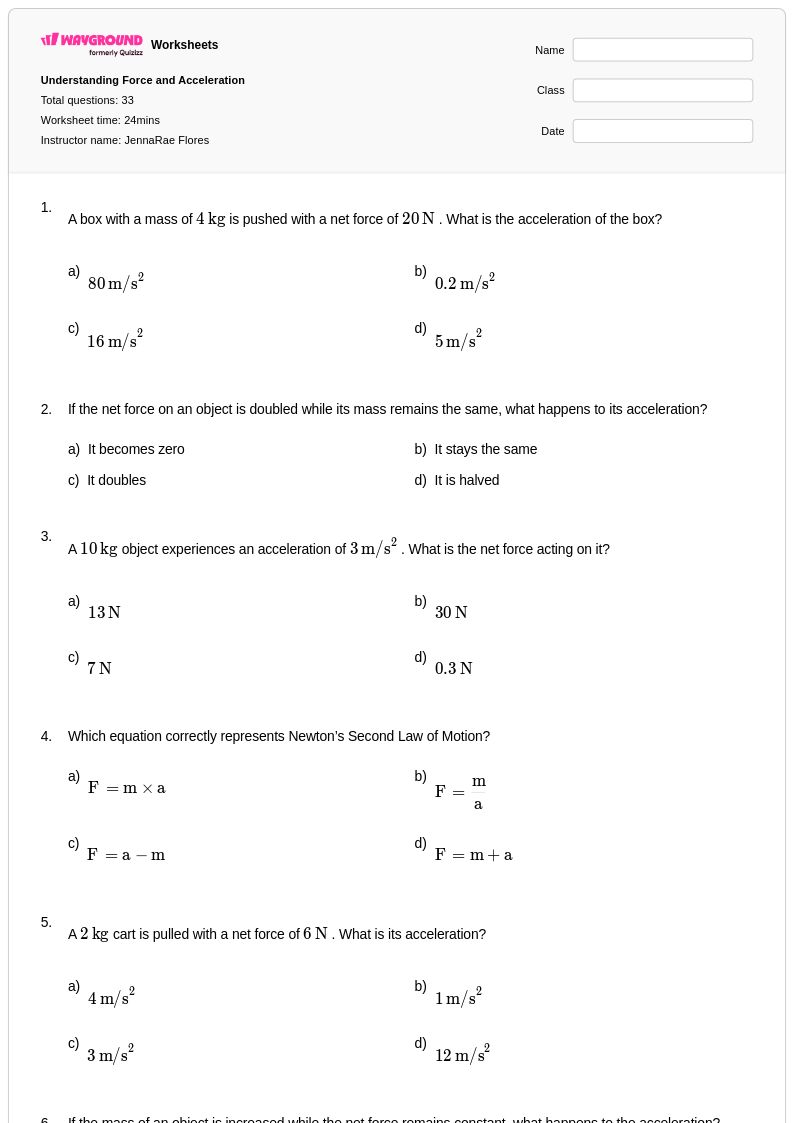
33 Q
8th - Uni
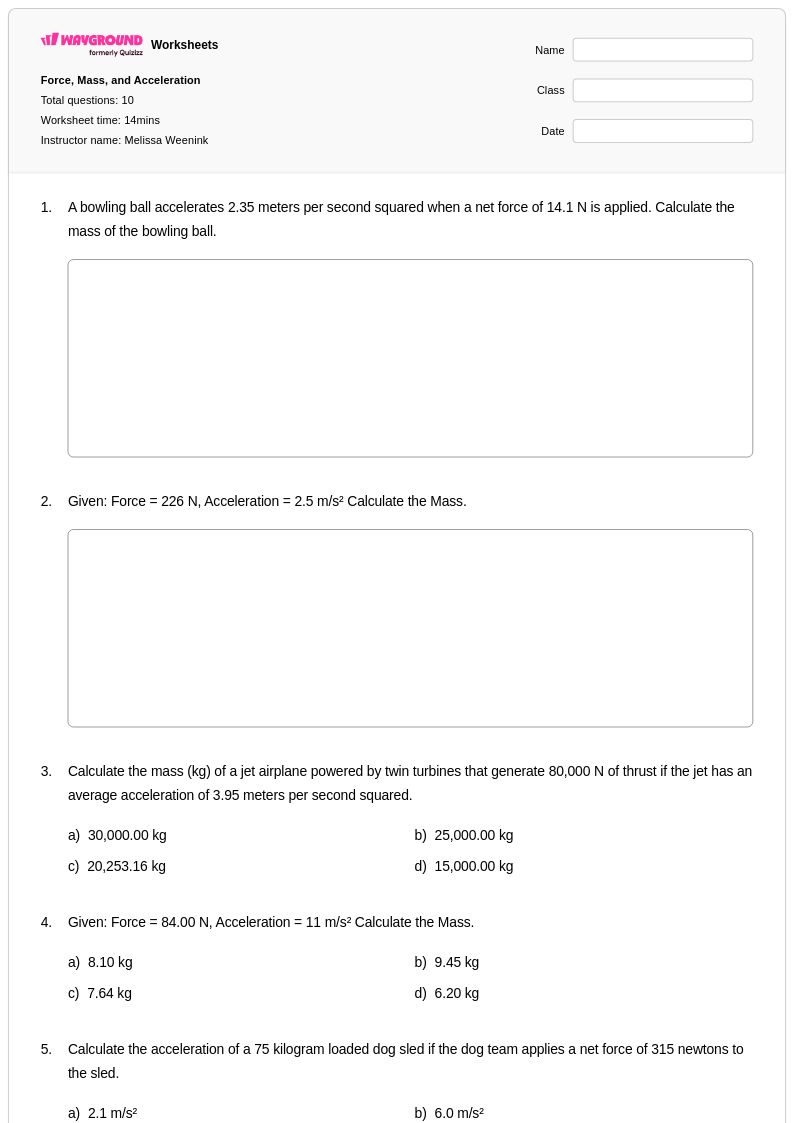
10 Q
8th - Uni
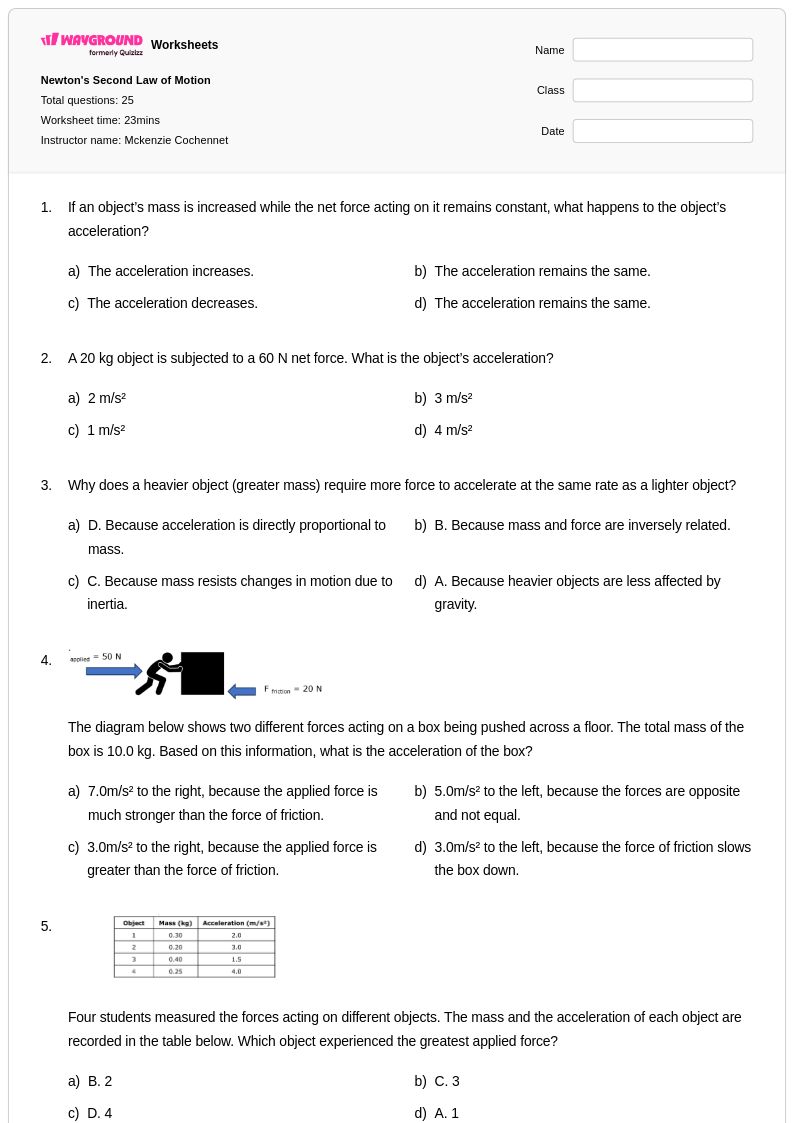
25 Q
8th - Uni

25 Q
8th - Uni
15 Q
8th - Uni
28 Q
8th - Uni
25 Q
10th
15 Q
8th - Uni
21 Q
9th - 12th
16 Q
10th
20 Q
7th - 12th
22 Q
8th - Uni
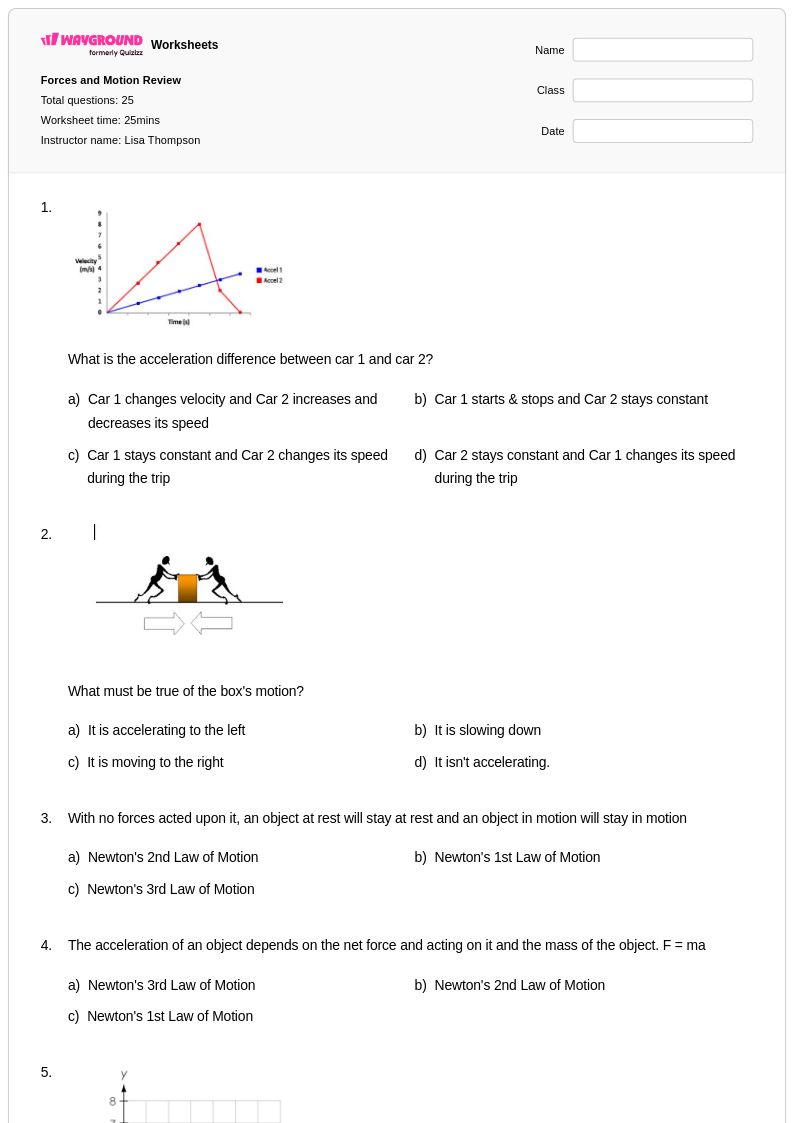
25 Q
8th - Uni
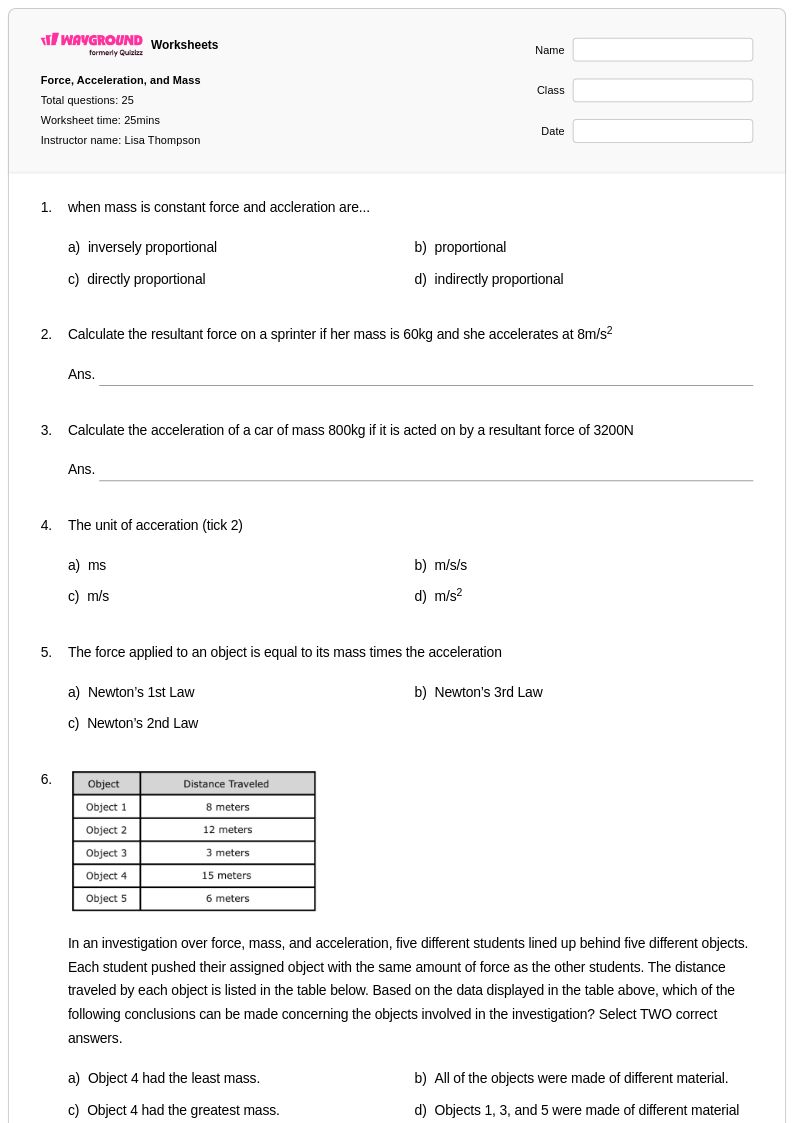
25 Q
8th - Uni
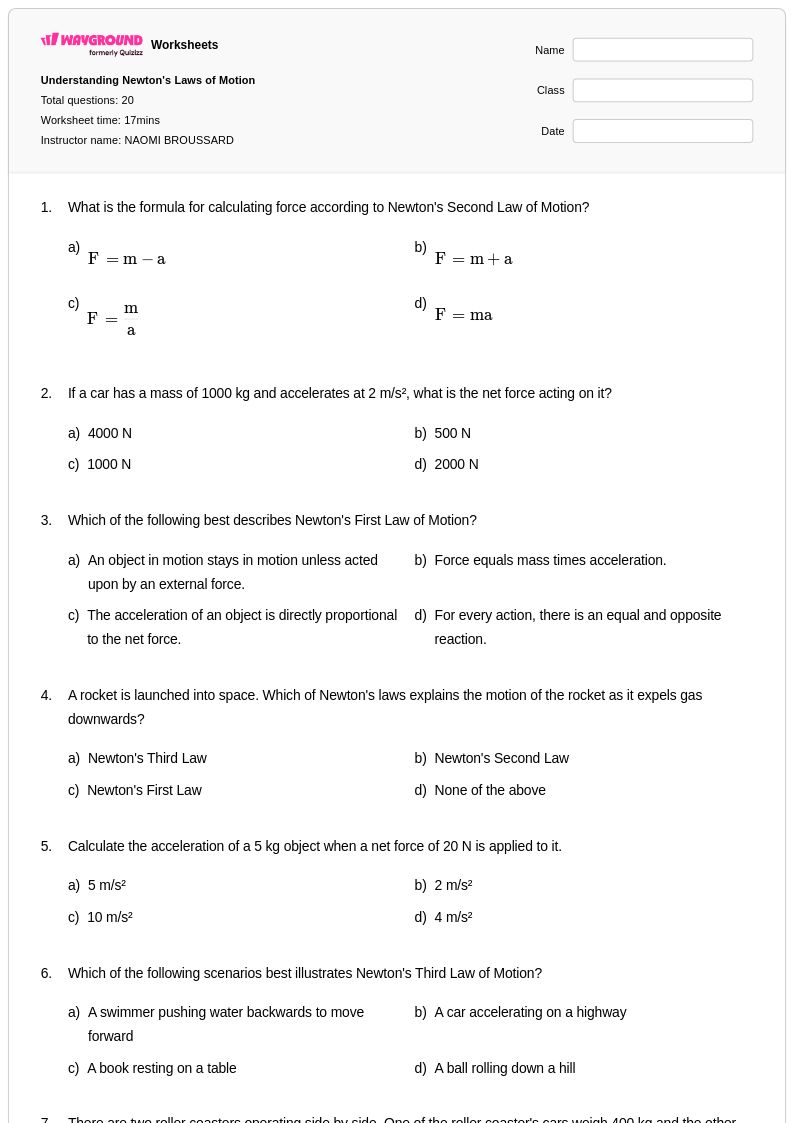
20 Q
8th - Uni
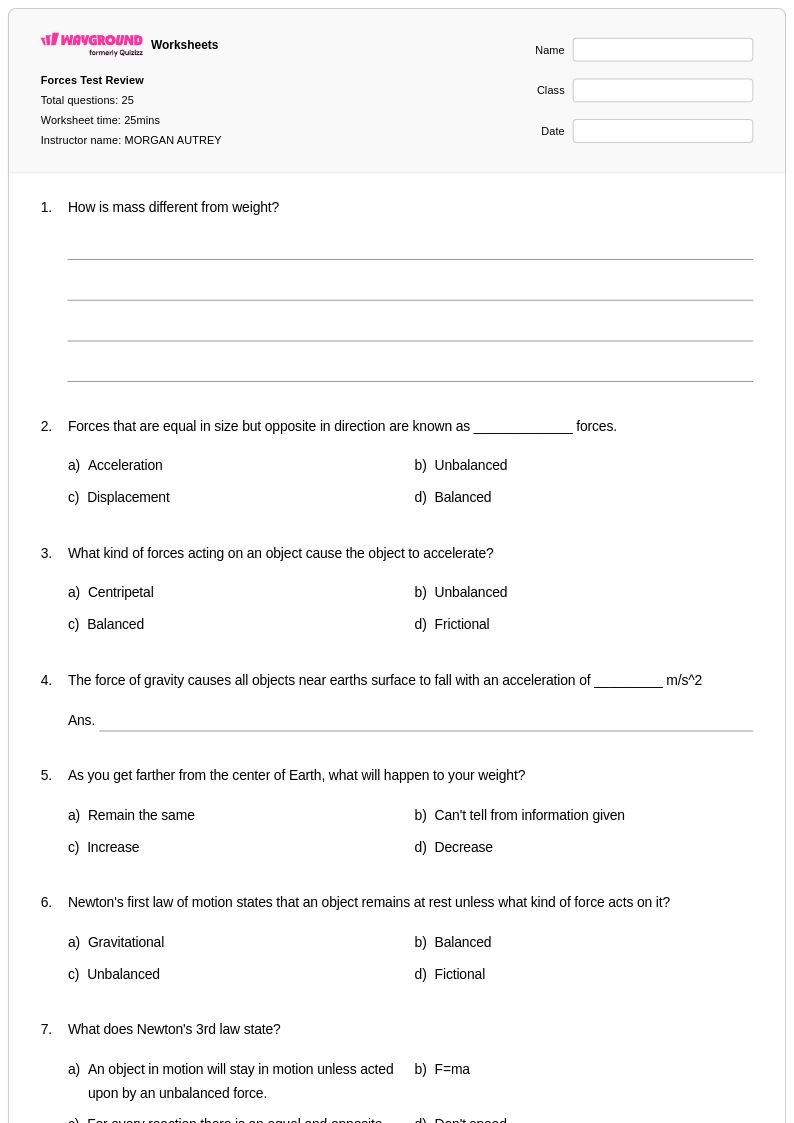
25 Q
10th
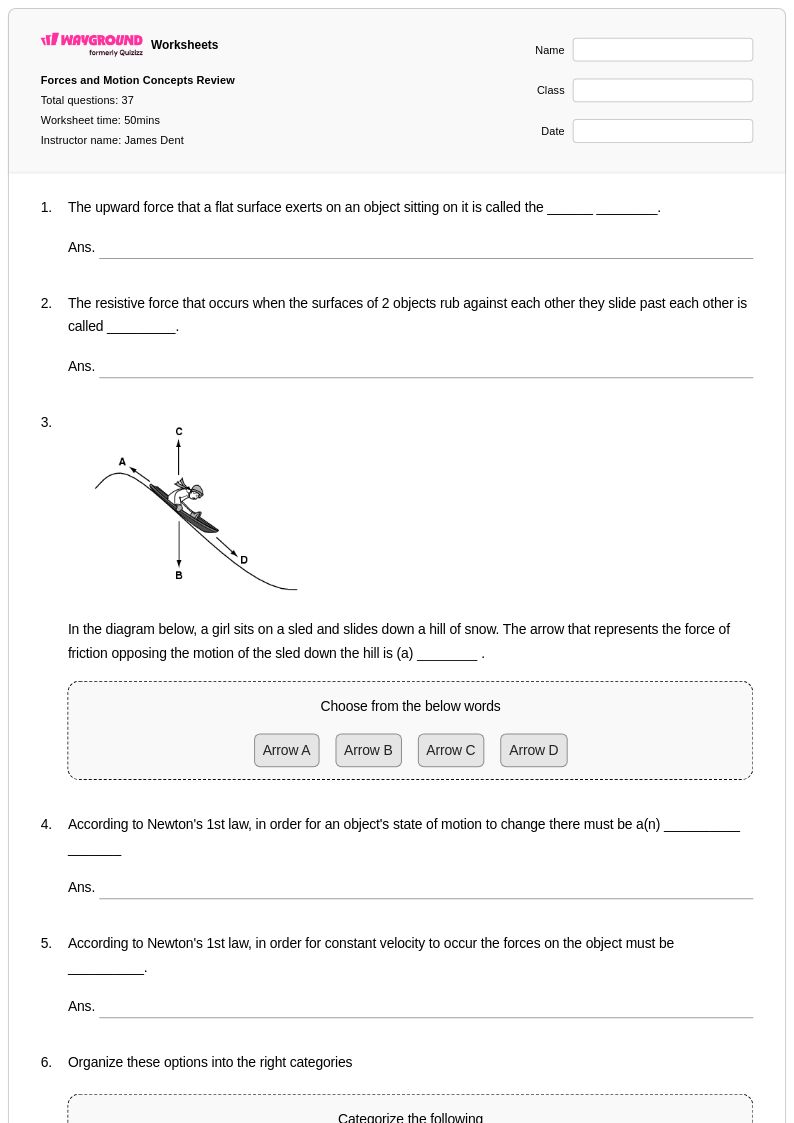
37 Q
9th - 12th
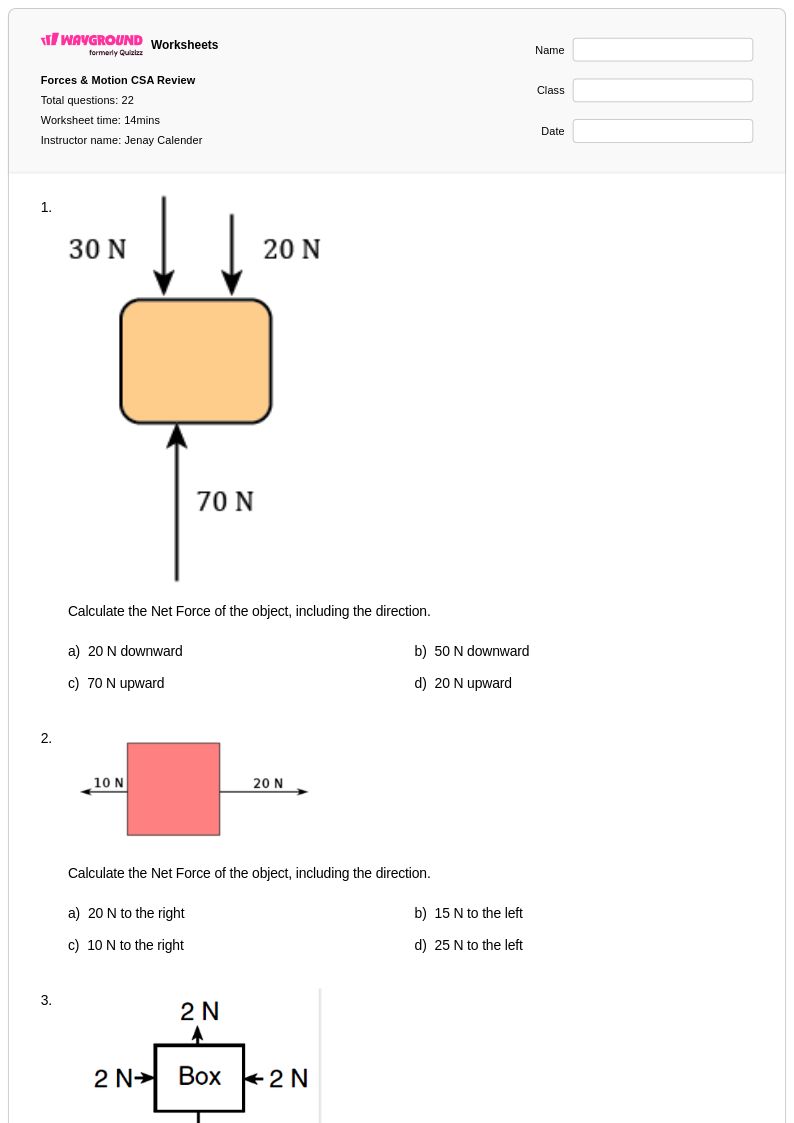
22 Q
10th
120 Q
9th - 12th
33 Q
9th - 12th
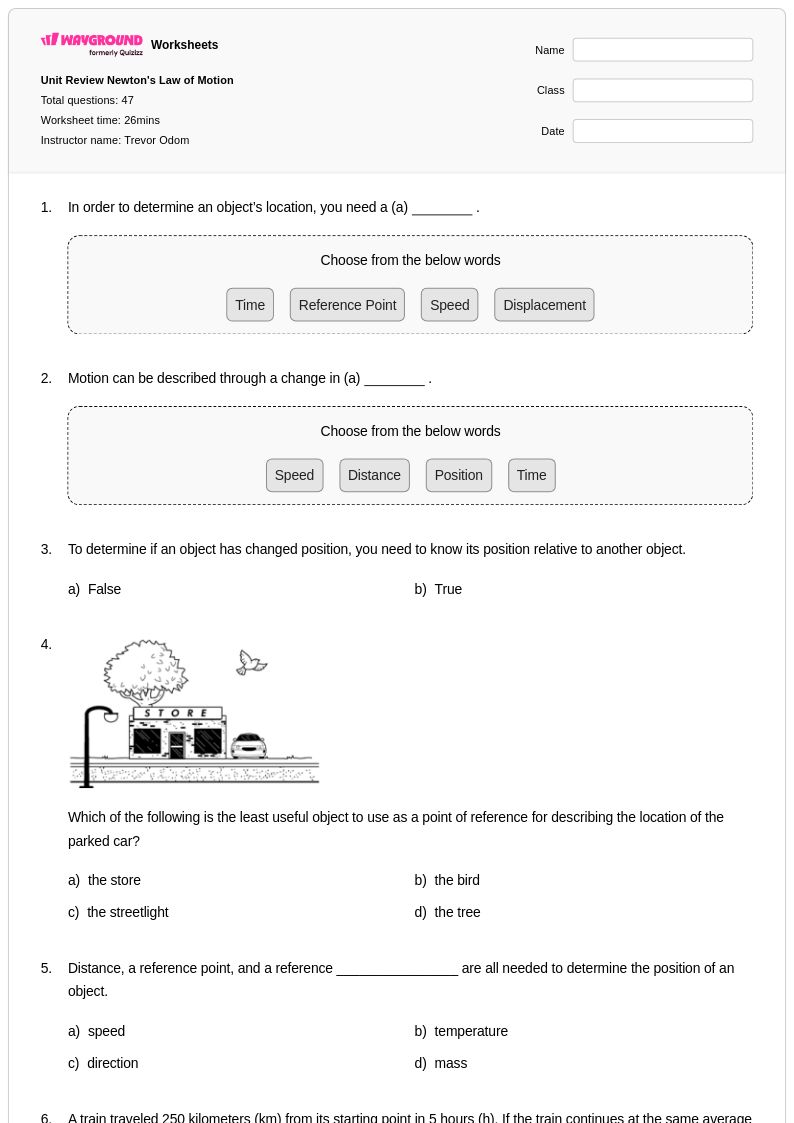
47 Q
8th - Uni
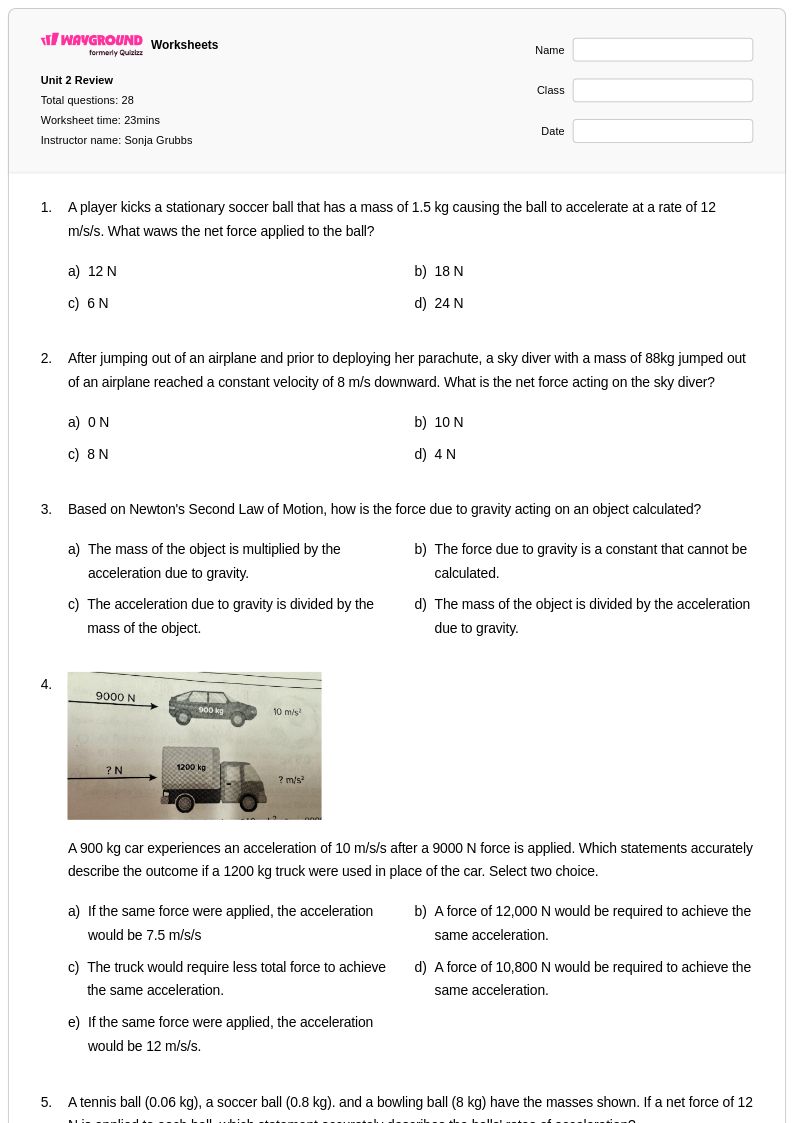
28 Q
8th - Uni
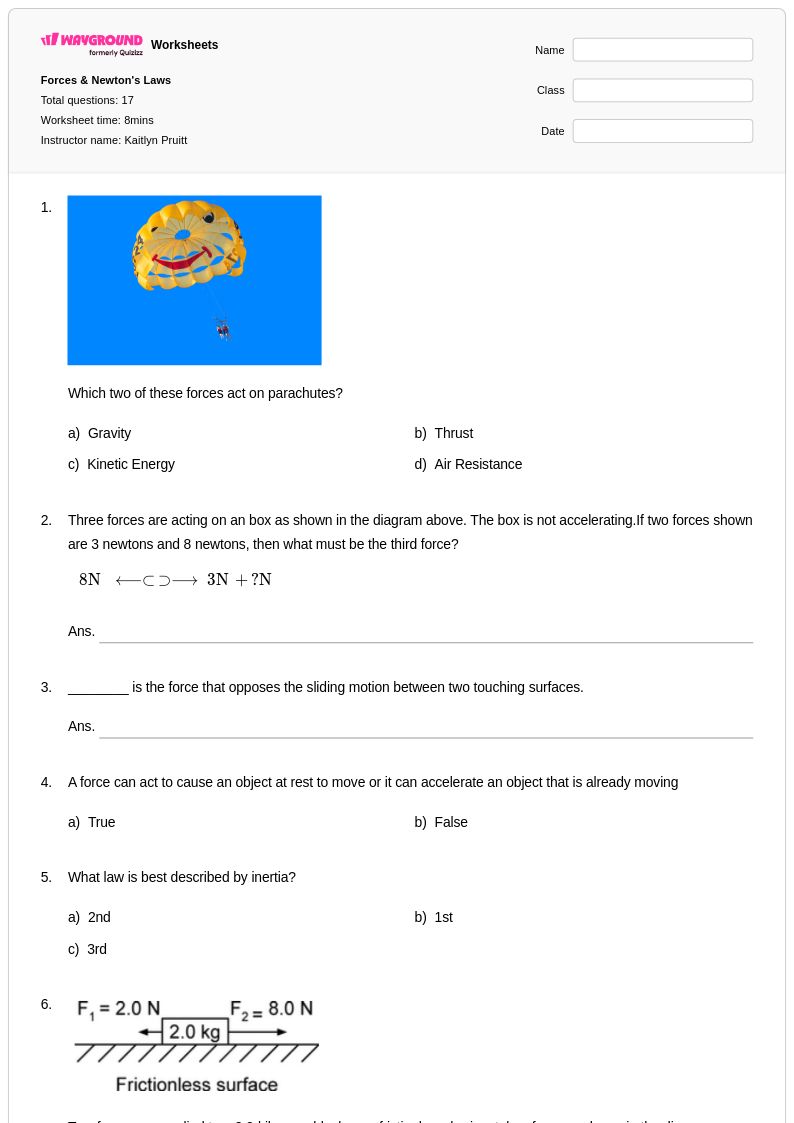
17 Q
10th
Explore Net Force and Acceleration Worksheets by Grades
Explore Other Subject Worksheets for class 10
Explore printable Net Force and Acceleration worksheets for Class 10
Net force and acceleration worksheets for Class 10 students available through Wayground (formerly Quizizz) provide comprehensive practice with Newton's second law and its real-world applications. These expertly designed resources help students master the fundamental relationship between net force, mass, and acceleration through systematic problem-solving exercises that progress from basic calculations to complex multi-step scenarios. The worksheets strengthen critical physics skills including vector addition of forces, identifying equilibrium conditions, analyzing force diagrams, and applying F=ma in various contexts such as inclined planes, friction problems, and connected object systems. Each worksheet collection includes detailed answer keys and is available as free printable pdf resources, allowing students to work through practice problems at their own pace while building confidence in quantitative reasoning and conceptual understanding of force relationships.
Wayground (formerly Quizizz) empowers educators with millions of teacher-created net force and acceleration worksheet resources that support diverse classroom needs and learning objectives. The platform's robust search and filtering capabilities enable teachers to quickly locate materials aligned with specific physics standards and customize content to match their students' skill levels and learning goals. These differentiation tools prove invaluable for lesson planning, targeted remediation for students struggling with force calculations, and enrichment activities for advanced learners ready to tackle more complex acceleration problems. The flexible format options, including both printable worksheets and digital versions available as pdf downloads, accommodate various teaching styles and classroom technologies while ensuring consistent access to high-quality physics practice materials that reinforce essential concepts in forces and motion.
FAQs
How do I teach students the relationship between net force and acceleration?
What practice problems help students get better at calculating net force and acceleration?
What mistakes do students commonly make when working with net force and acceleration?
How can I differentiate net force and acceleration instruction for students at different levels?
How do I use Wayground's net force and acceleration worksheets in my classroom?