Free Printable Nuclear Energy Worksheets for Class 10
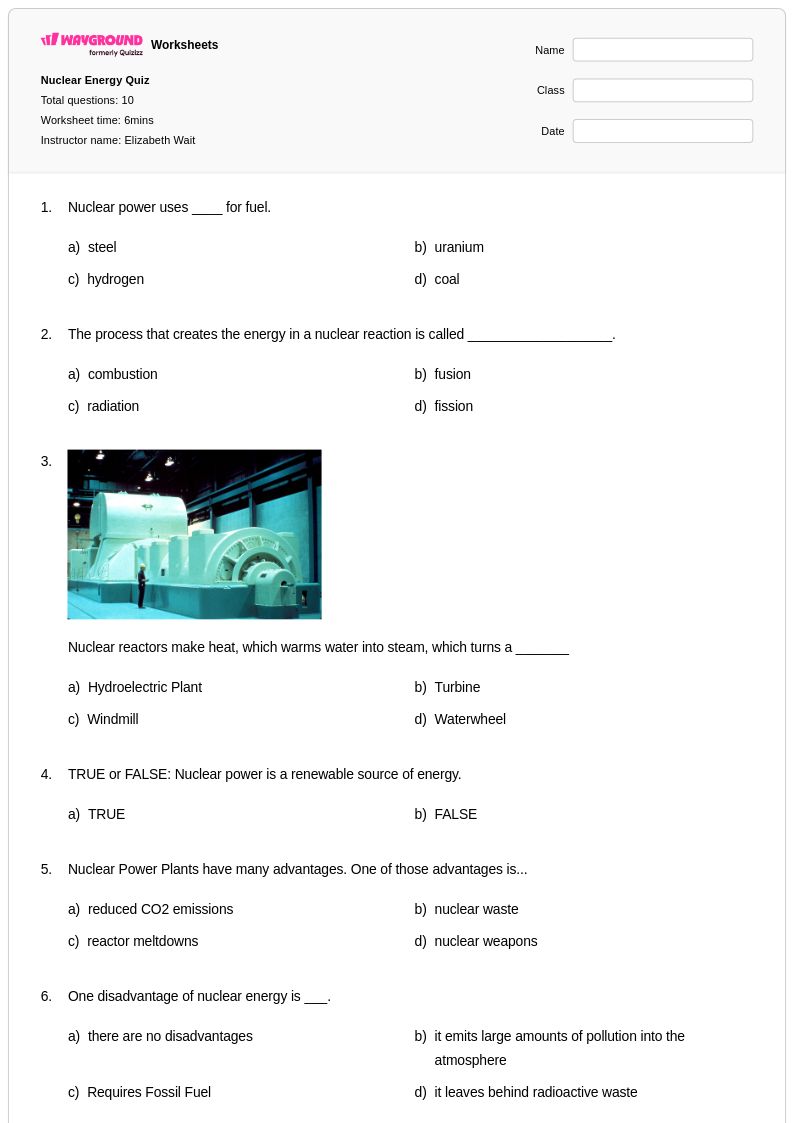
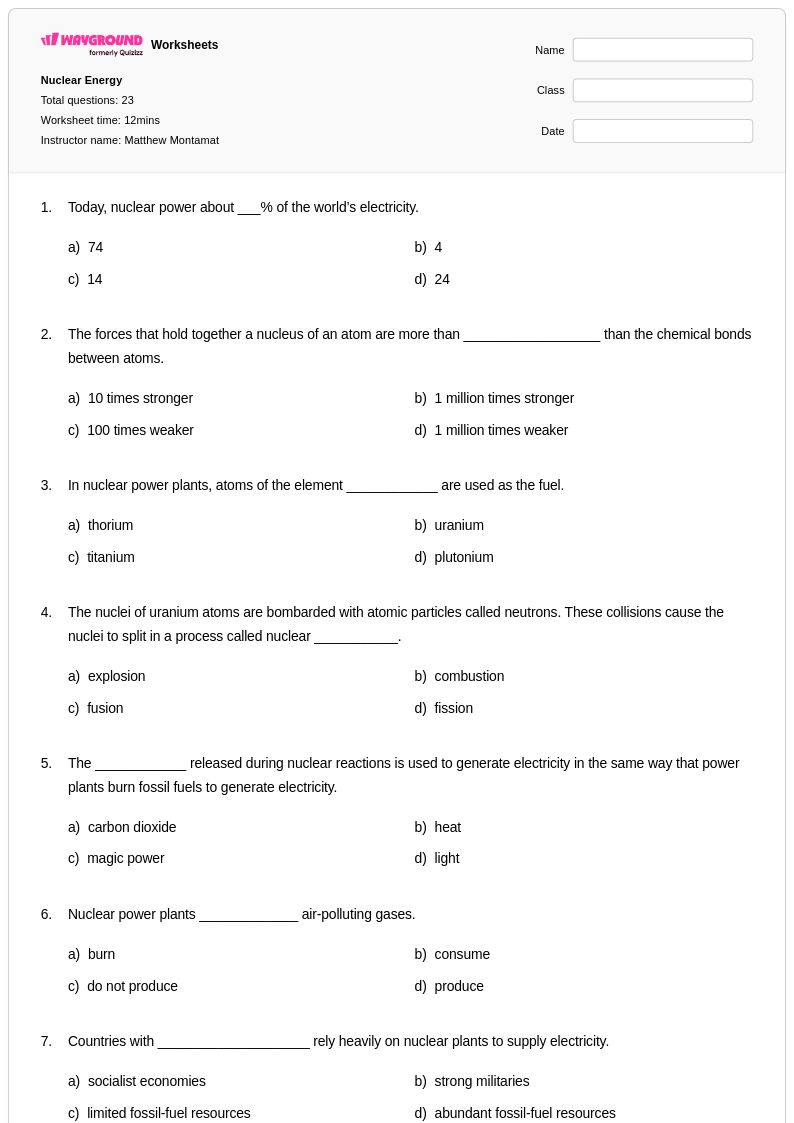
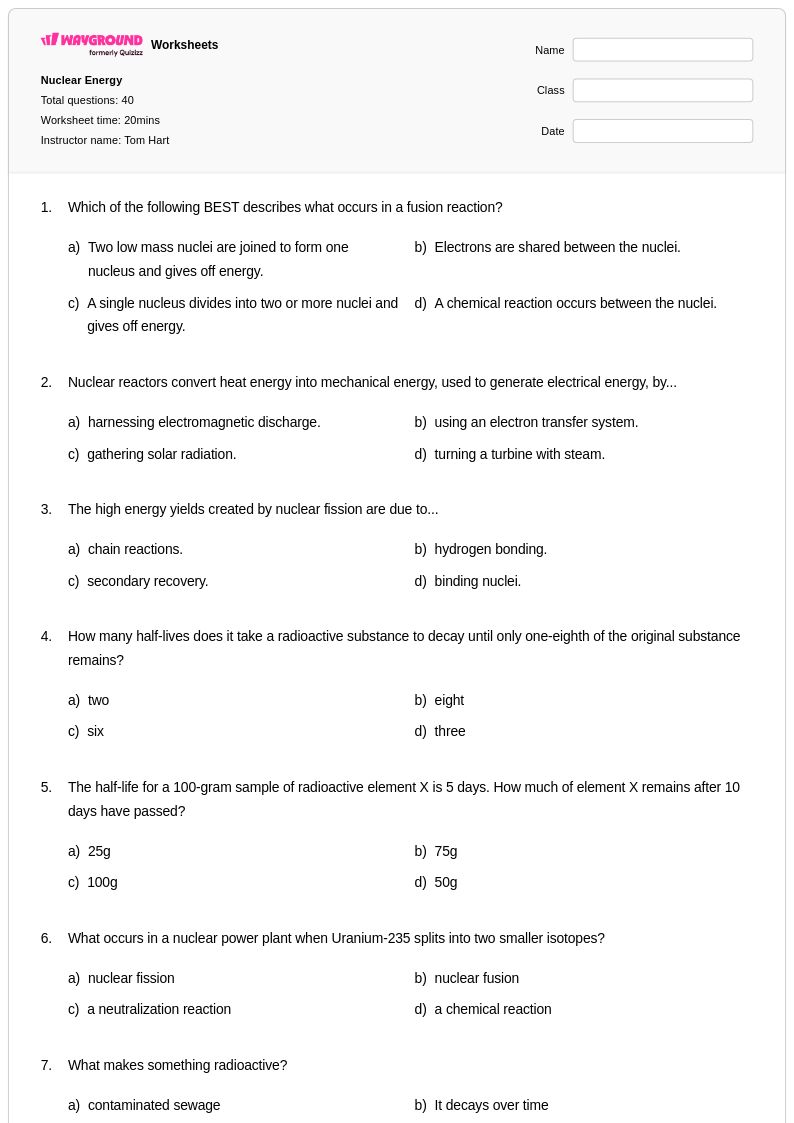
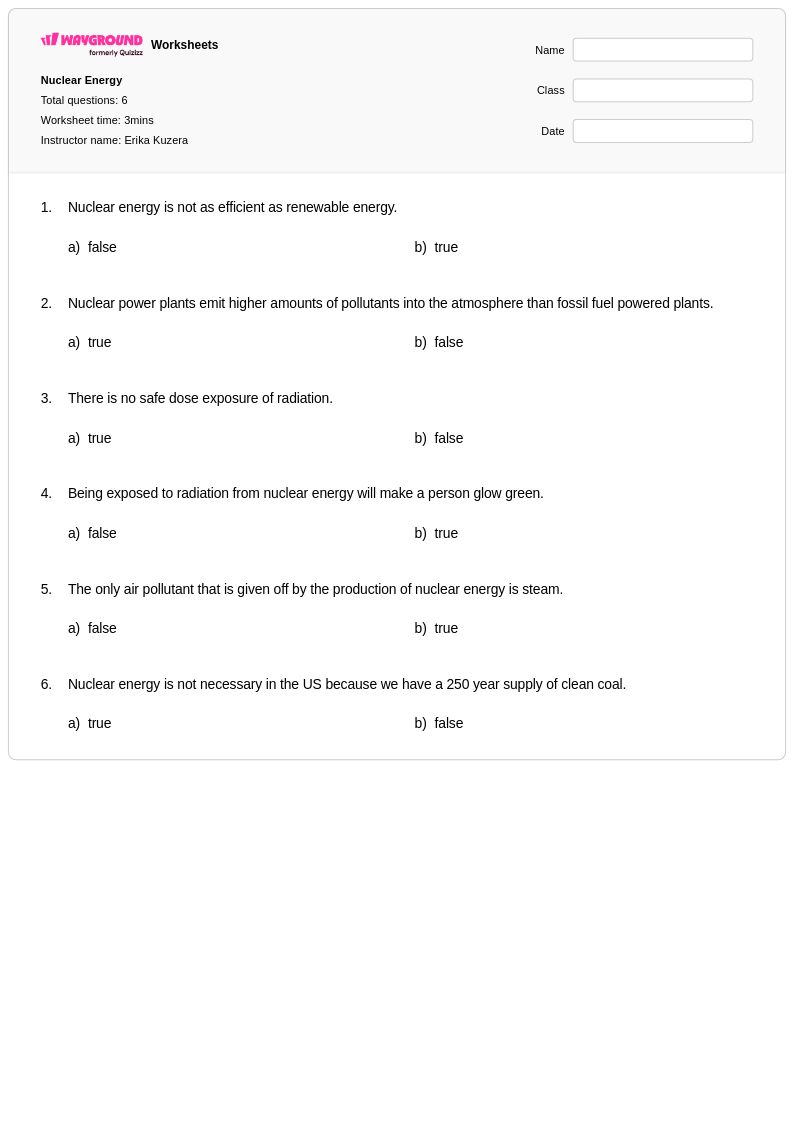
Explore Wayground's comprehensive collection of Class 10 nuclear energy worksheets featuring free printables, practice problems, and answer keys to help students master atomic structure, radioactive decay, and nuclear reactions.
Explore printable Nuclear Energy worksheets for Class 10
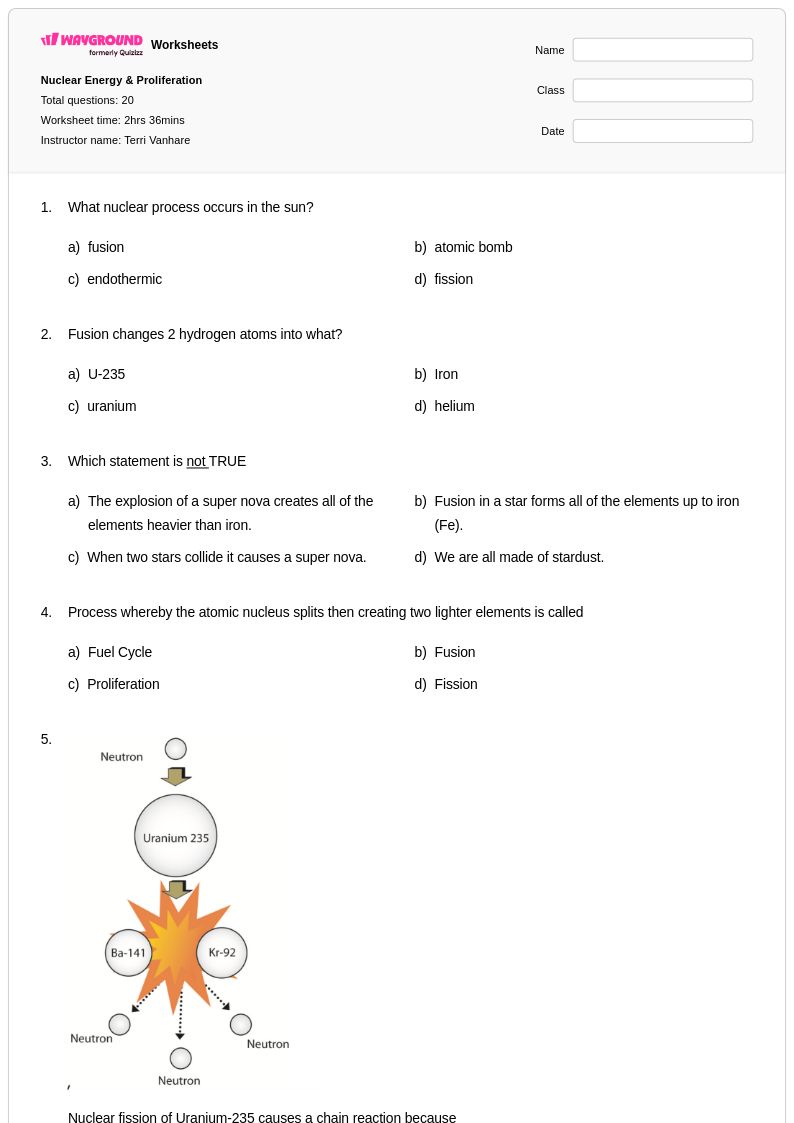
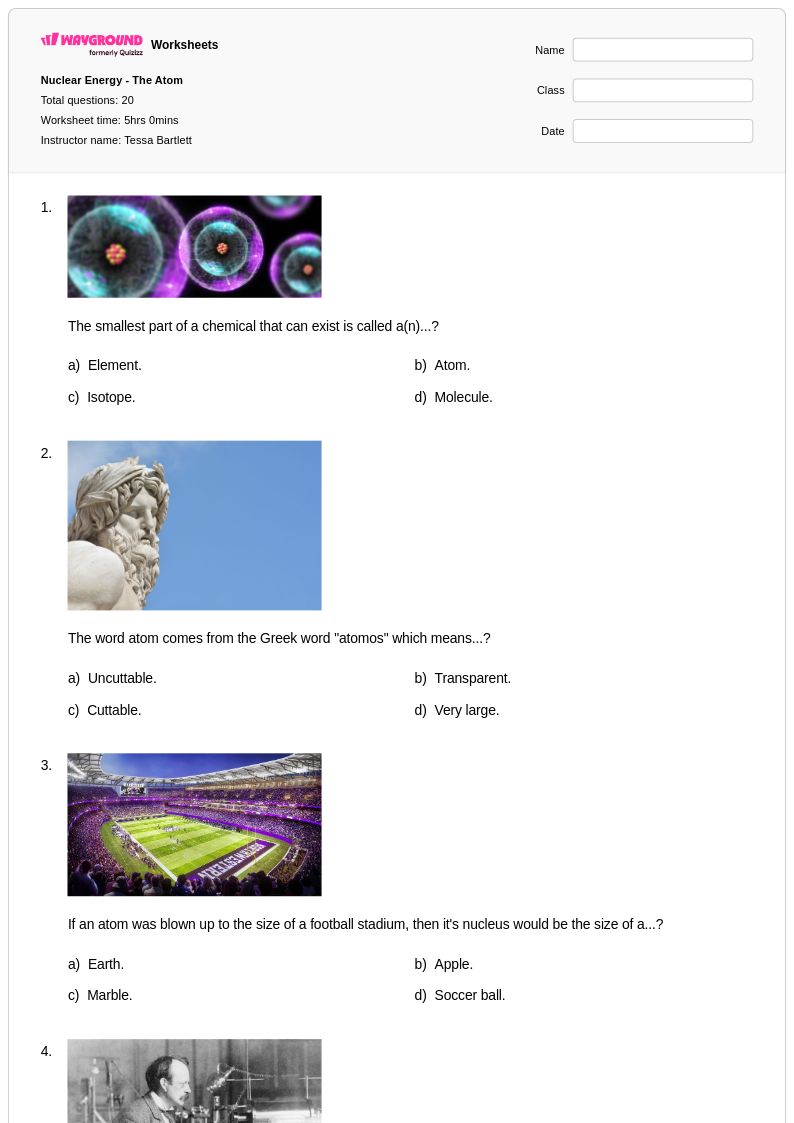
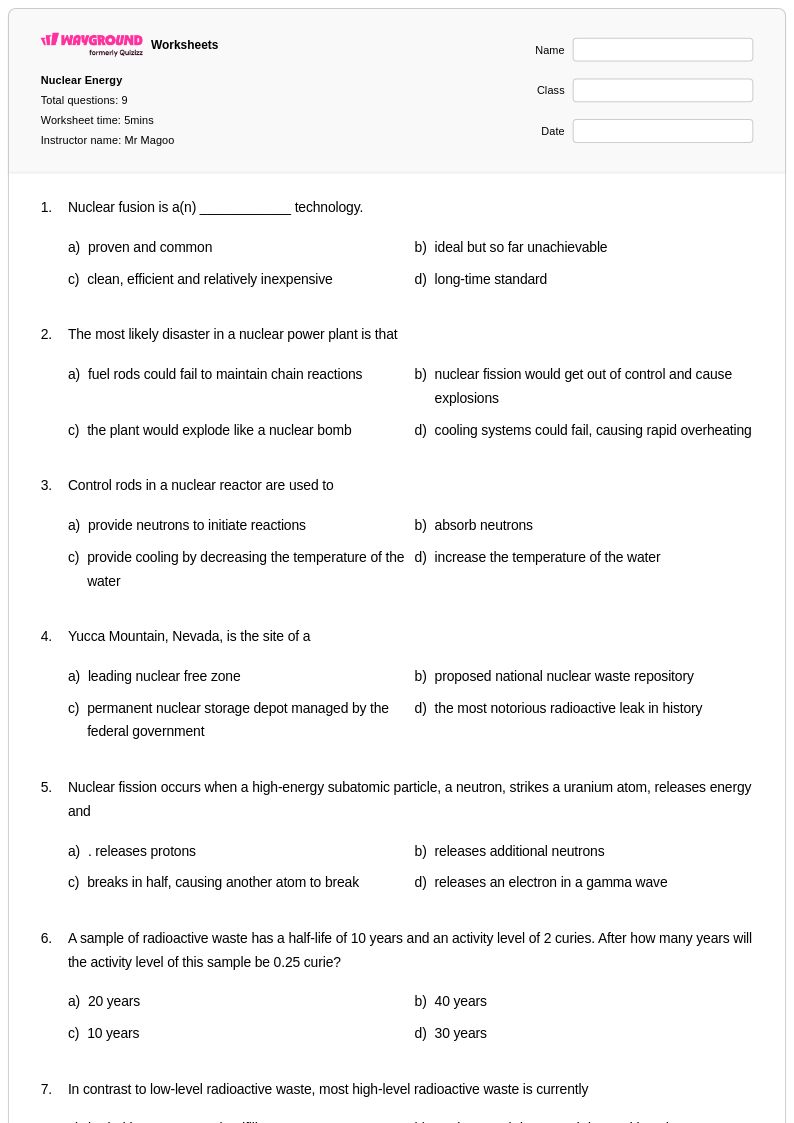
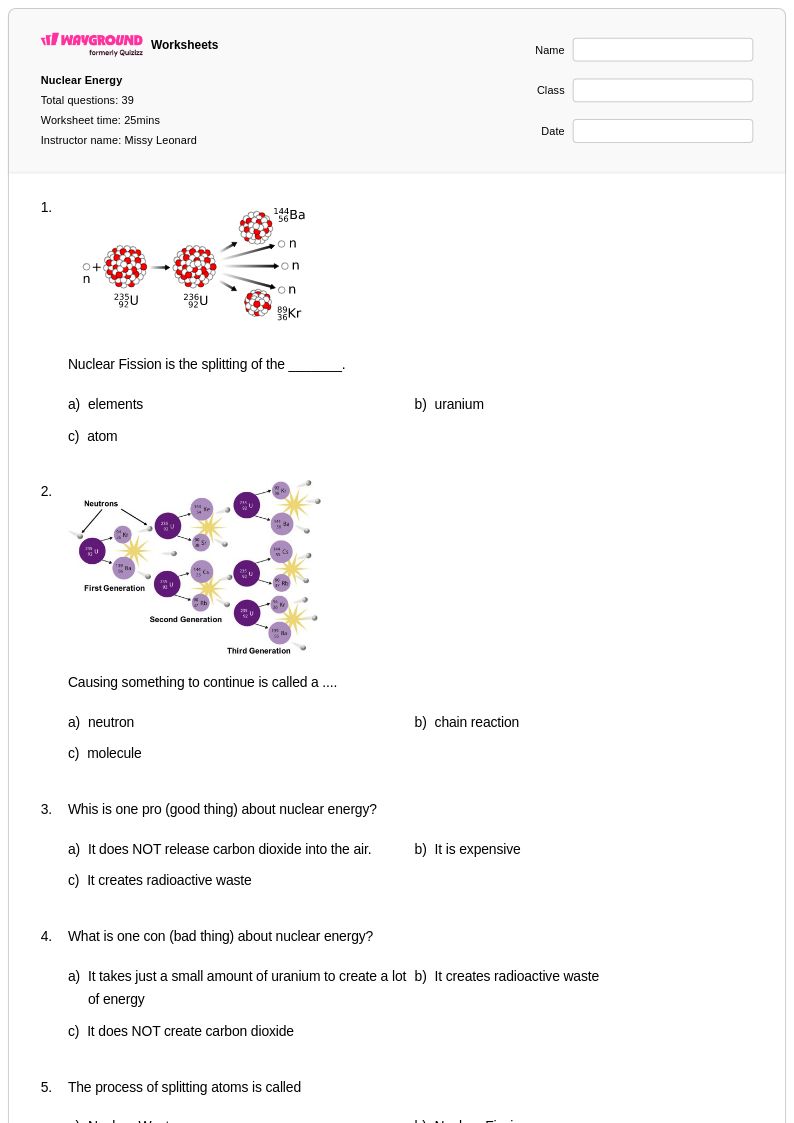
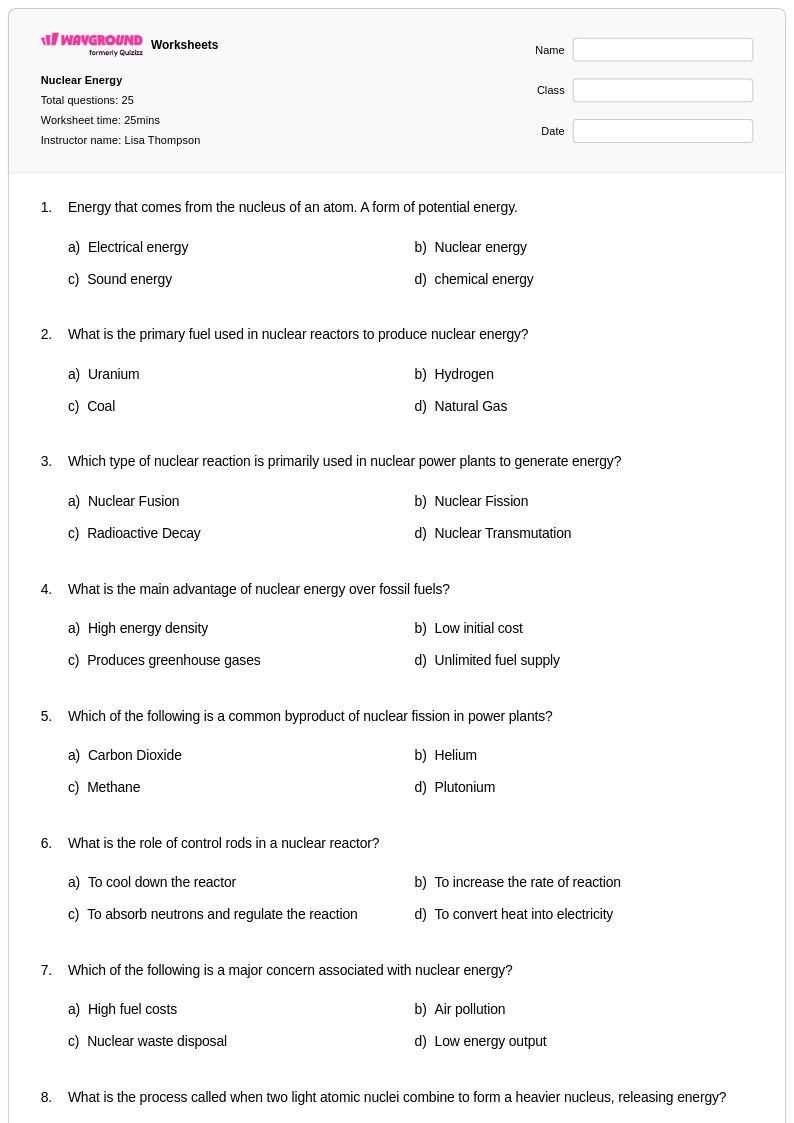
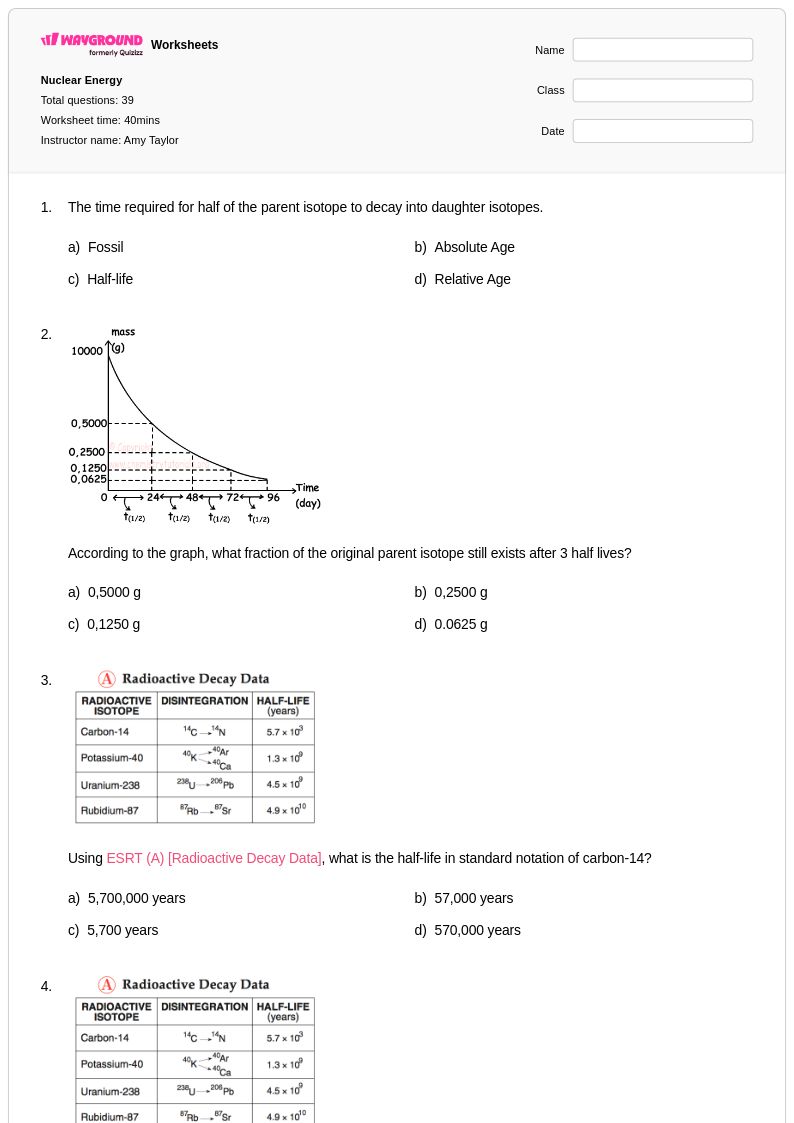
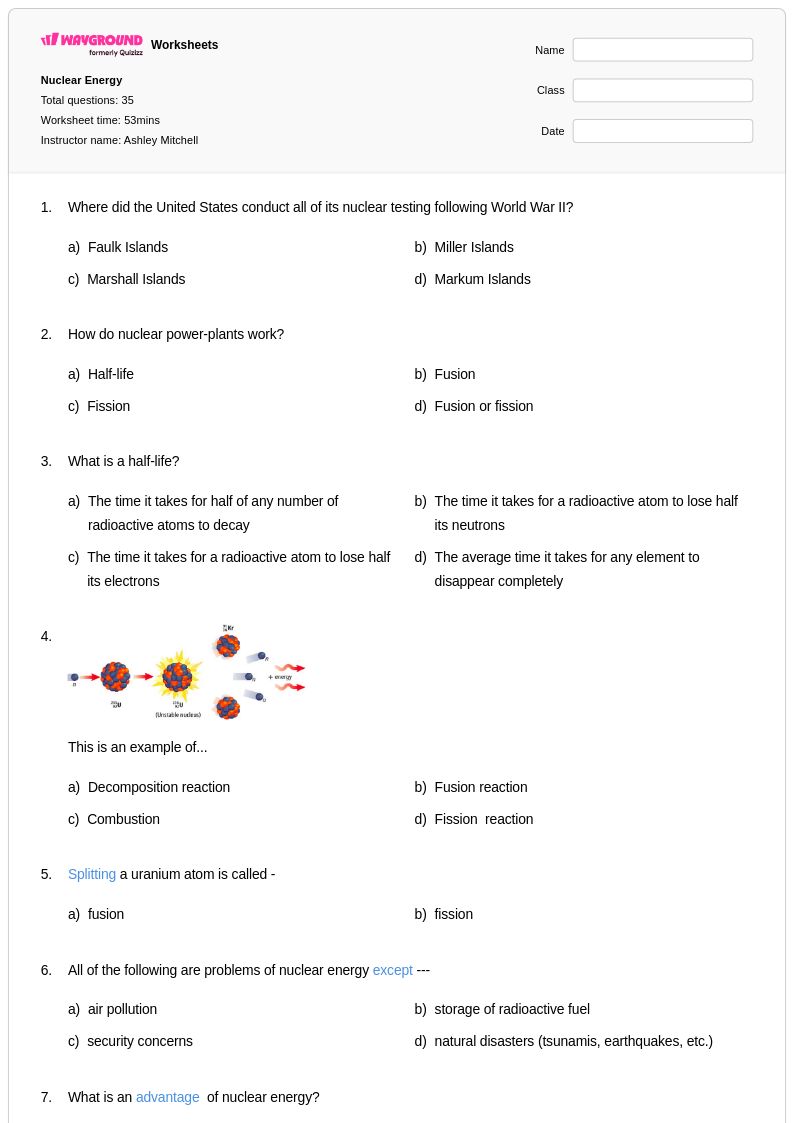
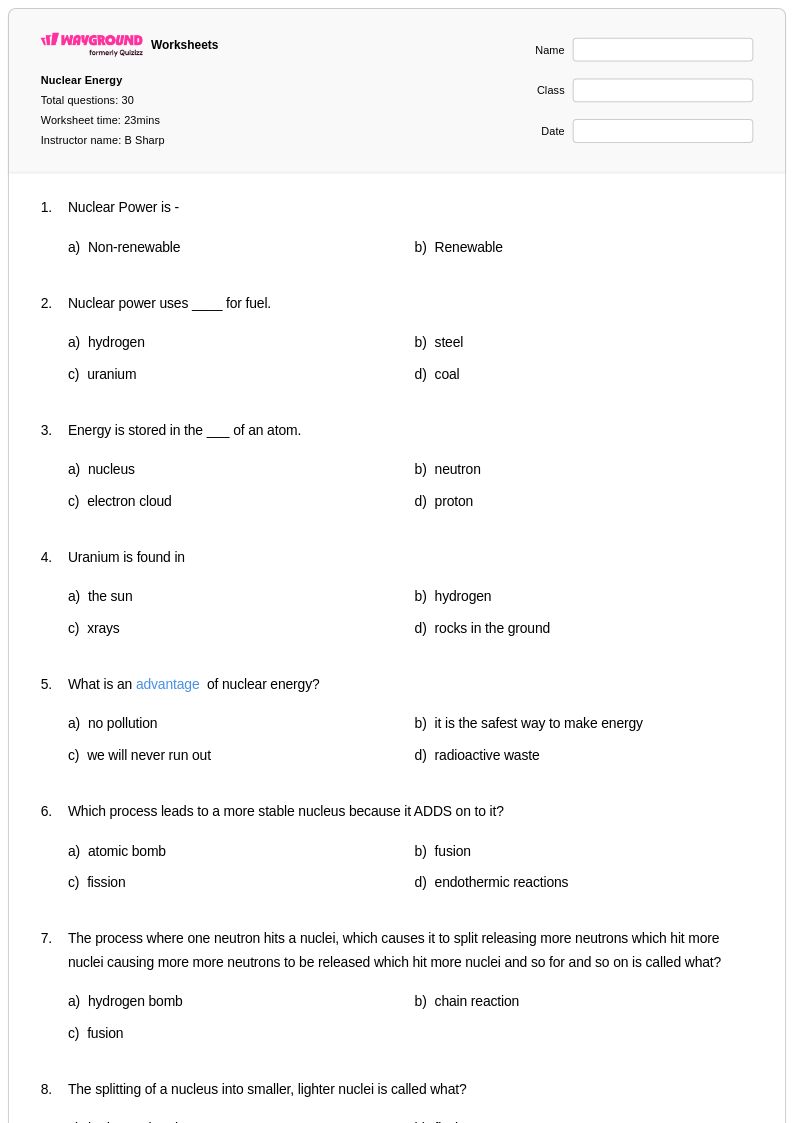
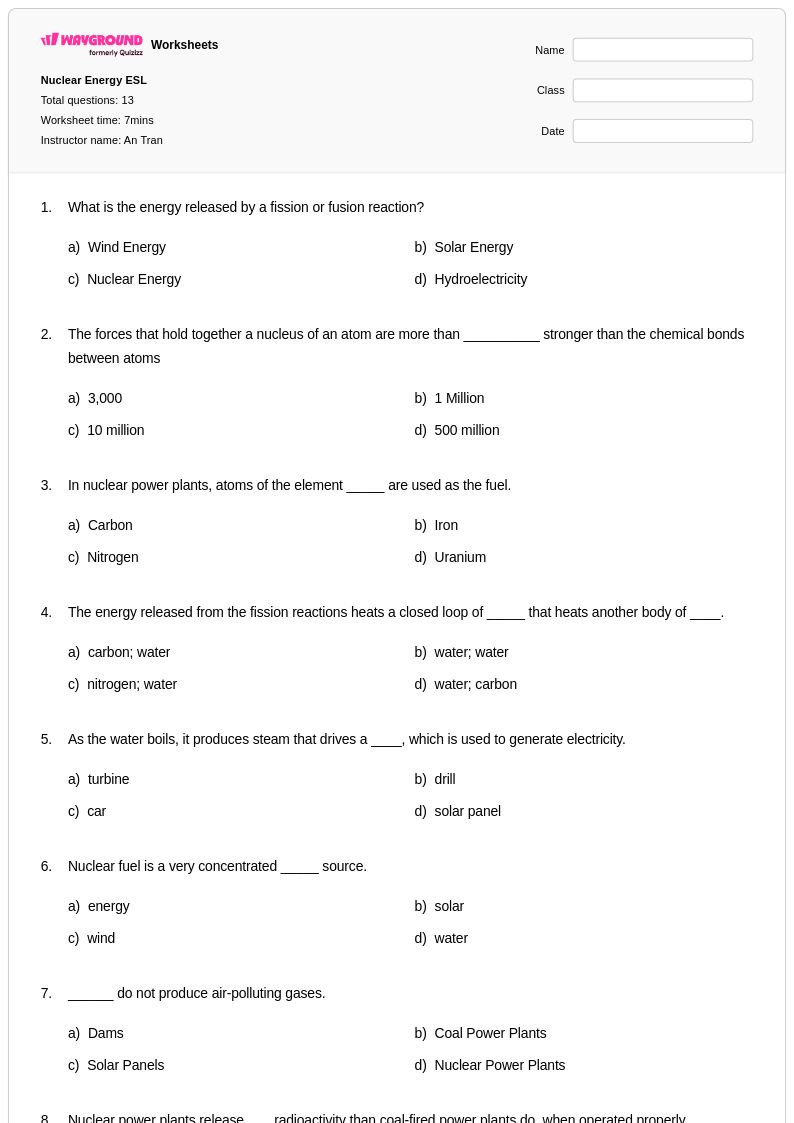
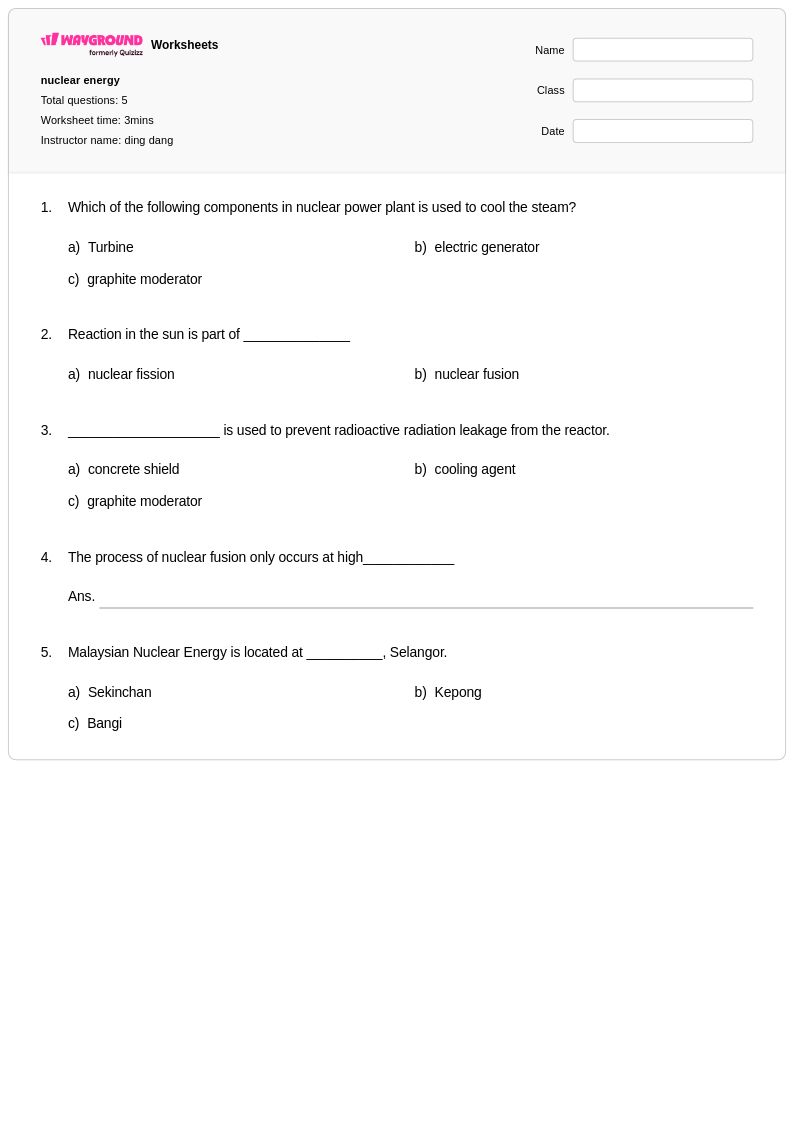
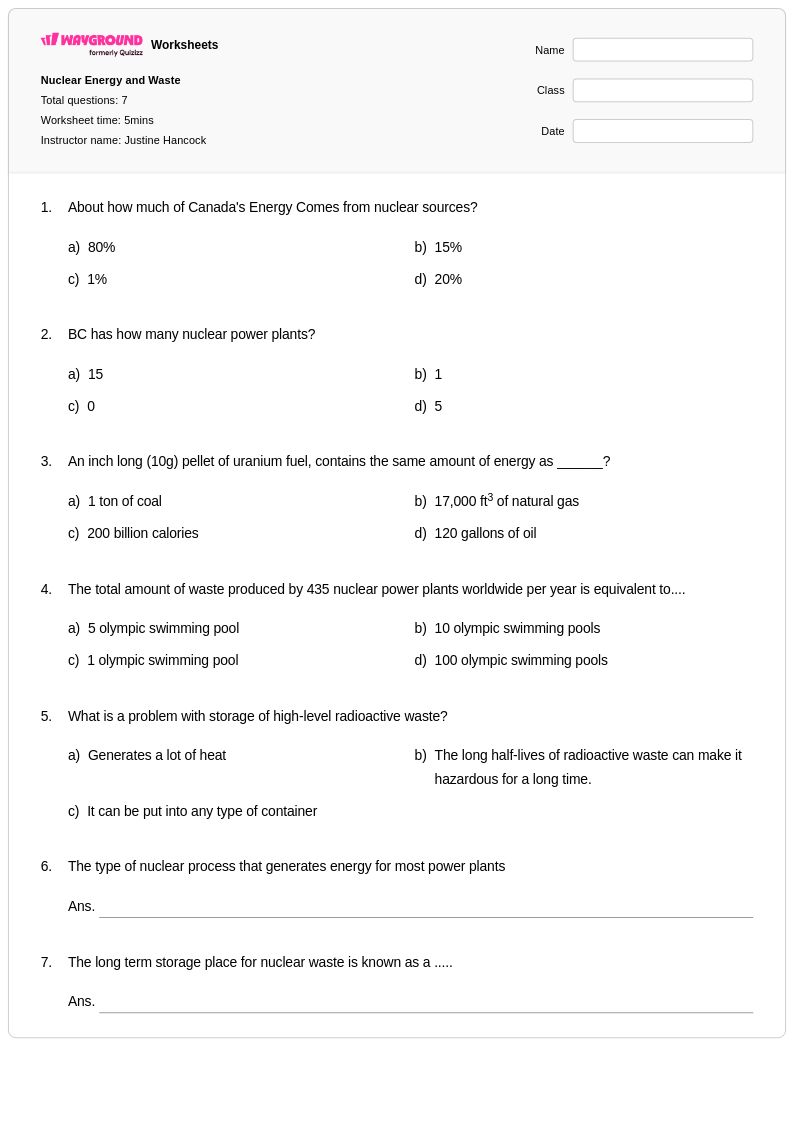
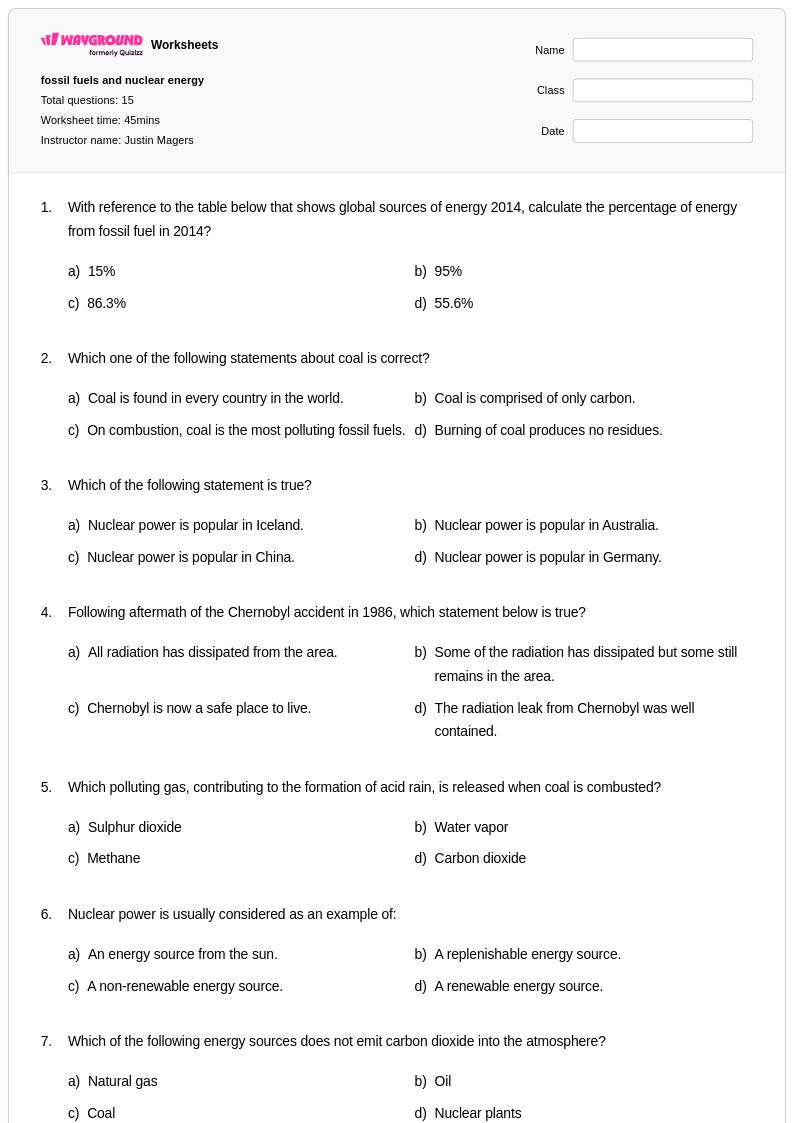
Nuclear energy worksheets for Class 10 students available through Wayground (formerly Quizizz) provide comprehensive coverage of atomic structure, radioactive decay, fission and fusion processes, and the practical applications of nuclear technology in power generation and medicine. These expertly designed resources strengthen critical thinking skills as students analyze nuclear reactions, calculate half-life problems, and evaluate the benefits and risks associated with nuclear power plants. The collection includes detailed practice problems that guide students through complex concepts like binding energy and mass-energy equivalence, while answer keys ensure accurate self-assessment and independent learning. Available as free printables and interactive digital materials, these worksheets help students master fundamental nuclear physics principles through hands-on problem solving and real-world applications.
Wayground (formerly Quizizz) empowers educators with millions of teacher-created nuclear energy resources that streamline lesson planning and support diverse learning needs in Class 10 physics classrooms. The platform's advanced search and filtering capabilities allow teachers to quickly locate materials aligned with specific curriculum standards, while built-in differentiation tools enable customization for students at varying skill levels. These comprehensive worksheet collections are available in both printable pdf format and interactive digital versions, providing flexibility for in-class instruction, homework assignments, and remote learning scenarios. Teachers utilize these resources for targeted remediation of challenging nuclear physics concepts, enrichment activities for advanced learners, and systematic skill practice that builds student confidence in solving complex nuclear energy problems.
FAQs
How do I teach nuclear energy concepts to high school students?
Start by grounding students in atomic structure before introducing nuclear forces, fission, and fusion. Use conceptual analogies to explain mass-energy equivalence (E=mc²) before moving into quantitative problems. Sequencing instruction from radioactive decay and half-life calculations toward reactor design and real-world applications helps students build a coherent mental model rather than treating each concept in isolation.
What types of practice problems help students learn nuclear energy?
Effective practice problems for nuclear energy span several skill levels: identifying radiation types (alpha, beta, gamma), balancing nuclear equations, calculating half-life decay, solving mass-energy equivalence problems, and comparing fission versus fusion reactions. Progressive problem sets that move from conceptual identification toward multi-step quantitative reasoning give students the scaffolding they need to develop genuine fluency with nuclear physics.
What mistakes do students commonly make when solving half-life problems?
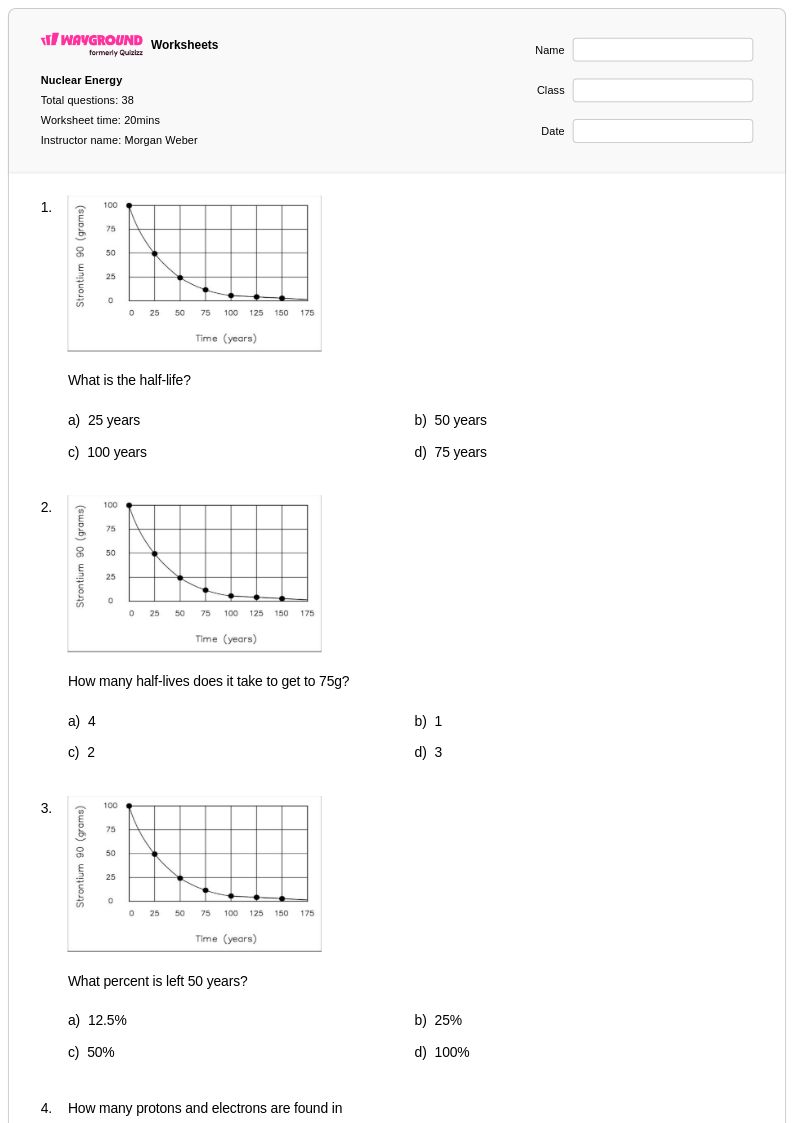
The most frequent error is treating half-life decay as linear rather than exponential, which causes students to underestimate remaining activity after multiple half-lives. Students also commonly confuse the half-life of a substance with the time for complete decay, or misapply the decay formula by using the wrong initial quantity. Explicit practice with exponential decay graphs alongside numerical calculations helps students internalize the correct relationship.
What misconceptions do students have about nuclear fission and fusion?
Students frequently conflate fission and fusion or assume both reactions always release dangerous radiation. A persistent misconception is that nuclear power plants can explode like atomic bombs, which conflates controlled chain reactions with uncontrolled ones. Many students also struggle to understand why fusion releases more energy per unit mass than fission, making it important to explicitly connect binding energy curves to the direction and magnitude of energy release in each reaction type.
How can I use nuclear energy worksheets to support students with different learning needs?
Nuclear energy worksheets on Wayground can be assigned digitally, which allows teachers to apply built-in accommodations for individual students. Read Aloud support is particularly useful for dense physics terminology, while extended time settings help students who need more processing time on multi-step calculations. Reduced answer choices can lower cognitive load for struggling learners on conceptual questions without altering the core skill being assessed, and these settings carry over automatically to future sessions.
How do I use Wayground's nuclear energy worksheets in my classroom?
Wayground's nuclear energy worksheets are available as printable PDFs for traditional classroom use and in digital formats for technology-integrated instruction. Teachers can assign them as independent practice, homework, or formative assessment, and can also host them as an interactive quiz directly on Wayground. Answer keys are included with each worksheet, supporting both teacher-led review and student self-assessment after independent work.