
20 Q
2nd
20 Q
2nd
20 Q
2nd
20 Q
2nd
10 Q
2nd - Uni
10 Q
2nd
20 Q
2nd - Uni
50 Q
1st - 5th
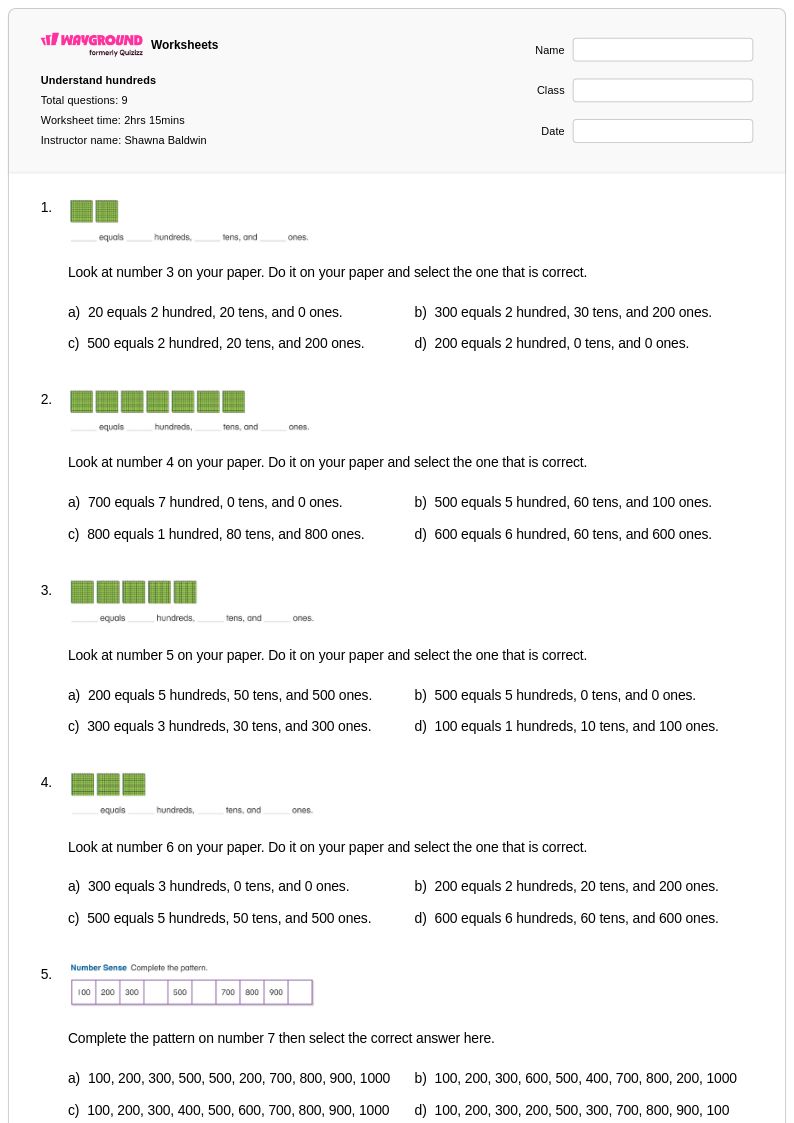
9 Q
2nd
8 Q
2nd
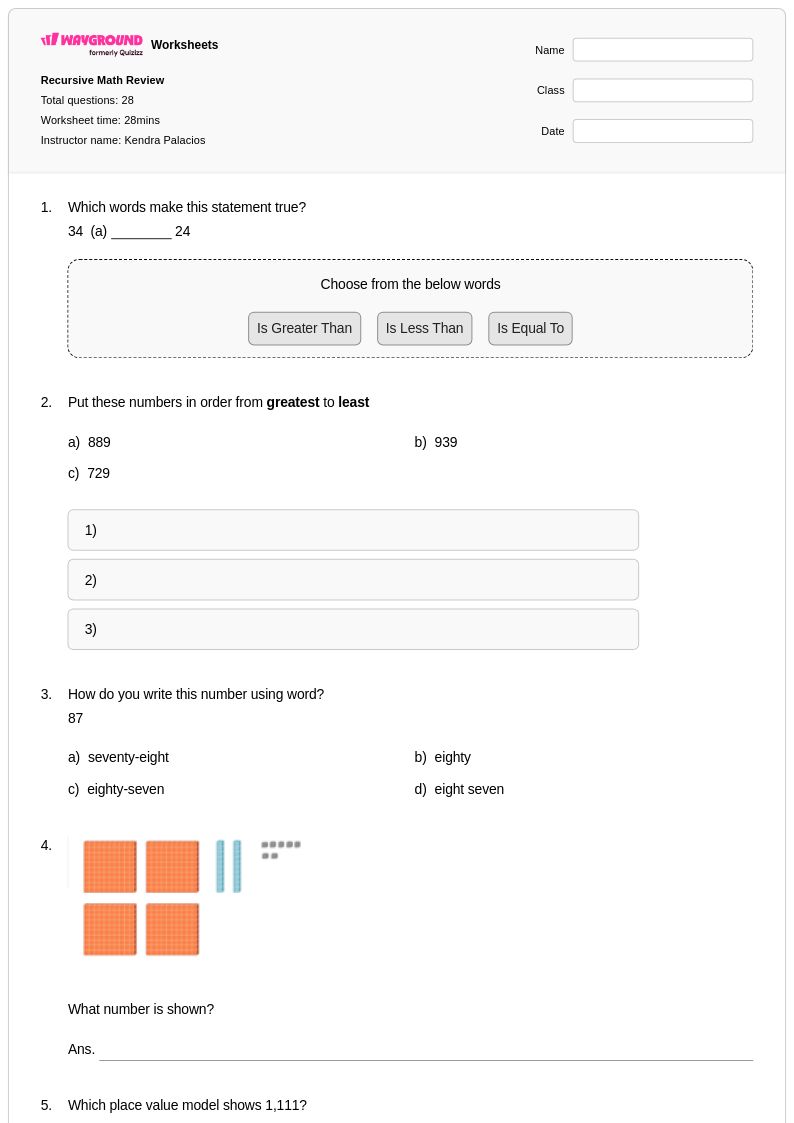
28 Q
2nd
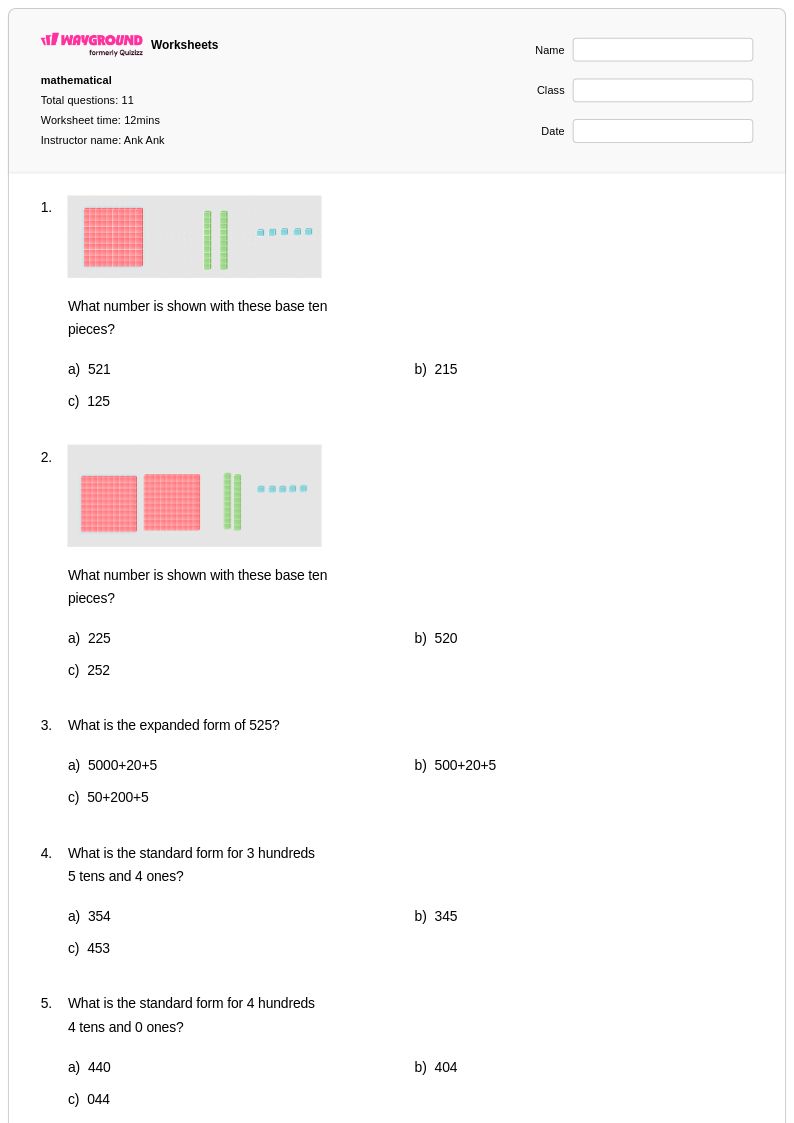
16 Q
1st - 5th
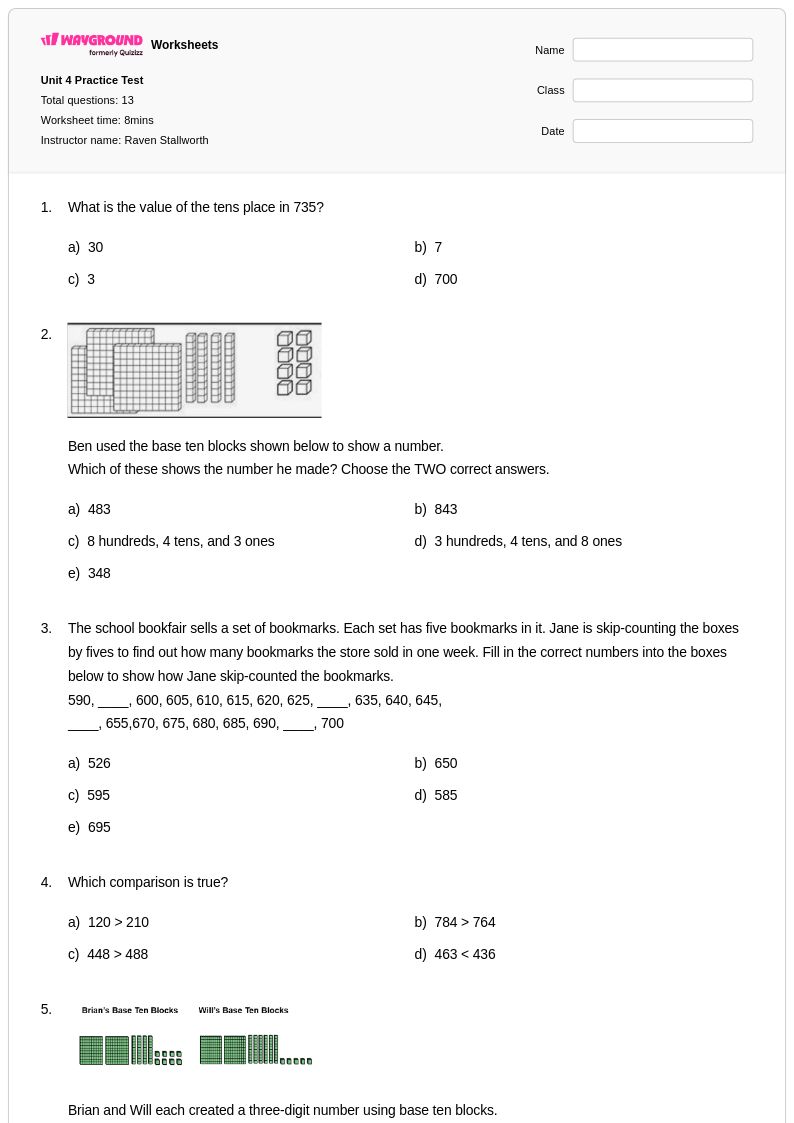
13 Q
2nd
13 Q
2nd
58 Q
1st - 4th
14 Q
2nd
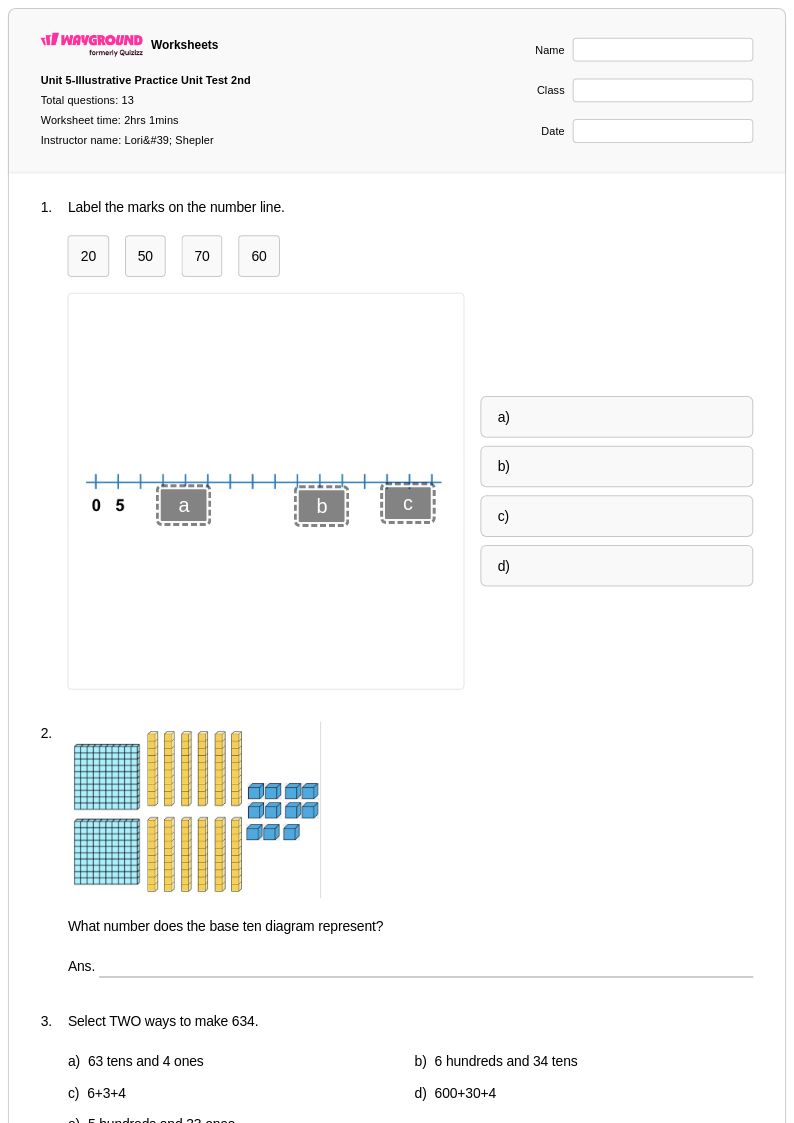
13 Q
2nd
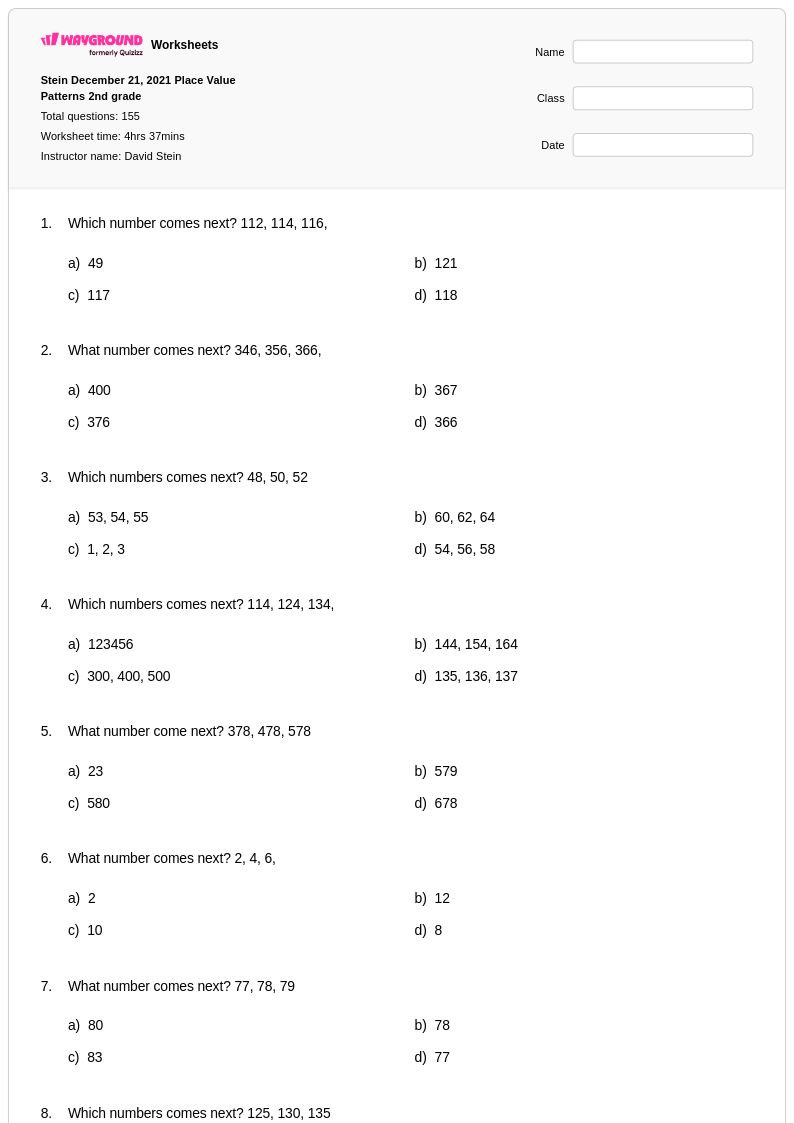
155 Q
2nd
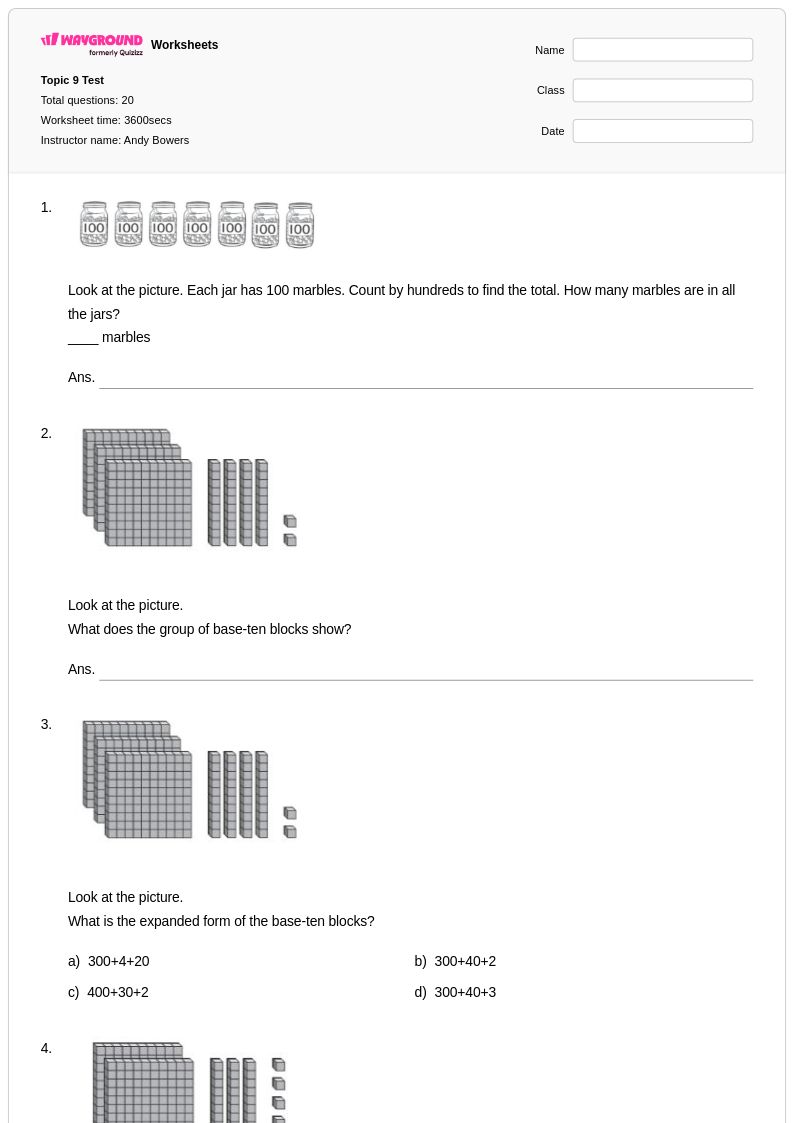
20 Q
2nd
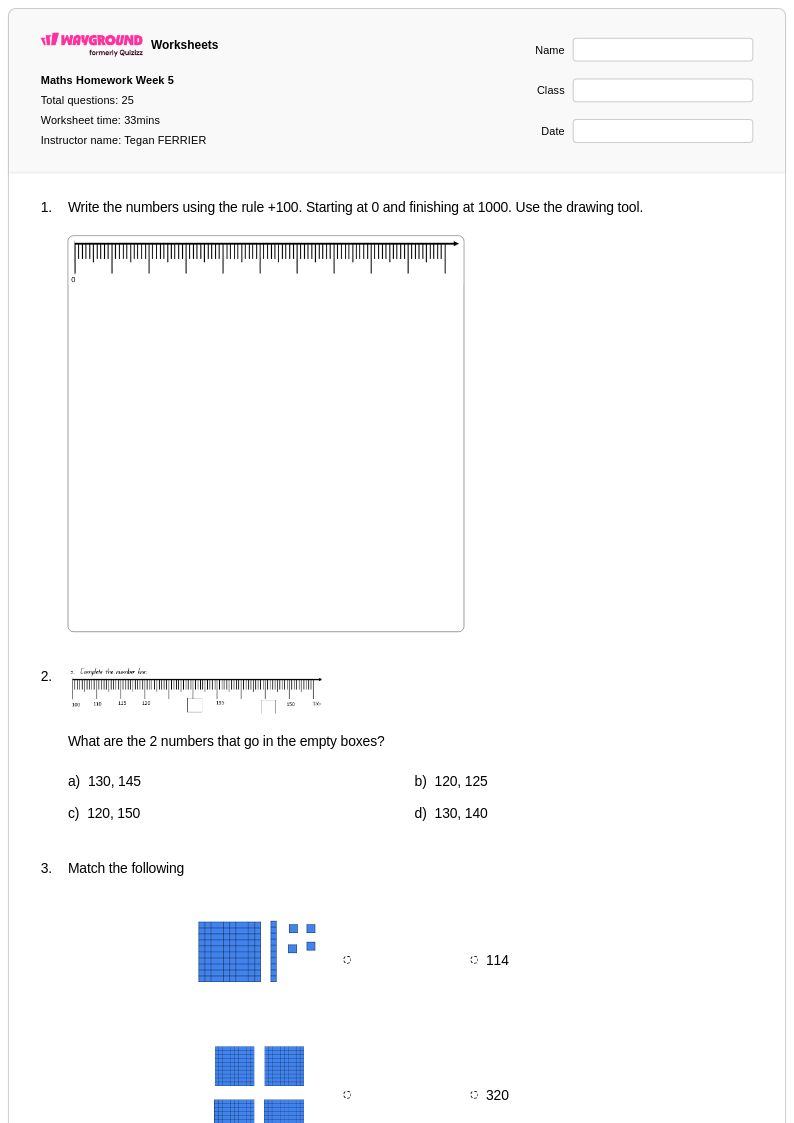
25 Q
2nd
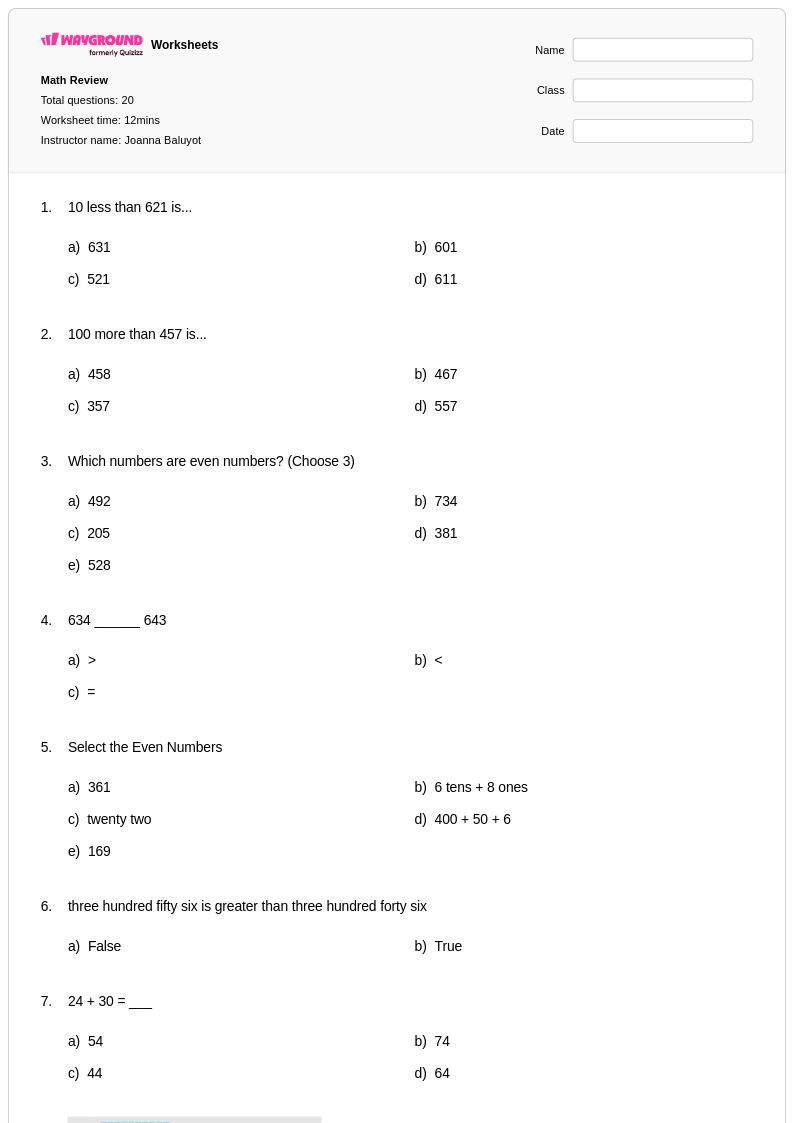
20 Q
2nd
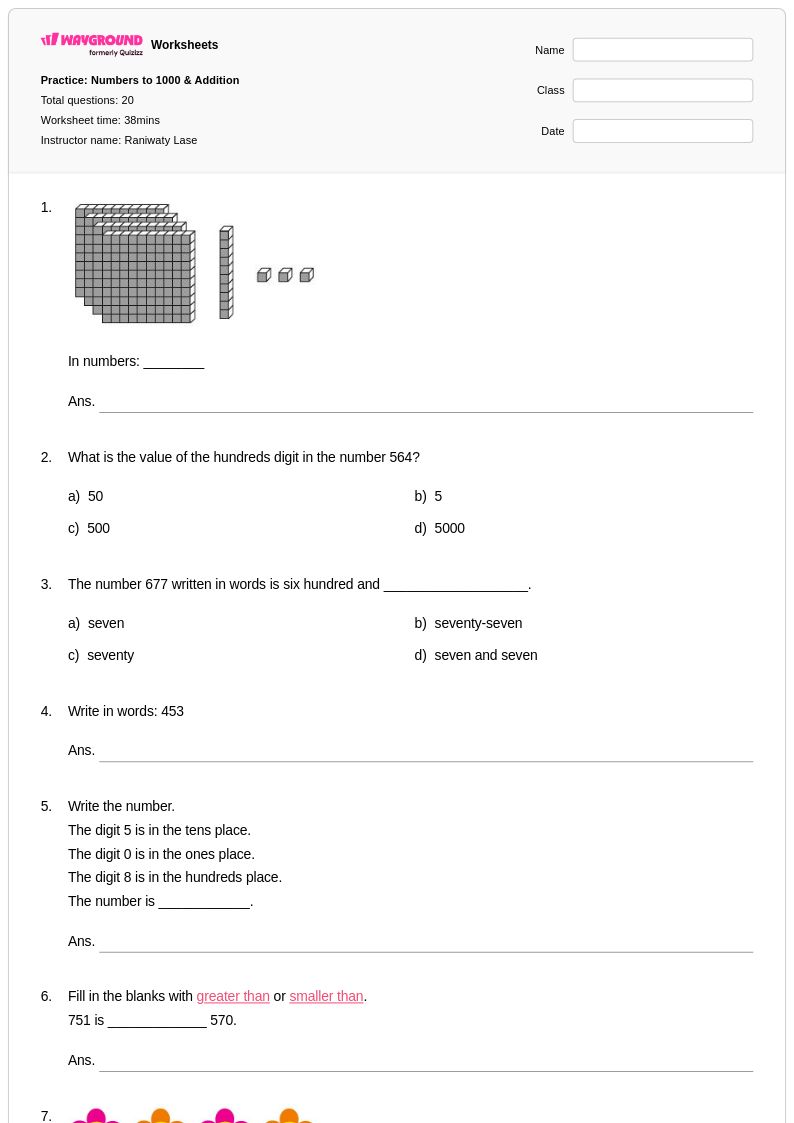
20 Q
2nd
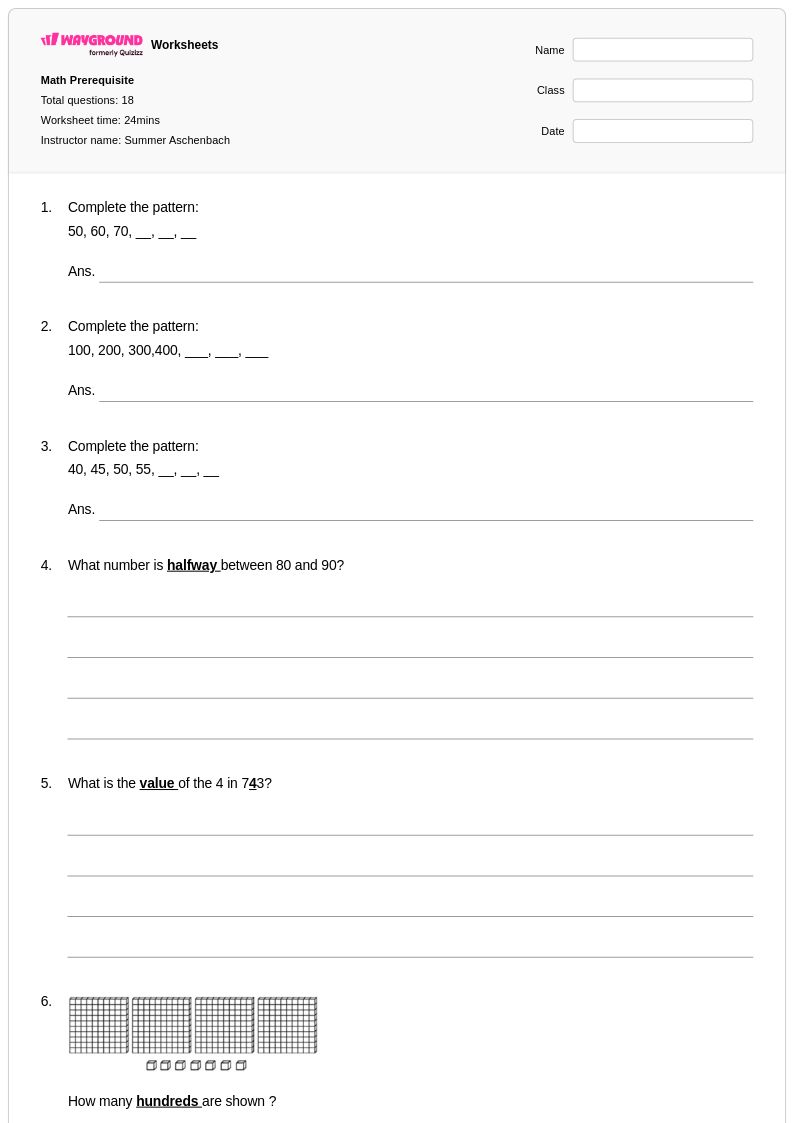
18 Q
2nd - 3rd
Explore Patterns in Three-digit Numbers Worksheets by Grades
Explore Other Subject Worksheets for class 2
Explore printable Patterns in Three-digit Numbers worksheets for Class 2
Patterns in Three-digit Numbers worksheets for Class 2 through Wayground provide young mathematicians with essential practice in recognizing and extending numerical sequences within the hundreds range. These carefully designed printables help students develop critical thinking skills as they identify skip counting patterns, number sequences, and relationships between three-digit numbers. Each worksheet collection includes comprehensive answer keys and features free pdf downloads that make it easy for teachers to provide targeted practice problems. Students work with various pattern types including counting by tens and hundreds, identifying missing numbers in sequences, and discovering rules that govern numerical progressions, building foundational skills that support advanced mathematical reasoning.
Wayground's extensive library contains millions of teacher-created resources specifically focused on three-digit number patterns, offering educators powerful search and filtering capabilities to locate materials perfectly suited to their Class 2 classrooms. The platform's standards-aligned worksheet collections support differentiated instruction through customizable difficulty levels, allowing teachers to provide appropriate challenges for students at various skill levels. These versatile resources are available in both printable pdf format and interactive digital versions, enabling seamless integration into lesson planning, homework assignments, remediation sessions, and enrichment activities. Teachers can efficiently organize their pattern recognition instruction while ensuring students receive consistent practice with the sequential thinking skills essential for mathematical success.
FAQs
What's an effective way to teach patterns in three-digit numbers?
What exercises help second graders master three-digit number patterns?
What mistakes do students commonly make with three-digit number patterns?
How can I use this Wayground worksheet with my second graders?
How do three-digit number patterns align with Grade 2 math standards?
How can I differentiate this topic for my second-grade class?