
Recommended Topics for you
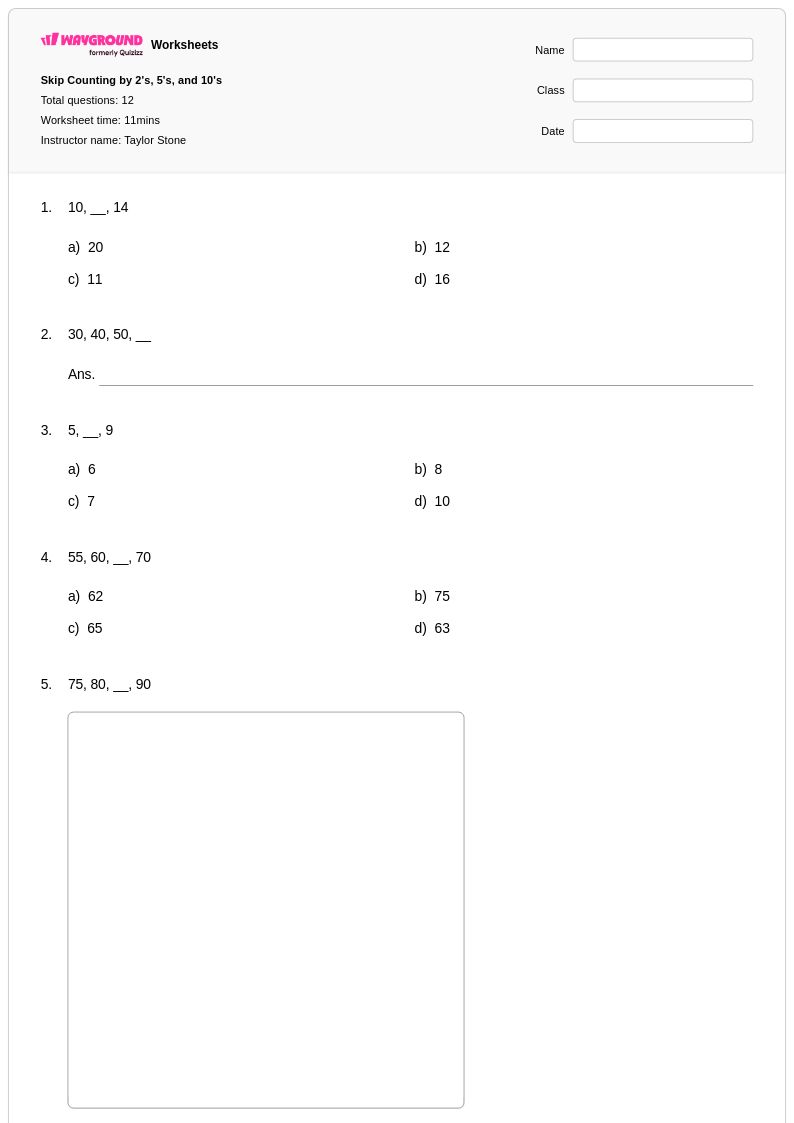
12 Q
2nd
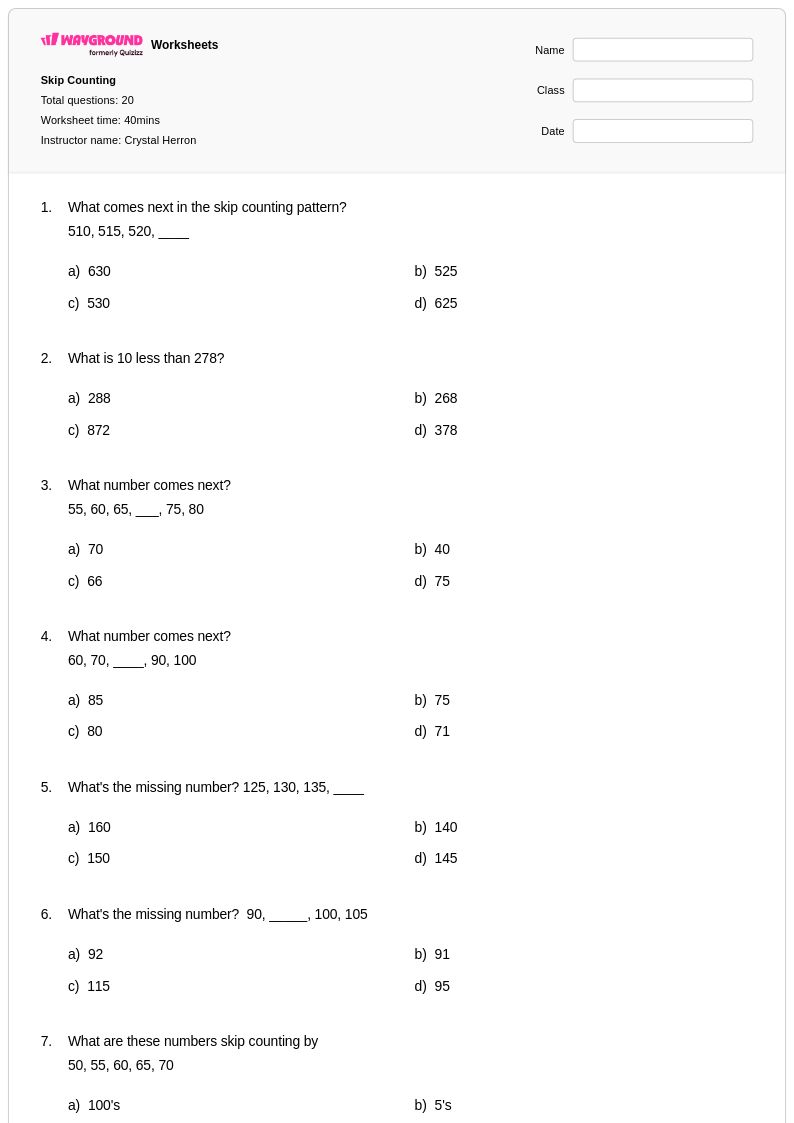
20 Q
2nd
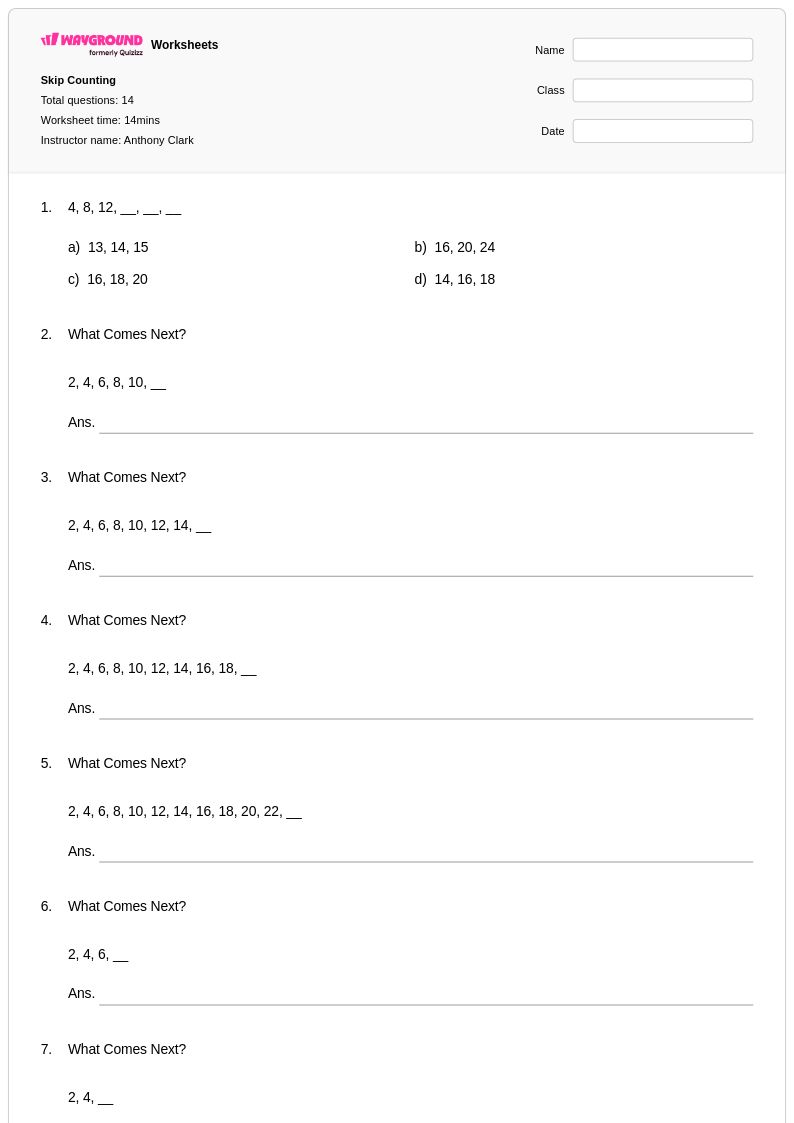
14 Q
1st - Uni
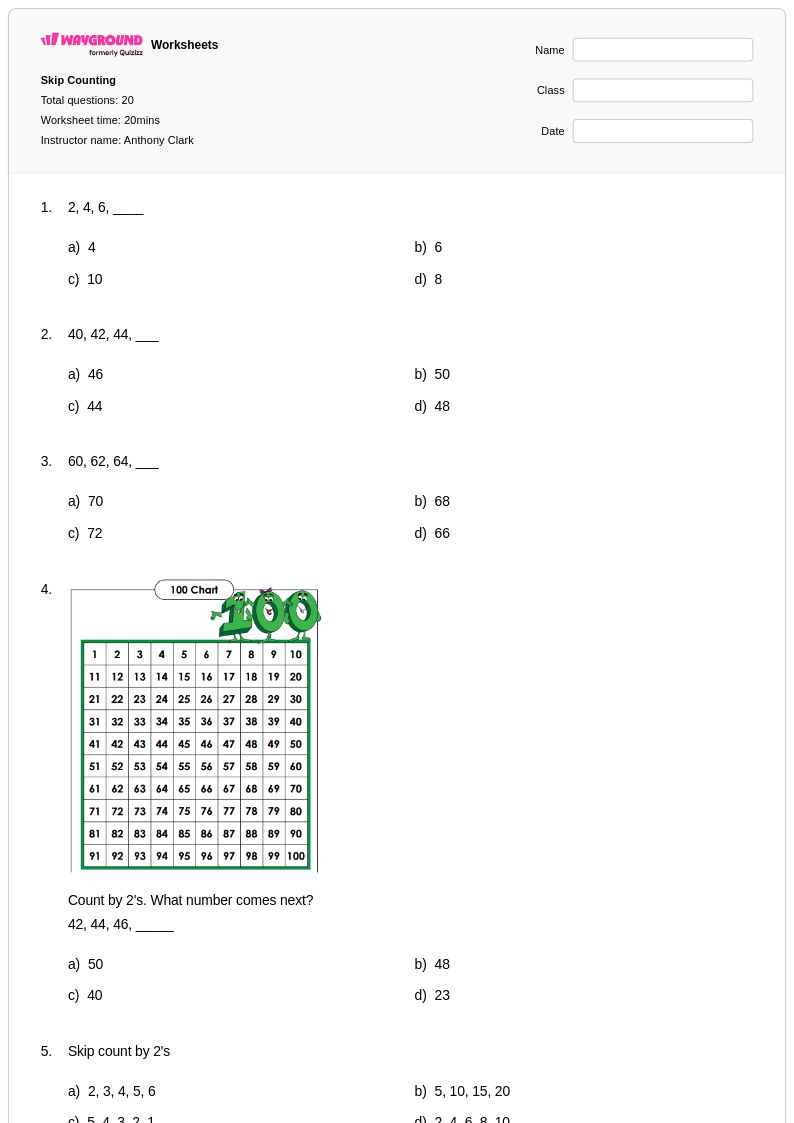
20 Q
1st - Uni
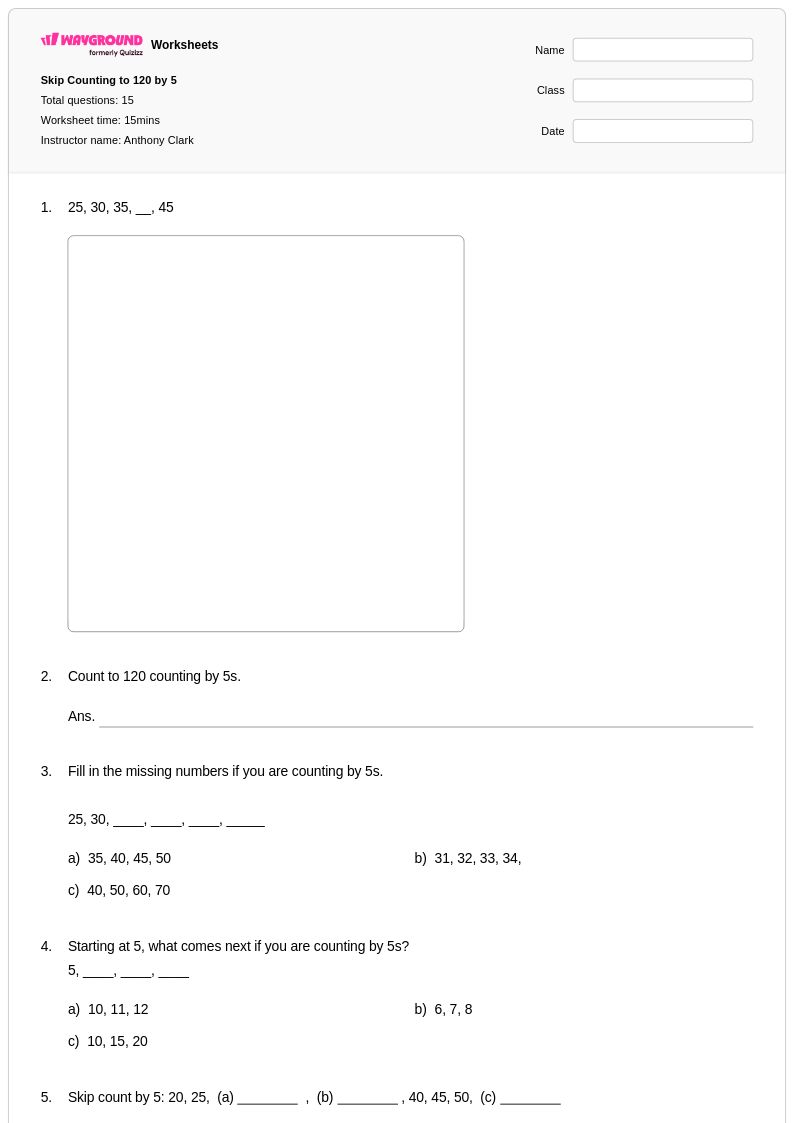
15 Q
2nd - Uni
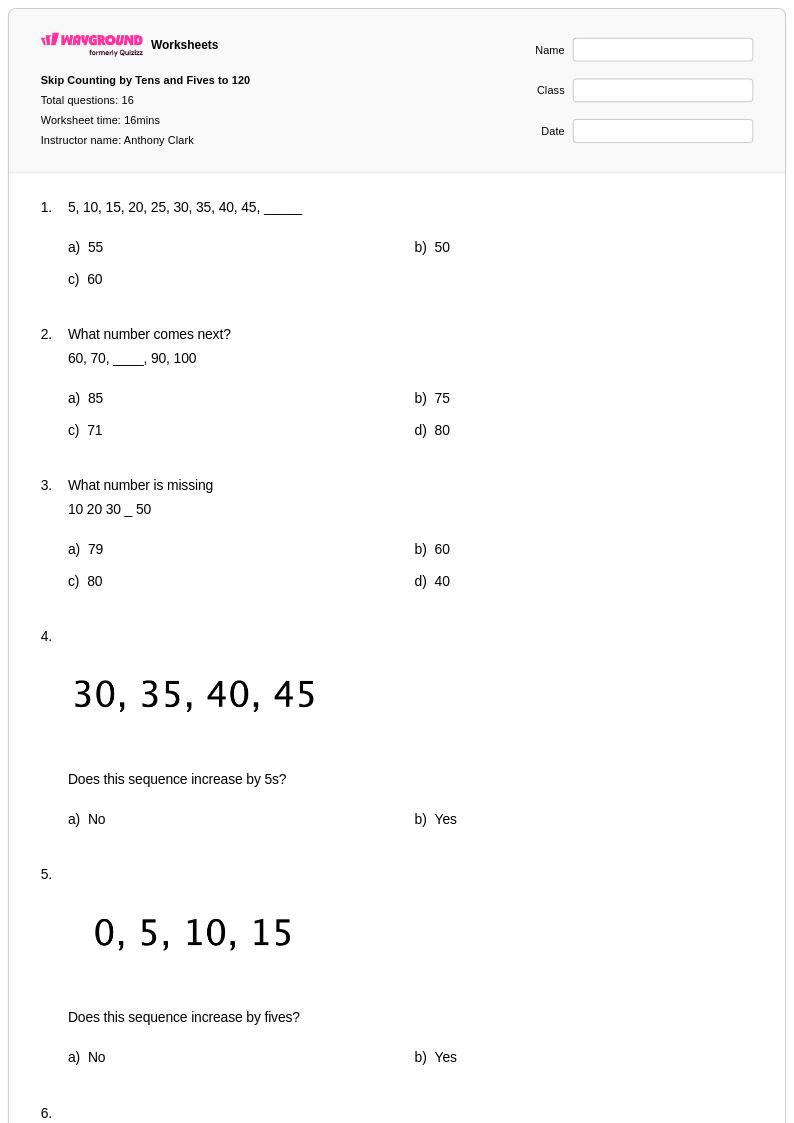
16 Q
2nd - Uni
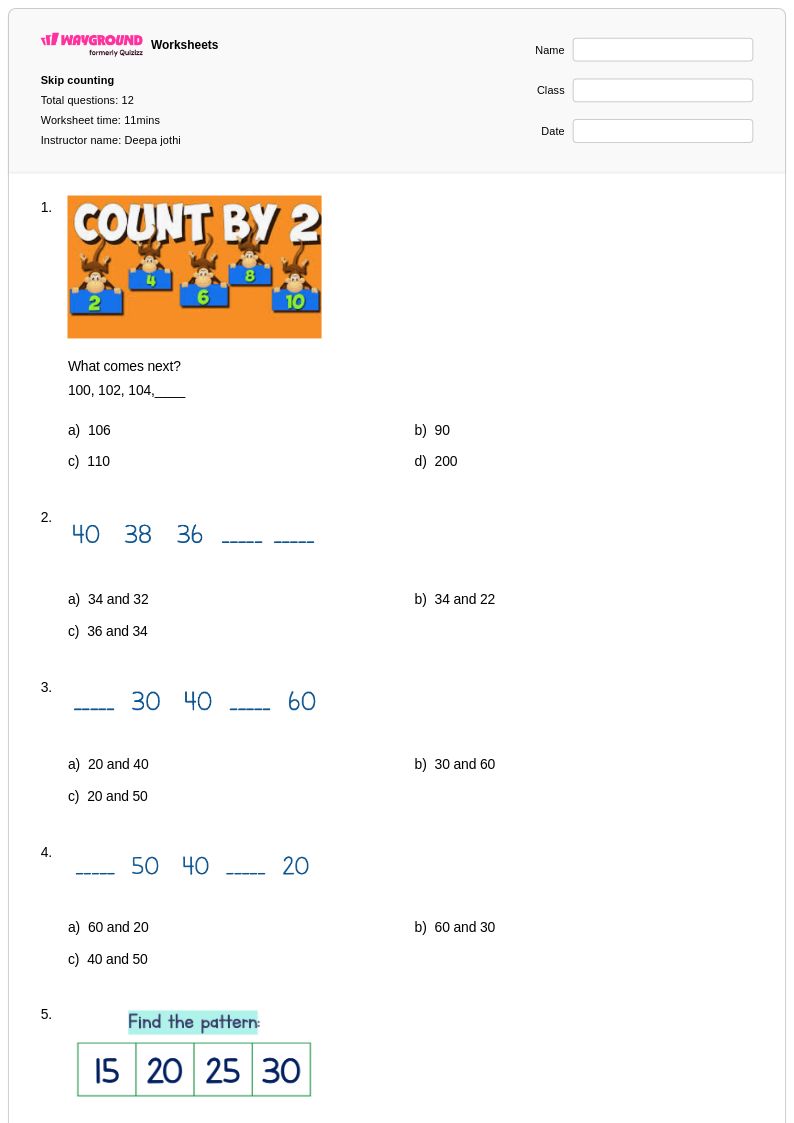
12 Q
2nd
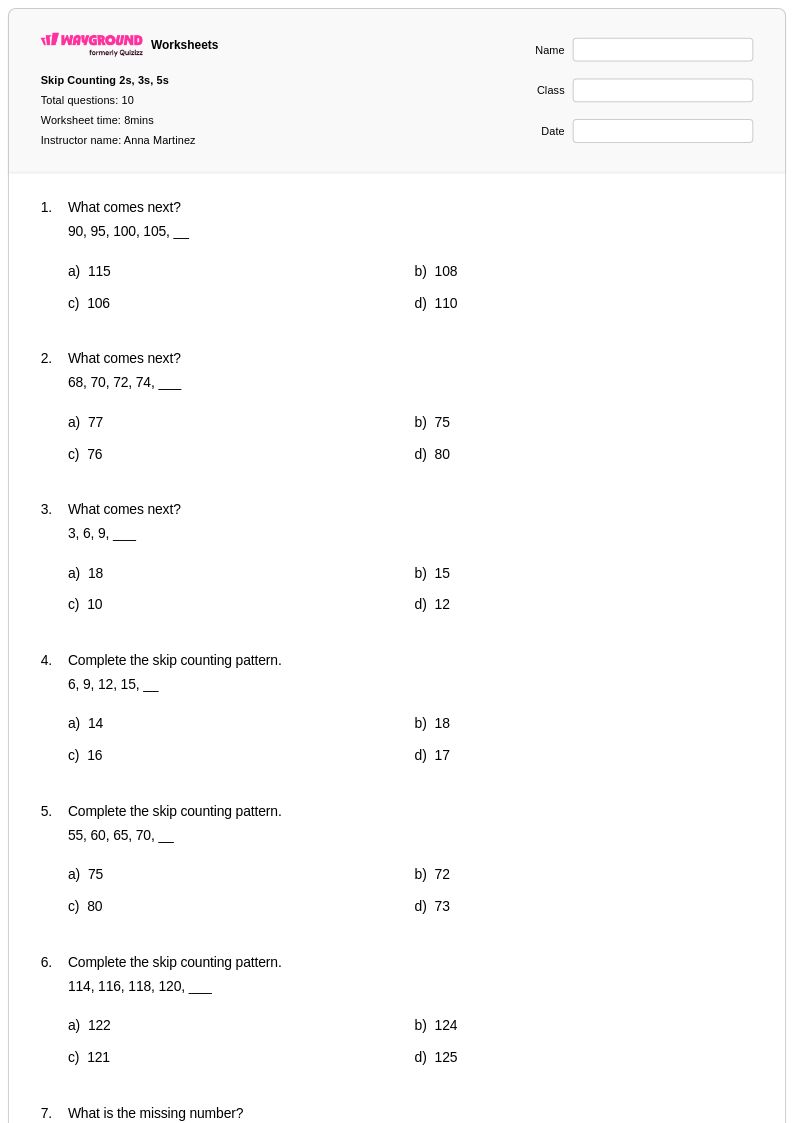
10 Q
2nd - 3rd
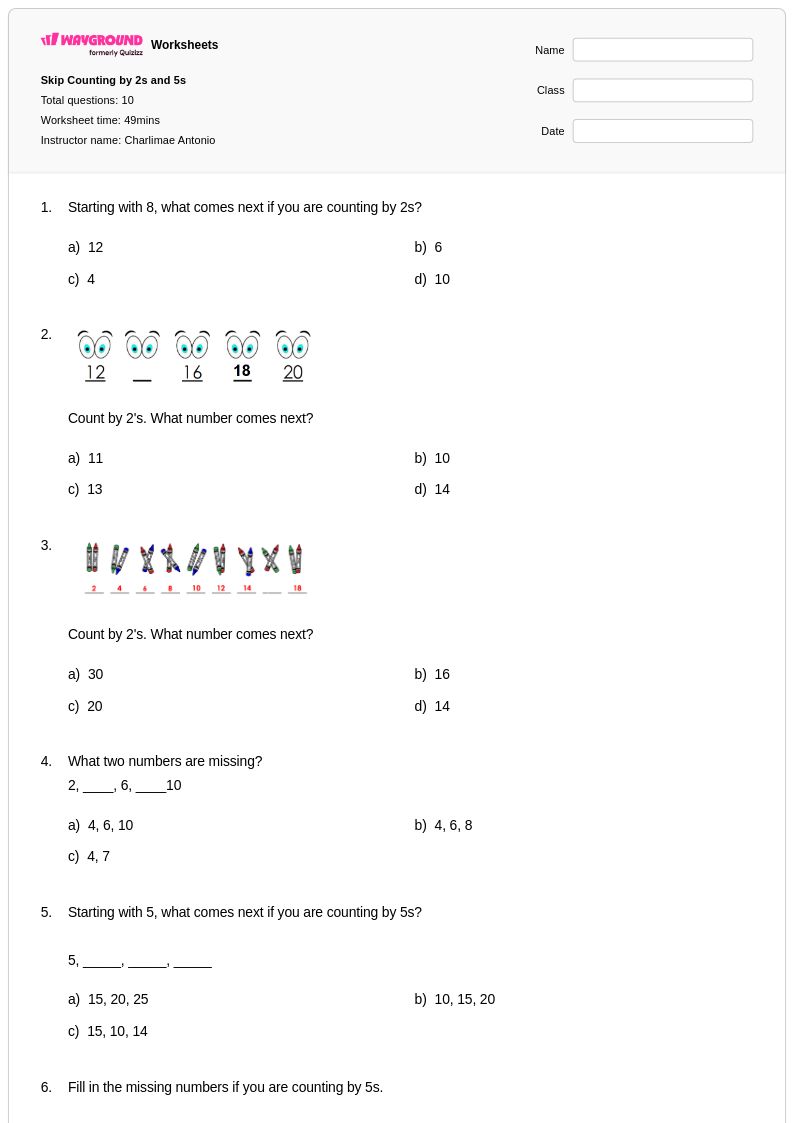
10 Q
2nd
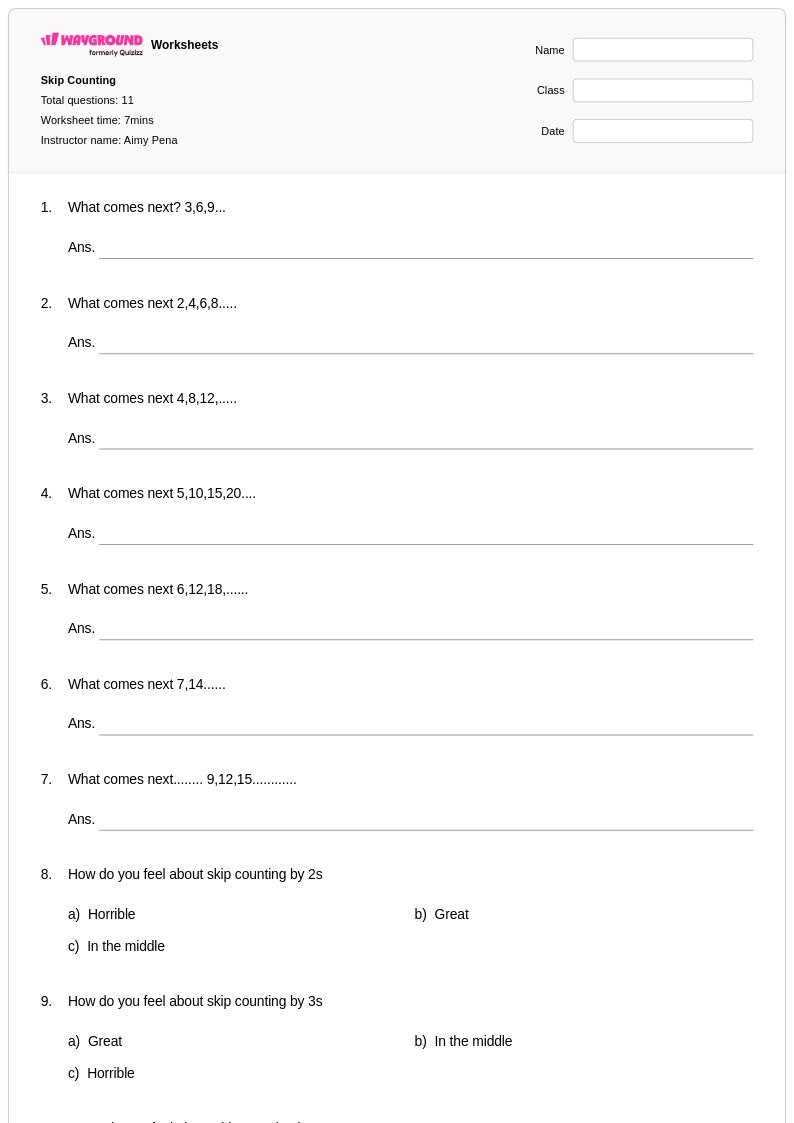
11 Q
2nd - 4th
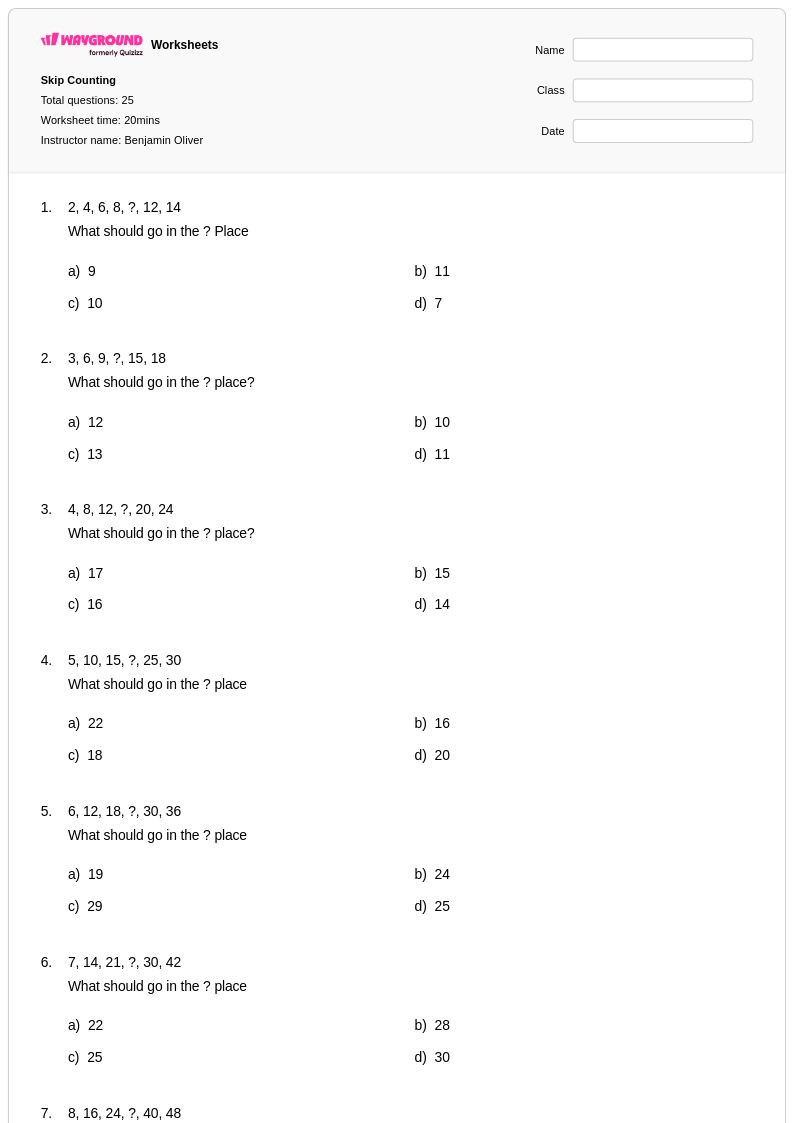
25 Q
2nd - 3rd
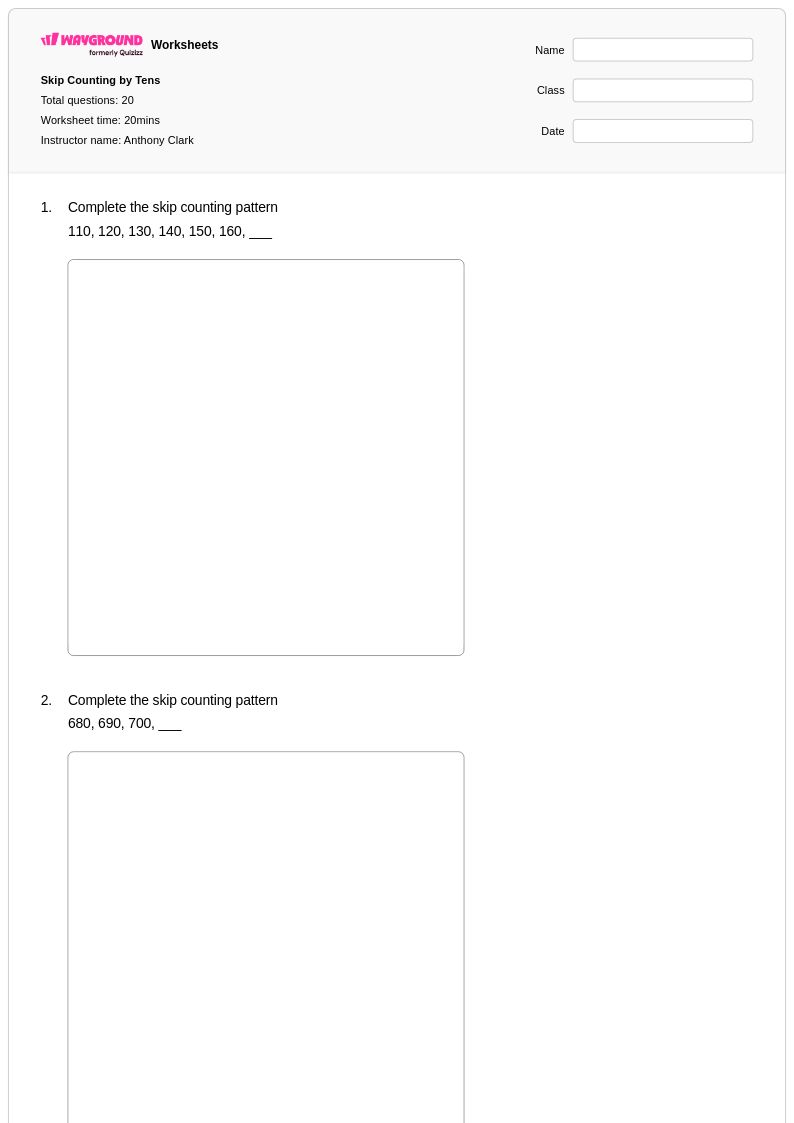
20 Q
2nd - Uni
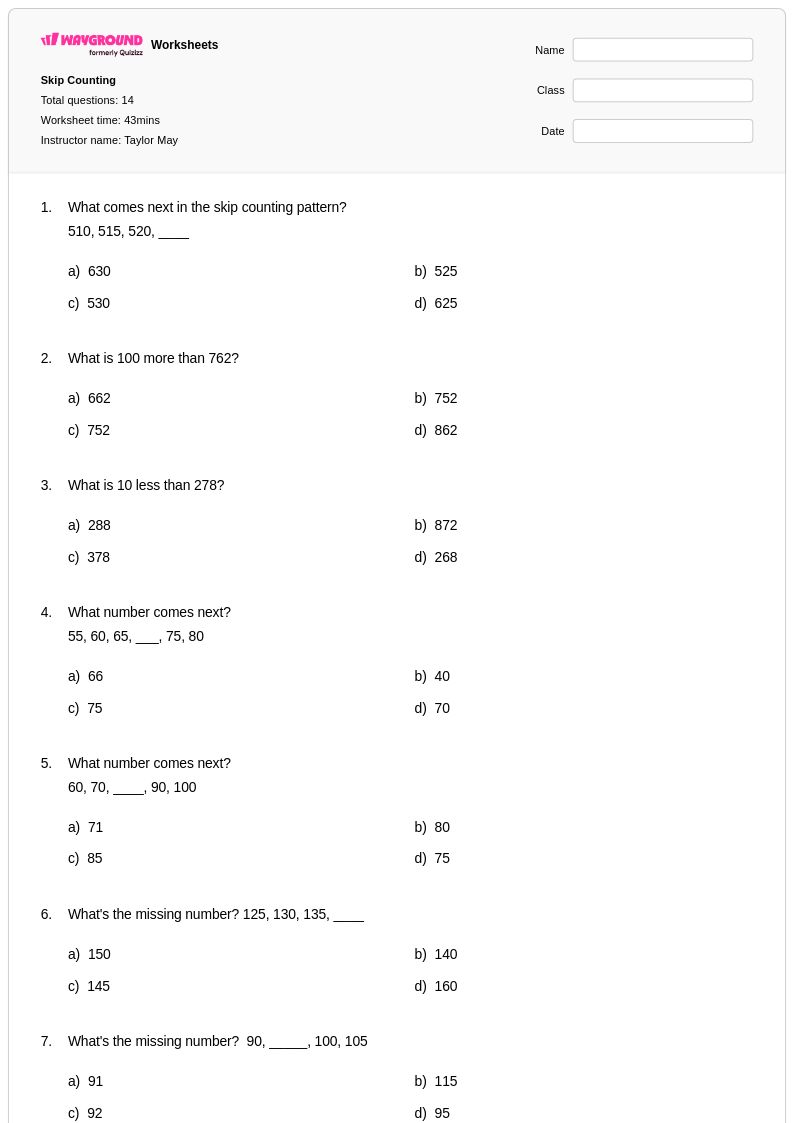
14 Q
2nd
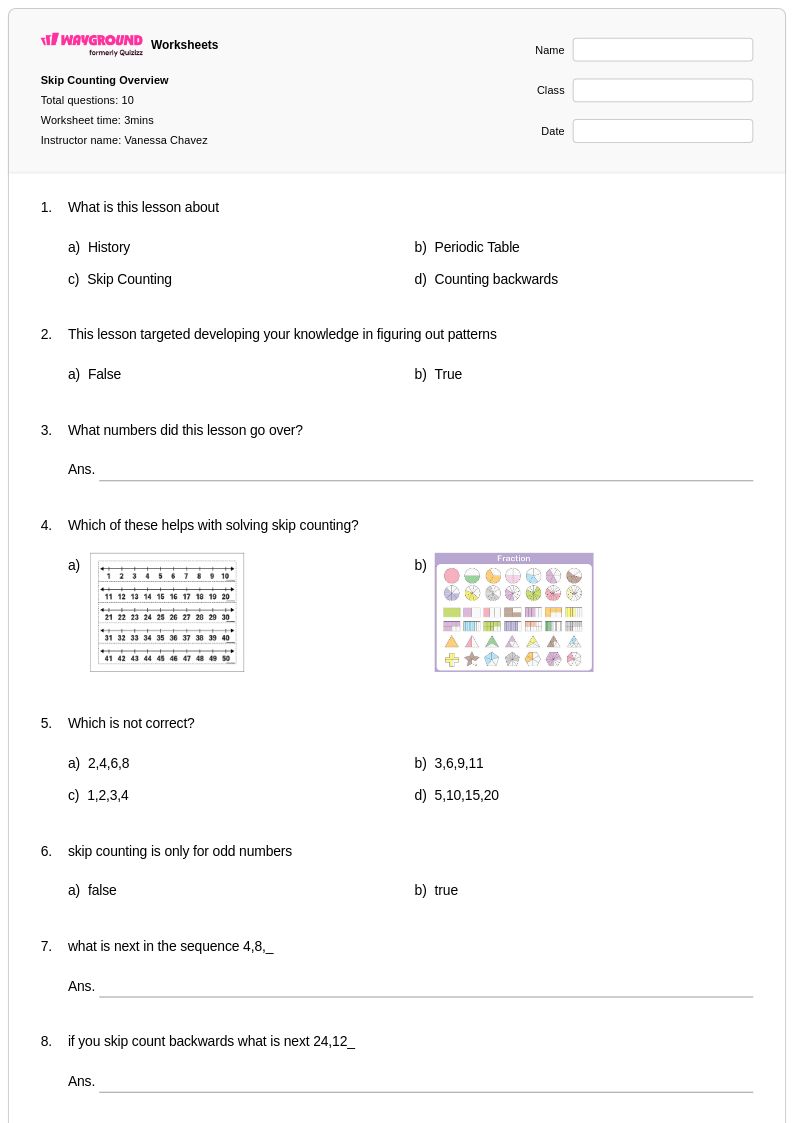
10 Q
1st - 2nd
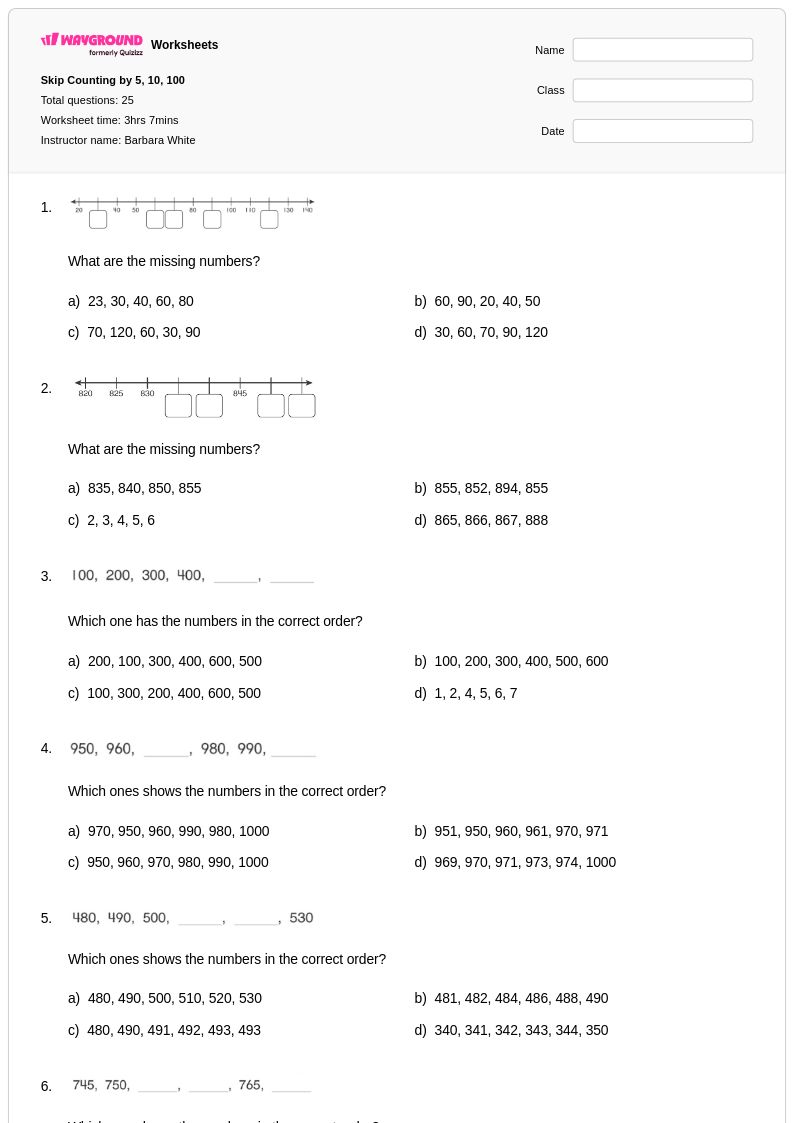
25 Q
2nd
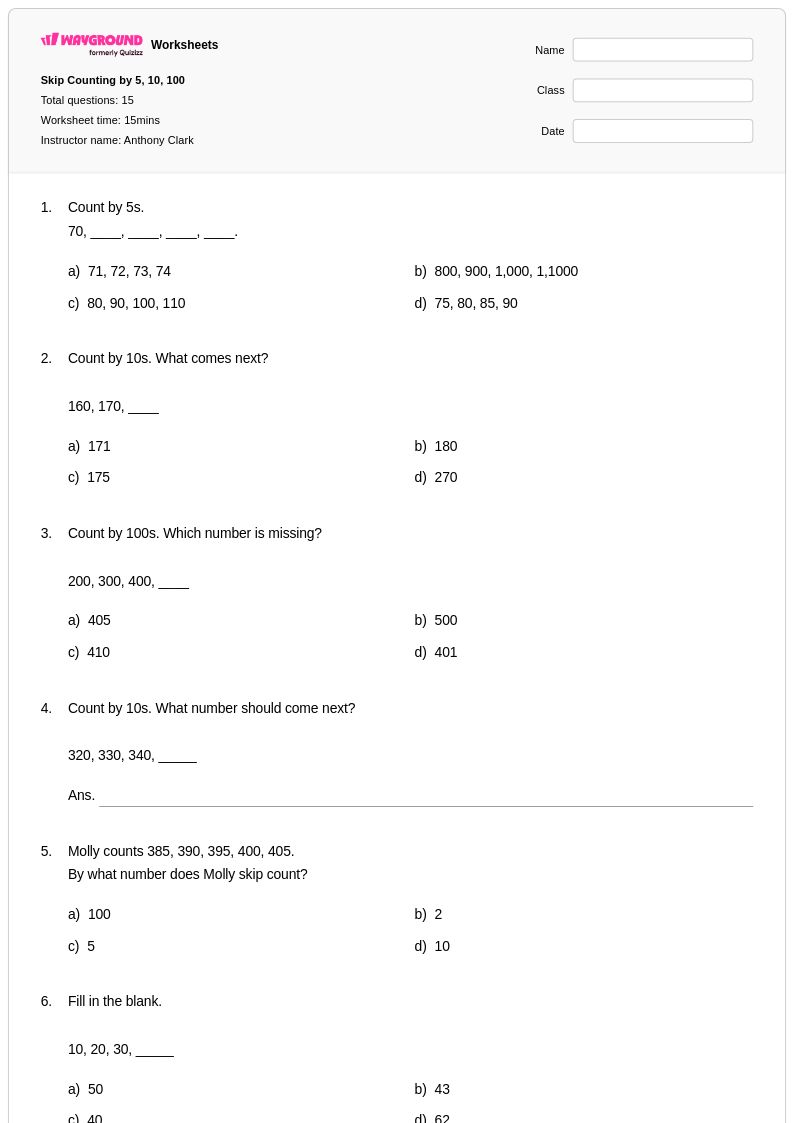
15 Q
2nd - Uni
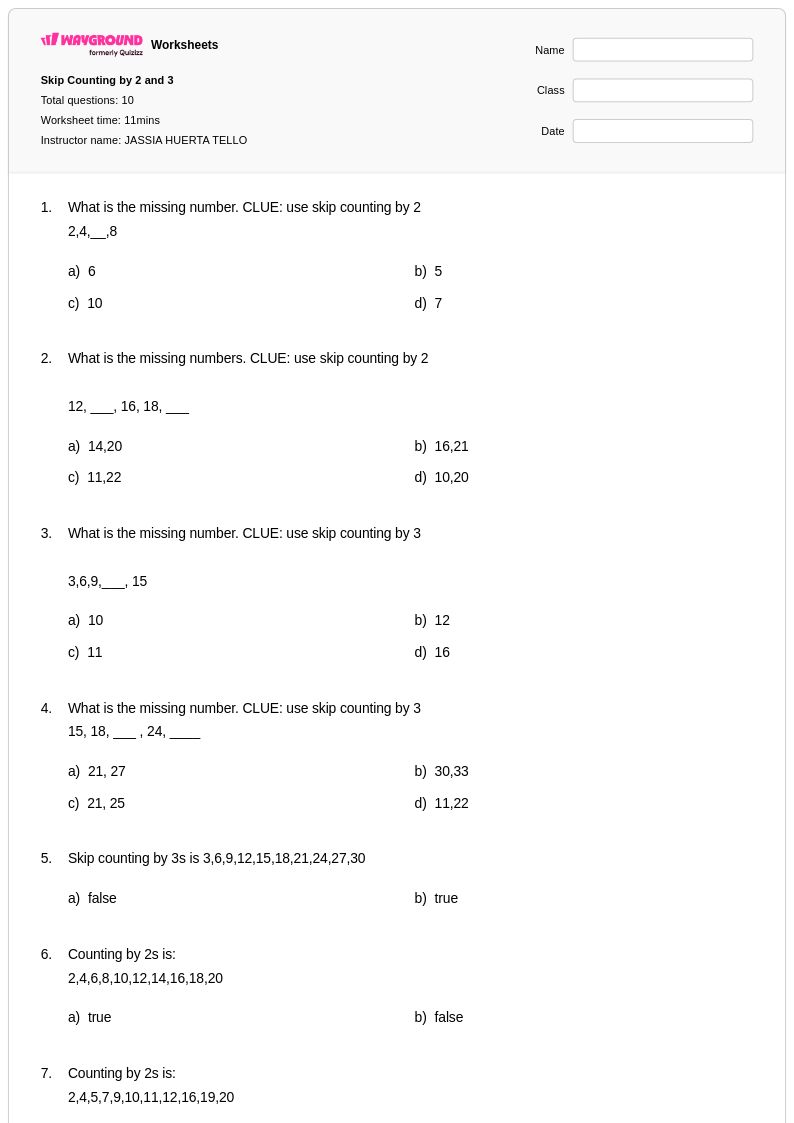
10 Q
2nd
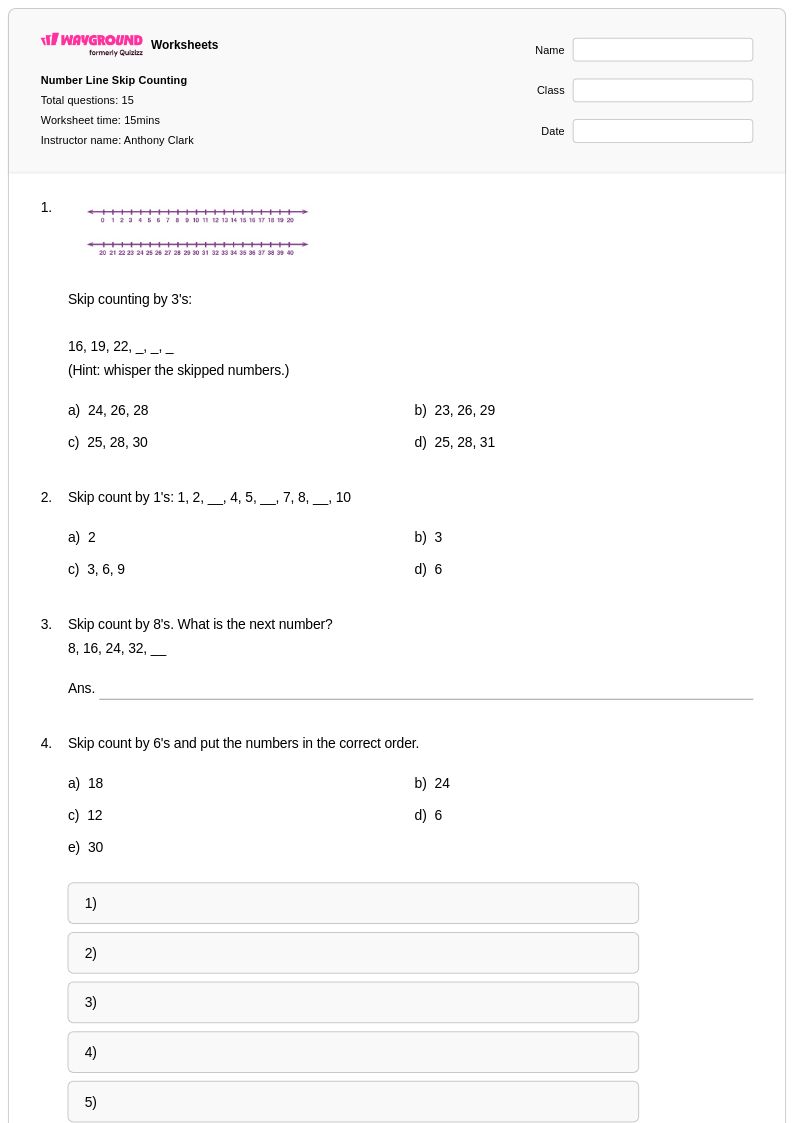
15 Q
2nd - Uni
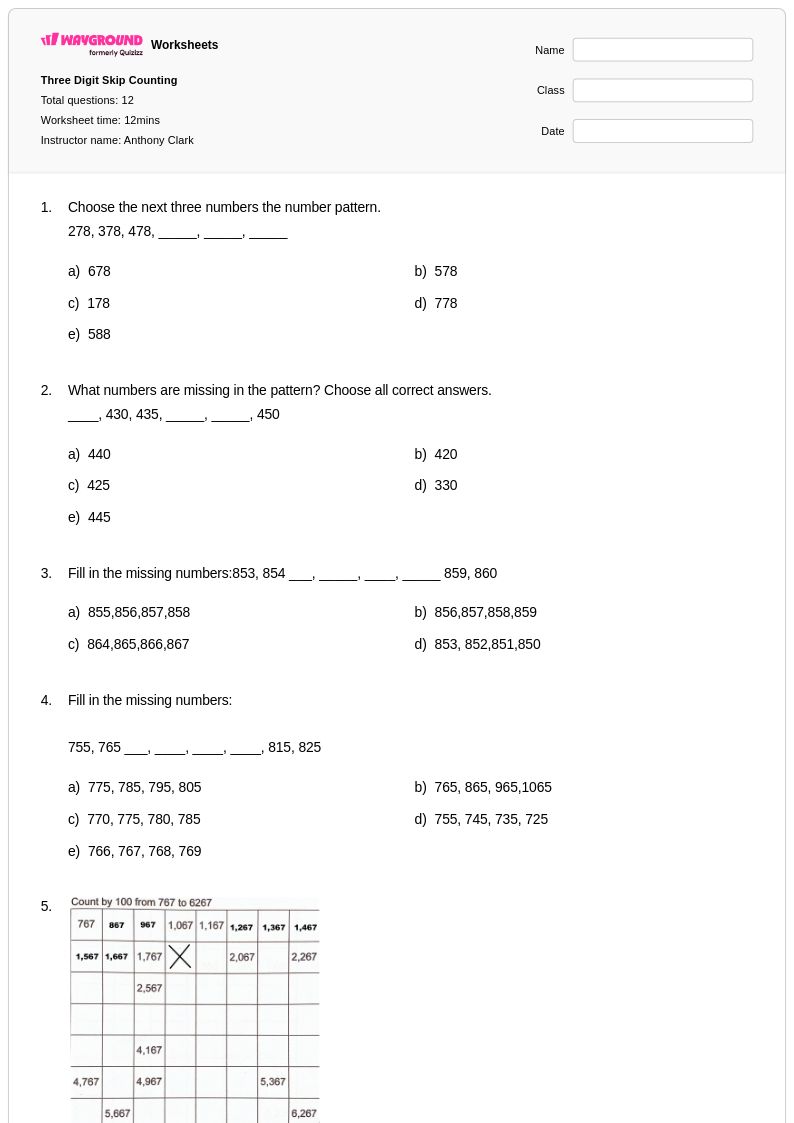
12 Q
2nd - Uni
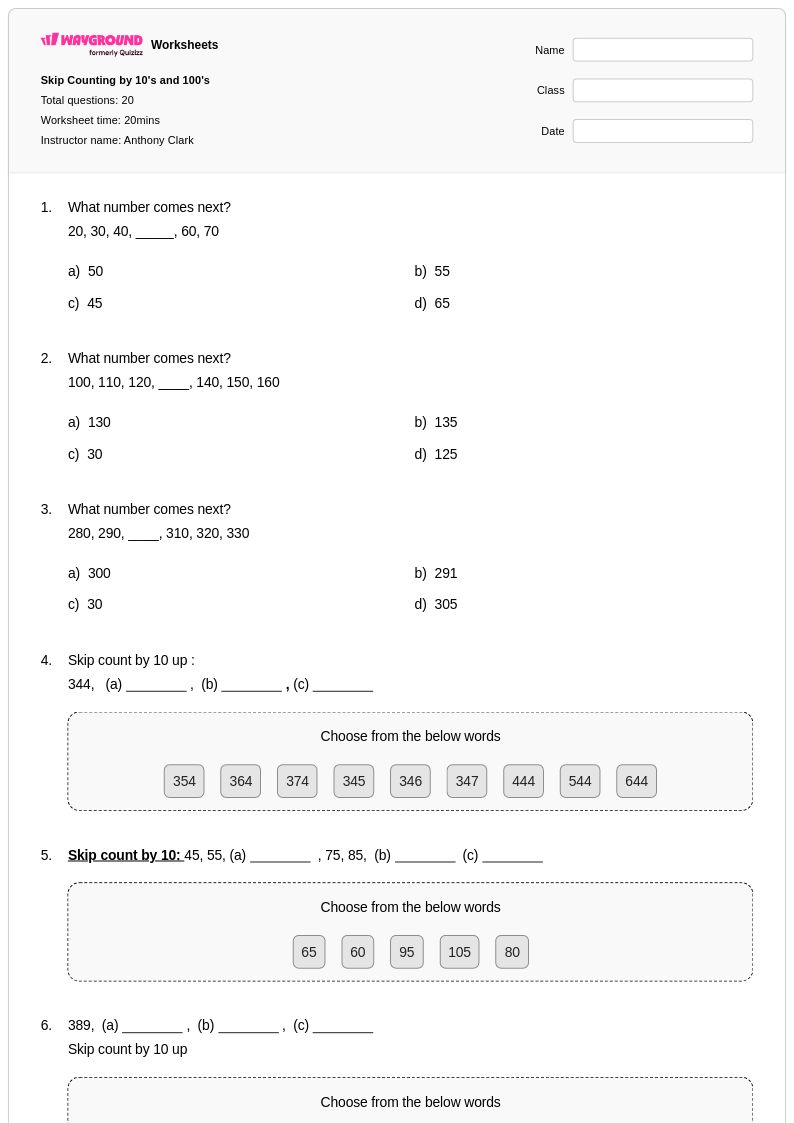
20 Q
2nd - Uni
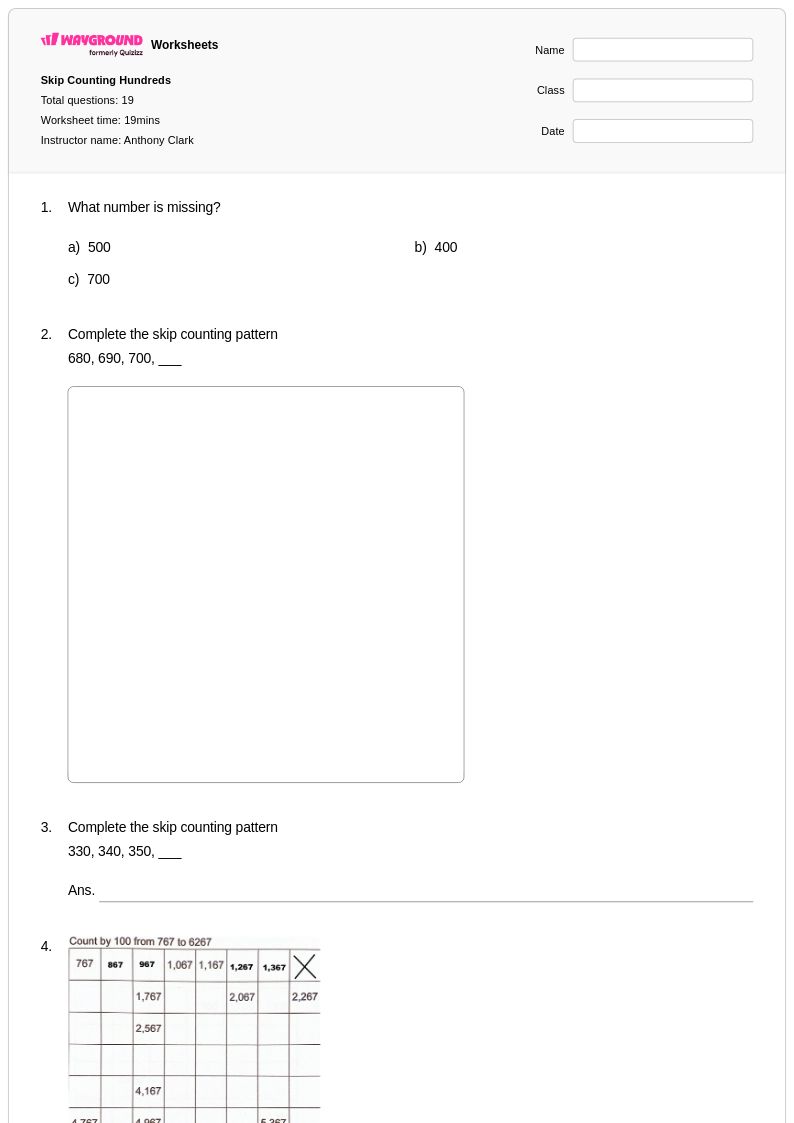
19 Q
2nd - Uni
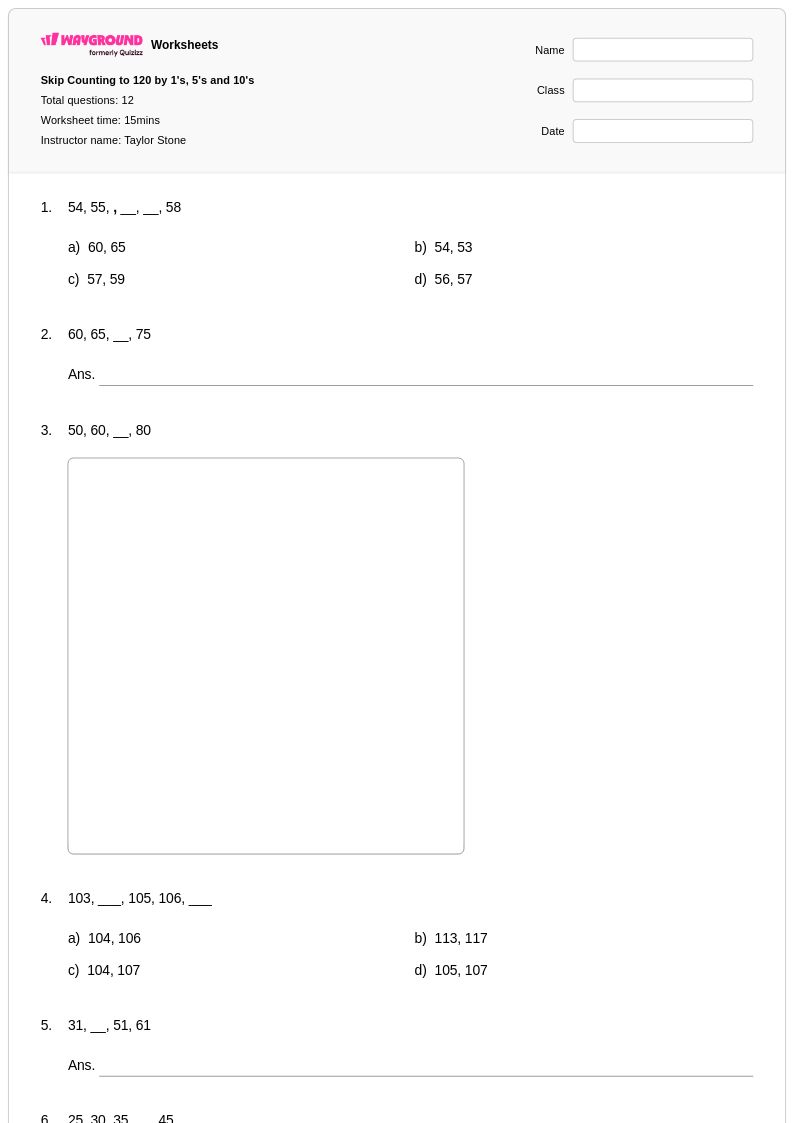
12 Q
2nd
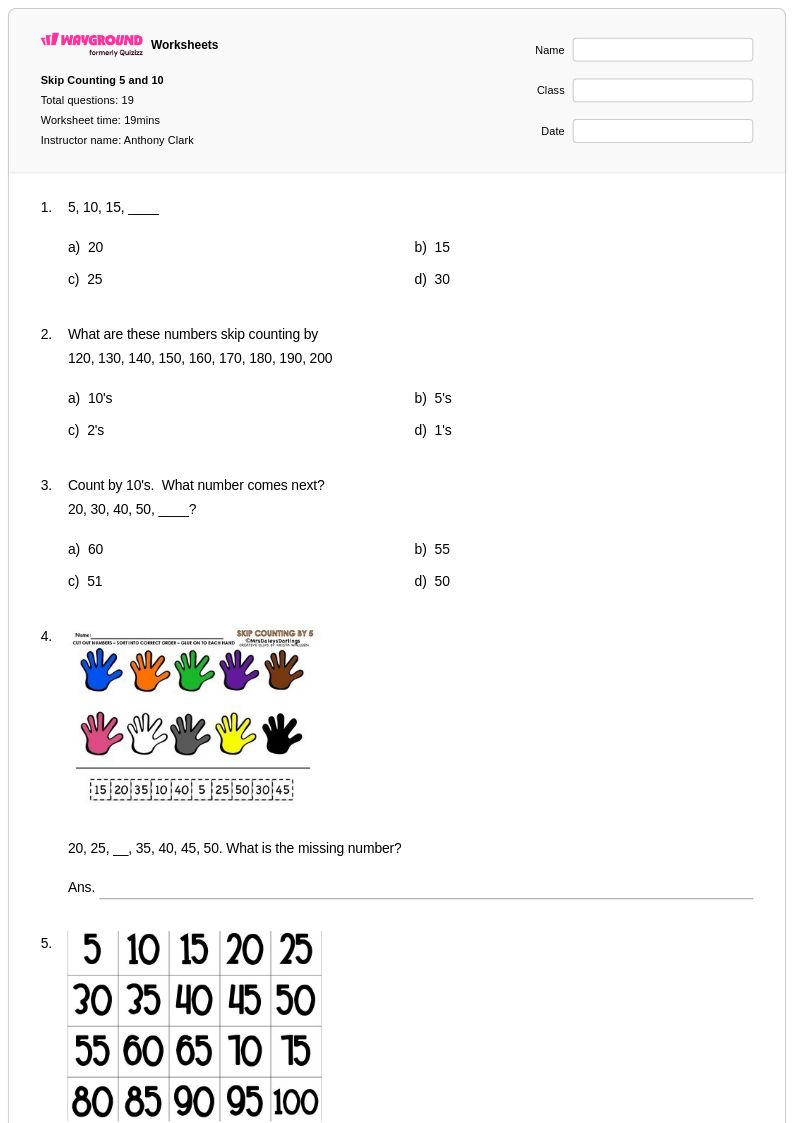
19 Q
2nd - Uni
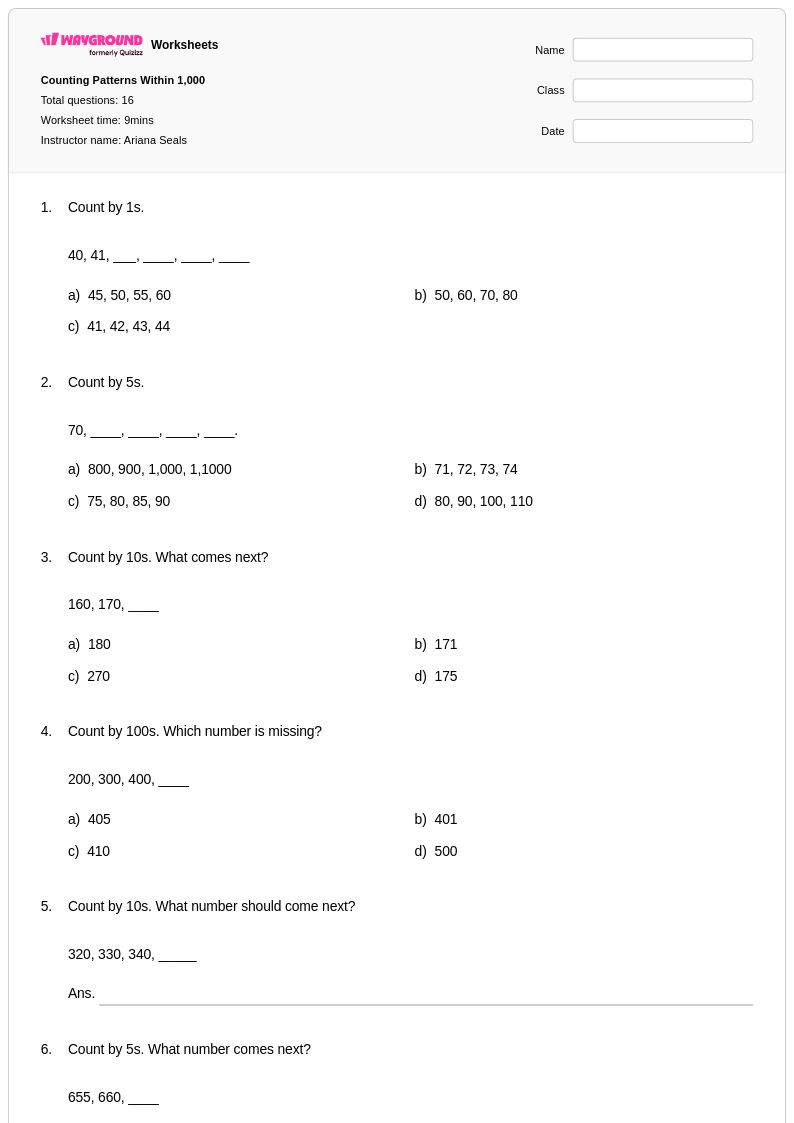
16 Q
2nd
Explore Skip Counting Worksheets by Grades
Explore Skip Counting Worksheets for class 2 by Topic
Explore Other Subject Worksheets for class 2
Explore printable Skip Counting worksheets for Class 2
Skip counting worksheets for Class 2 students available through Wayground provide essential practice in recognizing and extending number patterns by counting in consistent intervals. These comprehensive printables strengthen foundational mathematical skills including pattern recognition, number sense, and early multiplication concepts as students learn to count by 2s, 5s, 10s, and other incremental values. Each worksheet collection includes varied practice problems that progress from visual pattern identification using objects and number lines to independent skip counting sequences, with complete answer keys provided to support both classroom instruction and independent practice. The free pdf format ensures teachers can easily distribute these valuable resources while students develop the critical thinking skills needed to identify mathematical relationships and predict subsequent numbers in sequences.
Wayground's extensive library draws from millions of teacher-created resources to offer Class 2 educators robust skip counting worksheet collections that align with mathematical standards and support differentiated instruction. The platform's advanced search and filtering capabilities allow teachers to quickly locate worksheets targeting specific skip counting intervals, difficulty levels, and learning objectives, whether for whole-class instruction, small group remediation, or individual enrichment activities. These customizable resources are available in both printable and digital formats, enabling seamless integration into diverse learning environments while supporting systematic skill building from basic pattern recognition through more complex numerical relationships. Teachers can efficiently plan sequential lessons that build upon previous learning while providing targeted practice opportunities that reinforce skip counting mastery and prepare students for advanced mathematical concepts.
FAQs
How can I connect skip counting to multiplication for second graders?
What are the skip counting expectations for second grade in Common Core?
What exercises reinforce skip counting for Grade 2?
Where do second graders typically struggle with skip counting?
How can I use these Grade 2 skip counting worksheets?