
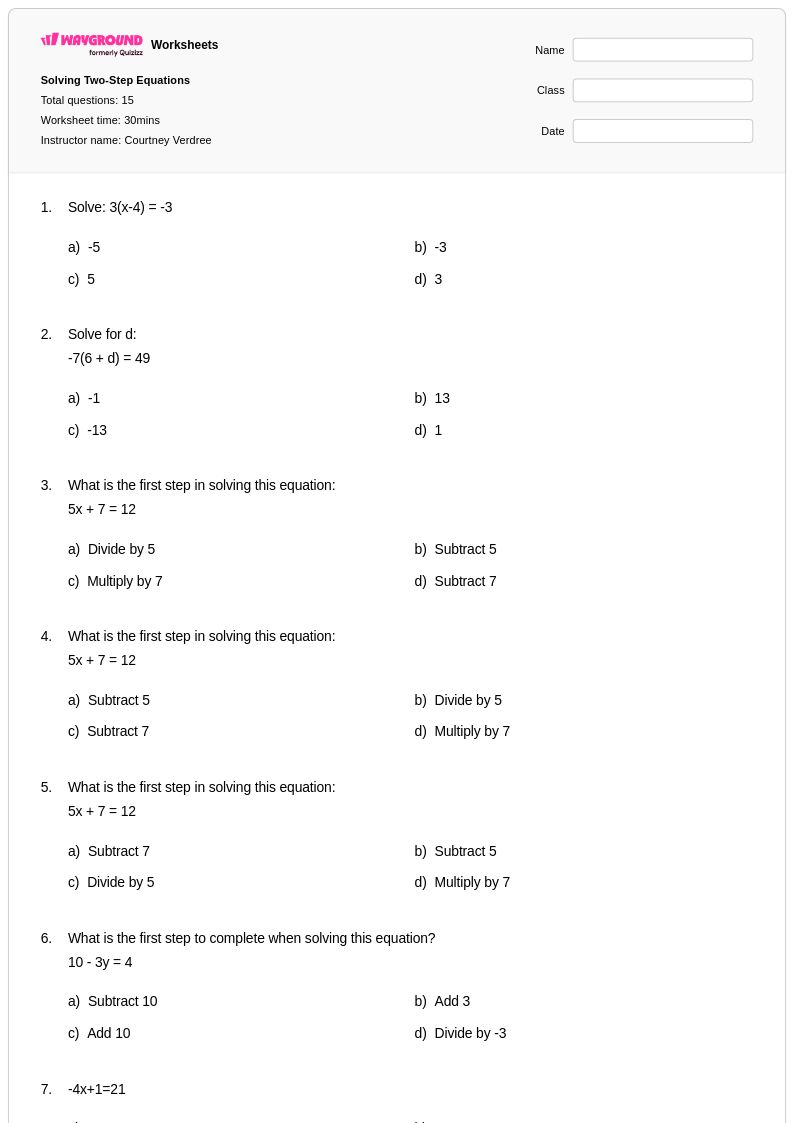
15 Q
6th - 8th
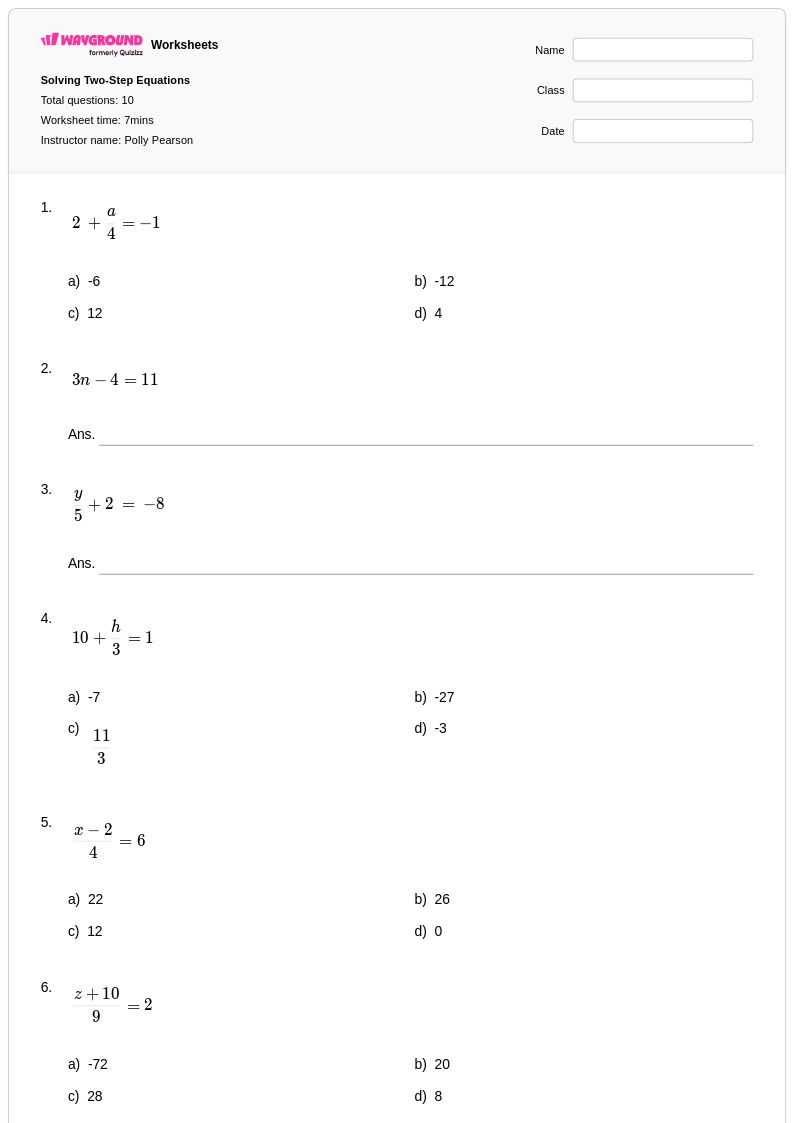
10 Q
5th - 9th
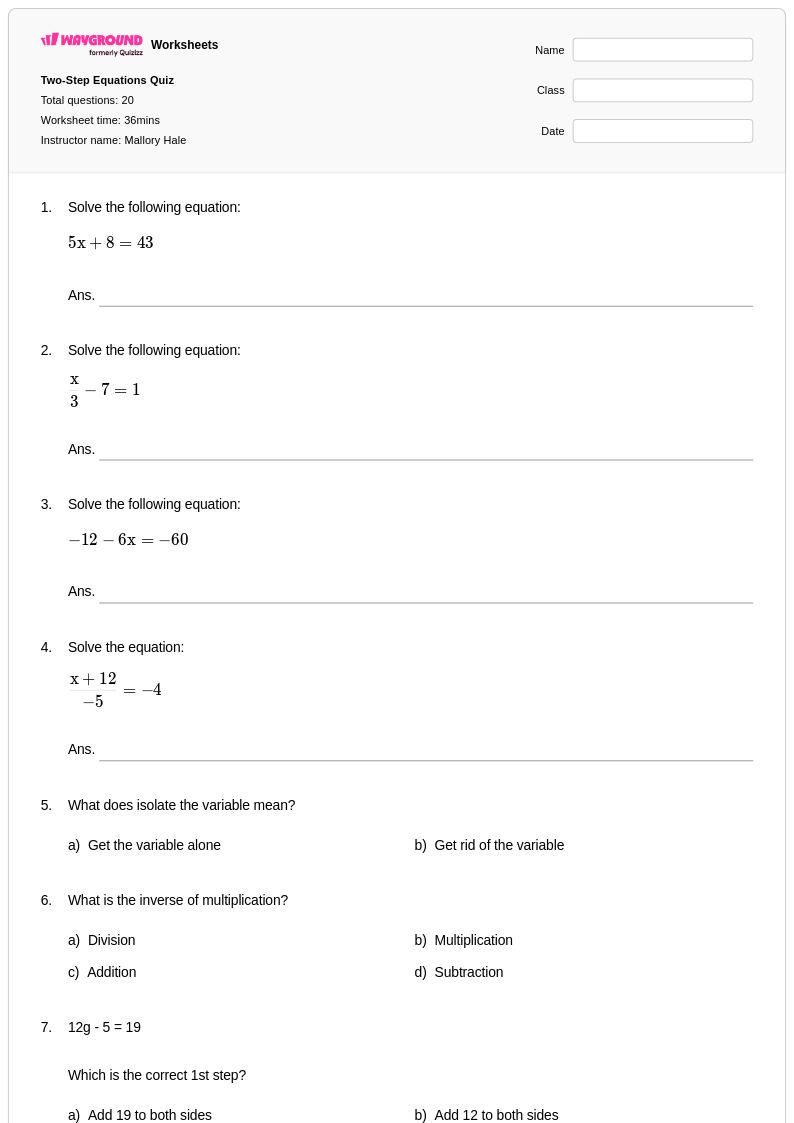
20 Q
6th - 8th
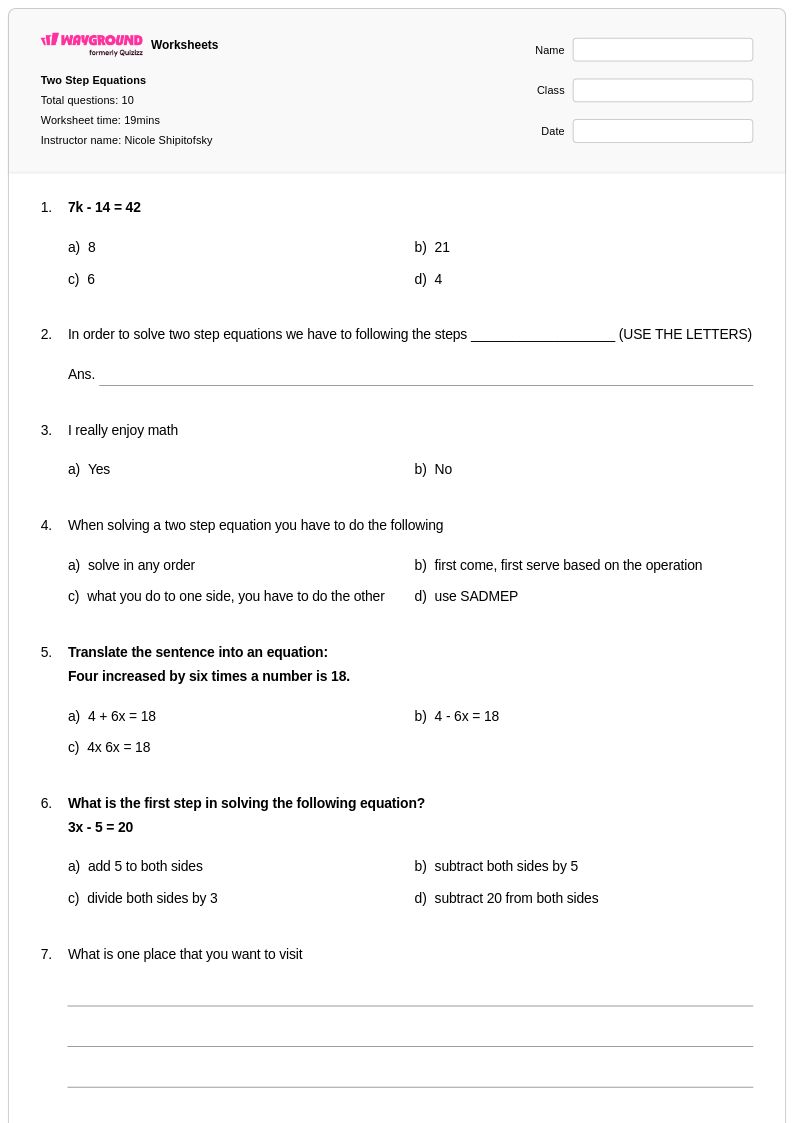
10 Q
6th
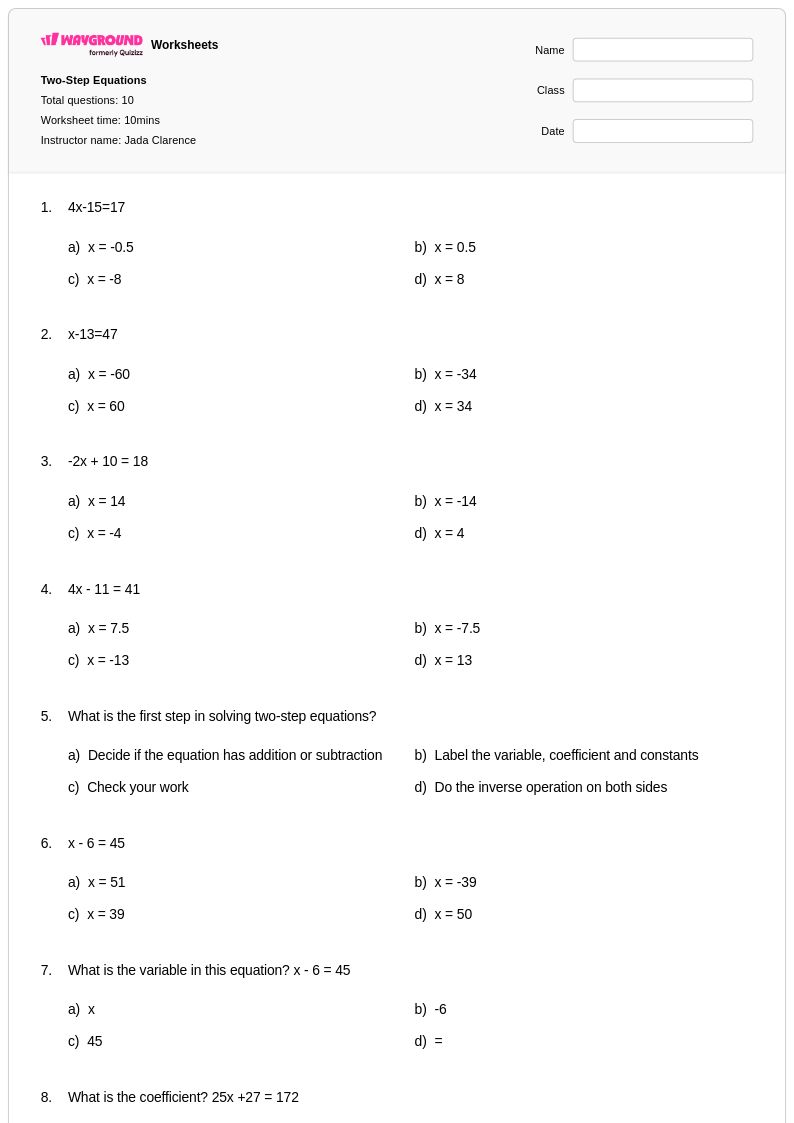
10 Q
6th - 7th
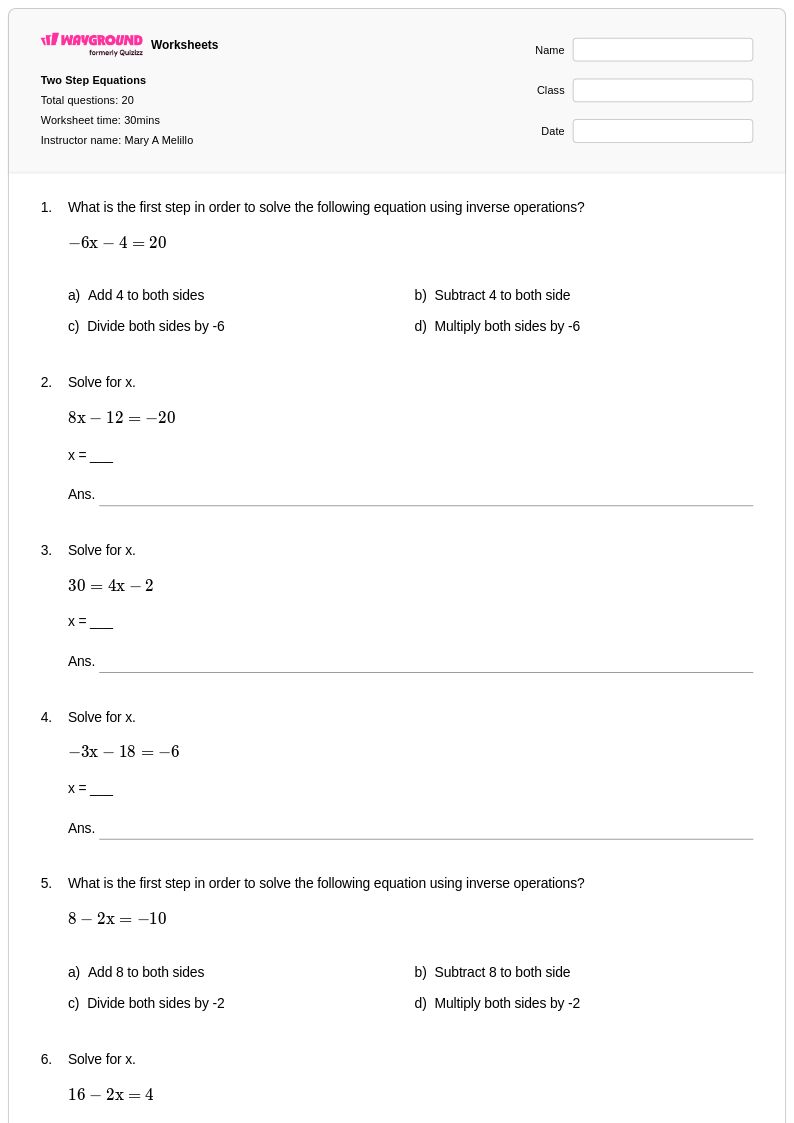
20 Q
6th - 8th
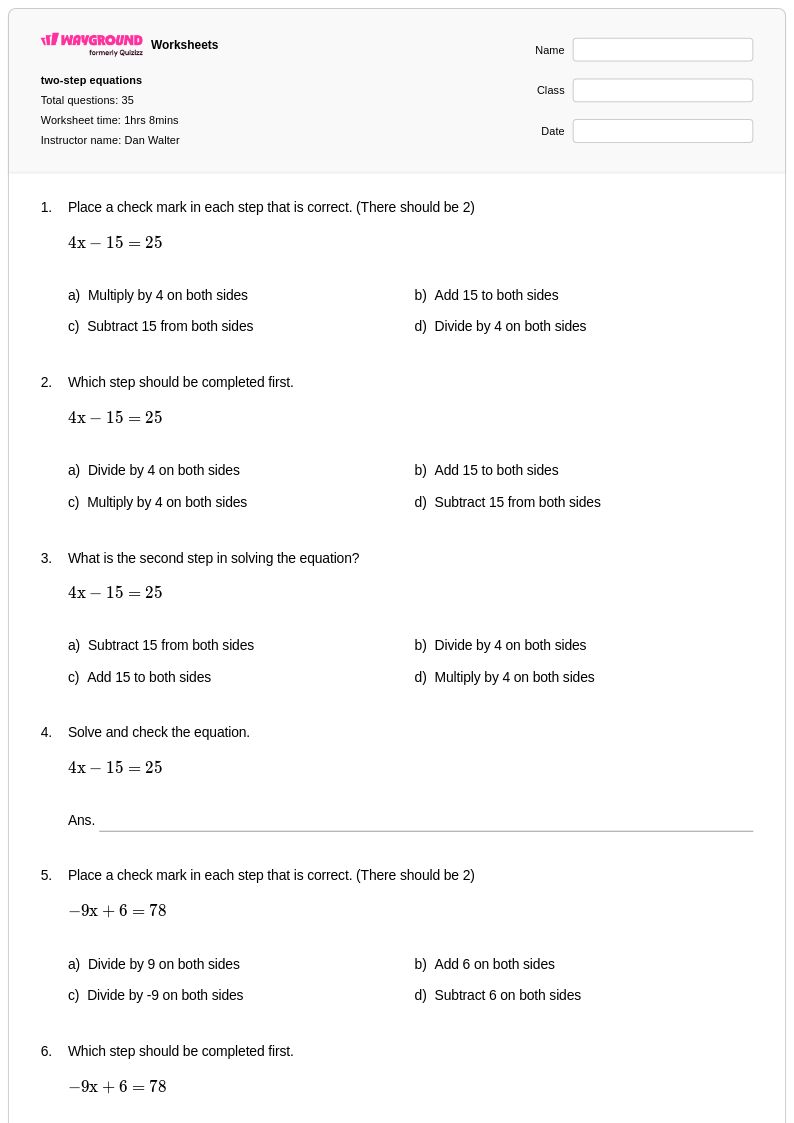
35 Q
6th
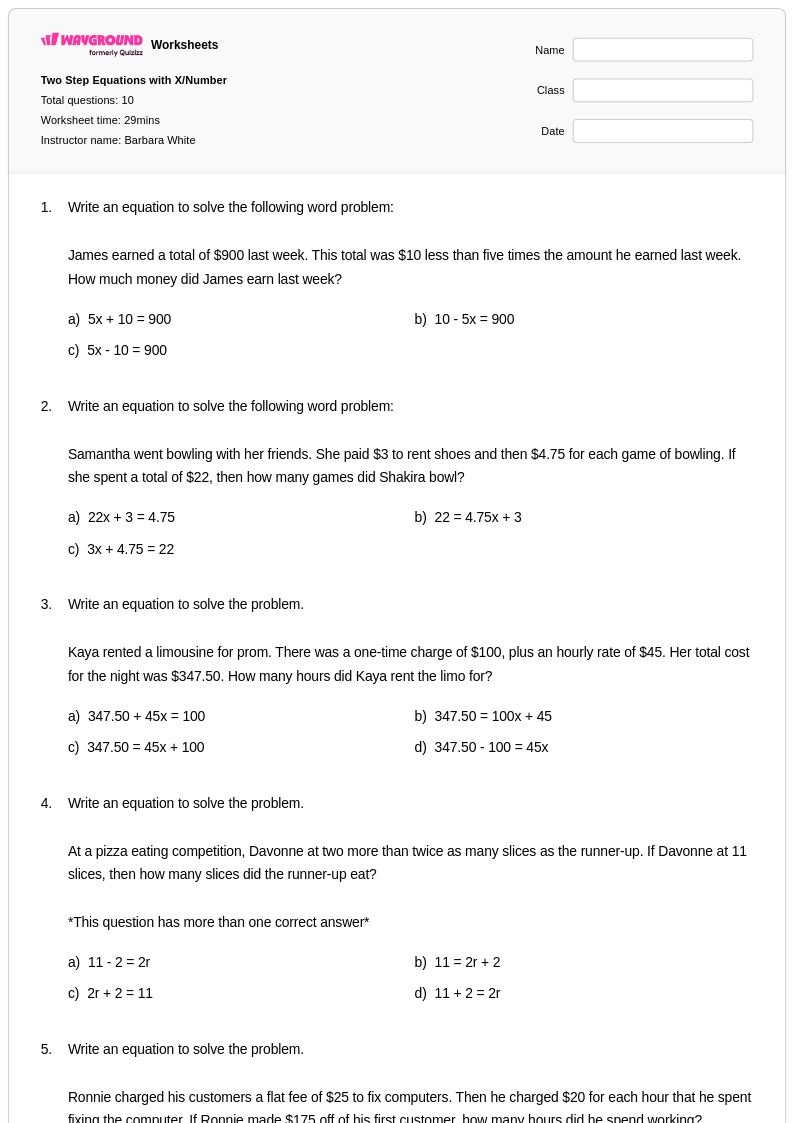
10 Q
6th - 7th
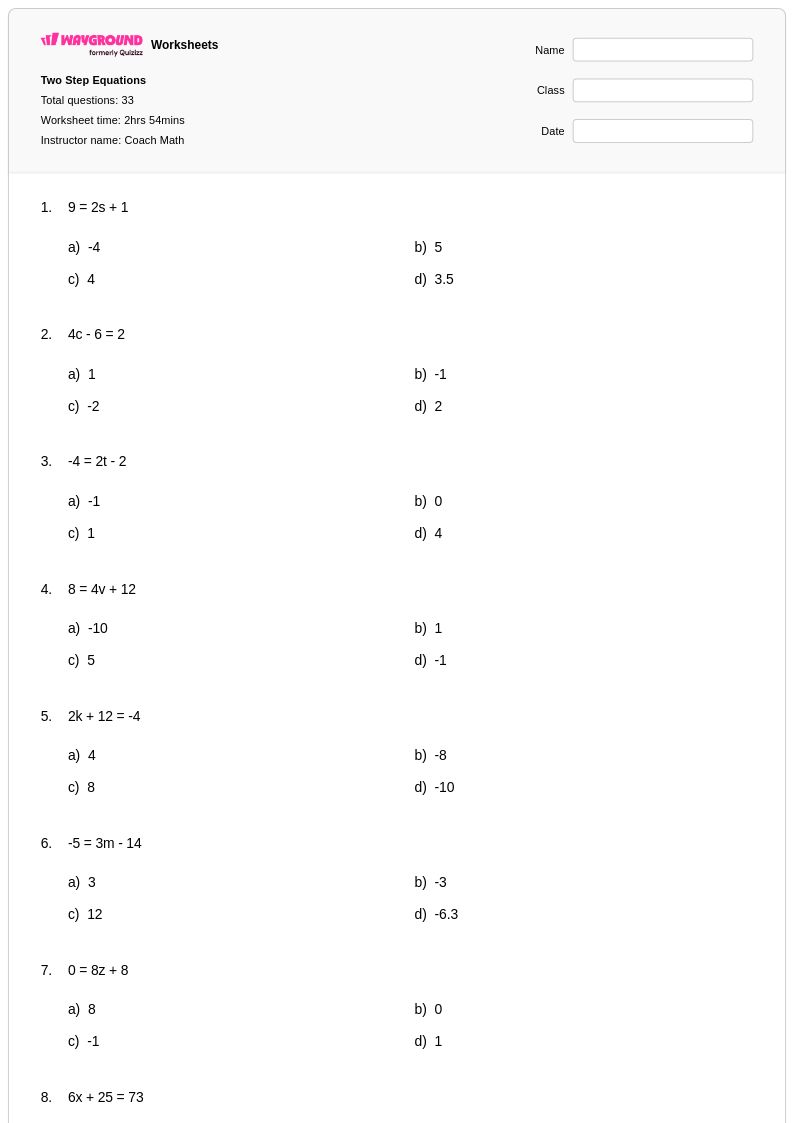
35 Q
6th - 8th
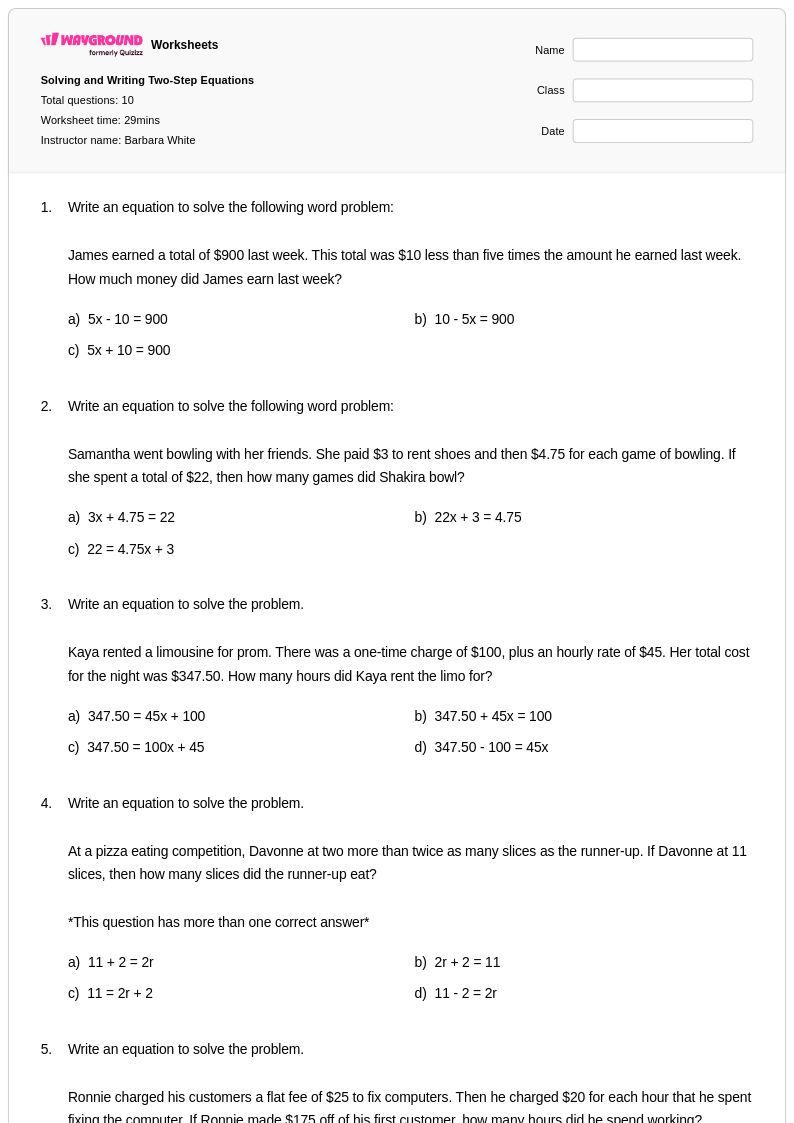
10 Q
6th - 7th
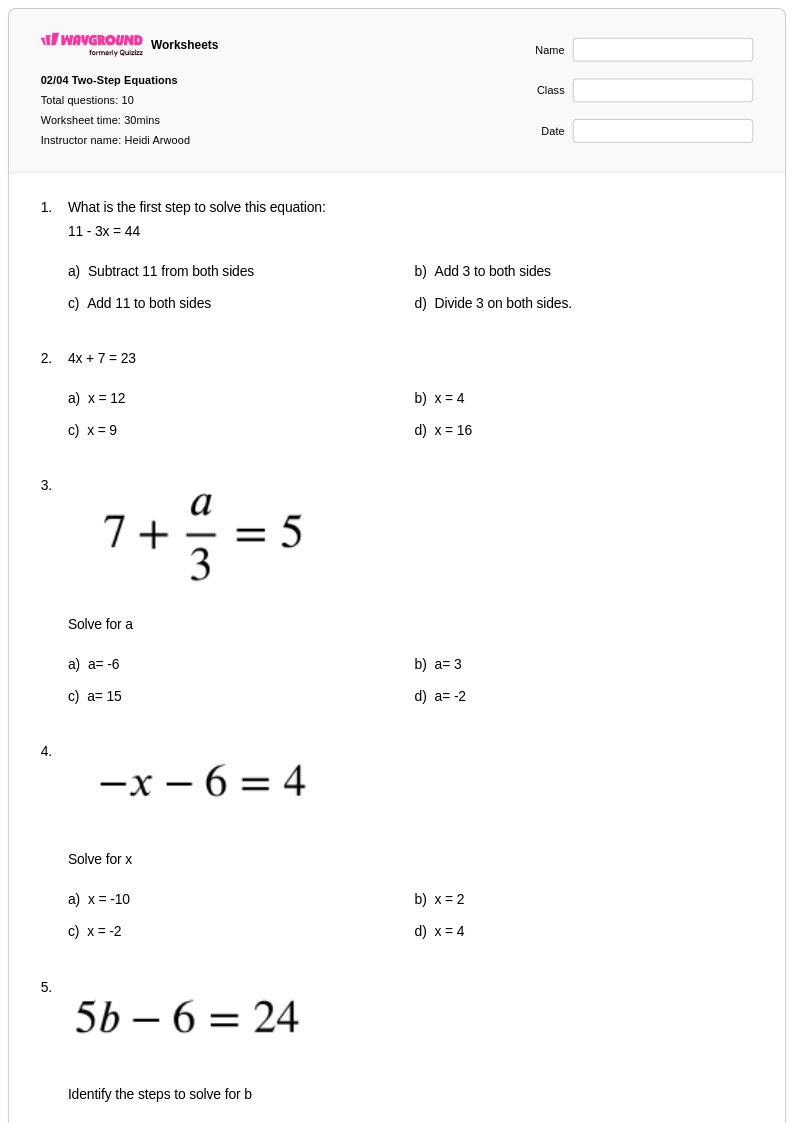
10 Q
6th - 8th
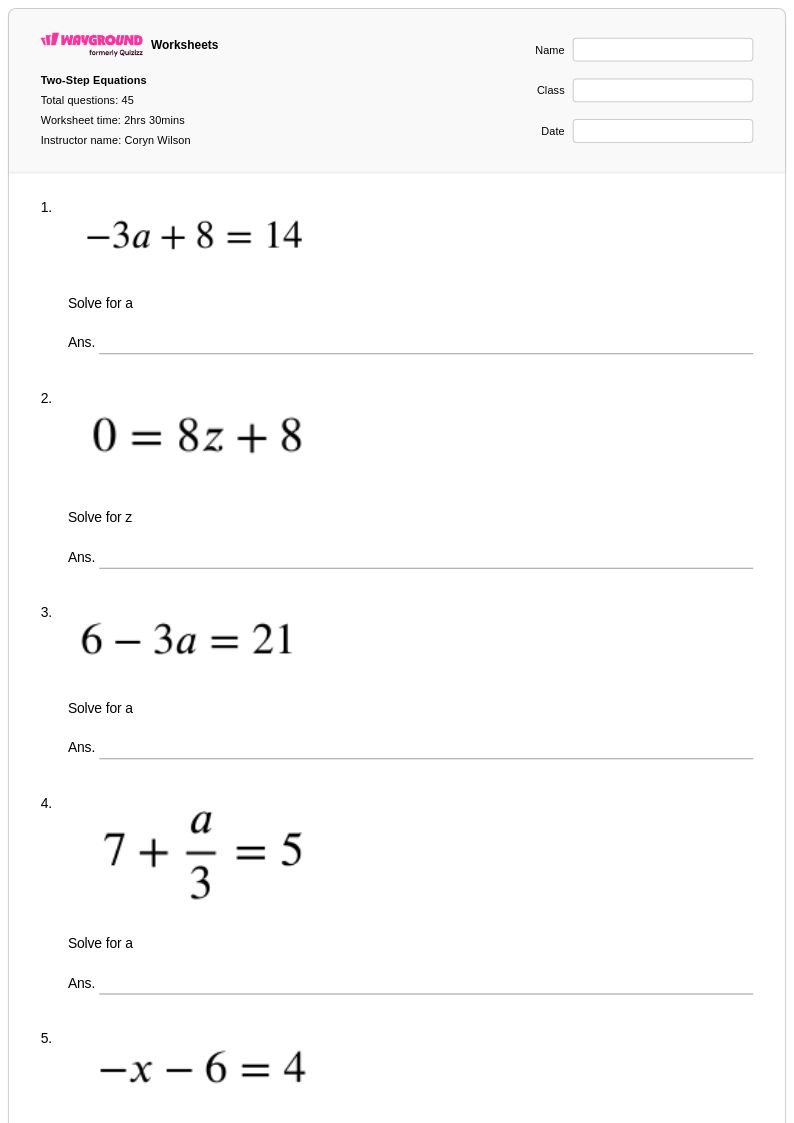
45 Q
6th - 8th

14 Q
6th
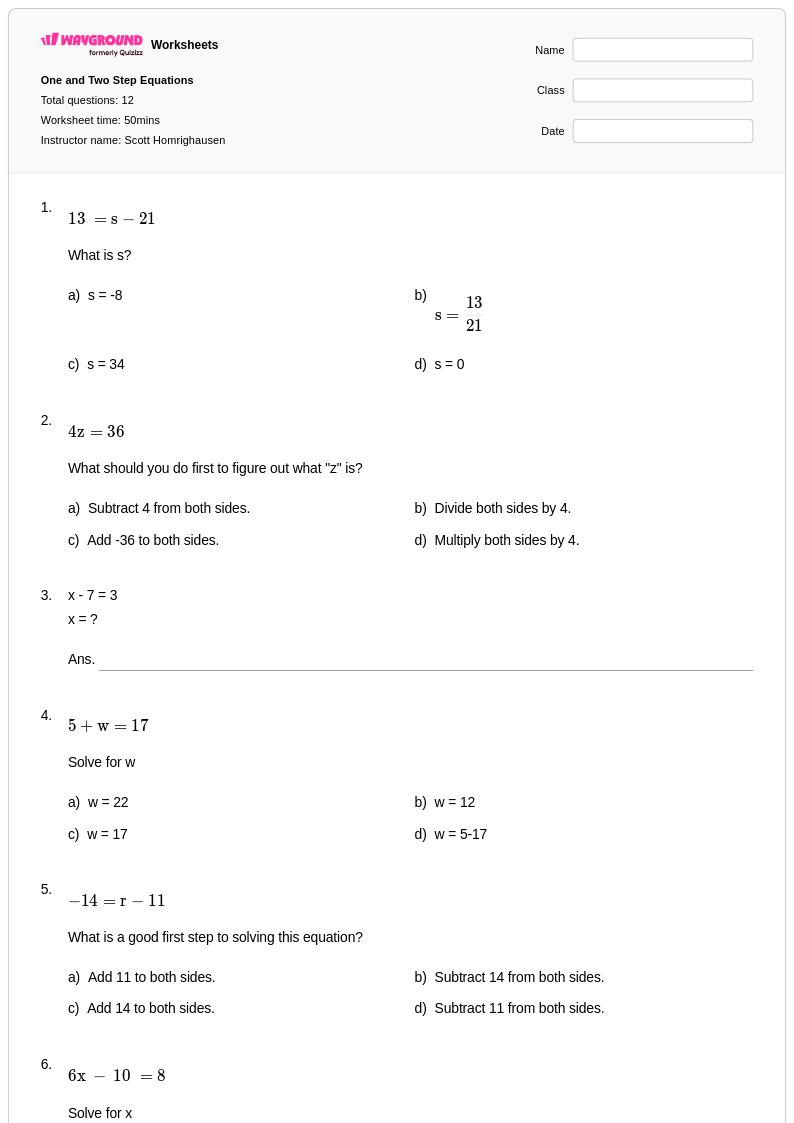
12 Q
6th - 12th
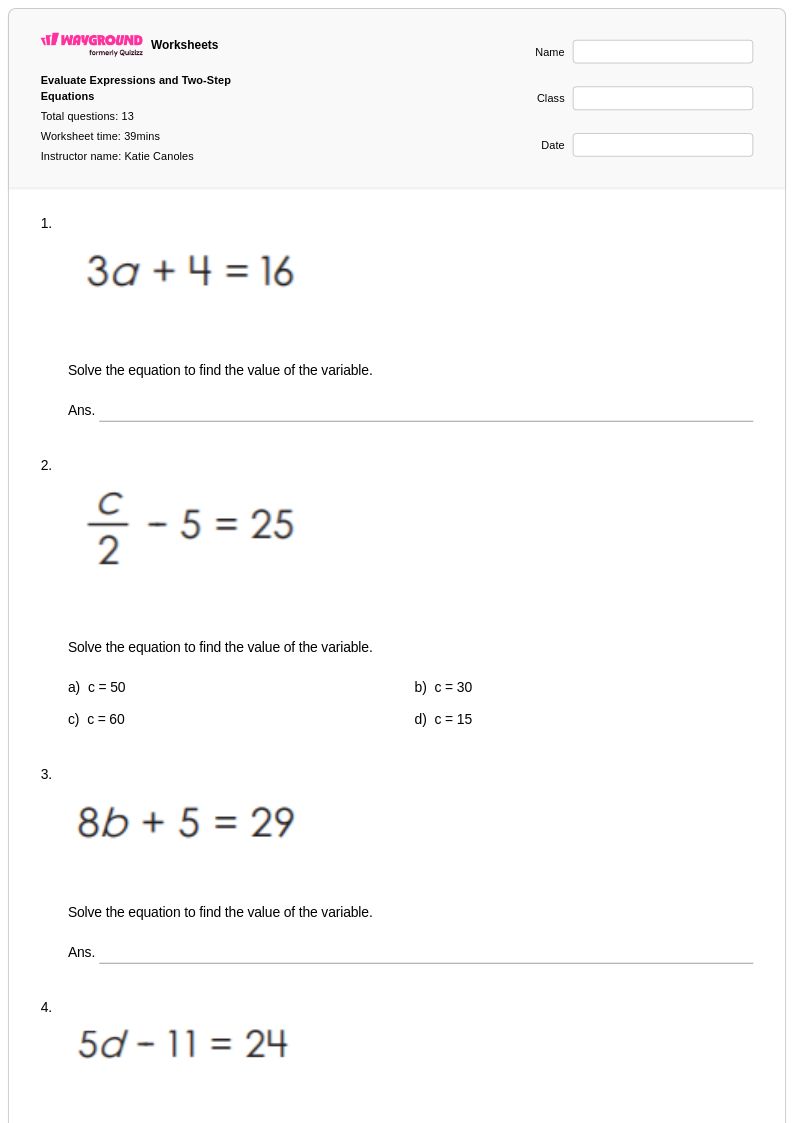
13 Q
5th - 8th
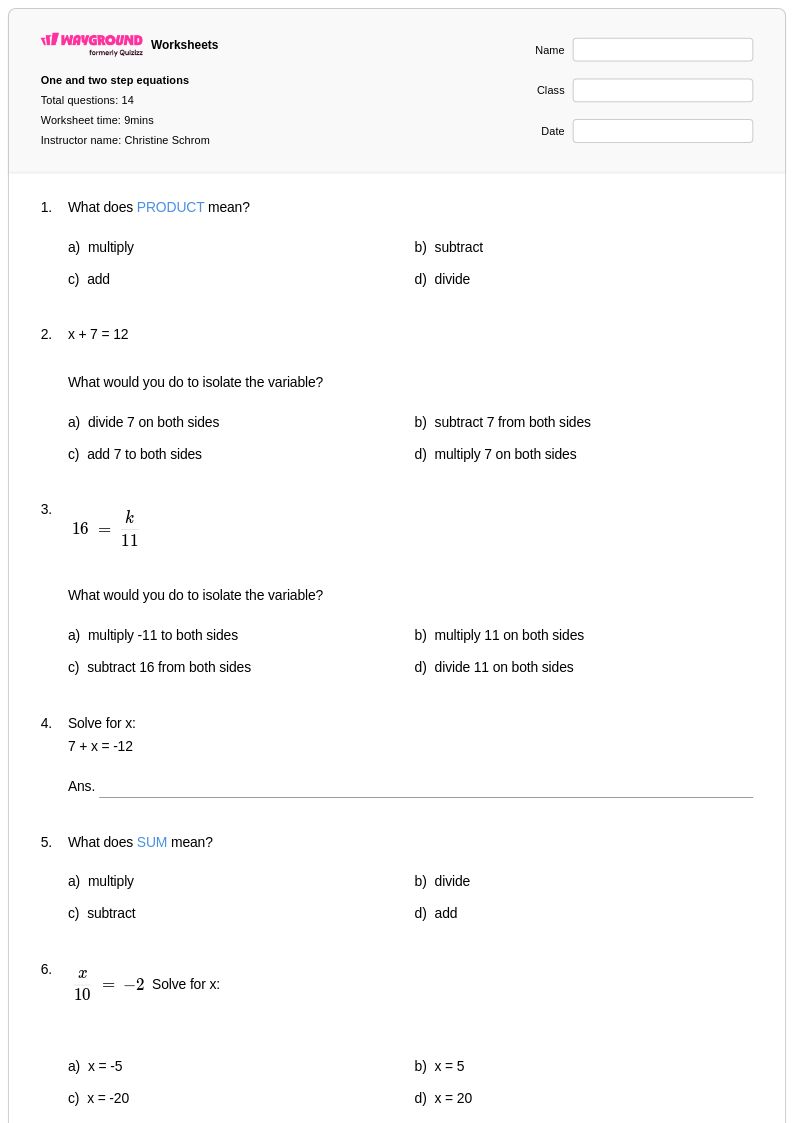
14 Q
6th - 8th
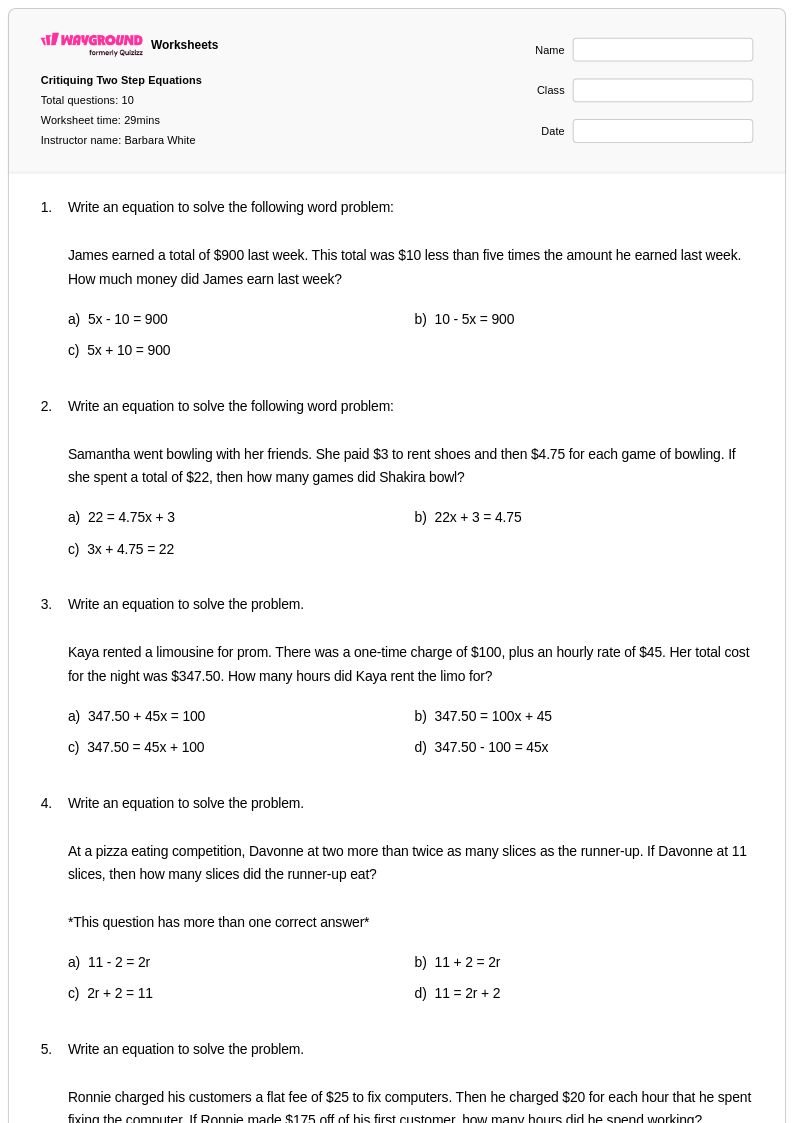
10 Q
6th - 7th
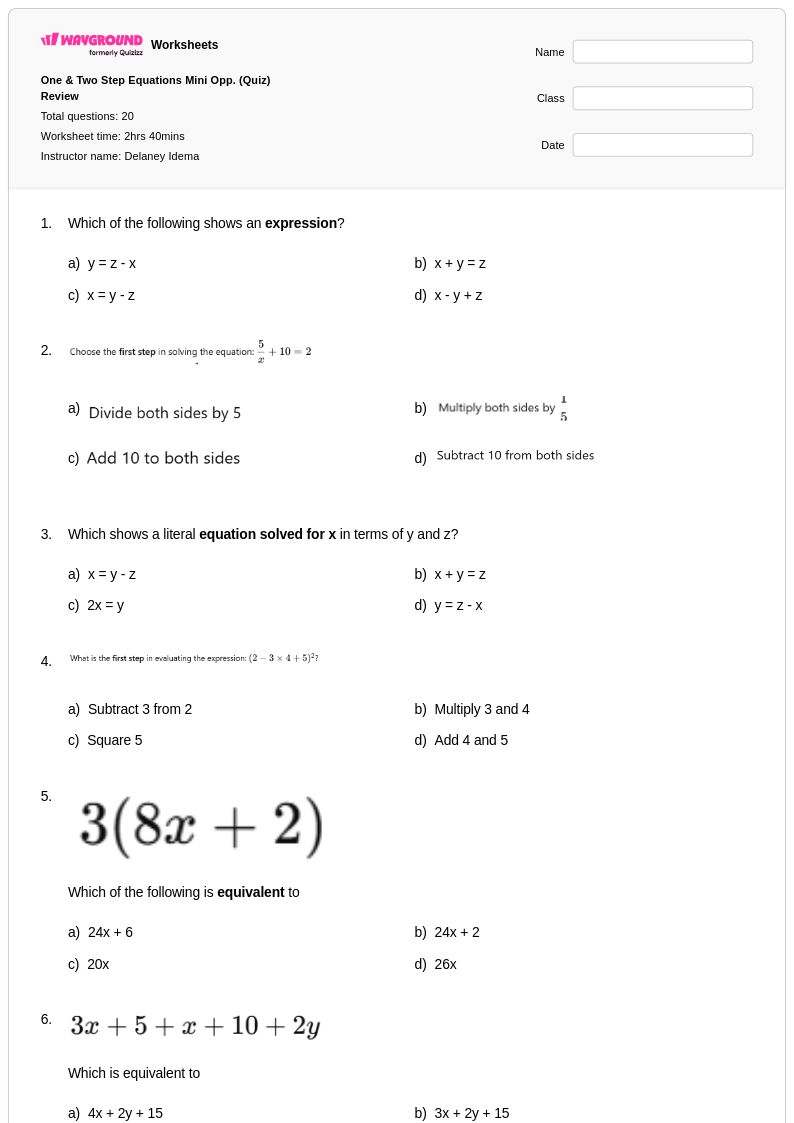
20 Q
6th - 8th
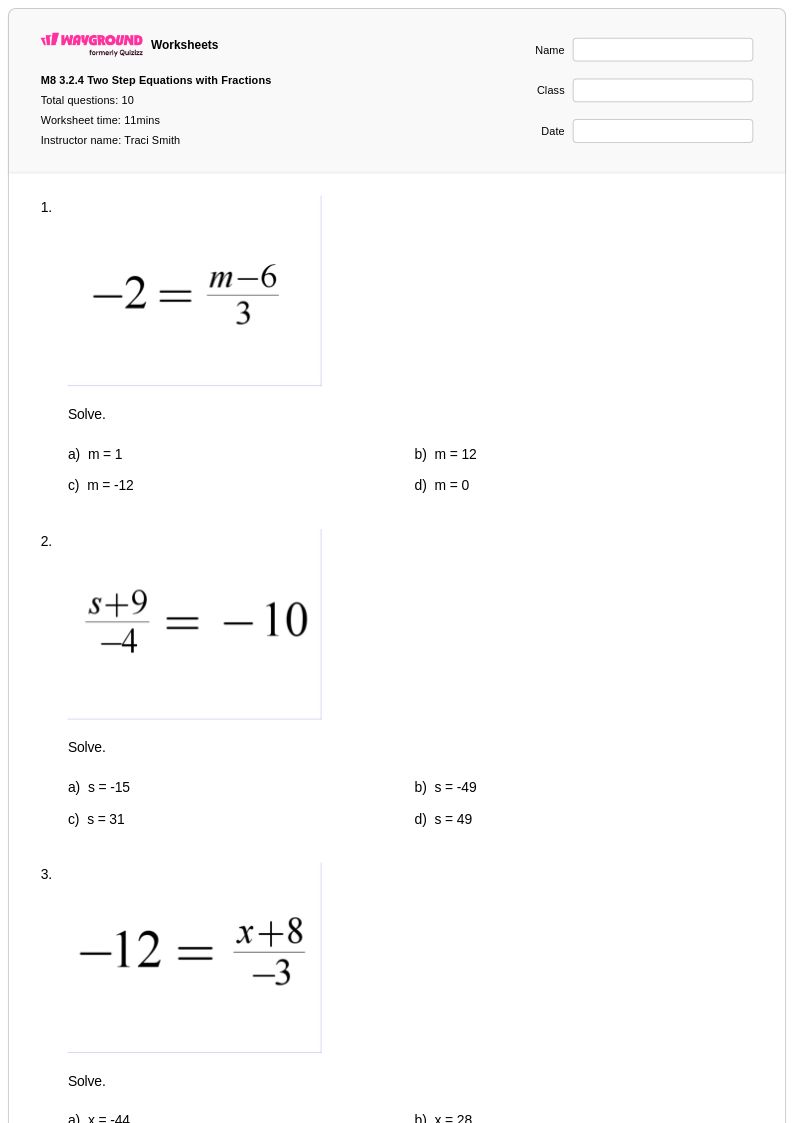
10 Q
6th - 8th
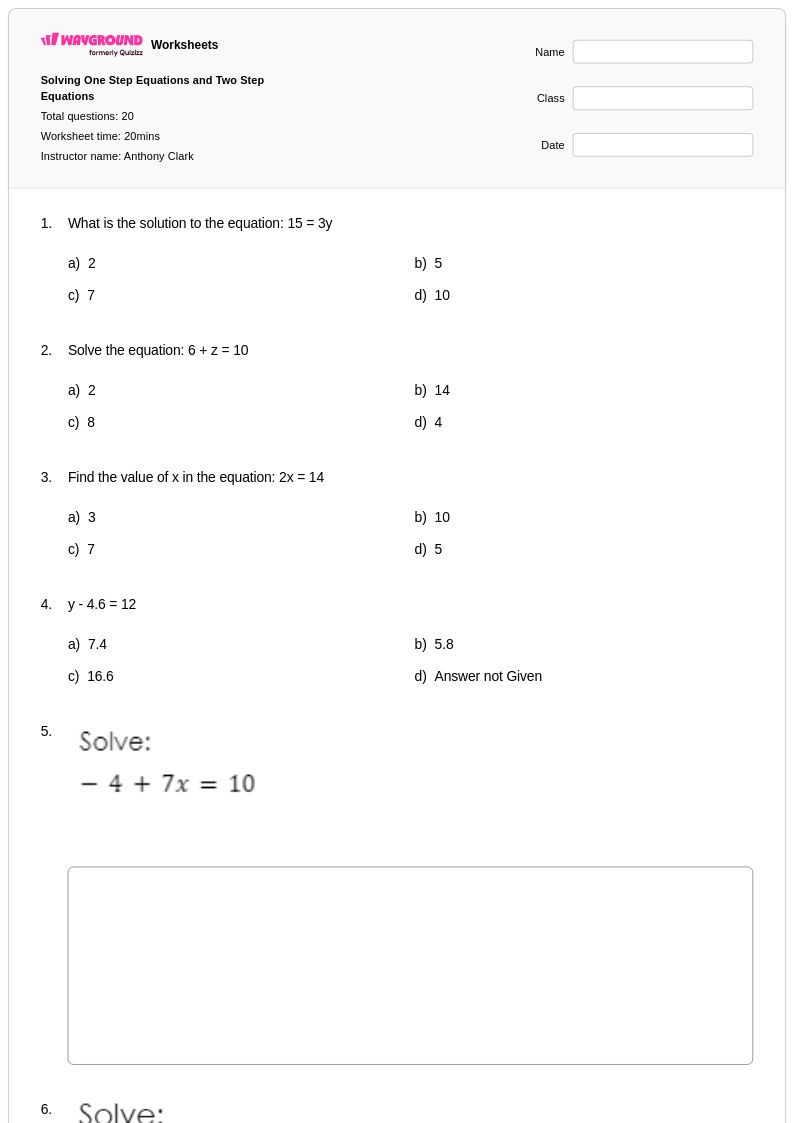
20 Q
6th - Uni
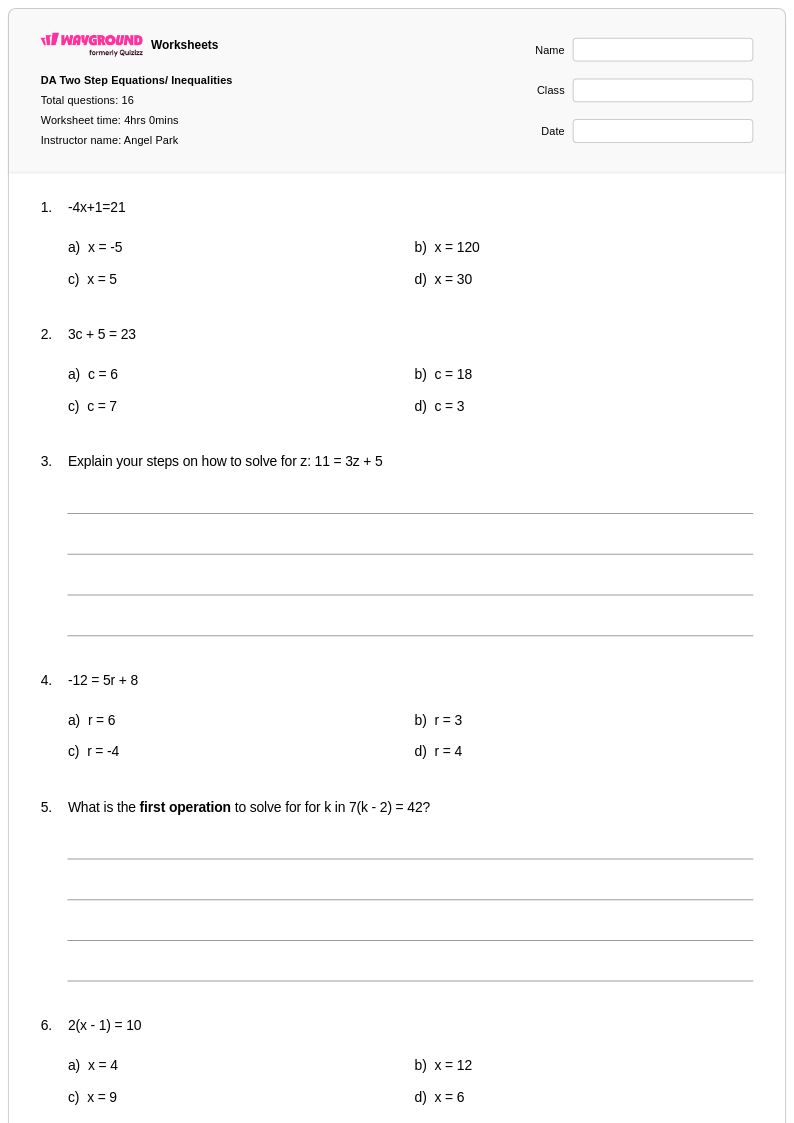
16 Q
6th - 12th
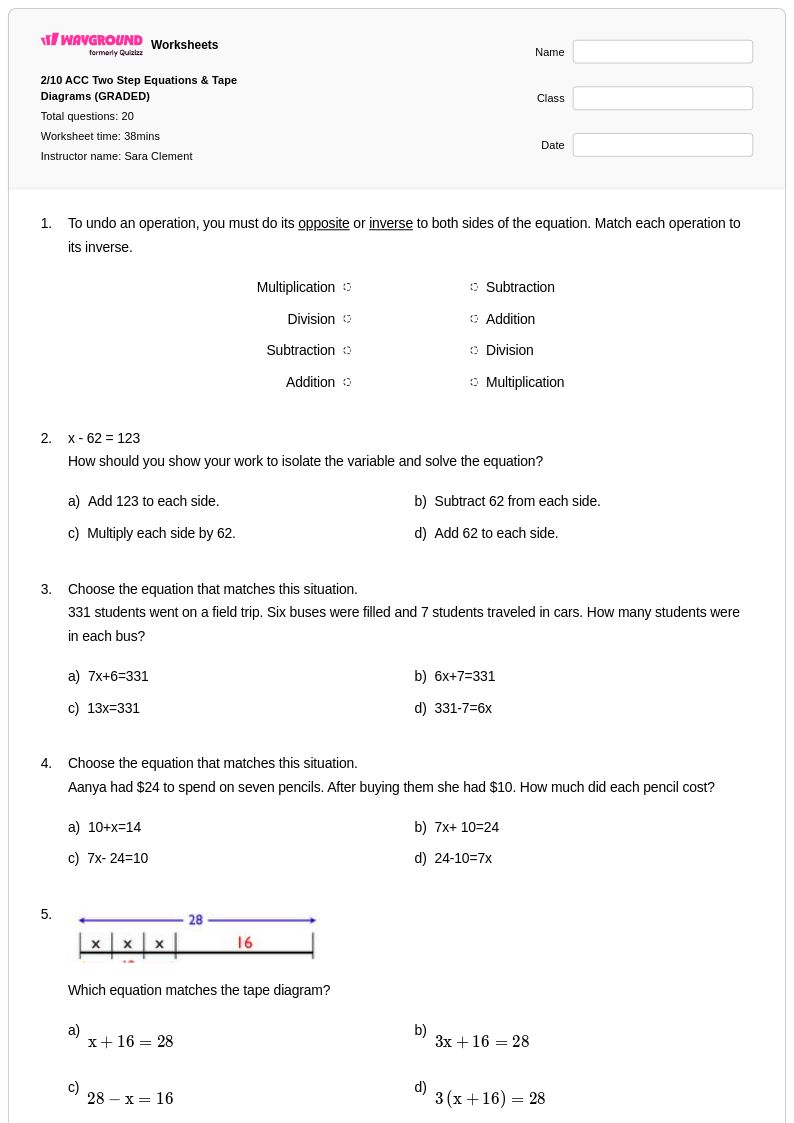
20 Q
6th
21 Q
6th
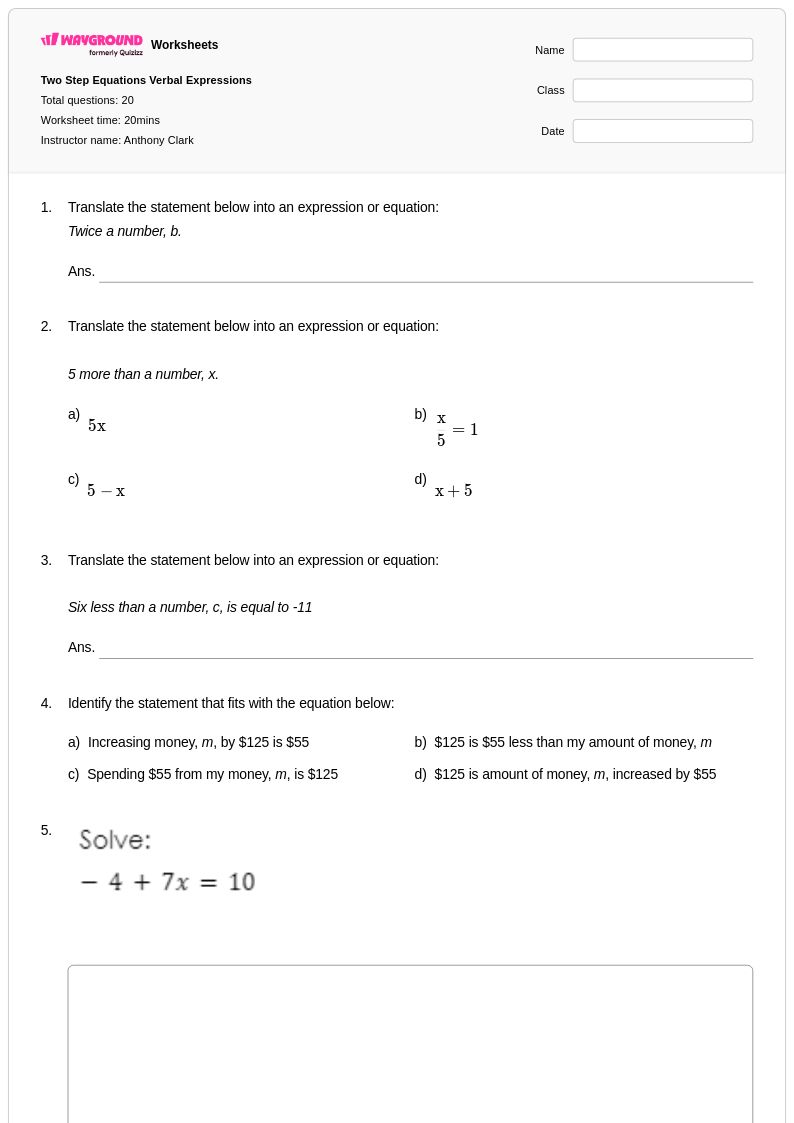
20 Q
6th - Uni
Explore Other Subject Worksheets for class 6
Explore printable Two-step Equations worksheets for Class 6
Two-step equations worksheets for Class 6 students available through Wayground (formerly Quizizz) provide comprehensive practice in solving algebraic expressions that require multiple operations to isolate the variable. These carefully designed worksheets strengthen students' foundational algebra skills by guiding them through the systematic process of undoing operations in reverse order, typically involving addition, subtraction, multiplication, or division steps. Each worksheet includes diverse practice problems that challenge students to apply inverse operations methodically, building their confidence with variables and preparing them for more advanced algebraic concepts. The collection features complete answer keys and free printable pdf formats, making it simple for educators to implement immediate feedback and assessment in their mathematics instruction.
Wayground (formerly Quizizz) empowers teachers with an extensive library of millions of educator-created resources specifically designed to support Class 6 two-step equation instruction across diverse learning environments. The platform's robust search and filtering capabilities enable teachers to quickly locate worksheets that align with specific curriculum standards and match their students' skill levels, while built-in differentiation tools allow for seamless customization of problem complexity and format. These versatile worksheet collections are available in both printable and digital pdf formats, providing flexibility for classroom instruction, homework assignments, targeted remediation sessions, and enrichment activities. Teachers can efficiently plan comprehensive lesson sequences, identify knowledge gaps through diagnostic practice, and provide personalized skill-building opportunities that ensure every student masters the critical algebraic thinking required for success in higher-level mathematics.