Free Printable Vectors and Scalars Worksheets for Class 11
Free Class 11 vectors and scalars physics worksheets with printables, practice problems, and answer keys help students master vector addition, scalar quantities, and directional analysis through comprehensive PDF exercises.
Explore printable Vectors and Scalars worksheets for Class 11
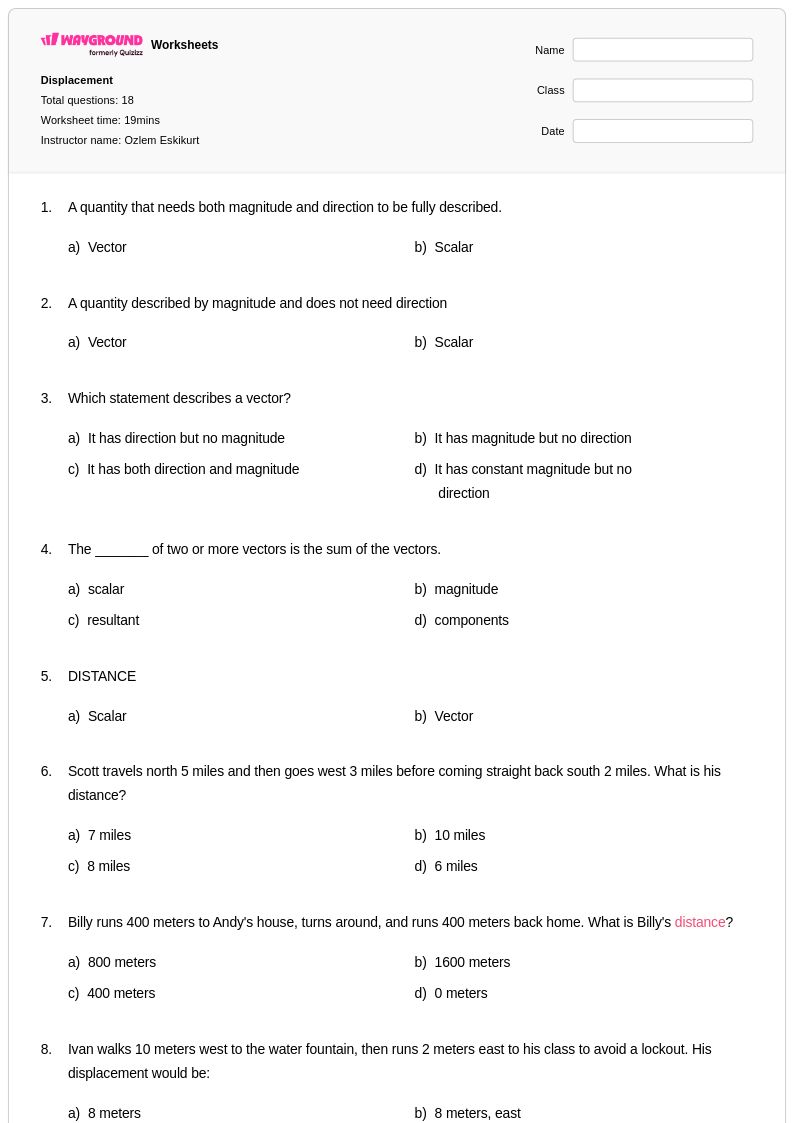
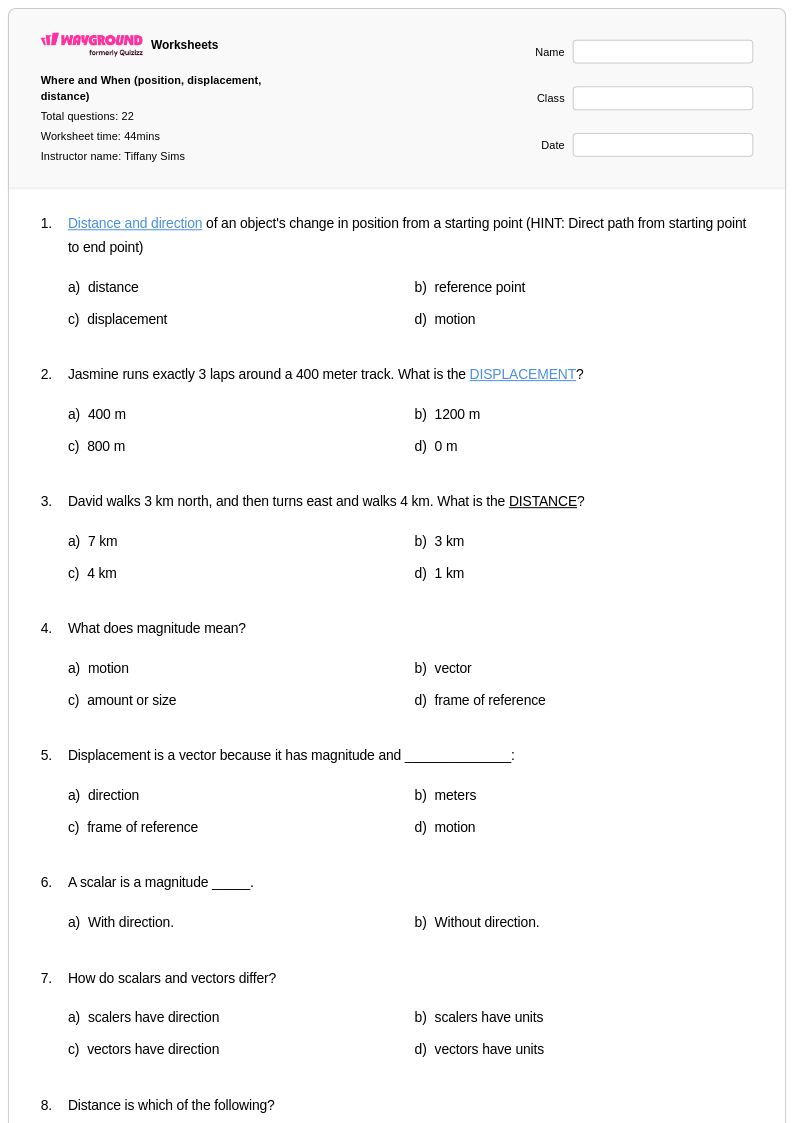
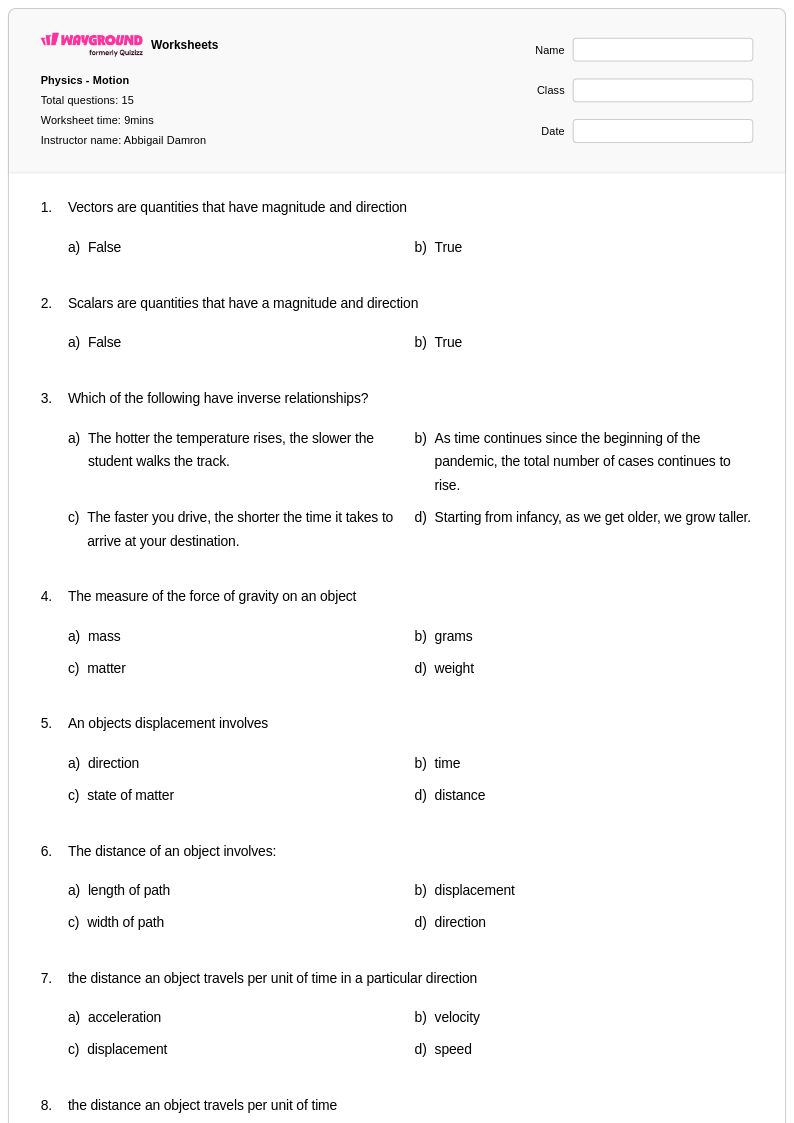
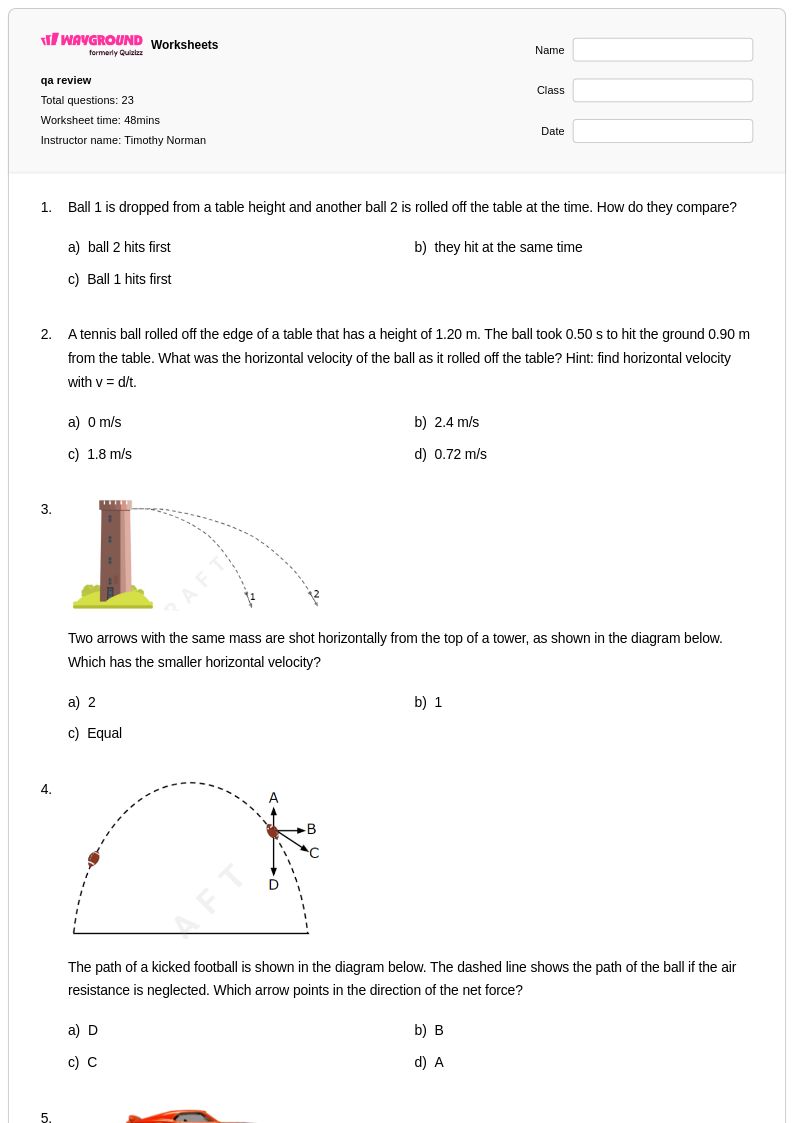
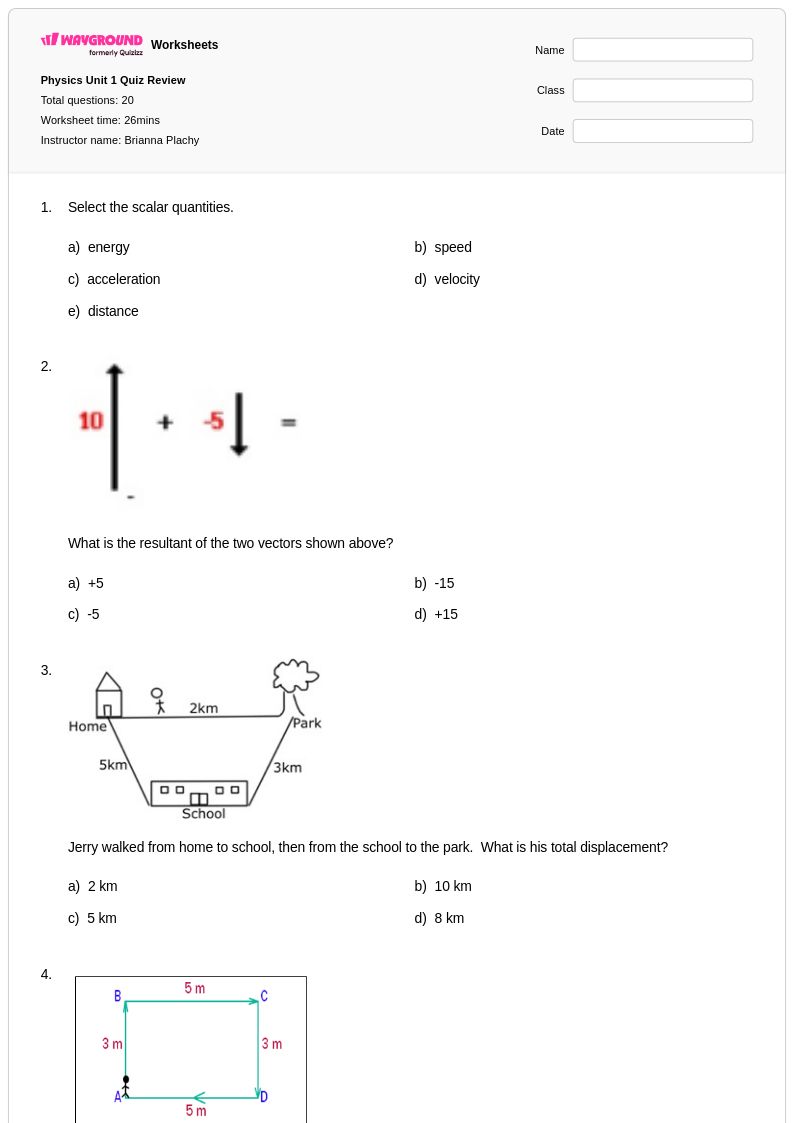
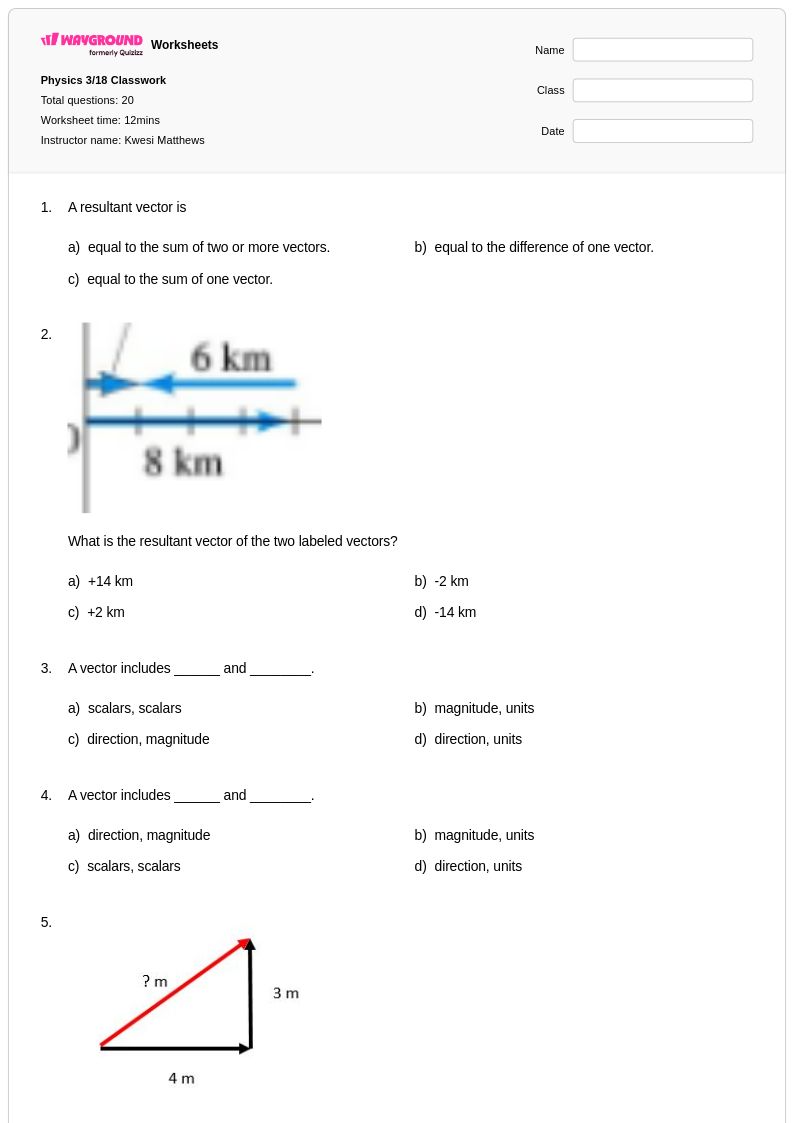
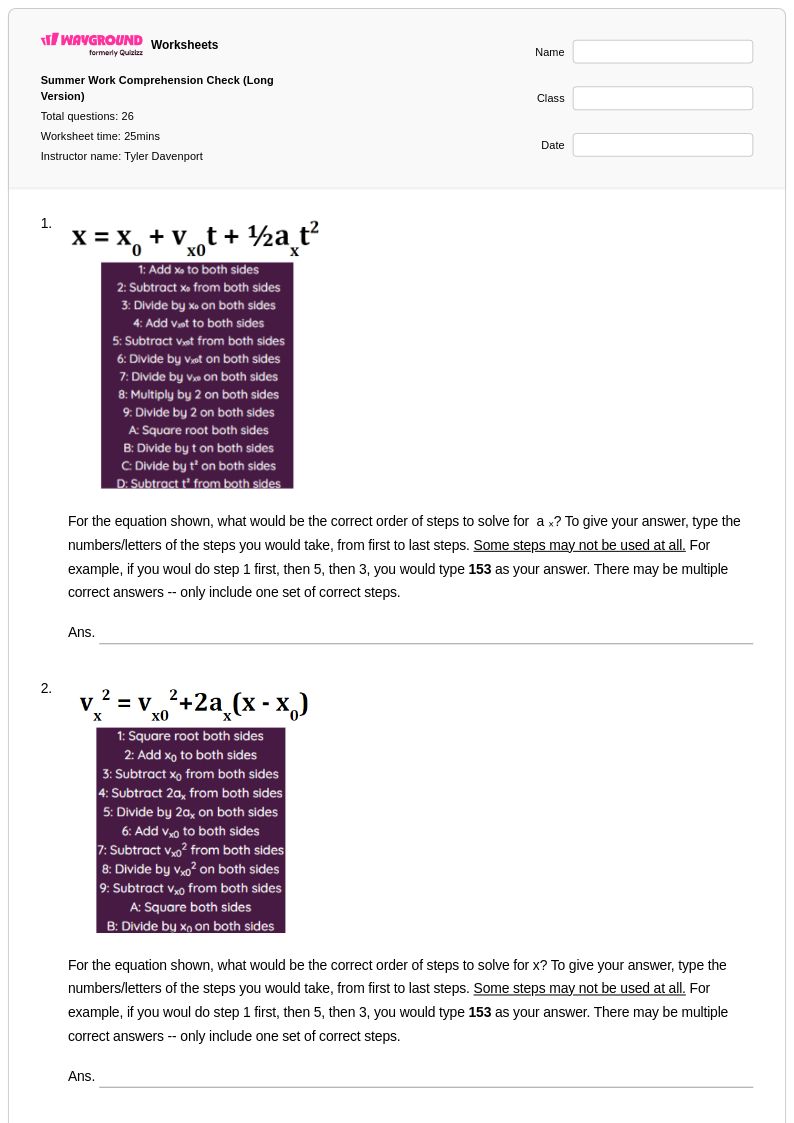
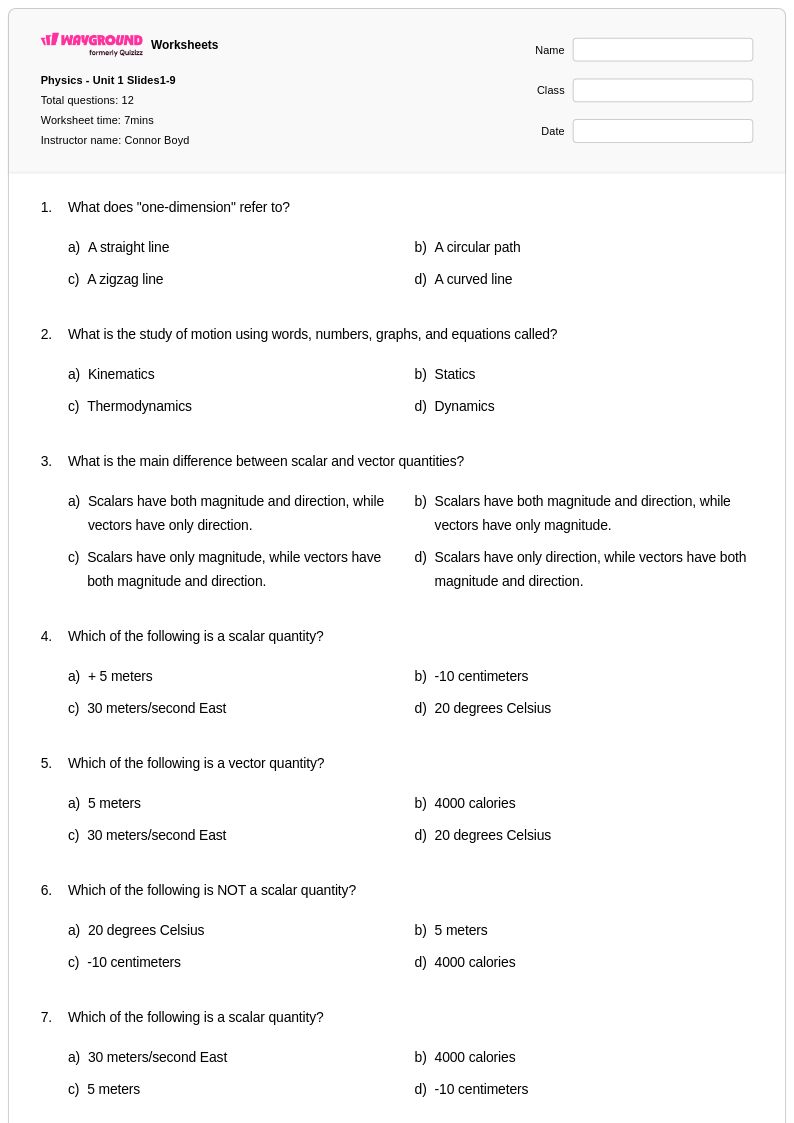
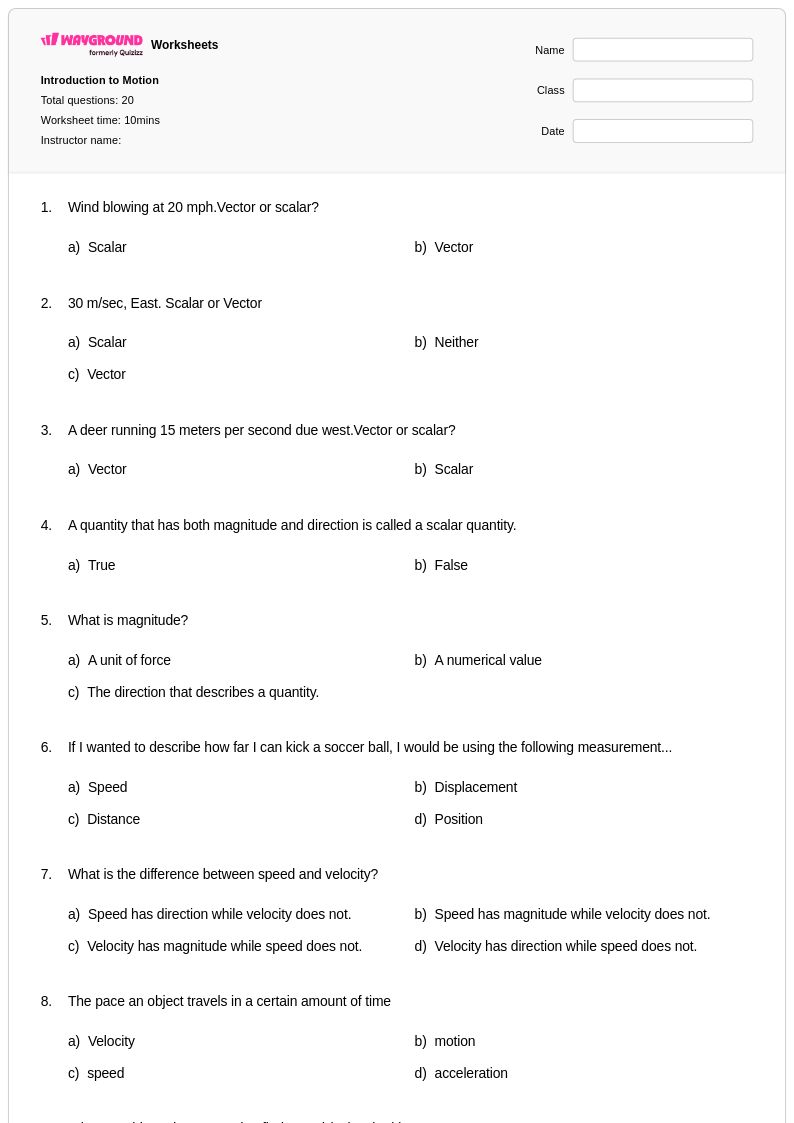
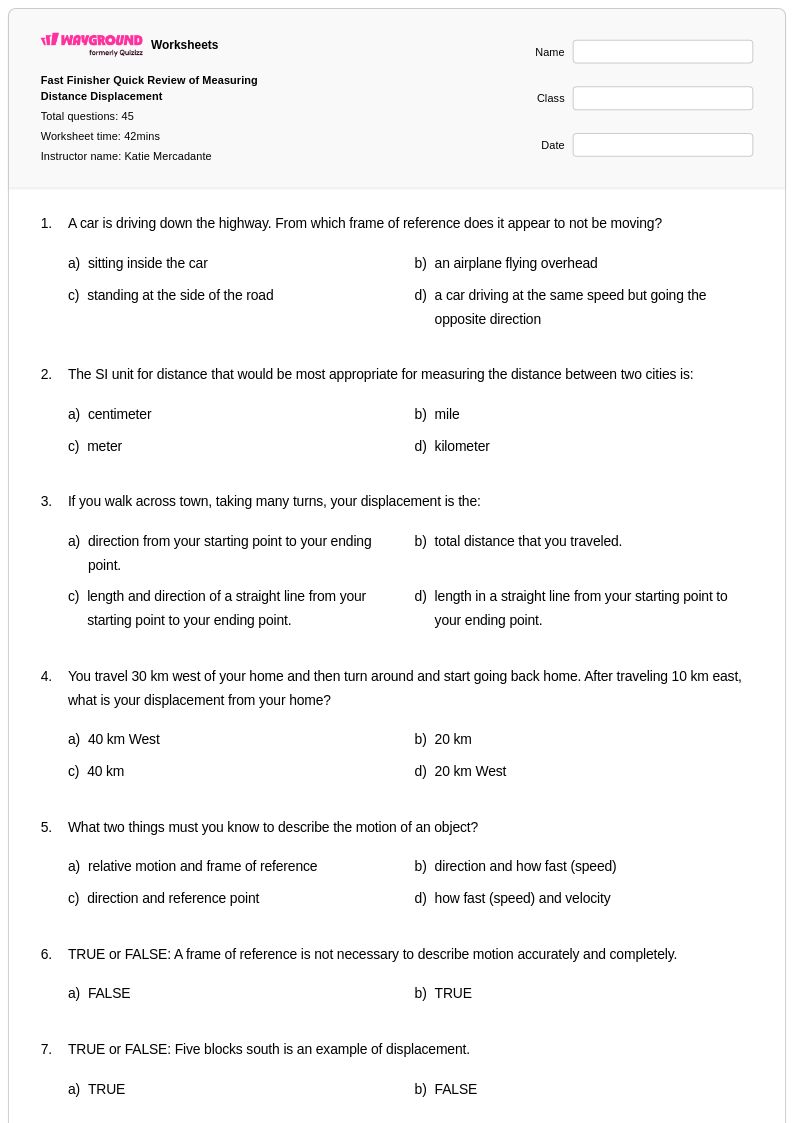
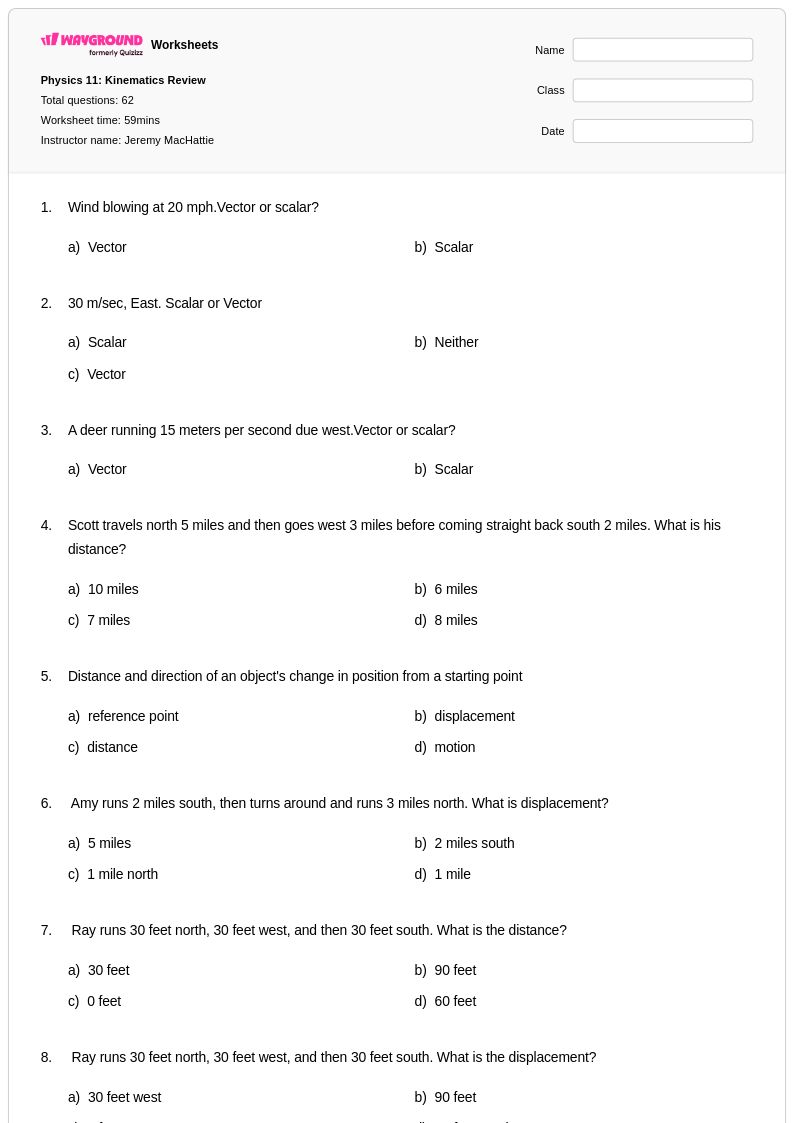
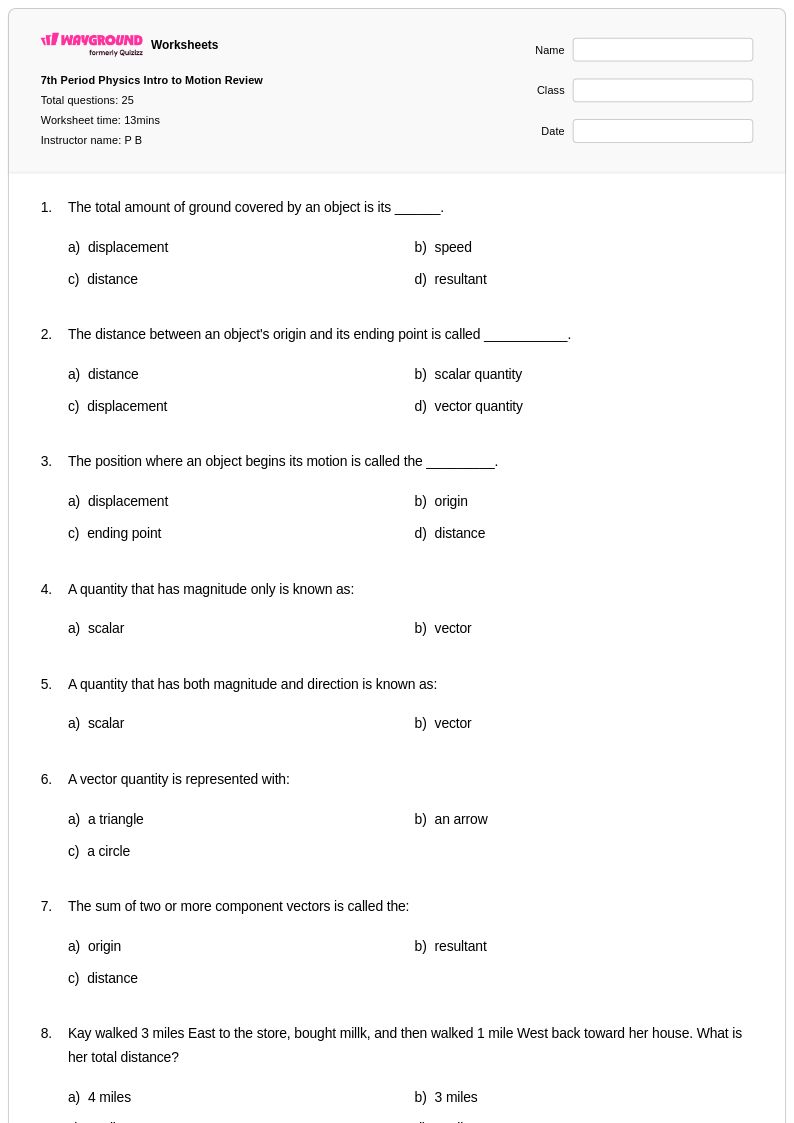
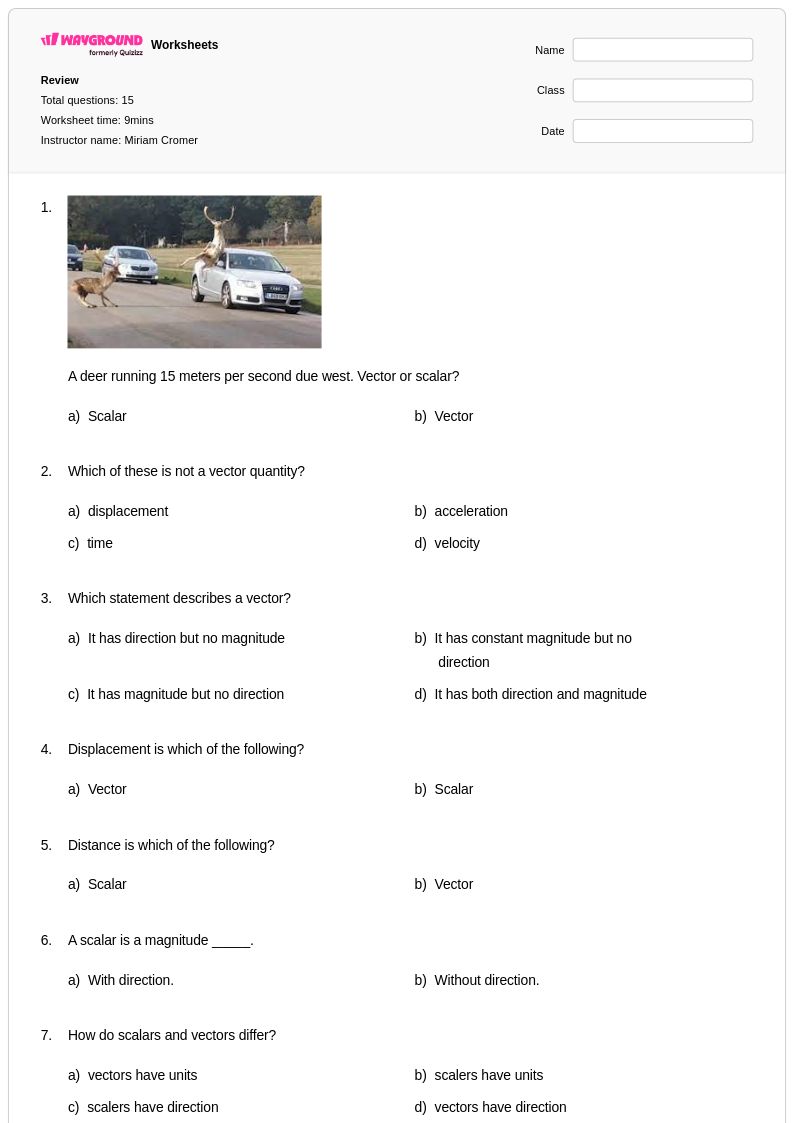
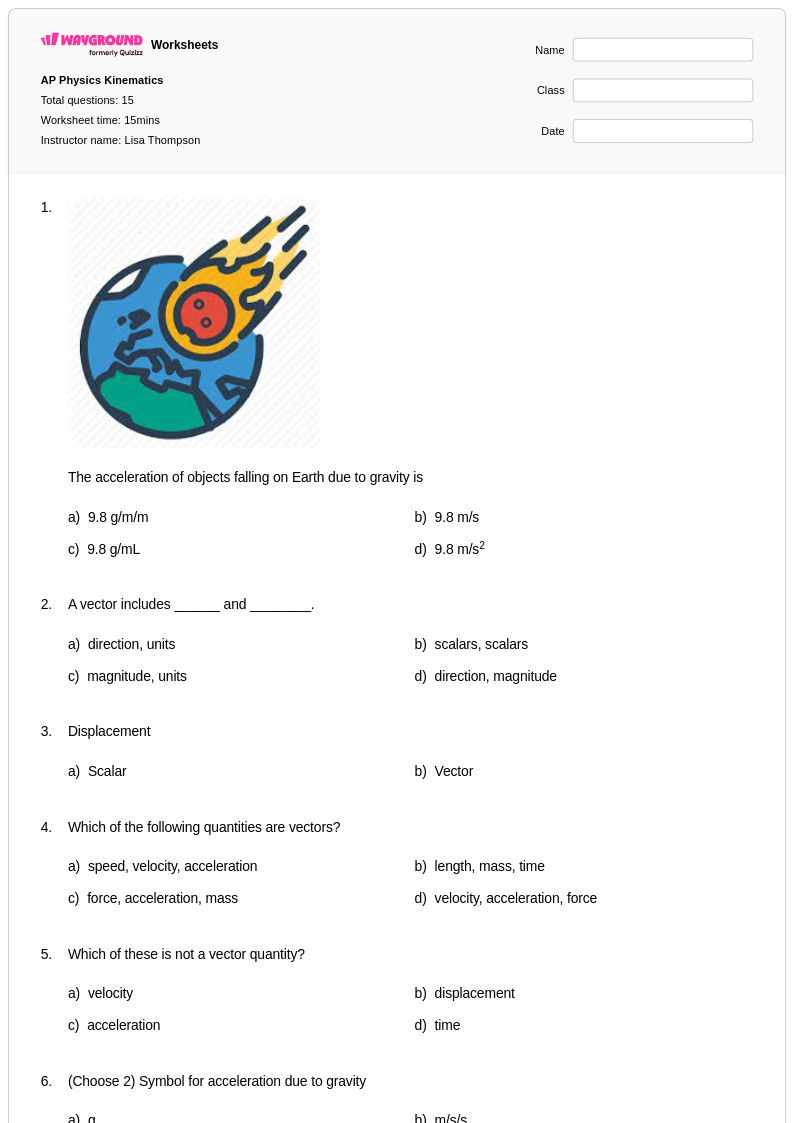
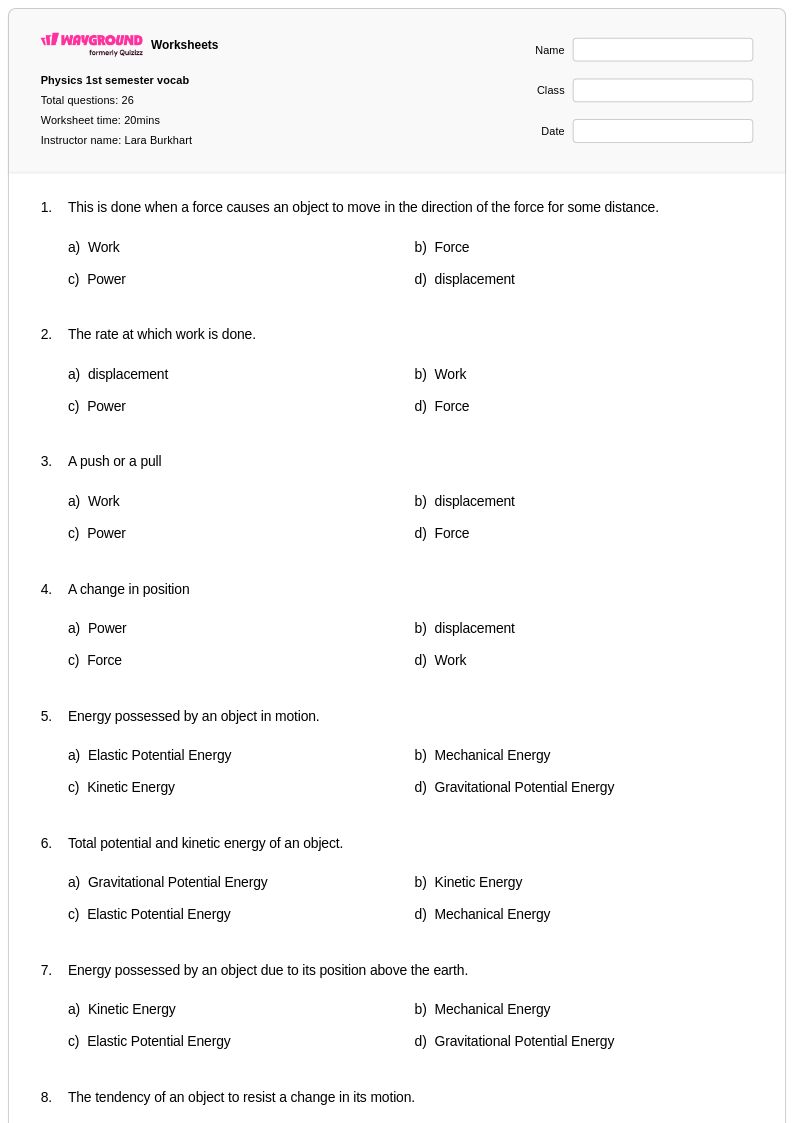
Vectors and scalars represent fundamental concepts in Class 11 physics that distinguish between quantities with directional properties and those described by magnitude alone. Wayground's comprehensive collection of vectors and scalars worksheets provides students with essential practice problems that reinforce the mathematical and conceptual differences between these physical quantities. These educational resources strengthen critical skills including vector addition and subtraction, scalar multiplication, component analysis, and real-world applications in motion, force, and field problems. Teachers can access free printable worksheets complete with detailed answer keys, ensuring students receive immediate feedback on their problem-solving techniques. The pdf format materials cover everything from basic identification exercises to complex vector resolution problems that prepare students for advanced physics coursework.
Wayground's extensive library, built from millions of teacher-created resources, offers educators powerful search and filtering capabilities to locate precisely the right vectors and scalars materials for their Class 11 physics curriculum. The platform's standards-aligned content supports differentiated instruction through customizable worksheets that can be modified for remediation or enrichment based on individual student needs. Teachers benefit from both digital and printable formats, allowing flexible implementation whether conducting in-person laboratory work or remote learning sessions. These comprehensive tools streamline lesson planning by providing ready-to-use materials for skill practice, formative assessment, and concept reinforcement, while the robust filtering system helps educators quickly identify resources that match their specific pacing guides and learning objectives for vector and scalar instruction.
FAQs
How do I teach the difference between vectors and scalars to physics students?
Start by grounding the distinction in familiar quantities: speed is a scalar (magnitude only), while velocity is a vector (magnitude and direction). Use real-world examples like displacement vs. distance and force vs. mass to make the contrast tangible before introducing formal notation. Having students sort physical quantities into two columns — scalar or vector — is an effective early activity that surfaces misconceptions before they calcify.
What exercises help students practice vector addition and subtraction?
Graphical methods such as the tip-to-tail technique and parallelogram law give students a visual foundation before they work with component form. Follow these with component analysis problems that require breaking vectors into x- and y-components using trigonometry, then recombining them to find the resultant. Mixing straightforward two-vector problems with multi-vector resultant problems ensures students develop fluency across difficulty levels.
What mistakes do students commonly make when working with vectors and scalars?
The most frequent error is treating vector quantities as scalars by ignoring direction — for example, adding force magnitudes algebraically when the forces act in opposite directions. Students also routinely confuse displacement with distance and velocity with speed. Another common mistake is incorrectly applying trigonometric functions when resolving components, particularly when the angle is measured from an axis other than the standard horizontal reference.
How can I use vectors and scalars worksheets to differentiate instruction in my physics class?
Scaffold practice by sequencing worksheets from scalar identification tasks through single-vector component problems to multi-vector resultant calculations, assigning sections based on each student's current proficiency. For students who need additional support, Wayground's reduced answer choices accommodation can lower cognitive load during digital practice sessions, while extended time settings ensure assessments reflect understanding rather than processing speed. Advanced learners can be directed toward application problems involving motion, force fields, and real-world physics scenarios.
How do I use Wayground's vectors and scalars worksheets in my classroom?
Wayground's vectors and scalars worksheets are available as printable PDFs for traditional pencil-and-paper practice and in digital formats for technology-integrated classrooms. Teachers can assign them as in-class practice, homework, or host them as a quiz directly on Wayground for automatic grading. Each worksheet includes a complete answer key, reducing prep time and making it straightforward to review student work or run self-checking practice sessions.
At what point in a physics unit should I introduce vectors and scalars worksheets?
Vectors and scalars are typically introduced at the start of a mechanics unit and should be reinforced continuously as new topics — motion, forces, momentum — build on these foundations. Use identification and classification worksheets early to establish the conceptual distinction, then layer in component analysis and resultant calculation problems once students are comfortable with the basic definitions. Returning to vectors and scalars practice at each new unit is more effective than treating them as a single stand-alone lesson.