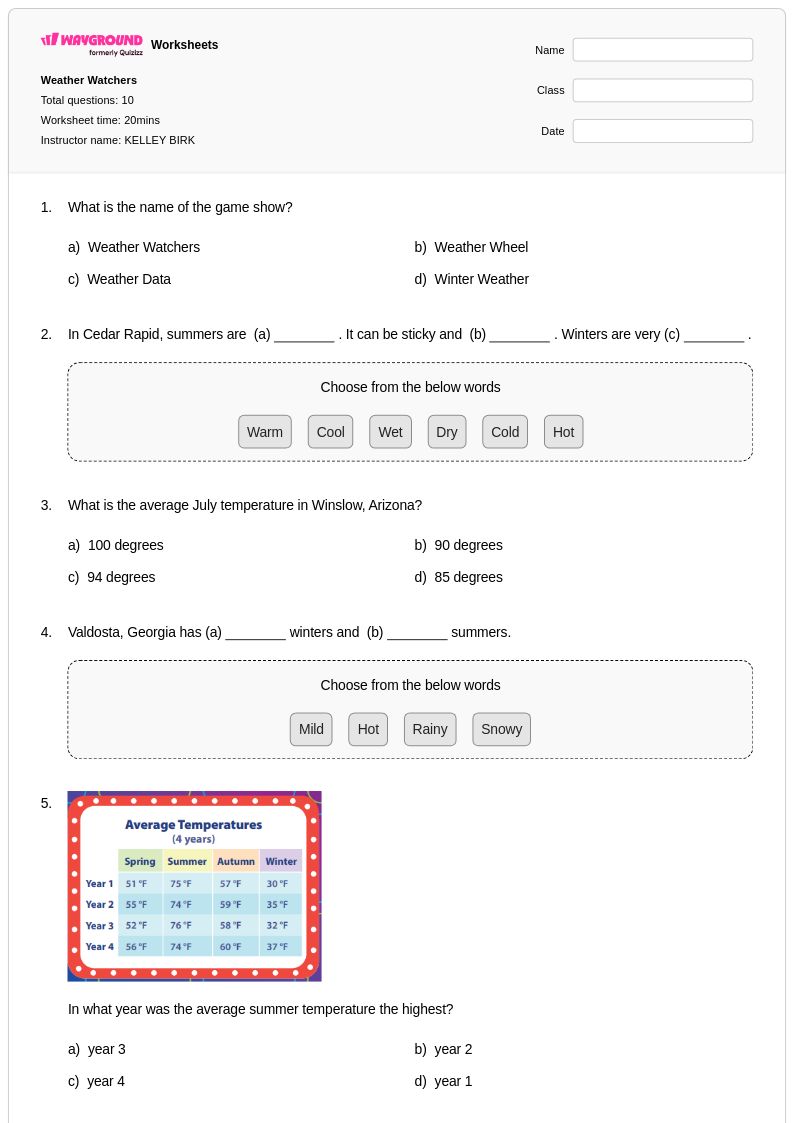
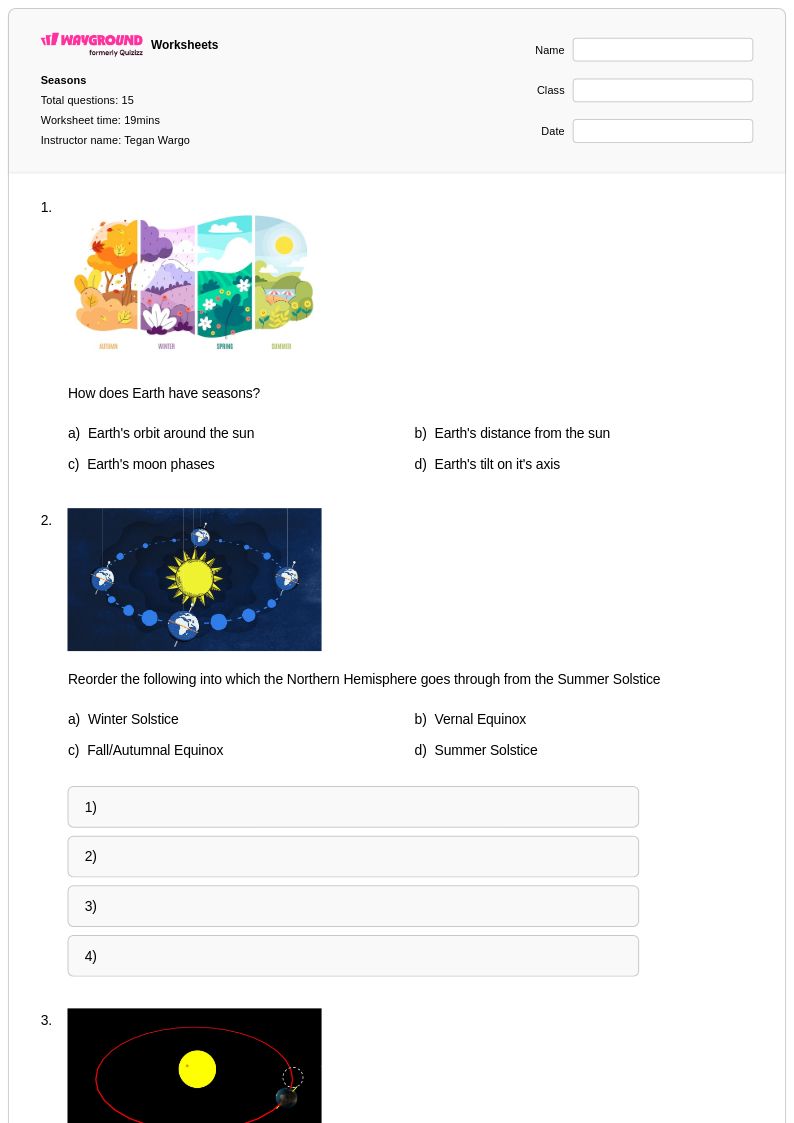
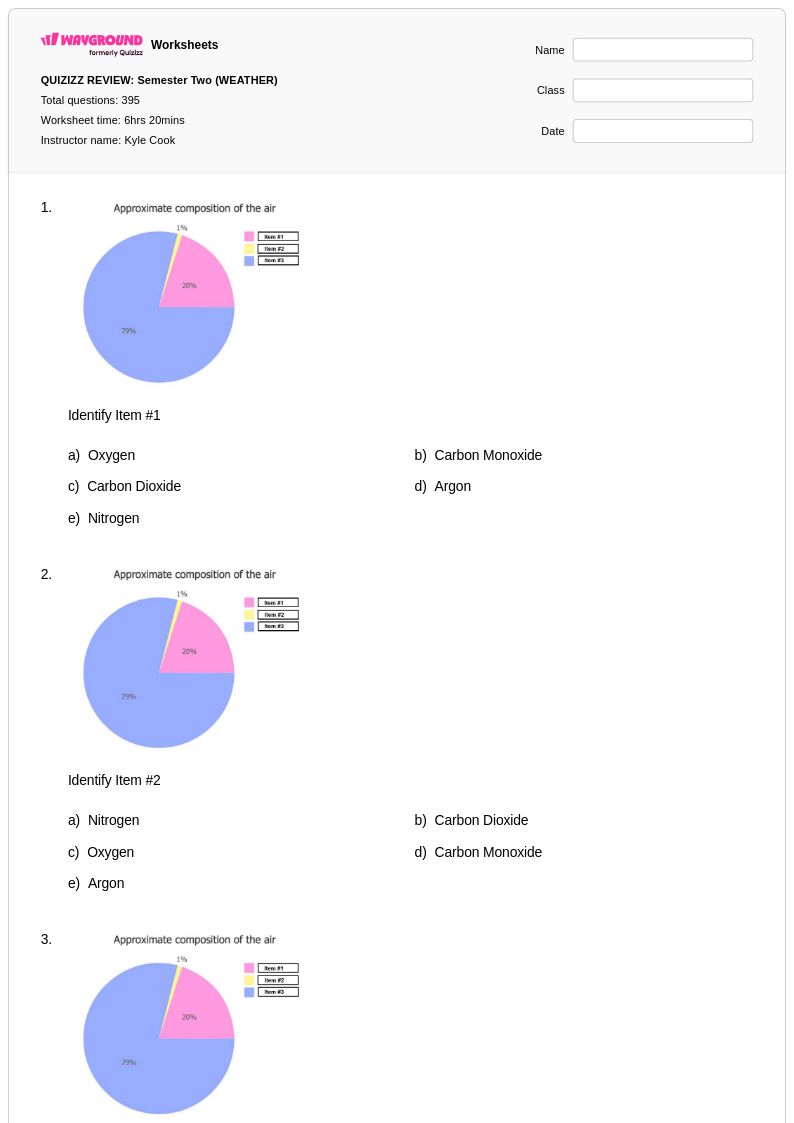
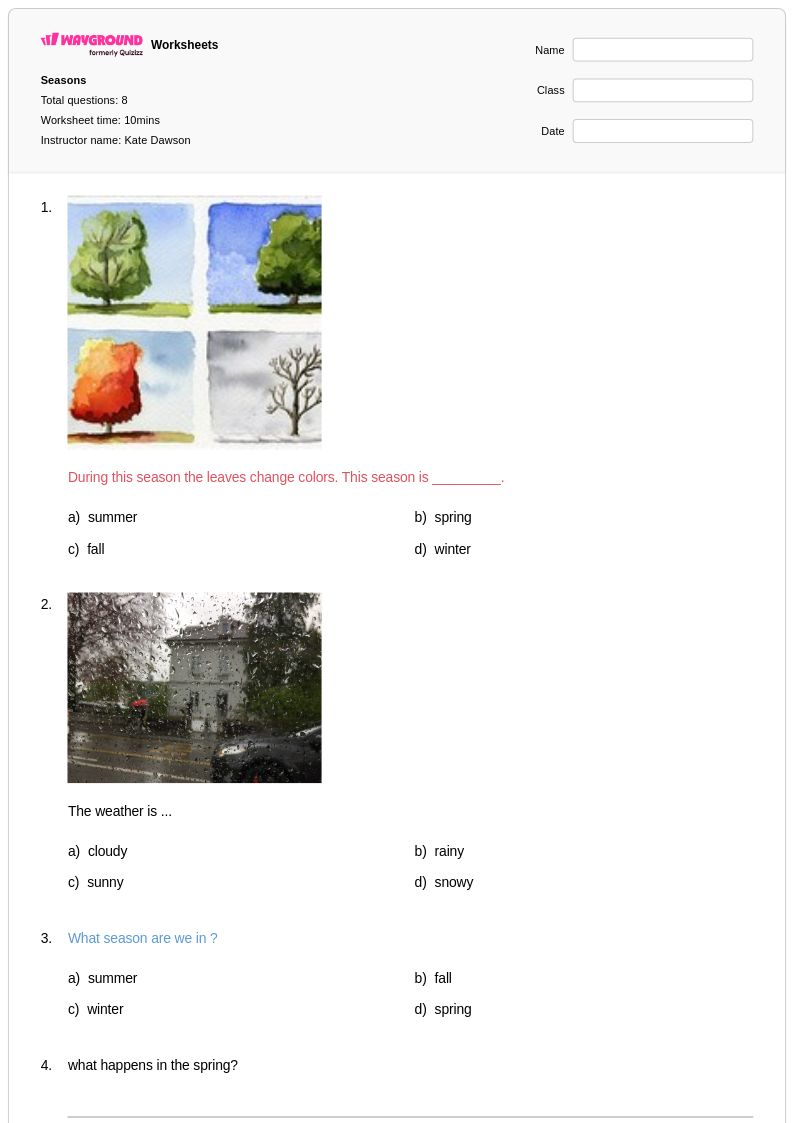
Explore free Weather & Seasons science worksheets and printables from Wayground that help students understand climate patterns, seasonal changes, and weather phenomena through engaging practice problems with answer keys.
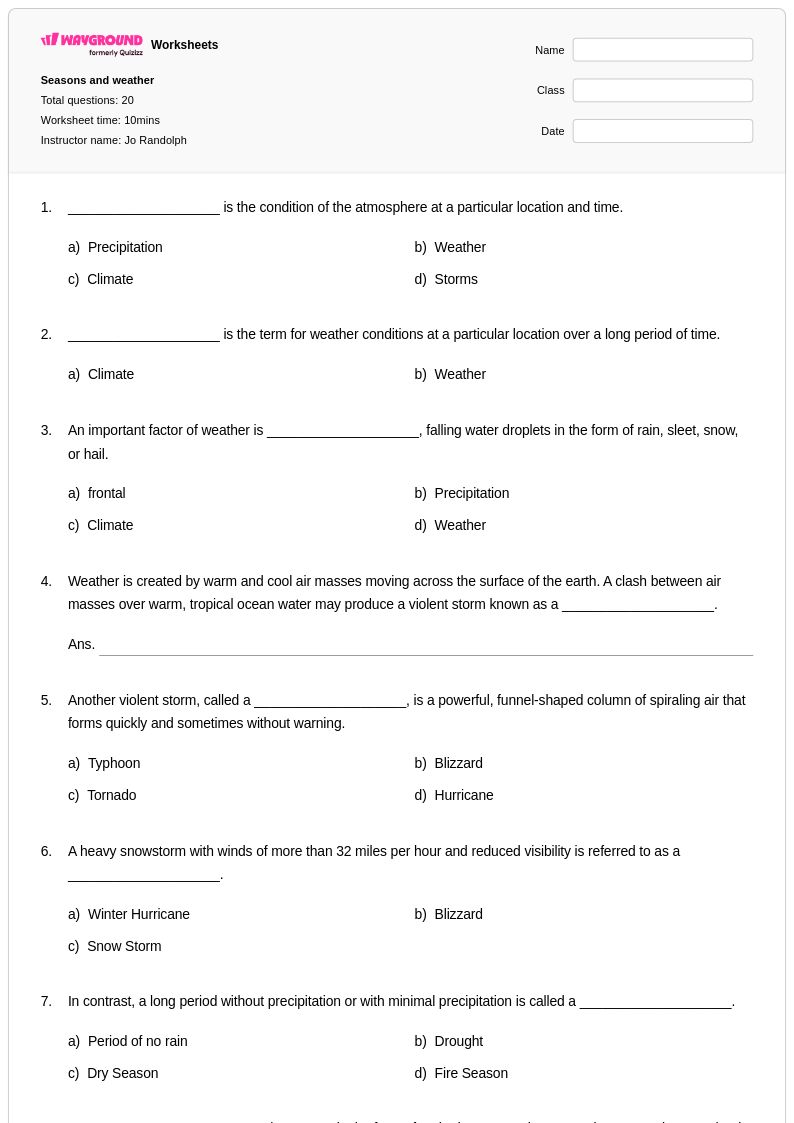
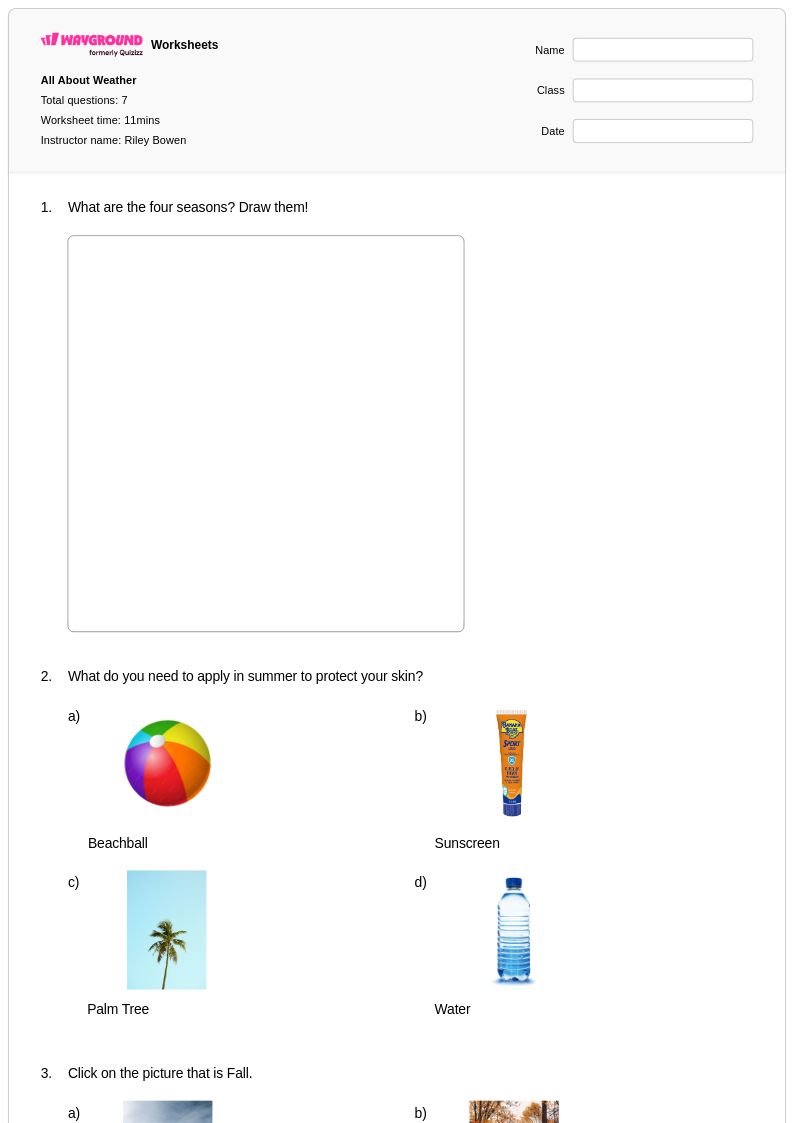
Weather and seasons worksheets available through Wayground (formerly Quizizz) provide comprehensive educational resources that help students understand the dynamic relationship between Earth's atmospheric conditions and seasonal changes throughout the year. These expertly designed materials strengthen critical scientific thinking skills by engaging learners in hands-on exploration of meteorological concepts, seasonal patterns, and the underlying mechanisms that drive weather systems. Students develop observational skills through data collection activities, learn to interpret weather maps and seasonal charts, and build foundational knowledge about precipitation, temperature variations, and atmospheric pressure changes. The collection includes diverse practice problems that challenge students to analyze weather data, predict seasonal trends, and understand how Earth's position relative to the sun influences climate patterns. Each worksheet comes complete with detailed answer keys, ensuring educators can efficiently assess student understanding, while the free printable format makes these valuable resources accessible for classroom use and home study.
Wayground (formerly Quizizz) empowers teachers with an extensive library of millions of teacher-created weather and seasons resources, featuring robust search and filtering capabilities that allow educators to quickly locate materials aligned with specific learning objectives and educational standards. The platform's differentiation tools enable instructors to customize worksheets based on individual student needs, supporting both remediation for struggling learners and enrichment opportunities for advanced students. Teachers can access materials in both printable pdf formats and interactive digital versions, providing flexibility for various classroom environments and teaching approaches. This comprehensive collection supports strategic lesson planning by offering scaffolded activities that progress from basic weather observation to complex seasonal analysis, while the standards-aligned content ensures that instruction meets curriculum requirements. The platform's organizational features help educators efficiently manage resources for skill practice sessions, formative assessments, and targeted intervention strategies, making it an invaluable tool for developing students' understanding of Earth's weather systems and seasonal cycles.
FAQs
How do I teach weather and seasons to elementary students?
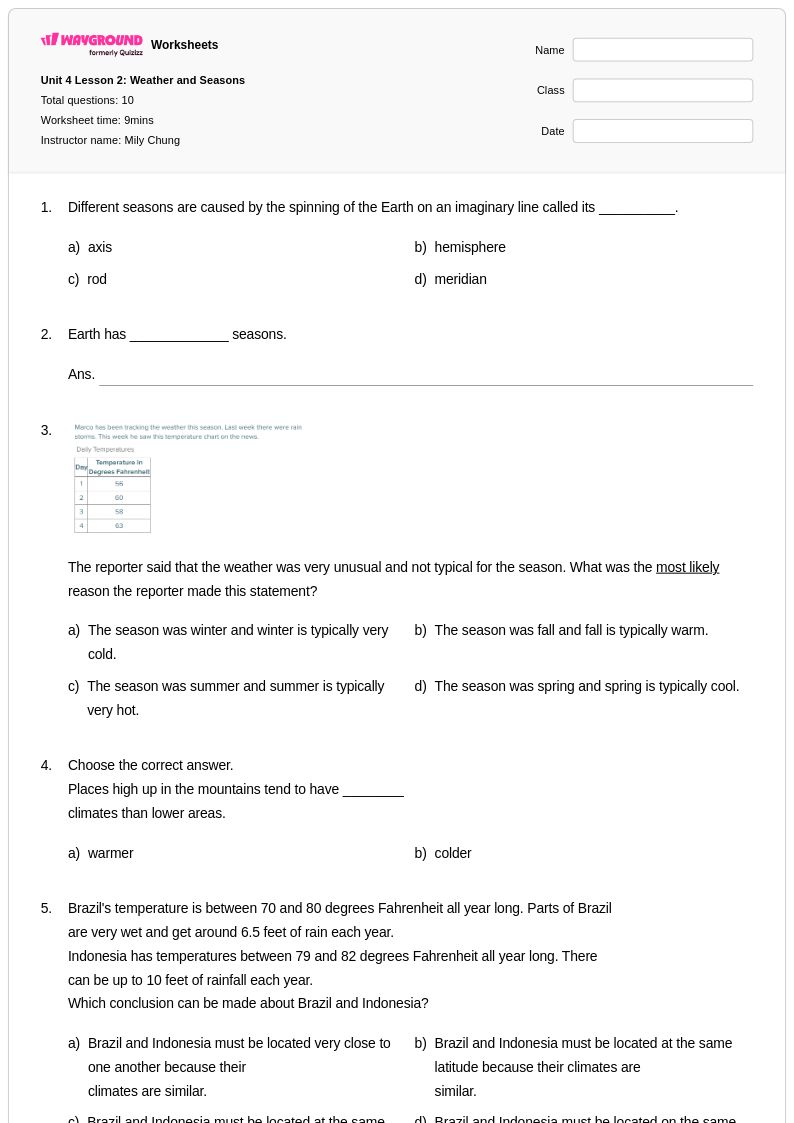
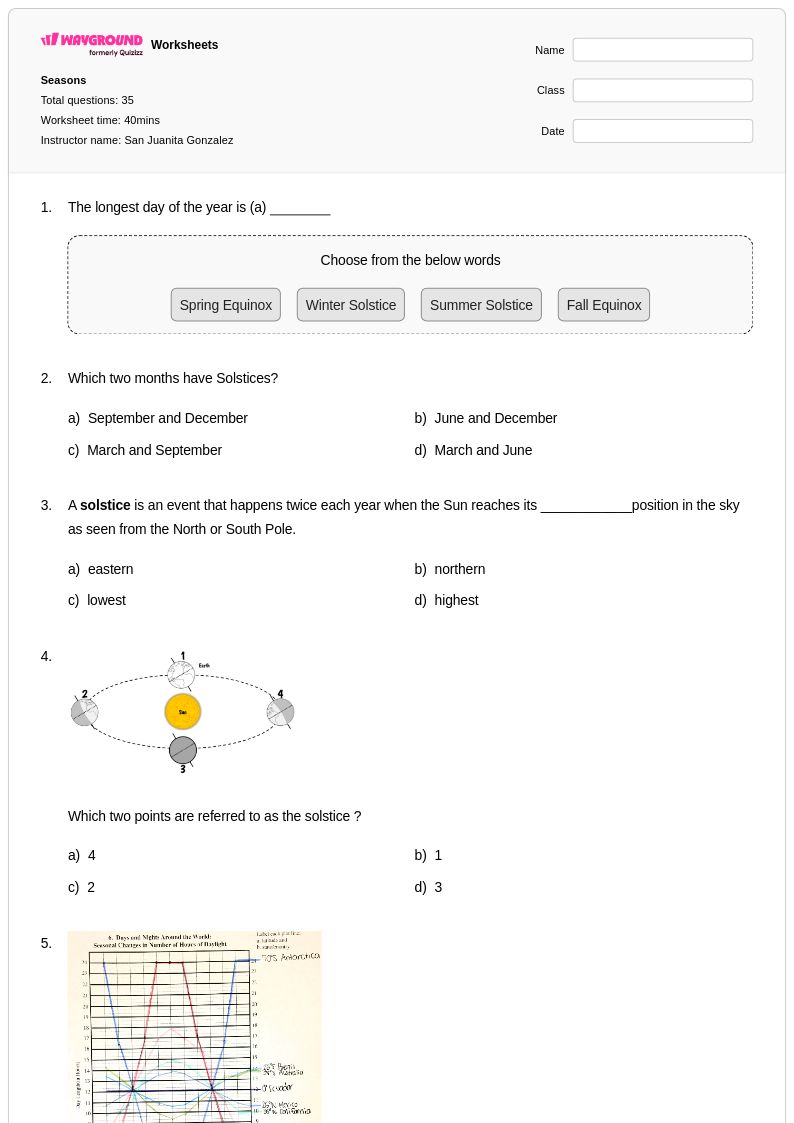
Start with daily weather observations where students record temperature, precipitation, and cloud cover before introducing the scientific vocabulary for weather phenomena. Use worksheets that have students chart weather patterns over a week or month so they can identify trends and connect observations to concepts like precipitation types and temperature cycles. By grades 3-5, introduce the relationship between Earth's axial tilt and seasonal changes using diagrams that show how sunlight angle varies throughout the year.
What exercises help students practice weather and seasons concepts?
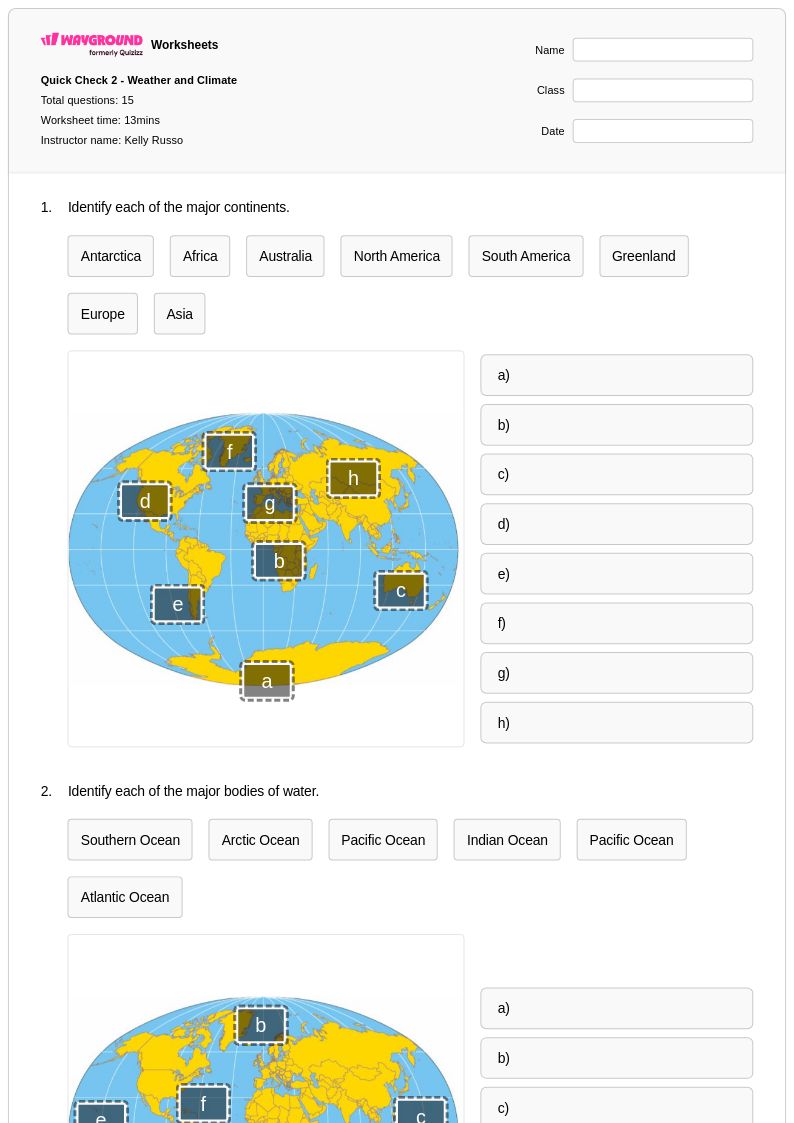
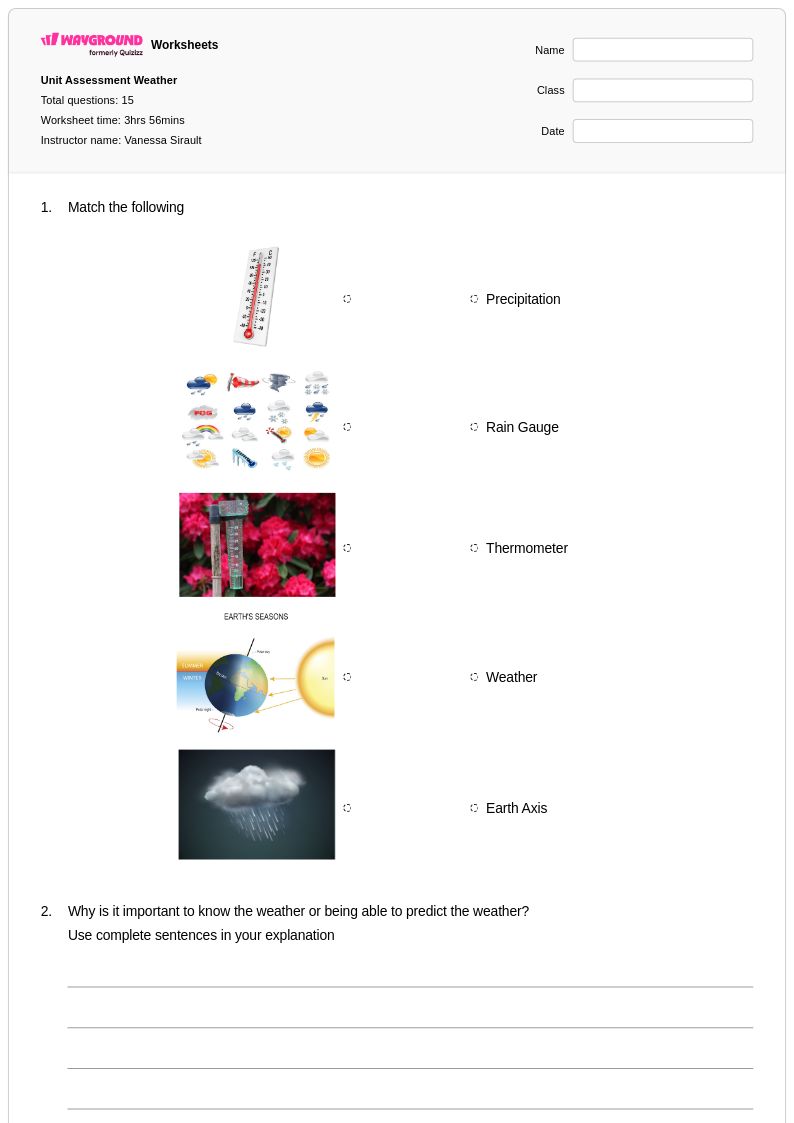
Weather map interpretation worksheets where students identify fronts, pressure systems, and precipitation zones build applied reading skills that connect to real-world meteorology. Seasonal chart activities that require students to match months to seasons, plot temperature data, and explain why daylight hours change throughout the year reinforce the Earth-Sun relationship. For upper elementary and middle school, worksheets analyzing climatographs and comparing weather data across regions develop data analysis skills alongside content knowledge.
What common mistakes do students make when learning about weather and seasons?
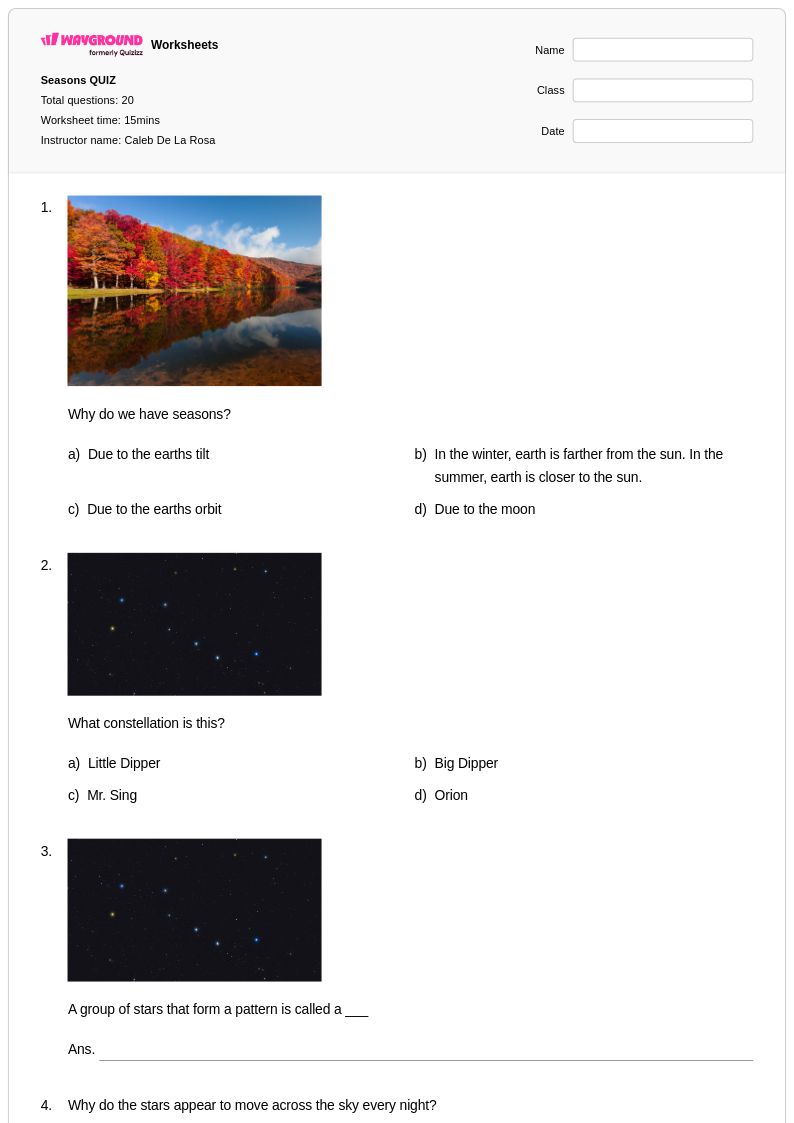
The most widespread misconception is that seasons are caused by Earth's distance from the Sun rather than the tilt of Earth's axis relative to its orbital plane. Students also frequently confuse weather and climate, treating a single day's conditions as evidence of long-term climate patterns. Another common error is believing that it is cold in winter because the Sun is farther away, when in fact the Southern Hemisphere experiences summer during the Northern Hemisphere's winter, directly contradicting the distance explanation.
How do I assess student understanding of weather patterns and seasonal changes?
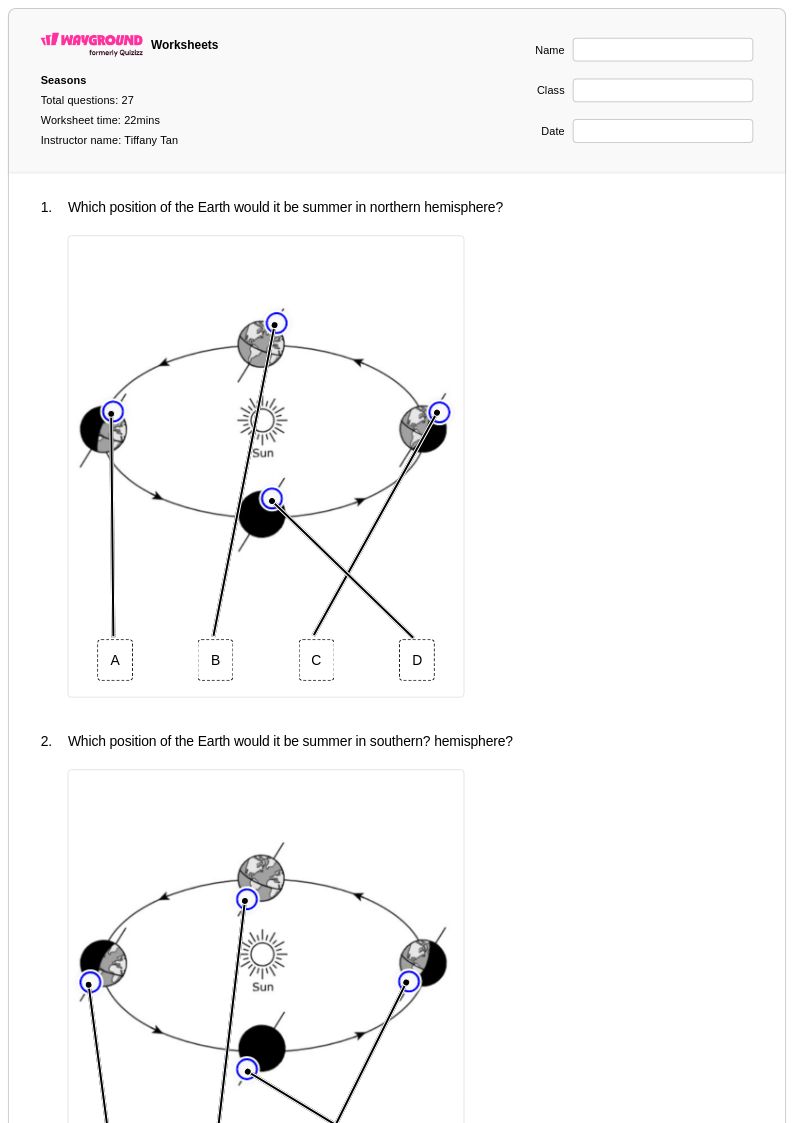
Use worksheets that present weather data -- such as a week of temperature and precipitation readings -- and require students to identify patterns, predict the next day's conditions, and explain their reasoning. Questions that provide a diagram of Earth's orbit and ask students to identify which position corresponds to summer or winter in a specific hemisphere test whether they understand axial tilt rather than relying on the distance misconception. Including items where students must distinguish between weather descriptions and climate descriptions reveals whether they grasp the temporal scale difference.
How do I use weather and seasons worksheets in my classroom?
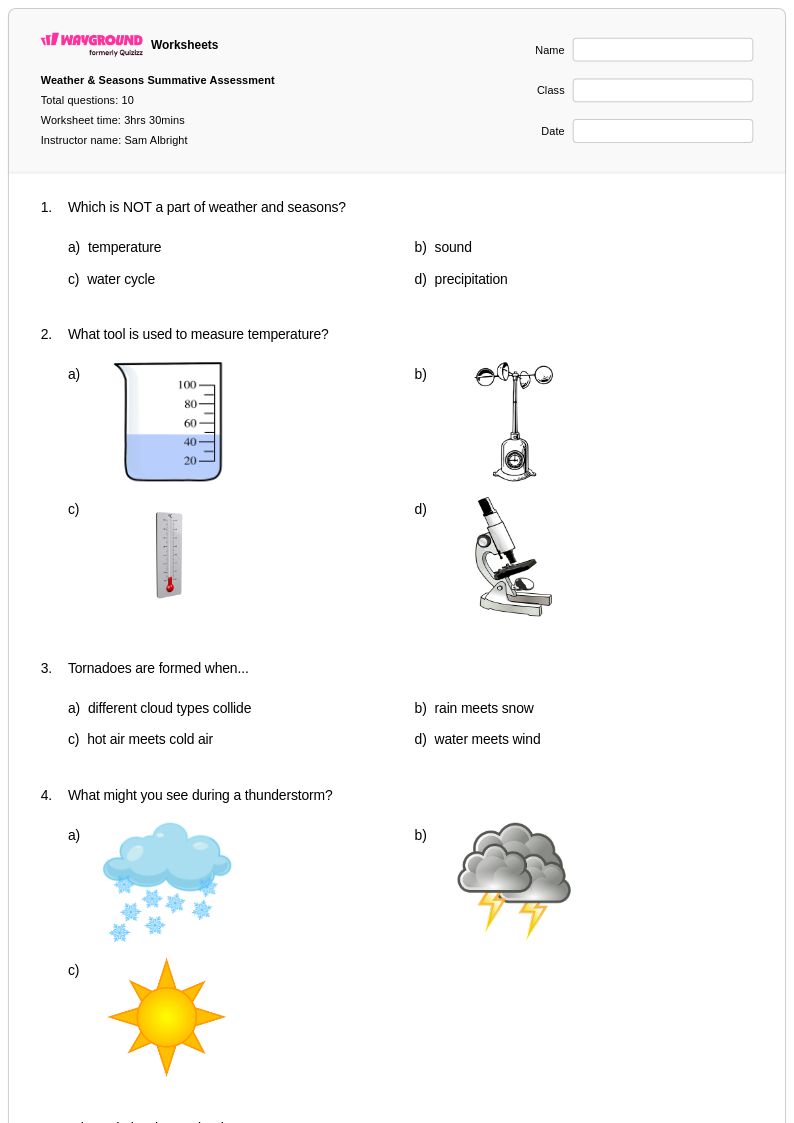
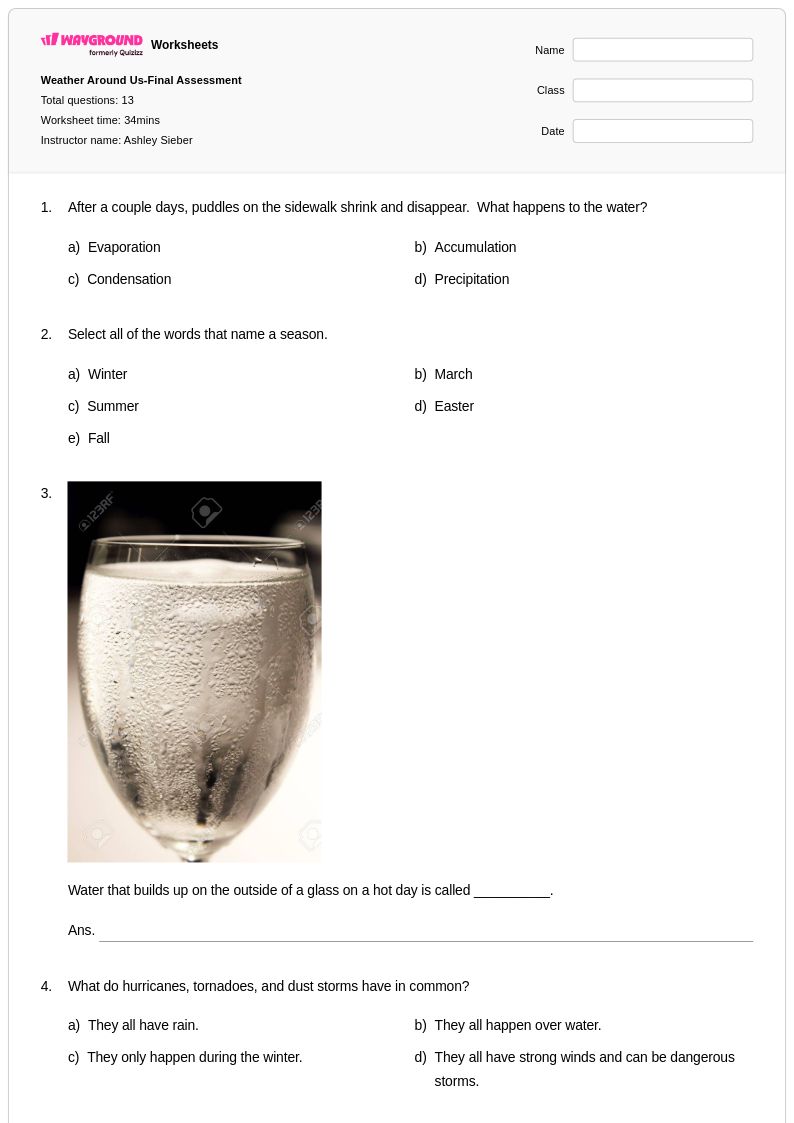
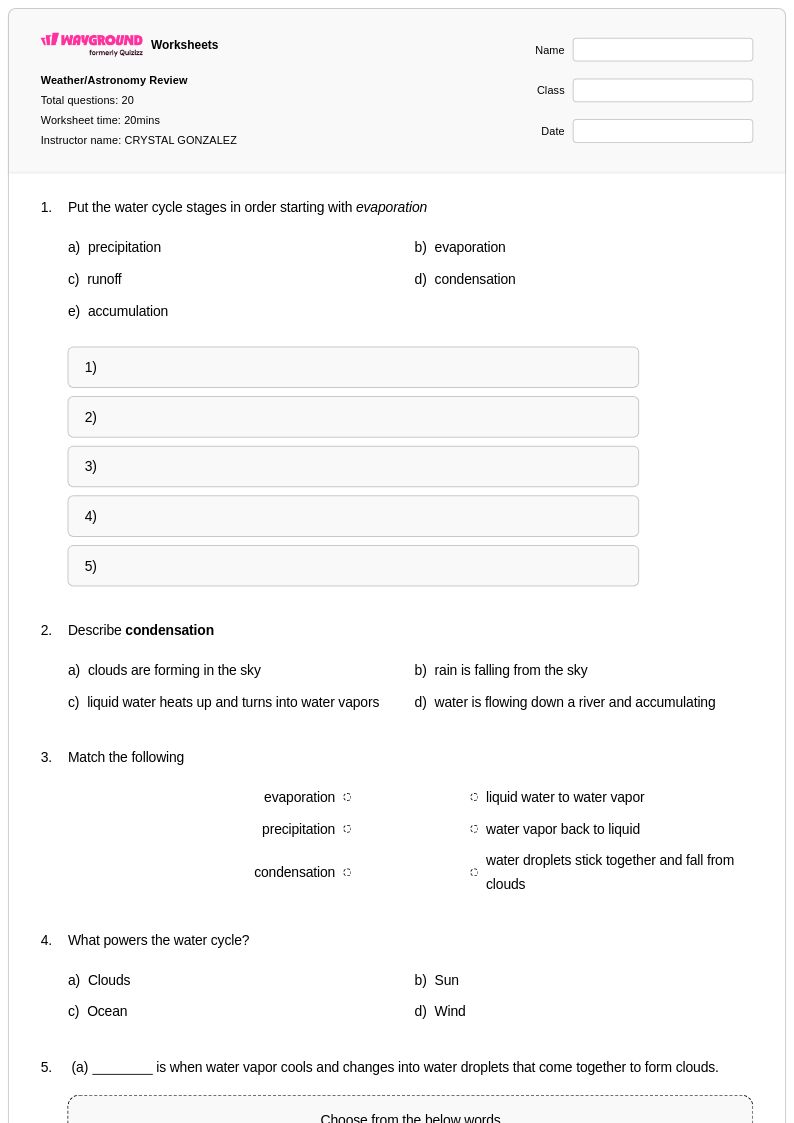
These worksheets are available as printable PDFs for traditional classroom use and in digital formats for technology-integrated learning environments. Use observation-based recording sheets as ongoing daily activities where students track weather over several weeks, building a data set they can later analyze for patterns. Assign weather map reading and seasonal diagram worksheets as guided practice after direct instruction, and use summative assessment worksheets to evaluate understanding of the water cycle, atmospheric pressure, and the axial tilt model of seasons.
How do I differentiate weather and seasons instruction across grade levels?
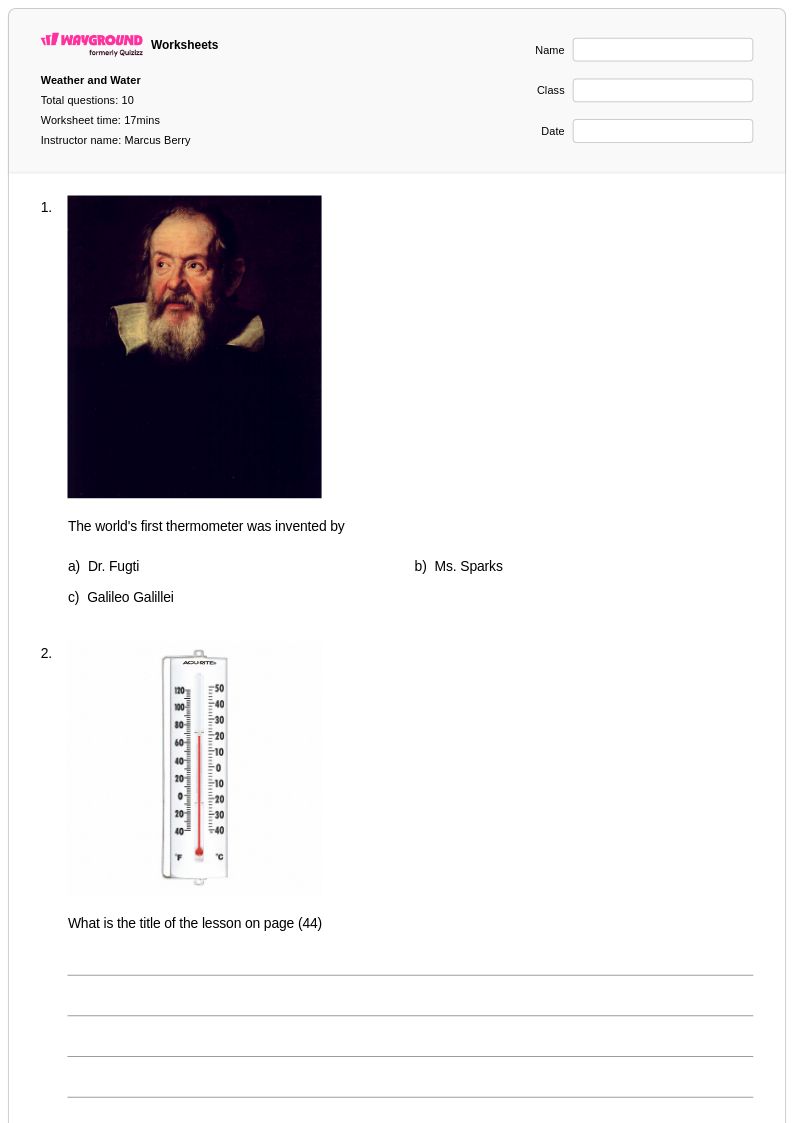
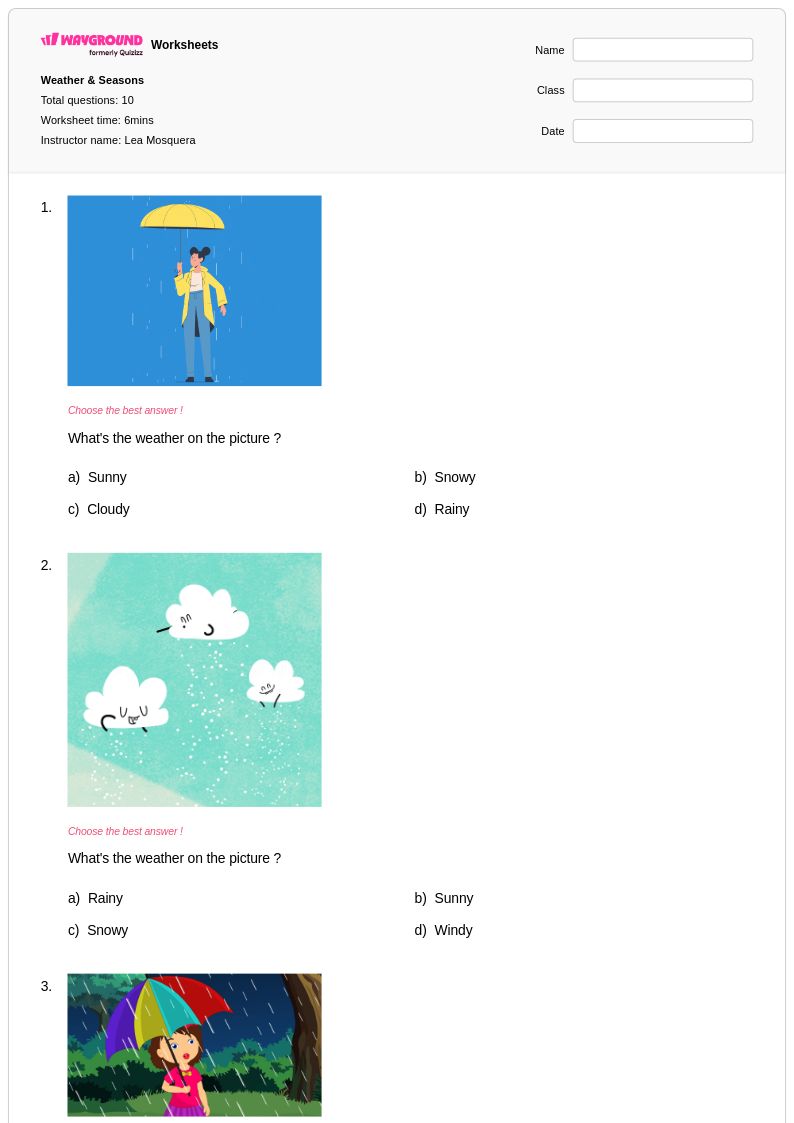
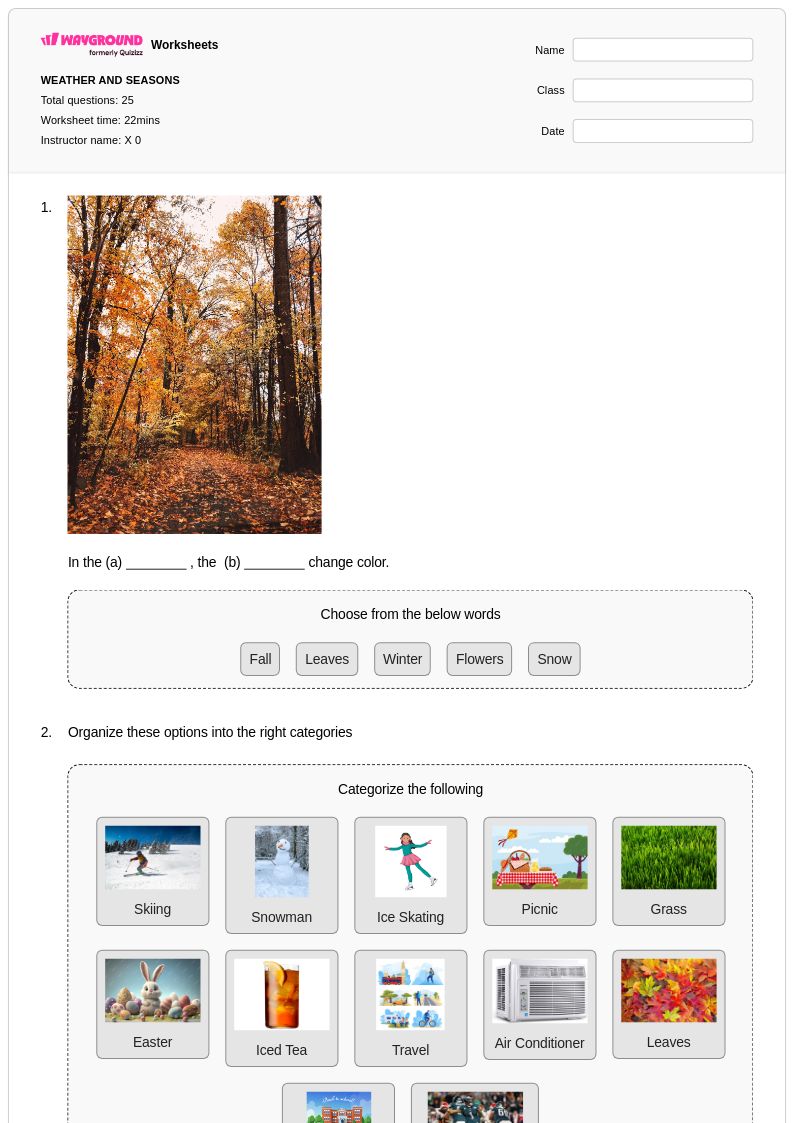
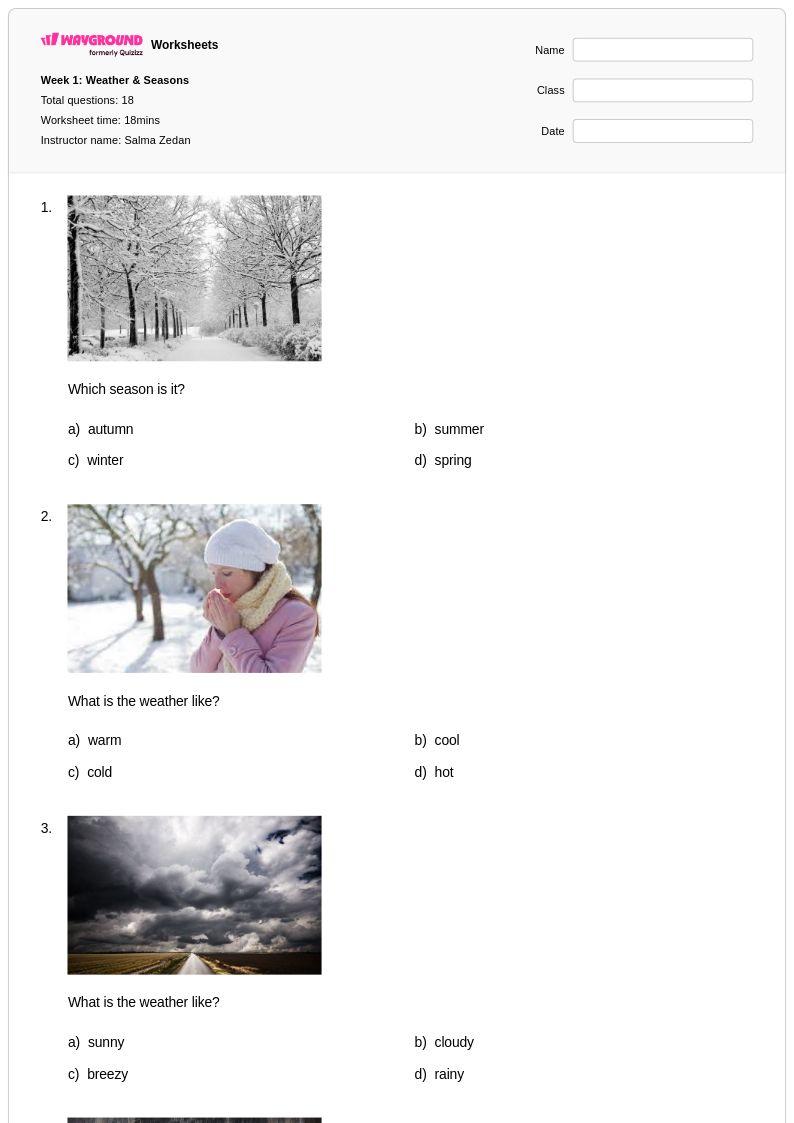
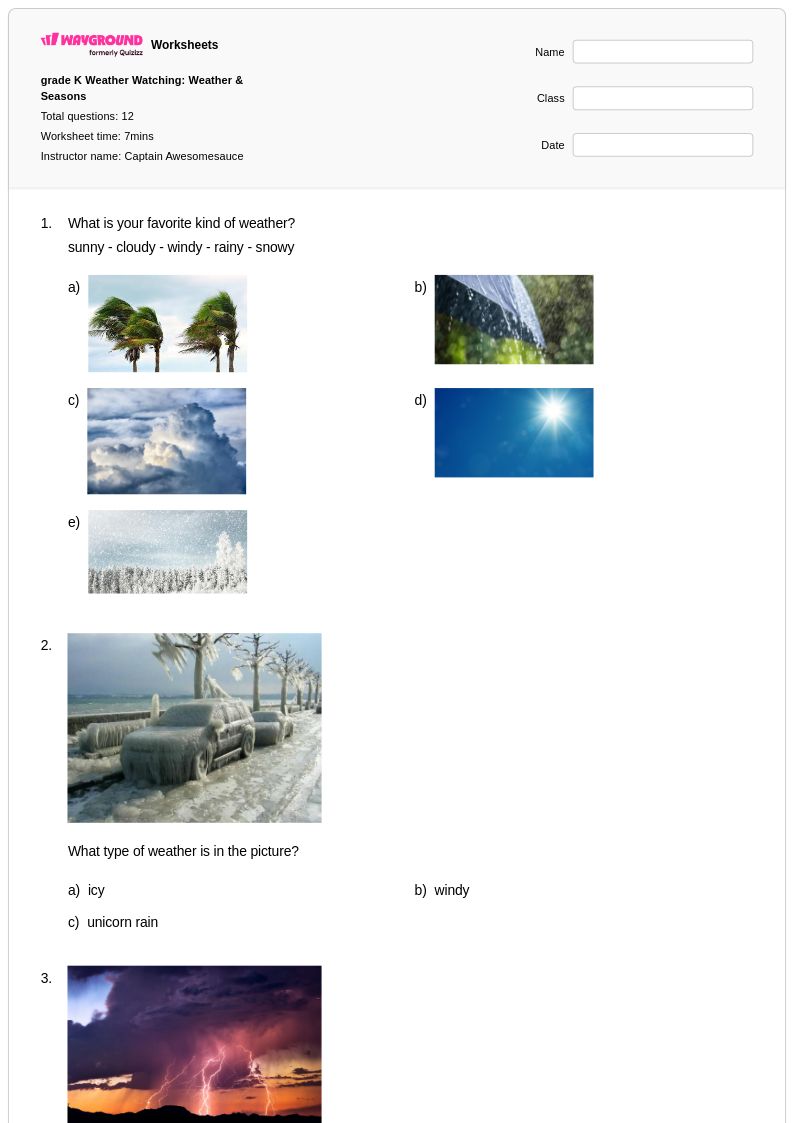
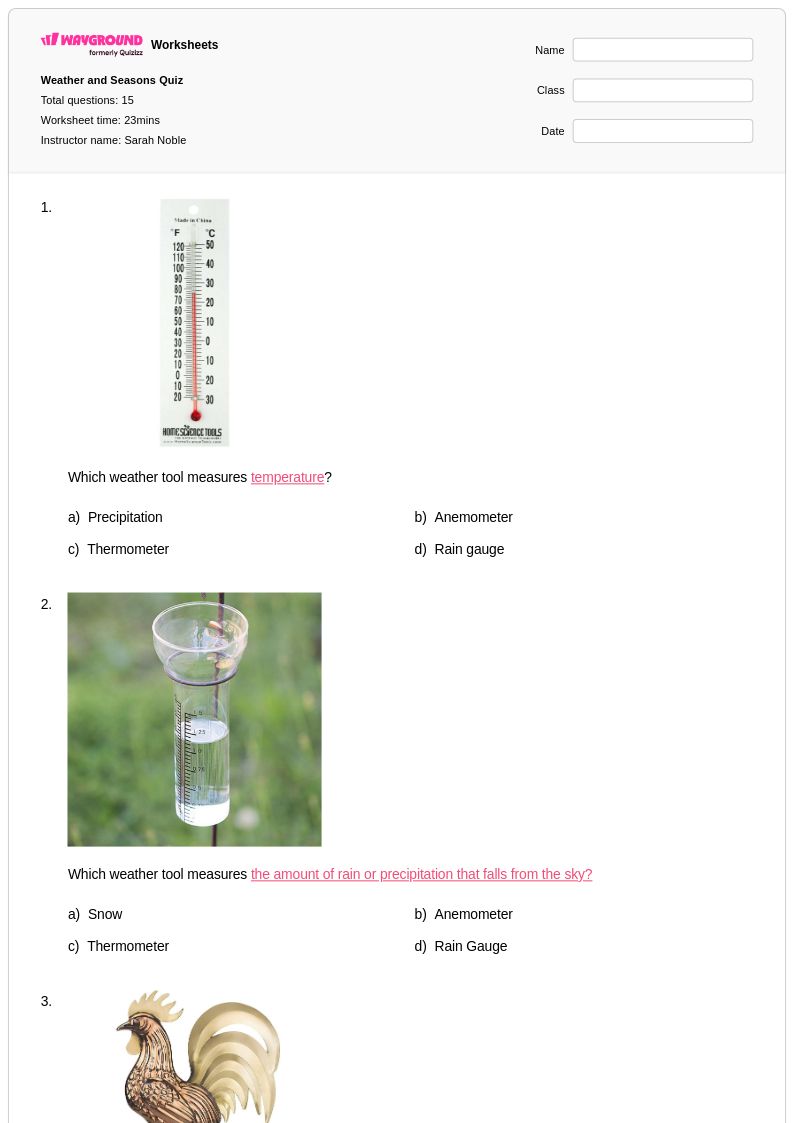
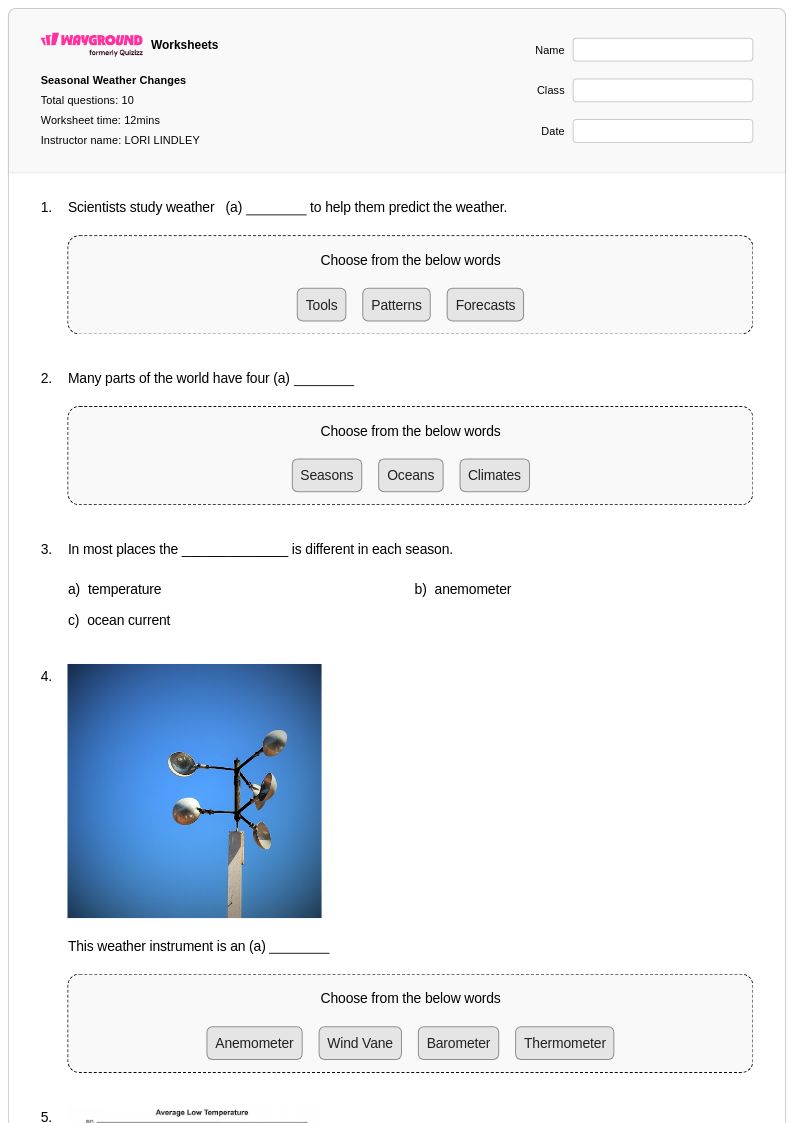
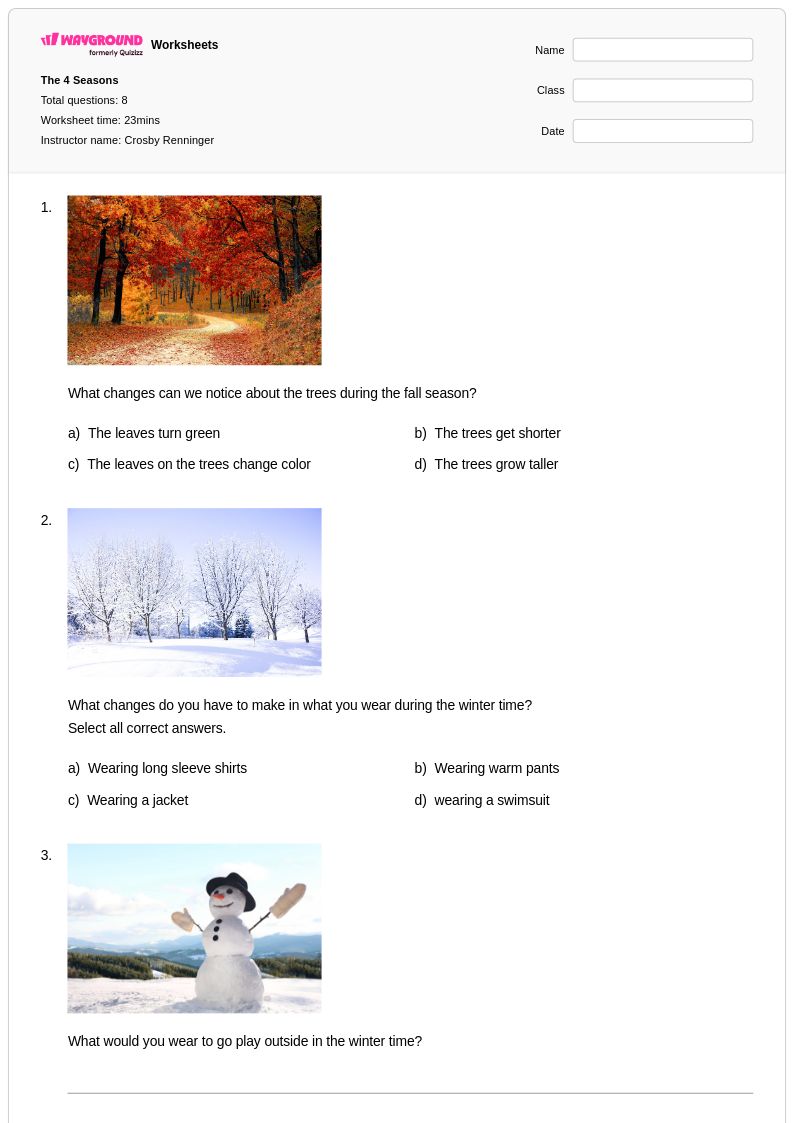
For kindergarten through grade 2, use worksheets with picture-based sorting activities where students match clothing and activities to seasons and identify basic weather types like sunny, rainy, snowy, and windy. Grades 3-5 benefit from worksheets that introduce weather instruments, the water cycle, and data recording tables that require students to measure and compare conditions over time. For grades 6-8 and above, assign worksheets covering atmospheric pressure, weather fronts, global wind patterns, and the relationship between axial tilt and seasonal variation using quantitative data analysis.
What grade levels are weather and seasons worksheets appropriate for?
Weather and seasons worksheets span kindergarten through grade 12, with content complexity scaled at each level. Grades K-2 focus on identifying weather types, dressing for seasons, and basic temperature concepts. Grades 3-5 introduce the water cycle, weather instruments, and the connection between Earth's tilt and seasonal changes. Grades 6-12 cover atmospheric pressure systems, weather front analysis, climatograph interpretation, global wind patterns, and the physics of seasonal variation, aligned to Next Generation Science Standards for Earth and Space Science.