Free Printable Westward Expansion Worksheets for Class 7
Class 7 Westward Expansion worksheets from Wayground provide free printables and practice problems with answer keys to help students explore America's territorial growth, pioneer life, and the impact of frontier settlement through engaging PDF activities.
Explore printable Westward Expansion worksheets for Class 7
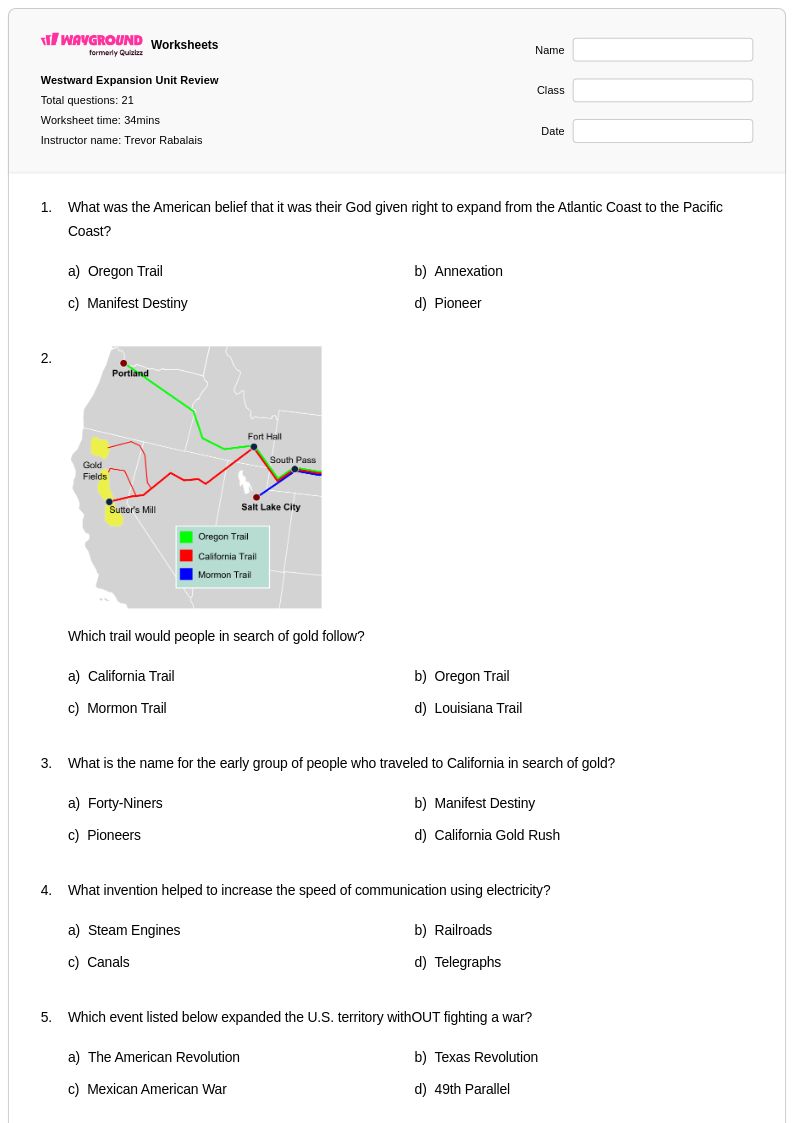
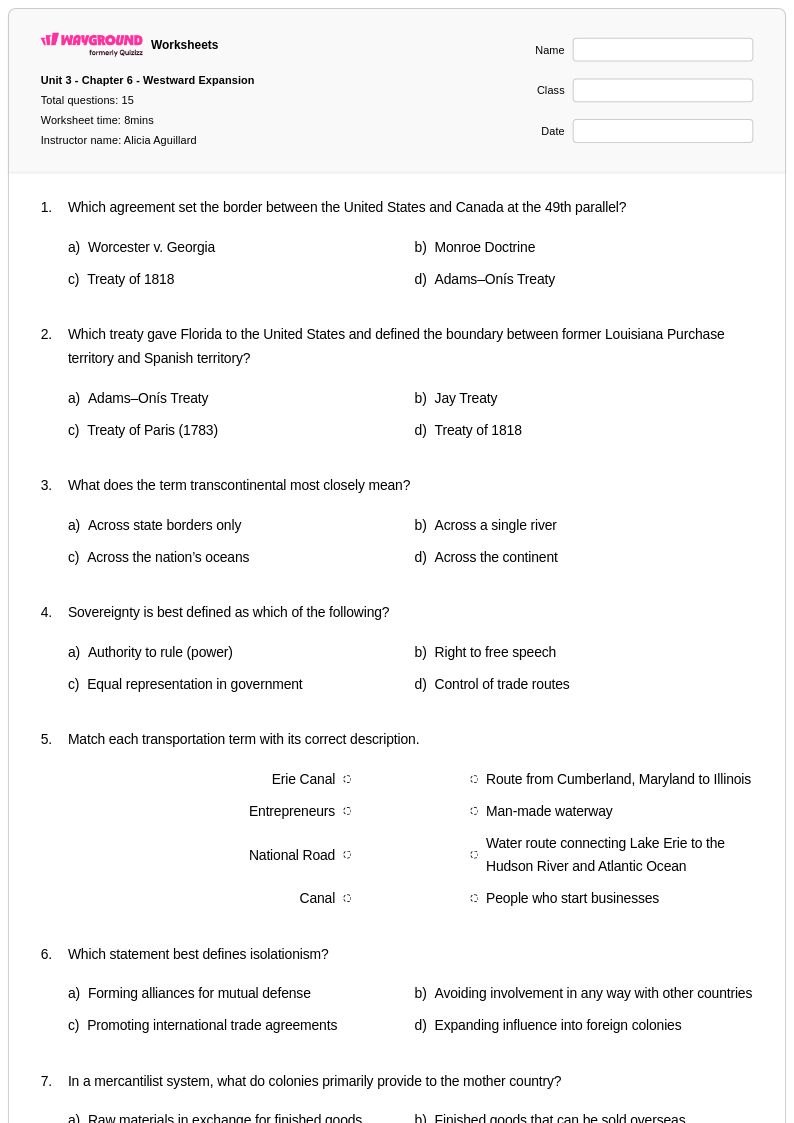
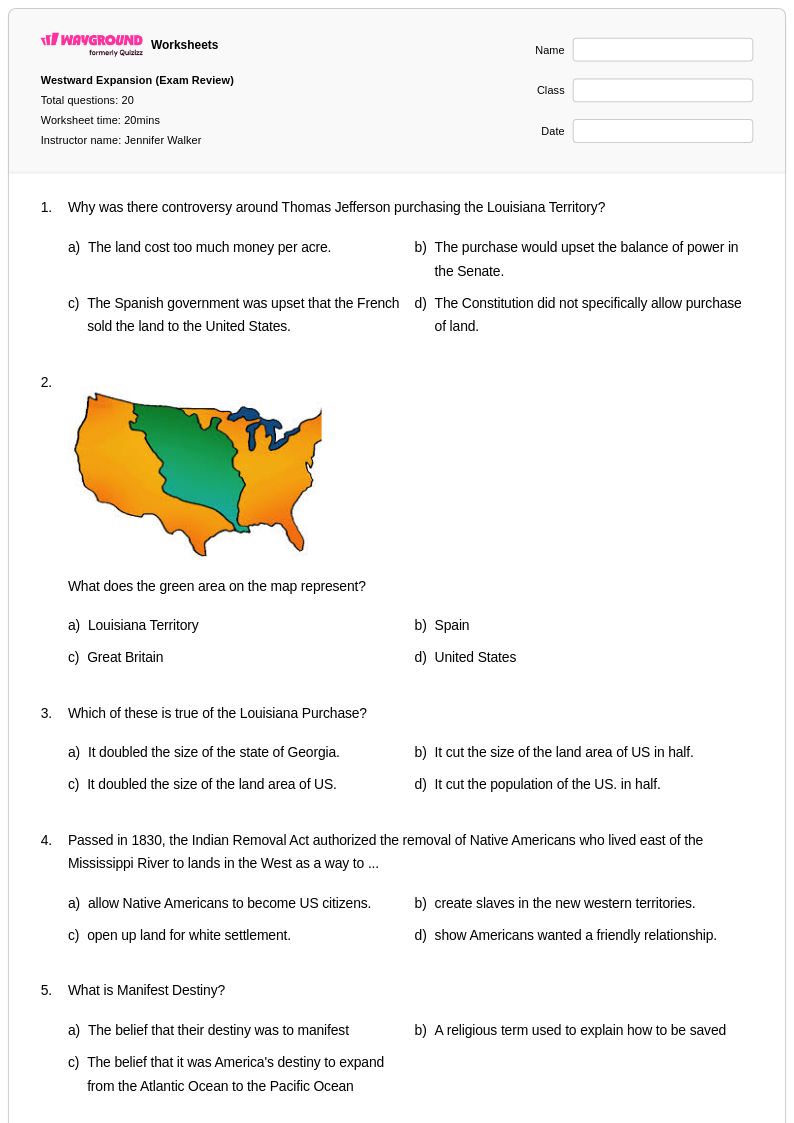
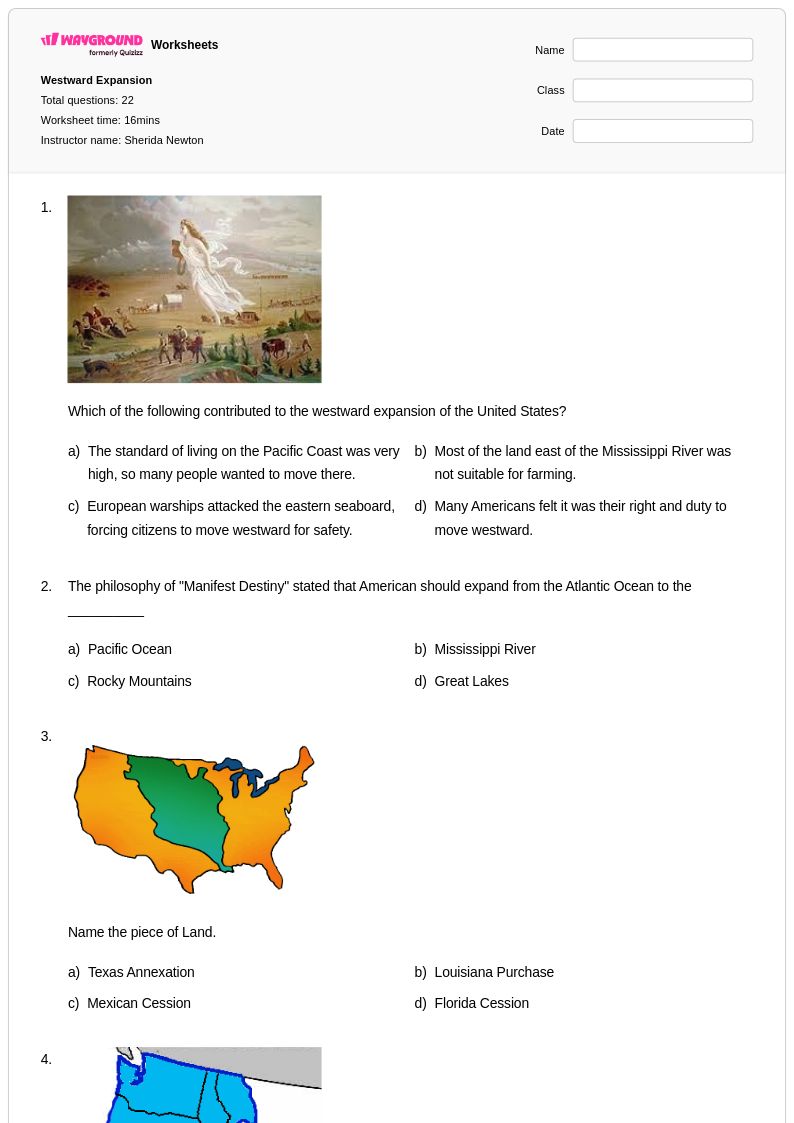
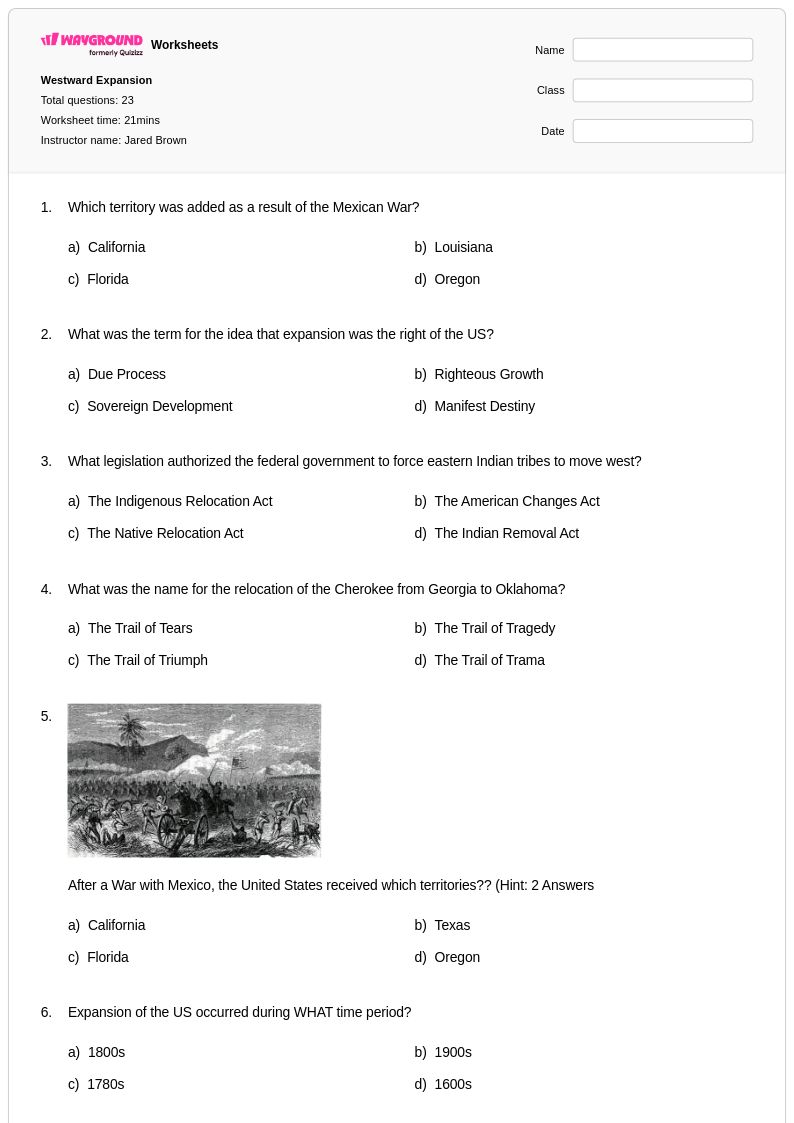
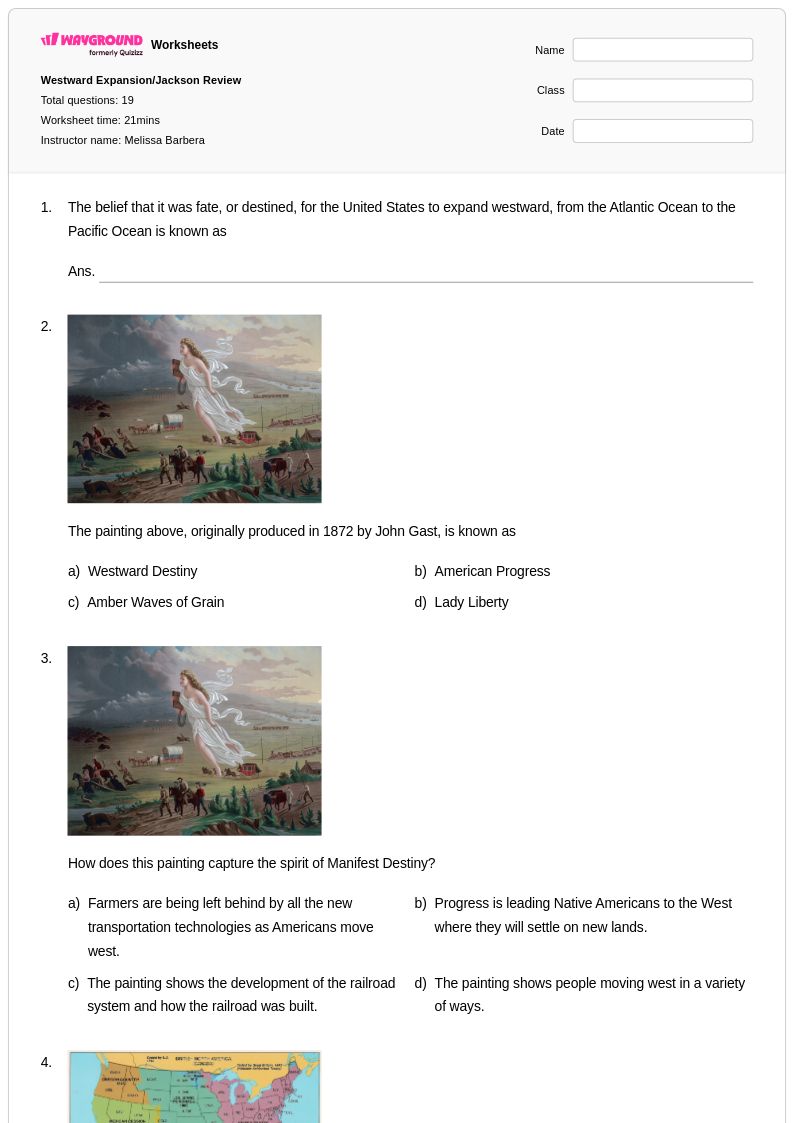
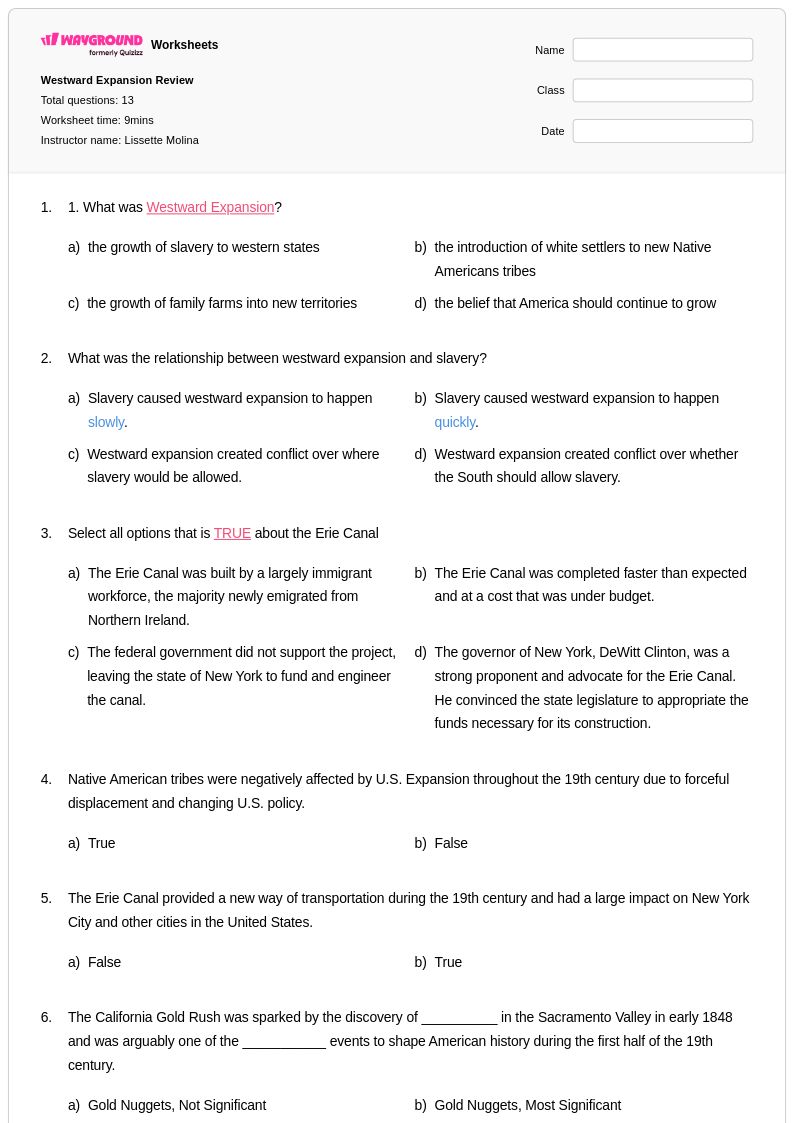
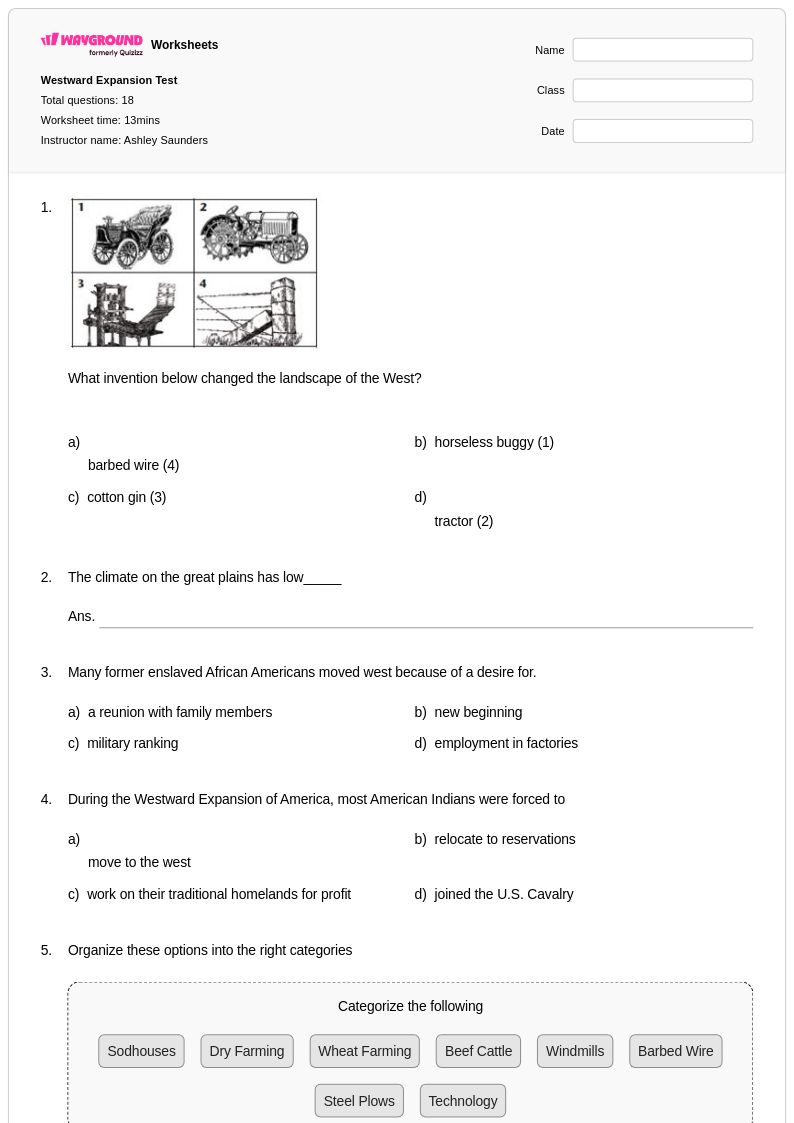
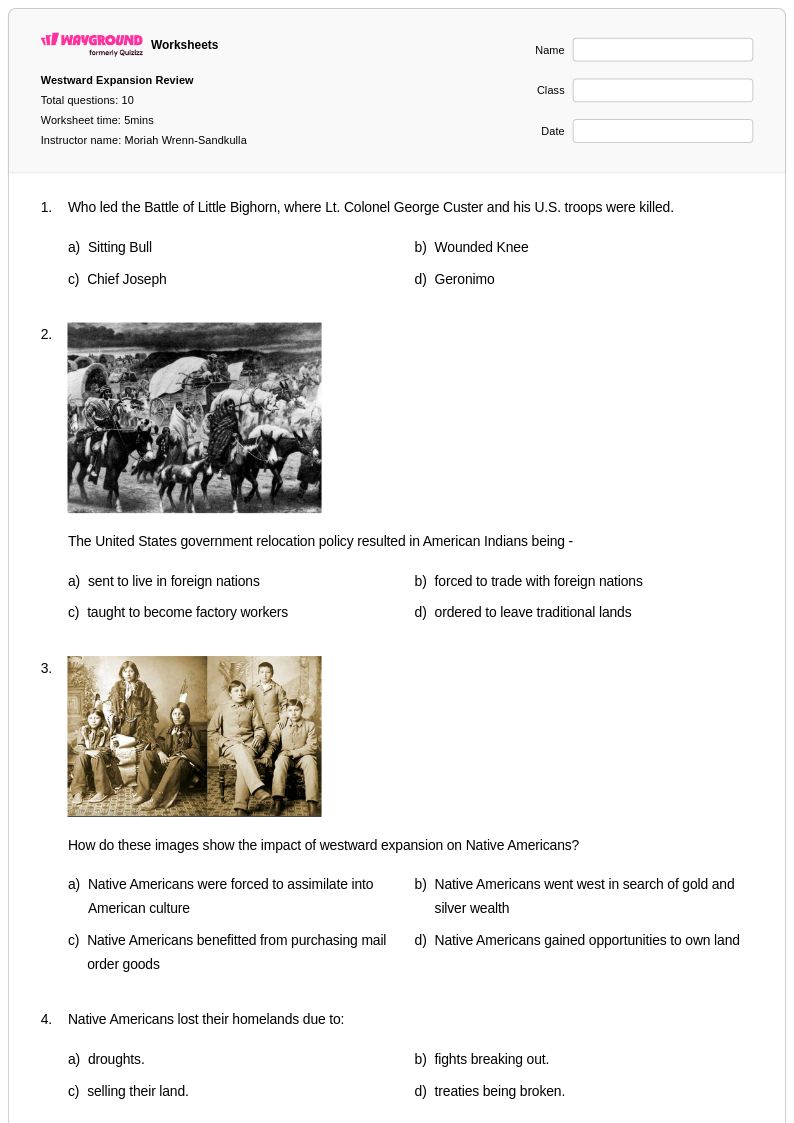
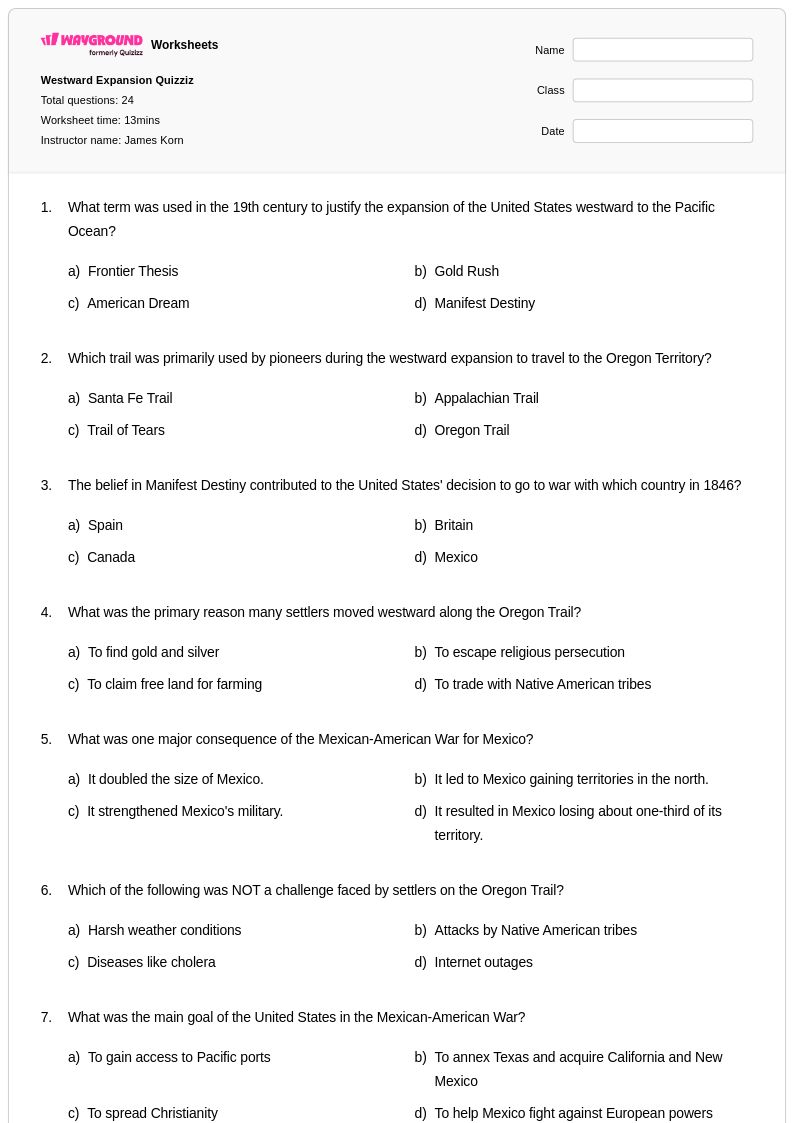
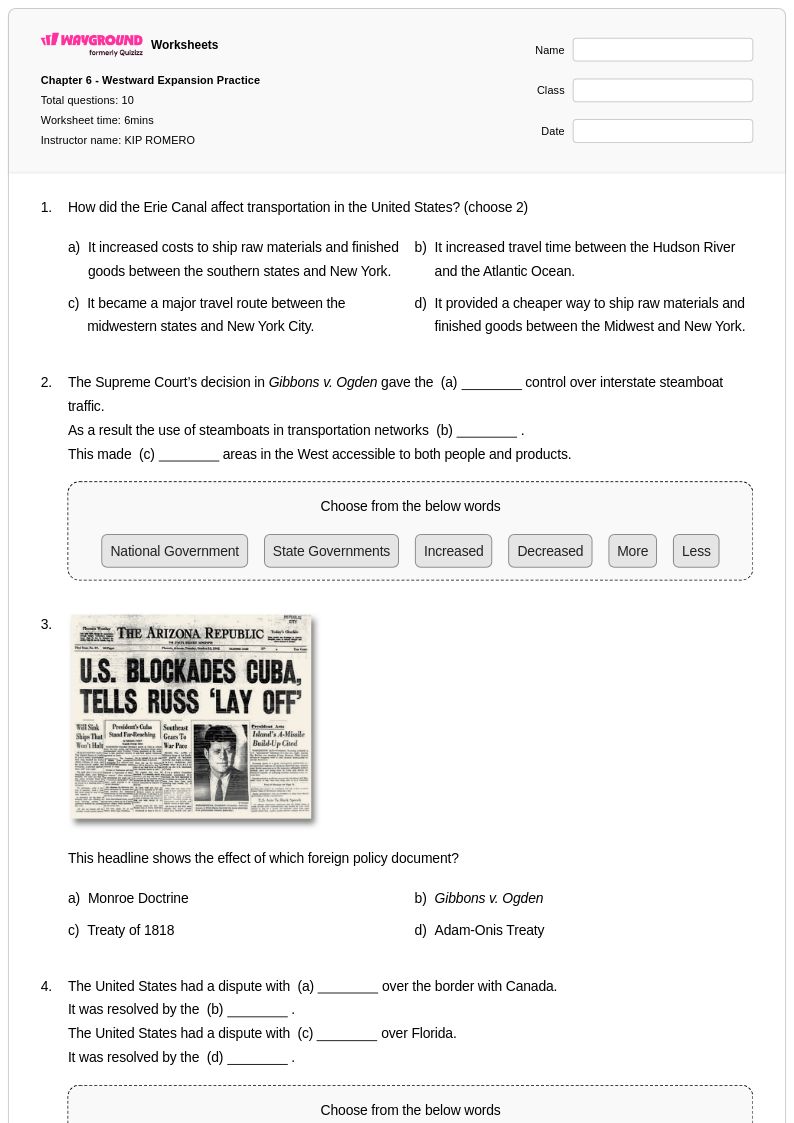
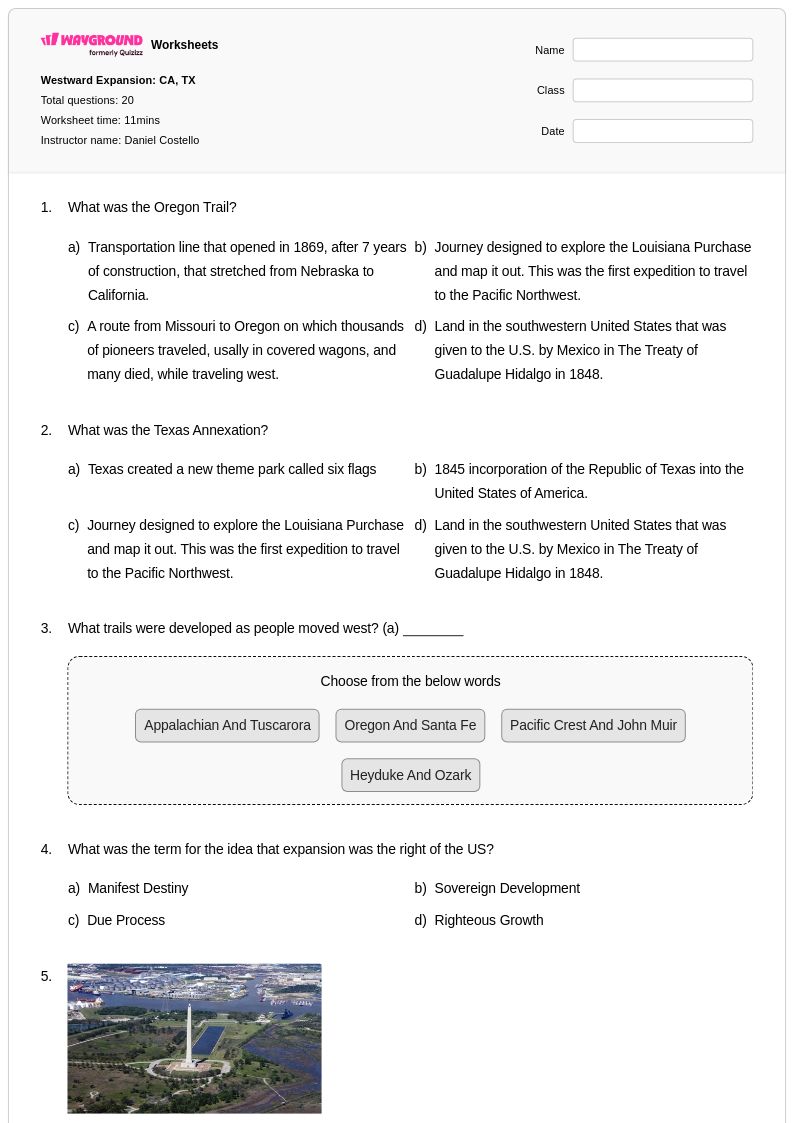
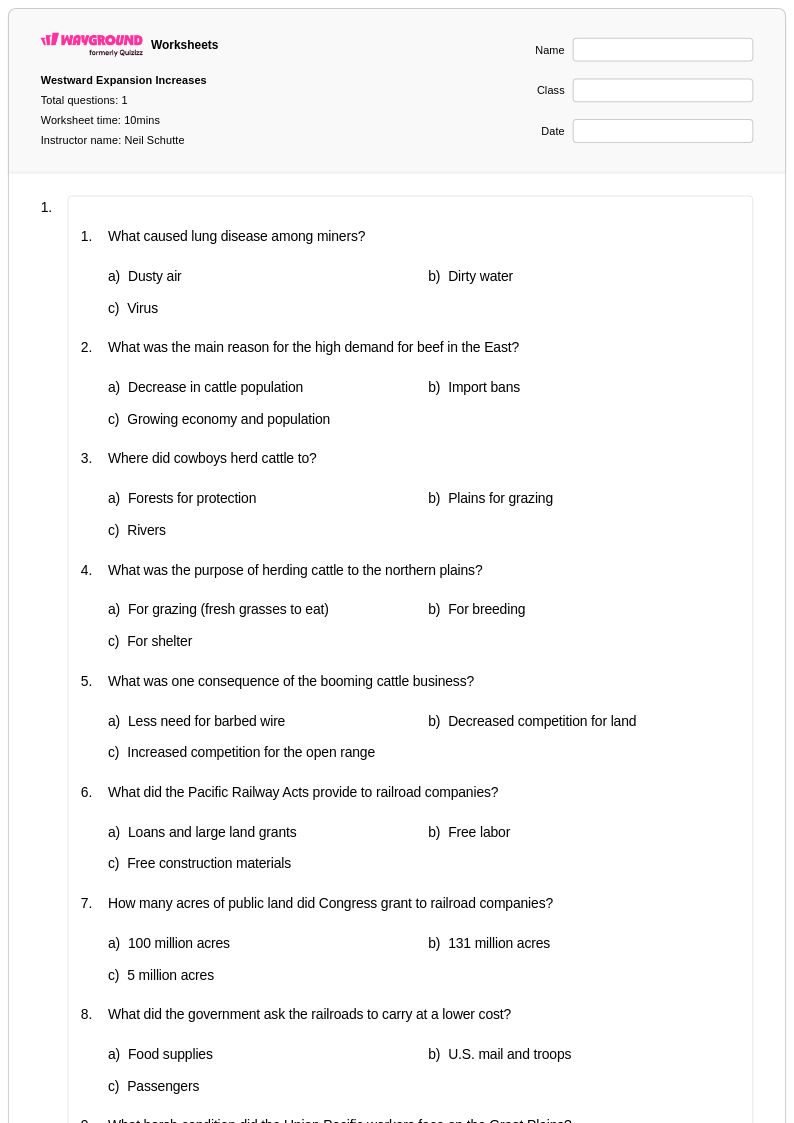
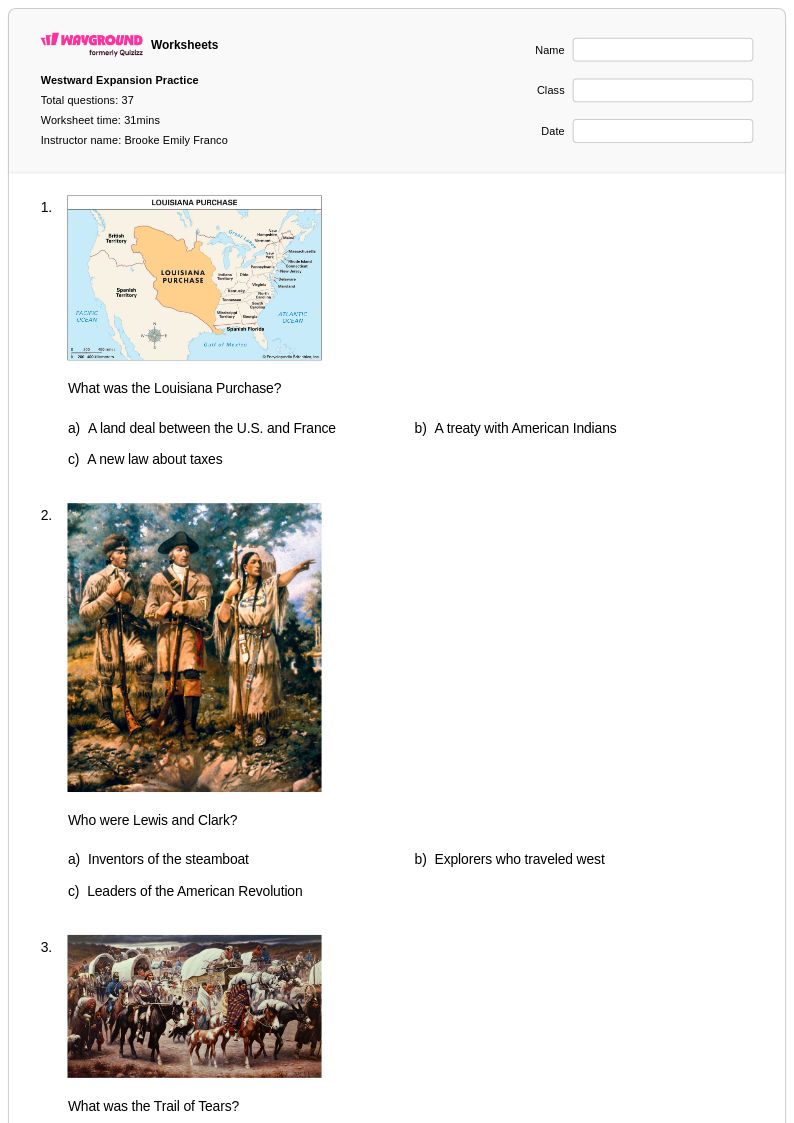
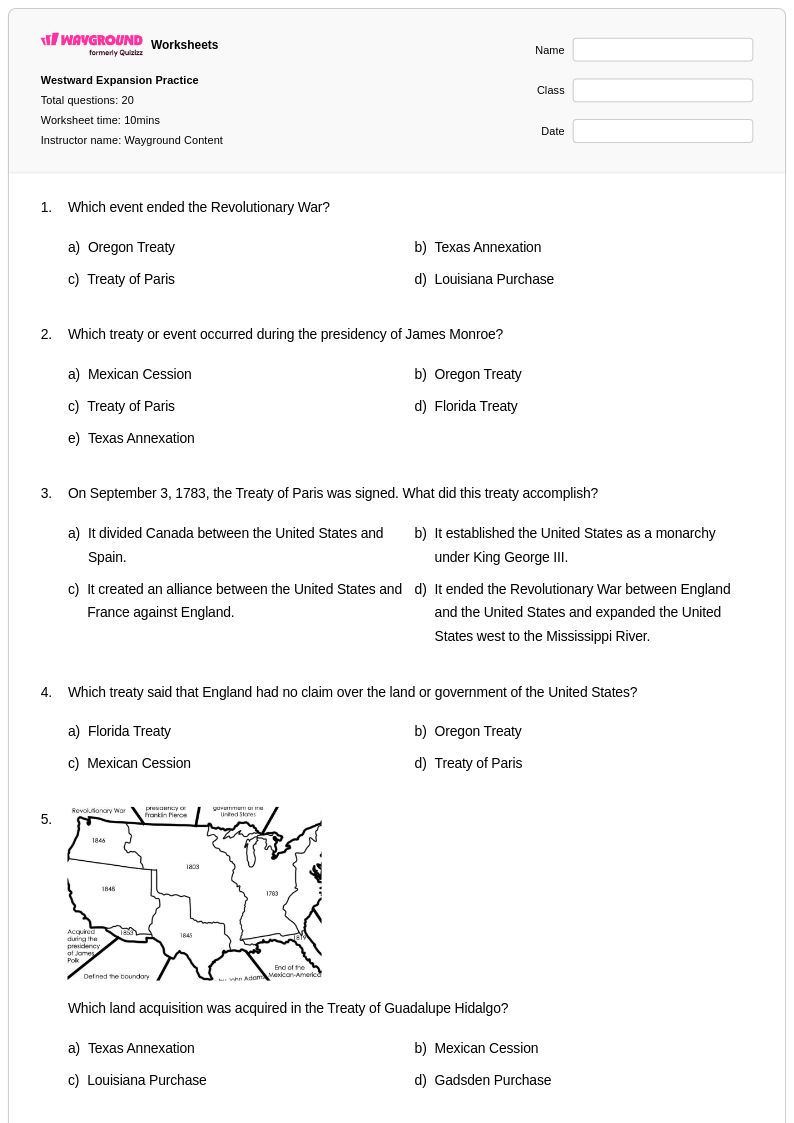
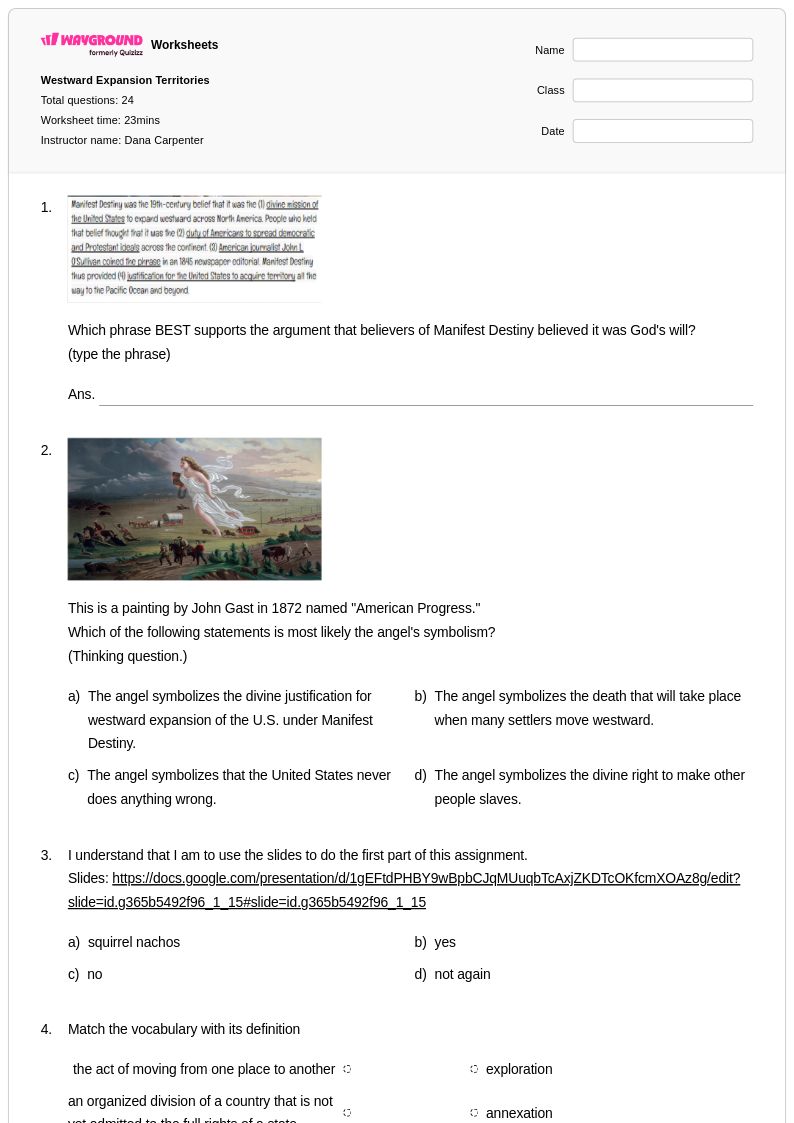
Westward Expansion worksheets for Class 7 students provide comprehensive practice materials that help young historians understand this pivotal period in American history. These educational resources strengthen critical thinking skills as students analyze the causes and consequences of territorial growth, examine the experiences of pioneers and settlers, and evaluate the impact of expansion on Native American communities. Through engaging practice problems that explore topics like the Louisiana Purchase, Oregon Trail, California Gold Rush, and Manifest Destiny, students develop essential analytical skills while mastering key historical concepts. The worksheets feature varied question types and include answer keys to support independent learning, with many resources available as free printables in convenient pdf format for classroom use.
Wayground, formerly Quizizz, supports educators with an extensive collection of teacher-created Westward Expansion worksheet resources drawn from millions of high-quality materials developed by experienced classroom professionals. The platform's robust search and filtering capabilities allow teachers to quickly locate age-appropriate Class 7 content that aligns with state and national social studies standards, ensuring instructional relevance and academic rigor. Flexible customization tools enable educators to modify existing worksheets or create differentiated versions that meet diverse learning needs, supporting both remediation for struggling students and enrichment opportunities for advanced learners. Available in both printable and digital formats including downloadable pdf files, these versatile resources streamline lesson planning while providing targeted skill practice that reinforces understanding of this transformative era in United States history.
FAQs
How do I teach Westward Expansion in a way that feels relevant to students?
Grounding Westward Expansion in competing perspectives makes it more meaningful for students. Rather than framing the era only as progress, effective instruction examines manifest destiny alongside the forced displacement of Native American populations, the hardships of pioneer life, and the economic motivations behind events like the California Gold Rush. Using primary source documents, maps of territorial acquisitions, and first-person accounts helps students analyze cause-and-effect relationships across multiple groups affected by expansion.
What are the most important concepts students should understand about Westward Expansion?
Students should understand manifest destiny as the ideological driver of U.S. territorial growth from the early 1800s through the late 19th century, including how it was used to justify policies that displaced Native American communities. Key events to cover include the Louisiana Purchase, the California Gold Rush, the construction of the transcontinental railroad, and major treaties and land acquisitions that reshaped the continent. Connecting these events to their human consequences across different groups gives students a complete picture of the era.
What kinds of practice activities help students learn Westward Expansion content?
Map-based activities are especially effective, asking students to trace territorial acquisitions and identify the routes of key migration trails. Analyzing primary source documents, such as pioneer journals or government proclamations about manifest destiny, builds historical thinking skills alongside content knowledge. Activities that ask students to compare the experiences of pioneers, miners, and indigenous peoples develop critical thinking and prevent students from treating Westward Expansion as a single-narrative event.
What mistakes do students commonly make when studying Westward Expansion?
The most common misconception is treating Westward Expansion as an uncomplicated story of progress, without accounting for the violent displacement of Native American populations or the difficult realities of pioneer life. Students also frequently confuse the sequence of major events, conflating the California Gold Rush, the Homestead Act, and the completion of the transcontinental railroad as simultaneous rather than sequential. Another error is misunderstanding manifest destiny as inevitable or universally accepted, when in fact it was a contested political ideology with vocal critics.
How do I use Westward Expansion worksheets effectively in my classroom?
Westward Expansion worksheets on Wayground are available as printable PDFs for traditional classroom distribution and in digital formats for technology-integrated lessons, and can also be hosted as a quiz directly on the Wayground platform. Use map and primary source worksheets as structured practice during or after direct instruction to reinforce key concepts like manifest destiny and territorial growth. Digital formats are especially useful for assigning independent practice or review, while printable versions work well for in-class document analysis and group activities.
How do I support students who struggle with the complexity of Westward Expansion history?
Breaking the era into discrete, sequenced events helps struggling students build a mental timeline before analyzing broader themes like manifest destiny or Native American displacement. Wayground supports additional accommodations for individual students, including read-aloud functionality for primary source texts, reduced answer choices to lower cognitive load on assessments, and extended time settings that can be configured per student. These accommodations can be assigned alongside default settings for the rest of the class, so differentiation happens without singling students out.