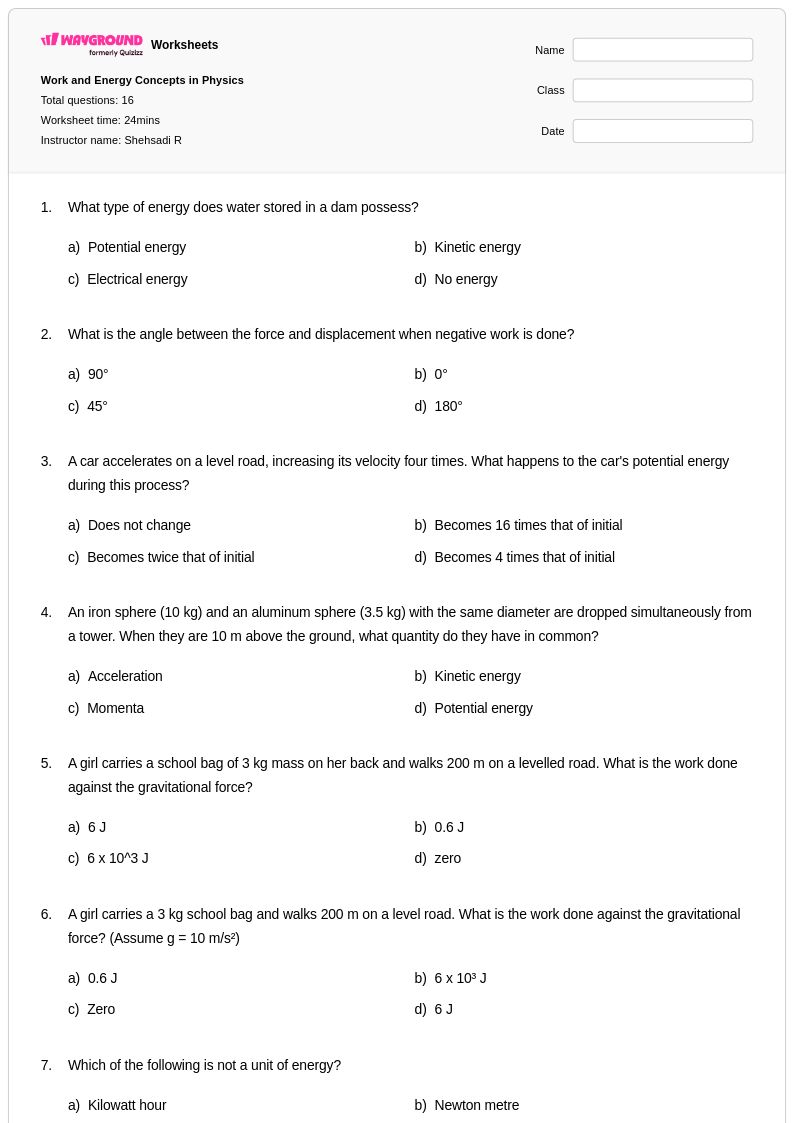
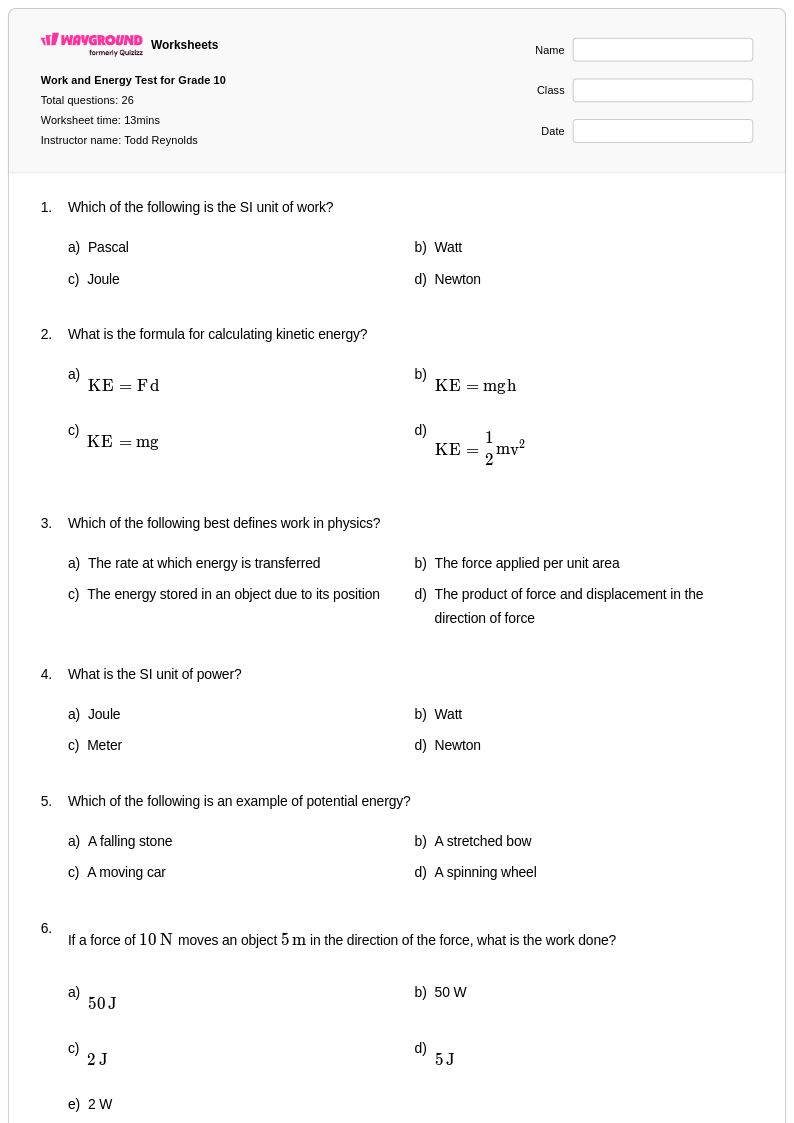
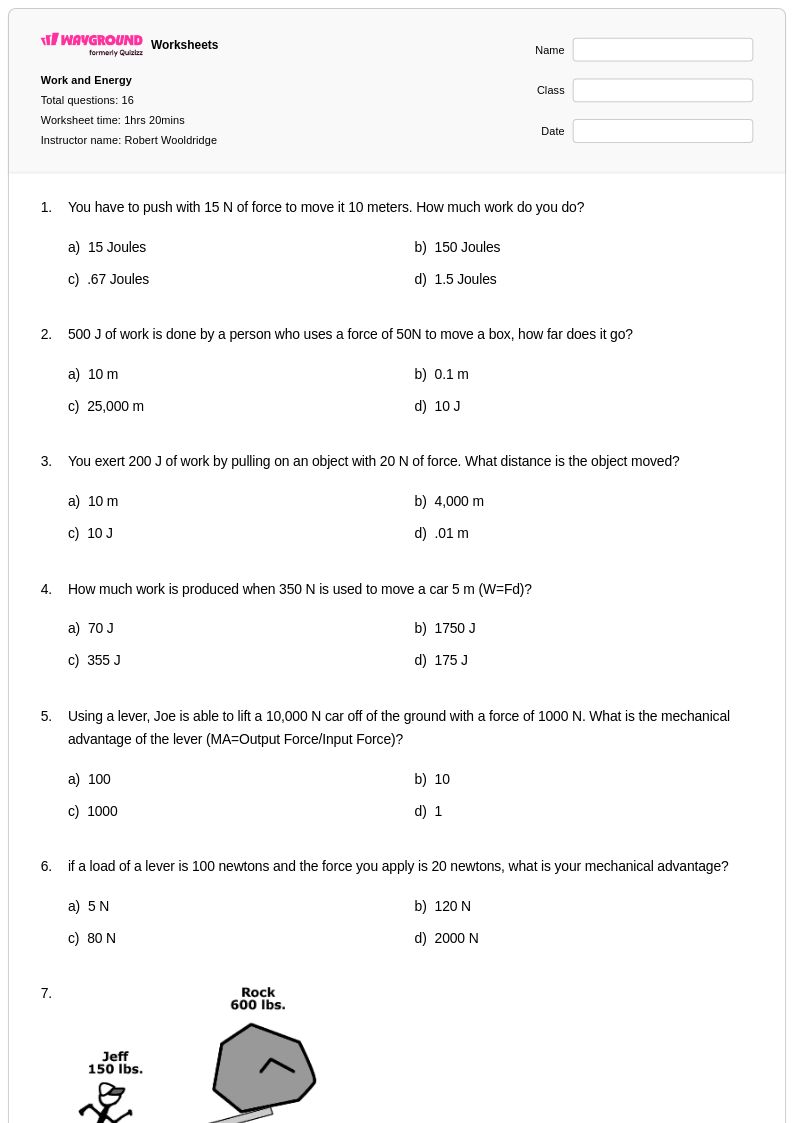
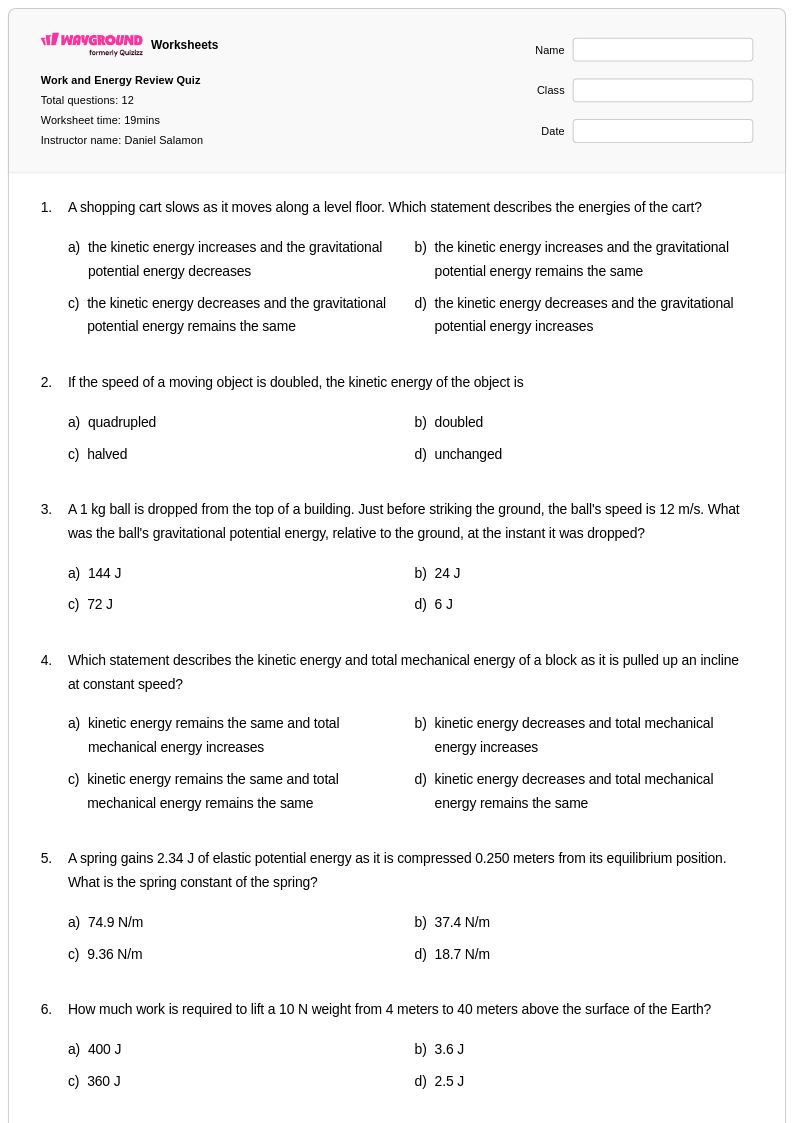
Free Printable Work and Energy Worksheets for Class 10
Enhance Class 10 physics understanding with Wayground's comprehensive work and energy worksheets, featuring printable PDFs, free practice problems, and complete answer keys to master energy transformations and work calculations.
Explore printable Work and Energy worksheets for Class 10
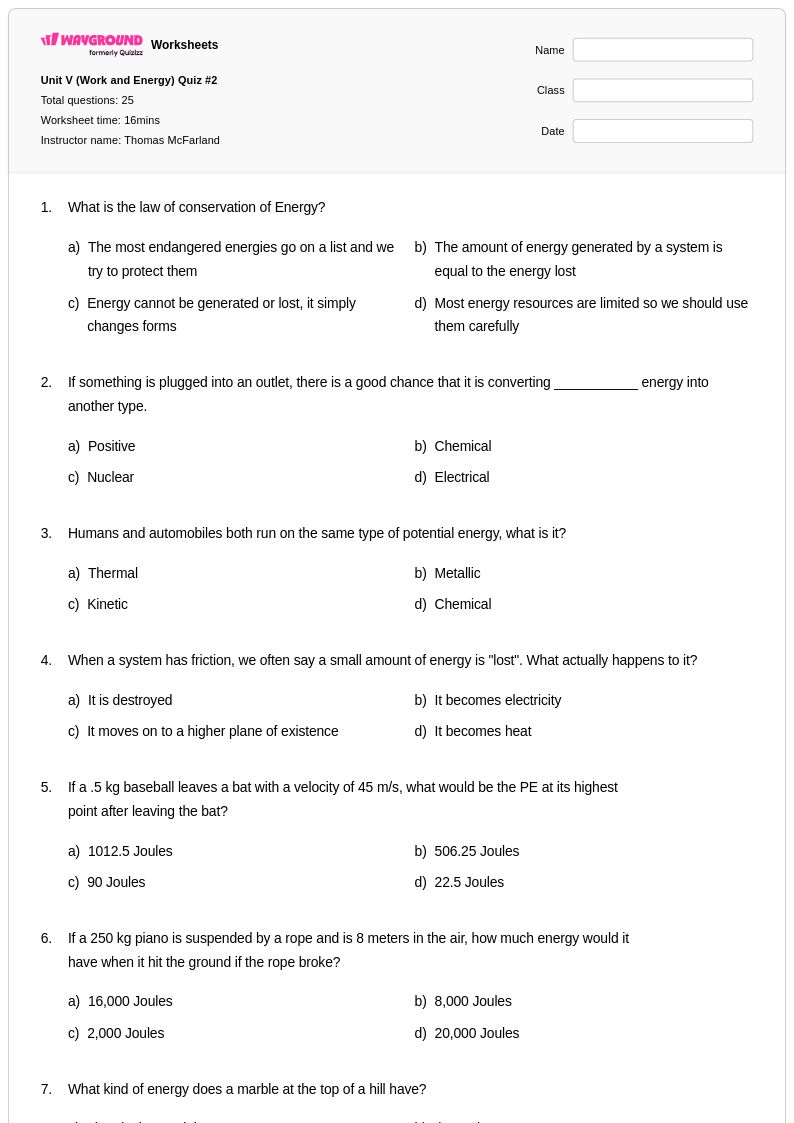
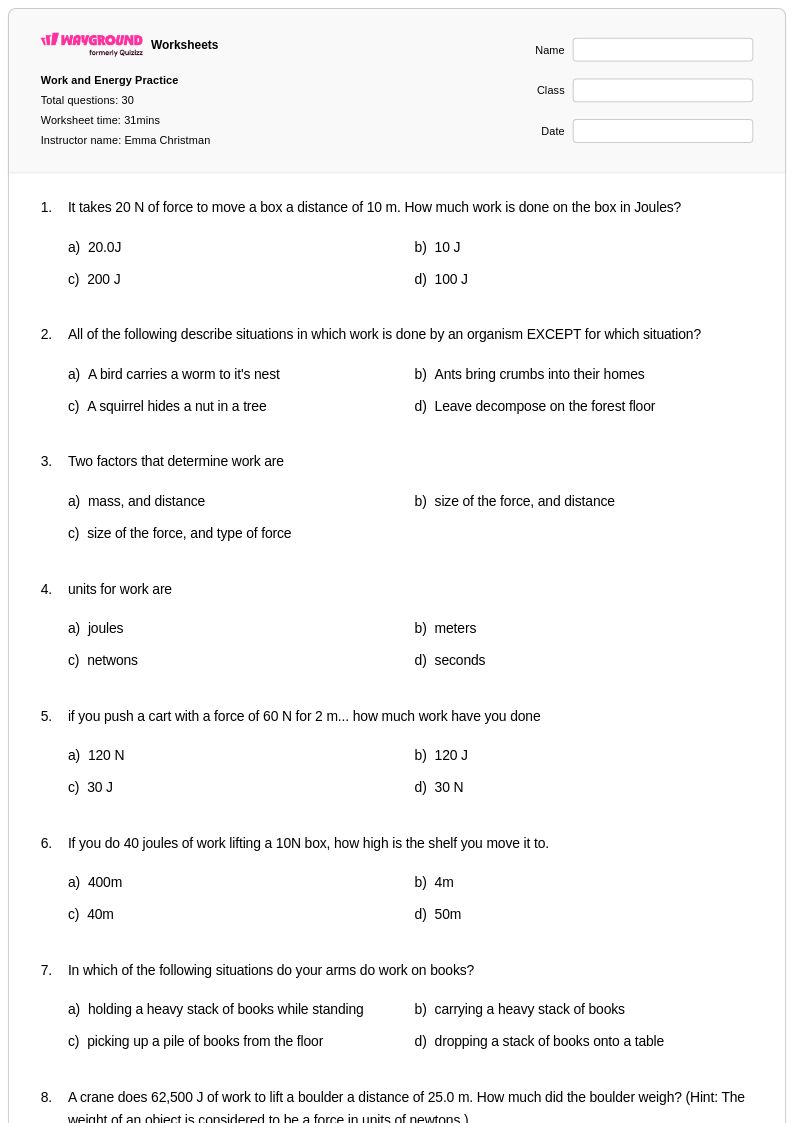
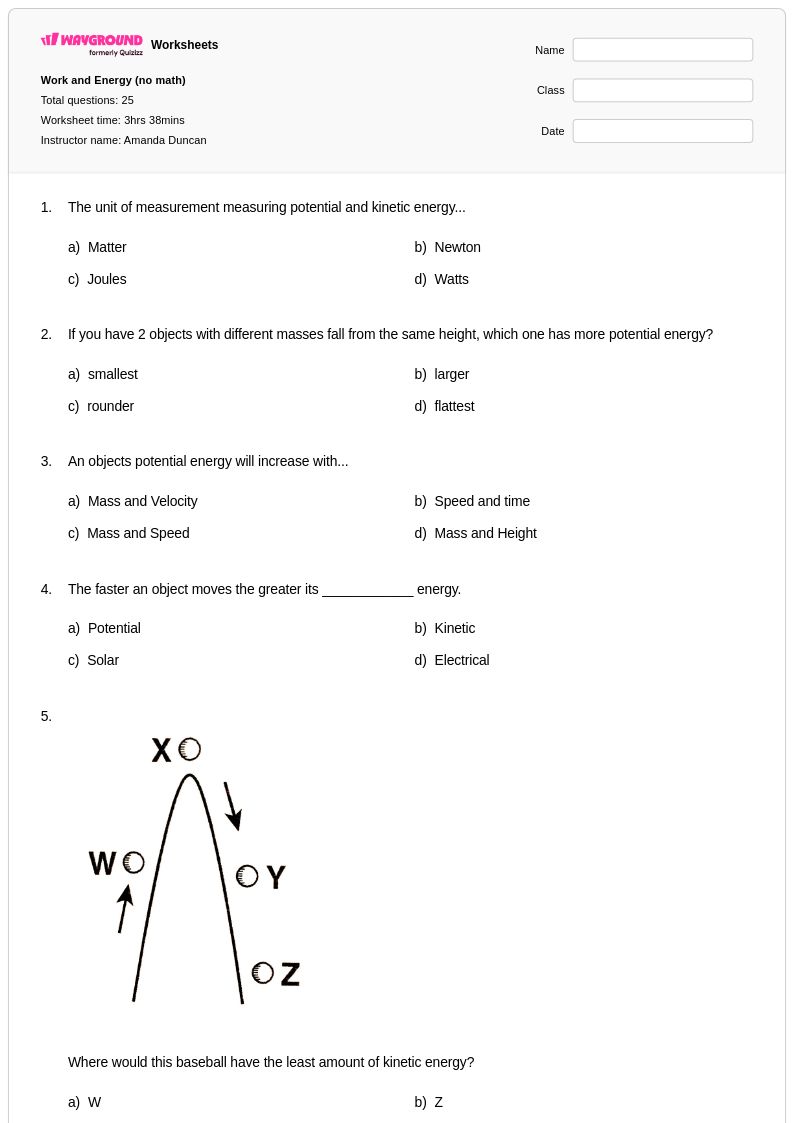
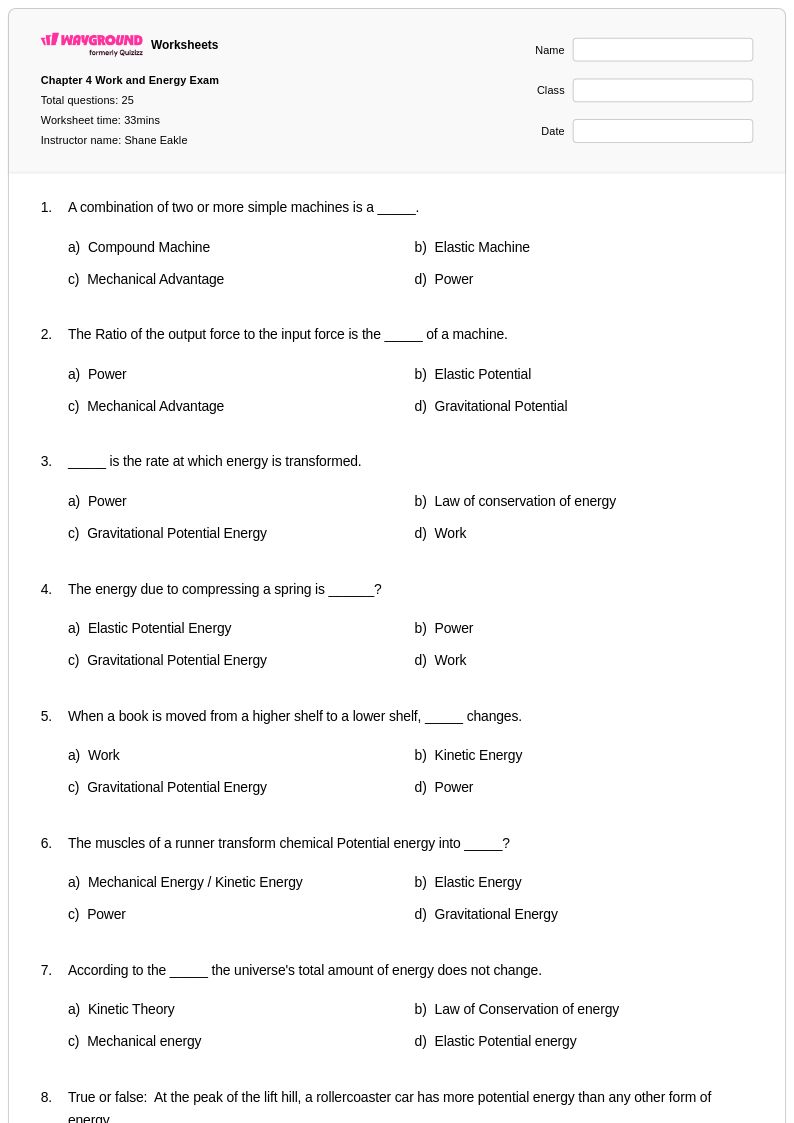
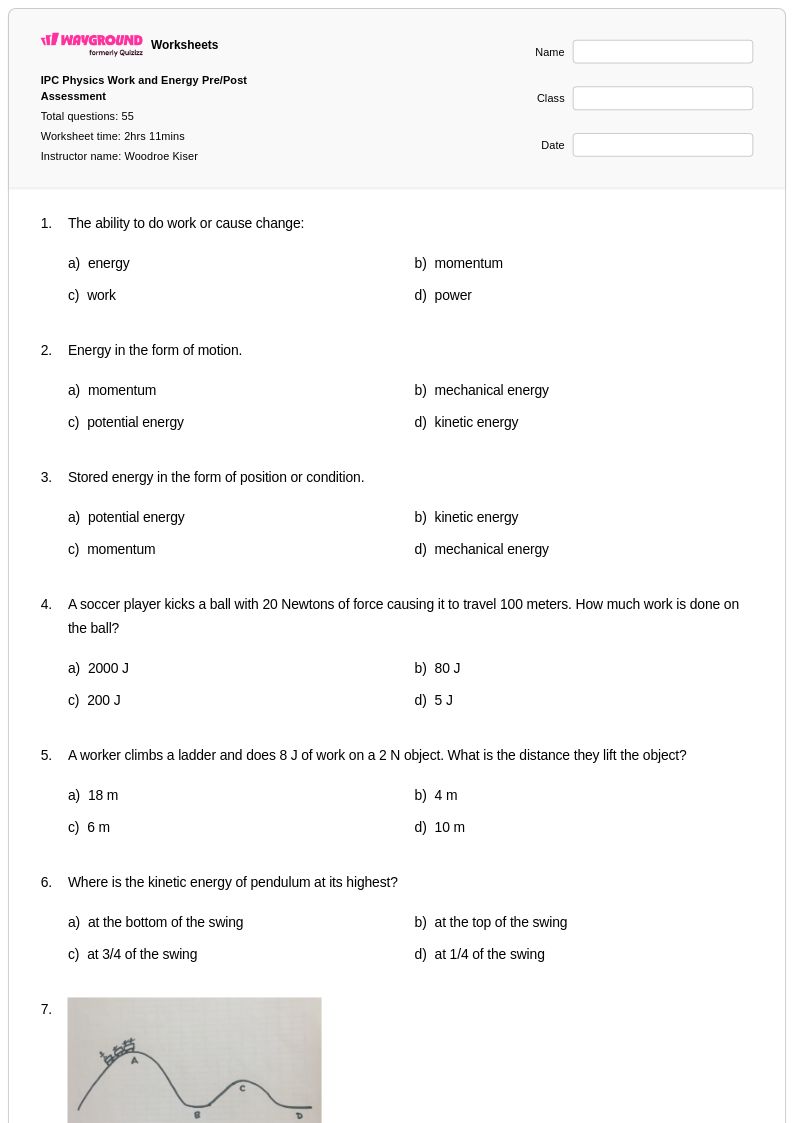
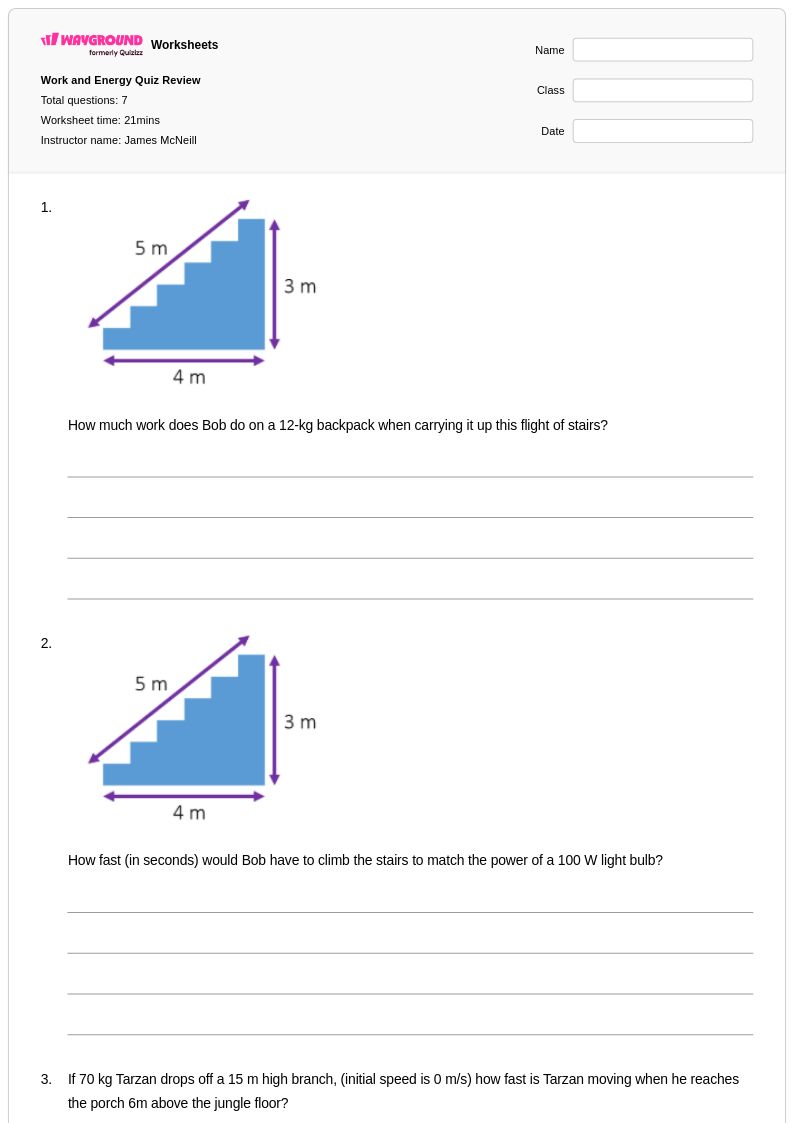
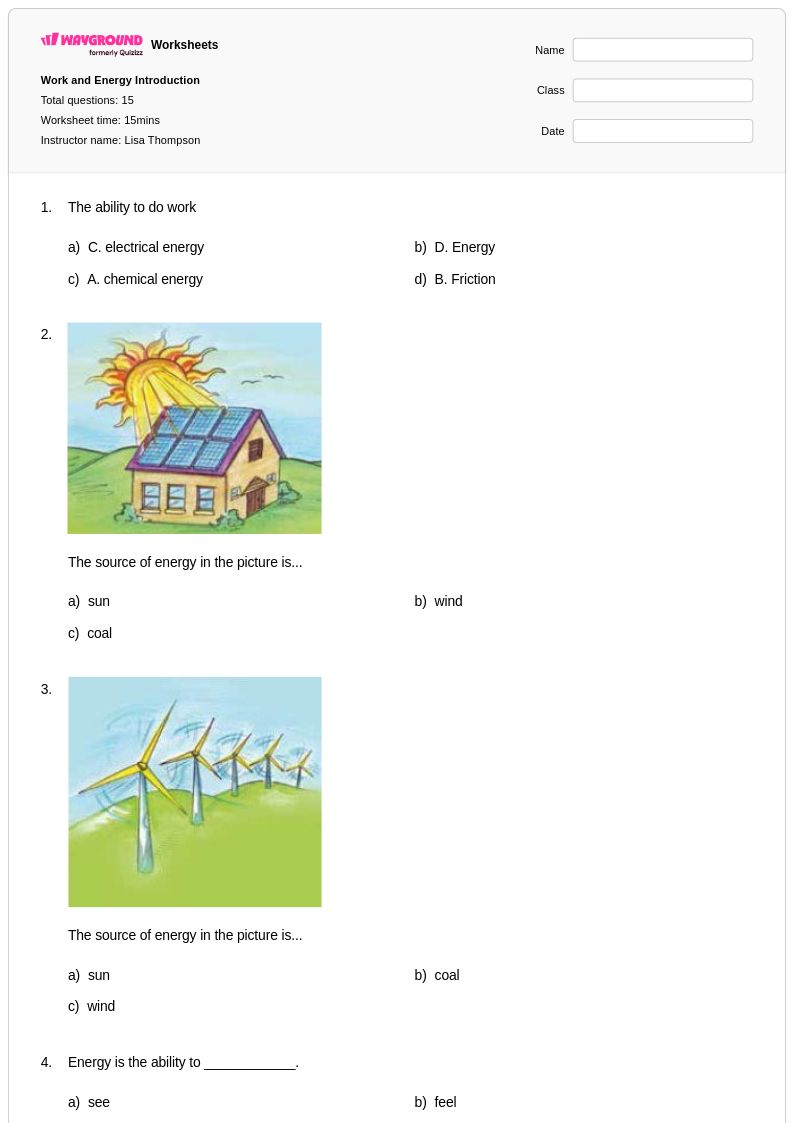
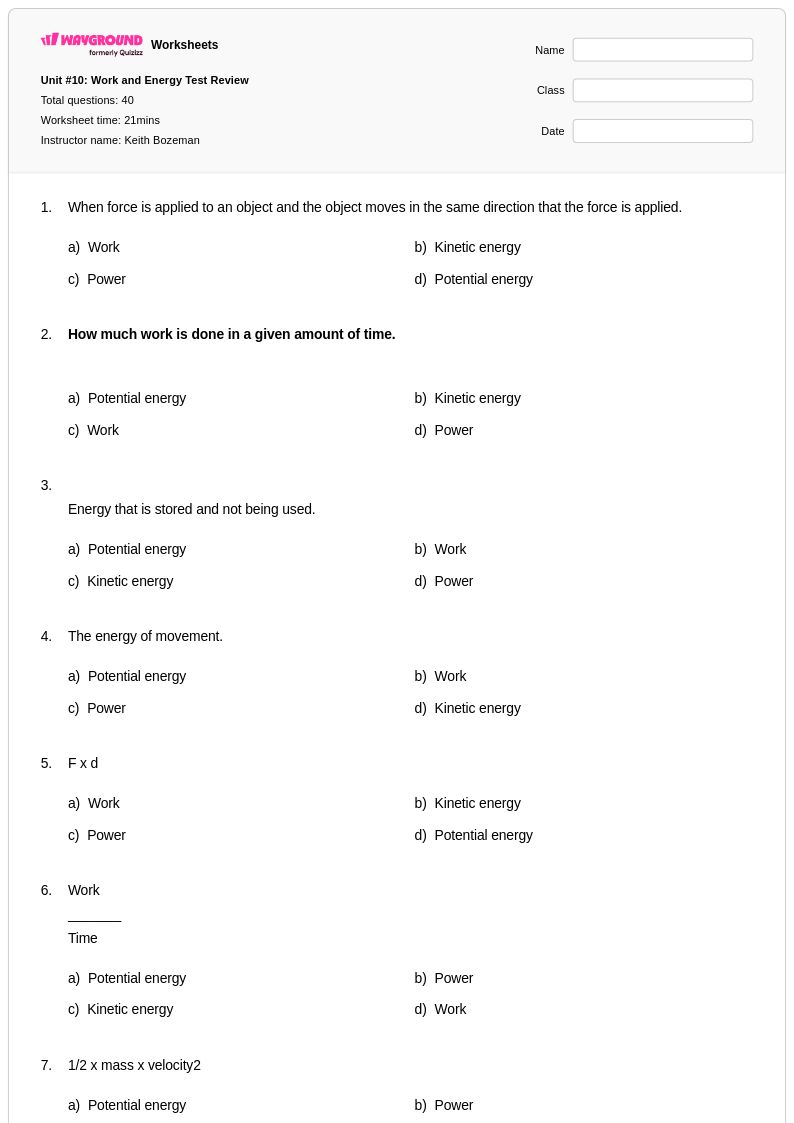
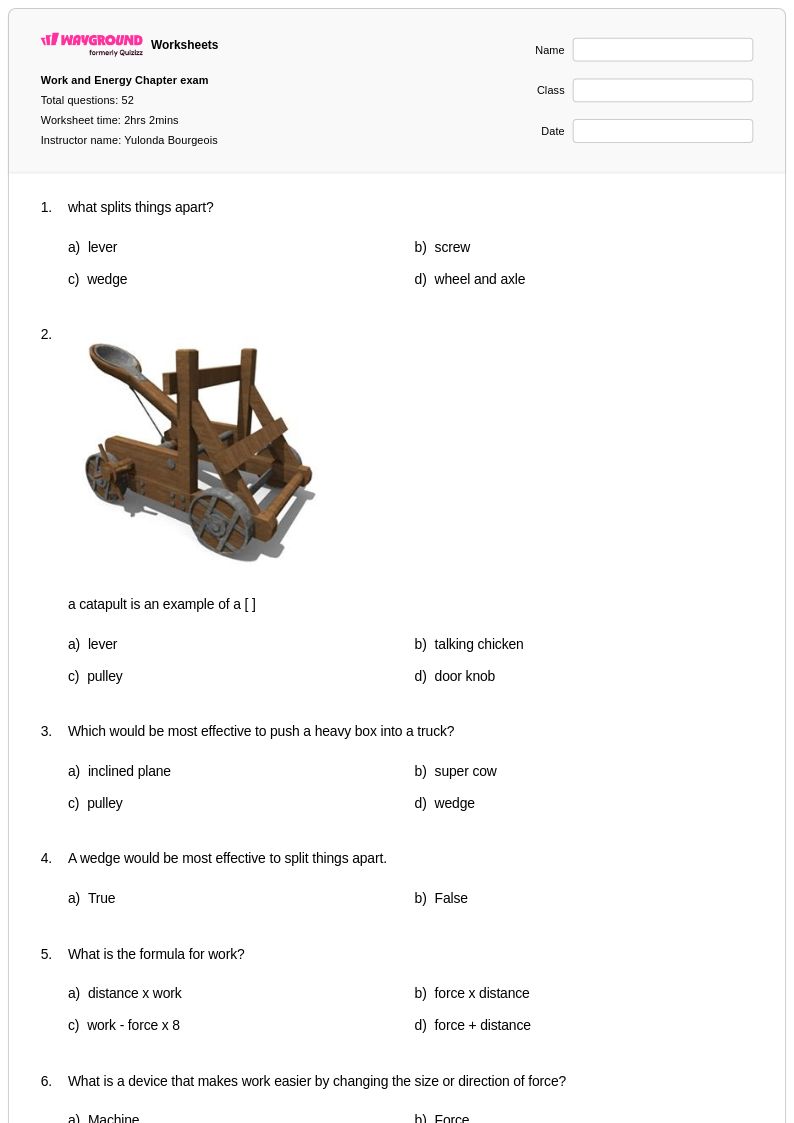
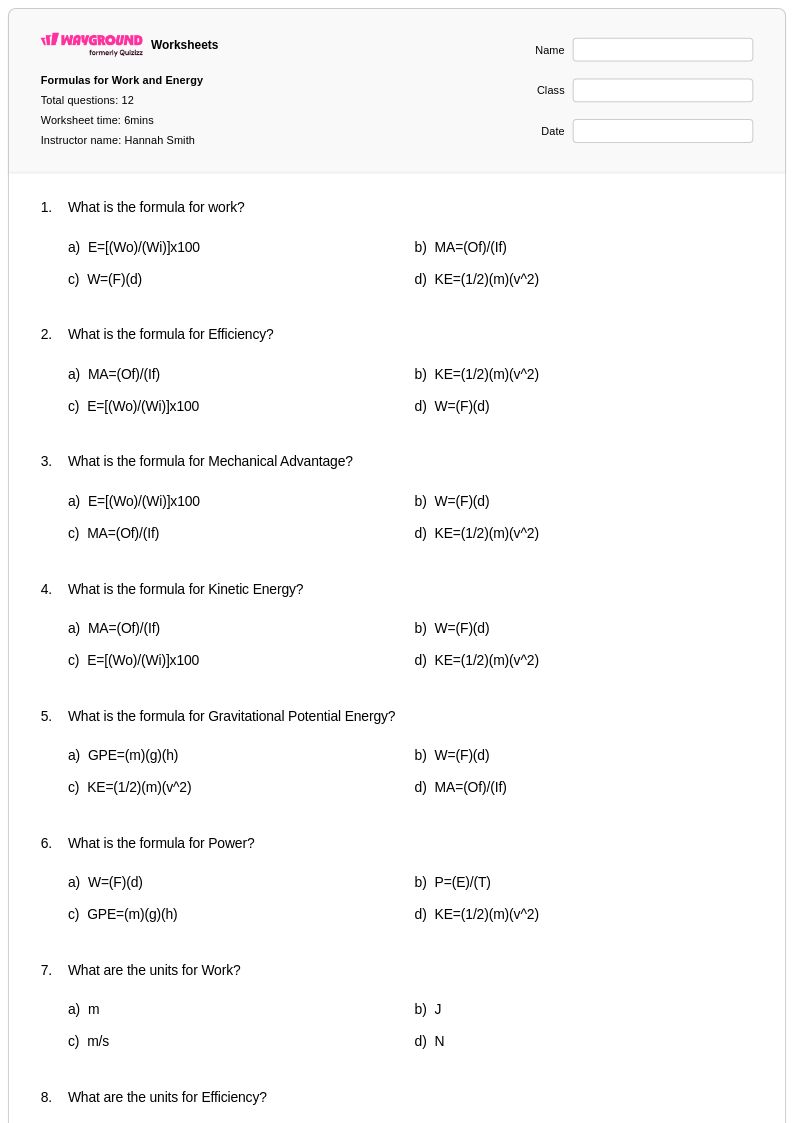
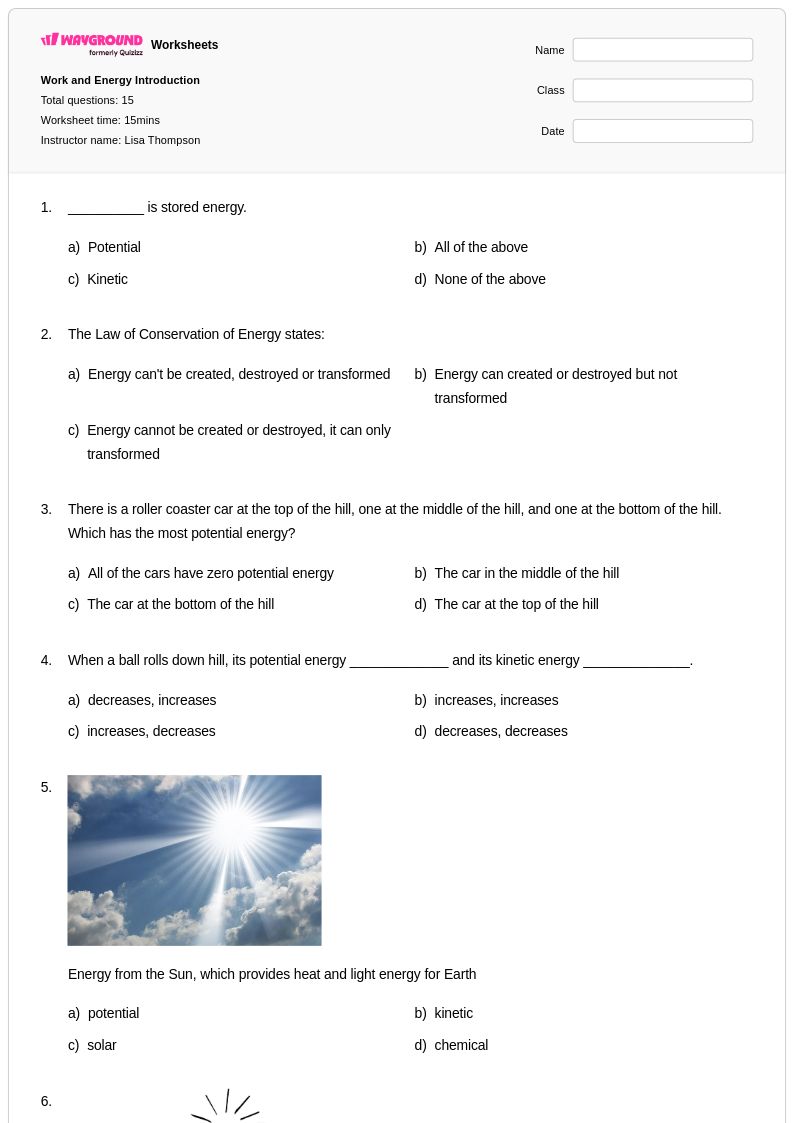
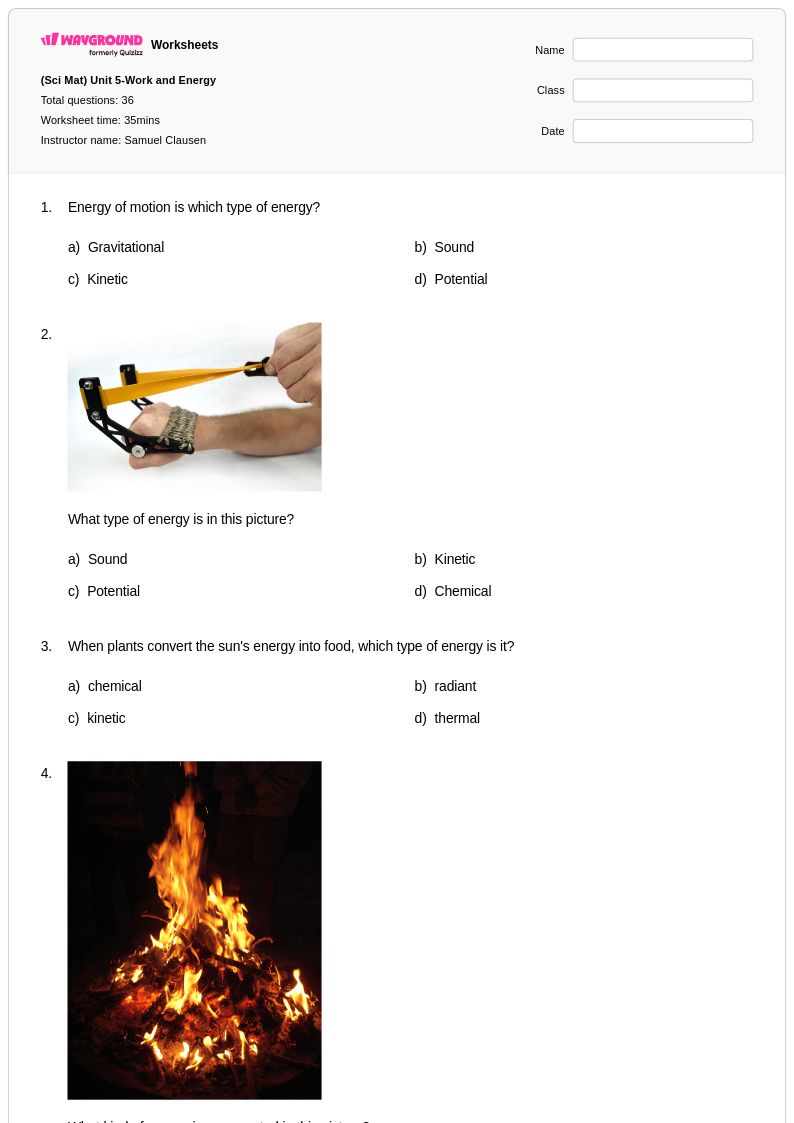
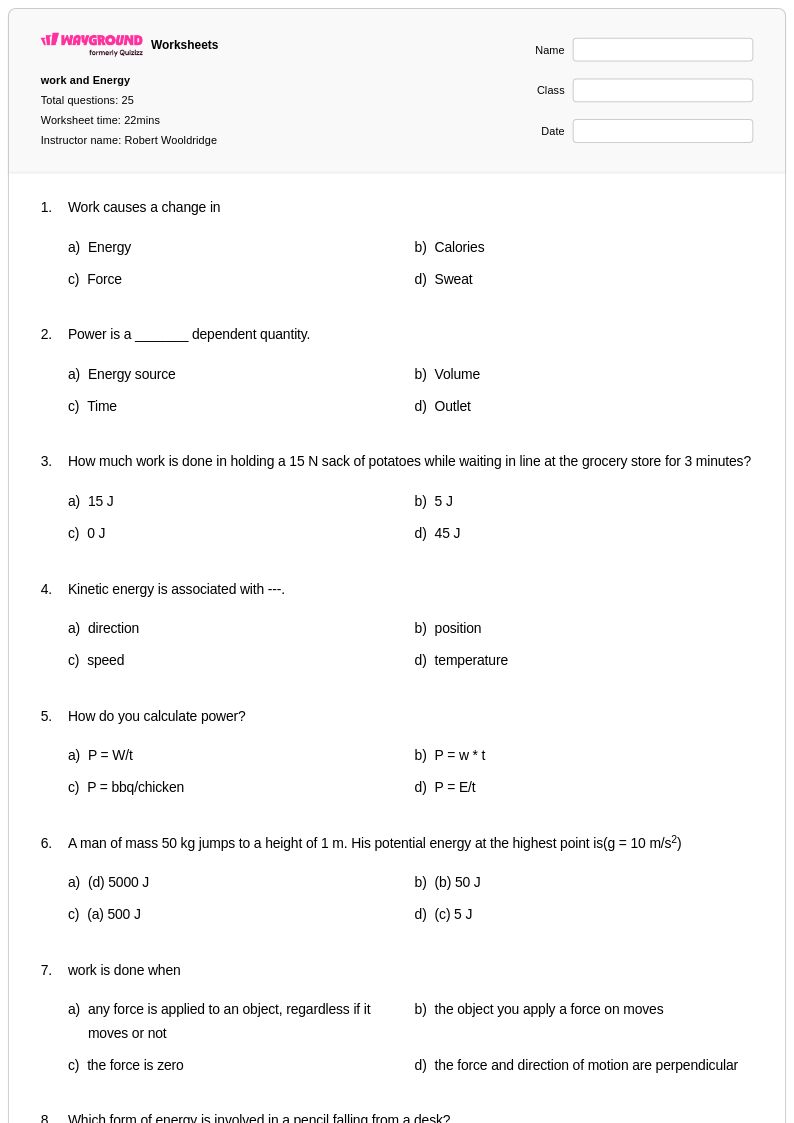
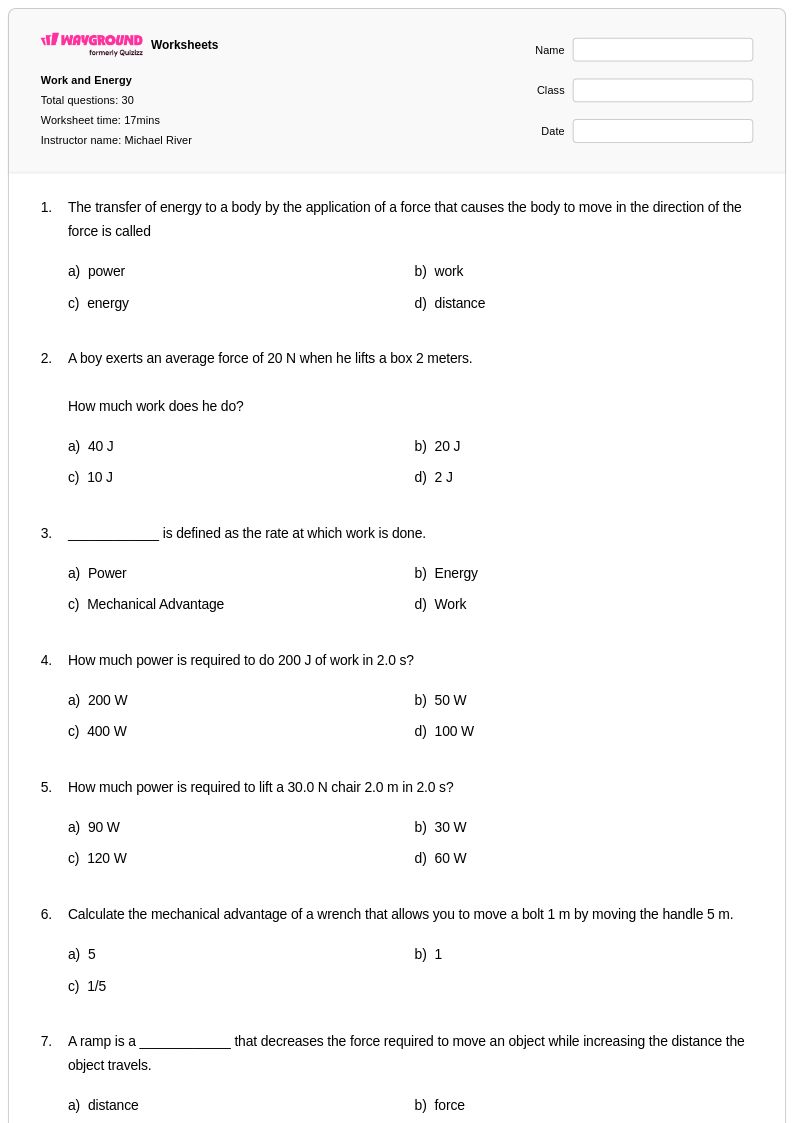
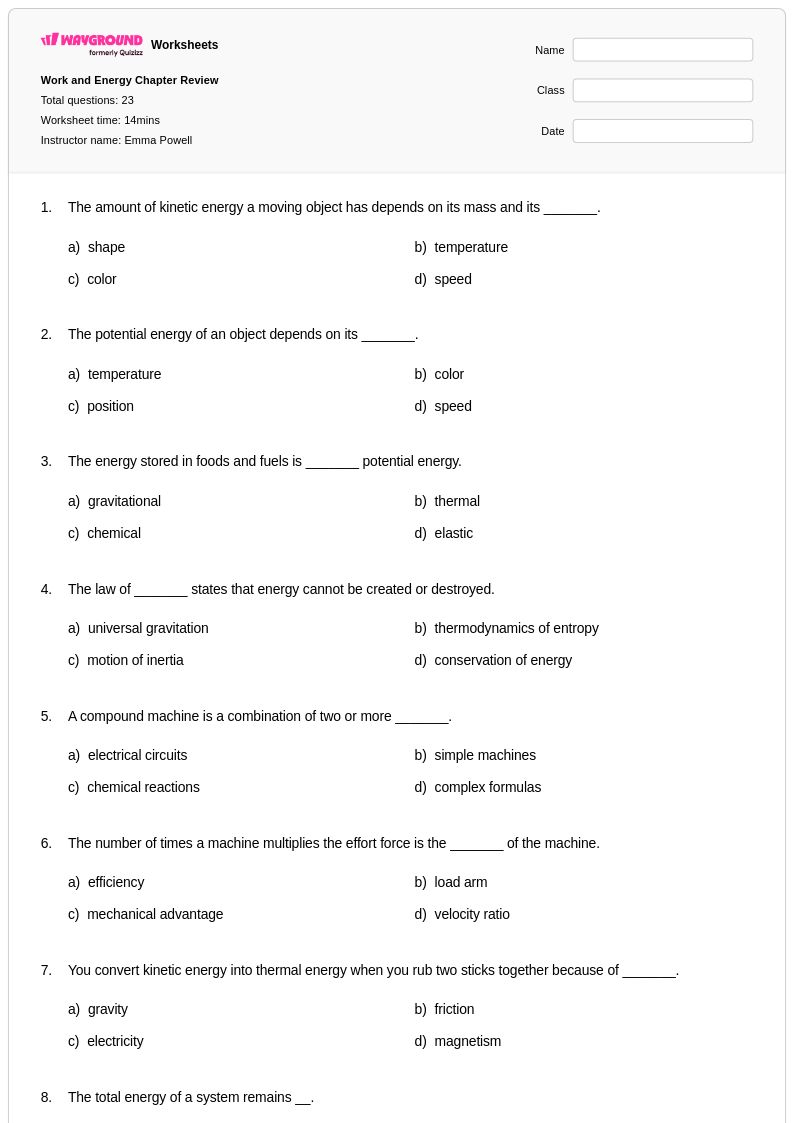
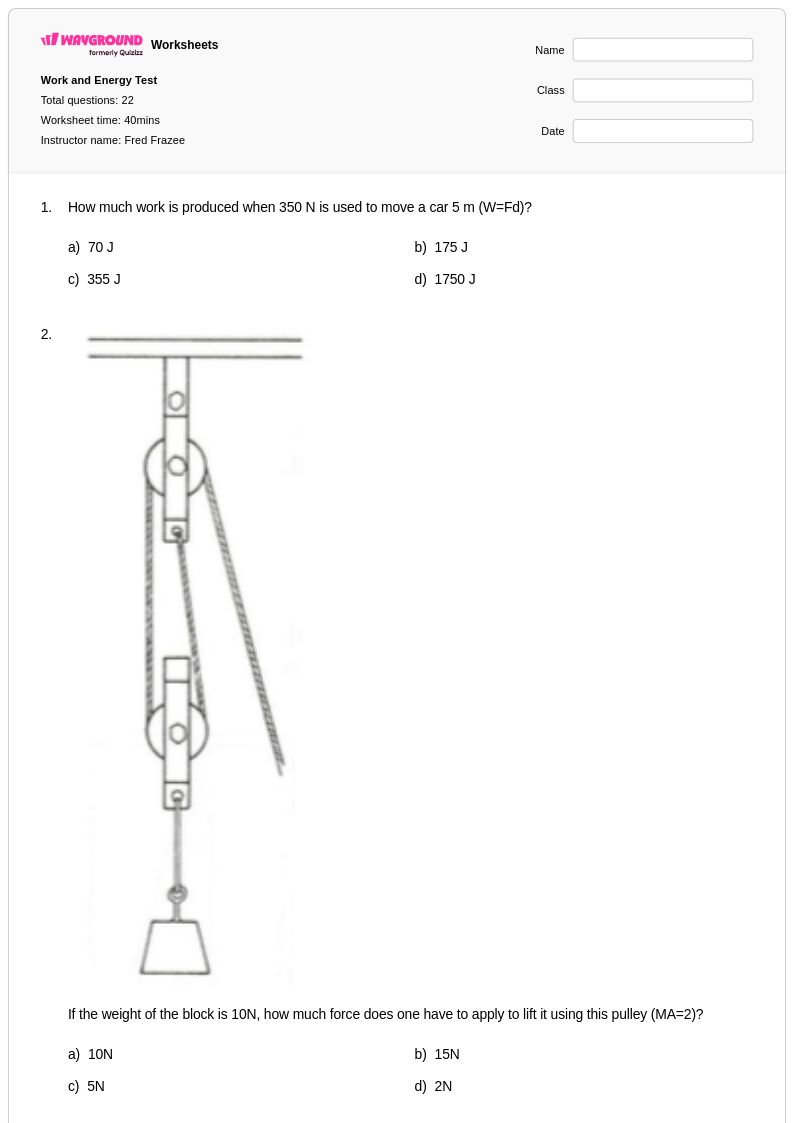
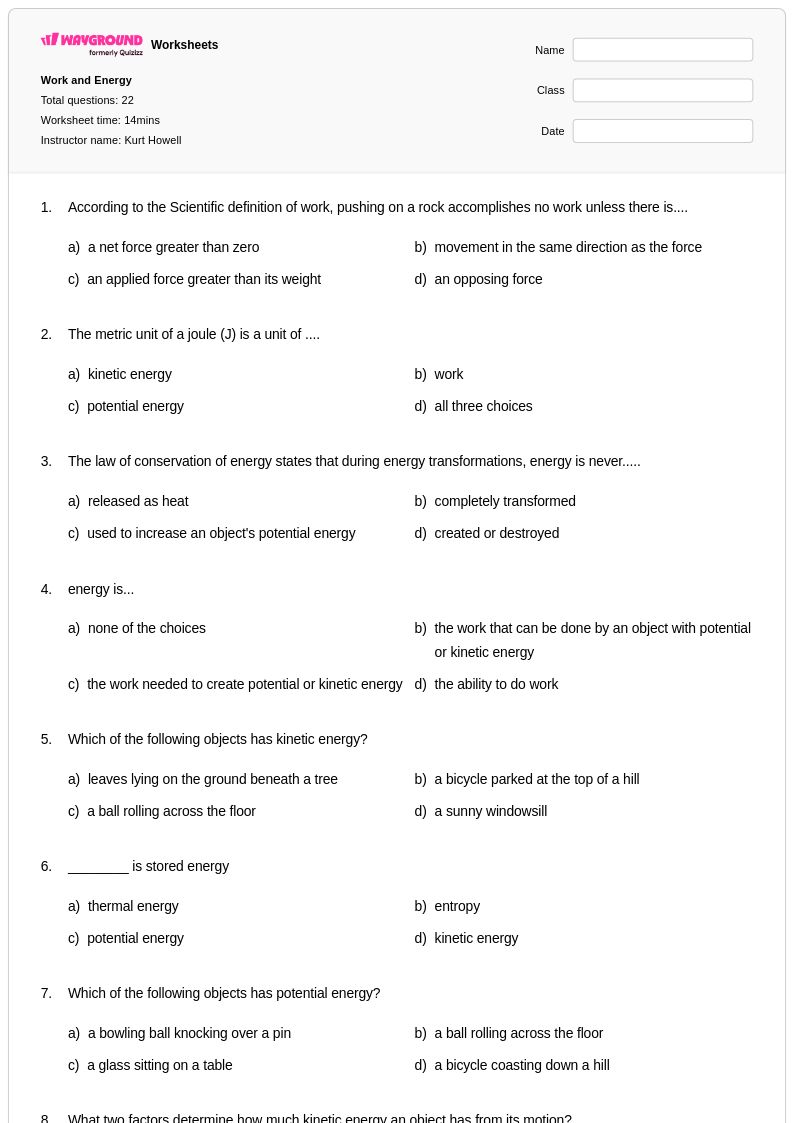
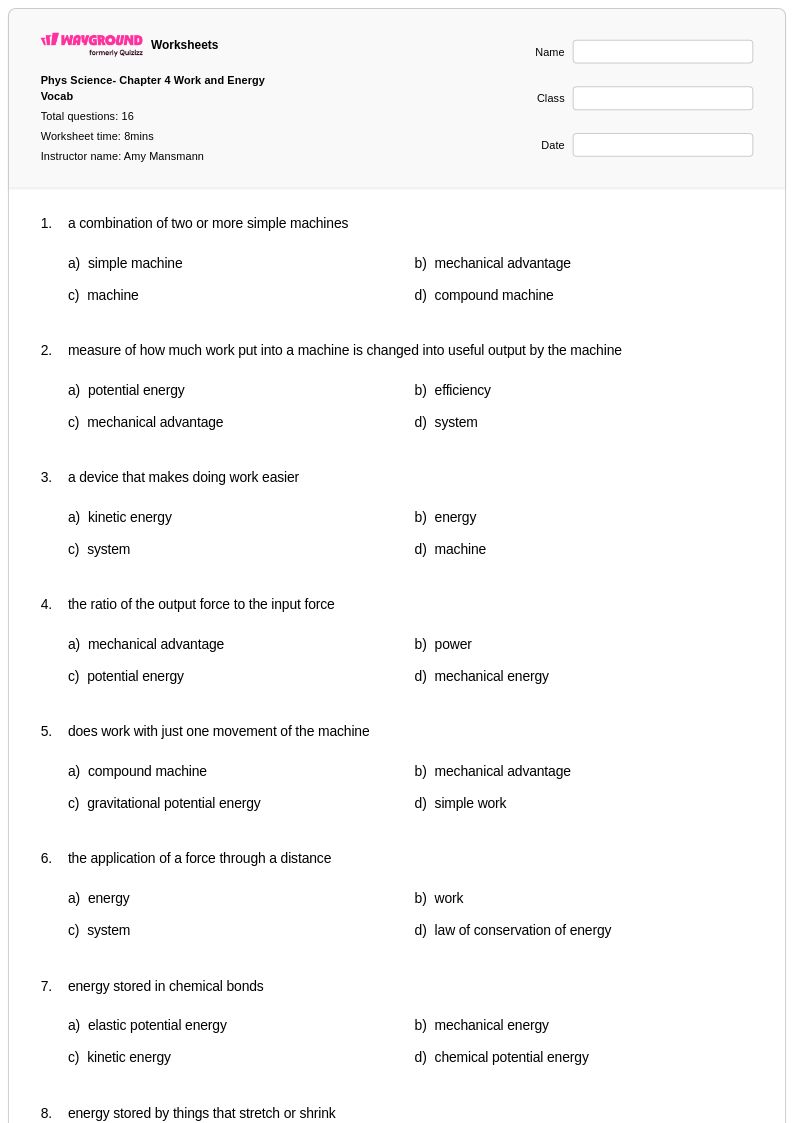
Work and energy concepts form the foundation of mechanical physics understanding for Class 10 students, and Wayground's comprehensive worksheet collection provides targeted practice materials that strengthen problem-solving abilities in this critical area. These expertly designed worksheets guide students through essential calculations involving kinetic energy, potential energy, work done by forces, and the work-energy theorem, helping them master both conceptual understanding and mathematical applications. Students benefit from systematic practice problems that progress from basic energy transformations to complex scenarios involving multiple forces and energy conversions, with complete answer keys available to support independent learning and self-assessment. The free printable resources include detailed solution steps and explanatory notes that reinforce proper problem-solving techniques, making these pdf worksheets invaluable tools for both classroom instruction and homework assignments.
Wayground's extensive library, featuring millions of teacher-created resources, empowers educators with sophisticated search and filtering capabilities that enable quick identification of work and energy materials aligned to specific learning standards and student needs. Teachers can easily customize existing worksheets or combine multiple resources to create differentiated instruction that addresses varying skill levels within their Class 10 physics classes, whether students require additional remediation with basic energy concepts or enrichment through advanced applications. The platform's flexible format options allow seamless integration of both digital and printable materials into lesson planning, supporting diverse classroom environments and individual student preferences. These comprehensive tools facilitate targeted skill practice and assessment preparation while reducing teacher workload through ready-to-use answer keys and alignment features that streamline curriculum implementation.
FAQs
How do I teach work and energy in physics class?
Start by grounding students in the formal definition of work as force applied over a displacement, then connect it to kinetic and potential energy through the work-energy theorem. Use real-world contexts like roller coasters, pendulums, and ramps to make energy transformations concrete before introducing conservation of energy. Building from mechanical work to power to energy conservation in sequence helps students develop a coherent conceptual framework rather than treating each formula in isolation.
What practice problems help students master work and energy calculations?
Students benefit most from problems that require them to calculate work done by multiple forces, compare kinetic and potential energy at different points in a system, and apply conservation of energy to find unknown velocities or heights. Scaffolded problem sets that begin with single-force scenarios and progress to systems involving friction and energy loss are especially effective. Including real-world applications like simple machine efficiency and pendulum motion keeps practice meaningful and transfer-ready.
What mistakes do students commonly make when solving work and energy problems?
One of the most frequent errors is confusing the physics definition of work with the everyday meaning, leading students to count forces that do no displacement as doing work. Students also routinely forget that only the component of force parallel to displacement contributes to work, dropping the cosine factor from W = Fd cos(θ). In conservation of energy problems, forgetting to account for energy lost to friction or assuming all mechanical energy is conserved in non-ideal systems is another persistent misconception.
How do I help struggling students with work and energy concepts?
Struggling students often need the work-energy relationship rebuilt visually before any calculation practice, using diagrams that show energy changing form as an object moves through a system. Breaking multi-step problems into clearly labeled stages, such as identifying all energy types present at each point, reduces cognitive overload. On Wayground, teachers can assign reduced answer choices and extended time to individual students to provide targeted support without singling those students out in front of the class.
How do I use Wayground's work and energy worksheets in my classroom?
Wayground's work and energy worksheets are available as printable PDFs for traditional classroom distribution and as digital formats for technology-integrated learning environments, making them flexible for both in-class and homework use. Teachers can also host any worksheet as a live or assigned quiz directly on Wayground, enabling instant performance data without additional setup. Each worksheet includes a complete answer key, supporting both teacher-led review and independent student self-assessment.
How do I assess student understanding of work and energy without a formal test?
Formative assessment works well with targeted problem sets that ask students to explain their reasoning alongside calculations, revealing whether they understand the physics or are pattern-matching formulas. Exit tickets focused on a single concept, such as identifying where mechanical energy is greatest in a pendulum swing, quickly surface gaps before they compound. Using Wayground's digital format lets teachers see response data in real time and adjust instruction before the next class.