
 Worksheets
Earth, Moon, Sun Review
Total questions: 52
Worksheet time: 17mins
Name
Class
Date
1.
What are the reasons for the seasons?
a)
Earth's tilt and rotation.
b)
Earth's rotation and revolution.
c)
Earth's tilt and revolution.
d)
Earth's tilt and resolution
2.
What is the Earth's tilt in degrees?
a)
25.3 degrees
b)
32.5 degrees
c)
28.5 degrees
d)
23.5 degrees
3.
What season is March 21st?
a)
Spring
b)
Fall
c)
Summer
d)
Winter
4.

Which body has the greater effect on Earth's tides?
a)
Sun
b)
Saturn
c)
Moon
d)
Venus
5.
Tides are mostly affected by ___________
a)
wind
b)
gravitational pull of moon
c)
waves gravitation toward land
d)
rain
6.

What is a high tide?
a)
Sea pulled TOWARD the moon where Earth is CLOSEST to the moon
b)
Sea pulled AWAY from the moon where Earth is FARTHEST to the moon
c)
Sea pulled AWAY from the moon where Earth is CLOSEST to the moon
7.

In which picture is the person experiencing the highest tide?
a)
Picture A
b)
Picture B
c)
Picture C
d)
Picture D
8.

In which picture is the person experiencing the lowest tide?
a)
Picture A
b)
Picture B
c)
Picture C
d)
Picture D
9.
What do we call a tide that has a large range between the high and low tides?
a)
gravity tide
b)
wind tide
c)
spring tide
d)
neap tide
10.

What type of tides would this arrangement of earth-moon-sun create?
a)
neap tide
b)
spring tide
c)
new moon tide
d)
full moon tide
11.
What would seasons be like if Earth's axis were straight up and down?
a)
Seasons would be the same.
b)
Seasons would be more extreme.
c)
There would be no seasons.
12.
If Earth rotated slower, we would have...
a)
shorter days.
b)
longer days.
c)
shorter years.
d)
longer years.
13.
What is Earth's annual motion around the sun called?
a)
Rotation
b)
Revolution
14.
One rotation of Earth is equal to
a)
a day.
b)
a year.
15.
When will the sun reach the highest altitude at noon?
a)
December
b)
March
c)
September
d)
June
16.
The Northern Hemisphere gets __________ sunlight in the winter, which leads to _________ temperatures.
a)
less direct, hotter
b)
less direct, colder
c)
more direct, hotter
d)
more direct, colder
17.
Which angle of sunlight produces the most heat?
a)
90 degrees
b)
60 degrees
c)
30 degrees
d)
0 degrees
18.

Which moon phase is shown in this diagram?
a)
new moon
b)
1st quarter
c)
full moon
d)
last quarter/3rd quarter
19.

Which moon phase is shown in this diagram?
a)
new moon
b)
first quarter
c)
full moon
d)
last quarter/3rd quarter
20.
A lunar eclipse is when:
a)
The shadow of Earth falls on the moon
b)
The shadow of the moon falls on the Earth
c)
The shadow of the sun falls on the moon
d)
The suns light shows red on the moon
21.
During the phases of the Moon, the Moon appears to change shape. This change in appearance is due to the Moon...
a)
physically changing size and shape.
b)
moving closer and then farther away from Earth.
c)
reflecting a different amount of light due to alignment with Earth and the Sun.
d)
having craters on its surface.
22.
What part of the moon do we see from Earth?
a)
all of it
b)
the same side
c)
none of it
d)
only one quarter
23.
As the moon's shape appears to get smaller, we say that the moon is _.
a)
swelling
b)
waxing
c)
waning
d)
disappearing
24.
Which moon phase is when you can't see the moon at all?
a)
Waning crescent
b)
Full moon
c)
Waxing gibbous
d)
New moon
25.
Phases of the moon in which the moon appears to be getting larger are referred to as _.
a)
waxing
b)
waning
c)
new
d)
eclipse
26.

Name the phase of the moon that comes AFTER this moon phase.
a)
waxing gibbous
b)
full moon
c)
1st quarter
d)
3rd quarter/last quarter
27.

Name this phase of the moon.
a)
waning crescent
b)
waxing crescent
c)
waning gibbous
d)
waxing gibbous
28.

Name this moon phase.
a)
new moon
b)
1st quarter moon
c)
last quarter moon
d)
waning gibbous
29.

What is this moon phase?
a)
waning crescent
b)
waxing crescent
c)
waning gibbous
d)
waxing gibbous
30.

What is this moon phase?
a)
new moon
b)
1st quarter
c)
full moon
d)
3rd quarter
31.

Name this moon phase.
a)
waxing crescent
b)
waning crescent
c)
waxing gibbous
d)
waning gibbous
32.

Name this moon phase.
a)
1st quarter
b)
3rd/last quarter
c)
new moon
d)
waxing crescent
33.

Name this moon phase.
a)
waxing crescent
b)
waxing gibbous
c)
waning gibbous
d)
waning crescent
34.
During which phase of the moon do we sometimes have a lunar eclipse?
a)
new moon
b)
full moon
c)
1st quarter
d)
3rd quarter
35.

If these three bodies are lined up with each other, what would this diagram represent?
a)
full moon
b)
new moon
c)
lunar eclipse
d)
solar eclipse
36.

If the sun, moon, and Earth are lined up, what does this diagram represent?
a)
full moon
b)
new moon
c)
lunar eclipse
d)
solar eclipse
37.

The path that the Earth takes around the Sun is called...
a)
An orbit
b)
A walk
c)
A rotation
d)
A path
38.

What causes the Earth to have day and night?
a)
Revolution
b)
Rotation
c)
Moon Phases
d)
The ocean
39.

What season is letter A in the Northern Hemisphere?
a)
Winter
b)
Summer
c)
Spring
d)
Fall
40.

What is letter B's Equinox date?
a)
June 21
b)
December 21
c)
March 21
d)
September 21
41.
When the Northern Hemisphere is pointing towards the sun, what season is the Southern Hemisphere?
a)
Winter
b)
Spring
c)
Fall
d)
Summer
42.

What happens when the area in which you live tilts away from the sun?
a)
It is summer.
b)
It is spring.
c)
It is winter.
d)
It is fall.
43.

Which season is taking place in the Northern Hemisphere in Position 4?
a)
Winter
b)
Spring
c)
Summer
d)
Fall
44.

Which season is taking place in the Northern Hemisphere in Position 3?
a)
Winter
b)
Spring
c)
Summer
d)
Fall
45.

Which season is taking place in the Southern Hemisphere in Position 1?
a)
Winter
b)
Spring
c)
Summer
d)
Fall
46.

Which season is taking place in the Northern Hemisphere in Position 1?
a)
Winter
b)
Spring
c)
Summer
d)
Fall
47.

Which season is taking place in the Northern Hemisphere in Position 2?
a)
Winter
b)
Spring
c)
Summer
d)
Fall
48.
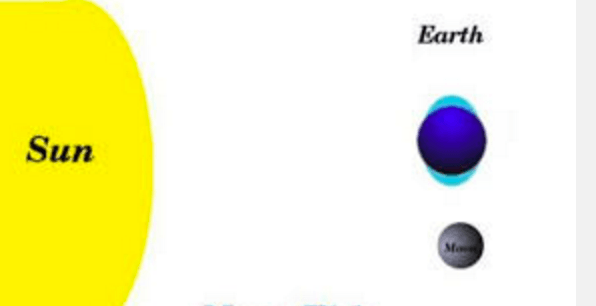
Which moon phase is shown in this diagram?
a)
new moon
b)
1st quarter
c)
full moon
d)
last quarter/3rd quarter
49.

Which moon phase is shown in this diagram?
a)
new moon
b)
first quarter
c)
full moon
d)
last quarter/3rd quarter
50.

What phase is this?
a)
Waning Gibbous Moon
b)
Waxing Gibbous Moon
c)
Waning Crescent Moon
d)
Waxing Crescent Moon
51.

What phase is this?
a)
First Quarter Moon
b)
Last Quarter Moon
c)
Waxing Gibbous Moon
d)
Waning Gibbous Moon
52.

What phase is this?
a)
Full Moon
b)
First Quarter Moon
c)
Last Quarter Moon
d)
New Moon
100 %

