
 Worksheets
ACP final
Total questions: 106
Worksheet time: 2hrs 58mins
Name
Class
Date
1.
Dehydration synthesis (or condensation synthesis) is the process in which
a)
water molecules are formed in the formation of polymers from monomers
b)
Water molecules are attracted to each other
c)
water
2.
Where does glycolysis occur?
a)
Inner mitochondrial membrane
b)
Mitochondrial Matrix
c)
Cytosol
d)
At a ribosome
3.
Glycolysis is a _______ process
a)
Anabolic
b)
Catabolic
c)
Single Step
d)
Strictly Eukaryotic
4.
NADH is a ______ form of NAD+.
a)
Reduced
b)
Oxidized
c)
Catabolized
d)
Hydrolized
5.
Glycolysis is a __________ process.
a)
aerobic
b)
anaerobic
c)
aerobic and anaerobic
d)
neither aerobic nor anaerobic
6.
Glycolysis occurs in __________.
a)
Eukaryotes
b)
Prokaryotes
c)
Archaea
d)
Every living thing that we know of.
7.
How many ATP are gained through glycolysis?
a)
0
b)
2
c)
4
d)
30-38
8.
ATP hydrolysis is _________.
a)
Exergonic
b)
Endergonic
c)
Anabolic
d)
A condensation reaction
9.
Cellular respiration involves the net _______ of glucose.
a)
Reduction
b)
Oxidation
c)
ATP
d)
REDOX
10.

In this photo, what do the explosions represent?
a)
Glucose
b)
ATP
c)
Pyruvate
d)
Cleavage
11.
Which molecule enters Kreb's Cycle?
a)
Pyruvate
b)
Glucose
c)
Acetyl CoA
d)
reducing powers
12.
Which molecule enters Kreb's Cycle?
a)
Pyruvate
b)
Glucose
c)
Acetyl CoA
d)
reducing powers
13.
What enzyme in the ETC is responsible for generating the ATP molecules?
a)
Hexase
b)
ATP synthase
c)
Hexokinase
d)
none of the above
14.
Where does ETC occur?
a)
Mitochondrial matrix
b)
Outer mitochondrial membrane
c)
Inner mitochondrial membrane
d)
Cytosol
15.
Each NADH molecule carrying hydrogen to the ETC can produce a maximum of _ molecules of ATP?
a)
1
b)
2
c)
3
d)
4
16.
after strenuous exercise, a muscle cell would contain decreased amounts of ______ and increased amounts of ______ ____
a)
glucose ATP
b)
ATP glucose
c)
oxygen lactic acid
d)
lactic acid ATP
17.

site of ATP synthase
a)
1
b)
2
c)
3
d)
4
18.

site of the krebs cycle
a)
1
b)
2
c)
3
d)
4
19.
Which gas is a product released during photosynthesis that humans need for survival?
a)
Carbon dioxide
b)
neon
c)
nitrogen
d)
oxygen
20.

Which organism pictured must absorb carbon dioxide to survive?
a)
bird
b)
rabbit
c)
insect
d)
tree
21.
What are the four biological molecules?
a)
proteins, carbohydrates, lipids, nucleic acids
b)
A, T, C, G
c)
water, air, earth, and fire
d)
Joe, Nick, and Kevin Jonas
22.
A biological polymer that stores and transmits genetic information is a ...
a)
nucleic acid
b)
carbohydrate
c)
lipid
d)
protein
23.
A biological polymer made of amino acid monomers is a
a)
protein
b)
lipid
c)
carbohydrate
d)
nucleic acid
24.
What group of biological molecules contains DNA and RNA...
a)
Nucleic acids
b)
carbohydrates
c)
proteins
d)
lipids
25.

What is the primary function of carbohydrates in your body?
a)
Speed up chemical reactions.
b)
Give immediate energy.
c)
Help to store energy.
d)
Build cell walls in plants.
26.
A group of organic molecules that includes sugars, starch, and cellulose care called...
a)
proteins
b)
carbohydrates
c)
nucleic acids
d)
lipids
27.
Monomer of nucleic acids; consists of a phosphate group, deoxyribose (sugar), and a nitrogen-base. ATP is an example of this.
a)
steroid
b)
nucleotide
c)
polypeptide
d)
polymer
28.
What are the monomers of a polysaccharides?
a)
Amino Acids
b)
Nucleotides
c)
Triglycerides
d)
Monosaccharides
29.
A large molecule made up of many similar or identical subunits.
a)
lipids
b)
polymer
c)
monomer
d)
monosaccharide
30.
A class of biological molecules whose defining characteristic is their relative insolubility in water. Examples of these include steroids, oils, fats, and fatty acids.
a)
protein
b)
monomer
c)
lipids
d)
glycogen
31.
A series of amino acids linked in a linear fashion
a)
polymer
b)
triglyceride
c)
polypeptide
d)
carbohydrates
32.
Also known as simple sugars, these carbohydrate monomers.
a)
lipids
b)
nucleotide
c)
monosaccharide
d)
monomer
33.
A type of biological molecule that includes fats, oils, hormones, waxes, and components of cellular membranes is...
a)
lipids
b)
proteins
c)
carbohydrates
d)
nucleic acids
34.
Enzymes are considered to be
a)
Lipids
b)
Carbohydrate
c)
Protein
d)
Nucleic Acid
35.
What is the purpose of an enzyme?
a)
give permission for the reaction
b)
raise activation energy
c)
speed up reactions
d)
control how many reactions occur
36.
Where do substrates bind on an enzyme?
a)
voltage-gated channels
b)
surface receptor
c)
calcium channels
d)
active site
37.
Enzymes are capable of increasing the rate of a chemical reaction within a living cell. Enzymes accomplish this through which of the following means?
a)
reducing the number of products
b)
reducing the activation energy
c)
increasing the temperature of the cell
d)
increasing the concentration of reactants
38.
What is a substance called if it speeds up a chemical reaction?
a)
reusable
b)
catalyst
c)
specific
d)
fragile
39.
What 3 letters do enzymes typically end in?
a)
-ose
b)
-ase
c)
-ese
d)
-tic
40.
The "lock and key hypothesis" attempts to explain the mechanism of?
a)
Vacuole formation
b)
Pinocytosis
c)
Sharing of electrons
d)
Enzyme specificity
41.
True or False Blood clotting and uterine contractions are good examples of negative feedback.
a)
True
b)
False
42.
Humans have ___ for body temperature, blood glucose concentrations, electrolyte concentrations, pH levels, tendon tension and variables.
a)
positive feedback mechanisms
b)
set points
c)
a wide internal range
d)
no regulation
43.
Homeostasis
a)
allows for a wildly fluctuating internal environment
b)
is impossible in vertebrates
c)
is the maintenance of a relatively stable internal environment and often incorporates a form of feedback regulation
d)
is the maintenance of a relatively stable external environment and often incorporates a form of feedback regulation
44.
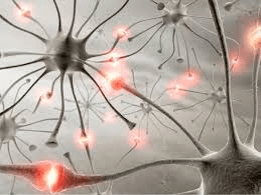
a body system that controls and coordinates all body activities through electric impulses/messages between brain, spinal cord and nerves.
a)
endocrine system
b)
nervous system
c)
nerve
d)
neuron
45.
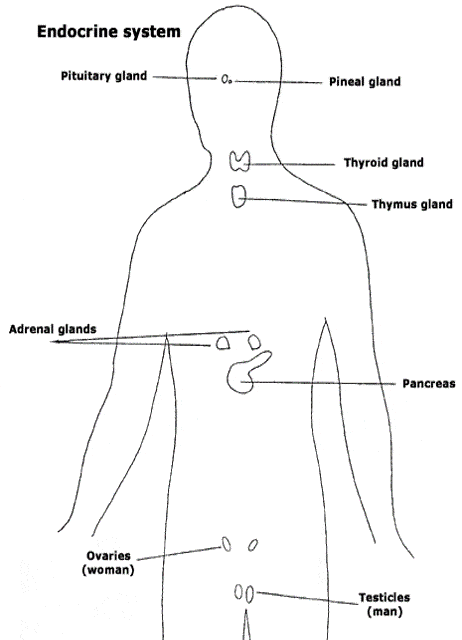
a body system that controls growth and homeostasis by secreting hormones from glands.
a)
skeletal system
b)
nervous system
c)
endocrine sytem
d)
integumentary system
46.
If the environment gets cold, we will often shiver in order to:
a)
keep body temperature the same as the external temperature
b)
decrease body temperature
c)
increase body temperature
d)
regulate blood pressure
47.
Homeostasis in the human body is often maintained by a:
a)
neutral feedback loop
b)
solar feedback loop
c)
positive feedback loop
d)
negative feedback loop
48.
The "cause" for something to happen is the
a)
response
b)
effect
c)
stimulus
d)
homeostasis
49.
Most bacteria that cause sickness in humans grow best at 98.6oF. Sometimes a fever is the body's response to the bacteria. What is the reason for developing a fever?
a)
To lower the temperature of the body to kill the bacteria
b)
The increase the temperature of the body to kill the bacteria
c)
To allow the bacteria to take over
d)
To make you feel miserable
50.
Function of pancreas:
a)
control blood pressure
b)
produces hormones that control BSL (blood sugar level)
c)
control female characteristics
d)
control sperm production
51.
The "effect" of a given stimulus is the...
a)
response
b)
stimulus
c)
cause
d)
result
52.
An example of Negative Feedback Loop could be
a)
Hormones released when giving birth
b)
Production of milk during nursing
c)
Water constantly running
d)
Maintaining Oxygen levels
53.
Your Kidneys are the organs responsible for
a)
Clotting of blood
b)
Body temperature
c)
Osmoregulation
54.
__________________ is secreted in response to low blood sugar levels
a)
Ethlyene
b)
Insulin
c)
Oxytocin
d)
Glucagon
55.
Pressure on the cervix is ___________________ during child birth
a)
stimulus
b)
receptor
c)
effector
d)
reponse
56.
Platelets act as ___________ during blood clotting
a)
Stimulus
b)
Receptor
c)
Effector
d)
Response
57.
An organism that can make its own food is called?
a)
Consumer
b)
Producer
c)
Decomposer
d)
Herbivore
58.
A consumer gets energy by doing what?
a)
Making it themselves.
b)
Breaking down biotic wastes and dead organisms and returning raw materials to the ecosystem.
c)
Soaking it up from the ground.
d)
Feeding on other organisms.
59.
A carnivore eats only other animals. What is an example?
a)
Bison
b)
Elephant
c)
Caterpillar
d)
Coyote
60.
The energy role that break down biotic wastes and dead organisms is?
a)
Consumer
b)
Producer
c)
Scavenger
d)
Decomposer
61.
When particles move out of a cell through facilitated diffusion, the cell ____________.
a)
gains energy
b)
uses energy
c)
releases energy
d)
does not use energy
62.
Which is true about active transport?
a)
It requires energy
b)
it does not require energy
c)
It moves substances down the concentration gradient
d)
it moves material from high to low concentration
63.
A cell in an isotonic solution will
a)
swell
b)
shrink
c)
stay the same size
d)
impossible to tell
64.

Which type of Passive Transport is being represented in this picture?
a)
Passive Diffusion
b)
Simple Diffusion
c)
Active Diffusion
d)
Facilitated Diffusion
65.
Simple and Facilitated diffusion are powered by an unequal concentration gradient of HIGH to LOW
a)
True
b)
False
66.

What type of solution is this cell in?
a)
Isotonic
b)
Hypertonic
c)
Hypotonic
d)
diffused
67.
Which transport does not require energy?
a)
Passive
b)
Active
68.
Permeable means
a)
things can pass through
b)
the concentration levels are different
c)
it is permanent
d)
things are stuck
69.

What type of solution is this cell in?
a)
Isotonic
b)
Hypertonic
c)
Hypotonic
d)
diffused
70.
This cell organelle helps organisms maintain homeostasis by controlling what substances may enter or leave cells.
a)
vacuole
b)
nucleus
c)
cell membrane
d)
cell wall
71.
Which term means "water-loving"?
a)
Cohesion
b)
Nonpolar
c)
Hydrophilic
d)
Hydrophobic
72.
The cell membrane is made mostly of
a)
phospholipid monolayer and proteins
b)
phospholipid bilayer and proteins
c)
proteins and carbohydrates bilayer
d)
triglycerides and carbohydrates
73.

What type of solution is this cell in?
a)
Isotonic
b)
Hypertonic
c)
Hypotonic
d)
diffused
74.
Facilitated diffusion uses _______________ __________________ to move materials across the cell membrane.
a)
ATP energy
b)
transport proteins
c)
Special osmosis
d)
Santa Claus
75.
diffusion is the movement of
a)
water from low to high concentration
b)
particles from low to high concentration
c)
water from high to low concentration
d)
particles from high to lowconcentration
76.
Cells work together to make the following.
a)
tissues
b)
organs
c)
organ systems
d)
organism
77.
Bacteria cells are this type of cell.
a)
Eukaryote
b)
Prokaryote
78.
The powerhouse of the cell is the...It converts energy from food into energy the cell can use
a)
Mitochondrion
b)
Golgi body
c)
Nucleus
d)
Ribosomes
79.
Where are proteins made? These are small, grain-like or rod shaped organelles.
a)
Golgi body
b)
Mitoichondrion
c)
Chromosomes
d)
Ribosomes
80.
Tiny cell structures that carry out specific functions within the cell.
a)
membranes
b)
nucleus
c)
organelles
d)
animalicules
81.

What is the difference between rough and smooth ER?
a)
There is no difference.
b)
Plants have rough ER, animals have smooth ER.
c)
What type of injuries the Doctors treat.
d)
Rough has ribosomes, smooth does not.
82.

What is the name of the genetic material that is inside the nucleus?
a)
ER
b)
ATP
c)
YOLO
d)
DNA
83.
What order is the level of orginization in?
a)
1.cell
2. organisms
3.tissues
4.organ
5.organ system
2. organisms
3.tissues
4.organ
5.organ system
b)
1.cell
2.tissues
3. organ sytem
4.organ
5.organisms
2.tissues
3. organ sytem
4.organ
5.organisms
c)
1. cell
2.tissues
3.organisms
4. organ
5. organisms
2.tissues
3.organisms
4. organ
5. organisms
d)
1. cell
2. tissues
3. organ
4. organ system
5. oranisms
2. tissues
3. organ
4. organ system
5. oranisms
84.

You might think of me as the trash collector or recycler is maybe more accurate. What am I?
a)
cytoplasm
b)
lysosme
c)
vacuole
d)
ribosome
85.

I make proteins for the cell. What am I?
a)
ribosome
b)
mitochondria
c)
chloroplast
d)
lysosome
86.

I am the outer most layer of an animal cell. What am I?
a)
cell wall
b)
nucleus
c)
cell membrane
d)
cell skin
87.
Gives the cell a rigid, box-like shape; outside of the cell membrane; in plants.
a)
cytoplasm
b)
chromatin
c)
cell wall
d)
cell membrane
88.
Animal cells DO NOT have ...
a)
Mitochondria
b)
Lysosomes
c)
Vacuoles
d)
Chloroplasts
89.
What is the function of the cytoplasm?
a)
Stores water and mineral ions
b)
It holds all the organelles in place
c)
a.Controls what enters and leaves the cell
d)
Supports the cell
90.
What is a sac-like structure used to store water and nutrients? These are much larger in plant cells?
a)
Lysosomes
b)
Mitochondria
c)
Vacuoles
d)
Golgi Body
91.

Number 1 is a (the) -
a)
Golgi Bodies
b)
Mitochondrion
c)
ribosome
d)
Nucleus
92.

Identify this structure that is green and makes food the plant cell.
a)
cytoplasm
b)
cell wall
c)
chloroplast
d)
cell membrane
93.
There are some similarities between prokaryotic and eukaryotic cells. Which of the following structures is found in both prokaryotic and eukaryotic cells?
a)
lysosome
b)
mitochondrion
c)
nucleus
d)
cell membrane
94.
Which cell structure is correctly paired with its primary function?
a)
ribosome - movement
b)
mitocondria - energy production
c)
vacuole - cell division
d)
nucleus - storage of nutrients
95.

The part of the neuron that conducts action potentials is the:
a)
Axon
b)
Dendrite
c)
Axon Terminal
d)
Cell Body
96.

The pancreas produces _____ when your blood sugar level is high.
a)
GH
b)
ADH
c)
Glucagon
d)
Insulin
97.

What treatment is given to relieve menopause symptoms?
a)
Intrauterine device (IUD)
b)
Hormone replacement therapy (HRT)
c)
Hormone reduction therapy (HRT)
98.
The body uses this to carry nutrients and waste. It also helps joints move smoothly.
a)
Fat
b)
Water
c)
Minerals
d)
Vitamin
99.
The process of converting the energy in food into energy the body can use.
a)
Metabolism
b)
Diet
c)
Digestion
d)
Calories
100.
Energy from food is called
a)
Carbohydrates
b)
Protein
c)
Calories
101.
This type of fat is usually solid at room temperature.
a)
trans
b)
unsaturated
c)
saturated
102.
The amount of energy the body gets from food is measured in.
a)
Metabolism
b)
Diet
c)
Calories
d)
Protein
103.
Is water a polar or non-polar molecule?
a)
polar
b)
non-polar
104.
What is cohesion?
a)
water molecules sticking to other water molecules
b)
water molecules sticking to different molecules
c)
when you dissolve a substance in a solution
d)
when molecules become chemically combined
105.
What is a solvent?
a)
The substance that does the dissolving in a solution.
b)
The substance that is being dissolved in a solution.
c)
The mixing of different substances.
d)
The process in which neutral molecules lose or gain electrons
106.
What is a solute?
a)
The substance that does the dissolving in a solution.
b)
The substance that is dissolved into the solution.
c)
The mixing of different substances.
d)
The process in which neutral molecules lose or gain electrons
100 %

