
 Worksheets
Physical Science EOG Review
Total questions: 131
Worksheet time: 2hrs 39mins
Name
Class
Date
1.
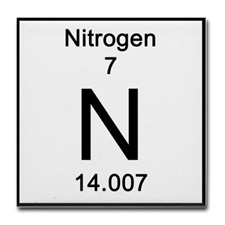
What is the number of protons that the element in this image contain?
a)
14
b)
7
c)
15
d)
18
2.

What is the atomic mass of "F"
a)
9
b)
18
c)
17
d)
19
3.
all matter is made of what
a)
energy
b)
atoms
c)
electrons
d)
compounds
4.
The positive particles of an atom are
a)
electrons
b)
positrons
c)
neutrons
d)
protons
5.
the central region of an atom where its neutrons and protons are is its
a)
nucleus
b)
electron cloud
c)
core
d)
center
6.
an atom with atomic number 6 would have how many protons
a)
6
b)
12
c)
3
d)
cannot be determined
7.
Particles in an atom that are neutral and have no charge are
a)
negatrons
b)
electrons
c)
neutrons
d)
protons
8.
An atoms overall charge is
a)
positive
b)
depends on its mood
c)
neutral
d)
negative
9.
Which of the following is a negatively charged subatomic particle?
a)
Electron
b)
Proton
c)
Neutron
d)
Quark
10.
The particles that are found in the nucleus of an atom are
a)
neutrons and electrons
b)
electrons only
c)
protons and neutrons
d)
protons and electrons
11.
Which of the following is a positively charged subatomic particle found in the nucleus of an atom?
a)
Electron
b)
Proton
c)
Neutron
d)
Quark
12.
Which of the following is a subatomic particle with no charge that is found in the nucleus of an atom?
a)
Electron
b)
Proton
c)
Neutron
d)
Quark
13.
Where are electrons of an atom found?
a)
Nucleus
b)
Electron Cloud
c)
Some are in the nucleus and some in the electron cloud.
d)
They are moving everywhere.
14.
What is the atomic symbol for sodium?
a)
Na
b)
So
c)
NaCl
d)
S
15.
What is the atomic number for an element with three protons?
a)
2
b)
1
c)
3
d)
6
16.
Most of the mass in an atom is concentrated in the...
a)
electrons
b)
nucleus
c)
protons
d)
empty space
17.
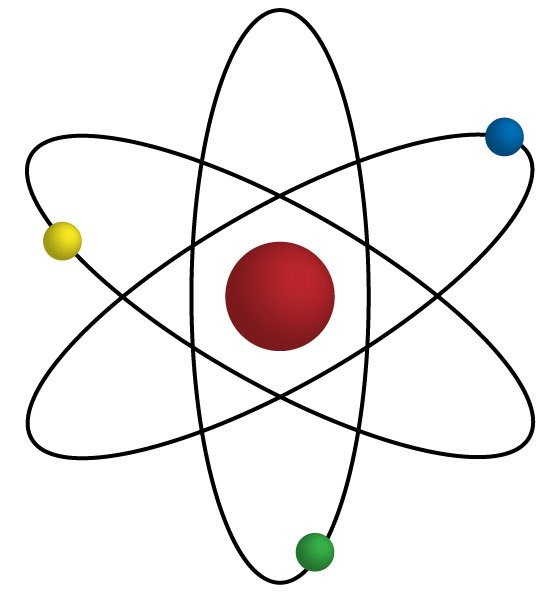
What are the 3 particles that make-up the atom?
a)
protons, neutrons, and isotopes
b)
neutrons, isotopes, and electrons
c)
positives, negatives, and electrons
d)
protons, neutrons, and electrons
18.
Which of the four following items are made up of one or more molecules?
a)
Gold
b)
Hydrogen
c)
Salt
d)
Neon
19.
What do we call a substance consisting of a single atom?
a)
coefficient
b)
element
c)
compound
d)
molecule
20.
What do we call a chemical substance made up of 2 or more different types atoms bonded together?
a)
formula
b)
atom
c)
subscript
d)
compound
21.
DIFFERENT kinds of atoms chemically combined to form a substance are
a)
Mixture
b)
Element
c)
Compound
d)
Substance
22.
This contains a variety elements and compounds that ARE NOT chemically combined.
a)
Water
b)
Mixture
23.
Metals occupy the ________ side of the periodic table.
a)
Left
b)
Right
24.

This type of element is located on the right side of the periodic table.
a)
Metal
b)
Metalloid
c)
Non-Metals
d)
Solid
25.
A homogeneous mixture has the same composition of particles throughout.
a)
True
b)
False
26.

In this picture, which represents atoms?
a)
A
b)
B
c)
C
27.

In this picture, how would you best label or describe A and B?
a)
products
b)
elements
c)
reactants
d)
producers
28.

In this picture, which one represents a compound?
a)
A
b)
B
c)
C
29.
Which of these common substances is a homogeneous mixture?
a)
table salt
b)
whole milk
c)
pure water
d)
maple syrup
30.
What kind of properties can only be observed when a substance changes into a different substance?
a)
physical properties
b)
chemical properties
c)
liquid properties
d)
real properties
31.
Which of the following is a sign that a chemical reaction has occurred?
a)
change in shape
b)
melting
c)
formation of a gas
d)
dissolving
32.
Is hammering wood together to build a house a chemical or physical change?
a)
chemical
b)
physical
33.
Is melting butter for popcorn a chemical or physical change?
a)
chemical
b)
physical
34.
Is bleaching your hair a physical or chemical change?
a)
physical
b)
chemical
35.

Is burning wood a chemical or physical change?
a)
chemical
b)
physical
36.
A change in the size, shape, or state of matter.
a)
chemical change
b)
physical change
c)
chemical reaction
d)
electron change
37.
Which of the following is NOT an example of a physical change?
a)
crumpled paper
b)
pencil sharpening
c)
shrunken clothing
d)
sour milk
38.
Energy of motion is which type of energy?
a)
Potential
b)
Kinetic
c)
Sound
d)
Gravitational
39.
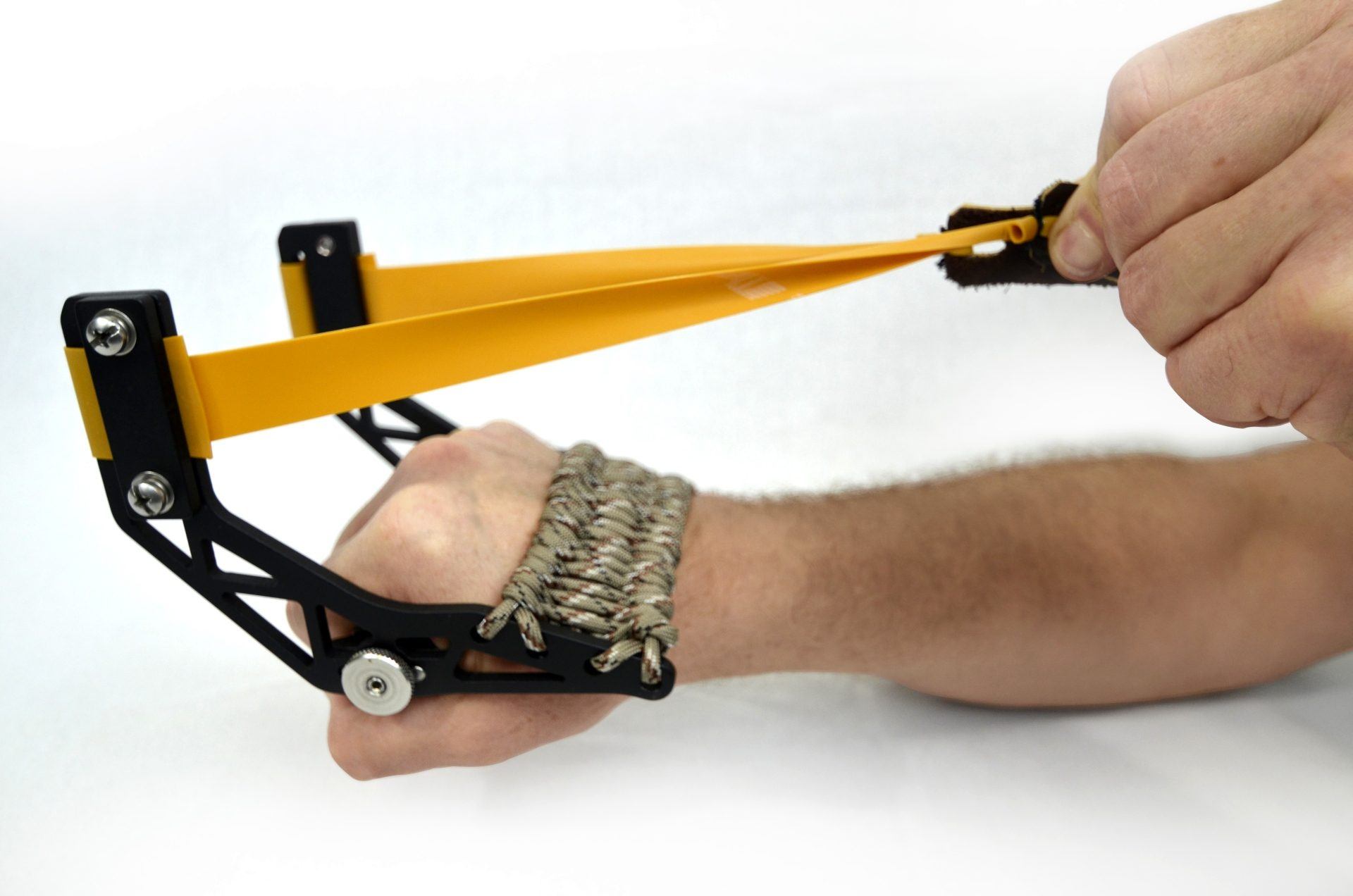
What type of energy is in this picture?
a)
Kinetic
b)
Potential
c)
Chemical
d)
Sound
40.
When plants convert the sun's energy into food, which type of energy is it?
a)
kinetic
b)
chemical
c)
thermal
d)
radiant
41.

What kind of energy does this device use?
a)
Chemical
b)
Electrical
c)
Thermal
d)
Chemical
42.

A battery converts what type of energy to another?
a)
sound to kinetic
b)
light to heat
c)
mechanical to electrical
d)
chemical to electrical
43.
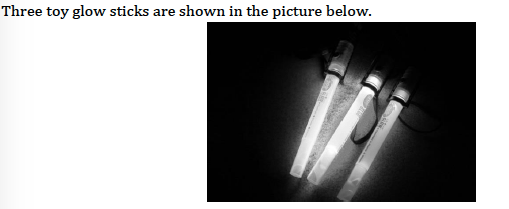
The glow sticks produce light for a short amount of time. The light from the glow stick is a conversion from what to what?
a)
thermal to light
b)
gravitational to potential
c)
radiant to electrical
d)
chemical to light
44.
Wind turbines and windmills convert what energy to another?
a)
Kinetic to electric
b)
Gravitational potential to electric
c)
Mechanical to potential
d)
Thermal to sound
45.
On a roller coaster, where is maximum potential energy?
a)
At the bottom of a big hill
b)
When going around a corner
c)
When going upside down
d)
At the top of a big hill
46.
On a roller coaster, where is maximum kinetic energy?
a)
At the bottom of a big hill
b)
When going around a corner
c)
When going upside down
d)
At the top of a big hill
47.
Energy caused by the movement in the particles of matter. It is a form of kinetic energy.
a)
Nuclear energy
b)
Sound energy
c)
Light energy
d)
Thermal energy
48.

Electrical Energy is transferred to _____ Energy.
a)
Thermal
b)
Solar
c)
Electrical
d)
None
49.

When you eat pizza, Chemical Energy is transferred to _____ Energy.
a)
Solar
b)
Electrical
c)
Mechanical
d)
Chemical
50.
what is the meaning of conduction
a)
when heat transfers from objects that are not touching
b)
when heat rises and falls due to currents
c)
when cold rises and falls due to currents
d)
when heat transfers from objects that are touching
51.
what kind of heat is happening when the sun heats your body
a)
conduction
b)
convection
c)
density
d)
radiation
52.
What is the definition of CONVECTION
a)
When heat transfers through waves.
b)
When heat transfers from objects that are touching.
c)
a hot liquid or air that expands, becomes less dense, and rises or becomes more dense, and sinks.
d)
Heat traveling from the sun
53.
Transfer of thermal energy through "space"
a)
conduction
b)
convection
c)
radiation
54.
Which of the following is NOT a conductor?
a)
oven mitt
b)
curling iron
c)
iron skillet
d)
copper pipe
55.
Acceleration of an object happens when things ________
a)
slow down
b)
go faster
c)
change direction (turn)
d)
All of the above
56.
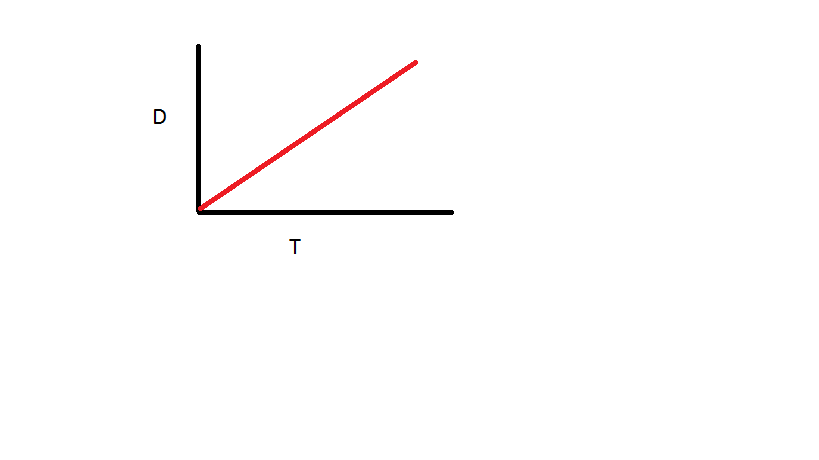
The graph represents
a)
Acceleration
b)
No motion
c)
Deceleration
d)
Constant Velocity
57.
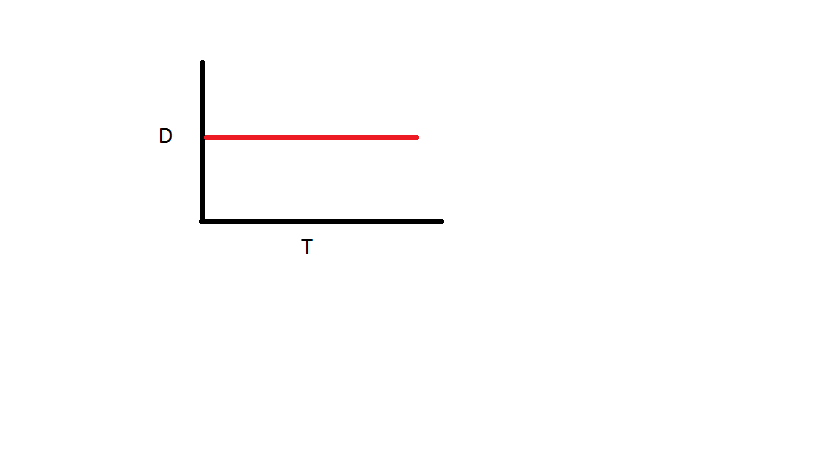
The graph represents
a)
No motion
b)
Constant velocity
c)
Acceleration
d)
Deceleration
58.
Total distance divided by total time is
a)
average speed
b)
constant speed
c)
instantaneous speed
d)
acceleration
59.

What is the person doing from 5 seconds to 10 seconds?
a)
Walking
b)
Running
c)
Standing Still
d)
Walking Fast
60.

What is velocity?
a)
the quickness of an object
b)
the location of an object
c)
acceleration
d)
speed in a specific direction
61.

Warm air rises and the cool air sinks demonstrates this type of heat transfer.
a)
conduction
b)
convection
c)
radiation
d)
Insolation
62.

How will this object move?
a)
It won't move.
b)
It will move to the right.
c)
It will move to the left.
d)
It will move in both directions.
63.
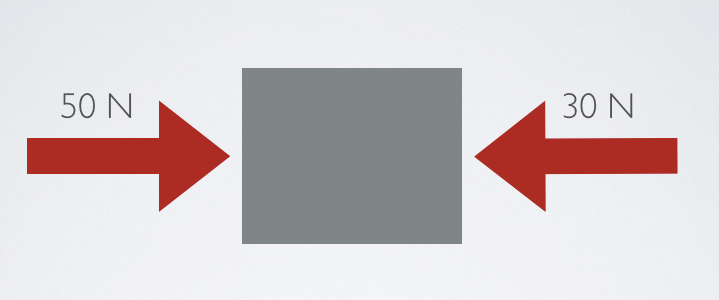
How will this object move?
a)
It won't move.
b)
It will move to the right.
c)
It will move to the left.
d)
It will move up.
64.

Forces that have a net force of zero ( the object is still).
a)
Balanced force
b)
Unbalanced force
65.
The sum of all forces acting on an object and direction
a)
Contact Force
b)
Balanced Force
c)
Unbalanced Force
d)
Net Force
66.

Balanced or Unbalanced?
a)
Balanced
b)
Unbalanced
67.

Are forces balanced or unbalanced when a marble rolls down a ramp?
a)
Balanced
b)
Unbalanced
68.
A stiff bar that moves about a fixed point (fulcrum).Used to push, pull, or lift things.
a)
Pulley
b)
Wheel and Axle
c)
Lever
d)
Screw
69.
A flat surface that is raised so one end is higher than the other.
Makes it easier to move heavy objects up or down.
Makes it easier to move heavy objects up or down.
a)
Pulley
b)
Wheel and Axle
c)
Lever
d)
Inclined Plane
70.
An inclined plane wrapped around a cylinder or cone.
a)
Screw
b)
Wheel and Axle
c)
Inclined Plane
d)
Pulley
71.

Wide at one end and pointed at the other.
Helps cut or split other objects.
Helps cut or split other objects.
a)
Screw
b)
Wedge
c)
Lever
d)
Inclined Plane
72.

a)
Wedge
b)
Inclined Plane
c)
Lever
d)
Screw
73.

a)
Inclined Plane
b)
Wedge
c)
Screw
d)
Lever
74.

Stairs
a)
wedge
b)
pulley
c)
inclined plane
d)
wheel and axle
75.

Lightbulb
a)
wedge
b)
pulley
c)
incline plane
d)
screw
76.
What is an example of a wheel and axle?
a)
ax
b)
light bulb
c)
skateboard ramp
d)
bus tire
77.
What is an example of a pulley?
a)
slide
b)
flag pole
c)
ax
d)
chapstick
78.
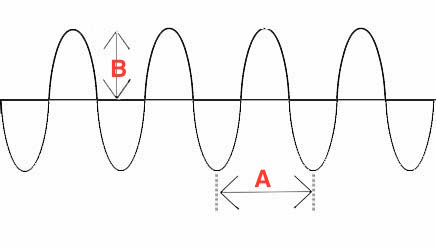
What property of this wave is represented by the letter "A"
a)
amplitude
b)
crest
c)
trough
d)
wavelength
79.
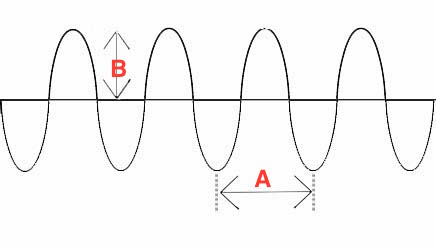
What property of the wave is represented by the letter "B"?
a)
amplitude
b)
crest
c)
trough
d)
wavelength
80.
The highest point on a wave is:
a)
the crest
b)
the trough
c)
the top
d)
the coast
81.
The lowest point on a wave is the:
a)
Amplitude
b)
Crest
c)
Trough
d)
Wavelength
82.
The number of wavelengths that pass a point each per second is:
a)
frequency
b)
period
c)
longitudinal
d)
transverse wave
83.
The type of waves that require medium to pass:
a)
Mechanical Waves
b)
Electromagnetic Waves
84.
When the frequency of a wave increases, what happens to the wavelength?
a)
The wavelength is not directly affected by the frequency of a wave.
b)
The wavelength increases.
c)
The wavelength decreases.
d)
More specific information is needed to form a conclusion about the wavelength.
85.
A mechanical wave cannot travel through...
a)
a vacuum(empty space).
b)
water.
c)
air.
d)
glass.
86.
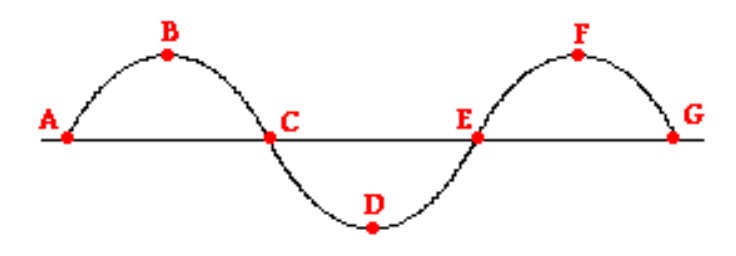
Which letter(s) represent the trough of the wave?
a)
A
b)
B & D
c)
D
d)
C & G
87.
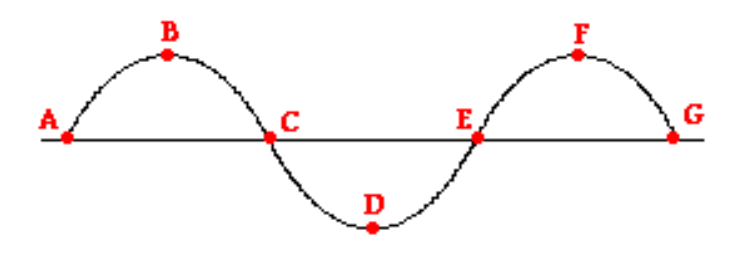
Which letter(s) represent the crest of the wave?
a)
A
b)
B & D
c)
B & F
d)
F
88.
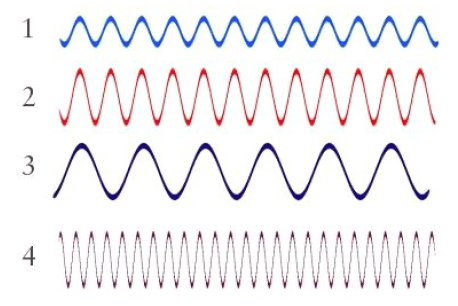
Which wave in the diagram has the greatest wavelength?
a)
1
b)
2
c)
3
d)
4
89.
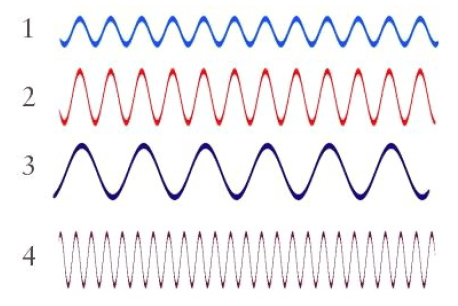
Which wave in the diagram has the greatest frequency?
a)
1
b)
2
c)
3
d)
4
90.
Electromagnetic waves include the following except
a)
radio waves
b)
X-rays
c)
doing the wave at a football game
d)
microwaves
91.
regular disturbances that carry energy through matter or space
a)
crest
b)
energy
c)
wave
d)
trough
92.
which material does sound travel the fastest?
a)
solid
b)
liquid
c)
gases
93.
When a wave strikes and object and bounces off. (example echo)
a)
medium
b)
refraction
c)
reflection
d)
interference
94.
When a wave bends as it passes through at an angle from one medium to another.(example: pencil in a glass of water-)
a)
medium
b)
refraction
c)
reflection
d)
interference
95.

Of the following, ________ have the greatest frequency of the electromagnetic spectrum.
a)
ultraviolet rays
b)
gamma rays
c)
radio
d)
visible waves
96.

Which is an example of a longitudinal wave?
a)
light wave
b)
sound wave
c)
visible wave
d)
radio wave
97.
When a wave's amplitude increases it means
a)
it's carrying more energy
b)
its wavelength gets longer
c)
its frequency increases
d)
its wavelength decreases
98.

All waves carry ________ as they travel from one place to another.
a)
matter
b)
space
c)
energy
d)
water
99.
A compressional wave is another name for a
a)
longitudinal wave
b)
electromagnetic wave
c)
radio wave
d)
hair wave
100.

What kind of waves can travel through space?
a)
electromagnetic waves
b)
compressional waves
c)
longitudinal waves
d)
sound waves
101.

When two magnets repel each other which poles are facing each other?
a)
North and South
b)
South and North
c)
North and North
d)
Positive and Negative
102.

What happens to the magnetic force as an object gets further away from the magnetic field?
a)
The force increases
b)
The force decreases
c)
The force stays the same
d)
There was no force to begin with
103.
What is a conductor?
a)
A material that stops electric current from flowing
b)
A material that allows electric current to flow easily
104.
Which is an example of an insulator?
a)
Rubber
b)
Copper
c)
Iron
d)
Steel
105.

What is static electricity?
a)
The buildup of neutrons
b)
Electricity flowing through a current
c)
Particles staying still
d)
The buildup of electric charges on an object
106.
What particles of an atom are attracted to each other?
a)
Protons and Electrons
b)
Electrons and Electrons
c)
Protons and Protons
d)
Electrons and Neutrons
107.

How is electricity a force?
a)
It is not a force
b)
Electrons are pushed through a circuit
c)
Protons are pushed through a circuit
d)
Neutrons are pushed through a circuit
108.

How do you increase the strength of an electromagnet?
a)
Decrease the number of batteries and increase the number of coils
b)
Increase the electric current and decrease the batteries
c)
You cannot strengthen an electromagnet
d)
Increase the electric current and increase the number of coils
109.

What will happen to the other bulbs in the circuit if one bulb goes out?
a)
The other bulbs will go out
b)
The other bulbs will get brighter
c)
The other bulbs will get dimmer
d)
They will flash on and off
110.

What will happen when a light bulb is removed from the circuit below?
a)
The remaining bulbs will go out
b)
The remaining bulbs will brighten
c)
The remaining bulbs will dim
d)
The brightness of the remaining bulbs will not change
111.
Which part of the EM spectrum is the only part you can see with the naked eye?
a)
Infrared
b)
microwaves
c)
visible light
d)
gamma rays
112.
A type of circuit with in which a current passes even through each device or bulb and has only one path
a)
direct current
b)
alternating current
c)
series circuit
d)
parallel circuit
113.
A circuit with 2 or more paths
a)
Direct current
b)
Alternating current
c)
Series circuit
d)
Parallel circuit
114.
A completed path for the transfer of electricity
a)
generator
b)
motor
c)
circuit
115.
A machine that converts mechanical, nuclear or chemical energy into electrical energy.
a)
Motor
b)
Generator
c)
Electromagnet
d)
Circuit
116.
Boiling
a)
liquid to gas
b)
gas to solid
c)
gas to liquid
d)
solid to liquid
117.
Particles (molecules) in a ______________________ have more energy than the other states of matter.
a)
gas
b)
solid
c)
liquid
118.
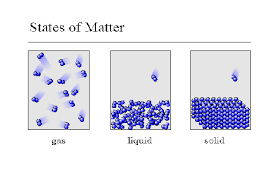
At higher temperatures
a)
particles in an object have less energy
b)
particles in an object move faster
c)
a gas contracts
119.
Freezing
a)
Solid to gas
b)
Liquid to solid
c)
Gas to solid
d)
Liquid to gas
120.
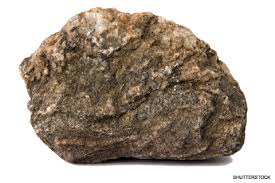
Which state of matter has tightly packed molecules?
a)
solid
b)
liquid
c)
gas
121.
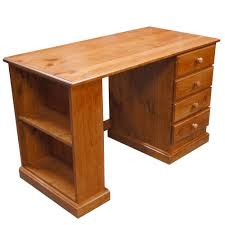
Which state of matter has a definite shape?
a)
solid
b)
liquid
c)
gas
122.
Define a liquid.
a)
Indefinite shape, indefinite volume
b)
Definite shape, definite volume
c)
Found in stars
d)
Definite volume, indefinite shape
123.
The state of matter that has no definite size or shape is
a)
Solid
b)
Liquid
c)
Gas
124.
Particles of a liquid
a)
are tightly packed together and stay in a fixed position.
b)
have no viscosity.
c)
decrease in volume with increasing temperature.
d)
are free to move around one another but still touch.
125.
What is condensation?
a)
gas to solid
b)
gas to liquid
c)
liquid to solid
d)
solid to liquid
126.
Which has a greater distance between particles?
a)
Solid
b)
Liquid
127.
Thermal energy is...
a)
heat energy.
b)
the energy of motion
c)
energy of nuclear processes.
d)
an indication of physical change.
128.
A chemical change
a)
doesn't really change much.
b)
creates a new substance
c)
is a change in the state of matter
129.
Malleability
a)
Property of an element to be hammered flat into sheets.
b)
Property of an element that can be drawn into wires.
c)
Property of an element to allow light to pass through it.
d)
None of the above.
130.
Conductivity
a)
A property that allows light to flow through it.
b)
A property of an element to be drawn into wires.
c)
A property that allows heat and electricity to pass through it.
d)
The total space occupied by an object.
131.

In a solid, the particles
a)
vibrate in place
b)
slide past one another
c)
overcome the strong attraction
100 %

